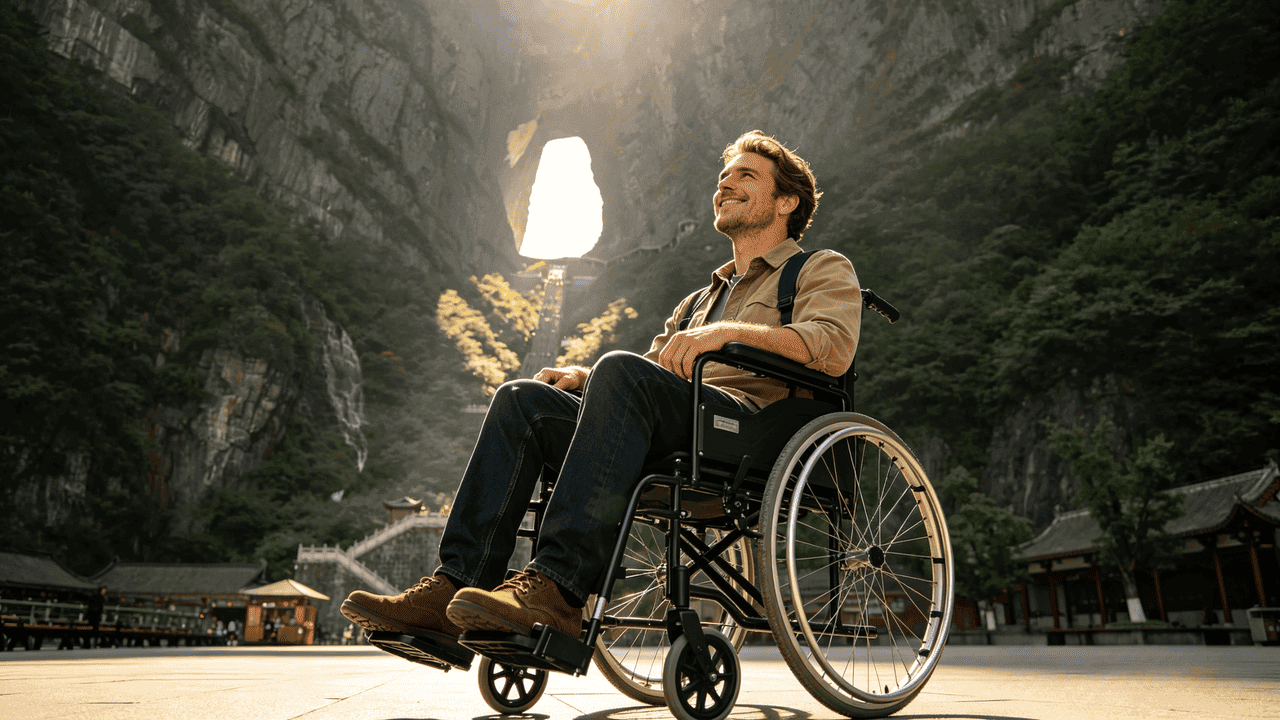
Zhangjiajie Wheelchair Travel Guide
Wheelchair users can reach the Avatar Hallelujah Mountain viewpoint, ride the Bailong Elevator, and see the defining scenery of Zhangjiajie National Forest Park. The cable cars, the Ten-Mile Gallery tram, and the eco-bus network all accommodate manual wheelchairs with staff assistance. This is not a fully barrier-free destination — it is a mountain carved out of 3,000 sandstone pillars, and steps appear between viewpoints. But the park’s investment in vertical infrastructure happens to solve precisely the problem that would otherwise make a wheelchair visit impossible.
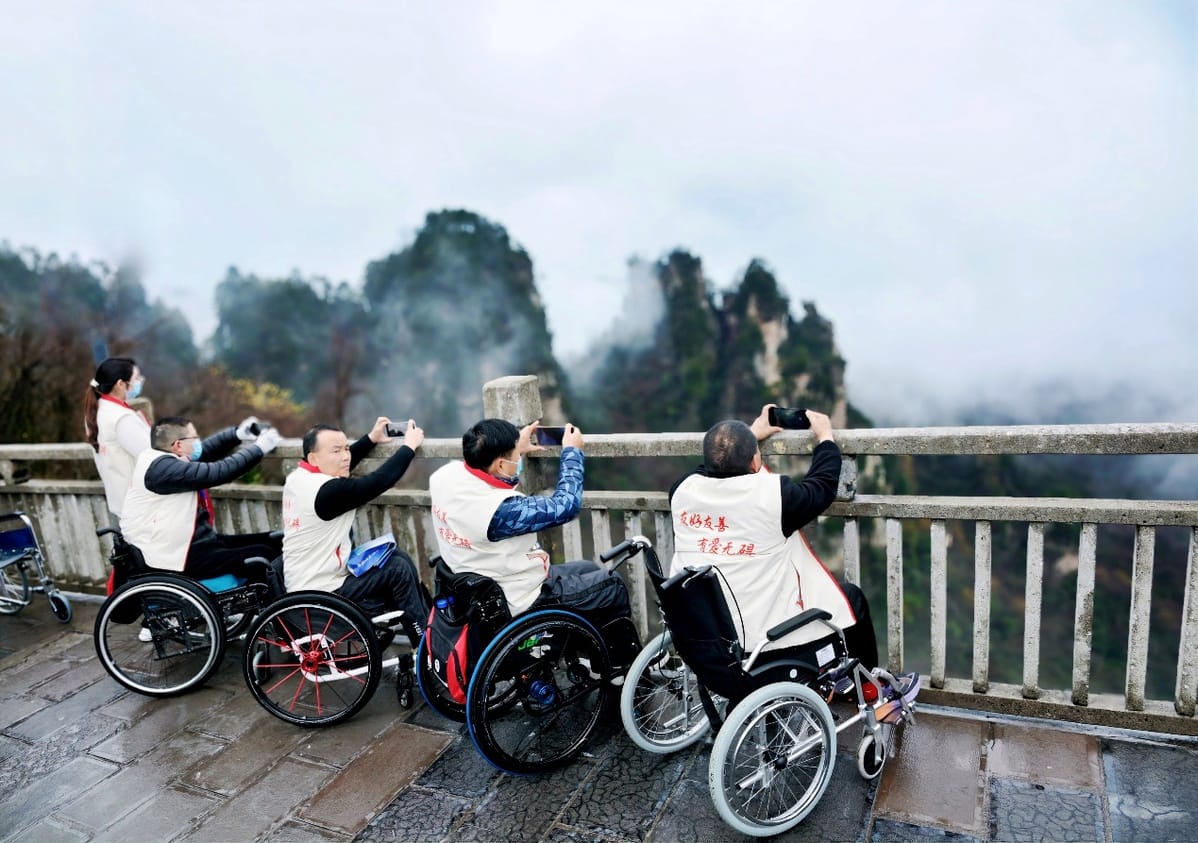
We’ve brought visitors in wheelchairs through these parks more times than we can count. A client’s 78-year-old father, post-stroke with limited left-side mobility, stood at the Yuanjiajie platform in October 2023 and looked out at the pillars rising through cloud. His daughter cried. That’s what’s possible here with the right plan.
Free entry | Yes — all scenic areas, all visitors with valid disability documentation |
Companion free entry | 1 accompanying person free for Grade 1 or 2 severe disabilities |
Cable car discount | 50% off (Chinese nationals with documentation only; foreign visitors pay full) |
Manual wheelchair | Free loaner at every gate — no booking, no deposit |
Electric wheelchair | NOT allowed on cable cars, Bailong Elevator, or eco-buses (lithium fire risk policy, effective 1 June 2026). Park stores your chair free; staff provide a manual loaner. |
Best route | East Gate → Ten-Mile Gallery tram → Bailong Elevator → Yuanjiajie plateau → cable car down |
Skip entirely | Tianmen Mountain 999 Steps, Grand Canyon floor trail, Yellow Dragon Cave |
Service hotline | +86-0744-5712345 |
Table of Contents
1. Realistic Accessibility at Zhangjiajie
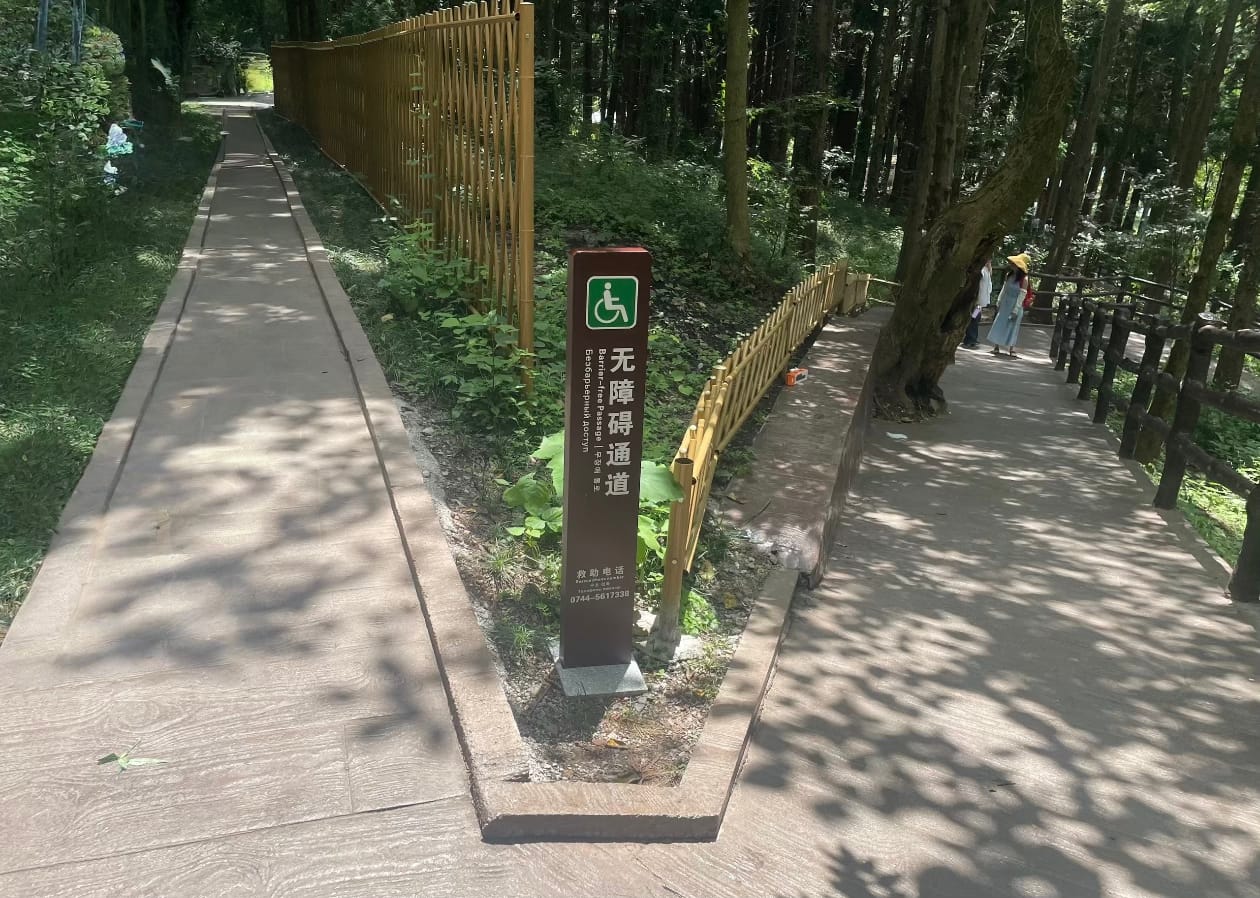
Zhangjiajie is more accessible than it looks and less accessible than the tourism brochures claim. The park built its cable cars, elevator, and tram specifically to spare visitors from hours of stair climbing. Every ¥72 cable car ticket buys you a section of mountain that would otherwise be a 2–3 hour climb on steep stone steps. For wheelchair users, these are not optional upgrades. They are the route.
The plateau at the top is largely paved and flat — this surprises most people expecting a rugged mountain trail. The Yuanjiajie viewing loop, the Tianzi Mountain platforms, the Yangjiajie circuit: all manageable in a manual wheelchair. The short linking sections between eco-bus stops and viewpoints — typically 10–30 metres where paving gives way to stone slabs — need a companion behind the chair. Don’t plan to go alone.
Accessibility infrastructure in the park: The Bailong Elevator has a dedicated wheelchair priority lane into the waiting area. Eco-buses allow wheelchair users to board ahead of the queue with one companion — ask staff at the stop for the dedicated entry point. On Yuanjiajie plateau, the Wukesong (五棵松) viewpoint is reachable by following the main road with accessible path markers and railings — the side trails to First Bridge and Qiankun Pillar have too many steps. Wherever steps exist in the park, a parallel accessible ramp or path has been built alongside. Accessible restrooms are located at all major visitor hubs and gate stations.
2. Free Entry and Discount Rules
People with disabilities receive free entry to all scenic areas. Bring your disability certificate — gate staff process the exemption manually, so buy at the window, not online.
Under the Hunan Provincial Regulations on the Implementation of the Law on the Protection of Persons with Disabilities, one accompanying person is also entitled to free entry for visitors with Grade 1 or Grade 2 severe disabilities. Bring documentation for both the disabled visitor and the companion.
Cable car and elevator discounts (50% off) apply to Chinese nationals with documentation only. Foreign visitors get free park entry but pay full cable car prices.
→ See our Zhangjiajie tickets guide for all ticket categories.
3. The Route We Recommend for Every Wheelchair Client
Recommended wheelchair route
East Gate 吴家峪
Collect free manual wheelchair if needed
~200 m flat walk to tram stopeco-bus
Ten-Mile Gallery Tram
5 km · ~20 min · ¥38
flat boarding · staff assisteco-bus
Bailong Elevator
326 m up · 92 sec · ¥72
wheelchair fits · staff stop queueYuanjiajie Plateau
Hallelujah Mtn · Enchanting Platform · First Bridge
mostly paved · companion neededeco-bus to Tianzi Mountain
Cable Car Down
Tianzi Mountain / Huangshizhai / Yangjiajie
folded chair fits · staff slow boardingTotal walking: under 500 m on flat paved ground. Electric wheelchairs not permitted on enclosed transport — free manual loaners at the gate.
The tram section usually settles any doubt a client has about whether the trip was a mistake. Twenty minutes through the valley with pillars on both sides, nothing to do except look.
At the Bailong Elevator, staff stop the queue without being asked — we’ve never had to request it. The plateau at the top is largely paved; a companion handles the two or three brief sections where the stone slabs take over.
→ See our Bailong Elevator guide and eco-bus guide for timing and queue detail.
4. Attraction Accessibility at a Glance
swipe to see full table →
| Attraction | Rating | Manual chair | Key notes |
|---|---|---|---|
| Ten-Mile Gallery tram | ★★★★★ | Full access | Flat boarding, staff assist |
| Bailong Elevator | ★★★★★ | Full access | Priority lane available; ~12 steps at each station, staff assist |
| Tianzi Mountain cable car | ★★★★★ | Full access, staff assist | Accessible route from eco-bus stop to boarding point |
| Huangshizhai cable car | ★★★★★ | Full access, staff assist | Elevator at both stations — call number on door to activate |
| Yangjiajie cable car | ★★★★★ | Full access, staff assist | Elevator at both stations; lower exit requires one flight of stairs |
| Tianmen Mountain cable car | ★★★★★ | Full access | Boards at street level in the city |
| Golden Whip Stream (full 7.5 km) | ★★★★★ | Full route accessible | Parallel accessible path at every step; stone slab surface — lift front wheels over gaps; fasten seatbelt; budget 4–5 hrs |
| Yuanjiajie plateau loop | ★★★★☆ | Mostly paved | 2–3 short uneven sections; Wukesong viewpoint reachable via main road with accessible markers |
| Tianzi Mountain viewpoints | ★★★★☆ | Paved, largely flat | Some connecting steps; He Long Park accessible path to bronze statue |
| Huangshizhai viewpoints | ★★★★☆ | Small circuit fully accessible | Right exit from cable car → small circuit only; upper station skips main queue at elevator |
| Tianmen Mountain skywalks | ★★★★☆ | Paved, relatively flat | Through-mountain escalator requires chair transfer; ~500 m flat walk to Tianmen Cave square |
| Grand Canyon Glass Bridge | ★★★★☆ | Flat bridge deck | Steps at canyon entrance; skip canyon floor trail entirely |
| Baofeng Lake boat tour | ★★★★☆ | Flat boarding, ramp | Short ramp to boat; staff assist |
| Yangjiajie viewpoints | ★★★☆☆ | Natural Great Wall reachable | Mostly flat with scattered steps; eco-bus has steps — ask staff for dedicated boarding; Wulong Village/Tianbo Mansion: impassable |
| Yellow Dragon Cave | ★☆☆☆☆ | Not recommended | Steps throughout the cave trail |
| Grand Canyon floor trail | ★☆☆☆☆ | Not recommended | Uneven terrain throughout |
Electric wheelchairs not permitted on enclosed transport (policy June 2026). Free manual loaners at all gates. Eco-buses allow priority boarding for wheelchair users with one companion.
Golden Whip Stream — the most wheelchair-friendly route in the park
 Golden Whip Stream Trail Conditions 1
 Golden Whip Stream Trail Conditions 2
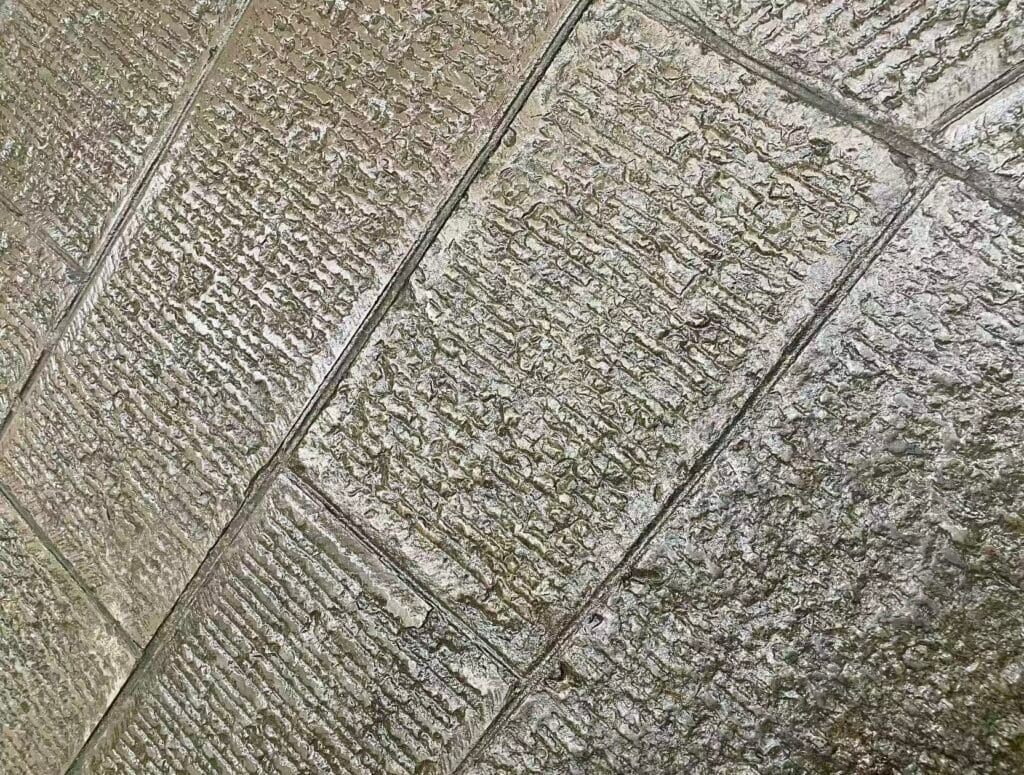
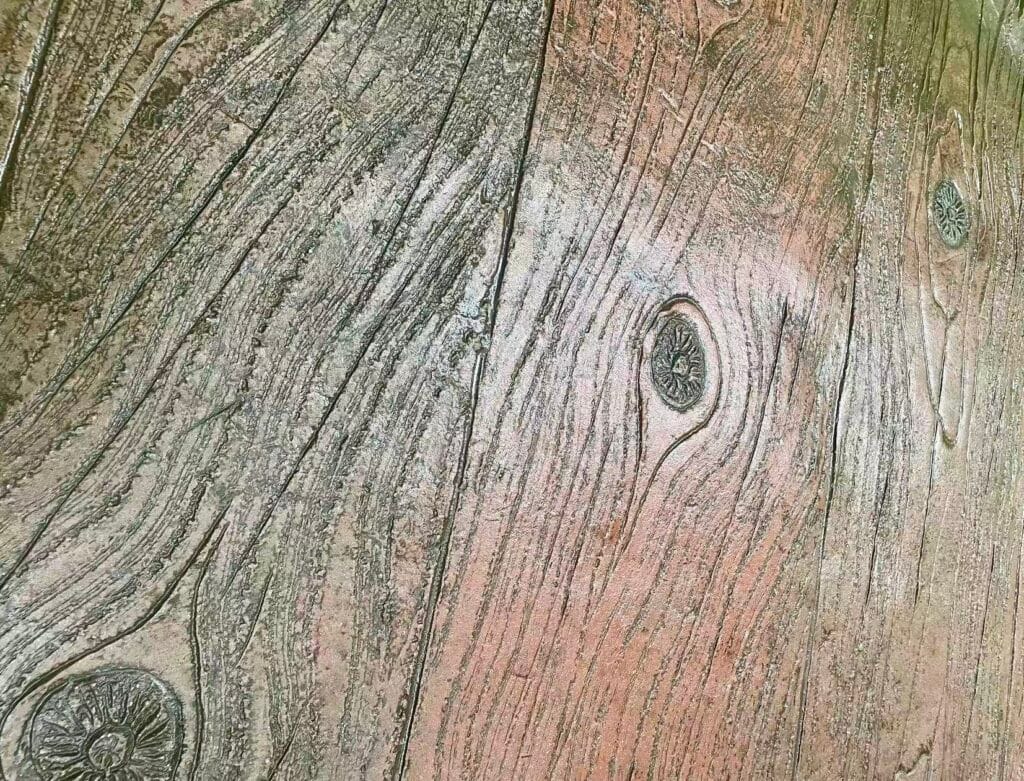
This is the one that surprises people. Golden Whip Stream runs 7.5 km from the South Gate through to Shuirao Simen, and the entire route has been built with wheelchair users in mind — every section where steps exist has a parallel accessible path alongside. You can push the whole route without the user leaving the chair except for restroom breaks.
The surface is mostly flagstone, which is manageable but requires technique: keep slight downward pressure on the handles to stabilise the chair, and lift the front wheels over any gaps between stones. It sounds fiddly but most people get the feel for it within the first 20 minutes. The other two surface types along the route are noticeably smoother.
Practical notes: fasten the seatbelt before you start — the stone surface is uneven enough to matter. Budget 4–5 hours for the full route (South Gate in, eco-bus from Shuirao Simen to East Gate out). And one local hazard worth knowing: the monkeys along this stretch target single-shoulder bags. We watched one make a clean grab in under three seconds. Backpacks only.
Tianmen Mountain
The infrastructure here is the best of any Zhangjiajie attraction for wheelchair users. The main cable car — 7.5 km — boards at street level and is fully accessible. The summit plateau and both glass skywalk routes are paved and manageable.

The one constraint: the Through-Mountain Escalator is the only alternative to the 999 Steps. It’s a single-person-width moving escalator — not a ramp. Anyone who cannot transfer out of the chair, ride standing, and re-board at the top will find Tianmen Cave inaccessible. The summit plateau and cable car are still worth the visit on their own.
→ See our Tianmen Mountain guide & Tianmen Mountain: Line A, B or C? The Ultimate Route Comparison Guide for route options.
Zhangjiajie Grand Canyon and Glass Bridge
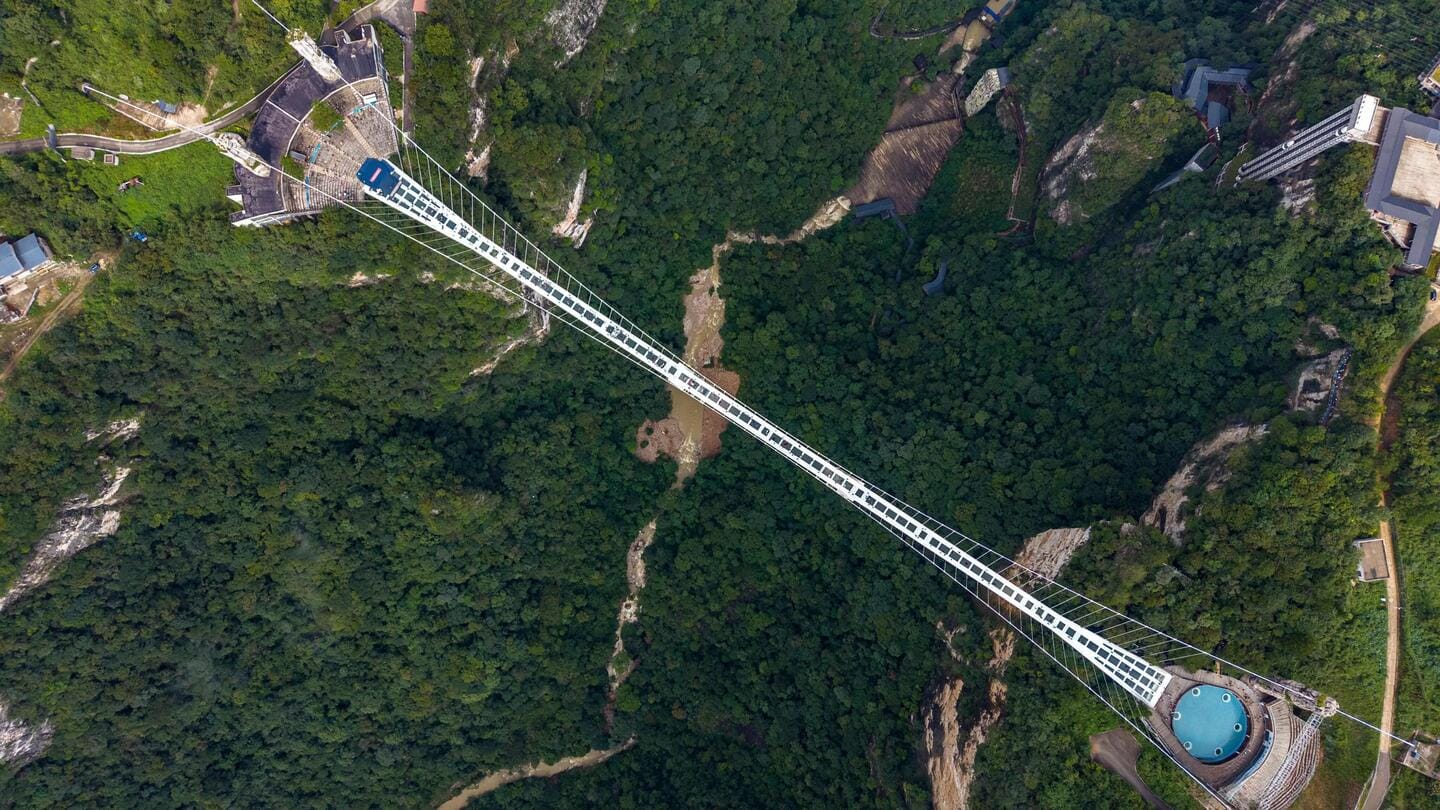
Skip the canyon floor trail entirely — uneven stone, multiple stair sections. The Glass Bridge is the opposite: flat, 430 metres long, 300 metres above the gorge, fully accessible. There is nothing between the glass underfoot and the canyon walls below. Budget half a day; the cable car to the bridge entrance is accessible.
→ See our Grand Canyon and Glass Bridge guide for the full route.
Huangshizhai — the most developed summit for wheelchair users
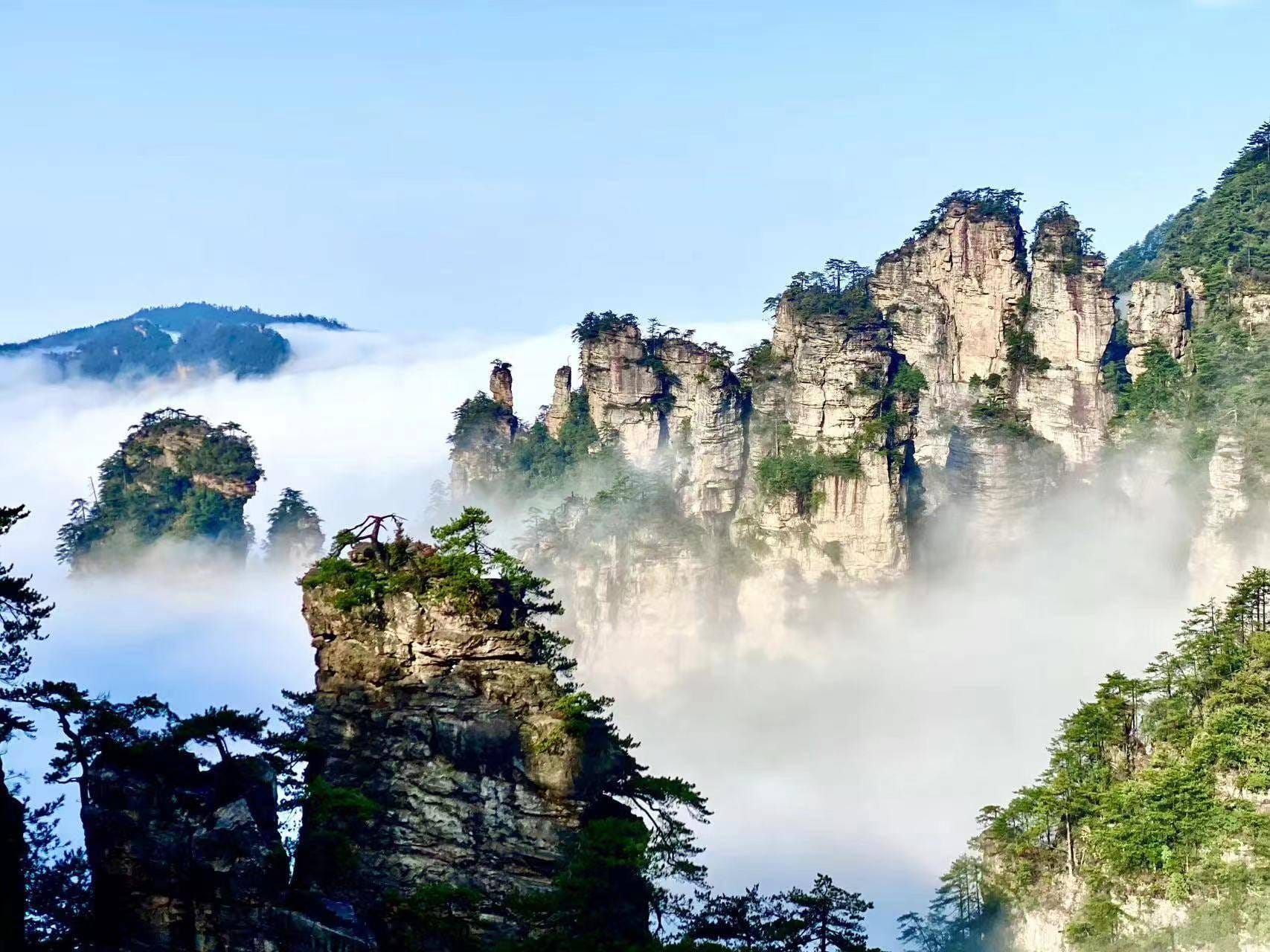
“不登黄石寨,枉到张家界” (A trip to Zhangjiajie is incomplete without visiting Yellow Stone Village) — and for wheelchair visitors, it’s also the summit we’d recommend first. Both cable car stations have accessible elevators; the number to call is on the elevator door, and a staff member comes to open it. At the upper station you can ticket right at the elevator exit, bypassing the main queue. On the summit, take the small circuit — turn right out of the station, follow through to Wuzhi Peak. Full accessible paths throughout, and the Wuzhi Peak platform was recently widened. The large circuit covers more of the summit but is full of steps — skip it.
DIG DEEPER: Huangshizhai in Zhangjiajie: Complete Guide to Yellow Stone Village
Yangjiajie — one view worth the cable car, the rest is for hikers
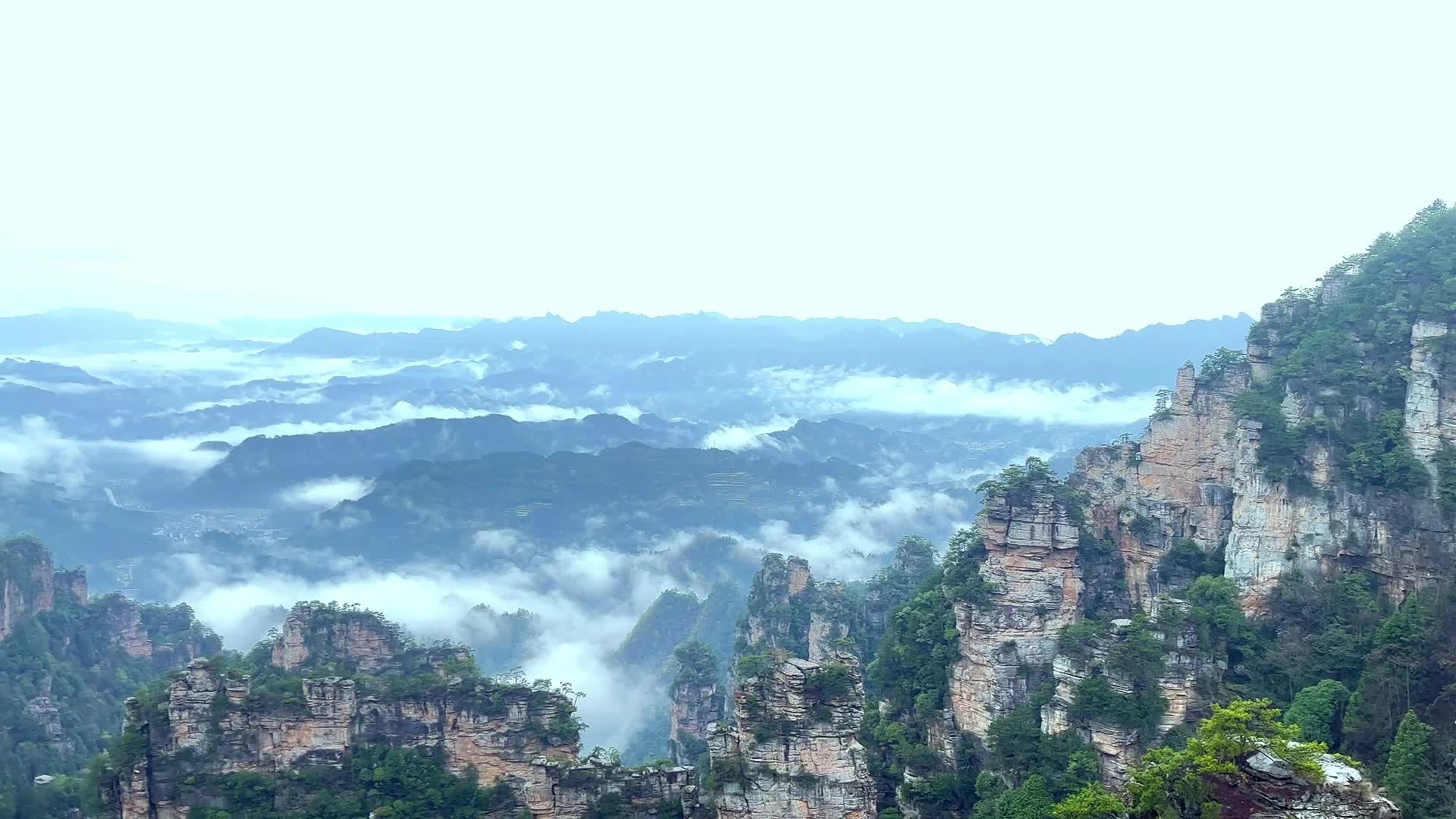
The official accessible route runs West Gate → Yuanjiajie → Bailong Elevator upper station, and that’s exactly what we’d do. The cable car stations both have elevators, though the lower exit still requires one flight of stairs with staff help. At the top, the Natural Great Wall is the destination — peak walls stretching out in formation, genuinely unlike anything else in the park. Getting there is mostly flat with a few scattered steps. Beyond that, Wulong Village and Tianbo Mansion are off the table — near-vertical iron ladders, passages barely a metre wide. Take the eco-bus across to Yuanjiajie and the Wukesong platform instead.
DIG DEEPER: Yangjiajie in Zhangjiajie: The Wild Side of Avatar Mountains
Baofeng Lake and Yellow Dragon Cave
 Cruise on Baofeng lake
 Huanglong Cave – steps
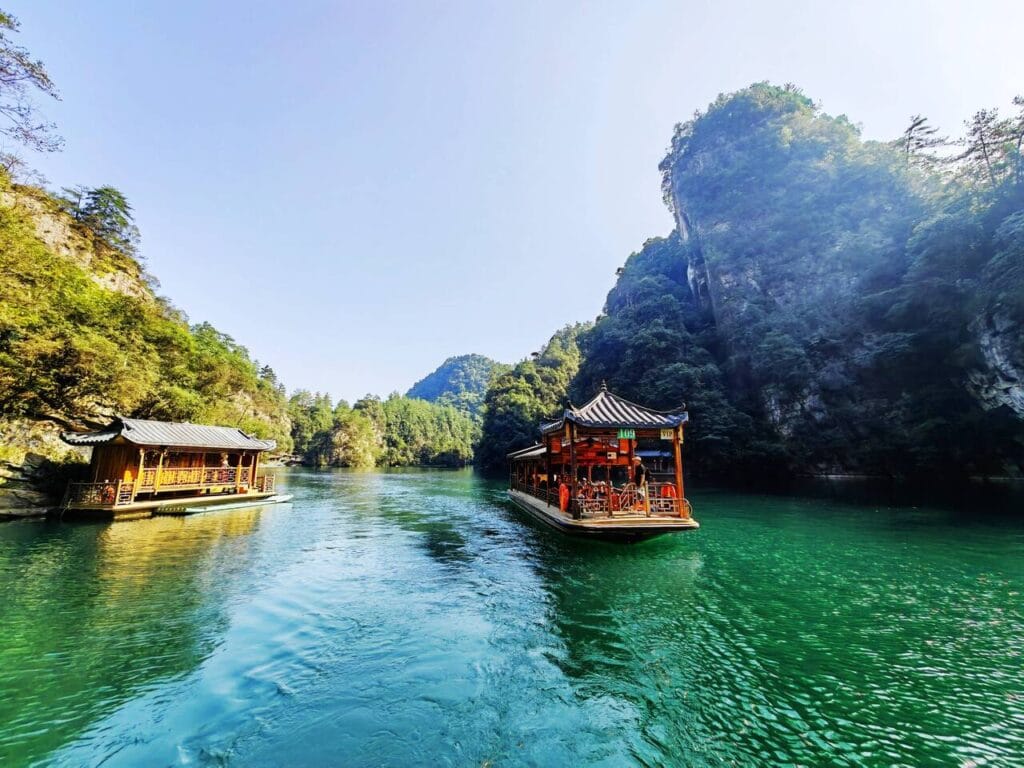
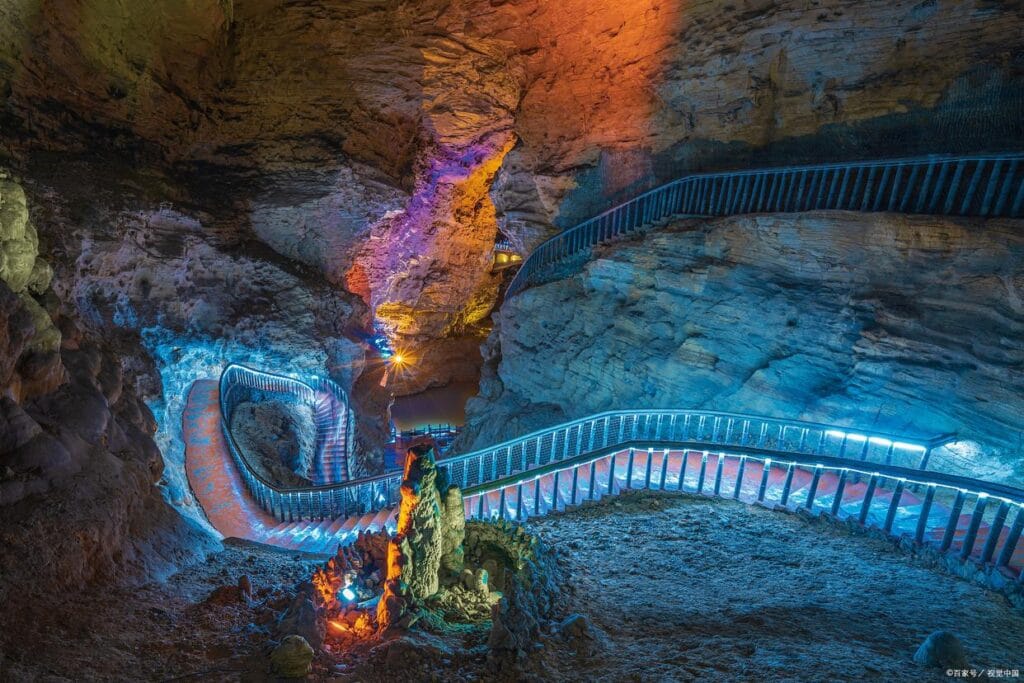
Baofeng Lake is one of the easier half-days for a wheelchair visitor. The boat tour runs on flat water; the boarding ramp is gentle and staff help. Yellow Dragon Cave is a different story — the trail through the cave involves frequent stair sections and is not recommended for wheelchair users. Accessible restrooms are at the Baofeng Lake entrance.
5. Wheelchair Logistics: What to Know Before You Arrive
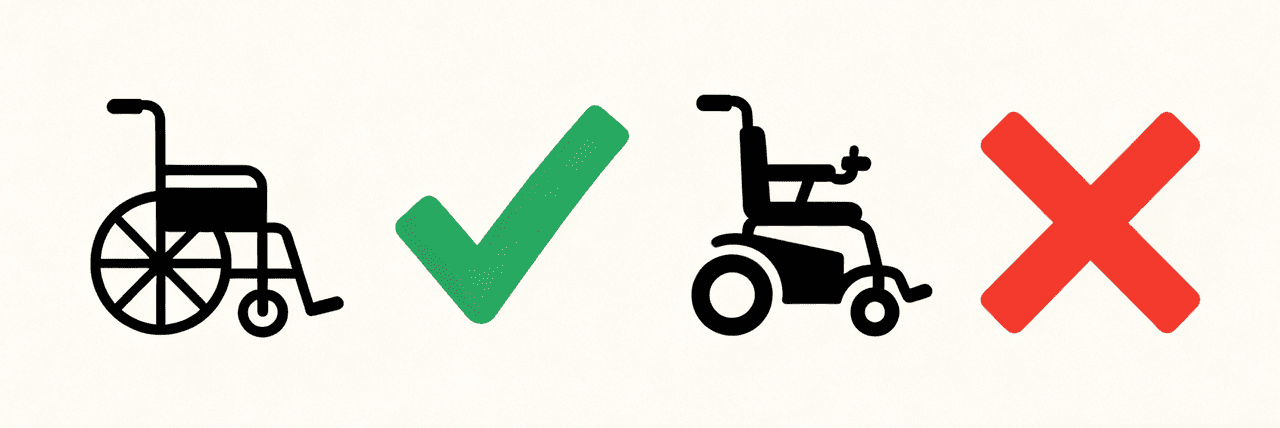
Manual wheelchairs — free at every gate
Manual wheelchairs are free at all park gates — no deposit, no booking. Ask gate staff when you arrive.
Electric wheelchairs — read this before you pack
Electric wheelchair users: as of 1 June 2026, battery-powered wheelchairs cannot board cable cars, the Bailong Elevator, or eco-buses. Bring your chair to the gate; staff swap it for a manual loaner and store it free. If you need the electric chair for independent movement between stops, hire a private guide to push the manual chair. Call 0744-5712345 to confirm arrangements.
What else to bring
Bring your disability certificate — gate staff need it for the free entry exemption and process it manually, not online. WeChat Pay or Alipay speeds up queues. In winter, gloves for the cable car handrails.
6. Where to Stay
Stay in Wulingyuan, not Zhangjiajie city. The forest park gates are in Wulingyuan — staying in the city adds 40–50 minutes of transfer each way, and the older city streetscape is harder in a wheelchair. If Tianmen Mountain is also on the itinerary, the cable car base is in the city; clients combining both parks spend nights in Wulingyuan and move to the city for the Tianmen day.
Two properties with confirmed accessible rooms
The Crowne Plaza Wulingyuan (wide doorways, roll-in showers, closest to the park gate) and the Zhangjiajie SANHE Resort (post-2020 build, flat-access throughout).
A warning about “wheelchair accessible” listings
“Wheelchair accessible” on Trip.com and Ctrip frequently means ground-floor room only — no roll-in shower, sometimes a step at the bathroom. Call and confirm the specific room features before booking. We’ve had clients arrive to find “accessible” meant a grab bar bolted to the wall of an otherwise standard bathroom.
DIG DEEPER: Where to Stay in Zhangjiajie: Complete Accommodation Guide
7. What We Tell Every Wheelchair Client Before They Go
Ask — even when there’s no sign
Across the park, accessible paths and green channels exist that are not always signposted. The Huangshizhai cable car has an accessible elevator at the station that staff don’t advertise; you have to ask. Tianzi Mountain has an accessible route from the eco-bus stop directly to the cable car boarding point and then to the viewing platforms — again, ask at the gate. The rule we give every client: if a section looks impossible, find a staff member before assuming it is. Nine times out of ten, there’s a route.
One honest caveat on the Bailong Elevator: the approach involves around a dozen steps at both the lower and upper stations. Staff assist, and it’s manageable, but it cannot be completely avoided. We mention this because a fully chair-bound visitor who cannot manage any steps at all should know this in advance.
Get to the East Gate by 7:30 AM
Arrive at the East Gate by 7:30 AM. The Bailong Elevator queue in peak season hits 60–90 minutes by 10 AM. For wheelchair users, staff manage a priority boarding queue — ask at the ticket window when you buy, not when you’re already standing in the main line.
The staff will help — every time
The eco-bus staff will help. In 20 years of visits, we have never had a driver refuse a wheelchair. They slow down, hold the vehicle, and position the group near the door before the bus stops. The Bailong Elevator staff are the same — we brought a client in September 2024 whose husband was post-knee replacement and using a borrowed park wheelchair. The elevator staff stopped the entire queue, helped him in, helped him out at the top, and waved away the queue behind them like it was completely normal. It was. It happens every day.
Skip Golden Week entirely
Avoid the first week of May and October. The forest park hits its 53,000-person daily cap regularly during Golden Week. In those conditions, the accessibility that makes wheelchair visits work — staff attention, space to manoeuvre, short queues — disappears. April and September are the months we recommend to every client with mobility concerns.
Two days for the forest park, one for Tianmen — don’t mix them
Two days minimum for the forest park, one day for Tianmen Mountain — that’s the baseline. Don’t try to combine them. The parks are 35 km apart, and trying to do both in a single day means rushing the thing that requires the most patience.
→ For a day-by-day plan, see our Zhangjiajie itinerary guide.
8. FAQ: Zhangjiajie Wheelchair Travel
Can a wheelchair user see the Avatar Hallelujah Mountain at Zhangjiajie?
Yes — this is the first thing we plan for any wheelchair client. Bailong Elevator and eco-bus from the East Gate, no stairs on the main route. Bring a companion for the minor inclines on the plateau circuit.
Is the Bailong Elevator wheelchair accessible?
The cabin fits a standard manual wheelchair with the user seated inside. Staff at both levels assist with boarding and exit — in our experience they stop the queue without being asked. Pricing: ¥72 standard one-way; Chinese nationals with disability documentation pay ¥36. Foreign visitors with disabilities pay the standard rate.
Do wheelchair users get free entry to Zhangjiajie?
Yes — all scenic areas, Chinese nationals and foreign visitors alike, with valid disability documentation. Buy at the ticket window; the online system doesn’t accommodate this exemption.
Are Zhangjiajie’s cable cars wheelchair accessible?
All three — Tianzi Mountain, Huangshizhai, Yangjiajie — fit a standard foldable wheelchair. Staff stop the boarding to assist. See our cable cars guide for queue strategy.
Can I bring an electric wheelchair into Zhangjiajie National Forest Park?
No — as of 1 June 2026, battery-powered wheelchairs cannot board cable cars, the Bailong Elevator, or eco-buses. Bring it to the gate; staff store it free and provide a manual loaner. Call 0744-5712345 to confirm in advance.
What is the hardest part of Tianmen Mountain for wheelchair users?
The Through-Mountain Escalator is the only alternative to the 999 Steps — a single-person moving escalator, not a ramp. Anyone who can’t transfer out of the chair, ride standing, and re-board at the top cannot access Tianmen Cave. The summit plateau and cable car are still completely worthwhile.
Is it worth visiting Zhangjiajie with a wheelchair?
Every time we’ve done it, yes. The limitations are real — no canyon floor, no interior trail networks, the escalator constraint at Tianmen — but the scenery that makes Zhangjiajie worth the trip is on the plateau and the cable cars. Those are accessible. A client told us after her October trip last year: “I thought I was coming to watch everyone else have the experience. I had the experience.”
Planning a wheelchair-accessible Zhangjiajie tour? Contact our team — we handle the full logistics from airport to park gate.