Zhangjiajie National Forest Park: The Complete Visitor Guide
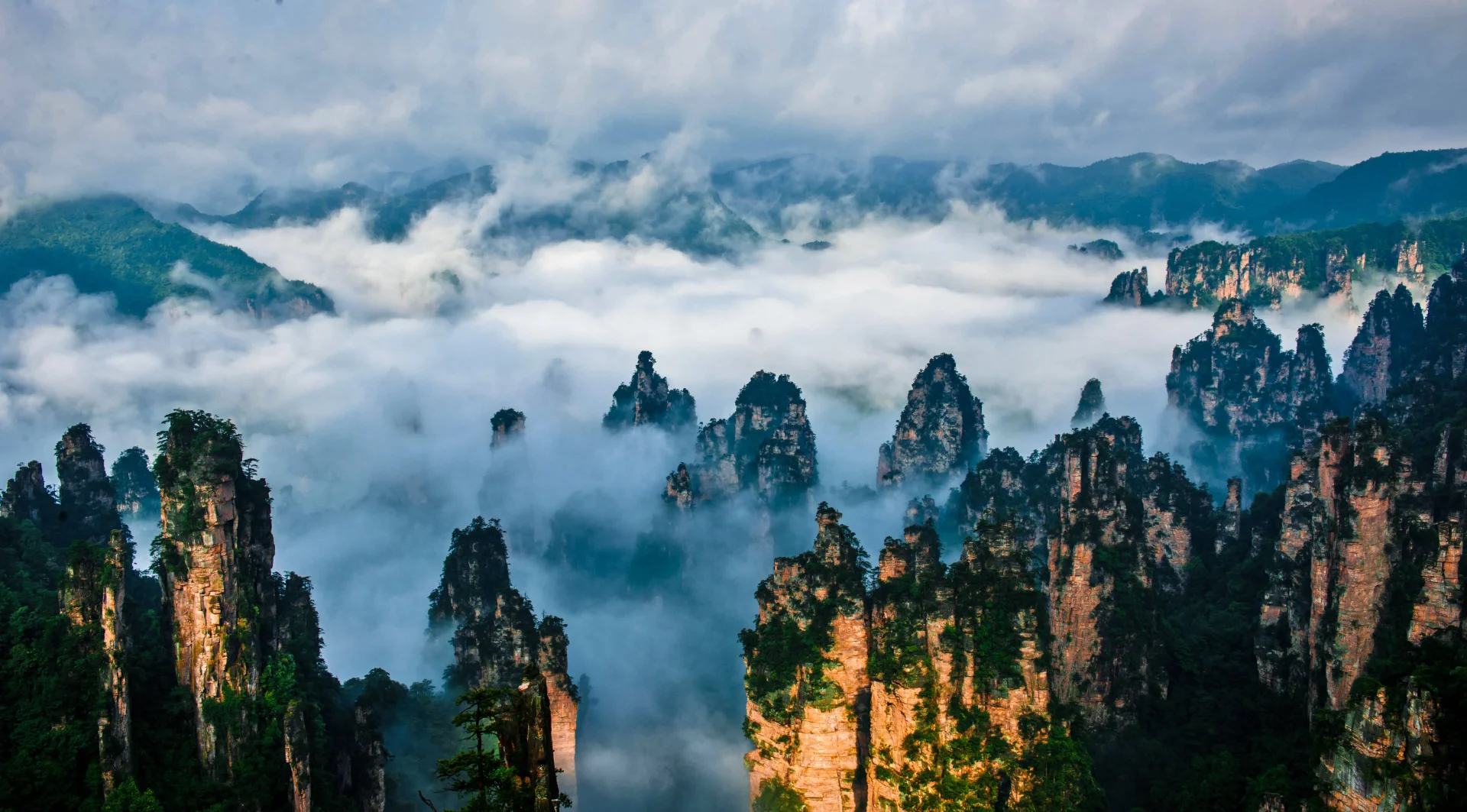
Zhangjiajie National Forest Park is a protected natural area in Hunan Province, China, covering 4,810 hectares of quartzite sandstone pillar formations rising up to 200 meters from a subtropical valley floor. Established in 1982 as China’s first national forest park and inscribed as a UNESCO World Heritage Site in 1992, it forms the core of the broader Wulingyuan Scenic Area. It is widely recognized as the landscape that inspired the floating mountains of James Cameron’s Avatar.
Planning a trip here? This guide covers what you actually need to know — correct 2026 ticket prices, the reservation system introduced in June 2025 that catches most visitors off guard, honest route advice, and the things we’ve learned from two decades of bringing international visitors through this park.
At Travel China With Me, we’ve been running inbound China tours since 2006. Zhangjiajie is one of the destinations we know best — and one where bad or outdated information causes the most problems. We’ve written this to fix that.
Table of Contents
Quick Facts
Detail | Info |
|---|---|
Location | Wulingyuan District, Zhangjiajie City, Hunan Province |
UNESCO Status | World Heritage Site (1992); Global Geopark (2004) |
Established | 1982 — China’s first national forest park |
Opening Hours | 07:00–17:30 daily (last entry at 17:00) |
Ticket Validity | 4 consecutive days from first entry |
Recommended Stay | 2 days minimum; 3 days ideal |
Altitude | Valley floor ~400m; plateau tops ~1,000–1,200m |
Famous For | Sandstone pillar formations; inspiration for James Cameron’s Avatar |
1. History and Cultural Significance

The photo was exhibited at the Wuling Scenic Photography Art Exhibition in July 1984.
The sandstone pillars of Zhangjiajie have been forming for over 300 million years. They are not karst — a common misconception. This landscape was shaped by physical erosion: freeze-thaw cycles cracking quartzite rock, plant roots widening the fissures, gravity pulling the weakened sections away. What remains standing is what the mountain couldn’t shed.
The Tujia and Miao peoples have lived among these peaks for millennia, weaving the formations into their folklore and spiritual life. The name “Zhangjiajie” itself — Zhang Family Boundary — refers to a specific local surname, rooted in the land.
Modern recognition came in 1982, when the Chinese government designated this area as the country’s first national forest park. It was a significant political act: China had never protected a landscape in this category before. A decade later, in 1992, the broader Wulingyuan Scenic Area — of which the forest park is the heart — was inscribed as a UNESCO World Heritage Site.
The international moment came in 2010. Director James Cameron confirmed that photographs of Yuanjiajie’s sandstone pillars had influenced the design of Pandora’s floating mountains in Avatar. One peak — previously called the Southern Sky Column — was officially renamed Avatar Hallelujah Mountain. The renaming was deliberate tourism strategy, packaged with the slogan “Pandora is far, but Zhangjiajie is near.” It worked. The park now receives around 30 million visitors annually, the vast majority of them Chinese. International visitors remain a small fraction — which, for those willing to plan carefully, is an advantage.
2. Zhangjiajie, Wulingyuan, and the Forest Park: What’s the Difference?
This is the question we get more than almost any other, and the confusion is understandable — the names are used interchangeably in most travel content, which makes planning genuinely difficult. Here’s how they actually relate to each other.

Zhangjiajie (张家界) is a city in Hunan Province — a prefecture-level municipality of about 1.5 million people, with its own airport, train stations, and urban centre. When people say they’re “going to Zhangjiajie,” they mean the broader region. The city itself has limited tourist interest; most visitors pass through it on the way to the scenery.
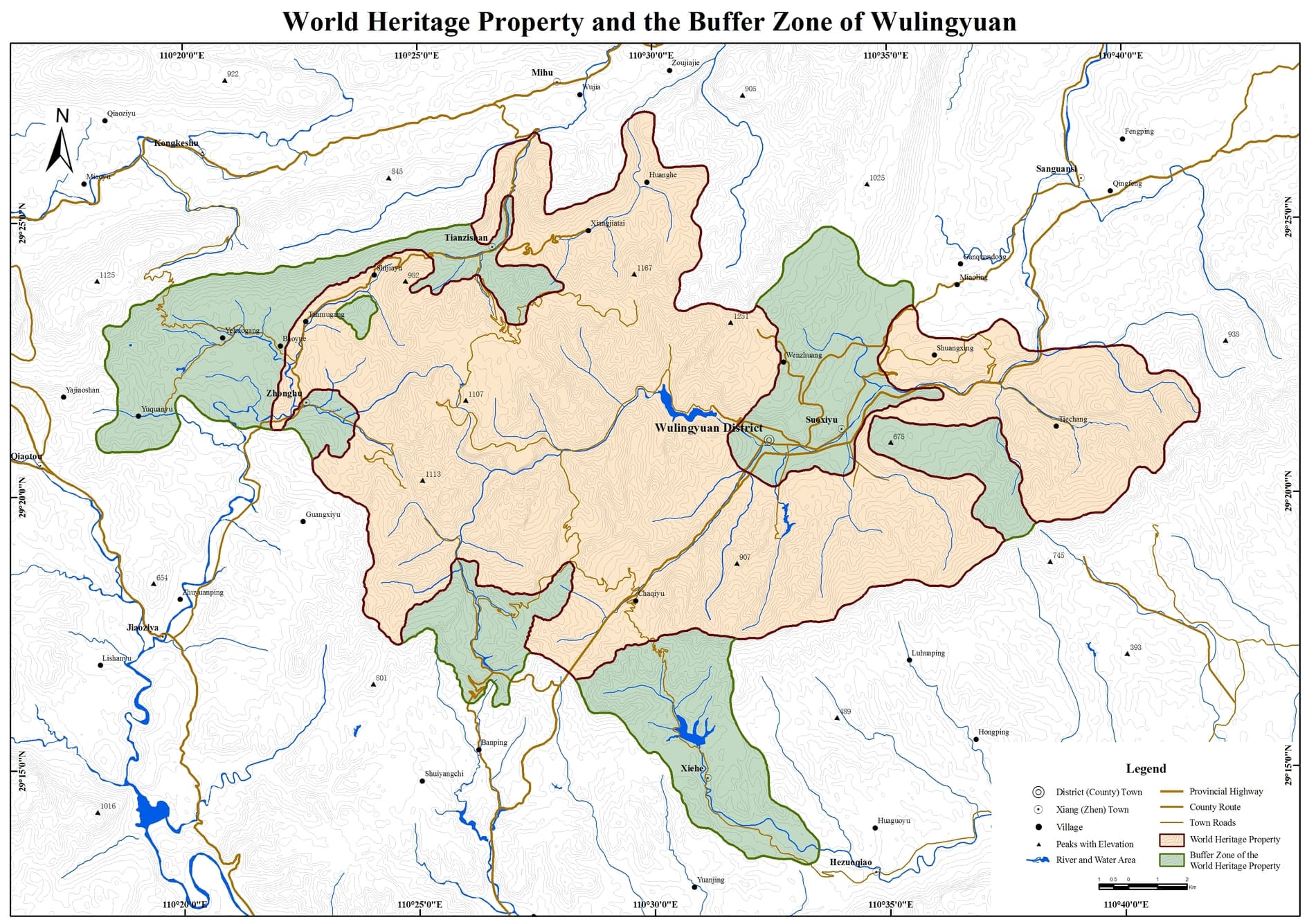
Wulingyuan Scenic Area (武陵源风景名胜区) is the protected natural zone — 397.5 square kilometers of sandstone pillar landscape — that sits about 32 kilometers from Zhangjiajie city center. This is what UNESCO designated as a World Heritage Site in 1992. It contains four administrative zones under a single ticketing system.

Zhangjiajie National Forest Park is one of those four zones — the original protected core, designated in 1982. It’s where the Bailong Elevator, Golden Whip Stream, and Huangshizhai are located. The other three zones are Tianzi Mountain Nature Reserve, Suoxiyu (which includes Ten-Mile Gallery), and Yangjiajie. All four are covered by the same ¥224 Scenic Area + Eco-Bus ticket.
In practical terms, the structure looks like this:
Zhangjiajie City (municipality)
└── Wulingyuan Scenic Area (UNESCO World Heritage Site — one ticket covers all)
    ├── Zhangjiajie National Forest Park ← you are here
    ├── Tianzi Mountain Nature Reserve
    ├── Suoxiyu / Ten-Mile Gallery
    └── Yangjiajie Scenic Area
When most people search for “Zhangjiajie National Forest Park,” they’re really asking about the entire Wulingyuan experience — all four zones, the pillars, the Avatar connection, the Bailong Elevator. This guide covers all of that.
What About Tianmen Mountain?
Tianmen Mountain is a completely separate attraction, operated by a different company, with its own ticket (¥288 standard). It sits near Zhangjiajie city center — not within Wulingyuan at all. It’s excellent — home to the world’s longest high-altitude cable car and a famous cliff-side glass walkway — but it requires a separate day and a separate budget. Nothing you buy for the forest park gets you into Tianmen Mountain, and vice versa.
The same applies to Baofeng Lake, Yellow Dragon Cave, and the Grand Canyon Glass Bridge — all separate attractions, all separate tickets. We cover all of them in our complete Zhangjiajie tickets guide.
DIG DEEPER: Zhangjiajie vs Wulingyuan: Relationship & Difference Explained
3. Why It’s Worth the Journey
We’ve brought clients here who’d already done Guilin, Yangshuo, and Huangshan — people who thought they had a working model of what Chinese mountain scenery looked like. Every one of them was wrong about Zhangjiajie.
The reason is density. Guilin’s karst towers rise individually from flat plains, beautiful in a legible way. Here, over 3,000 pillars are packed into a single valley — some exceeding 200 meters in height, all forested to the crown, many rising within close reach of each other. When cloud fills the lower gorges after rain, only the tops are visible. The mass of it doesn’t register as scenery. It registers as something closer to vertigo.
We’ve watched people step off the Bailong Elevator at Yuanjiajie for the first time and just stop talking. Not in awe of a single thing — there’s no single thing — but overwhelmed by the sheer number of forms filling the horizon. One client, a retired architect from the Netherlands who had visited more than 60 countries, stood at the Lost Souls Platform for nearly twenty minutes without moving. He said afterward that the closest thing he could compare it to was standing inside a very large piece of music.
That reaction — that specific silence — is why we still bring people here after twenty years.
Beyond the views, this is a functioning subtropical ecosystem supporting over 3,000 plant species, many of them endemic to this unusual geology. Chinese giant salamanders inhabit the streams. The macaques along Golden Whip Stream are the wildlife most visitors actually encounter — bold, habituated to humans, and worth your close attention (see Practical Tips).
4. The Main Highlights
Yuanjiajie — The Avatar Zone
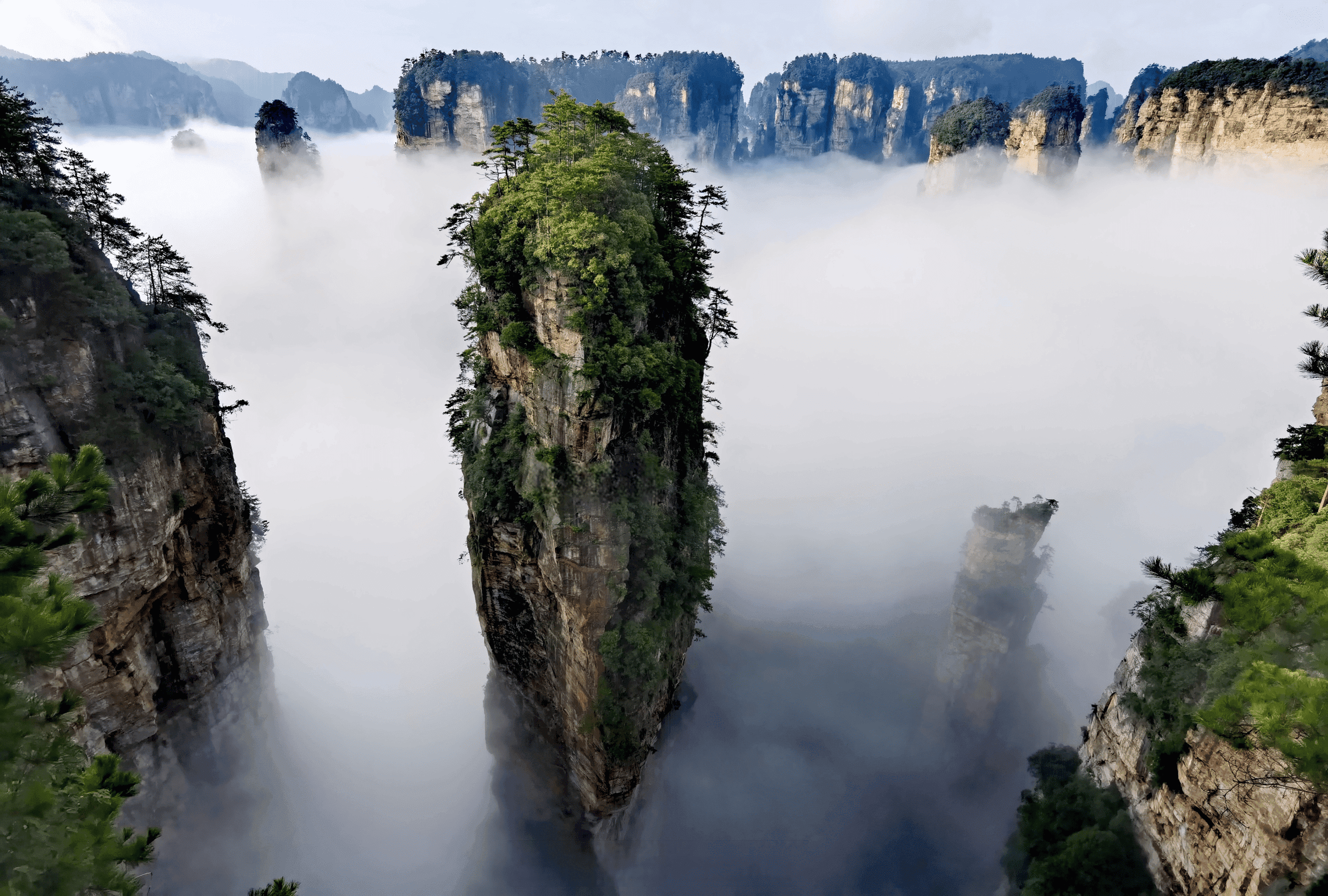
At around 1,074 meters elevation, Yuanjiajie is the plateau most visitors associate with the park’s iconic imagery. The Avatar Hallelujah Mountain stands at 1,080 meters — its narrowing base and broad crown create the visual illusion of floating when mist obscures the valley. The First Bridge Under Heaven is a natural stone arch linking two peaks 357 meters above the valley floor. Walking across it takes about two minutes. The feeling lasts longer.
The Lost Souls Platform offers a 360-degree panorama of the surrounding peak forest and is one of the best sunrise viewpoints in the entire park. The Back Garden is quieter — densely packed pillars create natural corridors, and the light filtering through the gaps at midday produces strong photographic opportunities.
For most international visitors on a first trip, Yuanjiajie is the non-negotiable starting point.
DIG DEEPER: Yuanjiajie in Zhangjiajie: Floating Mountains of Avatar Fame
Tianzi Mountain — Where the Cloud Sea Happens
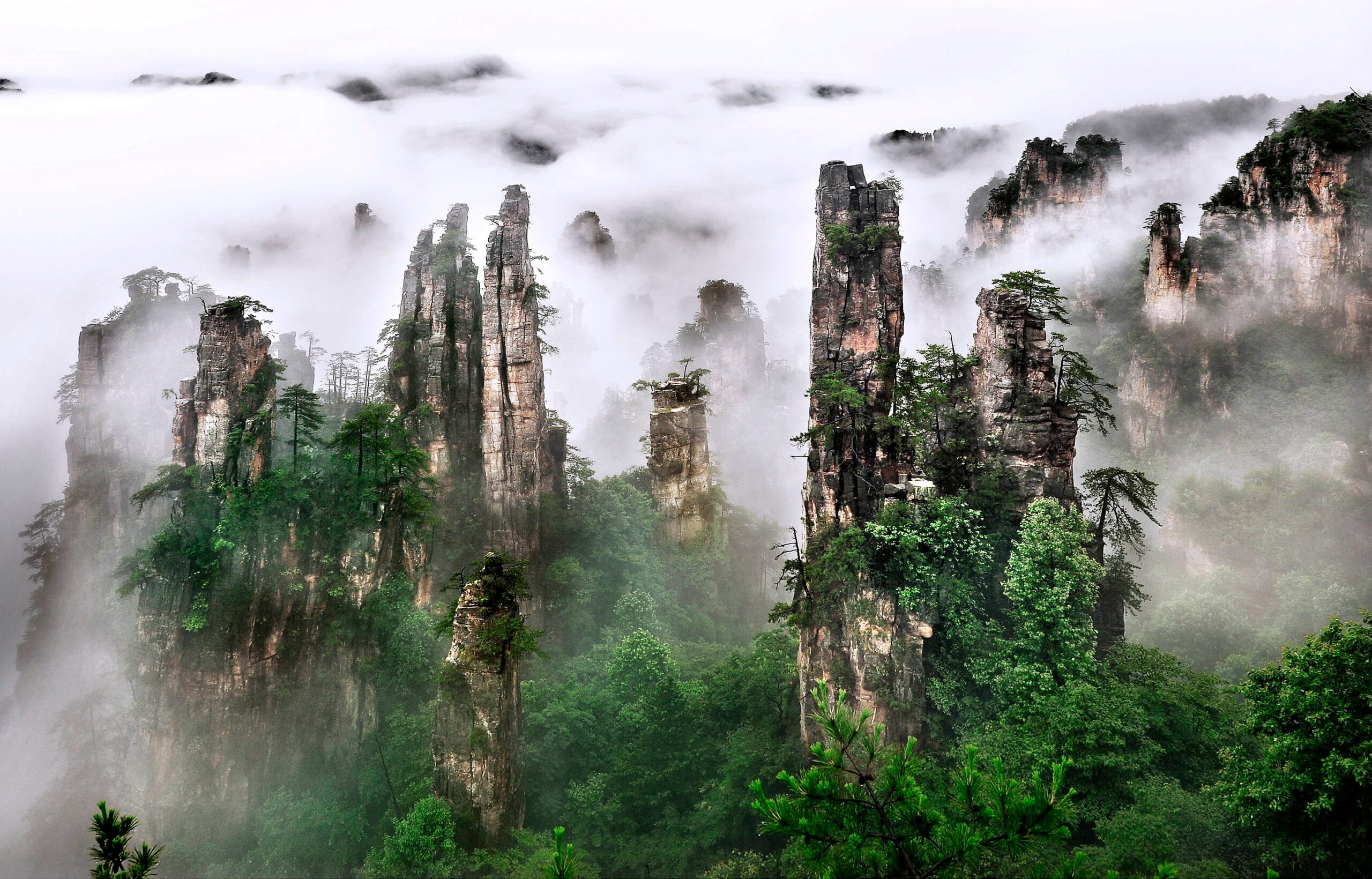
Here’s what we tell clients who want to see the cloud sea: go to Tianzi Mountain, not Yuanjiajie. Both zones get morning mist, but Tianzi’s topography — a high, flat plateau surrounded by a denser concentration of peaks — creates the phenomenon more reliably and more dramatically. When it works, the gorges fill to a precise elevation and every pillar appears as an island in a white sea. Photographers come specifically for this.
Named after a Tujia rebel leader who declared himself “Son of Heaven” here in the 14th century, the mountain plateau sits at 1,262 meters. The peak density visible from the main viewing platforms is greater than anywhere else in the park — columns recede in every direction until they dissolve into haze.
The cloud sea occurs most reliably in the hours after overnight rain, between June and October. Getting up here before 7am on such a morning — the air still cold, the light just arriving — is one of the best decisions a visitor to this park can make. We’ve stood at the Tianzi Mountain viewpoint in those conditions and watched Chinese tourists weep. It’s that kind of place.
DIG DEEPER: Tianzi Mountain in Zhangjiajie: The Complete Insider’s Guide
Golden Whip Stream — A Different Kind of Big

Most visitors spend their time on the plateau tops looking down. Golden Whip Stream is the counterargument: 7.5 kilometers along a clear valley stream, with the pillars rising vertically on both sides. The same formations you photographed from above now tower directly overhead. The scale reads differently from the ground — more claustrophobic, more immediate, and in some ways more impressive.
It’s also where this park’s film history gets interesting. The 1986 TV adaptation of Journey to the West (西游记) — still one of the most-watched television productions in Chinese history — used these gorges as a major filming location. The production crew had almost nowhere else to shoot scenes set in otherworldly terrain. This was, at the time, one of the least-visited corners of China.
The macaques along this trail are the park’s most reliable wildlife encounter. They’re wild animals that have learned humans carry food. A zipped bag and calm body language is all the protection you need. See Practical Tips for specifics.
For visitors with limited mobility, Golden Whip Stream is the most accessible major route in the park — flatter terrain than anywhere on the plateaus, well-maintained path surface, and the eco-bus can drop you at either end. You can also read more detail in our complete Golden Whip Stream trail guide.
Huangshi Village / Huangshizhai — The Classic Viewpoint
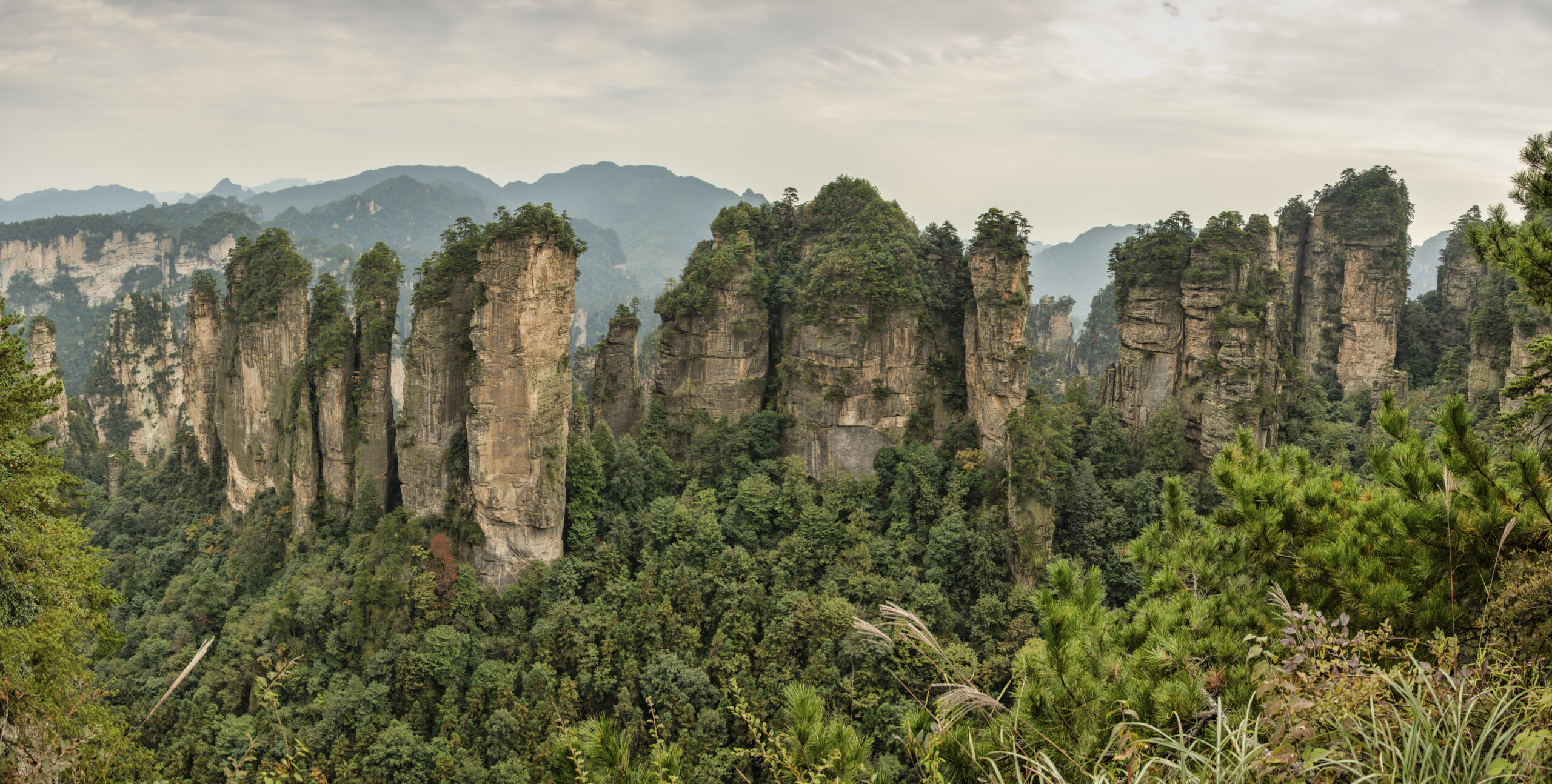
The old saying: “Not visiting Huangshi Village means coming to Zhangjiajie for nothing.” (不到黄石寨,枉来张家界) The plateau at 1,080 meters has five major viewpoints with full-perimeter views of the peak forest below. The cable car gets you there in minutes. Walking up via stone steps takes about 90 minutes and is genuinely demanding — worthwhile for those who prefer that approach.
Honest comparison with Yuanjiajie: the scenery is similar in character. If your trip is two days, choose one or the other. Yuanjiajie for first-timers; Huangshizhai for repeat visitors or those who want a different viewing angle.
DIG DEEPER: Huangshizhai (Huangshi Village): The Complete Visitor Guide
Yangjiajie — The Section Most People Miss

If you’ve done Yuanjiajie and Tianzi Mountain and feel like you’ve “seen” the park, Yangjiajie will correct that assumption. The trails are narrower and the formations feel immediately closer — you’re walking between the pillars rather than viewing them across a valley. The visitor numbers are noticeably lower, partly because it’s not on the standard tour group circuit and partly because the approach requires more initiative.
The cable car here connects directly to Yuanjiajie’s plateau, which makes a Yangjiajie-to-Yuanjiajie circuit one of the most efficient and least-crowded routes through the park’s best scenery. We often route clients through the West Gate specifically for this reason. For more on what to expect, our Yangjiajie guide covers the trails in detail.
Ten-Mile Gallery
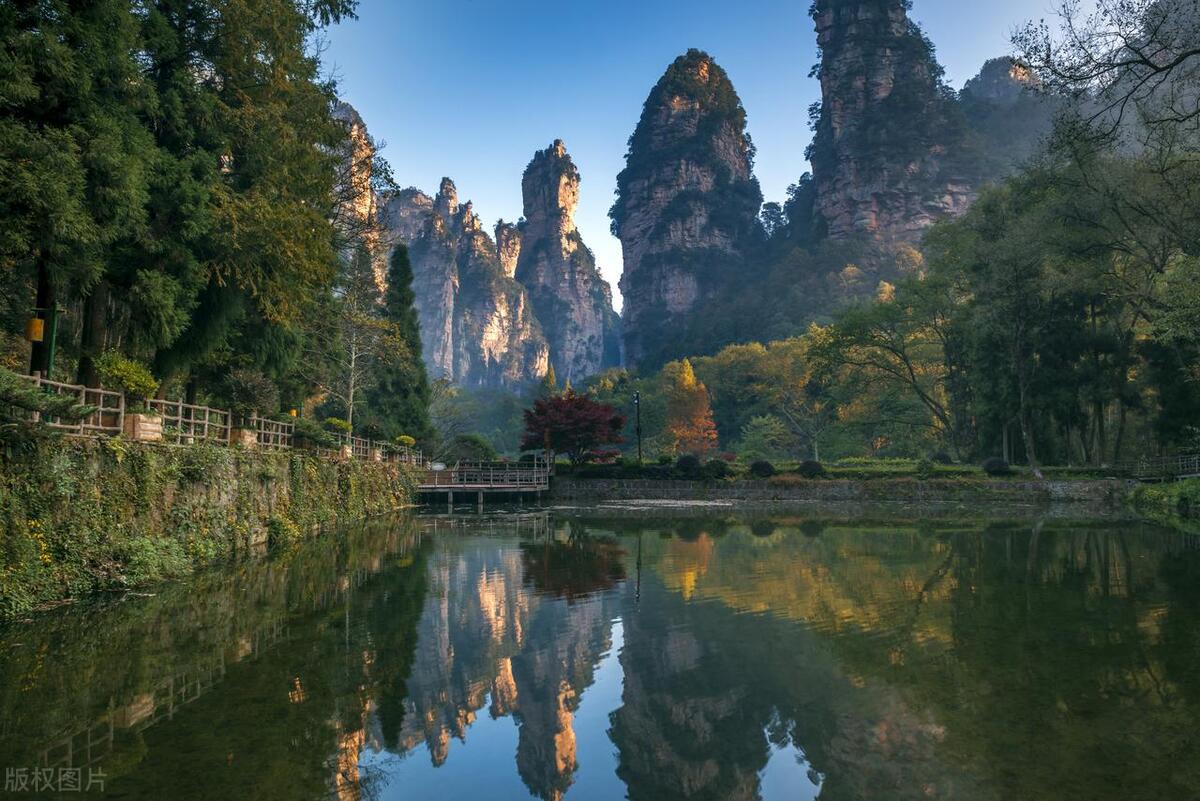
This one is simple. A 5.2-kilometer walk through a valley of named formations — shapes that locals have been interpreting as animals, deities, and folk characters for centuries. The small electric tram (separate ticket, runs the full length) is worth taking at least one way; there’s something enjoyable about rolling slowly through the formations rather than hiking past them. Best suited for a relaxed half-day, for visitors with mobility limitations, or for children who need flat terrain after a heavier day. Full details in our Ten-Mile Gallery guide.
The Bailong Elevator
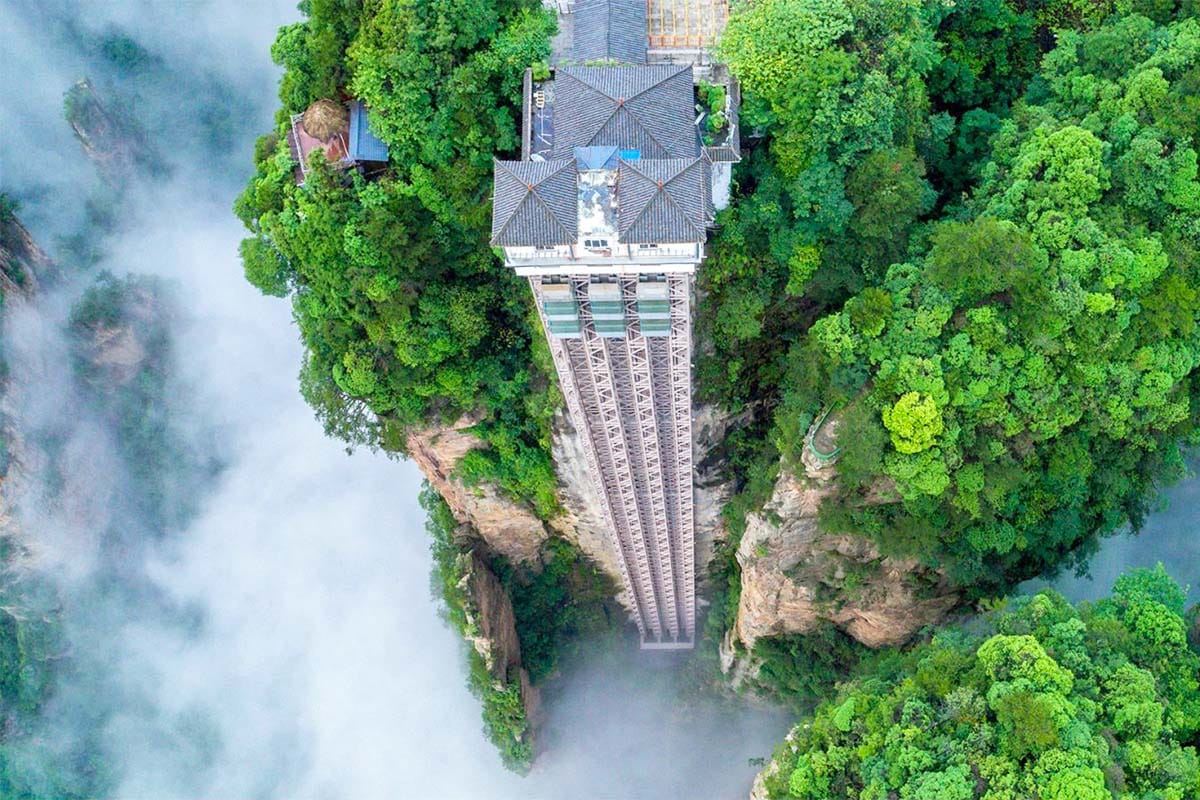
The Bailong Elevator holds three Guinness World Records: world’s tallest, fastest, and highest-capacity outdoor elevator. It rises 326 meters in roughly 88 seconds along the face of a cliff — partly through the rock, partly exposed on a steel structure. Three double-deck glass cars run simultaneously, each carrying 50 people, for a total capacity of 4,000 passengers per hour.
The practical experience: you enter through the rock, the lighting changes, the car accelerates, and then you emerge into open air above the valley. The view through the glass — the gorge dropping away, the opposite cliffs rising — is genuinely dramatic and brief.
Peak-hour queues can reach two to three hours during Chinese national holidays. Arriving before 8:00am eliminates most of the wait on ordinary days.
The Bailong Elevator is not included in the park ticket. It’s sold separately and is one-way — you take the elevator up and descend by a different route.
DIG DEEPER: Bailong Elevator of Zhangjiajie: The Expert’s Guide
5. Ticket Prices (2026)
Scenic Area Tickets
Ticket Type | Full Price | Discounted |
|---|---|---|
Scenic Area + Eco-Bus (景车联票) — recommended | ¥239 | ¥122 |
Scenic Area Gate Only (景区门票) | ¥165 | ¥83 |
Special Discount Ticket (特惠票) | — | ¥30 |
Unlimited Annual Pass | — | ¥298 |
Get the ¥224 Scenic Area + Eco-Bus ticket. The park covers more than 26,000 hectares. The four zones you want to visit are not walking distance from each other. Without the eco-bus pass, you pay individually for every ride — and that adds up fast to more than the ¥59 difference. The gate-only ticket is a false economy for anyone doing more than one zone.
Your ticket covers all four zones: Zhangjiajie National Forest Park, Ten-Mile Gallery (Suoxiyu), Tianzi Mountain Nature Reserve, and Yangjiajie Scenic Area. It’s valid for 4 consecutive days from first use.
Free admission: Children under 14, seniors 65+, people with disabilities, active military and retirees, veterans, and their qualifying family members.
Half-price admission: Ages 14–17, seniors 60–64, full-time university students with valid student ID.
Cable Cars and the Bailong Elevator
These are sold separately and are one-way. The standard approach is to take a ride up and descend by a different route or on foot.
Ride | Full Price | Discounted |
|---|---|---|
Tianzi Mountain Cable Car | ¥72 | ¥36 |
Yangjiajie Cable Car | ¥76 | ¥38 |
Huangshizhai Cable Car | ¥65 | ¥33 |
Bailong Elevator | ¥65 | ¥33 |
If you’re planning multiple rides across your trip, pass options save money:
Pass | Full Price | Discounted | Coverage |
|---|---|---|---|
4-Trip Pass (三索一梯四程联票) | ¥238 | ¥128 | Any 4 one-way rides, valid 4 days |
Unlimited Pass (三索一梯多程联票) | ¥298 | ¥158 | Unlimited rides on all 4, 4 days |
All-Inclusive Pass (景区三索一梯通票) | ¥518 | ¥271 | Unlimited park + buses + all rides, 4 days |
Important for foreign visitors: Half-price cable car discounts generally apply to Chinese nationals with qualifying documentation. Foreign visitors — including foreign seniors and students — pay full cable car price. The under-14 free rule applies regardless of nationality.
DIG DEEPER: Zhangjiajie Tickets Explained: All in One Guide
6. The Reservation System — Don’t Skip This Section
Since June 2025, every visit to the forest park requires an advance reservation. This includes return visits on days 2, 3, and 4 of your ticket window.
This is the detail that catches people out: you cannot simply buy a 4-day ticket and show up each morning. Each day’s entry needs to be reserved separately. During peak season (May through October), first-time visitor slots take priority, and returning-visitor slots can fill up — especially around Chinese national holidays.
The common mistake: arrive on day two without a reservation and find the slot you wanted is gone.
What to do: book each day you plan to enter at the time of ticket purchase. Treat each entry day as a separate booking, not a single purchase.

Reserve through the “张家界旅游小助手” (Zhangjiajie Travel Assistant) WeChat mini-program, or have your travel agency handle it. Foreign visitors need passport details for registration.
7. Choosing the Right Gate
All five gates open at 07:00 and stop admissions at 17:00.
Gate | Best For |
|---|---|
East Gate (吴家峪) | Fastest access to Yuanjiajie and the Bailong Elevator |
South Gate (森林公园) | Best public transport links from Zhangjiajie city; busiest gate |
West Gate (杨家界) | Yangjiajie area; significantly quieter than South Gate — we often recommend this to clients wanting to avoid morning crowds |
North Gate (天子山) | Direct access to Tianzi Mountain plateau |
Central Gate (梓木岗) | Lightest traffic; best for self-driving visitors |
For most first-time international visitors, the East Gate for Yuanjiajie on day one and the South Gate for Golden Whip Stream on day two is the most logical circuit.
DIG DEEPER: Zhangjiajie National Forest Park Entrances: Which Gate Should You Use?
8. How to Get to Zhangjiajie National Forest Park
From the Station or City Centre to the Park
This leg catches many visitors off guard. The train station and city centre are both about 32km from Wulingyuan District and the park entrances — not walkable, not a short taxi.
By taxi: ¥60–80 from Zhangjiajie West Station to Wulingyuan, 40–50 minutes. Use Didi (China’s ride-hailing app) or ask your hotel to call one. Make sure the driver understands you want 武陵源景区, not just 张家界.
By public bus: Bus No. 6 runs between Zhangjiajie city and Wulingyuan for around ¥13. It’s slower and involves a transfer, but works for budget-conscious travelers with light luggage and time to spare.
The simplest solution — and the one we recommend to nearly every client — is to stay in Wulingyuan District from the start. You arrive once, you’re five minutes from the gates, and you never deal with this transit problem again.
9. Best Time to Visit
Season | Temperature | Crowds | Our Take |
|---|---|---|---|
Spring (Apr–May) | 15–22°C | Moderate | Best overall for most visitors — green, misty, manageable |
Summer (Jun–Aug) | 26–33°C | High | Best for cloud sea photography; afternoon storms are common |
Autumn (Sep–Oct) | 16–26°C | High (Oct week 1: extreme) | Excellent except Golden Week — avoid the first week of October |
Winter (Nov–Mar) | 2–12°C | Low | Snow on peaks is stunning; half-price tickets; shorter hours |
The Single Best Tip We Can Give You: Go the Morning After Rain
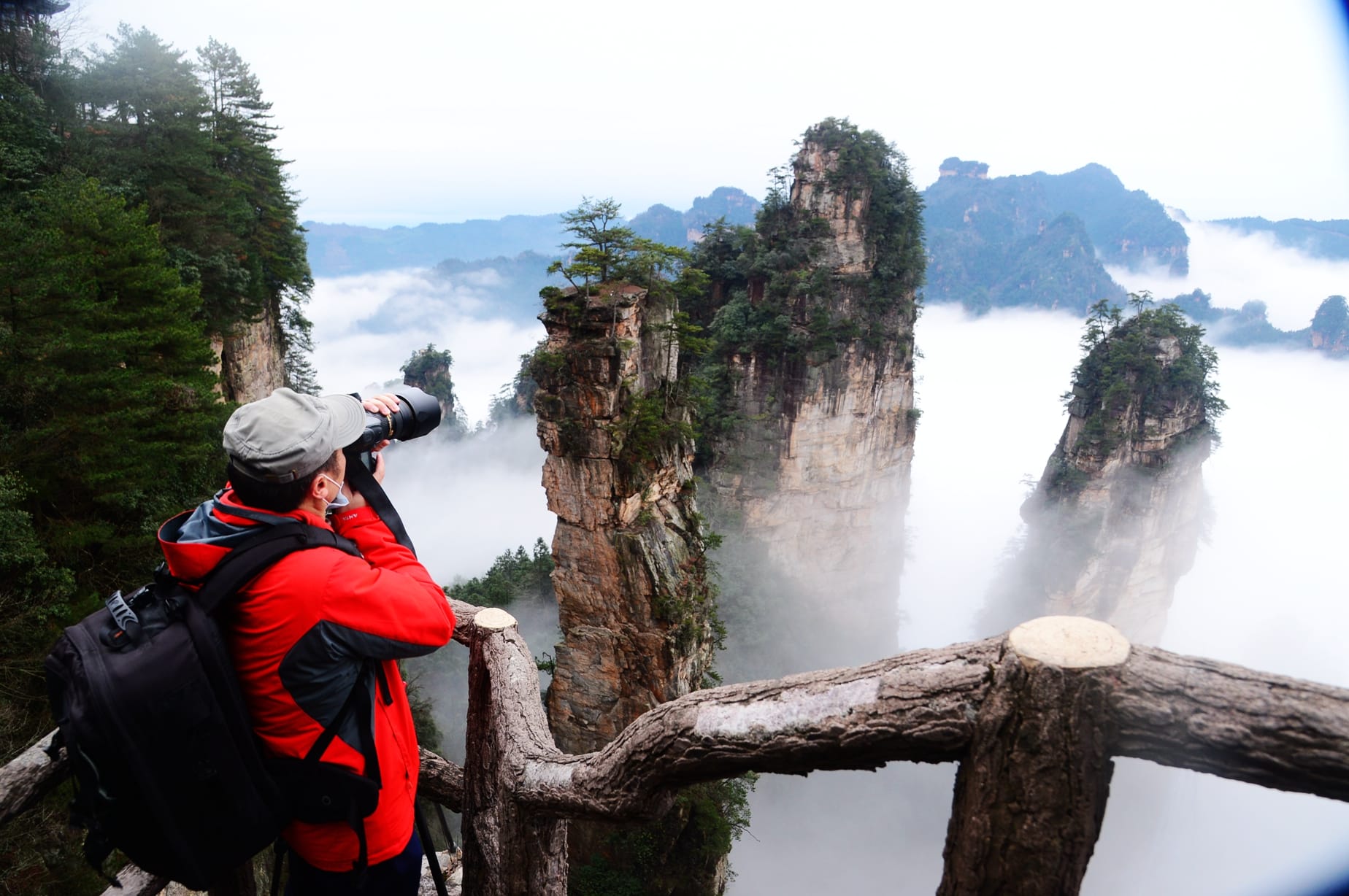
If there is one piece of advice that separates visitors who see Zhangjiajie at its best from those who see it at merely good, it’s this: go early on the morning after overnight rain.
Here’s why. When it rains overnight and the air cools sharply, cold air sinks into the gorges and collides with the warmer valley air still rising from the forest floor. The result is a cloud sea that forms at a precise elevation, usually between 600 and 800 meters, leaving the pillar tops exposed above a surface of white. This is the image in every photograph that makes people want to come here. It is not a common occurrence — and it is most common in the hours immediately after overnight rain, before the sun burns the mist off by mid-morning.
The implication: if you’re visiting in summer or autumn and rain falls overnight, treat the next morning as your highest-priority day in the park. Rearrange whatever you had planned. Get to Tianzi Mountain or Yuanjiajie before 7am. This advice has never failed a client we’ve given it to.
The one date range to avoid unconditionally is the first week of October (National Golden Week). Daily visitor caps are hit early. Queue times for the Bailong Elevator, cable cars, and eco-buses multiply. This is not the week to experience Zhangjiajie for the first time.
DIG PEEPER: Best Time to Visit Zhangjiajie: Real Data from 20K+ Daily Visitors
10. Recommended Itineraries
2-Day Route (Most Common for International Visitors)
Day 1: Enter East Gate → eco-bus to Bailong Elevator → up to Yuanjiajie → Avatar Hallelujah Mountain, First Bridge Under Heaven, Lost Souls Platform → eco-bus to Tianzi Mountain → viewpoints → sunset → overnight in Wulingyuan or Tianzi Mountain area
Day 2: Enter South Gate → Golden Whip Stream walk (7.5km) → Huangshizhai (cable car up, walk or cable car down) → exit South Gate
3-Day Route (Recommended)
Day 1: West Gate → Yangjiajie cable car up → Yangjiajie area → eco-bus to Yuanjiajie → Avatar area → Bailong Elevator down → exit East Gate
Day 2: North Gate early (target sunrise or cloud sea at Tianzi Mountain) → Tianzi Mountain circuit → eco-bus to Ten-Mile Gallery → tram ride → exit
Day 3: Golden Whip Stream, Huangshizhai, or extend to Yellow Dragon Cave / Baofeng Lake (both nearby, both separate tickets)
DIG DEEPER: Zhangjiajie Itinerary Guide: From 1 Day to 7 Days
11. Practical Tips for International Visitors

Take the monkeys seriously. The macaques along Golden Whip Stream look photogenic and they know it. They’ve also learned, over decades of contact with tourists, that bags contain food. We’ve seen them unzip backpacks, lift sunglasses off faces, and take a phone directly out of a distracted visitor’s hand. They’re not aggressive in the way a threatened animal is aggressive — they’re opportunistic, calm, and fast. Keep your bag zipped and held in front of you. Don’t make eye contact, don’t offer anything, and don’t try to photograph them at close range. If one approaches, walk away without sudden movements. Park staff patrol the trail and respond quickly, but prevention is easier than intervention.
Shoes matter more than people expect. The stone paths throughout the park are worn smooth by millions of footsteps and become genuinely slippery after rain. We see visitors struggling in flat-soled sneakers every time. Bring shoes with grip. A light rain jacket is equally non-negotiable — the park’s microclimate can shift from clear to soaked in twenty minutes regardless of what the forecast said that morning.
Don’t eat inside the park if you can avoid it. Food options inside the scenic area are limited, overpriced, and mediocre. A good breakfast before entry and snacks in your bag will serve you better. The real food — Tujia smoked pork (腊肉), sour fish soup (酸鱼汤), stir-fried wild mushrooms — is in Wulingyuan town, outside the gates, at a fraction of the price. Learn what to eat in Zhangjiajie.
On payment: WeChat Pay and Alipay are accepted at virtually every vendor inside the park. International credit cards are not. Bring a supply of cash (RMB) as backup — enough for a day’s worth of incidentals.
Stay in Wulingyuan District, not Zhangjiajie city. The city is 32km from the park entrance. That’s a 40–50 minute taxi ride each way, every day. Wulingyuan has hotels at every price point, puts you a few minutes from the gates, and gives you the option of early morning access for cloud sea conditions. If you specifically want sunrise at Tianzi Mountain, look for guesthouses in the Tianzi Mountain area itself — a handful operate inside the scenic zone and allow access before the main crowds arrive. Learn where to stay in Zhangjiajie.
12. Frequently Asked Questions
Do I need to book tickets in advance?
Outside national holidays, walk-up tickets are usually available at the gate. But since June 2025, the park also requires a separate daily entry reservation — even if you already hold a 4-day ticket. Each day’s slot needs to be booked individually. During Chinese national holidays, both the ticket and the reservation slot should be secured well in advance.
Can I visit the park in one day?
Technically yes. In practice, you’ll see only a fraction of it. One day covers either the Yuanjiajie area or Golden Whip Stream + Huangshizhai — not both thoroughly. Two days is the minimum to feel the park properly.
How do I get from Zhangjiajie city (or the train station) to the park entrance?
From Zhangjiajie West Station (张家界西站), take a taxi to Wulingyuan District — about 40–50 minutes and ¥60–80. Public bus No. 6 also runs between the city and Wulingyuan for around ¥13 but takes longer and involves a transfer. From Zhangjiajie city centre, the journey is similar. Most visitors staying in Wulingyuan District won’t need this at all — the park gates are a short walk from most hotels there, which is exactly why we recommend staying in Wulingyuan rather than the city.
Is Tianmen Mountain part of the forest park?
No. Tianmen Mountain is a completely separate attraction near Zhangjiajie city center with its own ticket (¥288 standard). It requires a separate day and budget. It’s excellent — and worth including in a longer trip — but nothing you buy for the forest park applies there.
Are the cable car discounts available to foreign visitors?
The half-price cable car discounts apply to Chinese nationals with qualifying documentation. Foreign visitors pay full cable car price regardless of age or student status. The under-14 free rule applies to all nationalities.
Is the park suitable for children?
Yes, with planning. The eco-bus system, Bailong Elevator, and flat sections like Ten-Mile Gallery are all child-friendly. Children under 14 enter free. Some connecting paths involve steep steps that require adult assistance for young children.
Is Zhangjiajie worth visiting even if I don’t see the cloud sea?
Yes — but the cloud sea is genuinely transformative and worth building your schedule around. The park at ground level, on a clear day, is spectacular. The same park when mist floods the gorges is something most visitors describe as the best thing they’ve seen in China. Check the weather forecast before each day and prioritize Tianzi Mountain on mornings after overnight rain.
Why might the park close suddenly?
Heavy rain can trigger temporary closures for safety — path flooding, landslide risk, and infrastructure checks. This is most common between June and September. Build a buffer day into your itinerary if visiting during the rainy season.
13. A Personal Note from Our Team
We first brought foreign clients to Zhangjiajie in the early 2000s, before the Avatar connection, before the Bailong Elevator in its current form, before English signage existed anywhere in the park. In those years, our groups would sometimes go an entire day on the trails without seeing another foreign face. Local guesthouse owners would come out to look at us. Staff at the ticket windows would call colleagues over. We were the novelty.
One early trip stands out clearly. We had a group of eight — mostly Europeans, one retired couple from Australia. It had rained the previous night, heavily, and we arrived at Tianzi Mountain before 7am in cold air and low light. The cable car was not yet running at full capacity. We hiked the last section. When the ridge opened up and the cloud sea was there — fully formed, the pillar-tops emerging from a flat white surface in every direction — the Australian woman sat down on the path and cried. She wasn’t embarrassed about it. She said she’d been traveling for thirty years and nothing had prepared her for it. Her husband took her hand and they sat there for a long time. We didn’t rush them.
That’s what this park does to people when you get the timing right.
Over twenty years, the infrastructure has transformed. The elevator, the cable cars, the eco-bus system, the hotels, the crowds. None of that has changed what happens at the viewpoints on a clear morning after rain. The pillar tops still emerge from the mist exactly as they always have. The silence is the same.
If you’d like help planning your visit — a custom itinerary, an English-speaking guide, private transfers, advice on which days and gates to prioritize — we’re happy to help.
Get in touch with the Travel China With Me team →
Updated 2026. Ticket prices and park regulations are subject to change. Verify current information with the official Wulingyuan ticketing system or our Zhangjiajie tickets guide before your visit.