Tianmen Mountain, Zhangjiajie: The Complete Visitor Guide
This guide tells you everything you need to visit Tianmen Mountain — what to expect, which route to take, what the tickets actually cover, and where most visitors go wrong. We’ve been running inbound China tours since 2006 and have guided thousands of international visitors up this mountain across every season. What follows is built from that experience, updated to reflect conditions in 2026.
⚠️ CRITICAL UPDATE
- Due to upgrading work, the lower section of the Tianmen Mountain main cableway will stop carrying passengers from October 13, 2026. Routes A and B will be temporarily suspended, with only Route C remaining available. The shuttle bus between the lower station and the mountain entrance will continue operating normally.
- The main cableway’s upper section closed for renovations on November 6, 2025, and construction is expected to last for years. From November 2025, the adult ticket price has increased by 10 yuan to 288 CNY.
Table of Contents
Quick Facts
Chinese name | 天门山 (Tiānmén Shān) |
Location | Yongding District, Zhangjiajie City, Hunan Province |
Distance from city center | 8 km south of downtown Zhangjiajie |
Peak elevation | 1,518.6 meters (4,980 ft) |
Park area | 96 sq km |
Adult ticket (Routes A, B, or C) | ¥288 CNY |
Opening hours | Mar–Nov: 06:30–18:00 | Dec–Feb: 08:00–17:30 |
Last entry | 16:00 |
Time needed | One full day — allow 5 to 7 hours |
Rating | National AAAAA Scenic Area |
Main cableway status | Upper section closed; lower section (downtown → mid-station) operating |
1. What Makes Tianmen Mountain Different From the National Forest Park
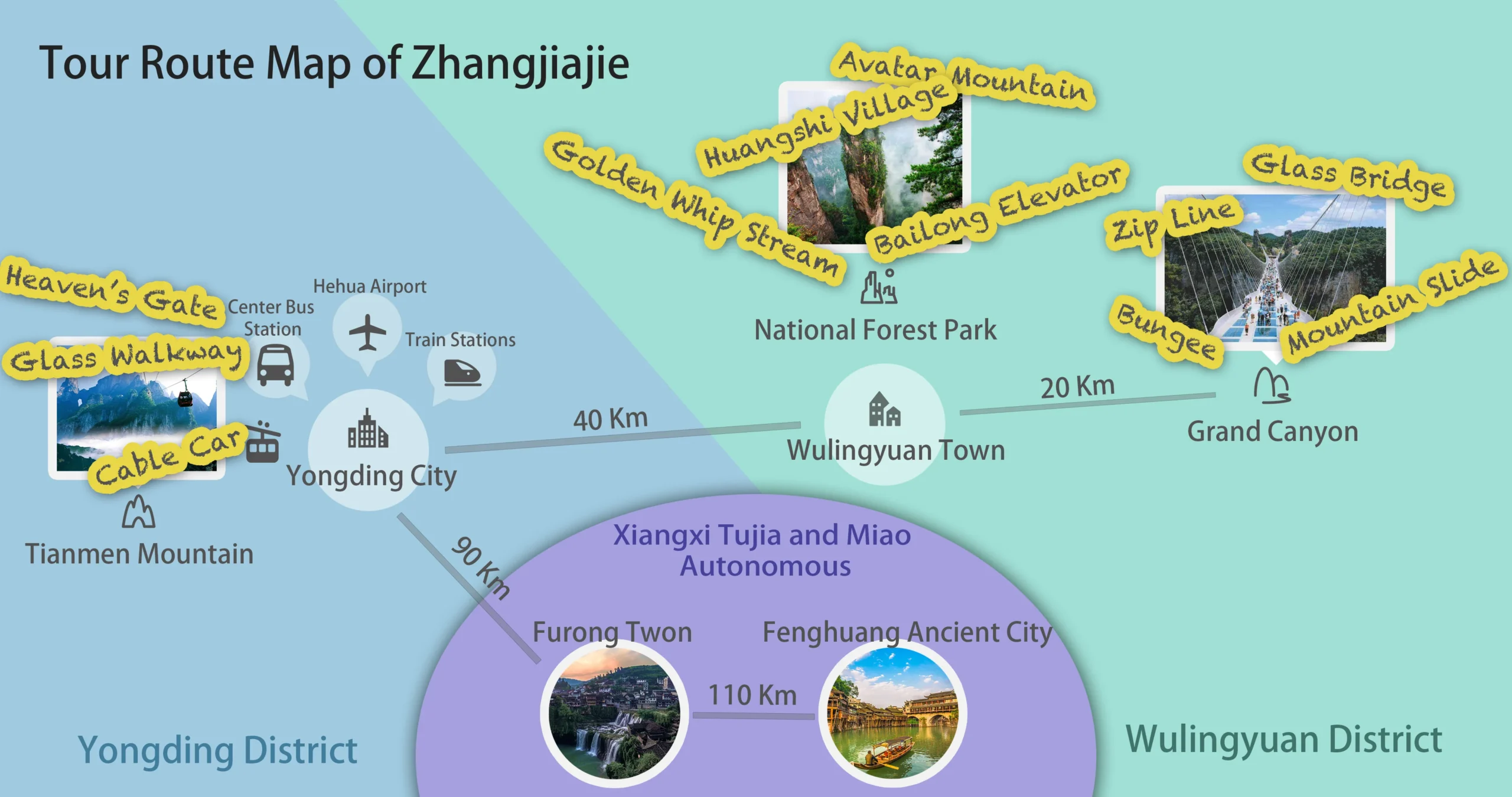
This is the first thing to understand, because the confusion causes real planning mistakes.
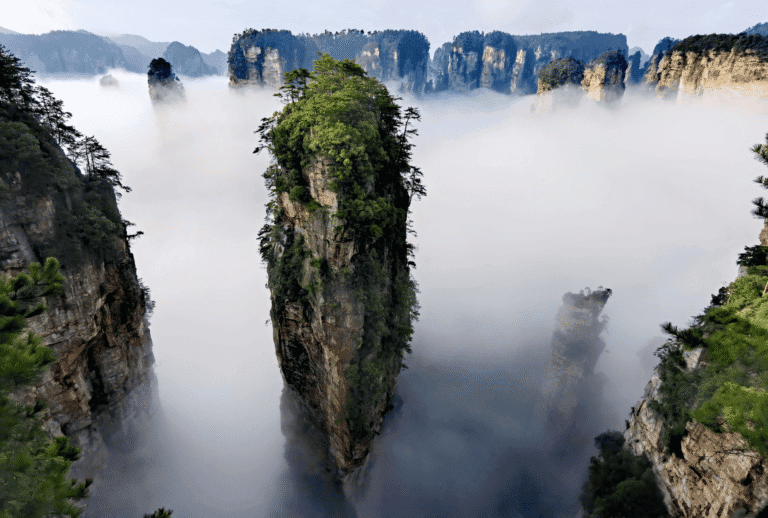
Most visitors come to Zhangjiajie for the Avatar Mountains — the sandstone pillar formations in Wulingyuan that inspired Pandora. Tianmen Mountain has nothing to do with those. It is a completely separate park, 35 km away, in a different part of the city, with a separate ticket and a completely different type of scenery.
Where Zhangjiajie National Forest Park gives you thousands of vertical rock pillars rising from valley forest, Tianmen Mountain gives you one dramatic peak: a natural arch at its summit, glass skywalks on cliff edges, a mountain road with 99 hairpin turns, and a Buddhist temple that has stood here since the Ming Dynasty.
They don’t compete. They are different experiences. But they need separate days. Never try to do both on the same day. In 20 years of guiding, this is the single mistake we’ve helped the most people fix after the fact — usually when it’s too late to fix it.
2. History and Cultural Significance
Tianmen Mountain appears in Chinese records going back over 1,700 years. Its earlier names — Yunmeng Mountain and Songliang Mountain — are in texts from the Han Dynasty onward.
The name “Tianmen” (Heaven’s Gate) came from a specific event in 263 CE, during the Three Kingdoms period. A cliff face on the southern slope collapsed, opening the arch we now call Tianmen Cave. Local officials reported it to the emperor as a divine omen. The name stuck.
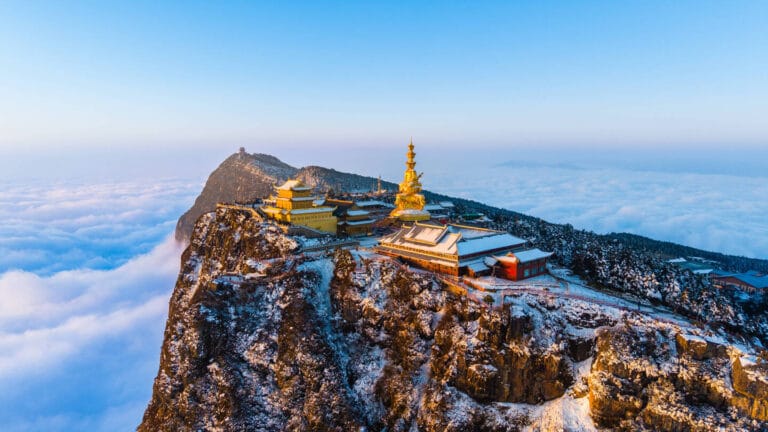
The mountain became a Buddhist center in western Hunan during the Tang Dynasty (618–907 CE). Tianmen Mountain Temple was first built in the Ming Dynasty on the site of an earlier Tang-era structure. It is considered one of the five Buddhist temples worldwide that houses genuine relics. Pilgrims have climbed to this summit to burn incense for well over a thousand years. When you walk the 999 steps today, you are on the same ascent.
The Tujia ethnic minority, who have inhabited this region for millennia, treated Tianmen Mountain as a sacred threshold between the human world and the divine. That meaning runs through the local name, the folk stories, and the landscape performance staged in the canyon below the mountain to this day.
Two figures from classical Chinese culture are associated with this mountain. The Taoist sage Guiguzi reportedly studied military strategy here, arranging stones into formations that later influenced Sun Bin’s famous tactics. The Rain Master Chisongzi is said to have cultivated himself on Chisong Peak. These are stories locals still tell. Guides worth their salt know them.
In 1999, stunt pilots from nine countries flew aircraft through the Tianmen Cave arch — an event that launched the mountain’s international reputation and eventually led to two World Wingsuit Championships here. In 2007, Alain Robert climbed the cliff below the arch bare-handed. A plaque on the mountain records that climb.
3. Why It’s Worth a Full Day

The cableway is a highlight, not just transport. Even with the upper section closed, the operating lower section carries you above the city. When the full cableway resumes, the 7,455-meter journey — the world’s longest alpine passenger cableway — spans an elevation change of 1,279 meters and takes about 28 minutes. You watch the city shrink below you, cross above farmland and forest, and arrive at a summit floating in cloud. The final section climbs at a 37-degree angle over open cliff. We’ve watched first-time visitors go completely silent during that ascent.

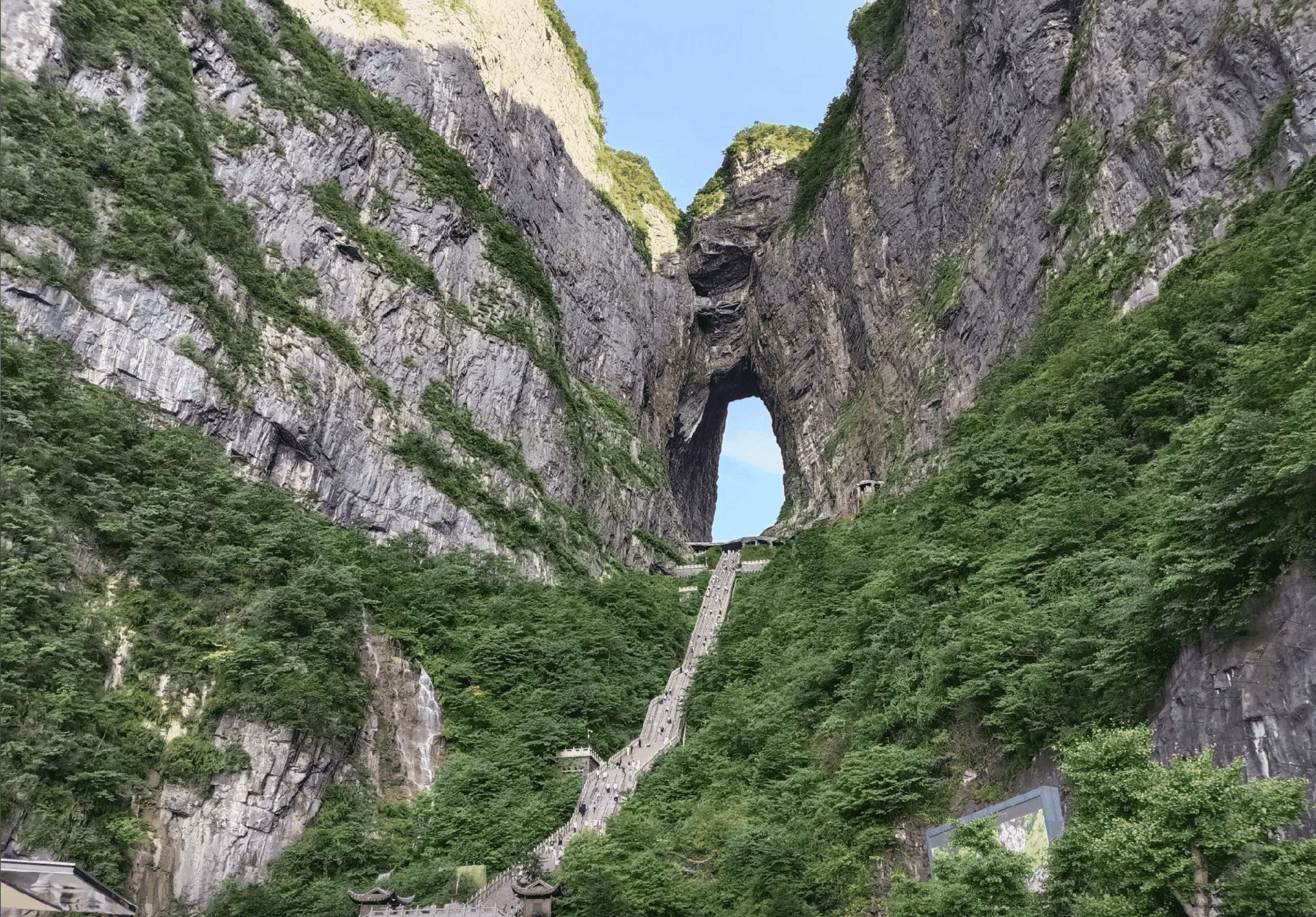
Tianmen Cave stops people cold. At 131.5 meters tall and 57 meters wide, it is the world’s highest natural cave through a mountain. You stand beneath it and look up through 130 meters of rock at a rectangle of sky. Most people don’t say anything for a while. That silence is the review.
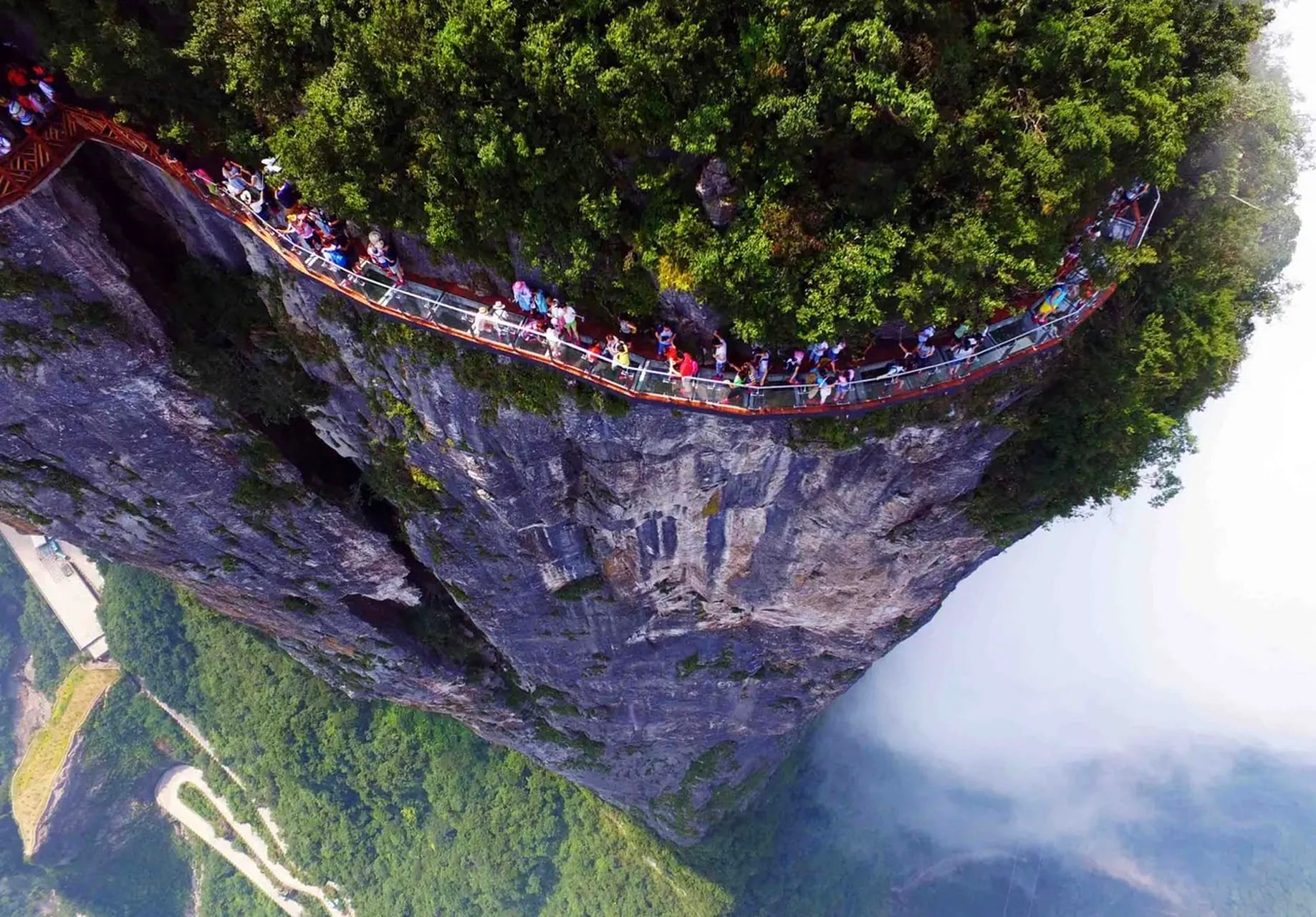
The glass skywalks here are different from every other glass walkway in China. They are attached to cliff faces at 1,400 meters above sea level. No suspension — just transparent glass bolted to vertical rock, with the valley floor a thousand meters below your feet. For those with acrophobia, stone paths run parallel to every glass section. You can skip every panel and still reach everything.

The 99 Bends Road is spectacle in itself. Tongtian Avenue climbs 10.77 km from 200 meters to 1,300 meters through 99 hairpin turns cut into near-vertical cliff faces. Construction took seven years and cost over ¥100 million. Every person on the bus will have their face against the window.
4. The Summit Zones
The summit covers about 2 square kilometers. Most visitors spend 2–3 hours here. It divides into three zones.
Western Scenic Area
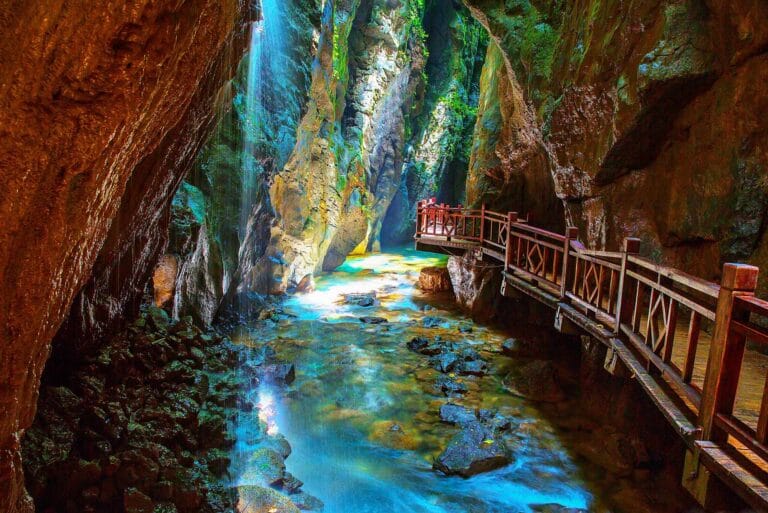
This is where most visitors spend the majority of their time. The Ghost Valley Plank Road (Guigu Cliffside Path) runs 1,600 meters along the cliff face at around 1,400 meters elevation — a wooden boardwalk nailed to the rock wall, with the valley below. The Suspension Bridge connects two peaks across an open drop. The western glass skywalk (60 meters long) extends from the cliff at 1,430 meters. Allow at least 1.5 hours here.
Eastern Scenic Area
Quieter, with more old-growth forest. The eastern glass skywalk (150 meters long) overlooks Tianmen Cave from above — a perspective that is fundamentally different from standing at cave level. This area also works as a crowd-avoidance strategy when the western paths are packed.
Central Scenic Area — Tianmen Mountain Temple
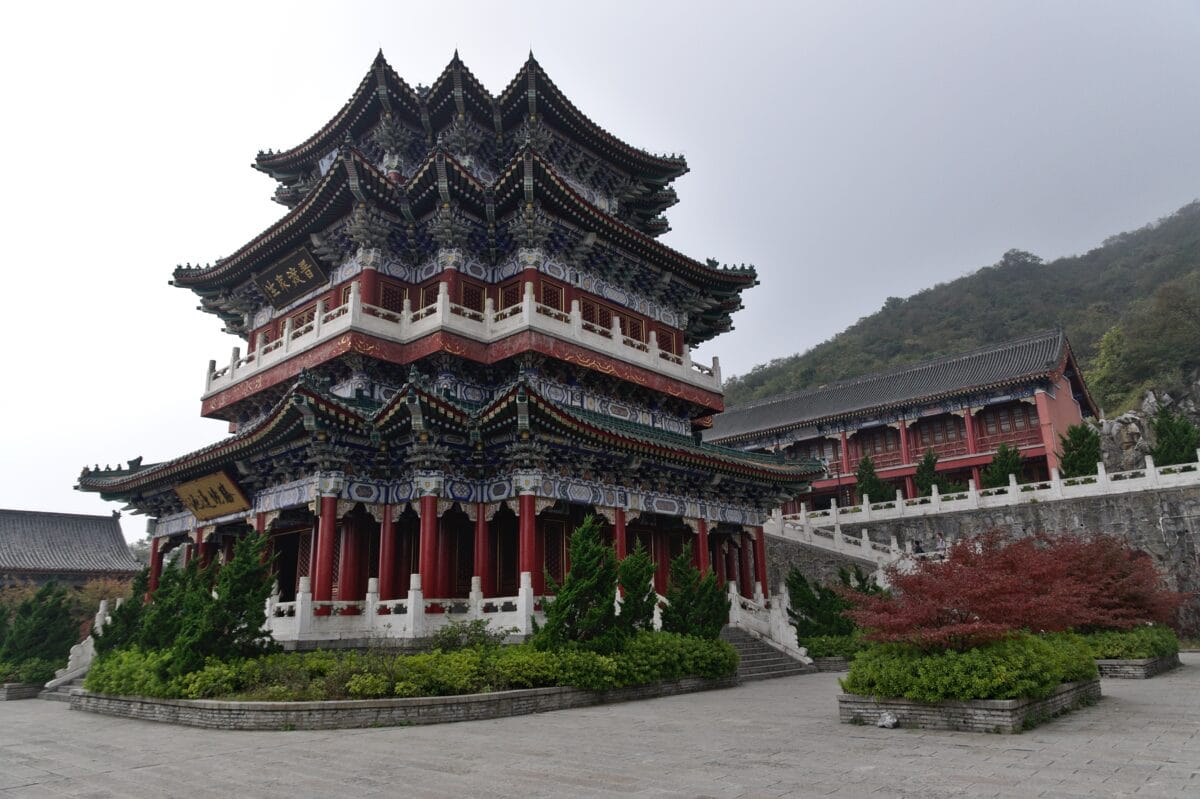
At the heart of the summit sits the temple complex. The current structure was built in Tang Dynasty architectural style and covers nearly 10,000 square meters. It is the Buddhist center of western Hunan. Even visitors with no religious interest tend to slow down here. After an hour on cliff paths and glass walkways, the incense smoke, the chanting, and the ancient trees surrounding the compound create a different register entirely.
A two-seat open chairlift connects the main summit peak (1,518 meters) to Cherry Bay Square near the temple — ¥25 per person each way. Optional. The 10-minute ride through the treetops at the highest point of the mountain tends to become the detail people mention afterward.
5. Tianmen Cave: The Centerpiece
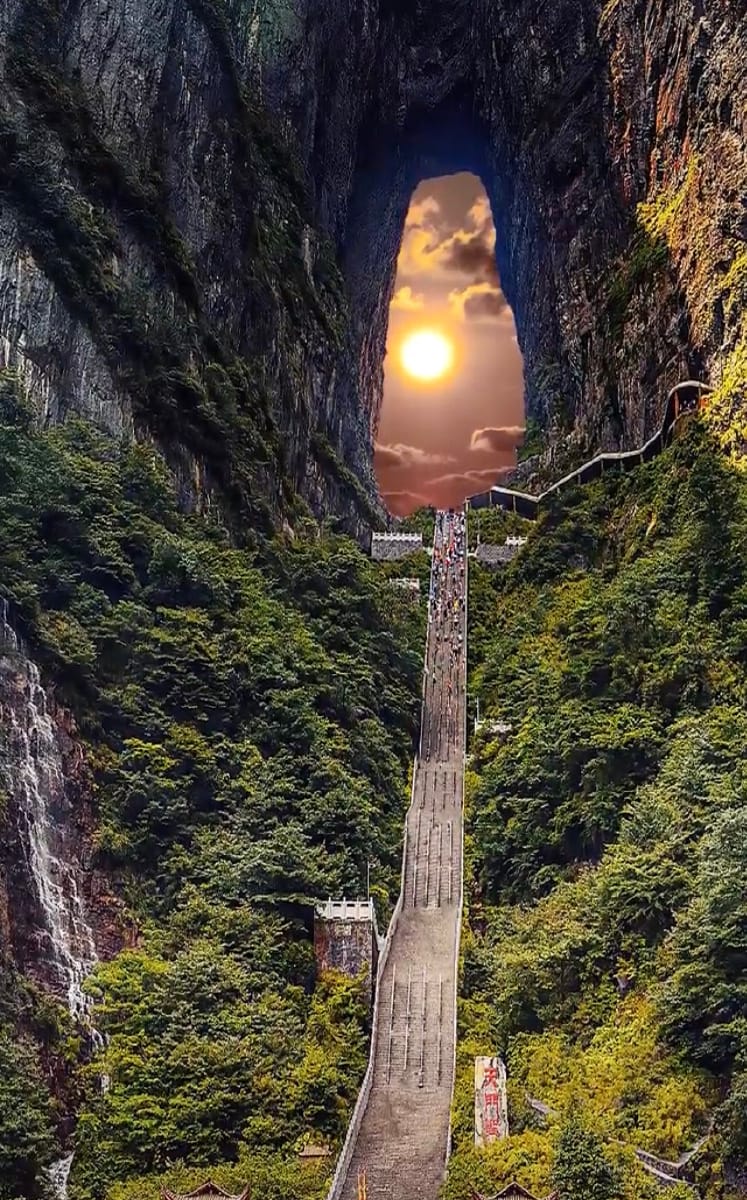
Everything else on this mountain builds toward Tianmen Cave or radiates from it.
The cave is a natural water-eroded arch running south to north through the mountain. Its height of 131.5 meters is difficult to communicate in words. Stand at the base of the 999 steps and look up: the arch frames a rectangle of sky that shifts from pale blue to deep indigo depending on the hour. In fog — which covers the mountain more than 200 days a year — the opening fills with white light.
The cave plaza below the arch contains the base of the 999 steps. From here, you either climb the steps to the cave floor or pay an extra ¥32 for the escalator system through the mountain tunnel. The escalator is worth a mention: it runs through a passage carved directly through the rock, fluorescent-lit, the mountain pressing in close on both sides, and deposits you at the cave floor having passed through several hundred meters of solid cliff. It’s a strange thing to ride. Most guests find it unexpectedly eerie in a way the outdoor scenery isn’t.

Both options bring you to the same place: standing inside the arch with the valley of Zhangjiajie city spread below you.
If you take the steps, here is what to expect. Andreas, one of our Austrian guests who climbed them in November 2025 on Line B, wrote it better than we ever could:
Step 100: Fine, no problem. Step 300: Getting a bit breathless, need a rest. Step 500: Why did I come here??? Step 700: I’ve come this far, I can’t give up. Step 900: Nearly there, nearly there, nearly there. Step 999: I’m alive…
But the moment I stood at the top, watching the sea of clouds rolling beneath my feet, the wind blew all the exhaustion away. I suddenly understood why people cry up here — not because it’s hard, but because it’s worth it. I sat there for half an hour thinking about nothing, and somehow felt like I’d figured everything out.
That is the 999 steps, accurately described. Andreas did it on Line B — uphill — which is why he was at Step 500 asking himself why he came. On Line A, you descend. The view at the bottom is the same. The question at Step 500 is not.
The view from inside the arch looking down is different from any other elevated viewpoint in Zhangjiajie. You are inside the rock itself. The opening frames the landscape like a deliberate composition. We’ve been there in morning light, afternoon light, and the flat grey of overcast days. Each is distinct. The overcast version — mist rising through the cave from below — is the one guests most often describe afterward.
6. Choosing Your Route: A, B, or C
⚠️ Line A & B Temporarily Suspended from Oct 13, 2026, Line C is your only choice by now.
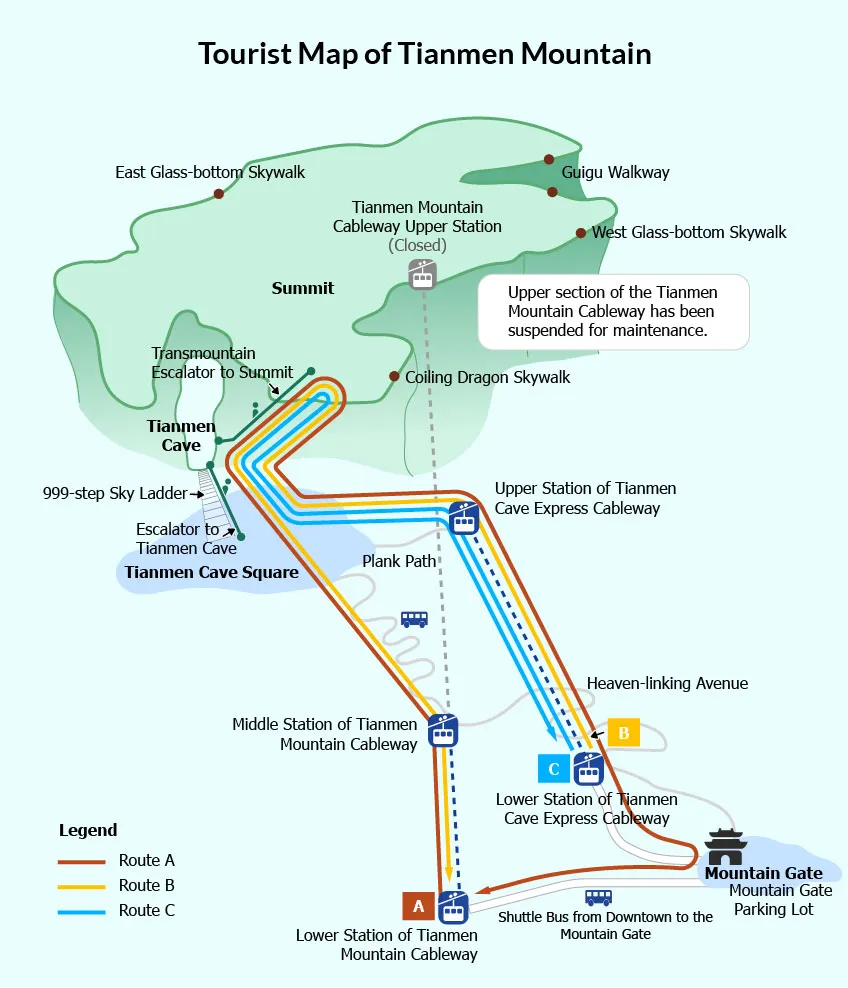
This decision defines your entire day. We have a detailed breakdown in our Tianmen Mountain Line A, B or C guide — read that before you book. Here is the short version.
All three routes cost the same: ¥288.
Line A starts with the main cableway from downtown (currently: lower section to mid-station only), transfers to a bus through the 99 Bends Road up to the summit zone, explores the mountaintop, descends via escalator to Tianmen Cave, walks the 999 steps downward (20–30 minutes), and takes the express cableway back down to the mountain gate. We recommend this for 85% of visitors. The logic: you walk the stairs downhill, with legs that still work.
Line B reverses it. You climb the 999 steps upward (30–45 minutes at altitude) before seeing the summit, then explore the mountaintop after the hardest physical effort of the day. We’ve watched fit, young visitors struggle with this sequence. For anyone with knee problems or limited mobility, it’s inadvisable.
Line C skips the main cableway entirely. Gets you to the summit via bus and express cableway, but you miss the cableway experience. We don’t recommend it unless there’s a specific medical reason.
Route | 999 Steps Direction | Physical Demand | Best For |
|---|---|---|---|
A | Downhill | Moderate | Most visitors |
B | Uphill | Hard | Fit hikers wanting the challenge |
C | Optional/Skip | Easy | Those with specific health restrictions |
7. Special Experiences Worth Planning For
Tianmen Fox Fairy — The Mountain as a Stage
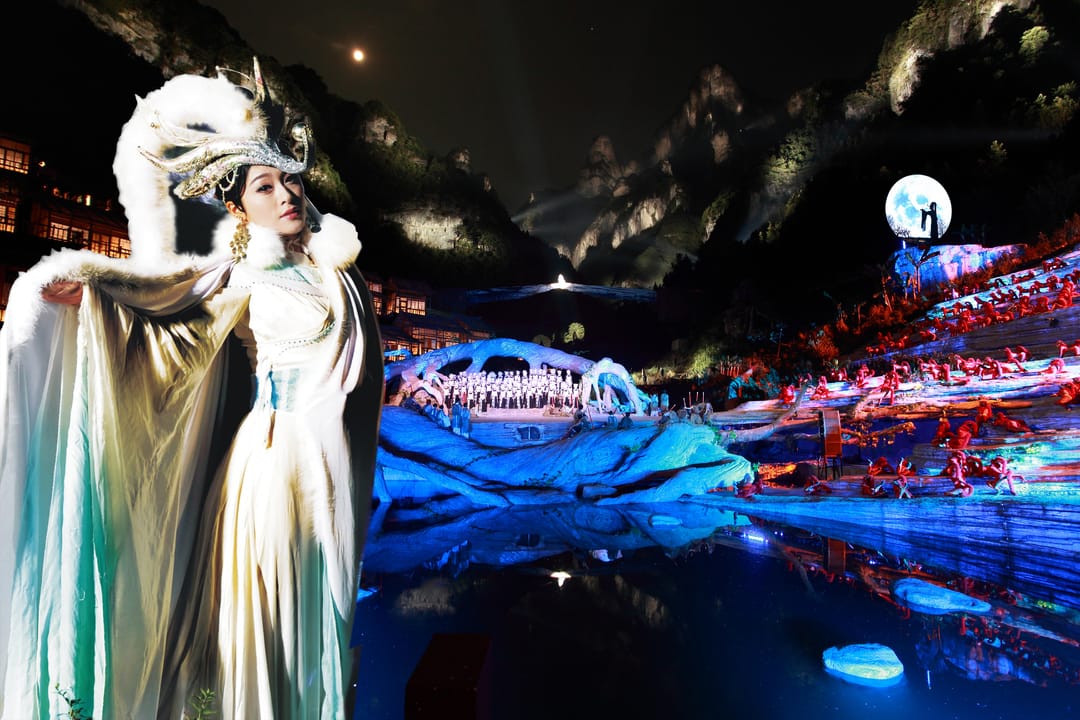
On evenings from March to December, a performance called Tianmen Fox Fairy (天门狐仙) takes place in the gorge below the mountain’s entrance gate. It is not a conventional theatre show. The entire canyon — five kilometers long, with over 1,100 meters of vertical drop — forms the backdrop. The main stage spans a mountain stream. Tujia wooden buildings are built into the cliffside. Over 500 performers. The production was directed by Mei Shuaiyuan, who created China’s landscape performance genre, with music by Oscar-winning composer Tan Dun.
There is one scene — the white fox walking a plank suspended over the stream, the woodcutter watching helplessly from across the gorge — that lands very differently if you know the story going in. Guests who don’t often ask about it afterward. We tell our groups the plot before every visit, and it changes what they see.
The show begins at 8:20 PM and runs 65–90 minutes. After spending the day on Tianmen Mountain, watching a performance staged in the canyon below it the same evening is a combination we always recommend. Full details and pricing are in our Zhangjiajie Night Shows guide.
Sea of Clouds
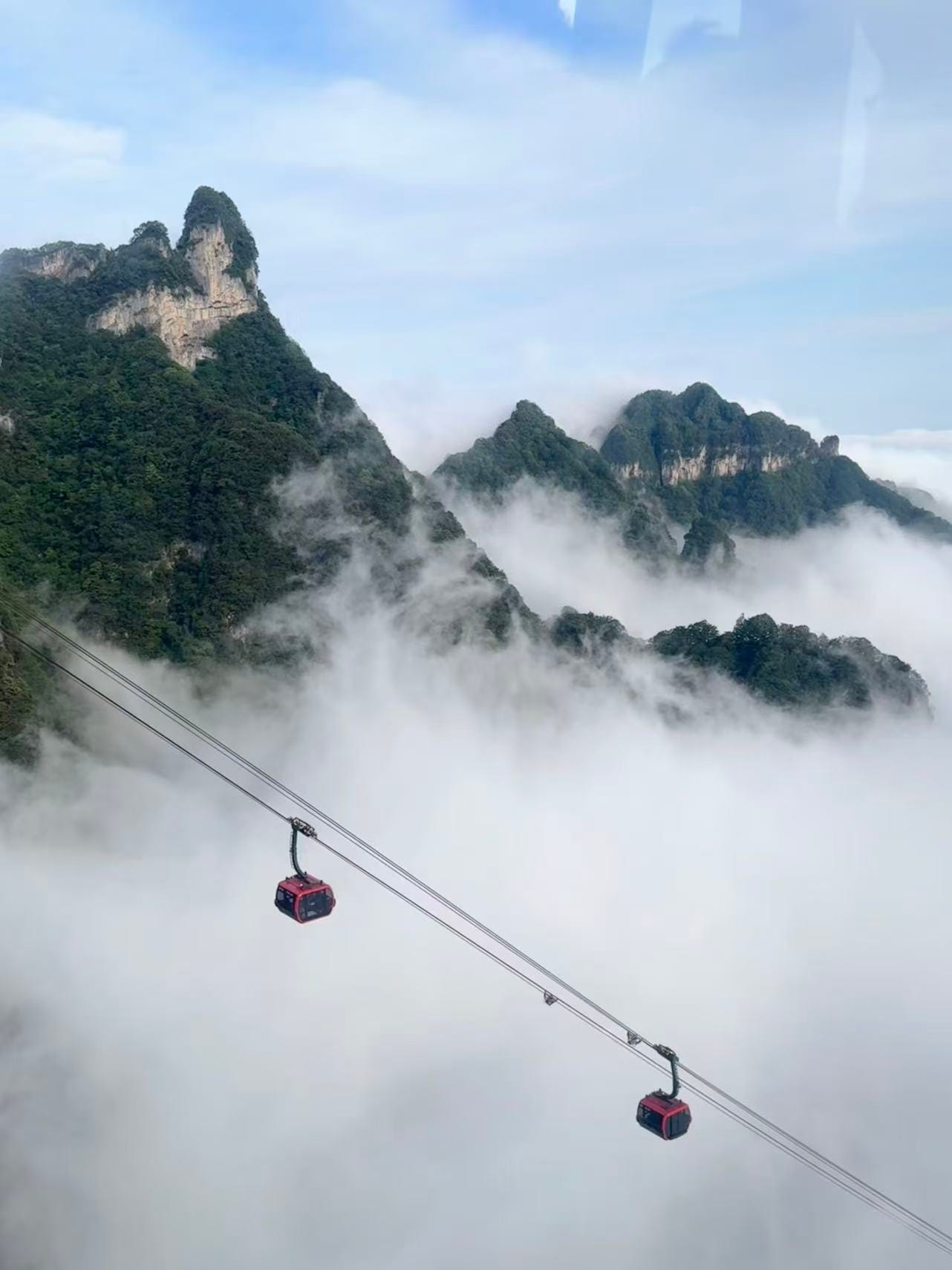
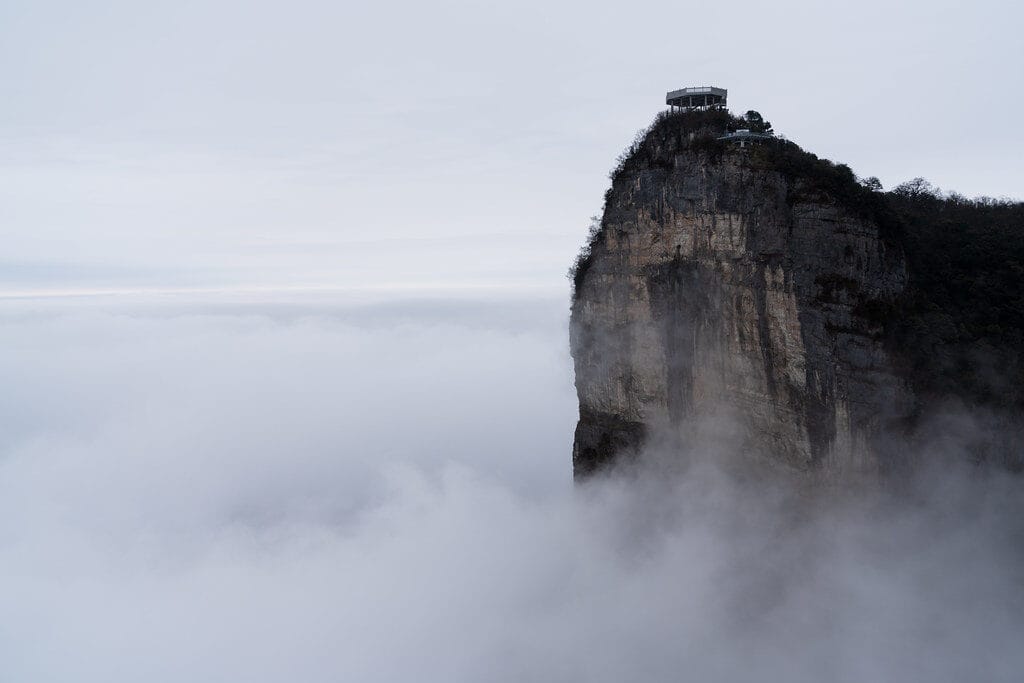
The mountain sits in fog or cloud more than 200 days a year. Most visitors treat this as a problem. We don’t. When cloud fills the valley and only the ridgelines emerge, Tianmen transforms into something that looks like a classical Chinese ink painting — the kind with empty space where the ground should be. The glass skywalks become more arresting, not less, when the drop below you disappears into white. If you arrive on a clear day, you get the views. If you arrive in cloud, you get the atmosphere. We’ve had guests return specifically hoping for cloud on a second visit. That’s not nothing.
8. Best Time to Visit

By Season
Autumn (September–October) is the best season overall. Skies are clearest, summit temperatures are comfortable (typically 12–18°C in October), and the forest turns color in late October. September is the single best month. Book early — this coincides with Chinese Golden Week in early October, when demand spikes hard.
Spring (April–May) brings rhododendron blooms and a comfortable temperature range. Fog and mist are common — beautiful, but glass skywalks can close on windy days.
Summer (June–August) is hot in the city but 5–10°C cooler at the 1,500-meter summit. This makes Tianmen worth visiting even in July. Crowds are at their heaviest in July and August — book the earliest slot available.
Winter (December–February) occasionally brings snow to the summit. The scenery can be stunning. Glass walkways may close due to ice, and the 99 Bends Road can become hazardous. For experienced travelers who can handle uncertainty and dress properly, winter has an atmosphere unlike any other season. For first-time visitors, we generally advise against it.
By Time of Day
Book the earliest slot available — 07:30 if it’s offered. Crowds build from 09:00 onward. By 10:00 AM during peak season, the main cableway queue can stretch to two hours or more. The summit at 7:30 AM is a different place from the same summit at 11:00 AM. Bring a warm layer — early morning at 1,500 meters is noticeably colder than the city at any hour.
9. Planning Your Visit
Getting There
The main cableway lower station is at No. 11 Dayong Middle Road, Yongding District — close to Zhangjiajie Railway Station and about 6 km from Zhangjiajie Hehua International Airport (DYG).
From Zhangjiajie Railway Station: ~8 minutes by taxi, ~¥7. From Zhangjiajie West Station (high-speed rail): ~20 minutes, ~¥20. From the airport: ~15 minutes, ~¥15.
Public bus (¥1): Routes 4, 13, 17, 101, 102, or 203 to Wuling Shan Zhen Guan Station (670m walk). Routes 5, 8, 9A, or 101 to Guanyin Bridge South Station (560m walk).
If you are staying near Wulingyuan, budget 45–50 minutes travel time each way. That’s a meaningful consideration when you’re trying to hit a 7:30 AM slot. Our Zhangjiajie transportation guide has the full breakdown of options between the two districts, including the eco-bus system within Wulingyuan.
Tickets and Prices
Item | Price |
|---|---|
Adult ticket (Routes A, B, or C) | ¥288 CNY |
Escalator (lower section, skip 999 steps) | +¥32 |
Glass skywalk sections | ¥5–10 per section |
Forest Observation Chairlift (summit) | ¥25 per way |
VIP queue-skip pass | ¥100–150 (ticket window only, not online) |
Tickets are real-name registered and tied to your passport. There are nine daily time slots from 07:00 to 16:00. Routes A and B sell out quickly on weekends, during Chinese national holidays, and throughout July–August.
International visitors can book via Trip.com, Klook, or a licensed China inbound tour operator. Book 1–2 days ahead in shoulder season. Book 3–5 days ahead during summer and national holidays.
For a full comparison of all Zhangjiajie park tickets in one place, our Zhangjiajie tickets guide covers every attraction with current prices.
Opening Hours
- Peak season (March 1 – November 30): 06:30–18:00, last entry 16:00.
- Off season (December 1 – February 28/29): 08:00–17:30, last entry 16:00.
10. Practical Travel Tips

⬆️ Zhangjiajie Tianmen Mountain Route B Eco-Bus – immersive one-shot hairpin turns experience
Motion sickness on the 99 Bends is not a minor concern. The bus through Tongtian Avenue is 99 genuine hairpin turns on a narrow mountain road. If you have any history of motion sickness in cars, take medication before boarding. Sit near the front of the bus. Look at the road ahead, not the cliff edge. We’ve had guests who were fine on normal roads feel seriously ill on this stretch. Don’t assume you’ll be okay.
The temperature gap is real. The summit runs 5–10°C cooler than the city. A morning departure might feel warm at the cable car station. It will not feel warm on the cliff paths at 1,400 meters. A windproof layer and a fleece are not overkill, even in May.
Wear proper footwear. The cliff paths and glass skywalks are narrow and exposed. We’ve watched visitors in fashion sandals turn back from the Ghost Valley Plank Road after the first 50 meters. Grip matters on wet stone.
The glass skywalks charge extra. Three sections have fees of ¥5–10 per person, not included in the main ticket. Bring some cash.
Food on the summit: don’t rely on it. The summit restaurant charges city-restaurant prices for food that isn’t as good. Standard practice at Chinese mountain parks. Bring water and snacks from the city.
Crowds and queuing. During national holidays or peak summer weekends, the VIP queue-skip pass (¥100–150, ticket window only) can save one to two hours. In shoulder season, skip it. For a full strategy on managing queues across all Zhangjiajie parks, our VIP fast track guide covers the specifics.
Photography. The glass skywalks photograph best in the morning before haze builds. The view from inside Tianmen Cave looking down is better in soft or overcast light than in harsh midday sun. The 99 Bends Road is best photographed from the bus window going down, when you can see the full cascade of turns unfolding below you. Shooting upward on the staircase section, with the arch framing the sky above, is a composition worth attempting even on a phone.
11. How Tianmen Mountain Fits Into a Zhangjiajie Trip
Tianmen Mountain works best as one dedicated day within a broader Zhangjiajie itinerary. Our standard recommendation for first-time visitors is four to five days: two to three days in the Wulingyuan area for the National Forest Park, Tianzi Mountain, Baofeng Lake, and Huanglong Cave; one full day for Tianmen Mountain; and one day for the Grand Canyon Glass Bridge.
If your Tianmen Mountain day ends at a reasonable hour, the 72 Strange Buildings (72 Qilou) in Yongding city center makes a natural add-on. It’s a 10-minute walk from the cableway station, takes about an hour, and gives you something worth seeing before dinner.
Qixing Mountain sits directly across the valley from Tianmen and stands 10 meters taller at 1,528 meters. Almost no international visitors have heard of it. It’s worth knowing about, particularly on a return visit.
The Bailong Elevator inside the National Forest Park is technically a separate attraction — the world’s tallest outdoor elevator, a different kind of vertical drama from Tianmen’s cableway. People sometimes ask if they’re connected. They’re not.
For a complete day-by-day plan, our Zhangjiajie itinerary guide covers combinations from one day to seven. For food recommendations to pair with a Tianmen Mountain day, our Zhangjiajie food guide has specific suggestions for the Yongding city area.
12. Frequently Asked Questions
Is Tianmen Mountain the same as Zhangjiajie National Forest Park?
No. Completely separate parks with separate tickets, 35 km apart. The National Forest Park has the Avatar Mountains. Tianmen Mountain has the cave arch, glass skywalks, and 99 Bends Road. You need a full day for each.
How long does a visit take?
Budget a full day. Five to seven hours on the mountain, plus travel time. Arriving at the 07:30 opening slot and leaving by mid-afternoon is the typical pattern.
Is Tianmen Mountain suitable for elderly visitors or those with limited mobility?
More so than most Chinese mountain attractions. The escalator system (extra ¥32) allows you to skip the 999 steps entirely. The summit includes both challenging cliff paths and flatter alternatives. That said, the terrain is uneven throughout. Anyone with serious mobility limitations should discuss the route specifics with a guide before booking.
What if it’s cloudy or foggy?
Go. Cloud and mist transform the experience rather than ruining it. The glass skywalks may close in high wind or lightning — if that happens, the rest of the mountain stays fully open. We’ve never had a guest regret going in cloud.
Can I do Tianmen Mountain and the National Forest Park in one day?
No. Don’t try. You’ll do both badly. Each is a full day.
Is the main cableway currently operating?
As of 2026, only the lower section (downtown to mid-station) operates. The upper section closed November 6, 2025 for renovation, with no official reopening date. Check before visiting.
Are the glass skywalks safe?
The glass is thick, regularly inspected, and has an excellent safety record. What varies is your own comfort with height — that’s not an engineering question. Stone alternative paths exist at every skywalk section for those who’d rather skip the glass.
Do I need to book in advance?
During peak periods (July–August, October Golden Week, Chinese New Year), book 3–5 days ahead. In shoulder season, 1–2 days is fine. Last-minute booking on weekdays in spring is usually possible.
13. A Personal Note From Our Team
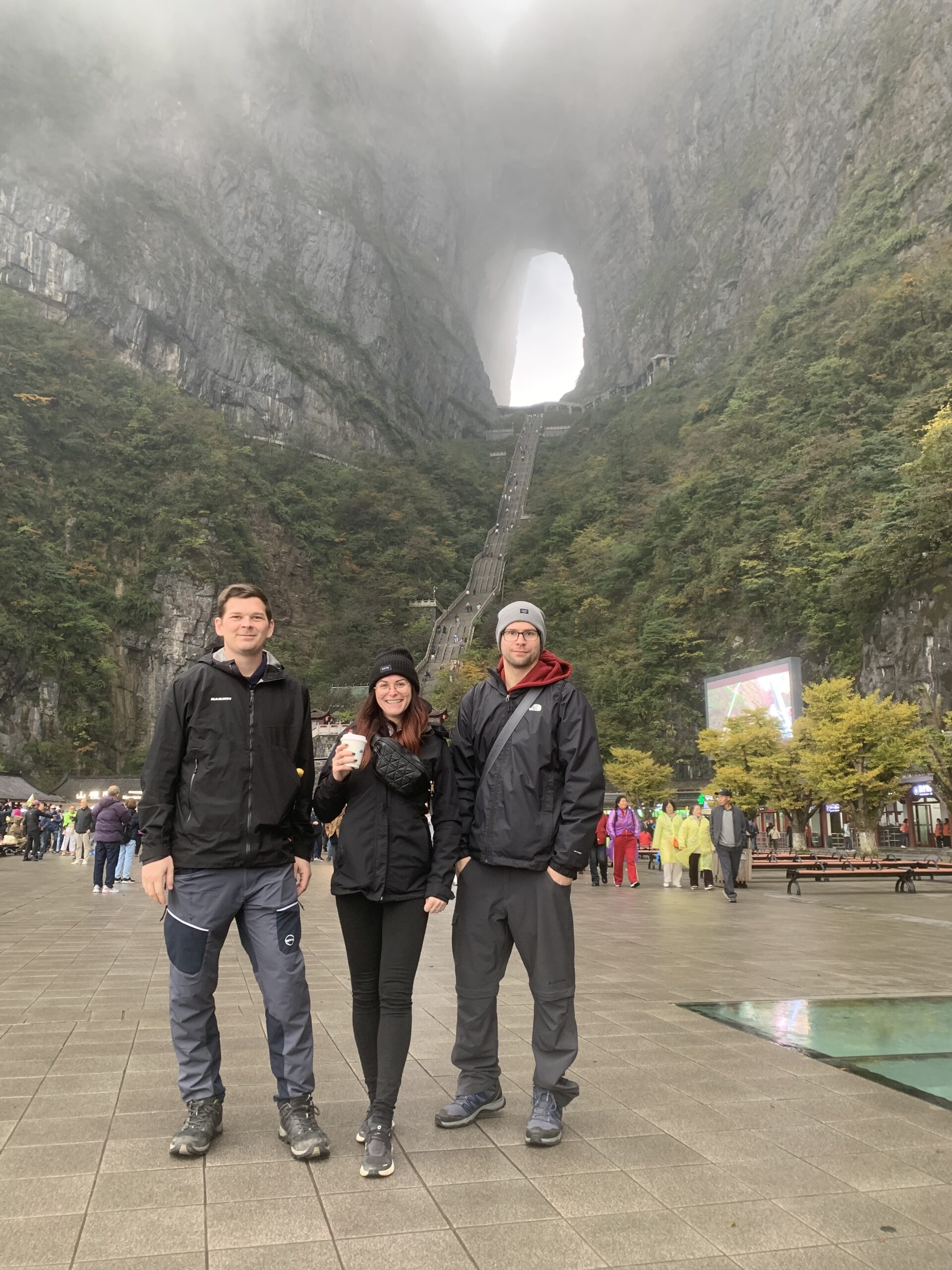
We’ve been bringing international visitors to Tianmen Mountain since 2006 — in snow, in summer haze, in the particular October clarity when the summit feels like it’s been rinsed clean overnight. In October 2019, we brought a group of twelve Australians to the summit in thick cloud. Visibility was maybe 20 meters at the top. Every single one of them came down saying it was the best day of the trip. That stopped surprising us some time ago.
What we haven’t seen change in 20 years is the moment people stand inside Tianmen Cave and look down at the city below. It stops people the same way it always has.
The mountain rewards early arrival, proper layers, and a willingness to slow down at the summit. It is not primarily a thrill park, though it has thrills. It is a mountain with 1,700 years of human meaning layered onto a geological formation that looks, honestly, like a door to somewhere else.
If you’re planning a Zhangjiajie trip and want guidance on timing, routing, or building a full itinerary around Tianmen Mountain and the wider region, contact our team. This is what we do.