Snow in Zhangjiajie: Season, Best Spots & What to Expect
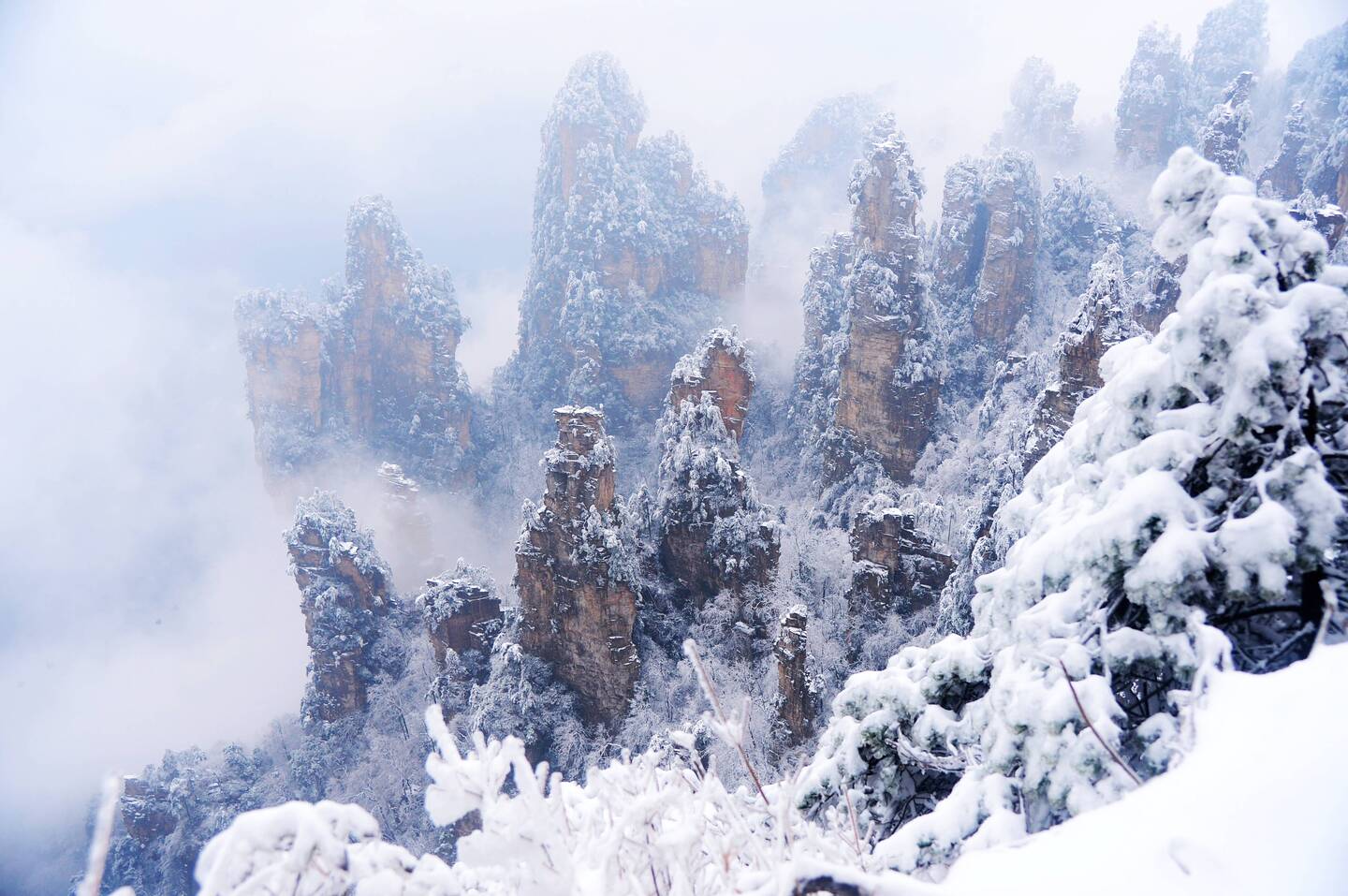
Yes, it snows in Zhangjiajie every winter. The mountain areas receive 4–8 snowfall events between late December and mid-February, with the peak window running mid-January through early February. Snow typically stays on the summit platforms for 2–5 days before melting. The best condition — a light overnight fall followed by a clear morning — occurs multiple times each season.
Table of Contents
Quick Facts: Snow in Zhangjiajie
Snow season | Late December – mid-February |
Peak snow window | Mid-January – early February |
Typical snowfalls per season | 4–8 events |
Snow duration after a fall | 2–5 days before melting |
December temps (city) | 4–12°C |
January temps (city) | 2–9°C (coldest month) |
February temps (city) | 4–11°C |
Summit temps vs. city | 8–10°C colder; Tianmen can reach -10°C with wind chill |
Rime ice | Dec–Feb; no snowfall required; most frequent on Tianmen Mountain |
Hotels, Wulingyuan core | CNY 200–400/night in winter vs CNY 500–900+ in peak season |
Crowds vs. peak season | Under 15% of summer visitor volume |
Nearest hot springs | Wanfu (~40 min); Jiangya (~40 min) |
1. When Does It Snow in Zhangjiajie?
Snow Probability by Month — Zhangjiajie Mountain Areas
Based on historical cold front frequency at 1,000–1,500m elevation. City-level probability is significantly lower.
The city center rarely sees sustained snow. The mountain areas — Tianzi Mountain, Tianmen Mountain, Yuanjiajie — sit at 1,000–1,500 metres and receive cold fronts from the north that bring 4–8 snowfall events per winter season.
The most reliable window: mid-January through early February, the 3–4 weeks straddling the Spring Festival. Cold air penetrates deepest into Hunan during this period. Late December can deliver snow — the first snowfall of the 2024–25 season hit Tianzishan Scenic Area on December 31 — but early December is more often cold rain and fog with little scenic value.
Snow at the peaks lasts 2–5 days after each fall before melting, though Tianzi Mountain and Tianmen Mountain hold snow 1–2 days longer than lower-elevation areas like Yuanjiajie.
We’ve taken clients in late January and found deep snow on Tianzi Mountain. The same week in a different year: bare trails. The variability is the honest reason we always build buffer days into winter itineraries — and why twenty years of guiding here still doesn’t let us guarantee snow on any specific date.
→ See our snow in China overview for how Zhangjiajie compares to other Chinese destinations
2. Where Are the Best Snow Views in Zhangjiajie?
Not all Zhangjiajie attractions deliver equally in snow. After 20+ winters guiding here, this is our ranked order — from most reliable to least:
Snow Value by Attraction — Our Ranking After 20 Winters
Score reflects snow reliability, visual impact, and accessibility in winter conditions. Rime ice frequency counted separately for Tianmen Mountain.
#1 Tianzi Mountain — most reliable
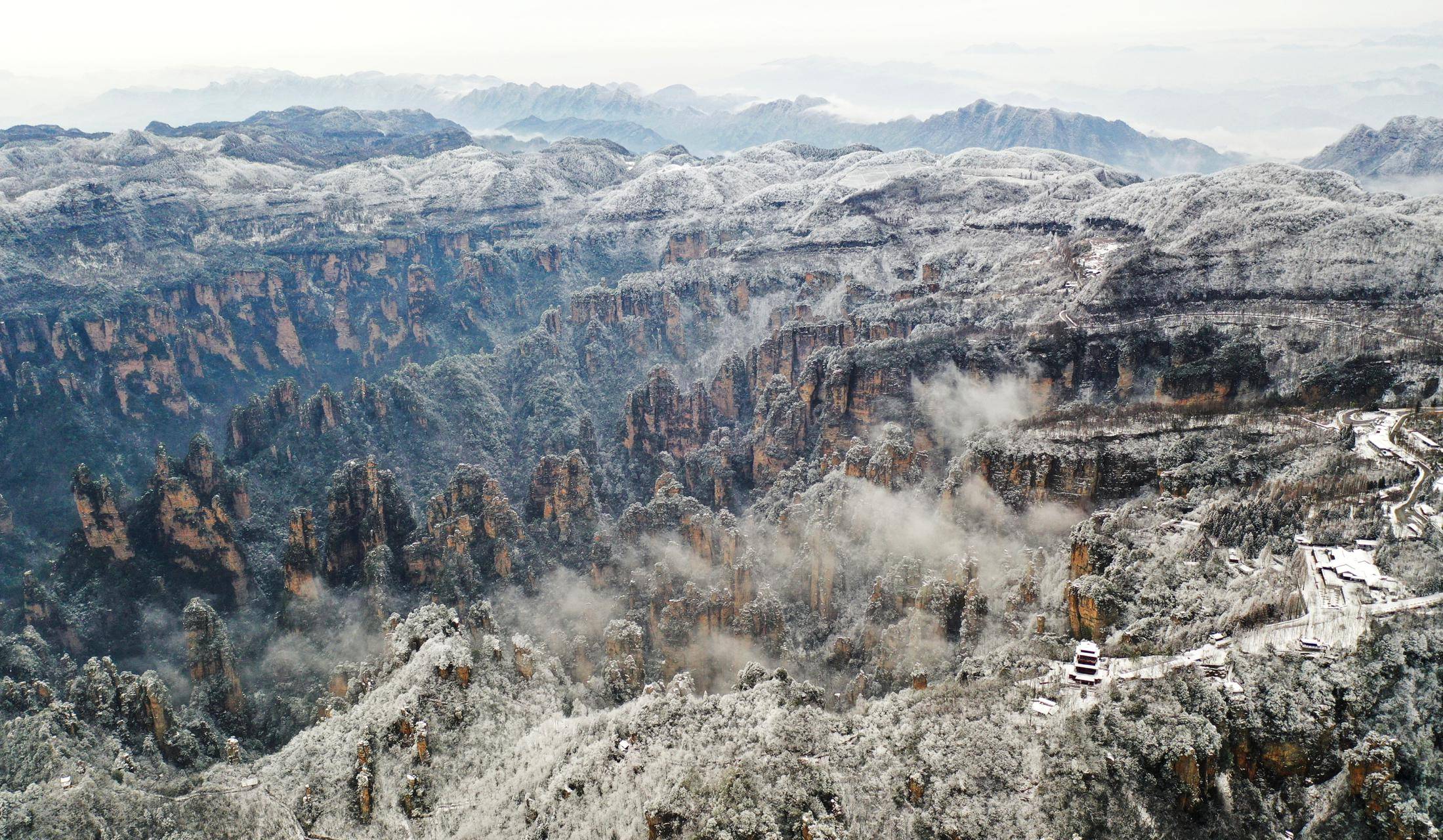
The most reliable spot for snow in the entire Wulingyuan area. At 1,262 metres, Tianzi Mountain sits above the cloud line more often than any other viewpoint. After snowfall, the quartzite sandstone pillars carry white caps while the valley below stays dark — the contrast is extreme. This is where most of the iconic "snow and pillars" photos come from.
Snow typically stays on Tianzi Mountain 1–2 days longer than at lower elevations like Yuanjiajie. We've noticed the east-facing platforms near Yubi Peak hold snow longer than the west side — worth keeping in mind when timing your visit across a multi-day trip.
→ See our Tianzi Mountain guide
#2 Tianmen Mountain — highest snow frequency, best rime ice
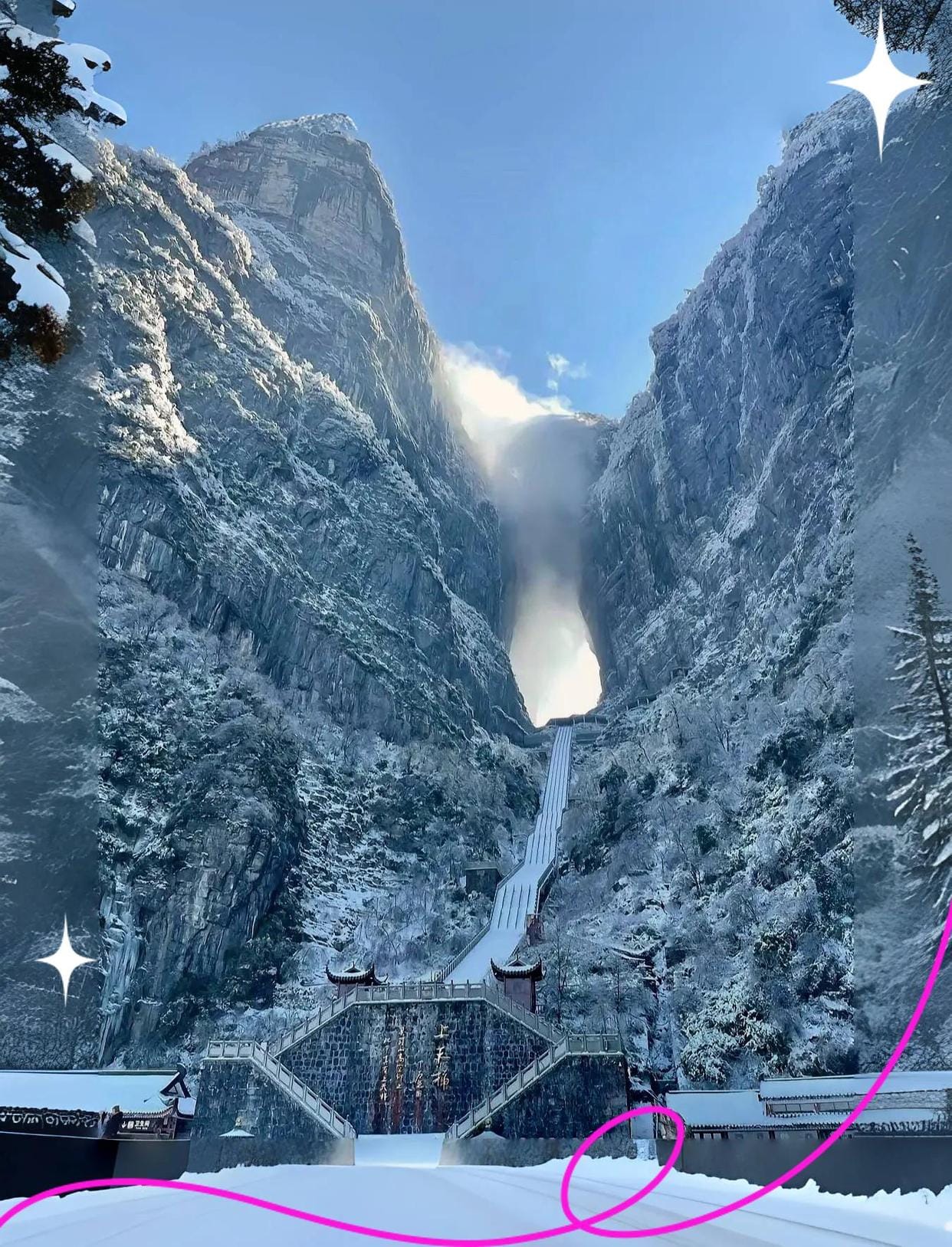
At 1,518 metres, Tianmen Mountain has the highest summit of any Zhangjiajie attraction and sees more snow days than anywhere else in the area. It is also the best location in all of Zhangjiajie for rime ice.
Rime ice forms when overnight temperatures drop below -3°C and humidity is high. Water droplets in the mist freeze on contact with branches and surfaces, coating every tree in white crystals that catch the morning sun like glass. It looks like snow but isn't — and it appears even in years with minimal snowfall. On Tianmen Mountain, rime ice conditions occur 10–15 times per winter season.
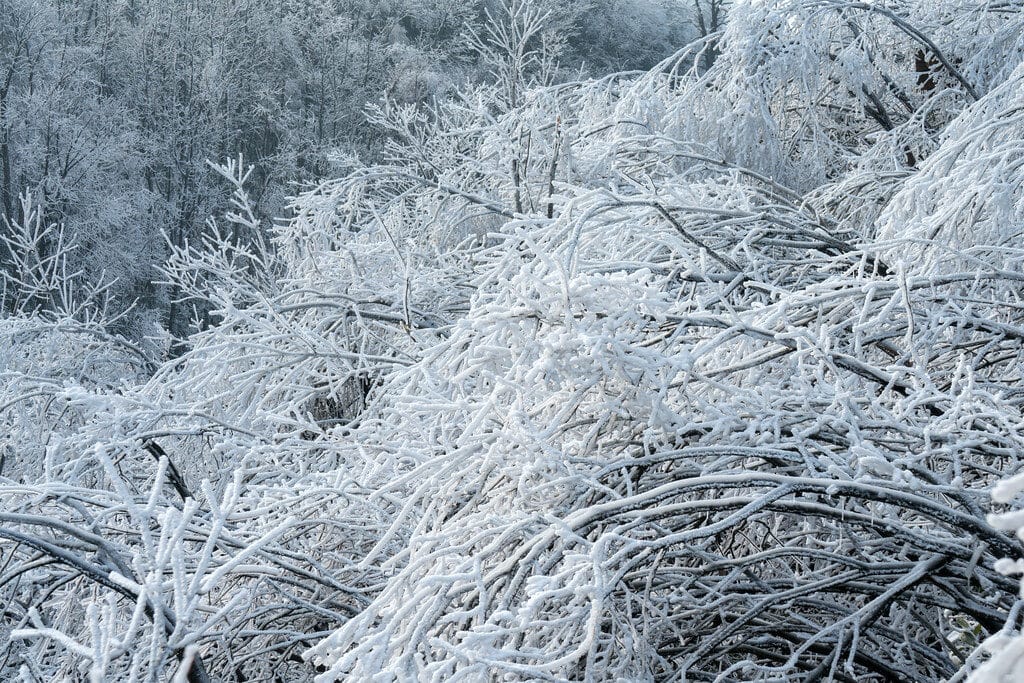
Important practical note: only Route A (the main cableway) operates in winter. The glass walkways close during active snowfall and heavy ice, and the 99 Bends Road can become hazardous. Build a full spare day into any Tianmen Mountain winter visit.
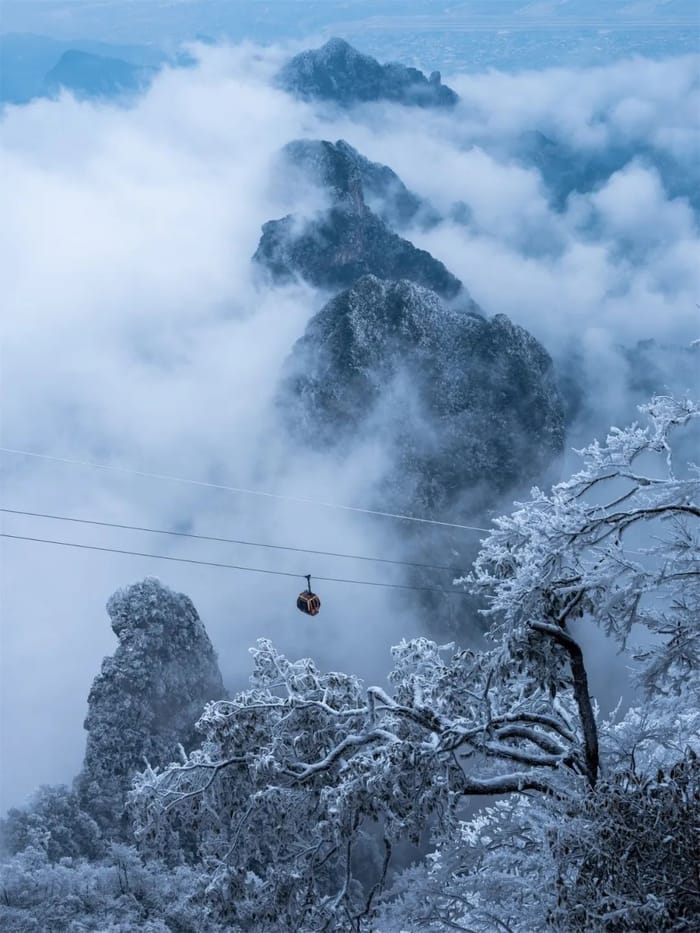
→ See our Tianmen Mountain guide → See our Tianmen Mountain Line A, B or C guide for current cableway operating status before you visit
#3 Avatar Mountains / Yuanjiajie — conditional but spectacular
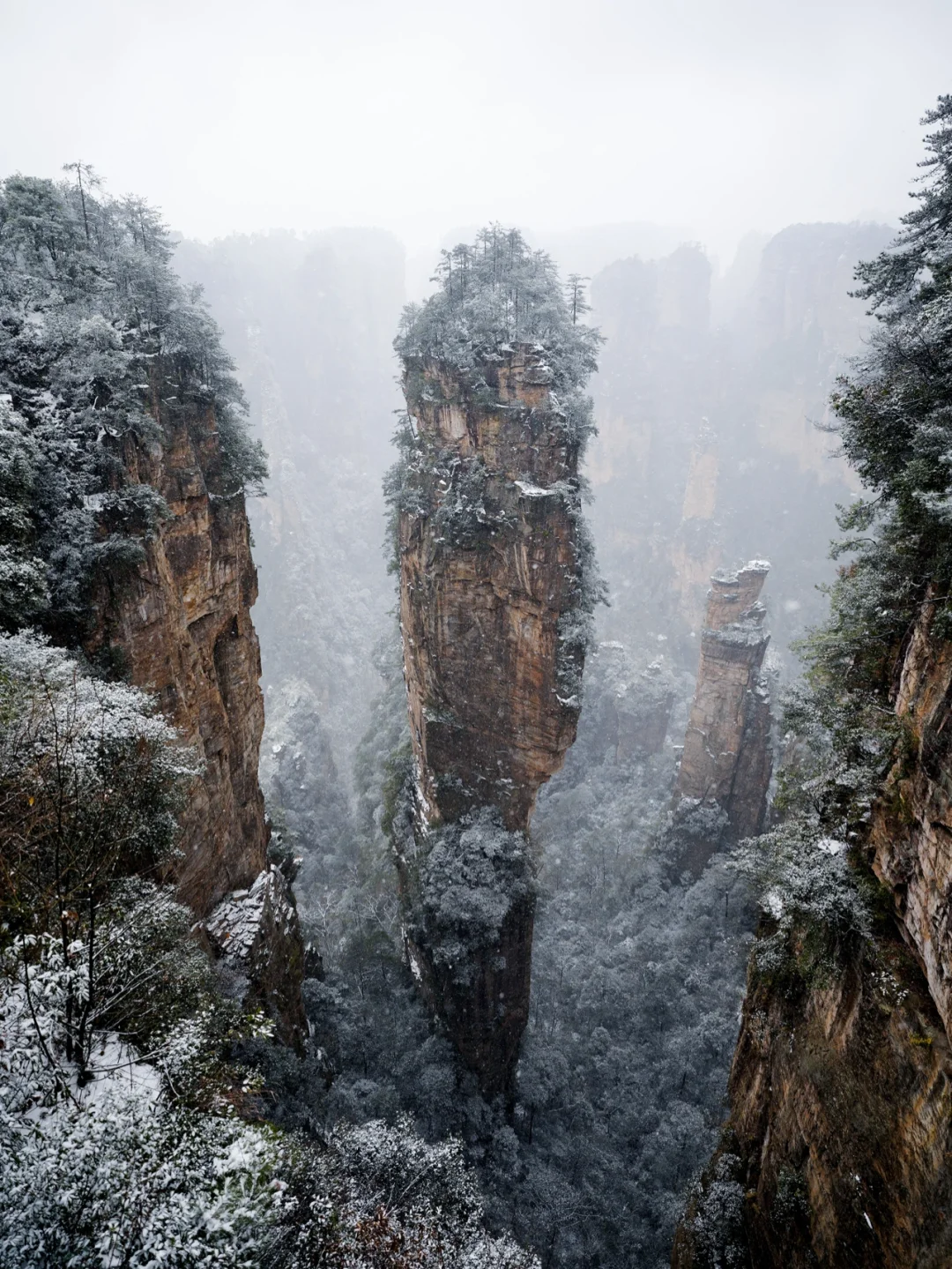
Yuanjiajie looks spectacular in snow, but the payoff here is more conditional. The viewing platforms sit at 1,000–1,100 metres. Snow reaches Yuanjiajie less consistently than Tianzi or Tianmen Mountain. When it does, the visual effect is extraordinary: 3,000 pillars in white, mist threading between them, valleys disappearing below.
For photographers specifically: sunrise on Yuanjiajie after overnight snow, arriving at the platform by 7:00 AM before other visitors, is the single best light window we know of in all of Zhangjiajie. The clear-sky window after a snowfall is often only 2–3 hours before cloud returns.
→ See our Avatar Mountains guide → See our Yuanjiajie guide for platform-by-platform viewpoint details
#4 Golden Whip Stream — the underrated winter pick
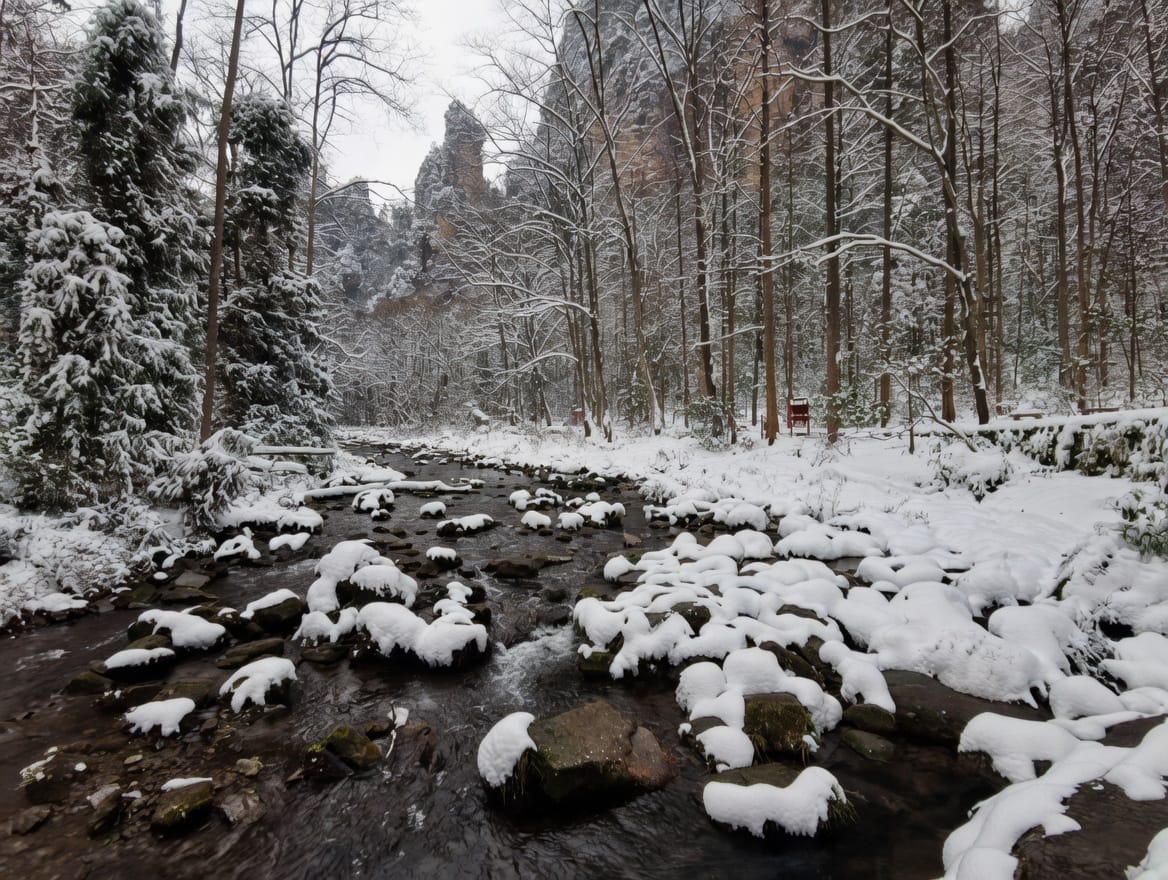
Most visitors treat Golden Whip Stream as a summer walk. In winter, after snowfall, it transforms into a different experience entirely. The stream partially freezes, creating still reflective pools between moving water. Snow-capped rock walls rise on both sides of the valley. The 7.5km trail is sheltered from wind and stays walkable even in cold weather. Winter crowds are minimal — often under 20 people on the trail at once. We regularly route clients here on the morning after a snowfall while waiting for the mountain cable cars to reopen.
→ See our Zhangjiajie National Forest Park guide for the full park layout and route planning
#5 Huangshizhai — plateau views, underused in winter
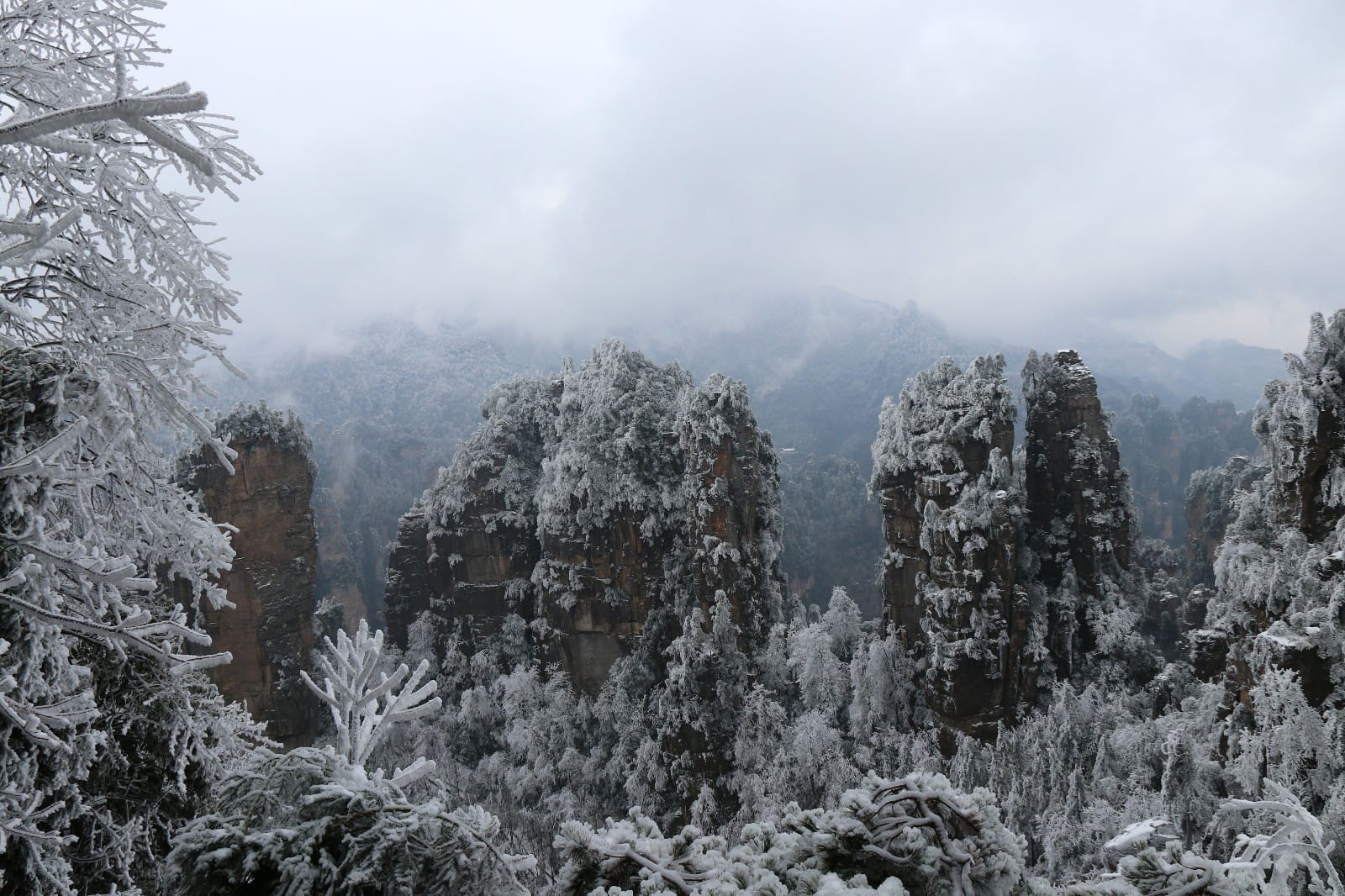
Huangshizhai is a flat-topped mesa at around 1,080 metres with 360-degree views of the entire forest park. In summer it's crowded; in winter it's almost empty. After snowfall, the snow-covered plateau with the pillar formations below is visually distinct from any other viewpoint in the park — you're looking across a white surface with the peaks extending outward in every direction. The Huangshizhai cableway operates year-round. The perimeter loop trail takes about 90 minutes and stays mostly level.
→ See our Huangshizhai guide
#6 Yangjiajie — closest trails, lowest winter crowds
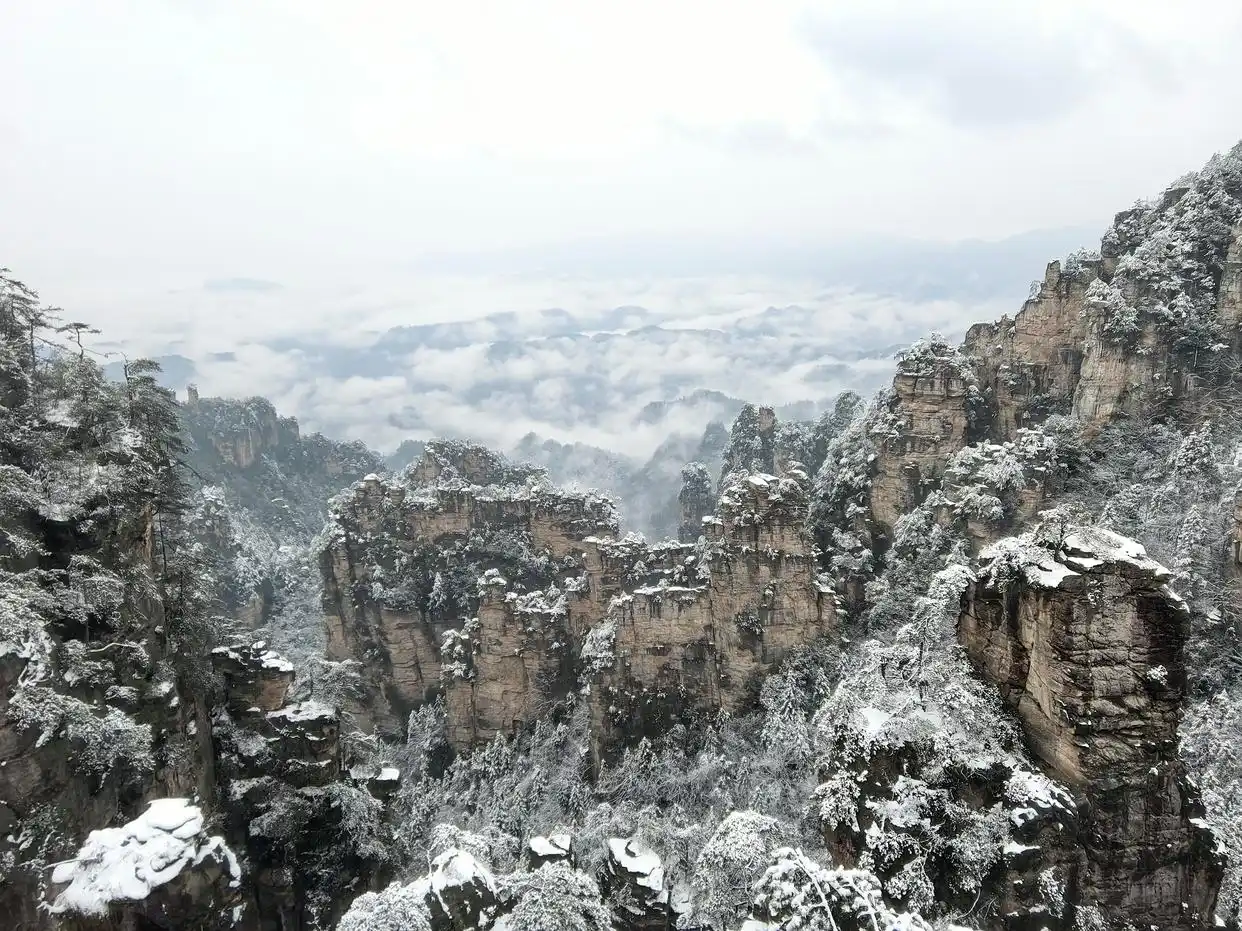
Yangjiajie is the least-visited zone of Wulingyuan in any season; in winter it drops to almost no one. The trails here are narrower than the main park zones and the formations feel closer — you're walking between the pillars, not viewing them from across a valley. Snow on the Tianbo Mansion ridge platforms and the Natural Great Wall formation is striking precisely because the scale is more intimate. The cableway operates year-round from the West Gate. For clients who want snow but not early-morning cable car queues, this is where we start.
→ See our Yangjiajie guide
#7 Baofeng Lake — heavy snowfall only
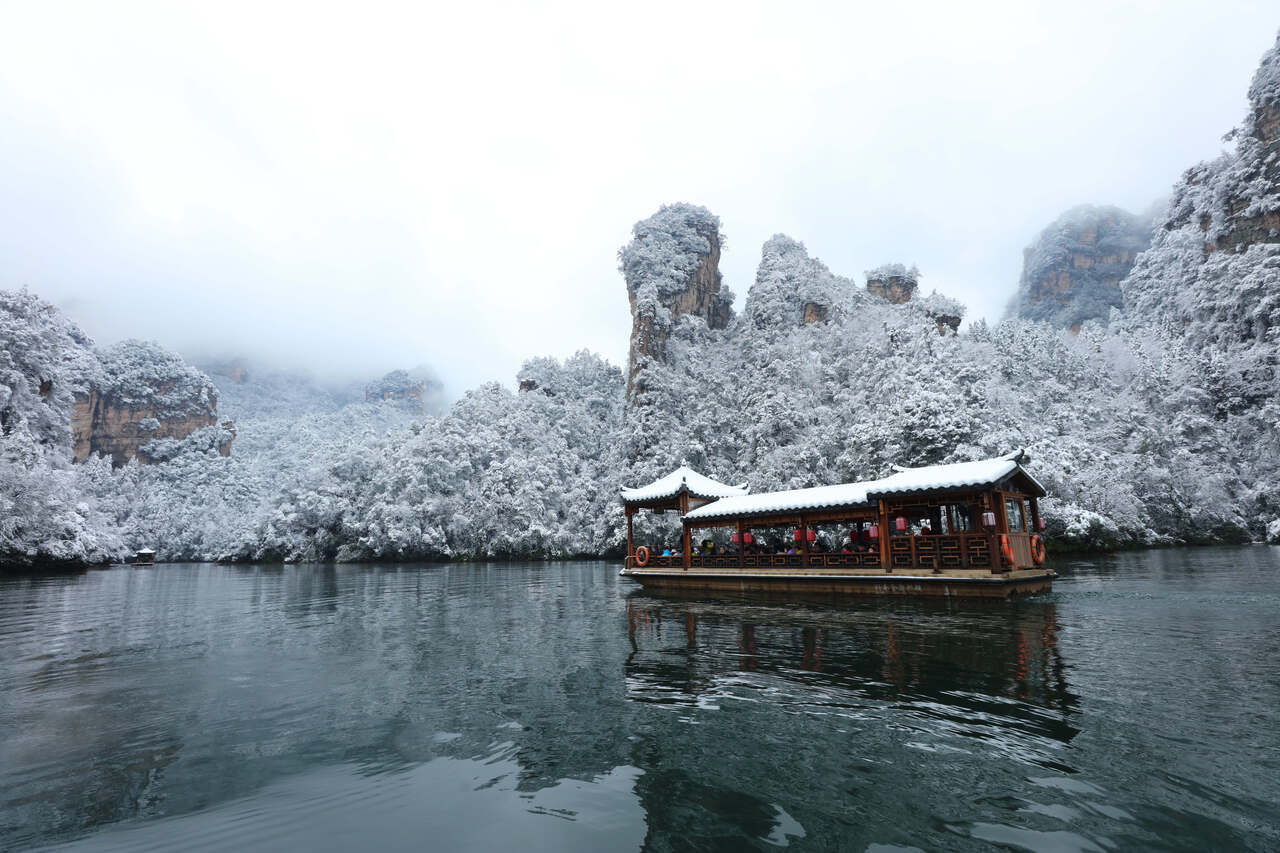
Most visitors to Baofeng Lake in winter arrive expecting a secondary attraction and leave surprised. Snow on the surrounding sandstone peaks reflects off the dark emerald surface — it's a combination of colour and stillness that the mountain parks, for all their drama, don't offer. The lake sits lower than the mountain parks, so snow on the surrounding pillars requires a heavier fall. The lake itself never freezes. Crowds are minimal — we've had the first boat almost entirely to our group in January.
One practical point: the Yingwo Village trail above the lake becomes dangerous on ice. Skip that trail in serious winter conditions.
→ See our Baofeng Lake guide
#8 Zhangjiajie Grand Canyon — lowest snow value
The canyon walls stay relatively clear of snow even in heavy falls — too sheltered. The snow value here is on the canyon rim and glass bridge, not inside the gorge itself. The bridge closes in bad weather. If snow scenery is your primary goal, Grand Canyon is not a winter priority. It works well as a half-day on a clear day when mountain park conditions are unfavorable.
→ See our Grand Canyon & Glass Bridge guide
3. What Does Snow in Zhangjiajie Actually Look Like?
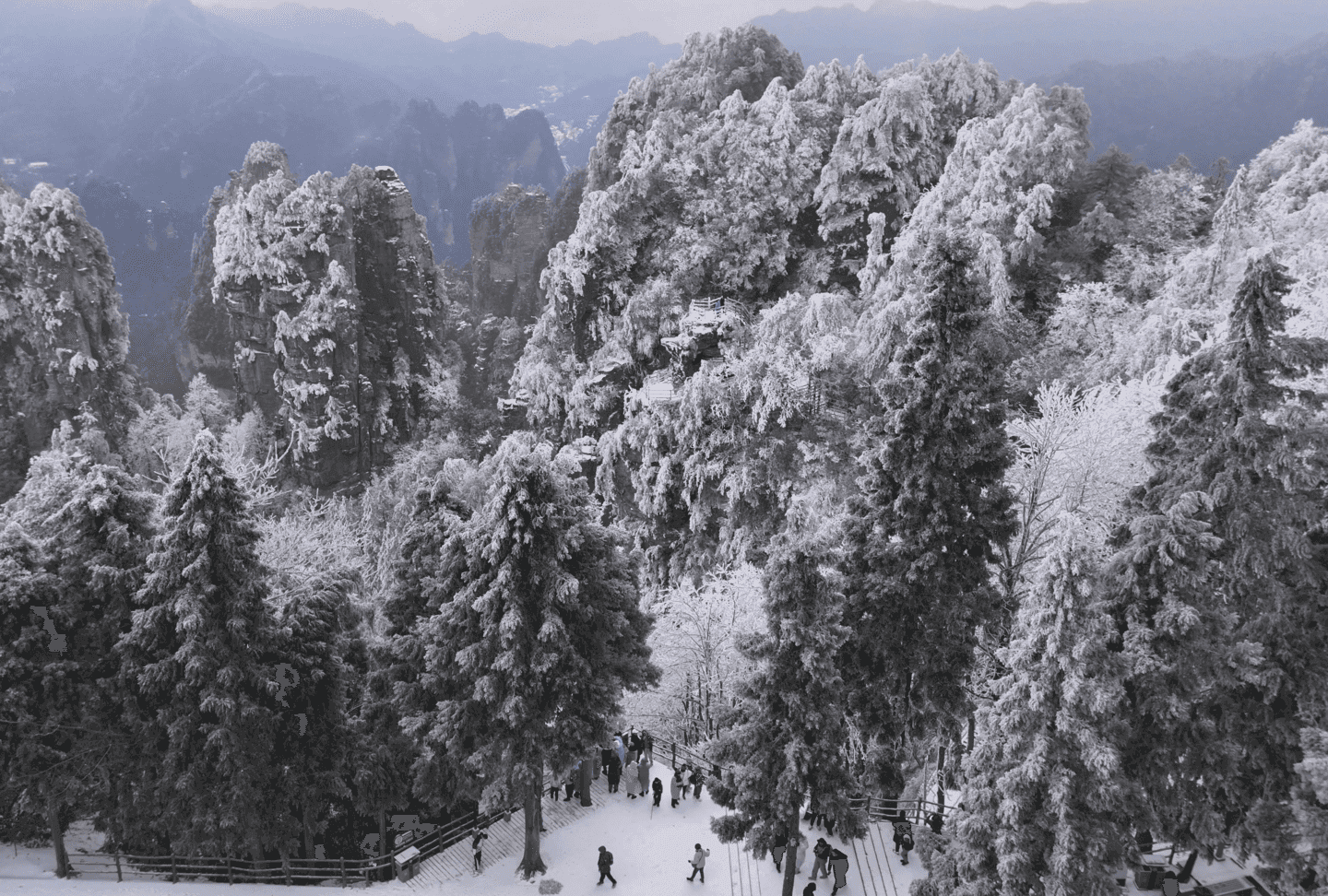
The most striking thing we consistently observe after a snowfall: the contrast is more extreme than any photo prepares you for. Dark quartzite pillars against white caps, evergreen pines holding snow against a grey sky, valleys filled with mist while the peaks above catch morning sun. The visual effect is unlike snow on any other landscape — because the formations themselves are unlike anything else.
One thing almost no guide explains: the morning after a snowfall is also the highest-probability window for a cloud sea. Cold overnight air settles into the valleys; when the sun rises and begins heating the snow, moisture lifts off in thin mist that pools between the pillars. From a high viewpoint like Tianzi Mountain or Yuanjiajie, the peaks appear to float — snow above, cloud below, dark rock in between. It requires overnight snow, a clearing sky, and arriving at the viewpoint by 7:00–8:00 AM before the mist burns off.
The honest calibration on snow depth: typically 5–15cm on the summit platforms in most years, not the metre-deep accumulations of Harbin or northeast China. What makes it visually extraordinary is the setting, not the quantity. Heavy snowfall years — roughly one in three — produce the most dramatic images and also close park transport for 24–48 hours. We had clients stranded at a Tianzi Mountain guesthouse for two nights after an unexpected heavy fall in January 2023 — not what they had planned, which is why buffer days matter.

For many of our clients, Zhangjiajie is not where they see snow for the first time — but it is where snow stops being ordinary. On New Year's Eve 2025, Carmen's group from Mexico had already been through Beijing earlier in their trip. She'd seen snow. But standing in front of Tianmen Mountain lit against a snow-covered sky — that was the moment her group went quiet.
4. Is Zhangjiajie in Winter Worth Visiting?
We recommend winter more confidently than most operators — the one condition: you need to be comfortable with a flexible itinerary, not a fixed one.
The crowd difference is total. Winter visitor volume runs under 15% of summer peak. On a clear January Tuesday, we've walked Yuanjiajie viewpoints with fewer than a dozen other people. That experience is not available in April or October at any price.
Zhangjiajie by Season: Crowds, Hotels & Airfare
Hotel prices: Wulingyuan core area per night. Airfare index: winter = 60 (base 100 = peak April/October). Crowd index: summer peak = 100.
The cost difference is real. Wulingyuan core hotels drop to CNY 200–400 per night in January versus CNY 500–900 in shoulder season and CNY 1,000+ during Golden Week. Airfares to DYG run 40% lower. Forest park ticket prices drop under the off-season structure — see our Zhangjiajie tickets guide for current winter pricing. Most Wulingyuan trees are evergreen, so the park looks green rather than bare — a significant visual difference from most winter mountain destinations. Qixing Mountain has a ski area that opens in years with sufficient accumulation — we verify conditions for winter clients who specifically request it.
The honest trade-offs: no guarantee of snow on a specific date; some cable cars close for annual maintenance in December–January (we verify this for every winter client before booking); daylight is short with sunrise at 7:00 AM and sunset at 5:30 PM; and the 99 Bends Road on Tianmen Mountain becomes hazardous in heavy ice.
Our read: if you can build one flexible day into the itinerary, winter beats spring and autumn for the quality of experience — quieter, cheaper, and visually different in a way that most visitors don't anticipate. If you have exactly three days and cannot move them, go in October — specifically the week after Golden Week ends, when crowds drop sharply overnight and the air clarity is at its best.
→ See our best time to visit Zhangjiajie for the full month-by-month breakdown → See our Zhangjiajie rainy season guide to compare winter against the other unpredictable season → See our winter tours in China guide for how Zhangjiajie fits a broader winter China itinerary
5. What Should You Pack for a Winter Visit?
The non-negotiable minimum: thermal base layer, thick windproof outer jacket, waterproof boots with grip. Everything else is comfort. The mountain summits run 8–10°C colder than the city — Zhangjiajie city at -2°C means Tianmen Mountain at -10°C to -12°C with wind. We see underprepared visitors every winter, specifically people who packed for "mild South China winter" and found a mountain in the minus temperatures.
Item | Notes |
|---|---|
Thermal base layer (top and bottom) | Non-negotiable for mountain visits |
Thick windproof outer jacket | Down jacket or equivalent; long style protects the lower back |
Waterproof boots with traction | Trails are icy. Waterproof matters. |
Wool gloves | Light gloves are insufficient above 1,000m |
Warm hat / ear cover | Tianmen Mountain summit winds are strong |
Hand warmers | Buy in Zhangjiajie city for CNY 3–5 per pair |
Crampons (optional) | Rentable at park entrances for icy days |
Sunglasses | Snow reflection at altitude is intense |
Spare phone/camera batteries | Cold kills battery life fast. Carry spares inside an inner pocket, warm against your body. |
Do not underestimate the wind chill on Tianmen Mountain's glass skywalks. We've watched visitors in T-shirts turn back at the entrance in January — a completely preventable loss of experience. The mountain always looks warmer from the cable car than it is at the top. Dress for the summit before you board, not after you arrive.
6. Should You Visit On a Snowy Day or the Day After?
The best condition in all of Zhangjiajie winter: a light overnight fall of 8–12cm, followed by a clear morning. The park at 7:30 AM after a night like that — before the shuttle buses fill and before the cloud returns — is the version of Zhangjiajie that people come back for. It happens. Plan for it.
Visiting on the day it snows, the day after, and the second day after are three distinct situations. Knowing which you're in changes the entire plan.
While it's actively snowing: Visibility inside the parks drops to 20–50 metres. The pillars disappear completely. Cable cars close. Three things work well: Huanglong Cave (constant 16°C, 2-hour visit), the Tujia food streets of Xibujie, or sandstone painting — a local workshop using Zhangjiajie's actual quartz sandstone pigments, CNY 80–150, 90 minutes, bookable through most hotels at short notice. Treat a snowing day as a rest day, not a lost day.
The day after snowfall: Fresh snow on every surface, skies clearing by mid-morning, low sun lighting the white peaks from the side. The parks are open, trails have been swept by staff, and the mountain is almost empty. The 12–24 hour window after a snowfall clears is the single highest-value time in Zhangjiajie winter. If you know a cold front is coming, position yourself to be in the park the next morning.
Days two and three after snowfall: Snow starts melting on south-facing surfaces. The effect diminishes, but Tianzi Mountain and Tianmen Mountain hold snow 1–2 days longer than lower elevations — still striking on day two, noticeably reduced by day three.
7. How to Plan Your Visit Around Snow
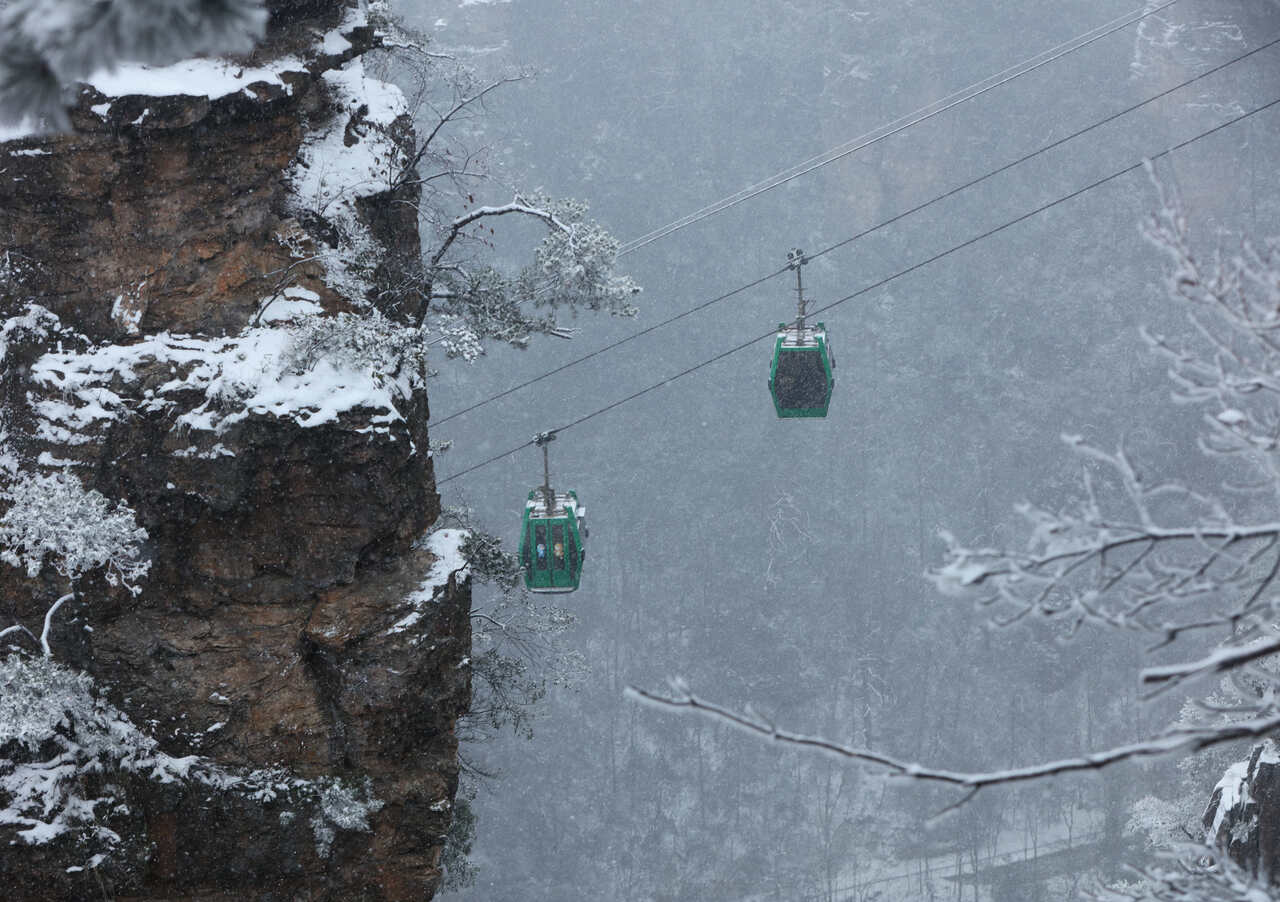
Check cable car status before you leave the hotel — the right way. The fastest method is messaging the official WeChat accounts directly: 武陵源发布 (Wulingyuan) and 天门山景区 (Tianmen Mountain). Official websites typically update 2–4 hours later than the WeChat channels. We do this check for every winter client before departure. Independent visitors should do the same rather than arriving at the cable car base to find it closed. For Tianmen Mountain specifically, cableway operating status changes seasonally and with maintenance schedules — check our Tianmen Mountain Line A, B or C guide for current route availability before planning your visit.
If you're planning around snow probability, track cold fronts in advance. General weather apps give you temperature ranges but miss the key signal: look for 寒潮预警 (cold wave warnings) on 墨迹天气 (Moji Weather) or weather.com.cn, which covers Hunan Province weather patterns in detail. A cold wave warning issued 48–72 hours ahead is the most reliable predictor of mountaintop snowfall in Wulingyuan. We watch these in the days before each winter client arrival and adjust the first-day itinerary accordingly. Independent travelers staying 4+ days can do the same.
Midday is the most reliable window for clear views. Morning mist and fog are common in Zhangjiajie year-round. In winter, the fog tends to linger longer than in summer — sometimes not clearing until 10:00–11:00 AM. Best visibility window is typically 10:00 AM–2:00 PM. For photography on a post-snow day, push for the 7:00–9:00 AM sunrise window.
Trails are cleared after every snowfall. Main routes are swept and walkable — in twenty years here, no client has been unable to complete the primary Wulingyuan circuits because of snow on the path. Secondary connecting trails are different: one of our guides slipped on an icy side path near Tianzi Mountain in January 2022, which is why we now keep clients on swept main paths and rent crampons for anyone who wants to explore further. Remove crampons before stepping onto any glass walkway surface.
Our post-snowfall day sequence — built from 20+ winters here:
- Tianzi Mountain at opening (1,262m, highest snow accumulation, stays white longest, east-facing platforms near Yubi Peak hold snow best)
- Golden Whip Stream in late morning (sheltered valley, cable cars may still be reopening, scenic regardless of snow level)
- Yuanjiajie in the afternoon (lower elevation, beautiful in afternoon light, pillars dramatic even if snow is patchy)
- Tianmen Mountain the following morning if snow remains (highest summit, best rime ice conditions)
Avoid Chinese New Year (Spring Festival). Hotel prices in the Wulingyuan core jump from CNY 300 to CNY 900–1,200 per night overnight. Every train ticket out of Zhangjiajie sells out weeks ahead. If your dates overlap with the two-week window around the festival, book accommodation and transport 6–8 weeks in advance minimum — or plan around it.
End the day at a hot spring. The two closest options to Wulingyuan are Wanfu Hot Spring Resort (around 40 mins' driving, natural spring water at 54°C year-round) and Jiangya Hot Spring (around 40 mins' driving). Both operate year-round.
Huanglong Cave is the snowy-day backup. On days when outdoor conditions are too bad for the parks — or on arrival/departure days — Huanglong Cave is an excellent use of 2 hours. Snow outside, 16°C inside, illuminated karst formations. It works.
A typical 4-day winter framework we use with most clients:
- Day 1: Arrive, settle into Wulingyuan, walk the easy sections of Golden Whip Stream to calibrate to the cold
- Day 2: Tianzi Mountain full day (cable car up, shuttle and walk circuits) — highest snow probability
- Day 3: Tianmen Mountain (full day; Route A in winter) — best rime ice, most dramatic winter atmosphere
- Day 4: Buffer day — if snow fell overnight, back to Yuanjiajie at 7:00 AM; if clear, Baofeng Lake or Grand Canyon
The buffer day on Day 4 is what separates good winter trips from frustrating ones. For trips of 5 days or more, Fenghuang Ancient Town (3 hours by car, ~CNY 150 by private transfer) makes a natural winter extension — off-season crowds are minimal, the town's riverside architecture and stone streets photograph well in overcast light and snow, and the route back passes Zhangjiajie city for a convenient departure.
→ See our Zhangjiajie itinerary guide to build the full trip around this framework → See our winter travel in China guide for how to extend a Zhangjiajie winter trip into a broader China itinerary
8. Frequently Asked Questions
Is Zhangjiajie a good destination for experiencing snow in a dramatic landscape?
Yes. Snow on 3,000 sandstone pillars inside a UNESCO World Heritage site is a categorically different experience from snow in a city, a ski resort, or most mountain ranges. Visitors who have seen snow elsewhere consistently describe Zhangjiajie in winter as the most visually striking version of that experience. Timing matters: mid-January through early February, with a buffer day built in.
How does snow in Zhangjiajie compare to other winter destinations in China?
Harbin and northeast China get heavier, more reliable snowfall — if guaranteed deep snow is the goal, that's the right region. Zhangjiajie's snow is lighter (typically 5–15cm) but falls on sandstone pillar formations that exist nowhere else on earth. Winter is also Harbin's peak season; in Zhangjiajie it's the off-season, so costs and crowds are far lower.
What is the best time to see snow in Zhangjiajie?
The highest probability window is mid-January through early February, just before and after the Spring Festival. Cold fronts from the north push deepest into Hunan during this period. Late December is possible but less consistent. After a snowfall, the best visual conditions occur the following clear morning — typically a 12–24 hour window before melting begins.
What is rime ice, and is it the same as snow?
No. Rime ice forms when overnight temperatures drop below -3°C and mist freezes on contact with branches and surfaces, coating every tree in white crystals. It doesn't require snowfall. On Tianmen Mountain, rime ice appears 10–15 times per winter season — meaning even in a low-snow year, significant white winter scenery is still possible.
Do the parks stay open during snow?
Zhangjiajie National Forest Park and Tianmen Mountain remain open during most snowfall. Cable cars and glass walkways close during active heavy snowfall and may stay closed for 12–24 hours after severe ice. Park staff clear main trails after every snowfall. Check the WeChat accounts 武陵源发布 and 天门山景区 each morning for real-time status — these update faster than official websites.
How cold is Zhangjiajie in winter?
The city averages 2–9°C in January. Mountain summits run 8–10°C colder — Tianmen Mountain can reach -10°C with wind chill. Pack thermal base layers and a windproof jacket for any mountain visit from December through February.
Can I see snow and also avoid the Chinese New Year crowds?
Yes. The peak snow window (mid-January) overlaps with pre-holiday quiet in most years. Aim for January 10–February 8 for the best combination of snow probability and manageable visitor volume. Please be sure to check when the Chinese New Year falls during the year of your visit, and try your best to avoid traveling during that time.
Are hotel prices really much lower in winter?
Yes. The Wulingyuan core area drops from CNY 500–900 per night in peak season to CNY 200–400 in January–February. Basic guesthouses near the park entrance run CNY 100–150. Airfares to Zhangjiajie Hehua Airport (DYG) also drop — typically 40% below April or October fares.
Is it safe to hike in Zhangjiajie with snow on the trails?
Main trails are cleared by park staff after every snowfall, so standard routes are safe for most visitors. Secondary trails can be icy and require caution. Crampons are rentable at park entrances. Wear waterproof boots with traction regardless — flat-soled shoes on icy sandstone are a genuine hazard. Remove crampons before stepping onto any glass walkway surface.
What if it doesn't snow when I'm there?
Still worthwhile. The forests stay green. Rime ice appears frequently at Tianmen Mountain when temperatures drop below freezing overnight. The park in January with no snow beats the same park in July with 100,000 visitors. Of the two unpredictable seasons, winter without snow is considerably more manageable than summer's rainy season — winter fog clears by midday; summer fog often doesn't.
→ See our Zhangjiajie rainy season guide for that comparison.
Planning a winter trip to Zhangjiajie? We've been guiding international visitors here since 2006. Contact us and we'll build an itinerary designed around the weather window.