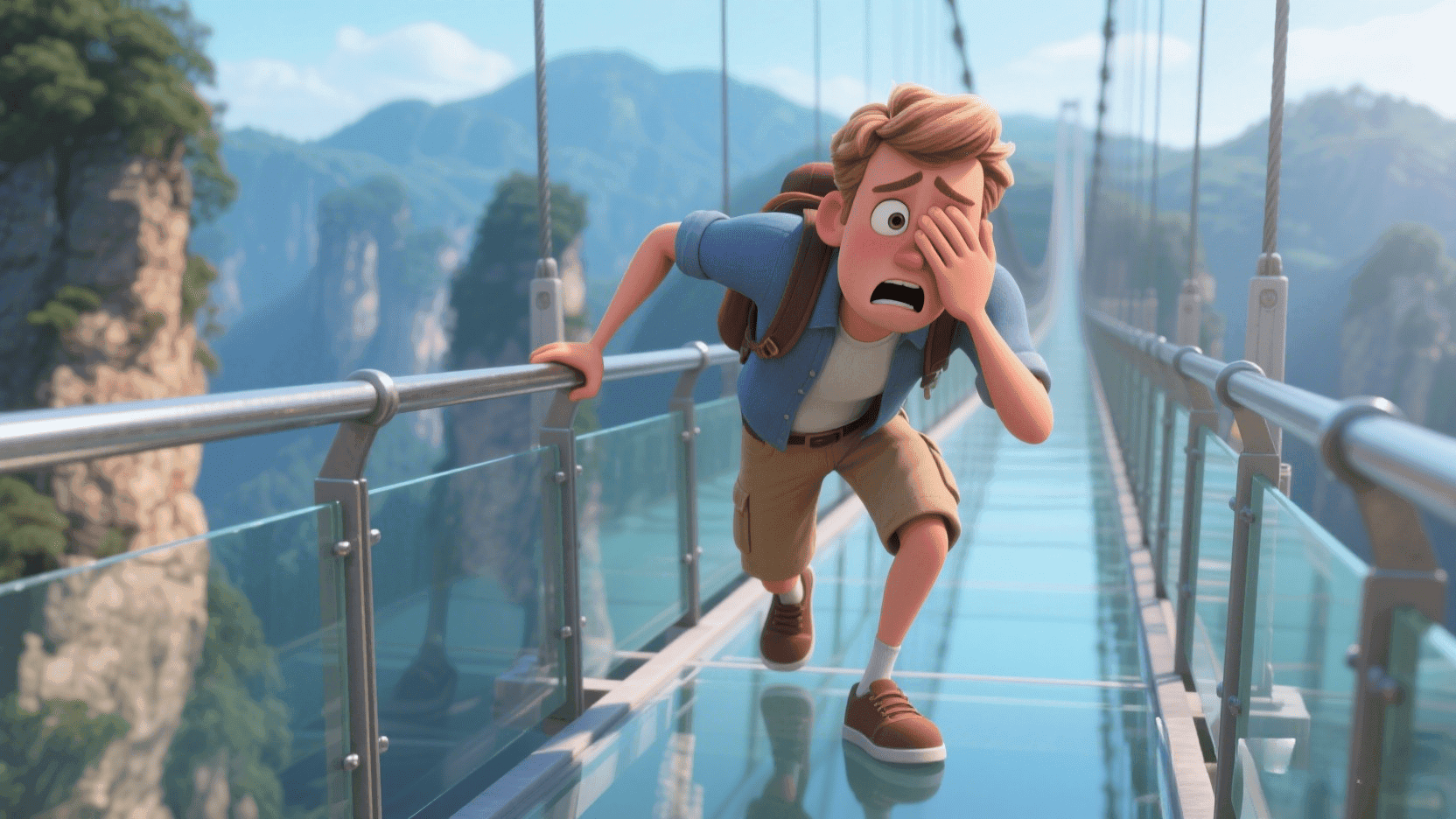
Fear of Heights in Zhangjiajie: An Honest Guide for Nervous Visitors
Here’s what most Zhangjiajie guides won’t say upfront: this destination was practically built to terrify people who are afraid of heights. Concerned about a fear of heights in Zhangjiajie? This guide is for you.
A glass bridge suspended 300 meters over a canyon. An elevator that shoots up a sheer sandstone cliff at 5 meters per second. Skywalks bolted to cliff faces at 1,430 meters above sea level. We’ve been running international tours through Zhangjiajie for over 20 years, and a real share of our clients arrive with some degree of acrophobia — some aware of it, some not.
One of our clients from the UK — Robert, 68 — put it plainly after his trip: “The Bailong Elevator was initially terrifying. I’m afraid of heights. But the ride is so quick, and the payoff — suddenly being atop those pillars — was worth it.” His wife Susan, 71, had nearly cancelled the whole trip over the reviews she’d read about stairs and steep hikes.
They didn’t cancel. They used every cable car and elevator available and had a wonderful trip.
This guide is written for travelers like them. We’ll tell you exactly which attractions trigger heights anxiety and how intensely, what you can skip without losing the best of Zhangjiajie, and how to plan so fear of heights doesn’t define your trip.
Table of Contents
The Glass Bridge: Don’t Let Social Pressure Win
Height above canyon floor: ~300 meters | Length: 430 meters
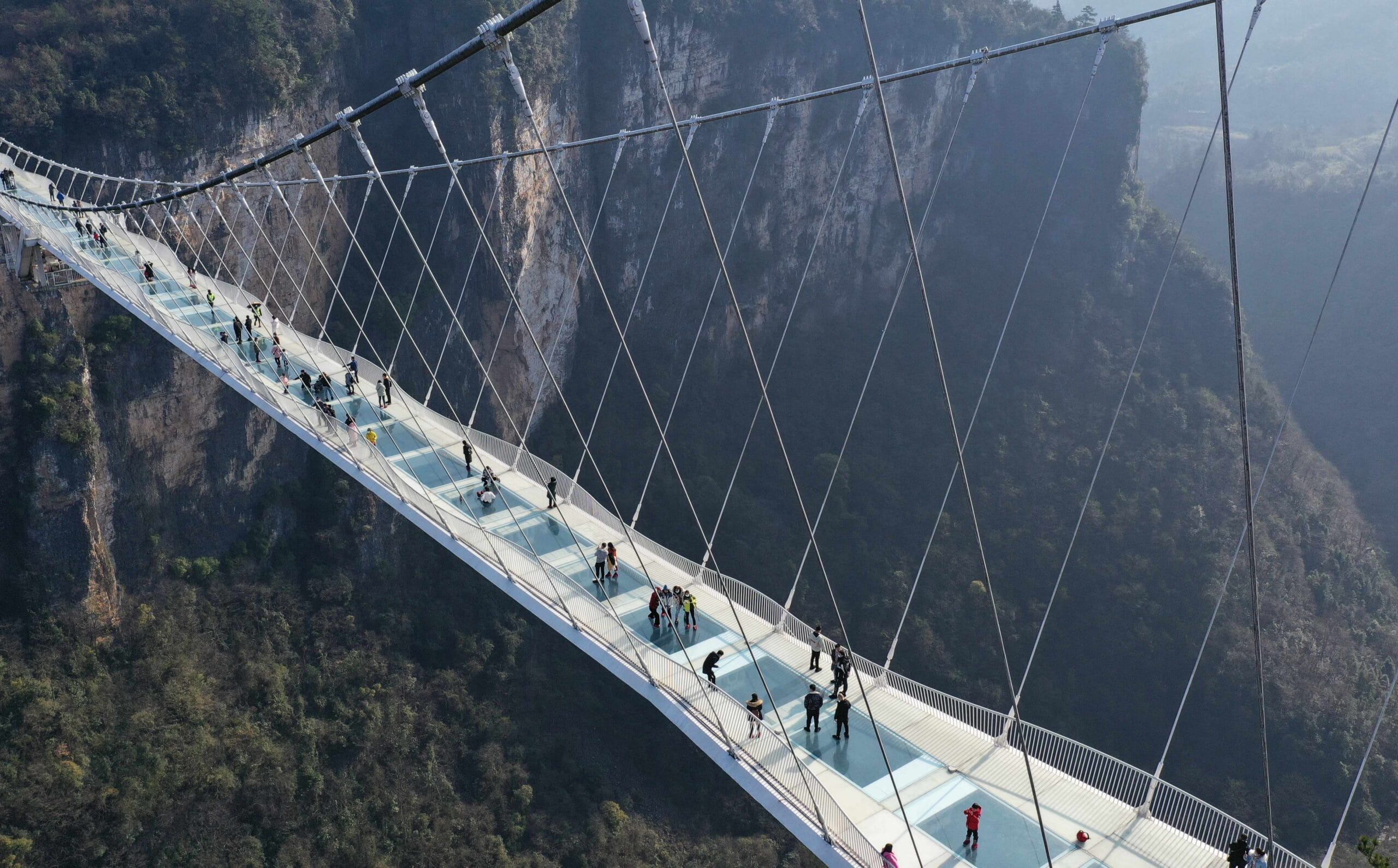
This is the one everyone has seen in the viral videos — the man clutching the railing, his friends laughing. Those videos are completely real.
The Zhangjiajie Grand Canyon Glass Bridge hangs between two cliff faces over a limestone canyon. The floor is fully transparent glass. When you step onto it, you look straight down through 300 meters of empty air. There’s nothing ambiguous about what your eyes are telling your brain.
The engineering is extraordinary. The deck panels are triple-layer tempered glass, nearly 5 cm thick. Before opening, engineers drove a 40-tonne truck across it — the recorded deflection was 2.16 centimetres. The bridge is rated for 800 visitors simultaneously and has had no structural incidents since opening in August 2016. The fear is purely psychological. But it’s real, intense, and doesn’t respond to being told the bridge is safe.
Can you skip it? Yes — and we’d recommend it if heights genuinely stop you. The canyon itself is excellent without the bridge. Route A (Line A) covers the canyon floor walk, waterfalls, caves, and the boat exit. The Glass Bridge adds Line B. Buying that combined ticket creates psychological pressure to cross. Decide before you buy, not after.
Our honest read: We’ve watched too many visitors white-knuckle their way to the first quarter of the bridge, freeze completely, and have to be walked backward to the entrance while the group waits. If your body says no before you step on — listen. The canyon without the bridge is still one of the best half-days in Hunan Province. Our guests who’ve spent two days looking up at the forest park often say the Grand Canyon feels like the exhale.
The Bailong Elevator: Different Fear, More Manageable
Height: 326 meters | Ride time: Under 2 minutes | Ticket: ¥65 one-way / ¥72 return
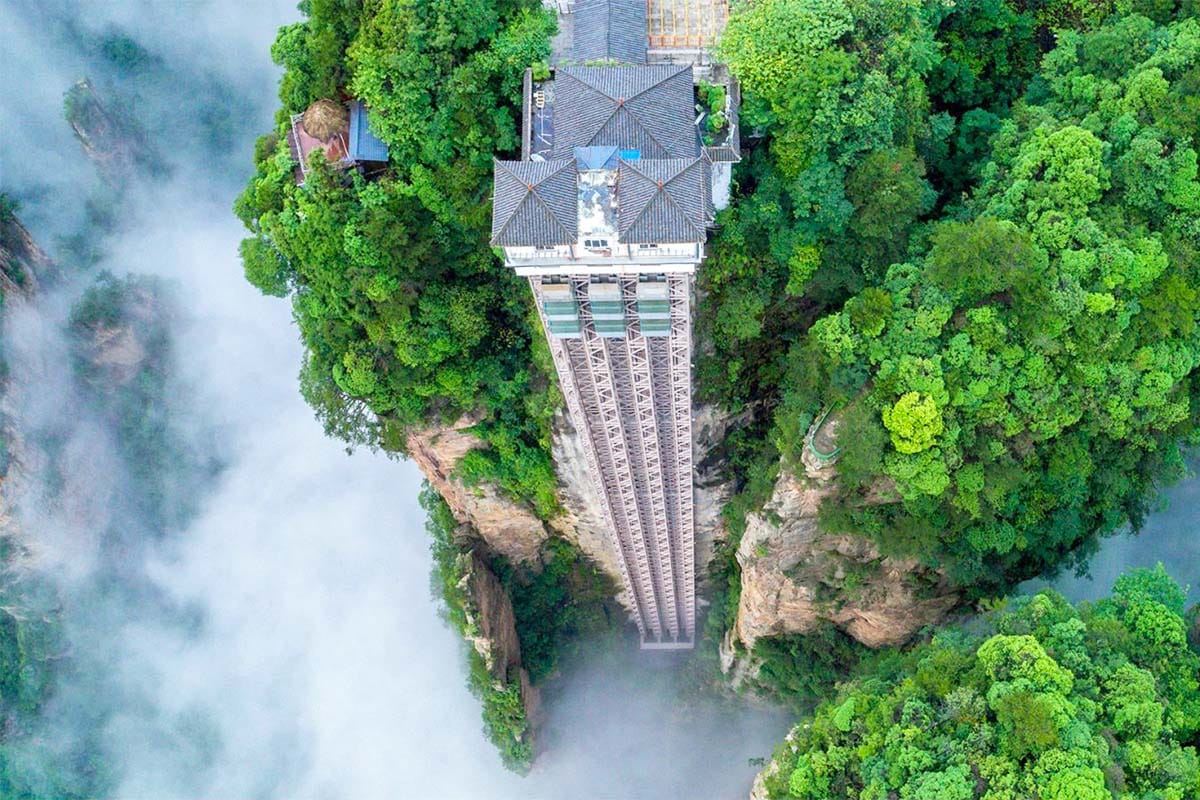
This one is more complicated. The Bailong Elevator isn’t optional if you want to reach Yuanjiajie — the Avatar mountain plateau — without a 2+ hour hike up steep trails.
The elevator is built into the cliff itself. The lower 154 meters run inside the rock — complete darkness. Then it breaks out of the cliff into an exposed steel structure. The cabin is glass-fronted. You suddenly see the sandstone pillars and valley below at speed.
That transition from darkness to open air is jarring. But this isn’t the same as standing on a glass floor over open space. You’re inside an enclosed cabin. The visual field is in front of you, not directly below you. Most visitors with moderate acrophobia manage it — including Robert from the quote above — by looking at the opposite cliff face rather than down, or by positioning themselves toward the back of the cabin.
Can you skip it? Technically. Hiking trails go up and take 2–3 hours each way on steep terrain. But Yuanjiajie — the Hallelujah Mountain, the No.1 Natural Bridge, the Enchanting Terrace — is the reason most international visitors make the trip. Missing it is a significant loss. The Bailong Elevator queue hits 45–90 minutes by 9:30 AM on busy days; arriving at opening is the single most effective tip we give every client.
Our honest read: Try it. Knowing the hiking trail exists as a fallback reduces anxiety before you step in. Most people with moderate acrophobia get through the ride fine.
Tianmen’s Glass Skywalks: Short but Exposed
Summit altitude: 1,518 meters | Glass sections: 60–100 meters | Full-day ticket: ¥288
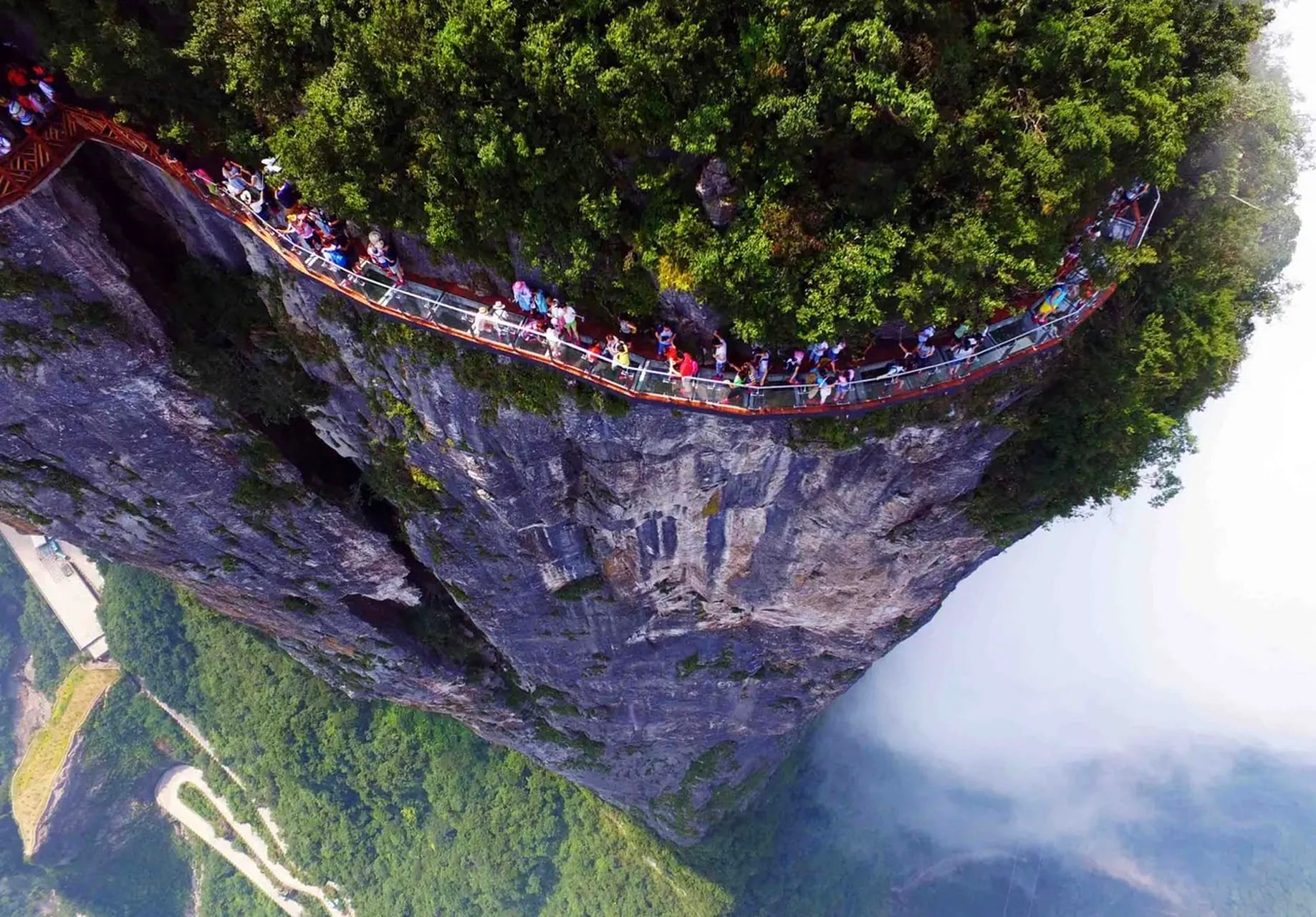
Tianmen Mountain is a separate attraction from the forest park, with its own cable car and ticket. The glass sections here are embedded in cliff faces rather than spanning open space — the longest is 100 meters. But you’re walking along a sheer cliff at altitude with open sky on one side and rock on the other.
Whether this feels more or less frightening than the Glass Bridge depends on you. Some people find it easier because solid rock is right beside you. Others find the altitude and full exposure worse. One useful fact: the glass on these skywalks is tinted or frosted green rather than crystal-clear — a deliberate design decision to reduce the intensity of looking down. On Tianmen’s many misty days, the valley below is often obscured altogether.
The glass sections are optional. The full summit loop — Tianmen Cave (the massive natural arch), the 999 steps, the non-glass cliffside plank roads, the temple — is accessible without setting foot on any glass.
One thing worth knowing in advance: the 99 Bends road on the approach is a switchback with significant drop-offs on the curves. It’s not glass, but if that kind of exposure bothers you, it’s better to know before you’re on the bus. The Line A, B, and C options differ in how much of the mountain you traverse and in which direction.
Current access note (2026): The main upper cableway section is closed for renovation. Access involves bus segments on the 99 Bends road. The summit experience itself is unchanged.
What’s Actually Comfortable Here
Not everything in Zhangjiajie is as vertigo-inducing as it looks in photographs.

Golden Whip Stream is a flat 7.5 km valley walk through dense forest between the stone pillars. No exposed edges. No glass. Wooden boardwalks cover much of the route. It’s one of the most beautiful trails in the park, and it’s very comfortable for anyone with acrophobia. Watch for macaque monkeys at the midpoint — they’re bold and habituated to tourists.
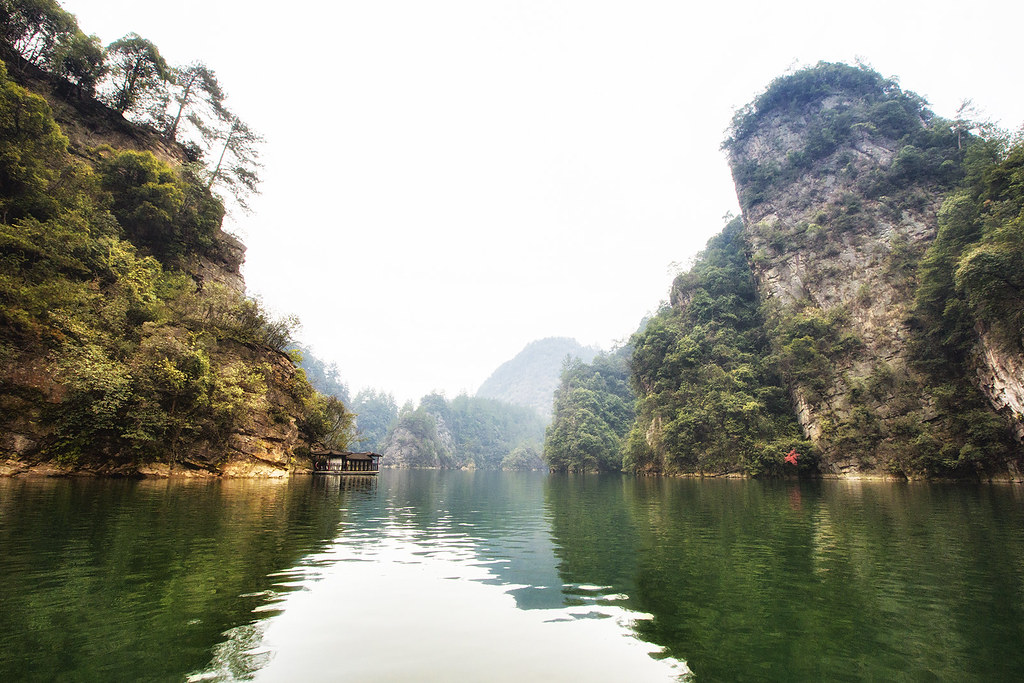
Baofeng Lake is approached by stairs from below and involves a gentle boat ride inside an enclosed canyon. Nothing height-related. We’ve had clients tell us this was the best section of their entire Zhangjiajie trip.
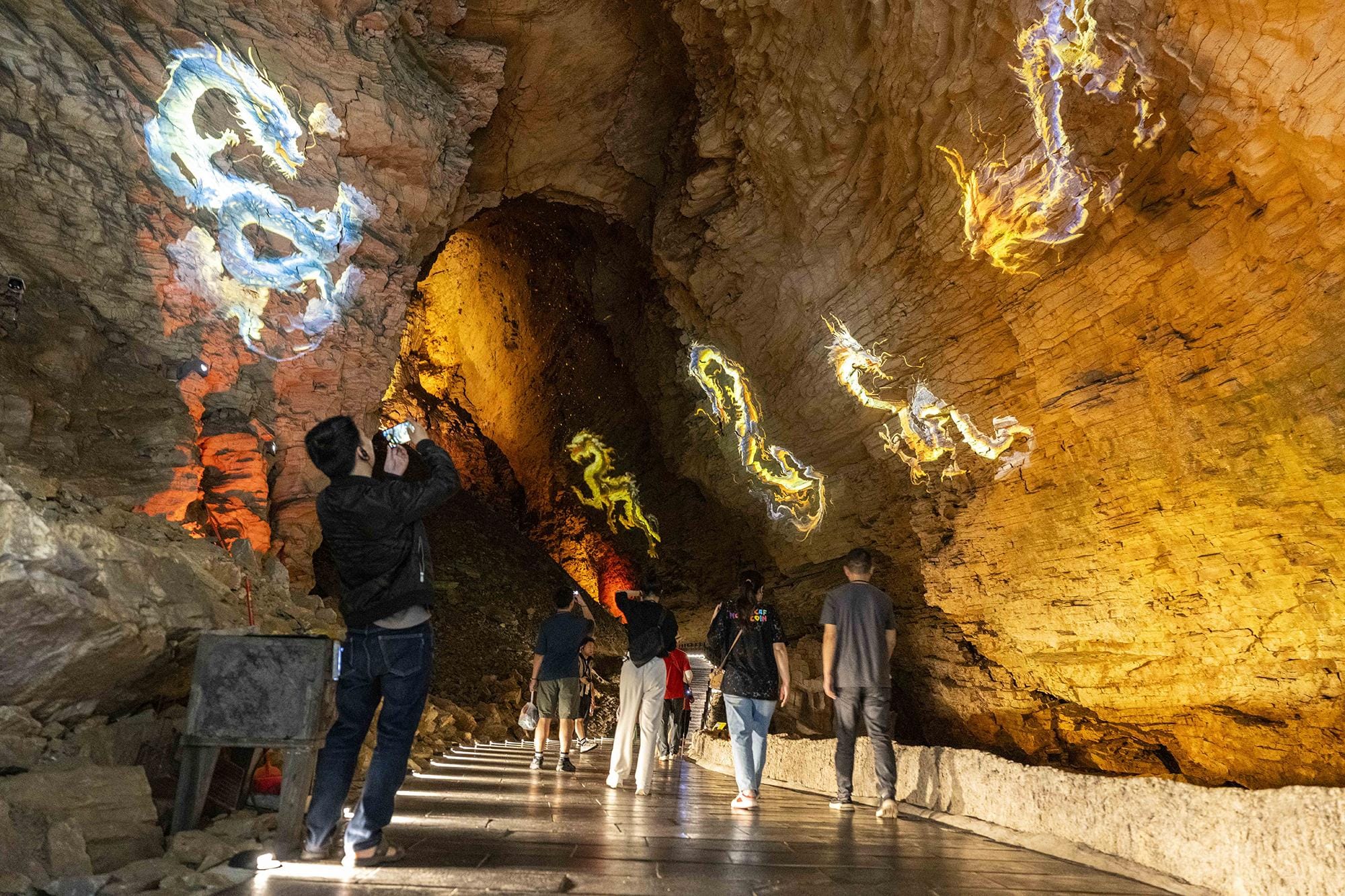
Yellow Dragon Cave (Huanglong Cave) is an underground cave system — stalactites, underground rivers, a 40-metre stalactite that’s among the tallest in Asia. No heights at all.
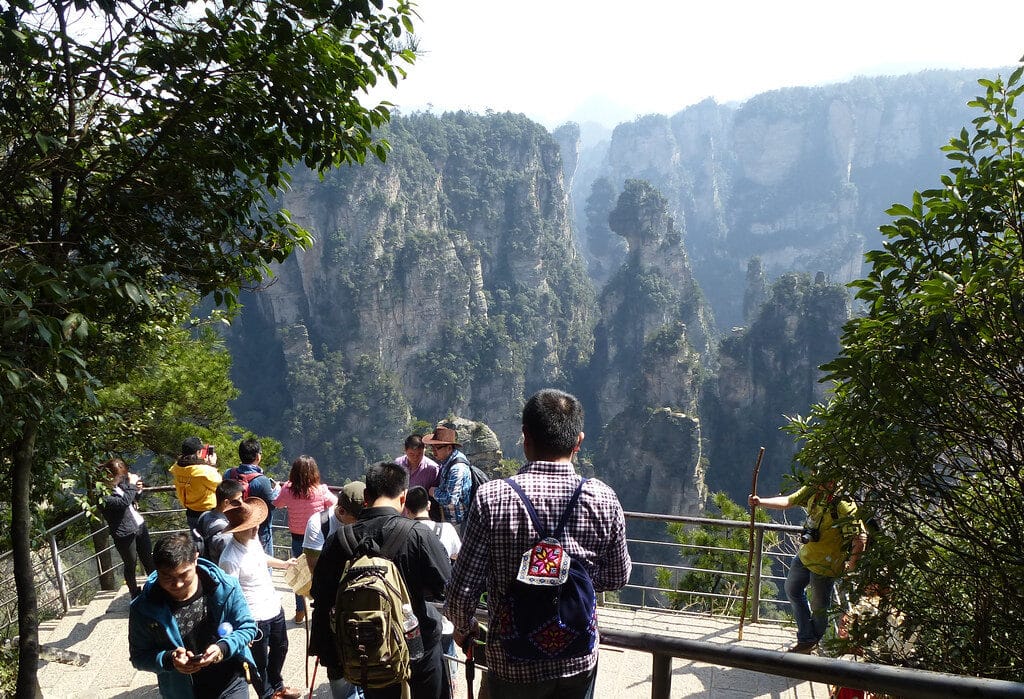
The Yuanjiajie plateau — once you’re up via elevator or hike — is largely flat and forested. The famous viewpoints have solid railings. Staying 2–3 meters back from the edge rather than leaning over it changes the experience entirely. You control how close you go.
Tianzi Mountain cable car is an enclosed gondola, and the plateau viewpoints are manageable for most. You decide how close to any overlook edge you stand.
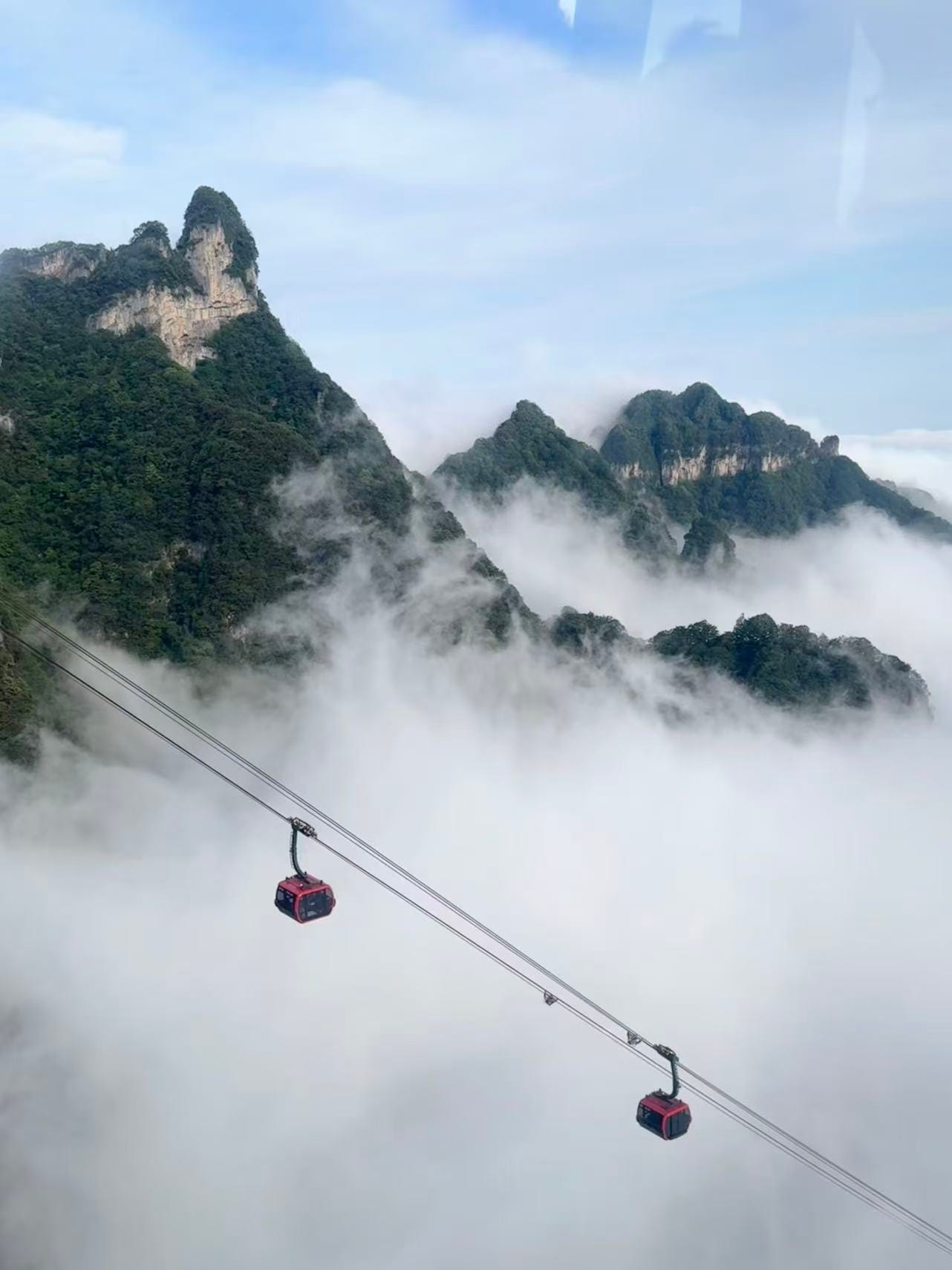
The enclosed cable cars throughout the park vary in how people with acrophobia experience them. Some find the contained cabin easier than open walkways. Others find the dangling motion worse. Know which type you are before you plan your day around a cable car.
Quick Reference
Attraction | Height trigger | Skippable? | OK if mildly acrophobic? |
|---|---|---|---|
Extreme — 300m transparent floor | Yes | No | |
Grand Canyon Line A (no bridge) | None | — | Yes, very comfortable |
Moderate — enclosed, glass-fronted | Hard to avoid | Yes, most manage | |
Yuanjiajie plateau & viewpoints | Mild — railings, you control proximity | — | Yes, with care |
Tianmen glass skywalks | Moderate-High — cliff edge, open air | Yes | Borderline |
Tianmen 99 Bends bus | Mild — switchback road with drop-offs | No | Yes for most |
Tianzi Mountain cable car | Moderate — enclosed gondola | Hiking alternative | Manageable |
None | — | Yes, very comfortable | |
None | — | Completely fine | |
None | — | Completely fine |
Tips That Actually Help
Anchor before you look. Stop walking before approaching any exposed edge. Feet planted, both hands able to reach a railing if needed. Moving while your brain is already processing height amplifies the fear response significantly.
Control your visual field. On the Bailong Elevator, fix your gaze on the opposite cliff face. On exposed walkways, look across to the mountains rather than through the glass at your feet. You don’t owe the view a full look down.
Go first thing in the morning. The Bailong Elevator queue hits 45–90 minutes by 9:30 AM in peak season. Gates open at 7:30 AM. Arriving at opening means you move on your own schedule — and at Yuanjiajie before 9 AM, you can have the Avatar Mountain viewpoint nearly to yourself.
Decide before you buy. The Glass Bridge ticket creates commitment pressure. Look at the bridge entrance before buying. If your body says no, take Line A and have a better day.
Tell your guide upfront. If you’re traveling with us, say it at the start of day one. We’ll plan the entire itinerary differently — routing around unnecessary triggers while keeping the best scenery intact. Our Zhangjiajie itinerary guide shows how the days fit together and where we have flexibility to adjust.
Rainy days are your friend for certain attractions. When peaks are clouded over, shift to the valley floor. Golden Whip Stream, Baofeng Lake, and Yellow Dragon Cave are excellent in rain — waterfalls run full and crowds thin out. Save your clearest day for Yuanjiajie and Tianzi Mountain.
The Bottom Line
The most spectacular things about Zhangjiajie — the stone pillar formations, the mist over Yuanjiajie at dawn, the Avatar mountains, Baofeng Lake’s reflections — have nothing to do with glass floors.
The glass attractions are additions to a place that was already one of the most extraordinary landscapes on earth. Don’t let them determine whether your trip succeeds or fails.
Susan, 71, nearly cancelled because of what she’d read. She didn’t cancel. She used the cable cars, skipped nothing that mattered, and came home with a trip she’s still talking about. A well-planned visit — with the full Zhangjiajie tickets breakdown understood in advance — can be deeply rewarding while avoiding every glass surface entirely.
FAQ – Fear of Heights in Zhangjiajie
Can I visit Zhangjiajie with acrophobia and still see the best scenery?
Yes. The Avatar landscape at Yuanjiajie, the pillar formations throughout the National Forest Park, Tianmen Cave — all accessible without glass floors. The Bailong Elevator is the one concession most people with moderate acrophobia find manageable, and it unlocks the best of the park.
Is the Glass Bridge actually safe?
Yes. The engineering has been independently verified. It’s rated for 800 simultaneous visitors and engineered to withstand magnitude-8 earthquakes. The fear response visitors have is purely psychological — your brain sees 300 meters of air through glass and reacts regardless of what you know rationally.
How does the Glass Bridge compare to Tianmen’s skywalks?
The Glass Bridge is generally more intense. It spans completely open space, with the full 300-meter drop visible through the floor in every direction. Tianmen’s sections are set into a cliff face — solid rock on one side — which some find psychologically grounding. The sections are also much shorter (60–100 meters vs. 430 meters).
Can I reach Yuanjiajie without the Bailong Elevator?
Yes — hiking trails take 2–3 hours each way on steep terrain. For most visitors, the elevator is the practical choice. The enclosed cabin makes it manageable for most people with moderate acrophobia. See our full Yuanjiajie guide for all route options.
Is Qixing Mountain an issue for acrophobic visitors?
Qixing Mountain has its own glass observation platform (the 1520 Sky Eye) and a glass-floored sky bridge. These are optional — the cable car and summit plateau trails are accessible without them. For adventurous visitors, the mountain also offers Via Ferrata routes on cliff faces, which we’d only recommend to those genuinely comfortable at height.
What if I freeze on an exposed section?
Stop. Don’t force movement. Fix your gaze on something stable — the railing, the rock face beside you, the far horizon. Breathe slowly. Tell whoever’s with you. Move when you’re ready, not when someone else says to. If you can’t move after a few minutes, turning back is completely fine. We’ve seen this happen to confident, experienced travelers. There is no shame in it.
Should I tell my guide about my fear of heights?
Yes, and as early as possible. A good guide plans the day entirely differently. Don’t wait until you’re standing at the Glass Bridge entrance. See our complete Zhangjiajie destination guide for a full overview of what the region covers.