Zhangjiajie Transportation: The Complete Guide
Getting to Zhangjiajie used to require a connecting flight through Changsha or an overnight slow train. High-speed rail changed that in 2021. A direct Hong Kong bullet train followed in June 2024. Then in October 2025, Zhangjiajie got its first-ever direct Singapore flight. Most English-language travel guides haven’t caught up.
We’ve been routing international visitors here for over 20 years. This guide covers every realistic way to arrive — and how to close the 35–50 km gap between wherever you land and the national park. That second part is where almost every first-timer’s plan falls apart.
Table of Contents
1. Two Stations, One Airport
Zhangjiajie city sits roughly 320 km northwest of Changsha. Three transport hubs serve it, and understanding the difference between them matters before you book anything.
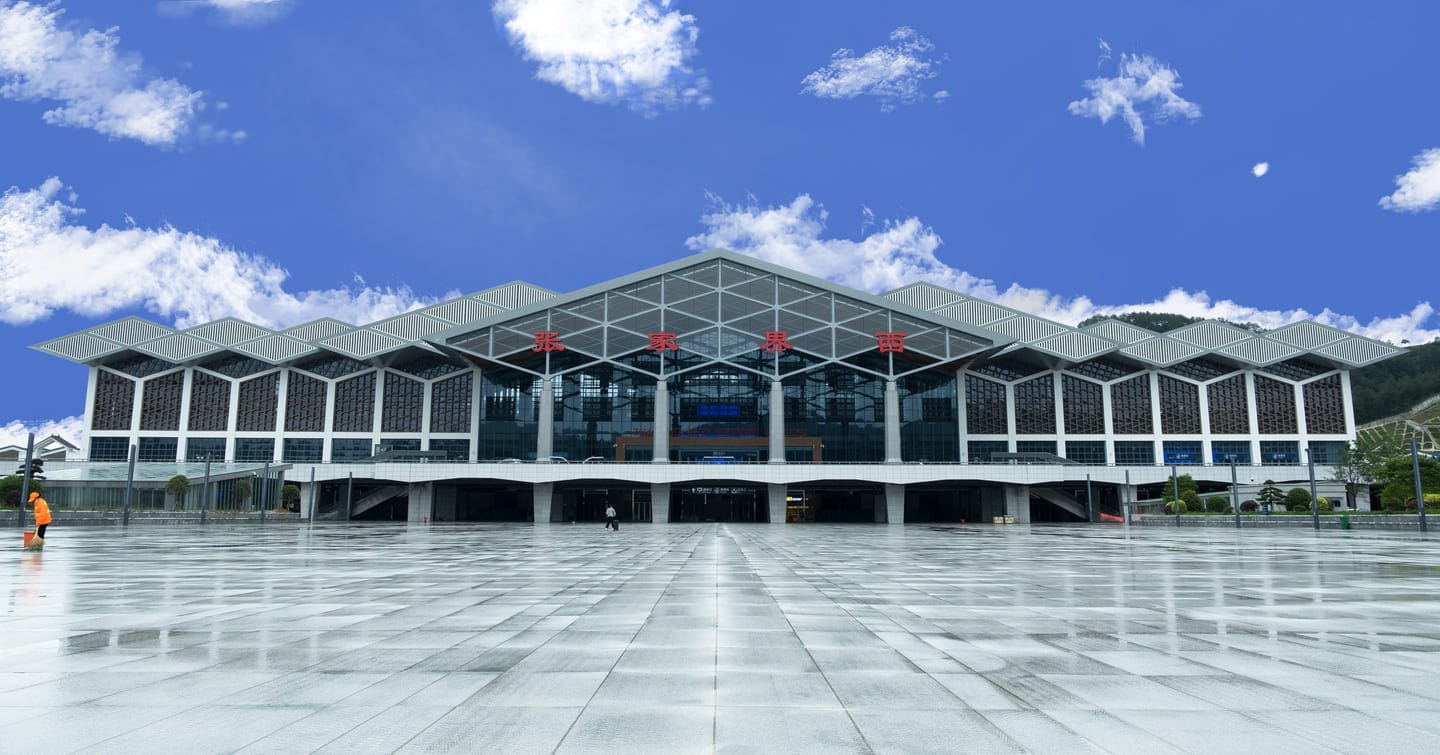
Zhangjiajie Hehua International Airport (DYG) sits 4.5 km from the city center — one runway, one terminal, handling both domestic and international routes. Zhangjiajie West Railway Station (张家界西站), 8.5 km from center, is where all high-speed G and D trains arrive. Most international rail visitors come through here. Zhangjiajie Railway Station (张家界站) is the older downtown station, 4 km from center, used only by slower Z and K-class overnight trains — relevant if you’re arriving from Kunming or Nanning.
None of them is in Wulingyuan — the district that contains Zhangjiajie National Forest Park. Every visitor faces a 35–50 km onward transfer after arrival, and that leg is where most itineraries quietly break down.
2. Getting to Zhangjiajie by Flight
The Airport: What to Know Before You Land
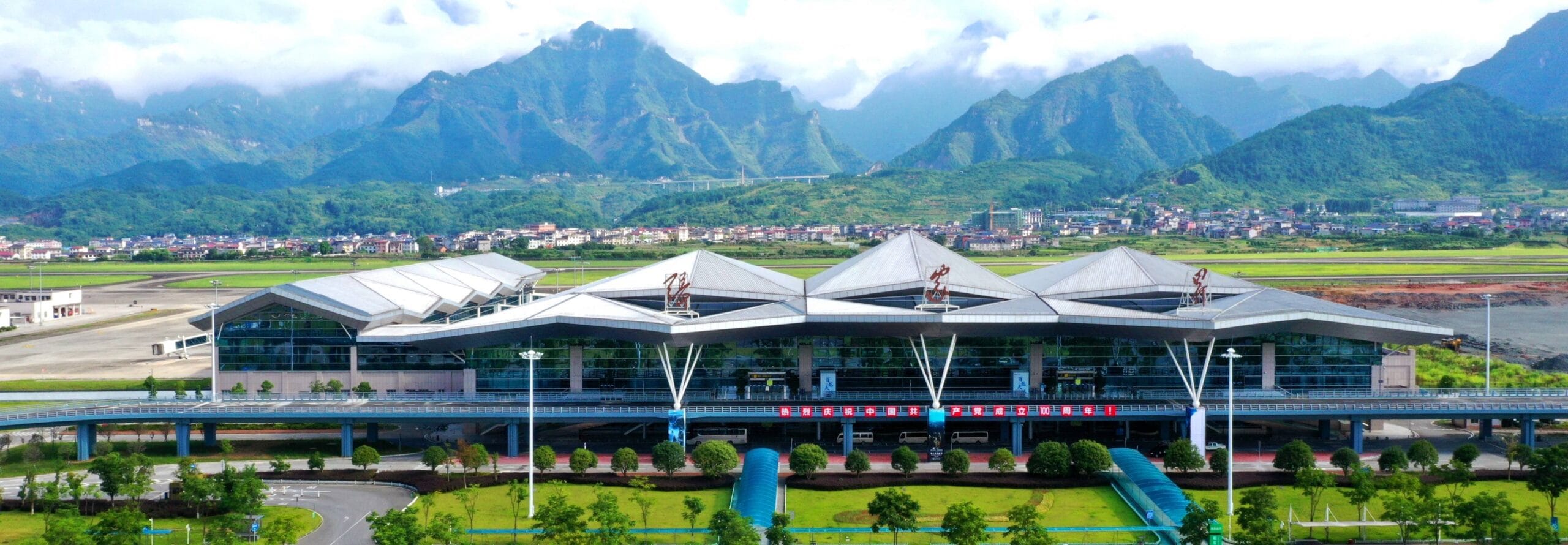
DYG is a small airport. In peak season that shows — bag reclaim slows, the single terminal fills up, and departures can stack.
More consequentially: the airport sits in a valley and is prone to fog and low cloud, particularly November through March. We’ve had guests miss onward connections out of Changsha because their DYG departure ran 90 minutes late in winter fog. If you have a connecting flight after leaving Zhangjiajie, build at least three hours of buffer. Not two.
Domestic Routes
Every major Chinese city connects directly to Zhangjiajie. The most useful routes for international travelers arriving via a hub:
From | Approx. Flight Time | Main Airlines |
|---|---|---|
Beijing (Capital / Daxing) | ~2.5 hrs | Air China |
Shanghai (Pudong / Hongqiao) | ~2.5 hrs | Multiple |
Guangzhou | ~2 hrs | China Southern |
Shenzhen | ~2 hrs | Multiple |
Chengdu | ~1.5 hrs | Air China, Sichuan Airlines |
Chongqing | ~1.5 hrs | Multiple |
Xi’an | ~2 hrs | Multiple |
Book 3–4 weeks ahead during May–October. The Zhangjiajie itinerary guide covers how to structure your days depending on which city you’re flying in from.
International Flights
Singapore – Zhangjiajie Direct
The first-ever direct service launched on October 9, 2025. Loong Air operates both directions on an Airbus A320/A321, every Tuesday, Thursday, and Saturday.
SIN → DYG | GJ8998 · departs 15:45 · arrives 20:35 |
DYG → SIN | GJ8997 · departs 10:05 · arrives 14:45 |
Flight time | ~4 hrs 50 min |
Fares | From ~S$253 return |
Note | Seasonal route — confirm dates on Trip.com before booking |
For Singapore-based travelers, this removes the need to connect through Guangzhou, Shenzhen, or Changsha. For visitors from elsewhere in Southeast Asia transiting Changi, it opens a direct routing that simply didn’t exist before October 2025.
Other International Routes
Route | Airline | Notes |
|---|---|---|
Hong Kong (HKG) | Greater Bay Airlines | Regular scheduled service |
Seoul Incheon + 6 regional Korean airports | Multiple | Korea is Zhangjiajie’s largest international source market |
Bangkok (Suvarnabhumi) | Seasonal charter | Active 2025 |
Kuala Lumpur / Kuching | Batik Air | Kuching route seasonal (Sep–Jan) |
Taipei / Macau | Charter/scheduled | Long-established Greater China routes |
Ulaanbaatar | HunuAir | Seasonal, launched July 2024 |
3. Getting to Zhangjiajie by High-Speed Train
For visitors already inside China, high-speed rail is usually the better choice. It runs city-center to city-center, requires no airport, and for several routes beats flying on total travel time once check-in and transfers are factored in.
Journey Times and Fares
From | Duration | Approx. 2nd Class Fare | Frequency |
|---|---|---|---|
Changsha South | ~2.5 hrs | ¥149 | Many daily |
Wuhan | ~4 hrs | ~¥250 | Several daily |
Guangzhou South | ~6 hrs | ~¥380 | Multiple daily |
Chongqing | ~5 hrs | ~¥250 | Several daily |
Chengdu | ~7 hrs | ~¥340 | Several daily |
Shanghai Hongqiao | 7–9 hrs | ¥763–787 | 2 direct daily |
Beijing West | ~10.5 hrs | ~¥500+ | 1 direct daily |
The Beijing route needs a specific warning: there is currently one direct bullet train per day between Beijing West and Zhangjiajie West. It fills up weeks ahead during peak season. Book it the day your dates are confirmed, or plan a Changsha connection as backup.
West Station vs. Downtown Station
Zhangjiajie West Station (张家界西站) handles all high-speed rail. It’s 8.5 km from the city center, but has direct coach connections to Wulingyuan right outside the western exit — the first thing worth knowing when you step off the train.
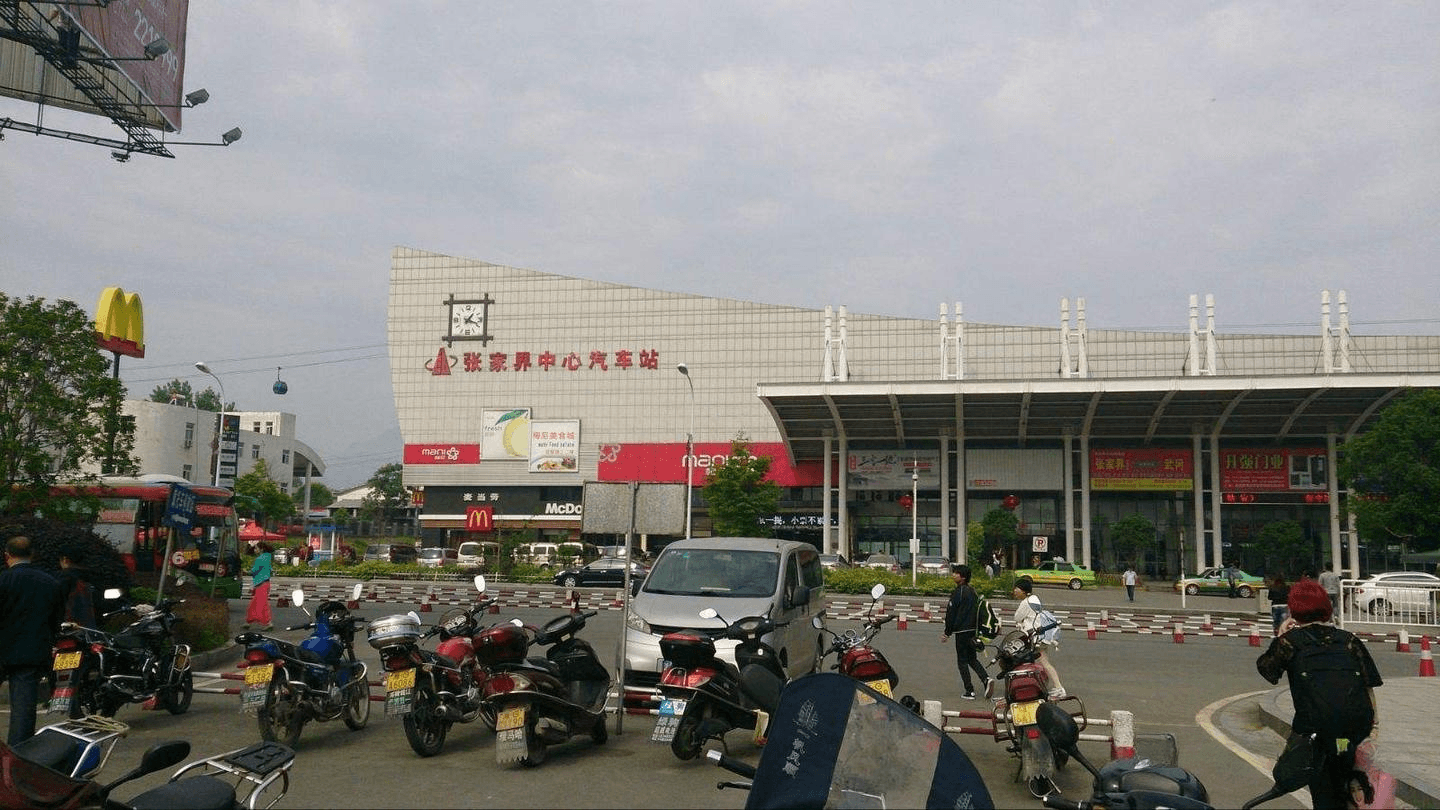
Zhangjiajie Station (张家界站) serves overnight sleepers (Z and K trains). If you’re arriving from Kunming, Nanning, or Hangzhou by overnight train, you may come in here instead. It sits 250 meters from the Central Bus Station, which runs regular coaches to the national park.
Buying Tickets
12306.cn is the official platform but requires Chinese mobile verification. For international visitors, Trip.com is more practical — English interface, foreign cards accepted. Book 3–5 days ahead off-season, 2–3 weeks during May–October, and a full month ahead for Golden Week (October 1–7).
4. Getting to Zhangjiajie from Hong Kong
The train is the better option for most people. Since June 2024, a direct G-class service connects Hong Kong West Kowloon Station to Zhangjiajie West Station with no train change. Journey time is approximately 4.5–5 hours. You board in Kowloon, clear immigration at the station, and step off in Zhangjiajie without touching an airport. For anyone who previously did this trip via Guangzhou or Shenzhen with a connection, the difference is immediately obvious.
Flying takes about 2 hours in the air, with Greater Bay Airlines on scheduled service. It makes sense when time is critically tight, but once you add HK airport transit and the arrival transfer at DYG, door-to-door time rarely beats the train.
5. Getting from the Airport or Station to Wulingyuan
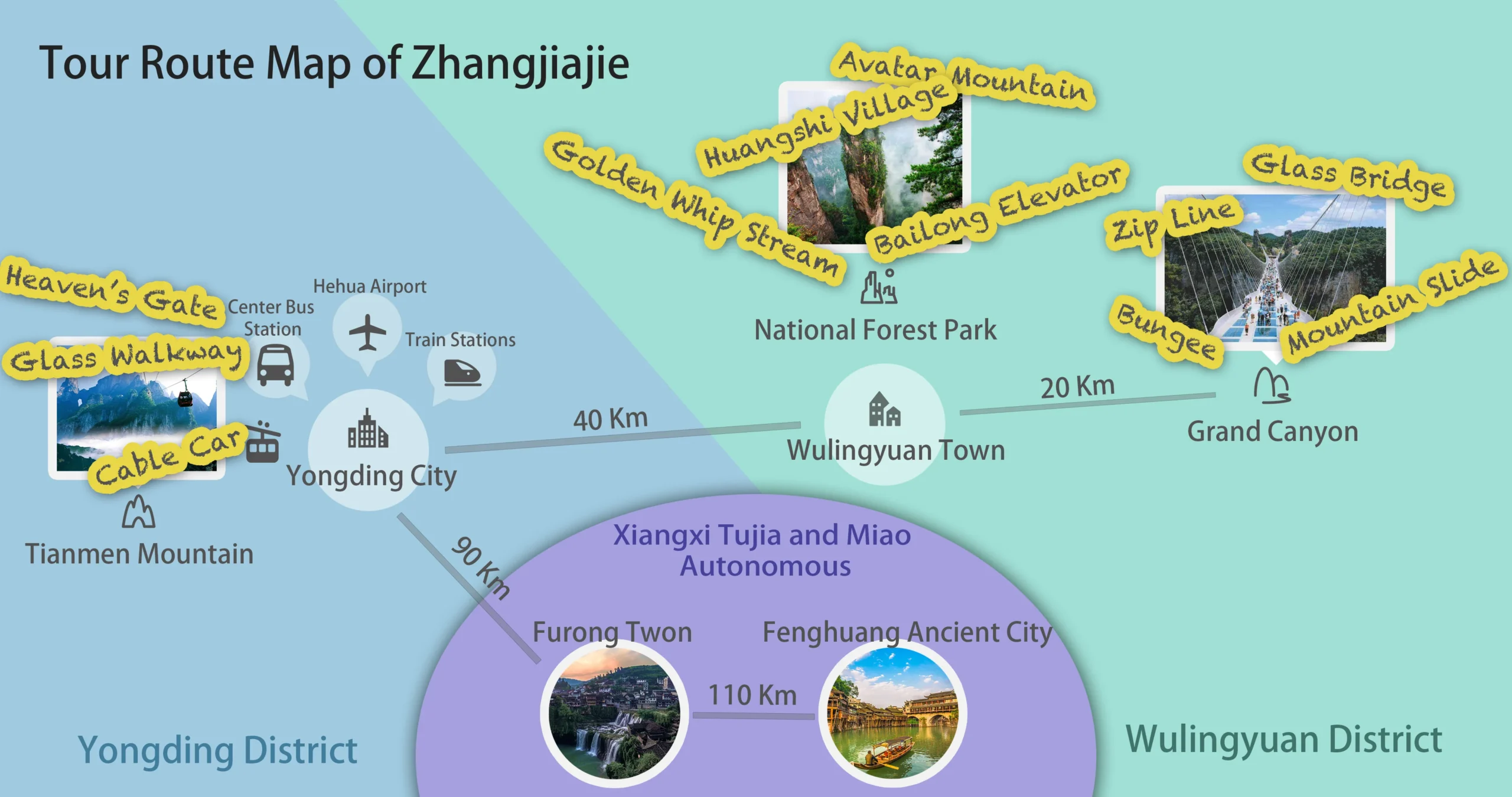
Arriving in Zhangjiajie city and reaching the national park are two separate problems.
From Zhangjiajie West Railway Station
Coach — cheapest and most direct. Exit and turn right. Walk roughly 50 meters to the bus platforms on the western side of the building. Direct coaches to Wulingyuan run for approximately ¥13 and take 45–60 minutes. Last departure is in the early evening. If your train arrives after 8 pm, this option is gone.
Bus Route 5 + Central Bus Station. Take Bus Route 5 (¥2) to the Central Bus Station in the city center, then a direct coach to Wulingyuan (¥12–13, every 5–10 minutes from 6:30 to 18:30). Total cost around ¥15, total time roughly 90 minutes.
Taxi. Around ¥80–150 depending on time and negotiation. For late arrivals when coaches have stopped, budget ¥100–150. Agree on the price before getting in.
DiDi. Works well in Zhangjiajie and shows the fare before you confirm. The cleanest option for late-night arrivals or groups splitting the cost.
From Zhangjiajie Airport (DYG)
Option | Cost | Time | When to use |
|---|---|---|---|
Taxi to Central Bus Station + coach to Wulingyuan | ~¥30–40 | ~1 hr | Most daytime arrivals |
Airport Bus Line 1 to city + transfer | ~¥15–20 | ~1.5 hrs | Very tight budget, no luggage |
Direct taxi to Wulingyuan | ~¥100 | ~45 min | Evening arrivals, heavy bags |
Key Bus Stations
Station | Location | Serves |
|---|---|---|
Central Bus Station (中心汽车站) | City center, near old train station | Wulingyuan coaches every 5–10 min, 6:30–18:30 |
West Station Bus Hub | Attached to Zhangjiajie West Station | Direct coaches to Wulingyuan (~¥13) |
Wulingyuan Bus Station | East Gate area, Wulingyuan District | Local connections within the scenic area |
One note on accommodation: if the national park is your main reason for coming, staying in Wulingyuan District eliminates this entire transfer problem. You walk to the entrance each morning. See our Zhangjiajie accommodation guide for why location matters more than hotel star rating here.
6. Getting Around Inside the National Park
Zhangjiajie National Forest Park covers four connected sub-areas: the National Forest Park itself, Yuanjiajie (the Avatar Mountains zone), Tianzi Mountain, and Yangjiajie. No private vehicles are allowed inside. You move by eco-bus, cable car, or on foot.
Free Eco-Buses
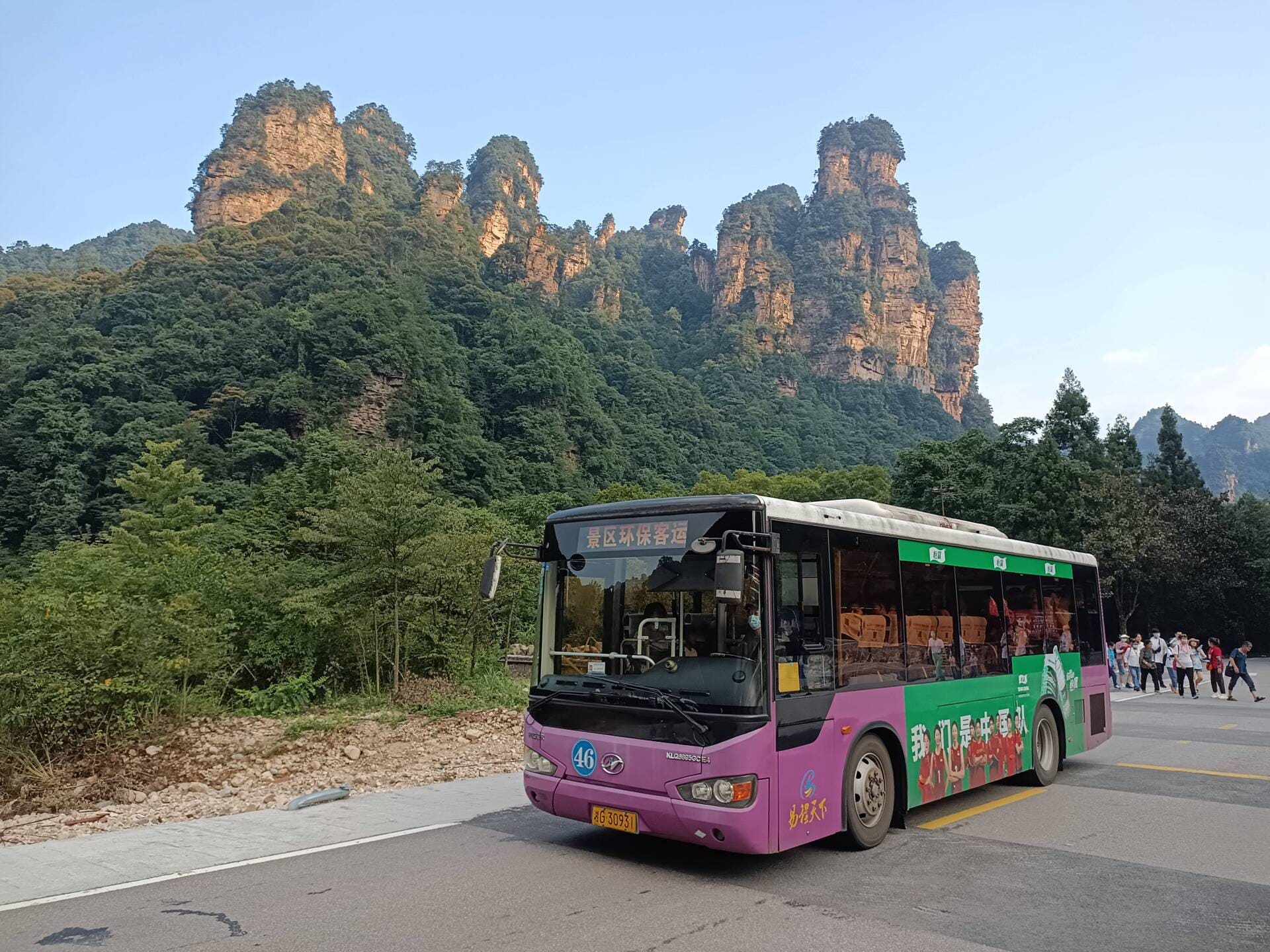
Once inside on your scenic area ticket, green eco-buses connect all major hubs at no extra cost. They run between the park entrances, the Bailong Elevator base, Yuanjiajie, Tianzi Mountain, and Huangshizhai. Full route breakdown and the stops people most commonly miss are in our Zhangjiajie eco-bus guide.
Check the last bus times before you start each day. Buses from Yuanjiajie and Tianzi Mountain stop running around 17:30–18:00. Miss them and you’re facing a long hike out in fading light.
Cable Cars
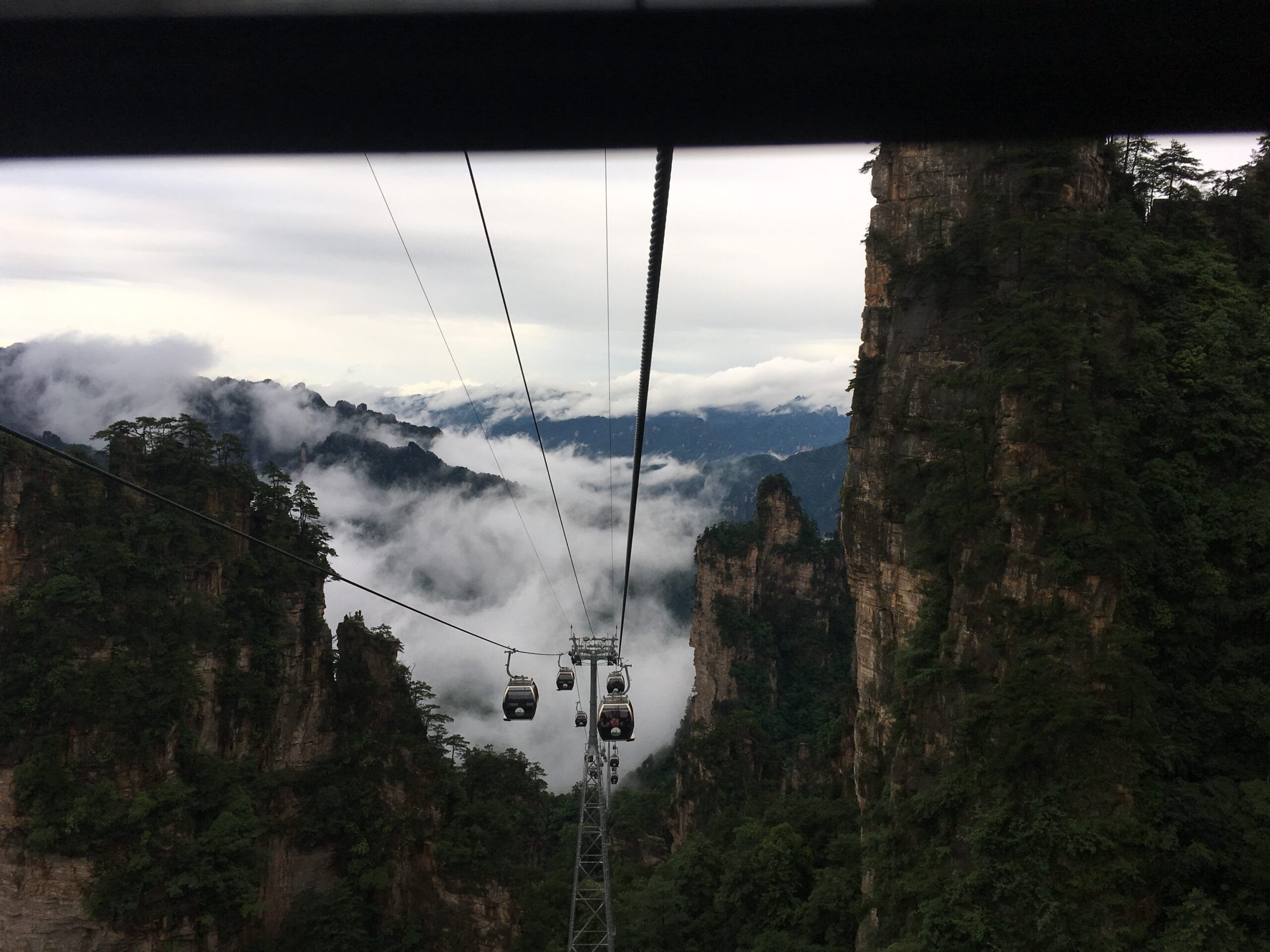
Three cable cars provide vertical access within the park, each with a surcharge on top of the scenic area ticket:
Cable Car | Zone | Approx. Price (one-way) |
|---|---|---|
Yuanjiajie Cable Car | West; busiest | ~¥90 |
Huangshizhai Cable Car | South, near Forest Park entrance | ~¥80 |
Tianzi Mountain Cable Car | East | ~¥80 |
Yuanjiajie Cable Car queues hit 1–2 hours in peak season. Our cable cars guide covers how to time it, and whether the VIP Fast Track makes sense for your group.
The Bailong Elevator
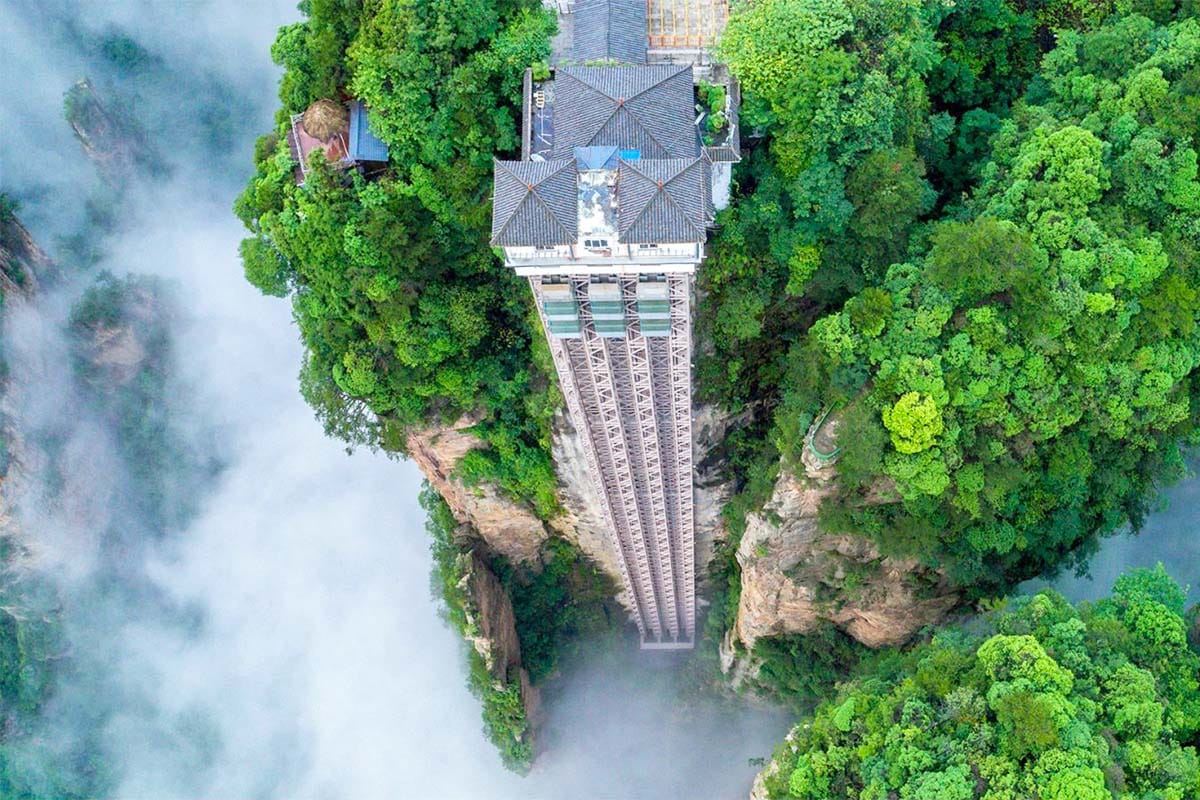
The Bailong Elevator climbs 326 meters up the cliff face in glass-sided carriages — one of the tallest outdoor elevators in the world. Surcharge is approximately ¥72 one-way. Worth it for the ascent. Budget 30–60 minutes for the queue in peak months.
Tianmen Mountain — City-Side, Separate from Wulingyuan
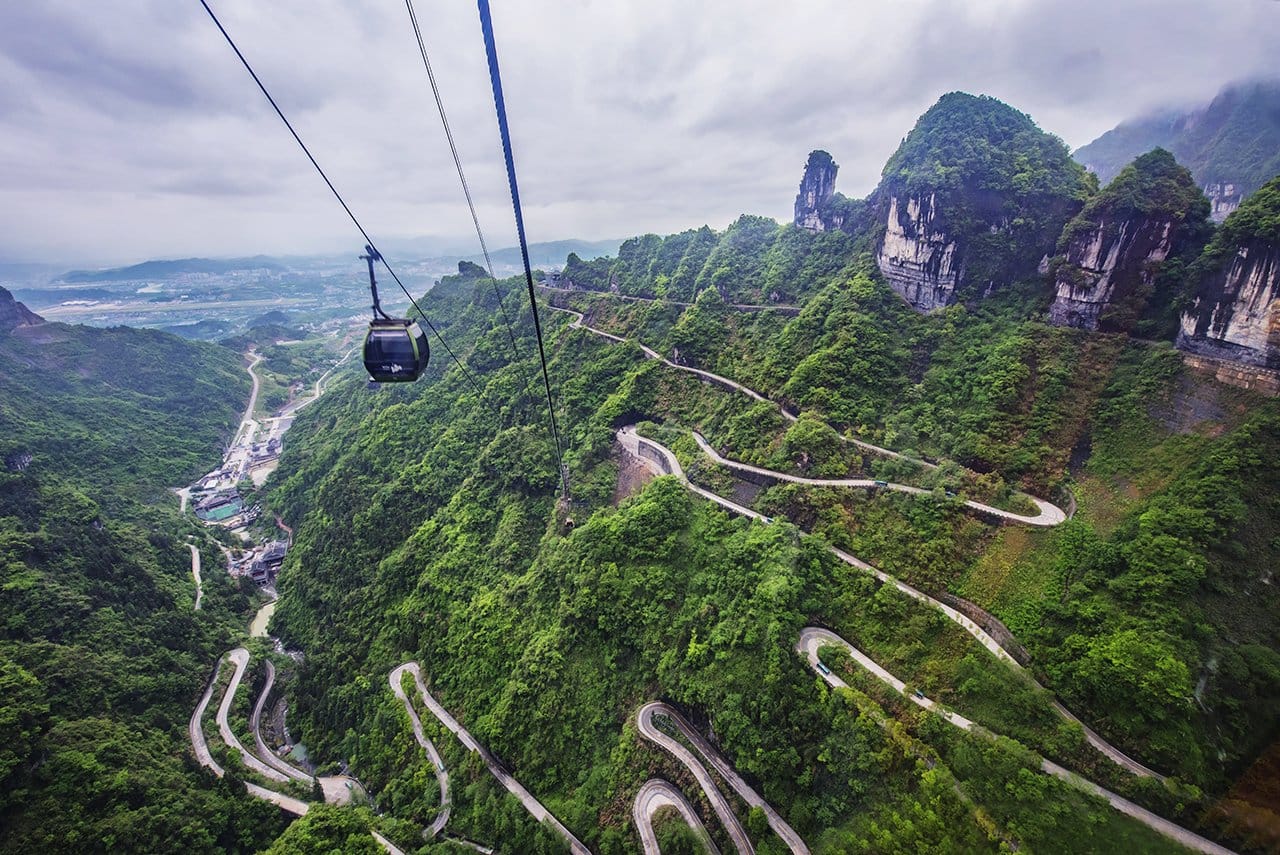
Tianmen Mountain is not part of Wulingyuan. Its cable car base is in downtown Zhangjiajie — at 7.5 km, one of the world’s longest passenger cable car lines — and it requires its own ticket. If you’re staying in Wulingyuan, visiting Tianmen means a trip back into the city. Worth building into your itinerary from the start rather than trying to fit it in on the fly.
7. Getting Around Zhangjiajie City
Taxis start at ¥6 for the first 1.6 km, then ¥2/km. Most rides within the city cost under ¥25. City center to Wulingyuan: ¥80–100. Ask for the meter, or fix the price before you get in.
DiDi works throughout the city and gives you a fixed price upfront. Set it up before arriving in China.
City buses run five main routes from roughly 6 am to 8:30 pm. Fare ¥1–2. Pay via WeChat Pay, Alipay, or cash.
Charter car: For groups covering multiple sites in one day — Tianmen Mountain in the morning and Wulingyuan in the afternoon, for example — a chartered vehicle makes more sense than piecing together taxis and buses. We run charter car service across the Zhangjiajie area.
8. What 20 Years Experience Has Taught Us
The Beijing direct train has no backup plan. One service per day. Sold out means rerouting through Changsha and adding two hours. We’ve seen this happen to well-organized travelers who assumed they could book a few days out in July. Book it the day your dates are fixed.
Arriving after dark without a plan costs money. Coaches from Zhangjiajie West to Wulingyuan stop running in the early evening. Travelers without a plan have walked out of the station at 9 pm and handed ¥200 to the first driver who approached them. DiDi from inside the station runs ¥100–120. Have the app open before you get off the train.
The city is not the destination. Zhangjiajie city is a functional transit hub. Tianmen Mountain is the one compelling reason to spend time on the city side. Everything else — the sandstone pillars, the mist, the scale of the landscape — is in Wulingyuan. If the park is why you came, stay there.
Sort WeChat Pay or Alipay before you land. Both now support international Visa and Mastercard. Without one of them, you’ll run into friction at bus windows, ticket counters, and convenience stores. It takes ten minutes to set up. Don’t arrive without it.
9. Zhangjiajie Transportation FAQ
How long does it take to get from Changsha to Zhangjiajie?
By high-speed train, approximately 2.5 hours from Changsha South to Zhangjiajie West Station. The flight is about 1 hour in the air, but it depends on how you’re connecting — for travelers already in Changsha, the train is usually faster door-to-door.
Is there a direct train from Hong Kong to Zhangjiajie?
Yes, since June 2024. A direct G-class service runs from Hong Kong West Kowloon to Zhangjiajie West Station in approximately 4.5–5 hours, with no train change.
Is there a direct flight from Singapore to Zhangjiajie?
Yes. Loong Air launched the route on October 9, 2025. GJ8998 departs Singapore at 15:45 and arrives Zhangjiajie at 20:35. The return (GJ8997) departs Zhangjiajie at 10:05 and arrives Singapore at 14:45. Both operate every Tuesday, Thursday, and Saturday. This is a seasonal route — confirm availability on Trip.com before booking. Fares from around S$253 return.
How do I get from Zhangjiajie Airport to the national park?
A taxi to the Central Bus Station (¥20–30) plus a coach to Wulingyuan (¥12) totals around ¥30–40 and takes about an hour. For evening arrivals or heavy luggage, a direct taxi to Wulingyuan costs approximately ¥100 and takes 45 minutes.
What’s the difference between Zhangjiajie West Station and Zhangjiajie Station?
Zhangjiajie West Station (张家界西站) is the high-speed hub 8.5 km from the city center, where all G and D trains stop. Zhangjiajie Station (张家界站) is the older downtown station for slower overnight trains, 4 km from center. Almost all international visitors arrive at the West Station.
Can I get from Zhangjiajie West Station directly to Wulingyuan?
Yes. Coaches depart from the bus platforms on the western side of the building for approximately ¥13. They stop running in the early evening. After that, DiDi or a taxi is your only option.
Do I need a visa to enter China through Zhangjiajie?
China’s visa-free policy covers many nationalities — including US, UK, Canada, Australia, and most EU countries — for 6–30 days depending on your passport. Zhangjiajie Airport is a designated international port of entry. See our China visa guide for current country-specific rules.
How far in advance should I book train tickets?
Off-season: 3–5 days is usually fine. Peak months (May–October): 2–3 weeks. Golden Week (October 1–7): a month ahead. For the Beijing direct train: book as soon as your dates are confirmed — one service per day, no exceptions.
What’s the best way to move around inside the scenic area?
Free eco-buses cover all major zones once you’re inside on your scenic area ticket. Cable cars handle the vertical access at a surcharge. Full route details and timings are in our eco-bus guide.
Planning a specific routing? Contact our team — we’ve worked through every combination of these options and can help you sort the logistics before you book.