
What to Eat in Zhangjiajie: A Local Experts’ Honest Guide
We’ve been running inbound tours in China for over 20 years. Tens of thousands of guests. And Zhangjiajie food has surprised almost every single one of them.
Not because it’s fancy. Because it’s unlike anything they expected. People book the trip for the floating mountains. They leave with restaurant names scrawled on their phone, asking us where to eat on their next trip.
This guide is what we tell our guests before they sit down for their first Tujia meal. It covers what to order, what to avoid, how to handle the spice, and where to actually go — in both the city and near the park.
Table of Contents
1. This Is Not the Hunan Food You Know
Most people know Hunan food is spicy. But Zhangjiajie sits in the western edge of Hunan, in Tujia and Miao minority territory. This is not the same food you’ll find in Changsha.
Western Hunan Tujia cooking is built on four things: smoke, fermentation, chili, and sour. The sourness doesn’t come from vinegar — it comes from clay-jar pickles and fermented rice that Tujia families have been making for generations. The smokiness comes from fire pits used to preserve meat through mountain winters.
It’s food that grew from hardship and became something extraordinary. Once you understand that, every dish makes more sense.
2. The Dishes Worth Knowing
Sanxiaguo (三下锅) — Start Here
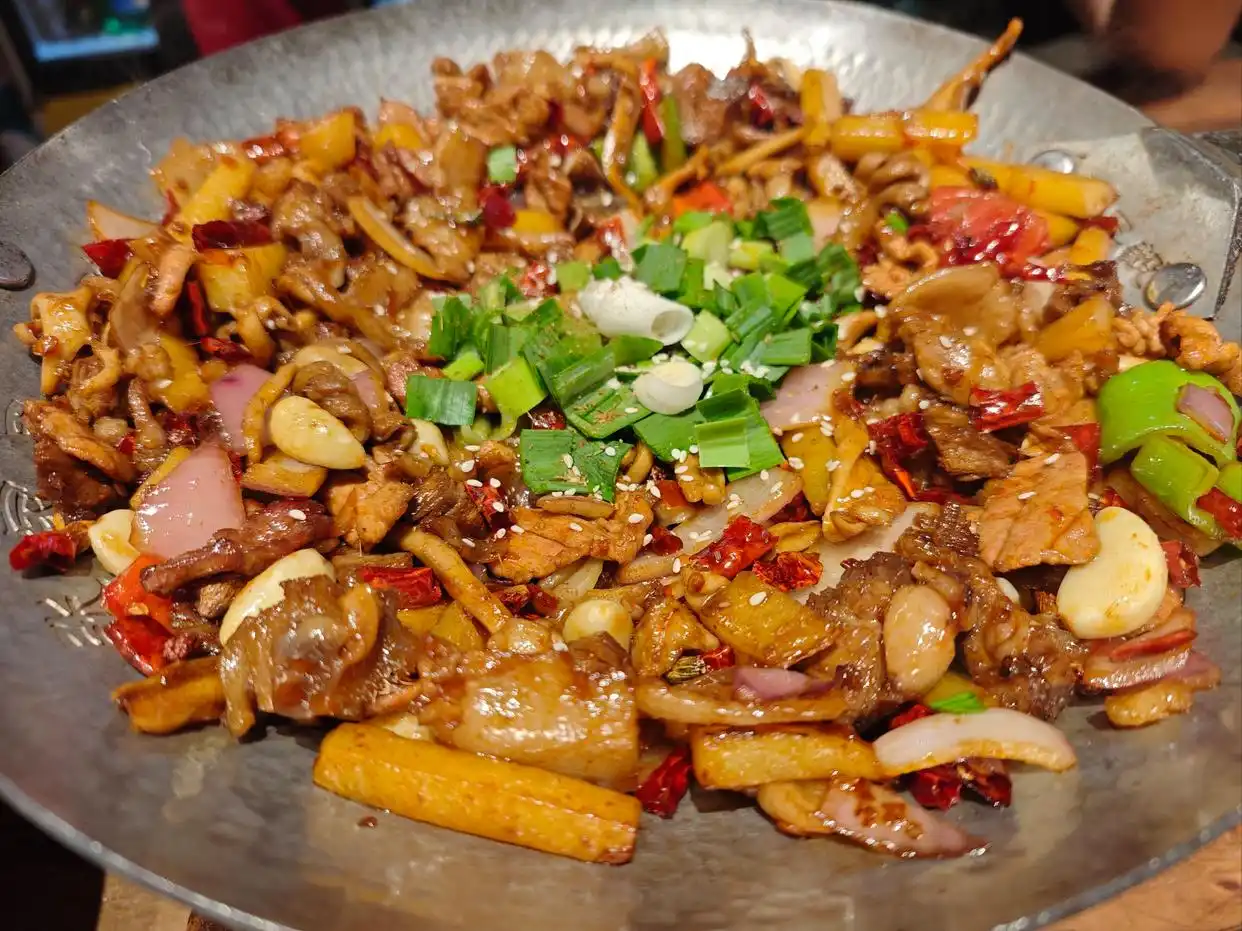
Every traveler we bring to Zhangjiajie eats this. It is the single most representative dish of the region, and there is no substitute.
The name means “three ingredients in one pot.” The origin story — and this one is real — goes back to the Ming Dynasty. Tujia soldiers were called up to fight coastal invaders during the reign of Emperor Jiajing. There was no time for a proper New Year celebration, so families threw together whatever they had — cured pork, tofu, radish — in one pot. The soldiers ate standing. The dish became a symbol of resilience, then became tradition.
Modern Sanxiaguo has evolved well beyond three ingredients. The version most locals order uses pork intestines (肥肠), pig stomach (猪肚), beef tripe (牛肚), or pig’s trotters — usually two or three together, cooked in a style only a Tujia cook knows how to balance.
Dry pot or soup pot? This is your first decision. Dry pot (干锅) has almost no liquid — everything sears down until the edges crisp and the flavors concentrate. Soup pot (汤锅) gives you a rich broth, and you can drop noodles in at the end. Both are excellent. We recommend dry pot for first-timers: it’s more dramatic, more characteristic.
On spice: The default is aggressive. Say shǎo là (少辣, less spicy) when you order. If you genuinely can’t eat heat, say bù là (不辣). Every restaurant handles this request daily — you won’t be the first tourist to ask.
One thing most guides miss: Order a plate of pickled sour radish (酸萝卜) alongside. The cold, tangy crunch against the hot oily pot is one of the great food pairings we’ve encountered anywhere in China. Don’t skip it.
Where to go: In Zhangjiajie City, Hu Shifu Sanxiaguo (胡师傅三下锅) near Sanjiaoping is consistently recommended by locals, not tourists. No English menu, but you only need to point. In Wulingyuan near the park, Tang Shifu Tujia (唐师傅土家食府) has been feeding visitors since 1983 and lets you choose your spice level explicitly — genuinely useful if your group has different tolerances.
Tujia Cured Pork — Làròu (土家腊肉)
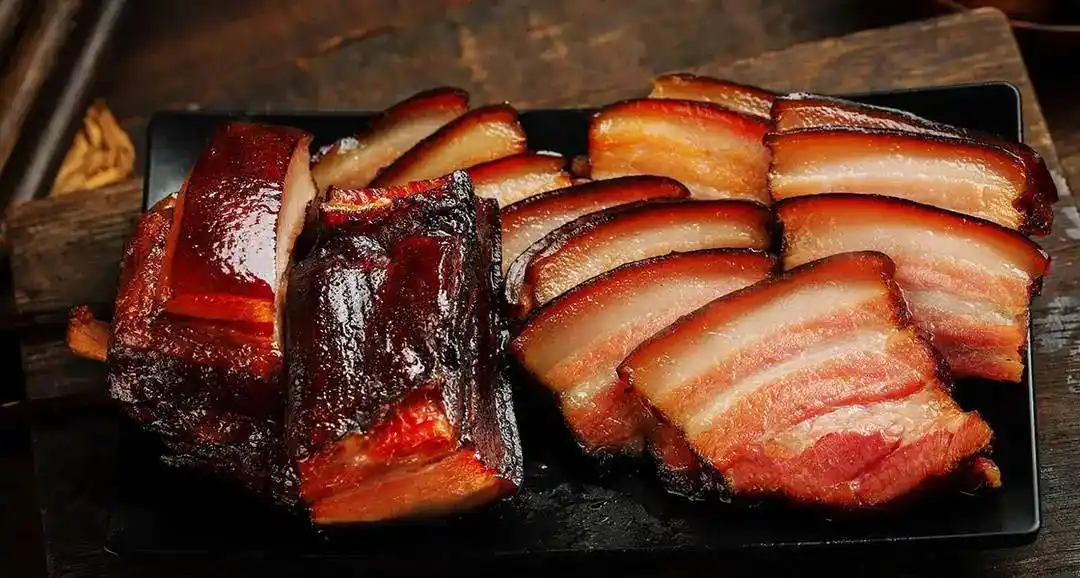
Before Chinese New Year, a Tujia family with space kills a pig. The meat is rubbed with salt and spices, pressed under heavy stones for a week, then smoked over pine, cypress, and rice straw for days. The type of wood matters — each gives a different character to the meat.
The result is a cured pork unlike anything sold in city supermarkets. Dense, chewy, with a smokiness that gets into everything around it. It appears in Sanxiaguo, fried with garlic shoots, or combined with 葛根 — wild arrowroot that grows in the mountains here. That last combination, 葛根炒腊肉, is something we’ve recommended to guests for years. The starchy arrowroot absorbs the fat and smoke from the pork in a way that’s genuinely hard to describe without eating it.
If you see it on a menu, order it.
Hezha (合渣) — The Dish That Surprises Everyone
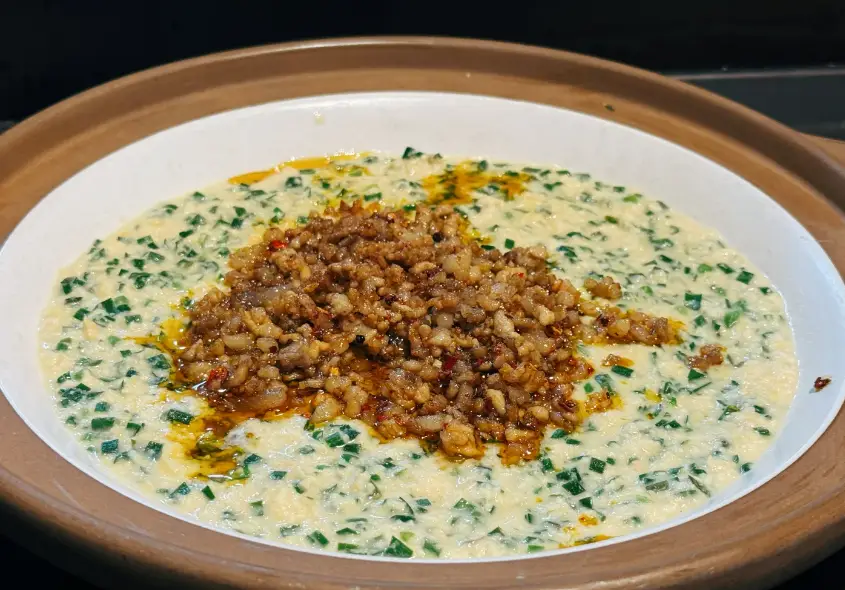
The locals call it lǎn dòufu — “lazy tofu.” When making regular tofu, you strain the soy milk. Hezha skips that step. Soybeans are ground into a rough puree, poured into a wok with water and whatever vegetables are on hand — leeks, pumpkin shoots, cabbage — and simmered until thick.
There’s a Tujia saying we think about every time we order it: 辣椒当盐,合渣过年 — “use chili as salt, and hezha for the New Year.” It reflects an era when this was celebration food for people who had almost nothing. Today it’s comfort food — cheap, filling, genuinely delicious.
In summer, many places serve it cold and slightly sour (酸合渣), fermented for a tangy edge. That version is even better.
One tip: Ask if it’s stone-ground (石磨的吗?). The hand-ground version has a rougher, more complex texture than the machine-made kind. Most farmhouse restaurants use stone-ground. City restaurants often don’t.
Blood Tofu (血豆腐)
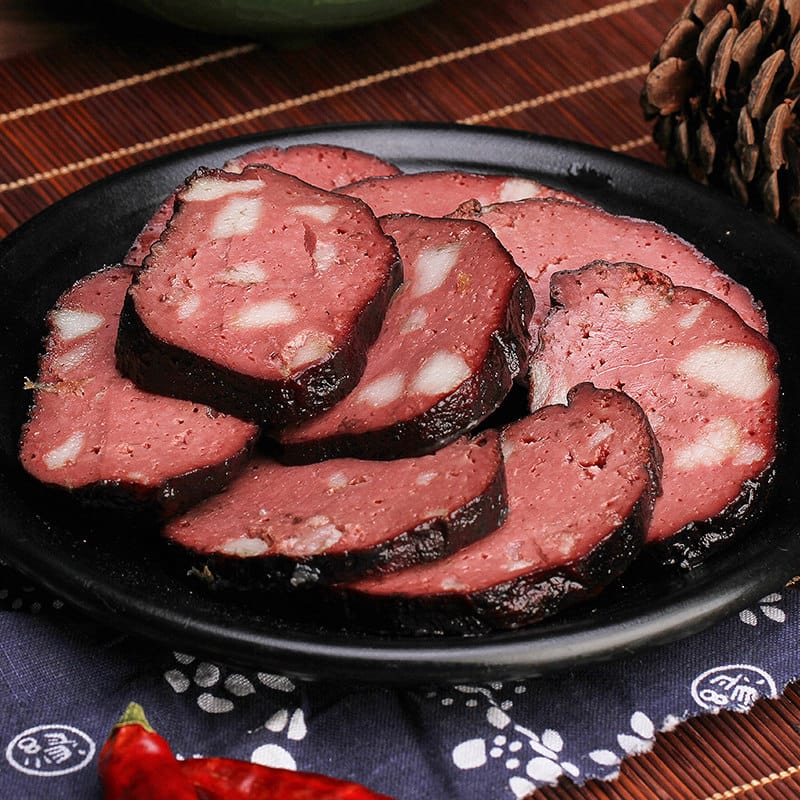
We’ve watched hundreds of guests approach this dish with visible reluctance, then order a second serving.
White tofu is mixed with fresh pig’s blood, diced fatty pork, Sichuan pepper, dried orange peel, and salt — kneaded together, shaped into fist-sized balls, smoked until deep golden-brown. When you order it, the cook slices one ball and stir-fries it with garlic shoots and chili.
The texture is nothing like fresh tofu or soft blood sausage. It’s firm, chewy, and the smokiness runs all the way through. Locals eat it as a drinking snack. We’ve seen guests who “don’t eat organ meat” eat three pieces before realizing what they were doing. Don’t overthink it.
Sour Fermented Fish (酸酢鱼)
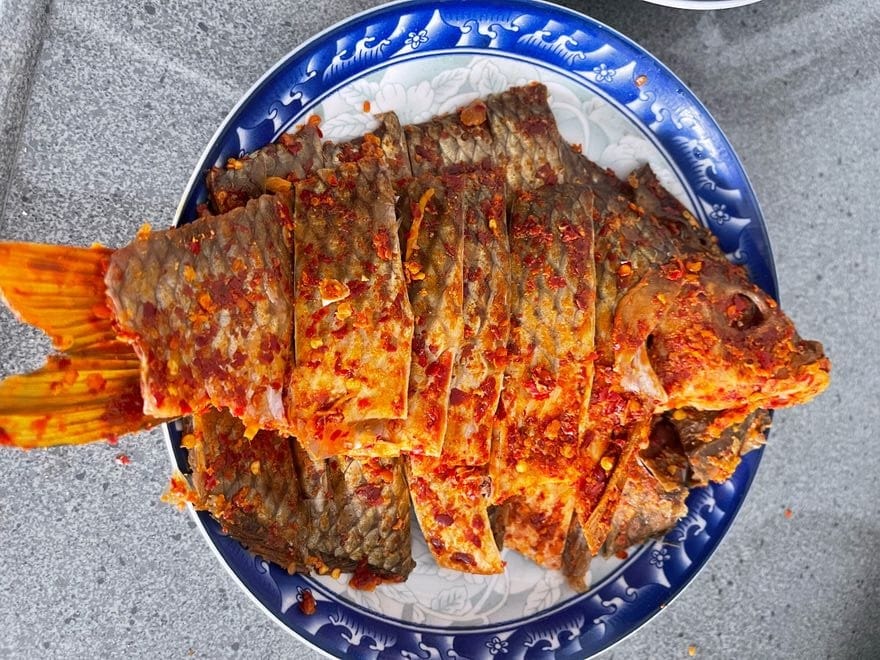
This is a dish born from necessity. Small fish are packed in rice powder with salt, sealed into clay jars, and left to ferment for 3–5 days until sour. Then they’re fried in tea oil until golden.
The result has no fishiness. The fermentation transforms it completely — golden-brown outside, tender inside, sweet and sour in a way that’s hard to place. Tujia families originally made it for summer preservation and served it to honored guests.
The restaurant version, fried fresh to order, is significantly better than the vacuum-packed souvenir version. Eat it here. If you want a reminder, buy a package to take home. But eat it here first.
Loach in Tofu (泥鳅钻豆腐)
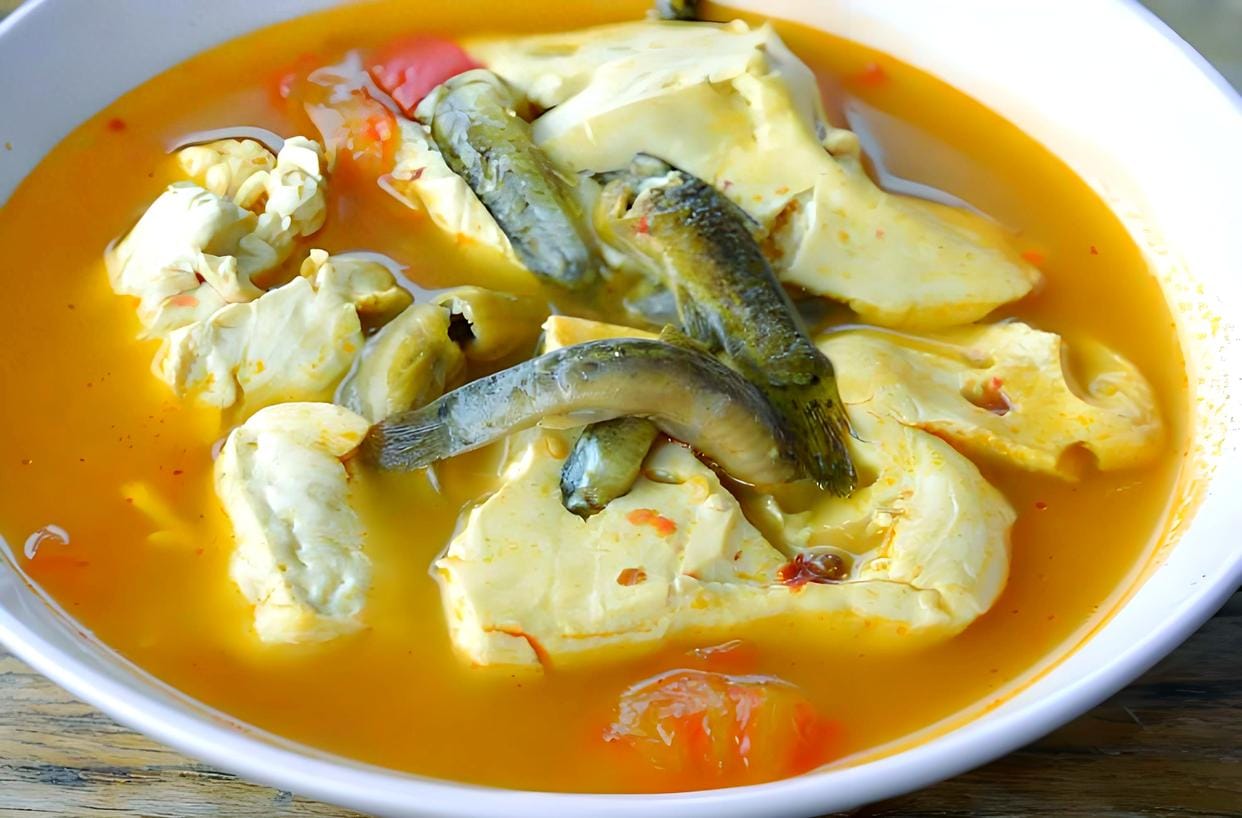
This dish has a preparation method worth knowing before you order it.
Small loach fish are placed overnight in salted water to purge. Then they’re put alive into a pot with cold, soft tofu. The pot is covered and slowly heated. As the water warms, the loach instinctively drill into the cooler tofu to escape the heat. They die inside it. The pot is then brought to a boil with ginger, scallions, and Sichuan pepper.
The result: tofu flavored from within, with the loach nestled throughout. It’s a Tujia banquet dish — historically served to honored guests. Not everywhere makes it. Ask specifically. Worth the effort.
Rock Ear Chicken (岩耳炖鸡)
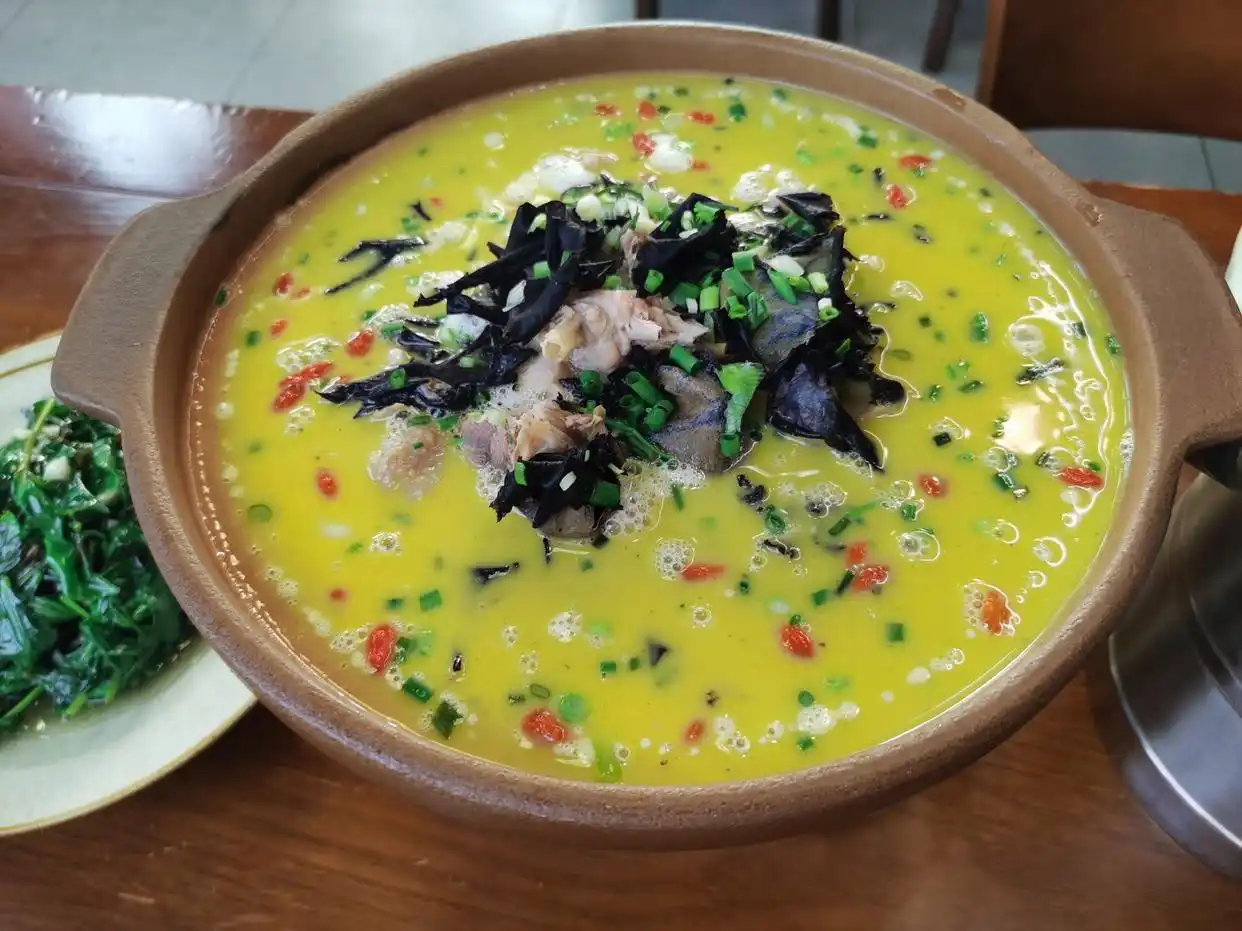
岩耳 (rock ear) is a lichen that grows on the specific sandstone cliffs of Zhangjiajie. It must be hand-picked from near-vertical faces by people with ropes around their waists. From the Ming and Qing dynasties, it was sent to Beijing as imperial tribute. You can still occasionally see pickers on the cliffs when hiking in Wulingyuan.
Combined with local chicken and simmered for hours, it produces a broth that is silky, earthy, and genuinely restorative. Not exciting. Not spicy. Just deeply, quietly good — the kind of dish that makes sense after a day of climbing stairs and walking ridgelines.
It costs more than other dishes — around CNY 100–200 on most menus. It’s worth it. Order it early in the day if you can; the kitchen needs time to do it properly.
She Fan (社饭) — Festival Sticky Rice
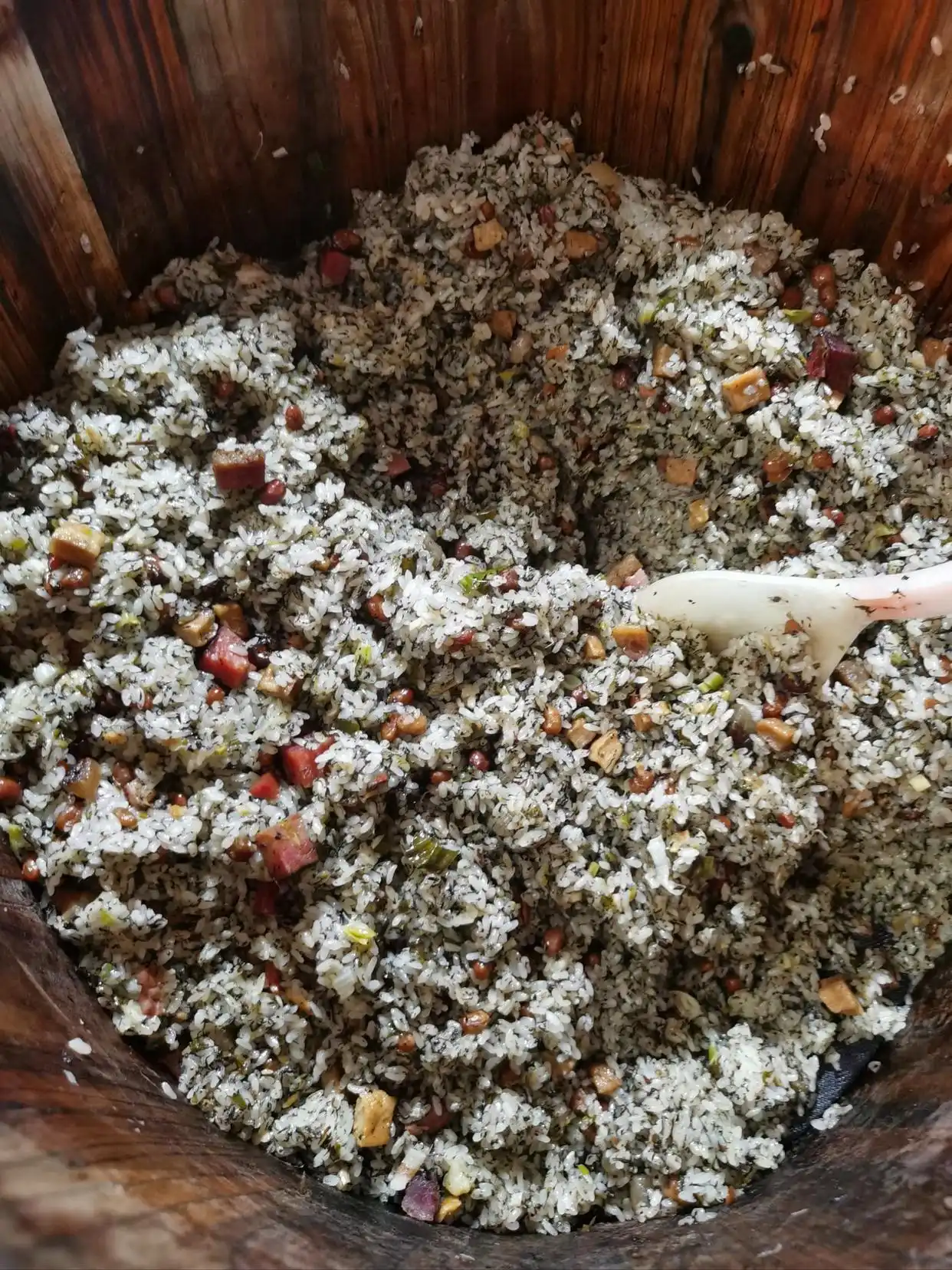
Every spring, Tujia families gather two specific wild plants from the hills: she herb (社菜) and wild spring onions (胡葱). These are dried and folded into a mixture of glutinous and regular rice, along with smoked cured pork, and steamed low and slow.
When the lid comes off, the smell fills the room. The wild herbs give a slightly bitter, medicinal undertone that cuts through the richness of the pork and lard. It’s a dish rooted in a specific season, a specific place, and a specific ritual.
Most restaurants serve it year-round. The farmhouse kitchen version is better than the packaged gift version. Both are worth eating.
Tujia Steamed Pork (土家扣肉)
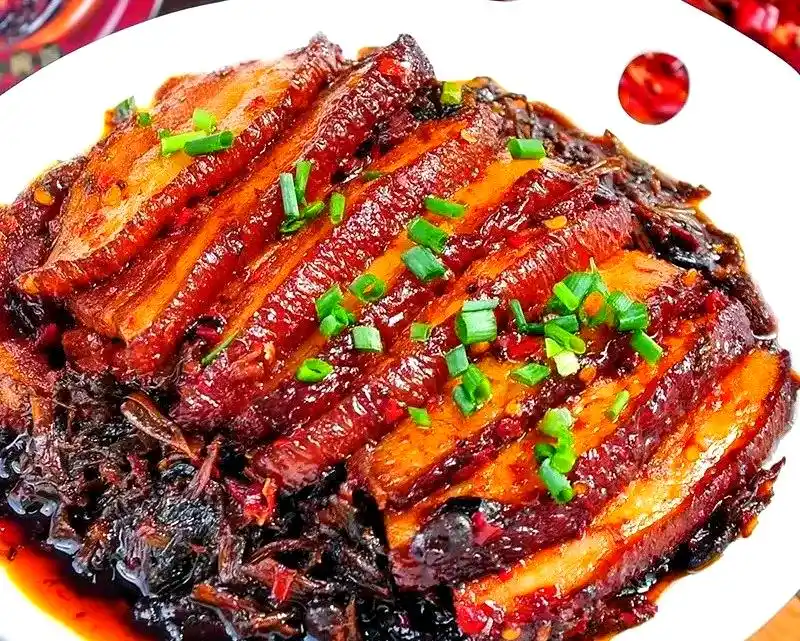
This is the dish that comes out when a Tujia family has important guests. Pork belly is boiled, fried, then steamed in multiple stages over preserved vegetables. The result is tender, fatty, and — surprisingly — not heavy. It’s rich without being greasy, which takes real technique to achieve.
It’s not spicy. That makes it a useful anchor dish if your group has mixed tolerance for heat, and a good reason to order it alongside the more aggressive plates on the table.
3. Street Food Worth Finding
The best street eating in Zhangjiajie happens at bus stop stalls inside the national park — small stands selling roasted potatoes with cumin and chili for CNY 5. We’ve eaten at a lot of restaurants in this region. Those potatoes are better than most of them.
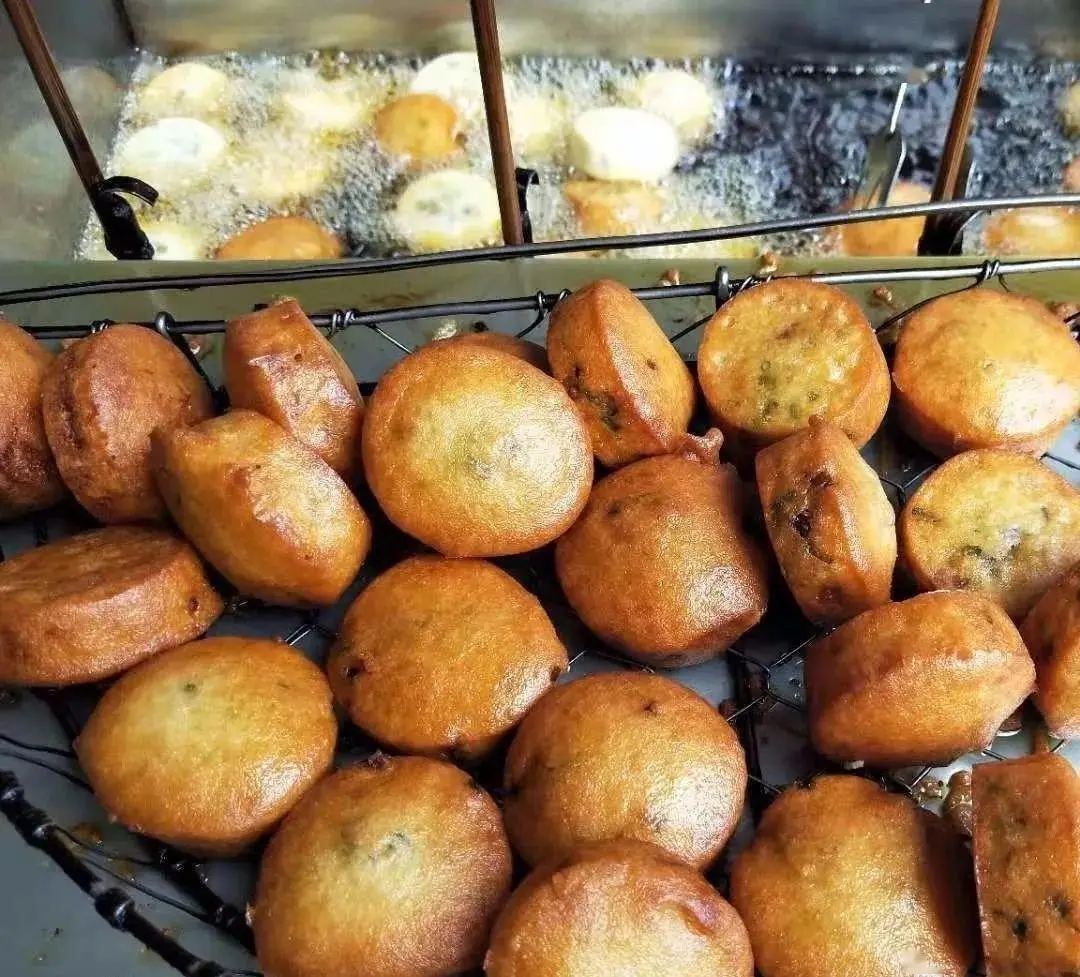
Beyond that: follow your nose for stinky tofu (臭豆腐). The Zhangjiajie version is fermented deep, fried hard, and dressed with chili. The vendor with the longest queue is always the right choice. Oil pancakes (油粑粑) are worth eating — fried glutinous rice cakes, golden outside, soft inside — but only hot. They cool into something unremarkable within minutes.
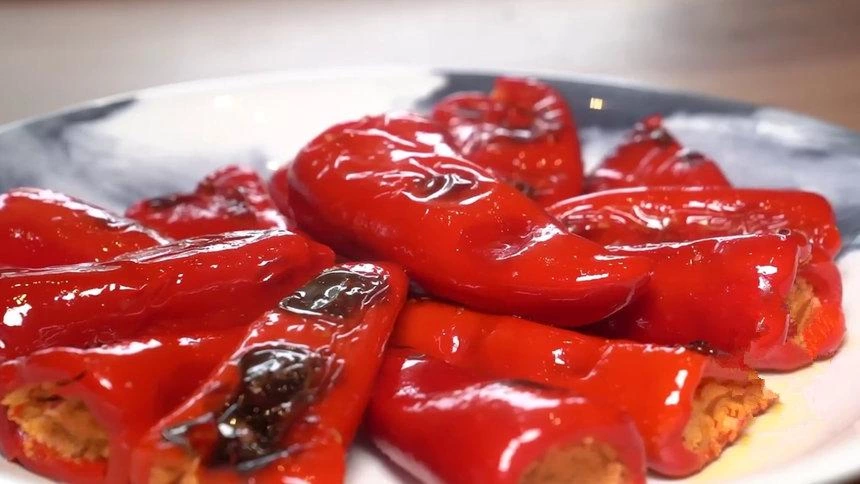
Two things worth asking for specifically, because not every stall carries them: hao herb rice cakes (蒿子粑粑) — pale green glutinous rice stuffed with cured pork or salted vegetables, with a slightly bitter wild herb fragrance — and fish-pepper snack (鱼儿辣子), red peppers stuffed with soybeans and glutinous rice powder, fermented ten days, then deep-fried. They curl at one end like fish. Sour, spicy, and strange in a way that makes complete sense after the first bite.
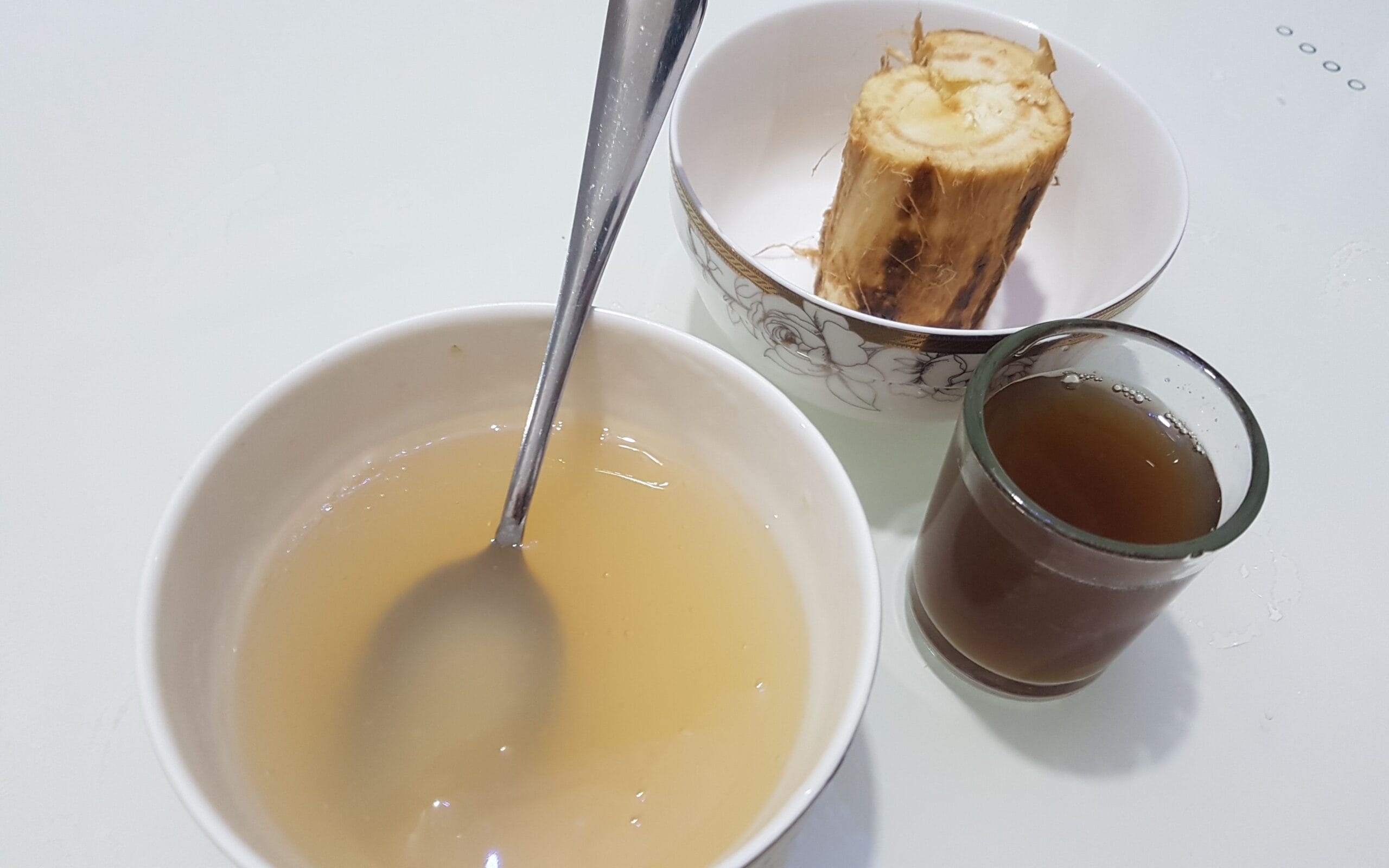
If you see 葛根粉 (wild arrowroot powder drink) at a farmhouse stall, try a cup. Dissolved in hot water, it’s slightly sweet and starchy — locals drink it for the cooling effect in summer. Not exciting. Quietly good.
4. Where to Eat: The Practical Version
Most good local restaurants in Zhangjiajie have no English menu and limited signage. Before you go anywhere, download Dianping (大众点评) — China’s main restaurant review app. It works in English, has photos of every dish, and will show you exactly what you’re walking into. To get there by taxi, show the driver the Chinese address on your phone.
In Zhangjiajie City (Yongding District)
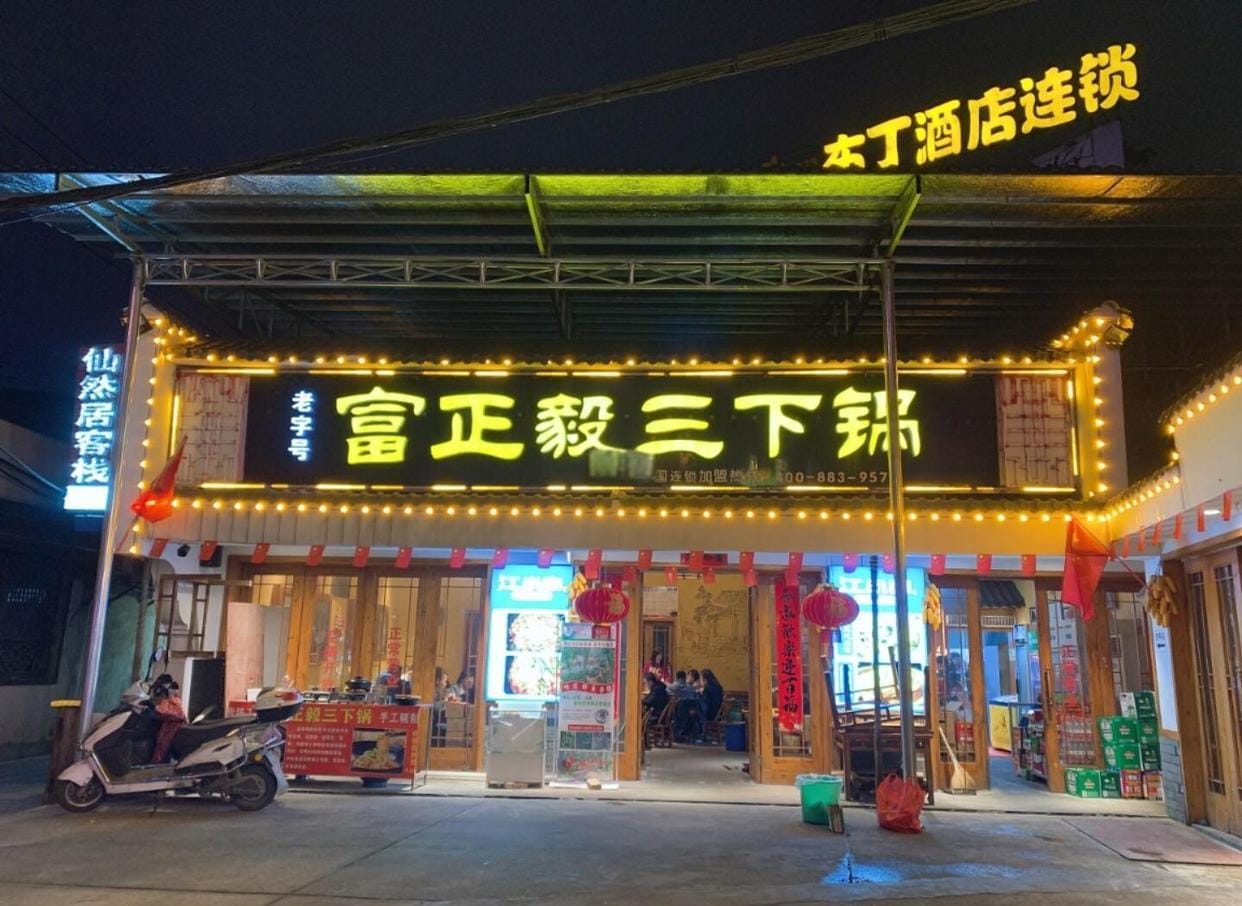
For Sanxiaguo, Fuzhengyi (富正毅三下锅) is the most practical recommendation for foreign visitors. It’s the city’s largest local chain — eight branches across Zhangjiajie — so there’s almost certainly one near your hotel. Menus have photos. Staff are used to tourists who point. The food is consistent and genuinely good. Order the dry pot (干锅) with intestines (肥肠) and beef tripe (牛肚), add pickled radish (酸萝卜) on the side. Around CNY 40–60 per person.
Two branches worth knowing by location:
The Tianmen Mountain branch sits right next to the Hampton by Hilton on Dayong Road — easy to find, ideal for dinner after a day on the mountain.
- Show driver: 永定区大庸路希尔顿欢朋酒店旁,富正毅三下锅
The Charming Xiangxi branch is on the third floor of the Charming Xiangxi performance complex. If you’re watching the evening show, dinner is literally upstairs.
- Show driver: 魅力湘西国际文化广场三楼,富正毅三下锅
One rule we give every guest: eat dinner in the city when you can. A dish that costs CNY 35 in town costs CNY 60 inside the scenic area. The food is not better — just more expensive.
Near Wulingyuan
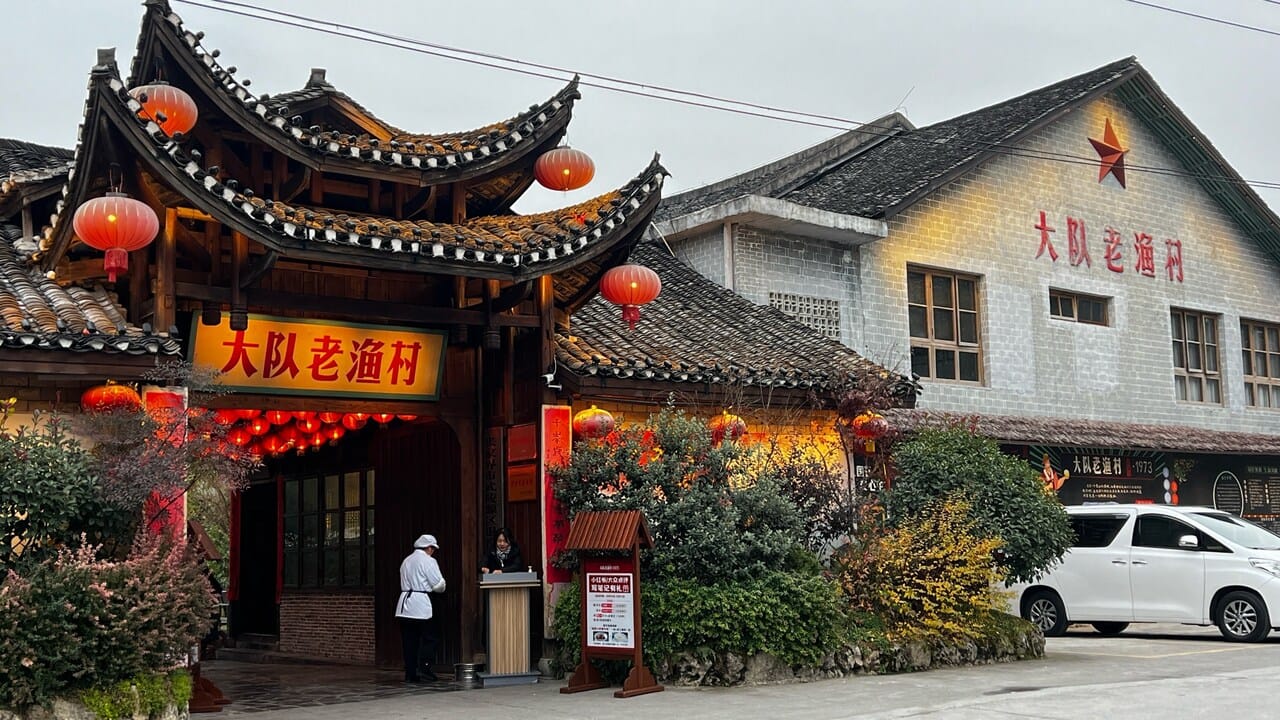
Dadui Old Fishing Village (大队老渔村1973·湘西土菜研究院) is the most atmospheric restaurant near the park, and one of the few worth treating as a destination rather than just a meal stop. The building dates to 1973: stone walls, bamboo fencing, cured meats hanging from the rafters, a courtyard with a fish pond at the center. The owner restored it by sourcing stones and plants directly from the local mountains — nothing was built to look old.
The signature dish is fresh catfish (有机鮰鱼) from the courtyard tanks. Also worth ordering: cured beef stewed with dried tofu, stone-ground tofu in pork bone broth, hand-smoked Tujia sausage. The food runs noticeably milder than most local restaurants — good for groups with mixed spice tolerance. Around CNY 95 per person.
- Show driver: 武陵源区香樟路云溪庄园马路对面(居委会大院内),大队老渔村1973
- Search Dianping: 大队老渔村1973 — the photos will convince you before we do.
Of course, the easiest way to eat well here is to stop researching altogether. When guests travel with our guides, we take them to places that don’t appear on any app — where the owner comes out to explain what she’s cooking that day, because the menu changes with whatever arrived at the market that morning. No homework required on your end.
5. Breakfast: Don’t Sleep Through It
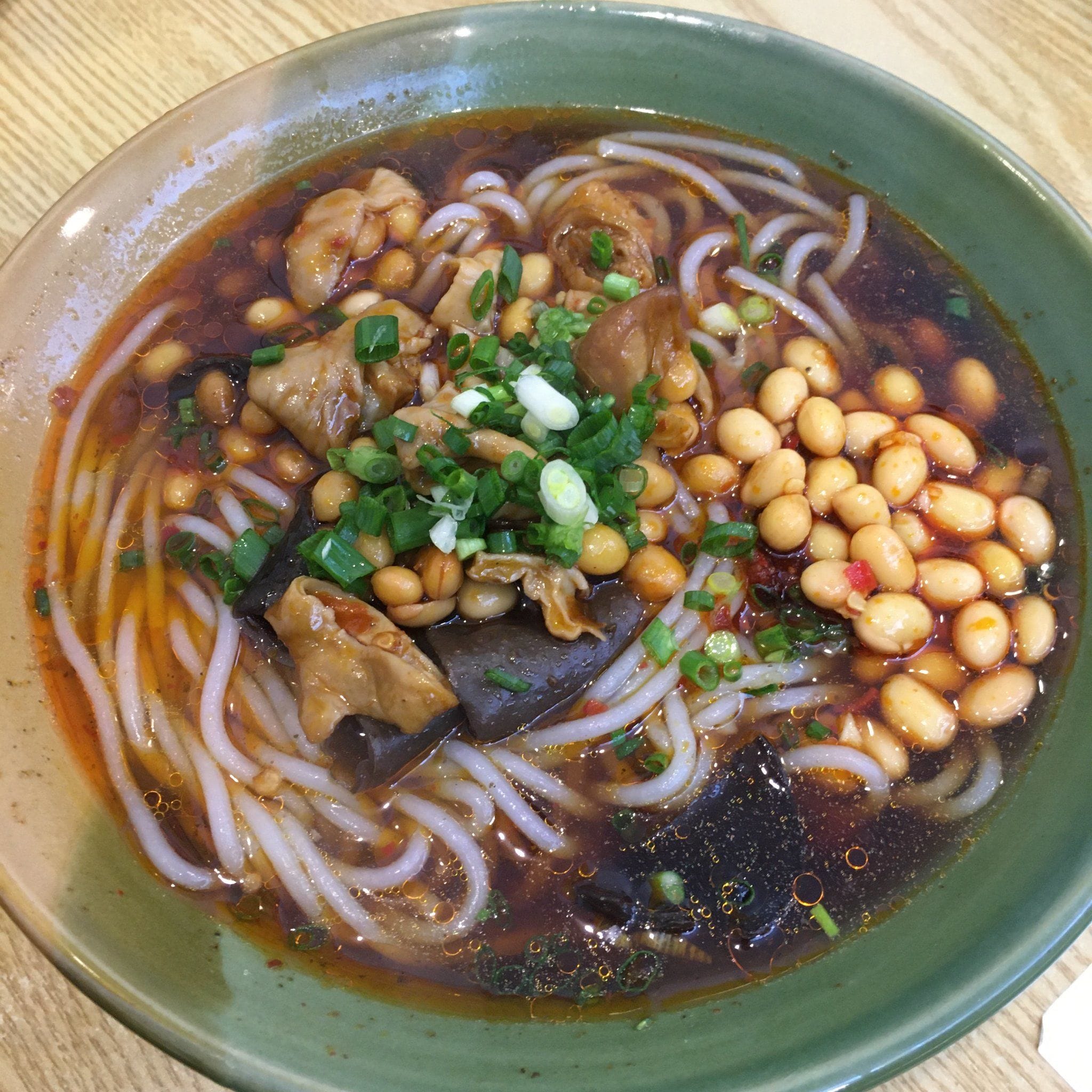
Zhangjiajie rice noodles (慈利米粉) are what locals eat before work. Silky noodles in long-simmered broth, topped with beef, pig’s trotters, white fungus, or pickled cabbage. A bowl costs CNY 10–15.
Find a shop near your hotel — not a tourist restaurant. Look for the one with plastic stools and a hand-written chalkboard. That’s the right place. This is one of the best food experiences in Zhangjiajie precisely because no one is performing it for visitors.
6. For Travelers Who Can’t Eat Spicy Food
We’ve handled this with countless guests over the years. The answer is always: you can eat well here, you just need to be clear upfront.
Say bù là (不辣, not spicy) when ordering. Say it to the server when you sit down, before you order anything. Most kitchens will accommodate this without much fuss — they’ve heard it thousands of times.
Dishes that are naturally mild: rock ear chicken soup, black chicken and gastrodia soup, Tujia steamed pork (土家扣肉), She Fan, stir-fried wild vegetables, and hezha. These are enough to build a proper meal without anything spicy.
If your group is mixed — some can handle heat, some can’t — Tang Shifu in Wulingyuan specifically lets you set spice levels dish by dish. That’s not common. It’s worth knowing about.
7. FAQ – What to Eat in Zhangjiajie
How spicy is the food here compared to Sichuan?
Different kind of heat. Sichuan uses numbing Sichuan peppercorn alongside chili — the málà combination. Zhangjiajie Tujia food is predominantly hot-chili spicy, with sour as a strong second character. Sichuan regular visitors sometimes find Tujia food more straightforwardly intense. Adjust your expectations accordingly.
Can vegetarians eat well here?
Yes, with some planning. Wild vegetable stir-fries, hezha, tofu dishes, and mushroom hot pots are on most menus. Always confirm the dish doesn’t use lard as cooking oil — many “vegetable” dishes do. Ask: yòng zhūyóu chǎo ma? (用猪油炒吗? — is it cooked in lard?). A few vegetarian-specific restaurants exist in the city; your hotel can point you to the nearest one.
Is there halal food?
Very limited. One or two halal-certified restaurants exist in Zhangjiajie City. Almost nothing inside scenic areas. Bring snacks for full-day mountain visits.
Is street food safe to eat?
Generally yes. Look for stalls with high turnover and food cooked fresh in front of you. Stinky tofu, roasted potatoes, and rice cakes from busy street vendors are reliably fine. Anything sitting in a display case for hours is a different calculation.
How much should I budget per meal?
Local restaurant in the city: CNY 40–80 per person for shared dishes and rice. Scenic area restaurants: CNY 80–130 per person. Street snacks: CNY 5–20 per item. Morning rice noodles: CNY 10–15 per bowl.
What one dish can’t I miss?
Sanxiaguo, dry pot, medium spicy, with a side of pickled radish. If you eat nothing else from this guide, eat that.
Travel China With Me has been running China inbound tours for over 20 years. Food is part of every itinerary we build — because you can’t understand a place if you only look at it.
If you’d rather not think about any of this: that’s what our guides are for. They know the neighborhood spots, they speak the language, and they know which farmhouse kitchen is worth the detour that day — something no guide article, including this one, can tell you in advance. Get in touch to plan your Zhangjiajie trip.