Zhangjiajie Souvenirs: What to Buy, What’s Fake, and Where to Shop
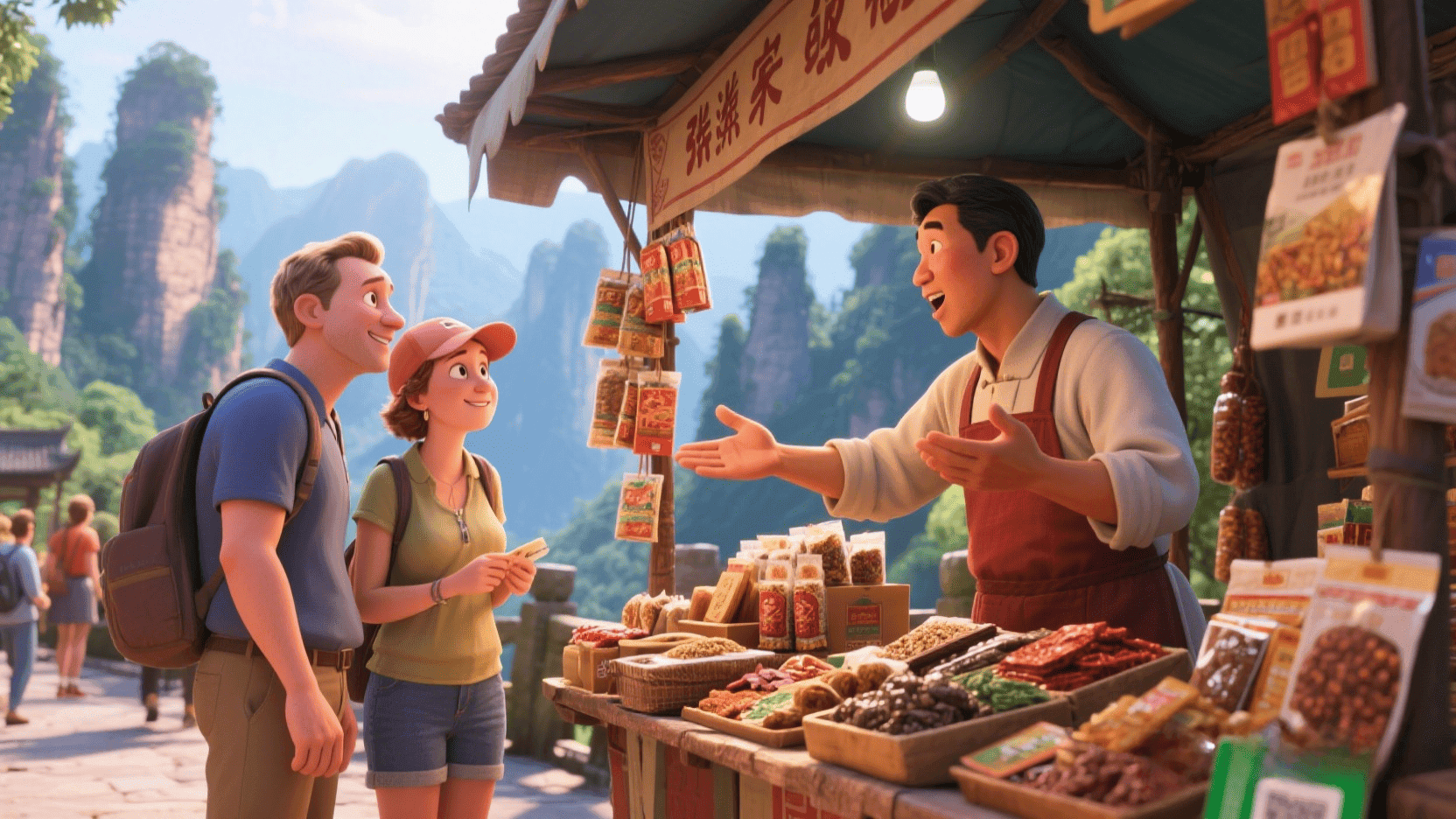
If you’re searching for what to buy in Zhangjiajie, here is what twenty years of bringing international visitors through these markets has taught us: most stalls sell the same machine-printed fabric and resin trinkets you’ll find at any scenic area in China, but a handful of products here are genuinely local — and most visitors walk past them.
Table of Contents
Zhangjiajie Souvenirs: Quick Reference
Item | Category | What to know | Price range |
|---|---|---|---|
Rock Ear Fungus (岩耳) | Food | Cliff-harvested; ¥20 versions are not genuine | ¥80–150 / 50g |
Kudzu Root Powder (葛根粉) | Food | One of the Three Treasures; loose versions often adulterated | ¥20–50 / 500g |
Eucommia Tea (杜仲茶) | Tea | The “One Unique”; verify by tearing the leaf | ¥30–80 |
Maoyan Berry Tea (茅岩莓茶) | Tea | National GI product; over-marketed online — read below | ¥30–200+ |
Seven Sisters Chili (七姊妹辣椒) | Food | National GI product from Cili County; chopped paste is most practical | ¥15–40 |
Tujia Smoked Pork (腊肉) | Food | Quality varies; meat import bans apply in US, AU, EU | ¥40–100 |
Tujia Brocade (西兰卡普) | Craft | ~90% of stall stock is machine-printed polyester; test the reverse | ¥80–400+ (genuine) |
Cinnabar items | Craft | Not Tujia in origin; most pieces are dyed resin | — |
“Avatar Mountain” merchandise | Souvenir | Manufactured in Yiwu, sold everywhere | — |
What to Buy in Zhangjiajie: The Local Staples
Before tourism arrived, Zhangjiajie had four products locals considered their defining specialties. The Three Treasures are kudzu root powder, fern root powder, and rock ear fungus. The One Unique is eucommia tea. These are what Tujia families still use in their own households, give to relatives, and bring when visiting. Most international visitors don’t know any of them exist.
Kudzu Root Powder
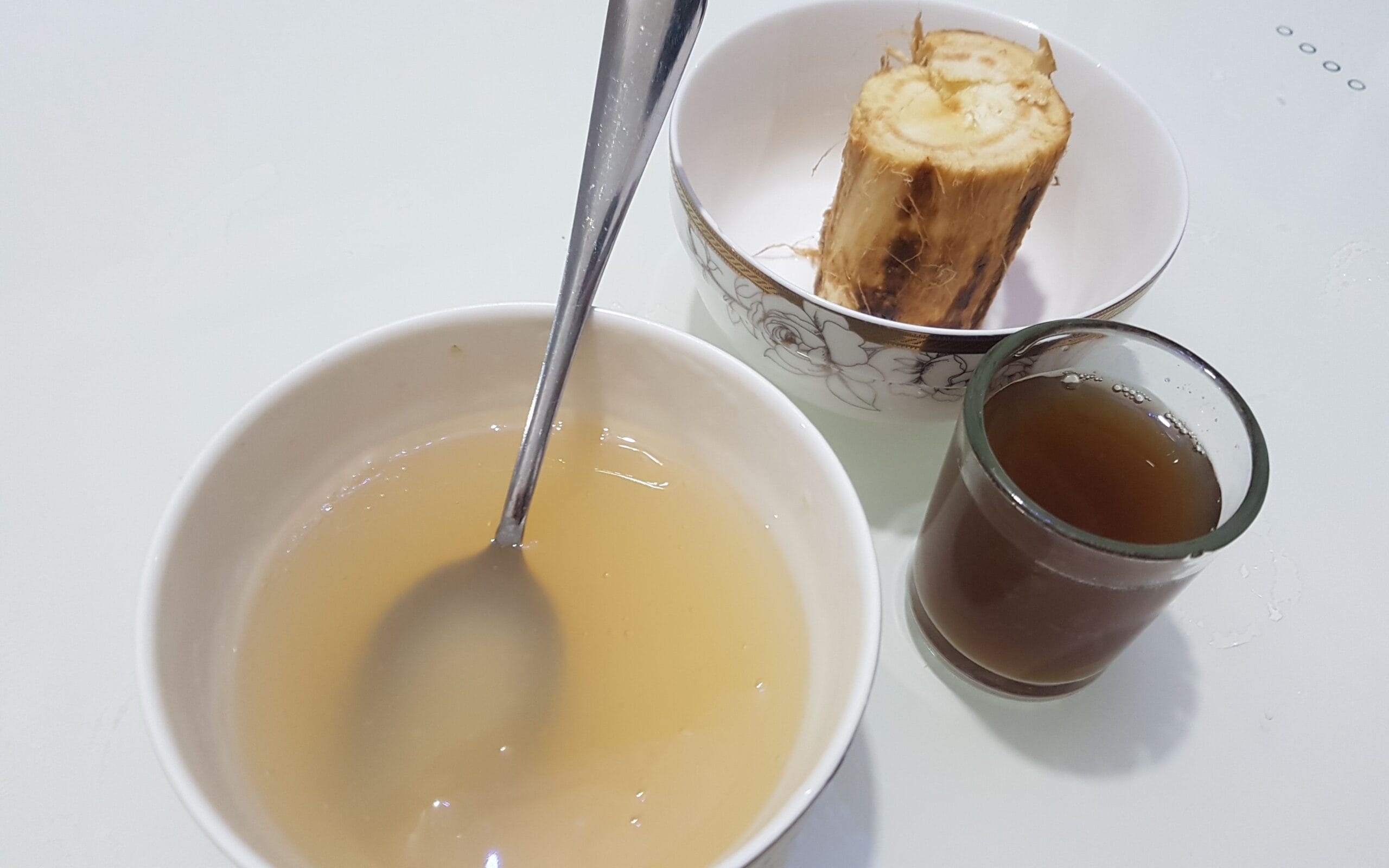
Wild kudzu grows across the Wuling mountain range and has been harvested here for centuries. The root is dried and ground into a fine white powder that dissolves in hot water into a thick, translucent drink — mild, slightly earthy, somewhere between arrowroot and a light starch. In Tujia households it’s drunk cold in summer and used as a cooking base year-round.
Loose-packed kudzu powder in scenic area stalls is regularly cut with cheap sweet potato starch — the two are visually identical. Real kudzu powder has a faint earthy smell raw. Sweet potato starch smells like almost nothing. Buy vacuum-sealed, labeled packages at Meini Supermarket or Tianzijie Street, not open containers at vendors inside the park.
Rock Ear Fungus
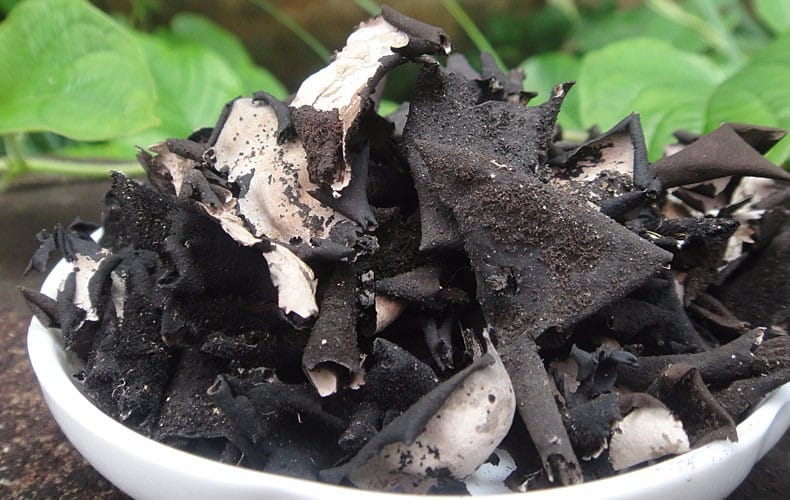
Rock ear is a lichen — 岩耳, yán ěr — that grows on the vertical sandstone cliff faces in the Wulingyuan Scenic Area. Collectors access those walls on ropes, at heights above 500 meters. A reliable batch from a Wulingyuan vendor runs ¥80–150 for 50 grams. A vendor asking ¥20 is not selling rock ear.
Stewed slowly with chicken, it produces a broth that’s rich, slightly medicinal, deeply savory — the kind of flavor that’s hard to describe without just cooking it. Black and papery when dry, it rehydrates fully when soaked. Stores well sealed. Most countries classify it as processed food at customs — declare it and it passes without issue.
It’s the Zhangjiajie souvenir that generates the most follow-up questions when people get home. Nobody outside Hunan recognizes it.
Eucommia Tea
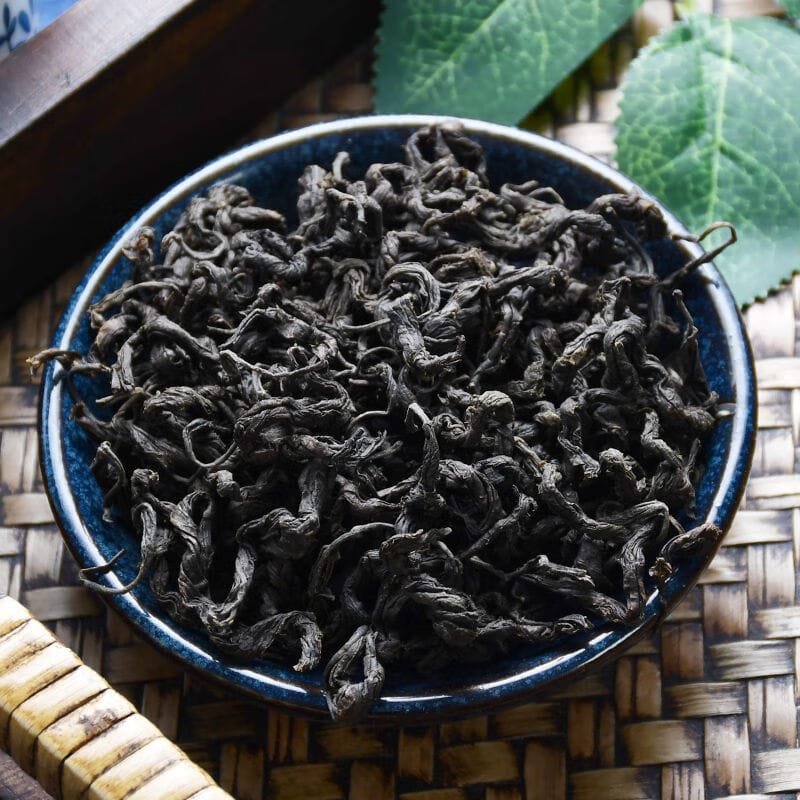
Eucommia trees grow across central China, and Zhangjiajie and adjacent Cili County sit within their core range. The dried leaves make a tea with a long history in Chinese medicine, associated primarily with blood pressure, kidney function, and joint health. The flavor is mild and slightly herbal — not demanding, easy to drink daily.
Tear a leaf in half and pull the two pieces slowly apart. Real eucommia leaf shows white silk-like strands stretching between the halves — these are the elastic glycosides. No strands means it isn’t eucommia. Any vendor selling the real thing will show you this unprompted. Tea bag format travels more reliably than loose leaf.
Fern root powder, the third Treasure, turns up less often in tourist-facing shops. It’s used mainly in cooking — starchy noodles, thickened dishes — rather than as a drink. Widely available at Meini Supermarket in vacuum-sealed packets, typically ¥15–30. Lower priority than kudzu powder for most visitors, but easy to pack.
What to Buy in Zhangjiajie: Local Teas
Zhangjiajie’s altitude, cloud cover, and cool temperatures make it better tea country than most visitors expect. Several varieties from here — lobster flower tea (龙虾花茶), Qingyan Mingcui (青岩茗翠), and the increasingly well-known Maoyan berry tea (茅岩莓茶) — rarely appear outside Hunan.
Tea | Character | Notes |
|---|---|---|
龙虾花茶 (Lobster Flower Tea) | Green, floral, delicate | Yongding District, grown at 450–1,000m. Named for the curved shape of the dried leaves. National quality award winner. |
青岩茗翠 (Qingyan Mingcui) | Green, clean, light-bodied | One of the city’s two most recognized green teas. |
毛尖茶 (Suoxiyu Maojian) | Green, slightly grassy | Grown in the Suoxiyu Valley inside Zhangjiajie National Forest Park. |
杜仲茶 (Eucommia Tea) | Herbal, mild | See section above. |
茅岩莓茶 (Maoyan Berry Tea) | Naturally sweet, caffeine-free | National GI product. Herbal vine tea, not fruit tea. |
Maoyan Berry Tea (茅岩莓茶)
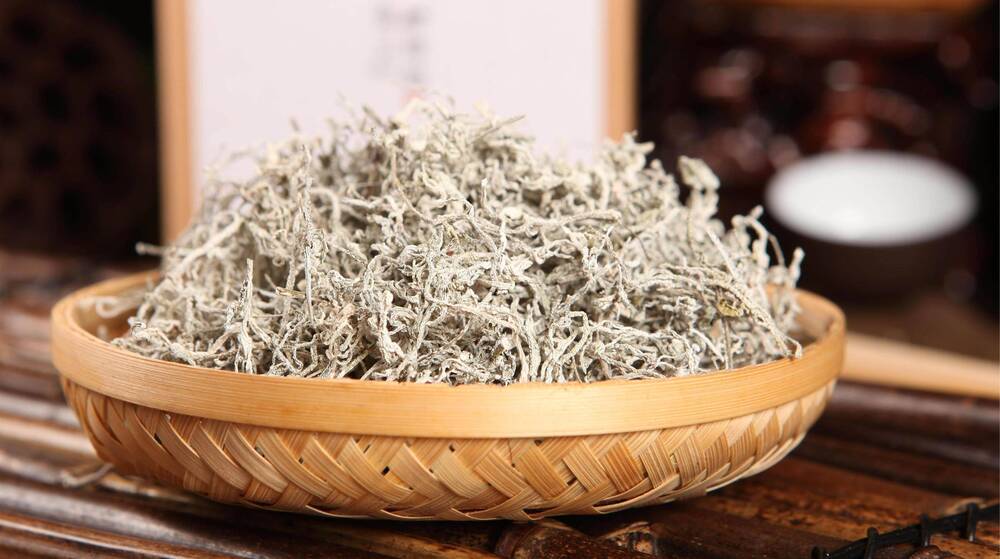
Maoyan berry tea gets more attention in Zhangjiajie souvenir shops right now than almost anything else — and the marketing around it has badly outrun the product. It’s a national agricultural geographic indication product from Yongding District, made from Ampelopsis grossedentata, a vine in the grape family native to the Wuling mountains. Not a fruit tea. The dried stems and leaves are coated in a white crystalline layer — natural flavonoid crystallization, not sugar or additive.
It brews light green, tastes gently sweet without anything added, and is genuinely caffeine-free. Locals drink it daily in summer, often cold-brewed. The active compound dihydromyricetin has documented antioxidant activity in research literature — that part is real chemistry.
Online marketing claims it whitens skin, treats gynecological conditions, or substitutes for medicine. None of that is supported. Rex, one of our guides who grew up Tujia in western Hunan, said it plainly:
“As someone from Xiangxi, it’s hard to watch. Online you see claims that berry tea whitens skin, treats gynecological problems, cures everything — it’s been marketed as a miracle tea. People buy based on exaggerated claims and feel cheated. Some vendors mix garden-cultivated tea into wild berry tea and sell it at wild prices. The name is getting a bad reputation. Berry tea is rich in flavonoids and good for you as a daily health drink — that’s all it is. Price has almost no relationship to quality at the high end. Tins priced at thousands of yuan per kilo are mostly brand markup. And you don’t need to rinse it first. Just brew directly with boiling water.”
Buy it as a pleasant, genuinely local drink. Visible white crystal coating on the dried leaves is the freshness and quality indicator — vendors worth buying from will show you the product before sealing.
Zhangjiajie Food Specialties to Bring Home
Dongxi Seven Sisters Chili (洞溪七姊妹辣椒)
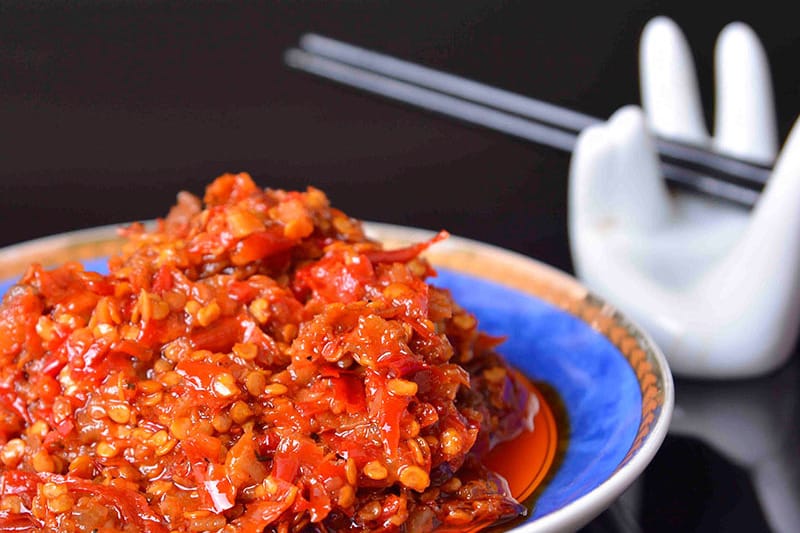
A national geographic indication product from Dongxi Township in Cili County — the same county as the Grand Canyon and Glass Bridge. Grown at 500–800 meters in selenium-rich mountain soil, with significant day-night temperature swings that develop both heat and flavor. “Seven sisters” refers to the cluster of seven small peppers that grow from a single stem, pointing skyward.
The heat is real — Hunan is a province that takes chilies seriously, and locals rate this variety near the top. What separates it from generic dried chilies is the flavor underneath: fruity, slightly complex, nothing one-dimensional. Local records trace the variety to the Ming dynasty. It’s sold as whole dried chilies, chopped chili paste (剁辣椒), stone-ground sauce (石磨辣酱), or powder. The chopped paste is the most practical format to bring home. Available at Tianzijie Street, Meini Supermarket, and shops near the Grand Canyon.
Tujia Smoked Pork (土家腊肉)
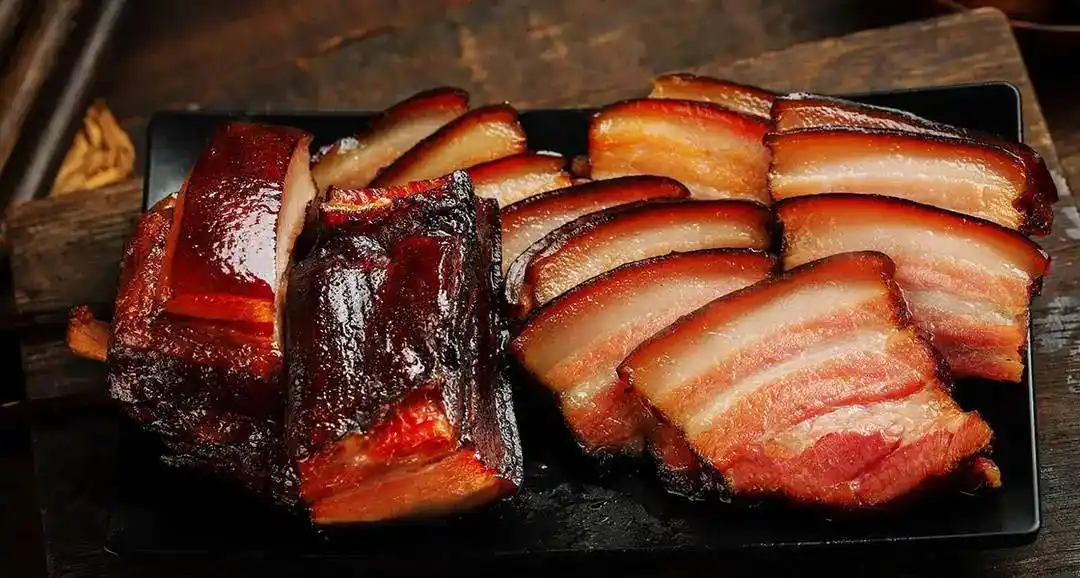
Smoked pork defines Tujia winter food culture. Cured with salt and smoked over wood — traditionally camellia or hickory — then hung to age through the cold months. Good vacuum-packed versions are available throughout Wulingyuan and at Meini Supermarket.
The US, Australia, EU, and Canada generally prohibit import of cured meat regardless of how it’s packaged. Most Southeast Asian countries and Hong Kong permit it with customs declaration. China’s export side is not the restriction — your destination country’s import rules are what to check before buying.
Giant Salamander Products
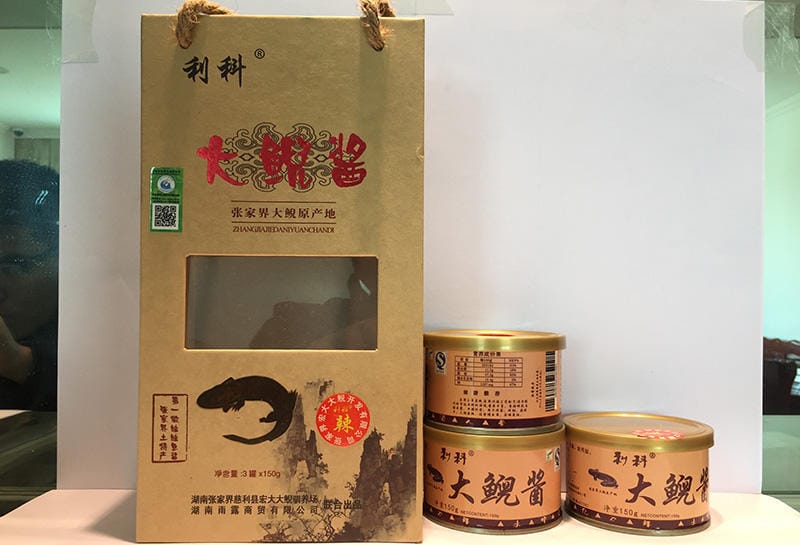
The Chinese giant salamander (Andrias davidianus) is a second-class nationally protected species. Zhangjiajie — particularly the Suoxiyu Valley within the Wulingyuan Scenic Area — is historically one of the most significant wild habitats in China.
Products sold legally in Zhangjiajie come from licensed aquaculture farms, not wild animals. Farm-raised giant salamander has been part of Tujia food culture for generations. Processed products — dried salamander (大鲵干), salamander paste (大鲵酱) — are available at official specialty shops in the city. The branding on these products often emphasizes the animal’s protected status, which is accurate for wild populations and somewhat misleading when the product is farmed. Buy from labeled shops, not from unlabeled market stalls.
The city’s official mascot figurines — “Mountain Baby” (山宝) and “Salamander Baby” (娃娃鱼宝), part of the Shannie (山呢) brand — are lightweight, well-designed, and a legitimate modern Zhangjiajie souvenir.
Zhangjiajie Handicrafts: What’s Genuine
Tujia Brocade (Xilankap)
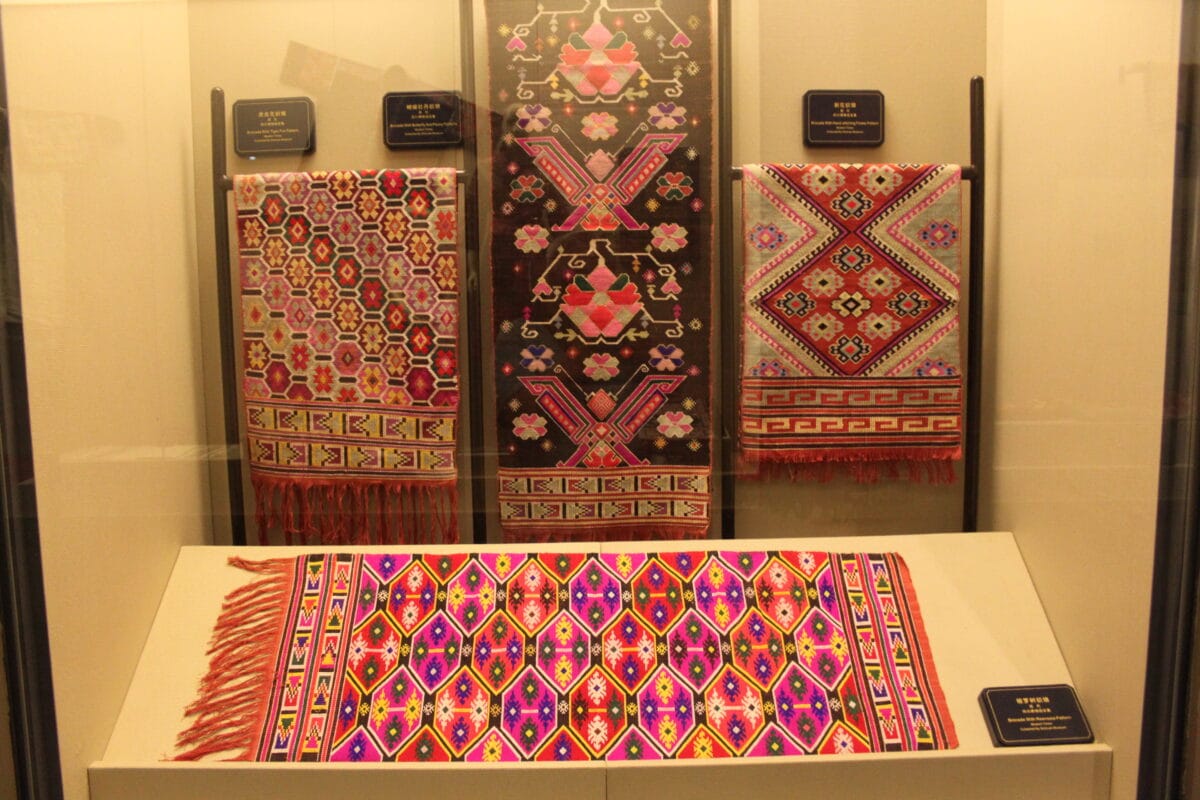
Tujia brocade has over 2,000 years of documented history. It was recorded as a Han Dynasty royal tribute. Xilankap in the Tujia language means “bedcover with flowers.” The traditional technique uses a wooden back-strap loom: cotton warp, five-color silk or cotton weft, producing geometric patterns encoding Tujia cultural motifs — mountain ranges, dragon scales, family totems. Genuine Xilankap is reversible because the thread passes completely through the weave, making both sides identical.
At tourist stalls, roughly ninety percent of what’s sold as “Tujia brocade” is machine-printed polyester with a vaguely similar surface pattern. We’ve watched guests pay ¥200 for fabric that cost ¥15 to produce in Guangdong.
Hold the piece up to light and look at the back. Genuine handwoven brocade is identical on both sides. Printed fabric shows a faded or blurry reverse. Small genuine Xilankap items — bags, cushion covers — start around ¥80–150. Any vendor quoting ¥40–50 for “handwoven” Xilankap is not selling handwoven Xilankap. A handful of stalls on Tianzijie Street and in the Wulingyuan cultural area carry authentic work — ask to see the reverse before deciding.
What to Skip
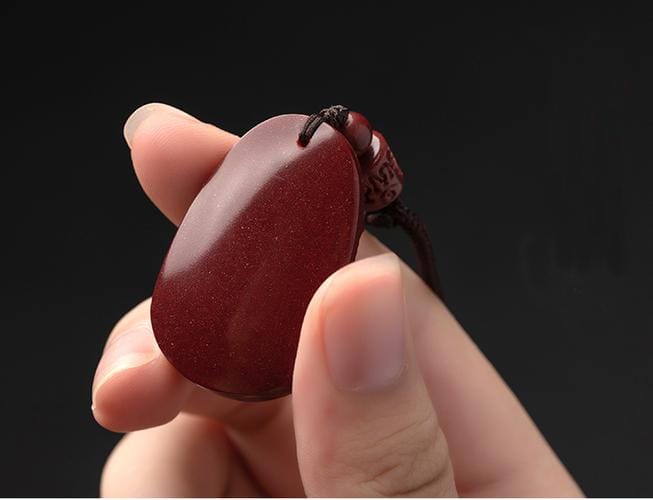
Cinnabar jewelry is sold across Zhangjiajie markets as a traditional item, but most pieces are dyed resin rather than mineral cinnabar. The connection to Tujia culture specifically is thin — cinnabar products are a generic “Chinese tourism souvenir” category available at tourist markets across the country. Actual mineral cinnabar contains mercury and is not suitable for skin contact.
Jade from street vendors is not local. Zhangjiajie produces no jade. Items sold here as jade cannot have their authenticity verified at a market stall. If jade is the goal, Yunnan and Xinjiang are the appropriate regions.
“Thousand-year wild He Shou Wu root” is explicitly flagged as fraudulent by the official Zhangjiajie municipal tourism bureau. Vendors in the scenic area sell it with healing claims. It is universally fake.
Generic Avatar Mountain merchandise — resin models, keychains, magnets branded with the Avatar connection — is manufactured in Yiwu and sold at tourist markets throughout China. The Avatar Hallelujah Mountain itself is worth seeing; the merchandise commemorating it isn’t specifically from here. The city’s official Shannie mascot figurines are a locally produced alternative.
Where to Buy Zhangjiajie Souvenirs
Meini Supermarket (梅尼超市) in Wulingyuan District is the most reliable option for packaged food specialties. Prices are fixed and labeled. Kudzu powder, fern root powder, rock ear fungus, and vacuum-packed smoked pork sold here are what locals themselves buy — no negotiation, no quality guesswork.
Tianzijie Street (天子街) in Wulingyuan is the main tourist craft and specialty street. Wide enough selection to compare before buying. The right place for brocade, stickup pictures, stone carvings, and teas. Quality range is wide — use the verification tests above. Opening prices at open stalls typically run 30–50% above what a fair transaction looks like. A counter-offer of around 70–75% of the initial price is normal and doesn’t cause offense, though artisans selling genuine handwoven brocade work on thin margins.
People’s Square Pedestrian Street (人民广场步行街) in Yongding District is in Zhangjiajie city, 35 km from Wulingyuan. Most useful if you’re spending a day at Tianmen Mountain, which is city-based. Broader clothing and food selection, less tourist-market density.
The 72 Qilou Cultural Complex has over 160 food stalls with regional Xiangxi specialties. If you’re visiting for the evening show, arrive an hour early and walk the food section. Maoyan berry tea, Seven Sisters chili products, and local snacks that don’t appear in the standard craft shops are all here.
Vendors inside Zhangjiajie National Forest Park and Tianmen Mountain run 2–3x the prices available outside the gates. Proximity to the core scenic zones means higher markup, consistently. Buy packaged food specialties before you enter.
Packing and Customs
Food items are the main friction point at customs. Dried fungi like rock ear and pine mushrooms are classified as processed food in most countries — declare them and they pass without issue. Teas and powders travel without restriction almost everywhere, though inspectors may open packages; keep the original labeled packaging so they can see what it is.
Meat is different. Vacuum-packed smoked pork is prohibited for import in the US, Australia, EU, and Canada regardless of how it’s sealed. Most Southeast Asian countries and Hong Kong permit it with declaration. The restriction is at your destination, not on China’s export side — check before you buy, not at the airport.
Stone carvings are consistently heavier than they look. A small Guiwen piece can weigh 300–400 grams. If you’re buying multiple items, weigh against your luggage allowance before committing to stone. Brocade, stickup pictures, and teas are all negligible weight.
WeChat Pay and Alipay are accepted at nearly every vendor. Card machines are unreliable at smaller stalls. ¥200–400 in cash covers a typical day of market shopping.
When to Shop
Most visitors leave shopping for the last afternoon before their train or flight. That works, but it’s rushed. Use the first evening in Wulingyuan to walk Tianzijie Street without buying anything. Learn what’s available, what the price range looks like, which stalls have authentic brocade, which ones are selling printed fabric. Then buy on day two or three, when you know what you’re looking at.
Don’t buy packaged food inside the scenic areas. Outside the gates is consistently cheaper for the same products.
Not yet sure how many days you need? The Zhangjiajie itinerary guide maps out every combination from one day to seven.
Frequently Asked Questions
What Zhangjiajie souvenir is most distinctive — something not available anywhere else?
Rock ear fungus for anyone who cooks. Tujia stickup pictures for everyone else. Neither one looks like a souvenir when you receive it, which is the point.
How much should I bargain at Zhangjiajie markets?
At open-air stalls and craft markets, a counter-offer of 70–75% of the first quoted price is routine and doesn’t cause friction. Meini Supermarket and any fixed-price shop are non-negotiable. Brocade is the exception worth noting — artisans selling genuine handwoven Xilankap work on thin margins, so don’t push hard once you’re in reasonable territory.
Can I order these Zhangjiajie products online after I get home?
Maoyan berry tea and Seven Sisters chili products appear on Taobao and occasionally elsewhere. Genuine handwoven Tujia brocade and verified rock ear are difficult to source reliably outside the Wulingyuan area. If quality matters, buy in Zhangjiajie.
Are Avatar-branded items worth buying as Zhangjiajie souvenirs?
They’re not locally made. If the Avatar connection is what you want to commemorate, the Shannie mascot figurines are a locally produced alternative.
Are giant salamander products legal?
Farmed products from licensed specialty shops are legal. Wild giant salamander cannot be traded — it’s a protected species. Don’t buy from unlabeled stalls where the source is unverifiable.
Where’s the best place to buy Zhangjiajie tea?
Tianzijie Street for the widest comparison. Meini Supermarket for standardized, labeled packaging. For Maoyan berry tea specifically, buy from vendors who show you the dried leaves before sealing — visible white crystal coating means the flavonoids are properly preserved.
What’s explicitly fraudulent and should be avoided outright?
The wild He Shou Wu root products flagged by local tourism authorities. Unlabeled loose kudzu powder without a sealed package. Jade from tourist stalls. Most cinnabar-branded jewelry.