Baofeng Lake in Zhangjiajie: The Honest Insider’s Guide
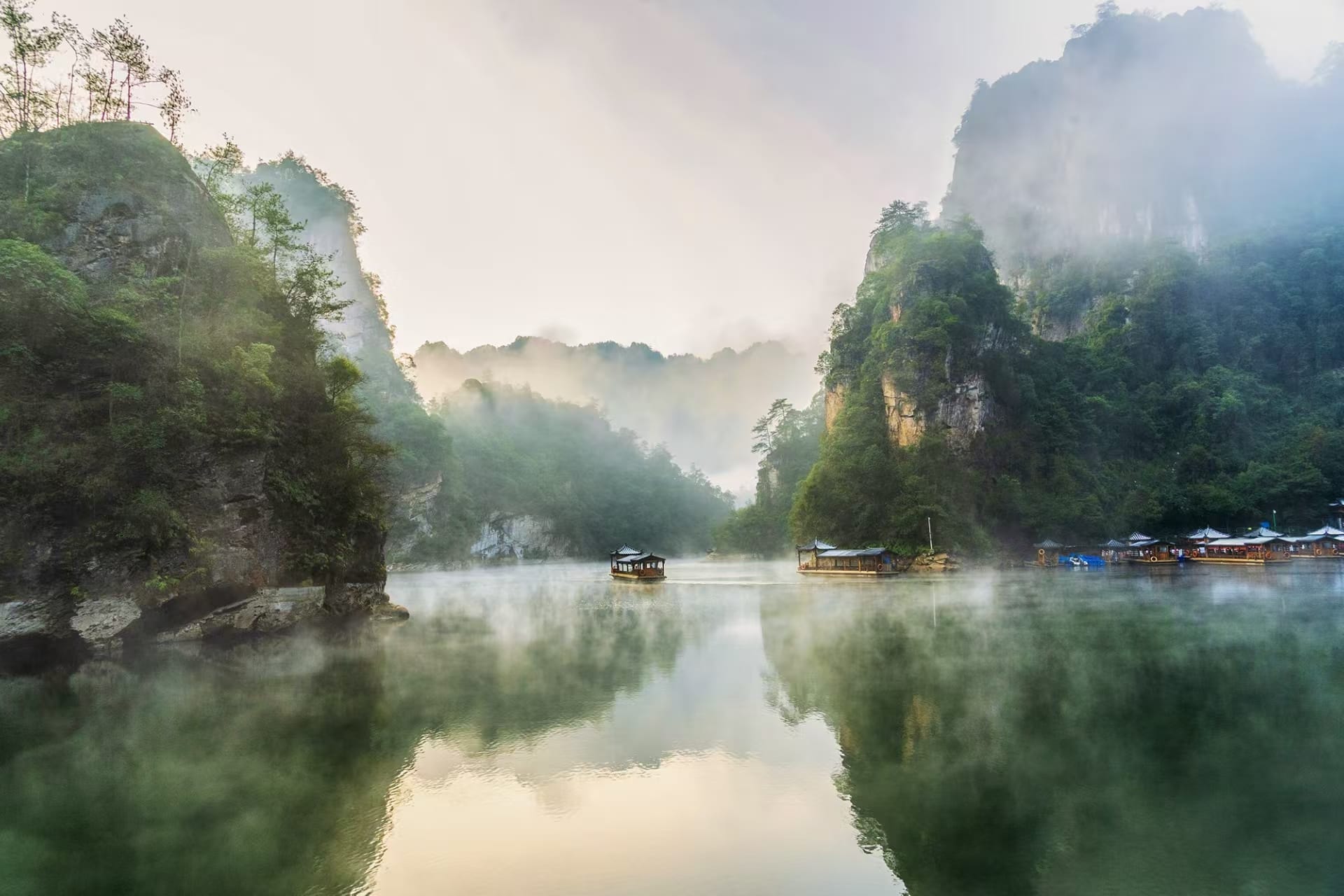
Baofeng Lake is the one place in Zhangjiajie that surprises people. Not because it’s more dramatic than the forest park — it isn’t. But after two days staring up at sandstone pillars, a quiet emerald lake with a Tujia folk song drifting across it hits differently. We’ve been bringing international visitors here for over 20 years, and Baofeng Lake is consistently the part they mention last — meaning the part that stayed with them.
Table of Contents
1. Quick Facts
Chinese name | 宝峰湖 (Bǎofēng Hú) |
Original name | Shijia Gorge Reservoir (施家峪水库) — dam-built in the 1970s, not naturally formed |
Location | No. 8, Baofeng Road, Suoxiyu Town, Wulingyuan District, Zhangjiajie |
Park total area | 274 hectares |
Lake dimensions | 2.5 km long; average depth 72 m; surface 30 hectares; widest point 150 m |
Altitude | ~585 m above sea level |
Distance from Wulingyuan Town | 1.5 km (15-min walk) |
Distance from Yellow Dragon Cave | 8 km |
Distance from Tianzi Mountain | 8 km |
UNESCO status | Part of Wulingyuan Scenic Area (World Heritage, 1992) |
Scenic rating | National 5A — China’s highest classification |
Opening hours | 07:00–18:00 (summer) / 07:00–17:30 (winter), year-round |
Standard ticket | CNY 110 (entrance + boat + shuttle bus) |
Concession ticket | CNY 55 (students under 24, seniors 60–70, active-duty military) |
Free admission | Children under 1.3 m, people with disabilities, seniors 70+ |
International visitors — senior discount | Not applicable. Foreign visitors don’t qualify regardless of age |
Time needed | 1.5–2 hrs (boat only) / 4–5 hrs (boat + Yingwo Village hike) |
Boat language | Mandarin Chinese only. No English narration |
Baofeng Lake is a 2.5-kilometer emerald lake set among the sandstone pillar formations of Wulingyuan, Zhangjiajie. Built by a dam in the 1970s, it is now the only water-based scenic area inside the UNESCO World Heritage zone — and the only place in all of Zhangjiajie where Tujia ethnic culture, not just geology, is the main event.
2. Is Baofeng Lake Worth It? The Real Answer
If you only have two days in Zhangjiajie, skip Baofeng Lake. Full stop. Zhangjiajie National Forest Park and Tianmen Mountain own those two days without question.
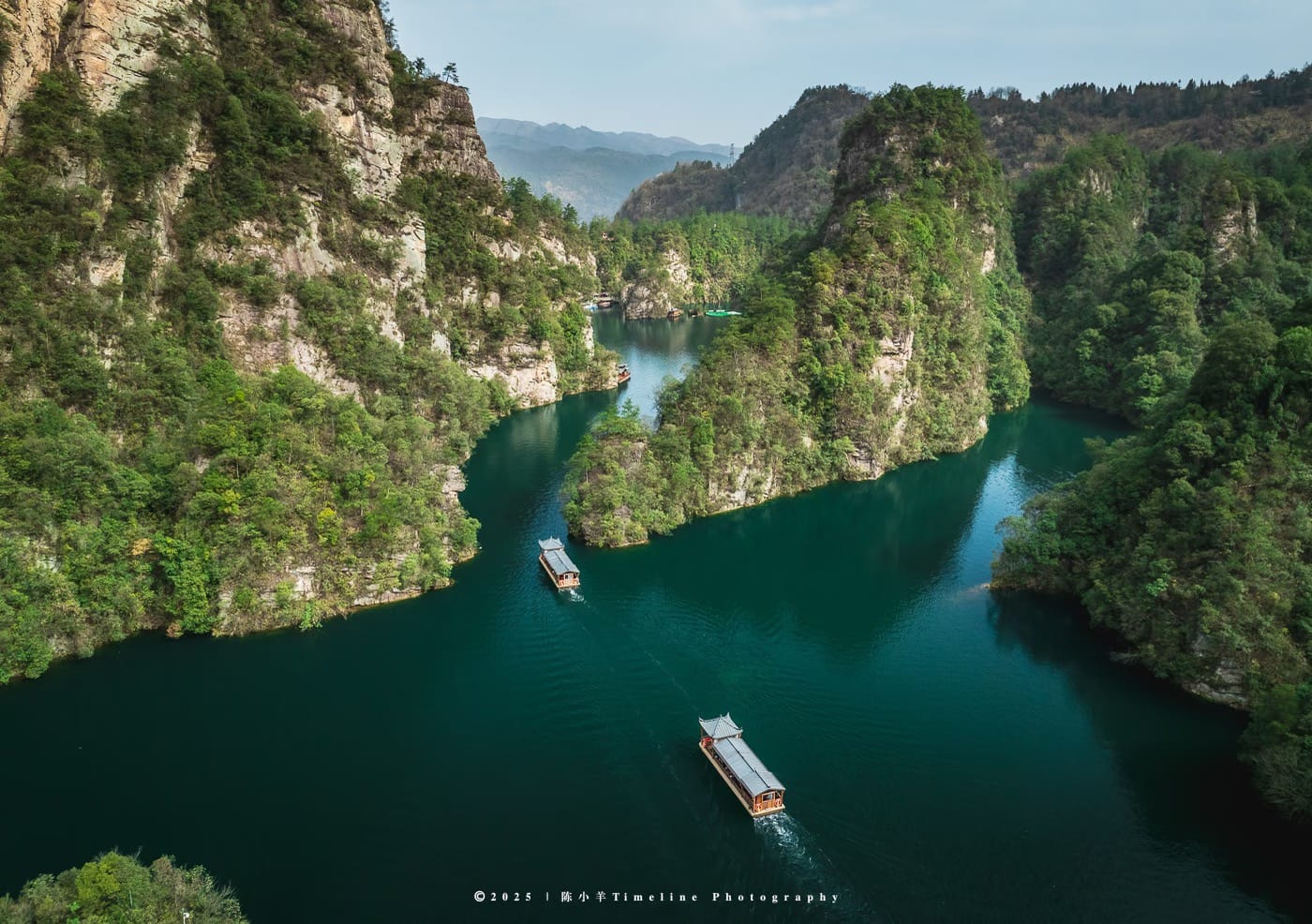
If you have three days or more, then yes — with one important condition. The boat ride alone, at CNY 110, is genuinely short (20–30 minutes) and conducted entirely in Mandarin Chinese. Reviewers who feel disappointed almost always made the same mistake: they came for the boat and went straight home. Reviewers who feel the opposite did the hike to Yingwo Village, lingered at the waterfall, and gave themselves time to slow down.
The experience Baofeng Lake offers isn’t spectacle. After two days surrounded by the vertical drama of the sandstone pillars, this is where you decompress — water instead of rock, stillness instead of height, a Tujia folk song echoing off a cliff face instead of a cable car grinding overhead. Whether that sounds appealing to you tells you everything you need to know.
3. Baofeng Lake and Tujia Culture: What Sets It Apart in Wulingyuan
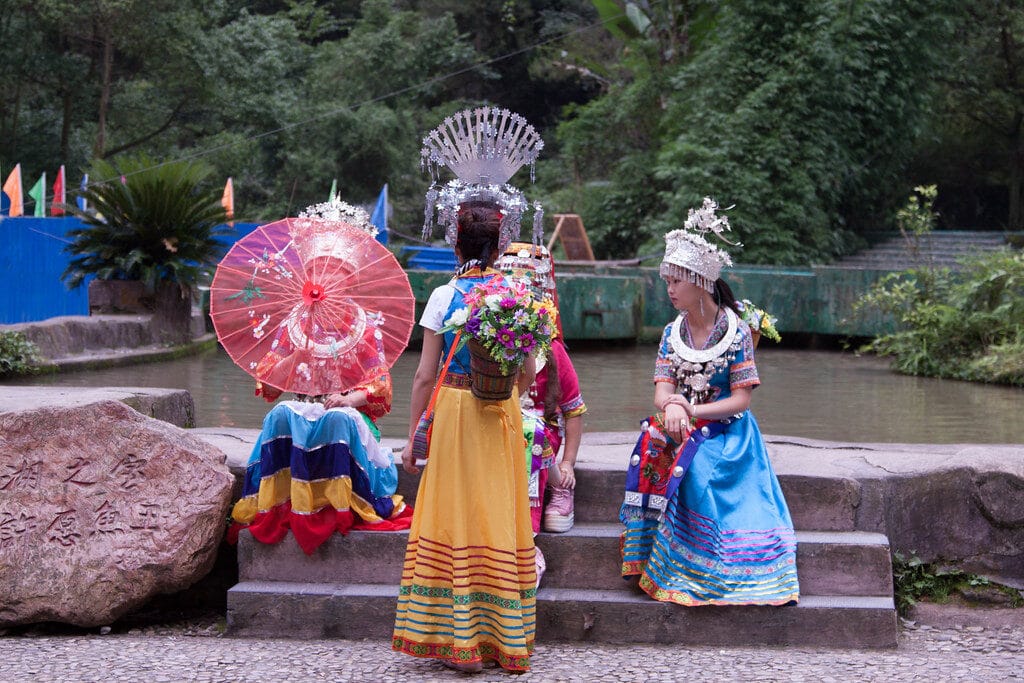
Every major attraction in Wulingyuan is geological — peaks, ridges, glass bridges, cable cars. Baofeng Lake is the exception. Its real distinction is cultural: the Tujia ethnic minority love song tradition performed on the water is one of the very few places in all of Zhangjiajie where the experience is genuinely human, not just scenic.
The park has two distinct sections: the lake itself in the southeast, and Yingwo Village in the northwest. Together with the Baofeng Waterfall and Yixiantian gorge, these four features are officially known as the “Four Wonders of Wulingyuan” (武陵源四绝). Most visitors see only one or two of the four. The people who see all four are the ones who recommend the place unreservedly.
4. How the Lake Came to Be
The lake is artificial — and being honest about that matters, not as a caveat, but because the story makes it more interesting.
In the 1970s, villagers dammed a narrow gorge here to generate electricity and store irrigation water. The original name — Shijia Gorge Reservoir — tells you everything about its modest purpose. Nobody planned a tourist attraction; they planned a water supply. The dam was built by local hands, and the resulting lake was described by those who first saw it as an accidental masterpiece.
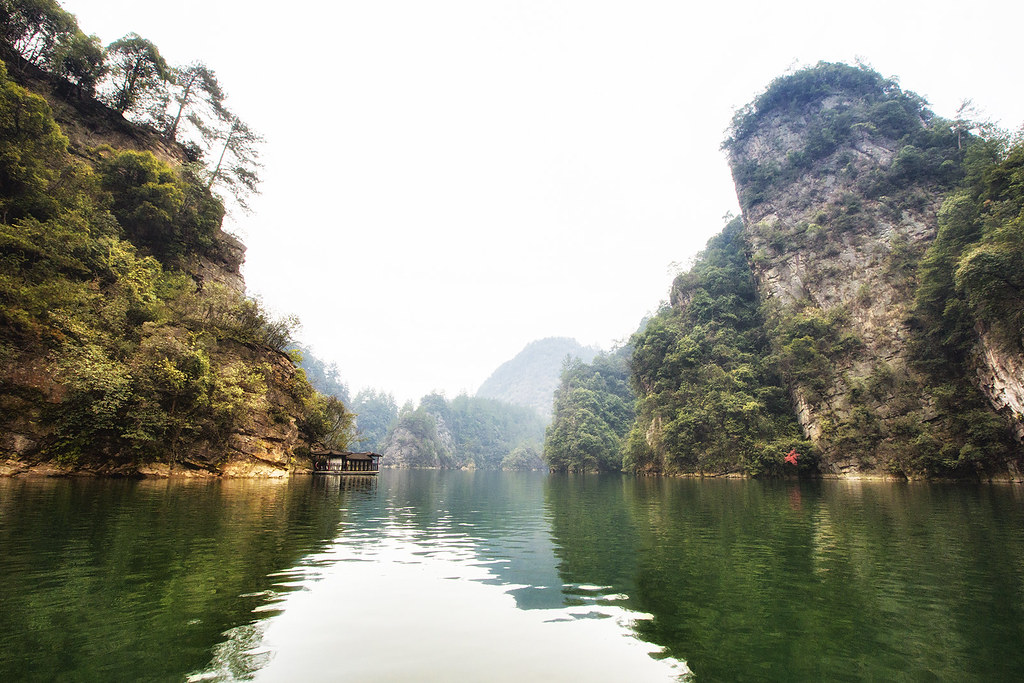
The geological foundations are far older. Around 380 million years ago, the crust beneath Wulingyuan subsided and seawater flooded in. Over hundreds of millions of years, water carved through the accumulated quartz sandstone, leaving the vertical pillar formations that now ring the lake on every side. The dam simply filled the valley between them.
The scenic area opened to visitors in 1984 and was inscribed as part of the Wulingyuan World Natural Heritage Site in 1992. In the 1990s, a Malaysian company took over management and built much of the current visitor infrastructure. The lake’s name was already settled long before any of that: “Bao” (宝, jewel) + “Feng” (峰, peak). The first time you see the emerald water lying between those cliffs, the name earns itself immediately.
5. What You’ll Actually Experience
The Walk Up — Don’t Just Take the Bus
This is the tip that most guides miss entirely, and it changes the visit.
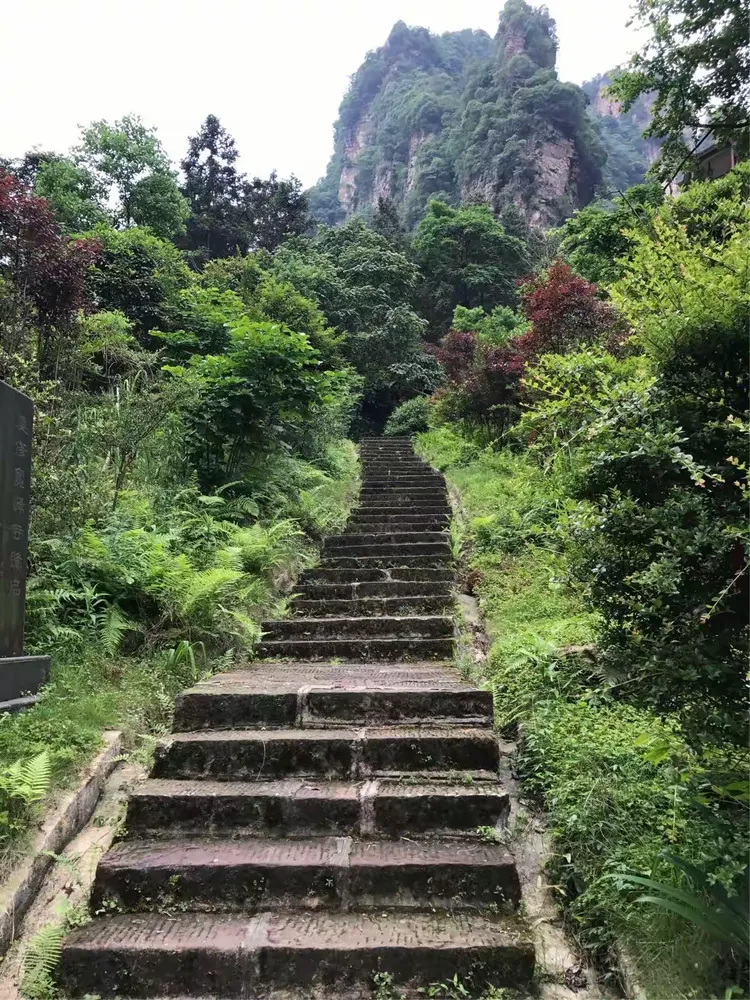
From the entrance, you have two options to reach the boat pier: the eco-shuttle bus (included in your ticket), or a 20-minute walk uphill on a paved path. Most visitors queue for the shuttle. But those who choose to walk encounter far fewer people along the way and can enjoy the peace and natural surroundings at their own pace — an experience the shuttle queue doesn’t offer. The walk also reveals something the shuttle skips: continuous views of the lake appearing and disappearing between the trees as you climb, framed differently with each turn.
We’ve had clients tell us this was the best twenty minutes of their entire Zhangjiajie trip. Note that the path is steep and the steps are mossy — wear grip shoes, and don’t attempt it after heavy rain.
The Baofeng Waterfall
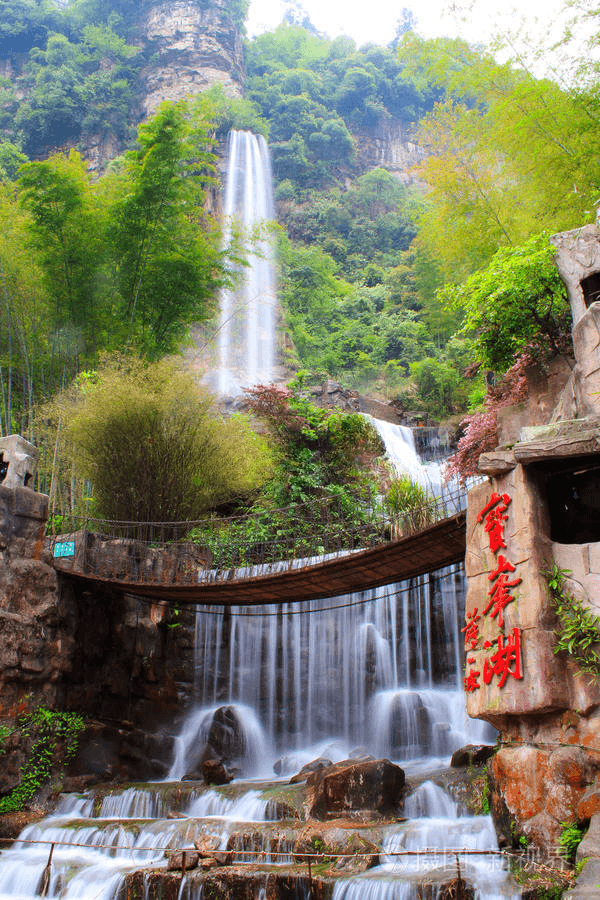
Most visitors walk past this at speed on the way in, focused on getting to the boat. That’s a mistake.
The waterfall at the scenic area entrance — known as Baofeng Flying Waterfall (宝峰飞瀑) — is one of the filming locations for the iconic 1986 Chinese TV series Journey to the West, where the Water Curtain Cave and Flower Fruit Mountain sequences were shot. A statue of Sun Wukong stands near the entrance marking the exact spot. The best angle is from the iron cable suspension bridge directly in front of the falls.
Water flow peaks around 10:00 AM and 2:00 PM. If photography matters to you, aim for those windows. We recommend saving the waterfall for the return leg when you have more energy to actually stop and look at it.
The Boat Cruise
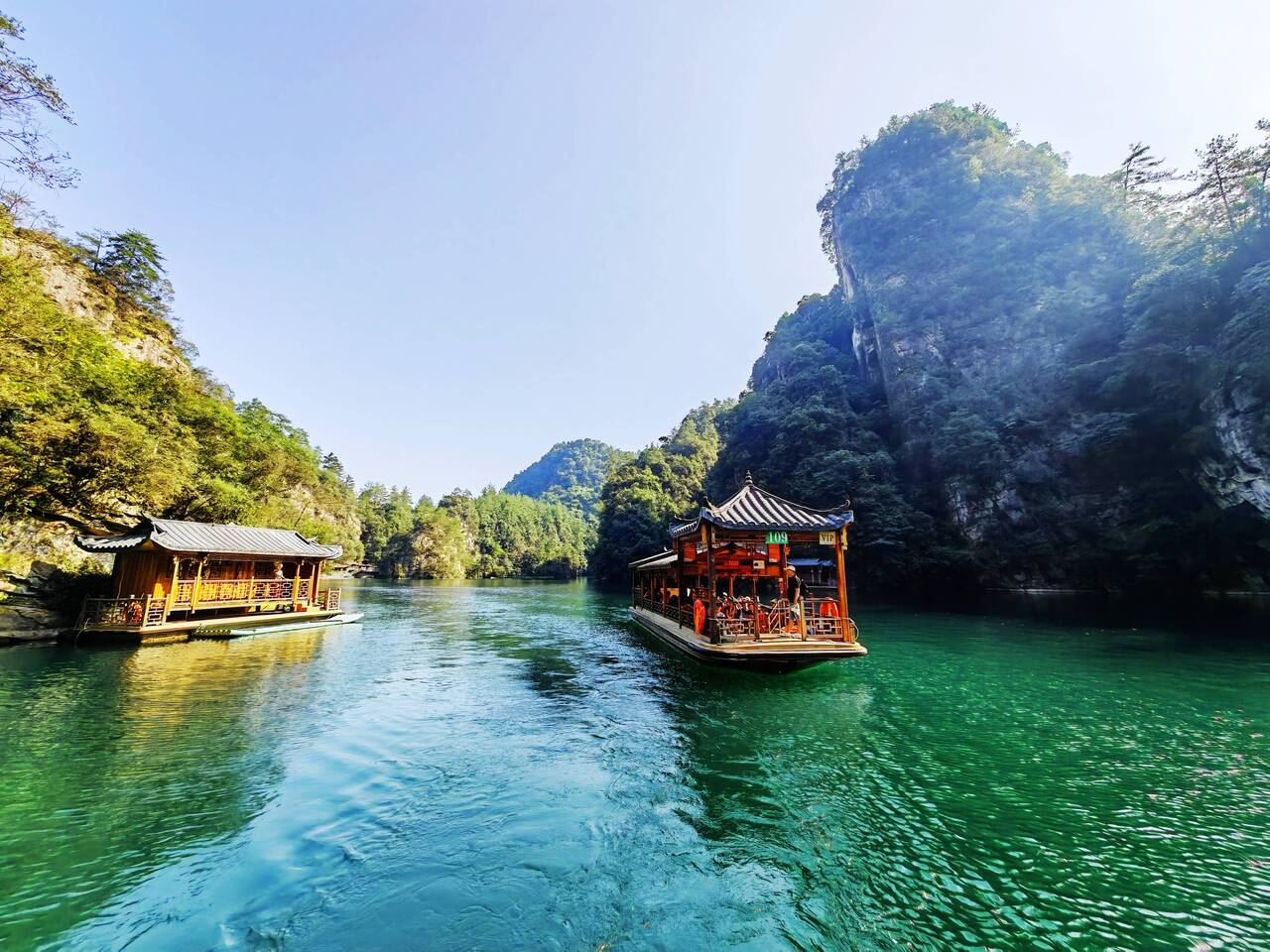
The boat fleet now runs entirely on electric power — quieter and cleaner than the older diesel vessels. You board a traditional roofed wooden boat at the pier for a circuit of the lake. The ride runs 20–30 minutes depending on stops.
Here is something we want to be direct about, because it’s the single most consistent piece of feedback we hear from international visitors: the entire boat experience is conducted in Mandarin Chinese. A staff member gives explanations of the lake and points out rock formations — but only in Chinese, with no translation. For Mandarin speakers, this is excellent. For everyone else, you’re watching a beautiful lake slide past while someone narrates it in a language you can’t follow.
This isn’t a dealbreaker. The scenery carries itself, and the folk song performances at the two stops don’t require translation. But go in with accurate expectations.

One more practical note: if you sit in the back of the boat, on the inside, you’ll find you have almost no view of the lake. Board early and move to the front or outer sides of the boat. It sounds like a small thing, but it meaningfully affects the experience.
The lake water is remarkable. Sitting high in the mountains and receiving only natural runoff with minimal pollution, it turns a deep emerald-green that photographs almost unrealistically well. Named formations along the route include Fairy Looking in the Mirror (仙女照镜) — a slender peak rising from the water that, at lake level, resembles a woman’s profile gazing at her own reflection. In spring, rhododendrons bloom on its bare summit, drawing butterflies; the scene doubles itself in the still water below. There’s also Golden Toad Holding the Moon (金蟾含月), a cliff formation that completes its illusion only on the night of the Mid-Autumn Festival when the full moon rests precisely in the toad’s open mouth. And Crocodile Rock (鳄鱼岩), a boulder stretching into the water that the guide script says was sent by Guanyin to protect the Fairy — a story more fun to hear in person.
The Tujia Folk Song Performances

At two points during the cruise, the boat slows near small wooden platforms moored by the cliff walls. A performer in traditional Tujia dress sings across the water — once a male singer, once a female.
The Tujia people have a deep tradition of using song to express feeling. Young men and women would sing to each other across valleys, using call-and-response to test each other’s character and feeling. Song was how you found a partner — no matchmaker, no formal introduction, just voices traveling through mountain air.
The performances on the lake are a compressed version of this tradition. Even when you can’t understand the words, the melody carries its own weight — one visitor described it as “a beautiful yet sorrowful melody” that moved them despite the language barrier. The boat guide typically invites passengers to sing back across the water in a men-vs-women challenge, which is surprisingly fun even for non-Mandarin speakers.
Our honest assessment: if you arrive expecting a polished cultural production, you’ll find it modest. If you arrive open to the moment — a person singing an ancient love song across green mountain water — it delivers something most tourism can’t.
Yingwo Village and the Yixiantian Gorge
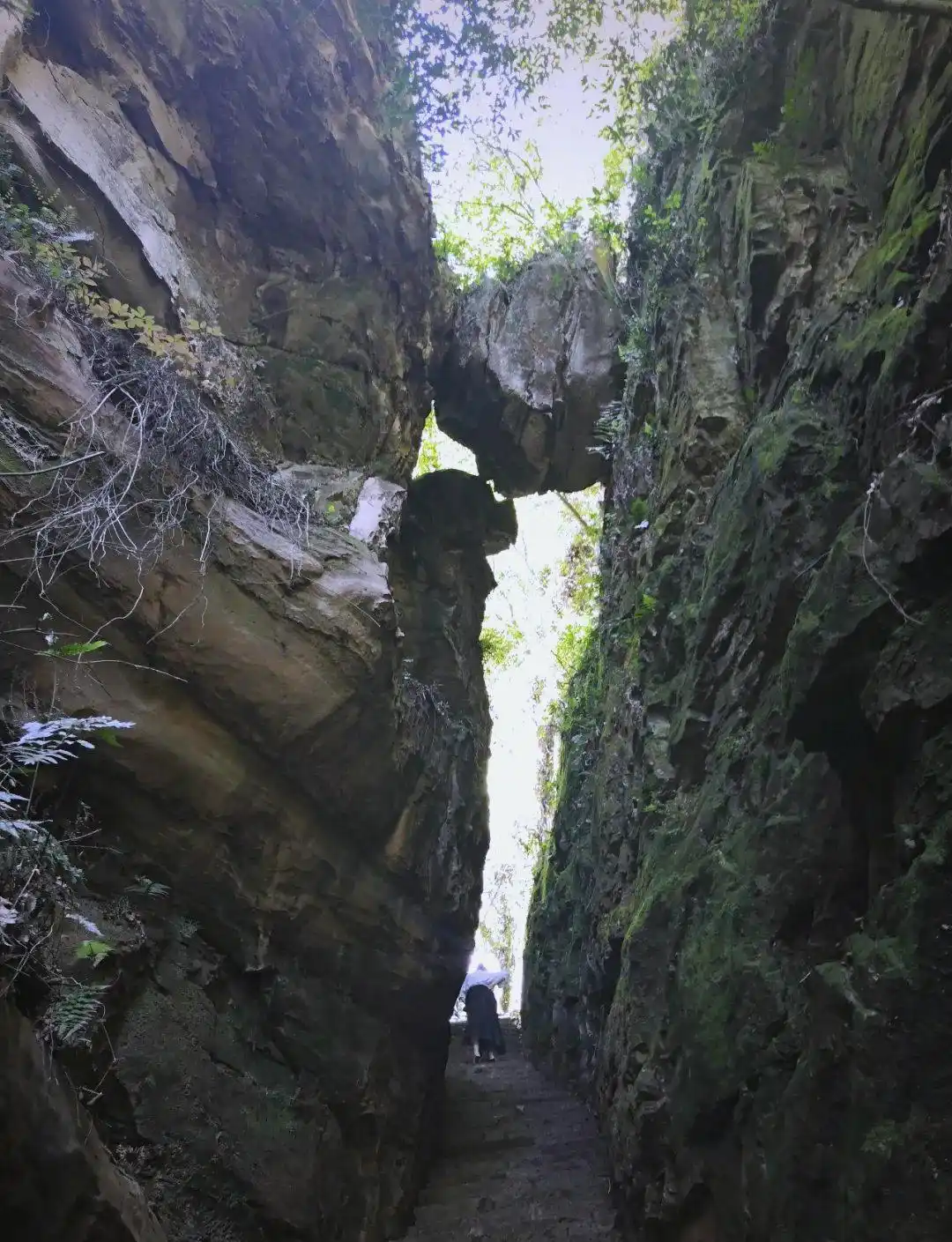
Above this long, narrow gap, a huge boulder is wedged between the two peaks. Locals call it the “Heart-Testing Stone.” According to legend, if a pair of lovers passing beneath it do not share a sincere love, the stone will fall.
This is where Baofeng Lake hides its real depth, and where most international visitors fail to go.
Yingwo Village sits on a sheer cliff face to the southwest of the lake. The approach leads through Yixiantian (一线天 — A Thread of Sky): a gorge over 200 meters long, 100 meters high, and less than two meters wide at floor level, with a small stream running through it and stone steps spiraling upward in near-darkness. Above that, a cliffside boardwalk leads to the village itself.
The village has its own history: in the Republican era, it served as the stronghold of a notorious bandit leader who chose it precisely because it was unreachable from below. The TV series Wulong Mountain Bandit Suppression (乌龙山剿匪记) was filmed on location here.
At the summit, the view reverses everything you’ve seen from below. You look down at the lake — now an emerald inlay in a ring of mountains — and out toward the Tianzi Mountain range in the distance. At the very top, past the ancient city gate ruins and the narrow cliffside path, sits Baofeng Temple (宝峰寺), a small Buddhist temple with active incense burning. Most people turn back before they reach it.
Allow 40 minutes each way. The steps become steep — approaching 45 degrees in sections — and are covered in moss that gets treacherous after rain. Wear shoes with grip. We recommend going up before the boat ride, not after, while your legs are still fresh.
The Chinese Giant Salamander Reserve

Near the entrance, a small pool houses Chinese giant salamanders (Andrias davidianus). In summer evenings around Baofeng Lake, you can hear their cry — locals call them “baby fish” (娃娃鱼) because the sound resembles an infant’s wail. Adults can reach 1.8 meters in length and barely need to eat; their slow metabolism means a large salamander survives on just 200–300 grams of food per day, and not every day. The reserve takes five minutes. Nearly every visitor who stops is glad they did.
6. Best Time to Visit
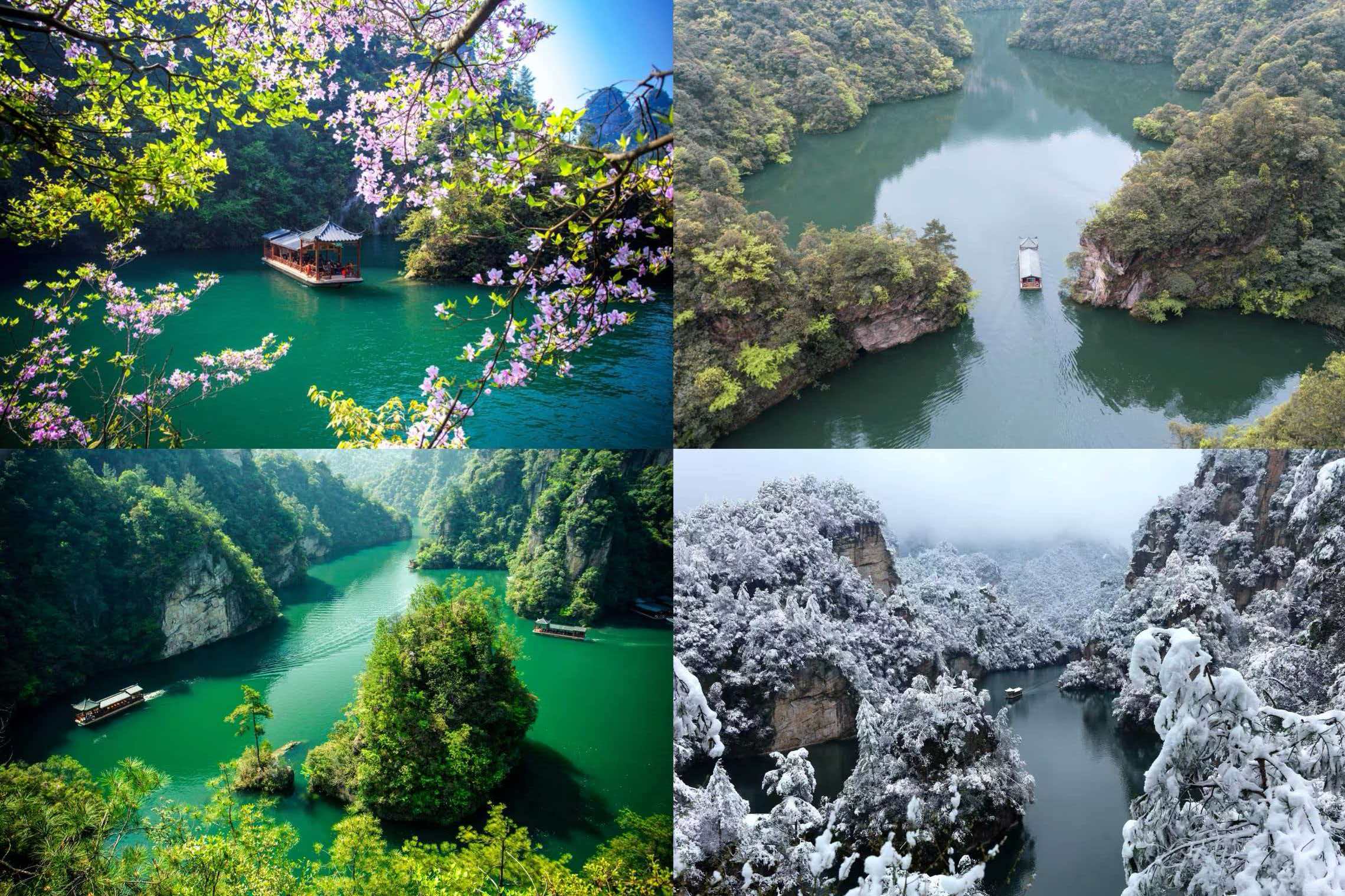
April and May is our consistent first recommendation. Temperatures sit between 15–25°C, spring rains keep the vegetation intensely green, and morning mist rises off the lake between the cliff faces in a way that photographs struggle to capture. Rhododendrons bloom on the peaks around this time — including the famous clump on the Fairy Looking in the Mirror rock formation.
September and October is the second window we recommend, particularly after China’s National Day holiday (post-October 8th). The air is sharp, the light is clean, and crowds drop significantly.
Summer (June–August): The altitude keeps temperatures manageable — Baofeng’s microclimate runs 5–8°C cooler than downtown Zhangjiajie. But July and August bring peak crowds and longer queues.
Winter (November–March): Snow on the peaks reflected in the dark lake water is a genuinely dramatic combination. Far fewer crowds. But the Yingwo Village trail becomes dangerous when icy, and some services reduce hours.
Regardless of season: arrive at opening. The shuttle bus queue gets substantial after 9:30 AM on busy days. An early boat has far fewer passengers, quieter water, and better light. The difference between a 7:30 AM departure and an 11:00 AM departure is larger than you’d expect.
7. Getting There
From | How | Time | Cost |
|---|---|---|---|
Wulingyuan Town | Bus No. 2 (final stop) or walk | 5–15 min | CNY 2 / free |
Wulingyuan Town | Taxi | ~5 min | Under CNY 10 |
Zhangjiajie City Center | Long-distance bus to Wulingyuan + Bus No. 2 | ~50 min total | ~CNY 14 |
Zhangjiajie City Center | Direct taxi | ~35–40 min | CNY 80–100 |
National Forest Park (Wulingyuan gate) | Taxi or Bus No. 2 | ~10 min | CNY 2–10 |
Navigation address: 张家界市武陵源区索溪镇宝峰路8号 — works in any Chinese mapping app (Amap, Baidu Maps, Apple Maps in China).
8. Tickets and Admission

The standard ticket breaks down as CNY 30 (entrance) + CNY 60 (boat) + CNY 20 (shuttle bus return) = CNY 110 total.
Category | Price |
|---|---|
Standard adult | CNY 110 |
Concession (students under 24, seniors 60–70, active-duty military with ID) | CNY 55 |
Free (children under 1.3 m, people with disabilities, seniors 70+) | Free |
International visitors — senior/student discount | Not applicable. Foreign visitors don’t qualify regardless of age |
That last point catches international visitors off guard more often than you’d expect. We mention it in every pre-trip briefing — the surprise at the ticket window is never a fun start to the day.
Prices reflect the current approved rate structure. Confirm with us or the official Wulingyuan scenic area channels before visiting, as rates can be adjusted seasonally.
9. How to Fit It Into Your Zhangjiajie Itinerary
2 days: Don’t come. Zhangjiajie National Forest Park and Tianmen Mountain take priority.
3 days: Pair Baofeng Lake with Yellow Dragon Cave. Do Baofeng in the morning — walk up, hike Yingwo, boat back down, waterfall on exit — allow 4 hours. Yellow Dragon Cave in the afternoon, 2.5 hours. Both are 8 km apart. This combination covers two very different types of experience efficiently.
4–5 days: Give Baofeng Lake its own half-day. Walk up instead of taking the shuttle, do Yingwo Village before the boat, linger at the waterfall on the way out. Use the afternoon for Wulingyuan town or rest.
One more thing worth mentioning: several repeat visitors note that seeing Baofeng Lake before the national forest park leads to stronger impressions of the lake. When you've already spent two days staring at mountains from every angle, the lake's scenery — while beautiful — is harder to see fresh. If your schedule allows, consider Baofeng on day one or two.
DIG DEEPER: Zhangjiajie Itinerary Guide: From 1 Day to 7 Days
10. Practical Tips
If you don’t speak Mandarin, booking through us is the single most impactful thing you can do. Without a bilingual guide, the boat commentary is background noise, the folk song performances lose half their meaning, and the Yingwo Village history stays locked behind the language. It’s a genuinely different experience with someone who can translate in the moment.
On what to wear: grip shoes are non-negotiable, not just recommended. The mossy stone steps near the waterfall and along the Yingwo trail are genuinely slippery after rain — smooth-soled shoes on a wet 45-degree staircase is a situation you don’t want to find yourself in. Bring a windproof layer too, even in summer. The lake at 585 meters creates its own breeze, and the boat deck is consistently cooler than people expect.
When you board the boat, move to the front or outer sides. Don’t take whatever seat is left near the back interior — from there you’ll see almost nothing. It sounds like a trivial detail, but it’s the difference between a memorable lake view and thirty minutes of staring at the back of someone’s head.
Walk up to the pier rather than taking the shuttle if your legs allow. The path takes about twenty minutes and the views along the way — the lake flickering between the trees as you climb — are something the shuttle riders never see. Save the shuttle for the way down.
A few other things worth knowing before you arrive: food options inside the park are limited and overpriced, so eat in Wulingyuan town beforehand. Don’t walk past the salamander pond without stopping — five minutes, and the animals are genuinely remarkable. Watch out for vendors selling herbal medicines like fleece-flower root (何首乌) inside the scenic area; these are typically counterfeit. And if it’s raining lightly when you wake up, don’t cancel — mist on the cliffs and a fuller waterfall make for some of the best conditions the lake offers.
11. Frequently Asked Questions
Is Baofeng Lake the same as Zhangjiajie National Forest Park?
No. They’re separate attractions within the larger Wulingyuan district, about 3.5 km apart, with separate tickets. The forest park is where the Avatar-style pillar formations are. Baofeng Lake is the water experience.
The boat ride is only 20–30 minutes. Is CNY 110 worth it?
If you only do the boat, it’s debatable — and we’ll say that plainly. The ticket also covers the Baofeng Waterfall, the Yingwo Village hike, and the salamander reserve. Think of CNY 110 as buying a half-day experience. Measured that way, the value is reasonable.
Is the boat experience ruined if I don’t speak Mandarin?
Not ruined, but reduced. The scenery doesn’t need translation. The folk songs don’t need translation. But the named rock formations and the boat guide’s narration are entirely in Mandarin. We recommend a bilingual guide for international visitors — it genuinely transforms the visit.
Can I walk up to the boat pier instead of taking the shuttle bus?
Yes, and we recommend it for able-bodied visitors. It takes about 20 minutes, the path is paved, and you’ll encounter far fewer people. The shuttle bus queue can be long at peak times.
Is it good for children?
Very good. No difficult terrain is required for the basic visit. The boat, the waterfall, and the salamanders all hold children’s attention well. The Yingwo hike is only appropriate for older children who are physically capable.
Can I combine Baofeng Lake and Yellow Dragon Cave in one day?
Yes — and for 3-day itineraries this is exactly what we recommend. Baofeng in the morning, Yellow Dragon Cave in the afternoon. Budget 4 hours for Baofeng (with the hike) and 2.5 hours for the cave.
How do foreign visitors buy tickets without a Chinese bank card?
Most Chinese platforms require a local phone number or UnionPay card. The simplest route is booking through an inbound tour operator, or asking your hotel to purchase tickets via the official Wulingyuan WeChat mini-program (张家界一机游). On-site purchase at the ticket window is also an option on non-holiday days.
12. A Personal Note from Our Team
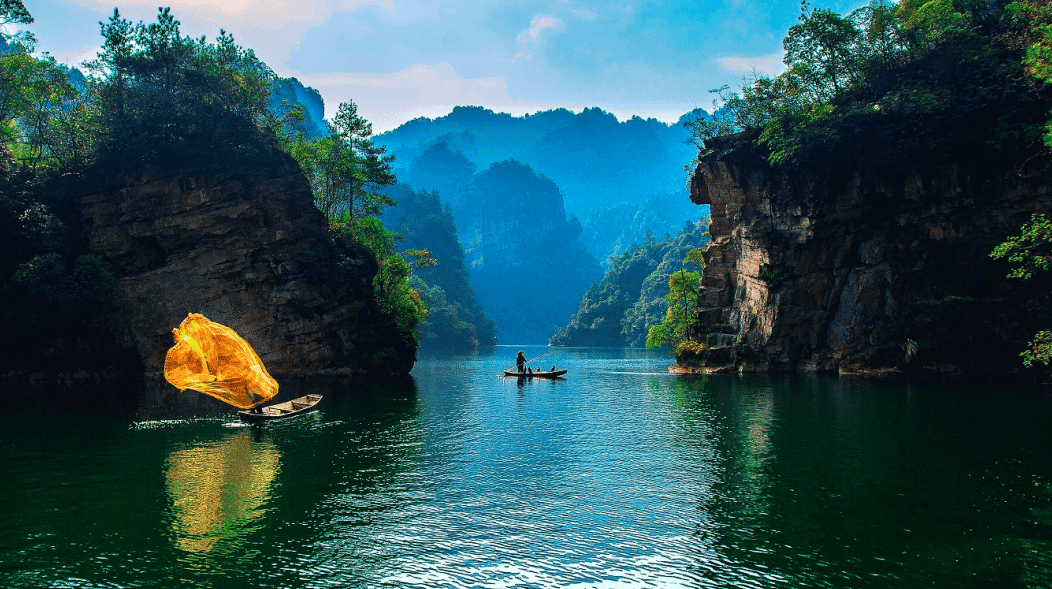
Last month we brought a couple here — both retired, both skeptical, both worn out from two days on the mountain trails. They agreed to come mainly because the boat meant they could sit down.
At the second stop on the lake, the female performer leaned out of her little wooden cabin above the water and began to sing. Slow, searching, completely unaccompanied. The cliff face behind her bounced the sound back across the water. The husband turned to us and said, very quietly: “I wasn’t expecting this.“
That’s what Baofeng Lake is. Not the highlight of Zhangjiajie — the forest park owns that. Not a must-see for every itinerary — it genuinely isn’t. But for travelers who give it the right conditions — enough time, a pair of walking shoes, and honest expectations — it’s where the trip shifts from impressive to something more personal.
If you’re building a Zhangjiajie itinerary and want help placing Baofeng Lake in context — alongside the forest park, Tianmen Mountain, Yellow Dragon Cave, or Fenghuang Ancient Town — we’re happy to help. We’ve been designing these trips for over 20 years.