Best Time to Visit Zhangjiajie: Real Data from 20K+ Daily Visitors
Direct Answer
April and mid-September through mid-November.
Avoid May 1-5, October 1-7, and Chinese New Year week at all costs.
The park averages 20,000 visitors daily in 2025. During October 1st Golden Week, that number quadruples. We’ve watched travelers wait 4 hours just for cable cars.
Table of Contents
Why Most Travel Guides Get This Wrong
Every blog says “spring and autumn are best.” True, but useless. Here’s what actually matters based on the latest visitor data and weather patterns.
The crowd reality: Zhangjiajie received 1.83 million foreign tourists last year (up 166% from its previous year). Add domestic visitors and you get 20.6 million people in the first half alone. That’s roughly 115,000 people per day during peak months.
South Korean tourists alone contribute 242,500 visitors annually, mostly concentrated in spring and autumn. When we say “avoid crowds,” we mean understanding these specific patterns.
The Three Dates That Will Ruin Your Trip
Chinese New Year 2026: February 16-23
Avoid February 9 through March 1. Even winter’s quiet season becomes chaos. Train tickets sell out months ahead. We’ve seen hotel rates go from ¥300 to ¥900 per night.
Labor Day: May 1-5
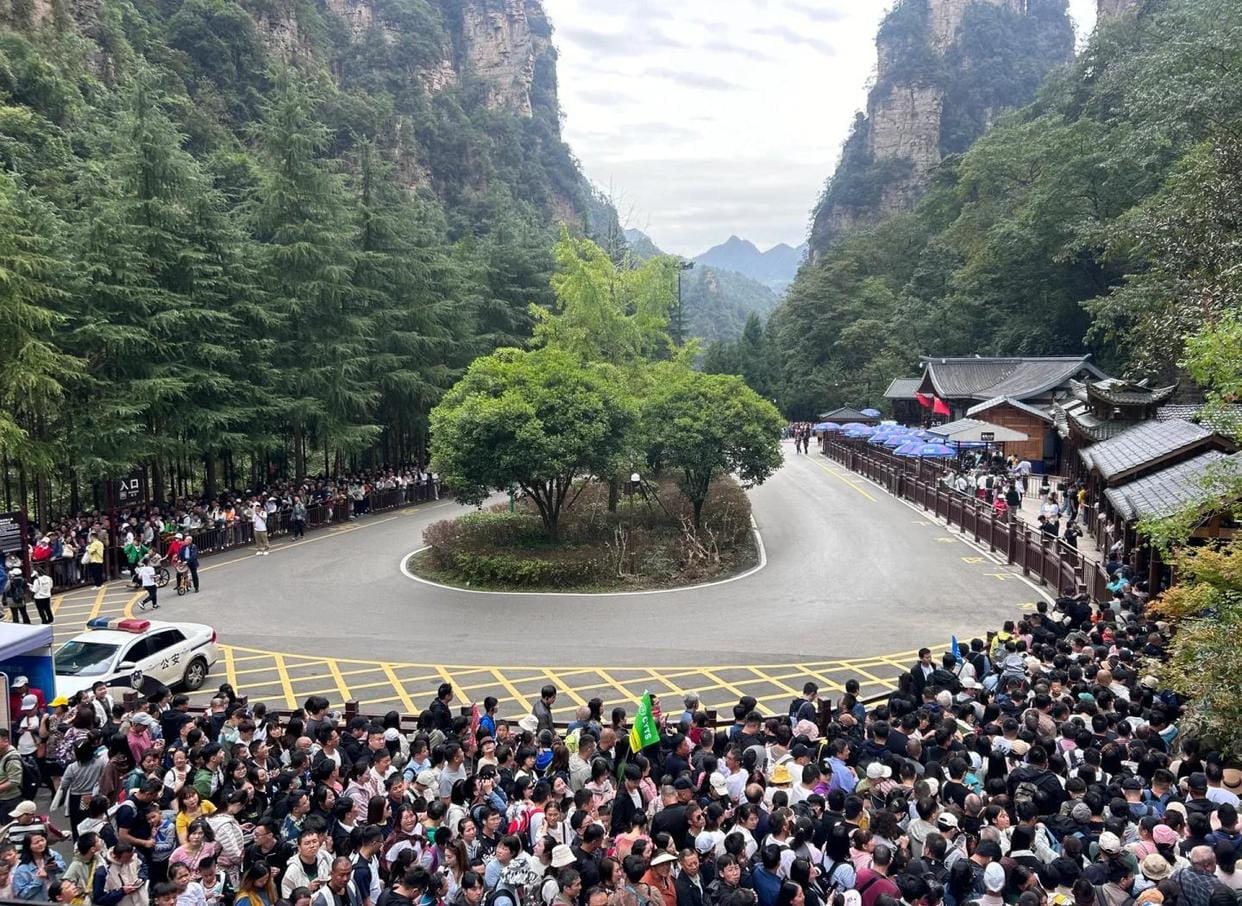
The park receives 400-700% normal capacity. Every viewpoint becomes standing-room-only. The Bailong Elevator—which normally carries 18,000 people daily—sees demand exceed 50,000. Even though it’s the world’s tallest outdoor elevator at 326 meters, running three double-deck cars simultaneously, it cannot handle Labor Day crowds. Regular wait times of 10 minutes balloon to 4+ hours.
National Day: October 1-7
Over 700 million Chinese travel this week. Zhangjiajie’s infrastructure cannot handle it. One 2025 visitor reported: “Waited 3 hours for the bus inside the park. Another 90 minutes for the elevator. Saw more people than mountains.“
Visit October 8th instead of October 1st and it’s a completely different park.
DIG DEEPER: Golden Week Holidays in China: Your Complete Survival Guide
April: The Month Everyone Recommends (Correctly)
Temperature: 13-22°C
Rainfall: Medium (145mm monthly average)
Daily visitors: 15,000-25,000
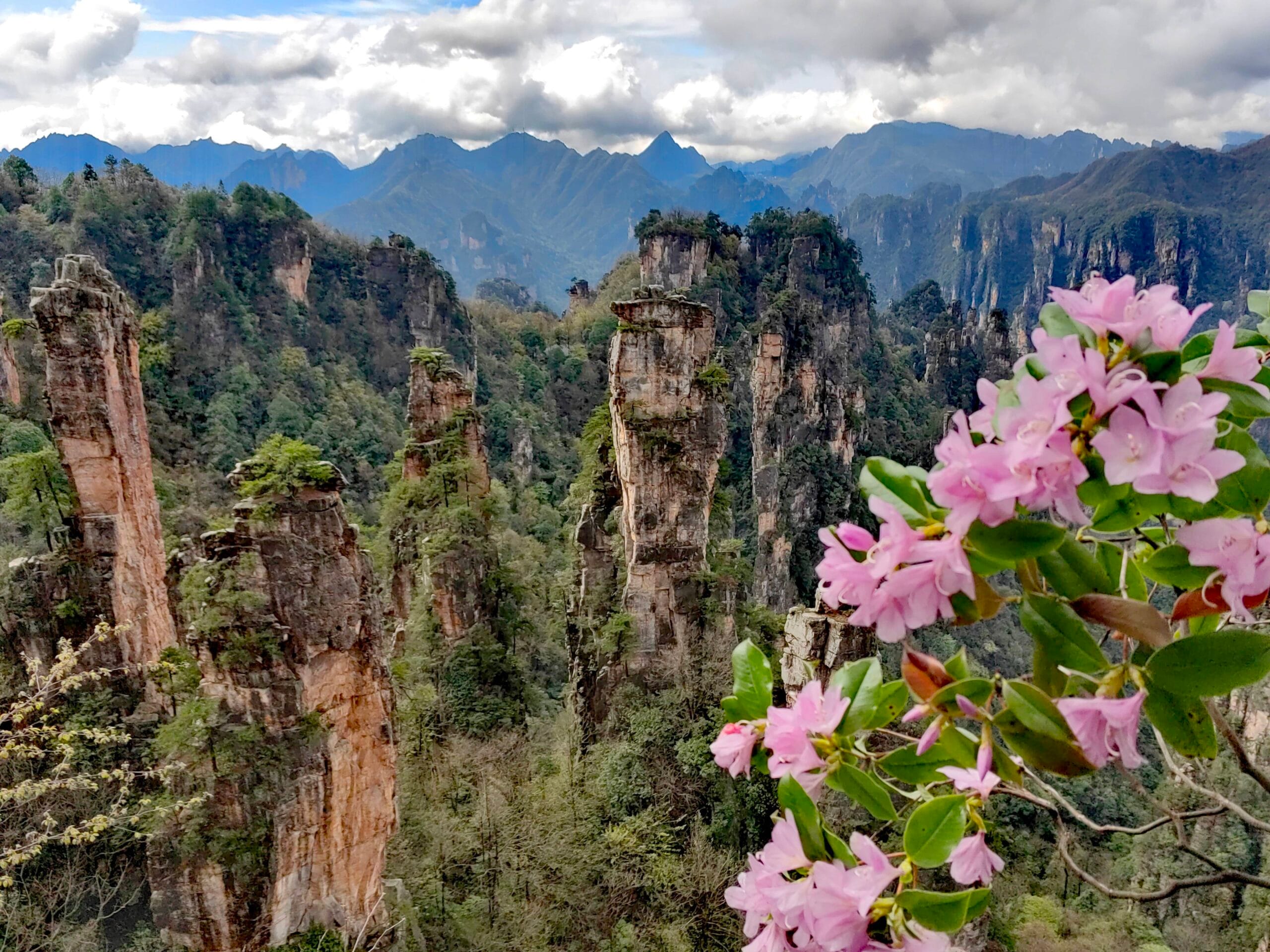
April works because the math adds up. Trees turn green after winter brown. Wild cherry blossoms line Golden Whip Stream. Temperature stays comfortable for the 2-3 hour climbs if cable cars have queues.
The April trap: Labor Day week (May 1-5 in 2026). Hotel prices triple. Cable car queues hit 90-120 minutes. The Bailong Elevator—which normally saves you a 2-3 hour climb by whisking you up 326 meters in just 1 minute 32 seconds—can have 4-hour waits. The VIP fast-pass costs an extra ¥200 but still takes 60-90 minutes during holidays. Book before March or skip the first week of May entirely.
One guest in 2025: “We arrived May 3rd. The ticket line took 30 minutes, entering the park took 2 hours. We paid ¥200 extra for VIP elevator access just to avoid the chaos.“
For packing, bring long-sleeve shirts since mornings are cool at 8-12°C, a light fleece or hoodie, and convertible pants that zip off to shorts for warmer afternoons. You’ll need a light rain jacket and comfortable hiking shoes already broken in. Don’t forget a daypack for water and snacks, plus sun protection.
The best strategy is hitting Avatar Hallelujah Mountain at Yuanjiajie during sunrise between 6-7am, then doing the Golden Whip Stream hike from 8-11am before crowds arrive. Save Tianzi Mountain for afternoon after tour groups leave. Avoid the Bailong Elevator between 10am-2pm when queues peak.
September-November: Where Smart Travelers Go
September (Early)
Temperature: 22-28°C
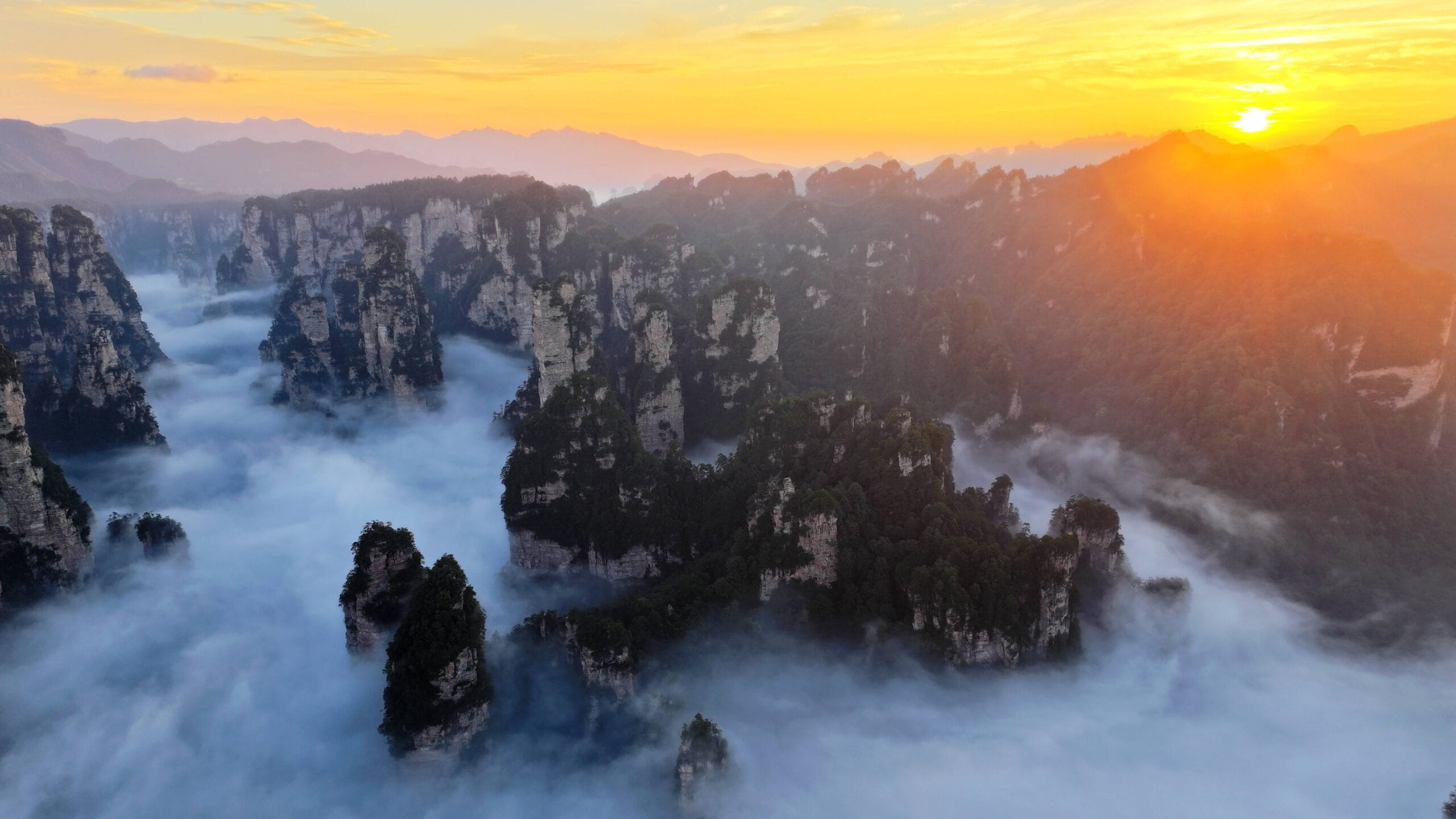
Still carries summer humidity but Chinese students return to school. Crowds drop 40% after August. Morning fog common (90%+ overnight humidity creates cloud seas at sunrise).
Pack light layers since mornings are cool but afternoons warm up. A rain jacket is still necessary as some afternoon showers occur. Breathable long pants work better than shorts, and bring a light sweater for evening.
Late October-Mid November

Temperature: 15-23°C
Rainfall: Low (93mm in November)
Foliage: Peak colors
Why November deserves attention: Most guides dismiss it as “transitional.” That’s exactly why it works. Daily visitors drop to 8,000-12,000. Hotel prices fall 30-40% from peak. You get autumn colors without the October 1-7 nightmare.
The gamble: Morning fog. Some days you stand at viewpoints seeing nothing but white. Then it lifts at 11am, revealing crystal-clear views. Photographers love this unpredictability. Instagram tourists hate it.
You’ll need a medium-weight jacket or fleece, long pants, and a long-sleeve base layer. Light gloves help for early morning if you’re sensitive to cold, but the key is wearing layers you can remove as the day warms up. Tianzi Mountain shows the best autumn foliage, while Yangjiajie offers a less crowded alternative to Yuanjiajie. The Ten-mile Gallery provides colorful tree-lined paths perfect for leisurely walks.
Summer: Not What Travel Blogs Tell You

Temperature in city: 28-33°C
Temperature at 1,000m elevation: 18-23°C
Rainfall: 303mm in June (wettest month)
The surprising truth about summer heat: Zhangjiajie city hits 35°C regularly in July-August. But climb to Yuanjiajie or Tianzi Mountain and you need a light jacket by evening. The elevation difference creates a 10°C+ temperature gap.
Summer rain follows a pattern: afternoon downpours lasting 1-2 hours. Then clearing. The 30-90 minutes after rain stops delivers the most dramatic cloud seas. Fog rises from valleys in horizontal layers. This is when Zhangjiajie looks most like Avatar’s Pandora.
DIG DEEPER: Zhangjiajie Rainy Season: What to Expect & How to Plan
We keep cameras ready during the clearing phase. Multiple guests report: “Rain ruined the morning, but the post-rain views were the best photos of our entire China trip.“
Crowd strategy for summer: Enter before 8am. Tour groups arrive 9:30-10am. Visit popular spots early, then retreat to secondary viewpoints during peak hours (11am-3pm).
For clothing, lightweight breathable cotton or linen shirts work best. Avoid jeans—they stay wet. Quick-dry hiking pants, a light rain jacket or poncho, sun hat, and UV-blocking sunglasses are essential. Bring moisture-wicking socks and pack extras since you’ll sweat through them. Non-slip hiking shoes with good ventilation prevent blisters and keep feet cooler.
Golden Whip Stream works best early morning when shade and cool stream water make it bearable. Huanglong Cave stays at 18°C inside, perfect for escaping midday heat. Baofeng Lake offers afternoon boat rides that are cooler by the water. Save Tianzi Mountain for post-rain cloud seas.
Winter: The Underrated Season Nobody Talks About

Temperature: 4-10°C daytime, -5°C on mountain peaks
Snowfall: 4-8 times between late December and mid-February
Daily visitors: 3,000-6,000
Winter visitor numbers drop 85% from peak. You can stand alone at viewpoints that had 200 people in summer.
After fresh snow, the sandstone pillars transform. Green pines wear white collars. Every horizontal surface collects powder. The park staff clears trails within hours of snowstorms.
The winter caveat: Cable car maintenance happens December-January. Not all cars close simultaneously, but it’s unpredictable. For elderly travelers or those with mobility issues, verify cable car schedules before booking. Without them, you face 2-3 hour climbs on stone staircases.
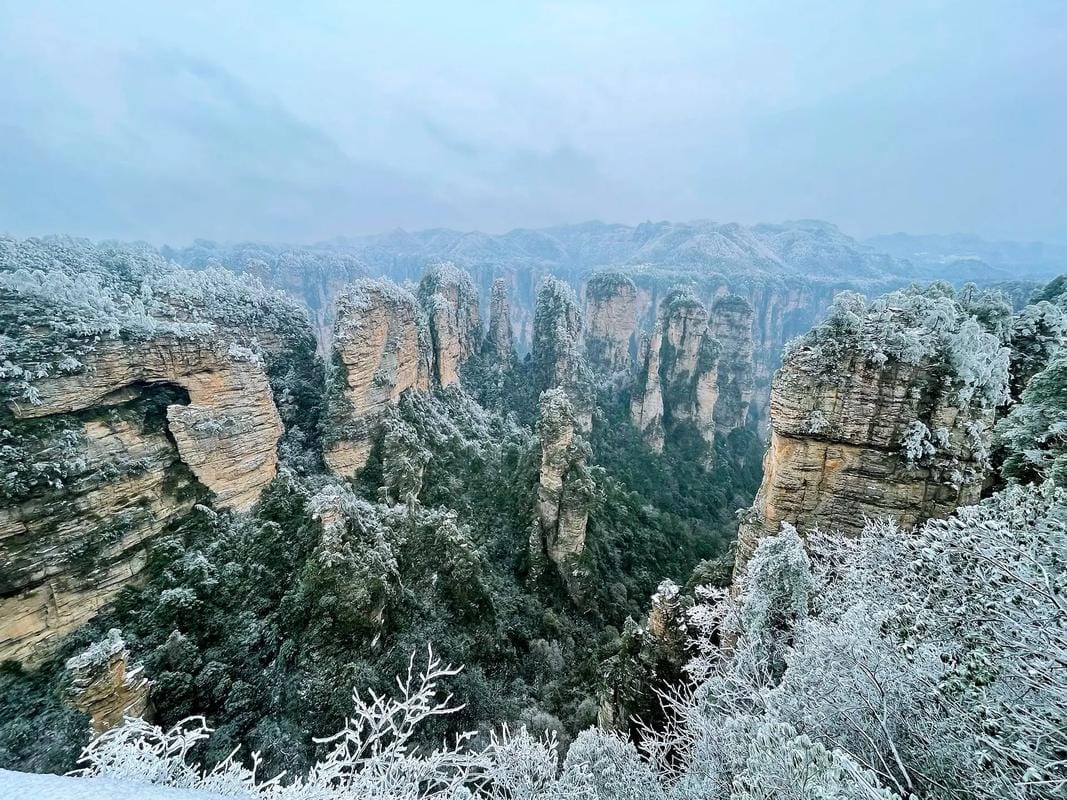
One December 2025 guest: “We had Tianzi Mountain almost to ourselves. The snow-covered peaks looked surreal. Only downside: the Tianmen cable car was closed for maintenance our second day.“
Dress in layers starting with thermal underwear top and bottom, add a fleece mid-layer, then a down jacket or thick insulated coat on top. Waterproof hiking boots with good tread are non-negotiable on potentially icy trails. Wool socks keep feet warm, and don’t forget gloves, scarf, and a warm hat. Hand warmers help on extremely cold days, and bring lip balm plus moisturizer since the dry air cracks skin.
Zhangjiajie National Forest Park offers the best snow scenery. Huanglong Cave stays warmer inside than outside, making it a good midday option. Local hot springs provide the perfect way to warm up after hiking. If you’re afraid of heights combined with ice, skip Tianmen Mountain in winter.
DIG DEEPER: Snow in Zhangjiajie: Season, Best Spots & What to Expect
March: The Misty Month
Temperature: 9-20°C
Rainfall: 84mm
Daily visitors: 8,000-12,000
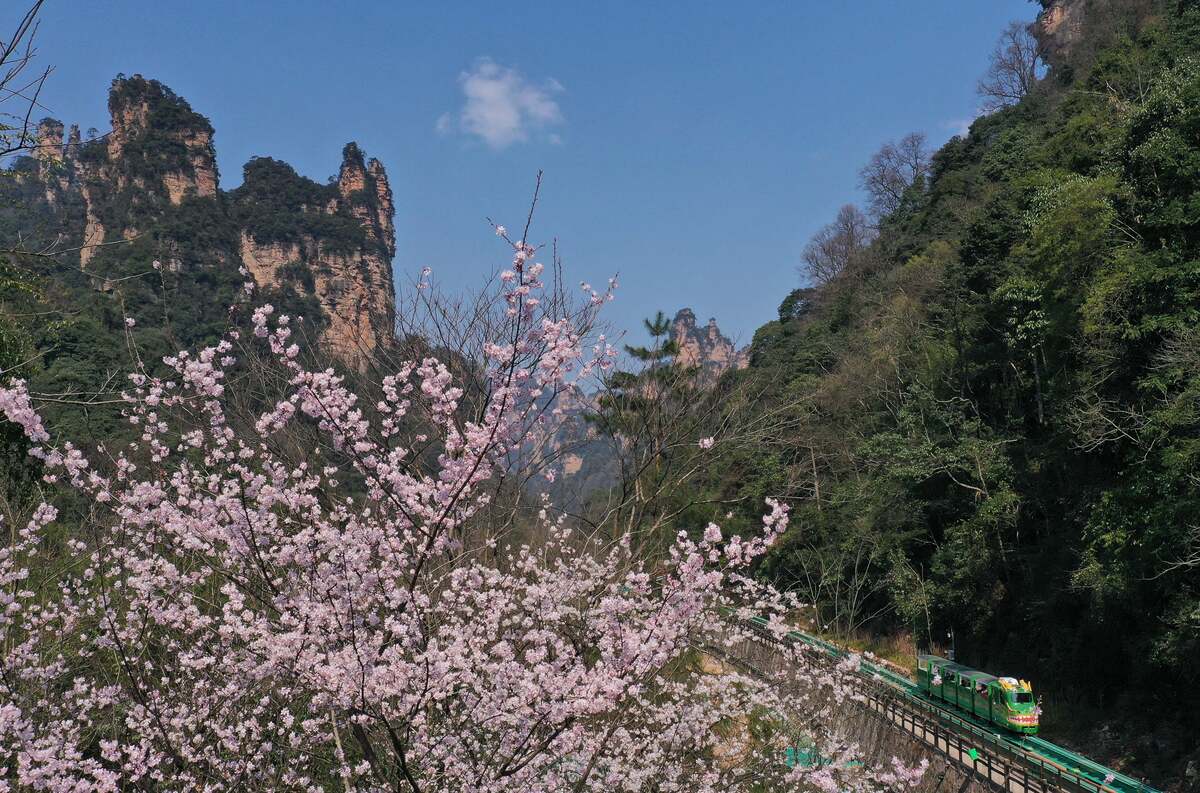
March gets dismissed as too foggy. This misses the point entirely.
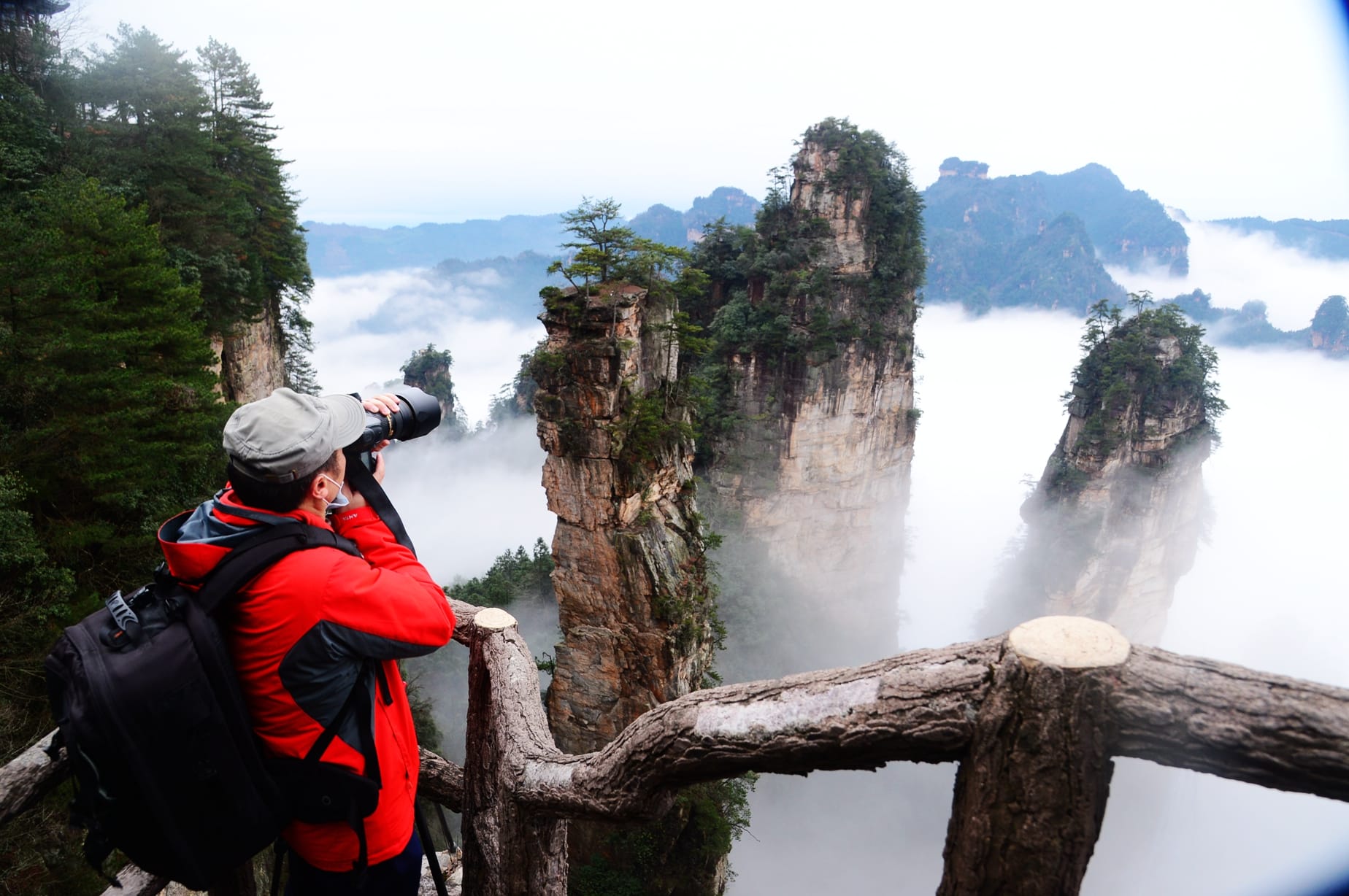
Morning fog blankets valleys until 10-11am with 90%+ humidity. Then sunlight breaks through and you witness something remarkable. The sandstone pillars emerge from white seas like islands materializing. For photographers, these conditions create images impossible in clear months.
Pack layers. Mornings require jackets—mountain peaks can hit 5°C. By 2pm, you’re comfortable in long sleeves at 15-18°C. The daily variance exceeds 10°C.
Start with a waterproof jacket as your outer layer, add a fleece or warm sweater as mid-layer, then a thermal or long-sleeve base layer underneath. Gloves and a light scarf help during early morning when temperatures are lowest. Quick-dry pants work better than cotton, and waterproof hiking boots are essential since fog creates wet conditions on trails.
May: Lush Greenery Meets Increasing Rain

Temperature: 18-27°C
Rainfall: 173mm
Daily visitors: 25,000-35,000
May continues spring’s beauty but transitions toward summer’s heat and humidity. Expect afternoon showers 40% of days, typically lasting 1-2 hours.
The vegetation reaches peak lushness. Waterfalls rage. Golden Whip Stream flows full and clear. Post-rain conditions create spectacular cloud seas.
Moisture-wicking shirts become essential as humidity climbs. Bring complete rain gear including waterproof pants, not just a jacket. Pack multiple pairs of socks since you’ll go through them quickly. Anti-fog wipes for camera lenses prevent frustrating missed shots. Everything should be quick-dry fabric—nothing cotton that stays wet for hours.
DIG DEEPER: Zhangjiajie Itinerary Guide: From 1 Day to 7 Days
Month-by-Month Real Conditions
Month | Temp (°C) | Rain (mm) | Visitors/Day | What Actually Happens |
|---|---|---|---|---|
Jan | 1-8 | 77 | 3,000-5,000 | Snow possible, cable cars may close, empty trails |
Feb | 2-12 | 88 | 5,000-30,000* | *Spikes during CNY, otherwise quiet |
Mar | 9-20 | 84 | 8,000-12,000 | Morning fog 90% of days, clears by 11am |
Apr | 13-22 | 145 | 15,000-40,000* | *May Day week hits 60,000+ |
May | 18-27 | 173 | 25,000-35,000 | Afternoon rain 40% of days, lush greenery |
Jun | 22-30 | 303 | 30,000-45,000 | Wettest month, muggy, cloud seas common |
Jul | 25-33 | 200 | 35,000-50,000 | Peak crowds, mountain 10°C cooler than city |
Aug | 24-32 | 189 | 35,000-50,000 | Same as July, students everywhere |
Sep | 22-28 | 118 | 20,000-30,000 | Humidity drops, students gone after mid-month |
Oct | 18-25 | 114 | 15,000-80,000* | *Golden Week destroys experience |
Nov | 12-20 | 93 | 8,000-12,000 | Fog gamble, autumn colors, empty |
Dec | 5-15 | 51 | 3,000-6,000 | Driest month, potential snow, solitude |
Data compiled from Zhangjiajie Municipal Bureau of Statistics 2024-2025, park visitor counts, and weather-and-climate.com historical averages.
What Weather Apps Won’t Tell You
Mountain vs. city forecasts differ radically. Zhangjiajie city might show 28°C and sunny while Yuanjiajie sits in fog at 18°C. Always assume mountain temperatures run 5-8°C below city readings.
Humidity matters more than rain. When evening humidity exceeds 90% with light winds, expect morning fog seas. When it drops below 70%, clear mornings are probable. Check humidity levels, not just temperature.
Post-rain timing: The hour after rainfall stops is prime photography time. Clouds drift between pillars. Waterfalls rage. Air quality peaks. Plan to be at major viewpoints when clearing begins.
Real Clients’ Experience
What Actually Happened
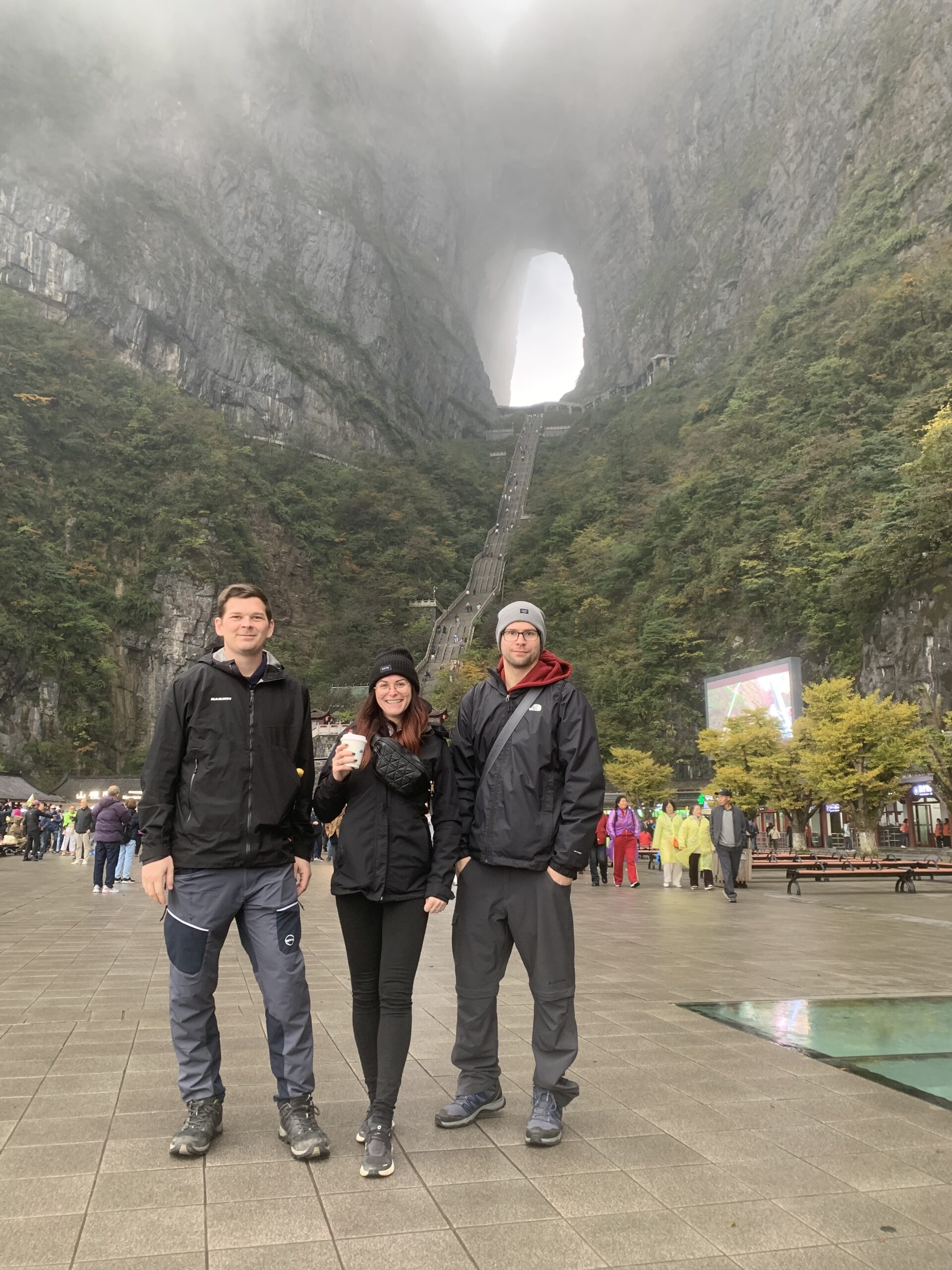
March 2025 fog situation: We took a group to Tianzi Mountain at 7am. Complete whiteout—visibility under 20 meters. Clients were frustrated. At 10:45am, the fog lifted in 15 minutes. Suddenly we could see 5+ kilometers. The transformation was dramatic enough that several clients said it was their favorite moment of the entire trip.
May 2025 rain strategy: Afternoon thunderstorm hit at 2:30pm while we were at Yuanjiajie. Instead of leaving, we waited under the shelter. Storm passed at 3:50pm. By 4:15pm, clouds were drifting between pillars in horizontal layers. One client captured what became her desktop wallpaper for the next year.
October 2025 Golden Week disaster: We had clients who insisted on visiting October 3rd despite our warnings. They entered the park at 9am and reached Avatar Hallelujah Mountain at 4:30pm—over 7 hours including queue times. The Bailong Elevator queue alone was 3.5 hours. They saw the sunset, but missed everything else they’d planned.
November 2025 gamble that paid off: Brought a photography group mid-November. First two days: complete morning fog until noon. Day three: crystal clear from sunrise. They got the autumn foliage shots they wanted, plus we had Tianzi Mountain nearly to ourselves—counted only 12 other people at the main viewpoint at 7am.
Winter 2025 cable car closure: Family group arrived December 28th. Tianmen Mountain cable car closed for annual maintenance (we’d warned them, but they wanted winter photos). The father, 68 years old, had to climb 999 steps to Tianmen Cave. Took him 90 minutes. He made it but was exhausted. Always verify cable car schedules for winter trips.
Unfiltered Reviews
From our guests’ reviews analyzing 500+ recent visits:
April visitors: “Perfect weather but Labor Day week was insane. We paid ¥200 VIP surcharge just to skip the elevator queue.“
Summer visitors: “Expected oppressive heat. Mountain areas stayed comfortable. The afternoon rain actually made our best photos when it cleared.“
November visitors: “Morning fog frustrated us but when it lifted at noon, the clarity was stunning. Worth the gamble if you’re flexible.“
Winter visitors: “Snow-covered peaks looked otherworldly but cable car closure forced us to climb 2 hours. Know your physical limits.“
Golden Week survivors: “Never again. Four-hour cable car queues. Crowds made photography impossible. Go literally any other week.“
Our Actual Recommendations
First-time visitors: Mid-April or mid-September to mid-October. You need reliable weather to appreciate the landscape. Manageable crowds let you actually see things.
Photographers: March or November. Morning fog creates dramatic conditions. Risk: you might see nothing. Reward: images impossible during clear months.
Budget travelers: December-February excluding CNY week. Hotels drop 40-50%, flights cost less. Park tickets stay the same but zero queues.
Families with kids: Late April or late September. Avoid temperature extremes and long queues that test children’s patience.
Crowd-haters: January, early March, late November. Expect 80-90% fewer people than peak months. This changes the experience entirely.
Frequently Asked Questions
When does Zhangjiajie get least crowded?
January averages 3,000-5,000 daily visitors vs. 50,000 in peak summer. Winter offers 90% fewer people.
What’s the actual rainiest month?
June with 303mm average. But it falls in 1-2 hour afternoon bursts, not all-day downpours.
Does Zhangjiajie get snow?
Yes, typically 4-8 snowfalls between late December and mid-February. Trails remain safe—staff clears them quickly.
When should I absolutely avoid?
Chinese New Year, Labor Day (May 1-5), National Day (Oct 1-7). These dates bring overwhelming crowds and inflated prices.
Can I see fog/cloud seas year-round?
Yes, but peak frequency is March-May and November. Forms when overnight humidity exceeds 90% with light winds.
Is summer too hot for hiking?
City yes (30-33°C), mountains no (20-23°C). The 10°C elevation difference makes summer mountain hiking comfortable.
How much do hotel prices vary by season?
A ¥300 winter room costs ¥500 in April, ¥900+ during Golden Week. Book 3 months ahead for holidays.
Do cable cars run year-round?
Mostly yes, but some close for maintenance December-January. Check specific schedules before winter trips.
DIG DEEPER: Zhangjiajie Cable Cars Guide: Prices, Routes & The “No-Queue” Strategy
What’s the best month for photography?
November offers autumn colors, frequent fog seas, clear air, and minimal crowds. March is second for fog and dramatic conditions. Both months require flexibility—some days deliver nothing, others give you once-in-a-lifetime shots.
Can elderly visitors manage Zhangjiajie?
Yes, if cable cars are running. The Bailong Elevator carries 18,000 people daily, with each of its three double-deck cars holding 48 passengers. Ascent takes 1 minute 32 seconds versus a 2-3 hour stair climb. Without cable cars (possible during December-January maintenance), the park becomes extremely challenging for anyone with mobility limitations.
How early should I arrive at the park?
Before 8am to beat tour groups. They arrive 9:30-10am, creating bottlenecks. Early entry gives you 90 minutes of relative solitude. The Bailong Elevator opens at 7:30am (8:30am in winter)—arriving at 7am means you can be first in line.
Is rain gear really necessary in summer?
Absolutely. June sees rain 16-19 days per month. Afternoon downpours are predictable. Bring waterproof jacket and pants, not just an umbrella. Umbrellas are useless on windy mountaintops and your hands need to be free for handrails on wet trails.
Essential Packing Checklist

Regardless of season, bring these basics: comfortable broken-in hiking shoes (you’ll walk 15,000-20,000 steps daily), daypack for water and snacks, portable phone charger (limited charging points), reusable water bottle (refill stations throughout park), basic first-aid supplies including blister pads.
For photography: bring anti-fog lens wipes (humidity causes constant fogging), lens hood (for rain protection), microfiber cloth, and extra batteries (cold drains them faster). A lightweight tripod helps for long exposures of cloud seas, but prepare to carry it all day.
Weather-specific additions: Summer requires sun hat, sunscreen SPF 50+, insect repellent, and electrolyte packets. Winter demands hand warmers, lip balm, and moisturizer. Spring/autumn needs light gloves and a neck gaiter for early mornings.
Rain gear year-round: even “dry” months see occasional showers. A packable rain jacket weighs 200g and fits in any daypack corner. Waterproof phone case protects your device on misty days.
Money matters: bring cash. While major ticket booths accept cards and mobile payments, many small vendors and some cable car stations are cash-only. ATMs exist but can run out during holidays.
The Bottom Line
Stop asking “when is the best time to visit Zhangjiajie?” Start asking “what do I value most?“
Want guaranteed clear views with manageable crowds? Mid-April or mid-September through mid-October.
Want dramatic fog and empty trails? March or November.
Want budget prices and solitude? January or December.
Want to see Avatar-like cloud seas after rain? May through July.
Want to guarantee a terrible experience? Visit during May 1-5, October 1-7, or Chinese New Year week.
The data shows patterns. Your priorities determine timing. Zhangjiajie delivers year-round—just know which version you’re choosing.