Huangshizhai in Zhangjiajie: Complete Guide to Yellow Stone Village
Rising 1,200 meters above the forest floor, Huangshizhai stands as Zhangjiajie’s most commanding natural observatory. We’ve guided hundreds of travelers through this magnificent plateau, and we can confidently say: the ancient Chinese saying holds true—”A trip to Zhangjiajie is not complete without a visit to Huangshizhai.”
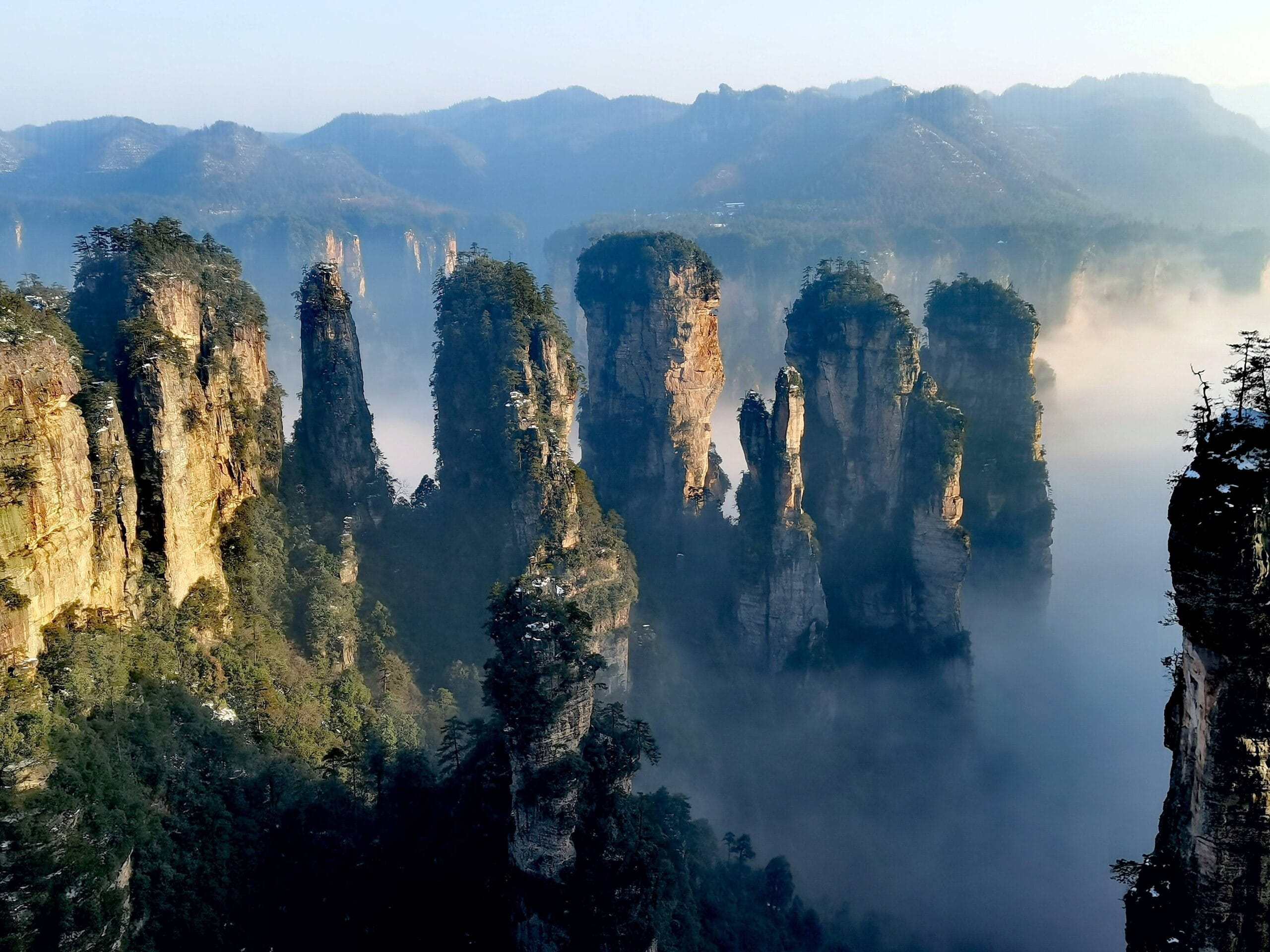
Unlike the Avatar-famous Yuanjiajie that draws massive crowds, Huangshizhai offers something increasingly rare in China’s tourist destinations: space to breathe and truly experience the landscape. This isn’t just another viewpoint—it’s a 16.5-hectare tabletop mountain surrounded by sheer cliffs, where every observation deck provides a unique perspective on Zhangjiajie’s 3,000+ sandstone pillars.
Quick Facts
Chinese Name: 黄石寨 (Huángshí Zhài)
Location: Central Zhangjiajie National Forest Park, Wulingyuan District
Elevation: 1,080-1,200 meters (3,540-3,937 feet)
Summit Area: 16.5 hectares (40.8 acres)
Loop Trail Length: 2.48-3.8 km depending on route
|Hiking Time: 2-3 hours for summit loop
Best For: Sunrise viewing, photography, fewer crowds
Accessibility: Cable car available (recommended for most visitors)
Table of Contents
History and Cultural Significance
The Legend of Huang Shigong
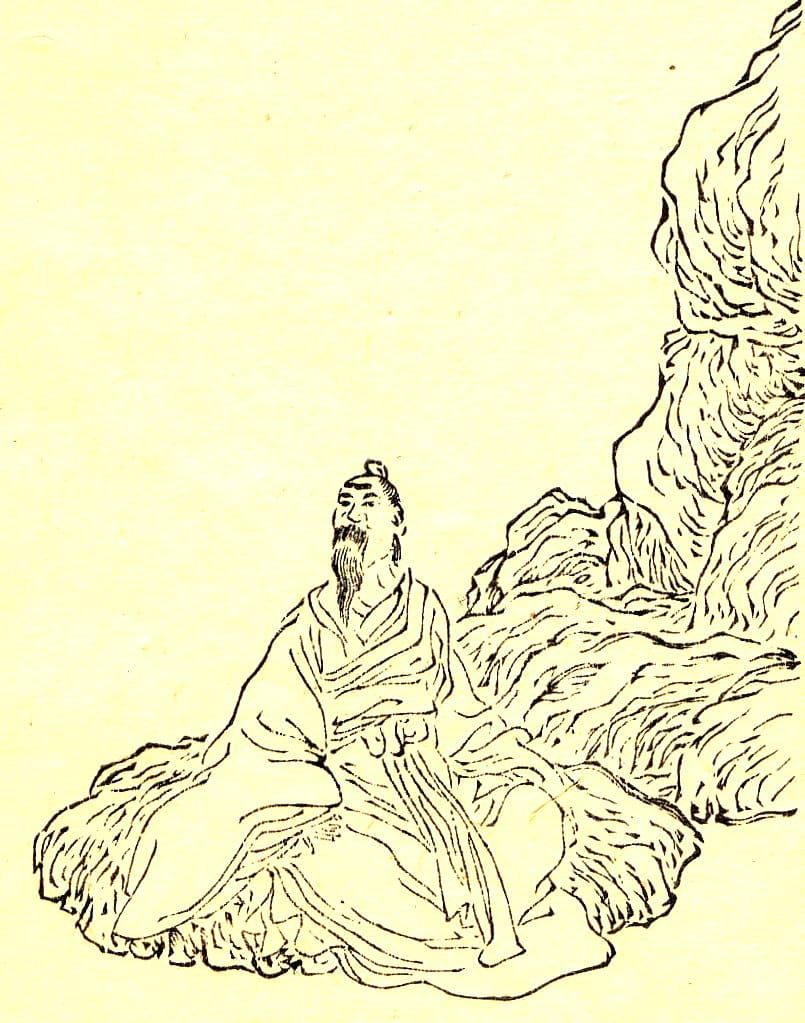
Huangshizhai’s name connects to one of China’s most fascinating historical figures. According to legend, Zhang Liang, a brilliant military strategist during the Western Han Dynasty (206 BCE – 8 CE), fled to these mountains after renouncing his position as prime minister. Pursued by imperial soldiers, Zhang Liang found refuge here thanks to his mentor, Huang Shigong—a semi-mythological Taoist hermit who lived during the 3rd century BCE.
Huang Shigong taught Zhang Liang the strategies that would later help Liu Bang establish the Western Han Dynasty. The treatise “Huang Shigong San Lue” became one of China’s Seven Military Classics. Local folklore claims Huang Shigong practiced alchemy on this mountain, which explains the site’s name: “Yellow Stone Stronghold.”
Why “Village” When It’s Not Actually a Village?
Don’t expect thatched roofs and residents. The Chinese term “zhai” (寨) historically referred to a fortified mountain stronghold—exactly what Huangshizhai resembles. Its flat summit surrounded by vertical cliffs creates a natural fortress. The few buildings you’ll see today serve tourists: shops, restrooms, and the Six Wonders Pavilion observation tower.
Why Huangshizhai Is Worth Your Visit
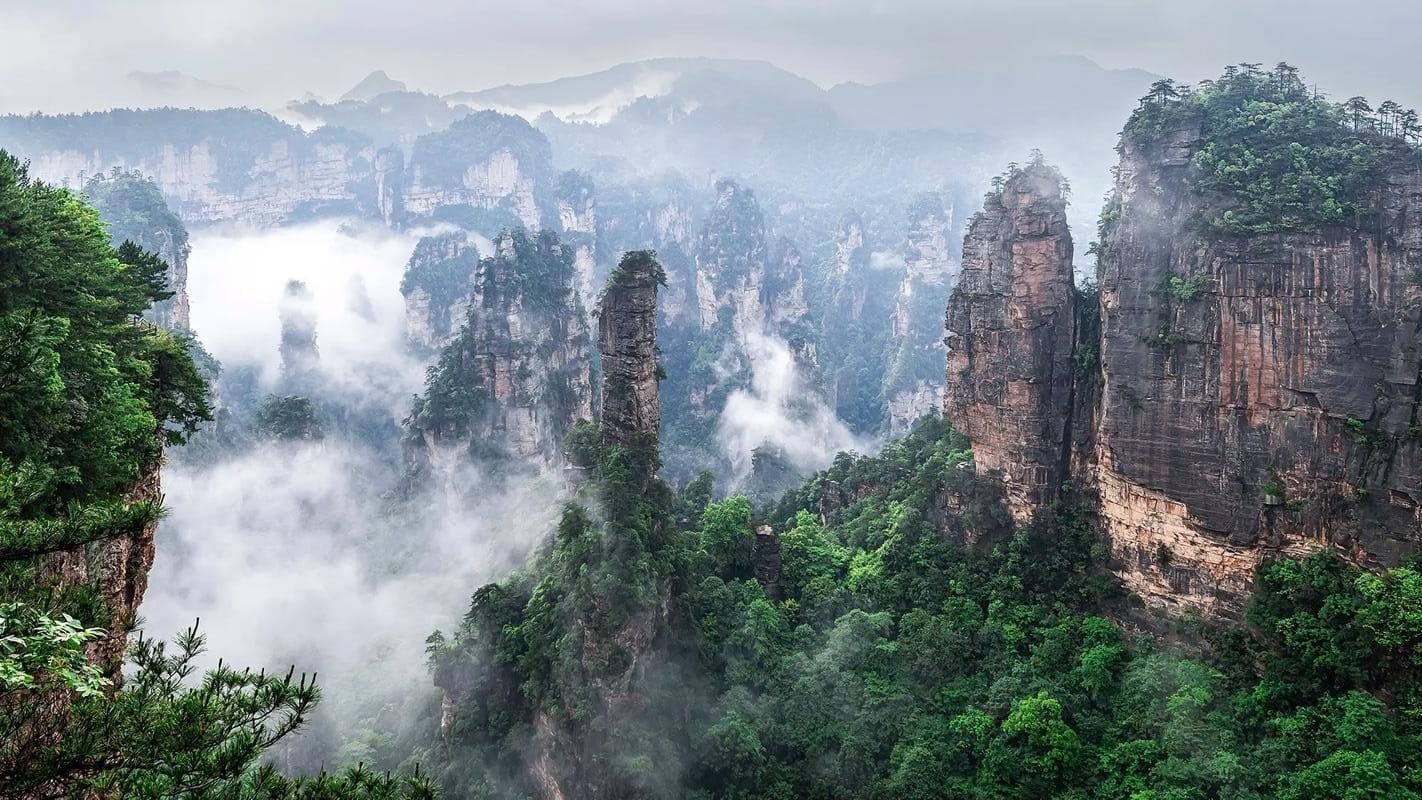
1. The Most Comprehensive Panoramic Views
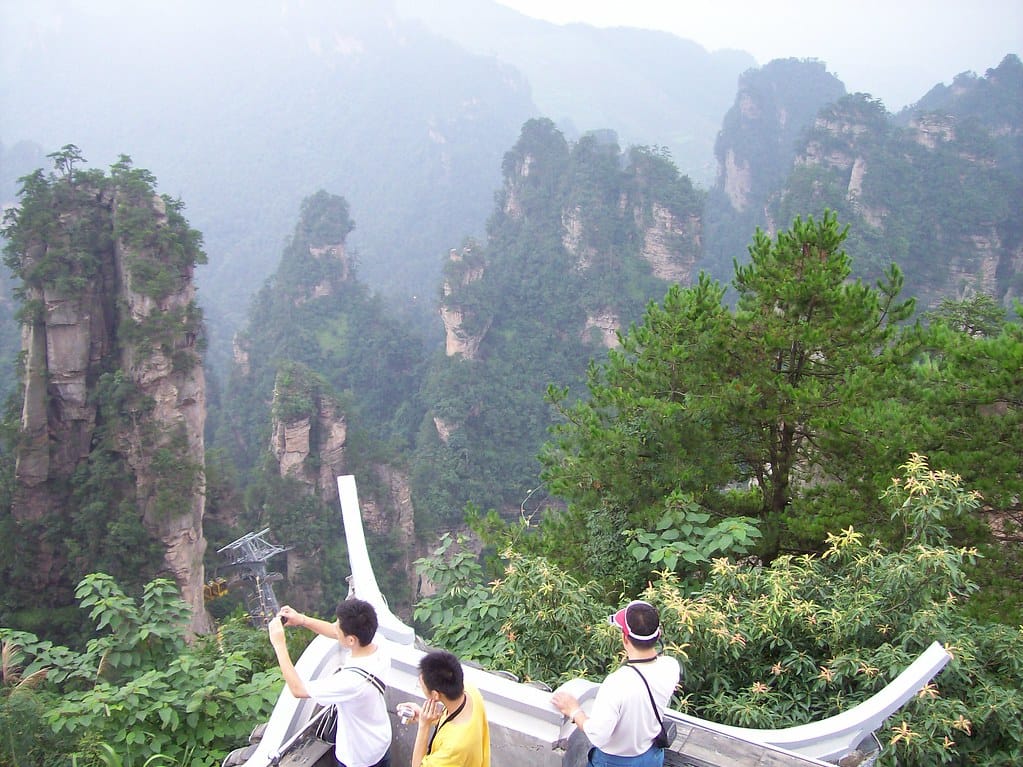
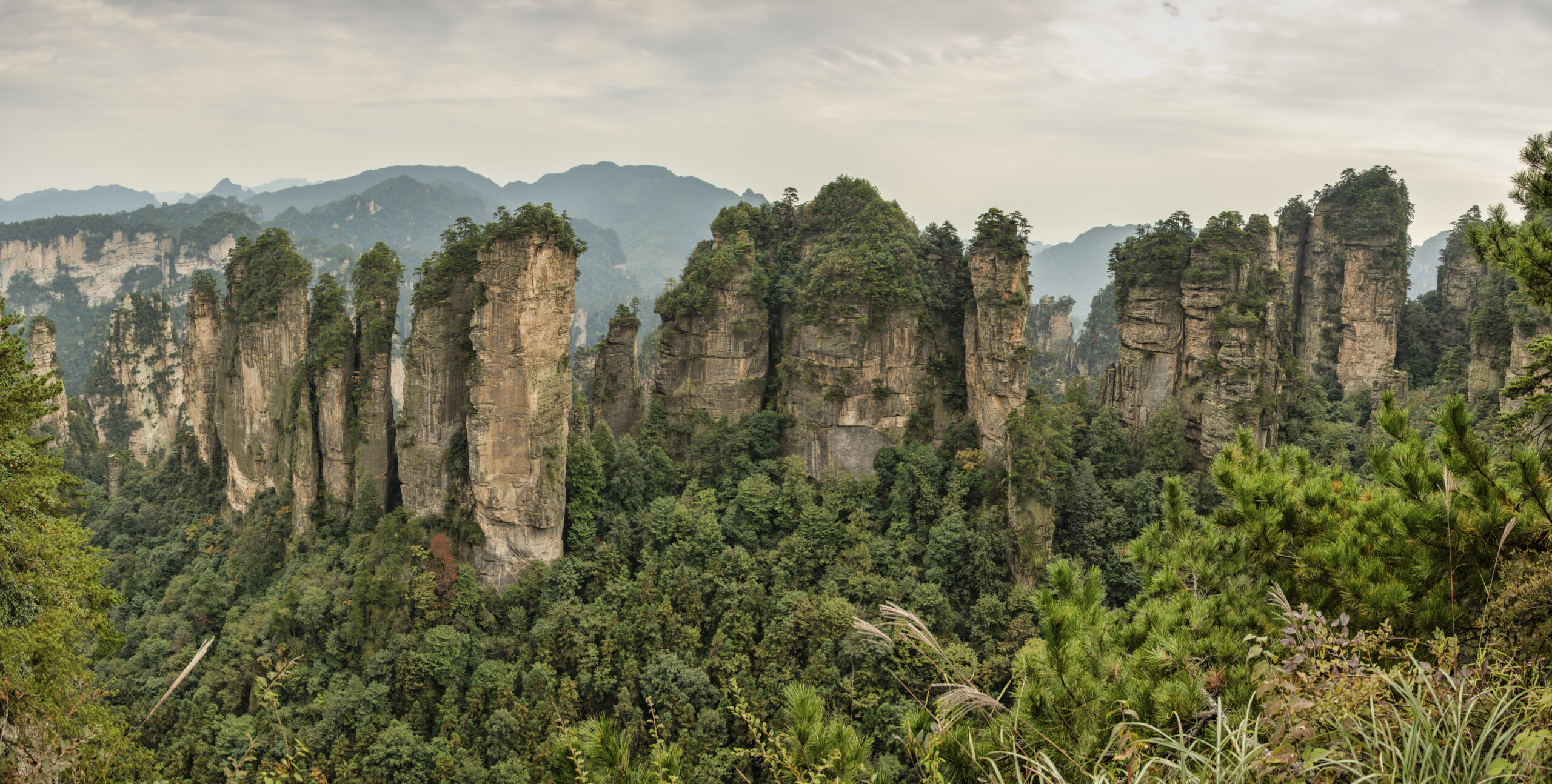
Huangshizhai is the largest observation deck in Zhangjiajie, offering horizontal sightlines to the surrounding peaks—not looking up or down, but directly across at eye level with the stone pillars. This perspective reveals the true scale and geological wonder of the quartz sandstone formations.
Unlike Yuanjiajie where you peer over railings into valleys, Huangshizhai’s plateau position lets you observe the entire peak forest ecosystem: how mist moves through valleys, how vegetation clings to vertical surfaces, and how light transforms the landscape throughout the day.
2. Significantly Fewer Crowds
During our site visit in 2026, we encountered approximately one-tenth the crowds found at Yuanjiajie’s Avatar Mountain viewing area. Multiple travelers report visiting on weekdays with minimal wait times for cable cars and peaceful summit experiences.
Why the difference? Most tour groups prioritize Yuanjiajie’s Avatar connections and the Bailong Elevator. Huangshizhai requires either hiking 3,878 steps or paying extra for cable car tickets—deterrents that work in favor of travelers seeking authentic experiences.
3. Superior Sunrise and Sea of Clouds Viewing
Huangshizhai’s eastern exposure and elevation make it exceptional for sunrise photography. The site is renowned as one of the best spots to watch the sunrise in Zhangjiajie, offering unobstructed views as morning light illuminates the stone pillars from the side—creating dramatic shadows and revealing the texture of the rock faces.
The plateau’s microclimate produces frequent “sea of clouds” phenomena, especially after rain. Stand above a layer of clouds with stone pillars piercing through like islands in a white ocean—the quintessential Chinese mountain landscape painting brought to life.
4. Unique Geological Features Not Found Elsewhere
Zhangjiajie’s sandstone pillars resulted from millions of years of water erosion on a massive quartz sandstone plateau. Huangshizhai represents an earlier stage in this erosion process—a “table mountain” or “fangshan” still in its geological youth. Over millennia, it too will erode into separate pillars like those surrounding it.
The UNESCO citation recognizes these formations as having seven times the pillar density of America’s Grand Canyon. Standing on Huangshizhai, you’re witnessing a landscape that exists nowhere else on Earth.
Highlights: What You’ll See on the Summit
Six Wonders Pavilion (Liuqi Pavilion)
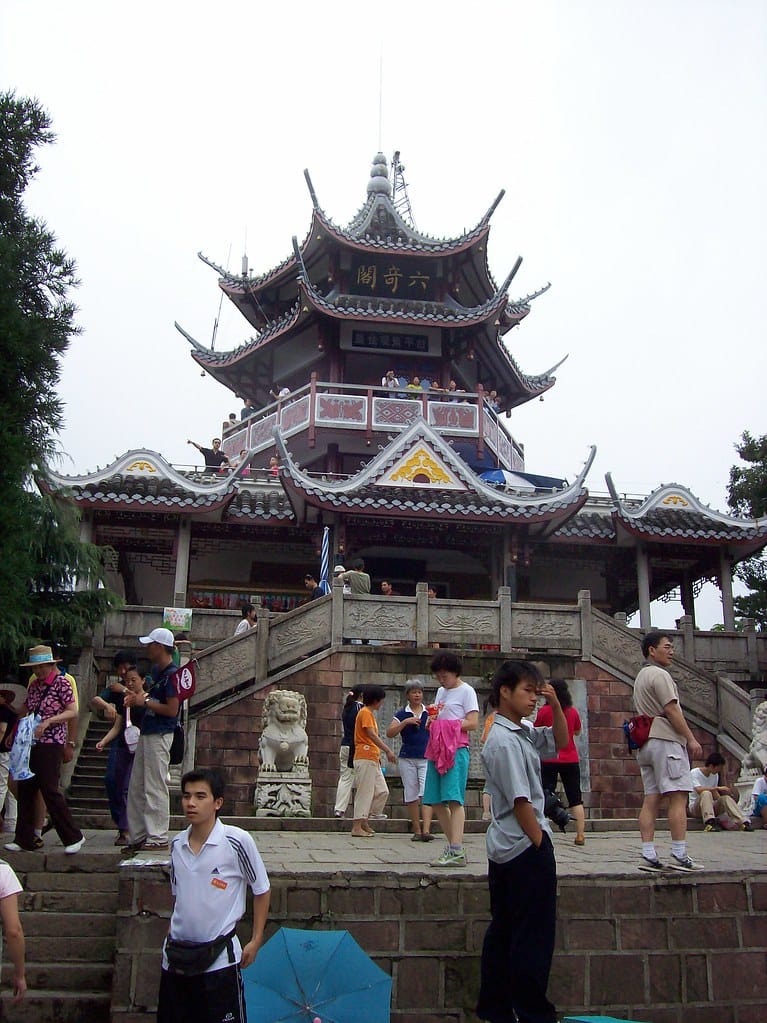
This three-story observation tower, completed in 1991, represents Huangshizhai’s highest viewpoint. The name references Zhangjiajie’s six natural wonders: mountains, waters, clouds, rocks, plants, and wildlife. From the top level, you get 360-degree views encompassing thousands of peaks.
Pro tip: Visit here at sunrise for the ultimate photo opportunity, then return during afternoon “golden hour” for completely different lighting.
Star-Picking Terrace (Zhaixing Tai)
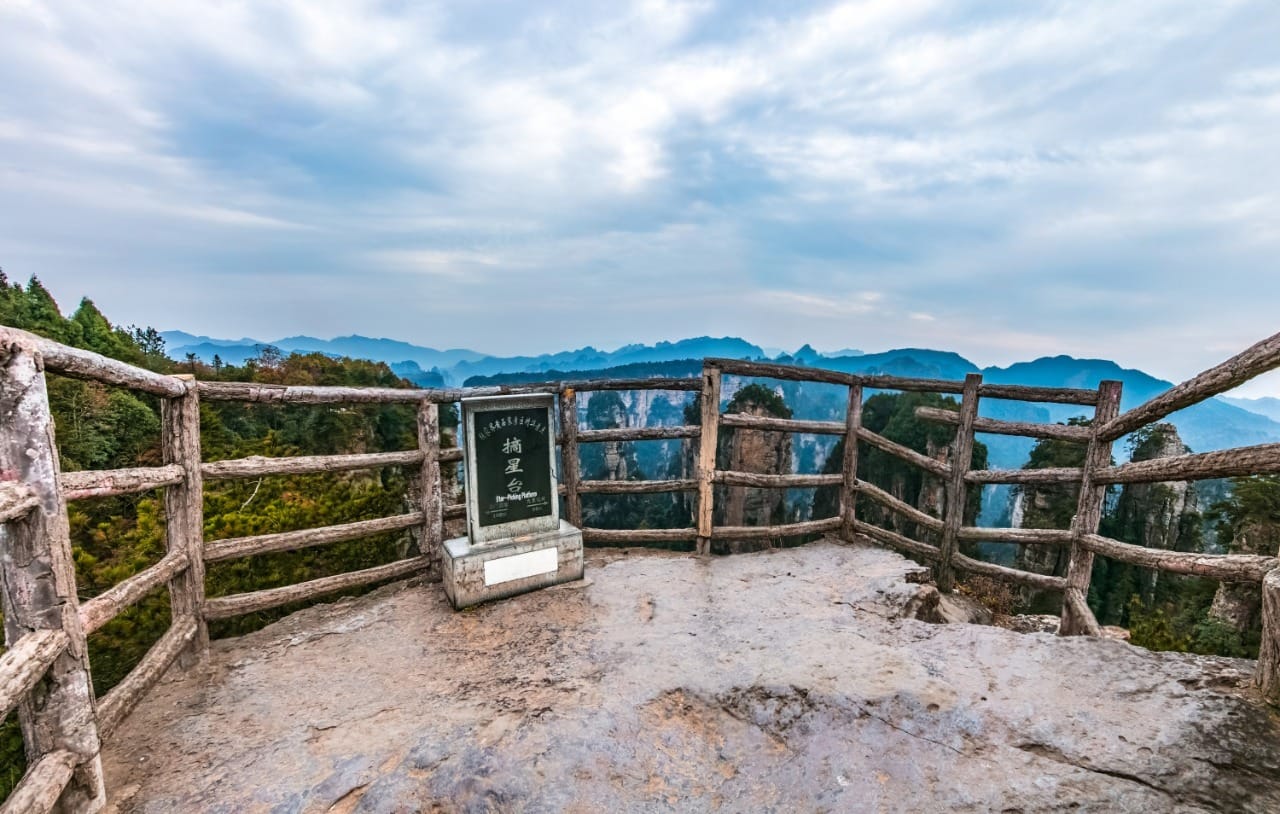
Two stacked sandstone slabs form this natural platform jutting out over a sheer drop, with a lone pine tree standing sentinel. The base measures roughly 20 square meters. The platform’s name comes from the sensation that on clear nights, stars feel close enough to pluck from the sky.
This viewpoint requires a strong stomach—you’re standing on rock suspended hundreds of meters above the valley with only iron railings between you and the abyss. But the perspective is unmatched: you see the full vertical scale of Zhangjiajie’s pillars.
Heavenly Book Treasure Box (Tianshu Baoxia)
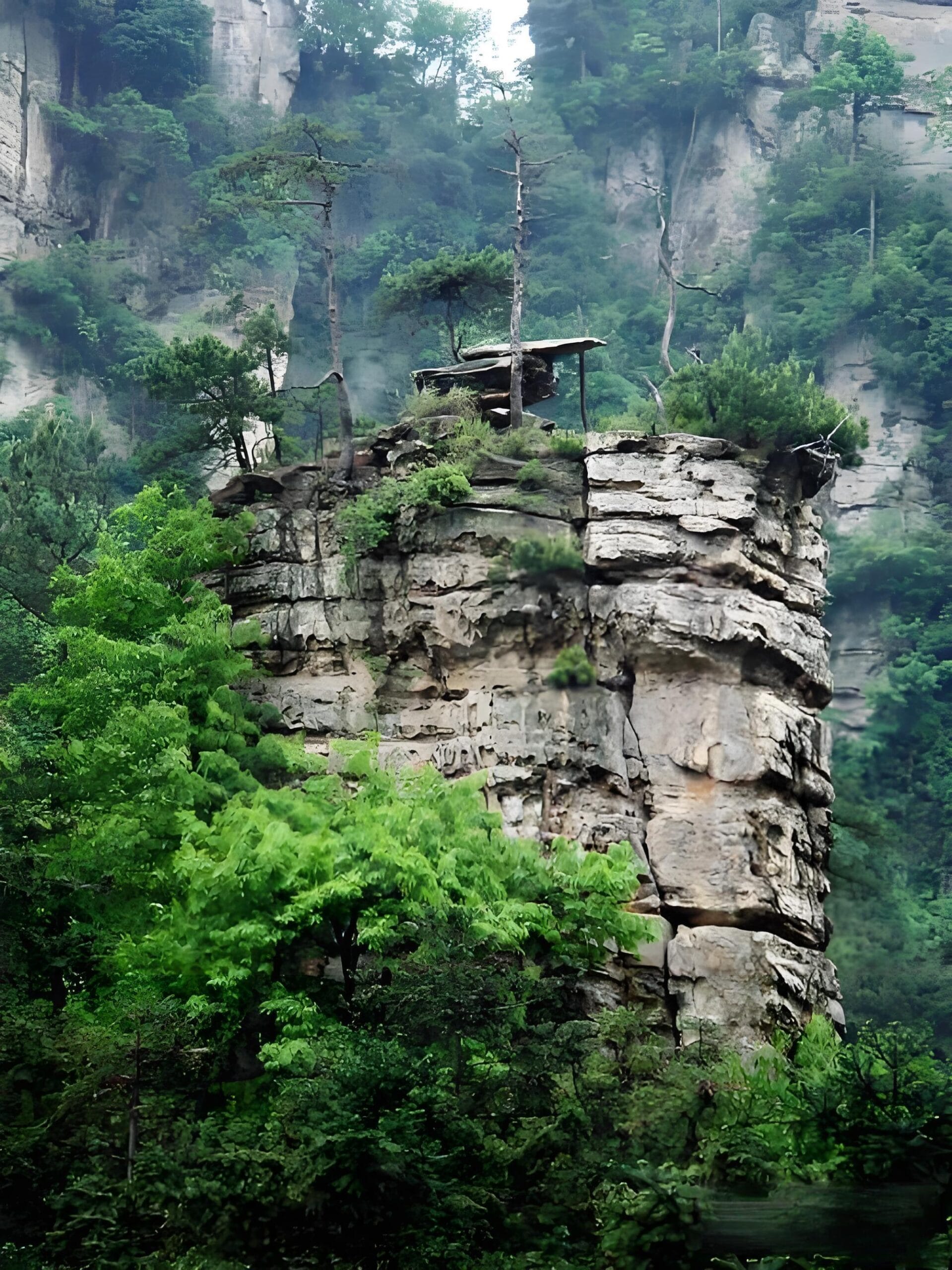
One of Zhangjiajie’s most photogenic rock formations: a 20-meter-tall cylindrical stone column topped with a perfectly balanced slab rock. The slab appears half-opened like an ancient book chest, with five pine trees growing from the top. Local legend claims this “heavenly book” belonged to the bandit king Xiang Wang.
The formation demonstrates the precision of natural erosion—the slab measures approximately 3 meters thick yet balances on a narrower base. Geological surveys confirm it’s stable, but it looks impossibly precarious.
Five Finger Peak (Wuzhi Feng)
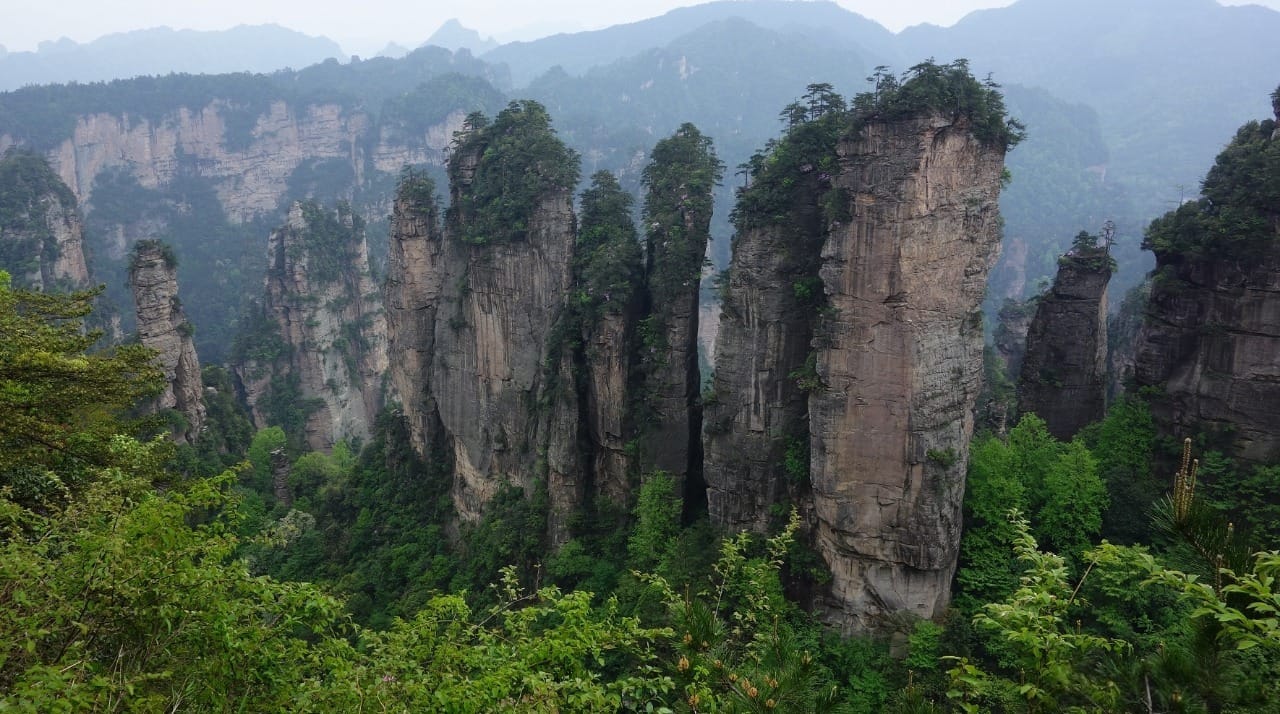
Five stone pillars rise side-by-side from a single base, each topped with vegetation. From certain angles, they resemble an upright hand with fingers extended skyward. The tallest “finger” reaches approximately 100 meters high.
Mounds Left From Heaven Bridge (Tianqiao Yidun)
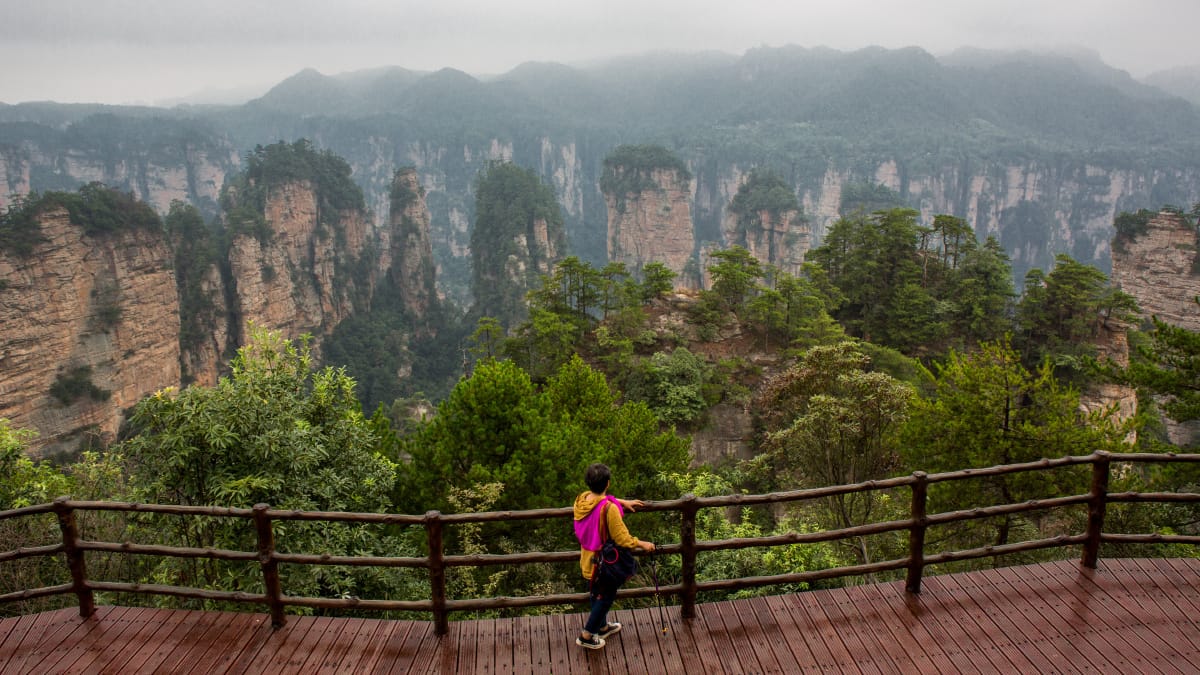
Six nearly identical oval stone pillars stand in a 3,000-meter-long valley, their flat tops and uniform spacing resembling bridge piers with the bridge itself long vanished. Chinese geologists theorize these once supported a continuous stone plateau—the “bridge”—that eroded away over millions of years.
This attraction perfectly illustrates Zhangjiajie’s ongoing geological transformation. Huangshizhai’s current plateau will eventually erode into similar isolated pillars.
Monkey General Reviewing Troops
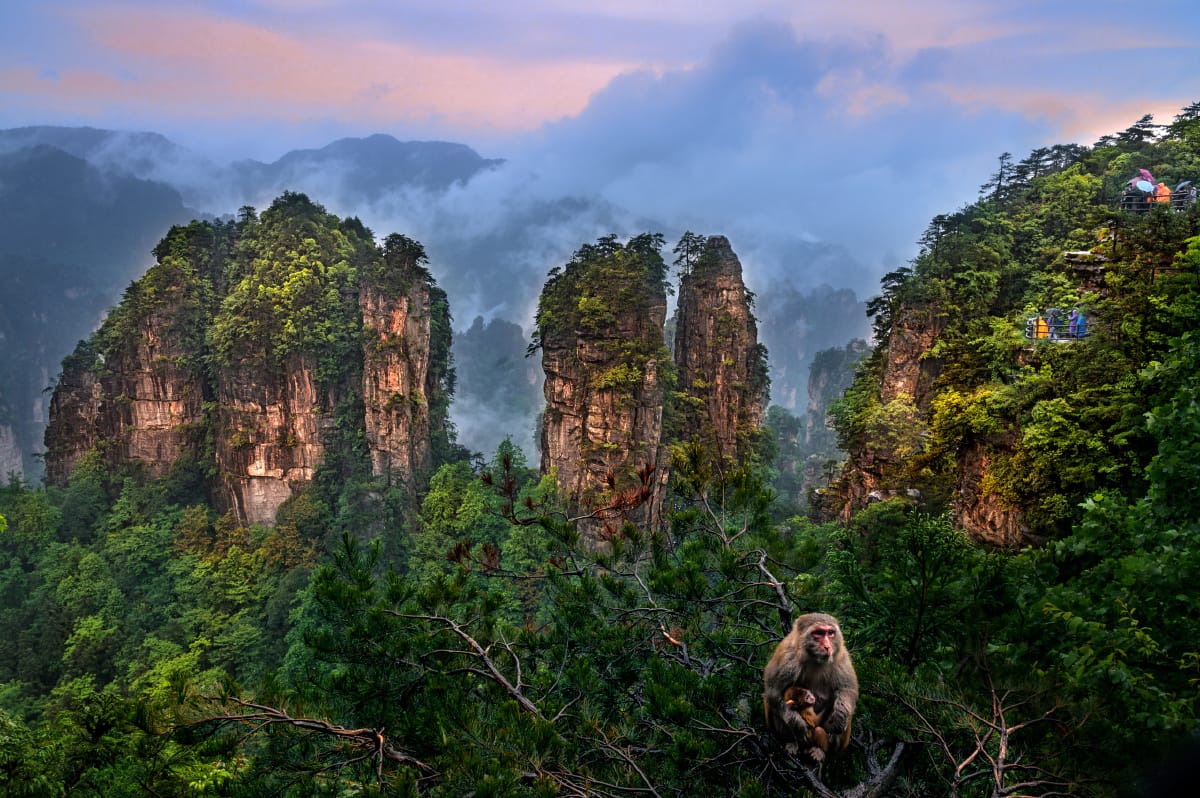
A rock formation resembling a monkey’s profile overlooks smaller peaks arranged like assembled soldiers. The “monkey” stands about 20 meters tall with clear features: forehead, nose, mouth. Chinese tourists often photograph this formation because it evokes the Monkey King from “Journey to the West.”
Natural Southern Heavenly Gate (Nantianmen)
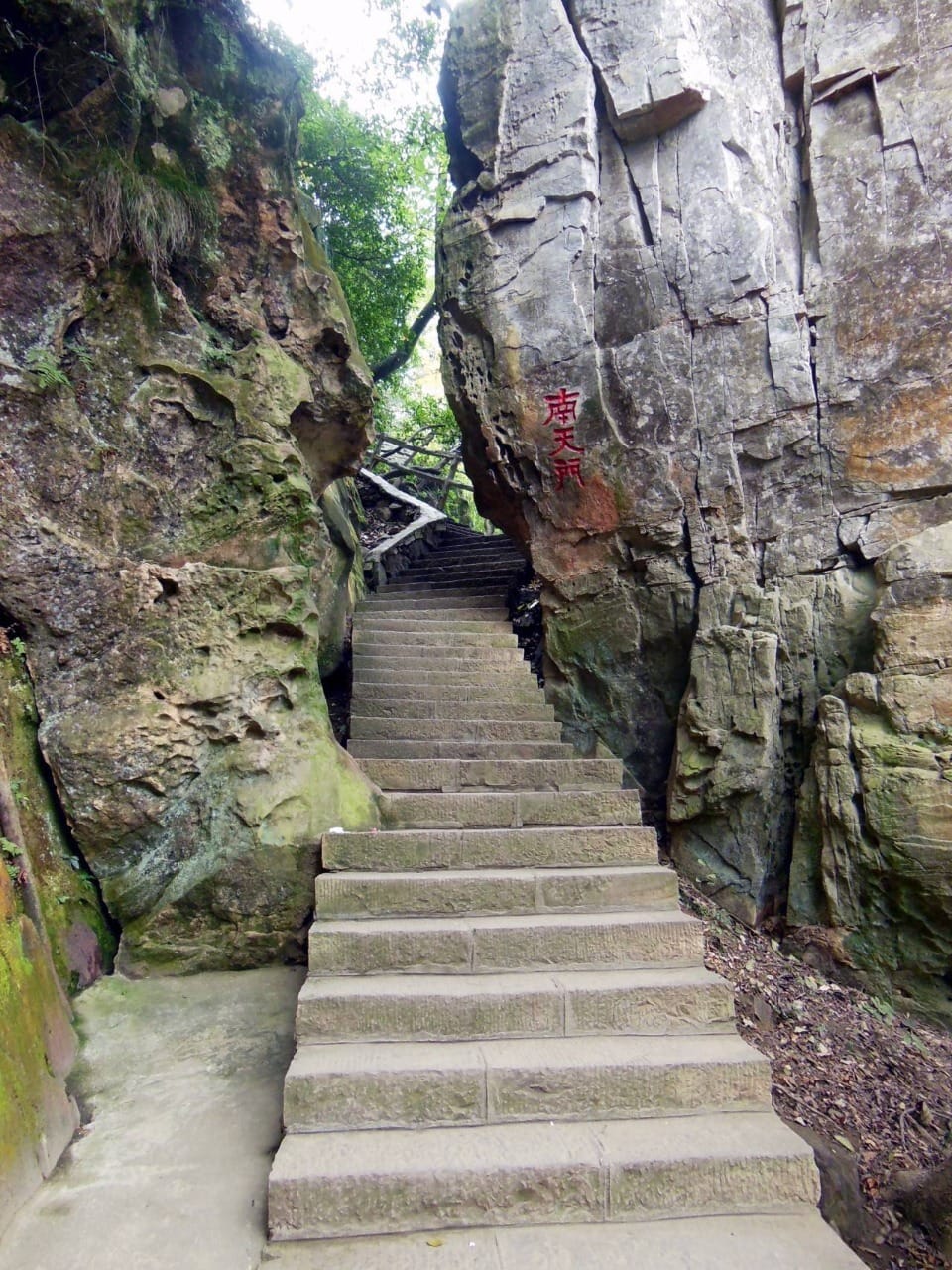
A narrow passageway formed by a large rock leaning against a stone wall creates a natural gate along the hiking trail. Wild trees grow on both sides. After passing through, the trail opens to expansive cloud-filled views—hence the name suggesting you’re entering the heavenly realm.
READ ALSO: Unveiling the Top 10 Filming Locations of Avatar in Zhangjiajie
Special Experiences at Huangshizhai
Wildlife Encounters: The Macaque Reality
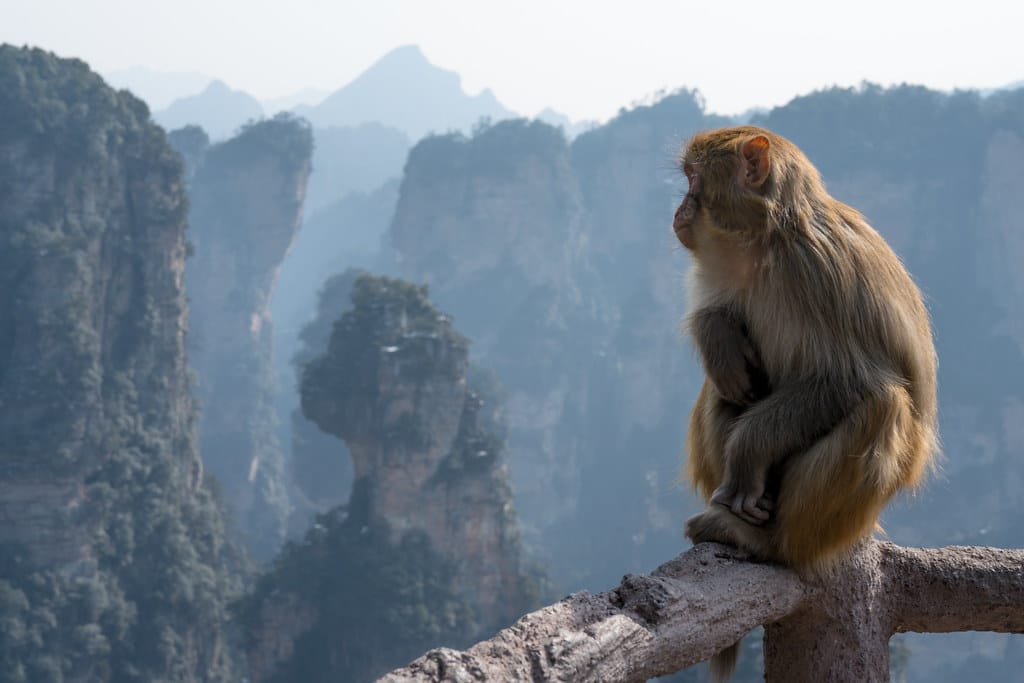
Huangshizhai hosts Zhangjiajie’s largest macaque monkey population. Unlike zoo monkeys behind glass, these are wild animals living in their natural habitat—which means they’re bold, smart, and entirely focused on food acquisition.
Our team’s observations from multiple visits:
- Monkeys congregate near the cable car stations and along the main summit loop where food is most likely
- They’ve learned to identify plastic bags, backpacks, and even specific food packaging
- One traveler reported having a steamed bun snatched before even entering the park gates
- The monkeys won’t typically attack unprovoked, but will pursue anyone they’ve seen with food
How to coexist safely:
- Keep ALL food sealed in your backpack’s interior pockets
- Never feed monkeys—it reinforces aggressive behavior and violates park rules
- If approached, don’t run. Stand still and show empty hands
- Don’t make direct eye contact, which monkeys interpret as aggression
- If a monkey grabs your food, let it go. Your safety matters more than a snack
One hiker witnessed a girl being chased by a macaque that wouldn’t relent until she emptied her entire snack bag. These animals weigh 10-15 kg and have sharp teeth—respect their space.
Photography Paradise: Best Shots and Techniques
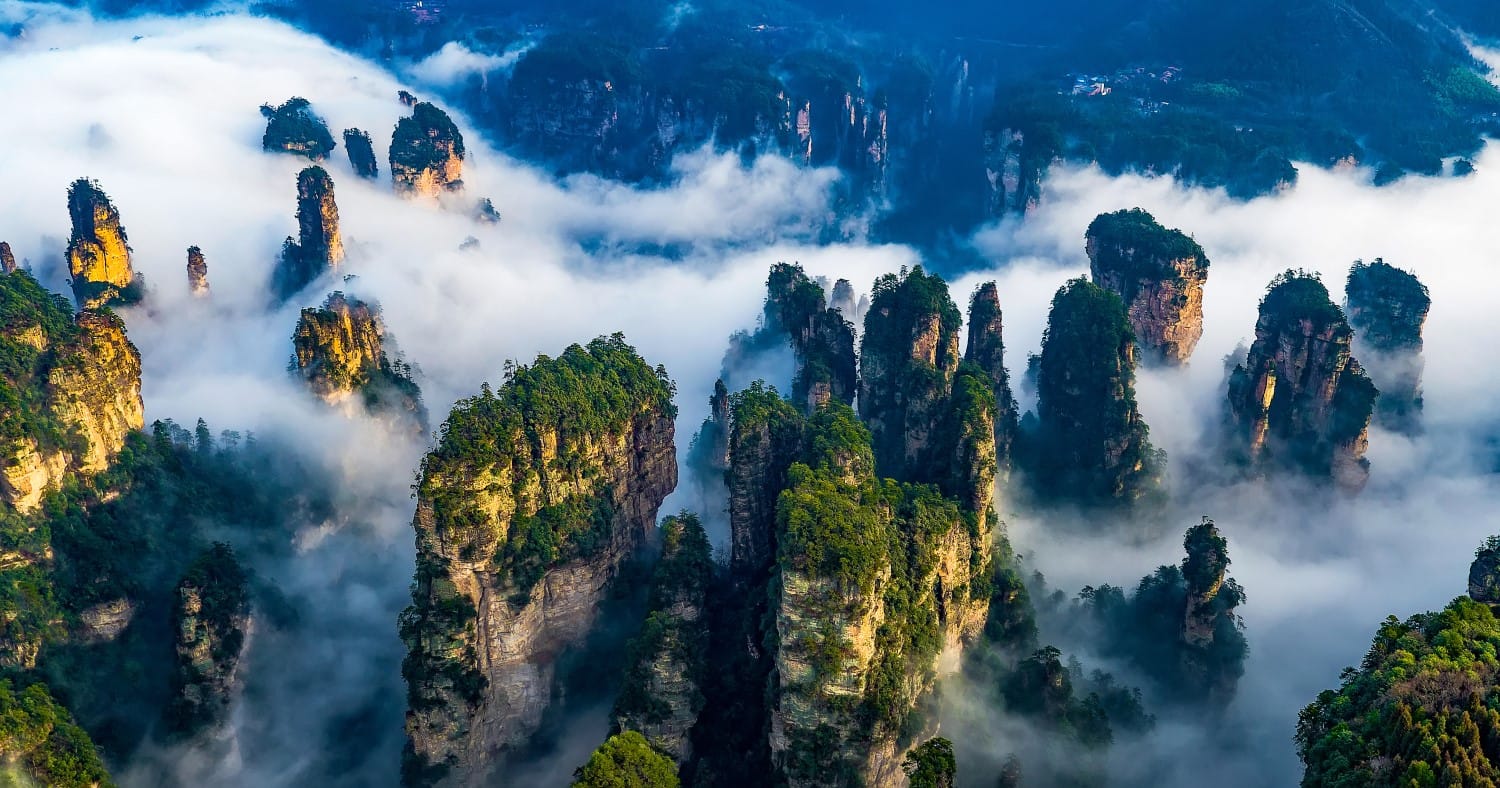
Huangshizhai offers Zhangjiajie’s most versatile photography platform. Based on thousands of visitor photos and our professional photographer’s analysis:
Golden hour magic (6:30-8:30 AM, 4:30-6:30 PM):
- Side-lighting reveals every texture on the rock faces
- Long shadows add depth and drama
- Mist often lingers, creating atmospheric layers
Midday challenges and opportunities:
- Harsh overhead light flattens the landscape
- Solution: Focus on details—pine trees, rock textures, nearby formations
- Use polarizing filters to deepen the blue sky and cut haze
Weather considerations:
- Sunny days provide clear views but less atmospheric mystery
- Post-rain conditions often produce the famous “sea of clouds”
- Light mist adds ethereal quality; heavy fog obscures everything
Composition tips:
- Use foreground pine trees to frame distant peaks
- Include railings or pavilion corners for scale reference
- Shoot vertical panoramas to capture the full height of the pillars
- During crowds, zoom in on isolated formations rather than fighting for the standard viewpoint
The Sunrise Experience: Is It Worth the Effort?
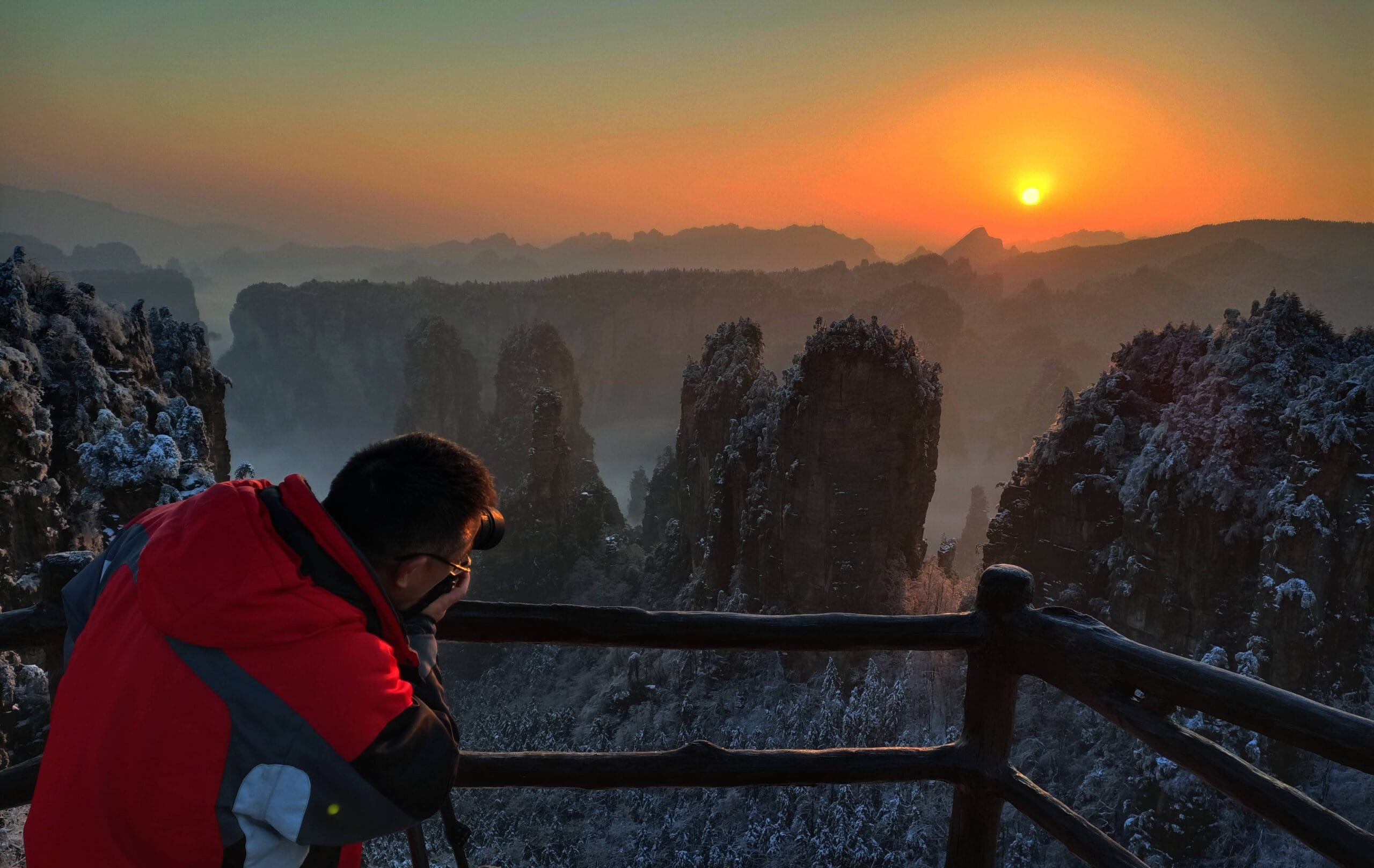
Catching sunrise from Huangshizhai requires either staying overnight on the mountain (limited options) or arriving at the South Gate when it opens at 7:00 AM. Here’s the reality check:
Spring/Summer (March-September): Sunrise occurs 5:30-6:30 AM—you’ll likely miss the actual sunrise but catch the morning golden hour, which is equally spectacular.
Autumn/Winter (October-February): Sunrise happens 6:30-7:30 AM—more feasible to witness if you’re staying in Wulingyuan town and catching the first park shuttle.
What makes it worthwhile: The summit is nearly empty early morning. The changing light transforms the landscape every five minutes. Mist often pools in valleys overnight, creating the sea-of-clouds phenomenon.
Practical challenge: Cable cars typically start operating at 7:00 AM. Hiking up in predawn darkness isn’t recommended—the trail is steep, uneven, and poorly lit.
How to Visit Huangshizhai
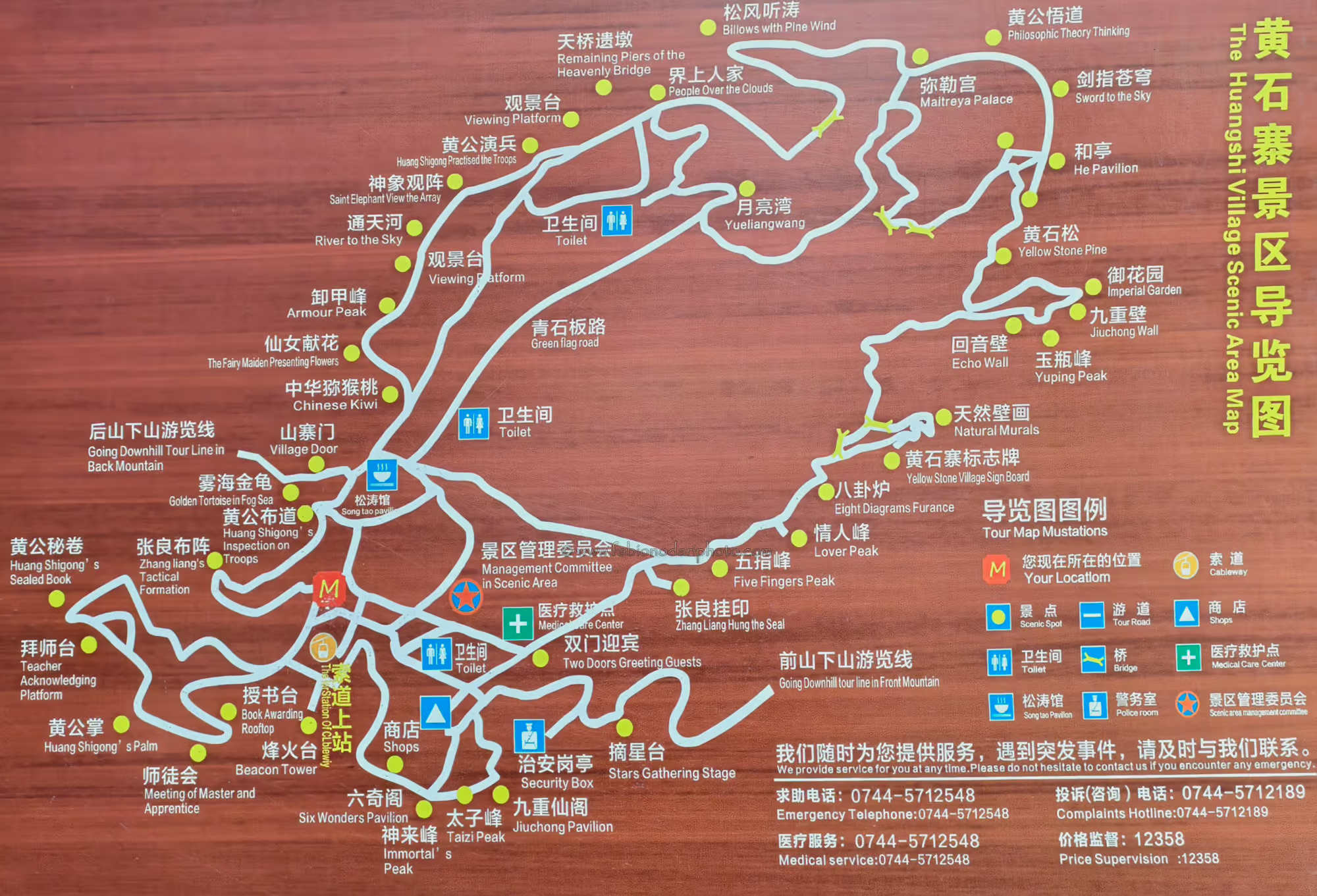
Getting to the Trailhead/Cable Car Station
Step 1: Reach Zhangjiajie National Forest Park South Gate
From Zhangjiajie city center (approximately 30 km, 1 hour):
- Direct bus from Zhangjiajie Central Bus Station (next to railway station)
- Buses depart approximately every 10-15 minutes when full
- Cost: ¥13-20 RMB per person
- Operating hours: 7:00-17:00 from city; last return 17:00-18:00 from park
- Alternative: Private car/taxi costs ¥100-150 RMB one-way
Step 2: South Gate to Huangshizhai Base
After purchasing your park entrance ticket, walk 10 minutes through the entrance area to Big Oxygen Bar Square (大氧吧广场). Free park shuttle buses depart every 5-10 minutes to the Huangshizhai cable car lower station—a 5-minute ride.
Alternatively, walk 10-15 minutes following signs to reach the cable car station or hiking trail entrance.
DIG DEEPER: Zhangjiajie Itinerary Guide: From 1 Day to 7 Days
The Detailed Hiking Log: Conquering the 3,878 Steps
For hikers who want to tackle Huangshizhai on foot, here’s what the journey actually entails—not tourism brochure fluff, but observations from our team’s multiple ascents and real hiker experiences.
Southern Route: Big Oxygen Bar Square to Star-Picking Terrace
This is the most popular hiking route, starting right after the South Gate entrance.
Checkpoint | Elevation | Time from Start | Cumulative Steps | What to Expect |
|---|---|---|---|---|
Big Oxygen Bar Square (起点) | ~750m | 0:00 | 0 | Flat square area, last chance for supplies, restrooms |
Southern Heavenly Gate (南天门) | ~850m | 0:20 | ~650 steps | First steep section begins, natural rock gate formation |
Mid-point Rest Area | ~950m | 0:45 | ~1,800 steps | Small pavilion, water available (¥10), legs starting to burn |
Steep Section Start | ~1,000m | 1:00 | ~2,400 steps | Gradient increases to 60+ degrees, handrails essential |
Near-Summit Platform | ~1,080m | 1:15 | ~3,400 steps | Forest opens up, first glimpse of stone pillars |
Star-Picking Terrace (终点) | ~1,092m | 1:20-1:30 | 3,878 steps | Summit plateau reached, first major viewpoint |
Northern Route: Dragon and Phoenix Temple to Golden Turtle in Fog Sea
Less crowded alternative with slightly different scenery.
Checkpoint | Elevation | Time from Start | Cumulative Steps | What to Expect |
|---|---|---|---|---|
Dragon and Phoenix Temple | ~760m | 0:00 | 0 | Temple area, occasional Buddhist pilgrims |
Forest Path Section | ~840m | 0:18 | ~580 steps | Gentler initial climb through dense pine forest |
Monkey Territory | ~920m | 0:40 | ~1,500 steps | High macaque activity—secure all food |
Vertical Climb Section | ~1,010m | 1:00 | ~2,800 steps | Steepest section of northern route |
Golden Turtle Rock Area | ~1,085m | 1:10 | ~3,600 steps | Near summit, connects to main plateau loop |
What the Numbers Don’t Tell You
The Reality Check:
- Average steps are 20-25cm high, but some reach 40cm—requiring high knee lifts
- Handrails are present throughout but can be slippery when wet
- The first 1,000 steps feel manageable; steps 1,500-2,500 are the toughest psychologically
- After 2,500 steps, your body adapts—or you’re too tired to care
- Descending takes 30-40% less time but impacts knees significantly more
Pacing Strategy from Our Guides:
- Stop every 500 steps for 2-3 minutes (ignore impatient tourists)
- Hydrate 100ml water every 15 minutes
- Use trekking poles on descent—your knees will thank you tomorrow
- Start no later than 8:00 AM to avoid midday heat
Who Actually Hiked vs. Cable Car (April 2024 observations):
- Chinese tourists: ~15% hiked up, ~35% hiked down
- International tourists: ~40% hiked up, ~50% hiked down
- Age group 20-35: ~60% hiked at least one direction
- Age group 50+: ~5% hiked up, ~15% hiked down
Cable Car vs. Hiking: Making the Choice
Cable Car Option
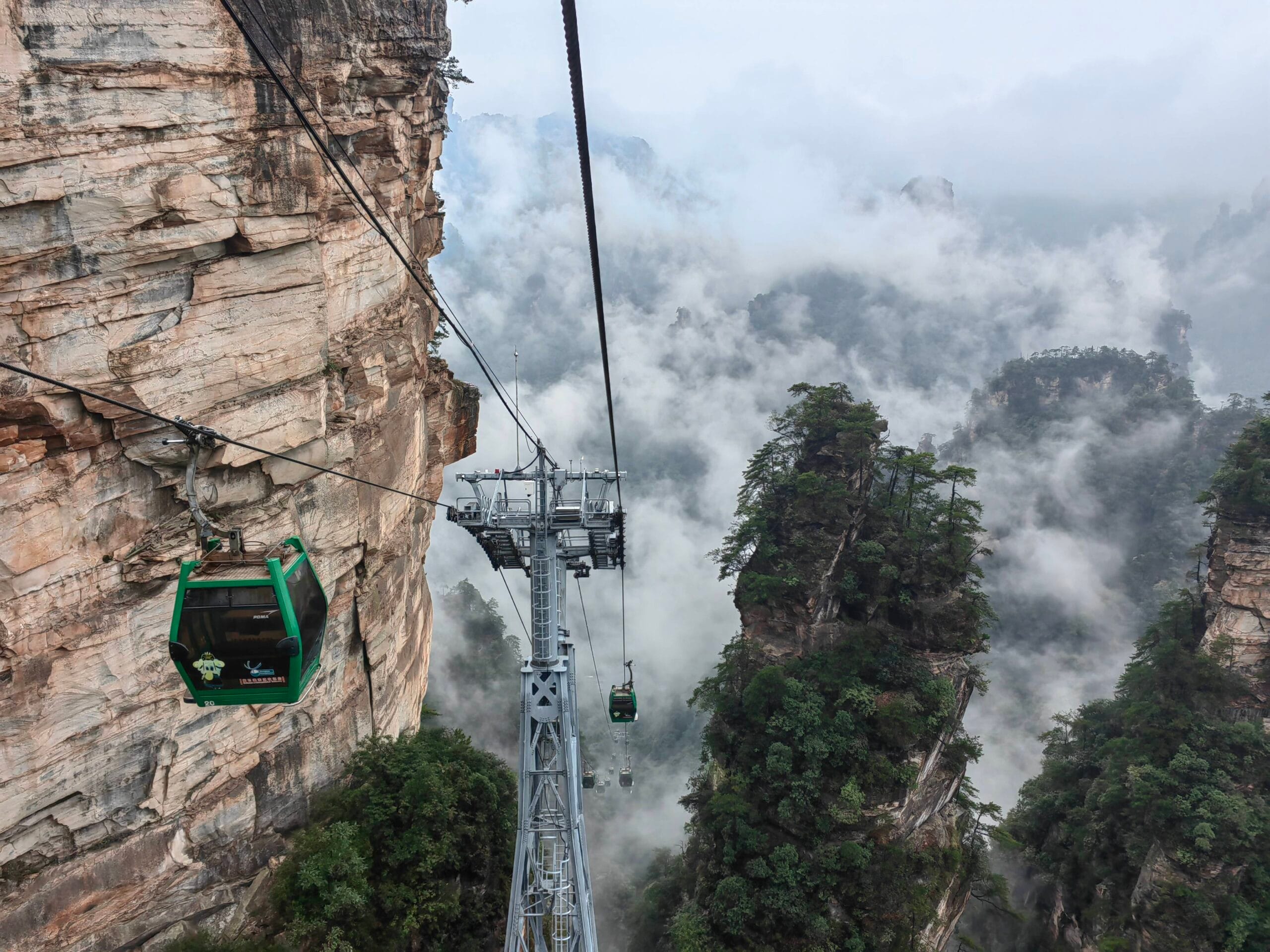
Detail | Information |
|---|---|
Operating Hours | 7:00-17:30 (weather dependent) |
Duration | 8-10 minutes one-way |
Distance Covered | Approximately 1 km vertical |
One-Way Ticket | ¥65 RMB (¥33 for children under 18, seniors 60+) |
Round-Trip Ticket | ¥118 RMB (some sources show ¥115) |
Capacity | 8 passengers per cabin |
Special Feature | Some cabins have glass floors |
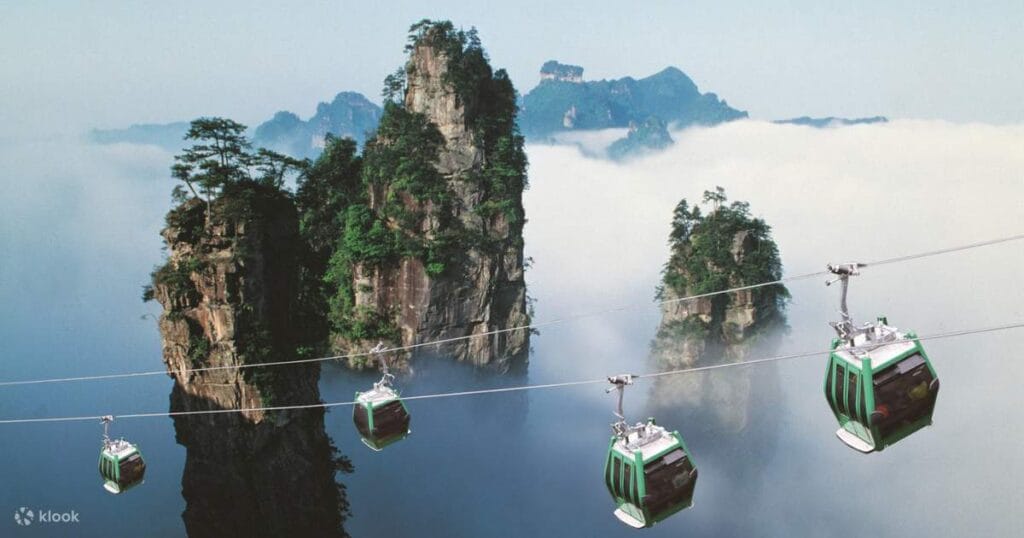
The cable car ascends through and above the forest canopy, offering spectacular aerial views of the stone pillars. Built in 1997, the Huangshizhai cableway was China’s first reciprocating gondola-type cable car and was recognized as one of China’s “Top 10 Cableways” in 2005.
When to choose cable car:
- You have limited time (saves 2-4 hours round-trip)
- Physical limitations or joint concerns
- You want to maximize summit exploration time
- Weather is questionable (hiking trails become slippery when wet)
Hiking Option
Detail | Information |
|---|---|
Distance | 3.2 km (2 miles) to summit |
Elevation Gain | Approximately 430 meters |
Steps | 3,878 stone steps |
Duration | 1.5-2.5 hours ascending; 1-1.5 hours descending |
Difficulty | Moderate to challenging |
Two Routes | Northern and southern trails (both converge at summit) |
The southern trail from Big Oxygen Bar Square to Star-Picking Terrace takes approximately 1 hour 20 minutes. The northern route from Dragon and Phoenix Temple (Longfeng An) to Golden Turtle in Fog Sea requires about 1 hour 10 minutes.
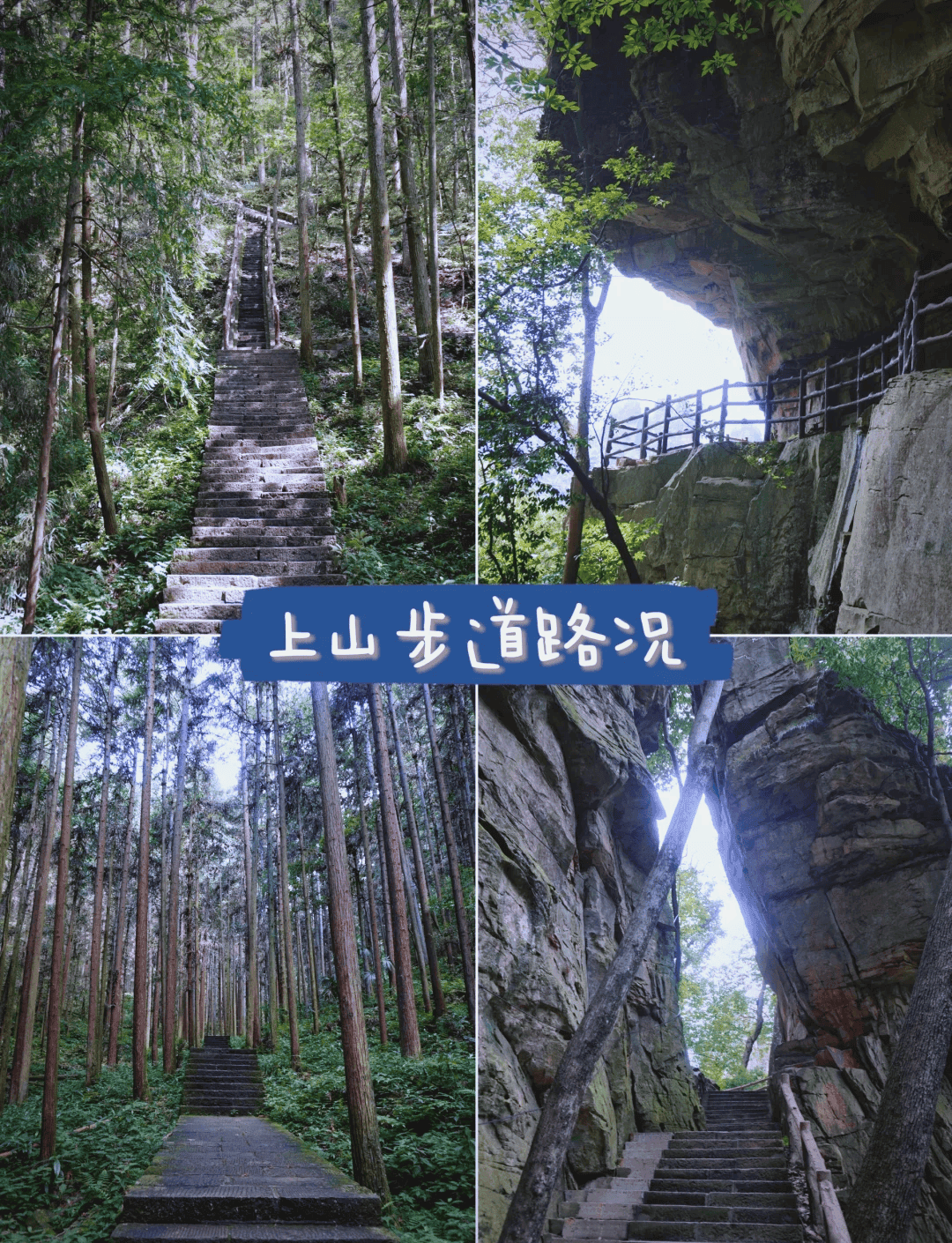
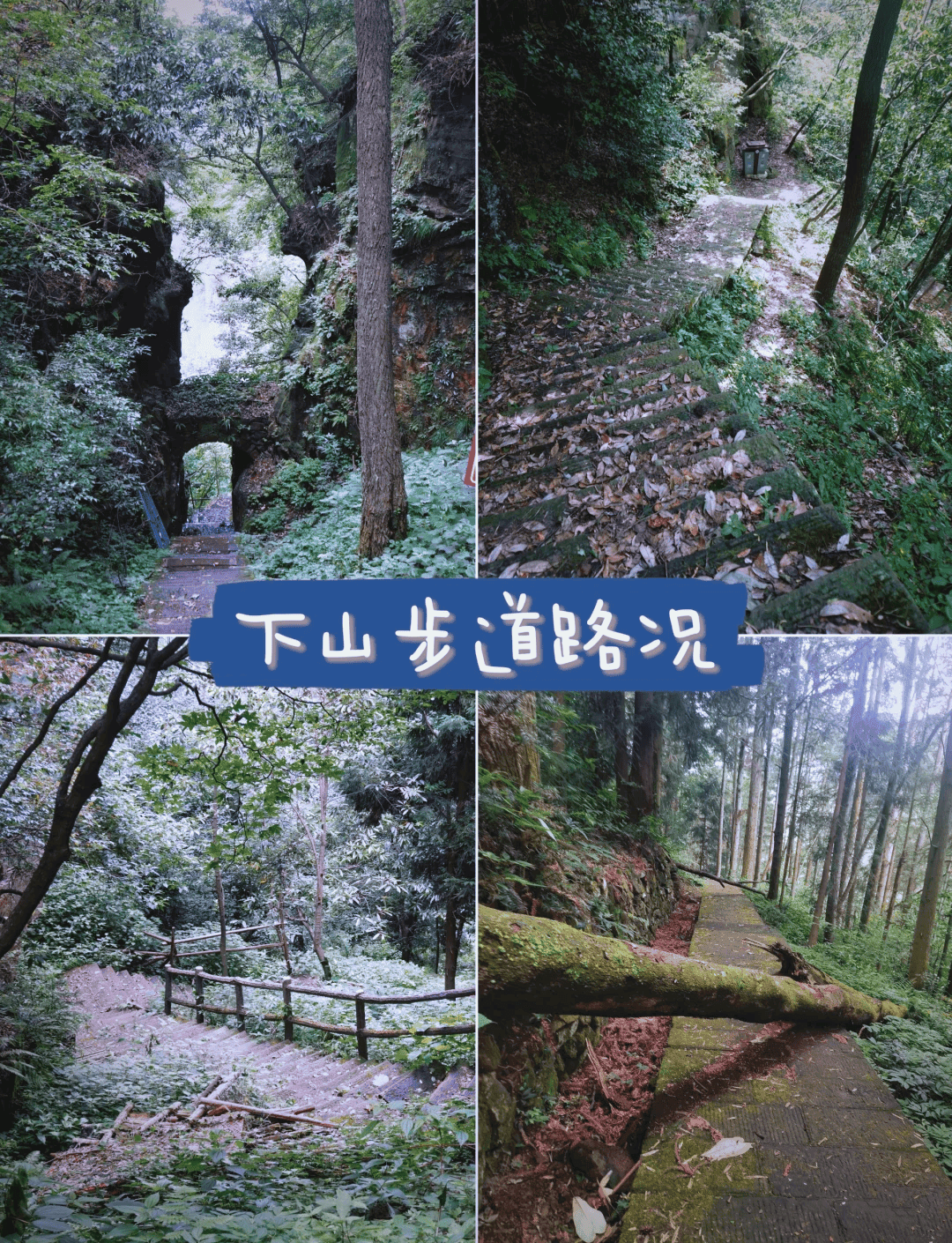
Trail characteristics:
- Well-maintained stone steps throughout
- Significant portions steep (some sections 60+ degrees)
- Passes through lush forest—excellent for nature observation
- Less visually dramatic than the cable car route
- Encounters with monkeys more likely (they hang out near trails)
When to choose hiking:
- You’re physically fit and enjoy the journey
- You want to save ¥65-115 RMB per person
- You’re interested in forest ecology and plant identification
- You’re visiting during cooler months (April-May, September-October)
Important note: One traveler taking the cable car up and hiking down reported the descent taking 70 minutes—a popular compromise that saves energy for summit exploration.
Summit Loop Routes
Once on the plateau, two circular routes explore the viewpoints:
Small Loop (Recommended for time-limited visitors):
- Distance: 2.48 km
- Duration: 1-1.5 hours
- Highlights: Six Wonders Pavilion, Star-Picking Terrace, Five Finger Peak, Heavenly Book Treasure Box
Large Loop (Recommended for thorough exploration):
- Distance: 3.8 km
- Duration: 2-2.5 hours
- Additional highlights: All small loop sights plus Mounds Left From Heaven Bridge, Southern Heavenly Gate, Monkey General Reviewing Troops
Both routes are well-marked with signs in Chinese and English. The paths are paved or stepped, with railings at all viewpoints. Even the large loop rarely feels crowded—you can often have entire sections to yourself.
Best Time to Visit Huangshizhai
Seasonal Breakdown
Spring (April-May): Peak Conditions
Weather: 12-22°C, moderate rainfall
- Wildflowers bloom across the summit in late April
- Post-rain days produce the best sea-of-clouds phenomena
- Pleasant hiking temperatures with fewer crowds than summer
- Occasional foggy days can obscure views entirely
Summer (June-August): Hot and Crowded
Weather: 20-32°C, highest rainfall
- The park’s peak season brings largest crowds
- Misty atmosphere from humidity and rain creates ethereal beauty
- Early morning visits essential to beat heat and crowds
- Waterfalls in surrounding areas at maximum flow
- Bring extra water—limited facilities on the summit
Autumn (September-October): Optimal Window
Weather: 15-25°C, less rainfall, clearest skies
- The best times to visit are September and October, providing comfortable weather and fewer crowds
- Fall foliage adds color to the green pine forests
- Clearest atmospheric conditions for photography
- Post-Golden Week (first week of October) offers the best crowd-to-weather ratio
Winter (November-February): Quiet and Challenging
Weather: 0-12°C, occasional snow
- Fewest tourists—sometimes you’ll have viewpoints entirely to yourself
- Snow-covered pillars create a monochrome landscape
- Cable car may close during severe weather
- Icy conditions make hiking dangerous
- Bring serious cold-weather gear—wind chill is significant
Time of Day Matters
Early Morning (7:00-9:00 AM):
- Best lighting for photography
- Highest chance of encountering sea of clouds
- Minimal crowds
- Cooler temperatures (important in summer)
Midday (11:00 AM-2:00 PM):
- Harshest light for photography
- Peak crowd period (if crowds exist)
- Warmest temperatures
- Best time if you want company and don’t mind waiting
Late Afternoon (3:00-5:00 PM):
- Golden hour lighting returns
- Crowds thinning as day-trippers depart
- Risk of running out of daylight if you hike down
- Cable cars stop at 17:30—don’t miss the last ride
Planning Your Visit
Opening Hours and Tickets (2026)
Zhangjiajie National Forest Park:
- Peak Season (March-November): ¥227 RMB per person
- Low Season (December-February): ¥115 RMB per person
- Validity: 4 consecutive days with unlimited re-entry
- Includes: Park entrance, all shuttle buses, fingerprint entry system
- Children under 1.2m height: Free
- Students with valid ID: Discounted tickets available
Huangshizhai Cable Car (separate fee):
- One-way: ¥65 RMB (¥33 for children/seniors)
- Round-trip: ¥118 RMB (some sources show ¥115)
- Operating hours: 7:00-17:30
Combined Transportation Packages: Combined tickets covering Bailong Elevator, Tianzi Mountain cable car, Yangjiajie cable car, and Huangshizhai cable car available at ¥298-445 RMB depending on season—significant savings if visiting multiple areas.
Ticket Purchase Options
- On-site at South Gate: Traditional but requires queuing (20-60 minutes during peak periods)
- Hotel pre-purchase: Many Wulingyuan hotels offer ticket service
- Online booking: Available through major Chinese platforms (requires Chinese phone number/ID verification)
- Ask for our help.
Pro tip: The park uses biometric entry. Your fingerprint is registered when you first enter and required for each subsequent entry. This prevents ticket sharing but means you must use the same entrance gate for your entire 4-day period.
Suggested Itineraries
Half-Day Huangshizhai Focus (4-5 hours):
- Arrive South Gate 7:30 AM
- Shuttle to cable car station (7:45 AM)
- Cable car up (8:00 AM)
- Complete large summit loop (8:10-10:30 AM)
- Cable car down (10:45 AM)
- Continue to Golden Whip Stream for afternoon
Full-Day Comprehensive (7-8 hours):
- Arrive South Gate 7:00 AM (opening time)
- Hike up southern trail (7:15-9:15 AM)
- Complete large summit loop (9:30 AM-12:00 PM)
- Lunch on summit (limited options—bring your own)
- Cable car down (1:00 PM)
- Walk Golden Whip Stream 3-4 km (1:30-3:30 PM)
- Exit or continue to Yuanjiajie if energy remains
Multi-Day Zhangjiajie Plan (Huangshizhai as Day 1):
- Day 1: Huangshizhai + Golden Whip Stream
- Day 2: Bailong Elevator → Yuanjiajie → Tianzi Mountain (stay overnight on mountain or descend)
- Day 3: Yangjiajie or Tianmen Mountain
- Day 4: Zhangjiajie Grand Canyon Glass Bridge
This sequence progresses from quieter to busier attractions, letting you acclimate to the landscape before facing major crowds.
Practical Travel Tips
What to Bring
Essential:
- Comfortable hiking shoes with good traction (even if taking cable car—summit is still 2+ km of walking)
- Water (1-2 liters per person—summit has limited facilities)
- Snacks and lunch (prices on summit are 2-3x higher than outside)
- Sun protection (hat, sunscreen, sunglasses)
- Light rain jacket (weather changes rapidly)
Recommended:
- Trekking poles (if hiking—especially for descent)
- Portable phone charger
- Camera with spare battery (you’ll take hundreds of photos)
- Small daypack
- Cash (many summit vendors don’t accept mobile payment)
Leave behind:
- Large backpacks (cumbersome on trails and attract monkey attention)
- Valuable jewelry
- Anything you’d regret losing to a monkey
Food and Facilities
On the summit:
- One small shop near cable car station selling drinks, instant noodles, snacks
- Prices approximately 2-3x normal (bottled water ¥10-15 RMB vs. ¥3-5 outside)
- Pharmacy and basic sundries available
- Clean public restrooms at cable car station and near Six Wonders Pavilion
- No restaurants or hot meals—only packaged food
Strategy: Eat substantial breakfast before entering the park. Bring your own substantial snacks. Exit the park for lunch if doing half-day, or pack a lunch if staying longer.
Weather Preparation
Huangshizhai’s elevation creates its own microclimate. Temperature can be 5-10°C cooler than Zhangjiajie city, and wind speeds are consistently higher on the exposed plateau.
Spring/Fall: Layering is essential. Morning temperatures may be 10-12°C, rising to 20-25°C by afternoon. Wind chill factor is significant.
Summer: Despite heat, bring a light long-sleeve layer—the cable car can be cold, and exposed summit areas have strong winds.
Winter: Serious cold-weather gear required. Temperatures regularly drop below freezing with wind chill reaching -10°C or lower.
Rain: Visiting on rainy days significantly reduces visibility and diminishes the sightseeing experience. However, the day after rain often produces the best sea-of-clouds conditions—worth waiting if your schedule allows.
Photography Tips
Camera settings for sandstone pillars:
- Use polarizing filter to reduce haze and deepen sky blue
- Shoot in RAW format for maximum post-processing flexibility
- Underexpose by 1/3 to 2/3 stop to preserve highlight detail in bright conditions
- Focus approximately 1/3 into the scene for maximum depth of field
Drone considerations: Drones are prohibited in Zhangjiajie National Forest Park. Enforcement is strict with significant fines. Don’t risk it.
Phone photography:
- Use panorama mode to capture the full sweep of peaks
- HDR mode helps balance bright sky and darker valleys
- Take multiple shots of the same scene—lighting changes rapidly with moving clouds
Cultural Etiquette
- Stay on marked paths: Erosion is a serious concern in the park
- Don’t carve or mark rocks: This ancient landscape deserves respect
- Noise levels: While Chinese tourism can be boisterous, many visitors appreciate quieter observation
- Litter: Carry out everything you bring in. Bins are limited on the summit
- Respect wildlife: Observe monkeys from distance, never feed or touch them
- Photography of locals: Ask permission before photographing people, especially ethnic minority individuals in traditional clothing
Safety Considerations
Physical demands: Even the cable car route requires 2-3 km of walking on the summit. Steps and uneven surfaces throughout. Not wheelchair accessible.
Vertigo warnings: Many viewpoints involve standing at cliff edges with hundreds of meters of exposure below. Railings are present but basic. If you have severe height anxiety, some viewpoints may be uncomfortable.
Weather hazards:
- Lightning risk during thunderstorms (seek shelter immediately)
- Slippery surfaces when wet
- Strong winds can be destabilizing near cliff edges
- Winter ice on paths creates fall hazards
Solo travelers: The area is safe for solo travelers of all genders. Park staff patrol regularly. However, trails can be isolated—let someone know your plans.
Real Traveler Reviews
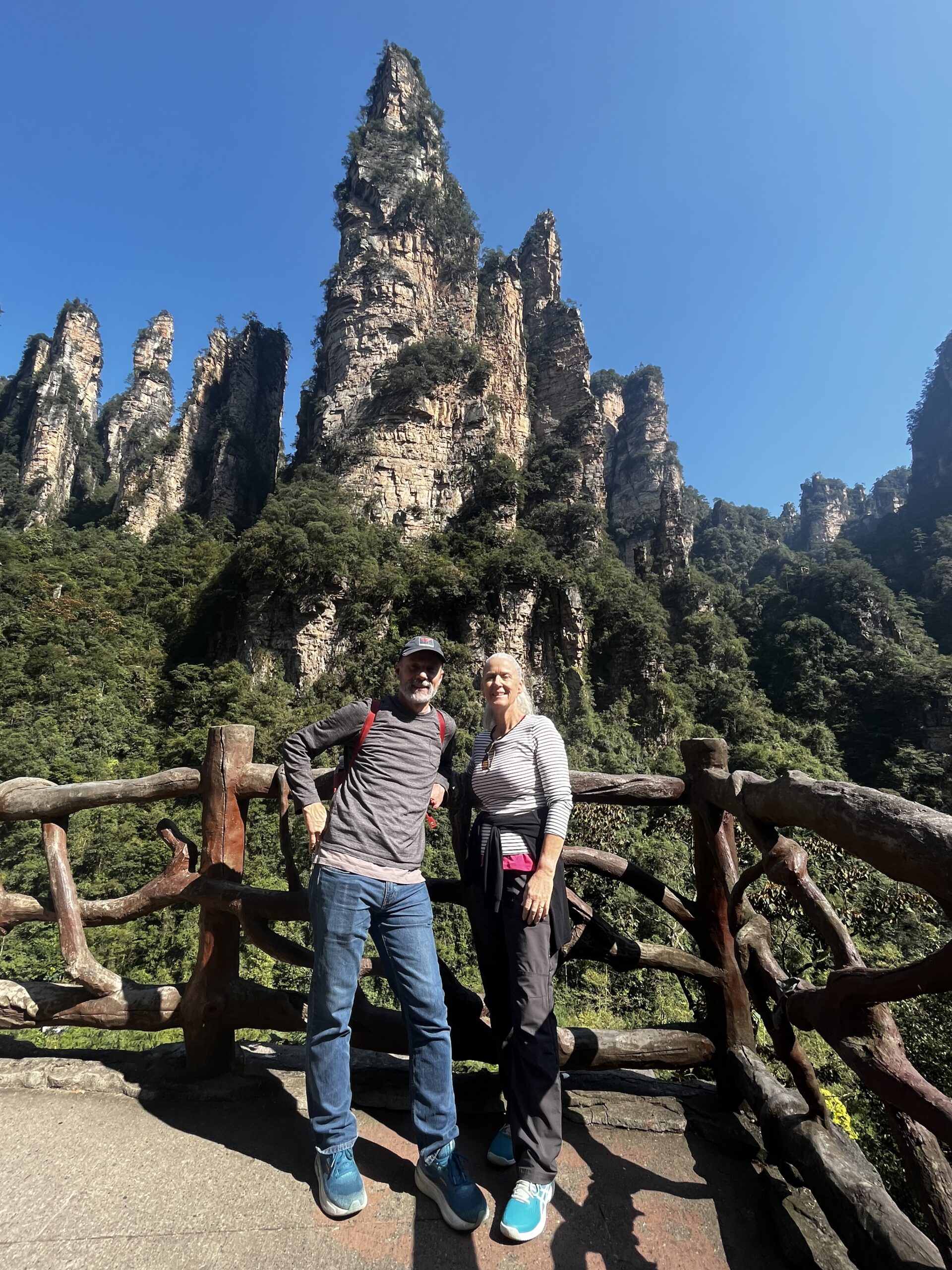
We’ve collected experiences from our guests who visited Huangshizhai recently:
Driessen, October 2025: “Oct 20th, cloudy, 34 km, number of steps: 34,776. Today I rode 35 kilometers from Tianmen Mountain to the hotel. The hotel owner told us that Zhangjiajie National Forest Park should be visited in two to three days. It’s a bit late to arrive, so today we take a bus to Huangshizhai for a walk. The boss told me to be careful of monkeys, but I never expected that before I even entered the ticket gate, my bun was snatched away by a monkey at lightning speed. Today I walked more than 30,000 steps and saw strange mountains and rocks, monkeys and giant salamanders. No wonder it’s a waste of your trip to Zhangjiajie if you don’t visit Huangshizhai.”
Analysis: This reinforces the monkey food-snatching reality. Also demonstrates that Huangshizhai works as an afternoon/partial day visit if time is limited.
Timo T., April 2025: “We were here in April on a Wednesday around noon and didn’t have to wait. The cable car ride is amazing and the views from the top are one of a kind. Clean toilets on the upper station, many shops, even a pharmacy. The cable cars seemed well maintained and are built by a French company.”
Analysis: Weekday visits outside Chinese holidays offer the best experience. April weather is ideal with comfortable temperatures and less crowding.
Anonymous traveler, April 2025: “Without a doubt, Huangshizhai is Zhangjiajie’s crown jewel! We’re here in 3rd week of April. The weather was absolutely gorgeous, sunny with cool temperature hovering around 18-20°C which made it very pleasant to walk. Moreover, it was much less crowded than other attractions in Zhangjiajie. Nowhere else captures the park’s mystical beauty quite like this—where ancient sandstone pillars stands majestically and every viewpoint feels like a masterpiece.”
Analysis: This echoes our team’s observation that Huangshizhai offers a more immersive, less commercialized experience than Yuanjiajie.
Traveler via Tripadvisor, 2024: “If you can, try climbing the stairs to Huang Shi Zhai. Total of 3,800 steps, the place is 1,080m above sea level. It takes about 2 hours but if you stop to take photos or break, maybe more time will be needed. Along the way up, we saw many monkeys who were eyeing the food we had in our hands. Don’t feed them or tempt them and they will just walk alongside you. Very intelligent and cute.”
Analysis: Hiking up is achievable for fit travelers, but the 3,878 steps represent a genuine workout. The monkey encounters add wildlife interest but require food precautions.
Common themes across reviews:
- Consistently praised views and photo opportunities
- Less crowded than Yuanjiajie/Avatar Mountain areas
- Well-maintained facilities and cable cars
- Monkey encounters range from delightful to frustrating depending on food security
- Weather significantly impacts the experience
Frequently Asked Questions
Q: Is Huangshizhai suitable for elderly visitors or those with mobility limitations?
A: Yes, with the cable car option. The summit loop has paved paths and steps with handrails. However, it’s not wheelchair accessible, and visitors need to walk 2-3 km on the summit. Those with serious mobility limitations should consider whether they can handle uneven surfaces and stairs.
Q: Can I visit Huangshizhai and Yuanjiajie (Avatar Mountains) in one day?
A: Yes, but it’s a full day. Recommended sequence: Start Huangshizhai early (7:00-11:00 AM), then shuttle to Yuanjiajie via Water Around Four Gates (12:00-5:00 PM). This requires good fitness and leaves little time for leisurely exploration. Most travelers prefer separating them into different days.
Q: Is the cable car safe? I’m nervous about heights.
A: The Huangshizhai cableway was recognized as one of China’s “Top 10 Cableways” and has operated safely since 1997. Cabins are enclosed (not open-air), holding 8 passengers with stable motion. The ride is smooth with spectacular views but may be uncomfortable for those with severe height anxiety. If extremely nervous, consider hiking.
Q: What if it rains during my visit?
A: Light rain creates atmospheric mist—acceptable for some travelers. Heavy rain obscures visibility and makes hiking trails slippery and potentially dangerous. It’s recommended to visit when sunny as mist on rainy days significantly reduces the sightseeing experience. Check weather forecasts and consider postponing if severe weather is predicted.
Q: Are there any food allergies or dietary restrictions I should know about?
A: Summit food options are very limited—mostly packaged snacks, instant noodles, and drinks. No fresh meals available. Visitors with dietary restrictions should bring their own food. All packaged foods sold on the summit have Chinese ingredient labels—bring translation assistance if you have serious allergies.
Q: Can I bring children? What age is appropriate?
A: Yes, families visit successfully. Children should be old enough to walk 2-3 km and follow safety instructions near cliff edges. Ages 6+ typically handle it well. Children under 6 may find the distance tiring. Strollers are not practical due to steps and uneven surfaces. The monkeys fascinate children but require parental supervision to prevent feeding attempts.
Q: Is there mobile phone signal on the summit?
A: China Mobile and China Unicom generally have coverage on the summit and cable car route, though signal strength varies. Some hiking trail sections may have limited coverage. Download offline maps before visiting. WiFi is not available.
Q: How does Huangshizhai compare to other Zhangjiajie viewpoints?
A: Huangshizhai offers the most comprehensive panoramic views with fewer crowds—ideal for photographers and those seeking space. Yuanjiajie (Avatar Mountains) has more dramatic specific viewpoints like the “Hallelujah Mountain” but faces heavy crowds. Tianzi Mountain provides the highest elevation views but requires more travel time. Yangjiajie offers solitude but less developed infrastructure. For first-time visitors with limited time, we recommend prioritizing Huangshizhai for the overview, then Yuanjiajie for specific iconic formations.
Q: Do I need a guide to visit Huangshizhai?
A: Not necessary. Signage is clear in Chinese and English. The summit loop routes are well-marked and impossible to get lost on. Audio guides available for rent at cable car stations. However, a guide can provide geological and cultural context that significantly enriches the experience. If budget allows, consider hiring a guide for your first day in Zhangjiajie.
Q: Can I visit during Chinese public holidays?
A: Technically yes, practically not recommended. Chinese holidays (especially Golden Week in October and Spring Festival in February) bring massive crowds. Cable car wait times can exceed 2-3 hours. Summit viewpoints become packed. Prices increase. If your schedule is flexible, avoid visiting during: Spring Festival (late January/early February), Qingming Festival (early April), Labor Day (May 1), National Day Golden Week (October 1-7), and weekends during peak summer season.
Q: Is there accommodation on or near Huangshizhai?
A: No accommodation exists on Huangshizhai summit. Nearest hotels are in Wulingyuan town (15 minutes from South Gate) or Zhangjiajie city (40-60 minutes from South Gate). Wulingyuan location is strongly recommended for multi-day park visits—saves daily travel time and allows early morning park entry.
Q: What wildlife besides monkeys might I encounter?
A: Zhangjiajie hosts diverse wildlife. Common sightings include various bird species, butterflies, and occasional giant salamanders in streams (critically endangered—observe but never touch). Rare mammals like Chinese giant flying squirrels, leopard cats, and Chinese water deer inhabit the area but are rarely seen. The park’s biodiversity is one reason for its UNESCO World Heritage status.
Huangshizhai vs. The Others: A Strategic Comparison
 Cable Car at Huangshizhai
 Yuanjiajie


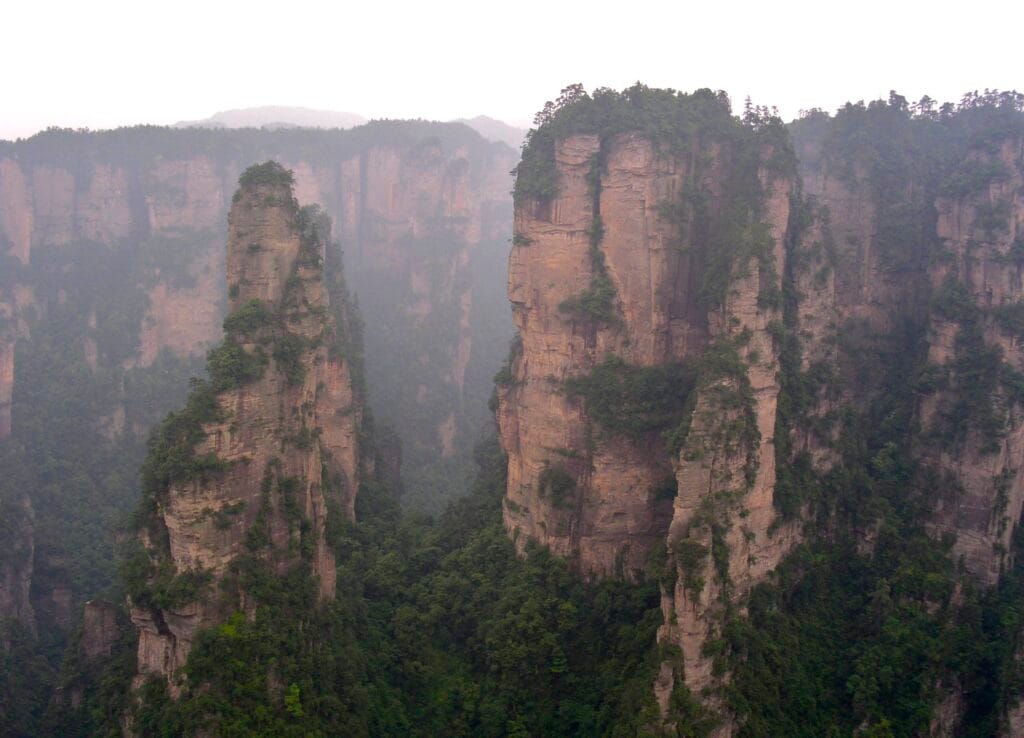
Zhangjiajie’s main viewing areas each offer unique perspectives on the sandstone pillars. Here’s how Huangshizhai stacks up against its competitors—based on our team’s extensive experience guiding travelers through all areas.
The Complete Comparison Table
Factor | Huangshizhai | Yuanjiajie | Tianzi Mountain | Yangjiajie |
|---|---|---|---|---|
Elevation | 1,080-1,200m | 1,000-1,074m | 1,260m (highest) | 1,000-1,130m |
Viewing Perspective | Horizontal—eye level with peaks | Looking across valleys | Top-down overview | Side perspectives |
Crowd Density (Peak Season) | Light to Moderate | Heavy to Extreme | Heavy | Light |
Cable Car Wait (Avg.) | 5-15 minutes | N/A (Bailong Elevator) | 20-40 minutes | 10-20 minutes |
Bailong Elevator Wait | N/A | 60-180 minutes | N/A | N/A |
Summit Walking Distance | 2.48-3.8 km | 3.2 km | 4.5 km | 5.8 km |
Loop Completion Time | 1.5-2.5 hours | 2-3 hours | 3-4 hours | 3.5-4.5 hours |
Hiking Difficulty | Moderate to Hard | Easy (if using elevator) | Easy (summit only) | Moderate to Hard |
Avatar Connection | None | High (Hallelujah Mountain) | Moderate | Low |
Sunrise Quality | ★★★★★ Excellent | ★★★★☆ Very Good | ★★★★★ Excellent | ★★★☆☆ Good |
Sea of Clouds | ★★★★★ Frequent | ★★★★☆ Common | ★★★★★ Frequent | ★★★★☆ Common |
Photography Variety | ★★★★★ Maximum | ★★★★☆ Iconic shots | ★★★★☆ Panoramic | ★★★★☆ Unique angles |
Facilities (Restrooms/Food) | ★★★★☆ Good | ★★★★★ Excellent | ★★★★★ Excellent | ★★☆☆☆ Basic |
Best For | Photographers, sunrise chasers, those avoiding crowds | First-time visitors, Avatar fans | Overview seekers, cable car enthusiasts | Adventure hikers, solitude seekers |
Worst For | Those needing wheelchair access | Claustrophobic travelers (elevator), crowd-averse visitors | Visitors with limited walking ability | Families with young children |
Entry Point | South Gate | Bailong Elevator or Forest Park Gate | Tianzi Mountain Gate or via Yuanjiajie | Yangjiajie Gate or via Tianzi Mountain |
Budget Impact (Transport) | ¥65-115 cable car | ¥72 Bailong Elevator | ¥72 cable car | ¥76 cable car |
Detailed Strategic Analysis
Huangshizhai’s Unique Advantages:
- The Overview Effect: Because Huangshizhai is a preserved plateau at the same elevation as surrounding peaks, you get horizontal sightlines. At Yuanjiajie and Tianzi Mountain, you’re either looking up at peaks or down into valleys. Huangshizhai lets you look across at the stone forest—the perspective that best reveals the landscape’s true scale.
- Temporal Flexibility: Yuanjiajie’s Bailong Elevator creates a bottleneck—miss your timing window and lose 2-3 hours waiting. Huangshizhai’s cable car or hiking routes offer multiple access options with minimal wait penalties.
- Photography Sweet Spot: Professional photographers consistently rank Huangshizhai in their top 2 Zhangjiajie locations (tied with Tianzi Mountain) because the horizontal perspective creates natural depth layers in photos—foreground pines, mid-ground pillars, background ranges, and sky. Yuanjiajie’s vertical compositions are dramatic but harder to execute well.
When Yuanjiajie Wins:
- You have limited time (1 day only) and want maximum impact
- The Avatar connection is important to you or your travel companions
- You’re traveling with a Chinese tour group (Yuanjiajie is their priority)
- You enjoy “Instagram famous” locations where everyone knows exactly what you’re seeing
When Tianzi Mountain Wins:
- You want the absolute highest viewpoint
- Cable car scenic value is important (Tianzi’s 15-minute ride is spectacular)
- You’re combining with Ten-Mile Gallery (efficient routing)
- Weather is perfect clear—Tianzi’s elevation maximizes the view range
When Yangjiajie Wins:
- You’re an experienced hiker seeking challenge
- Crowds actively diminish your enjoyment
- You have 4+ days and want to see everything
- Photography trumps convenience
DIG DEEPER: Yangjiajie vs Huangshizhai: Which Zhangjiajie Area to Pick
The Honest Recommendation Matrix
If you have 1 day: Choose either Huangshizhai + Golden Whip Stream OR Yuanjiajie + Tianzi Mountain. Don’t try to do everything—you’ll spend more time shuttling than viewing.
If you have 2 days: Day 1 – Huangshizhai (early) + Golden Whip Stream | Day 2 – Yuanjiajie + Tianzi Mountain. This sequence progresses from quiet to busy, letting you appreciate the landscape before facing crowds.
If you have 3 days: Add Yangjiajie or the Grand Canyon Glass Bridge. Most travelers choose Glass Bridge, but Yangjiajie offers better raw nature.
If you have 4+ days: See everything. The different perspectives genuinely do reveal different aspects of the landscape.
The Crowd Psychology Factor
Here’s something tour companies won’t tell you: Huangshizhai receives fewer visitors not because it’s inferior, but because of Chinese tourism marketing. The Avatar-Yuanjiajie connection creates powerful social pressure—travelers feel they “must” see Hallelujah Mountain for photos proving they visited Zhangjiajie.
Huangshizhai lacks this social media driver. No Hollywood movie immortalized its viewpoints. This works entirely in favor of travelers seeking genuine experience over Instagram validation.
A taxi driver told one of our clients: “那边空气好,人少” (“The air is better there, fewer people”). He was describing Huangshizhai. That statement encapsulates what makes it special—not despite its relative obscurity, but because of it.
A Personal Note from Our Team
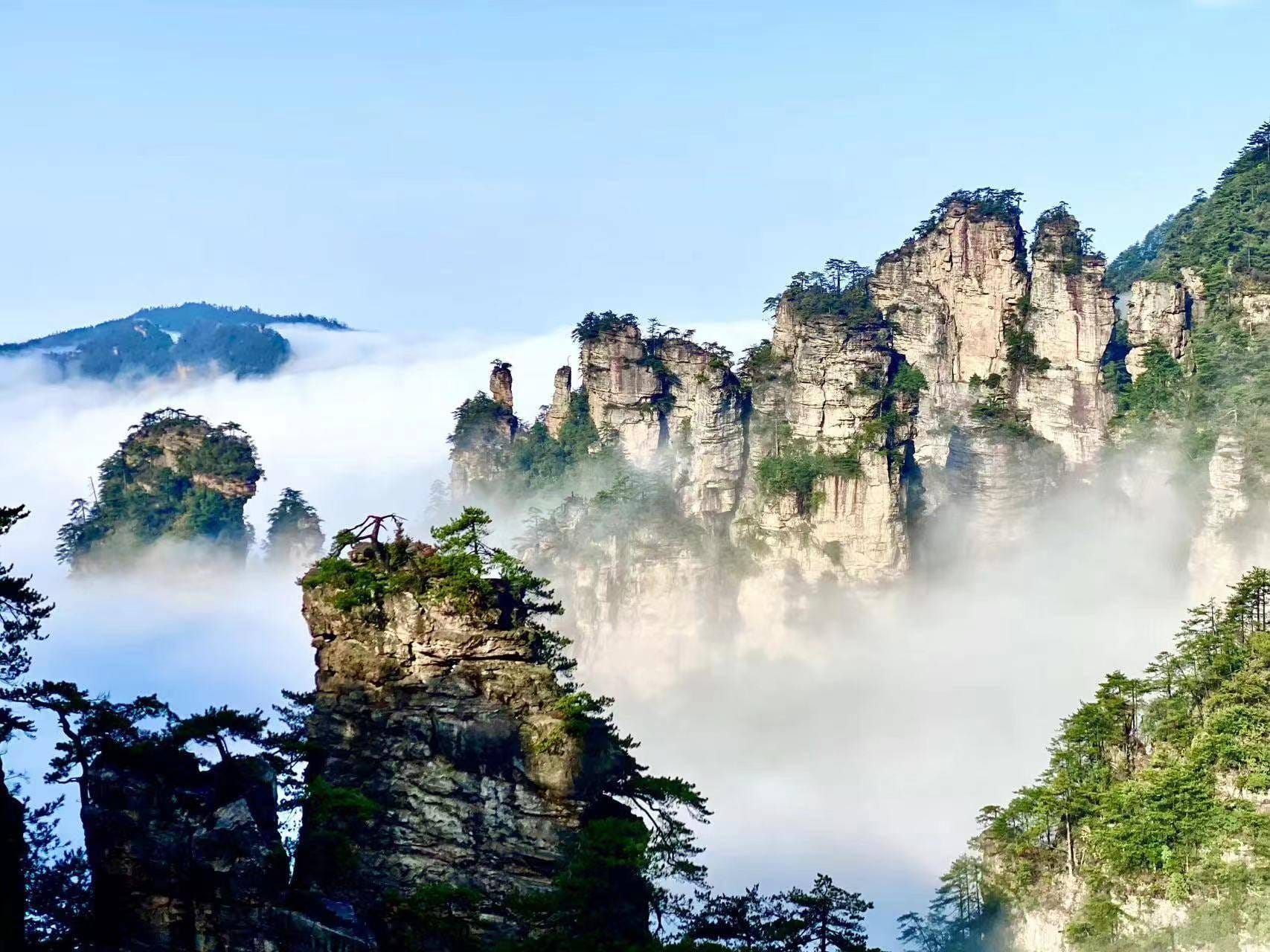
After guiding travelers through Zhangjiajie for over two decades, we’ve witnessed how Huangshizhai captures something special that other attractions miss. Perhaps it’s the sense of discovery—knowing you’re seeing views that haven’t been Instagram-filtered a million times. Perhaps it’s the wildlife encounters that remind you this is a living ecosystem, not just a scenic backdrop.
Last October, we brought a retired couple from Australia to Huangshizhai at sunrise. They’d specifically requested “somewhere without tour groups.” Standing at Star-Picking Terrace as morning mist revealed the stone pillars one by one, the wife turned to me and said, “This is the China we hoped to find—ancient, wild, and real.”
That’s Huangshizhai’s gift. In an increasingly commodified tourism landscape, it offers genuine encounter with one of Earth’s most unusual geological wonders. The ancient Chinese saying proves true: a trip to Zhangjiajie is not complete without experiencing Huangshizhai.
We recommend allocating at least half a day here. Take the cable car up if time or energy is limited, but consider hiking down to appreciate the forest ecosystem. Visit early morning or late afternoon for optimal lighting and minimal crowds. Bring more water than you think you need. Secure your food from the monkeys. And most importantly—put your camera down occasionally and simply observe.
The stone pillars have stood for millions of years. They’ll outlast us all. Give them the respect and attention they deserve.
Ready to Plan Your Huangshizhai Adventure?
At Travel China With Me, we specialize in crafting personalized Zhangjiajie itineraries that balance iconic sites with hidden gems like Huangshizhai. Whether you need help securing tickets, arranging sunrise visits, or navigating the park’s complex logistics, our local expertise ensures you experience the best of Zhangjiajie without the typical tourist frustrations.
Contact us to design your perfect Zhangjiajie journey—where ancient geological wonders meet modern travel comfort.
Have you visited Huangshizhai? Share your experience in the comments below to help future travelers plan their visit.