Zhangjiajie Rainy Season: What to Expect & How to Plan
Most travel guides tell you to avoid Zhangjiajie in the rainy season. We don’t tell our clients that. The mist and fog of May–August create the floating-mountain effect that makes this place look like Avatar — and that effect requires moisture to exist. This guide tells you what to actually expect, which attractions work in rain, and how to plan around the weather.
We are Travel China With Me, an inbound China tour operator running Zhangjiajie trips since 2006.
Rainy season months | May – August |
Peak rainfall month | June (~313mm, ~18–20 rainy days) |
Annual precipitation | 1,400–1,600mm |
Typical rain pattern | Heavy 30–60 min, then 1–3 hrs of lifting mist |
Park closure risk | Rare but real — Wulingyuan closed 1 day in June 2025 |
Best rainy-day attractions | Yellow Dragon Cave, Baofeng Lake |
Best time of day for mountain views | 7–10 AM after overnight rain |
Park ticket | CNY 239 peak (Mar–Nov); CNY 114 off-peak (Dec–Feb) |
Entry reservation | Required since Jun 2025 — each day booked separately |
Crowd level | Medium-high (June) to Peak (July–August) |
Table of Contents
1. When Is Zhangjiajie’s Rainy Season?
Zhangjiajie’s rainy season runs May through August, peaking in June and July. Annual rainfall totals 1,400–1,600mm, concentrated heavily in these four months.
Month | Avg Rainfall | Avg Rainy Days | Temp (downtown) | Crowds |
|---|---|---|---|---|
May | ~150mm | ~16 | 20–27°C | High; Labor Day spike May 1–5 |
June | ~313mm | ~18–20 | 24–30°C | Medium-high; wettest month |
July | ~200mm+ | ~20+ | 28–33°C | Peak; school summer holiday begins |
August | ~150mm | ~12–14 | 27–32°C | Peak; weather stabilises late month |
Note: mountain summit temperatures (Tianzi Mountain, Yuanjiajie) run 8–12°C cooler than downtown figures above.
Zhangjiajie Rainy Season: Rainfall & Rainy Days by Month
Monthly rainfall (mm) and rainy days — Zhangjiajie rainy season. Sources: weather-and-climate.com.
⚠️ 2025 closure precedent: In June 2025, Wulingyuan Scenic Area suspended all operations for one full day — the first weather-related closure in its history. Zhangjiajie City recorded 200.9mm of rainfall in just 32 hours. This is rare, but build at least one buffer day into any rainy season itinerary.
For broader context on China’s regional rainy seasons, see our China rainy season by city guide.
2. Is the Rainy Season Worth It?

The short answer is yes — but only if you plan around the weather rather than against it.
The floating-mountain effect most visitors come to see requires moisture to exist. On a clear day, Zhangjiajie is impressive. After overnight rain, when mist fills the valleys between the pillars and only the forested tops are visible above cloud, it looks exactly like Pandora. This is not a consolation for bad weather. It is the primary experience many photographers specifically travel here to capture.
June is the preferred month for landscape photographers targeting the classical Chinese ink-wash effect: sandstone peaks dissolving into and emerging from cloud. The park averages over 200 foggy or rainy days per year in all seasons. There is no truly dry month in Zhangjiajie.
Light rain and mist rarely ruin a trip — they often produce the best views. Morning drizzle typically clears by 9–10 AM. Overcast skies with no precipitation are fine for hiking. What does cause real problems is sustained multi-day downpours with no clearing window, heavy rain on cliff-edge trails that become genuinely slippery, or extreme rainfall events triggering temporary park closure. The 2025 precedent above shows this last scenario is real, even if rare.
One thing worth knowing that most guides miss entirely: summit weather and valley weather are often independent of each other. In March 2026 — well outside the official rainy season — we guided a group of American clients through Zhangjiajie. Their first two days were overcast, with low cloud pressing down on the valley. They messaged us the night before their Yuanjiajie day expecting to see nothing. What actually happened: they took the cable car up into what looked like a grey wall — and emerged above it. The cloud layer was sitting at roughly 1,000m. Above it, Yuanjiajie and Tianzi Mountain were completely clear, panoramic, full sun. They stood at the Hallelujah Mountain overlook while the valley below was still buried in mist. The same rapid change that produces dramatic fog can also clear in a single cable car ride. The principle we give every client: don’t cancel a summit day based on how things look from ground level. Get up there first.
3. What Each Attraction Actually Looks Like in Rain
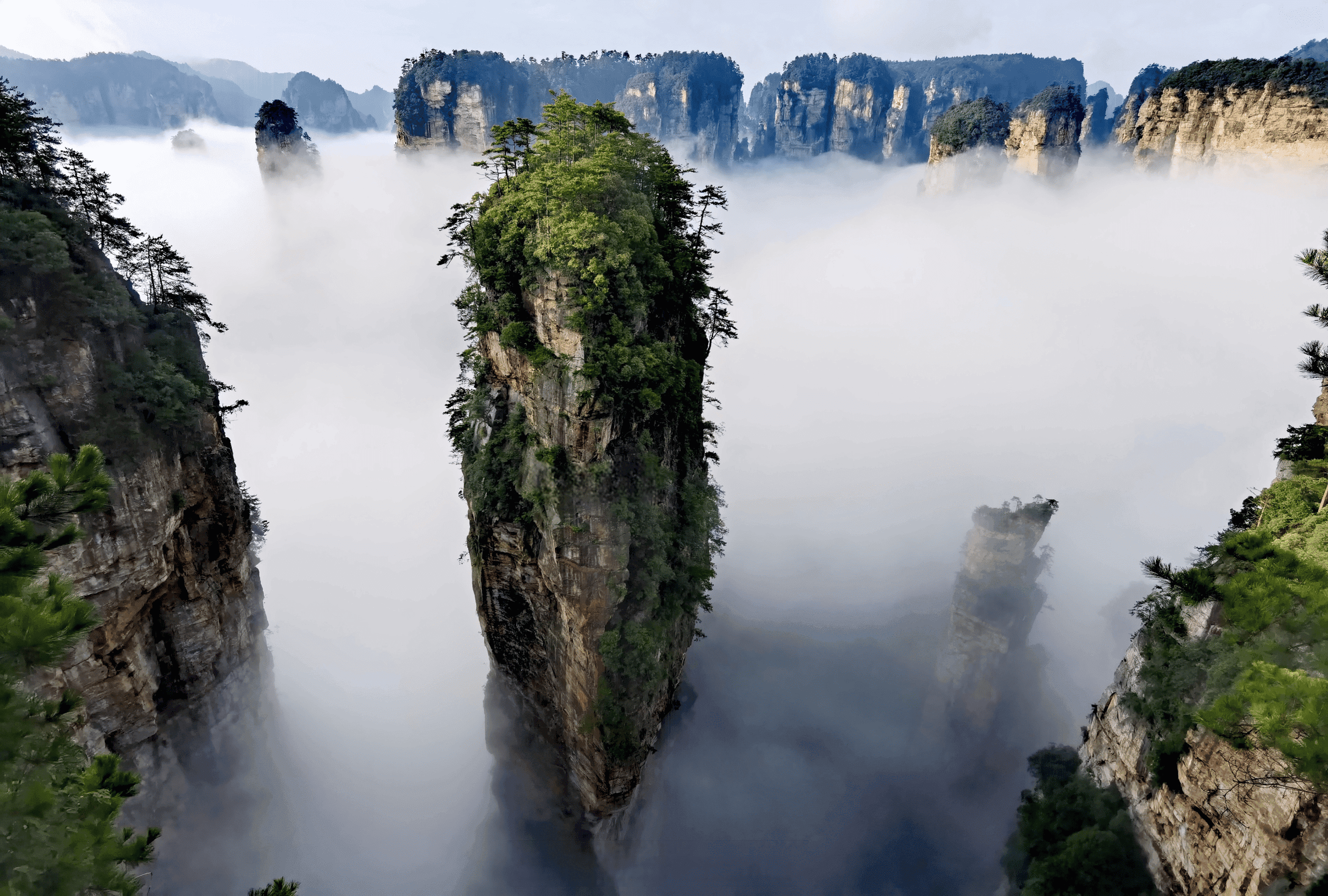
Yuanjiajie (Avatar Hallelujah Mountain) In light rain or post-rain mist: valleys fill with cloud and the pillar tops emerge above it — this is the floating-mountain effect, and it is more dramatic than any clear-day view. In a heavy downpour: thick fog replaces the cloud sea and visibility drops to near zero. No middle ground. Verdict: Go in light rain. Abort in downpour.

Tianzi Mountain Behaves like Yuanjiajie but at higher elevation. Its plateau topography traps cold air in the surrounding gorges, making the cloud sea more reliable here than anywhere else in the park. If cloud is thick at the lower cable car station, wait 20–30 minutes — it often moves fast. Verdict: Same as Yuanjiajie — spectacular in mist, lost in downpour.

Golden Whip Stream The 7.5km valley trail runs at pillar-base level under forest canopy. Summit mist doesn’t affect visibility here. The stream swells with rain, waterfalls run properly, and the monkeys are unbothered — meaning fewer crowds, same wildlife. Verdict: Actively better in rain. Default heavy-rain redirect within the park.
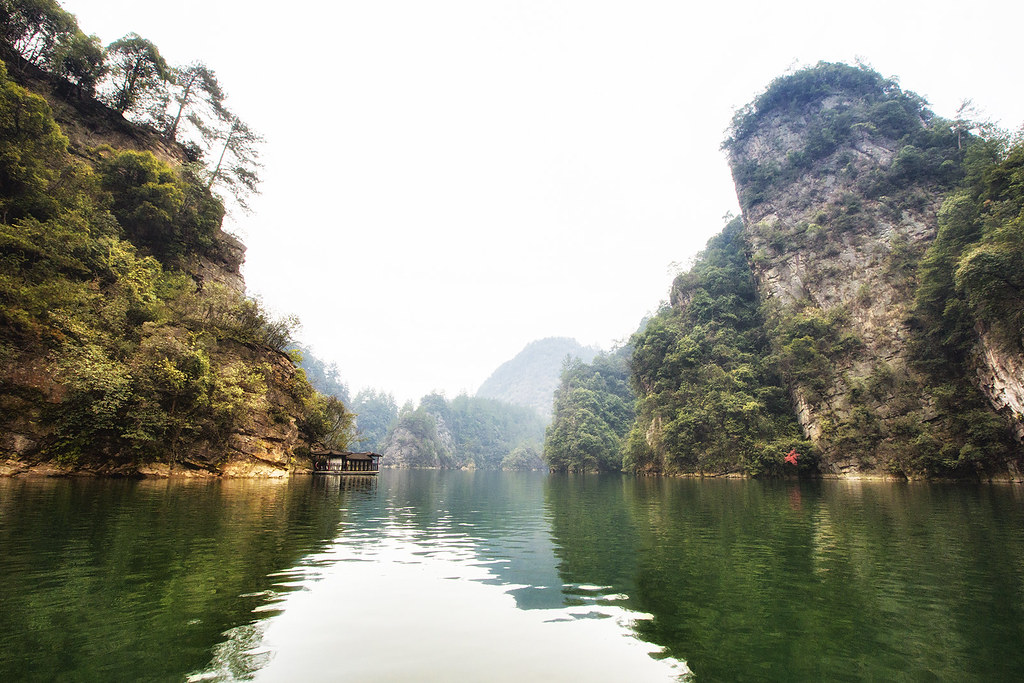
Baofeng Lake Cliff drainage lines only become visible as waterfalls when it rains — on a dry visit, the lake is beautiful but static. In rain, cascades appear all along the cliff walls. The enclosed gorge boat ride carries better in overcast conditions. One hazard: the entrance path is mossy stone — take the shuttle bus in heavy rain. Verdict: Noticeably better in light rain. Fine in moderate rain with shuttle.

Grand Canyon + Glass Bridge The canyon trail at valley level is unaffected by rain — enclosed walls, waterfalls running full, worth it regardless. The Glass Bridge closes in lightning or strong wind; when it’s open in mist, the far end disappears into cloud. Canyon visit always stands alone. Verdict: Canyon always worth it. Bridge is a bonus in rain, unavailable in storms.

Tianmen Mountain Cable car runs in rain; the 99-bend road in mist is one of Zhangjiajie’s most photographed views. Glass cliff-edge skywalks close in strong wind, which happens more often in rainy season. Losing the skywalks removes roughly 40% of what makes Tianmen distinctive. Verdict: Worthwhile in light rain. Reduced experience in strong wind.

Yangjiajie Dense forest canopy means light rain barely reaches the trail. The Natural Great Wall and One Step to Heaven viewpoints work in mist. Almost no international visitors even on clear days — in rain, major viewpoints may be entirely yours. Verdict: Underrated rainy-day option if Yuanjiajie is socked in.
Attraction | Light Rain / Mist | Heavy Rain | Key Notes |
|---|---|---|---|
Yuanjiajie (Avatar Mtns) | ★★★★★ | ★★ | Best in mist; sea-of-clouds effect peaks here |
Tianzi Mountain | ★★★★★ | ★★ | #1 cloud-sea viewpoint; optimal 7–10 AM |
Golden Whip Stream | ★★★★ | ★★★ | Valley floor; sheltered; waterfalls swell in rain |
Yellow Dragon Cave | ★★★★★ | ★★★★★ | Fully enclosed; 4 waterfalls in rainy season vs 1 in dry |
Baofeng Lake | ★★★★ | ★★★★ | Cliff waterfalls only appear in rain; entrance path slippery |
Grand Canyon + Glass Bridge | ★★★ | ★ | Bridge closes in lightning / strong wind |
Tianmen Mountain | ★★★ | ★ | Glass skywalks close in severe weather |
Yangjiajie | ★★★★ | ★★ | Least-crowded zone; good in light rain |
4. What to Do on a Rainy Day in Zhangjiajie
Light rain or mist → Go to the mountain
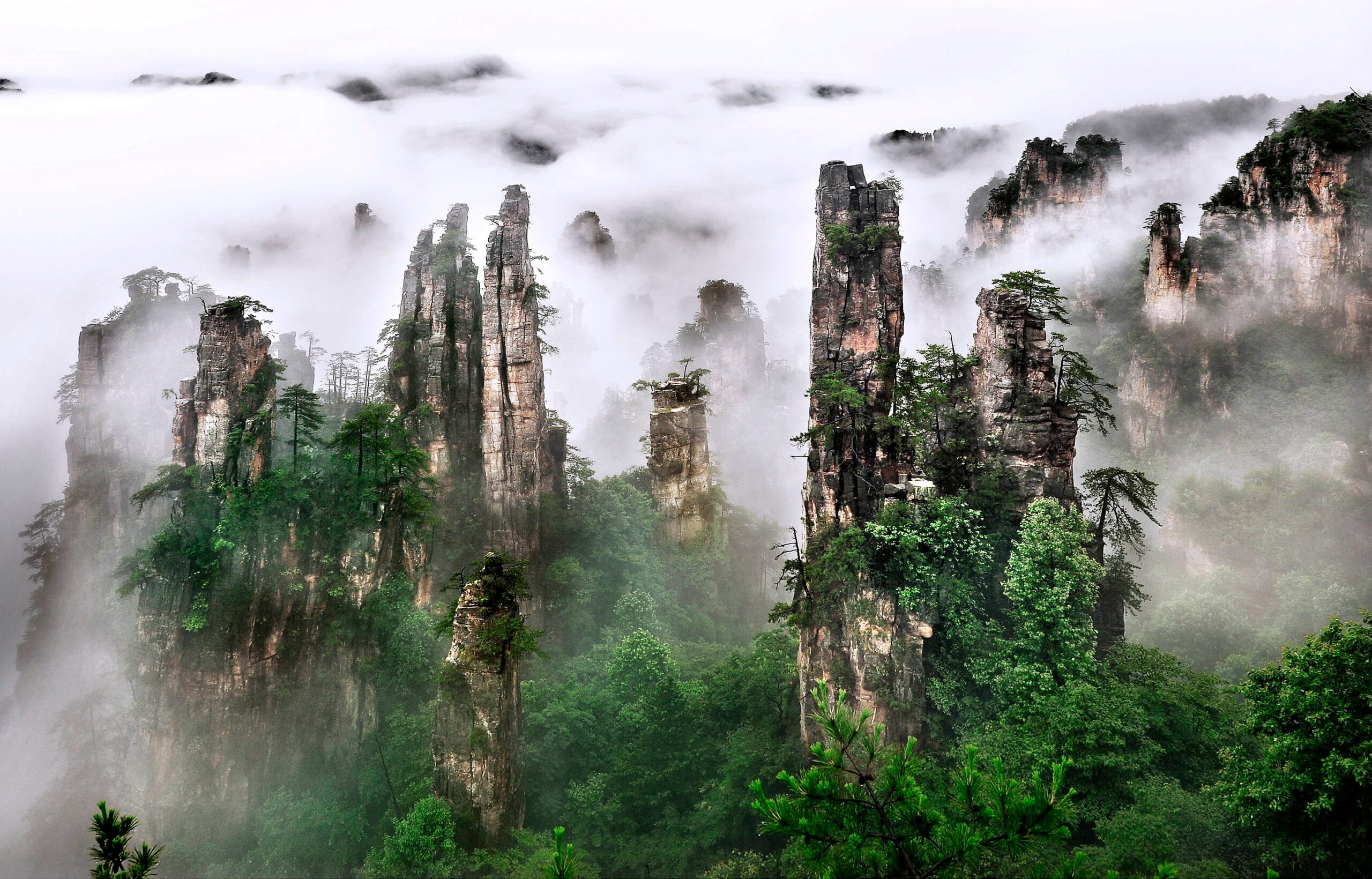
Cable cars and eco-buses run in light rain — operations don’t stop until conditions become genuinely dangerous. On wet mornings, domestic visitors retreat to hotels — we regularly get clients to Yuanjiajie with a 15-minute wait on days when clear mornings bring 60-minute queues. Tianzi Mountain is the single best viewpoint for a cloud sea — its high flat plateau surrounded by a dense concentration of peaks traps cold air in the gorges at 600–800 metres, where it collides with rising warm valley air and forms the cloud layer precisely at pillar-base level. The effect is more reliable and more dramatic here than anywhere else in the park. The clearing window after overnight rain is typically 7–10 AM.
Heavy rain → Yellow Dragon Cave + Baofeng Lake
These two pair naturally as a full day and are both better in rain than dry conditions.
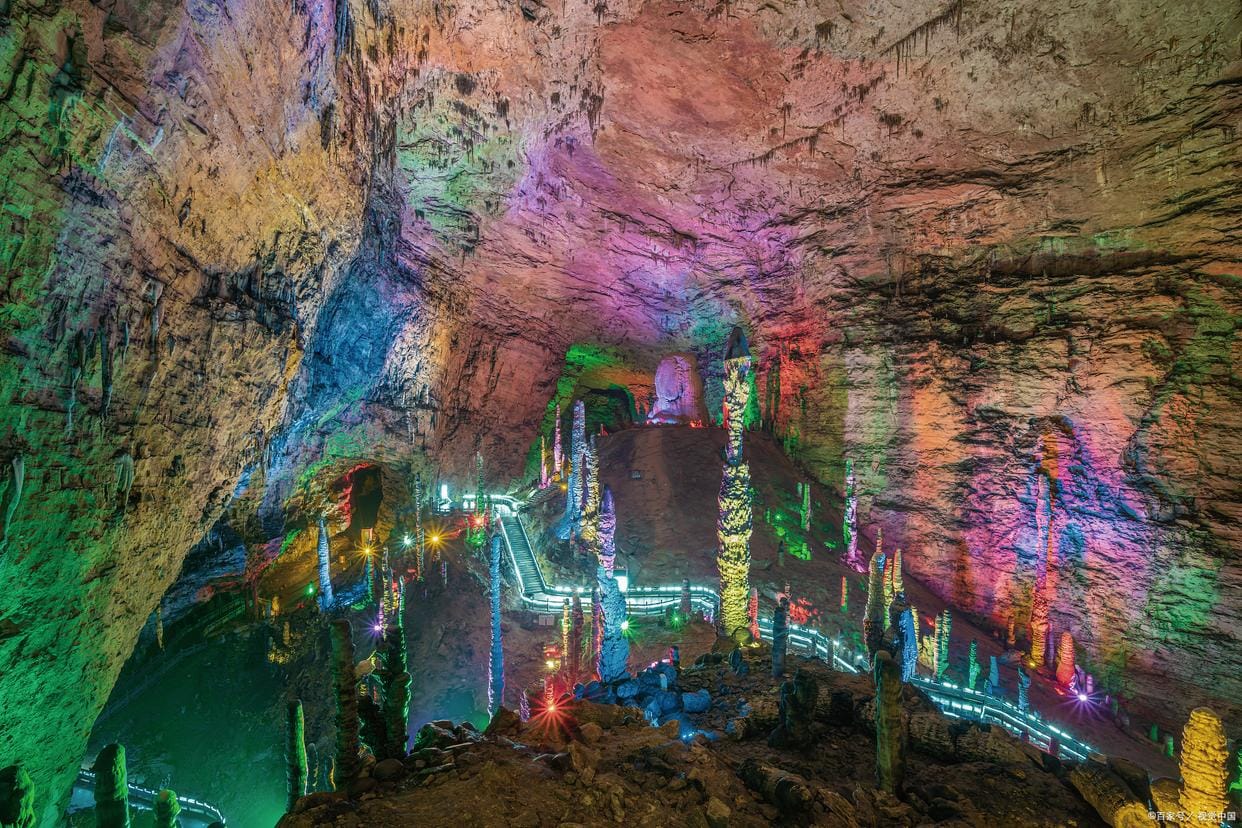
Yellow Dragon Cave (Huanglong Cave) — Asia’s largest explored karst cave system, 8km east of Wulingyuan. Fully enclosed. Constant 15°C year-round. Allow 2–3 hours including an underground boat ride on the Xiangshui River. In rainy season, the Fairy Waterfall chamber runs four simultaneous cascades; in dry conditions it has one. The park authority recommends visiting during wet weather so you preserve clear days for mountain attractions. Bring a light layer — 15°C feels cold after walking in 30°C heat outside.
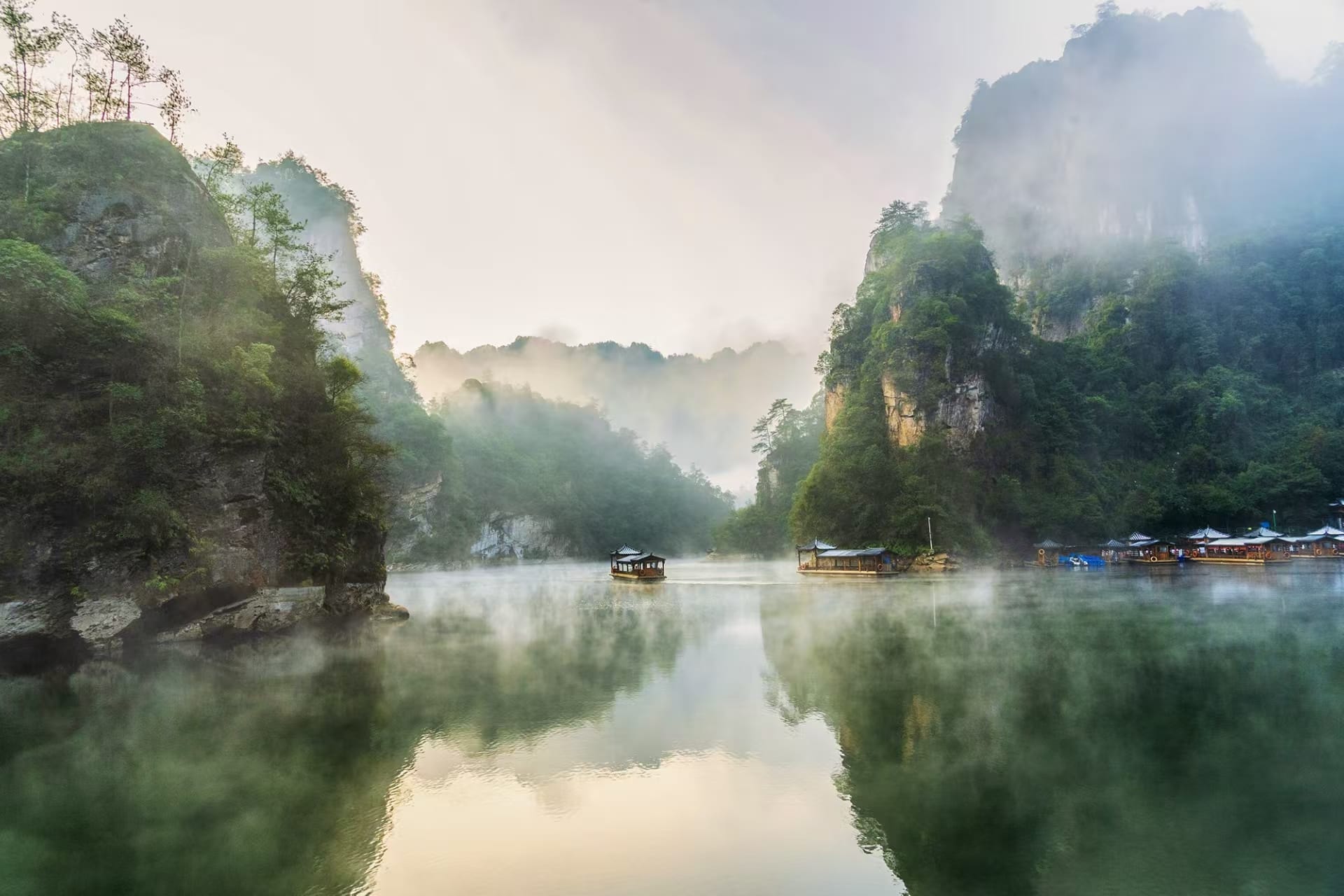
Baofeng Lake — A karst reservoir enclosed by sheer cliffs. Waterfalls appear along the cliffsides in rain that don’t exist in dry weather. The enclosed gorge boat ride with Tujia folk music performed from cliff platforms is genuinely better in overcast conditions. Allow 3–4 hours. Note: the walking path to the entrance is steep mossy stone — take the shuttle bus option in heavy continuous rain.
Complete washout → Cultural activities in Wulingyuan town
Sand painting (using Zhangjiajie’s coloured sandstone) and Tujia brocade weaving workshops are available from local operators. Not tourist traps — genuine craft traditions. Allow 2–3 hours.
5. Will the Glass Bridge Close in Rain?
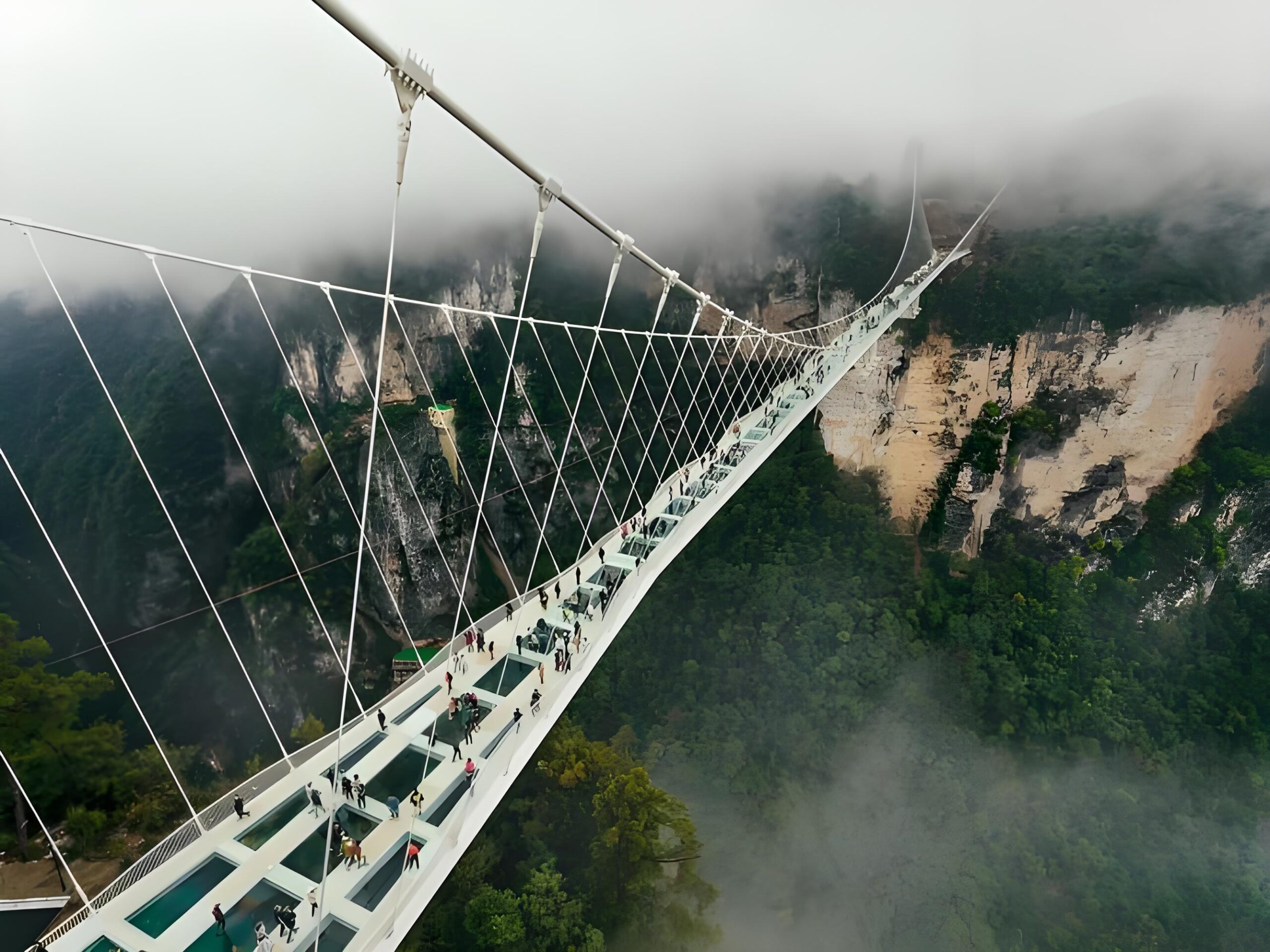
The Grand Canyon Glass Bridge in mist is exceptional — the far end of the 430m span disappears into cloud. We’ve had guests say it was the most surreal 10 minutes of their entire trip.
The risk: The bridge closes in lightning, strong wind, or heavy sustained rain. No exceptions. Often little advance warning. We’ve had groups whose entire day plan collapsed when they found it shuttered on arrival.
How to handle it:
- Book the earliest morning slot (7:30 or 8:00 AM) — afternoon storms are more likely than morning storms
- The canyon trail below the bridge is a full half-day experience without the bridge; never waste this day
- Grand Canyon is 60km from Tianmen Mountain, no public transport between them — plan separate days
→ See our Zhangjiajie transportation guide for distances and how to move between attractions.
6. Rainy Season Itinerary: 4-Day Example
Core principle: schedule weather-sensitive activities first each morning; assign a same-day rain backup for each.
Day 1 — Forest Park (Yuanjiajie + Tianzi Mountain) Arrive at gate opening, 7:00–7:30 AM. Take Bailong Elevator straight to Yuanjiajie. If mist is present, you have 1–3 hours of optimal cloud-sea conditions. If heavy rain moves in by mid-morning, descend to Golden Whip Stream — the valley trail is significantly more sheltered and the stream swells with rain.
Important 2025 booking change: Since June 2025, every entry to the forest park requires an advance reservation — including return visits on days 2, 3, and 4 of your 4-day ticket. You cannot simply arrive each morning; each day's slot must be pre-booked separately. During peak rainy season (May–October), morning slots fill quickly. Book all planned entry days at the time of initial ticket purchase.
Day 2 — Baofeng Lake + Yellow Dragon Cave (the designated rain day) Baofeng Lake in the morning (4 hours: shuttle or walk, boat ride, waterfall stop at entrance). Yellow Dragon Cave in the afternoon (2.5 hours). Neither attraction requires clear weather. This day also serves as the swap day if Day 1 or Day 3 need to be moved due to extreme rain.
Day 3 — Grand Canyon + Glass Bridge Book earliest morning slot. Walk the canyon trail regardless of bridge status — worth the half-day with or without bridge access. Use the bridge if it opens.
Day 4 — Tianmen Mountain More forgiving in light rain than visitors expect — the cable car runs, and mist on the 99-bend road is one of Zhangjiajie’s most photographed views. Glass skywalks close in strong wind; the mountain circuit, temple, and cave are a full day without them.
→ Full 1–7 day breakdown: Zhangjiajie Itinerary Guide → For Tianmen Mountain route options: Tianmen Mountain guide
7. What to Pack for Rainy Season
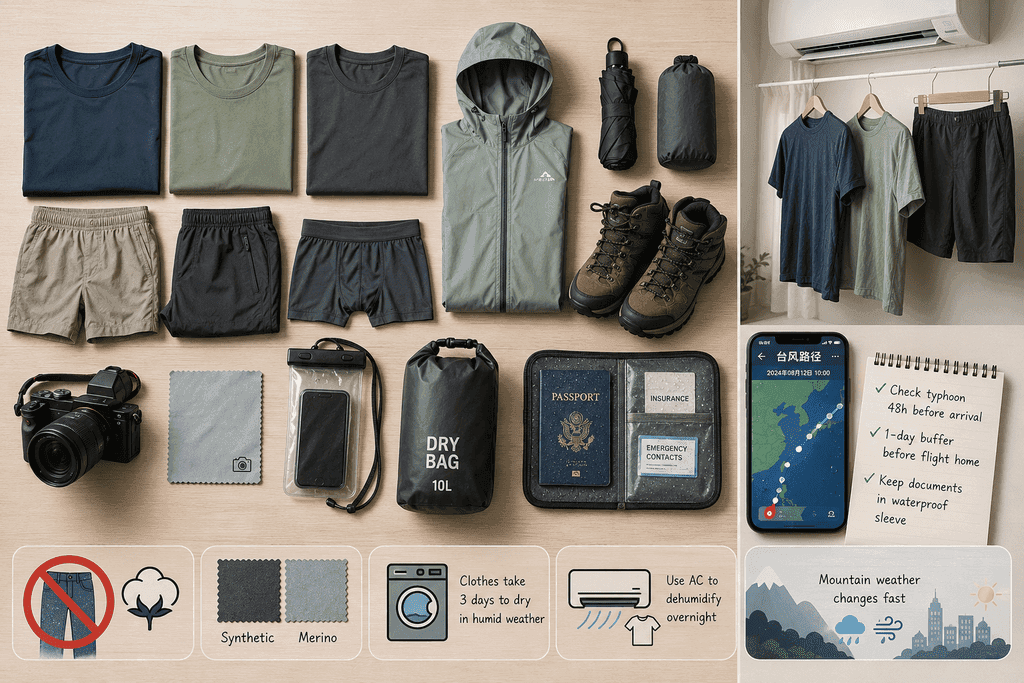
Footwear is the most critical decision. The stone paths throughout the park are worn smooth by millions of footsteps. In rain they become genuinely hazardous. We watch guests struggle in flat sneakers every summer. One client arrived in flip-flops for the Huangshizhai trail in June — our guide escorted her down step by step for 40 extra minutes. Hiking shoes with a grip sole are non-negotiable.
Item | Priority | Notes |
|---|---|---|
Grip hiking shoes | ★ Essential | Most important item; no substitutes |
Packable rain jacket | ★ Essential | Wind inverts umbrellas on cliff walkways |
Quick-dry synthetic clothing | ★ High | Wet cotton = cold + chafing on long days |
Light layer for caves | ★ High | Yellow Dragon Cave holds 15°C year-round |
Dry bag / zip-lock for electronics | ★ High | 80%+ humidity damages gear even on clear days |
Mosquito repellent | ★ High | July–August: active at dawn/dusk on valley trails |
Sunscreen + hat | Medium | UV index is high during clearing spells at altitude |
Walking poles | Optional | Helpful on steep wet descents |
Camera note: Don't change lenses in the field — moisture enters the camera body in Zhangjiajie's humidity. Carry one lens per body; store gear in a dry bag between shots.
8. June vs July vs August: Which Is Better?
June | July | August | |
|---|---|---|---|
Rainfall | Highest (~313mm) | High (~200mm+) | Moderate (~150mm) |
Rainy days | 18–20 | 20+ | 12–14 |
Crowds | Medium-high | Peak | Peak → easing late month |
Photography quality | Best (ink-wash mist) | Good post-rain | Good; more stable PM |
Hotel prices (avg/night) | ~$137 | ~$90 | ~$96 |
Key date | Dragon Boat Festival | School holidays from mid-July | Late Aug best of three |
Zhangjiajie Hotel Prices by Month: Rainy Season Is the Cheapest
Average nightly hotel rate (USD) by month — Zhangjiajie. Rainy season months highlighted. Source: Hotels.com price data.
Hotel prices in July and August are actually among the lowest of the year — high supply from peak domestic tourism keeps rates down. April ($160/night avg) and May ($144) are significantly more expensive. If budget matters, July–August offers the cheapest accommodation of any warm-weather month.
Our recommendation if you have flexibility: Early June — before the Dragon Boat Festival. Wettest month, but best photography conditions and lowest crowds of the entire rainy season.
9. How to Read the Weather Forecast
Standard weather apps measure Wulingyuan town — not the summit viewpoints. We've arrived at Tianzi Mountain on forecast rain days to find clear skies for two hours. This is common.
The most reliable source is the official WeChat mini-program 张家界旅游小助手, which posts real-time summit conditions updated by the scenic area itself. Use this instead of any third-party weather service. The rainy season follows a consistent daily pattern: overnight rain gives way to partial clearing between 9 AM and noon, then storms rebuild in the early afternoon. That morning window is when you want to be on the mountain. The single most useful rule: the 1–2 hours immediately after rain stops typically offer the day's best visibility. When the rain ends, leave for the viewpoint immediately — don't wait to confirm via the forecast.
10. Crowds in Rainy Season
July and August are peak domestic travel months — the highest visitor volume of the year due to Chinese school summer holidays. That is the honest reality and no amount of planning eliminates it entirely.
Rain is a natural crowd filter. Chinese domestic visitors are more deterred by rain than international visitors. On wet mornings, trail volume drops noticeably — we've seen it firsthand dozens of times across every summer. The 15-minute Bailong Elevator wait versus the 60-minute clear-weather wait is not an exaggeration.
The VIP Fast Track at the Bailong Elevator sells out faster in rainy season — more visitors buy it to avoid standing in the rain. Book it before arrival if traveling in July or August.
→ Full timing strategy across all seasons: Best time to visit Zhangjiajie
FAQ - Zhangjiajie Rainy Season
Is Zhangjiajie worth visiting in the rainy season?
We send clients here every summer and the rainy season produces some of the most memorable trips we run. The floating-mountain effect that defines Zhangjiajie at its best requires moisture — it simply doesn't exist on clear days. Light rain and post-rain mist windows produce the most dramatic scenery of the year. Build in weather-proof days (Yellow Dragon Cave, Baofeng Lake) and keep summit visits in morning slots.
Can Wulingyuan close due to rain?
Yes. In June 2025, Wulingyuan Scenic Area closed for one full day — the first weather-related closure in its history — after 200.9mm of rainfall in 32 hours. This is uncommon but real. Budget at least one buffer day on any rainy season trip.
Does the Glass Bridge close when it rains?
It closes in lightning, strong wind, or heavy sustained rain. Light rain does not close it. Always book the earliest morning slot and have a backup plan. The canyon trail below is worth a half-day even without bridge access.
Which rainy season month has the fewest crowds?
June. It is the wettest month but has the lowest crowd levels of the three rainy season months. July and August bring peak Chinese school-holiday volume, especially from mid-July onward.
What should I do on a complete rain day in Zhangjiajie?
Yellow Dragon Cave + Baofeng Lake is the standard full-day rain plan. The cave is fully enclosed and actually better in rainy season (four waterfalls running instead of one). Baofeng Lake has cliff waterfalls that only appear when it rains.
Can I see the Avatar Mountains in the rain?
In light rain and mist, yes — often better than on clear days. The sea-of-clouds effect where pillar tops float above cloud only exists when moisture is present. In a heavy downpour, visibility drops and the effect is lost. The window immediately after rain stops is consistently the best time.
Is Tianmen Mountain open in the rainy season?
Yes. Important 2026 note: the upper cableway section has been closed for renovation since November 2025 with at least one year expected. This affects all three route options. Check current status before visiting: Tianmen Mountain guide.
How far ahead should I book for rainy season?
July–August: book park entrance 3–5 days ahead. Morning slots sell out. Since June 2025, every park entry day requires a separate advance reservation — including days 2–4 of a 4-day ticket. Book all planned entry days at the time of initial purchase. VIP Fast Track: book before arrival. Full pricing for all attractions: Zhangjiajie tickets guide.
We've run Zhangjiajie tours for international visitors since 2006 — including every summer. If you want an itinerary built around your specific travel dates and group, get in touch.