Zhangjiajie Ten-Mile Gallery Tram Guide: Walk, Ride, or Skip?
The Zhangjiajie Ten-Mile Gallery tram costs ¥38 one-way and covers 2.5 km of valley floor in 10–15 minutes. For most fit visitors, the walk is the better choice — but knowing when the tram actually earns its price requires understanding how this part of the park works, which most visitors only figure out once they’re already inside.
Tram ticket (one-way) | ¥38 per adult |
Tram ticket (return) | ¥76 per adult |
Half-price ticket | ¥19 one-way / ¥36 return (seniors 60+, under-24 full-time students, military, disabled) |
Children under 1.3 m | Free |
Route length | 2.5 km |
Ride duration | 10–15 minutes one-way |
Walking one way | 25–30 minutes |
Operating hours | 07:00–18:00 |
Included in park pass? | No — separate purchase at the valley entrance |
Table of Contents
1. How Most Visitors Actually Do the Zhangjiajie Ten-Mile Gallery
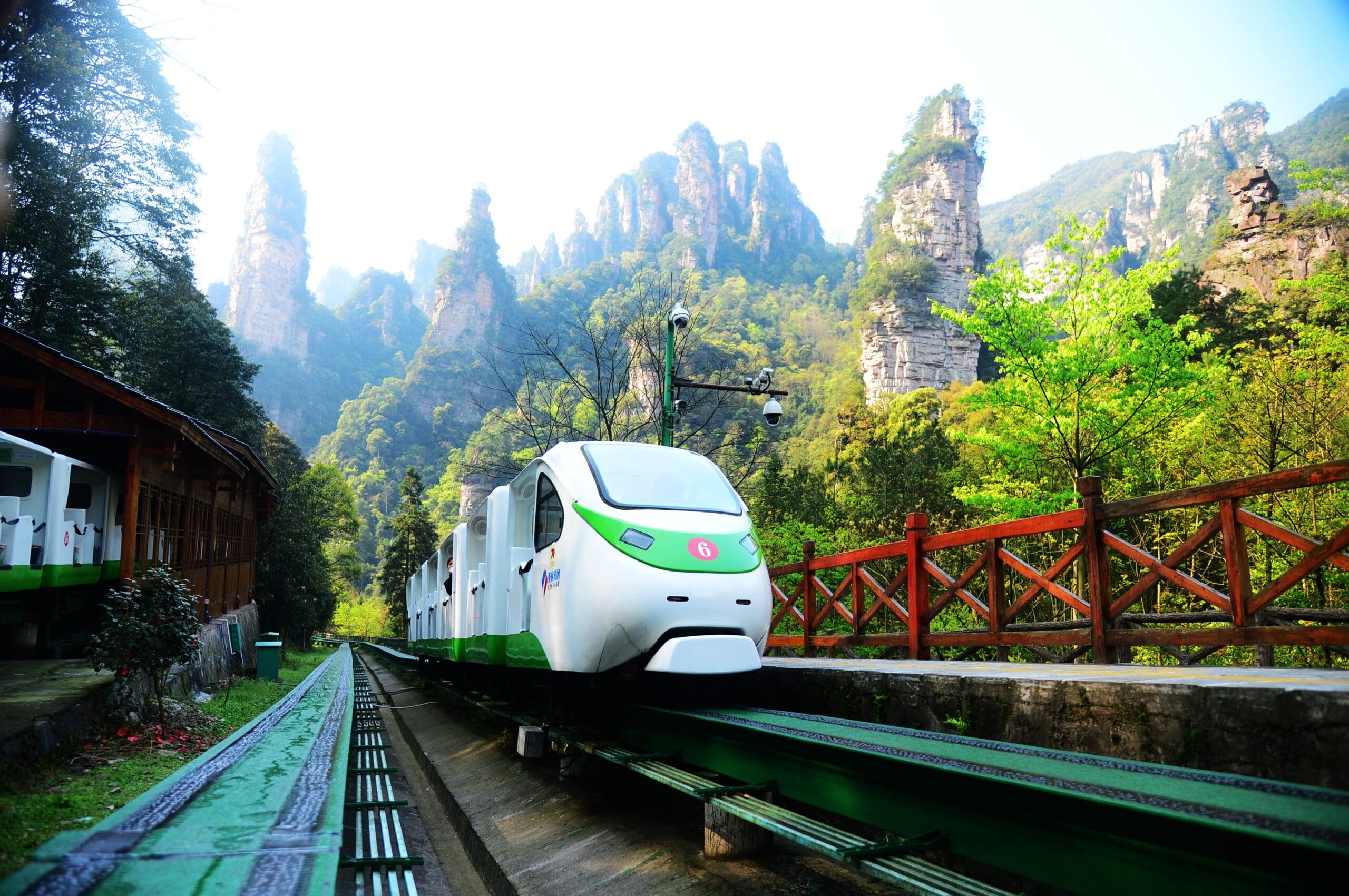
Ten-Mile Gallery is almost always a there-and-back trip. You enter from the Wulingyuan side, reach the far end, then return the same way to catch the park shuttle to the next zone.
The valley does connect to something at the other end — a trail that climbs all the way to Tianzi Mountain. In theory you could walk through and continue straight up, skipping the shuttle entirely. In practice, almost nobody does. That climb takes four hours on foot with no cable car access from that side. We’ve had clients attempt it over the years. The ones who reached Tianzi Mountain that way came back proud of themselves — but more than a few turned back halfway and burned two hours they couldn’t get back. Unless you’re specifically planning a full-day trekking route, treat Ten-Mile Gallery as an out-and-back.
That framing matters for the tram decision. You’re not choosing how to get through the valley — you’re choosing how to pace a 5 km round trip.
2. Walk or Tram — What We Actually Recommend
The tram track and the walking path run parallel for the entire 2.5 km. Whatever the tram passes, you can reach on foot. We’ve taken thousands of clients through here since 2006. The guests who say it was a highlight almost always walked. The ones who found it underwhelming were usually on the tram.
Take the tram if:
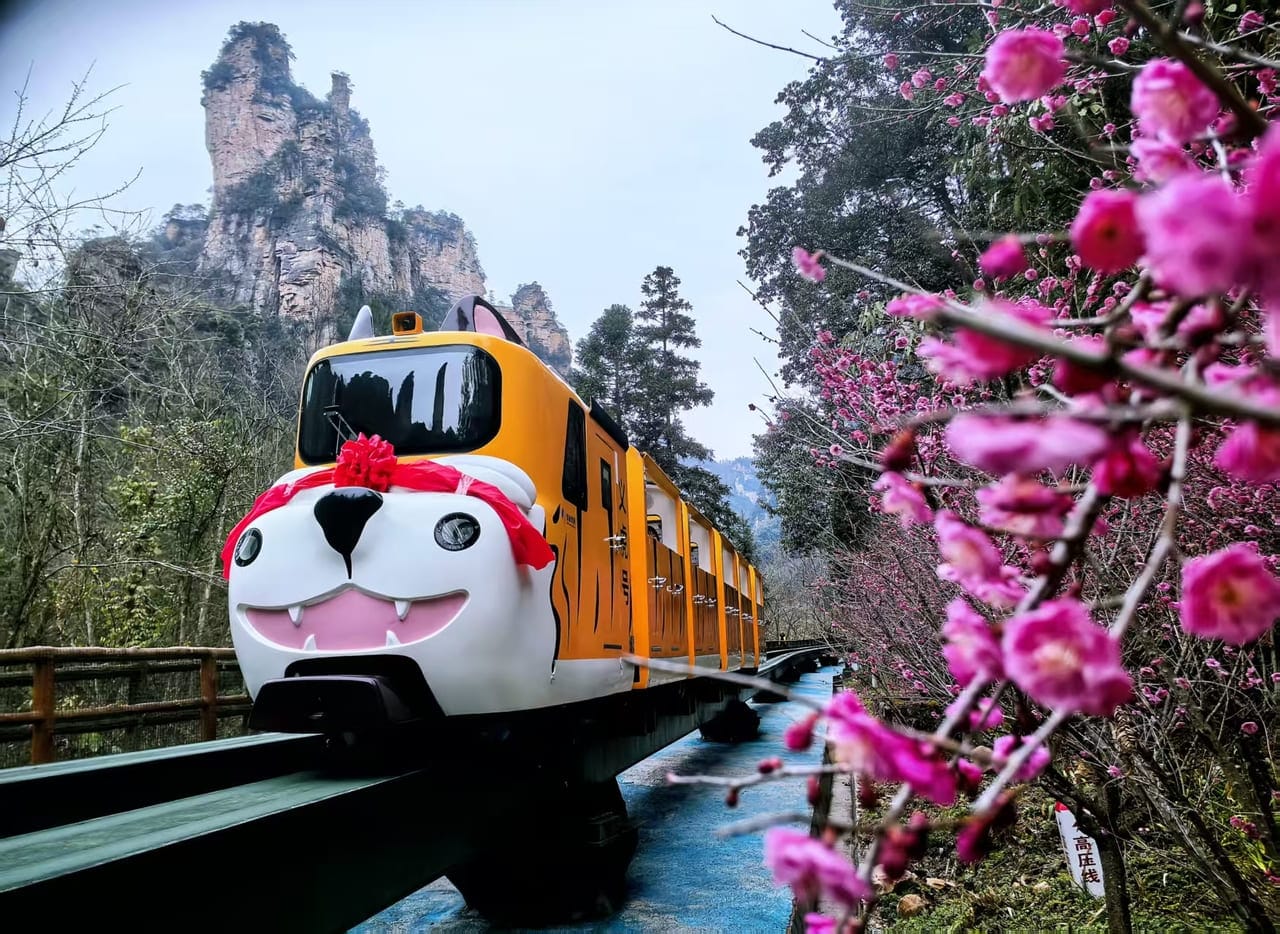
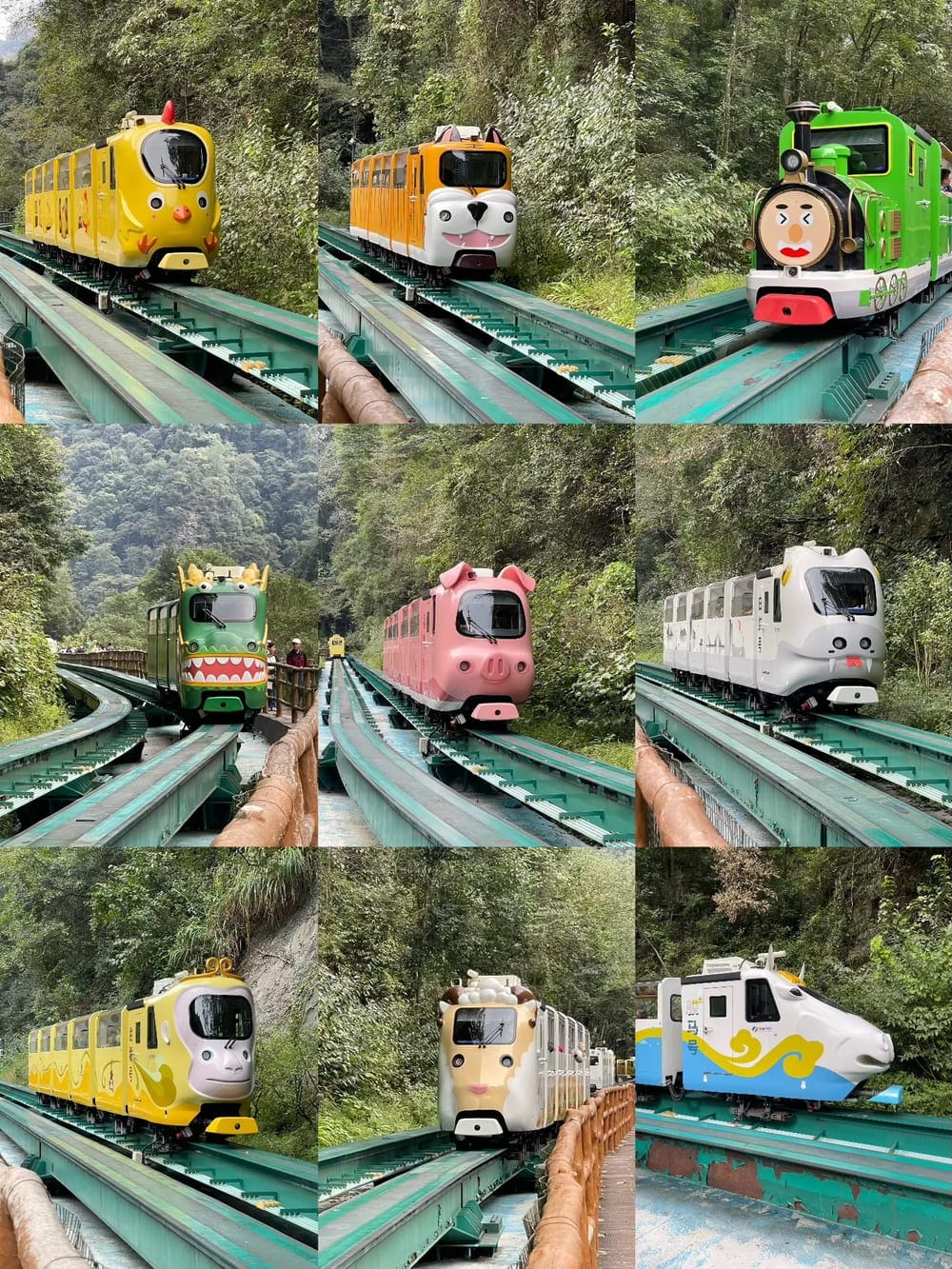
You have children or elderly travellers with you. The path is flat and paved, but 2.5 km in summer heat with a tired child is a different proposition than it sounds. The zodiac-themed carriages — 12 trains, each designed around a different Chinese zodiac animal, from the spotted ox (牛牛号) to the pink rabbit (玉兔号) — delight younger visitors in a way that surprises most parents. One seven-year-old we guided last summer spent the entire ride trying to identify which zodiac animal was at the front, then walked the full 2.5 km back out on her own steam.
Your legs are already gone. Ten-Mile Gallery typically comes at the end of a full park day, after Huangshizhai or Tianzi Mountain. Sitting for 10 minutes while the commentary names what you’re looking at is not giving up — it’s reading the day correctly.
The monkeys are the main draw. The wild macaques appear most reliably at the far end of the valley. The tram gets you there with more energy left.
Skip the tram if:
You’re a fit adult with 30 minutes to spare. The walk gives you closer views, no glass between you and the formations, and the freedom to stop when something catches your eye.
It’s summer and you’re visiting between 10:00 and 15:00. The transparent roof panels turn the carriages into a greenhouse. A packed carriage at noon in July is genuinely unpleasant in a way the walk never is. Go before 09:00 or after 15:30 if you’re set on it.
3. One-Way In, Walk Back Out
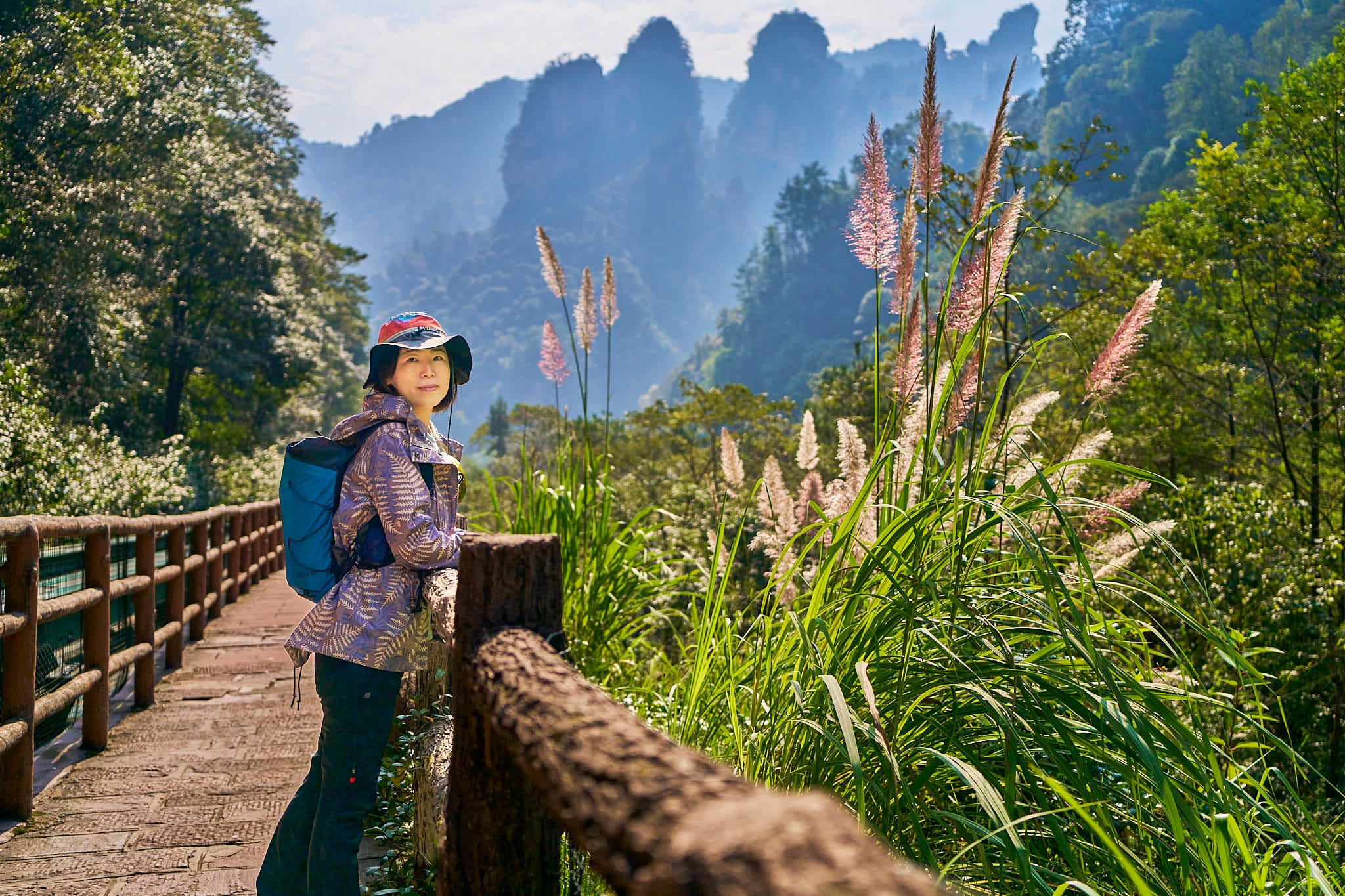
If you ride the tram, buy the one-way ticket (¥38). The return ticket is ¥76 — double the price — and the return ride adds very little.
The walk back out is downhill, takes 25 minutes, and is when most of the actual photography happens. One visitor who joined our group earlier this year described it well: she took the tram in, heard the commentary name each formation, then walked back out stopping at every single one. “The tram was the preview,” she said. “The walk was the visit.” That’s exactly how to use it.
The return tram makes sense in one case only: someone in your group physically cannot manage 2.5 km on foot.
4. Tickets and Payment
The tram is not covered by the Zhangjiajie National Forest Park 4-day pass (¥248). Buy a separate ticket at the booth near the valley entrance — WeChat Pay, Alipay, or cash. Foreign cards are generally not accepted at this booth, so have a payment method ready before you queue.
Half-price applies to travellers over 60, students under 24 with a Chinese student ID, current military personnel, and those with a disability certificate. Children under 1.3 m ride free. The concession ticket is ¥19 one-way or ¥36 return.
→ See our Zhangjiajie tickets guide for the full park pass breakdown and booking instructions.
5. Where to Sit
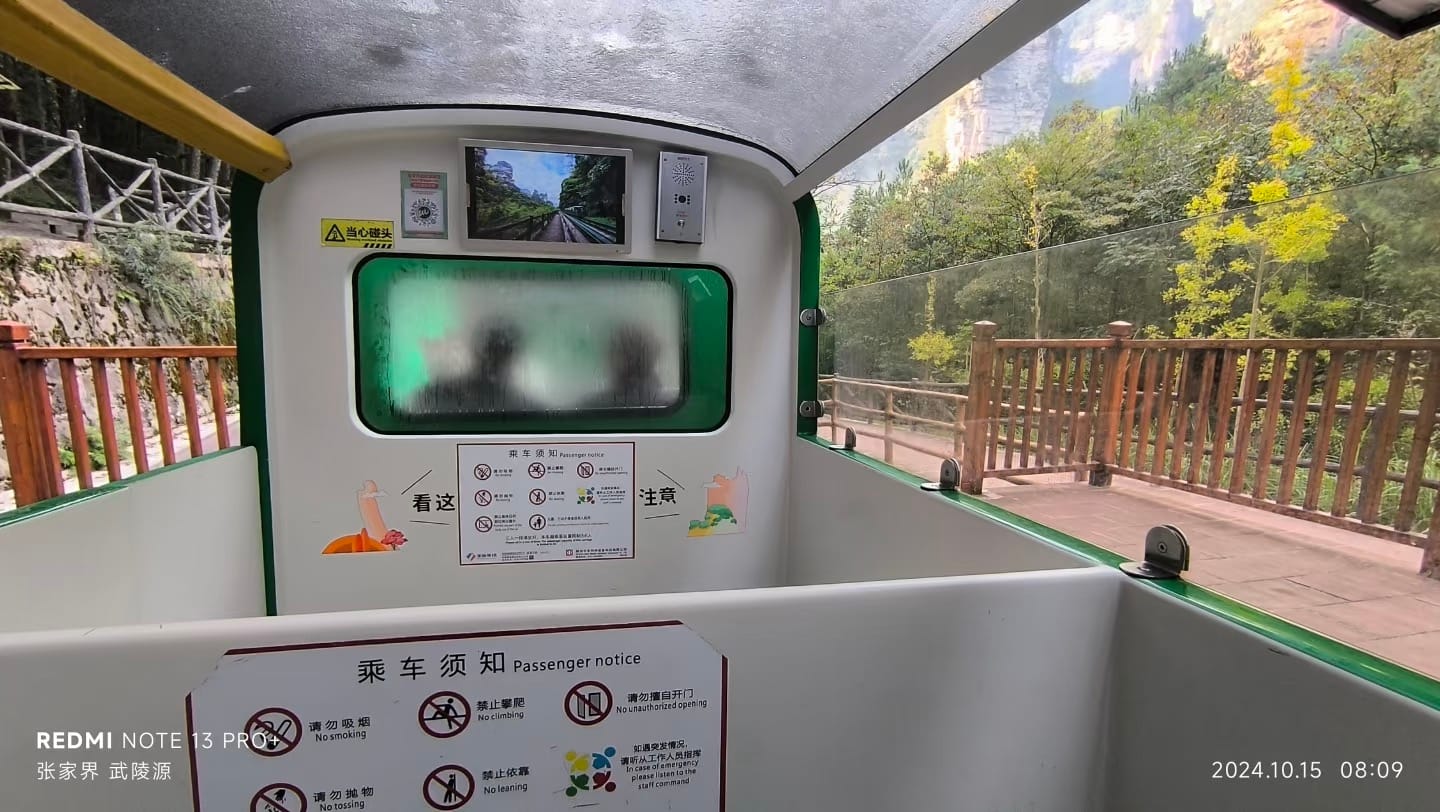
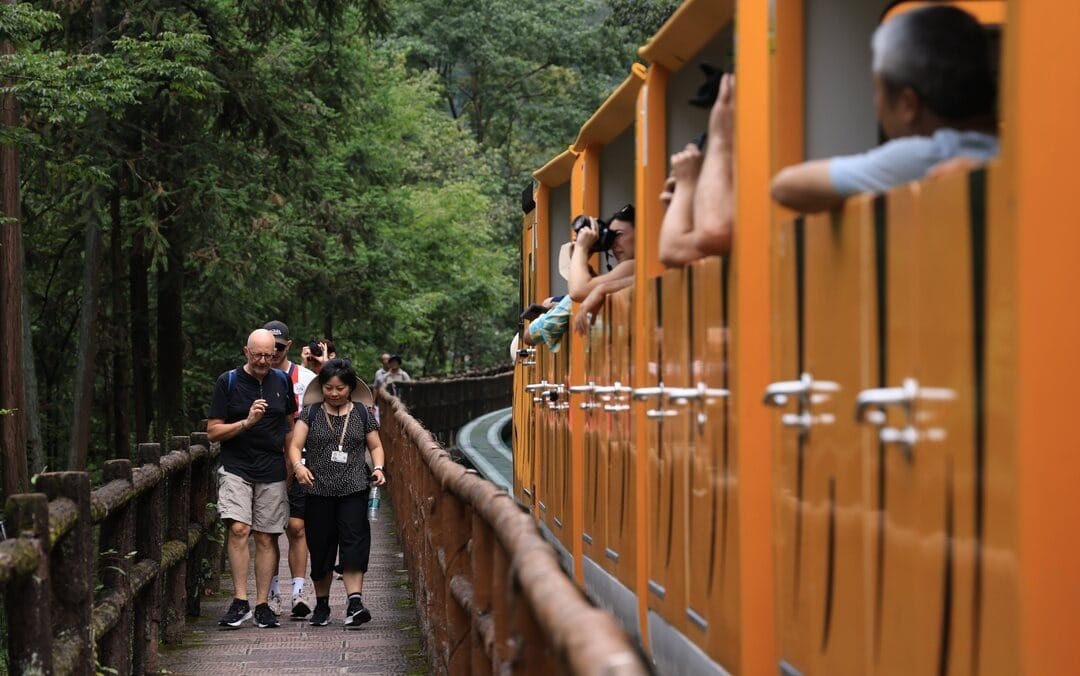
Sit on the left side of the carriage, closest to the door.
All the named rock formations line one wall of the valley — the western cliff face, which caught more erosive wind and water over time. That sculpted wall sits on your left as you travel inbound. More practically, the left side of the carriage is open-sided with no glass between you and the scenery. The right side has a window panel that causes glare and reflection in strong light. The view and the photographs are both better from the left.
If you take the return tram (which we don’t recommend unless necessary), swap to the right.
6. What You’ll See
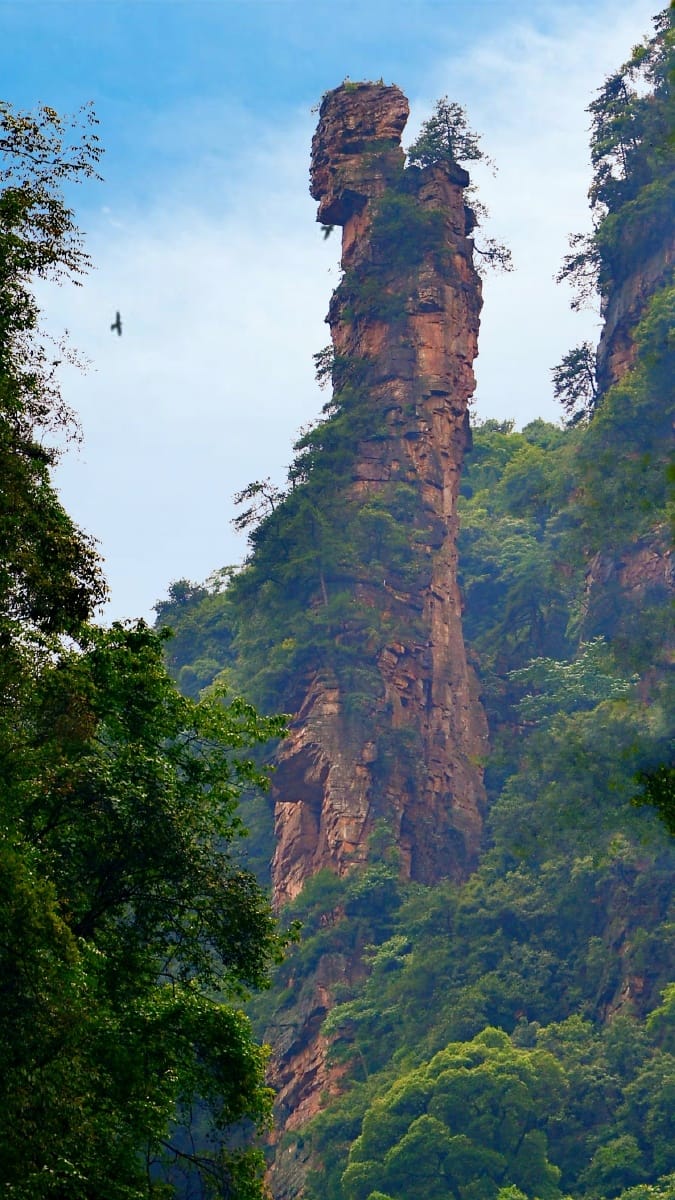
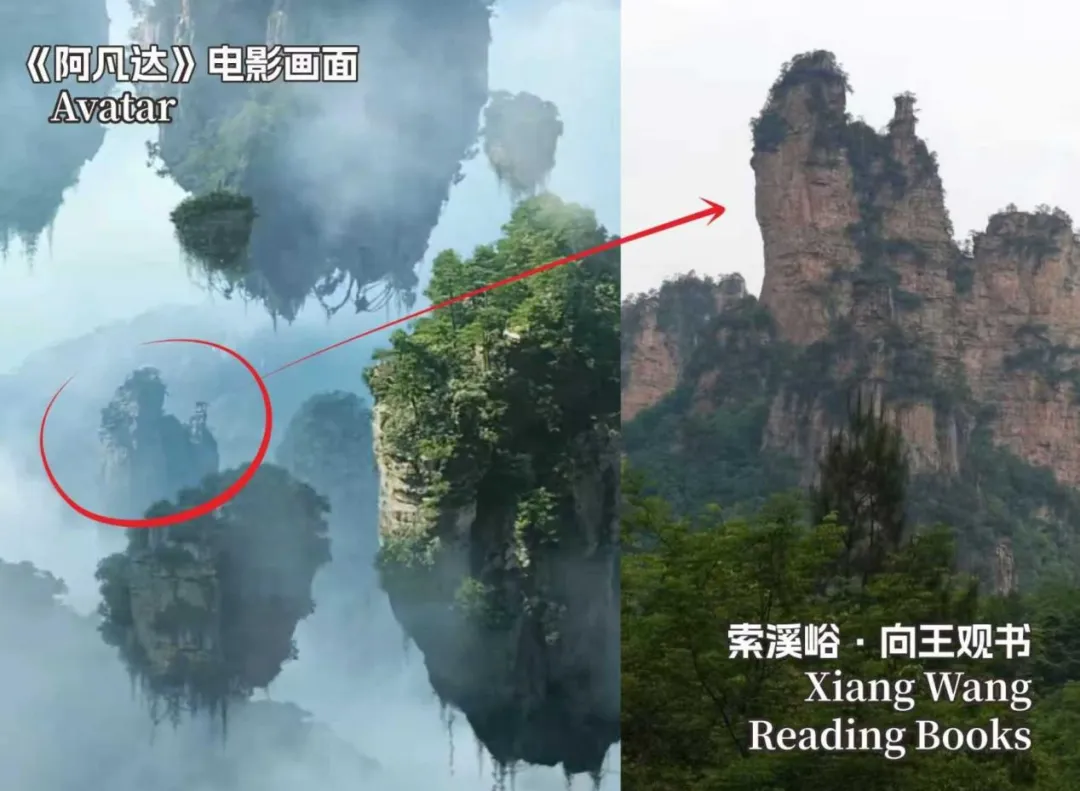
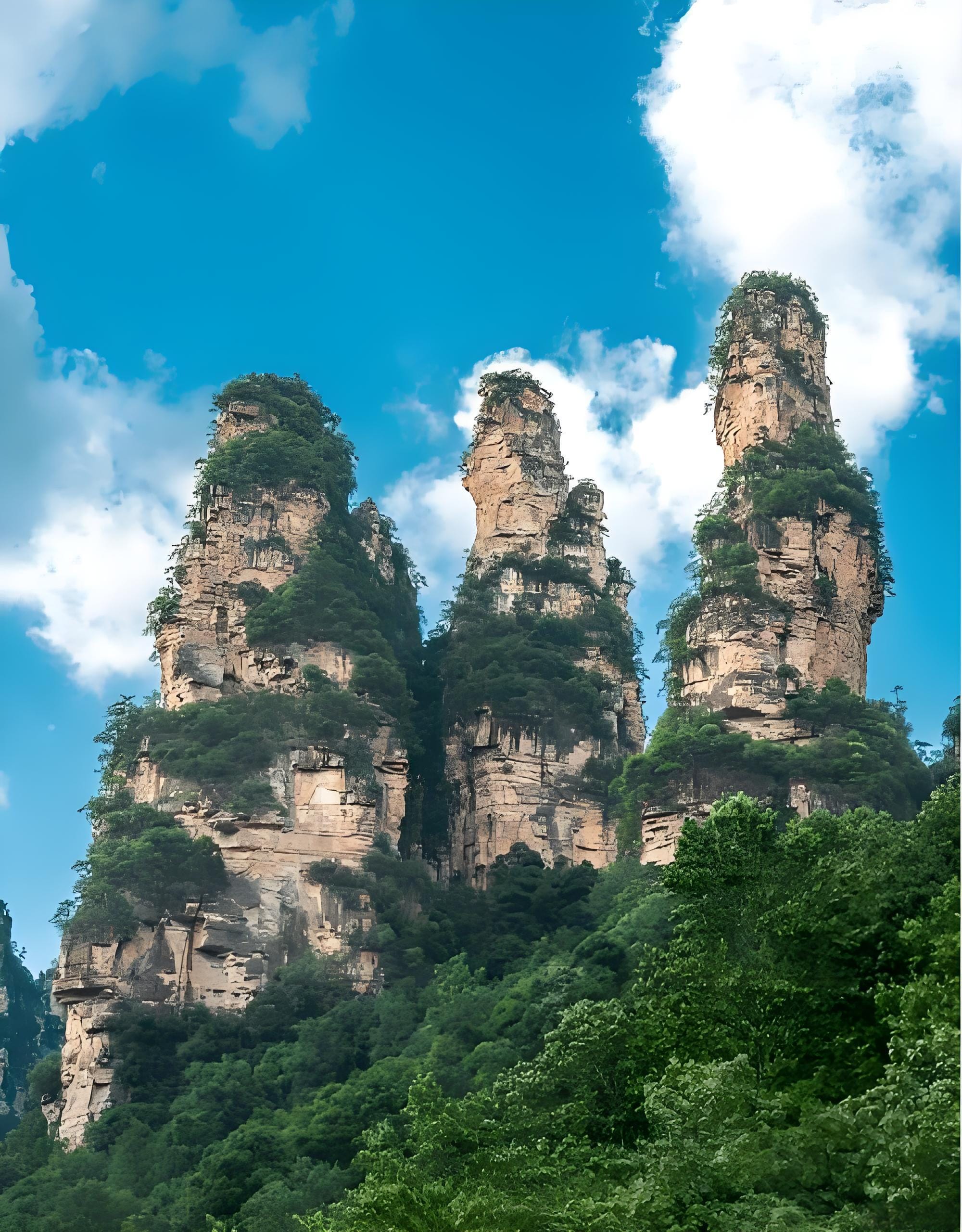
Three formations are worth knowing before you board, because the tram moves through them quickly:
Old Man Gathering Herbs (采药老人): The most readable silhouette in the valley — a single sandstone pillar, hunched, with what looks like a basket on its back. It appears at the halfway point — give it a few seconds and it resolves clearly. This is the one most visitors photograph.
Three Sisters Peak (三姐妹峰): Three pillars standing close together near the far end of the valley. Walking, this grouping is easy to miss — you’re often looking at individual peaks rather than the cluster as a whole. From the tram, the angle and the commentary land at the same moment, which is when it actually clicks. Worth looking for the slight gap between the second and third pillar; that’s where the silhouette reads most clearly.
Xiang Wang Reads Books (向王观书): A civil official holding a scroll, part of the mythology around King Xiang Wang. The tram commentary connects this formation to Tianzi Mountain, where Xiang Wang’s story is central to everything you see. If you’re heading there after the gallery, this is a useful piece of context to have before you arrive.
7. What to Expect from the Monkeys
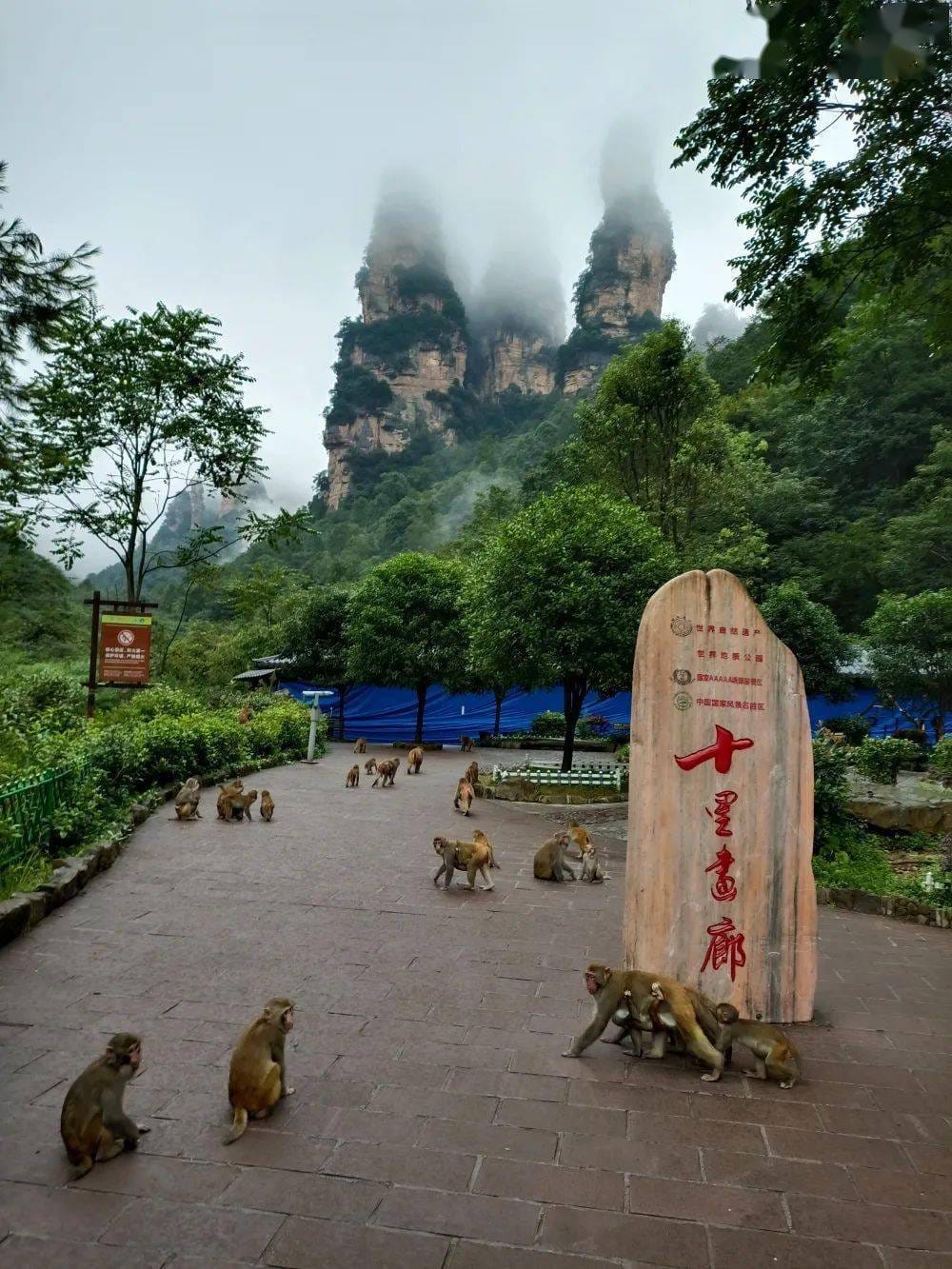
Wild macaques live in the valley and concentrate most reliably near the tram terminus at the far end. They are habituated to people and will come close — close enough to reach into an open bag if you’re not paying attention.
Don’t feed them. We say this not because of the park signage, but because we’ve watched the difference play out over many visits. The macaques that get regularly fed by tourists become aggressive and will test your pockets. The ones in less-trafficked areas of the path are relaxed and worth watching. Keep your food put away, give them space, and they’re great to photograph.
The small monkey enclosure near the terminus is a separate mini-zoo. Worth a few minutes with young children; not worth making a trip for.
DIG DEEPER: Where to See Wild Monkeys in China: Beyond the Tourist Trail
8. When to Go
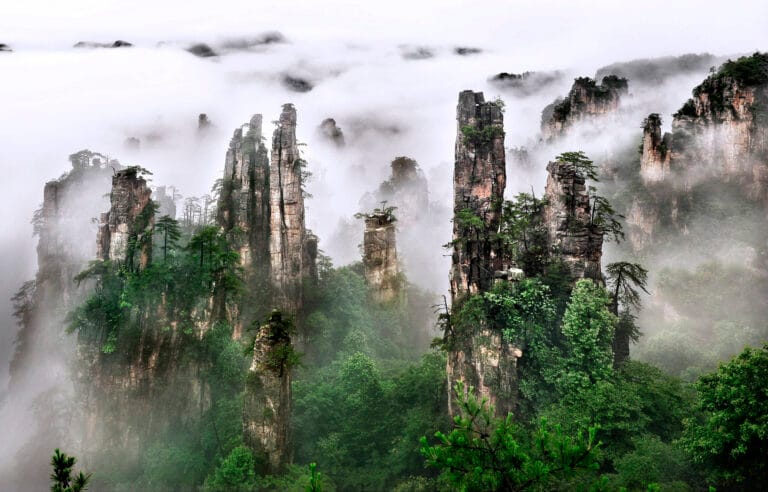
The best window is 07:30–09:00. Morning mist sits in the valley until 08:30 on most days, and the formations look completely different under those conditions — sandstone pillars emerging from cloud rather than standing in flat midday light. It looks like the landscape those formations were named after. The macaques are also most active at this hour.
Tram Queue Conditions — Typical Day
Peak crowds build from 10:00 to 14:00 on weekends and public holidays. In July and August, tram queues can reach 30–40 minutes, and the transparent roof panels trap heat badly. A packed summer carriage at noon is one of the less enjoyable ways to spend time in Zhangjiajie. If you’re visiting in summer and want the tram, go early or go after 15:30.
→ See our full Ten-Mile Gallery guide for seasonal conditions and route planning.
9. FAQ: Zhangjiajie Ten-Mile Gallery Tram
Is the tram the only way to see Ten-Mile Gallery?
No. The walking path runs parallel to the track for the full 2.5 km, and every formation the tram passes is reachable on foot. The tram is a seated alternative, not a different route. For most visitors without mobility constraints, the walk gives a better experience — closer views, better photography, and the ability to stop when something catches your attention.
Should I take the tram if I’m fit and not in a rush?
Probably not. We’ve guided hundreds of groups through this valley, and the ones who walk consistently get more out of it. That said, if you’re arriving in the afternoon after a full morning on Huangshizhai or Tianzi Mountain, buying a one-way tram ticket in is a sensible call — ride in with the commentary, walk back out at your own pace.
Can children ride for free?
Children under 1.3 m ride free. Children over 1.3 m who are under 18, and full-time students under 24 with a valid Chinese student ID, pay ¥19 one-way (half price). Adults who don’t qualify for a concession pay ¥38.
Is Ten-Mile Gallery worth visiting at all?
If your time is limited to two or three days, it sits below Yuanjiajie, Tianzi Mountain, and Huangshizhai in priority. The scenery is floor-level — intimate and accessible, but not as dramatic as the upper zones. If you have a full day in Wulingyuan and want something that doesn’t involve altitude gain, it’s a good afternoon. We wouldn’t cut Yuanjiajie for it.
Planning a Zhangjiajie itinerary? We’ve been running trips here since 2006 and know how to fit every part of the park into a schedule that actually works. Get in touch and we’ll sort it out.