Golden Week Holidays in China 2026: Your Complete Survival Guide
Standing at West Lake in Hangzhou on October 2nd, we watched a German couple desperately search their phones for accommodation. They’d arrived expecting to find hotels easily—Hangzhou has thousands. But during Golden Week, “thousands of hotels” means nothing when millions of travelers booked months ago.
By 4 PM, they were checking into a hotel 18 kilometers from downtown, paying ¥1,800 for a room normally costing ¥450. Their three-day Hangzhou itinerary collapsed into a nightmare of long commutes and missed attractions.
After guiding over 1,000 tours through China’s busiest holidays since 2006, we’ve learned that Golden Week isn’t just “crowded”—it’s a phenomenon that transforms how an entire nation moves. Understanding this difference determines whether your trip succeeds or fails.
Table of Contents
The 2026 Golden Week Calendar
Holiday | Dates | Days Off | Makeup Workdays |
|---|---|---|---|
Spring Festival | Feb 15-23 | 9 days | Feb 14, Feb 28 |
Labor Day | May 1-5 | 5 days | Apr 27 |
National Day | Oct 1-7 | 7 days | Sep 27, Oct 11 |
READ ALSO: Chinese Holidays 2026: A Traveler’s Guide
Spring Festival 2026 makes history with nine consecutive days—the longest ever. The government added extra days to ease the 40-day travel rush, but this also means even more concentrated tourism.
The makeup workdays matter more than you think. For National Day, Chinese workers face 12-13 consecutive workdays (September 22-October 7) to “earn” the week off. This explains why October 1st sees explosive travel demand.
Critical timing: Avoid October 1 (opening chaos) and October 6-7 (return rush). October 2-4 offers marginally better conditions.
Why Golden Week Holidays in China Exists
Before 1999, most Chinese workers received minimal vacation time. The 1997 Asian Financial Crisis pushed policymakers to boost domestic consumption. They introduced week-long holidays explicitly to stimulate tourism spending.
The results exceeded all expectations. During 2025’s National Day Golden Week alone, China recorded 765 million domestic trips and 700.82 billion yuan ($99 billion) in tourism spending. That’s more than many countries’ entire annual tourism industries—in one week.
Golden Week holidays now represent 15-20% of China’s annual tourism revenue despite being only 2-3% of the year. This concentration creates the core paradox: the economic value making these weeks “golden” also makes them extraordinarily challenging for individual travelers.
The Reality Check: What the Numbers Mean

2025 Golden Week Statistics
Metric | National Day (Oct) | Spring Festival (Feb) |
|---|---|---|
Domestic trips | 765 million | 474 million |
Tourism revenue | ¥700.82 billion | ¥632.7 billion |
Beijing visitors | 9 million (7 days) | 8.2 million (8 days) |
Shanghai visitors | 10+ million | 9.5 million |
West Lake (Hangzhou) | 5+ million visits | 5.04 million visits |
These aren’t projections. These are actual recorded numbers from 2025.
China’s Top Attractions: Golden Week vs. Normal Period Visitor Comparison
Attraction | Daily Visitors (Normal Period) | Daily Visitors (Golden Week) | Peak Day Record | Annual Total | Notes |
|---|---|---|---|---|---|
Forbidden City (Beijing) | 50,000-60,000 | 80,000 (cap/sold out) | 80,000 (cap limit) | 19.3M (2019) | Advance booking required 3-5 days |
Badaling Great Wall (Beijing) | 10,000-27,000 | 60,000-100,000 | 100,000 (historical peak) | ~10M | 65,000/day cap often exceeded |
Terracotta Warriors (Xi’an) | 20,000-30,000 | 70,000-80,000 | 80,000+ | 5+M (2015) | 65,000/day official cap |
West Lake (Hangzhou) | 100,000-200,000 | 800,000+ | 800,000+ | N/A | No official cap, impassable during peak |
The Bund (Shanghai) | 150,000-250,000 | 500,000-600,000 | 600,000+ (estimated) | N/A | Security restrictions during GW |
Zhangjiajie National Forest Park | 15,000-25,000 | 40,000-53,000 | 53,000 (cap limit) | 20.6M (H1) | Daily cap: 53,000 visitors |
Lijiang Old Town (Yunnan) | 40,000-60,000 | 120,000-150,000 | 150,000+ | 119.4M (2018) | Over-commercialized, very crowded |
Li River Cruise (Guilin-Yangshuo) | 8,000-15,000 | 25,000-30,000 | 30,000+ | Millions annually | Space absorbs crowds better |
Mutianyu Great Wall (Beijing) | 5,000-15,000 | 25,000-35,000 | 35,000+ | 1.4M | Far less crowded than Badaling |
Summer Palace (Beijing) | 30,000-40,000 | 60,000-70,000 | 70,000+ | N/A | Large grounds help disperse crowds |
Key Insights:
- Cap system effectiveness: Attractions with daily caps (Forbidden City, Zhangjiajie) provide predictable experience but require advance booking
- Worst offenders: Badaling Great Wall (900% increase), West Lake (400-700% increase), The Bund (300-400% increase)
- Moderate increase: Forbidden City (33-60% increase due to cap), Li River (200-300% increase)
- Better alternatives: Mutianyu Great Wall, Xixi Wetland Park, Jinshanling Great Wall receive 60-85% fewer visitors than their famous counterparts
The Economics of the Crowd: Real Price Data
Hotel Price Comparison
Hotel Category | Normal Price | Golden Week Price | Increase |
|---|---|---|---|
Budget (Beijing outskirts) | ¥220/night | ¥680/night | +209% |
Budget (Shanghai suburbs) | ¥280/night | ¥750/night | +168% |
Mid-range (Hangzhou, near West Lake) | ¥520/night | ¥1,580/night | +204% |
Mid-range (Chengdu center) | ¥650/night | ¥1,890/night | +191% |
Premium (Beijing historic district) | ¥980/night | ¥2,880/night | +194% |
Premium (Shanghai Bund) | ¥1,350/night | ¥3,680/night | +173% |
The pattern: hotels typically triple during Golden Week. Quality accommodation books 8-12 weeks ahead. What remains after that usually has location or quality issues.
Flight Price Comparison
Route | Normal Price | Golden Week Price | Increase |
|---|---|---|---|
Beijing → Shanghai | ¥450-600 | ¥1,200-1,800 | +167-200% |
Shanghai → Chengdu | ¥520-720 | ¥1,600-2,400 | +208-233% |
Guangzhou → Xi’an | ¥680-880 | ¥1,900-2,600 | +179-195% |
Beijing → Xi’an | ¥340-520 | ¥1,450-2,100 | +326-304% |
High-Speed Train Reality
Aspect | Normal Period | Golden Week |
|---|---|---|
Price | ¥553 (Beijing-Shanghai, 2nd class) | ¥553 (unchanged) |
Availability | Book 1-2 days ahead | Sells out in 2-8 minutes |
Release time | 15 days before, 8:00 PM | Same, but requires precision |
Booking strategy | Flexible | Must have backup options ready |
Government controls train prices, so availability becomes the real constraint. Miss that 8:00 PM window when tickets release, and you’re scrambling for alternatives.
Total Trip Cost Comparison
7-day China tour (Beijing-Xi’an-Shanghai):
Period | Cost per Person | Difference |
|---|---|---|
Normal (April-May) | ¥8,000-12,000 | Baseline |
Golden Week (October) | ¥15,000-25,000 | +88-108% |
Where to Go and Where to Avoid
The biggest mistake travelers make is choosing destinations based on what they want to see rather than where crowds actually go. Here’s what we’ve learned works and what absolutely doesn’t.
The “Death Traps”: Avoid Completely
Badaling Great Wall → Switch to Jinshanling
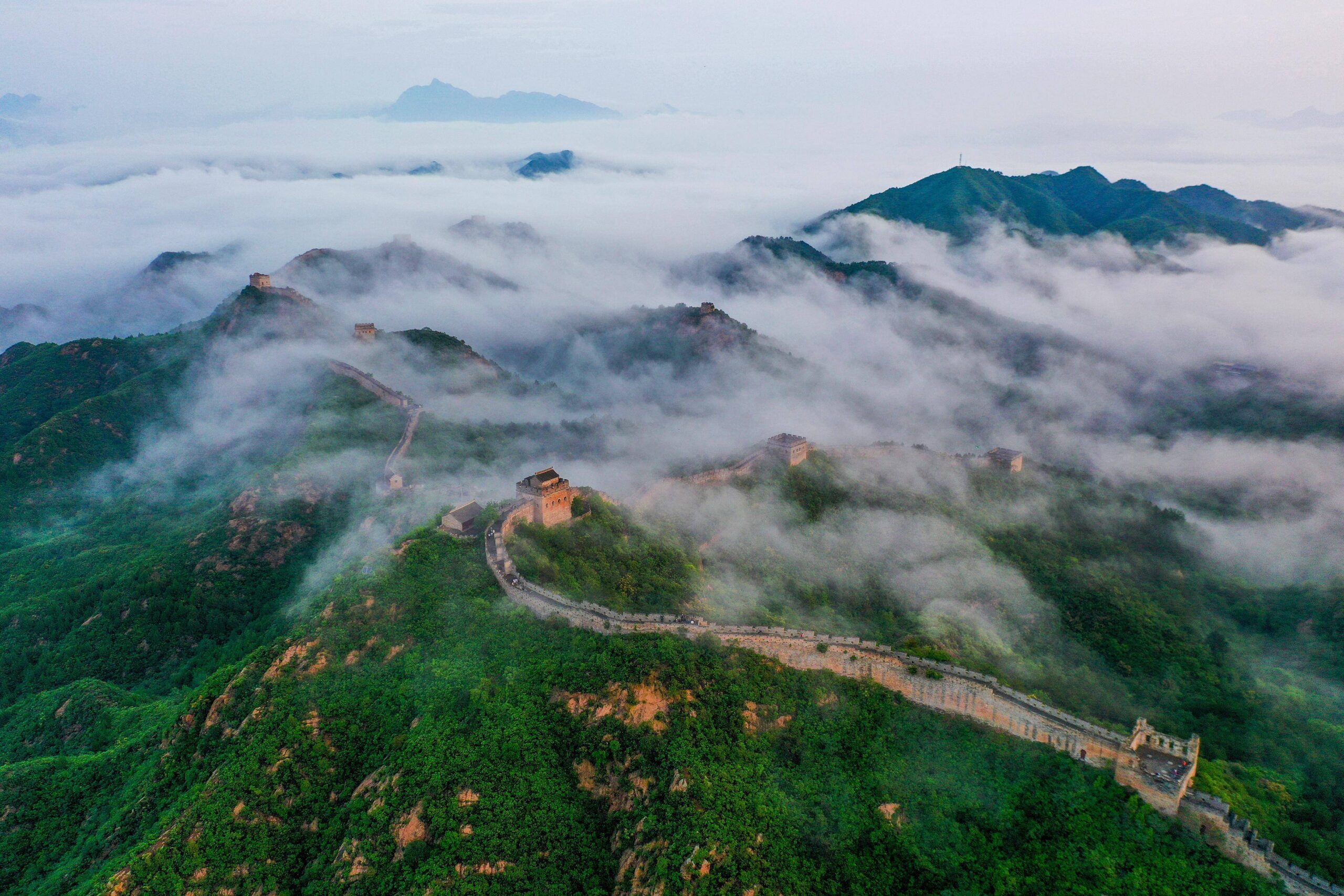
Badaling during Golden Week is genuinely unpleasant. Two to three-hour cable car queues. Wall sections so crowded you shuffle forward unable to overtake. Five to six hours on-site for 30-45 minutes of actual wall walking.
Jinshanling sits 90 minutes from Beijing—only 30 minutes farther than Badaling. This 10-kilometer section offers partially restored wall with cable car options. During Golden Week, you’ll encounter maybe 15-20% of Badaling’s crowds. Better photography, more authentic experience, actual ability to walk freely.
We’ve guided dozens of groups to Jinshanling during Golden Week. Not one has regretted choosing it over Badaling. Several have told us it saved their entire Beijing experience.
West Lake → Switch to Xixi Wetland Park

West Lake sees 800,000+ visitors on peak Golden Week days. The experience shifts from appreciating natural beauty to managing crowd navigation. Lakeside paths become impassable. You’re seeing people, not scenery.
Xixi National Wetland Park sits 30 minutes from West Lake—11.5 square kilometers of wetlands and canals. Boat tours wind through quiet waterways where you’ll encounter local fishermen and traditional architecture. This location appeared in the film “If You Are the One.” During Golden Week, it receives 70% fewer visitors than West Lake while offering equally authentic Hangzhou atmosphere.
Lijiang Old Town → Switch to Shaxi Ancient Town

Lijiang has transformed into a mass tourism machine. Over 150,000 daily visitors during Golden Week pack into streets where every shop sells identical tourist goods. The “ancient town” atmosphere exists only in marketing materials.
Shaxi Ancient Town sits two hours from Lijiang on winding mountain roads—this distance alone deters most tourists. This Tang Dynasty trading post on the ancient Tea Horse Road houses about 2,100 residents who continue daily life largely independent of tourism. The Old Market Square sees mostly locals. During Golden Week, maybe 2,000-3,000 daily visitors arrive—manageable, authentic, and genuinely ancient.
The accommodations are basic. English is virtually absent. Hot water can be unreliable. But if you want authentic minority culture rather than polished tourist performances, Shaxi delivers what Lijiang promised decades ago.
The Bund (Shanghai) → Switch to Former French Concession

The Bund‘s waterfront promenade becomes impassable during Golden Week. Cannot see the skyline for the crowd density. Photo opportunities require 15-20 minute waits. Security restrictions limit movement.
The Former French Concession spreads across several neighborhoods with tree-lined streets and art deco architecture. Crowds naturally disperse across this area. Boutique shops and cafes occupy historic buildings. Tianzifang and Xintiandi remain busy but manageable. The M50 Art District for contemporary Chinese art receives far fewer visitors while offering genuine cultural engagement.
The Forbidden City → Consider Lama Temple + Temple of Heaven

The Forbidden City‘s 80,000 daily cap sells out 3-5 days ahead. Security takes 45-60 minutes. Popular halls require additional queuing. Crowd density makes actually viewing exhibits difficult.
The Lama Temple represents Tibetan Buddhism’s most important temple outside Tibet—stunning architecture, genuine religious practice, and profound cultural significance. The Temple of Heaven offers equally spectacular imperial architecture with better space for crowds to disperse. Combined, these UNESCO World Heritage Sites receive 30-40% of the Forbidden City’s crowds while delivering comparable historical and architectural value.
Visit the Lama Temple at opening (9 AM) and Temple of Heaven in late afternoon. You’ll have meaningful experiences rather than crowd management exercises.
Where the Smart Money Goes: Destinations That Work
Gansu Province: The Silk Road Alternative
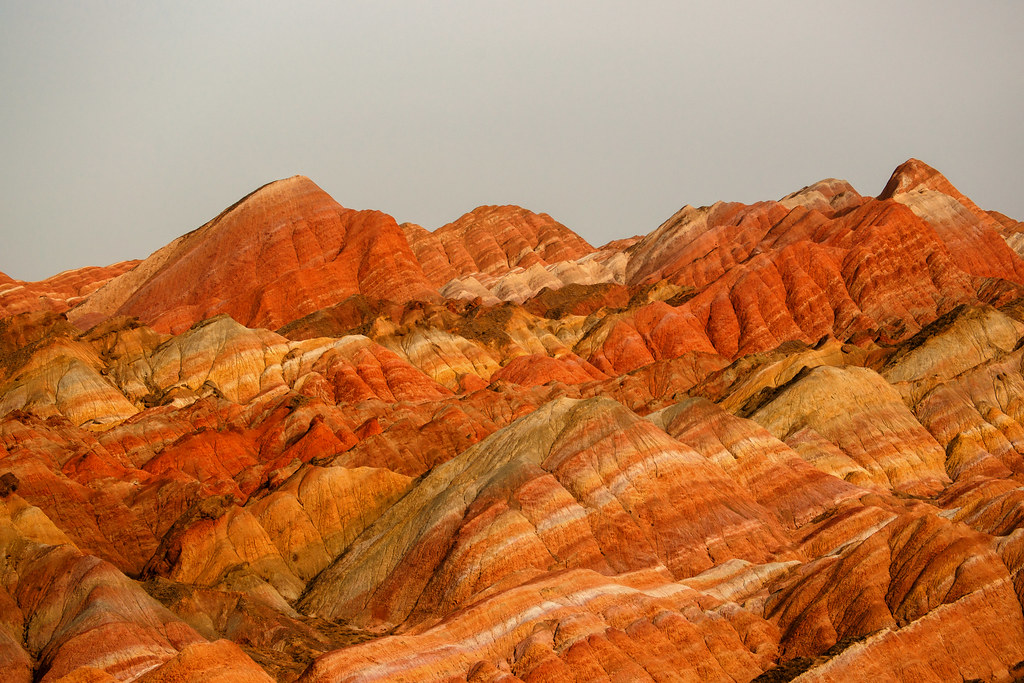


Gansu offers extraordinary historical significance with manageable crowds. Distance from major population centers naturally limits visitors—reaching Dunhuang requires either a 3.5-hour flight from Beijing or 14-hour train journey. This commitment deters casual tourists.
The Mogao Caves near Dunhuang receive 6,000-8,000 daily visitors during Golden Week versus the Forbidden City’s 80,000. These Buddhist caves contain art spanning 1,000 years—comparable in cultural importance to the Sistine Chapel. October weather is ideal: clear skies, 15-22°C daytime temperatures. The Zhangye Rainbow Mountains display vibrant colors in autumn light. Jiayuguan Fort—the western terminus of the Great Wall—offers Great Wall experiences without the nightmare.
The practical requirements: Gansu demands 6-8 days minimum with 4-5 hours daily in vehicles between sites. Accommodations are basic outside Lanzhou. English is virtually non-existent. Northwestern Chinese cuisine may challenge palates accustomed to Cantonese or Sichuan food.
But the reward is profound. You’re experiencing China’s Silk Road heritage with 60-70% fewer tourists than eastern destinations during the same period.
Yangtze River Cruise: The Single Best Golden Week Option

A Yangtze River cruise from Chongqing to Yichang represents perhaps the optimal Golden Week strategy. Ships have fixed passenger capacity—your experience quality is guaranteed once aboard, regardless of chaos elsewhere.
Four and five-day cruises pass through the Three Gorges (Qutang, Wu, and Xiling) with stops at Fengdu Ghost City, Shibaozhai Pagoda, and the Three Gorges Dam. October captures autumn foliage along riverbanks with temperatures ranging 18-24°C.
The format solves multiple Golden Week challenges simultaneously. Accommodation is mobile—no checking in and out of hotels. Transportation is included—no competing for trains between destinations. Meals are provided—no restaurant queues. Crowds are capped—ship capacity prevents overcrowding.
Premium river cruises (Victoria Cruises, Century Cruises, Yangtze Gold) book 3-4 months ahead during Golden Week. Budget cruises remain available closer to departure but sacrifice comfort significantly.
Cost comparison: Premium cruises run ¥3,000-6,000 per person for four days during Golden Week, including accommodation, meals, shore excursions, and transport. Budget cruises range ¥1,200-2,000. When you calculate Golden Week hotel premiums, train ticket struggles, and restaurant hassles, the cruise often represents better value than independent travel.
Guizhou Province: Authentic Minority Culture
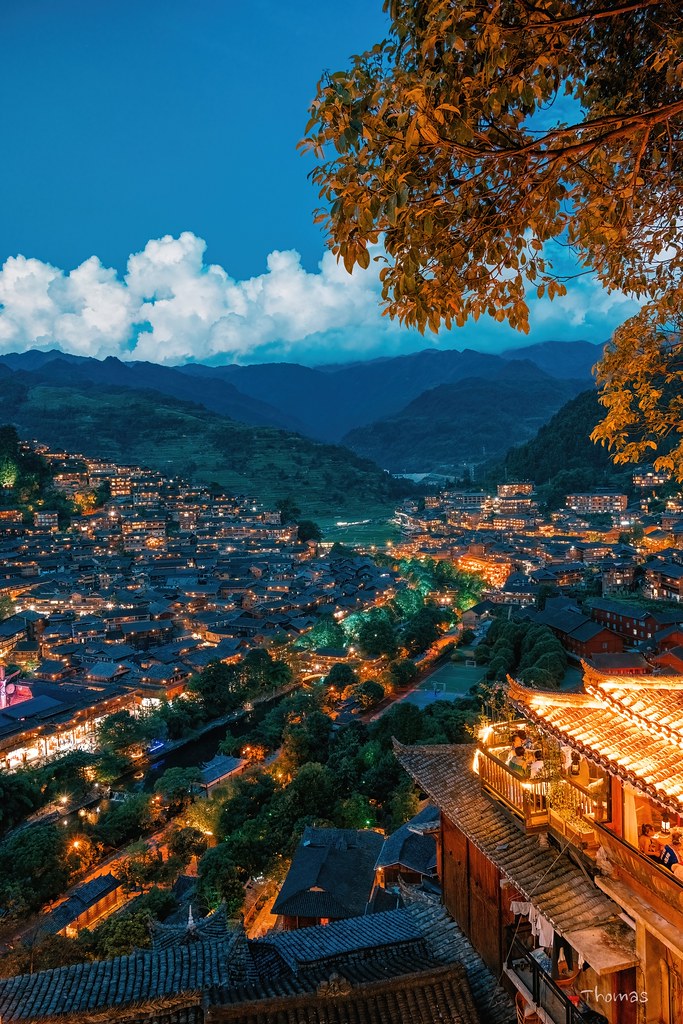
Guizhou maintains authenticity through infrastructure limitations. Mountainous terrain and winding roads naturally cap visitor numbers. Those who make the journey discover Miao, Dong, and Buyi minority cultures largely unchanged by mass tourism.
Xijiang Thousand Households Miao Village houses over 1,200 Miao families in traditional wooden structures along terraced hillsides. Yes, tourism exists—shops sell handicrafts and restaurants serve tour groups. But village life continues independent of tourism. During Golden Week, visitor numbers increase but get absorbed by the village’s physical scale. You’re observing authentic daily life, not staged performances.
Kaili’s weekly markets rotate among surrounding villages. The Sunday Market attracts Miao, Gejia, and Dong people in traditional dress for commerce, not tourism. These markets peak during Golden Week as people use holidays to shop—creating authentic cultural immersion.
The reality check: roads wind through mountains at 40-60 km/h. Accommodations range from basic to rustic. Hot water can be unreliable. English is nearly absent. This destination suits cultural immersion seekers, not luxury travelers.
Tibet: The Permit Advantage

Tibet‘s permit system creates inadvertent crowd control. While mainland attractions overflow, Tibet’s mandatory permit process caps visitor numbers. The Potala Palace limits daily visitors to 2,300 versus the Forbidden City’s 80,000.
October in Lhasa offers generally favorable conditions—daytime temperatures of 12-18°C under clear skies, though nights drop to -2 to 4°C. The 3,650-meter altitude requires 2-3 days acclimatization. Most travelers experience headaches, breathlessness, and sleep difficulty initially.
Foreign visitors must book through licensed travel agencies (like us) minimum 20 days before departure. The process involves submitting passport copies, China visa details, and itinerary information. Permits are typically approved 5-7 days before travel. Independent travel is prohibited—you must join organized tours or hire private guides.
Cost reality: ¥8,000-15,000 per person for 5-7 days including permits, guides, transportation, and accommodation. This significantly exceeds independent mainland travel costs but provides structure and expertise valuable for high-altitude, culturally complex destinations.
The “Reverse Travel” Strategy: Moving Against the Flow
The most sophisticated Golden Week strategy involves analyzing where crowds go and deliberately choosing opposite patterns.
When masses go to cities, go to nature. While millions pack into Beijing, Shanghai, and Xi’an, China’s natural landscapes receive proportionally fewer visitors. Zhangjiajie, Huangshan, and Jiuzhaigou still get crowded, but the physical space absorbs people better than urban attractions.
When masses travel on the first and last days, travel mid-week. October 1st sees maximum outbound travel. October 6-7 sees maximum return travel. October 2-4 offers marginally better transportation conditions because people are already at their destinations.
When masses choose famous sites, choose UNESCO alternatives. The Forbidden City is famous, but the Temple of Heaven and Lama Temple are equally spectacular UNESCO sites with fewer crowds. Everyone knows the Terracotta Warriors, but the Han Yang Ling Museum offers comparable historical significance with better viewing conditions.
When masses fly, consider cruising. When 765 million people are competing for planes, trains, and hotels, being on a river cruise ship means you’re in a completely different system with guaranteed capacity and quality.
This strategy requires more research and planning. The famous sites became famous for reasons—they’re genuinely spectacular. But during Golden Week, “spectacular but invisible through crowds” delivers less value than “slightly less famous but actually viewable with space to breathe.”
Masterclass in Transport: Booking Strategies That Work
Transportation during Golden Week requires precision. Here’s what actually works based on years of trial and error.
High-Speed Train: The 8 PM Window
Download the 12306 app minimum three weeks before travel. Registration requires a Chinese phone number or passport and takes 2-5 days for verification. International credit cards often fail—plan alternative payment methods.
Train tickets become available exactly 15 days before departure at 8:00 PM Beijing time sharp. Popular routes (Beijing-Shanghai, Shanghai-Xi’an) sell out in 2-8 minutes—we’ve watched Beijing-Shanghai tickets disappear in under five minutes.
The successful strategy: Set your alarm for 7:55 PM. Be logged in with payment ready. Have 3-4 acceptable backup options prepared—departure times, dates, or even alternative routes. Don’t fixate on one specific train. When tickets release at 8:00 PM, flexibility determines success or failure.
If you miss the window or everything sells out, consider overnight trains with soft sleeper berths (more expensive but replaces a hotel night), alternative stations (Beijing has six main stations), slower conventional trains (longer but better availability), or flying instead.
Flights: Early Morning and Secondary Cities
Book 2-3 months ahead minimum. Prices rise steadily as Golden Week approaches, with steepest increases 2-3 weeks before departure.
Early morning flights (before 8:00 AM) face fewer delays than afternoon/evening departures. Golden Week delay rates increase 40-60% due to airspace congestion. Airlines maintain normal check-in closing times (usually 45 minutes before departure), so arriving late creates genuine risk.
Flying into secondary cities costs 30-50% less than Beijing or Shanghai during the same period. Chongqing, Chengdu, and Kunming offer excellent access to major attractions while avoiding the worst arrival chaos.
Metro Systems: Avoid Peak Hours
Beijing, Shanghai, Guangzhou, and Shenzhen metro systems face severe crowding during peak hours: 10:00 AM-2:00 PM and 4:00 PM-7:00 PM. Wait times of 15-20 minutes just to enter stations become normal. Security screening slows significantly.
Travel before 9:00 AM or after 8:00 PM when possible. Allow double your normal transit time. Consider walking distances under 2 kilometers rather than fighting metro crowds—you’ll often arrive faster.
Private Cars: When the Premium Makes Sense
Pre-arranged car services through hotels cost ¥500-800 per day. DiDi (China’s Uber equivalent) implements surge pricing that can triple or quadruple normal fares during Golden Week peaks.
The premium makes sense for airport/train station transfers, day trips to the Great Wall or other suburbs, and multi-stop sightseeing days. Time saved and stress avoided often justify the cost during Golden Week chaos.
Should You Reschedule? The Decision Framework
Use this framework to decide whether Golden Week travel makes sense for your specific situation.
Definitely reschedule if this is your first China visit, you strongly dislike crowds (not just prefer fewer people but feel genuinely distressed), you want flexible spontaneous travel, budget is a primary concern, you’re traveling with young children or elderly family members, or you have flexibility to choose other dates. Better alternatives: April-May (excluding May 1-5) or late September.
Consider Golden Week if you specifically want to witness National Day celebrations, you can book everything 3+ months ahead, you’ll deliberately choose less-popular destinations (Gansu, Yangtze cruise, Guizhou, Tibet), your work schedule only permits travel during these weeks, you’re traveling with Chinese friends or family who can navigate logistics, or budget is not a primary constraint.
The middle ground: If you must travel during Golden Week, book accommodation 3+ months ahead, choose one major city maximum, spend the rest of time in secondary destinations, accept modified expectations, and build in rest days. Exhaustion accumulates fast during Golden Week.
Frequently Asked Questions
What’s the single most important thing to book for Golden Week?
Accommodation in your first-night destination. If you arrive in Beijing or Shanghai without confirmed lodging during Golden Week, you’ll spend hours searching for availability and likely end with expensive, low-quality options far from downtown. Everything else has workarounds. Accommodation doesn’t.
Can I realistically visit Beijing’s main attractions during National Day Golden Week?
Yes, with proper preparation. Book Forbidden City tickets 5-7 days ahead. Arrive by 7:30 AM to beat crowds. Choose Jinshanling or Mutianyu over Badaling for the Great Wall. Visit Temple of Heaven on October 2-3 rather than October 1. Accept that Summer Palace and Hutongs will be crowded but not impossibly so with strategic timing.
How much more expensive is Golden Week compared to normal travel?
Hotels increase 200-400%. Flights increase 50-150%. Trains maintain prices but availability becomes the issue. Overall trip costs increase 80-120% depending on choices. A ¥10,000 normal-period trip becomes ¥18,000-22,000 during Golden Week.
What if I can’t get train tickets to my next destination?
Options in preference order: fly instead (more expensive but available), take slower conventional trains (longer but better availability), take buses (least comfortable but flexible), hire private cars (expensive but guaranteed), or adjust your itinerary to stay longer in your current location.
Is Spring Festival better or worse than National Day for international tourists?
Different rather than better or worse. Spring Festival focuses on family reunions—major cities experience population decreases as workers return to hometowns. Tourist attractions are somewhat less crowded than National Day. However, many shops and restaurants close for several days. Transportation remains extremely crowded. Cultural experience emphasizes tradition and family versus National Day’s patriotism and tourism focus.
What’s the best destination if I must travel during Golden Week but want to minimize crowds?
A Yangtze River cruise offers the optimal balance. Ships have fixed capacity creating predictable experience quality. You’re constantly moving rather than competing for space at single locations. Alternatively, choose remote destinations like Gansu Province or western Yunnan where distance and infrastructure naturally reduce crowds.
Will shops and restaurants close during National Day Golden Week?
Generally no—opposite of Spring Festival. National Day represents peak shopping and dining season. Retailers extend hours to capitalize on tourist spending. However, government offices close for the full week and banks operate reduced hours.
How early should I arrive at stations and airports during Golden Week?
Train stations require 60-90 minutes before departure for major stations like Beijing West or Shanghai Hongqiao due to extended security queues. Airports demand three hours before domestic flights and four hours before international flights. Check-in, security, and immigration all face significant delays while maintaining normal closing times.
Travel China With Me specializes in customized private tours combining decades-long firsthand experience with deep cultural knowledge and strategic planning. Our expertise helps international visitors experience authentic China while navigating the practical realities that determine trip success—especially during Golden Week and other challenging travel periods.