China Rainy Season by City: A Practical Travel Guide
China’s rainy season is not one thing. It’s ten different things happening in ten different cities at ten different times of year — and most travel guides flatten all of that into “summer is wet, avoid July.”
We’ve been running inbound China tours since 2006. Every year, we reroute itineraries and rebook activities because someone read a generic weather article and assumed Beijing’s July rain was the same as Guilin’s May rain, or that Zhangjiajie’s rainy season was something to escape rather than plan around. This guide goes city by city — Beijing to Kunming, Guilin to Chongqing — with the honest picture of what rain actually means on the ground in each place.
Table of Contents
1. Why China Has No Single “Rainy Season”

China spans five distinct climate zones. The summer monsoon hits the southern provinces of Guangdong, Guangxi, and Hainan first, in April and May. In June, the rains push northward, bringing the famous “plum rain” season to the Yangtze Delta. Northern China — Beijing, Xi’an — gets its rainy window in July and August, then it’s done. By September, the south is clearing while Beijing slides into crisp, dry autumn.
This staggered progression is the most important thing to understand. Southern cities like Guangzhou and Guilin are soaked while Beijing is still dry in May. Zhangjiajie peaks in June–July, exactly when Beijing is getting its first real rain. By September, nearly everywhere is drying out except for typhoon-affected coasts.
Which means there’s almost always somewhere dry to go, no matter when you travel. But there’s a more important corollary that most guides miss entirely: for mountain destinations in China, rain is not the only enemy — cloud cover is. A mountain trip can produce zero views on a day with no rain at all, simply because cloud has settled over the peaks. This distinction matters because standard weather apps don’t show it. We’ll flag this where it matters most.
2. Month-by-Month: Where to Go to Dodge the Rain
Use this as your starting point. Find your travel month, then read the relevant city sections below for the full picture.
Month | ||
|---|---|---|
January–February | All of China — dry season | Coastal south (light winter drizzle) |
March | Beijing, Xi’an, Yunnan | Guangzhou (rain building) |
April | Beijing, Xi’an, Tibet | Guilin, Guangzhou (peak rain starts) |
May | Beijing, Xi’an, Tibet, Xinjiang | Guilin, Guangzhou, Zhangjiajie (building) |
June | Beijing (still manageable), Xinjiang | Guilin, Shanghai (Meiyu), Zhangjiajie peak |
July | Tibet, Xinjiang, Qinghai | Beijing, Shanghai, Guangzhou, Chongqing, Zhangjiajie |
August | Tibet, Xinjiang, northeast coast | Beijing, all southern cities, Chongqing |
September | Beijing, Shanghai, Chengdu (clearing) | Guangzhou (typhoon tail), Yunnan |
October | All of China — best month nationally | Guangzhou (tail end) |
November | All of China | None significant |
December | All of China | None significant |
When Does It Rain? All Major Cities at a Glance
Rainfall (mm) by city and month · 1991–2020 normals · Source: China Meteorological Administration
One note on Tibet, since it surprises most people: Tibet's rainy season runs from June to September, with July and August being the wettest months — but rainfall is light compared to the rest of China. The plateau dries fast. Tibet in summer is when it's most accessible, most visited, and most green.
3. China Rainy Season at a Glance — Major Cities
The table below summarizes peak rainy months, average monthly rainfall at the wet peak, and typical rainy days per month for the cities most international tourists visit.
City | Peak Rainy Months | Peak Monthly Rainfall | Rainy Days/Month (Peak) | Rain Type |
|---|---|---|---|---|
Beijing | July–August | ~185 mm (July) | ~14 days | Short, heavy afternoon storms |
Xi'an | July–September | ~100 mm | ~12 days | Moderate storms |
Shanghai | June–July | ~165 mm | ~14 days | Plum rain (persistent drizzle + storms) |
Hangzhou | June–July | ~175 mm | ~15 days | Plum rain (same pattern as Shanghai) |
Guilin | April–July | ~300–350 mm | ~20+ days | Heavy tropical rain, flooding risk |
Guangzhou | April–September | ~250 mm | ~16 days | Monsoon + typhoon season |
Chongqing | May–September | ~175 mm (July) | ~15 days | Hot rain + famous night rain |
Zhangjiajie | May–July | ~200+ mm | ~18–20 days | Subtropical monsoon, sudden storms |
Huangshan | May–August | ~300+ mm (July) | ~15–21 days | Heavy rain; 200+ foggy days/year |
Chengdu | July–August | ~220 mm | ~18 days | Heavy rain, persistent cloud cover |
Kunming | June–October | ~190 mm | ~18 days | Afternoon tropical showers |
Lijiang | June–September | ~150 mm (July) | ~16 days | Afternoon showers, clears by evening |
Sources: Hunan Meteorological Bureau, Huangshan Scenic Area Administration, China climate records 1991–2021, Chongqing Municipal Climate Center.
Rainy Days per Month — How Cities Compare
Peak rainy days per month at each city's wettest point · Source: China Meteorological Administration 1991–2020 normals
The volume is only half the story. The character of rain varies dramatically by city. Beijing's summer rain hits hard and fast — a 30-minute downpour, then sun. Guilin's June rain can be days of grey drizzle punctuated by flash floods. Chongqing's rain often comes at night. Zhangjiajie's rain is terrain-dependent: sunny at the valley floor, storming at the summit — sometimes simultaneously. The city-by-city sections below explain what this actually means on the ground.
4. Beijing: Short Storms, Not a Travel Stopper
When it rains
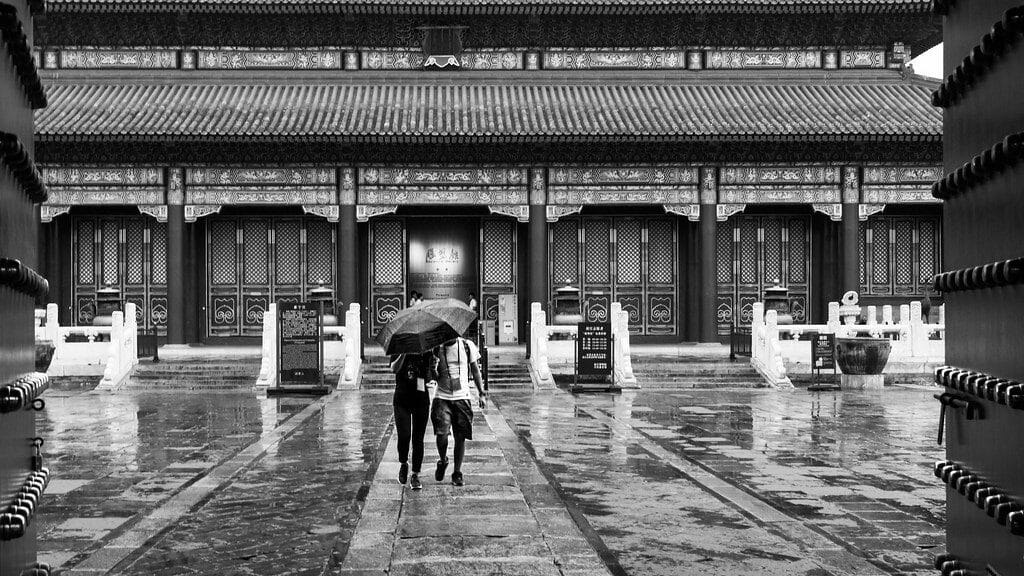
Beijing's rainfall is sharply concentrated. July and August together account for over 50% of the city's annual precipitation. An average of more than 10 rainy days per month in these two months is typical, with July averaging around 185 mm. Outside this window, rain's effect on travel is minimal.
The summer monsoon arrives around mid-June, bringing the first real humidity surge. But the monsoon is irregular here — in some years, there are entire weeks of blazing summer sun with no rain at all. Don't assume constant rain just because it's July.
Monthly Rainfall — Beijing
Monthly average rainfall (mm) · 1991–2020 normals · Source: China Meteorological Administration
What it actually feels like on the ground
Beijing's rain pattern is almost nothing like the south. It typically hits as afternoon thunderstorms — brief, intense, then over. Mornings are usually clear and workable, even in peak July. The bigger discomfort isn't the rain itself. It's the heat-humidity combination that follows a storm.
We've been running Beijing tours through countless wet summers. Clients who front-load outdoor activities — Great Wall, Summer Palace, Temple of Heaven — to mornings almost never lose meaningful time to rain. Those who schedule outdoor attractions for the afternoon in July sometimes get caught.
One practical note: Beijing's urban drainage has improved significantly in recent years. Intense downpours can still cause brief localized flooding at underpasses, but it clears fast.
Timing advice
July and August are also Beijing's peak domestic tourism months. School holidays bring heavy crowds to the Forbidden City and Mutianyu Great Wall. If your dates are flexible, June gives you lighter rain and thinner crowds. September drops the rain dramatically while keeping temperatures comfortable — arguably Beijing's best travel month.
For day-by-day planning regardless of season, see our Beijing Itinerary guide.
5. Xi'an: A Short Window, Then Dry
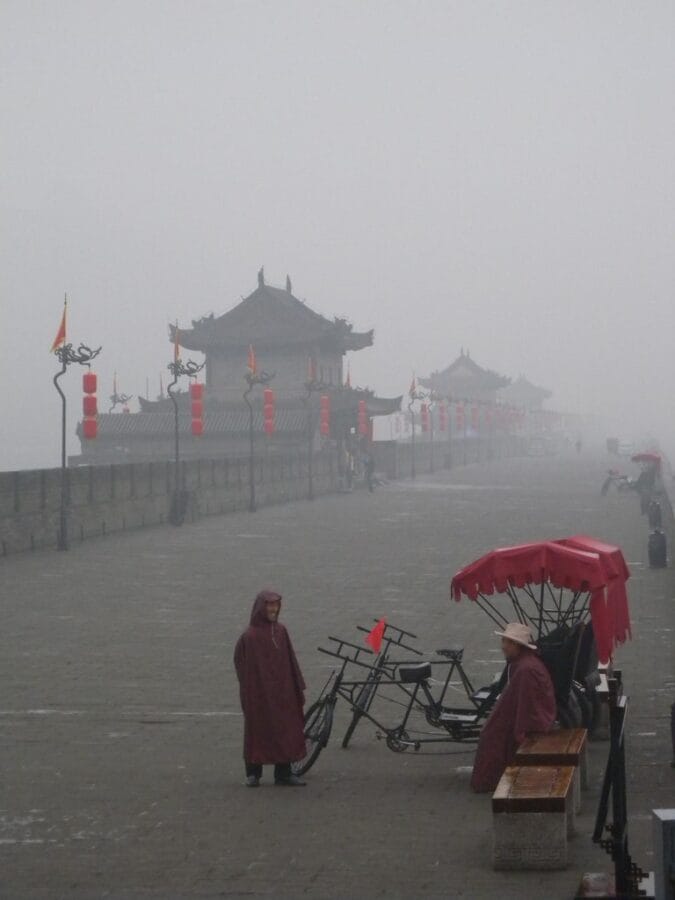
Xi'an sits in the Wei River valley, sheltered by mountains on three sides. Its rainy season runs July through September — shorter than the south, less intense than Beijing's peak. July and August average around 100 mm each with roughly 12 rainy days per month. By October it's reliably dry.
The rain here comes mostly as evening thunderstorms. Morning sightseeing at the Terracotta Warriors, the City Wall, and the Muslim Quarter is rarely interrupted. We've run Xi'an tours in July with clients who reported zero rain impact across a 3-day visit — and others who hit two straight wet days. The variability is real.
Monthly Rainfall — Xi'an
Monthly average rainfall (mm) · 1991–2020 normals · Source: China Meteorological Administration
What does affect Xi'an in spring is sandstorms, not rain. March and April can bring dust haze from the Loess Plateau. If you're choosing between spring and summer for Xi'an, the rain is a smaller concern than the dust.
6. Shanghai and the Yangtze Delta: The Meiyu Trap
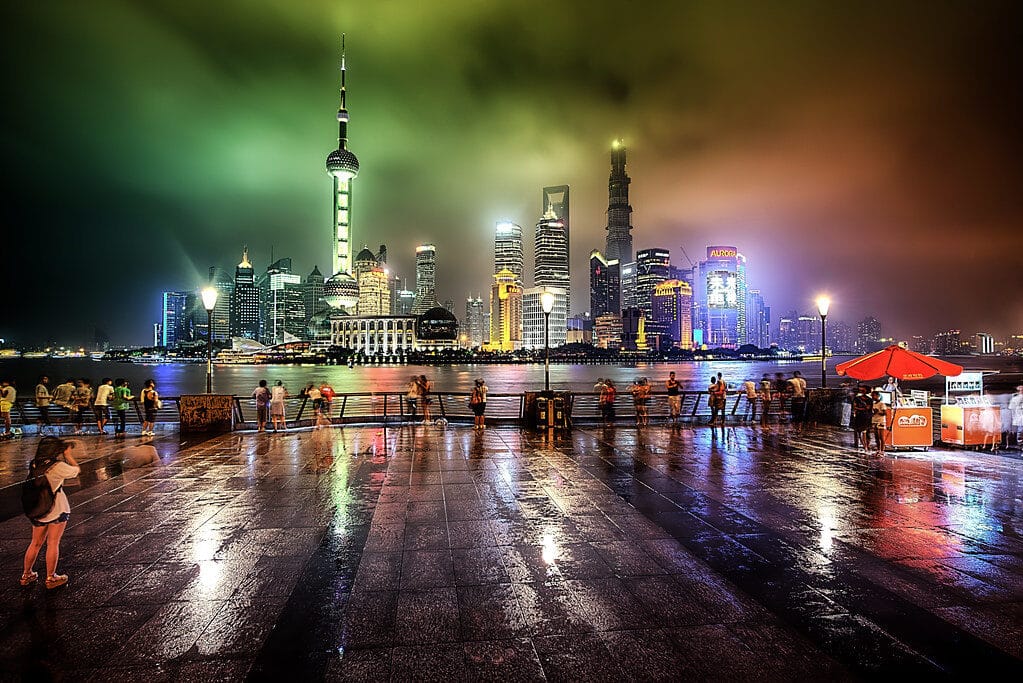
What is Meiyu (梅雨)?
Eastern China's "plum rain" season — Meiyu — runs from mid-June to early July. In Shanghai, June is typically the rainiest month. The name comes from the plum-ripening season, and it captures something real: humidity this high will mould stored goods. Locals actively manage mould during Meiyu. That's not exaggeration.
Meiyu is not ordinary summer rain. It's a stationary front that parks over the Yangtze Delta for two to four weeks. It delivers persistent grey skies, frequent light-to-heavy rain, and oppressive humidity. The thermometer might say 30°C. The "feels like" temperature says something higher.
Monthly Rainfall — Shanghai
Monthly average rainfall (mm) · 1991–2020 normals · Source: China Meteorological Administration
What it means for travelers
Shanghai's core attractions — the Bund, Yu Garden, Zhujiajiao water town — are manageable in light Meiyu conditions. You'll carry an umbrella constantly, and outdoor photography gets harder. The real drain is navigating the city in heat plus humidity.
Pre-Meiyu May and post-Meiyu August are both better for Shanghai. October is the standout month: clear, dry, and still warm. Learn more about Shanghai.
Hangzhou, 170 km away, follows an almost identical Meiyu pattern. The same timing logic applies.
7. Guilin and Yangshuo: Beautiful Rain, Real Flooding Risk
When it rains
Monthly Rainfall — Guilin
Monthly average rainfall (mm) · 1991–2020 normals · Source: China Meteorological Administration
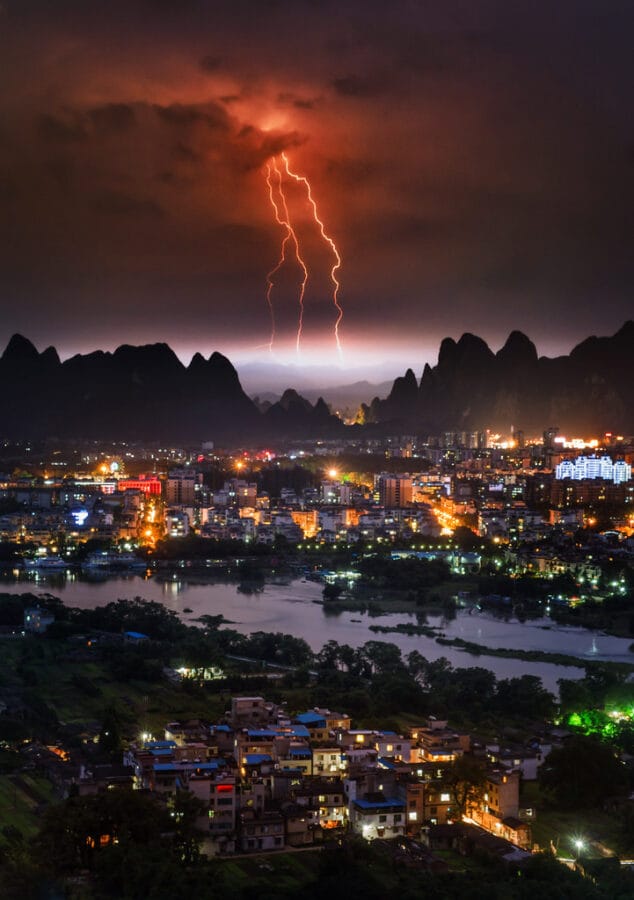
In Guilin and Yangshuo, May to July brings tropical showers almost daily. June is typically the rainiest month — rainfall regularly exceeds 300 mm. The karst topography funnels water fast into the Li River system. In heavy rain years, the river rises substantially, and some sections of the famous boat cruise get cancelled or rerouted.
What most travel guides don't say clearly enough: Guilin's rain is fast and violent. It isn't the persistent grey drizzle of Shanghai's Meiyu. It arrives suddenly, dumps hard, and — usually — moves on within hours. The problem is the intensity. A few hours of that kind of rainfall can raise rivers, wash out roads, and close mountain access routes before you've had time to adjust your plans.
In April 2026, we were managing a trip for four Canadian clients — Ellie's group — who planned to visit Longji Rice Terraces on the day they arrived in Guilin. Heavy rain hit overnight. By morning, the main road at the Longji entrance had been damaged, and the single road connecting the terraces to Guilin had suffered a partial landslide. There was no alternative route. They waited a full day in Guilin before the road reopened and the visit could proceed.
That delay had a sting beyond the lost day. They had already booked a hotel inside the Longji scenic area through Trip.com. When the road became impassable and they couldn't check in, the hotel refused to refund a single yuan — the booking terms allowed for no exceptions regardless of circumstances. We stepped in and negotiated with the hotel on their behalf. Eventually the hotel agreed to return 70% of the room cost, but that took time, effort, and goodwill from both sides. There was no automatic protection.
This is a problem specific to remote mountain accommodations in China. Hotels inside scenic areas — Longji, Zhangjiajie's mountain hotels, Huangshan's summit lodges — often operate with strict no-refund policies, and third-party booking platforms don't always override them even when access is physically impossible. Before booking any accommodation that requires mountain road access during rainy season (roughly April–September for most of southern China), check the cancellation terms explicitly. If the policy says non-refundable, that means non-refundable even if a landslide closes the road. Book flexible-rate rooms where the premium is worth the protection, or be prepared to absorb the loss.
April is not Guilin's peak rainy season. That's the point. When the rain does arrive in spring, it hits the mountain infrastructure — bridges, narrow mountain roads, single-lane access routes — harder than it hits the city. Longji in particular relies on one road in and one road out, through terrain that doesn't forgive heavy rain gracefully.
The counterintuitive truth
We push back on blanket "avoid rain" advice for Guilin. The limestone karst formations that made this landscape famous look extraordinary in mist. A rainy morning on the Li River, with peaks emerging from low cloud, often produces better photographs than a clear day. The lush green blanketing the karst hills requires all that rain to exist.
April and early May bring the first wave of wet weather — but also some of the most spectacular scenery of the year. We regularly schedule Guilin clients in late April knowing there will be rain. The visual payoff is worth it.
The genuine concern is flooding and road access. In June and July, check the Li River level before booking boat tours. For Longji, always build a buffer day — not just because of rain itself, but because the access infrastructure is mountain-dependent and single-route. Our local partners monitor conditions weekly, and we've rescheduled clients mid-trip when water levels or road conditions made certain stretches unsafe or dangerous.
Typhoon overlap
In Hong Kong, Guangzhou, and the southeast coast, typhoons can occur July through September. Guilin sits far enough inland that direct strikes are rare. But a passing typhoon's moisture surge can dump extraordinary rainfall in hours — this is worth monitoring during August visits.
Explore our full Guilin and Yangshuo guide. For a broader view on when Guilin is at its most disruptive, our worst time to visit China article covers the holiday-plus-rainy-season overlap in detail.
DIG DEEPER: Guilin Yangshuo Rainy Season: When to Worry, When to Go
8. Zhangjiajie: Rain Makes This Place Extraordinary — And Dangerous
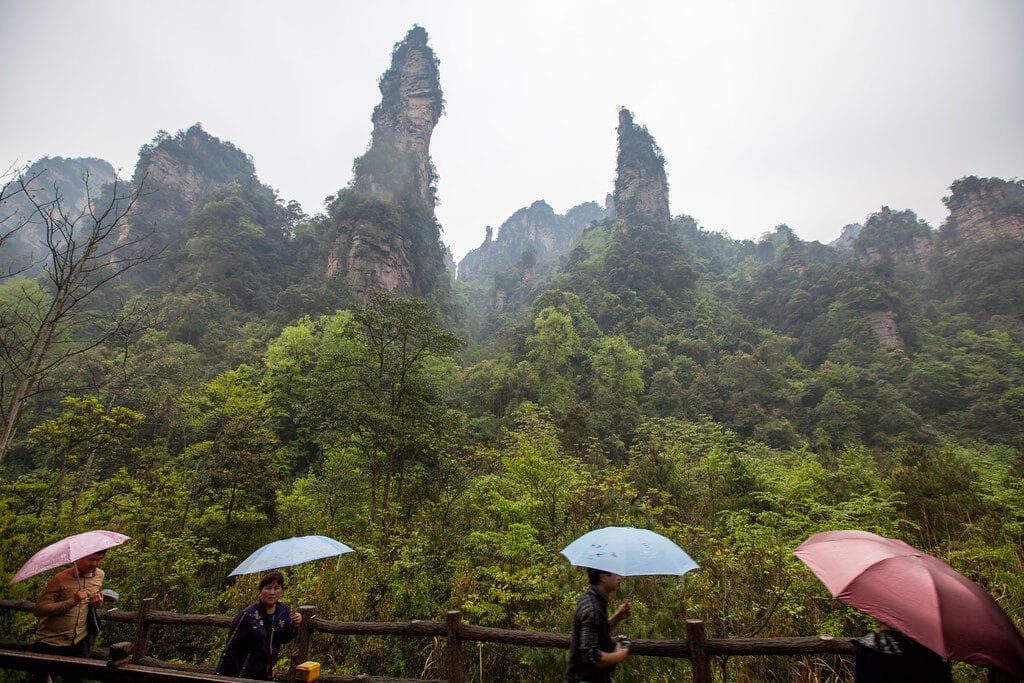
Zhangjiajie deserves extended treatment because rain has the most dramatic double-edged effect of any destination in China.
Monthly Rainfall — Zhangjiajie
Monthly average rainfall (mm) · 1991–2020 normals · Source: China Meteorological Administration / Climate-Data.org
The rainfall facts
Zhangjiajie receives 1,400–1,600 mm of annual rainfall on average. Rainfall concentrates on the five months from April to August, mainly from May to July. Each month from May to July, average rainfall exceeds 150 mm with more than 15 rainy days. In July, the rainiest month, rainy days may exceed 20.
The plum rain season lasts from late June to early July with frequent and heavy rainfall. Rainfall decreases significantly in August, dropping to about 64.7 mm.
There's a crucial altitude factor most guides skip: due to complex terrain, weather in Zhangjiajie often presents the feature of "a mountain has four seasons, and different weather within ten li." It may be sunny at the valley floor while raining heavily at the summit — sometimes simultaneously. The altitude difference in the scenic area exceeds 1,000 meters.
When rain is your friend in Zhangjiajie
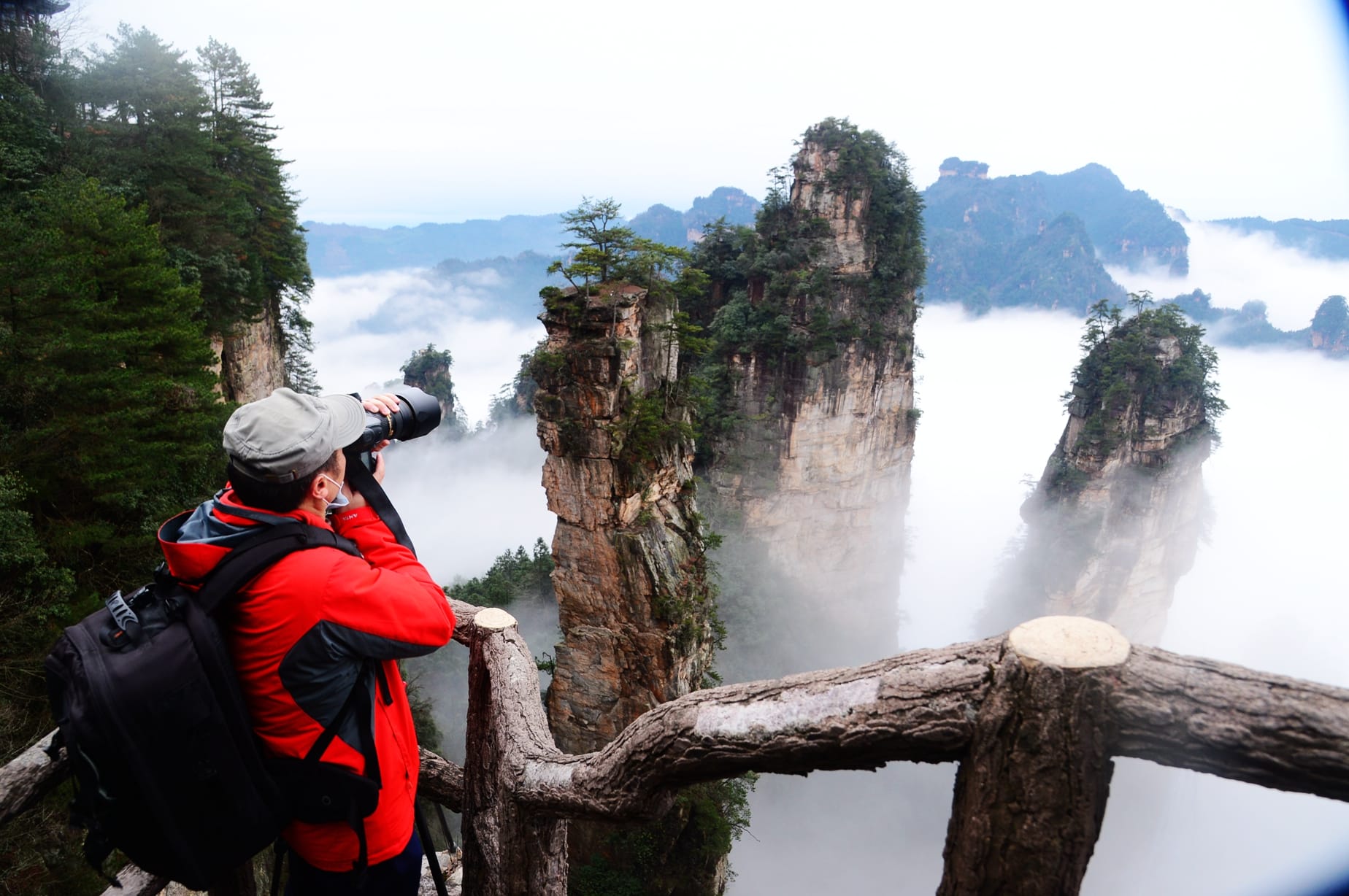
The "sea of clouds" (云海) effect — sandstone pillars rising from a layer of mist filling the valleys — is the photograph that made Zhangjiajie famous. You cannot get it without moisture in the air. You cannot get it on a clear, dry day.
After a storm clears, typically within 30–60 minutes, the pillars emerge wet and luminous. Waterfalls stream from every crevice. Golden Whip Stream runs full and fast. The air has a clarity that dry-season visits rarely produce.
Our standing advice: when the peaks are fogged over, move to the valley floor. Golden Whip Stream, Baofeng Lake, and Huanglong Cave are excellent in rain — often better than on clear days, with waterfalls running full and crowds significantly lighter. Save your best weather day for Yuanjiajie and Tianzi Mountain.
Rain also works as a crowd filter. While casual visitors retreat to hotels or cave attractions, the main viewpoint trails go quiet. We've timed rainy-day arrivals at Zhangjiajie specifically to avoid the Bailong Elevator bottlenecks.
When rain becomes a problem
Heavy rain is a genuine safety concern here. Sandstone surfaces become extremely slippery. High-altitude viewpoints, particularly at Huangshizhai, can be wrapped in zero-visibility fog for hours. In torrential conditions, park management closes certain trail sections without much advance notice.
One specific warning: do not use Tianmen Mountain as a "bad weather day" option. Unlike the National Forest Park — where rain creates the sea-of-clouds effect and valley-floor alternatives remain excellent — Tianmen Mountain with zero visibility is a complete waste of the entrance fee. The cable car ride, the glass skywalk, and Tianmen Cave all depend on being able to see. On a thick-fog day, you will spend a full-priced ticket day seeing nothing. Save Tianmen for your clearest forecast day. If the forecast looks uniformly bad, Yellow Dragon Cave (Huanglong Cave) is the correct heavy-rain option — it's underground, entirely weather-proof, and worth the visit.
The advice we give every Zhangjiajie client: build a 4-day schedule even if you think 3 is enough. The extra day is your weather buffer — not a luxury, a necessity during rainy season.
DIG DEEPER: Zhangjiajie Rainy Season: What to Expect & How to Plan
One thing no guide tells you: even "dry" months can fool you
This matters beyond the official rainy season window. In March 2026, we guided three American clients — Shalom's group — through Zhangjiajie. March sits well outside the traditional May–July rain peak, yet their first two days were overcast, with intermittent drizzle and low cloud pressing down on the valley. They messaged us the night before their Yuanjiajie day expecting to see nothing.
What actually happened: they took the cable car up into what looked like a grey wall of cloud — and emerged above it. The cloud layer was sitting at roughly 1,000 m. Above it, Yuanjiajie and Tianzi Mountain were completely clear, panoramic, no obstruction at all. They stood at the Hallelujah Mountain overlook in full sun while the valley below was still buried in mist.
This is the other side of Zhangjiajie's mountain climate. The same rapid change that produces dramatic fog can also clear in a single cable car ride. Weather at the summit and weather at the valley floor are independent of each other. The principle we tell every client: don't cancel a summit day based on how things look from ground level. Get up there first.
For day-by-day planning, see our Zhangjiajie itinerary guide. For monthly crowd and visibility data, our best time to visit Zhangjiajie goes deeper on the numbers. For context on how Zhangjiajie fits into China's broader seasonal travel calendar, see our China travel seasons guide.
9. Guangzhou and the Pearl River Delta: The Longest Season
Monthly Rainfall — Guangzhou
Monthly average rainfall (mm) · 1991–2020 normals · Source: China Meteorological Administration
Guangzhou has the longest and most intense rainy season of any major tourist hub in China. It runs from April to September — six months. Summers are long, hot, and humid, with temperatures often exceeding 35°C.
The rain comes in two phases. April through June brings sustained monsoon rain. July through September adds typhoon risk. For visitors to Guangzhou or Shenzhen: October through February is the comfortable window. March and April bring the first rains but also warm, comfortable days. July and August are manageable for city sightseeing — Guangzhou's air-conditioned mall culture was largely built around escaping summer heat — but outdoor activities get unreliable.
10. Chongqing: Rain Plus Fog, a Combination Like Nowhere Else
Chongqing is different from every other city on this list. It's not just about rain — it's about what rain does in a city built on mountains, sitting at the confluence of two major rivers.
Monthly Rainfall — Chongqing
Monthly average rainfall (mm) · 1991–2020 normals · Source: China Meteorological Administration
The rain
Chongqing has a subtropical monsoon humid climate, with annual precipitation between 1,000 and 1,350 mm. Around 70% of this falls between May and September. July is the rainiest month, averaging around 175 mm with roughly 15 rainy days. The heat compounds everything: Chongqing is one of China's "Three Furnace Cities" alongside Nanjing and Wuhan, with July–August highs regularly hitting 35–40°C.
The fog — more notable than the rain
Chongqing averages 104 foggy days per year, earning it the nickname "Fog City." For context, London — the world-famous "Fog Capital" — averages just 94. Fog peaks from October through January.
There's also a famous phenomenon called "Bashan Night Rain" (巴山夜雨). Under the combined effects of its mountain topography and climate, Chongqing is especially prone to nighttime rain during spring–summer transition. The city gets drenched after midnight and wakes up steaming. Mornings are often clearer than the evening forecast suggests.
What this means practically
Summer (June–August) is the wettest and hottest period. It's also the main season for Yangtze River cruises. We've had clients who sweated through July in Chongqing and loved the city's energy. We've had others who found it overwhelming. Know what you're signing up for.
Autumn (September–October) is when Chongqing makes the most sense: rain easing, fog still present for atmosphere, temperatures dropping to a manageable 20–28°C.
The night view of Hongya Cave and the Jiefangbei area — arguably Chongqing's most iconic sight — is actually enhanced by fog. Clients who hit it on a foggy evening consistently rate it higher than those who visited on a clear night.
Explore the Chongqing travel guide.
11. Chengdu and Sichuan: It's Not Just Rain — It's the Light
Monthly Rainfall — Chengdu
Monthly average rainfall (mm) · 1991–2020 normals · Source: China Meteorological Administration
Chengdu has a reputation for grey skies that goes beyond the rainy season. The Sichuan Basin traps cloud cover for weeks at a time. Residents joke about being surprised by the sun. Chengdu records some of China's lowest annual sunshine hours — around 1,000–1,200, compared to Beijing's 2,500.
The actual rainy peak is July–August. For travelers heading to Jiuzhaigou, Leshan, or Emei Mountain from Chengdu, September and October are noticeably better: cloud cover breaks, waterfalls are still fed by summer rain, and autumn colours begin at elevation.
Chengdu city itself is largely an indoor-culture destination. The panda base, Jinli Ancient Street, Kuanzhai Alley, and the teahouses are all manageable in rain. It's the day trips where grey skies take from the experience.
12. Yunnan (Kunming, Lijiang, Dali, Shangri-La): The Rainy Season Worth Arguing For
Yunnan's rainy season runs June through October, but it operates differently from the rest of China. The altitude changes everything.
Monthly Rainfall — Kunming
Monthly average rainfall (mm) · 1991–2020 normals · Source: China Meteorological Administration
Kunming sits at 1,900 m. Even when it rains, temperatures stay around 20–24°C in peak summer. Kunming's nickname "Spring City" (春城) holds true even in rainy season. The afternoon-shower pattern is reliable: mornings are typically clear, rain moves in after lunch, clears by evening. Plan outdoor sightseeing for mornings and you'll rarely lose a day to weather.
Monthly Rainfall — Lijiang
Monthly average rainfall (mm) · 1991–2020 normals · Source: China Meteorological Administration
Lijiang sits higher, at 2,400 m. Its rainy season runs June through September, with July and August seeing around 150 mm and 16 rainy days each month. The showers here follow a similar afternoon pattern to Kunming, but the mountains around Jade Dragon Snow Mountain create their own weather — cloud caps the summit most mornings regardless of season. If you're going specifically to see Jade Dragon Snow Mountain clearly, September and October are more reliable than July. On most July mornings, the peak is in cloud by 9 AM.
What Lijiang offers in rainy season that it doesn't in Golden Week: quiet. The Old Town — which can feel oppressively commercialized during the spring rush — empties out enough in July that you can walk the cobblestone lanes in the early morning with almost no one around. The water channels run fast and clear. The willow trees along the canals are at full green.
Dali and Shangri-La follow similar patterns: heavier rain at elevation, rice terraces flooded and mirror-like in July–August, alpine meadows at peak colour. Tourist numbers drop significantly versus spring.
Meili Snow Mountain: the most cloud-sensitive destination in China

Meili Snow Mountain — anchored by the sacred peak Kawagebo at 6,740 m — is the extreme end of a principle that applies across all Chinese mountain destinations: cloud cover matters more than rain.
The famous "Golden Summit" (日照金山) effect, where first light turns Kawagebo gold at sunrise, lasts roughly 20 minutes — typically between 6 and 7 AM. To see it, you need a clear eastern horizon at dawn. Not just no rain. Clear sky.
Here's the specific problem: even a "partly cloudy" forecast the previous evening is often enough to hide the entire peak the next morning. The mountain generates its own micro-weather. Kawagebo spends most days behind a permanent cloud cap. Guests at Feilai Temple viewing platform — the best vantage point, positioned directly opposite the peak — routinely wake before dawn, walk out into cold air, and find a completely white sky where the mountain should be. It can be crystal clear at 5 AM and fully obscured by 6:15 AM. Or the reverse.
We know of a traveller who came to Feilai Temple eight times before seeing the Golden Summit. That's not a freak outcome — it's a known pattern among photographers who track this peak seriously.
The practical implications:
The best window for Kawagebo is November through March — Yunnan's dry season, clear mornings, success rates above 80% according to local photography guides. The worst window is July–August: cloud cover is near-constant and morning visibility approaches zero on most days.
But even in October or April, the mountain may hide for days. The standard weather app forecast for "Deqin" county tells you almost nothing about what's happening at summit level. The tool that actually works is a cloud-layer forecast at altitude. The WeChat mini-program 天文通 (Tianwentong) provides weekly cloud-cover forecasts at elevation — experienced local guides use this specifically for Meili planning, not surface-level weather apps.
If Meili is a priority, budget a minimum of three nights at Feilai Temple. One night is a gamble. Two is a reasonable attempt. Three gives you a realistic shot even in marginal weather.
13. Huangshan (Yellow Mountain): Where Rain Is Not the Enemy
Monthly Rainfall — Huangshan
Monthly average rainfall (mm) · 1991–2020 normals · Source: China Meteorological Administration / Climate-Data.org
Huangshan gets less attention in rainy season guides than it deserves, because it is one of the very few major destinations where rain actively improves the experience — but with a catch that most travel articles never explain clearly enough.
The facts first: Huangshan averages more than 200 foggy days a year, around 183 rainy days, and annual precipitation of roughly 2,350 mm. The rainy season peaks May through August. On paper, it looks like a destination to avoid in summer. In practice, the opposite is often true.
The "Sea of Clouds" (云海) is one of Huangshan's Four Natural Wonders — the spectacle where cloud fills the deep valleys between granite peaks, leaving only the summits and the ancient twisted pines visible above a white sea. It looks exactly like every traditional Chinese ink painting you've ever seen, because those paintings were made here. And you cannot see it on a clear day. You need moisture in the air, ideally the morning after rain when temperature inversion traps cloud in the valleys while the summits stay clear.
The best chance of a Sea of Clouds occurs from November to May — Huangshan's drier season, with lower temperatures creating the right inversion conditions. But summer rain can still produce the effect, especially in the hours immediately after a storm clears. The air is cleaner, the mountain is greener, and the waterfalls are at their peak.
The 1-hour window: what happened with Hülya's group
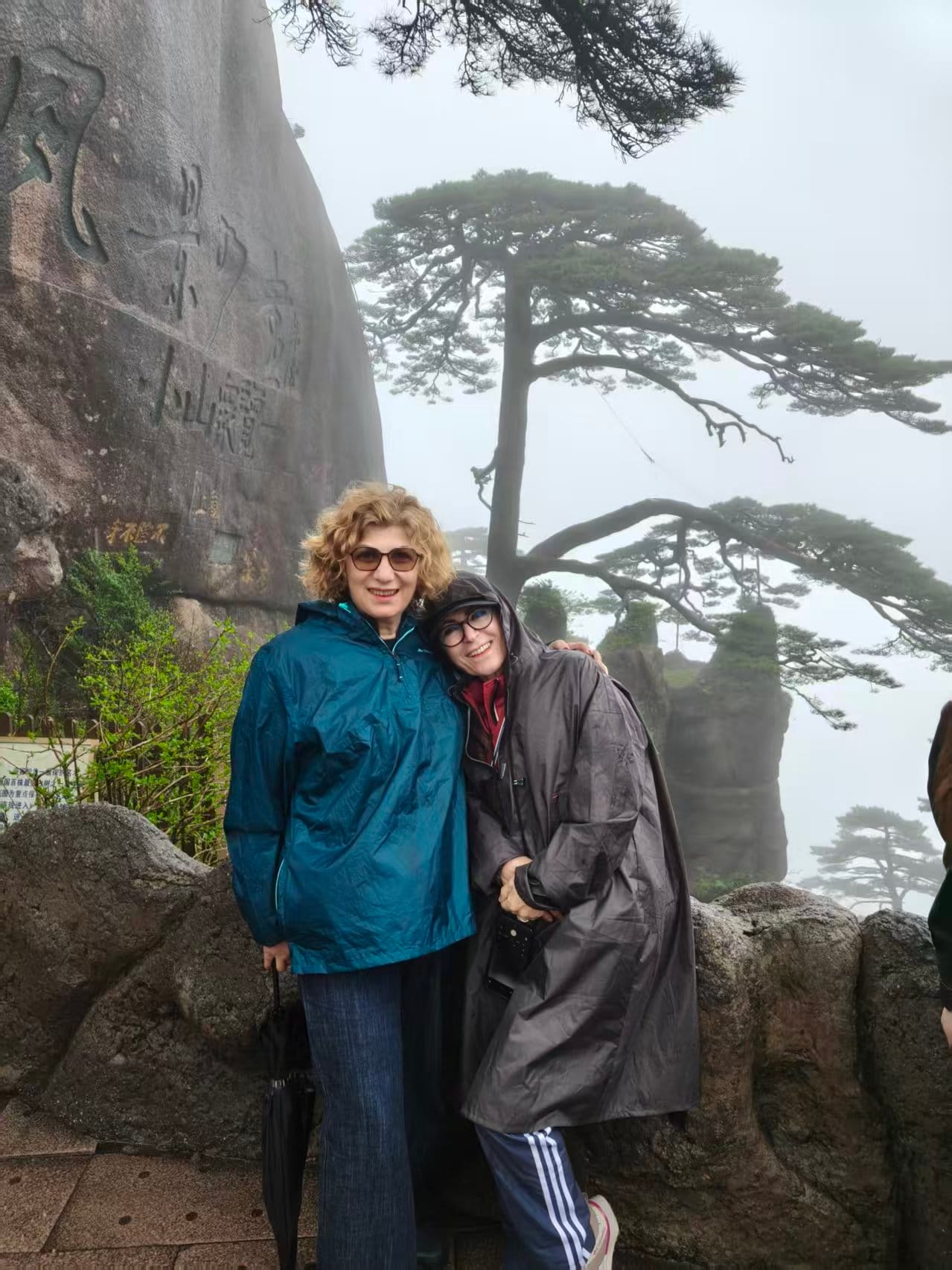
This is the part that no forecast can predict. In April 2026, we had two groups ascending Huangshan on the same day. Hülya's group — two German clients — went up first. It had been raining every day of their visit, and they were expecting to see little. Instead, they found the mountain wrapped in shifting cloud and mist, peaks emerging and disappearing, the whole landscape in constant motion. The Sea of Clouds was fully active. They had exactly the experience that photographers plan months to capture.
The Italian group that followed departed barely an hour or two later. By the time they reached the same viewpoints, the cloud had thickened into uniform grey. The peaks were gone. They saw nothing.
Same mountain. Same day. Same weather forecast the morning before. One to two hours apart.
This is Huangshan's defining characteristic, and it is worth stating plainly: Huangshan's weather changes faster than almost anywhere else in China. The vertical terrain — deep valleys, exposed summits at 1,800 m, cold air pooling overnight — creates conditions where visibility can go from spectacular to zero in twenty minutes. It can also reverse just as fast.
What this means for planning
The standard advice — "visit in autumn for clear views" — is true as far as it goes. Spring and autumn do give higher probability of clear summits. But "higher probability" is not a guarantee, and rainy season visits are not wasted. Some of the most memorable Huangshan experiences happen in cloud and mist, not despite it.
Two practical points. First: if your goal is specifically the Sea of Clouds, the Amap (Gaode Maps) app displays a daily "Cloud Sea Probability" percentage for Huangshan — anything above 70% is worth an early start. Second: stay overnight on the mountain. Cable cars don't operate early enough for sunrise. To be at the viewpoints for the best light, you need to sleep at one of the summit hotels. The morning window — the hour after dawn when conditions are most likely to shift dramatically — is the one you came for.
14. Will Rain Disrupt Your Transport — Flights, Trains, and Roads?
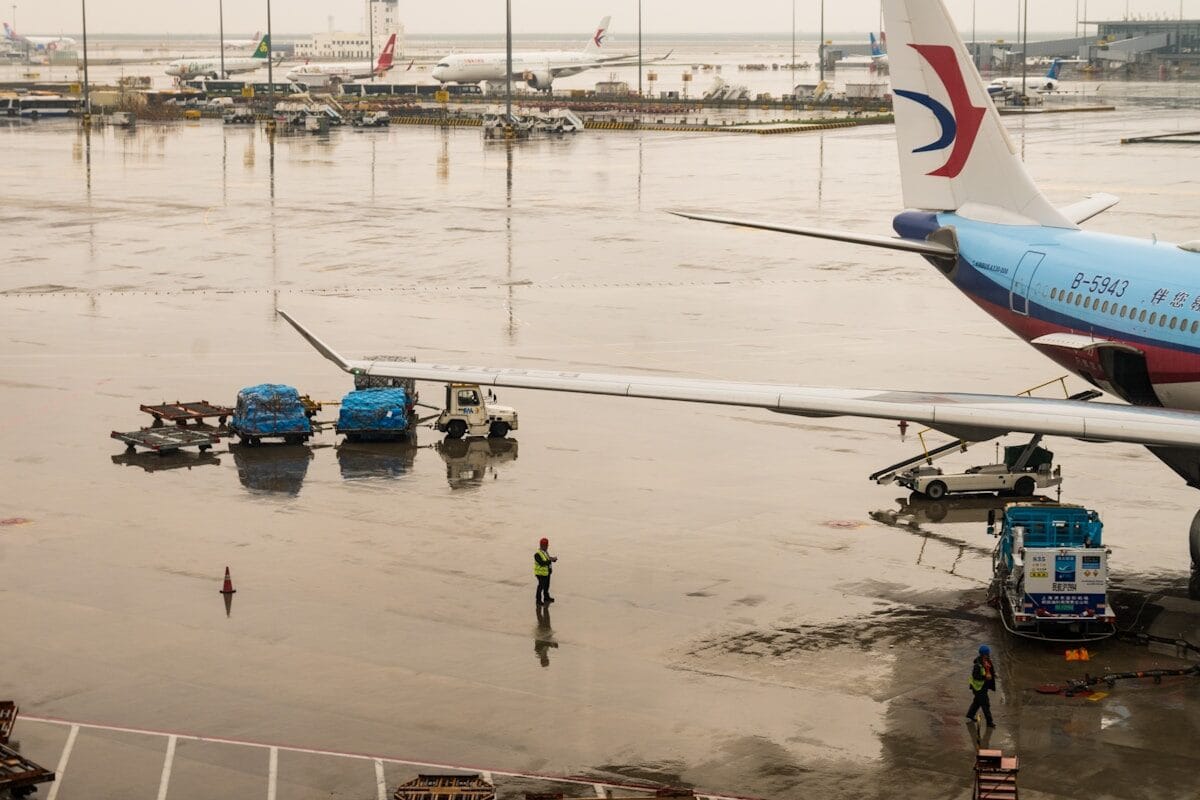
This is the question most travel articles dodge. Here's the honest answer.
Flights are the most vulnerable. In southern China during June–August, heavy rain and typhoons cancel flights with little notice. Guangzhou, Guilin, and Chengdu airports see the most weather-related disruptions. Last year, Typhoon Wipha shut airports across Guangdong and Guangxi on July 20, cancelling over 400 flights in a single day. If you're flying between southern cities in summer, build a 1-day buffer before any onward international connection.
High-speed trains are substantially more weather-resilient than flights. They're also more useful during rainy season for another reason: station-to-city-centre distances are far shorter than airports. When a typhoon grounds planes in Guangzhou, the G-trains to Guilin or Hong Kong often continue running. If the railway itself floods — which happens along older lower-lying sections — services get suspended, but this is far less common than flight cancellations. In southern China, May–September, default to trains over flights for inter-city legs whenever rail is available.
Mountain roads are a different matter. In Zhangjiajie, Guilin, and other terrain-heavy destinations, localized landslides can block specific roads after sustained heavy rain. This rarely affects the main park entrances, but it can strand visitors relying on specific routes for day trips. Check the morning forecast before hiring private transport to rural areas.
China has a four-tier weather warning system — red, orange, yellow, blue, in descending severity. A red rainstorm warning means extreme precipitation is imminent. Local governments enforce route closures and may suspend outdoor attractions under red or orange alerts. Follow the China Meteorological Administration (中国气象局) for warnings. The app 中国天气网 issues real-time alerts by province.
For a full picture of how flooding and severe weather affect China travel — including recent event data and itinerary contingency planning — see our China flooding travel guide.
15. What to Pack for China's Rainy Season
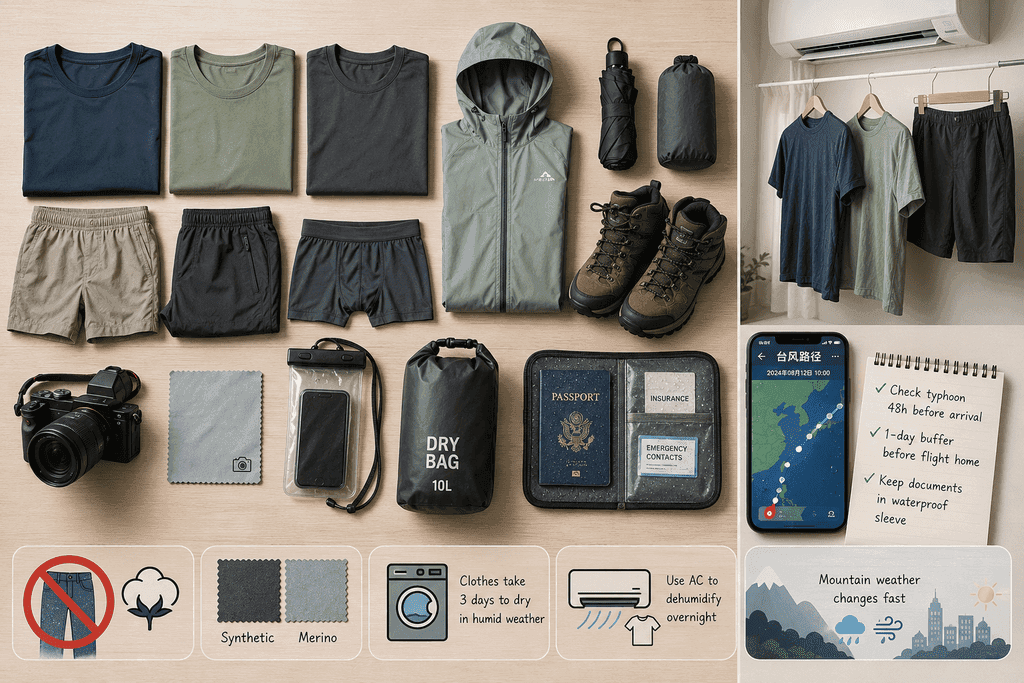
The single most important item is not an umbrella. It's quick-dry clothing. Jeans soaked at 9 AM will still be wet at 9 PM, and wet denim in 35°C humidity is miserable in a specific way that no amount of planning prepares you for.
A compact folding umbrella beats a poncho in every city context. For mountain destinations, a lightweight packable rain jacket is better than either — it handles cold, wind, and rain simultaneously, which matters when you're at 1,500 m on Tianmen Mountain while the city below is sunny and warm.
For Zhangjiajie: waterproof hiking boots with real grip, not trail runners. Wet sandstone behaves nothing like dry sandstone. A lens cloth for any camera — mountain mist coats glass within two minutes of stepping outside. And carry a dry bag or large zip-lock for your phone; the humidity alone degrades unprotected electronics over a multi-day trip.
For typhoon-season coastal visits (August–September): check the typhoon track 48 hours before arrival using the app 台风路径. Build a 1-day buffer before any flight home. And keep one set of documents — passport, insurance, emergency contacts — in a waterproof sleeve separate from your main bag.
One thing specific to the Yangtze Delta during Meiyu, and to southern China generally: humidity makes clothes take far longer to dry than you expect. A cotton T-shirt washed in Shanghai in June can take three days to dry hanging in the room. The AC unit is your best tool — hang damp clothes directly in front of it; it acts as a dehumidifier overnight. Pack synthetic or merino fabrics for anything you plan to wash mid-trip. Leave the cotton jeans at home.
Practical weather resources:
- 中国天气网 (China Weather): reliable 7-day forecasts, always check mountain-level separately from city-level
- Zoom Earth: real-time typhoon tracking, southeast coastal visits
- WeChat OA 张家界气象: real-time park-level warnings for Zhangjiajie
- Dial 12121: Hunan Meteorological Bureau hotline, 3-day mountain forecast
16. A Word We Tell Every Client Before a Rainy Forecast
Every season, we get the same message: "The forecast shows rain for most of our trip — should we postpone?" Here's what we tell them.
At Zhangjiajie, we've watched clients arrive on grey mornings, reluctantly enter the park, and stop talking when they reached the Yuanjiajie overlook. Clouds were pouring through the valley between the pillars like a slow river. That's the sea-of-clouds effect. You cannot manufacture it with a clear sky. The clients who visited on perfectly sunny days got wide panoramic views. The clients who hit rain got Avatar. They are not the same experience, and a surprising number of the rainy-day visitors end up telling us it was the best morning of their China trip.
At Guilin, some of our most-shared client photographs came from Li River mornings with low cloud on the karst peaks. Flat summer sunlight on karst is fine. Mist layered across those formations is what the painters have been coming back to for a thousand years.
In Chongqing, we've learned to book clients with foggy-evening forecasts on Hongya Cave nights on purpose. The fog turns what would otherwise be a busy tourist waterfront into something atmospheric and strange. Clear nights look like any other river city.
Rain also has a secondary effect that rarely gets mentioned: it empties trails. At Zhangjiajie, we've timed arrivals at the Bailong Elevator specifically to hit the post-rain window when casual visitors have retreated. The queues drop from 90 minutes to 15. The viewpoints go quiet. You get the park in a way that most July visitors — arriving in full sun alongside 20,000 others — never do.
None of this means you should hope for rain. But a forecast that shows some rain is not a ruined trip. It's often just a different trip — and sometimes a better one.
17. The Cost Case for Travelling During China's Rainy Season
When clients ask us whether the rainy season is worth it, they usually mean one of two things: will it ruin the experience, or will it cost less? We've spent most of this guide on the first question. The second deserves a direct answer.
Peak season in China is defined by two things: good weather and domestic holidays. Those two forces overlap significantly in July–August — summer vacation, summer heat, and the southern rainy season all landing at once. The result is the worst combination for international travellers: expensive, crowded, and wet.
The flip side: in southern Chinese cities during their rainy peak (June–August), hotel prices drop 30–40% compared to spring and autumn. In Beijing and Shanghai, 4-star hotels run 10–25% cheaper in the low season. Flights to China from North America or Europe cost 50–100% more in July–August than in June or September. The rainy season and the peak pricing season largely overlap in the south.
Accommodation Prices: Peak Season vs Rainy Season
Indicative price index (peak = 100) · Based on operator booking data and platform averages 2024–2026 · Actual rates vary by property and lead time.
Where this calculation matters most:
Guangzhou and Guangdong run rainy and typhoon season from April to September — which is also the off-peak window for international visitors. If your trip is business-adjacent or flexible, May–June offers genuine value. The Canton Fair in April and October pushes hotel prices to 2–3x normal — ironically, the dry periods around it are more expensive than the wet season.
In Guilin, June is the rainiest month, and also when domestic visitor numbers are lower than August. Hotel prices in Yangshuo in June run noticeably below Golden Week and summer peak rates. The trade-off is real: you might lose a Li River boat day to high water. But you're likely spending 25–30% less on accommodation across a week-long trip.
In Zhangjiajie, July–August is simultaneously the rainiest period and the peak domestic holiday season — crowds and rain together. June is the compromise: meaningful rain, but far fewer Chinese domestic tourists than July. Prices are lower, queues are shorter. We routinely recommend June over August to clients with flexible dates, specifically because of this overlap.
The one place where this logic doesn't hold: autumn (September–October). Autumn is the season everyone wants — dry, clear, comfortable — and it shows in prices. National Day Golden Week (October 1–7) is the most expensive 7-day stretch of the year. If you want good weather without peak prices, late May (before the domestic summer surge) and June are often the best value windows in the year.
FAQ: China Rainy Season
Q: What is the rainiest month in China overall?
There is no single answer. In Guilin, the peak is June. In Beijing, it's July. In Guangzhou, both May–June and August–September are extremely wet. If you need to pick one month when rain affects the most popular tourist regions simultaneously, that's June.
Q: Is it worth visiting Zhangjiajie during rainy season?
Yes, with caveats. May–July is Zhangjiajie's rainiest period, but the mist and cloud effects this creates are what make the destination iconic. Plan 4 days rather than 3, check the hourly mountain-level forecast each morning, and keep valley-floor options (Golden Whip Stream, Huanglong Cave, Baofeng Lake) as your wet-day fallback. See our Zhangjiajie travel guide for the full picture.
Q: Does rain affect the Great Wall?
Light rain makes the Great Wall atmospheric and less crowded. Heavy rain creates slippery surfaces — a genuine safety concern on steeper unrestored sections. At Mutianyu, the cable car and toboggan remain operational in most rain conditions. Avoid the Wall during a thunderstorm.
Q: Can I visit Tibet during the rainy season?
Tibet's summer (June–September) is paradoxically the best time for most travelers. High mountain roads are reliably passable, temperatures are comfortable, and the landscape is at peak green. Rain falls mainly at night or in short afternoon bursts. The concern that applies to Guilin or Zhangjiajie simply doesn't apply here.
Q: What is the plum rain season in China (Meiyu)?
Meiyu (梅雨) is a seasonal rain front that stalls over the Yangtze Delta — affecting Shanghai, Hangzhou, and Nanjing — typically mid-June to early July, lasting 2–4 weeks. It produces persistent grey skies and frequent drizzle rather than dramatic storms. Humidity peaks during this window. The timing shifts by 1–2 weeks depending on the year.
Q: If a typhoon cancels my flight or a flood disrupts my trip, does travel insurance cover it?
Generally yes, for non-voluntary disruptions — but the devil is in the details. When a typhoon has already been named and publicly reported before you book your insurance, it becomes a "known event" and many policies exclude it. The practical rule: buy your travel insurance before the specific storm is named, not after. For flooding-related trip interruptions (road closures, attraction shutdowns), coverage depends heavily on whether you have "trip interruption" included, not just medical cover. If you're travelling to southern China in June–September, basic medical-only insurance is not enough. Look for policies that include trip cancellation, delay, and interruption. For travellers from Singapore, FWD and MSIG are commonly used; for UK/US travellers, check that your policy specifically covers weather-related disruptions in China.
Q: I booked a hotel inside a scenic area and rain made the road impassable — can I get a refund?
Not automatically, and this catches people out more than any other rainy season problem. Hotels inside remote scenic areas — Longji's terrace villages, Huangshan's summit lodges, Zhangjiajie's mountain hotels — commonly operate with strict no-refund policies, and booking platforms don't always override them even when access becomes physically impossible due to weather.
We saw this directly with a group of Canadian clients at Longji in April 2026. A landslide closed the only road in. They couldn't reach their hotel. The hotel refused any refund under the Trip.com booking terms. After we negotiated on their behalf, the hotel eventually returned 70% — but that required time, effort, and a good outcome that isn't guaranteed.
The rule: before booking non-refundable accommodation that requires mountain road access during April–September, check cancellation terms explicitly. "Non-refundable" means non-refundable even if a landslide makes check-in impossible. Pay the premium for a flexible-rate room, or factor in the potential loss. Travel insurance with trip interruption coverage can help recover costs in these situations — see the question above.
Q: Which major cities have almost no rainy season?
Xinjiang and Urumqi have an arid continental climate with minimal rain year-round. Lhasa receives most of its moisture at night. Xi'an has a defined but short rainy season (July–September). Beijing's window is intense but brief — before and after it, Beijing is one of the drier major Chinese cities.
Q: How do I check weather before visiting a Chinese city?
The China Meteorological Administration app (中国天气网) gives reliable 7-day forecasts. For mountain destinations like Zhangjiajie, always check the mountain-level forecast separately from the city forecast — they can differ by 8–10°C and several millimetres of rain. The city showing sunshine doesn't mean the summit is clear. For Meili Snow Mountain specifically, use the WeChat mini-program 天文通 (Tianwentong) for cloud-layer forecasts at altitude — standard weather apps are not adequate for this destination.
China's rainy season is not a problem to solve. It's a variable to understand. Every month on this list has somewhere worth going. Every city on this list has conditions that work in your favour if you know what you're looking at.
If you have specific travel dates and want a second opinion on whether the timing works for your itinerary — or if you want us to build something around the weather patterns — contact us. We've been running tours since 2006 and we give you the honest picture, not the optimistic one. You can also use our China itinerary planner as a starting framework, or read our China weather overview for the broader seasonal context behind everything covered here.