Jiuzhaigou Valley: The Complete Guide
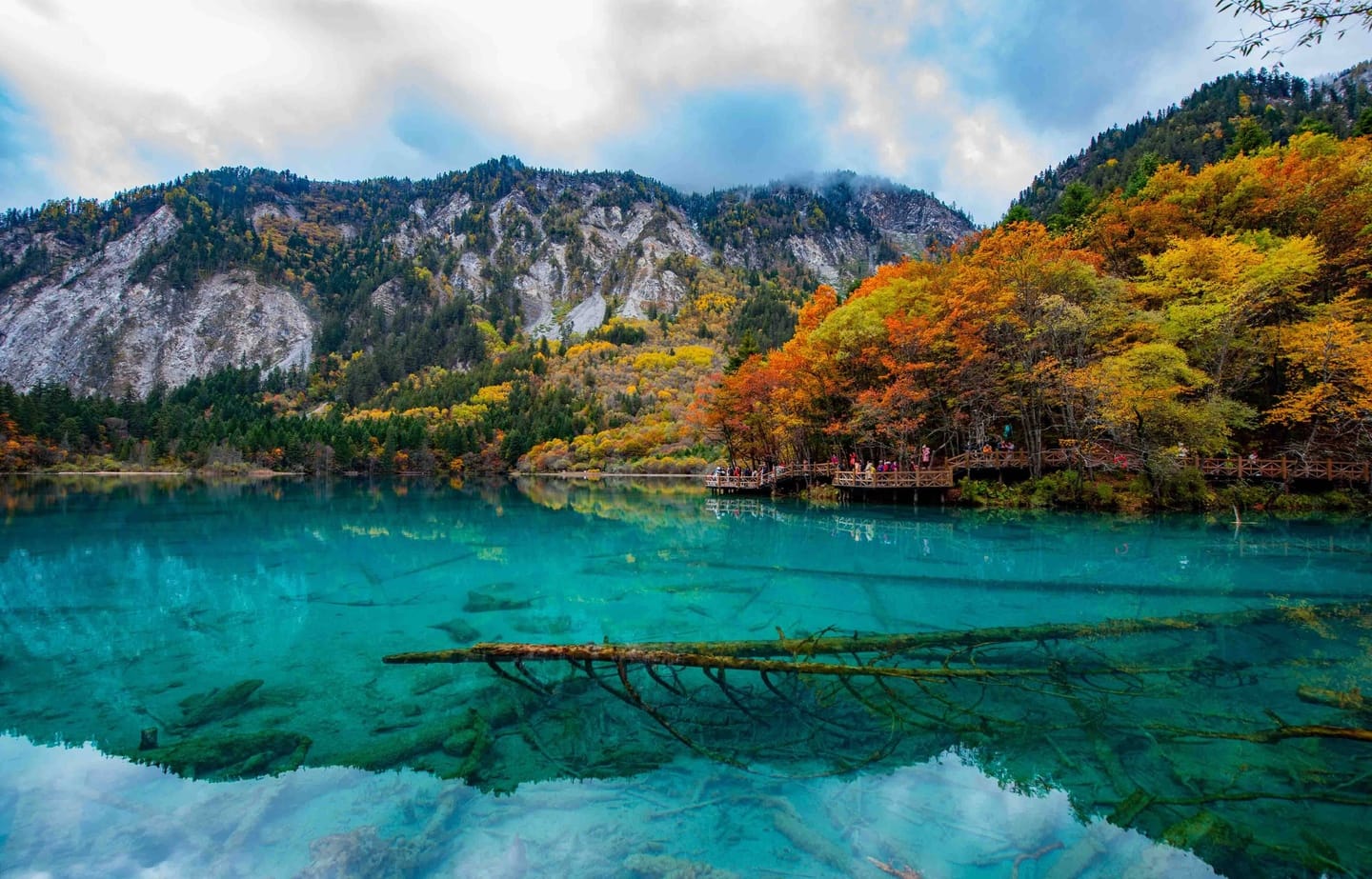
Jiuzhaigou Valley is a UNESCO World Heritage site in northern Sichuan with 108 alpine lakes in colours that look impossible in photographs and stranger in person. It is one of the few places in China that exceeds what the photographs prepared you for. The park covers roughly 60 km across three valleys, takes one full day to cover the highlights, and is best visited in late September or October when autumn foliage reflects in the deepest blue of the year.
We have been bringing international visitors here since 2006 — through the 2017 earthquake closure, the phased reopening, and the infrastructure changes that followed. This guide covers what the ticket prices actually are (the official website shows ¥190 entrance + ¥90 shuttle in peak season, not the ¥310 figure still quoted by many sites), how the VIP minibus works and when it is worth paying for, and the one-day no-backtracking route we use with our own clients.
Table of Contents
1. Quick Facts
Full Name | Jiuzhai Valley National Park (九寨沟) |
Location | Jiuzhaigou County, Aba Tibetan and Qiang Autonomous Prefecture, Sichuan |
Distance from Chengdu | ~330–450 km north; ~2 hrs by high-speed rail + transfer |
UNESCO Status | World Natural Heritage Site (listed 1992) |
Elevation Range | ~2,000 m (entrance) to 3,100 m (Long Lake) |
Park Layout | Y-shaped across three valleys, ~60 km total length |
Daily Visitor Cap | 41,000 (peak season); 23,000 (off-season) |
Peak Season Tickets | ¥190 entrance + ¥90 shuttle bus = ¥280 per adult |
Off-Season Tickets | ¥80 entrance + ¥80 shuttle bus = ¥160 per adult |
Best Season | Late September – early November |
Nearest Airport | Jiuzhai Huanglong Airport (JZH), 88 km from park |
High-Speed Rail | Huanglongjiuzhai Station, ~1.5–2 hrs by road from park |
Daily cap set by park management. Actual visitors during Golden Week (Oct 1–7) routinely hit the cap. Off-season actual attendance is typically 30–50% of the cap.
2. Why Jiuzhaigou Looks Unlike Anywhere Else on Earth
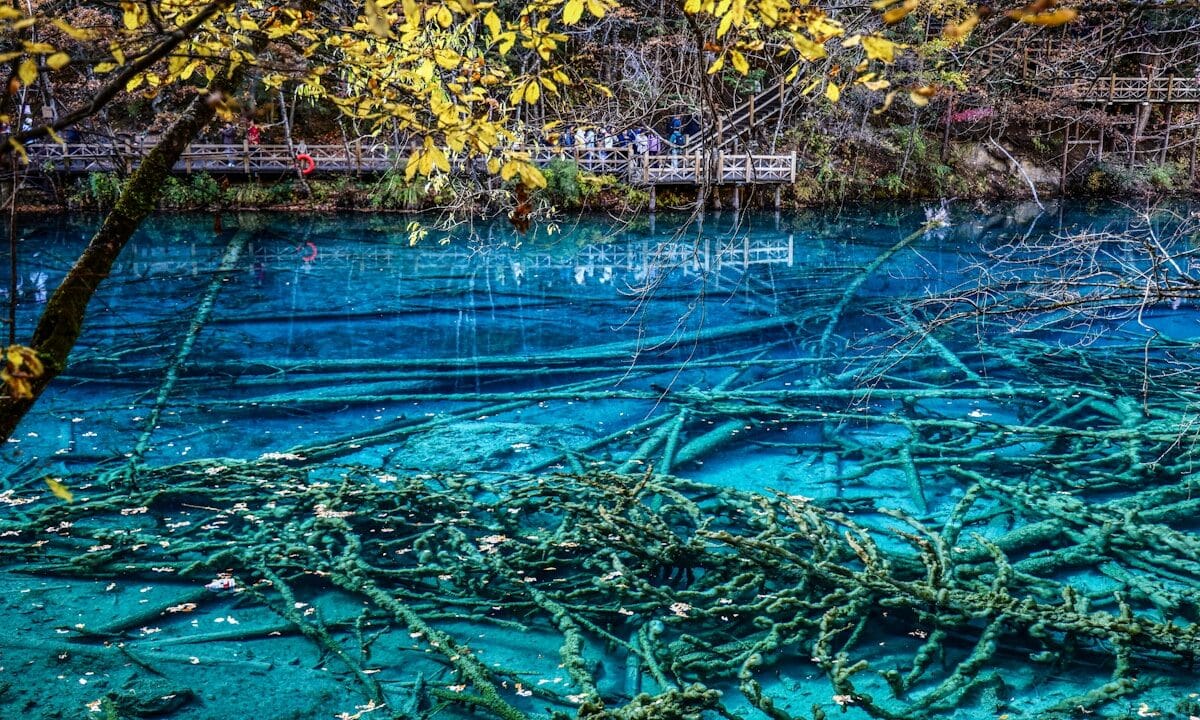
People ask us whether Jiuzhaigou is overhyped. It is not. The photographs circulating online are accurate — the water really is that colour, the scale really is that large. What photographs cannot convey is that you are standing inside it.
Here is the science, because it explains something practical: why the same lake looks different in June than in October, and why early morning light produces colours that noon light does not.
The chemistry behind the colour
Jiuzhaigou sits in a limestone karst zone. For thousands of years, meltwater from snow-capped peaks has dissolved calcium carbonate from the surrounding rock and carried it downhill. That calcium settled into white travertine on the lake floors — a natural mirror angled permanently at the sky.
At 2,000–3,100 metres, the atmosphere is thinner. Sunlight hits the white calcite beds through water that can be transparent to 12 metres deep, and scatters short-wave blue and green light sharply upward. That is why you see colours that feel impossible.
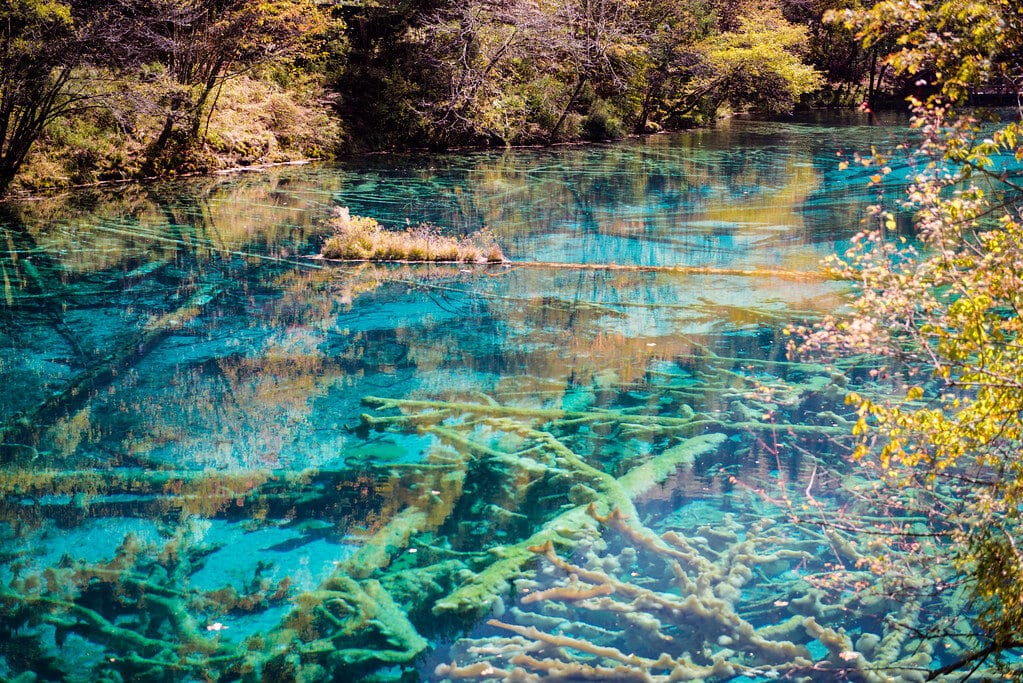
Algae and microscopic organisms add the rest. Research has shown that carotenoid-secreting microbes react chemically with dissolved calcium to produce a gradient from peacock blue to turquoise green. Those communities respond to seasonal mineral changes — which is why the lakes shift from mint green during spring snowmelt to deep sapphire in October. The colours are not a fixed feature. They are a process.
What the 2017 earthquake changed — and what it did not
On 8 August 2017, a magnitude 7.0 earthquake struck Jiuzhaigou County. Five Flower Lake briefly turned brown. Nuorilang Waterfall cracked and stopped flowing. The park closed for two years.
We still get asked: is it worth visiting after the earthquake?
The answer is clearly yes. The park’s lakes are fed by underground rivers and the valley is 85.5% covered in vegetation — the water purified itself within weeks. Engineers repaired Nuorilang Waterfall by infilling the fissure with crushed carbonate rock, and natural mineral deposition has since built new layers over it. By late 2019, 85% of the park had reopened. By 2026, all three valleys are fully accessible.
Clients of ours who visited both before and after 2017 generally say the same thing: the infrastructure is noticeably better now, the boardwalks are safer, and in some areas earthquake-triggered changes to water flow actually created new scenic features, including a new waterfall called Shuanglong (Double Dragon) Falls in Shuzheng Valley. The park was damaged. It recovered. The lakes healed faster than anyone expected.
3. Rize, Shuzheng, Zechawa: What Is Actually Different Between the Three Valleys
Every guide describes the three valleys. Almost none explains which one to spend your best morning in, or why Zechawa should not be your first stop. The differences are real and affect how you plan your day.
Shuzheng Valley — culture, waterfalls, the gateway
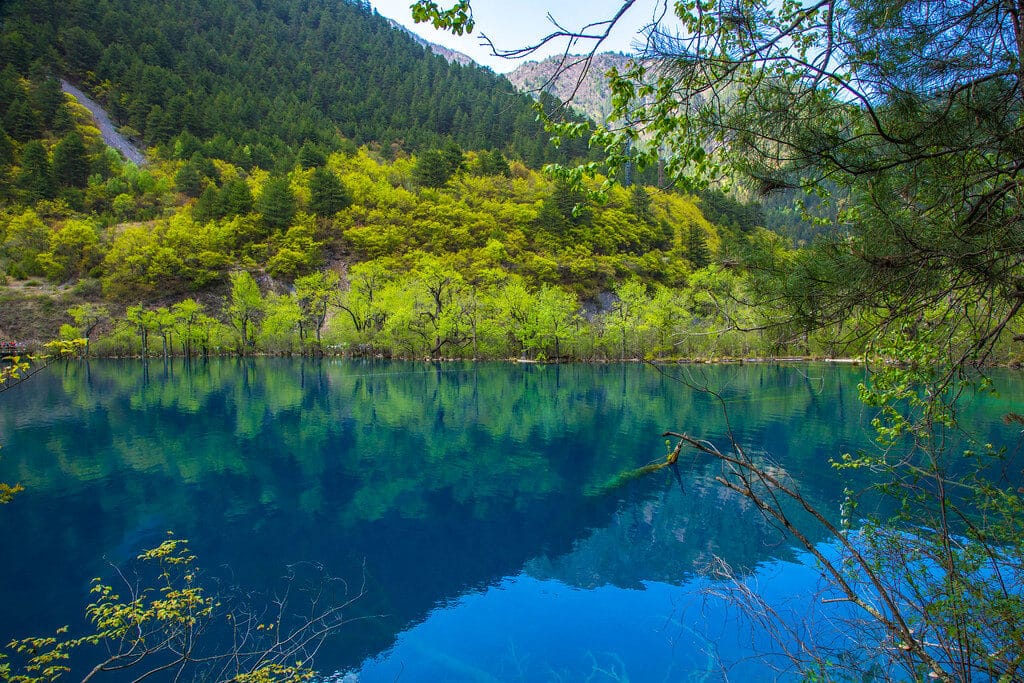
Shuzheng is the stem of the Y, stretching from the park entrance up to the Nuorilang junction where the valley splits. It is where the Tibetan village presence is strongest.
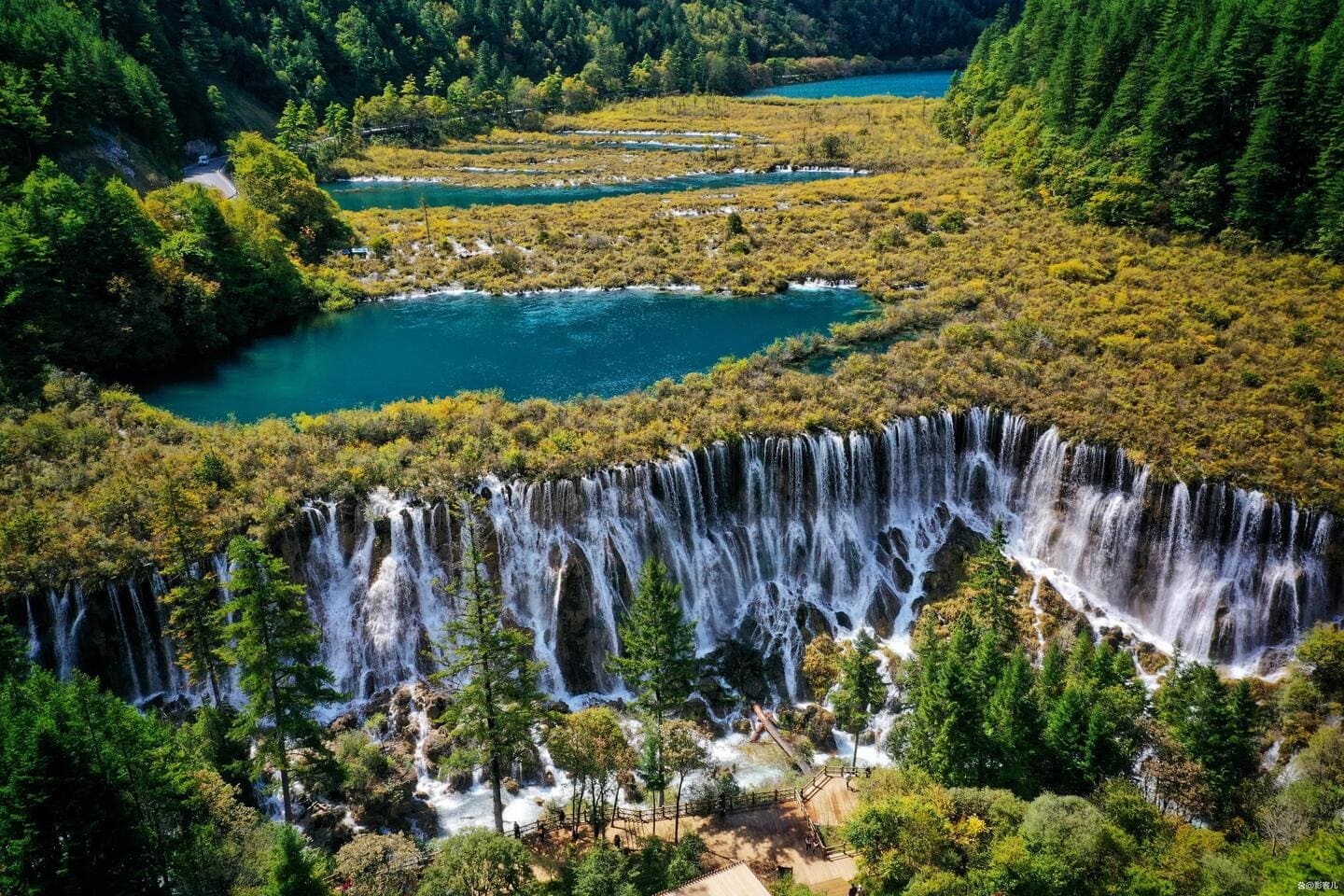
The Shuzheng villages sit here — some still lived-in communities, not reconstructions for tourism. White stupas and prayer flag lines punctuate the forest edges. The Shuzheng Lakes group contains 19 terraced lakes in cascading shades of green and sapphire, connected by the overflow of each into the next. The valley’s iconic waterfall is Nuorilang — at roughly 300 metres wide, the widest travertine waterfall in China. Engineers repaired it after the 2017 earthquake, and natural calcite deposition continues to build new layers over the repaired section. It is, in a small way, still forming.
For more on this valley’s specifics, see our Jiuzhaigou Shuzheng Valley guide.
Best for: First-time visitors, families, anyone who wants Tibetan culture woven into the scenery.
Rize Valley — the photographer’s valley
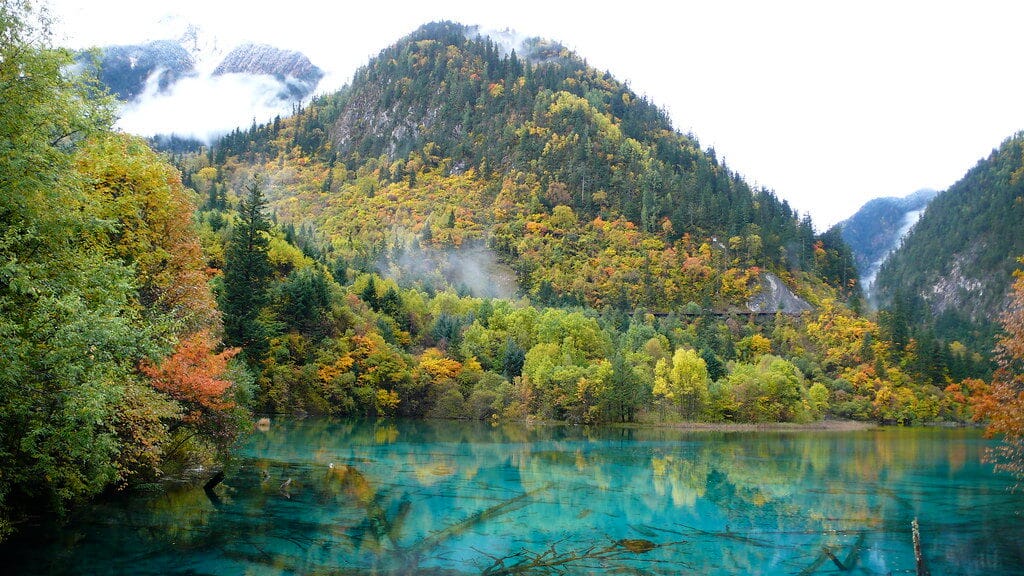
Rize is the right branch. It holds Five Flower Lake (Wuhua Hai), Pearl Beach Waterfall, Panda Lake, and the Virgin Forest. These are the images most associated with Jiuzhaigou globally.
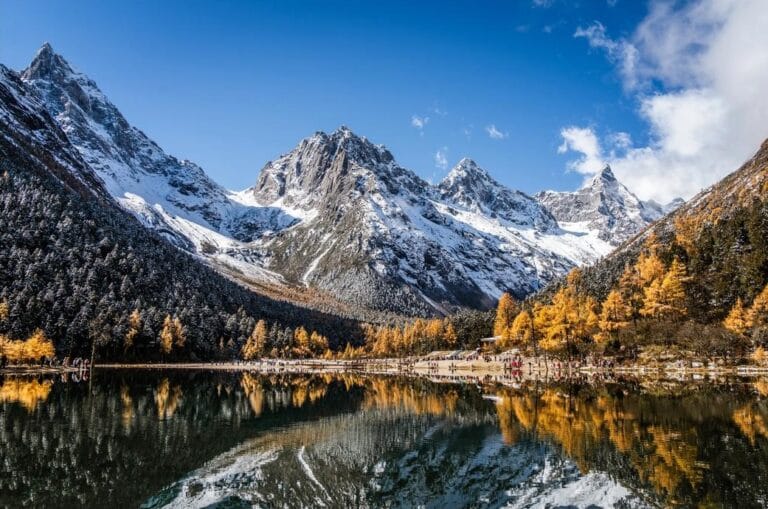
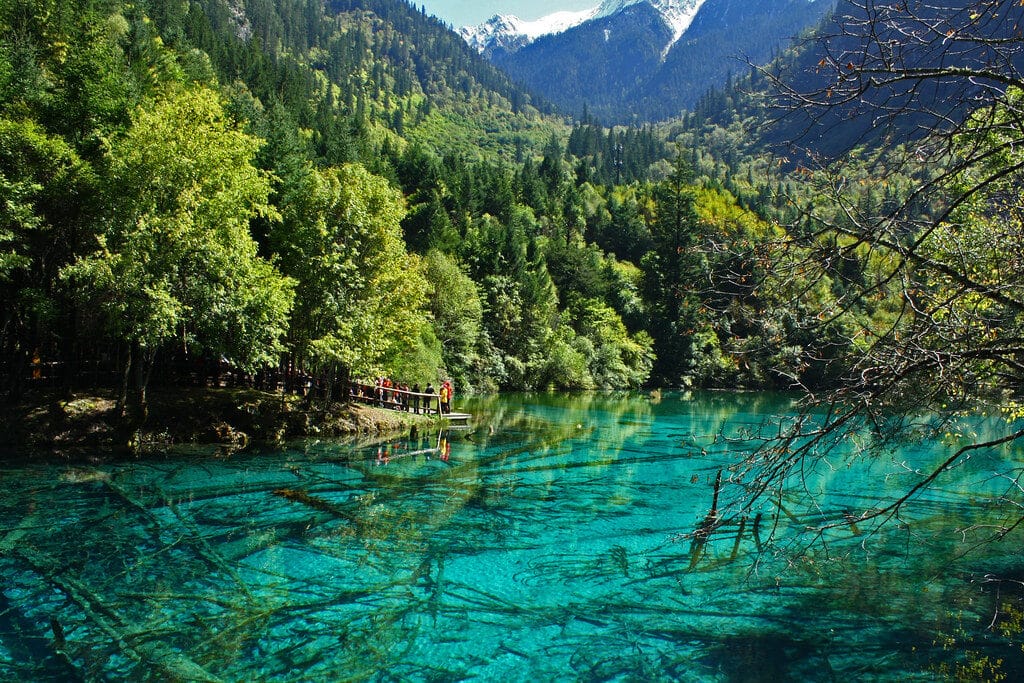
Five Flower Lake sits at 2,472 m, about 5 m deep and 90,000 m² in area. From the observation deck above, the water shows five simultaneous colour zones — deep sapphire, turquoise, jade, amber, and pale yellow — all visible at once. The colours shift as the sun moves. 9:30–10:30 am gives the clearest saturation before wind disturbs the surface. In October, the surrounding forest turns red and gold and reflects in the lake. That combination is why Rize Valley in autumn is the defining Jiuzhaigou experience.
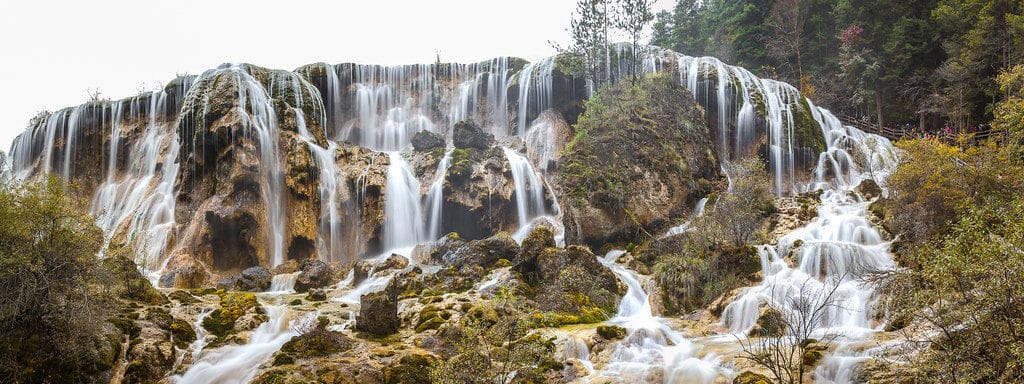
Pearl Shoals Waterfall fans across a shallow, bumpy calcite terrace. The boardwalk takes you to within metres of the edge. Where Nuorilang impresses with width, Pearl Shoals impresses with texture — the individual water droplets catching sunlight on rough rock is what gives it its name.
Our Jiuzhaigou Rize Valley guide covers each attraction here in detail.
Best for: Photography, autumn foliage season, anyone who wants the signature Jiuzhaigou experience.
Zechawa Valley — altitude, quiet, and Five-Color Pond
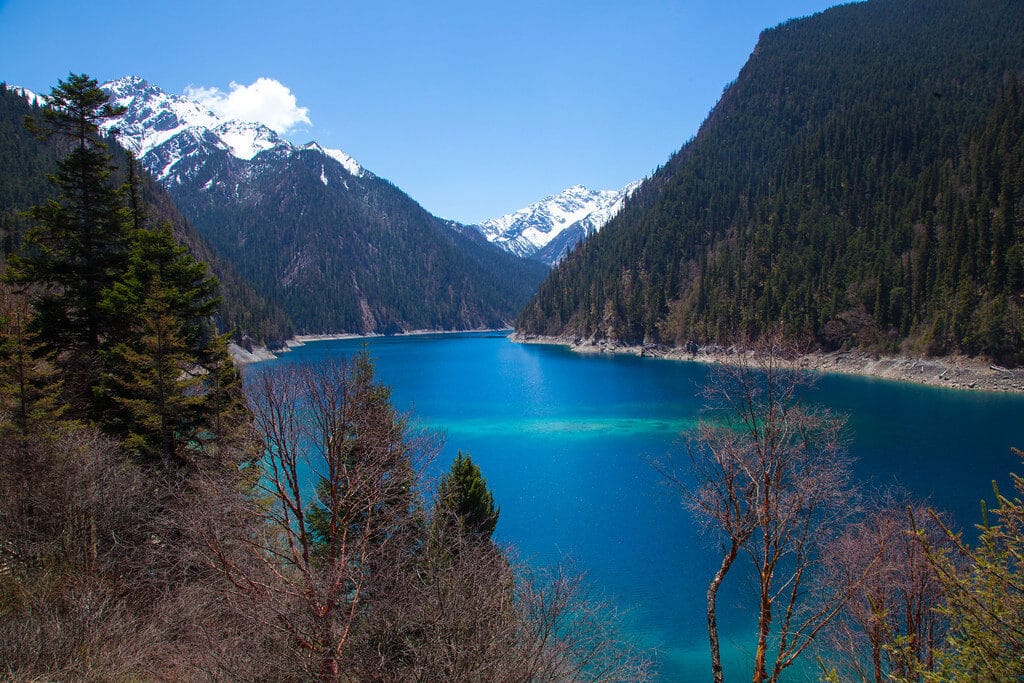
Zechawa is the left branch and climbs highest. Long Lake (Chang Hai) at 3,100 m is the park’s largest lake — over 7 km long, sitting in a wide alpine bowl with snow peaks at the far end. Five-Color Pond (Wucai Chi) is nearby: Jiuzhaigou’s smallest lake at just 6,630 m², but arguably the most concentrated in colour. In that tiny space, the water moves from deep sapphire at the centre to amber at the shallow edges. Many photographers find it more rewarding to frame than Five Flower Lake’s wider expanse.
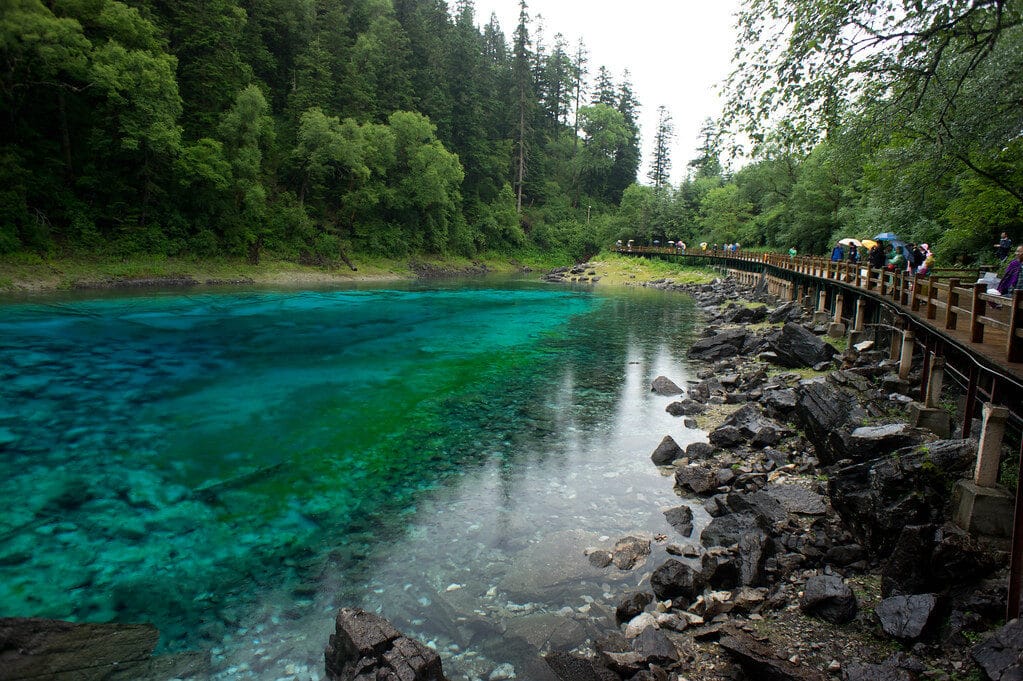
Zechawa was the least damaged in the 2017 earthquake. Its landscape is essentially unchanged from decades ago. Because it climbs highest, altitude effects are most noticeable here. We tell our clients not to take the first bus to Long Lake — spend the morning acclimatising in Shuzheng first.
See our Jiuzhaigou Zechawa Valley guide for a full breakdown.
Best for: Second-time visitors, high-altitude photography, those who prefer fewer crowds.
DIG PEEPER: Jiuzhaigou 3 Valleys Compared
4. How to Spend One Day in Jiuzhaigou: The Classic No-Backtracking Route
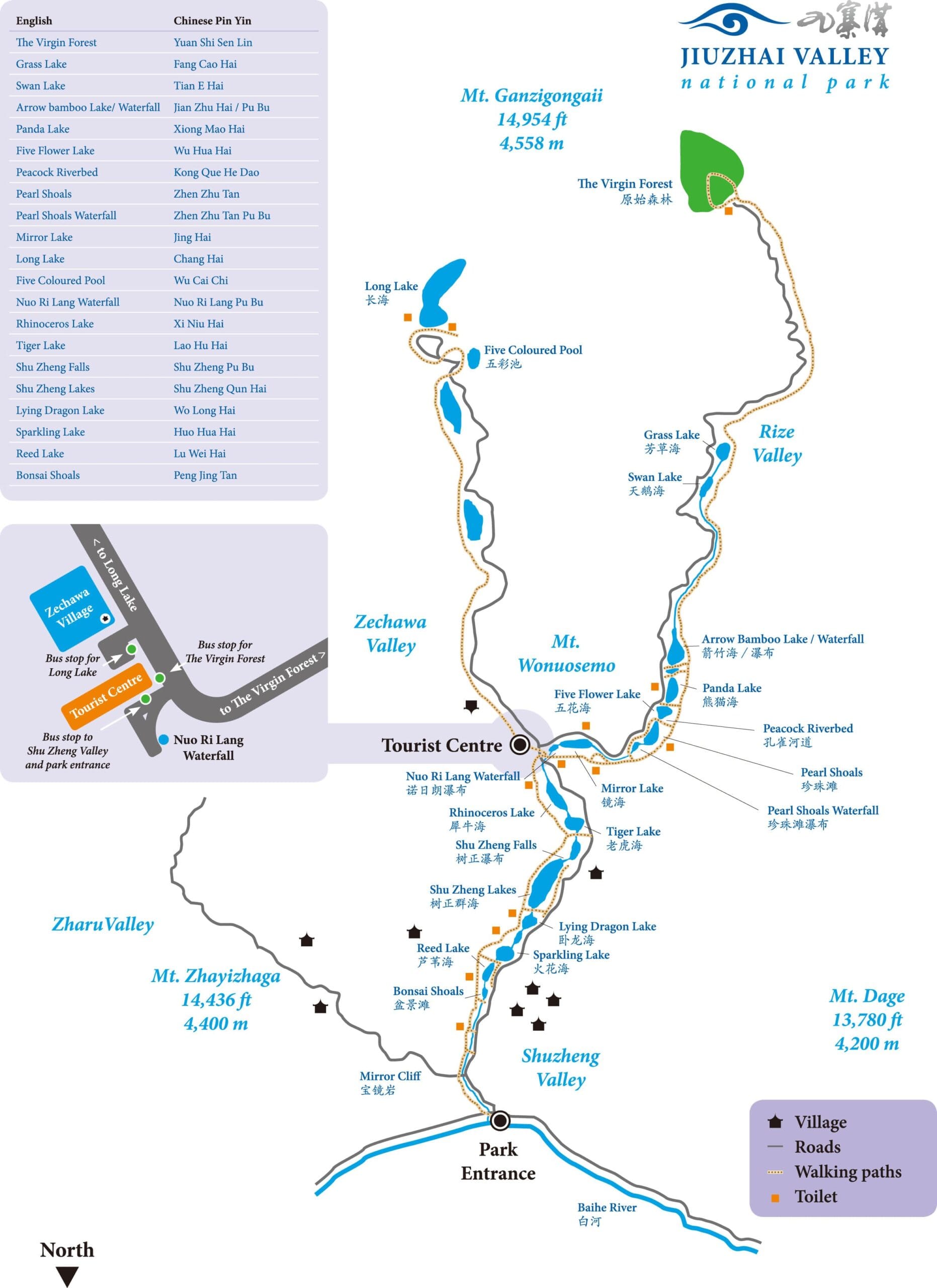
Jiuzhaigou is Y-shaped. One full day covers the highlights if you go far first, work downhill, and use the shuttle strategically. Walk away from the entrance, not toward it.
Here is the route we use with one-day clients. Planning a longer Sichuan trip? Our customised Sichuan tour service can handle the full logistics.
Get to the Gate by 7:30 am
At Nuorilang, the park splits visitors onto the left route (Zechawa) or right route (Rize) by crowd flow, not by request. Arrive after 8:30 am and you risk getting sent the wrong way — a second wait at Nuorilang, sometimes 30 minutes or more in peak season. Enter with the first wave and dispatch still follows requests reliably. Every time slot below assumes you’re through the gate by 7:30.
The Time Split That Works
07:30–12:00 — Rize Valley (~4.5 hours). Board a shuttle to Arrow Bamboo Lake, then walk downhill:
- Arrow Bamboo Lake — bamboo forest, still water
- Panda Lake — clear, deep, white stone patterns on the floor
- Five Flower Lake — give it at least an hour
- Pearl Beach and Pearl Beach Waterfall
- Mirror Lake — closest Rize stop to Nuorilang, a natural way to close the walk
Rushing Rize is the mistake we see most. Five Flower Lake and Pearl Beach Waterfall alone take over two hours between them.
12:00–12:30 — Lunch at Nuorilang Centre. The park’s only restaurant. Buffet runs 10:30 am–2:00 pm; a two-meat-one-vegetable set costs around ¥30. Bring your own food to skip the peak crowd.
12:30–14:30 — Zechawa Valley (~2 hours). Shuttle straight to Long Lake (3,100 m), then walk down to Five-Color Pond. These two are the only stops worth getting off for — the rest is scenery you pass. Move slowly on the climb up; the altitude is real.
14:30–17:00 — Shuzheng Valley (~2.5 hours). Ride back through Shuzheng and stop where it suits you:
- Nuorilang Waterfall — worth a look, though it feels ordinary after Pearl Beach Waterfall
- Rhinoceros Lake, Shuzheng Lakes, Spark Lake, Bonsai Shoal — ride-and-glance is fine; get off for one or two
17:00–17:30 — Exit. Shuttle from Bonsai Shoal back to the gate. All visitors must be out by 6 pm.
Why This Split
Rize gets nearly half the day because Five Flower Lake and Pearl Beach Waterfall alone justify two hours. Zechawa compresses to two hours — only Long Lake and Five-Color Pond are worth stopping for. Shuzheng goes last and stays loose: plenty of named stops, none needing long.
Checkpoints: gate by 7:30, leave Five Flower Lake by 10:30 before the light changes, back at Nuorilang by noon before the lunch queue builds, into Shuzheng by 2:30 to keep a real 2–2.5 hours before the 6 pm cutoff.
More energy? Add Virgin Forest to the top of your Rize morning, stretch Rize to 5.5–6 hours, then compress Shuzheng to 1.5 hours and pick just Rhinoceros Lake and the Shuzheng Lakes. Less energy? Skip Virgin Forest and Mirror Lake, and put that hour into a slower Shuzheng instead.
All three valleys in one day. Walk downhill between stops; take the bus between valleys.
5. How the Shuttle System Works, and When the VIP Upgrade Is Worth It
The standard shuttle: the basics
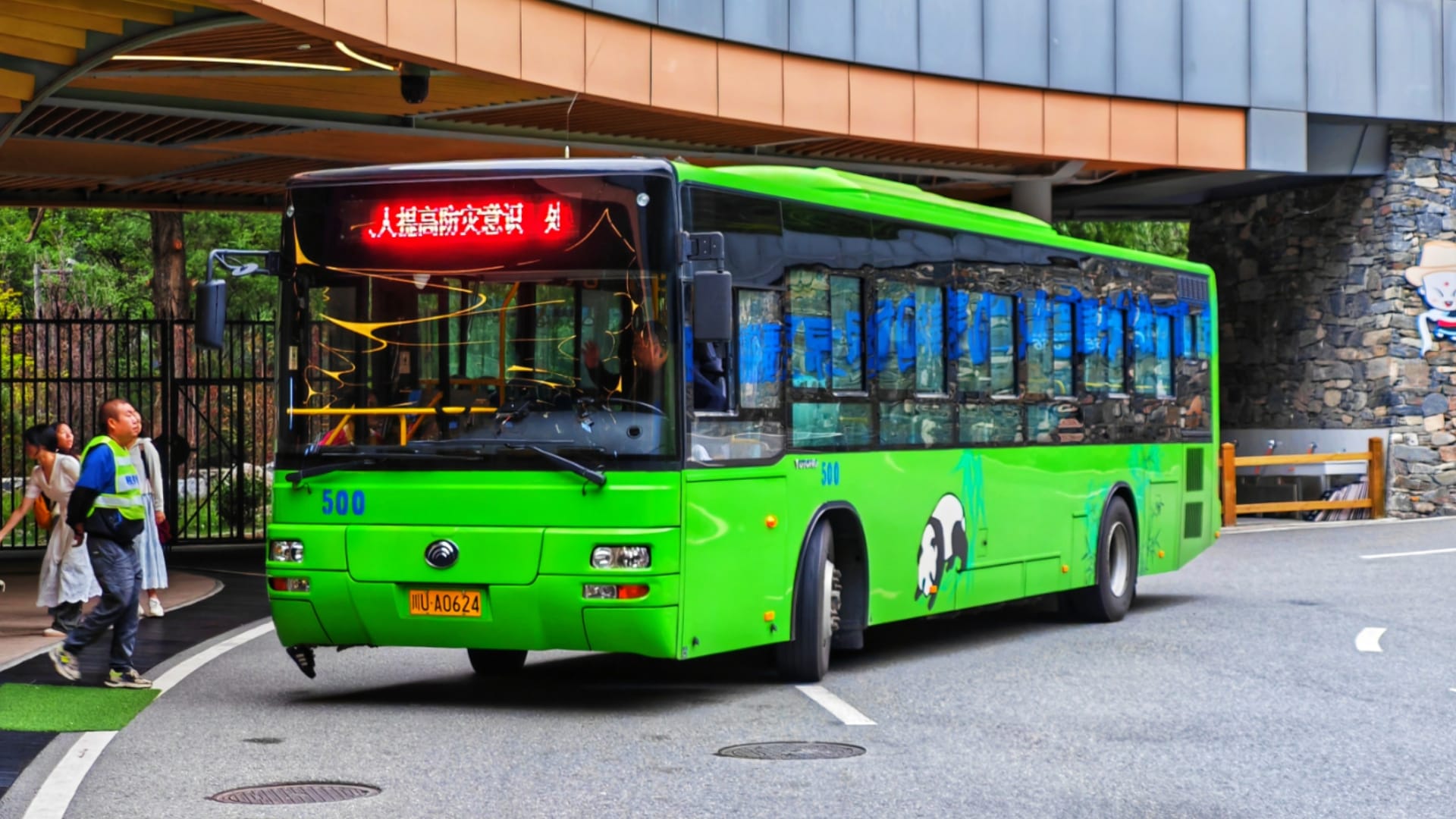
The green eco-buses (¥90, bundled into your park ticket) are the standard way to get around. But the direction you're travelling changes how the system works.
Going up (away from the gate): buses run largely non-stop to the top of whichever branch they're serving — Long Lake in Zechawa, or Arrow Bamboo Lake and Virgin Forest in Rize. They won't pick you up partway; plan to ride straight to your starting point.
Coming down: buses stop at every marked platform, picking up and dropping off freely — get off wherever you want, walk the boardwalk, then rejoin whenever a bus comes through.
Board only at marked stops — drivers don't stop mid-road or on curves. Some peak-season buses are section-only rather than full-route; check the destination card behind the windscreen (a blue placard names the stretch covered, such as gate-to-Shuzheng-village only) before boarding if you're headed further. The last bus back to the gate leaves in the early evening and shifts by season — check the departure board at Nuorilang Centre when you arrive.
Standard vs VIP
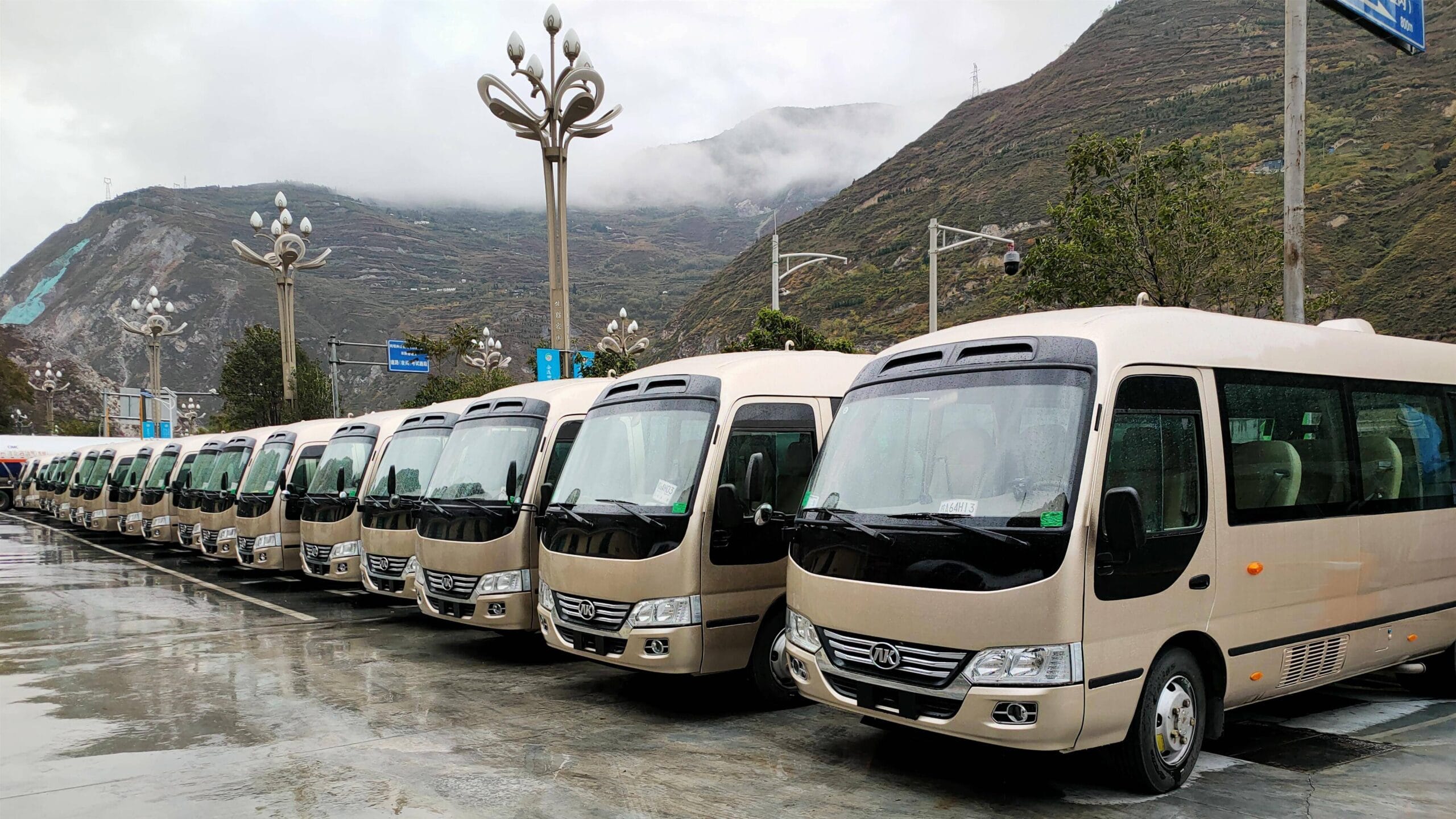
The VIP shuttle is a separate, paid upgrade: a minibus of roughly 20 seats with a dedicated guide, running on-demand rather than on a schedule. It stops where you want, moves when you're ready, and never waits for a full load. Pay directly at the park on the day (¥300 per person on top of admission; it can't be pre-booked online). One detail most guides omit: a private guide's seat on the VIP bus is charged the same ¥300.
During October autumn peak, standard bus queues at busy platforms run 20–30 minutes. The VIP minibus eliminates that and lets you execute the "go far first, walk back" strategy with full control over timing — worth it for photographers chasing a specific light moment at Five Flower Lake. Outside peak October and the May Labour Day holiday, standard buses run frequently enough that most independent travellers won't feel the need to upgrade.
6. Mirror Lake: The Reflection That Closes by 9 am
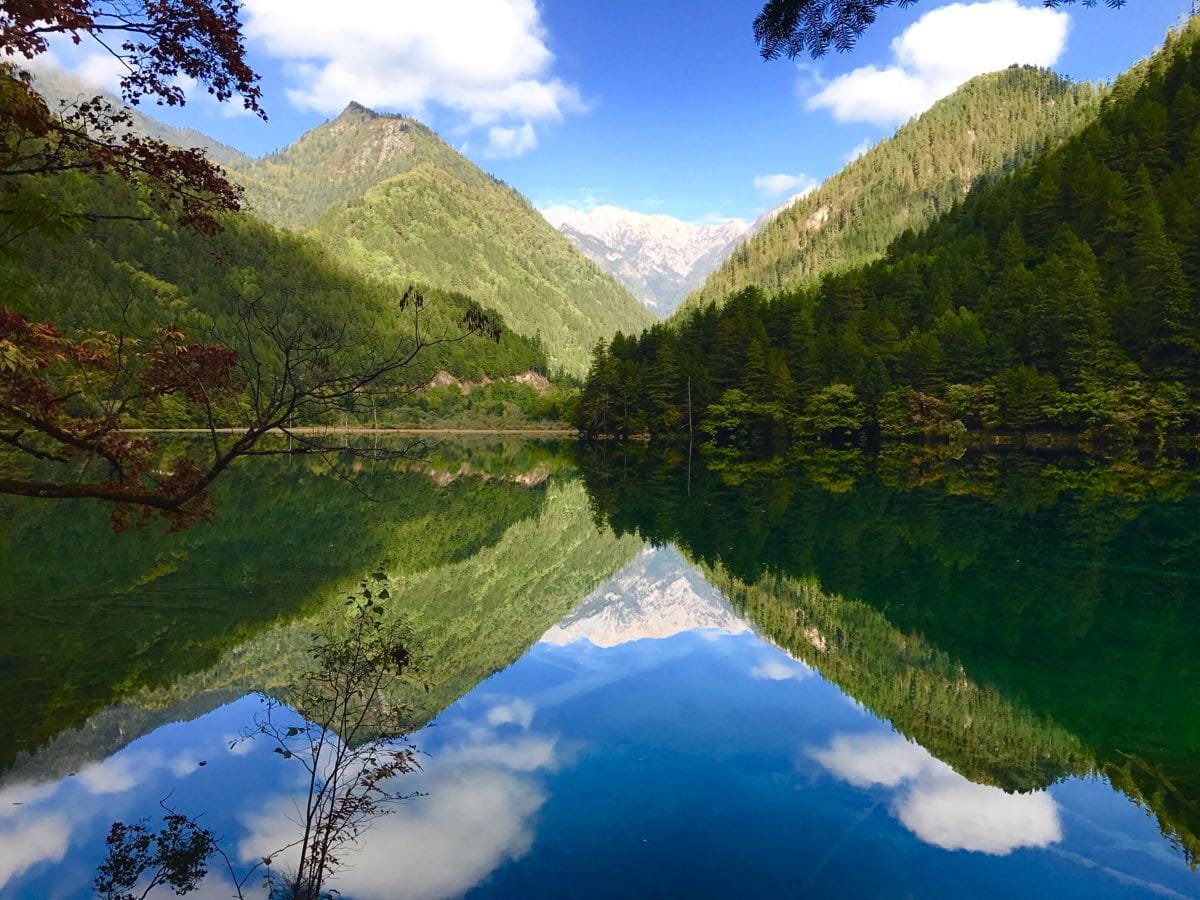
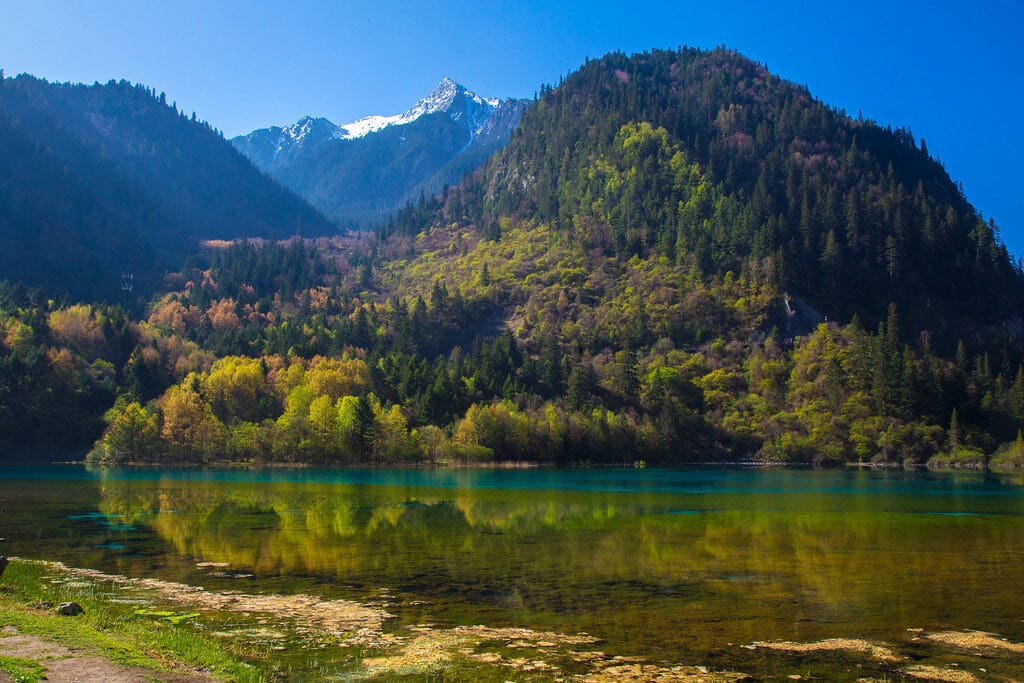
Mirror Lake (Jing Hai) has a window of about 30-60 minutes. On still mornings before 9:00 am, the surface is undisturbed — the surrounding forest and peaks reflect with startling precision, a double image of the world above and the world below. By mid-morning, wind picks up and the reflection vanishes for the day. If you are on a shuttle heading through Rize Valley early in the day and the lake looks calm, step off the bus. This is not a compromise. The next bus will come. But the mirror surface will not wait.
7. Best Time to Visit Jiuzhaigou Valley
Seasonal breakdown
Season | Months | What You Get | Crowds |
|---|---|---|---|
Autumn | Late Sep – early Nov | Golden/red foliage + deep blue lake reflections | Very high in October |
Winter | Dec – Feb | Frozen waterfalls, snow, ultra-blue lakes, quiet | Low |
Spring | Mar – May | Waterfalls at peak flow from snowmelt, wildflowers | Moderate |
Summer | Jun – Aug | Full green canopy, accessible trails, warm | High on weekends |
Scores out of 10 based on scenery quality, crowd level (inverted), and weather reliability.
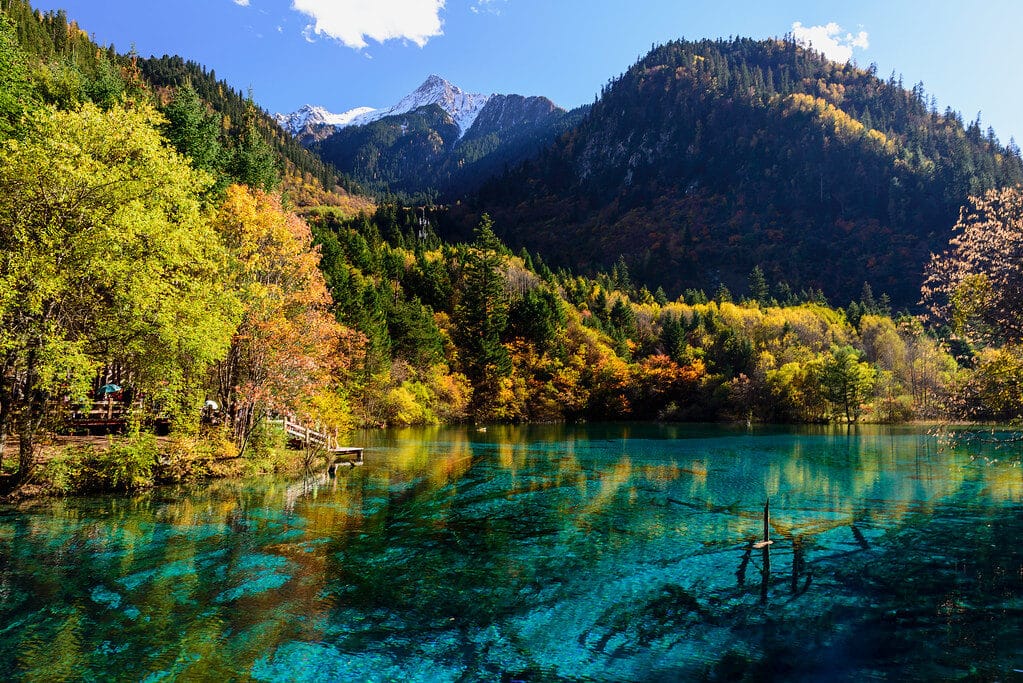
Late September to early October is peak season for a reason. The combination of autumn foliage colour and the lakes' deepest blue is the signature Jiuzhaigou image. The first two weeks of October — overlapping with China's Golden Week national holiday — are the most crowded period of the entire year, with visitor numbers hitting the 41,000 daily cap. We advise clients wanting autumn colour to aim for the last ten days of September or the second half of October, when foliage is still strong but crowds have eased.
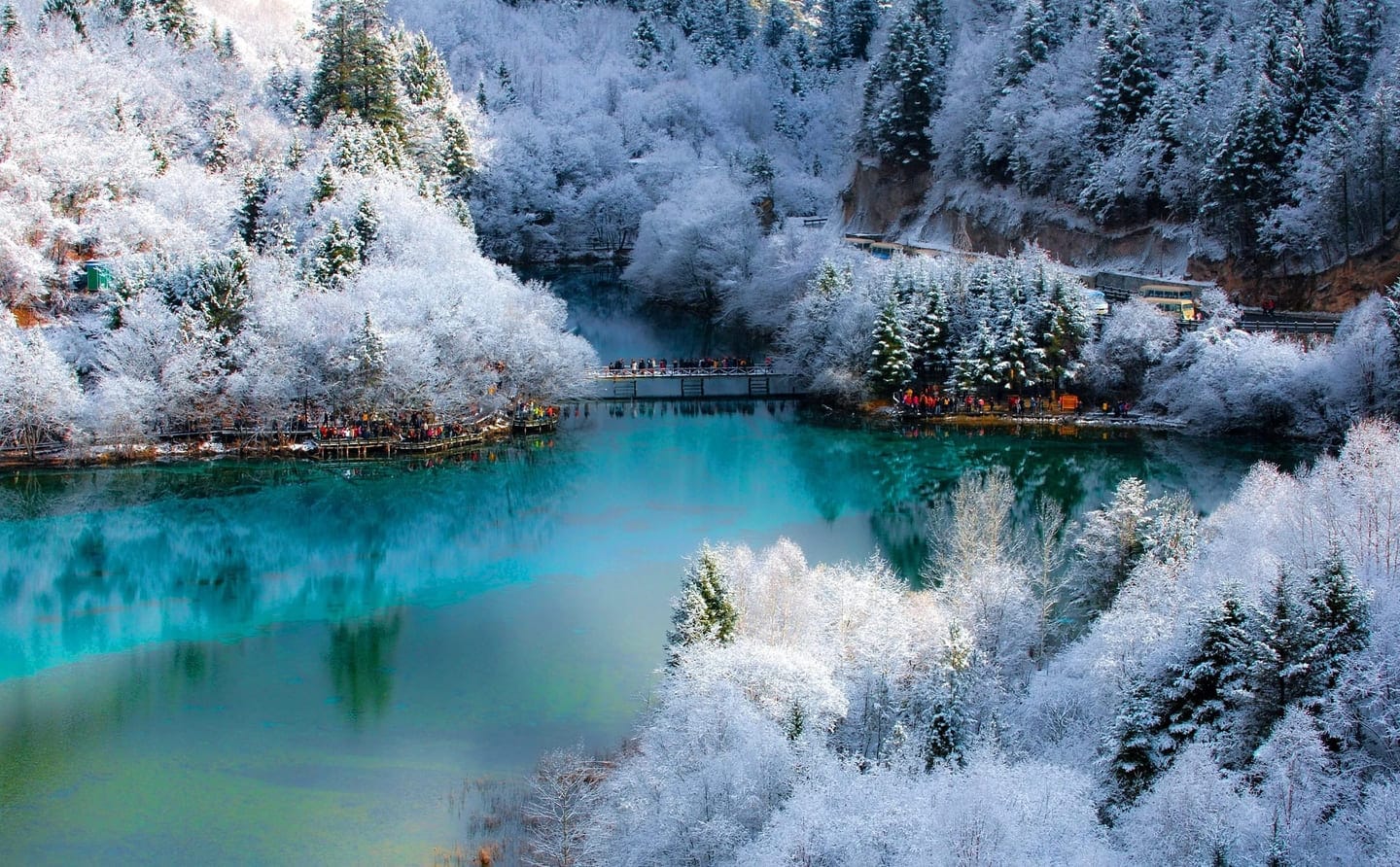
December to February is the season most international visitors overlook, and it shows in the numbers — actual daily visitors are often well below the 23,000 cap. Pearl Beach Waterfall and Panda Lake Waterfall partially freeze into cliff sculptures. Five Flower Lake does not freeze — a quirk of its mineral composition that makes it look even more otherworldly surrounded by snow. Temperatures at the park entrance can reach -10°C, so dress properly. This is our favourite season to take photographers.
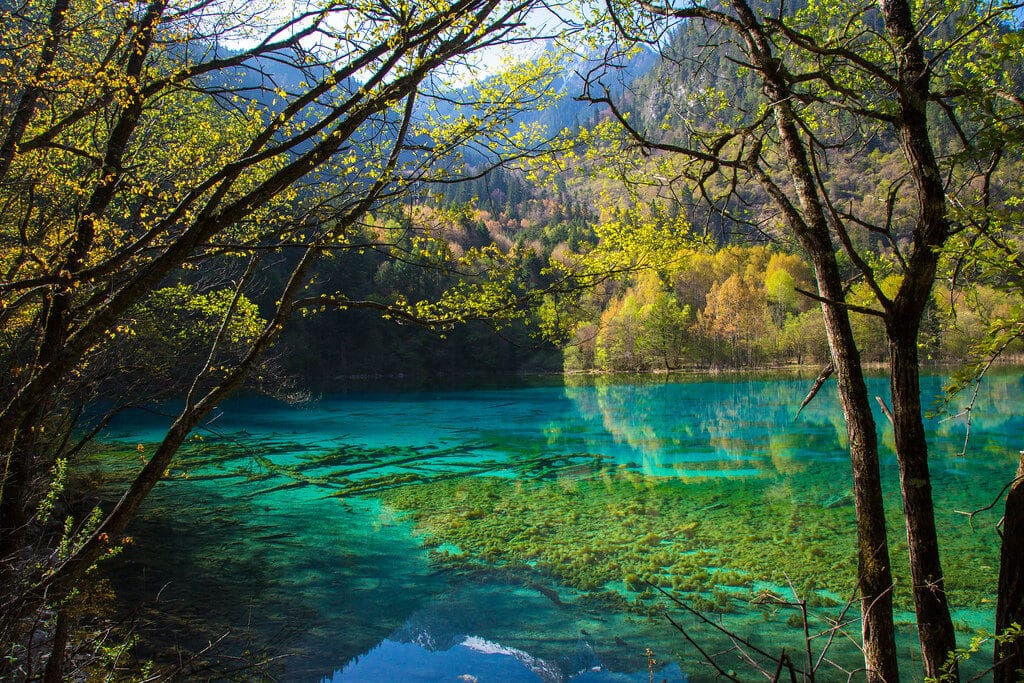
Spring brings the highest water flow from snowmelt — the waterfalls are at their most powerful. The forest is not yet fully green, which reduces colour contrast in photographs, but the mist and emerging vegetation give the valley a different delicacy. Manageable crowds.
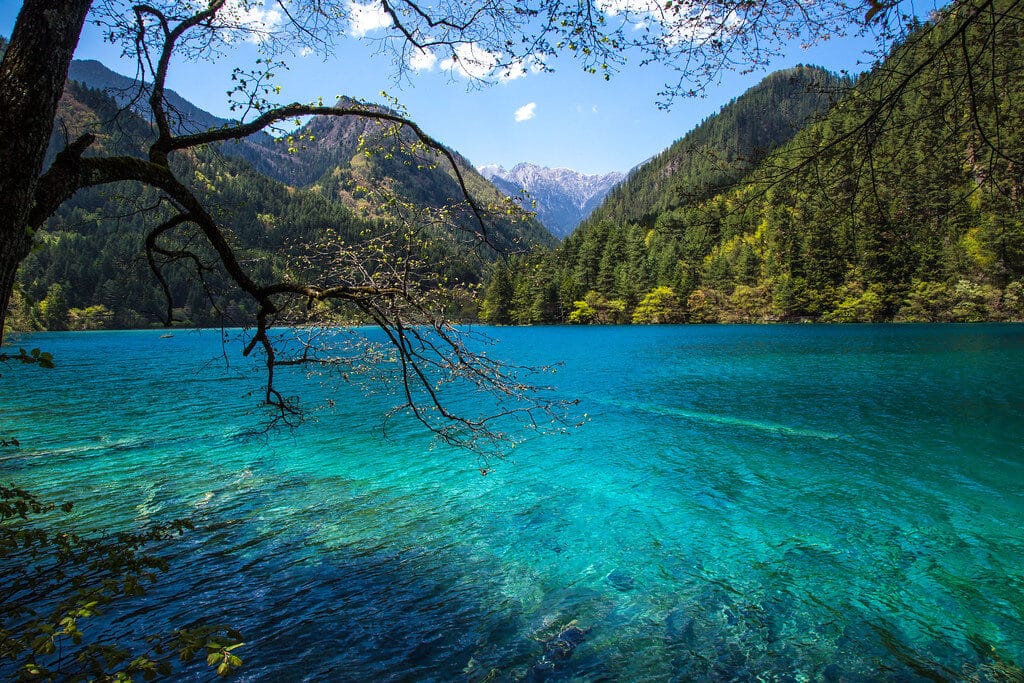
Summer is warm and fully leafed out. Weekends in July and August feel busy. International visitors doing China in summer will find Jiuzhaigou worthwhile but should book tickets at least 2–3 weeks ahead.
8. How to Get to Jiuzhaigou from Chengdu
By high-speed rail from Chengdu
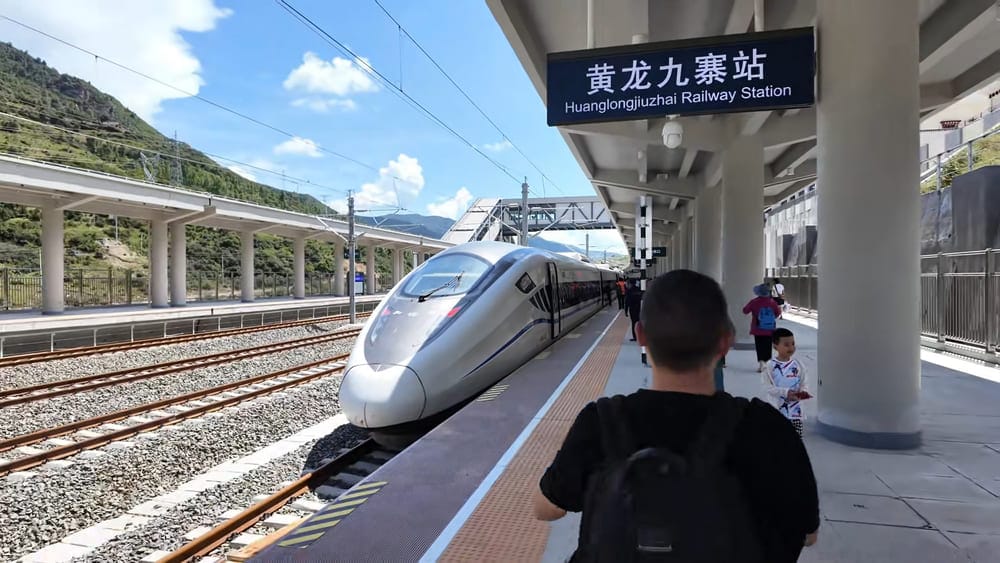
Since Huanglongjiuzhai Railway Station became fully operational in 2025, the high-speed train from Chengdu East Station (Chengdu Dong) is the most reliable option for most travellers. The train takes approximately 1.5–2.5 hours and is unaffected by mountain weather.
From the station, a road transfer of 1.5–2 hours is needed to reach the park gate. Shuttle buses run from the station (around ¥50), but we recommend a pre-arranged private transfer — shared shuttles involve waiting for a full vehicle, which can add an hour to an already long travel day. A private vehicle costs approximately ¥200–400 depending on vehicle type. We can arrange private transfers from the station to the park gate as part of our Sichuan charter car service.
Huanglongjiuzhai Station sits roughly equidistant between Jiuzhaigou and Huanglong (about 23 km to Huanglong, 88 km to Jiuzhaigou). If combining both, visit Huanglong the afternoon you arrive at the station and continue to Jiuzhaigou the following day.
By air
Jiuzhai Huanglong Airport (JZH) sits 88 km from the park and at 3,400 m above sea level. Flights operate from Chengdu (CTU/TFU), Beijing, Shanghai, Chongqing, and Guangzhou. From Chengdu, the flight takes about 45 minutes. Airport shuttle buses (approx. ¥50) take around 1.5 hours to the park gate.
The airport operates under clear-weather restrictions. Fog and afternoon storms — common in spring and summer — cause delays and cancellations without warning. If your schedule has any flexibility, the train is the more reliable choice. If you are flying into Chengdu for the first time, our Chengdu airport guide comparing Shuangliu and Tianfu will help you choose the right terminal.
By road
The G8513 Jiuzhaigou–Mianyang Expressway, which opened in October 2025, cut the Chengdu driving time to approximately 4–5 hours to Jiuzhaigou Town, down from 7–9 hours on old routes. The expressway does not reach the valley entrance — you will always need to drive the final mountain road section regardless of which route you take.
The scenic west route (Chengdu – Dujiangyan – Wenchuan – Maoxian – Songpan – Jiuzhaigou) adds travel time but passes through remarkable Min Mountain scenery, including the Wenchuan earthquake zone and Tibetan grasslands near Songpan. Worth considering for one leg of the journey if you have time.
9. Tickets, Opening Hours, and Booking
No counter at the gate — book in advance
There is NO ticket counter at the park entrance. All tickets must be booked online. The park uses a real-name registration system requiring your passport details.
The official booking app is in Chinese and requires a Chinese mobile number. For international visitors, the most practical options are: use a third-party booking agent (your hotel, a travel company, or platforms like Trip.com that accept international payment), or ask park staff at the service desk on arrival if same-day slots remain. In peak season, counting on same-day availability is a gamble we would not recommend.
Book at least two weeks ahead for autumn visits and one week ahead for other seasons.
Ticket pricing
Ticket Type | Peak Season (Apr 1 – Nov 15) | Off-Season (Nov 16 – Mar 31) |
|---|---|---|
Adult entrance | ¥190 | ¥80 |
Sightseeing bus | ¥90 | ¥80 |
Adult total | ¥280 | ¥160 |
VIP minibus upgrade | ~¥300 per person (on-site only) | Available seasonally |
Insurance (optional) | ¥10 | ¥10 |
Second-day re-entry (peak) | New full ticket required | ¥20 + ¥80 bus |
VIP minibus is optional, purchased on-site only. Source: en.jiuzhai.com, April 2026.
Concessions: Children under 6 or under 1.2 m enter free (bus included). Children aged 6–14 or height 1.2–1.5 m receive half-price bus tickets. Seniors aged 60+ receive free entry (bus ticket still applies at standard rate). Students aged 15–18 receive half-price entrance with valid ID.
Opening hours
Peak season (April 1 – November 15): 07:30 – 18:00. Latest entry: 14:00. Off-season (November 16 – March 31): 08:30 – 18:00. Latest entry: 14:00.
Note: Some high-elevation areas including the Virgin Forest section close seasonally during winter.
Rules that catch visitors off-guard
Drones are banned inside the park. Swimming and smoking are prohibited. Overnight accommodation within the scenic area is strictly prohibited by official regulation. Food is available only at the Nuorilang Centre (10:30 am – 2:00 pm). Bringing your own food and water is allowed and advisable.
10. Combining Jiuzhaigou with Huanglong

Huanglong Scenic Area is approximately 100 km from Jiuzhaigou. It is often paired with Jiuzhaigou because both are UNESCO World Heritage Sites in the same region, and the new Huanglongjiuzhai Railway Station serves both.
Huanglong features a chain of travertine pools climbing 3.5 km up a forested hillside, reaching elevations of 3,100–3,600 m — noticeably higher than even Long Lake in Jiuzhaigou. The altitude at Huanglong's summit is the primary challenge; some visitors experience meaningful symptoms. We recommend buying an oxygen canister in town the night before for ¥15–20. Do not wait until you are already at altitude.
The sequence that works: arrive at Huanglongjiuzhai Station in the afternoon, drive to Huanglong (23 km, 30 minutes), spend 3–4 hours there, overnight near the station or in Songpan, then transfer to Jiuzhaigou the following morning for a full park day. This uses the travel day efficiently and means you sleep at lower altitude before tackling Jiuzhaigou the next morning.
If you want a second day at Jiuzhaigou — which we recommend for photographers or unhurried visitors — plan for three nights in the region total.
11. What to Eat and Where to Stay Near the Park
Food
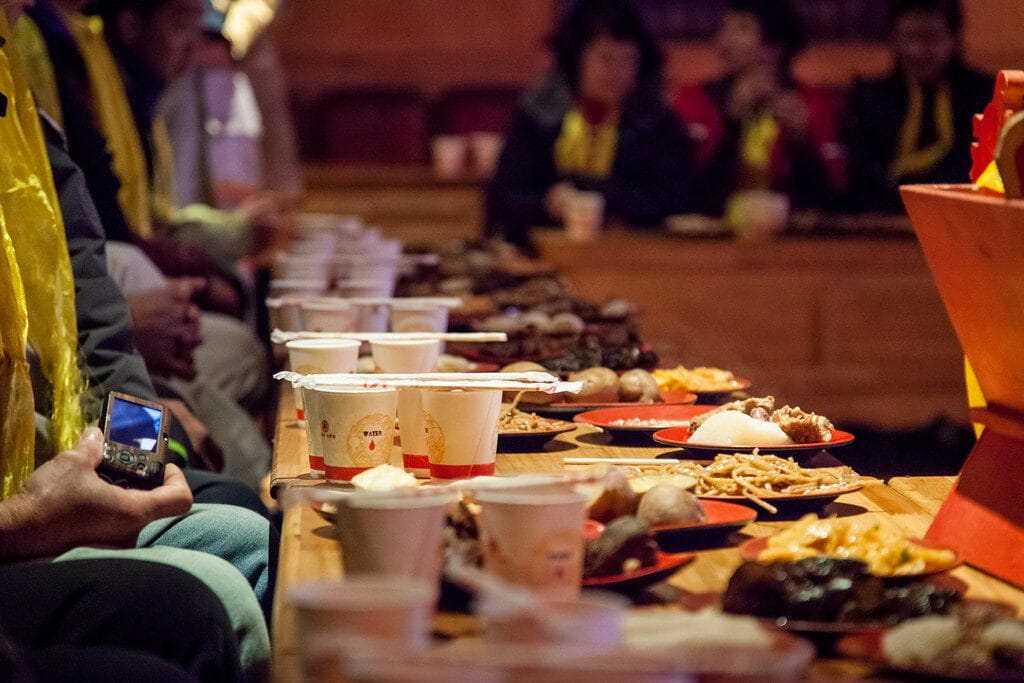
Inside the park, the Nuorilang Tourist Centre is the only place with food. Options include Lanzhou beef noodles, Sichuan dumplings, and sour and spicy rice noodles. It operates 10:30 am – 2:00 pm only. Carrying your own food for a full-day visit is wise.
In Zhangzha Town just outside the entrance, Tibetan restaurants sit alongside standard tourist options. Look for places serving tsampa (roasted barley), yak butter tea, and air-dried yak beef. Several family restaurants around the town square operate primarily for locals at lunchtime — those are the ones worth finding.
Accommodation
Hotels cluster in two zones: Zhangzha Town (1–2 km from the gate, where we recommend staying) and the wider Jiuzhaigou County area further out. Staying close to the gate matters. A 20–30 minute taxi ride at 7:15 am defeats the early-entry advantage. The Banyan Tree Jiuzhaigou is the most upmarket option and is well-located. Mid-range Tibetan-style boutique hotels offer a better experience of the place than international chain properties.
12. Altitude and Health: What to Expect
Approximate elevations. The steepest on-foot climb is the final approach to Long Lake in Zechawa.
The park entrance sits at 2,000 m. Long Lake and Five-Color Pond in Zechawa reach 3,100 m. Most healthy adults manage well, but some experience mild headaches, shortness of breath on stairs, or fatigue.
What helps: arrive in Zhangzha Town the night before (never fly in and enter the park the same morning), drink water consistently throughout the day, avoid alcohol the night before, and walk slowly on bus platform stairs and boardwalk inclines. Oxygen canisters are sold in town for ¥15–20 and are worth having if you are altitude-sensitive.
Visitors with heart conditions, high blood pressure, or respiratory illness should consult a doctor before visiting Zechawa Valley, which reaches the park's highest elevations.
13. Visiting Jiuzhaigou with Reduced Mobility
This is a question we get less often than we should. The short answer is that Jiuzhaigou is more accessible than most mountain parks in China — and has improved significantly since 2025.
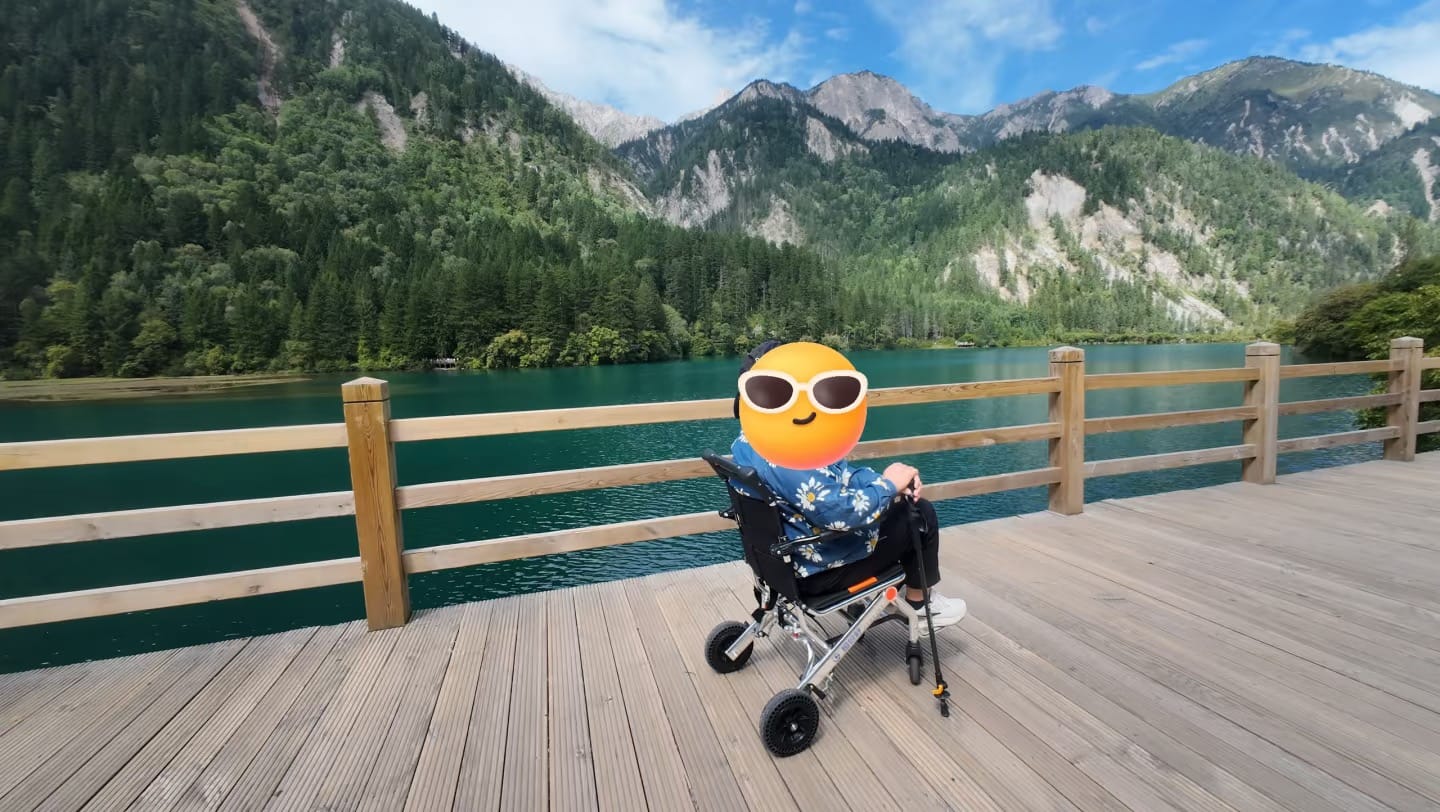
The park's 82 km of boardwalks are built flat and wide, averaging 1.8 metres across at major viewing areas. The surface is smooth, treated timber — not cobblestone or loose gravel. Most of the main viewing decks at Five Flower Lake, Nuorilang Waterfall, and the Shuzheng Lakes group are fully reachable without stairs. The sightseeing buses stop at all major platforms, so wheelchair users can cover the entire route by bus and access the key viewpoints without long walks.
Wheelchair rental is available free of charge at the Nuorilang Service Centre in the middle of the park.
On the buses specifically: In August 2025, a provincial disability rights inspection found that the standard sightseeing coaches lacked proper wheelchair boarding ramps and securing fixtures. The Jiuzhaigou County prosecutor's office intervened, and the park committed to deploying purpose-built accessible buses by the October 2025 national holiday. The official park website confirmed in October 2025 that vehicles equipped with ramp boards and lifting frames had been put into service. If you are planning a visit and accessibility on the buses is critical, we recommend contacting the park directly in advance to confirm current availability of accessible vehicles on your intended route.
Disabled visitors receive free entry — the admission ticket is waived entirely, though the sightseeing bus ticket (¥90 peak / ¥80 off-season) still applies.
In April 2026, we accompanied Tony and his wife — who uses a wheelchair — from Australia on a visit to Jiuzhaigou. The boardwalks and viewing platforms presented no significant obstacles. The staff at the Nuorilang Centre were attentive and proactive. Tony's wife saw Five Flower Lake, Nuorilang Waterfall, and the Shuzheng Lakes group on the same day. They have already asked us about coming back.
A few practical notes for visitors with mobility needs: the highest sections of Zechawa Valley — Long Lake and Five-Color Pond — involve a steeper approach from the bus stop and are harder to manage in a wheelchair. We recommend focusing on Shuzheng and Rize valleys, which offer the park's most celebrated scenery at more accessible elevations. Advance notice to the park (at least one week ahead) allows staff to arrange priority boarding and assistance.
14. The Tibetan Culture You Will Actually Encounter
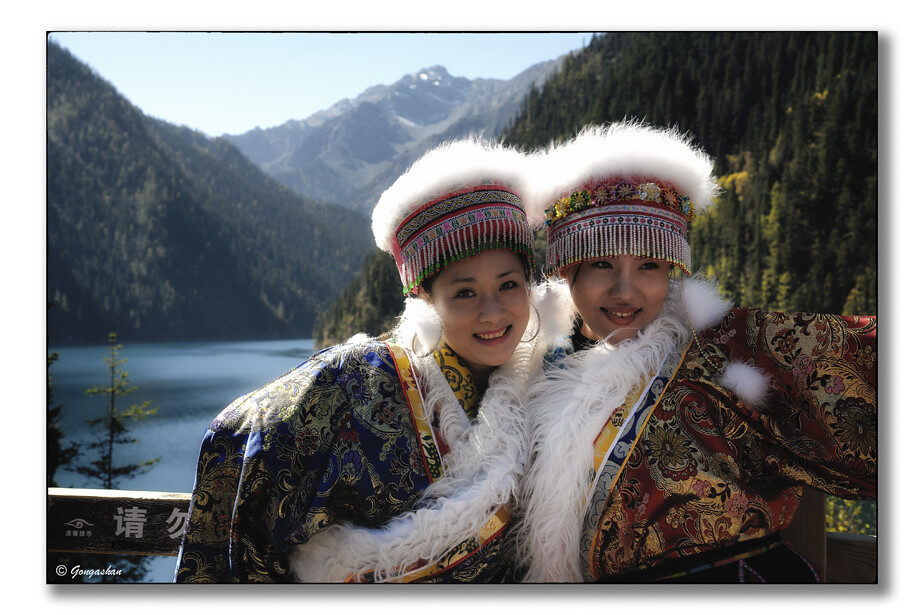
Jiuzhaigou sits in the Amdo Tibetan cultural zone. The nine villages — Heye, Shuzheng, Zezhawa, and others — that give the valley its name (jiuzhai literally means "nine villages") are home to communities that have lived here across generations. They are not heritage reconstructions.
The cultural markers are real: white stupas, spinning prayer wheels at valley shrines, prayer flags strung between trees along the lake edges. The legend associated with the lakes — that a mountain deity named Dago gifted a mirror made of wind and cloud to the goddess Semo, who dropped it and shattered it into the 108 lakes of Jiuzhaigou — is a living part of the community's belief, not a tourist invention.
Spend an evening in Zhangzha Town. The market, the Tibetan restaurants, and the sound of the place after the tourist buses have gone tell you more about Jiuzhaigou than the park itself can.
15. Practical Tips That Save You Real Time
Book tickets early, not last-minute. In peak October, the 41,000 daily cap sells out weeks ahead. We have had clients arrive without tickets and lose an entire day. It is entirely avoidable.
Arrive at the gate by opening time. The first shuttles reach the far ends of the valleys before crowd flow builds. Arriving at 9 am puts you already behind the optimal timing curve.
Mirror Lake is time-sensitive. If you pass it before 9 am on a calm morning, exit the bus. You can take the next one. The mirror reflection cannot be reproduced at noon.
Do not cover all three valleys in detail in a single day. Pick Rize and Shuzheng for a first visit, Zechawa and Shuzheng for a second. Doing all three in full detail in one day leads to rushing and arriving at the famous lakes tired.
Wear layers regardless of season. At altitude, temperature drops 10–15°C between morning and afternoon. A waterproof outer layer is useful year-round; afternoon cloud cover and light rain are common in the mountains.
Photography timing: early morning for lake reflections, afternoon backlight in autumn for the forest canopy. Midday light is flat and crowds are at their peak — both reasons to take your lunch break seriously.
Travelling with a private guide inside the park? The VIP shuttle is worth it. The guide's seat costs ¥300 the same as yours — but the combination of on-demand stops and someone who can tell you why the water at Five-Color Pond is a different shade from Five Flower Lake changes the day substantially.
16. Frequently Asked Questions
Is Jiuzhaigou accessible for wheelchair users?
Yes, with some planning. The main boardwalks are flat and wide, the key viewpoints are reachable by sightseeing bus, and disabled visitors enter free. Purpose-built accessible buses with ramps and securing fixtures were deployed from October 2025. The Shuzheng and Rize valleys are the most accessible sections; the upper reaches of Zechawa Valley (Long Lake, Five-Color Pond) are harder to manage in a wheelchair. Contact the park at least one week in advance to arrange priority boarding. See our full accessibility section above for details.
Is Jiuzhaigou worth visiting?
For anyone drawn to natural landscapes, yes — unreservedly. The combination of lake chemistry, altitude light, and scale is not replicated anywhere else in China. The main trade-offs are logistics: remote location, advance booking required, altitude to manage. None of these are difficult with preparation. Tripadvisor rates it 4.7 out of 5, and the most common phrase in reviews is that it looked better in person than in photographs — which is rare for any destination.
What should I wear to Jiuzhaigou?
Layering is essential in every season. The temperature at the park entrance and at Long Lake (3,100 m) can differ by 10–15°C in the same afternoon. Bring a waterproof outer layer, walking shoes with grip (boardwalks are often wet), and sunscreen — UV intensity at altitude is higher than most visitors expect, including in autumn and winter.
Is Jiuzhaigou suitable for children?
Yes. The shuttle system means you are not dependent on walking the full valley, and the main boardwalks are flat. Children 5+ generally manage well with a reasonable pace and regular water stops. The altitude requires moving slowly and drinking consistently.
Do I need a visa to visit China?
China has expanded its visa-free entry policy substantially in 2024–2025. Citizens of many countries — including the EU, UK, Australia, and others — can now enter visa-free for 10–30 days depending on nationality. Check current status before travelling, as the policy continues to evolve. Our China visa guide is kept updated with current information.
Can I hire a guide inside the park?
Official park guides are available for hire at the entrance. The park's shuttle and boardwalk system is easy to navigate independently with a map — clear signage at every stop, English labelling at major attractions. A guide adds most value for Tibetan cultural context and photography knowledge rather than wayfinding. We can arrange English-speaking private guides who meet you at the gate — contact us to discuss.
Is the park fully recovered from the 2017 earthquake?
Yes. All three valleys are open. Five Flower Lake, Nuorilang Waterfall, Pearl Beach Waterfall, and all major attractions are accessible and restored. The park infrastructure has improved substantially since before 2017.
What is the difference between Jiuzhaigou and Zhangjiajie?
Both are UNESCO World Heritage Sites, but they offer entirely different landscape types. Jiuzhaigou is a valley of coloured lakes, waterfalls, and Tibetan forest. Zhangjiajie National Forest Park is a landscape of dramatic sandstone pillar formations rising from subtropical forest — the inspiration for the floating mountains in Avatar. Jiuzhaigou is about water. Zhangjiajie is about rock and altitude. Many long-haul visitors combine both on the same trip. We regularly plan itineraries that cover Sichuan and Hunan together.
Can I visit Jiuzhaigou as a day trip from Chengdu?
Technically possible by air — 45-minute flight each way, full day in the park. We do not recommend it. Altitude adjustment alone is better managed with one night's sleep in the area. A rushed single day also does not do justice to a place that rewards slow looking. One night's sleep at altitude before entering the park makes a measurable difference to how you feel on the boardwalks. Our China tour itinerary guide has suggested routes for trips of different lengths.
How many days should I spend?
One full park day covers the main highlights if you start early and follow the no-backtracking route. Two days allows a more relaxed pace and deeper exploration of Zechawa Valley. If combining with Huanglong, add one more day. For most first-time visitors doing a broader China trip, one full park day plus the Huanglong half-day is the right balance.
A Personal Note from Our Team
We have watched Jiuzhaigou go through its worst moment — the 2017 earthquake — and recover. We were taking clients back before the full reopening and have continued every season since.
The colours are not exaggerated in photographs. If anything, photographs compress what it actually feels like to stand inside a Y-shaped mountain system where every bend opens onto a different lake and a different quality of light. We still get clients writing back to say Jiuzhaigou was the one place on their China trip they would return to first.
We also know what happens when visitors arrive unprepared: tickets sold out, wrong entry times, altitude catching them off-guard, Five Flower Lake reached at noon instead of 9 am. The preparation is not complicated. It just needs to happen before you get on the plane.
Whether you want logistical support for a self-guided visit or a fully arranged private tour covering Jiuzhaigou, Huanglong, and Chengdu, contact our team and we will help you get it right.