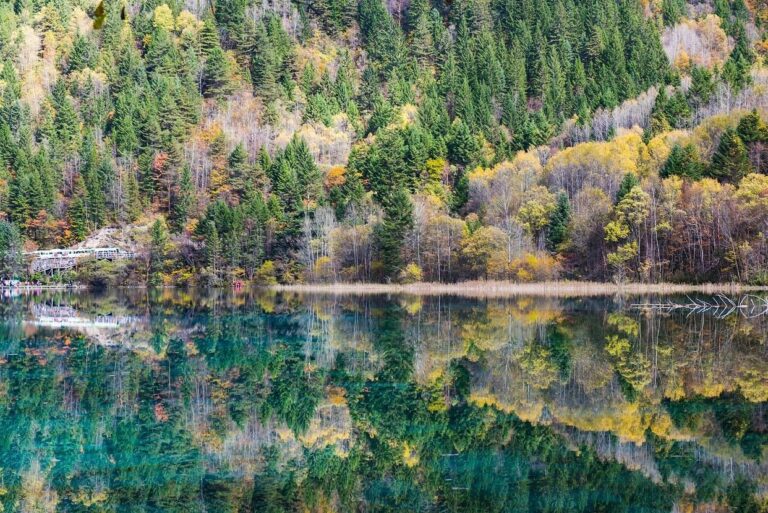
Baksum Tso Lake
Basum Lake is adjacent to national highway 318, making transport to the lake very convenient. Basum Lake has become a popular tourist attraction in Nyingchi. In Tibetan language, Basum means ‘green water’. The water is green because it is so pure and clean that the surrounding green trees are reflected in the lake surface. Around the lake, there are both snow-capped mountains and mountains dotted with evergreen trees. In spring, vigorously blooming flowers are mirrored in the lake surface, forming a splendid picture. When autumn comes, flaming maples leaves light the whole mountain and reflect on the water, making it a sea of red color.
Baksum Tso Lake is also a religious resort. It is viewed by the local Tibetan people as the holy lake of the Nyingmapa (Red) Sect. On the islet at the center of Baksum Tso Lake, the monastery constructed in the Tang Dynasty (618-907) is the most famous temple of the Nyingmapa Sect. Every year, thousands of adherents flood here to worship. Ferrying across the lake to the islet is a great fun. While staying on the island, the sounds of the monks’ reciting sutra make you feel far away from earthly troubles.The lake covers a total area of more than four square kilometers (about 990 acres) and lies at an altitude of over 3,700 meters (about 12,000 feet).
The lake is shaped like a crescent and lies nestled in a small, but deep valley. Despite being far from the hustle and bustle of towns and cities, Basum Lake has become renowned because of its lush vegetation and the bluish green water. Going upstream from the Basum Lake to the source of the mainstream and the tributaries, one can see large mountain glaciers. With abundant snow, the long tongues of the lakes often stretch into the lush and green forest, the white snow shining through green trees. The bank of the lake is dotted with small villas of unique shapes, making a beautiful and comfortable holiday village.
In 1997, the Basum Lake was listed by the World Tourist Organization as one of the world’s best tourist spots.