Jizu Mountain Travel Guide: Cable Car, Temples and Day Trips from Dali
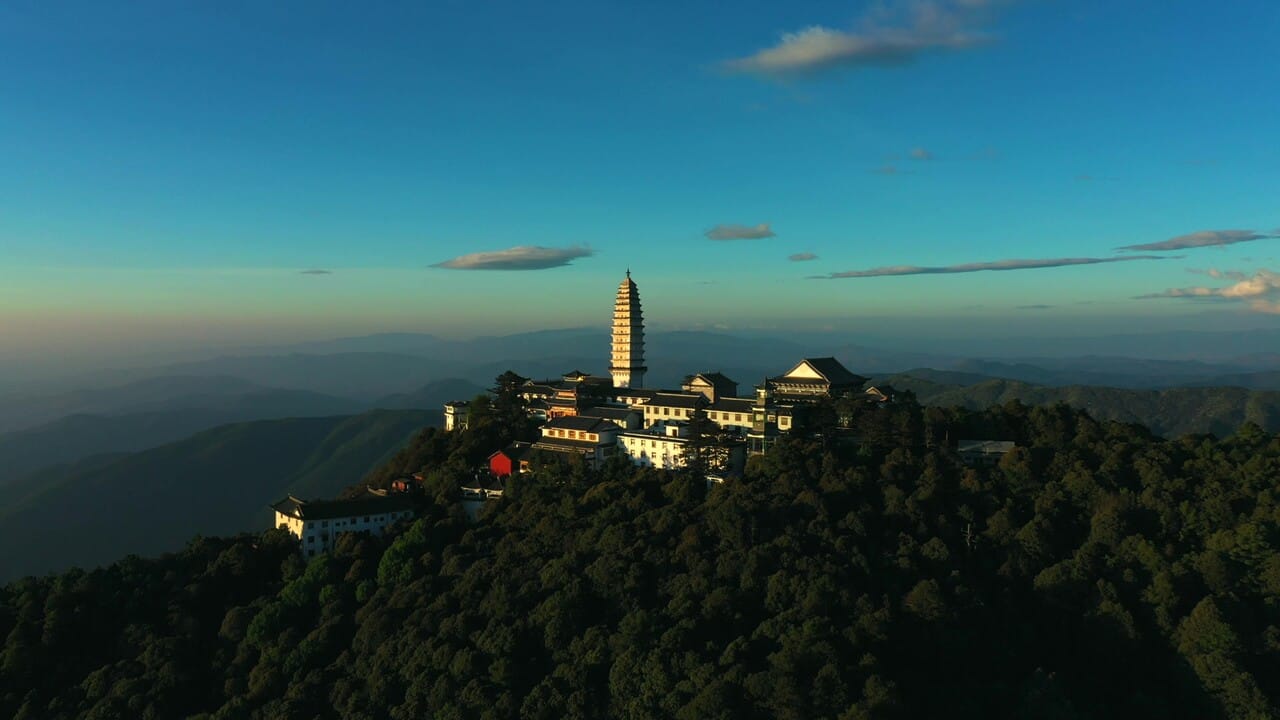
Jizu Mountain (Jizushan, Chicken Foot Mountain) is a Buddhist pilgrimage mountain in Yunnan and a full day trip from Dali. Most visitors take the cable car up to Jinding Temple on the 3,248 m summit. What trips people up is timing: meals and the last cable car run on fixed hours, and on weekends cars can’t drive up the mountain.
This guide covers how to plan that day, from leaving Dali to catching the last bus back. It draws on Yunnan trips we’ve planned since 2006, our visits to the mountain almost every month, feedback from our guests and the scenic area’s official prices. By the end, you’ll know whether to ride or walk down, which timeline fits your group, what everything costs, and which mistakes cost visitors the most money.
Location | Binchuan County, Dali Prefecture, Yunnan; 1.5 hours by car from Dali Old Town |
|---|---|
Summit | Jinding Temple (Golden Summit Temple) on Tianzhu Peak, 3,248 m |
Hours | Scenic area 8:00–18:00; cable car and sightseeing bus 8:30–17:30 |
Tickets | Entry CNY 55; cable car CNY 75 return; sightseeing bus CNY 15 per section |
Time needed | 5.5 hours on the mountain by cable car; 7.5 hours if you hike down |
Payment | Bring small cash for meals, fortune sticks and prayer slips |
Table of Contents
1. Jizu Mountain at a Glance
Why the mountain is sacred
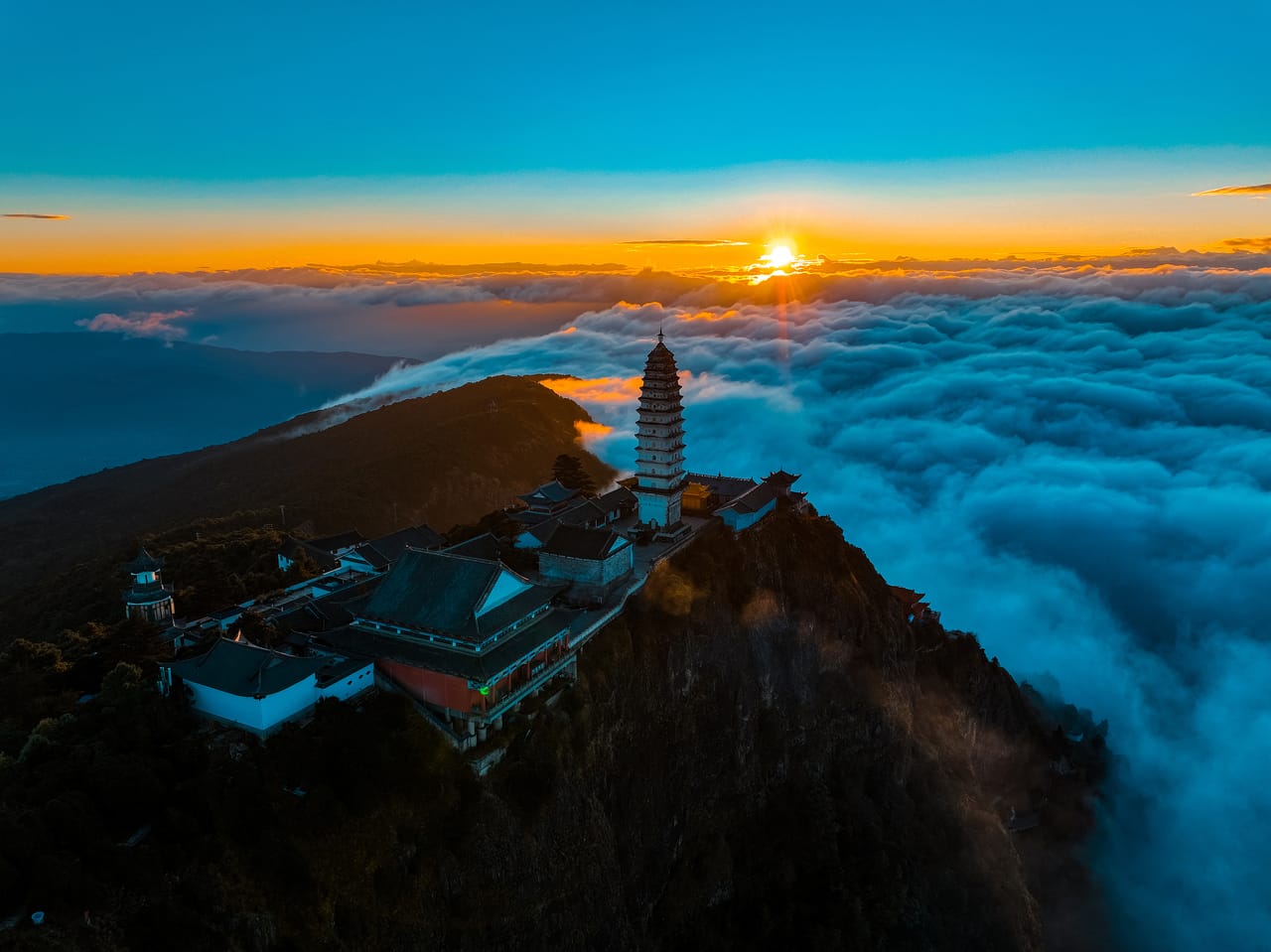
Jizu Mountain (鸡足山) is a major Buddhist pilgrimage mountain in Yunnan, sitting northeast of Erhai Lake in Binchuan County. Its name comes from the shape of its ridges: three spurs in front and one behind, like a chicken’s foot. Buddhist tradition holds that Mahakasyapa, the Buddha’s senior disciple, entered meditation at Huashou Gate on Jizu Mountain. Most pilgrims come because of him.
Temples here date back to the Tang dynasty and peaked in the Ming and Qing, when thousands of monks lived on the slopes.
The three main sites
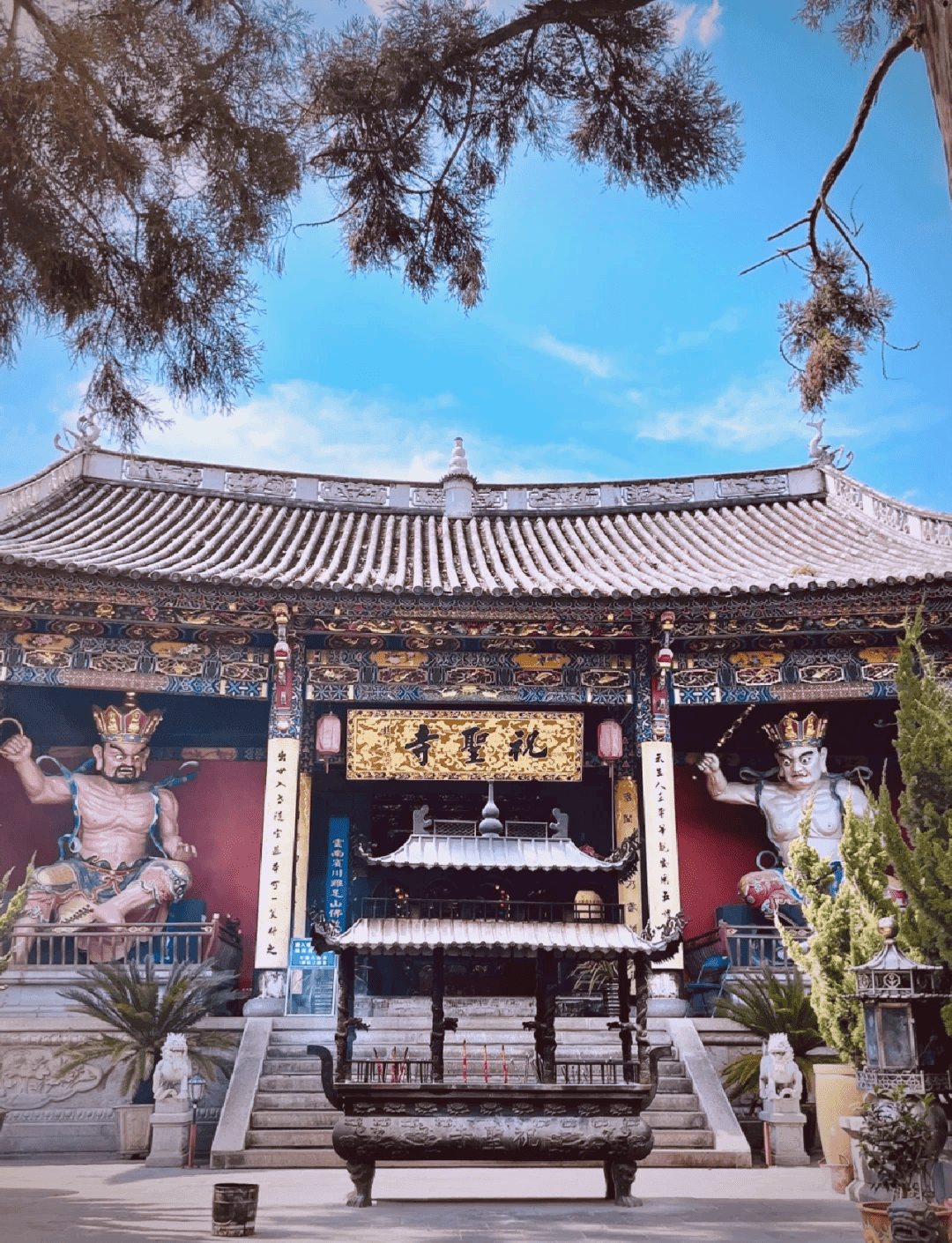
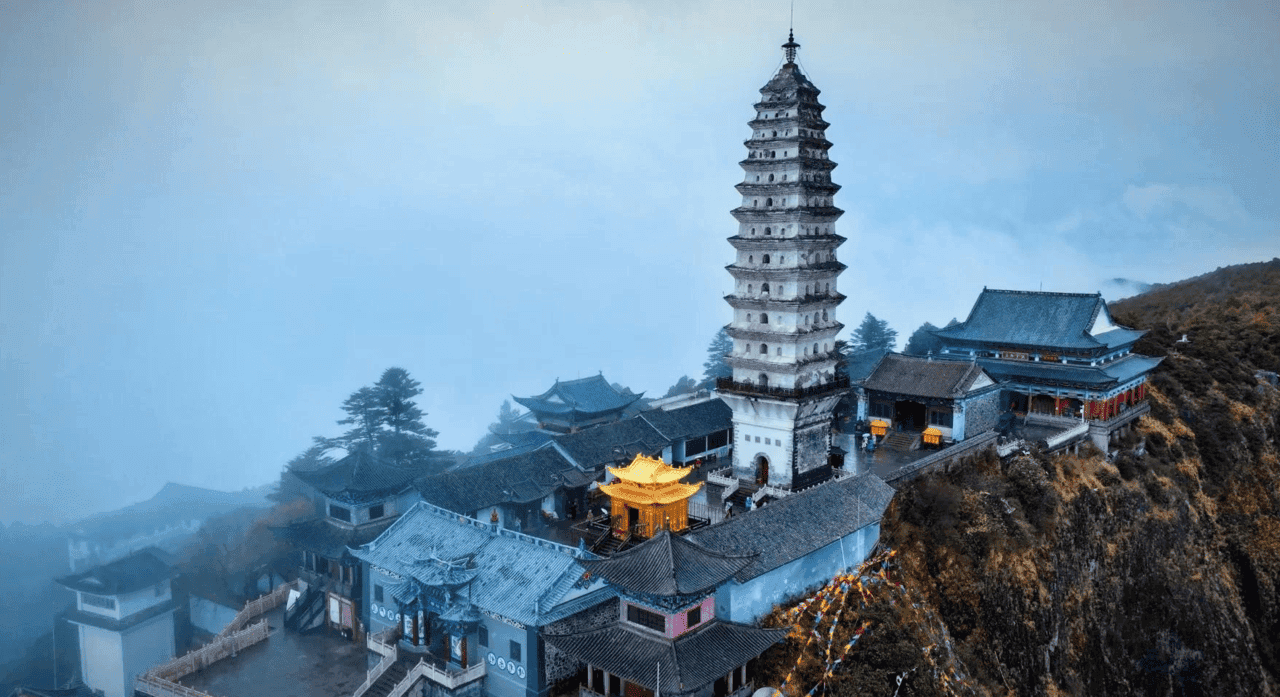
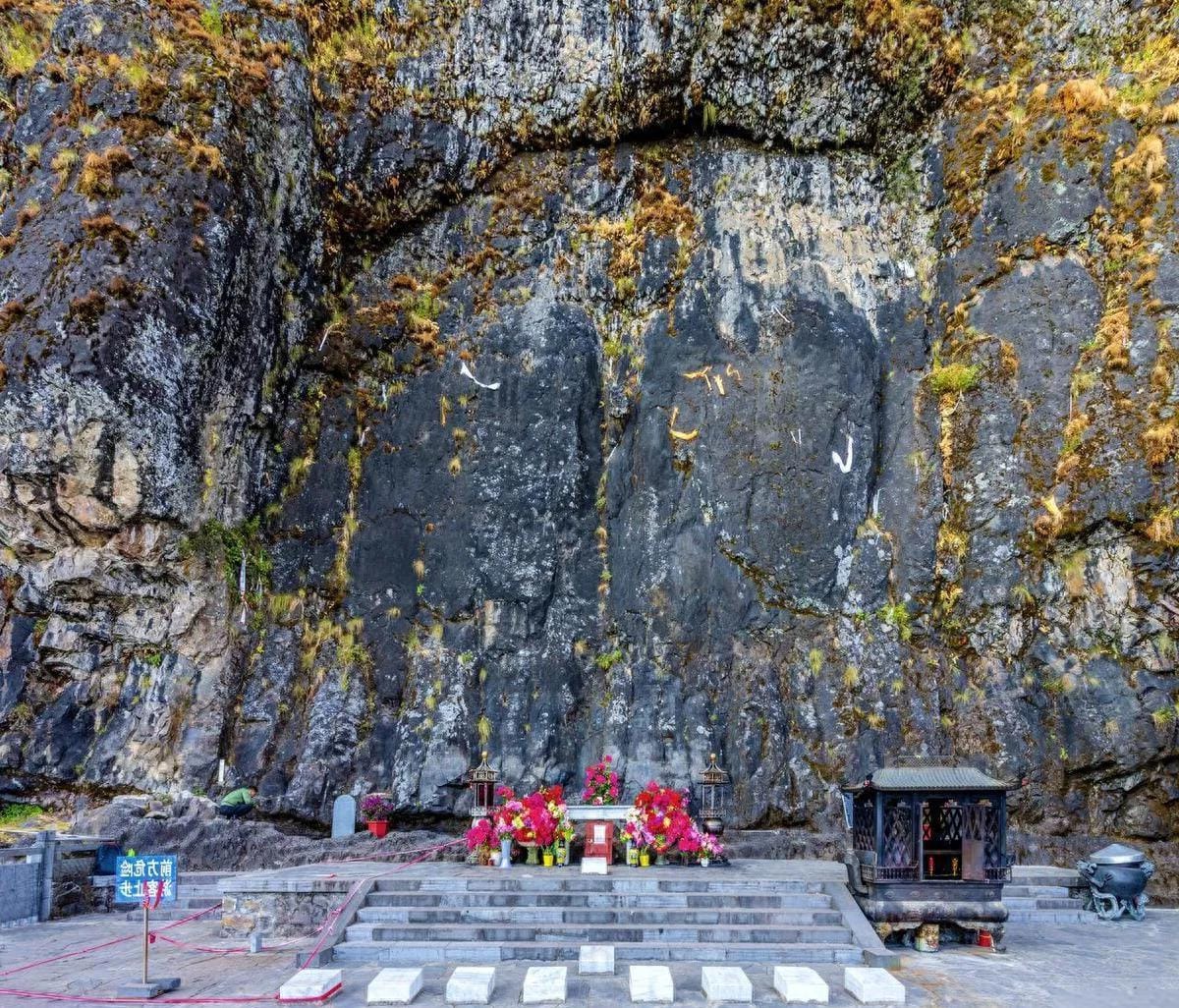
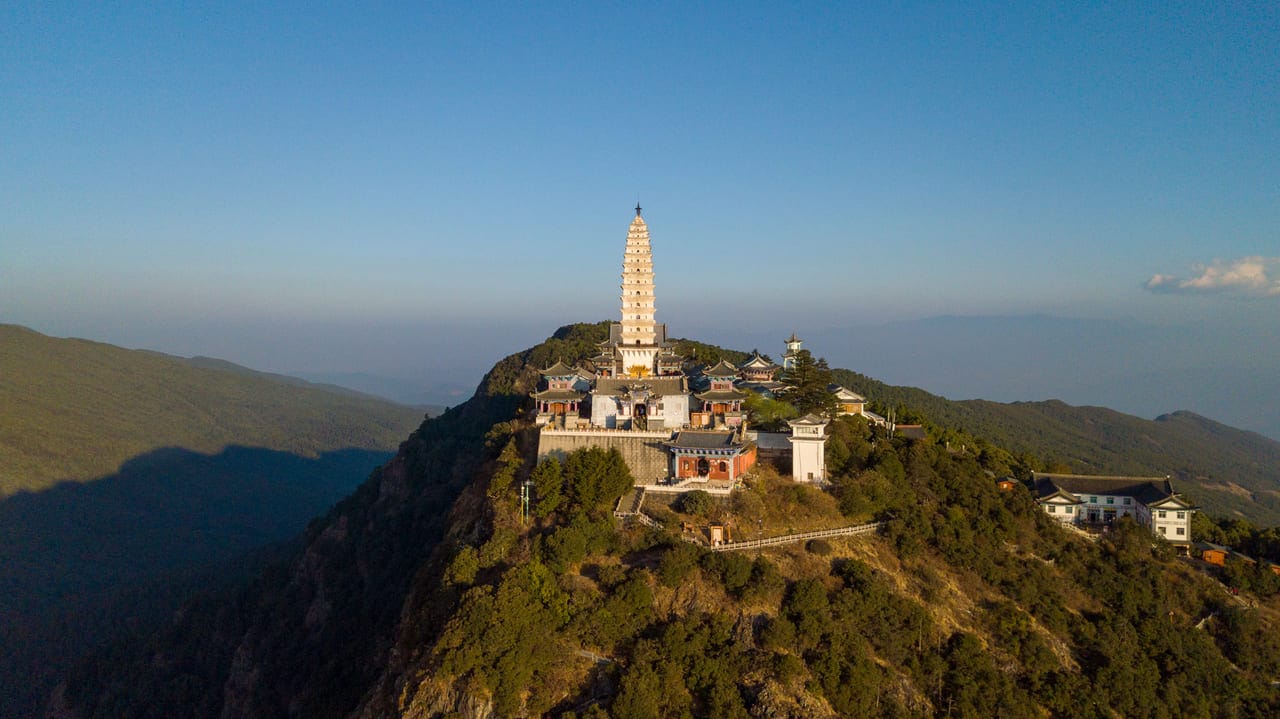
Zhusheng Temple sits at mid-mountain. Jinding Temple and its Lengyan Pagoda stand on the summit, and Huashou Gate is a sheer rock wall just below the top.
The white Lengyan Pagoda on the summit was built between 1932 and 1934. It’s a 42 m brick tower modeled on the Qianxun Pagoda at Dali’s Three Pagodas. During World War II, pilots flying the Hump airlift used the pagoda as a navigation landmark, according to Binchuan County’s official media center.
Why people go
Most Chinese visitors come to pray, and many come back. Local pilgrims who believe in the mountain’s blessings return year after year, some six or seven years in a row. Many come back to give thanks after a good fortune-stick draw. Our foreign guests usually go once, so the planning matters more.
The other reason to go is the view, and on a clear day it’s worth the trip by itself. From Jinding Temple you look over a sea of clouds to Cangshan Mountain and Erhai Lake in the west, with Jade Dragon Snow Mountain on the northern horizon.
Jizu Mountain is also less commercial than many Chinese scenic areas. Temple lunches cost CNY 10–20, and incense inside the temples is free. The trap is at the gate, not on the mountain (see section 5). Jizu Mountain is NOT one of China’s four great Buddhist mountains, but pilgrims from Yunnan and Southeast Asia rank it alongside them. If you’ve done Mount Emei, expect a smaller mountain, with the cable car covering most of the climb.
2. Cable Car or Hike?
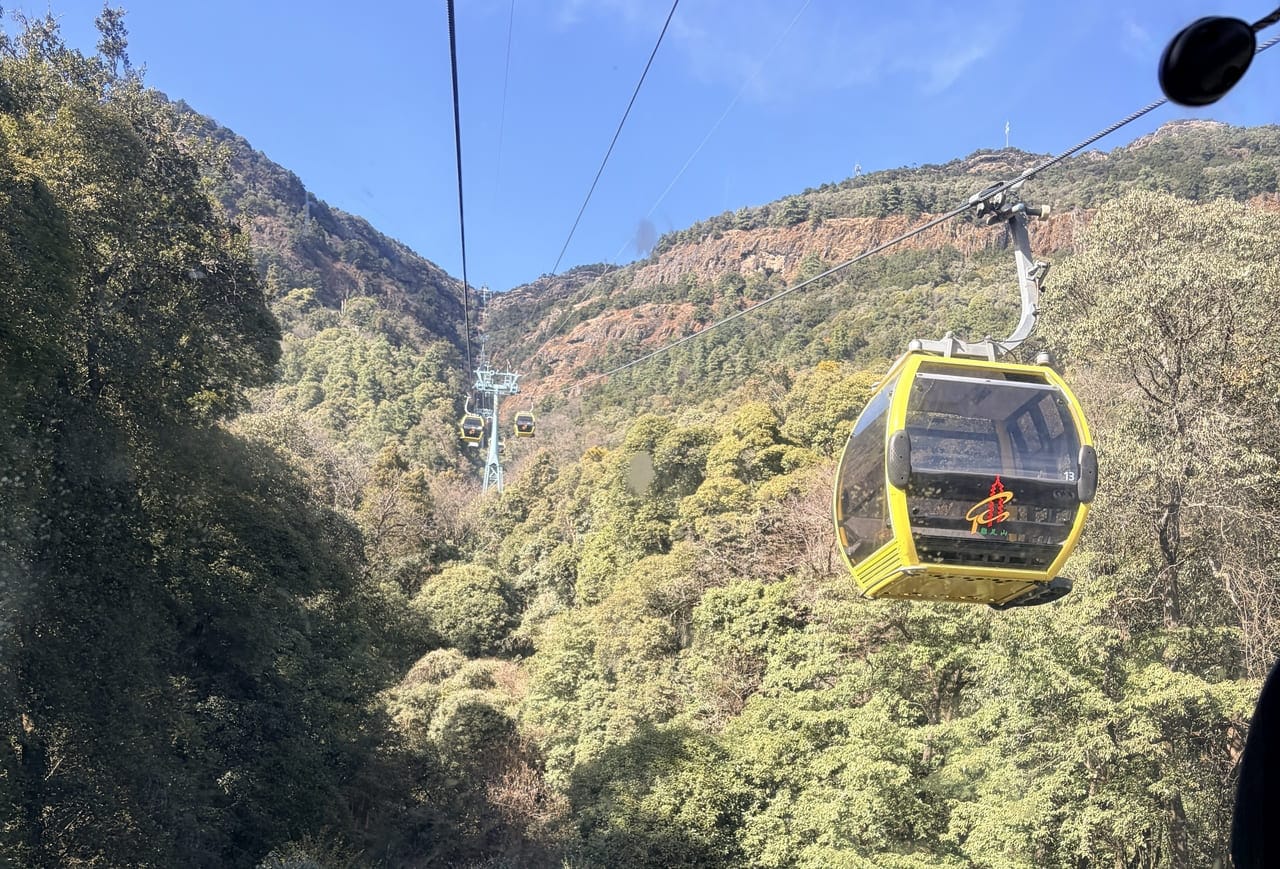
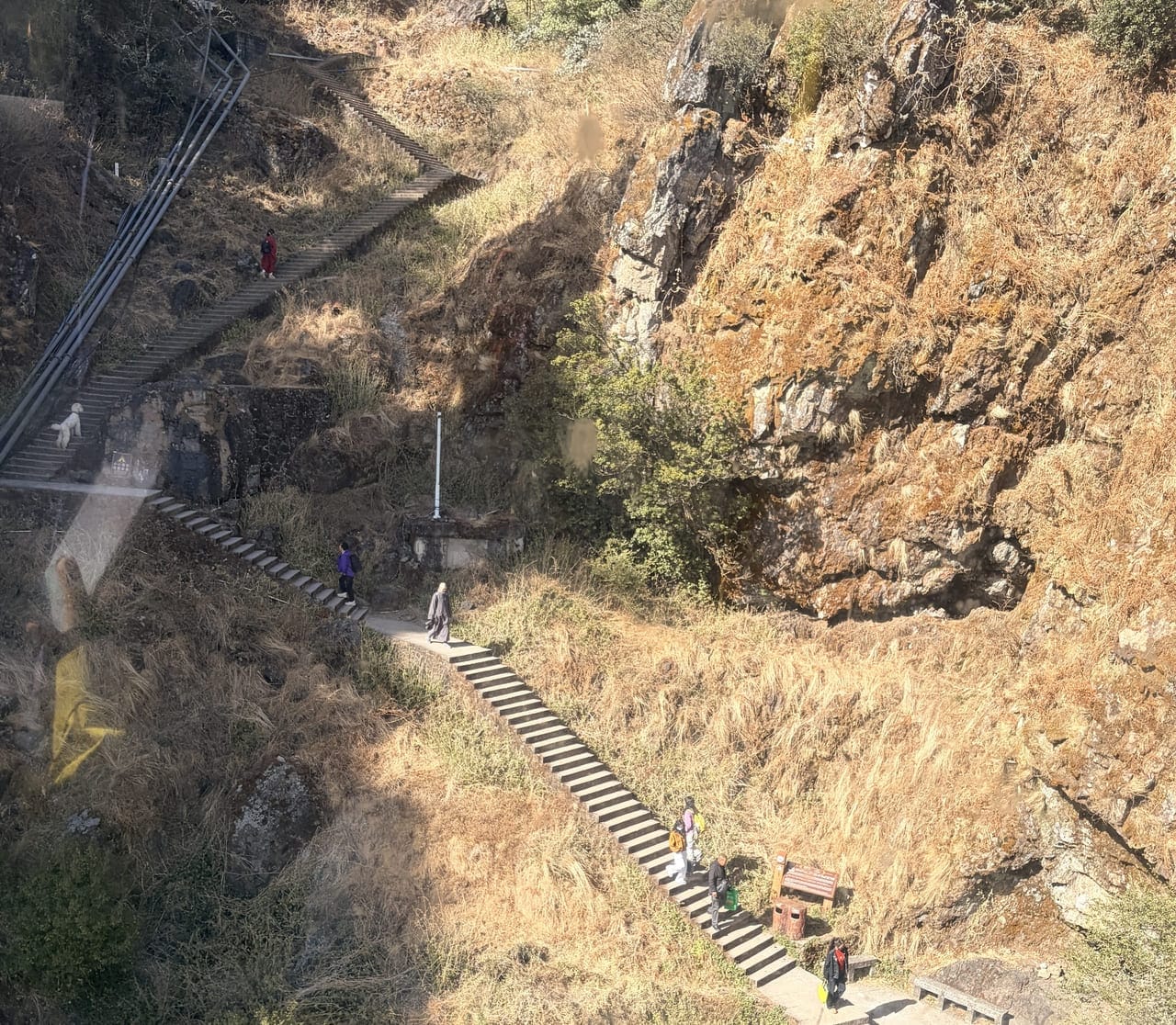
Take the cable car up. Underestimating the steps is the biggest mistake visitors make on Jizu Mountain. From the cable car base station, an average walker needs at least 2 hours of steep stone steps to reach the summit. From the mountain foot, it’s 3–4 hours.
“From the cable car you can already see the path going up and up with no end. And Jizu isn’t one mountain. It’s one peak after another, and many of the steps are very steep.” — German guest Franz
The real decision is how you come down.
Option | Walking time | Effort | Best for |
|---|---|---|---|
Cable car both ways | 10–20 minutes of steps from the top station to Jinding Temple, plus an optional 30–40 minutes to Huashou Gate | Light | Most visitors, older travelers, families with kids |
Cable car up, hike down | 4–5 hours of descent | Hard on knees: long, steep, sometimes wet steps | Fit walkers who want the forest temples |
Walk up | 2+ hours from the cable car base; 3–4 hours from the mountain foot | Very hard | Pilgrims who climb as an act of devotion |
Cable car up, hike down: the route we’d pick
If your knees are good, walking down is the better choice. The descent from Jinding Temple runs past Huashou Gate, Kasyapa Hall (Jiaye Dian), Tongwa Hall, Huideng Nunnery and Shizhong Temple. These temples are quiet even on busy days, the trail runs through old-growth forest, and you’ll likely see monkeys along the trail. You finish at Shizhong Temple and take the sightseeing bus out.
Spend extra time at Kasyapa Hall. It sits under a thousand-year-old ginkgo, and few people stop there. Visitors who sit and copy a sutra for half an hour report it as the calmest part of the day.
With older travelers or children
Treat the cable car as essential, not optional. One of our guests jogged parts of the climb above the cable car station and still needed nearly two hours. With older travelers or kids, ride both ways and treat Huashou Gate as optional.
3. One-Day Timelines from Dali
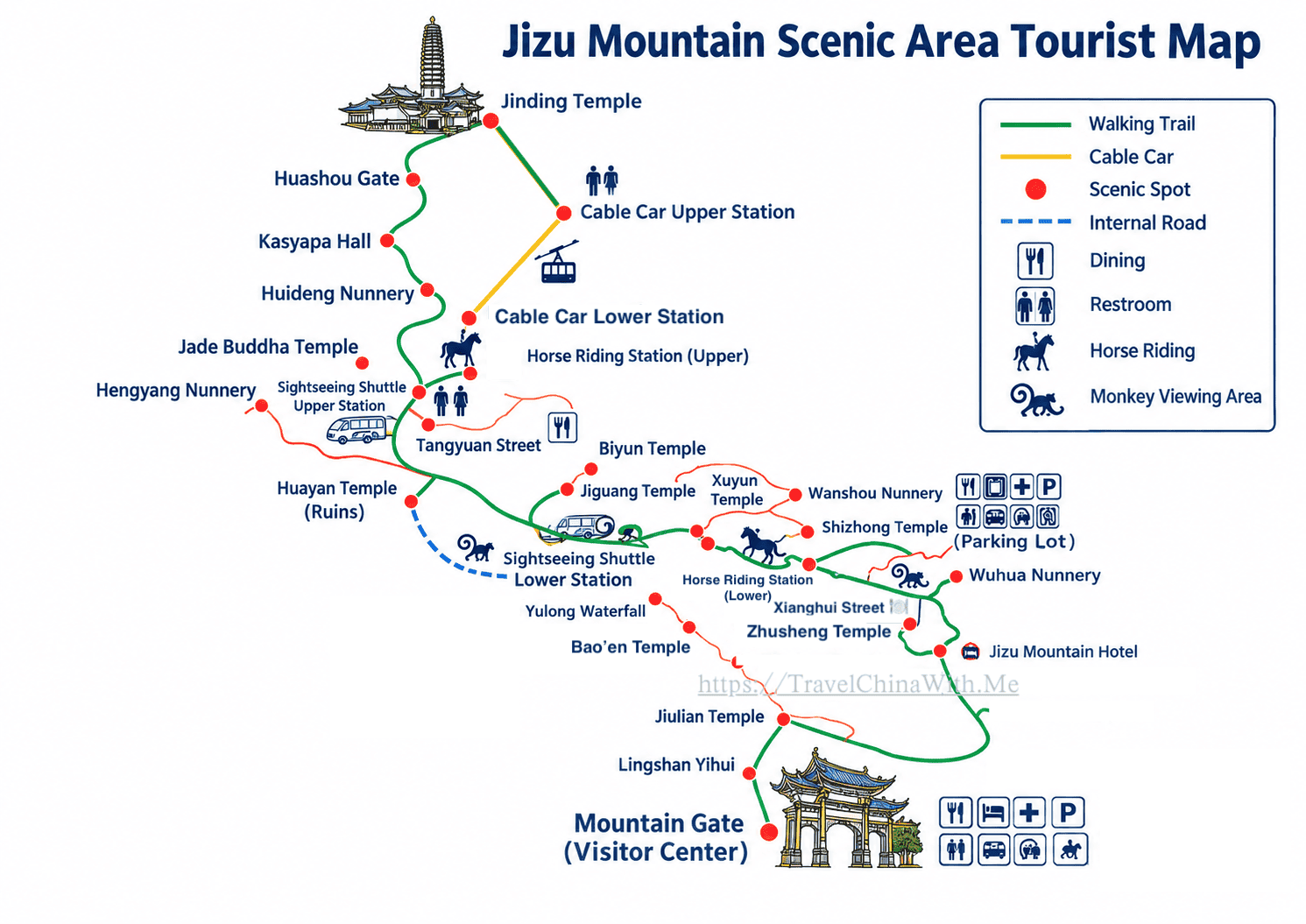
Both plans below leave Dali Old Town at 8:00 by private car and reach the scenic area gate by 10:00. They split at the summit. Plan A has you back in Dali by 17:00. Plan B adds two hours, and you need to reach Shizhong Temple before the last lower bus leaves at 17:30. Public bus users need a different plan. On weekdays the last scheduled coach back to Dali leaves at 14:00, and the 16:30 DiDi bus and 16:00–16:30 scenic direct bus fit Plan A only. Plan B works with a private car (see section 4).
- 8:00Leave Dali Old Town: 1.5 h by car, 1.5–2 h by bus
- 10:00Scenic area gate, lower bus to Zhusheng Temple
- 10:30Zhusheng and Shizhong temples: free incense, prayers
- 11:00Walk 10–15 min to the upper bus, then cable car up and 10–20 min on foot to the summit
- 11:30Jinding Temple: fortune sticks, prayer slips
- 12:00Lunch at Jinding Temple, CNY 10, cash only
- 12:30Walk to Huashou Gate (30–40 min): photos and prayers
- 13:30Walk back to the cable car top station
- 14:00Cable car down
- 14:30Upper bus down, walk to Zhusheng Temple, lower bus to the gate
- 15:30Leave the gate
- 17:00Back in Dali Old Town
- 8:00Leave Dali Old Town: 1.5 h by car
- 10:00Scenic area gate, lower bus to Zhusheng Temple
- 10:30Walk 10–15 min to the upper bus, then cable car up and 10–20 min on foot to the summit
- 11:00Jinding Temple: prayers, fortune sticks
- 11:30Lunch at Jinding Temple, CNY 10, cash only
- 12:00Start hiking down: Huashou Gate → Kasyapa Hall → Tongwa Hall → Huideng Nunnery
- 16:00Reach Shizhong Temple (slower walkers: 17:00)
- 17:30Last lower bus to the gate
- 19:30Back in Dali Old Town by car
Three things to plan around
- Lunch: 11:30–13:00. Temple kitchens stop serving on time, and arriving 5 minutes late can mean no food. Eat first, then explore.
- Last cable car and sightseeing bus: 17:30. Miss the cable car and you walk down, 3 hours minimum on stone steps. Miss the bus and you walk out to the gate. Start heading back to the top station by 15:00–16:00.
- Weekend and holiday road closure. On weekends, public holidays and the 1st and 15th of each lunar month, all cars park at the Lingshan Yihui car park at the gate, and everyone takes the lower bus up. This applies to private drivers too. On weekdays, cars can drive straight to the Zhusheng Temple car park.
During Golden Week (October 1–7) and other national holidays, add 15–20 minutes to every bus and cable car step for queues.
4. Getting There and Back
A private car from Dali takes 1.5 hours and is the only option with no return deadline. If you’d like us to arrange a driver from Dali, contact us for a quote. Public transport works too, but most options are booked in Chinese, and the return times limit how long you can stay.
Public transport from Dali
Option | From | Price | Schedule | How to book |
|---|---|---|---|---|
DiDi scenic bus | CNY 34 one way | 2 hours each way; returns 16:30 from the mountain gate (Lingshan Yihui) | “Scenic bus” in the DiDi mini-program | |
Scenic area direct bus | Erhai service center / visitor center, Dali Old Town | CNY 85 return | One run a day: out 8:30, back from Zhusheng Temple 16:00–16:30 | At the pickup point |
Long-distance coach | Dali East Bus Station, opposite Dali railway station | CNY 32–35 one way | Departs on the hour 8:00–11:00, 1.5–2 hours; last return 14:00 on weekdays | Caiyuntong mini-program |
Package bus | Dali Old Town | CNY 230 | Return transport, entry, cable car return and sightseeing bus | Online platforms |
Getting back to Dali
The coach leaves the Shizhong Temple car park, and on weekdays its last departure is 14:00. Weekends and holidays sometimes add later runs up to 17:30, but not on a fixed schedule. Departure times shift with passenger numbers. Get the driver’s phone number on the way in and confirm the return time then.
If you miss every bus, take the green minibus from Shizhong Temple to the mountain gate for CNY 15. From there, share a car or book a ride-hail car to Dali, which costs CNY 120–180 for the whole car. Drivers waiting at the foot often ask more. Visitors who came down late have paid CNY 40 per person for a minibus. One group was asked CNY 260 for a shared car.
Tickets inside the scenic area
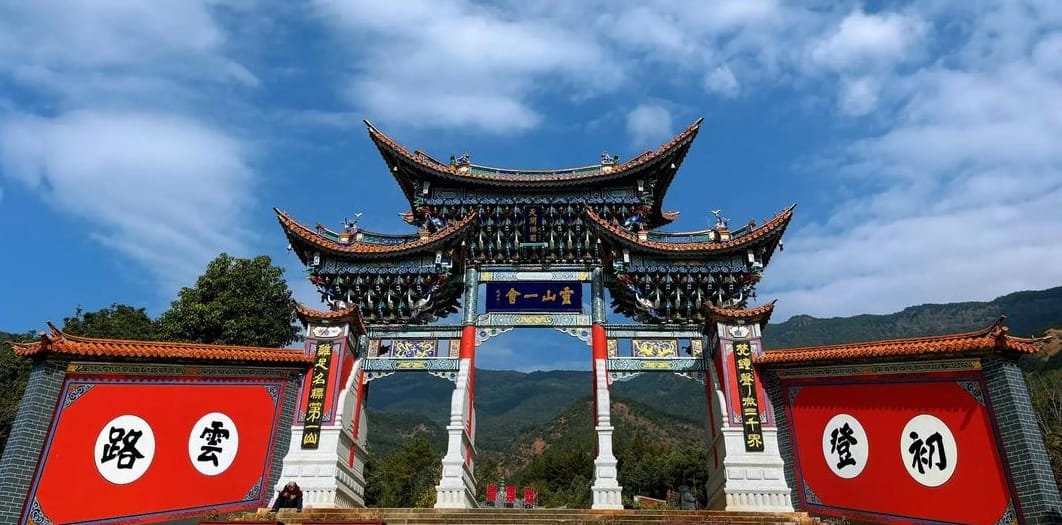
Inside the scenic area, the sightseeing bus runs in two separate sections with separate tickets, and the two don’t connect. The lower bus covers 10 km from the gate (Lingshan Yihui) to Zhusheng Temple and Shizhong Temple. From Zhusheng Temple, where the lower bus stops, you walk 10–15 minutes uphill on paths and steps, past the monkey viewing area, to the Yunbingdian stop. The upper bus then covers 5 km to Yufo Temple, where the cable car starts. The cable car doesn’t reach the summit: from the top station, it’s another 10–20 minutes on stone steps to Jinding Temple.
On weekdays, cars can drive straight to the Zhusheng Temple car park and skip the lower bus. On weekends, public holidays and the 1st and 15th of each lunar month, all cars park at Lingshan Yihui at the gate.
Ticket | Route | Price |
|---|---|---|
Entry | Jizu Mountain scenic area | CNY 55 |
Cable car | Return / up only / down only | CNY 75 / CNY 45 / CNY 30 |
Sightseeing bus, lower section | Gate ↔ Shizhong Temple, one way | CNY 15 (return CNY 30) |
Sightseeing bus, upper section | Yunbingdian ↔ Yufo Temple, one way | CNY 15 (return CNY 30) |
These are the official prices from the scenic area. Buy each bus section one way. A return costs CNY 30 on either section, exactly two singles, so prepaying saves nothing. It only loses you money if you miss the last bus at 17:30 and have to walk out. The bus also leaves when full, so off-season waits can run 10 minutes.
Children under 1.2 m ride the sightseeing bus free. Entry is free for visitors aged 70 and over and for children aged 7 and under or 1.2 m and under. Visitors aged 60–69, young people aged 7–18 and full-time students up to undergraduate level pay half price, CNY 27.50. Discounts are checked against ID. The official policy names Chinese ID cards, student cards and Hong Kong, Macau and Taiwan travel permits. Bring your passport and student card and ask at the ticket window.
5. Incense, Fortune Sticks and Temple Etiquette
Don’t buy incense at the gate
The incense shops at the Jizu Mountain entrance are where visitors lose the most money. People have paid CNY 160, CNY 380 and even CNY 688 for bundles there, and nearly all regret it.
“Don’t buy at the incense shops by the gate! I paid over 160 for this. If my friend hadn’t stopped me, I’d have bought another bag.” — Singaporean guest Pengli
Jinding Temple, Zhusheng Temple and the other temples give out free incense. Three sticks is the normal offering, and Buddhism doesn’t ask for big bundles. If you want your own incense anyway, the shops in Jizushan town charge far less than the ones at the gate.
Fortune sticks and prayer slips
Item | Where | Cost | Payment |
|---|---|---|---|
Fortune stick draw | Jinding Temple | CNY 3 | Cash only |
Fortune stick draw | Zhusheng Temple | CNY 10 | Cash only |
Written prayer slip (biaowen) | Most temples | CNY 6–7 | Cash only |
Fortune-stick drawing is not always available. It has been paused at Jinding Temple at times. Some visitors were told to buy incense before they could draw. Ask your guide to check that week’s status.
DIG PEEPER: The Complete Guide to Burning Incense in China: Traditions, Etiquette, and Cultural Significance
Morning chanting at Jinding Temple
Monks chant in Jinding Temple’s main hall every morning from 5:40 for one hour. You don’t need to book. Arrive 10 minutes early, stand quietly at the back, and watch or follow along silently. One of our guests said the yellow lamplight and candles made the cold hall feel warm. You can only attend if you sleep on the summit (see section 7).
Photos and the three-year myth
Most temples don’t allow selfie sticks or tripods inside the halls, and you should ask before photographing a Buddha statue.
The three-year rule is NOT a requirement. Locals often say you must visit three years running: to make a wish, to give thanks, and to complete it. That’s a folk custom from west Yunnan’s pilgrimage festivals, not a temple rule.
6. Vegetarian Meals
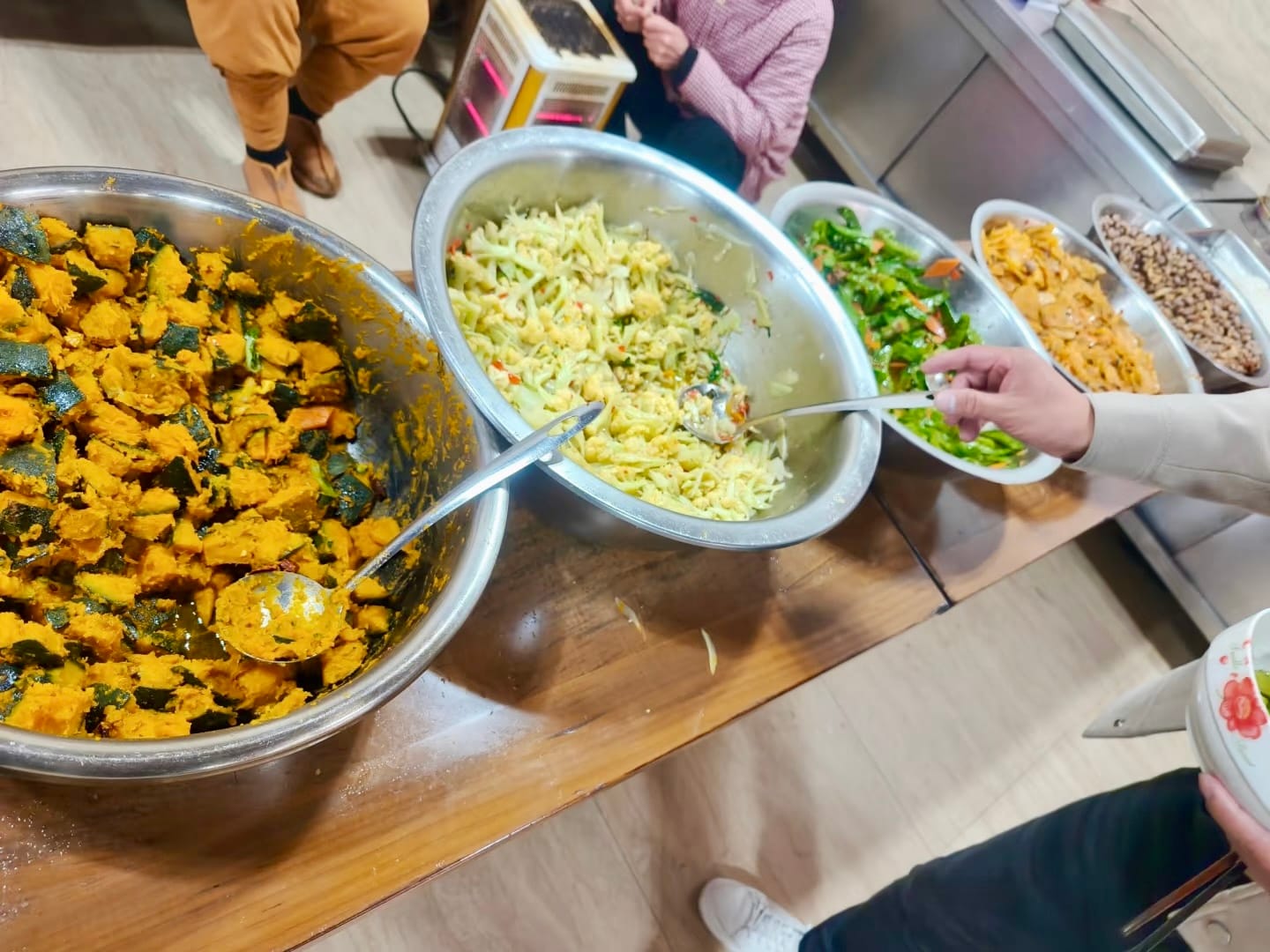
The temple lunches are a highlight for many visitors, and they are cheap.
Temple | Lunch hours | Price | Notes |
|---|---|---|---|
Zhusheng Temple | 11:30–13:00 | CNY 20 | On the main route up and down; sometimes includes fruit and sweets |
Jinding Temple | 11:30–13:00 | CNY 10 | Canteen style, disposable paper bowls, you wash up; cash only |
Jiulian Temple | Lunchtime | By donation | Buffet near the scenic area entrance |
“Lunch at Zhusheng Temple was 20 yuan and came with sweets and fruit. Dinner at Jinding Temple was 10. Outside Jinding I bought ginger tea for 5 yuan. On the summit, that tea really warms you.” — Irish guest Jacky
At the mountain foot, the local specialty is Binchuan haishao fish, cooked sour and spicy. Roadside restaurants charge more than in Dali, so ask the price before you order. In autumn and winter, orchards along the road sell Binchuan oranges by the box for less than city prices.
7. Should You Stay Overnight?
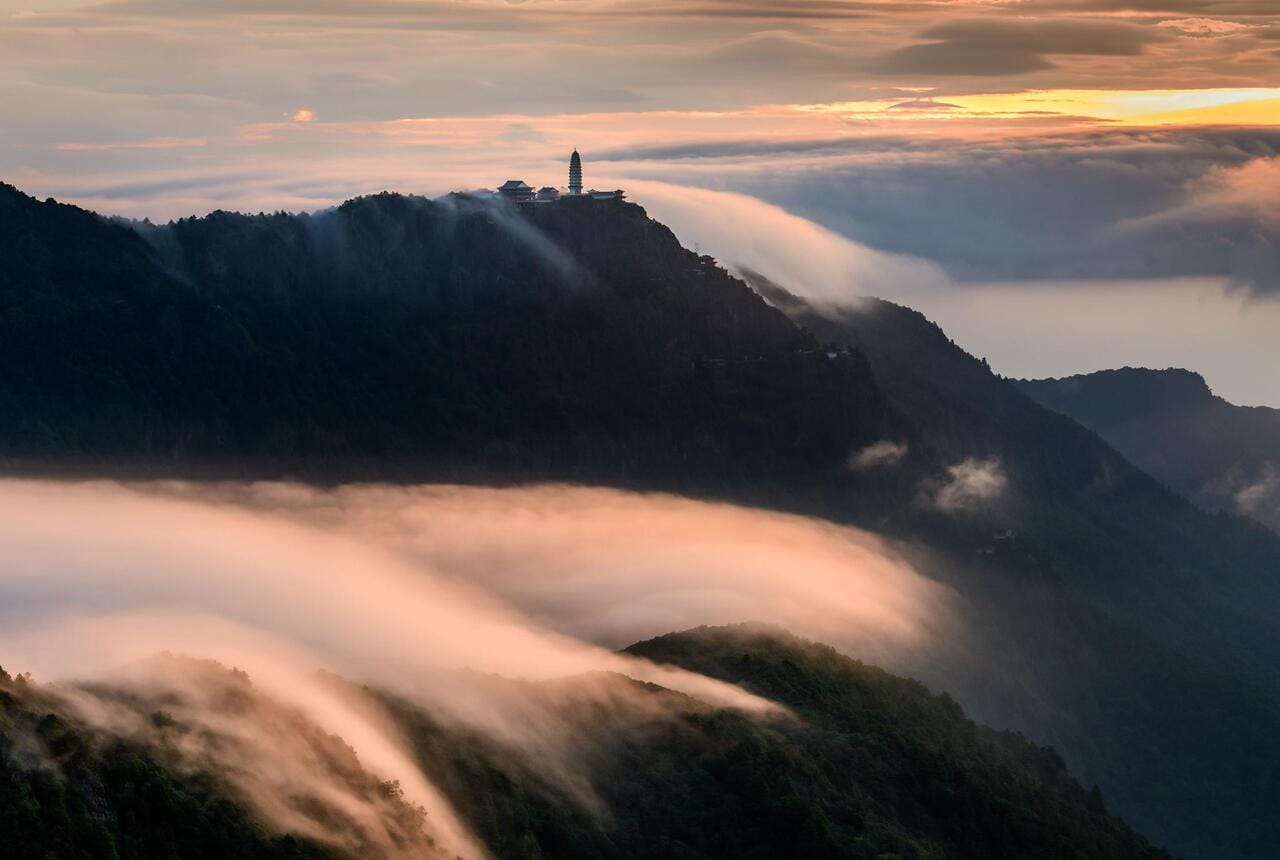
Stay on the summit only if you want sunrise and the 5:40 morning chanting. Otherwise, the day trip covers everything.
Option | Cost | Who it suits |
|---|---|---|
Day trip from Dali | Transport only | Most visitors; back in Dali by evening |
Homestay at the mountain foot | CNY 100–200 per night | Anyone who wants an early start ahead of the crowds |
Jinding Temple guesthouse on the summit | CNY 30 dorm bed; CNY 200–240 standard room | Sunrise, sea of clouds and morning chanting |
The summit guesthouse is basic. Rooms have no air conditioning, and nights at 3,248 m are cold.
“The summit was freezing at night. No air conditioning, so I lay shivering and survived on the electric blanket and quilts. First time in years I was in bed by nine and asleep by ten.” — British guest Victor
Rooms are few and booking is by phone in Chinese. Over Golden Week, book foot-of-mountain homestays well ahead too.
Some pilgrims turn Jizu Mountain into a two-day route with Lijiang. On day one they visit the Vajravarahi Cave (Jingang Haimu Cave) in Lijiang, where legend says Mahakasyapa left the key to Huashou Gate. On day two they “open the gate” at Jizu Mountain. If you’re splitting nights between the two cities, our Dali vs Lijiang comparison helps you decide where to base yourself.
8. Monkeys, Weather and Packing
The monkeys
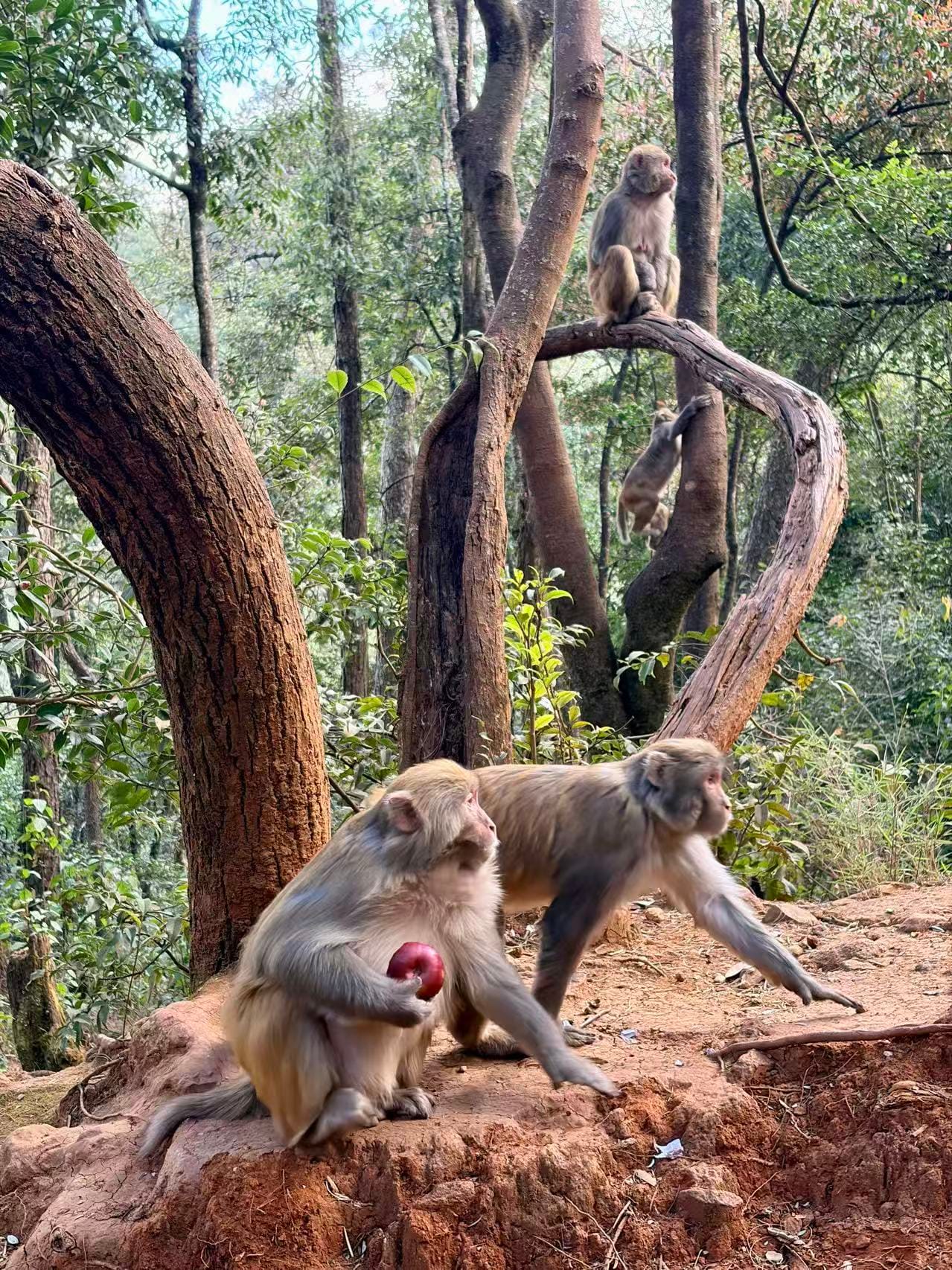
We meet wild macaques most often on the walk from Zhusheng Temple up to the Yunbingdian bus stop, which passes the monkey viewing area. If you walk down, you’ll see more along the forest trail. They aren’t afraid of people and will sit close to the path. On our regular visits we haven’t seen them grab food or bags, and they’re much less aggressive than the monkeys on Mount Emei. They are still wild animals, so don’t feed them, and keep snacks inside your bag rather than in your hand.
The summit is 8–10°C colder
Jinding Temple sits at 3,248 m. The summit runs 8–10°C colder than the foot of the mountain, with strong wind. Visitors who went up in shorts and T-shirts were shivering by the afternoon. Bring a windproof jacket even in summer, and wear shoes with good grip. The steps are steep and often wet.
Check before you go
The cable car shuts for maintenance without much warning, and visitors in early June have arrived to find it closed. Check the official notice the day before you go.
Jinding Temple is also under restoration, which began in late 2024. We’ve watched the work on our regular visits through 2026, and it was still underway. The temple stays open for visits and incense. The Lengyan Pagoda’s exterior has been rebuilt, but the interior is closed and you can’t climb it. The temple’s main gate is still under scaffolding and safety netting, so parts of it can’t be seen up close. Ask before you go how much is still covered.
Packing list
- Small cash in CNY 10 and 20 notes. Fortune sticks, prayer slips and the Jinding Temple canteen take cash only. The one spot near Jinding Temple that swaps QR payment for cash is hard to find. See how much cash to bring to China.
- Screenshots of your e-tickets and a photo of the map board at the entrance. Large parts of the mountain have no phone signal, and most trail signs are in Chinese only.
- A windproof jacket and non-slip shoes.
9. Frequently Asked Questions
Do I need to book Jizu Mountain tickets in advance?
Outside public holidays, you can buy Jizu Mountain entry and cable car tickets on the day. Online platforms accept same-day bookings until 16:30. Over Golden Week and Chinese New Year, book at least a day ahead. Tickets are issued against ID, so carry your passport.
Is Jizu Mountain worth visiting?
Jizu Mountain is worth a full day if you want a working pilgrimage mountain rather than a museum temple. On a clear day, the summit view over Cangshan and Erhai is a bonus. With only one or two days in Dali, spend them on the Old Town, Erhai Lake and Cangshan instead, which are closer. With three or more days, we rank it the best day trip from Dali.
What is the best time to visit Jizu Mountain?
In our experience, the dry season from November to April has the most stable weather and the best odds of a clear sunrise. The rainy season from June to September brings sea-of-clouds views, but fewer clear sunrises and slippery steps. The first lunar month after Chinese New Year is the main pilgrimage season and the busiest time of the year.
What is Huashou Gate?
Huashou Gate is the sheer rock wall on Jizu Mountain where, by tradition, Mahakasyapa entered meditation. That makes it the most sacred site for pilgrims. It’s a 30–40 minute walk from Jinding Temple, and two small stone pagodas stand in front of the wall. Most visitors stop there to pray and take photos before returning to the summit or continuing down.
Can foreigners visit the temples on Jizu Mountain?
Foreign visitors are welcome in every temple on Jizu Mountain, and no permit or religious affiliation is needed. Dress modestly and keep your voice down in the halls. Fortune-stick readings and temple notices are written in Chinese. Bring a guide or a translation app if you want to understand them.
Planning Jizu Mountain as part of a Dali or Yunnan trip? Tell us your dates and we’ll fit Jizu Mountain into your itinerary with a private driver and English-speaking guide.