Erhai Lake, Dali: Which Shore, Real Prices & Scams to Skip
Erhai Lake is a 250-square-kilometer freshwater lake beside Dali Old Town in Yunnan, China. It’s framed by the Cangshan mountains and ringed by Bai fishing villages. Pick one shore, one activity, and half a day minimum — that’s the real decision here.
This guide covers how to choose a shore, get around, and avoid the mistakes we see every season. Already decided on a boat? Our Erhai Lake Cruise guide covers routes and pricing in full — this guide is the layer above that.
TL;DR
- 250km², 1,972m altitude — between Dali Old Town and the Cangshan mountains
- West shore (Caicun, Xizhou): close, developed, right for one day or less; east shore (Shuanglang, Wase, Wenbi): quieter, better for sunset
- The 129km West Shore Ecological Corridor is car-free and separate from the ~140km full driving loop
- Rental e-bike range is routinely oversold — confirm the real figure before you pay
- Swimming is discouraged despite improved water quality — no lifeguards, active boat traffic
Table of Contents
1. What Is Erhai Lake?
The Basics
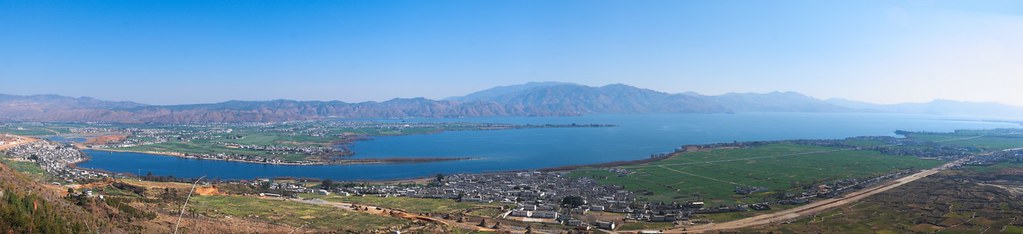
Erhai — “Ear Sea” in Chinese, named for its shape — is Yunnan’s second-largest lake after Dianchi. At 250 km², it runs 40km north–south and 3–9km wide. It sits at 1,972m — high enough that sun and temperature swings both hit harder than the altitude number suggests. The full road loop runs ~140km, split into west (Haixi) and east (Haidong) routes. A separate 129km car-free corridor covers the west shore only (see Section 4).
Local Bai communities have fished and farmed its shores for over a thousand years. The lake still supplies drinking water to more than 860,000 people in the watershed.
Water Quality and Swimming
Water quality has improved substantially over the past two decades, reaching Class II — good enough for general drinking water. Locals still fish and wash vegetables at the shore, which says more about day-to-day condition than any single rating. We’ve watched fishermen work the shallows near Caicun on ordinary mornings, not for tourists’ benefit.
That said, swimming is officially discouraged lakewide. There are no lifeguards, and active boat traffic makes open water risky. Erhai is also a protected water source — wading in for a photo can draw a fine if a patrol catches you. Use a hotel pool instead; several lakeside properties on both shores have them, lake view included.
2. West Shore or East Shore?
This is the single decision that shapes everything else. The two shores have developed in opposite directions. Picking the wrong one for your timeline is the most common regret we hear from clients. Many try to “do both” in a rushed afternoon.
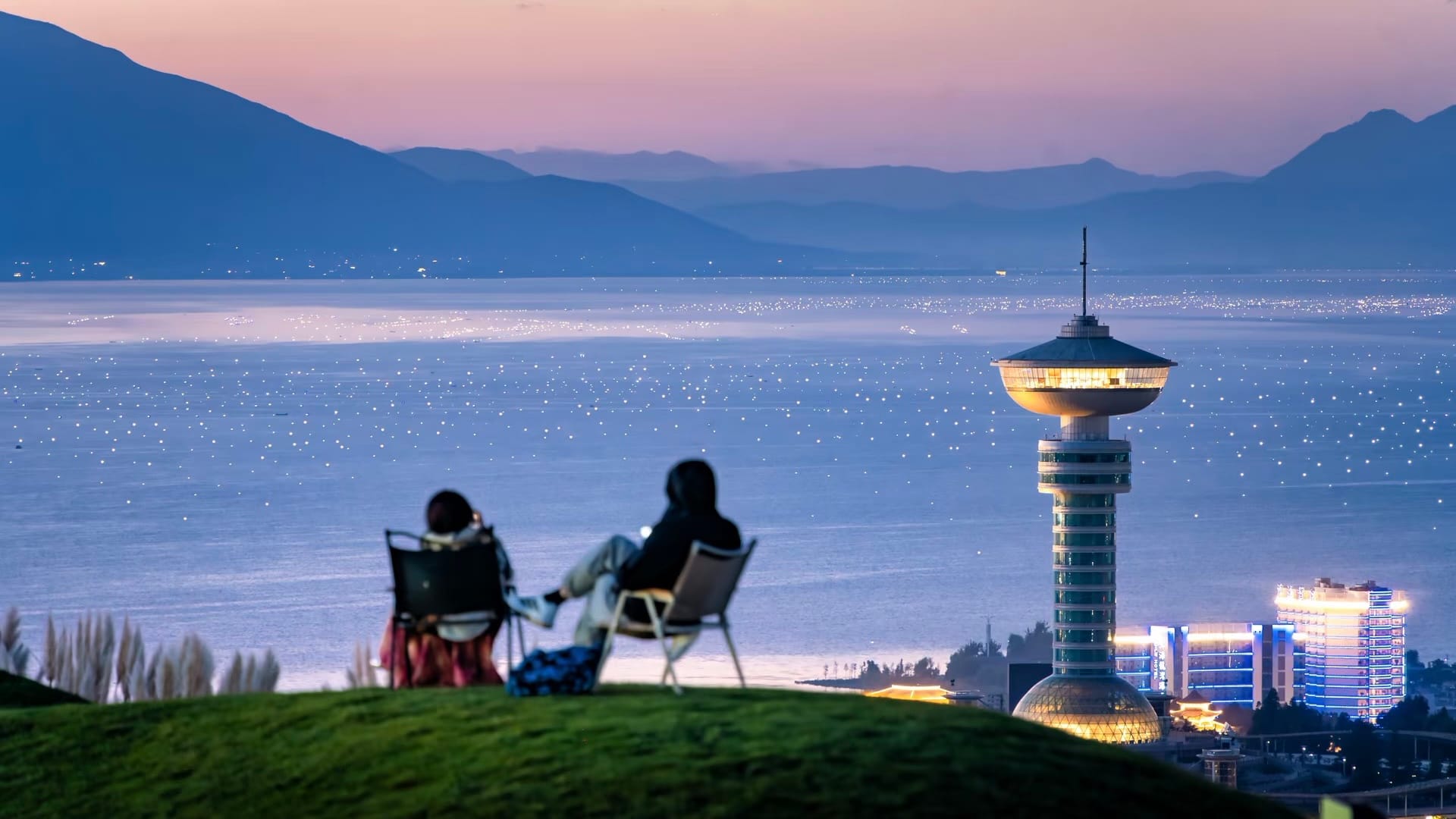
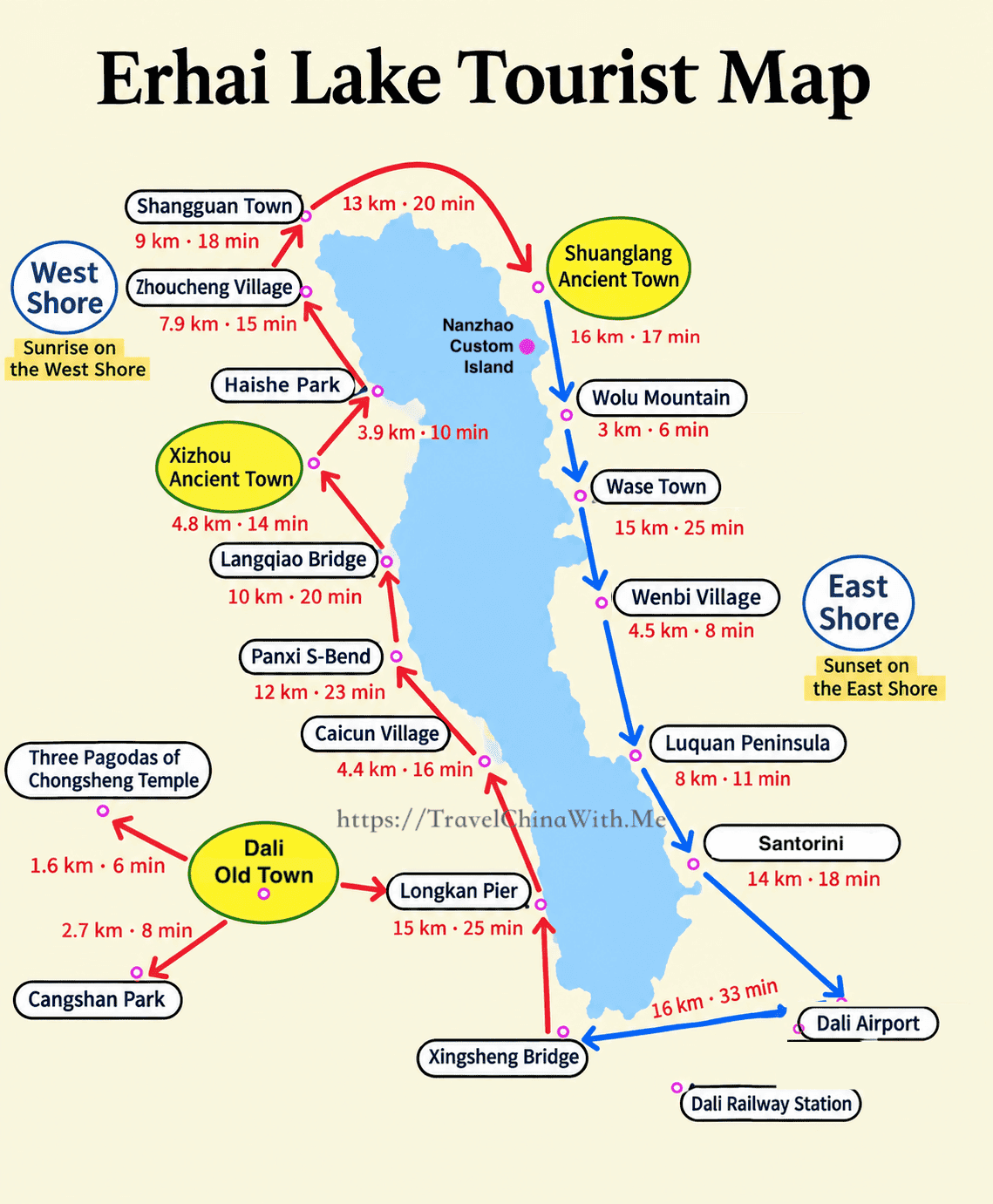
The simplest rule: west shore for sunrise, east shore for sunset. The west shore faces east across the water, so morning light hits it first; the east shore faces west, so it catches the sun going down behind Cangshan.
Character | Pastoral — rice paddies, farmland, lake-and-mountain views | Dramatic — a road that clings to cliffs above the water |
|---|---|---|
Distance from Old Town | 3km (10–15 min) | 45–60 min by car |
Anchor town | ||
Best for | A half-day without reshuffling your itinerary | An overnight, or a dedicated afternoon |
Crowds | Heavier on weekends near Caicun and the S-bend | Lighter, especially south of Shuanglang |
Signature activity | Cycling the Ecological Corridor | Sunset from a cliffside cafe or Wenbi Village |
The West Shore
The west shore runs from Caicun Pier, just 3km from Dali Old Town, up through Xizhou and on toward Shangguan. It’s the convenient choice: short transfer, dense infrastructure, and the anchor point of the Ecological Corridor. This is the pastoral side of the lake — rice paddies, red-fir stands, and a string of stops most travelers only see a few of in one visit.
Stop | Why go |
|---|---|
Caicun / Longkan | Corridor entry points, sunrise, boat piers |
Sansheng Island | A small island the corridor path cuts straight through, between Yangnan Creek and Longkan |
Panxi S-Bend | The corridor’s signature curve — the single most-photographed stretch on the west shore |
Corridor Bridge | A footbridge crossing point roughly midway along the corridor, good for a break |
Gusheng Village | A working Bai village on the corridor with almost none of the infrastructure built up elsewhere — most guides skip it |
Xizhou | The cultural anchor — courtyard houses still lived in, not reconstructed. Come for “three-room-one-wall” architecture and hot Xizhou baba. Busiest stop on the corridor; aim for lunchtime |
Zhoucheng | A tie-dye village next door to Xizhou, worth a stop if fabric crafts interest you |
Shangguan | The corridor’s northern end, quieter than the Caicun stretch |
The East Shore
The east shore has cliffs, not farmland — a road along the water’s edge, not the flat pastoral scenery of the west side. It runs from Wase in the south up through Shuanglang and on to the newer resort development around Haidong.
Stop | Why go |
|---|---|
Wase | The quiet, undeveloped fishing town Shuanglang used to be — working boats, few visitors, cheaper lakeside stays |
Little Putuo Island | One of Erhai’s classic lake views — a tiny temple island near Wase, best seen from shore at sunrise or misty mornings; landing costs extra and adds little |
Shuanglang | The main town — boutique guesthouses, lake-facing cafes, the east shore’s best-known base |
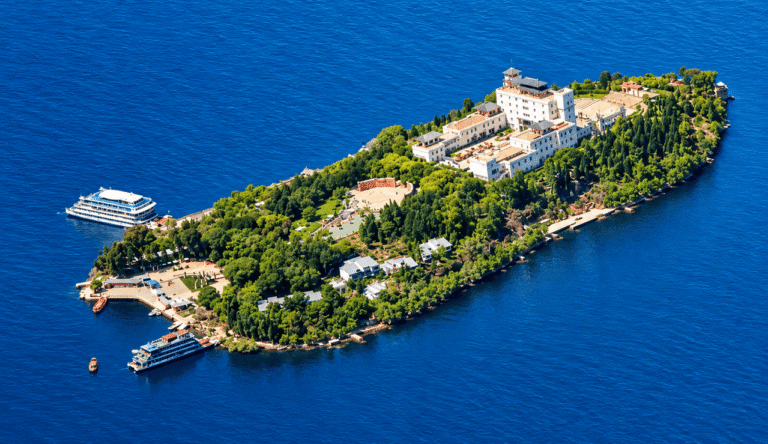
Nanzhao Folk Island | A small island off Shuanglang, reachable only by cruise, with a Bai cultural theme |
Wolu Mountain | A free cliffside stop with rock pools and shoreline caves, cut off at high tide — closer to the lake than almost anywhere else on this shore |
Wenbi Village | A rainbow-painted road climbing to a wide overlook, best timed for late afternoon |
Luoquan Peninsula | The lake’s largest peninsula, genuinely undeveloped — no entry fee, no crowds, just shoreline and reed beds |
“Santorini” / Lixiangbang | A blue-and-white resort village built into the cliffside, styled after the Greek island. Photogenic but commercial — entry runs about ¥100 |
3. How Do You Get to Erhai Lake?
From Dali Old Town
This is where most travelers start. The west shore access points (Caicun, Longkan) are just 3km away. That’s a 10–15 minute taxi or DiDi, or a 15–20 minute cycle if you’re already renting a bike for the day. The east shore takes longer: Shuanglang and Wase are 45–60 minutes by car, so budget real time if that’s your target.
From the Airport or Train Station
Dali’s airport sits 13km from Dali Old Town, and the west shore access points (Caicun, Longkan) add another 5–9km beyond that. A taxi or DiDi from the airport runs ¥35–60 and takes 40–60 minutes to the west shore. It’s the fastest option, worth it with luggage.
Dali Railway Station sits in Xiaguan, 15km from Dali Old Town — factor in the west shore’s extra 3–5km beyond that. Bus routes 4 and 8 run there, but slowly and indirectly. A taxi or DiDi is the practical choice for most travelers, at similar cost and time to the airport route.
If your flight or train lands mid-afternoon, factor the transfer into your first day rather than expecting to reach the shore before sunset. We’ve had clients try to squeeze in a same-day corridor ride straight off a delayed flight. They arrive after the light was already gone.
4. Cruise, Cycle, Drive or Bus?
Four ways to actually get out on or around Erhai, each suited to a different kind of day and budget. Prices below are current as of our own bookings and client trips, not list rates.
Method | Cost | Best For | Coverage |
|---|---|---|---|
Cruise | ¥125–175/person | Hands-off sightseeing, families, older travelers | One fixed route, partial lake |
Cycling (corridor) | ¥40–60/day rental | Immersive, unhurried pace | West shore corridor only, ~60km |
Self-drive/charter | ¥260–400/day (charter, all-in) | Covering both shores in one day | Full lake, all villages |
Sightseeing bus | ¥88–138 (24h/72h pass) | Travelers without a rental, fixed stops | 13 stops, both shores |
🚲 Four Ways to Explore Erhai Lake
Typical cost per day, per person
Based on our own bookings and client trips, not list rates.
Cruising
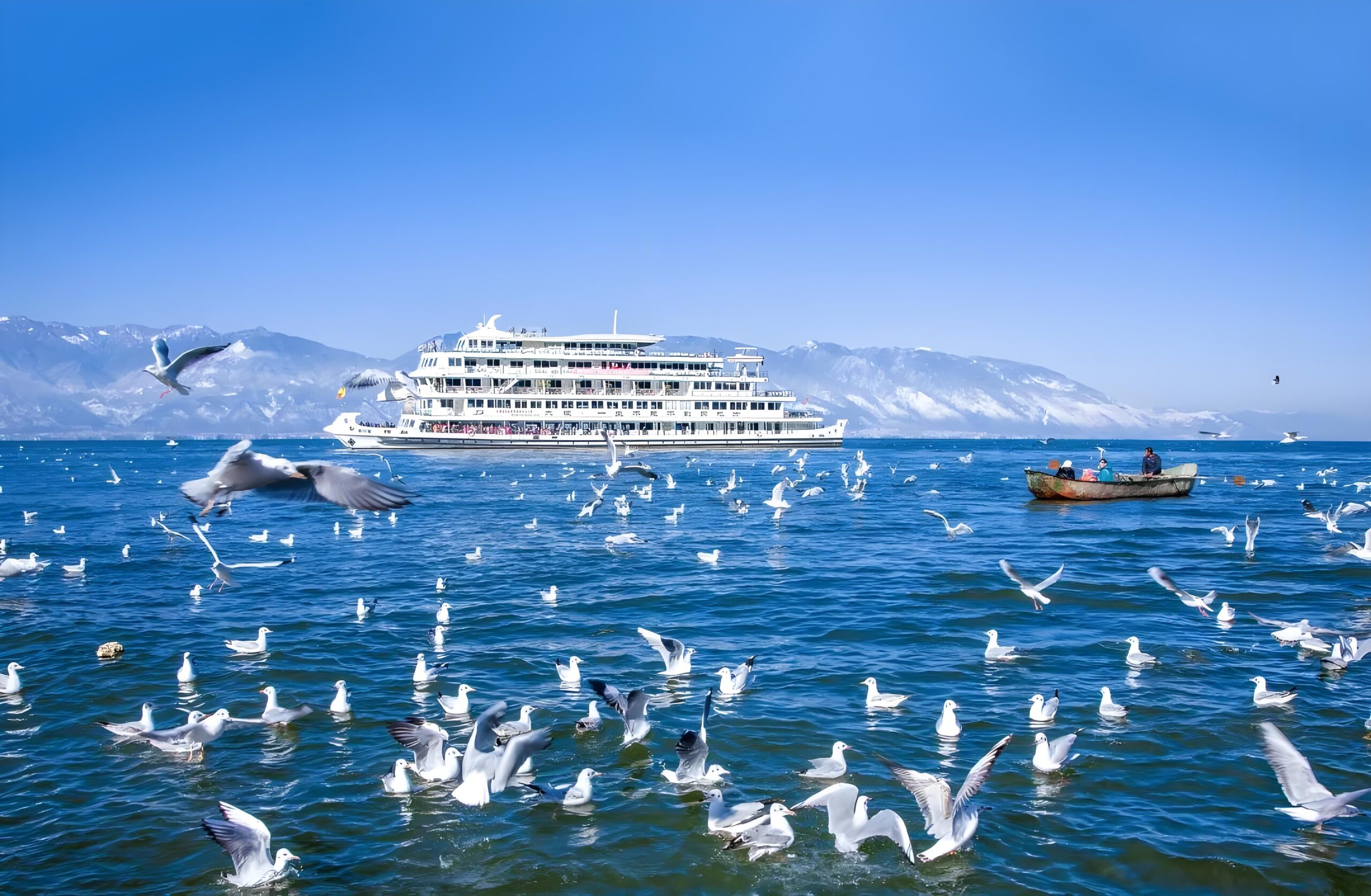
A cruise is the right call if the islands are the priority — Nanzhao Folk Island and Little Putuo Island aren’t reachable by bike or car. It’s also the most popular way to see Erhai, and the default choice for families and older travelers. The corridor’s own e-bikes carry a 60-and-under age limit, so a cruise is often the only self-guided option left. No rental logistics, no route-finding, fixed departure times.
Which Route to Book
The departure point matters as much as the route. Boats depart from three shared terminals — Dali Port (south), Jin Gui Temple near Xizhou (west shore), and Shuanglang (northeast). All three run the same north–south line across the lake rather than circling it, so “round-lake” describes the round trip, not a loop around the shoreline.
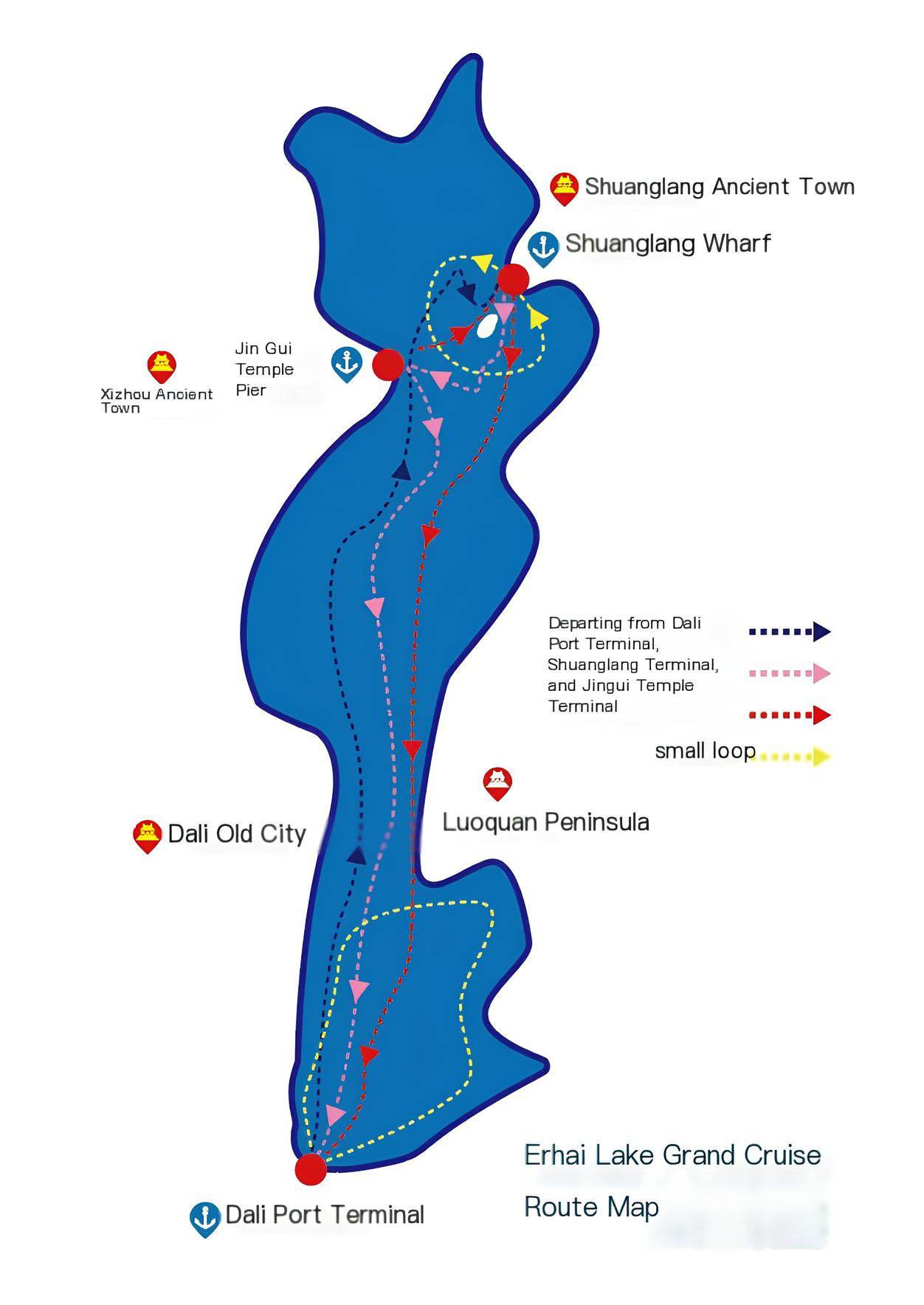
Non-stop return (Dali Port) | Grand Cruise (Dali Port → Nanzhao Folk Island → Shuanglang) | Azure Sky Cruise (Shuanglang) | |
|---|---|---|---|
Price | ¥125 | ¥125, island entry included | ¥188 |
Duration | About 1.5 hours | Departs at set times through the day; check the current schedule | A few hours, four daily departures |
Island landing | No — open water the whole time | Yes, at Nanzhao Folk Island | Yes, at Nanzhao Folk Island |
Stops | None | Xizhou’s Jin Gui Temple pier, then Shuanglang | Round trip back to Shuanglang Pier |
Verdict | A boat ride with a view, nothing more — fine if that’s genuinely all you want | This is the version worth booking from the west shore | Best pick if you’re already staying in Shuanglang |
A sunset version also runs from Shuanglang Pier daily at 19:00 (¥158) — no island stop, just the lake and Cangshan at golden hour. Both Shuanglang routes need booking at least a day ahead.
Onboard, most large boats run a Bai three-course tea ceremony — bitter, then sweet, then a spiced aftertaste — included in the ticket price, not a separate add-on.
Large tour boats (400–950 passengers) run the fixed schedule above at the listed prices. Smaller fiberglass yachts (20–50 passengers, ¥200–400) and private charters (8–50 passengers, ¥1,500–5,000) cost significantly more per person — the appeal is timing and privacy, not access to anywhere the scheduled boats don’t already go.
For the full breakdown of piers, departure times, and current pricing, see our Erhai Lake Cruise guide.
Cycling the Corridor
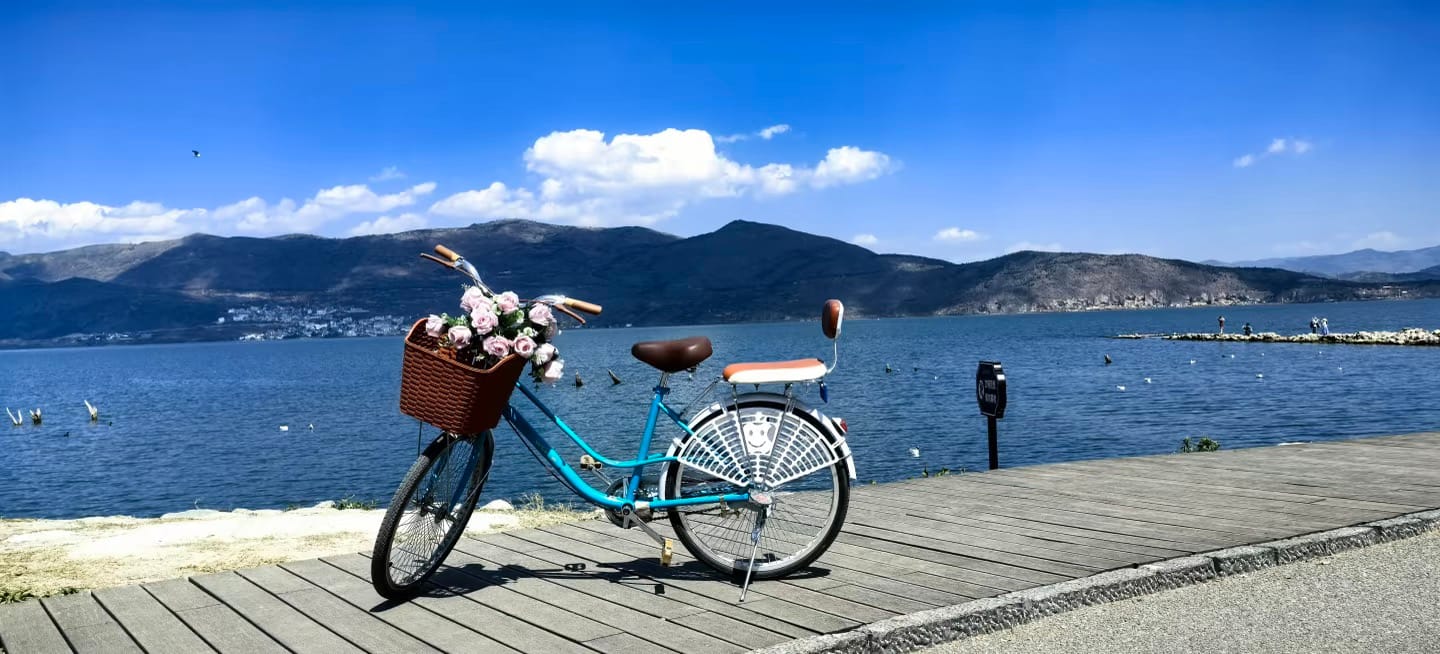
The corridor is 129km long and car-free. That’s not the ~140km figure some guides quote. That figure is actually the full driving loop around the whole lake — a different route entirely. The corridor runs past Caicun Pier, Longkan Pier, the Panxi S-bend, and on to Xizhou and Gusheng Village.
Cycling the corridor is the best way to feel the lake rather than just look at it. You don’t need to attempt the full distance. A 2–3 hour out-and-back from Caicun toward Xizhou covers the most scenic stretch, passing fishing villages and unobstructed Cangshan views the whole way.
Committing to the full multi-day loop is only worth it if cycling itself is the point of your trip. For most travelers, a half-day taste of the corridor delivers the experience without the logistics of an overnight bag transfer.
One restriction to know before you rent: e-bikes and scooters rented outside the corridor cannot enter it. Only the corridor’s own official rental bikes, usually yellow or green, are allowed inside the restricted sections. Confirm this before you pay if your plan is to ride onto the corridor from an outside rental shop. Otherwise you’ll be turned back at the entrance with a wasted rental day.
The Rental Hybrid Approach
A method we increasingly point clients toward: rent a regular e-scooter in Dali Old Town, then drive to each corridor entrance. Park, and walk or use the corridor’s own short-hop rental bikes for that stretch. Repeat at the next entrance. It skips the fatigue of pedaling the whole distance. It covers multiple highlights — sunrise at Longkan, the S-bend, the Corridor Bridge — in one unhurried morning.
The corridor draws real crowds near Caicun and Longkan on clear mornings — arrive before 9am. Or enter further south at the Yangnan Creek service station. The stretch toward Longkan Pier from there sees a fraction of the traffic even at peak season.
Self-Driving or Hiring a Car
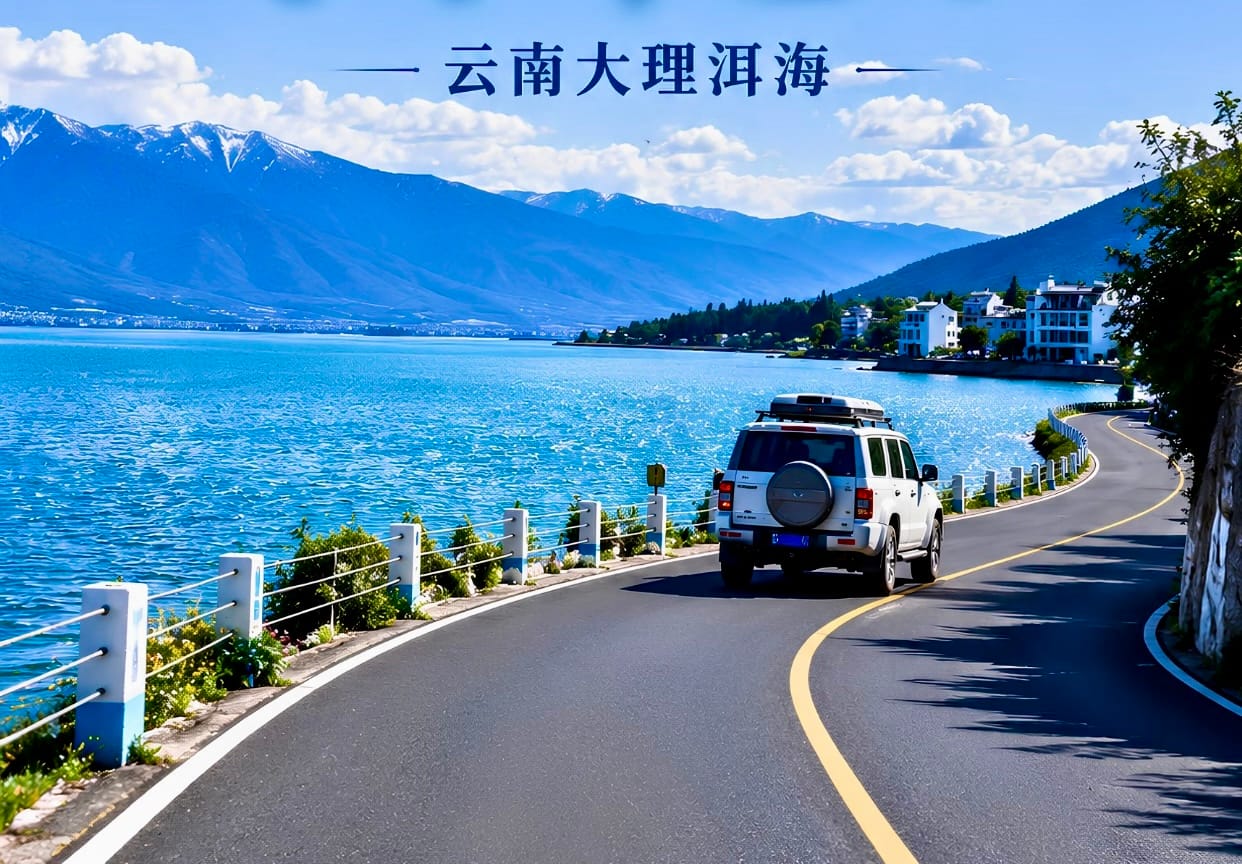
Self-driving or hiring a car covers more ground in less time. It works well for stopping at several villages on both shores in one day. The tradeoff: you lose the car-free corridor experience. Driving routes run on public roads, not the dedicated path, and most of the west shore’s lakefront sections are closed to vehicles entirely.
A private charter — driver included — typically runs ¥260–400 for a full day, covering car, fuel, parking, and driver. More on pricing traps in Section 8. Depart by 9am and go clockwise, west shore first, to cover both sides without backtracking.
The Sightseeing Bus
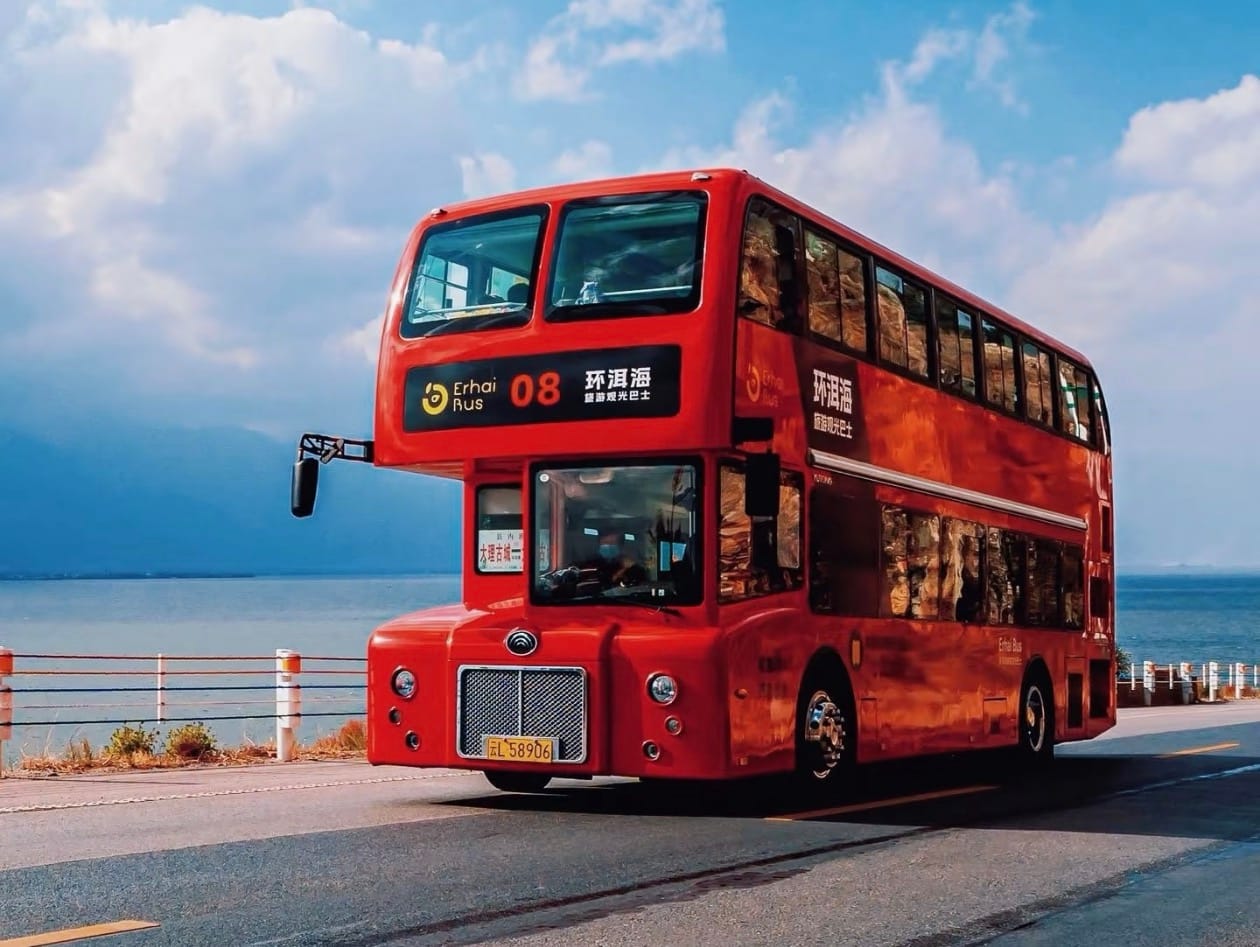
A hop-on-hop-off double-decker bus covers 13 stops on both shores, sold as a 24-hour or 72-hour pass. It works best off-season or for a rider happy to pick two or three stops and go slowly.
Off-peak, departures can run 30–60 minutes apart, so getting off somewhere often means a real wait for the next bus. The Old Town starting point also sits several hundred meters from the south gate. That’s longer than most visitors expect before the day even starts.
Our take: cycling or driving beats a cruise for feeling the corridor up close; a cruise wins if the islands are the point. The sightseeing bus is the fallback for structure without driving — go in expecting real wait times, not a tight schedule.
5. Where to Stay by Shore and Budget

Start with the shore, not the town. West shore or east shore is the first call, and it shapes everything else about where you sleep.
West shore suits a packed itinerary — close to Dali Old Town, Cangshan, and Xizhou, with plenty of food and nightlife nearby, and easy access if you’re relying on public transport or a rental scooter. The tradeoff: most lake-view rooms here sit across the Ecological Corridor from the water, not directly on it.
East shore suits self-driving or chartered trips, or travelers who want to properly unplug. This is where Dali’s genuine “clear-water rooms” (清水房) are — no corridor between your window and the lake. The tradeoff: it’s a longer way from Old Town and the main sights, options are fewer, and evenings can feel isolating rather than restful if quiet isn’t what you wanted.
Caicun / Longkan (West) | Shuanglang (East) | Xizhou (West) | Wase (East) | Dali Old Town | |
|---|---|---|---|---|---|
Best for | Sunrise, lake-facing rooms, easy access | Best sea views, boutique clear-water rooms | Quiet, small-town pace | Sunset, lower cost for lake access | No overnight, day trips only |
Distance to lake | On the water, corridor in between | Directly on the water | Short walk | On the water | 10–15 min taxi to west shore |
Price (low season) | ¥200–500/night | ¥300–1,000+/night | Slightly above Old Town rates | ¥200–600/night | ¥100–300/night |
Tradeoff | Popular means neighbors and noise | Furthest from Old Town and the train station; priciest | Fewer room choices | Longer transfer, fewer amenities | No sunrise from your room |
Prices above are low-season; expect roughly double during major holidays (Spring Festival, National Day).
🏨 Where to Stay Near Erhai Lake
Nightly price, low season
Based on our own bookings for clients. Expect roughly double during major holidays (Spring Festival, National Day).
If sunrise is the point, book a room that already faces it. Caicun and Longkan are dense with guesthouses built specifically around this. Many advertise the view outright with rooftop terraces or floor-to-ceiling windows facing east. A room merely near the lake means walking there in the dark before dawn; a lake-facing room means it’s already in view when you wake up. Filter for lake-facing rooms specifically, not just proximity.
Quiet without losing convenience? Ma Jiuyi Village, just north of Caicun, does the same job on the west shore without the busiest strip’s foot traffic. Wase does the same on the east, at a lower price than Shuanglang for a similar clear-water setup.
Staying in Dali Old Town makes sense when the lake is one stop among several, not the main event. It’s close to food, nightlife, and transport, with the west shore a short taxi away. The tradeoff is real — no sunrise from your room, no evening lakeside walk after dinner.
Two more filters worth applying: budget matters most → Old Town or Caicun. Sea view matters most → Shuanglang.
6. How to Plan Your Time at Erhai
How to Spend a Day There
If Erhai is one stop among several in a single day — Old Town, Three Pagodas, Cangshan — stay on the west shore. It slots into a half-day without reshuffling your itinerary.
If Erhai is getting its own day, go clockwise:
- Morning: west shore, for soft light and easy photography
- Afternoon: east shore, timed to reach a sunset point — Wenbi Village or a Shuanglang lakefront cafe — by 4pm
The sun moves west behind Cangshan through the afternoon, so by late afternoon the east-facing shore turns a warm orange the morning light can’t match.
Cruising instead of cycling or driving? It slots in more easily, since it doesn’t need a shore commitment — a half-day boat trip pairs cleanly with a morning or afternoon in Old Town on the same day.
How Many Days to Give It
One day: covers a shore and one activity, as above — this is the ceiling for a single day that isn’t entirely about the lake.
Two full days: split by shore instead of compressing everything into one exhausting loop — one day west, one day east.
Three or more, or Erhai as the main draw: an overnight on the east shore (Shuanglang or Wase) gets you sunrise and sunset on the lake instead of squeezing both into one long day.
Most travelers we work with underestimate transfer times between shores. The drive from Dali Old Town to Shuanglang alone can run 45–60 minutes depending on traffic, and that’s before you’ve done anything on-site.
7. Best Time to Visit Erhai Lake

Spring and Autumn (Best)
March–May and September–November give the clearest Cangshan views and the most reliable weather — minimal rain, stable skies, manageable crowds outside major holidays. This is the safest window if photography or mountain visibility is the priority.
Summer
June–August brings the heaviest domestic tourist volume and afternoon thunderstorms that can roll in with little warning, particularly on the water. Mornings are more reliable than afternoons for both cycling and cruising in this window.
Winter (Underrated)
Tourist numbers drop in December–February, and migratory black-headed gulls arrive from Siberia to winter on the lake. Little Putuo Island on the east shore is the best-known spot to see them. Days are cool but clear; mornings and evenings get cold enough that you’ll want a real layer, not just a jacket.
Check the Forecast, Not Just the Season
A grey, overcast day genuinely halves the visual payoff on the west shore, where the whole appeal is the mountain-and-water reflection. If the sky’s flat, we’d rather redirect clients to Dali Old Town’s markets or a tie-dye workshop for the day. Save the lake for clearer skies.
8. How to Avoid the Common Mistakes
These are the mistakes we see repeat most often, grouped by category. Pricing figures below are based on our own bookings and client records, not published rate cards.
Rental Scooters and Bikes
- Range claims are routinely inflated. A shop advertising 80km range may deliver closer to 50km in practice. Ask what real-world range to expect before paying. Treat anything under 50km as too short for a full-day loop.
- Corridor-restricted vehicles. Most Dali Old Town rentals cannot enter the Ecological Corridor, as covered in Section 4. Confirm this specifically if the corridor is part of your plan.
- Damage disputes at return. Photograph or video the entire vehicle — body, tires, mirrors — before you ride off. It’s the only real defense against a return-time damage claim you didn’t cause.
- Return-zone fees. Corridor rental bikes must be returned to a designated drop-off point. Returning outside that zone can trigger a ¥30 handling fee.
- Fair pricing reference: around ¥40–60/day for a 200km-range e-scooter from a standard city shop, or ¥250–400/month for lower-range models on a longer stay. Prices well under this usually carry hidden fees elsewhere.
Charter Cars and Day Tours
- Cut-rate group tours. A ¥50 all-day tour typically means 30 minutes at each real stop and two hours parked at a shopping detour, with buses that leave on schedule regardless of stragglers.
- Below-market charter quotes usually mean hidden add-ons later. ¥260–400/day, all-in, is the fair range — confirm before booking whether that price genuinely includes fuel, parking, and driver, with no shopping stops.
Cafes and Photo Spots
- Many of the east shore’s best photo angles — the rainbow road at Wenbi, framed shots at Luwoshan — sit on private cafe property with a minimum spend, typically ¥38–68 per person. Shooting from the public road is free, but the best-known angles are usually inside.
- A lakefront cafe with floor-to-ceiling windows can be badly backlit for portraits in the afternoon. Check which direction a spot faces before planning a shoot around it, not after arriving.
- Roadside “photographers” offering cheap shoots are inconsistent. Some deliver only edited images and withhold the raw files. Book through a known platform or ask your guesthouse for a referral instead of approaching someone cold at a scenic spot.
Safety and Comfort Details Easy to Miss
- Red fire ants live in the grass along sections of the corridor. Avoid parking or standing directly in roadside grass, especially in warmer months — a bite is a fast, sharp sting that’s easy to mistake for something else at first.
- Sun protection is not optional at this altitude — sunburn happens even on overcast days, and reflected glare off the water adds to it. Bring a hat, sunscreen, and sunglasses regardless of season.
- Temperature swings hard between midday and evening lakeside. A short-sleeve afternoon can turn into a cold sunset watch — pack a light layer if you’re staying out past 5pm.
- Public restrooms along the corridor are sparse and can queue in peak season; cafes and guesthouses are a more reliable backup, though some charge a small fee (¥2–5) for non-customers.
- Cell signal drops out in sections of the corridor. Download offline maps and save your key waypoints before you set out.
Navigation That Actually Works
Searching for attractions by their official name often routes you the long way around. Search these terms instead:
Instead of searching | Search this | Why |
|---|---|---|
“Longkan Pier” | “Sunshine Convenience Store” (阳光便利店) | Drops you at a shortcut path instead of the main road |
“Xizhou old town” | “Zhengyi Gate” (正义门) | The actual free public entrance, not a paid side-entry pedicab drivers push |
West shore overlook | “Old Town People’s Court” (古城人民法庭) | Gets you directly to the elevated photo point |
Frequently Asked Questions
Is Erhai Lake worth visiting if I’ve already seen Dali Old Town?
Yes — they’re different experiences. Old Town is walkable heritage and food; Erhai is open water, mountain views, and village life at a slower pace. Most travelers who skip it regret giving Dali only a single day.
How many days do you need for Erhai Lake?
Half a day if it’s one stop among several. A full day if you want both shores properly. Two or more days, with an overnight on the east shore, if Erhai is the main draw.
Is the west shore or east shore better for photos?
Both work, for different shots. The west shore corridor gives you the classic Cangshan-behind-the-lake composition, best in the softer morning light. The east shore, particularly around Wenbi Village and Shuanglang, is better for sunset and dramatic cliff-road shots. The light comes from behind you as the sun drops toward Cangshan in the afternoon.
Do I need a guide to visit Erhai Lake?
Not for the basics — cycling the corridor or visiting Xizhou is straightforward independently. A guide or driver helps most if you’re trying to cover both shores in one day, since transfer logistics and timing are where trips go wrong.
Planning a Dali itinerary that actually fits Erhai in properly? Contact us — we’ve been routing travelers around this lake since 2006.