Shizhongshan Grottoes at Shibaoshan: All in One Guide
- The Shizhongshan Grottoes are part of Shibao Mountain Scenic Area, with tickets covering Baoxiang Temple and Haiyunju Temple.
- Due to severe erosion, grottoes in Shiziguan and Shadengqing are closed, but statues remain visible through the doors.
Three months ago, we took a client couple from Germany to Shizhongshan Grottoes. They’d already visited Longmen and Yungang—two of China’s most famous Buddhist cave sites. But when they stood in front of Cave 7’s fertility carving, positioned right next to a serene Buddha statue carved 1,300 years ago, the wife turned to us and said: “This is what we came to China to see. Not the crowds, not the tourist photos. This.“
That moment captures what makes Shizhongshan different. It’s not China’s largest grotto complex. It doesn’t have Dunhuang’s thousands of caves. But what it offers—artistic innovation, cultural fusion, and the quiet space to actually experience ancient art—you won’t find at the famous sites.
Table of Contents
Quick Facts
Chinese Name | 石钟山石窟 (Shízhōng Shān Shíkū) |
|---|---|
Location | Shizhong Mountain, Shibaoshan Scenic Area, 25km southwest of Jianchuan County, Dali Prefecture |
Distance from Dali | 110km northwest (approximately 2-hour drive) |
Created | 738-1253 AD (Nanzhao and Dali Kingdom periods) |
Number of Grottoes | 17 grottoes with 139 sculptures |
Protection Status | First batch of National Key Cultural Relics Protection Units (1961) |
Elevation | 2,140-3,083 meters |
Main Areas | Shizhong Temple area, Lion Gate (Shiziguan), Shadeng Village |
Recommended Duration | 2-3 hours for grottoes; full day including entire Shibaoshan area |
History and Cultural Significance
🏯 Historical Timeline of the Shizhongshan Grottoes
Carved from 850 to 1179 under Yunnan’s Nanzhao and Dali kingdoms, while Central China moved from the Tang to the Song.
Two Kingdoms, One Artistic Legacy
Between 738 and 1253 AD, southwestern China was ruled by two Buddhist kingdoms: Nanzhao and Dali. While Europe struggled through the Dark Ages, these kingdoms controlled territories spanning modern Yunnan, parts of Burma, and northern Vietnam. And they were carving some of China’s most sophisticated Buddhist art into red sandstone cliffs.
The Nanzhao Kingdom (738-902) fought both Tang China and Tibet for regional dominance. But between battles, they devoted enormous resources to Buddhist art. After Nanzhao’s collapse came 36 years of chaos—three short-lived dynasties rose and fell. Then in 937, Duan Siping established the Dali Kingdom, which would last 316 years until Kublai Khan’s conquest.
Here’s what makes the Dali Kingdom remarkable: nine of its 22 rulers abdicated their thrones to become Buddhist monks. This wasn’t political theater. The ruling Duan family genuinely believed Buddhist devotion mattered more than earthly power.
The grottoes at Shizhongshan preserve this worldview in stone.
Why These Caves Matter Beyond Tourism
Most Buddhist grottoes in China follow strict religious conventions. Northern Wei caves show Indian influences. Tang Dynasty work reflects Central Asian styles. But Shizhongshan developed its own aesthetic—a fusion of Tibetan Esoteric Buddhism, Han Chinese traditions, and local Bai culture.
The artisans here broke rules. They carved Buddha with distinctly human faces. They positioned royal family members alongside deities. They included scenes of daily life—musicians, dancers, drunk men, foreign monks—right next to sacred imagery.
One American anthropology professor we guided told us the grottoes function as “visual ethnography.” They document how Buddhism adapted as it spread along ancient trade routes. How Bai culture influenced religious expression. How secular and sacred coexisted in ways they didn’t in northern China.
UNESCO officials who evaluated the site called it the “Southwest Dunhuang.” That comparison captures the artistic quality but misses the point. Dunhuang has thousands of caves filled with similar iconography. Shizhongshan has 17 caves that each tell different stories.
Why Visit Shizhongshan Grottoes
What You Won’t Find Anywhere Else
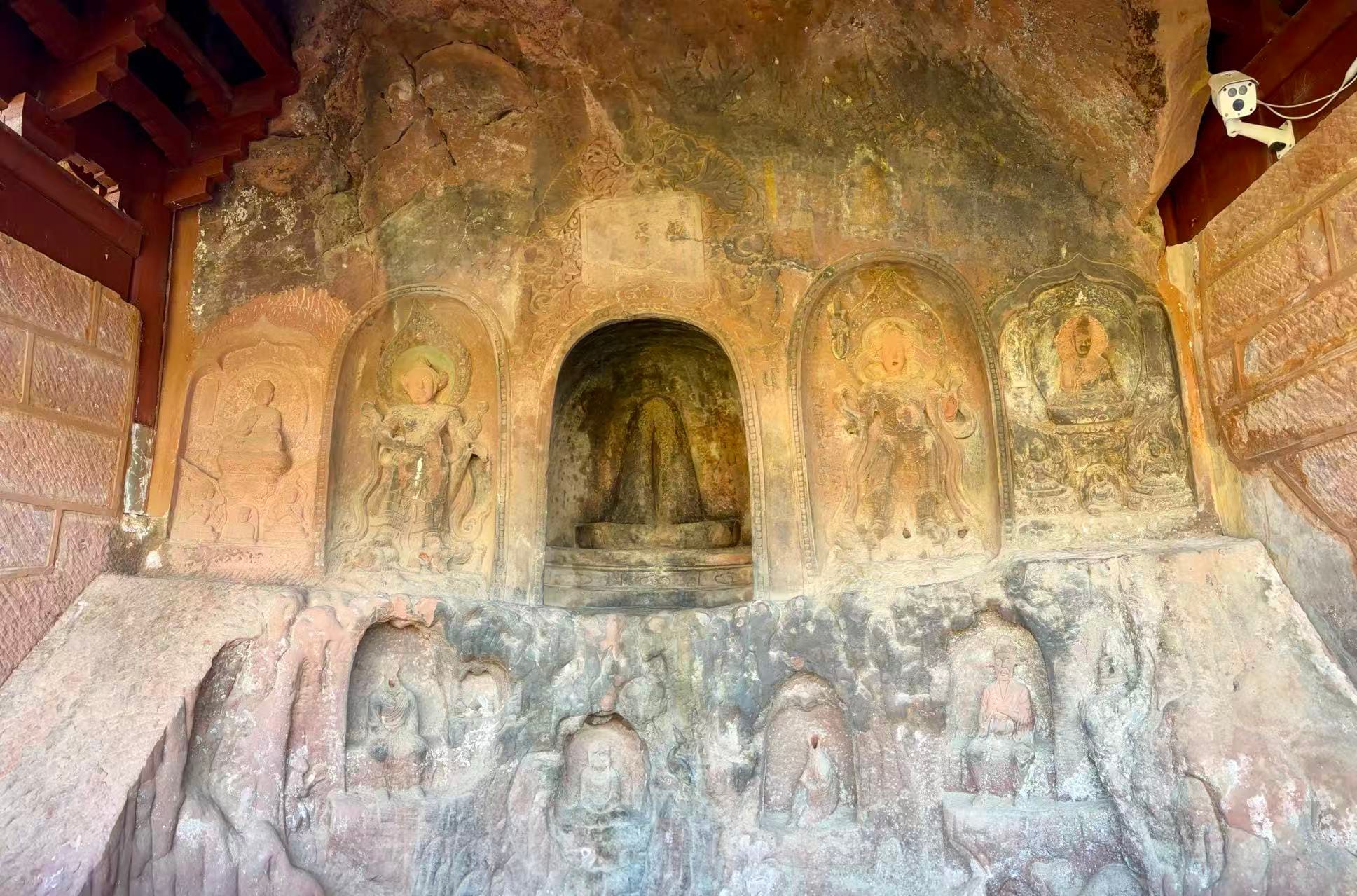
The Fertility Shrine: Cave 8 contains China’s only yoni carving (female fertility symbol) within a Buddhist grotto complex. This isn’t hidden in a corner—it’s prominently positioned among Buddha statues and royal portraits. Below the carving, the red sandstone is worn smooth from centuries of couples kneeling in prayer, hoping for children.
In feudal China, where strict religious hierarchies dictated temple art, why would artisans include this? Scholars still debate. Some argue it represents ancient Bai fertility worship predating Buddhism. Others suggest it symbolizes life’s natural cycles within Buddhist cosmology. What everyone agrees on: it’s unprecedented in Chinese Buddhist art.
Royal Documentation: Several caves depict Nanzhao kings with such detail that historians use them as primary sources. Cave 3 shows the royal family in formal dress, revealing court protocol and clothing styles from over 1,000 years ago. You can identify different ranks by garment details—knowledge we only have because these carvings survived.
Artistic Innovation: The sculptors humanized divine figures. Buddha statues have individual facial expressions. Bodhisattvas show naturalistic body proportions instead of idealized forms. One carving depicts a drunk man stumbling—you can practically see him swaying. Another shows Indian monks with features clearly marking them as foreigners.
A Chinese art historian we worked with described the Shizhongshan style as “Buddhist realism.” The artisans weren’t trying to create perfect divine representations. They were documenting their world through a Buddhist lens.
The Setting: Danxia Landscapes and Pine Forests
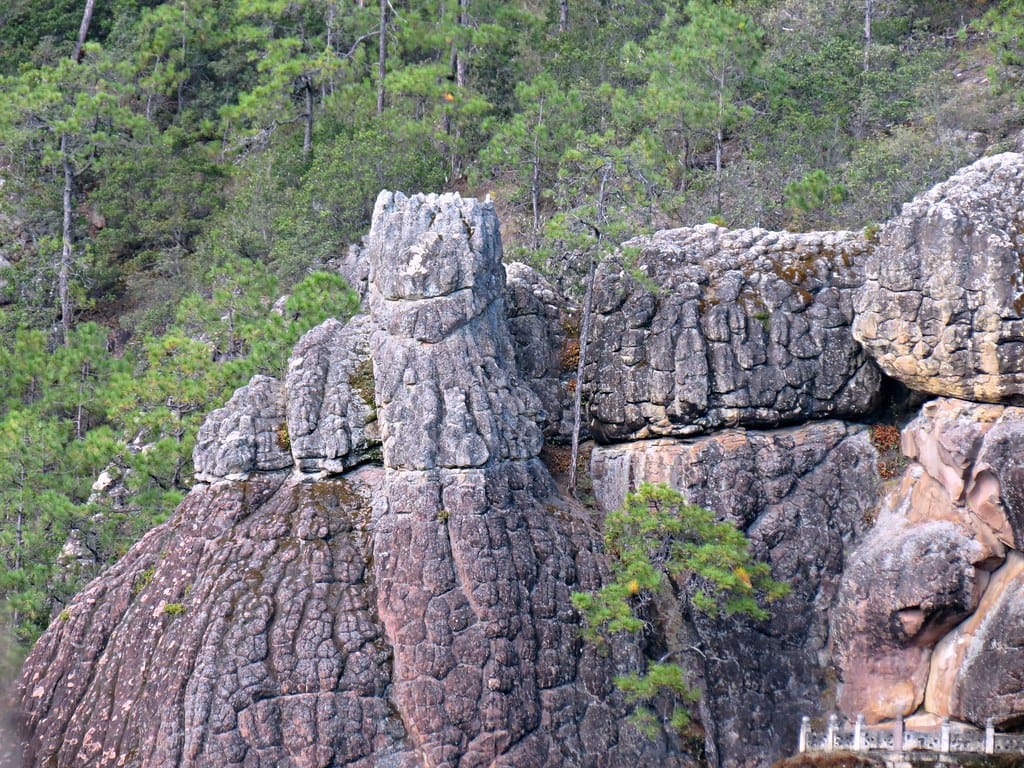
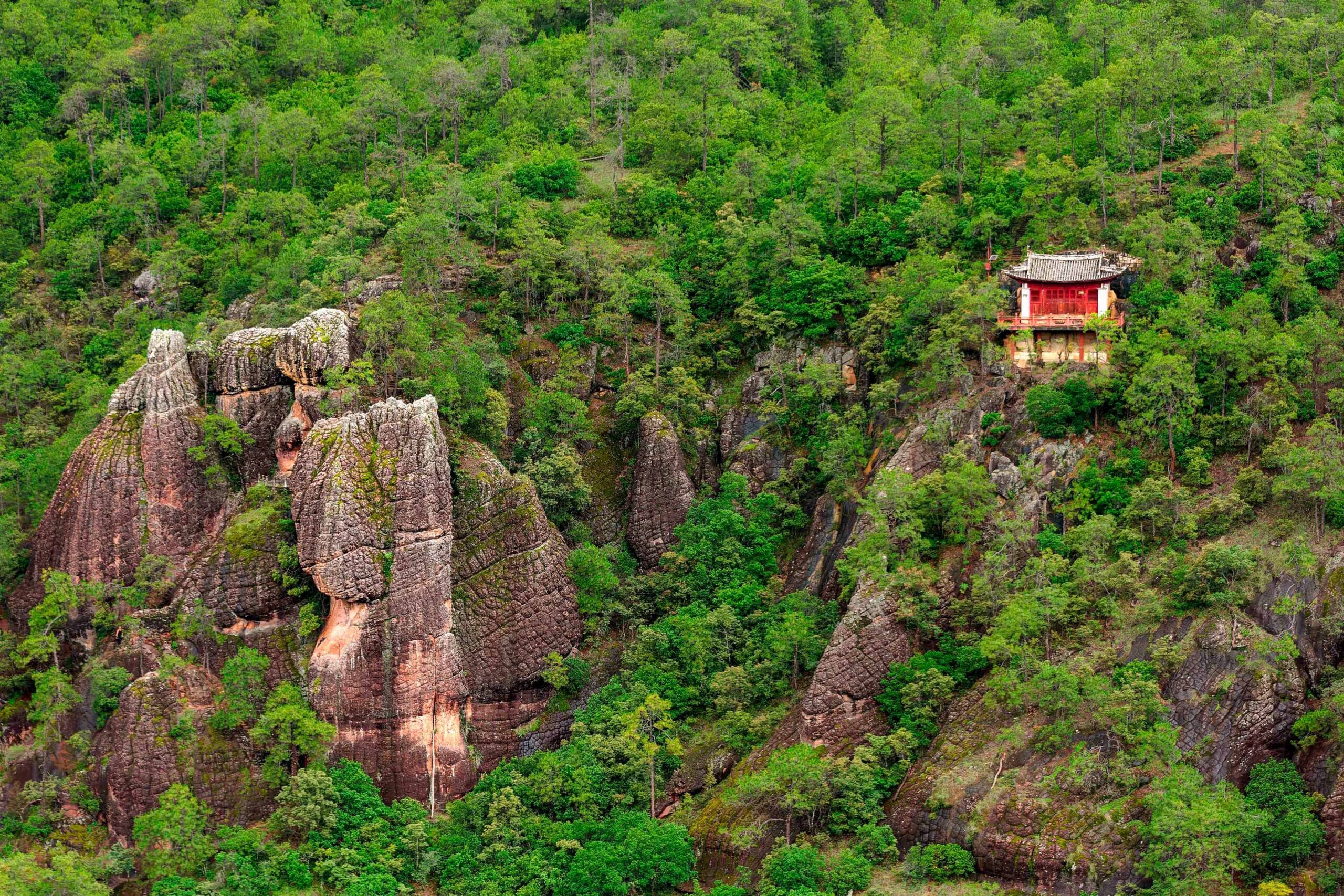
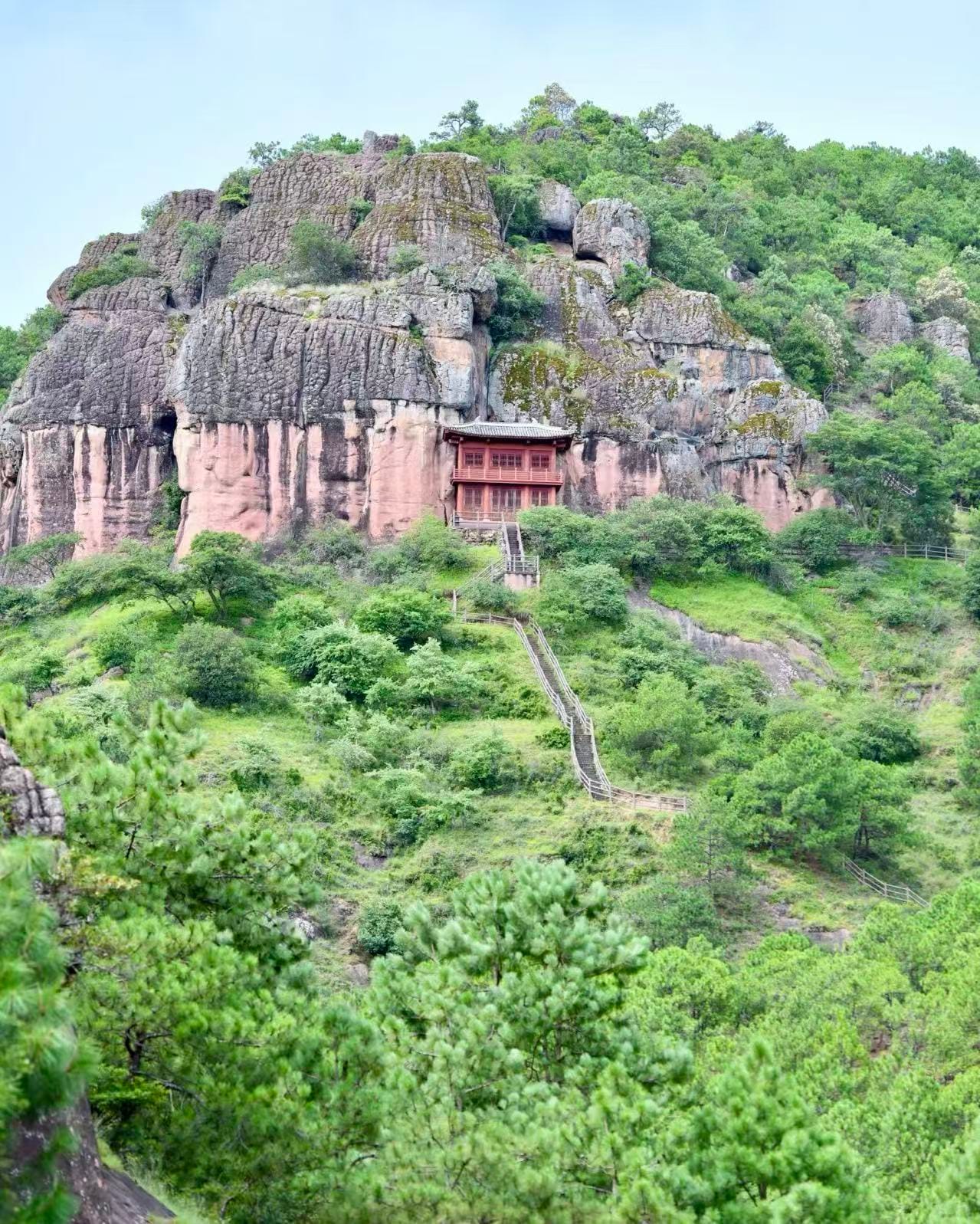
Shizhongshan sits within Shibaoshan National Forest Park—7,000 acres of red sandstone Danxia formations, ancient pine forests, and mountain trails. The main grottoes are carved into cliffs shaped like bells, elephants, and lions (hence “Stone Treasure Mountain”).
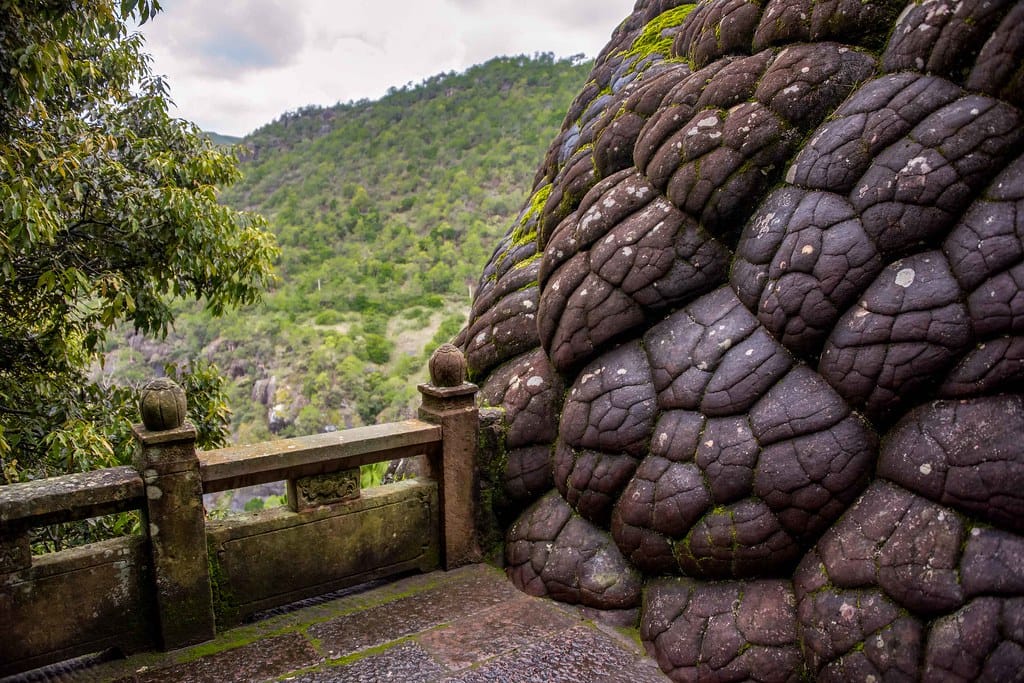
The hike between temple sites passes through forest where macaque monkeys live, twisted pines locals call “Living Impatient Pine,” and viewpoints over Shaxi Valley. Some rock formations show “turtle-back” erosion patterns—cascading grooves carved by millions of years of water flow.
One of our guides grew up hiking these trails. He says the grottoes make sense only when you experience the mountain. The artisans chose this location because the rock formations themselves resembled Buddha’s head. The site selection was devotional practice.
Overview of All 17 Grottoes at Shizhongshan
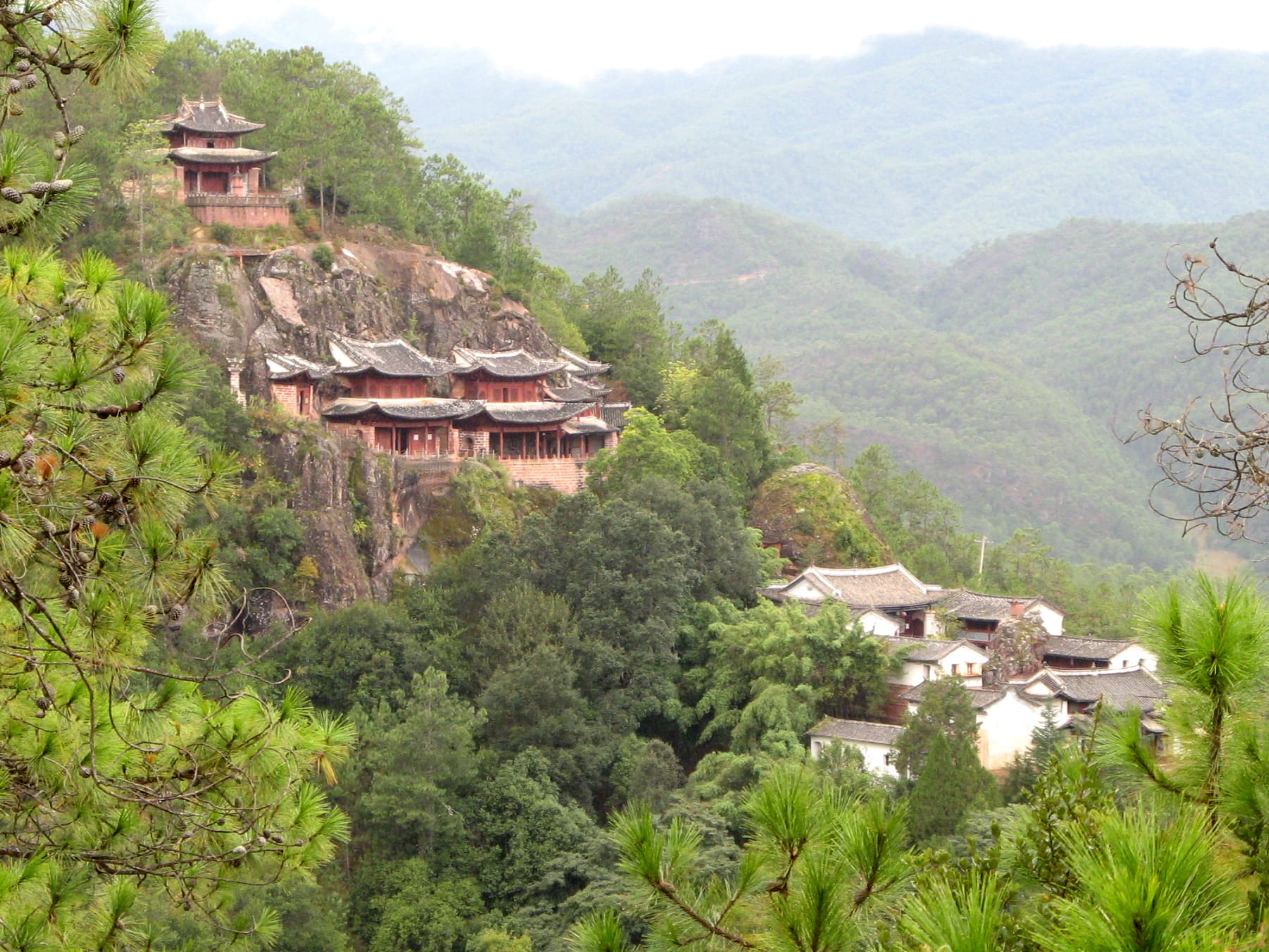
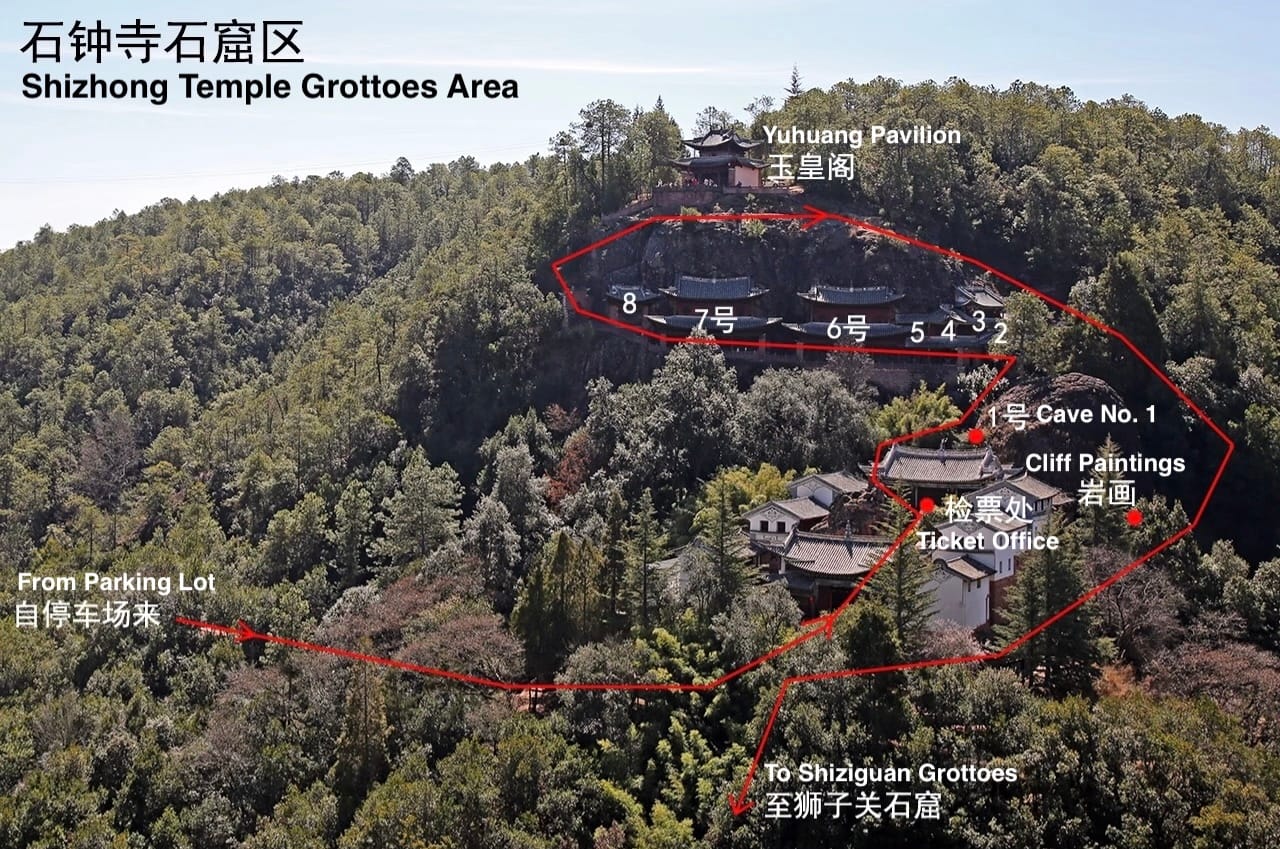
The Shizhongshan complex divides into three areas: Shizhong Temple area (main concentration), Shiziguan/Lion Pass (scattered carvings along hiking trails), and Shadeng Village area (more dispersed statues). Most visitors focus on the eight currently accessible caves around Shizhong Temple.
Grottoes in Shizhong Temple
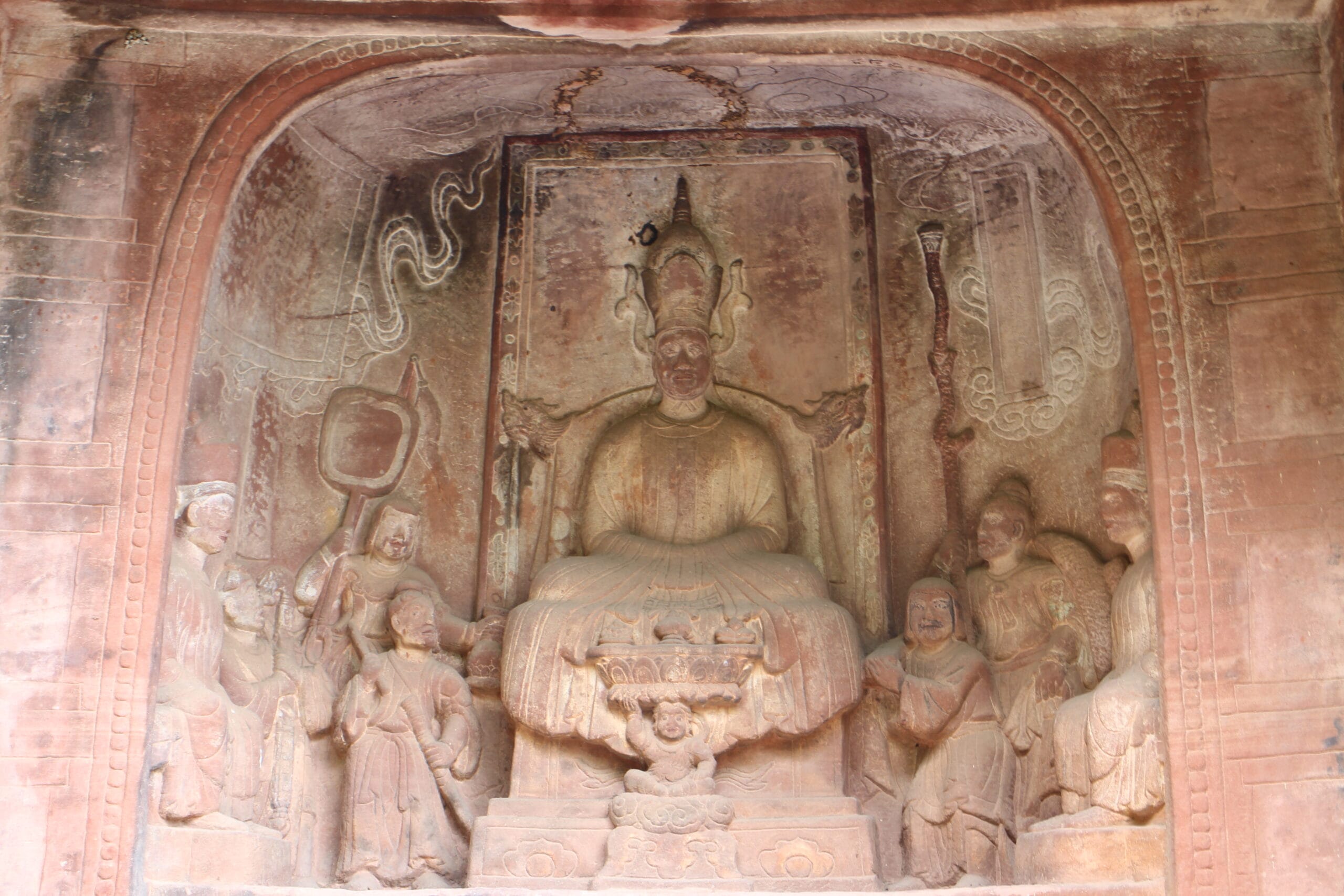
Nanzhao Sixth King Yi Mouxun Discussing State Affairs
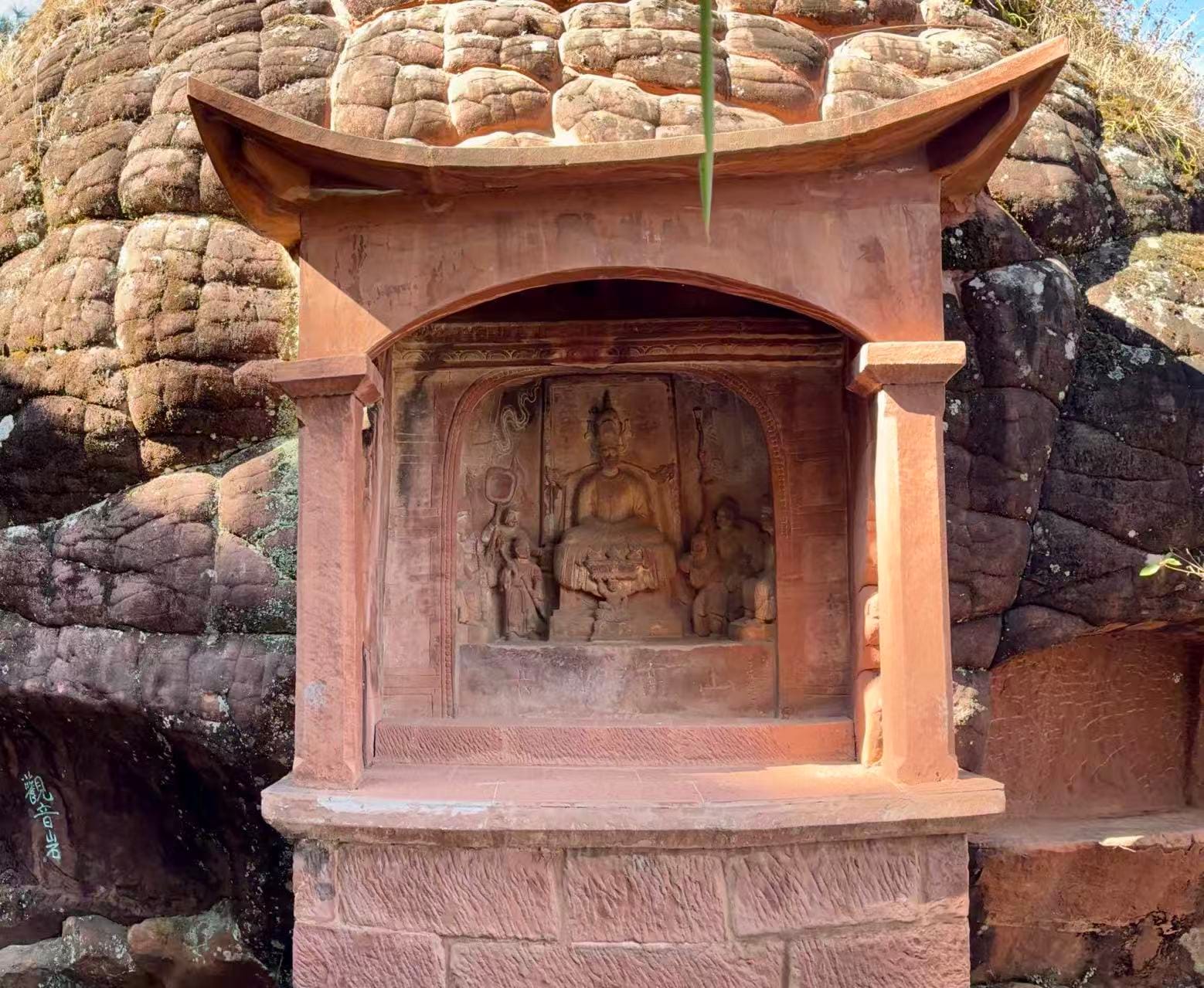
This palace-style cave features King Yi Mouxun, the sixth king of Nanzhao (reigned 779–808 AD), seated on a dragon throne. He wears a long robe with a round collar and wide sleeves, topped with a lotus-shaped vajra crown, and his expression is kind and dignified. According to the New Book of Tang, Yi Mouxun “was talented, well-read, and skilled at governing the people.” Among the thirteen kings of Nanzhao, his achievements in civil administration were the most remarkable. The 794 “Cangshan Alliance” and the “Zhenyuan Investiture” restored friendly ties with the Tang Dynasty, leading to rapid development in Nanzhao’s politics, economy, and culture.
This cave vividly recreates a scene from the royal court, showing the clothing, appearance, and ceremonial objects of the king, his ministers, and attendants. It provides a fascinating glimpse into Nanzhao court life and is a valuable resource for understanding the kingdom’s history.
Nanzhao Fifth King Geluofeng on an Inspection Tour
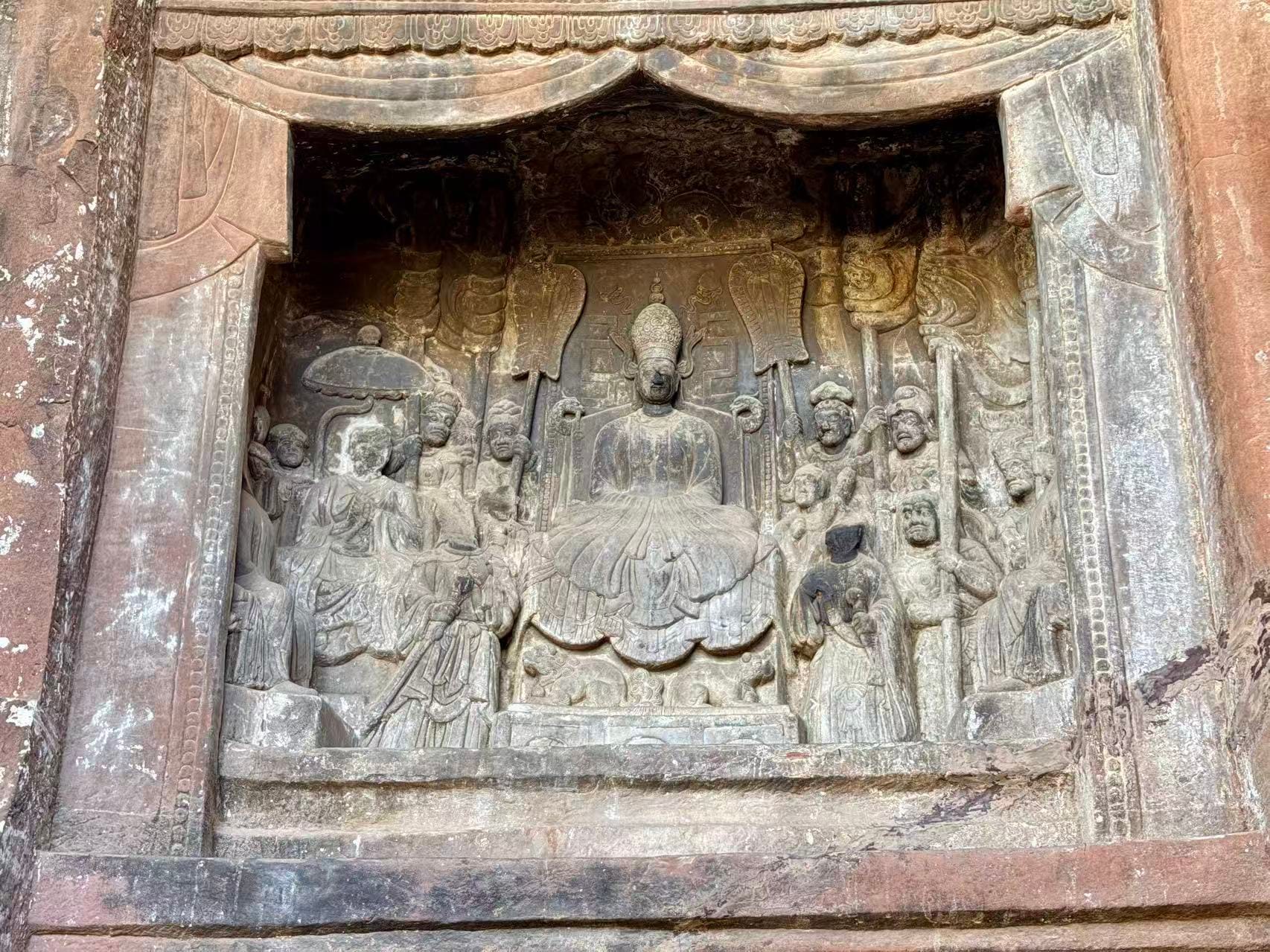
This niche is a palace-style cave with the structure of a temporary palace. At the center sits King Geluofeng, the fifth king of Nanzhao (reigned 748–778 AD), wearing a long brocade robe with a round collar and wide sleeves, hands resting on his lap, and a tower-shaped pearl crown on his head. He sits on a dragon throne, exuding dignity and authority. During his reign, Geluofeng largely completed the unification of Nanzhao. However, due to a combination of factors, the Tang Dynasty launched two military campaigns against Nanzhao in 751 and 754 AD, known in history as the Tianbao Wars. The Stele of Virtue of Nanzhao records the causes and course of the Tianbao Wars in detail, repeatedly emphasizing the difficult position that forced Nanzhao into conflict with the Tang.
The carvings in this cave are exquisitely detailed, with sixteen figures arranged at varying heights, creating a grand and harmonious scene. The layout is precise, and the characters are vividly portrayed with distinct personalities. This makes Cave No. 2 one of the most historically and artistically valuable caves in the Shizhongshan Grottoes.
Kṣitigarbha Bodhisattva
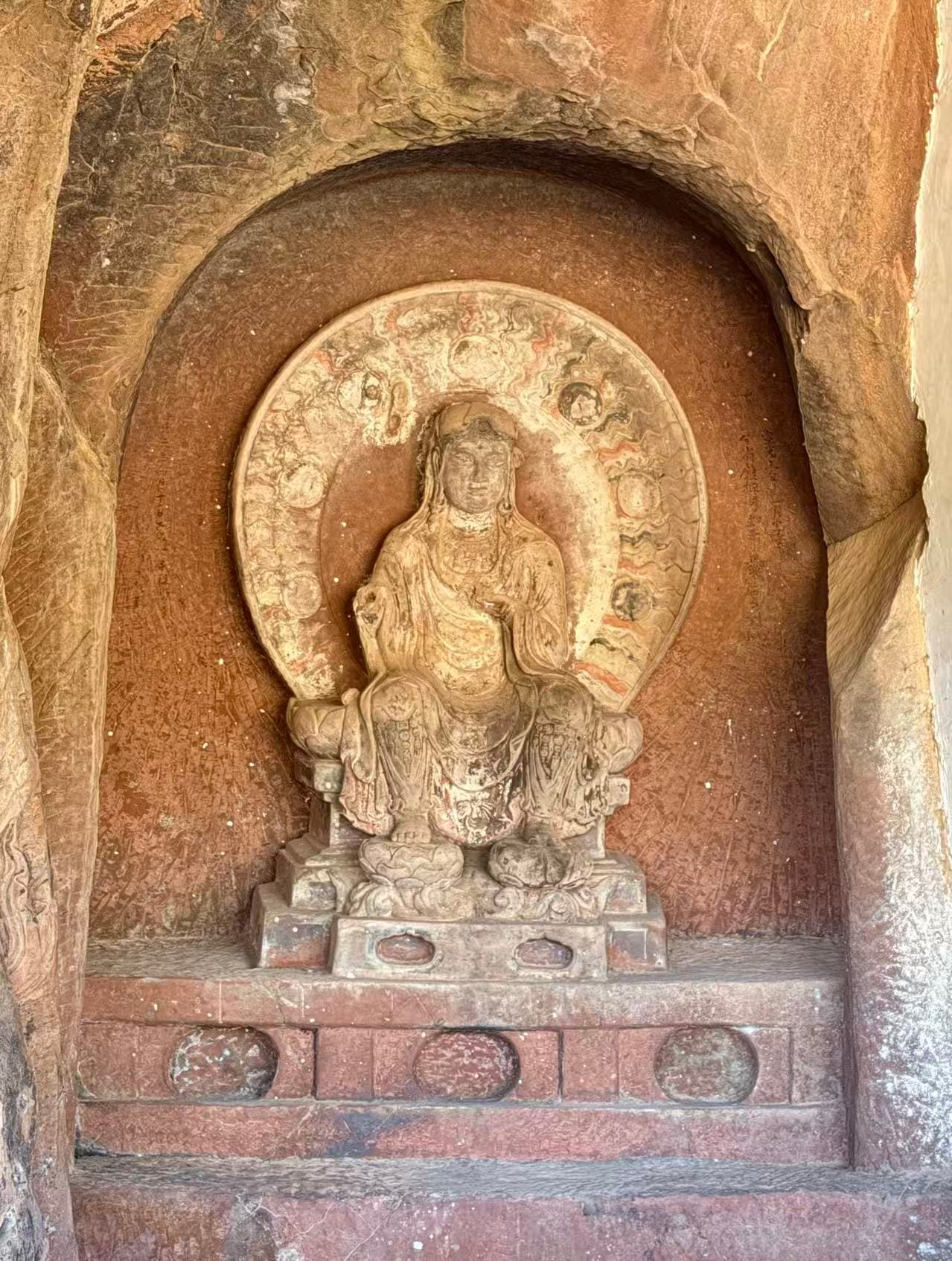
In the arched niche, Kṣitigarbha Bodhisattva sits upright on a square pedestal with a lotus base. His face is full and round; he wears a flowing jeweled crown and bell earrings. He is dressed in a long, low-collared robe with a bell-adorned necklace. His right hand holds a staff (now damaged), and his left hand supports a jewel on a pedestal at chest level. Barefoot, he rests on two upward-facing lotuses.
Behind him is a circular halo decorated with the sun, moon, and the seven celestial bodies of gold, wood, water, fire, and earth, symbolizing his power to judge good and evil, auspicious and inauspicious. According to Buddhist scriptures, Kṣitigarbha appears in the six realms between the passing of Sakyamuni Buddha and the birth of Maitreya, saving all sentient beings from heaven to hell so they may attain Buddhahood. Known as the “Great Vow Kṣitigarbha,” he is one of the Four Great Bodhisattvas in Buddhism, along with Manjushri, Samantabhadra, and Avalokiteśvara.
Kṣitigarbha was widely revered by the people of Nanzhao and Dali Kingdom. Even today, many temples in Dali are dedicated to him, and annual festivals known as the “Kṣitigarbha Festival” are still celebrated.
Avatamsaka Trinity (Huayan Three Saints)
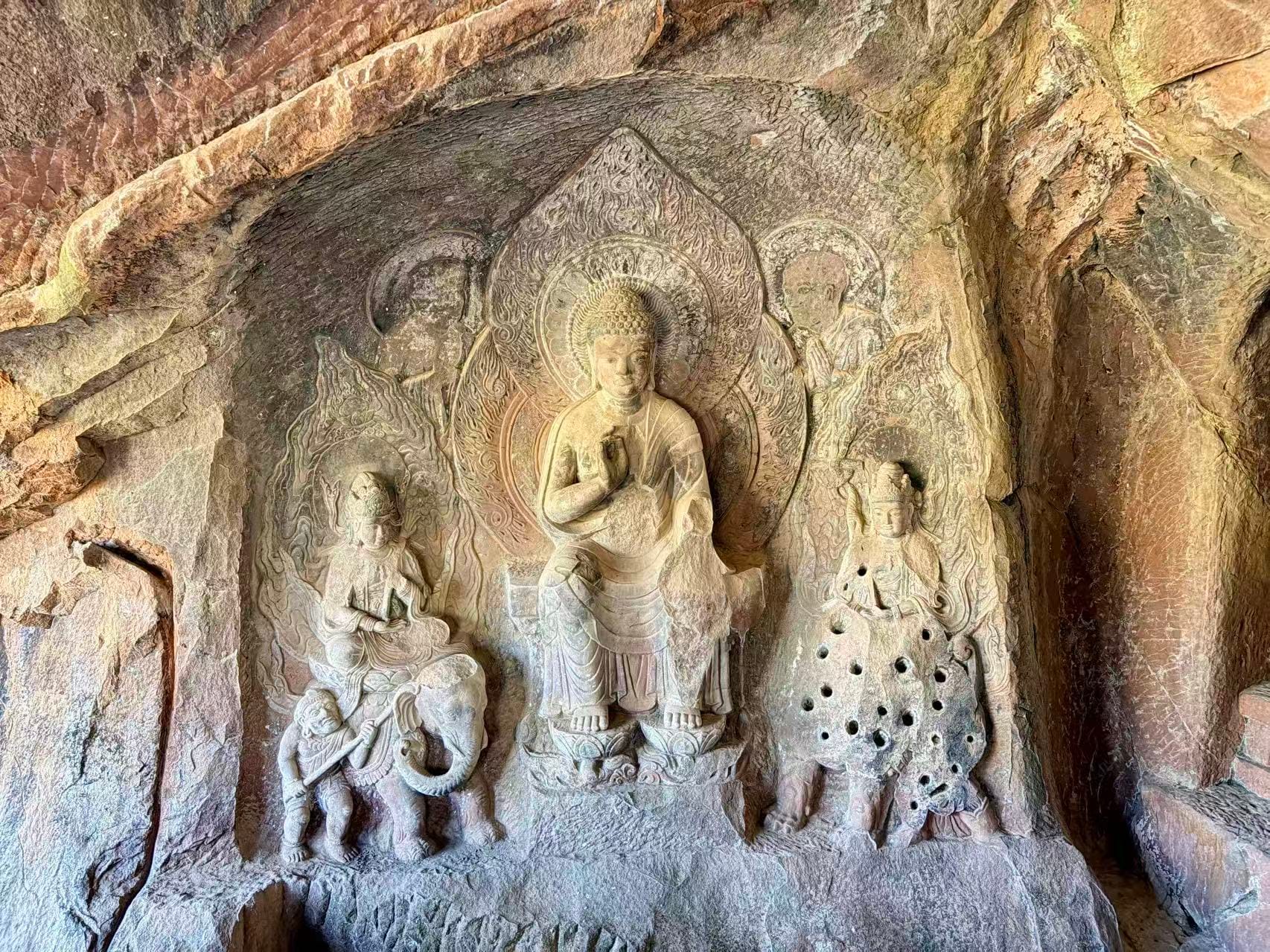
This cave contains seven figures: one Buddha, two disciples, two Bodhisattvas, an elephant attendant, and a lion attendant. The Huayan Trinity consists of Shakyamuni Buddha, Manjushri Bodhisattva riding a blue lion, and Samantabhadra Bodhisattva riding a six-tusked white elephant. The two disciples are Kāśyapa on the left and Ānanda on the right.
All figures, whether Buddha, Bodhisattva, or animals, are proportionally harmonious, full-bodied, and vividly shaped, displaying lifelike features and exquisite craftsmanship. The Bodhisattvas wear finely detailed floral crowns; their garments are thin and flowing with decorative ribbons, round bell earrings, necklaces adorned with bells, and bracelets with intricate jewels. The six-tusked white elephant has expressive eyes, while the elephant attendant from Kunlun is short, sturdy, and rugged, with deep-set eyes, a prominent nose, and pierced ears, showing strong exotic characteristics. These lifelike scenes bring the Buddhist niche to life, giving it the atmosphere of human daily life.
“Asking About Illness” from the Vimalakīrti Sutra
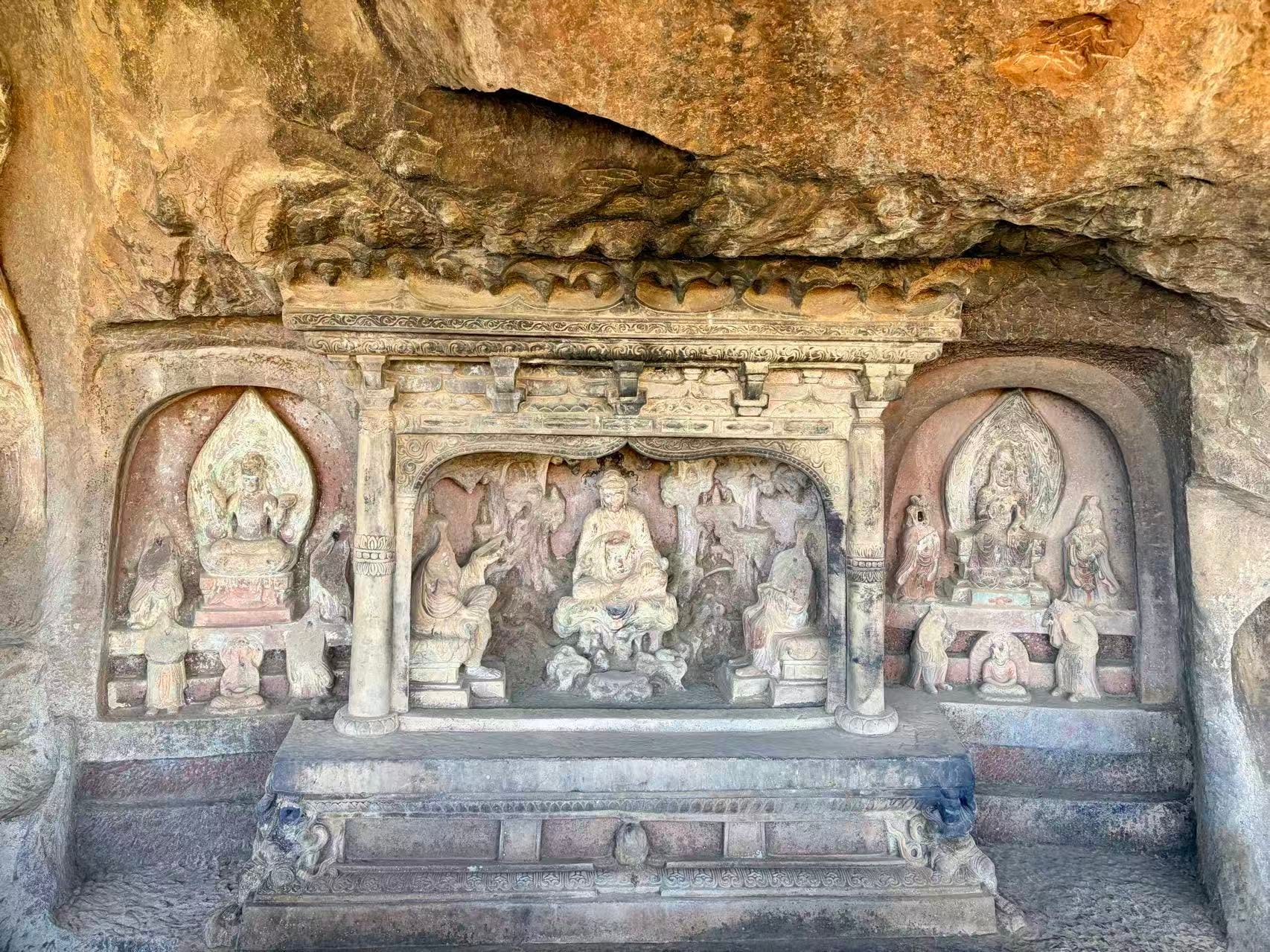
This cave consists of three niches arranged left, center, and right. The central niche features a house-shaped bracketed structure. In the center sits the lay practitioner Vimalakīrti, flanked by Śāriputra on the left and Mañjuśrī on the right. The shallow arched niches on the left and right mainly depict Avalokiteśvara as Āfengye Guanyin and Yangzhi Guanyin.
Two muscular attendants support the central pedestal. Vimalakīrti leans slightly forward, with his right hand in a mudra and his left hand holding a feathered fan. His expression is troubled; after leaving seclusion, his posture appears weak, eyes cast downward, and brows furrowed in sorrow. The melancholy on his face seems to gaze upon the suffering of the world, reflecting his compassion for all sentient beings. Local residents call him the “Worried-faced Avalokiteśvara” or “Sick Avalokiteśvara.”
The depiction of Vimalakīrti seated in the rock-carved scene of the Sutra, with Avalokiteśvara carved in the left niche, is unique in Chinese grotto art.
Hall of the Wisdom Kings
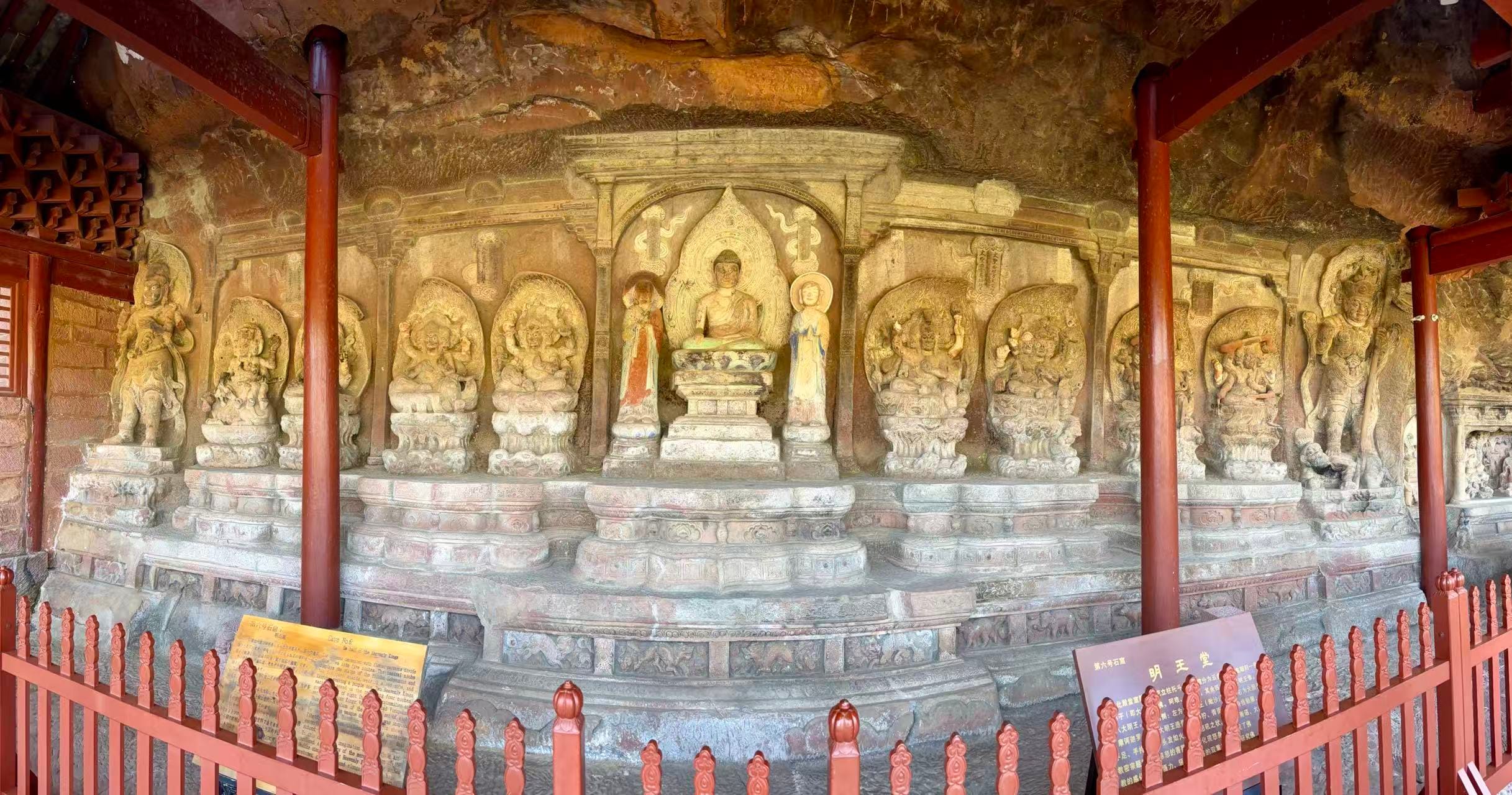
This hall-style cave features six flower-shaped pillars supporting bracketed eaves, dividing the cave into five niches. The central niche depicts one Buddha and two disciples (Vairocana Buddha, Ānanda, and Kāśyapa). The remaining four niches each contain two Wisdom Kings, forming the group known as the Eight Great Wisdom Kings.
On the far sides, the left niche depicts Vaiśravaṇa (Duowen Heavenly King), and the right niche depicts Mahākāla (Daheitian God). The Eight Great Wisdom Kings are portrayed with fierce expressions, blue faces, and fangs; their bodies are adorned with skulls, snakes wrapped around their hands and feet, and they hold ritual implements. Their hair appears like flames, and their mouths are open in a roar. These figures are drawn from the Vajrayana Buddhist traditions of Nanzhao and the Dali Kingdom.
As manifestations of compassionate Bodhisattvas in wrathful forms, they demonstrate both the persuasive and deterrent power of Buddhism, serving to punish evil and promote virtue. This cave provides invaluable material for studying Vajrayana Buddhism and is a treasured example of Chinese grotto art in the esoteric Buddhist tradition.
Sweet Dew Avalokiteśvara (Ganlu Guanyin)
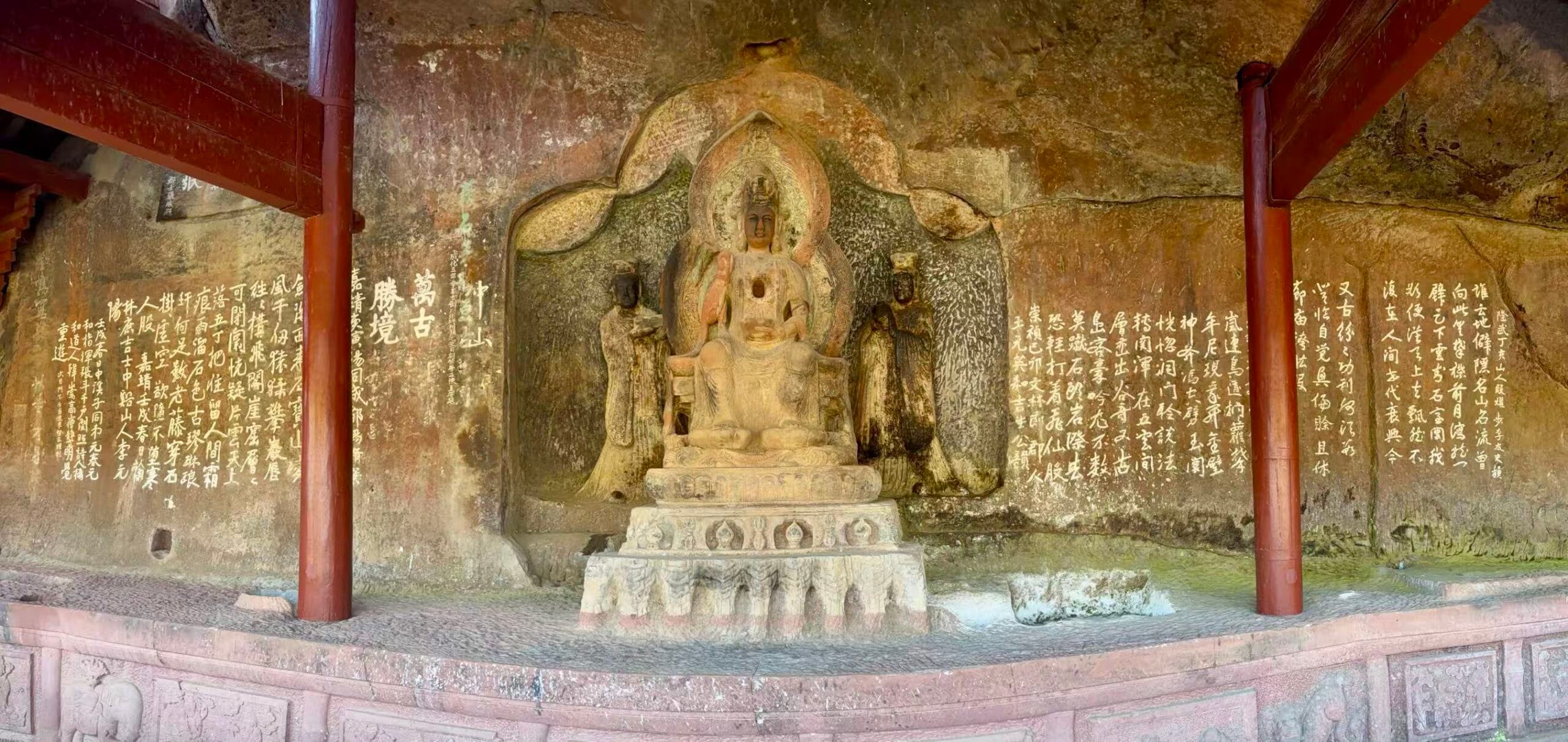
This Buddha hall cave contains three statues. Avalokiteśvara raises her right elbow holding a willow branch, while her left hand holds a bowl at chest level. The chest is hollow, and she wears a floral crown symbolizing a transformed Buddha. Her face is kind and intelligent, her figure full-bodied, and the flowing drapery of her robes harmonizes with the two attendant maidens on either side. The lifelike expressions depict Avalokiteśvara as a compassionate and gentle Bai woman—known as the “Mother Guanyin”—reflecting the elegance and inner beauty admired by the Bai people. This figure is renowned as the “Jianchuan Guanyin.”
The inscriptions on the cave walls were first carved by the famous Bai scholar Li Yuanyang in 1562 (Jiajing year of Renshu), during a revisit to Shibao Mountain. He commemorated his late friend Yang Shen (Yang Sheng’an), with whom he had previously visited Shizhongshan, and expressed admiration for the natural beauty of Shizhong Temple. Later inscriptions were added by other scholars, paying respect to these two literary masters.
Ayangbai
This niche is divided into two levels. On the upper level, Ayangbai (also called Bainí, a euphemistic term in the Bai language for the female genitalia) stands on a waist-bound upward-facing lotus at the center. On the inner side walls of the niche, the left depicts the Eastern Amita Buddha and a Wisdom King, while the right depicts the Western Amitābha Buddha and a Bodhisattva. On the outer sides, the left and right niches each depict a Heavenly King and a Buddha.
The lower level features carvings of scholars, officials, Buddhas, monks, young novices, and various birds and animals.
The depiction of Ayangbai worshipped alongside Buddhas, Bodhisattvas, and kings at a sacred pilgrimage site in the Buddha-land of Miao Xiang is a unique phenomenon in the history of grotto sculpture both in China and worldwide. Scholars debate its meaning: some see it as a remnant of a matriarchal society, others as a totemic practice of Southwest ethnic minorities, and yet others as an innovation of Vajrayana Buddhism. Since its carving in 1179, Ayangbai has been revered by local devotees praying for children, smooth childbirth, and good health.
Grottoes in Shiziguan (Temporarily Closed)
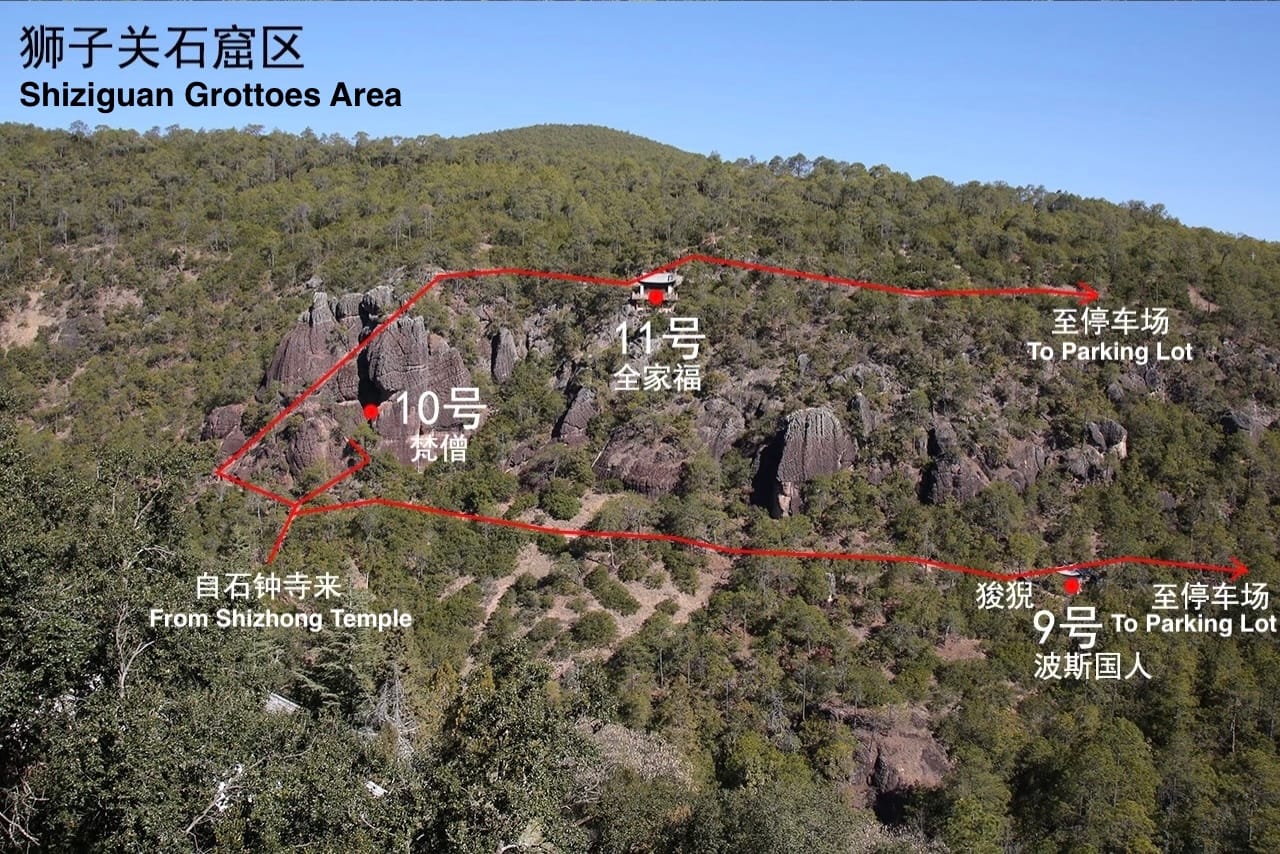
Statue of a Persian Figure
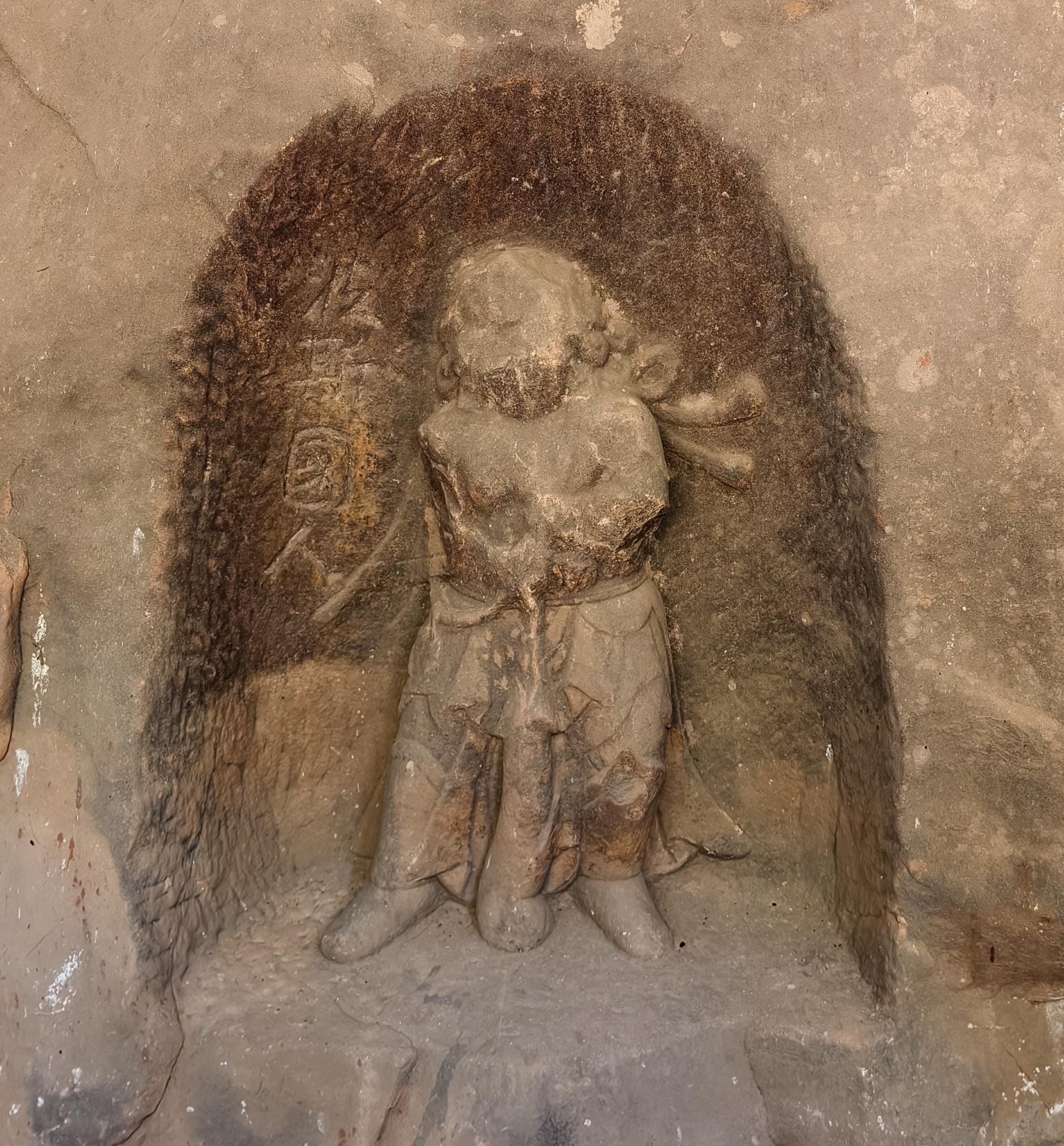
This cave is a shallow arched niche, measuring 113 cm high and 90 cm wide. Inside, the statue stands 90 cm tall. The face and wrists are damaged, but the hair is styled in lotus-like curls. Two ribbons flow behind the left shoulder, the chest and arms are bare, and both hands hold a ritual staff in front of the body. A cloth drapes over the back, and the figure wears long boots.
On the right wall beside the niche, four large characters are inscribed: “Persian Figure.” The statue resembles the guardian figures depicted in the Dali Kingdom’s Zhang Shengwen Scroll.
Avalokiteśvara Manifesting as a Brahmin Monk
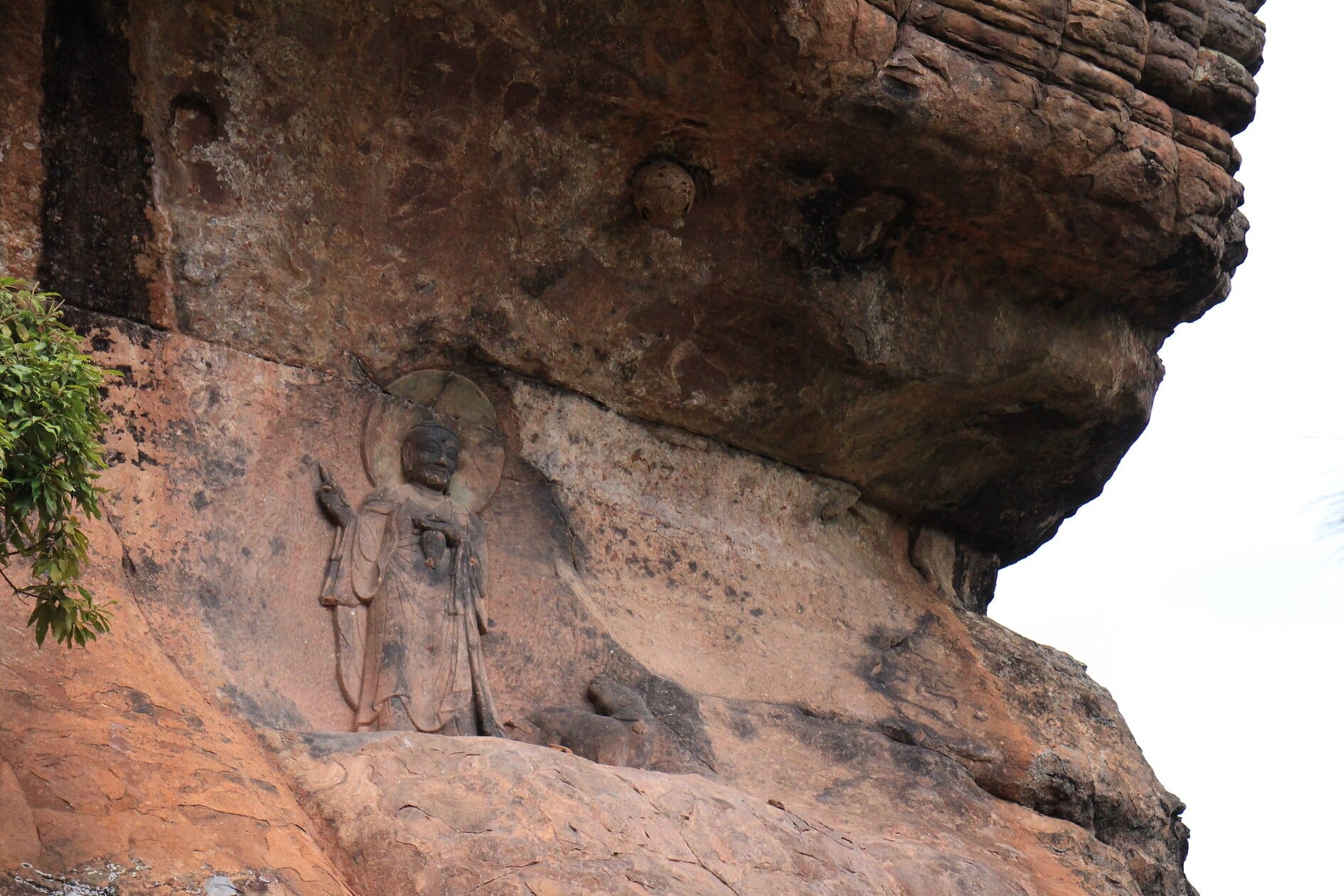
This cave was carved in the fourth year of the Shengde era of the Dali Kingdom, 1179 AD. It is located on the sheer rock face of Shizi Pass. Inside, there is a single statue of a monk wearing a lotus crown, with deep-set eyes, a prominent nose, and a halo around the head. The left hand holds a purification vase, while the right hand forms the “subduing demons” mudra.
A low-relief dog is carved on the left side of the statue, bowing and turning its head back. On the wall, an inscription reads: “Amidst the purple stones and clouds, in a faithful sanctuary and orchid grove. Carved on the seventh day of the sixth month, fourth year of Shengde, by patron and artisan Jinbang Yang Tianwangxiu.”
According to later compiled texts such as the Origins of the Bai Kingdom, the cave may depict Avalokiteśvara manifesting as a Brahmin monk and subduing rakshasas.
Statues of King Xinuluo and His Queen with Male and Female Attendants (Dali Kingdom)
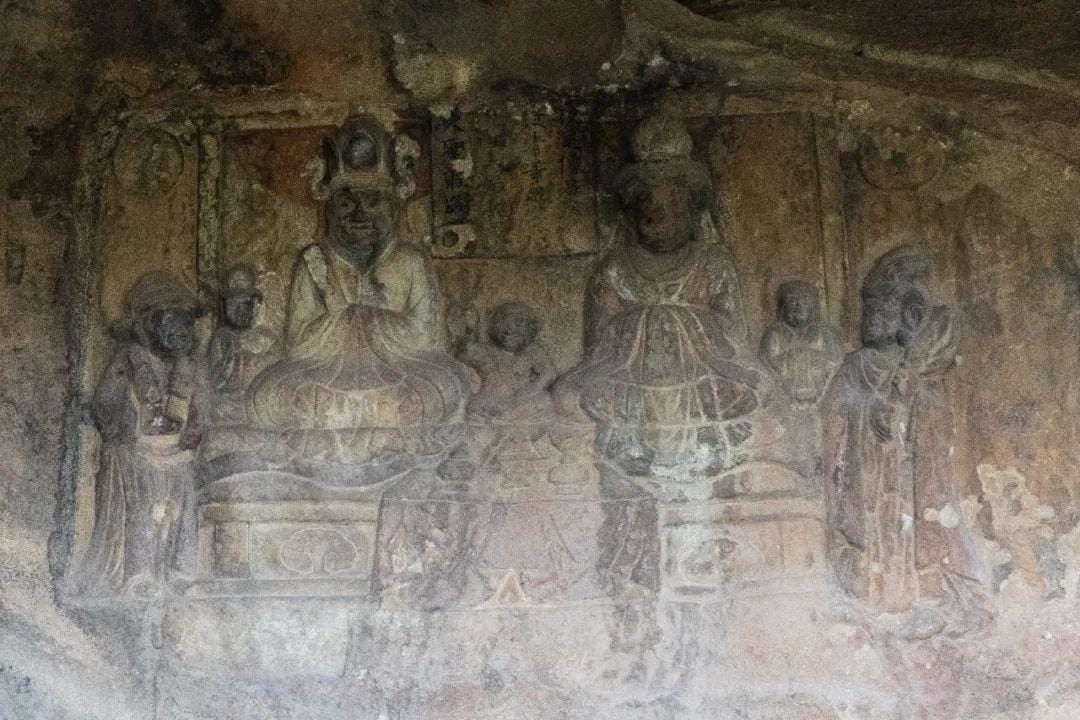
This cave was carved in the late period of the Dali Kingdom and contains a total of seven statues. In the center-left is the king, wearing royal crown and robes, and in the center-right is the queen, wearing her crown and ceremonial attire. Between them sits a child, and behind them stand two young boys, one on each side. In front of the king’s right hand and the queen’s left hand stand a male and female attendant respectively, holding a fan and a writing brush.
On the central wall behind the queen’s shoulder, there is an inscription: “Great Saintly Traces / The King and Queen with Male and Female Attendants / Respectful Representation / Made in Changning in the Ninth Year.”
Unlike Cave No. 1 and Cave No. 2, which strongly emulate palace-style Buddhist halls to recreate court assembly scenes, the layout of this cave resembles the altar arrangements of later local ancestral temples. From the perspective of carving techniques, it is the work of folk artisans from the late Dali Kingdom.
Grottoes in Shadeng Village (Temporarily Closed)
Statues of Buddha, Bodhisattvas, and Disciples (850 AD)
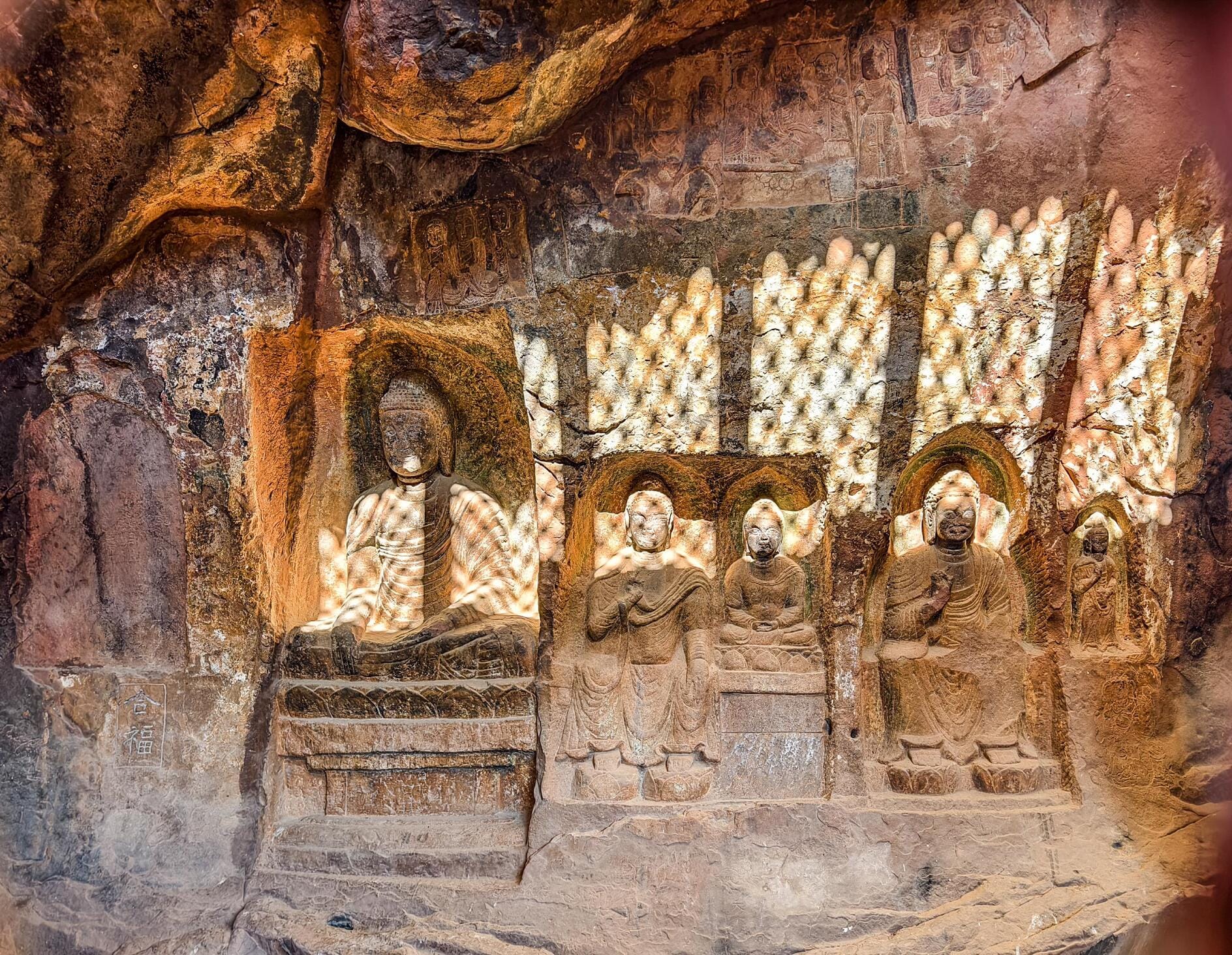
This cave contains statues arranged in two levels: the upper level has thirteen figures, and the lower level has five. The style of the sculptures is simple and elegant. The inscriptions in this cave are the earliest confirmed inscriptions found in the Jianchuan Grottoes, providing reliable evidence for the origin date of these caves.
Upper Level: Each niche is about 0.10 meters deep and all figures are in shallow relief. From left to right:
- Small square shallow niche with one Buddha and two disciples.
- Small square shallow niche with one Buddha and two Bodhisattvas.
- Small square shallow niche with one Buddha and two disciples.
- Rectangular shallow niche with a standing Amitābha Buddha.
- Small square shallow niche with one Buddha and two Bodhisattvas.
Lower Level: All are high-relief sculptures. From left to right:
- Rectangular shallow niche with Sakyamuni Buddha seated in lotus position on a square pedestal.
- Square shallow niche: on the right, Maitreya Buddha seated in lotus position on a square pedestal, barefoot on two lotuses; on the left, Amitābha Buddha seated in lotus position on a square lotus pedestal. A vertical inscription is carved on the front of the pedestal.
- Pointed arched shallow niche with Maitreya Buddha seated in lotus position on a square pedestal, barefoot on two lotuses.
- Pointed arched shallow niche with Avalokiteśvara Bodhisattva standing barefoot.
Aṣṭāya Avalokiteśvara
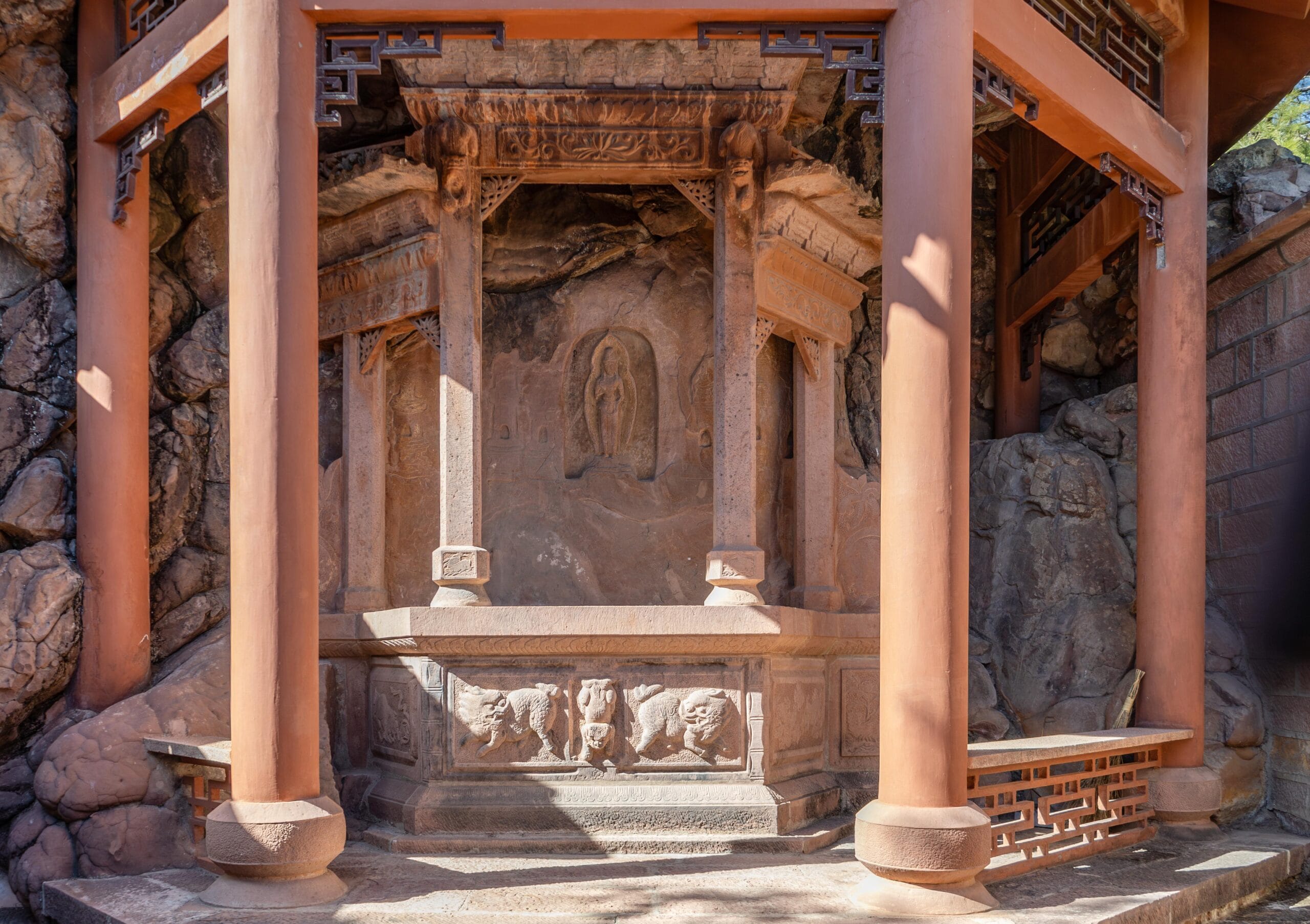
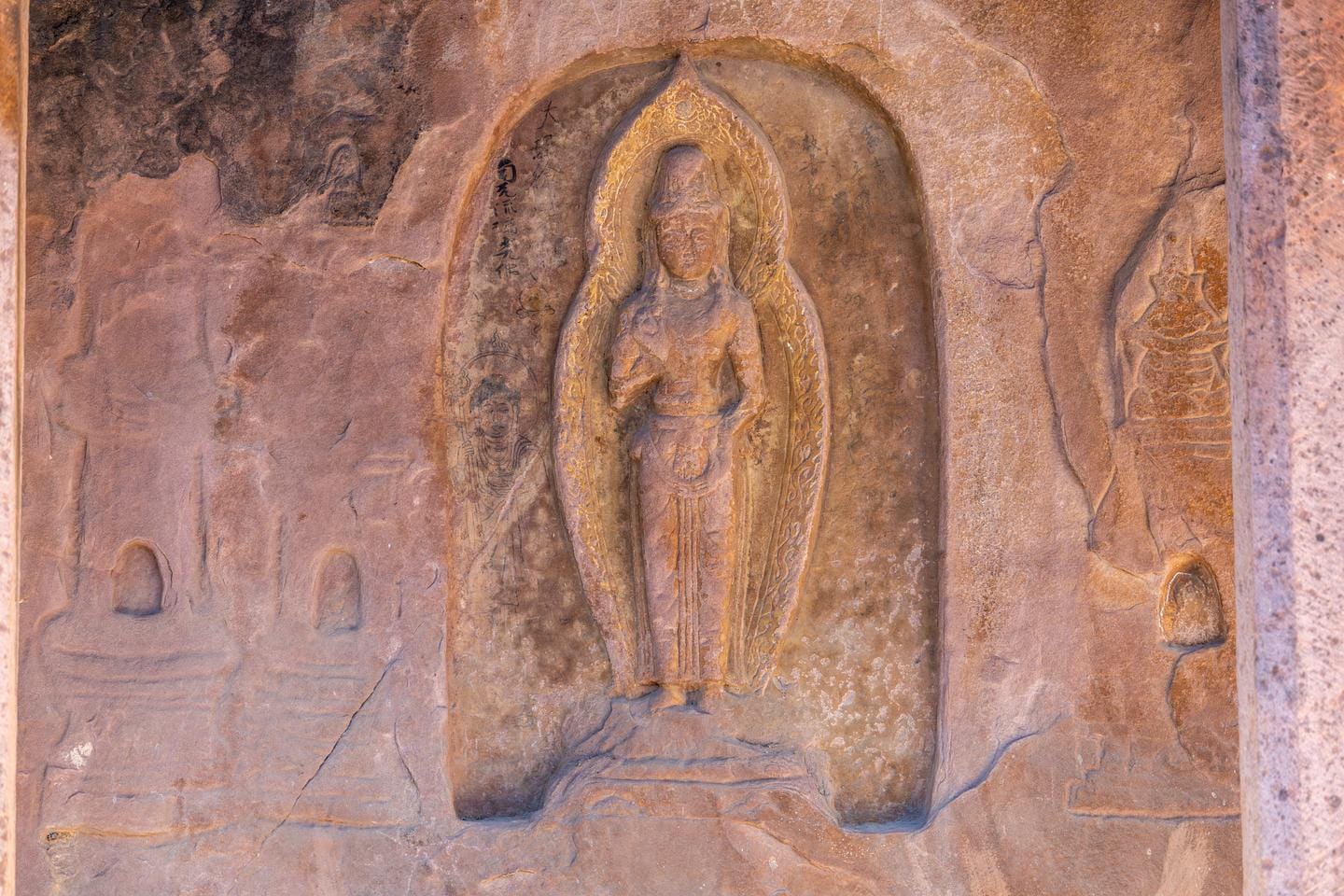
This cave contains three inscriptions, all from the Dali Kingdom period, in which the character for “kingdom” is written as “圀.” The term “Aṣṭāya Avalokiteśvara” first appeared in the Illustrated Text of Nanzhao painted in 899 AD. In the second year of Baohe (825 AD), a monk from the Western Regions named Puli Tuohe asked: “Where is Aṣṭāya Avalokiteśvara, who came from foreign lands to your Great Bai Kingdom?” Under the guidance of Aṣṭāya Avalokiteśvara, the Nanzhao Kingdom was established. The deity’s “sacred image” and “holy appearance” were cast and worshipped.
The eleventh king of Nanzhao, Longshun, was a devoted follower of Aṣṭāya Avalokiteśvara. He had 108 Avalokiteśvara statues cast in gold for public veneration and even renamed the kingdom “Aṣṭāya.” By the Dali Kingdom period, Aṣṭāya Avalokiteśvara was also called the “Nation-Founding Avalokiteśvara,” the “True-Form Avalokiteśvara,” and the “Longevity Avalokiteśvara.”
The statue in this cave closely matches other Aṣṭāya Avalokiteśvara figures known from both overseas collections and domestic finds. Its unique design combines artistic elements from India and Southeast Asia with distinct local ethnic features, making it unique to Yunnan. International scholars refer to it as the “Lucky Star of Yunnan,” and it is sometimes called the “Slim-Waist Avalokiteśvara.” This statue is the only known stone-carved standing Aṣṭāya Avalokiteśvara discovered in China.
One Buddha, Two Disciples, and Two Bodhisattvas
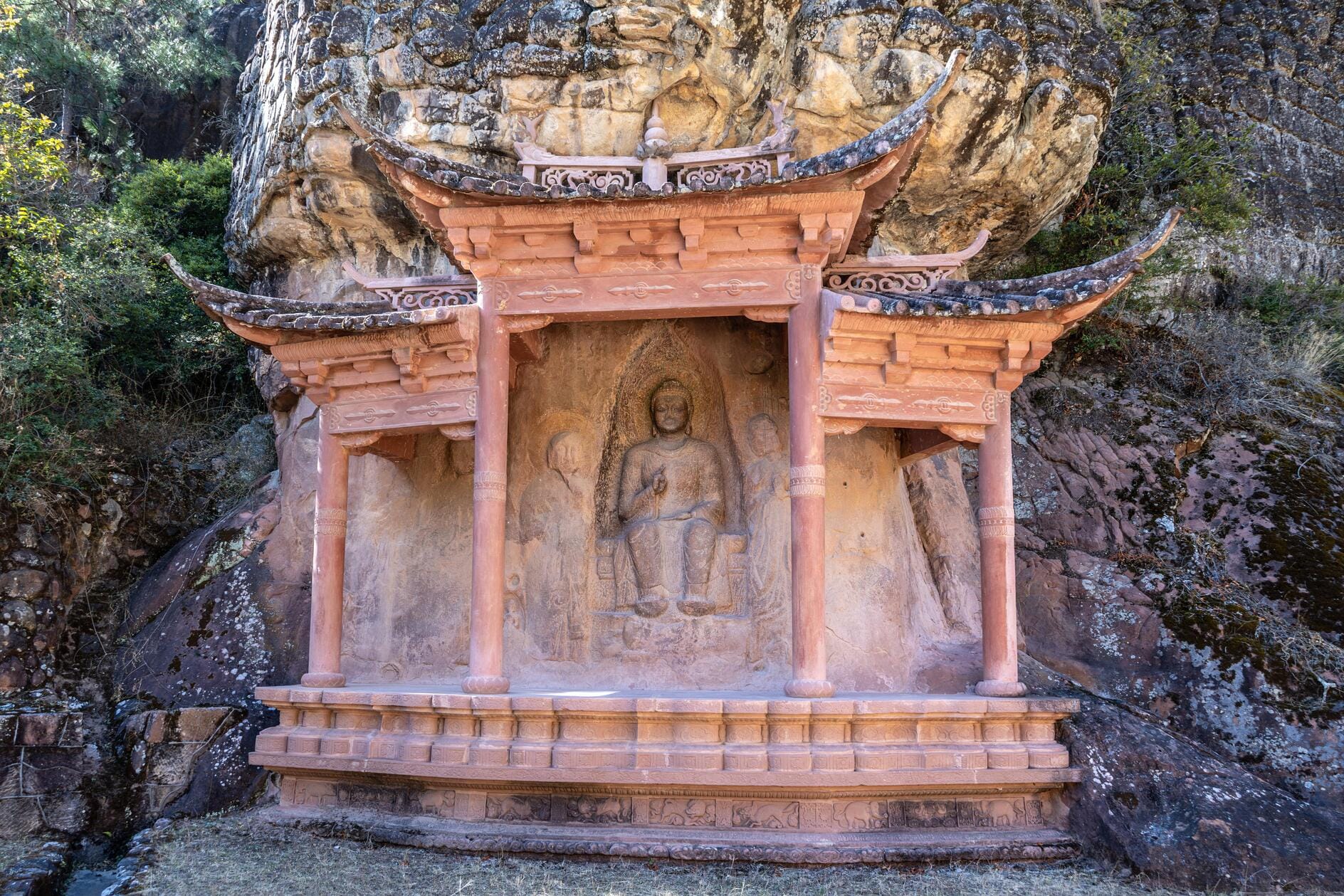
Grotto No. 14 is a pointed-arched shallow niche with a lowered pedestal at the base. On the pedestal is a high-relief statue of Maitreya Buddha seated in a cross-legged position on a square upward-facing lotus pedestal, barefoot on two lotuses, with a height of 2.20 meters. The Buddha has a round and square-shaped face, wears a ushnisha (hair topknot), and is dressed in a full-shoulder robe. His right hand forms the “teaching” mudra, and his left hand forms the “meditation” mudra. A peach-shaped halo with flame patterns is carved behind his head.
On the outer left and right sides of the niche are two lightly-carved standing disciples, both with palms joined in reverence, each with a circular halo behind the head. Below the right disciple is a small round-arched niche containing a small seated Buddha.
Originally, two standing Bodhisattvas were carved on either side of the disciples, but due to severe weathering, only faint traces remain today.
Jiazi Temple – Statue of Vaiśravaṇa (Bishamonten)
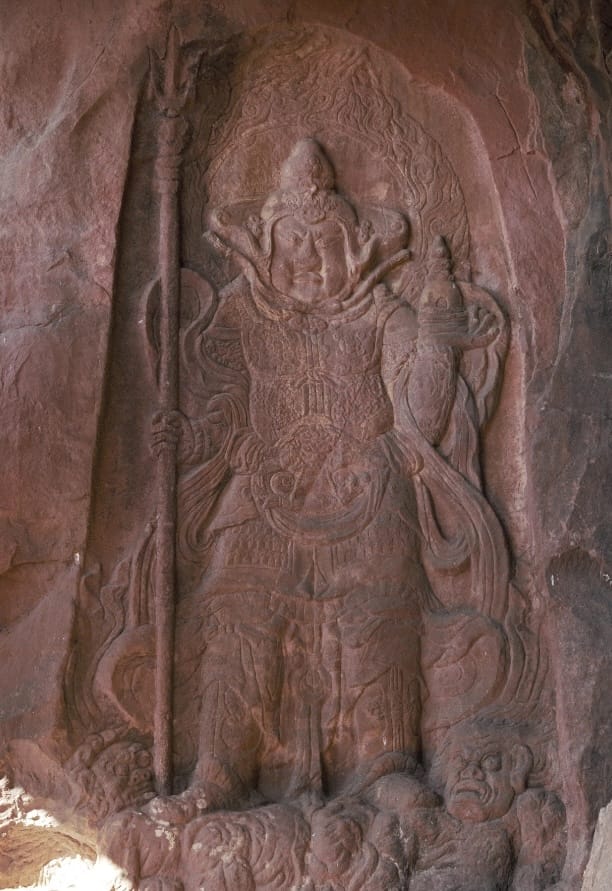
Jiazi Temple (also called Yizhi Mountain or Jiezhi Mountain; in the Bai language, “shan” refers to “temple”) features two cliff-side arched bas-relief niches. The left niche is Cave No. 15, which houses a statue of Vaiśravaṇa (Bishamonten), standing 2 meters tall. The figure wears a full battle helmet and armor, with a flaming halo behind the head and flowing celestial robes around the body. The left hand holds a Vajra stupa aloft, while the right hand grips a long-handled weapon. Beneath his feet, two yoked yaksha demons are subdued.
Jiazi Temple – Statue of Mahākāla (Dahei Tianwang)
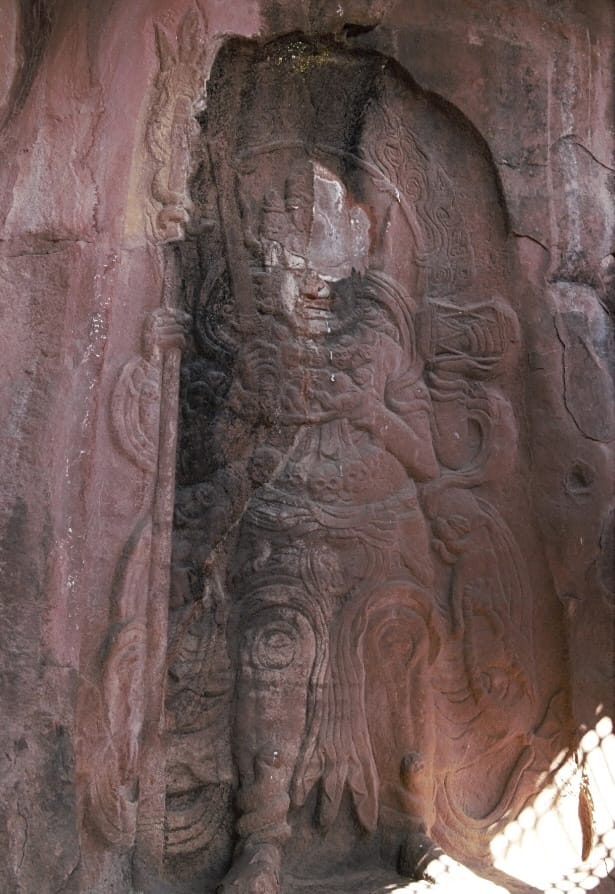
Jiazi Temple (also called Yizhi Mountain or Jiezhi Mountain; in the Bai language, “shan” refers to “temple”) features two cliff-side arched bas-relief niches. The right niche is Cave No. 16, containing a statue of Mahākāla (Dahei Tianwang / Mahākāla), standing 2 meters tall. A flaming halo rises behind his head; his hair is styled in a high topknot, with a string of skulls across his forehead, and a third eye in the center. He has curled sideburns and a fierce expression. The upper body is bare, draped in flowing celestial robes, with skull necklaces around the neck and chest. Knees are exposed, feet bare.
Mahākāla has six arms holding a small drum, a skull scepter, prayer beads, a vajra trident (with a coiled snake on the handle), a sword, and a vajra rope. Snakes coil around his arms and feet, and cloud patterns are carved near his feet.
Avalokiteśvara Manifesting as a Brahmin Monk
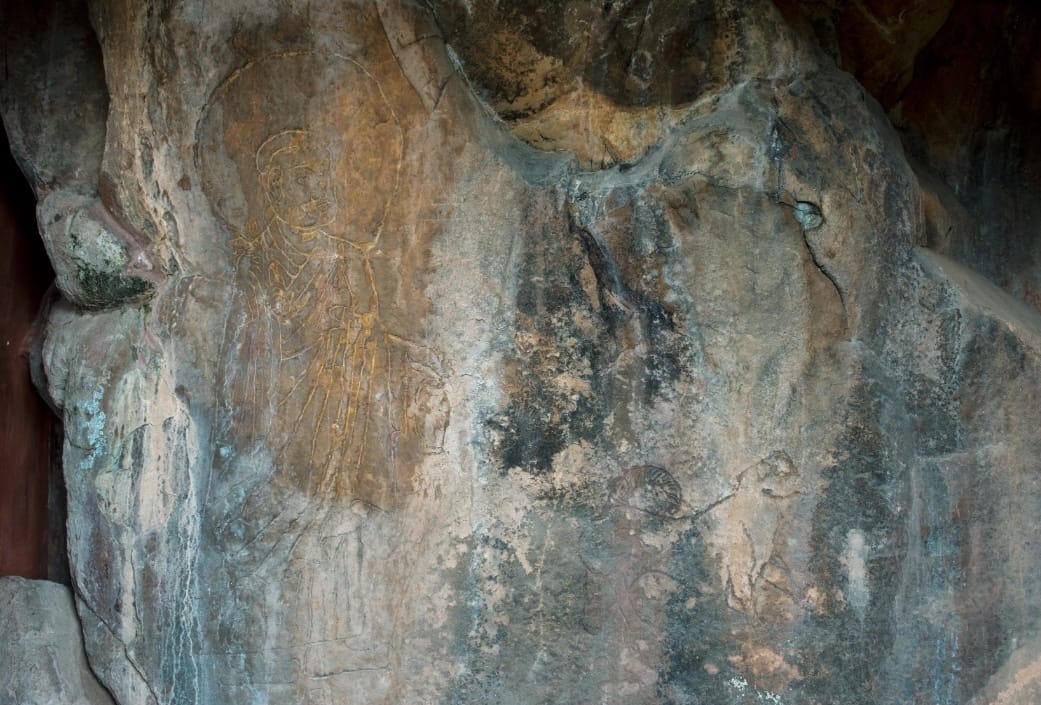
This is a rock-carved bas-relief on a cliff face, depicting a Brahmin monk in side profile, with a height of 1 meter. The figure has an aged face and a shaved head, wearing a cross-collared kasaya robe. A sash drapes over the left shoulder, holding the robe. The right hand holds a willow branch at chest level, and the left hand lifts a purification vase. A circular halo is carved behind the head. In front of the figure, a dog with a raised tail is carved in a walking pose.
How to Visit Shizhongshan Grottoes
Getting There
From Dali Old Town (110km, 2 hours): Take Dali Bus Station to Jianchuan County (¥30-42, 70km, 1.5 hours). Transfer to local bus to Shibaoshan entrance (¥12-15, 25km, 40 minutes). Total journey: 2-2.5 hours.
We typically arrange private drivers for clients (¥400-500 round trip). More expensive but eliminates the transfer hassle and allows flexible timing.
From Lijiang (90km, 1.5 hours): Direct expressway route. Easy drive. Many visitors combine this with Shaxi Ancient Town (only 10km from the grottoes).
From Shaxi Ancient Town (10km): Our recommended base. Options:
- Hike the forest trail (1.5-2 hours, scenic route through pine forests)
- Shuttle bus from Pear Orchard Temple visitor center (¥30-40)
- Private car/taxi (¥50-80)
Most of our clients stay in Shaxi, visit the grottoes in the morning, return for lunch, then explore Shaxi town in the afternoon. This pacing works well.
Planning Your Visit
Arrival Strategy: Get there by 7:30 AM if possible. Tour groups typically arrive 10:00-11:00 AM. In those quiet morning hours, you might have entire caves to yourself. We’ve brought groups at 7:30 AM and spent 30 minutes alone in Cave 2.
Shuttle Bus System:
- Main gate → Baoxiang Temple → Shizhong Temple (¥40 round-trip)
- Main gate → Baoxiang Temple (¥10 round-trip)
- Runs 7:00 AM – 5:30 PM
- From grottoes parking lot, walk 800 meters (includes steep steps) to reach caves
Entry Fees:
- Shibaoshan scenic area: ¥45 (includes Shizhongshan Grottoes)
Bring cash—card payment isn’t reliable.
Approximate Distances Between Major Sites
- Visitor Center → Baoxiang Temple: 2 km
- Shuttle bus takes about 5 minutes one way; no grottoes at this spot.
- Visitor Center → Shizhong Temple / Shiziguan: 9 km
- Shuttle bus takes about 30 minutes one way.
- Shizhong Temple / Shiziguan → Shadengqing Entrance: 3 km
- Walking and sightseeing takes approximately 2–3 hours.
Recommended Itinerary
Route 1: Shizhong Temple
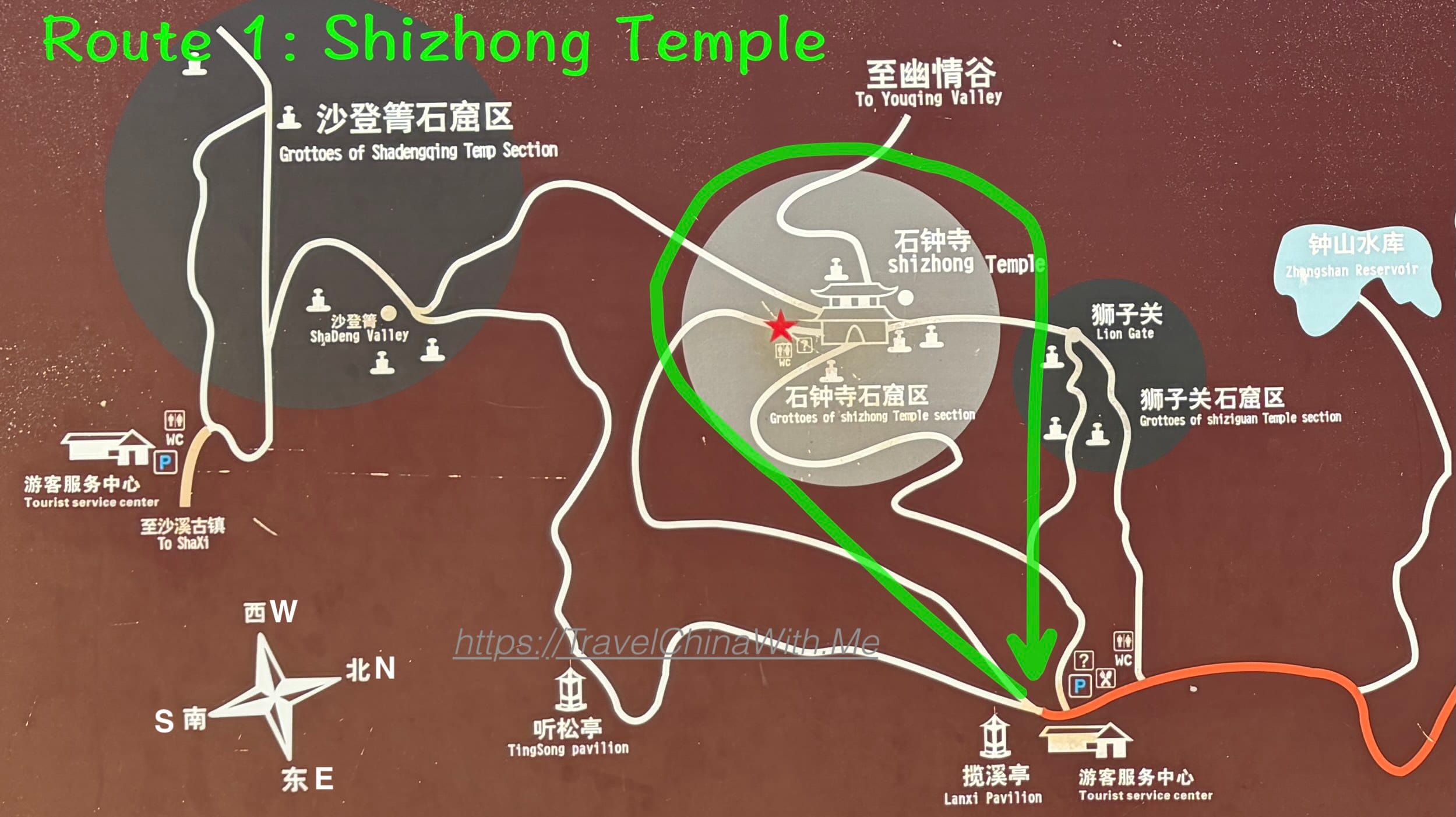
Shizhong Temple contains the essence of the Shizhongshan Grottoes (Caves 1–8) and is very compact. It’s the best choice for visitors with limited time or stamina.
- Duration: 1–1.5 hours
- Cost: ¥45 + ¥40
Route 2: Shiziguan + Shizhong Temple
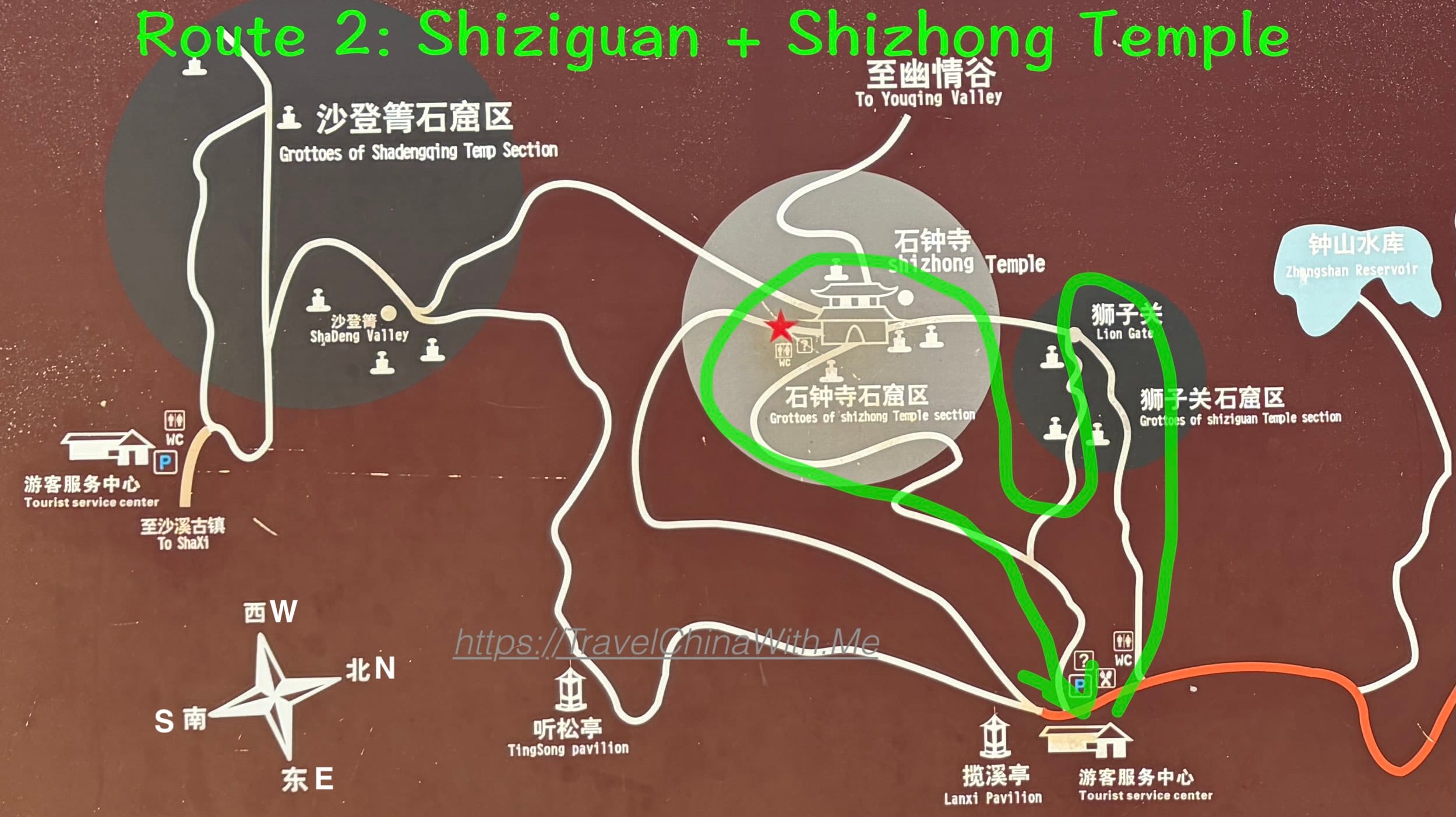
Shiziguan is close to Shizhong Temple and can be visited in half a day. Note that the Shiziguan grottoes are closed and can only be viewed through the wooden doors.
- Shiziguan is at a higher elevation than Shizhong Temple. For less strain, visit Shiziguan first, then descend to Shizhong Temple. To protect knees, you can reverse the order.
- Duration: 2–3 hours
- Cost: ¥45 + ¥40
Route 3: Shiziguan + Shizhong Temple + Shadengqing
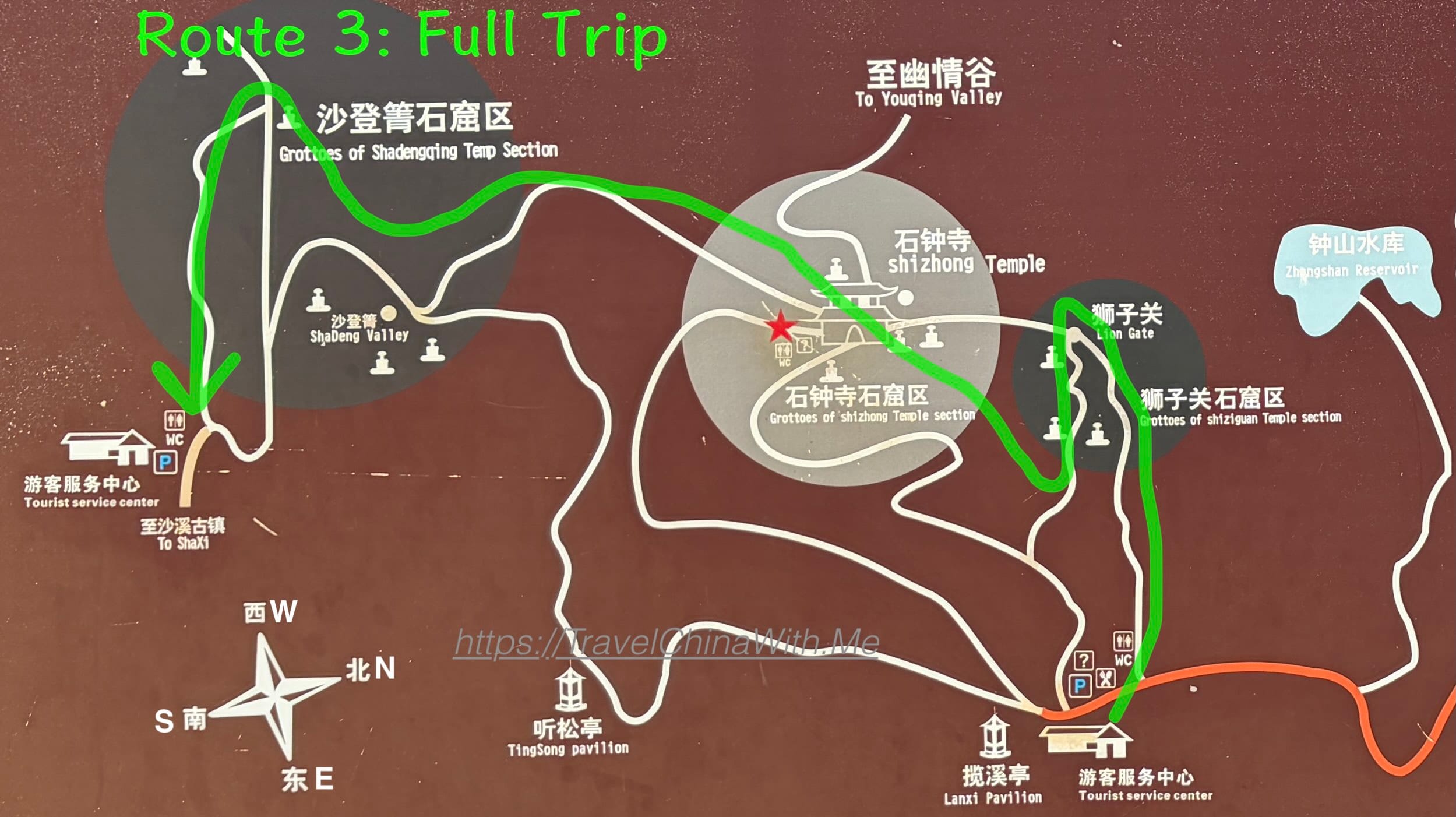
For serious grotto enthusiasts. Based on Route 2, walk 1.5 km to reach the highest Cave No. 17 in Shadengqing, then continue 1.5 km downhill to the Shadengqing entrance.
- Duration: 4–5 hours (no supply points along the way)
- Cost: ¥45 + ¥20
Route 4: Shadeng Village
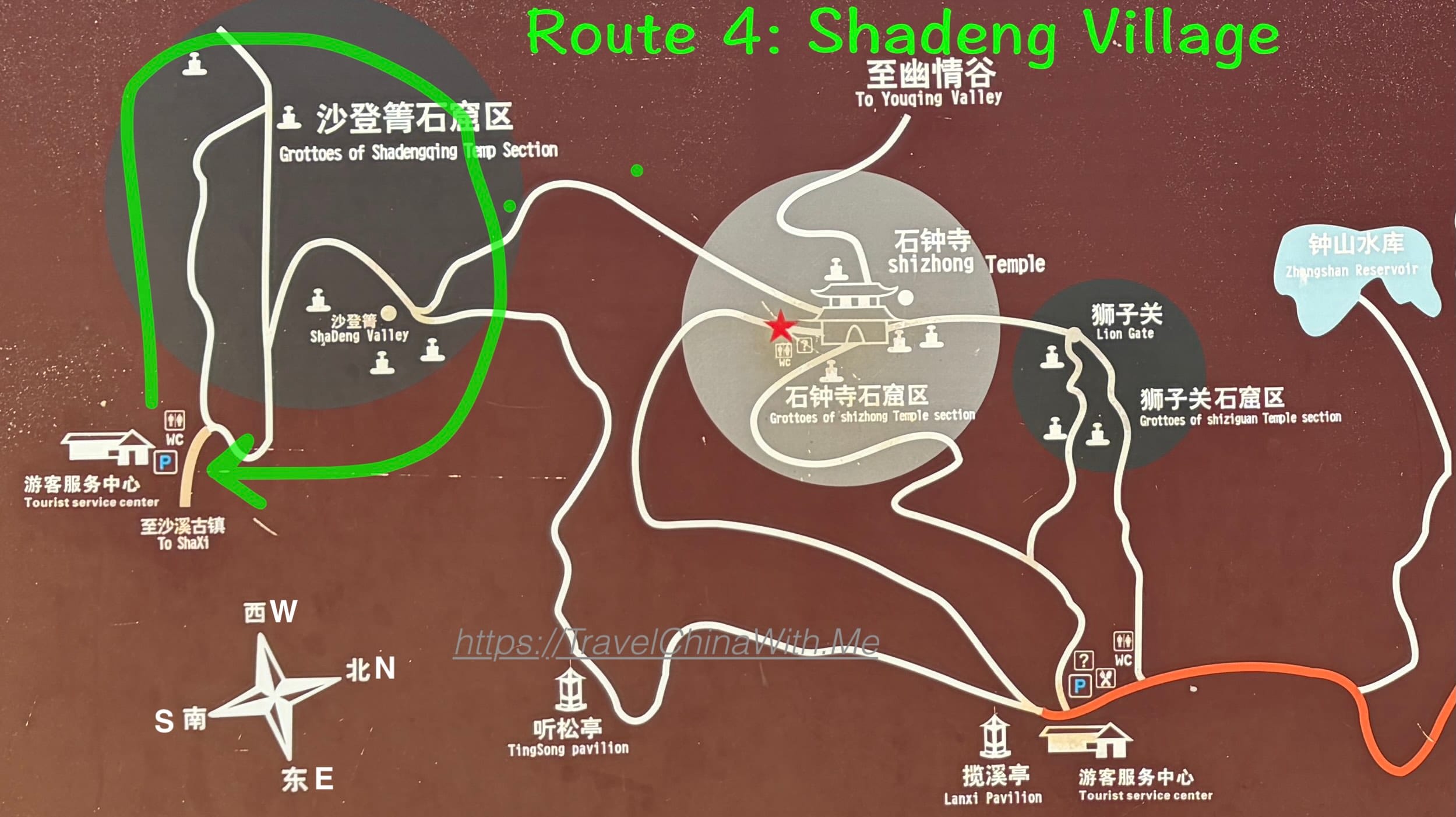
A scenic and almost deserted route—visitors can enjoy the entire area alone. Even without visiting grottoes, it’s a great hiking option from Shaxi Ancient Town.
- Duration: 1.5–2 hours
- Cost: ¥45
Combined Routes:
Self-driving visitors must enter and exit from the same gate. You can combine Route 1 or 2 with Route 4, spending half a day on each.
Best Time to Visit
Our Recommendation: Spring (March-April) or Autumn (October-November)
We’ve guided groups to Shizhongshan every month of the year. Here’s what we’ve learned:
March-April: Fresh green across pine forests, wildflowers bloom, azaleas color hillsides. Mornings can be cool (8-12°C) but afternoons warm up. Minimal crowds. Perfect hiking weather.
October-November: Our personal favorite. Clear skies, comfortable temperatures (15-20°C), excellent visibility for photography. In October 2025, we brought a photography tour and the light conditions were ideal. Autumn colors in the forest. Still relatively few visitors.
Shibaoshan Singing Festival (Late July-Early September)
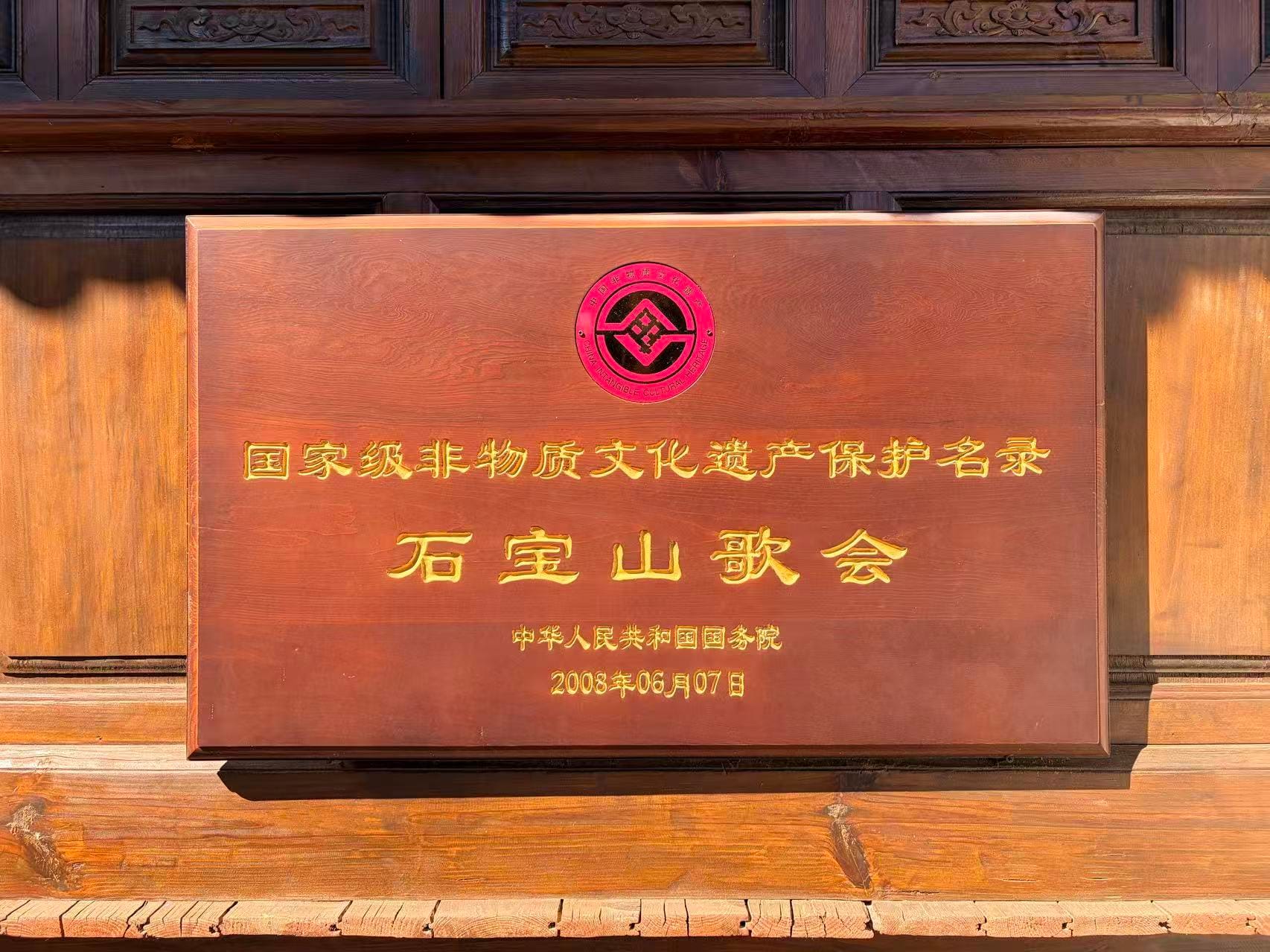
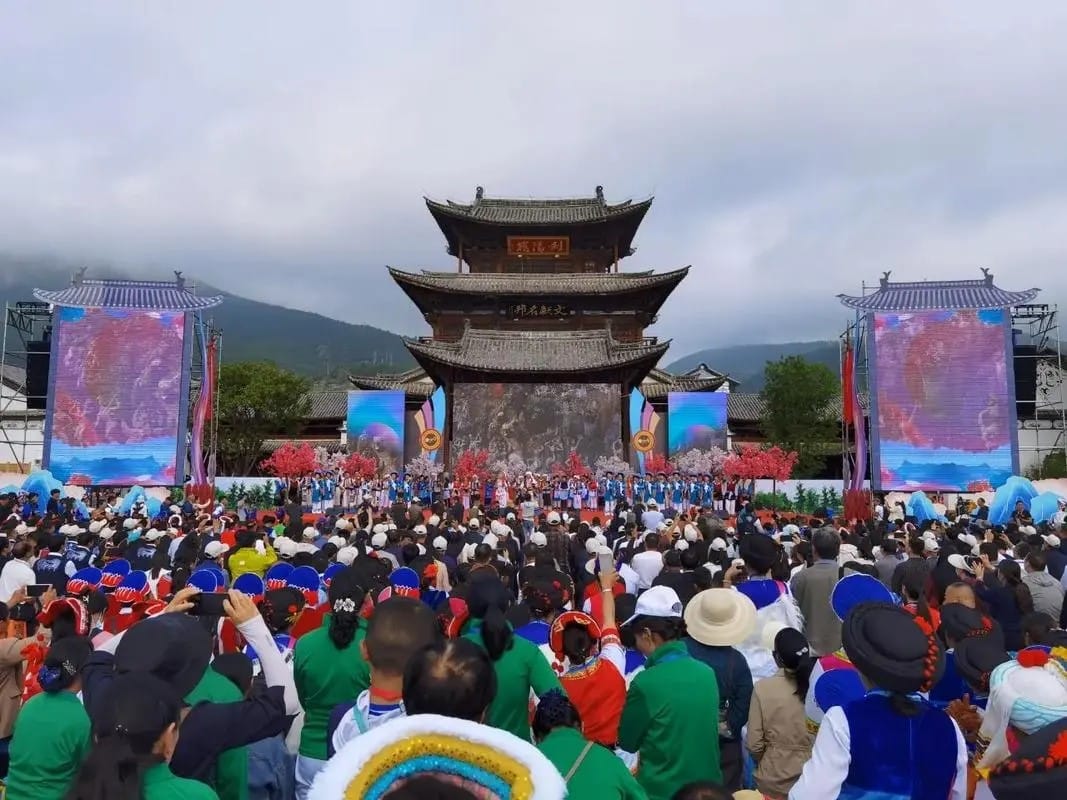
The famous Bai singing festival runs from the 27th-29th of the seventh lunar month (usually late August in solar calendar). Three days of traditional antiphonal singing, dancing, and cultural performances. The festival has 1,000+ year history and is listed as National Intangible Cultural Heritage.
During the festival, Bai people from Dali, Jianchuan, Lijiang, and Lanping gather to sing. Young people use it to find partners (it’s called the “Valentine’s Day of northwestern Yunnan”). Elders reminisce. The traditional “mountain flower style” singing traces back to the Tang Dynasty.
Advantages: Unique cultural immersion, traditional performances, festive atmosphere Disadvantages: Crowds, higher prices, accommodation books months ahead, shuttle buses packed
If you’re interested in Bai culture, the festival is worth timing your visit around. If you prefer quiet contemplation of ancient art, avoid these dates.
Other Seasons
Summer (June-August): Afternoon thunderstorms common. Visit mornings only. Forest provides shade on hot days. More domestic tourists.
Winter (December-February): Cold at elevation (0-8°C). Some facilities reduce hours. Clear days offer stunning mountain views but bring warm clothing. Fewest visitors.
Practical Travel Tips
What We’ve Learned from 20+ Years of Tours
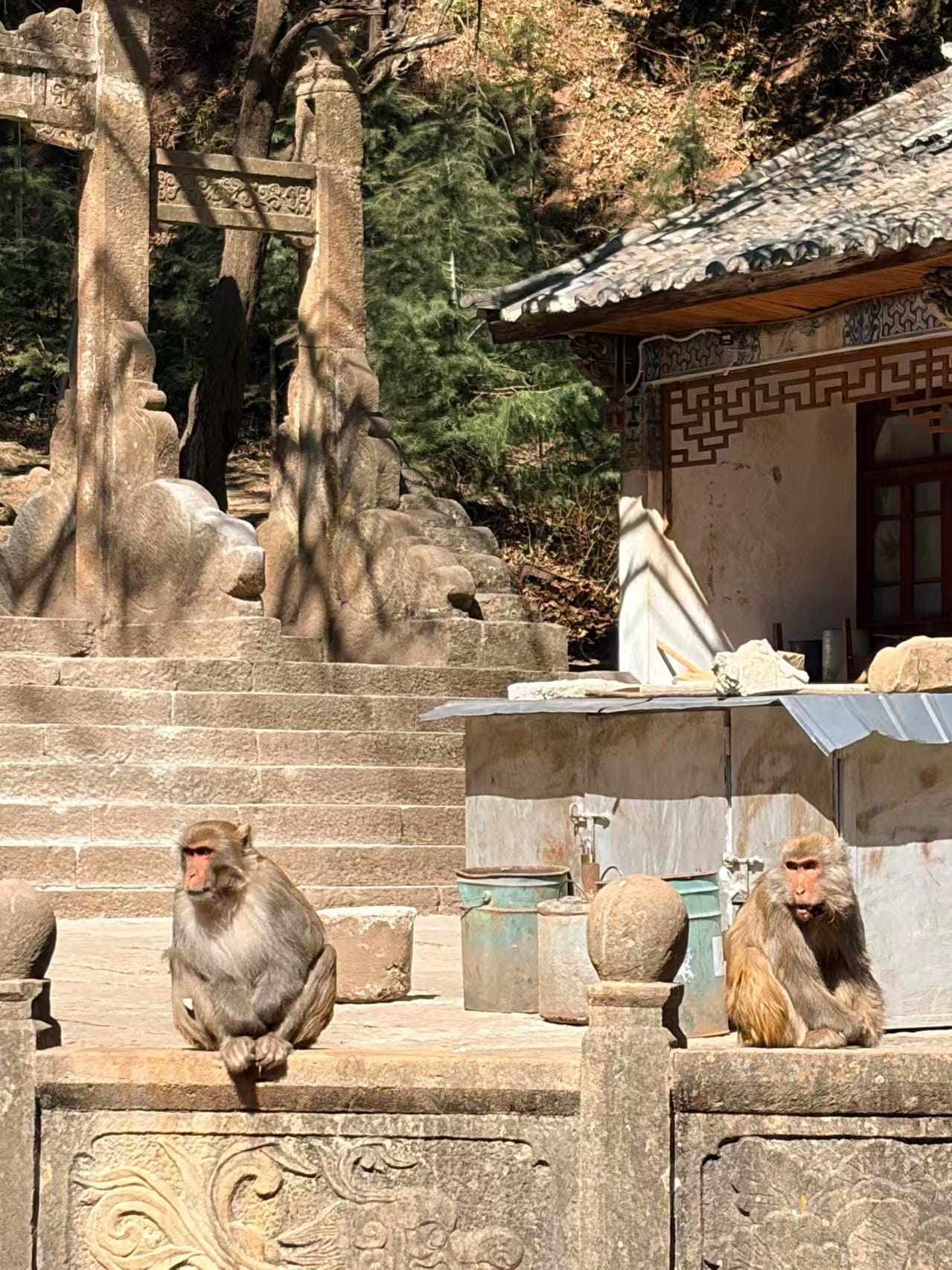
The Monkey Situation: Macaque families live near Shizhong Temple parking. They’re not dangerous but extremely skilled at food theft. Last month, we watched a monkey unzip a client’s backpack side pocket to grab trail mix—impressive dexterity.
Keep ALL food in sealed containers inside your main backpack compartment. Don’t carry anything edible in hand or outside pockets. Don’t let children hand-feed them. The monkeys have learned to grab food from tourists and they’re bold about it.
Physical Requirements: Significant walking, some steep sections. The 400-meter walk from parking to grottoes includes steps. Lion Gate area has steeper trails. Not recommended for elderly with mobility issues or very young children.
At 2,140-3,083m elevation, some visitors feel breathless during uphill sections. Our clients from sea level sometimes need breaks. Pace yourself, stay hydrated.
Guide Recommendations: Local guides worth it. The carvings have minimal English explanations. A good guide transforms the experience. Hire One From Us.
One of our regular guides is a Jianchuan native whose grandfather worked on grotto preservation in the 1960s. He knows which details to point out—the hand mudras indicating different Buddha types, the clothing styles showing rank, the artistic techniques. Without him, clients would walk past most carvings without understanding what they’re seeing.
Limited Facilities: Small store and bathrooms at shuttle station near grottoes. No restaurants on-site. Bring water (at least 1 liter per person) and snacks in monkey-proof containers.
Weather Preparedness: Mountain weather changes quickly. Bring layers—mornings can be 10°C cooler than afternoons. Sun protection essential (SPF 50+ sunscreen, hat). UV is intense at this elevation. Summer visitors need rain jacket.
What to Bring:
- Comfortable hiking shoes (trails can be steep and rocky)
- Water bottle (1+ liters per person)
- Snacks in sealed containers
- Sun hat and high-SPF sunscreen
- Light rain jacket (May-September)
- Cash for fees and purchases
- Fully charged phone (limited reception in some areas)
- Light jacket even in summer
Real Experiences From Our Clients
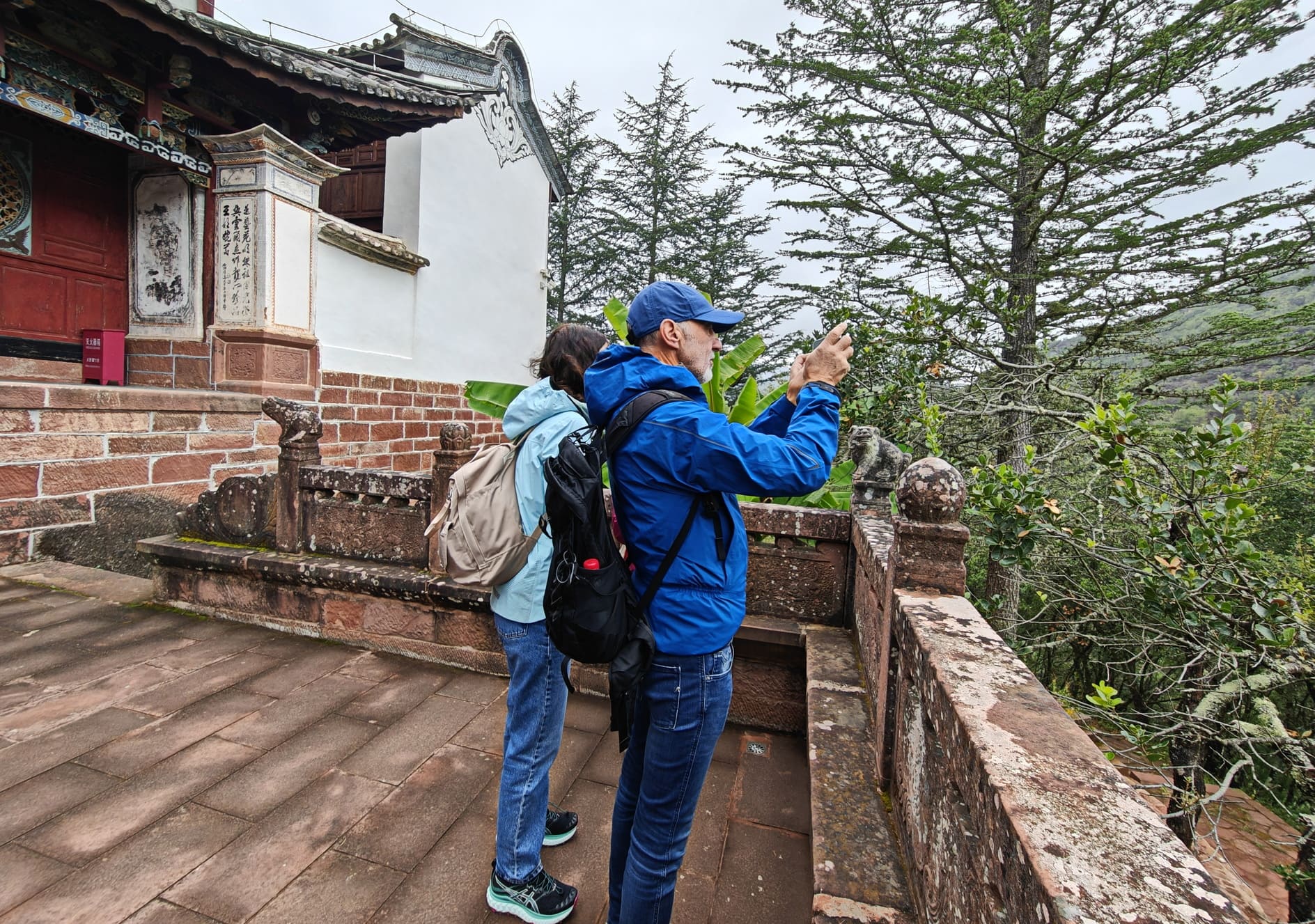
Michael & Karen from Australia (November 2025): “We’d spent three weeks visiting all the major sites—Forbidden City, Terracotta Warriors, Li River. Shizhongshan wasn’t even on our original itinerary. Our guide added it as an ‘optional day’ between Dali and Lijiang. It became our favorite experience in China.
The Cave 8 fertility carving fascinated us. But what really struck us was having these 1,300-year-old sculptures basically to ourselves. At Longmen Grottoes the week before, we were shoulder-to-shoulder with tour groups. Here, we spent an hour with maybe five other visitors total. That quiet space to actually look at the art—it’s rare in China.”
David from UK (April 2025): “I hired a local guide through Travel China With Me and I’m glad I did. The English explanations at the site are minimal. My guide explained how Cave 3’s royal portraits show different court ranks through garment details. He pointed out artistic techniques I would’ve missed—how they carved fabric to look like it was moving, how light hits the sculptures differently throughout the day.
Without him, I would’ve just taken photos and moved on. With him, I understood what I was seeing. Money well spent.”
Emma & Tom from Germany (October 2025): “We’re both art historians who’d already visited Dunhuang, Longmen, and Yungang. Shizhongshan impressed us as much as the famous sites—just in different ways. The artistic innovation here is remarkable. These sculptors weren’t following templates. They were experimenting.
The hike down through the pine forest afterward was spectacular. Three hours of well-maintained trail with views back at the cliff carvings. We saw maybe three other hikers the entire time.”
Chen Wei from Singapore (September 2025): “Visited during the Singing Festival. Amazing cultural experience but be prepared for crowds. The shuttle buses were packed. We waited 40 minutes for a bus back down. Worth it for the traditional Bai performances, but if you want quiet time with the grottoes, avoid festival dates.”
What Regular Visitors Tell Us
We work with several photography tour companies that bring groups here multiple times per year. They consistently say:
- Morning light (7:30-9:00 AM) is ideal for photography
- Autumn offers the best weather and visibility
- Combining with Shaxi creates a perfect two-day itinerary
- The macaque situation is the main practical challenge
- Most clients wish they’d allowed more time for hiking trails
Frequently Asked Questions
How does this compare to Longmen or Yungang Grottoes?
Smaller scale but more intimate. Longmen has 100,000+ statues across 1,400 caves. Shizhongshan has 139 sculptures in 17 caves. But you can get much closer here—the barriers are less restrictive. The artistic quality rivals the famous sites, and the blend of religious and secular subjects makes it unique.
Think of it this way: Longmen impresses through scale and quantity. Shizhongshan impresses through artistic innovation and cultural significance. Different experiences, both worthwhile.
Can we visit without knowing Chinese?
Yes, though you’ll miss context. Signage includes some English but explanations are limited. Translation apps help with basic navigation. That said, hiring a guide (¥200-300) transforms the experience. We’ve found English-speaking guides through local contacts, though availability varies.
Should we base in Shaxi, Jianchuan, or day-trip from Dali?
Shaxi, absolutely. Only 10km from the grottoes, and the ancient town is worth exploring. Traditional Bai architecture, quiet lanes, excellent guesthouses. Jianchuan has basic hotels but little tourist infrastructure.
Day-tripping from Dali works if time is tight, but you’ll spend 4+ hours on transportation for 2-3 hours at the grottoes. Better to overnight in Shaxi and enjoy the area.
Can we combine this with other Dali attractions?
Yes. Common itinerary: Day 1 Dali (Three Pagodas, Old Town, Erhai Lake) → Day 2 drive to Shaxi via grottoes → Day 3 continue to Lijiang. The grottoes sit naturally on the Dali-Lijiang route.
What about the other Shibaoshan attractions?
Baoxiang Temple is worth seeing—a temple built into cliff face, sometimes called the “Hanging Temple of Yunnan.” The surrounding forest trails offer good hiking. But the Shizhongshan Grottoes are the main attraction. Budget accordingly.
Is it suitable for children?
Depends on age and interest. The hiking and monkeys engage kids, but 2-3 hours looking at rock carvings can bore young children. We’ve had success with families with children 10+, less so with younger kids.
Are there accessible options for elderly or mobility-impaired visitors?
Limited. The shuttle reduces walking, but you still need to handle 800 meters with steps from parking to grottoes. Inside the complex, trails are uneven. Not wheelchair accessible. Elderly with minor mobility issues can manage with assistance, but it’s physically demanding.
A Personal Note from Our Team
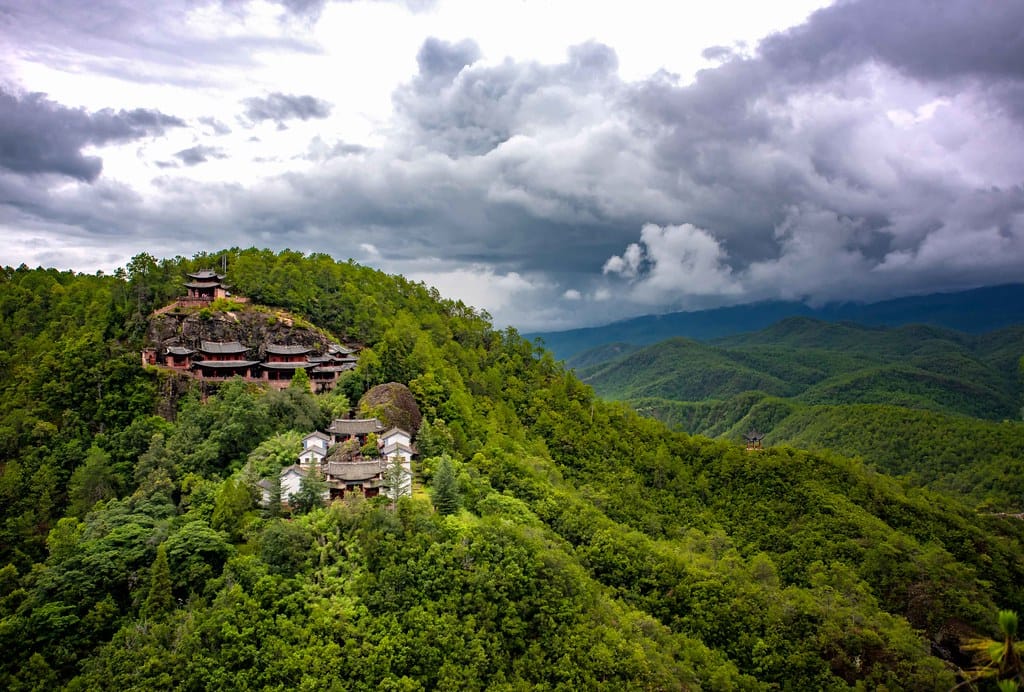
Every few months, we get feedback from clients telling us the Shizhongshan Grottoes became their favorite discovery in Yunnan. They usually phrase it similarly: “Why don’t more people know about this?“
Part of the answer is logistics—it requires effort to reach. Part is awareness—guidebooks give it a paragraph while devoting chapters to Dali Old Town. But mostly, we think it’s because travelers default to famous sites without exploring alternatives.
After organizing tours here since 2006, we’ve developed a deep appreciation for what this place offers. Yes, it’s smaller than Dunhuang. Less convenient than Dali’s Three Pagodas. But the combination of artistic quality, cultural significance, natural setting, and relative solitude creates something special.
The best moment on our tours happens when clients stand in Cave 2 looking at the Ganlu Guanyin carving. They’ve usually just spent 10 minutes with our guide learning about Nanzhao Kingdom history, Buddhist iconography, and artistic techniques. Then they just look. Really look. And they see—not just ancient art, but evidence of a sophisticated civilization that most of the world has forgotten.
These grottoes document how Buddhism transformed as it traveled ancient trade routes. How Bai culture influenced religious expression. How artisans 1,300 years ago broke rules to create something new. That story matters beyond tourism.
If you’re planning Yunnan, add an extra day. Stay in Shaxi. Wake up early. Take the shuttle up the mountain. Give yourself time to actually experience the grottoes, not just photograph them.
Some places reward the extra effort. Shizhongshan is one of them.
Need help planning your visit? Contact Travel China With Me for personalized itineraries, English-speaking guide arrangements, and transport between Dali, Shaxi, and Lijiang. We specialize in creating in-depth cultural experiences beyond standard tourist routes.