Weibao Mountain (Weibaoshan): Taoist Temples, Walking Routes and What to Skip
Weibao Mountain (Weibaoshan, 巍宝山) is Yunnan’s best-known Taoist mountain. It stands 10 km southeast of Weishan Ancient Town in Dali Prefecture. Stone paths link more than 20 temples, including the shrine of the first Nanzhao king and the carved halls of Changchun Cave. Entry costs CNY 40, and the main temples take 1.5 to 6 hours, depending on your route.
Your route matters more than anything else on Weibao Mountain, because its temples aren’t on one trail. Changchun Cave, the finest building here, sits on its own path on the back mountain. Most other temples line the gentle front-mountain path. Pick the wrong route for your legs and you either miss the best building or run out of energy halfway round. That’s the complaint we hear most often from guests.
Location | Weishan County, Dali Prefecture, Yunnan; 10 km southeast of Weishan Ancient Town |
|---|---|
Getting there | Train from Dali to Weishan (22 min), then Bus 1 (CNY 8) or a 20-minute taxi |
Tickets | CNY 40; concessions CNY 20; free under 1.2 m, 70+ and before 8 AM |
Hours | 8 AM–6 PM; entry closes 5–5:30 PM |
Time needed | 1.5–2 hours (front mountain) to 4–6 hours (full loop) |
Bring | Water and food: there are NO shops on the mountain |
Table of Contents
1. Weibao Mountain at a Glance
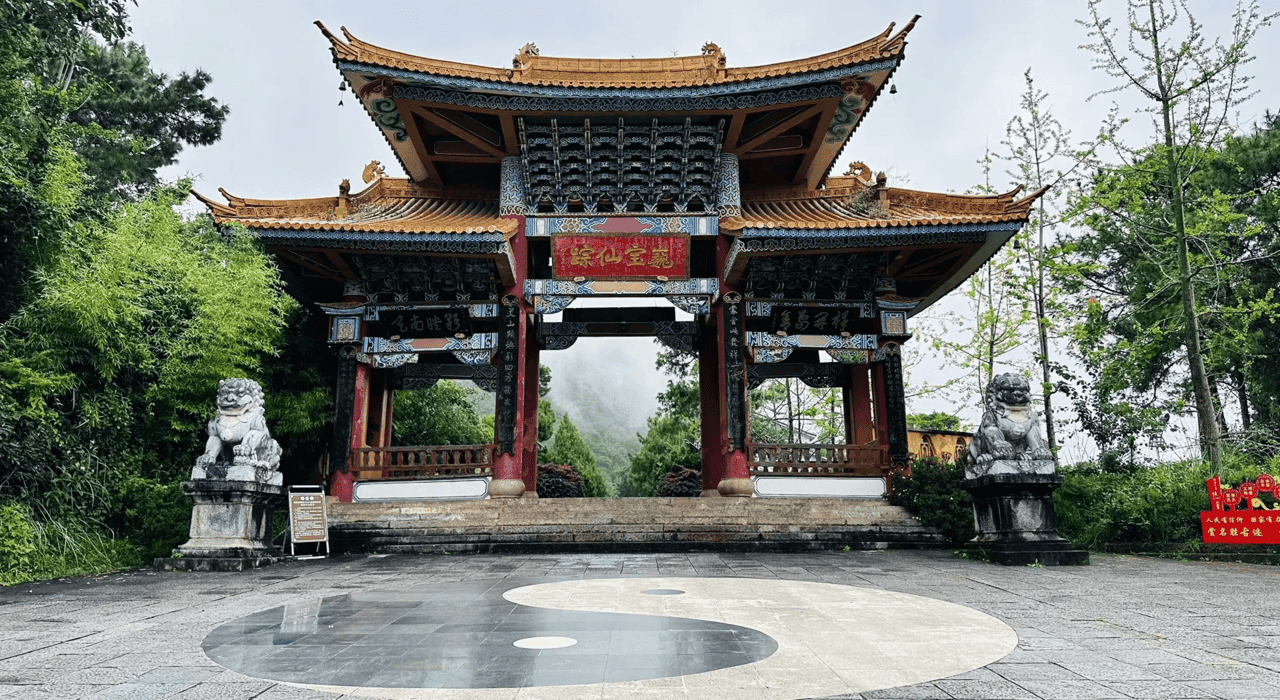
Weibao Mountain rises over the Weishan basin in Weishan Yi and Hui Autonomous County, at the southern end of Dali Prefecture. Its natural summit reaches 2,569 m. Doumu Pavilion, the highest point visitors can walk to, stands at 2,509 m. The name means “Towering Treasure Mountain”: people here once believed a treasure’s glow rose from its slopes. Some older listings, including our own earlier page, call it Weibao Hills.
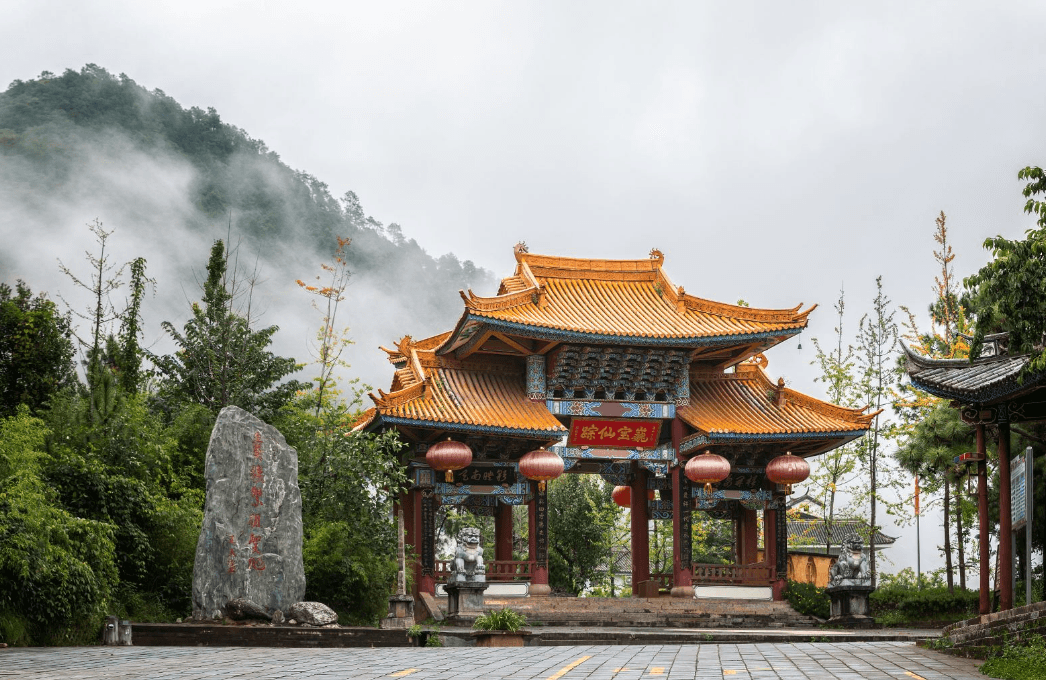
Taoist building on Weibao Mountain began in the Tang dynasty and peaked under the Ming and Qing. More than 20 temples survive, spread through old forest. Weibao Mountain is counted among China’s famous Taoist mountains and is a national AAAA scenic area. It’s still lightly commercialized: no cable car, no shuttle bus, and no shops above the entrance.
Where the Nanzhao Kingdom began
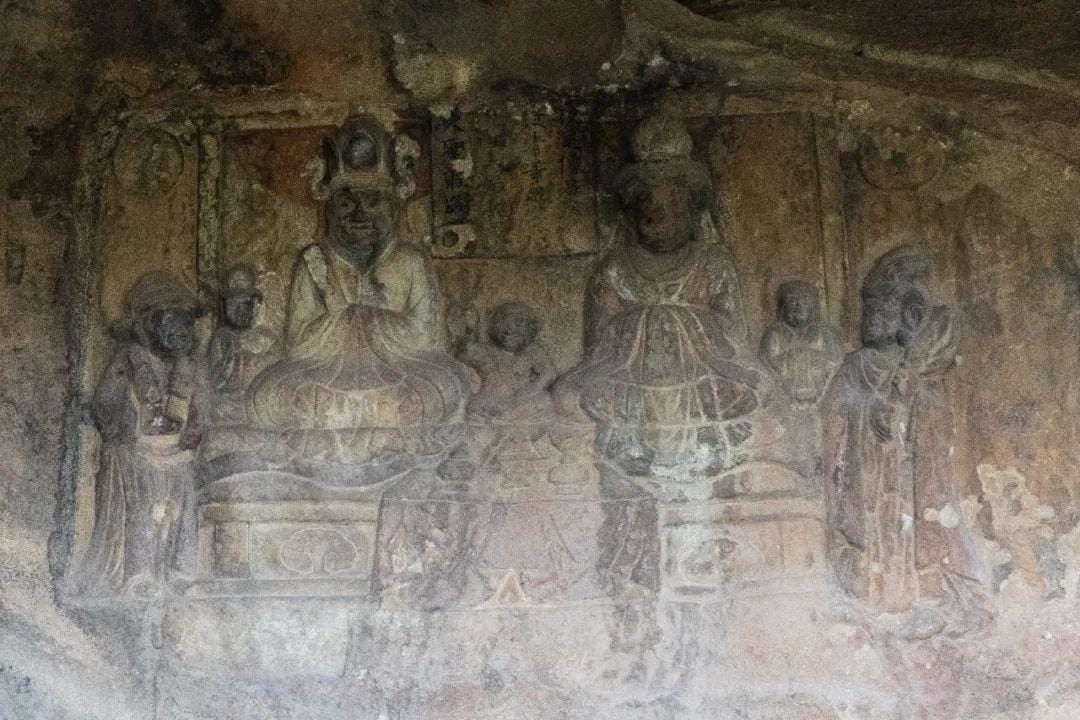
Weibao Mountain is where Xinuluo (细奴逻), the first Nanzhao king, farmed and herded before he rose to power in the 7th century. His Mengshe chiefdom grew into the Nanzhao Kingdom in the Weishan basin. In 739 the court moved north to Taihe, near today’s Dali. Xunshan Hall (巡山殿), the mountain’s shrine to the Nanzhao kings, dates to 714, according to China’s national intangible cultural heritage center.
Because of that shrine, Weibao Mountain is a Yi ancestral site as well as a Taoist one. The Yi of Weishan still hold their own rituals here, alongside the Taoist ones.
How the mountain is laid out
From the gate, the paths split. Turn left and the front mountain climbs gently through the forest. Its temples sit close together: Nanzhao Tuzhu Temple, Wenchang Palace, Zhujun Pavilion (also called Lingguan Hall), Taizi Hall, Qingxia Palace and Yuhuang Pavilion. Turn right and a separate path runs gently downhill for 15 minutes to Changchun Cave on the back mountain.
The two paths do NOT connect near the gate. The only way to join them is over the top, past Doumu Pavilion. That’s the full loop in section 4.
2. Is Weibaoshan Worth the Trip?
Weibao Mountain is worth a half day if you came to Yunnan for Taoist architecture, temple carving or Yi history. It’s also worth it for a quiet forest walk with almost no commerce. The draw is the temples, not big views. If panoramas are the goal, Cangshan and Jizu give you more.
In our itineraries, Weishan and Weibao Mountain take their own day. Both sit south of Xiaguan, the opposite direction from Lijiang. They don’t fit on the road north the way Xizhou and Zhoucheng do. Pair the mountain with Weishan Ancient Town, 20 minutes away by car. Use the old town for food and an evening walk, and the mountain for a morning or an afternoon. We often schedule that pair as one of the quieter days of a Dali trip.
Who it suits, and who it doesn’t
Guests we’ve sent to Weibao Mountain tend to either love it or feel it wasn’t worth the effort. Their reasons are consistent. Those who liked it mention the quiet, the old buildings and the spiritual feel. There are no crowds and no hawkers, and the temples haven’t been done up for tourists, unlike Dali Old Town. Those who didn’t like it mention the effort, the distance and the lack of supplies. Weibao Mountain suits travelers who enjoy old buildings and quiet walking. If you want scenic photo stops or an easy day out, choose somewhere else.
The guests who love it don’t worry about seeing everything in one visit. Olga, a guest of ours from Spain, put it this way: “Weibao Mountain is somewhere I’ll go back to many more times, so I have no regrets. The scenery is different every time I come, and that’s what makes it meaningful.”
Weibaoshan, Jizu Mountain or Cangshan?
For one spare day around Dali, here’s how the three mountains compare, using figures from our own guides:
Weibao Mountain | |||
|---|---|---|---|
Character | Taoist temples, Nanzhao shrine, carving and murals | Buddhist pilgrimage mountain | Geopark range with temples and a lakeside trail |
How you get up | On foot only; no cable car or shuttle | Bus and cable car | One of three cable cars |
Top of the visit | 2,509 m, Doumu Pavilion | 3,248 m, Jinding Temple | 2,596 m on Jade Belt Road; 3,900 m at Ximatan |
Entry | CNY 40, free before 8 AM | CNY 55 + CNY 75 cable car return | CNY 35 + CNY 60–300 cable car return |
Time on the mountain | 1.5–6 hours | 5.5 hours by cable car | 2–3 hours for a short visit |
From Dali Old Town | Train from Dali Station, or a car to Weishan | 1.5 hours by car | Directly behind the Old Town |
Choose Cangshan for lake views with the least effort, and Jizu for a living pilgrimage and a high summit. Choose Weibao Mountain for carved Taoist halls and quiet. Weibao Mountain is also the only one of the three you can walk for free. Just be through the gate before 8 AM.
3. What to See: Temples, Carving and the Nanzhao Shrine
More than 20 temples is too many to give equal time. These are the ones worth slowing down for.
Changchun Cave (长春洞)
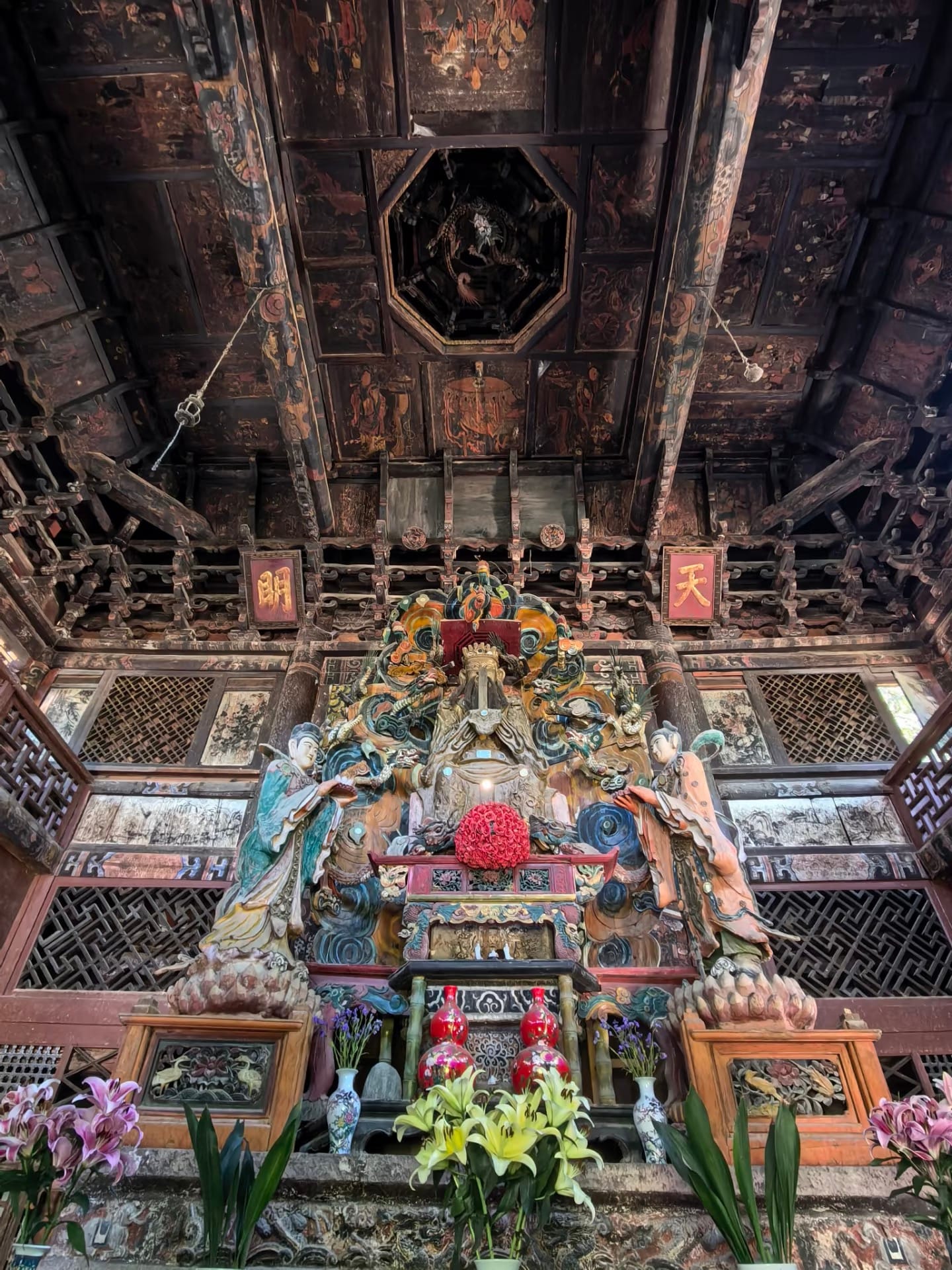
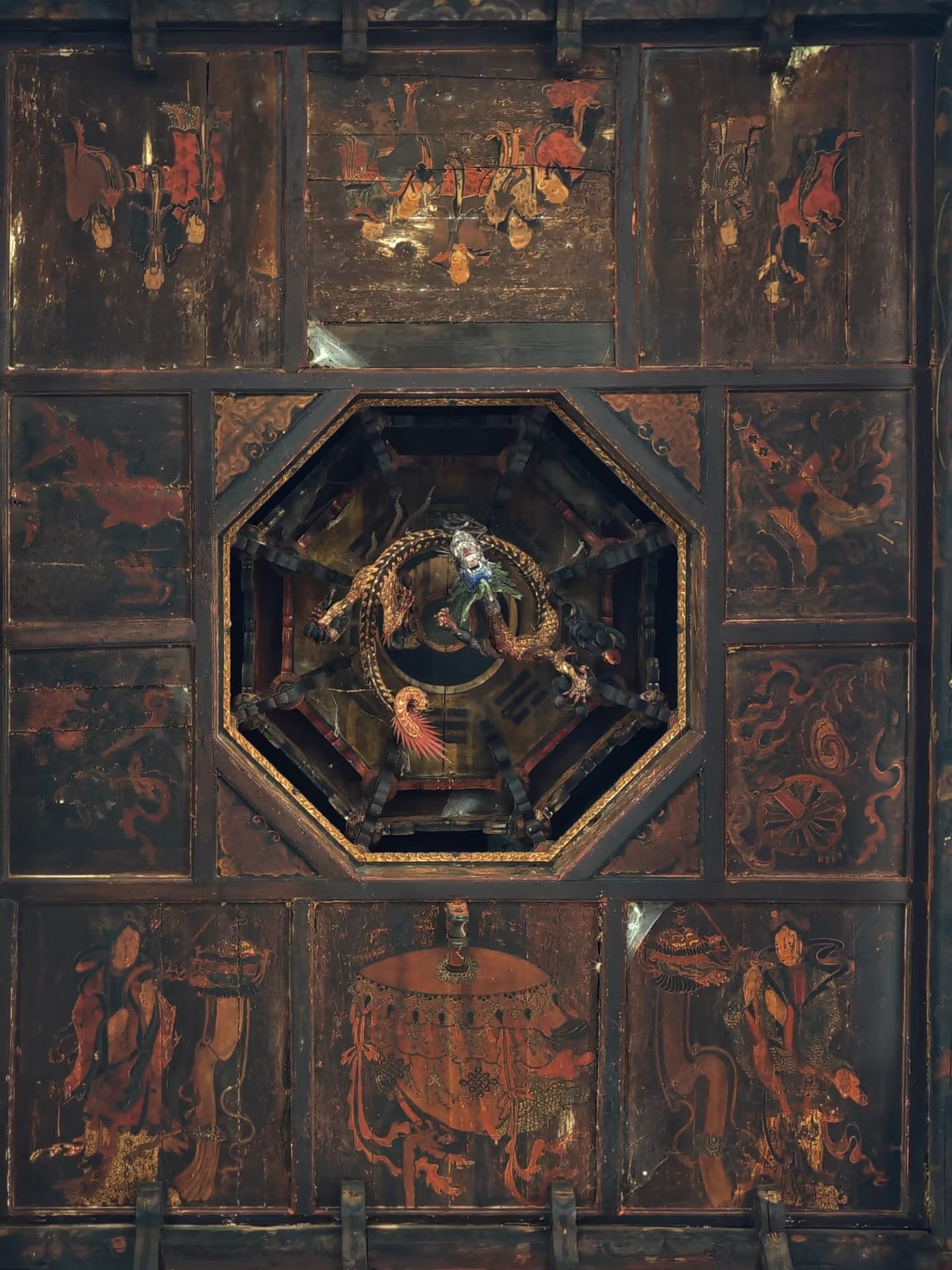
Changchun Cave is NOT a cave. It’s the largest Taoist compound on the back mountain, founded under the Kangxi emperor in the early 18th century. The layout follows an eight-trigram (bagua) plan. Look up in the main hall: the octagonal coffered ceiling holds an openwork carving of a coiled dragon. The ceiling boards around it are painted with Taoist deities and immortals. The lattice doors show the Eight Immortals crossing the sea.
It’s the building our guests mention most. A guest from the United States told us: “I stood in the courtyard at Changchun Cave for a long time. When the wind rang the bells in the trees, for a moment I felt my soul shake along with them.”
Not everyone agrees. Some guests find the halls worn and dim, especially on rainy days. They’d rather spend the 40–50-minute round trip to the cave on the front mountain instead. Our view: Changchun Cave is worth it for the carving, the murals and the quiet courtyard, not for photos. You see all of that just as well on a grey day. If your legs allow, go.
The State Council listed Changchun Cave as a national key cultural relic site in 2006. Of everything on the mountain, it’s the one place to give a full hour.
Wenchang Palace (文昌宫)
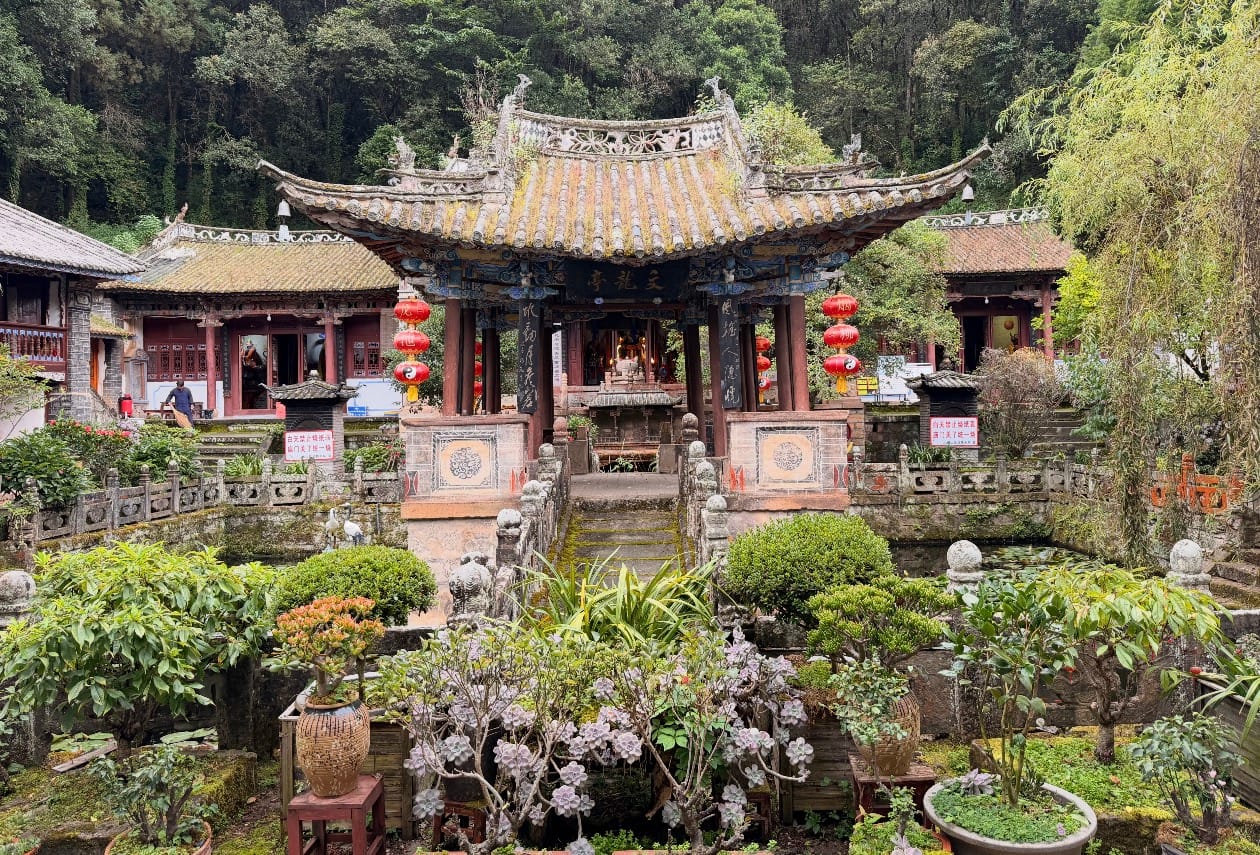
Wenchang Palace, first named Longtan Hall (Dragon Pool Hall), is the front mountain’s best courtyard. Wenlong Pavilion stands over a pool that reflects it and the old trees around it. The abbot keeps the courtyard spotless, and it feels like a working temple rather than a museum.
The hall holds Weibao Mountain’s most famous mural, Dancing Under the Pines (松下踏歌图). It shows Yi villagers dancing dage, the song-and-dance that Weishan people still perform at festivals.
Nanzhao Tuzhu Temple (南诏土主庙)
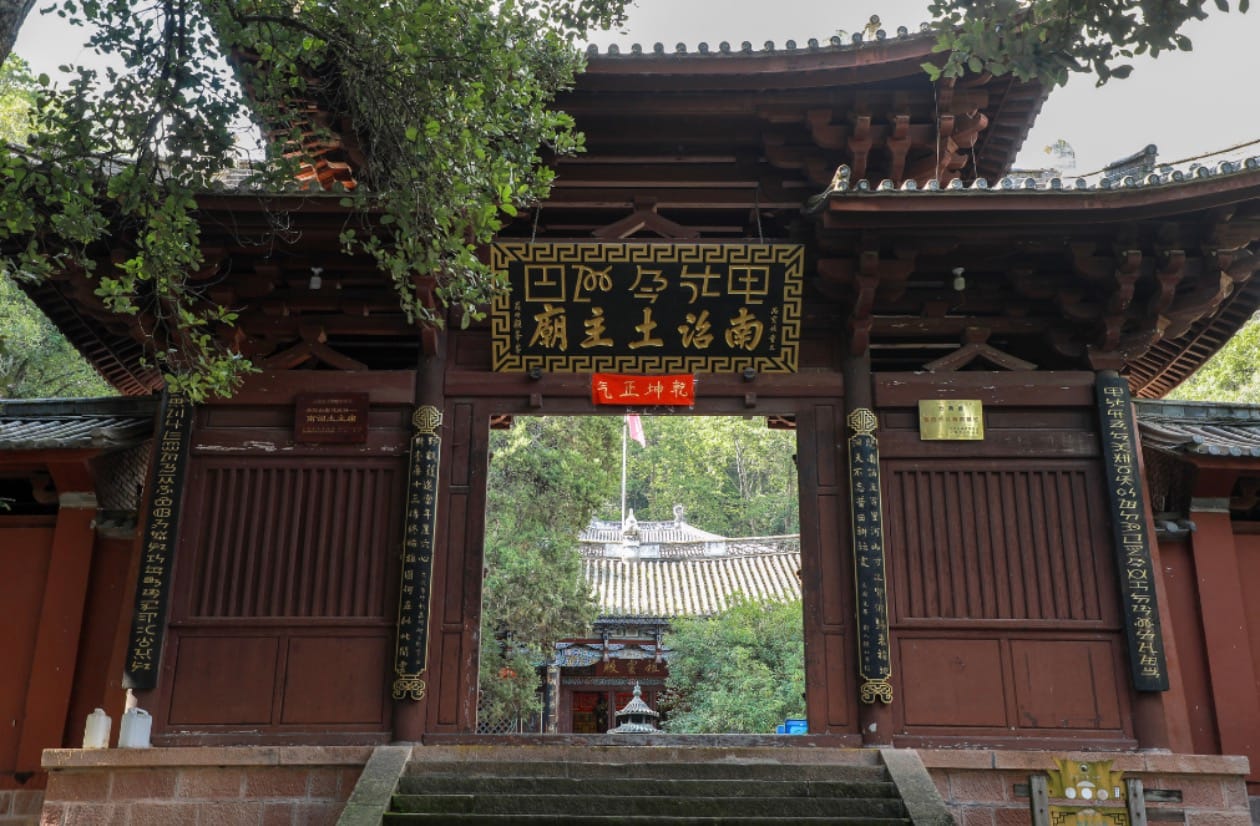
Nanzhao Tuzhu Temple, also called Xunshan Hall, is the shrine to the Nanzhao kings. It’s the first temple on the front-mountain path. In the main hall, a statue of Xinuluo sits between a civil and a military attendant, all three in Yi dress. The couplets beside the door tell the Nanzhao story.
Our guests rate the building less than the story. The steps up are very high, and the only way out at the top is back down the same steps. Inside, the hall is sparse and looks more modern than the older halls elsewhere on the mountain. If you’re saving your legs for Changchun Cave, it’s the temple to skip.
Taizi Hall (太子殿) and Heaven Official’s Blessing fans
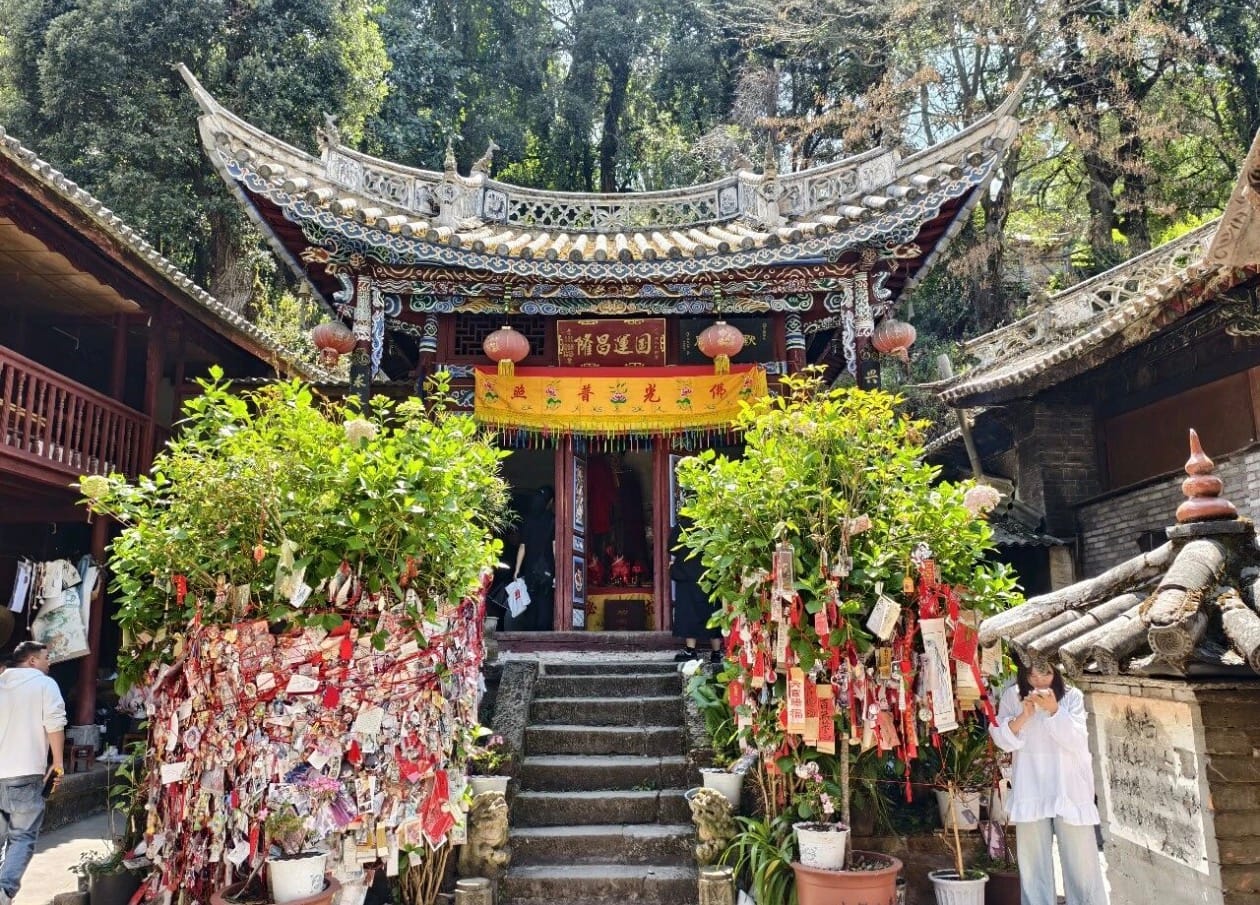
Taizi Hall, the Crown Prince Hall, is tiny: you see it in one glance. Taizi Hall has become a pilgrimage stop for fans of the novel Heaven Official’s Blessing (Tian Guan Ci Fu). The book’s hero is a crown prince turned god. Red prayer ribbons hang from the eaves.
The 400-year-old camellia
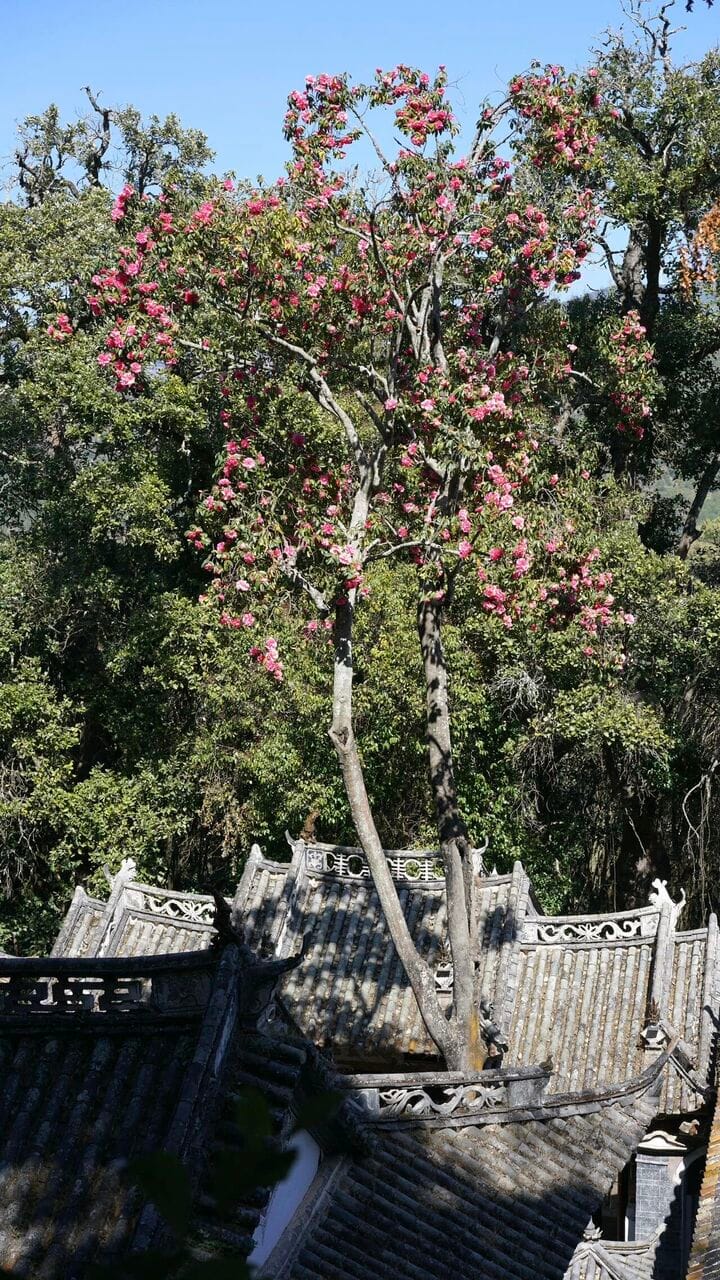
The courtyard of Zhujun Pavilion (Lingguan Hall), next to Taizi Hall, holds a 400-year-old camellia of the Guiye Yinhong variety. At 18.43 m, it’s billed locally as the tallest cultivated camellia in the world. It starts flowering in mid-February, and full bloom lasts two weeks. On the full loop, look for a second old camellia in the courtyard of Sanqing Hall, just below Doumu Pavilion. The resident Taoist puts it at 300 years old, and each of its sprigs carries three flowers.
Qingxia Palace (青霞宫)
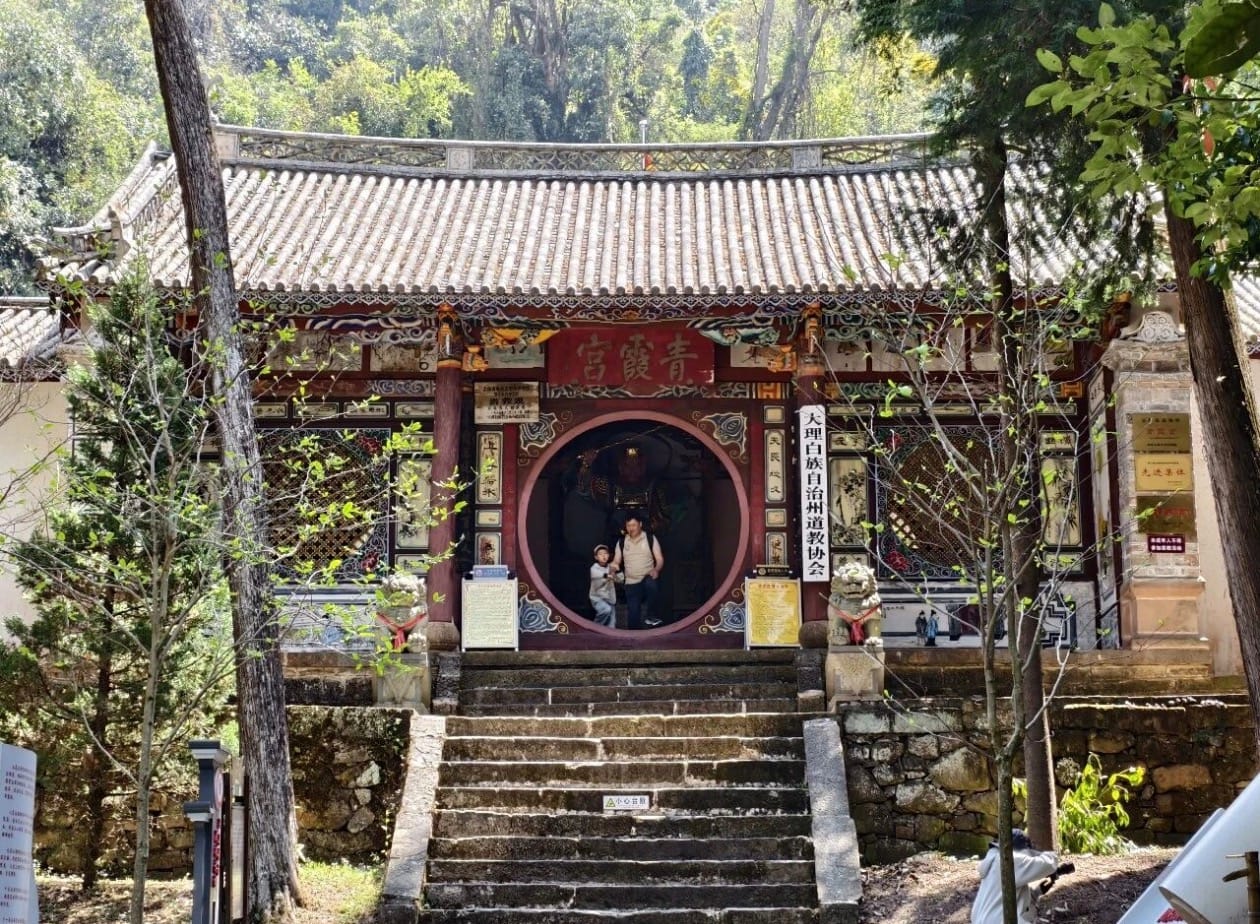
Qingxia Palace, also known as Laojun Temple, honors Laozi, the founder of Taoism. It stands at a cliff edge, which makes it the front mountain’s best photo spot. The hall is full of cats that come to you if you crouch down. The magnolias here flower in spring. Cats also live at Changchun Cave and Caishen Hall, and plenty of our guests remember them as much as the temples.
Yuhuang Pavilion, Sanhuang Hall and Doumu Pavilion
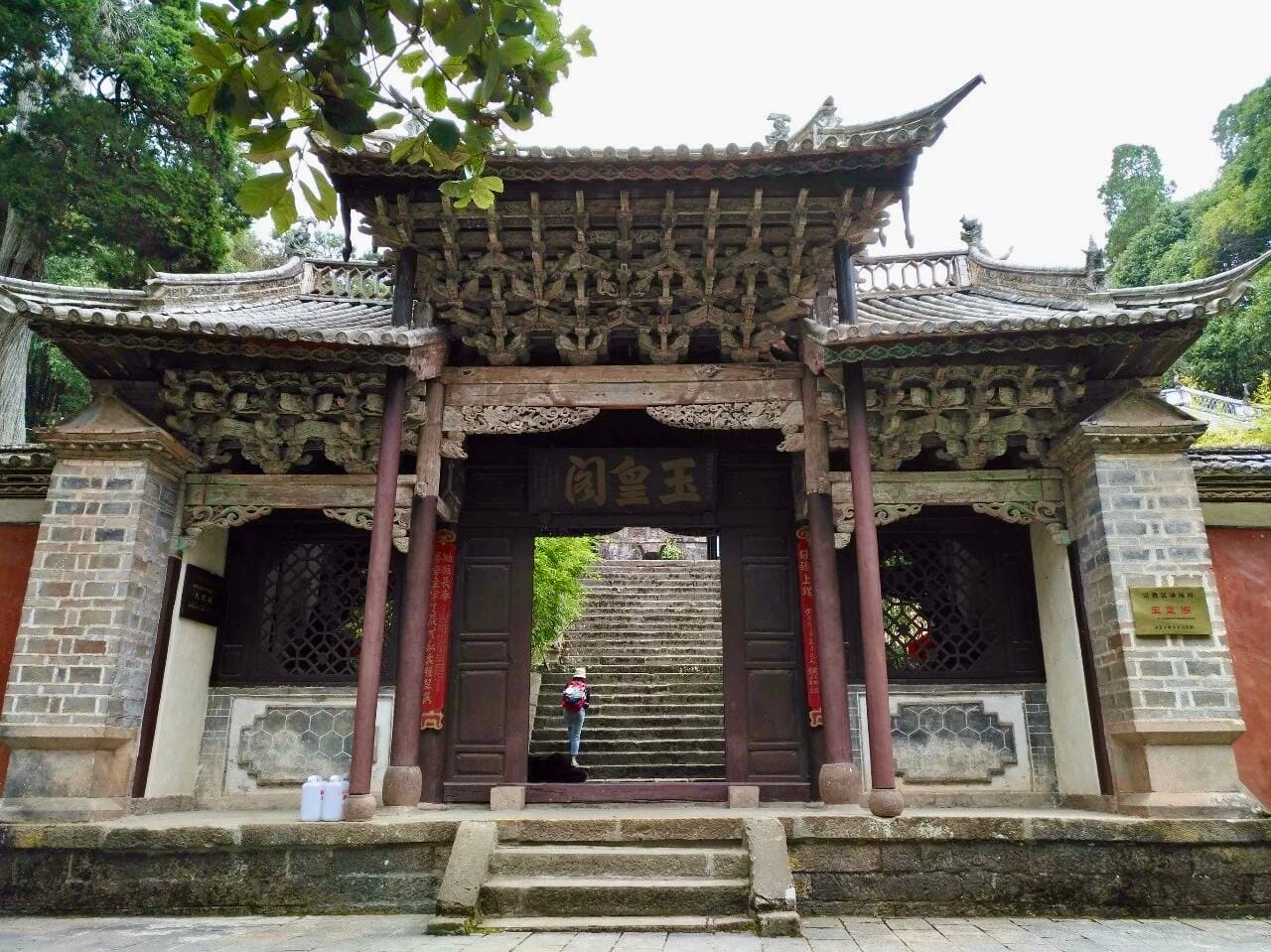
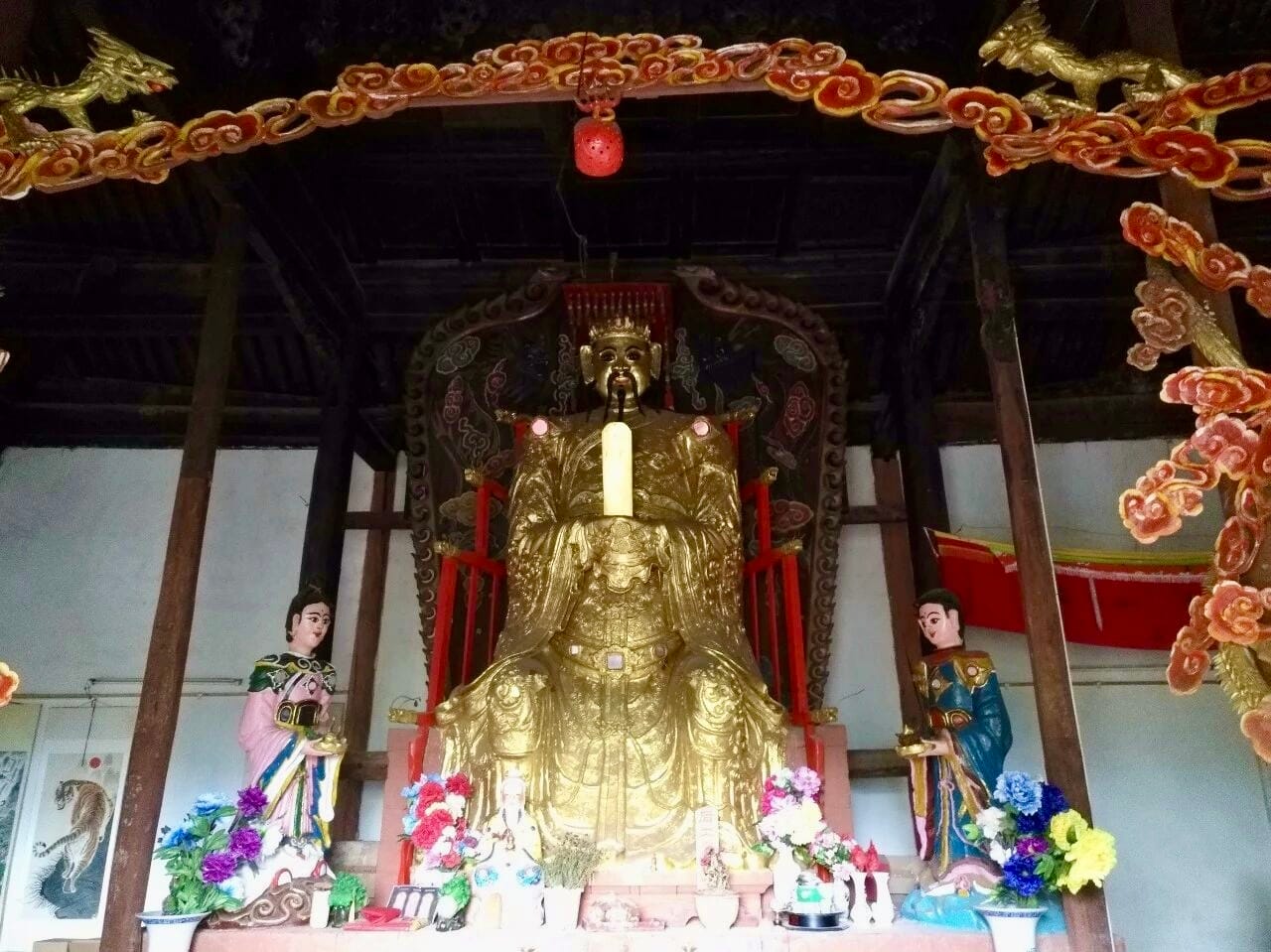
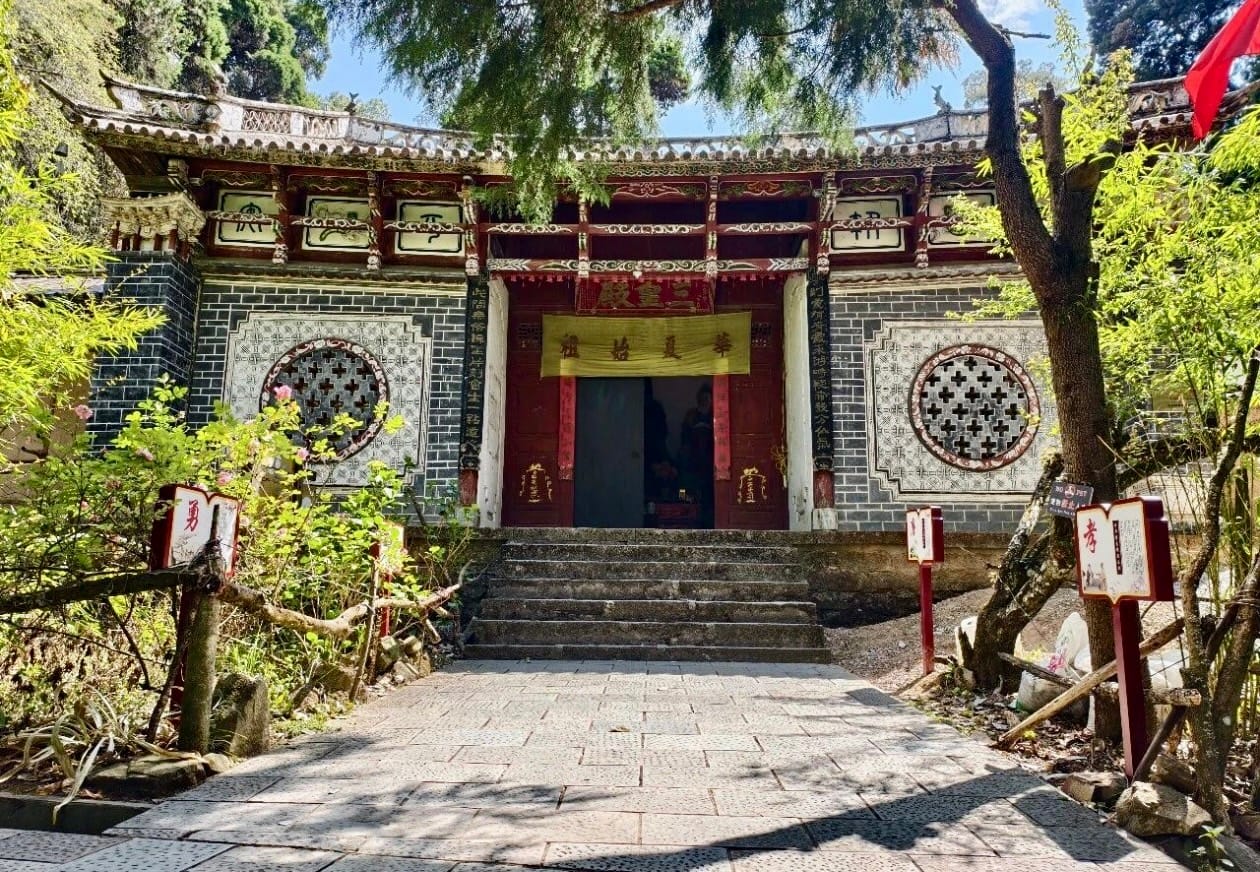
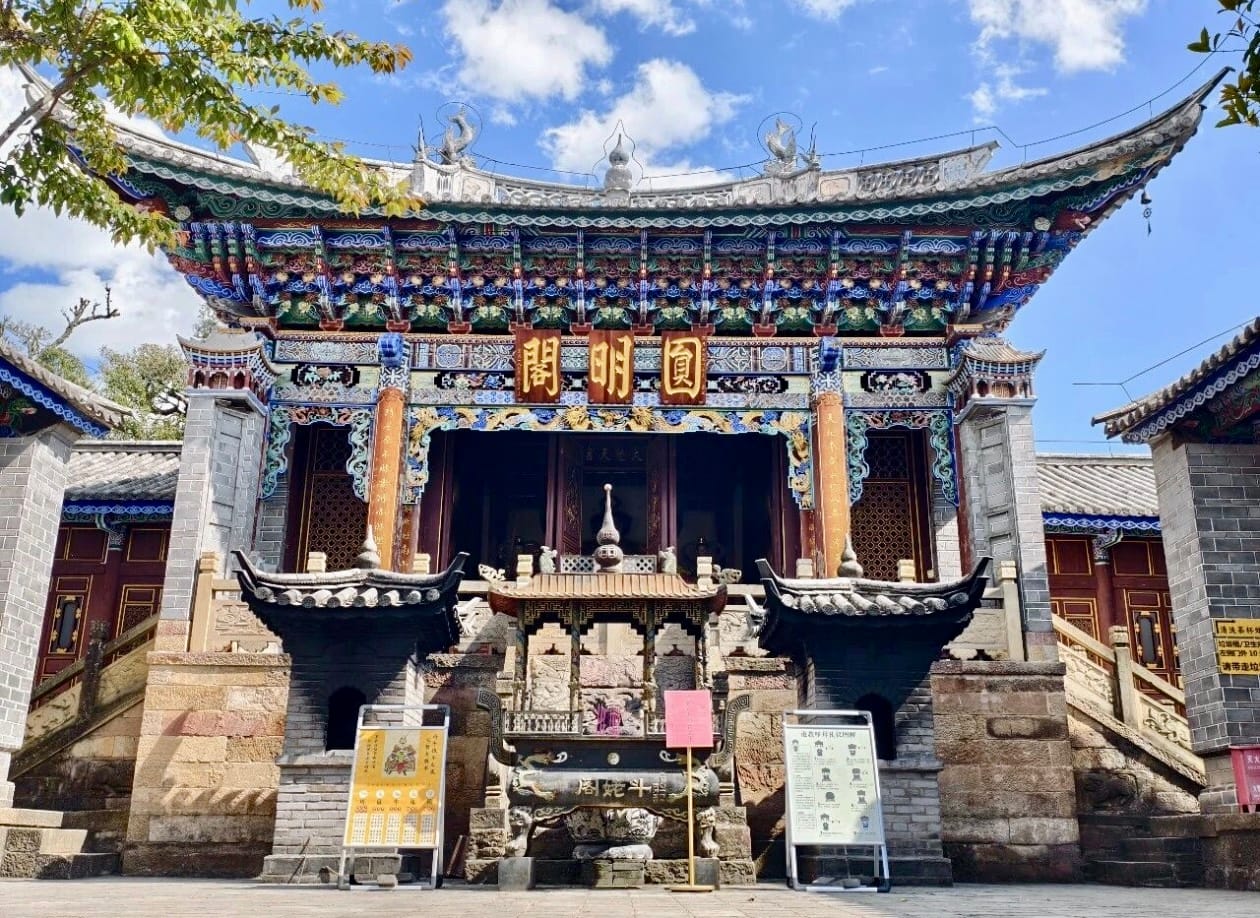
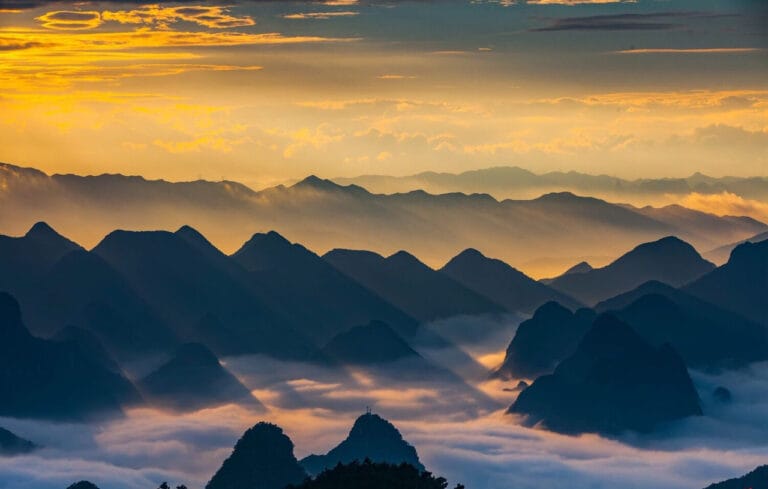
Yuhuang Pavilion (玉皇阁), the Jade Emperor Pavilion, is the largest complex on the mountain. It’s also where the front-mountain route turns back. Above it, Sanhuang Hall (三皇殿) is where to go if you want your fortune read (see section 7). Doumu Pavilion (斗姥阁) is the highest temple on the mountain, at 2,509 m. It honors Doumu, the Taoist mother goddess of the Big Dipper. On a clear day you look over the whole Weishan basin to Cangshan. After rain, the valley often fills with a sea of clouds.
Inside, the pavilion lets some guests down. The statues are new, with none of the age of the lower temples. Some felt the CNY 50 charged to burn prayer paper wasn’t worth it. The front-mountain routes don’t reach it anyway, and guests who skipped it tell us they didn’t miss it.
4. Which Route Should You Walk?
Pick by your legs and your time, not by how many temples you want to tick off. Guests underestimate the effort here again and again. A guest from Malaysia set out on the full loop and turned back early: “I planned to walk from the back mountain to the front. The round trip to Changchun Cave finished me. I couldn’t climb another step, so I turned back.”
Here are the three routes we give guests:
Route | Time | What you see | Best for |
|---|---|---|---|
Front mountain only | 1.5–2 hours | Six temples on a gentle path, out and back | Bad knees, children, short visits |
Changchun Cave + lower front mountain | Under 3 hours | The best building, then Tuzhu Temple, Wenchang Palace and Taizi Hall | Most visitors with a half day |
Full loop via Doumu Pavilion | 4–6 hours, 9 km, 570 m of climbing | Nearly every temple, no backtracking | Fit walkers with a full morning |
Front mountain only (1.5–2 hours)
Turn left at the gate and walk Nanzhao Tuzhu Temple → Wenchang Palace → Zhujun Pavilion (Lingguan Hall) → Taizi Hall → Qingxia Palace → Yuhuang Pavilion, then return the same way. The slope is gentle and the temples sit close together, so you can rest at each one. This is also the route for Heaven Official’s Blessing fans heading to Taizi Hall.
What you give up is Changchun Cave. If you have bad knees, that’s the right trade. Don’t force the cave if the walk back will wreck the rest of your day.
Full loop via Doumu Pavilion (4–6 hours)
The full loop covers nearly every temple with no backtracking: 9 km with 570 m of climbing. It works in either direction. With our guests we walk it in reverse: Changchun Cave first, then up to Doumu Pavilion, then down through the front mountain.
The reason is where the climbing sits. In reverse, almost all of it comes in one block: 40 minutes of continuous uphill steps from Changchun Cave to Caishen Hall. Locals call it the “killer stairs”. There’s no level stretch to recover on, and guests grumble about it even with fresh legs. After that, a few minutes of uphill take you to Doumu Pavilion. Everything else is downhill sightseeing. You also walk against the main flow of visitors, so the temples get quieter the further you go.
These are our guides’ walking times on the reverse loop, not counting time inside the temples. Some guests walk faster, some slower.
Leg | Walking time | What to expect |
|---|---|---|
Gate → Changchun Cave | 15–18 min | Gently downhill |
Changchun Cave → Caishen Hall | 40 min | Uphill steps all the way, no level stretch: the “killer stairs” |
Caishen Hall → Sanqing Hall → Doumu Pavilion | 3 + 5 min | The last climb of the route |
Doumu Pavilion → Guanyin Hall | 16 min | Downhill, past Kuixing Pavilion |
Guanyin Hall → Sanhuang Hall | 1 min | Next door |
Sanhuang Hall → Yuhuang Pavilion | 12 min | Downhill; take the path toward Qingxia Palace at the fork |
Yuhuang Pavilion → Qingxia Palace → Taizi Hall | 2 + 2 min | Short downhill |
Taizi Hall → Wenchang Palace → Nanzhao Tuzhu Temple | 4 + 3 min | Short downhill |
Nanzhao Tuzhu Temple → bus stop | 12 min | Downhill |
That adds up to 2 hours of walking. The rest of the 4–6 hours is time inside the temples.
Two forks catch people out. Leaving Changchun Cave, you climb back toward the gate for 10 minutes to a junction. Turn left up the steps to Caishen Hall, not on to the gate. At Sanhuang Hall, follow the path toward Qingxia Palace, because the other one leads down off the mountain.
Walk the loop front-first instead if long staircases are hard for you. The climb up the front mountain is spread over gentle paths, with a temple to rest at every few minutes. The cost comes at the end. You go down the killer stairs on tired knees, then climb 200–300 m of continuous steps from Changchun Cave back up to the gate. Bring trekking poles either way.
Changchun Cave + lower front mountain (under 3 hours)
If you could only see one building on Weibao Mountain, it would be Changchun Cave. This route adds the best of the lower front mountain: Wenchang Palace, Taizi Hall and the 400-year-old camellia. Nanzhao Tuzhu Temple is on the way, but its steep steps are optional. The round trip to the cave is 40–50 minutes of walking, plus your time inside.
Which half comes first depends on your legs:
- Not sure of your fitness: turn left and walk the front mountain first. It’s gentle, and by Taizi Hall you’ll know how you feel. Then decide whether to walk out to the cave.
- Confident on stairs: turn right to Changchun Cave first and get the hardest part done while you’re fresh. The way out is gently downhill and takes 15 minutes. Coming back, the last 200–300 m up to the gate is continuous steps. That’s the stretch that wears people out. After that, the front mountain feels easy.
5. When to Go
For a quiet visit, go on a weekday outside Chinese national holidays, between November and April. That keeps you out of Dali Prefecture’s May–October rainy season, when moss makes the stone steps slippery. From mid-February into early March, the old camellias on the front mountain are in flower.
Two lunar dates bring crowds and ritual to the mountain:
- Temple fair, 1st–15th of the 2nd lunar month (February or March): pilgrims fill the mountain, and local groups play Taoist Dongjing music. Researchers at Dali University link this ritual music to Weibao Mountain.
- Yi ancestor worship, 8th day of the 2nd lunar month: Yi families gather at Nanzhao Tuzhu Temple to honor Xinuluo and dance dage. The same day is Weishan’s Snack Festival in the old town.
Both dates are crowded, so come for the ritual, not for quiet temples. See our guide to Yunnan’s seasons for the wider picture.
6. Tickets, Hours and Getting There
Weibao Mountain costs CNY 40 at the gate and CNY 36–38 online. The scenic area is open 8 AM–6 PM. Entry closes between 5 and 5:30 PM, so don’t arrive late in the afternoon. Bus fares, taxi prices and journey times below come from our guides’ trips with guests.
Ticket | Who qualifies |
|---|---|
CNY 40 | Adults |
CNY 20 | Full-time students up to undergraduate level; ages 6–18; ages 60–69 |
Free | Under 1.2 m; 70 and over; active and retired military; visitors with disabilities, plus one companion; licensed tour guides; journalists; lay devotees with a guiyi (conversion) certificate |
Bring your passport or student card for any concession. Most free categories need a Chinese document, such as a military, disability, tour guide or press card.
Before 8 AM, entry is free: the ticket booth isn’t staffed yet, and you simply walk in. Weishan Bus 1 doesn’t start until 8 AM, though. A free early start means a taxi or a shared car. To use it, sleep in Weishan the night before. Our Weishan guide covers where to stay in the old town and what to check before booking.
From Dali
High-speed trains run from Dali Station to Weishan Station in 22 minutes, at CNY 15–20 in second class. Dali Station is in Xiaguan, not in Dali Old Town. Trains on this line are far fewer than on the Kunming–Dali line. At our latest check, the first train from Dali left at 7:10 AM. Trains back from Weishan left at 4:14 PM, 6:23 PM and 8:50 PM. Timetables change, so check the current one and book your return before you go.
By car, Xiaguan to Weishan takes 43 minutes on the Dali–Lincang Expressway. The gate is 20 minutes beyond the old town. Drivers should navigate to 巍宝山风景名胜售票处 (the ticket office), where parking is free. Our charter car service covers Weishan and Weibao Mountain; contact us for a quote for your dates.
Weishan Station to the gate by bus
Weishan Bus 1 (巍山1路) runs from Weishan Station to the mountain gate for CNY 8. The first bus leaves at 8 AM, and the last bus down leaves the gate at 5:30 PM. Miss it and you’ll pay a high taxi fare to get back. On public holidays, full buses don’t stop for more passengers, so don’t plan around the last one.
Weishan Ancient Town to the gate by taxi
A taxi from Weishan Ancient Town to the gate takes 20 minutes and costs CNY 30 per car. Set your destination as 巍宝山景区 (Weibaoshan scenic area), not just 巍宝山. Visitors who typed only the mountain’s name have been dropped 4 km short of the gate. Then the driver asked for more money to continue.
7. Traps and What to Pack
Traps on the mountain
- No food or shops above the gate. Only snack stalls at the entrance. A small kiosk at Caishen Hall on the back mountain sells water, but don’t count on it. Carry 1 liter of water per person and something to eat.
- Fortune-telling at Yuhuang Pavilion. A reading there costs CNY 60, paid by scanning a personal WeChat code. Visitors describe the readings as rushed, and some were told they could only ask about marriage. Fortune-stick readings at Sanhuang Hall are free.
- Taizi Hall. Some visitors have had unpleasant encounters with people offering help or blessings there. Keep your guard up and decline politely.
- Souvenirs at the visitor center. Merchandise for Heaven Official’s Blessing fans is expensive here. If you want jiama woodblock prints, buy them in Weishan Ancient Town instead.
- Rats in the quiet halls. Guests have seen rats in the remote, rarely visited temples. The main ones, such as Changchun Cave and Wenchang Palace, are fine. Keep food sealed in your bag.
- No phone signal. Coverage on the mountain is poor. Download an offline map and screenshot your route before you start.
What to pack
- Non-slip walking shoes. The whole mountain is stone steps, mossy in places. Sandals and smooth soles are a mistake.
- A light jacket. At 2,509 m, Doumu Pavilion is noticeably colder than Weishan Ancient Town. The weather turns fast. In the rainy season, bring a change of clothes.
- Sunscreen and a hat. The sun is strong at this altitude, even on cool days.
- Trekking poles, if you plan the full loop or the walk to Changchun Cave.
- A notebook for temple stamps. Nearly every temple will stamp it for free. It makes a good record of your route.
If you’re heading back to Weishan Ancient Town to eat, go early. Its famous yigen mian (one-noodle) shops only sell in the morning. They close between 12 PM and 1:30 PM, depending on the shop. Eat a bowl before you go up. After a long morning on the mountain, you’ll be eating lunch somewhere else.
8. Frequently Asked Questions
Is Weibao Mountain the same as Weishan?
No. Weishan is the county and its walled old town, Weishan Ancient Town. Weibao Mountain is the Taoist temple mountain 10 km southeast of the old town, 20 minutes away by car.
Is there a cable car on Weibao Mountain?
No. Weibao Mountain has no cable car and no shuttle bus inside the scenic area. Every temple is reached on foot by stone paths and steps.
Can you stay overnight in the temples on Weibao Mountain?
No, not as an ordinary visitor. The Taoist temples on Weibao Mountain don’t take overnight guests unless you know someone there. Stay in Weishan Ancient Town and come up in the morning.
Can older travelers or children visit Weibao Mountain?
Yes, on the front-mountain route. The path from the gate to Yuhuang Pavilion is gentle, with a temple to rest at every few minutes. Only the steps up to Nanzhao Tuzhu Temple are steep. The back mountain is harder on knees, especially the steps above Changchun Cave.
Can you visit Weibao Mountain as a day trip from Dali?
Yes. Take an early high-speed train from Dali Station to Weishan, then Bus 1 or a taxi to the gate. Walk the mountain in the morning. An evening train back leaves time for Weishan Ancient Town after the mountain. A day trip can’t get you the free entry before 8 AM. For that, you need a night in Weishan.
Is Weibaoshan a Taoist or a Buddhist mountain?
Weibao Mountain is a Taoist mountain. Almost all of its temples are Taoist, alongside the Yi shrine to the Nanzhao kings. A few Buddhist halls, such as Guanyin Hall, also stand on the slopes.
Do I need a guide for Weibaoshan?
You don’t need a guide to find your way. A guide is worth paying for at Changchun Cave, the murals and the Nanzhao shrine. Most of what you’re looking at there needs explaining. We can arrange a private English-speaking guide for the visit.
Planning Weishan and Weibao Mountain into your Dali days? Tell us your dates and we’ll match the route to your group and plan the early start.