Xizhou Ancient Town, Dali: Walking Route, Tickets and Where to Stay
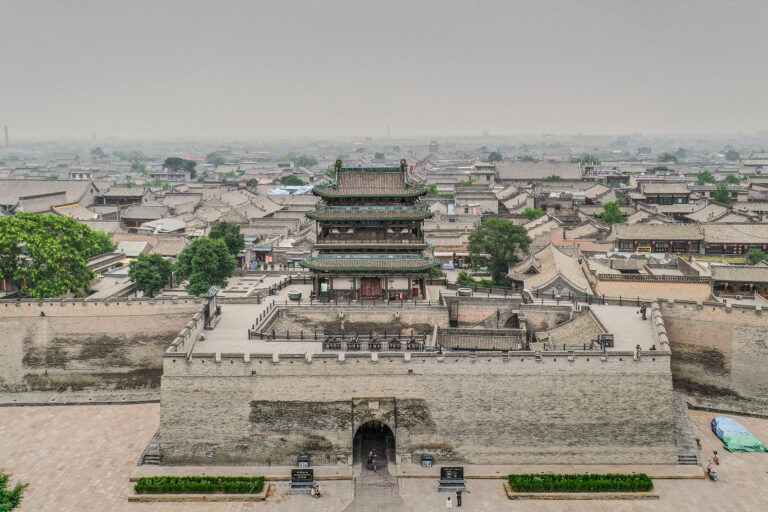
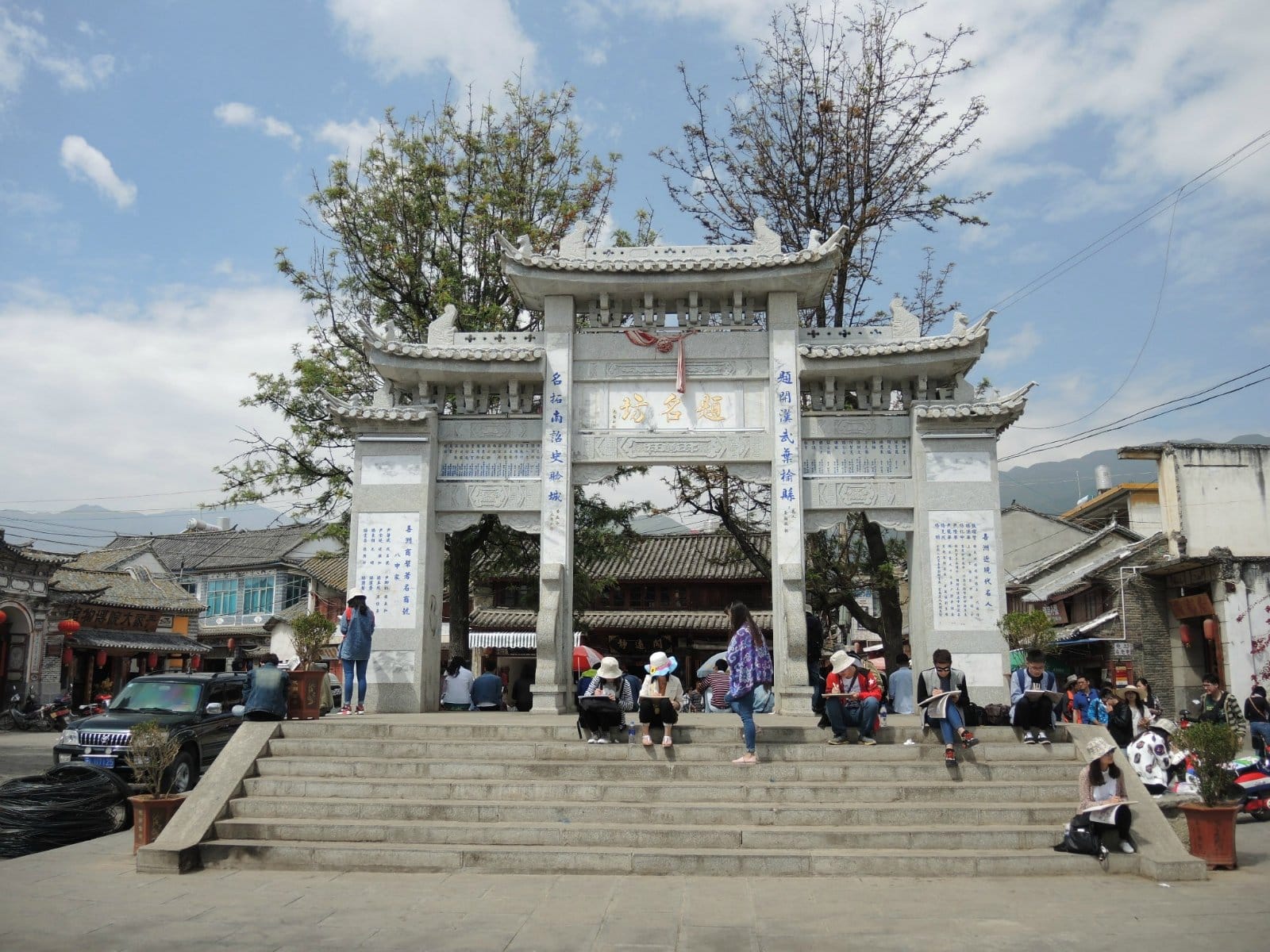
Xizhou (喜洲) is a Bai village 18–20 km north of Dali Old Town, on the farmland between Cangshan Mountain and Erhai Lake. Entry is free through Zhengyi Gate, and the old merchant houses, the market square and the rice fields are all within walking distance of it. Half a day covers the main sights.
We’ve planned Yunnan trips since 2006, and Xizhou is a regular stop on the Dali routes we build. Getting around the town is easy. The problem is at the entrance: drivers and touts tell visitors they need an ¥80 combo ticket from the tourist center to get in. You don’t. Prices, times and routes in this guide come from our own visits.
Entry | Free, via Zhengyi Gate (正义门) |
|---|---|
From Dali Old Town | 18–20 km; 30–40 min by taxi, ¥30–40 |
Time needed | 4.5 hours for our 12-stop walking loop; a full day with tie-dye and Haishe Park |
Paid sights | Yan Family Compound Museum ¥25 at the gate (¥21 on Trip.com); rice-field mini-train ¥35 |
Best light | 8–9 AM and 4:30–7 PM |
Golden rice fields | Late October |
Table of Contents
1. What Is Xizhou?
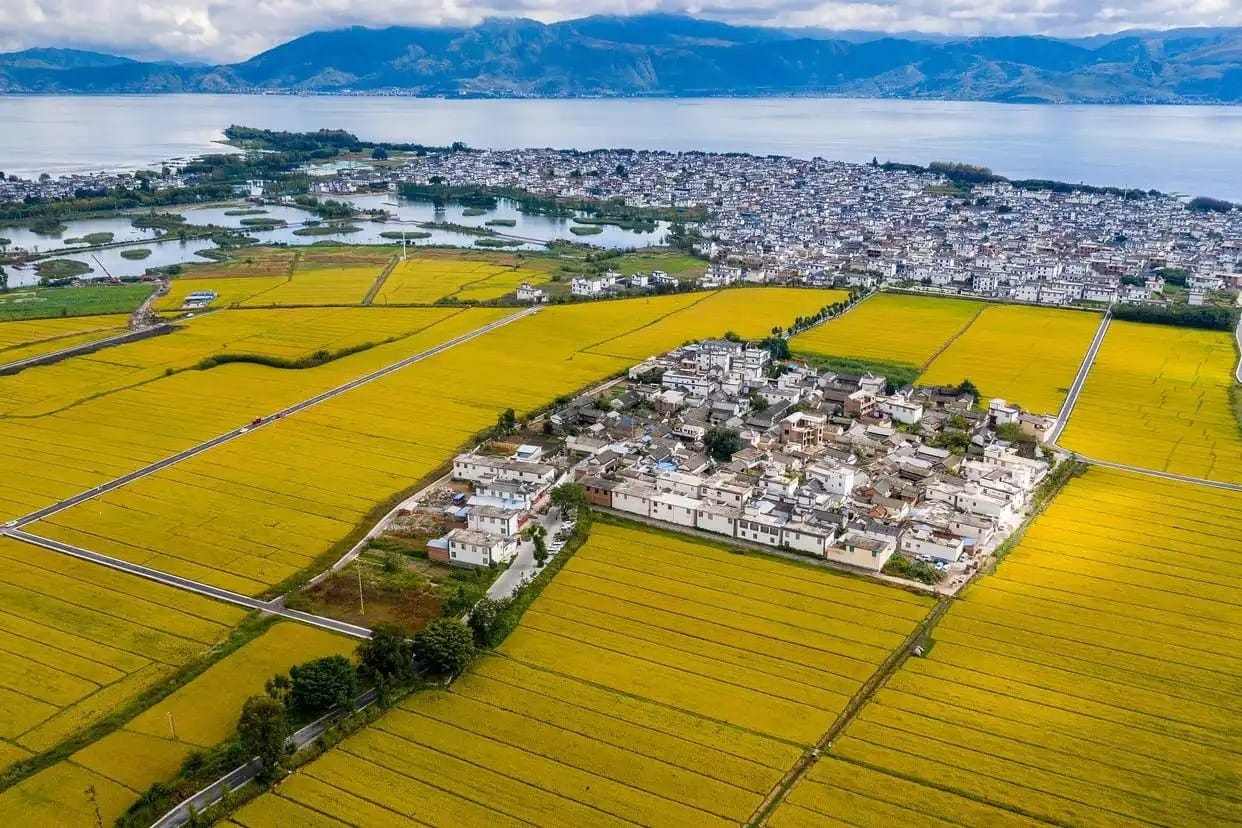
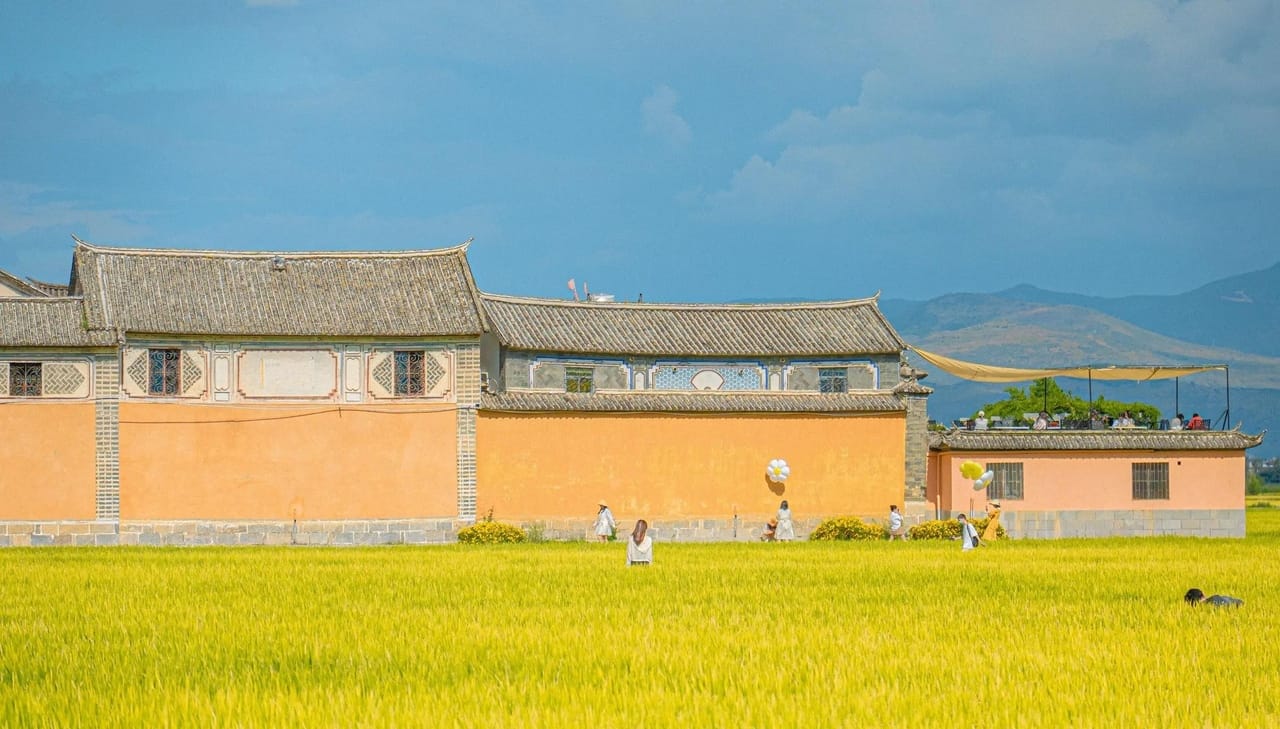
Xizhou is a working Bai farming village on the west shore of Erhai Lake. It was named in China’s first batch of Traditional Chinese Villages in 2012. Most people come to see its Bai houses from the Ming and Qing dynasties, many of them well preserved.
What to see
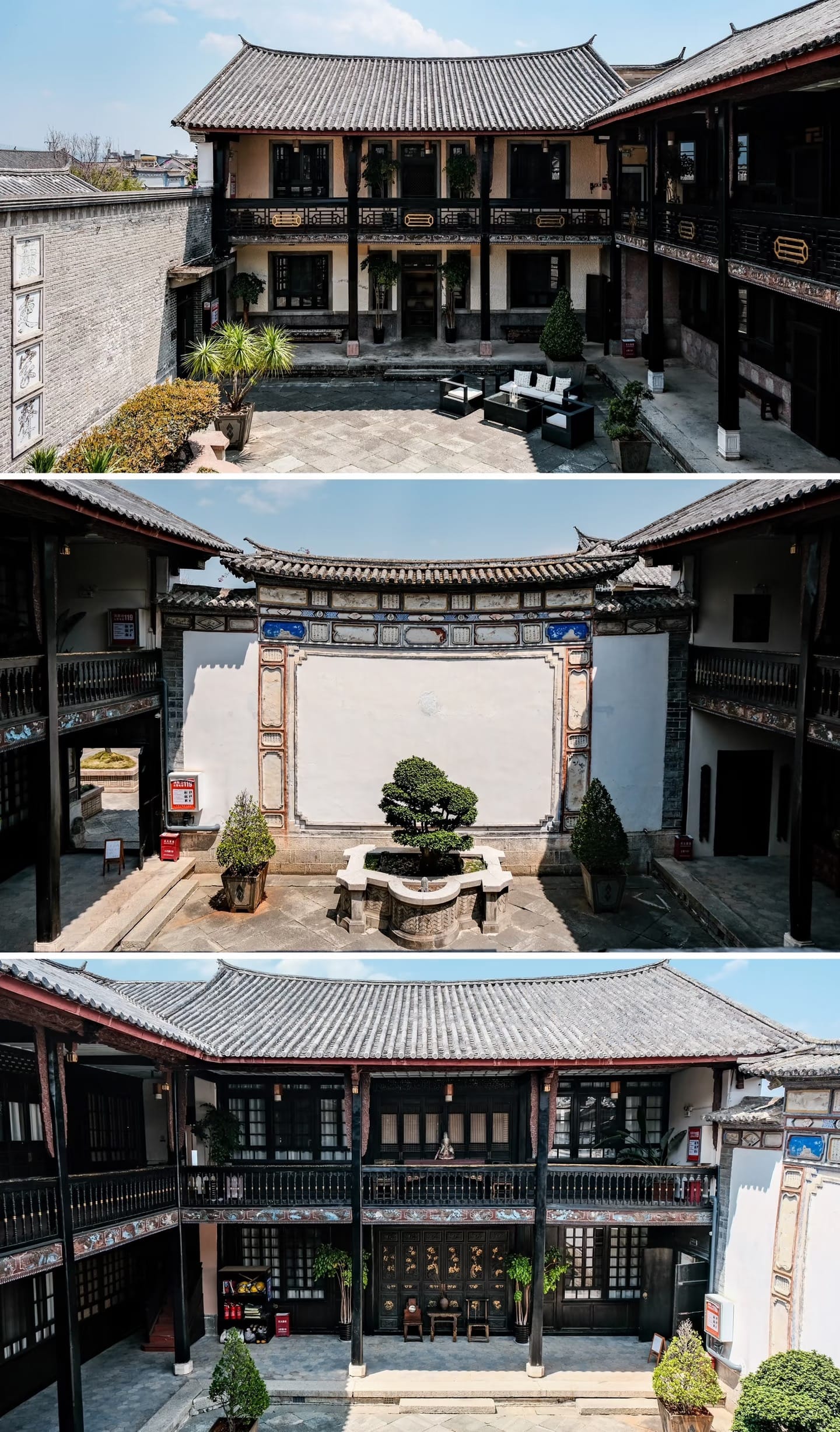
- Bai courtyard houses. The Yan Family Compound Museum is the best-preserved one open to visitors. It still shows the two classic Bai layouts, “three rooms and a screen wall” and “four courtyards and five skylights”, according to Xinhua.
- Rice fields at the edge of town. You walk straight from the old streets onto the field paths. There’s no viewing platform and no fence.
- Sifang Street. The market square at the center of town, where locals still shop in the early morning before the tour groups arrive.
- Short distances. Everything worth seeing is walkable from Zhengyi Gate.
Is Xizhou touristy?
The main street is. On our visits, Sifang Street and the lanes by the Turning Corner Building fill with day-trip groups from mid-morning to late afternoon. Walk two lanes back, or out into the fields, and it’s quiet. After 8 PM most shops close.
Xizhou, Dali Old Town or Shaxi?
Xizhou | Dali Old Town | Shaxi | |
|---|---|---|---|
What it is | Working Bai village with rice fields | Walled town, heavily commercialized | Tea Horse Road market town |
Crowds | Busy midday, quiet early and late | Busy all day and night | Fewer visitors |
From Dali Old Town | 30–40 min | — | Much farther; usually an overnight |
Time needed | Half day | A full day | One night |
If you’re based in Dali Old Town and have one spare day, we’d pick Xizhou. It’s closer, and you spend the day walking rather than driving. If you’re heading on to Lijiang, you may not need a spare day at all, because Xizhou is on the way (see Section 3). Shaxi makes more sense as an overnight stop on that same trip.
2. Best Time to Visit Xizhou
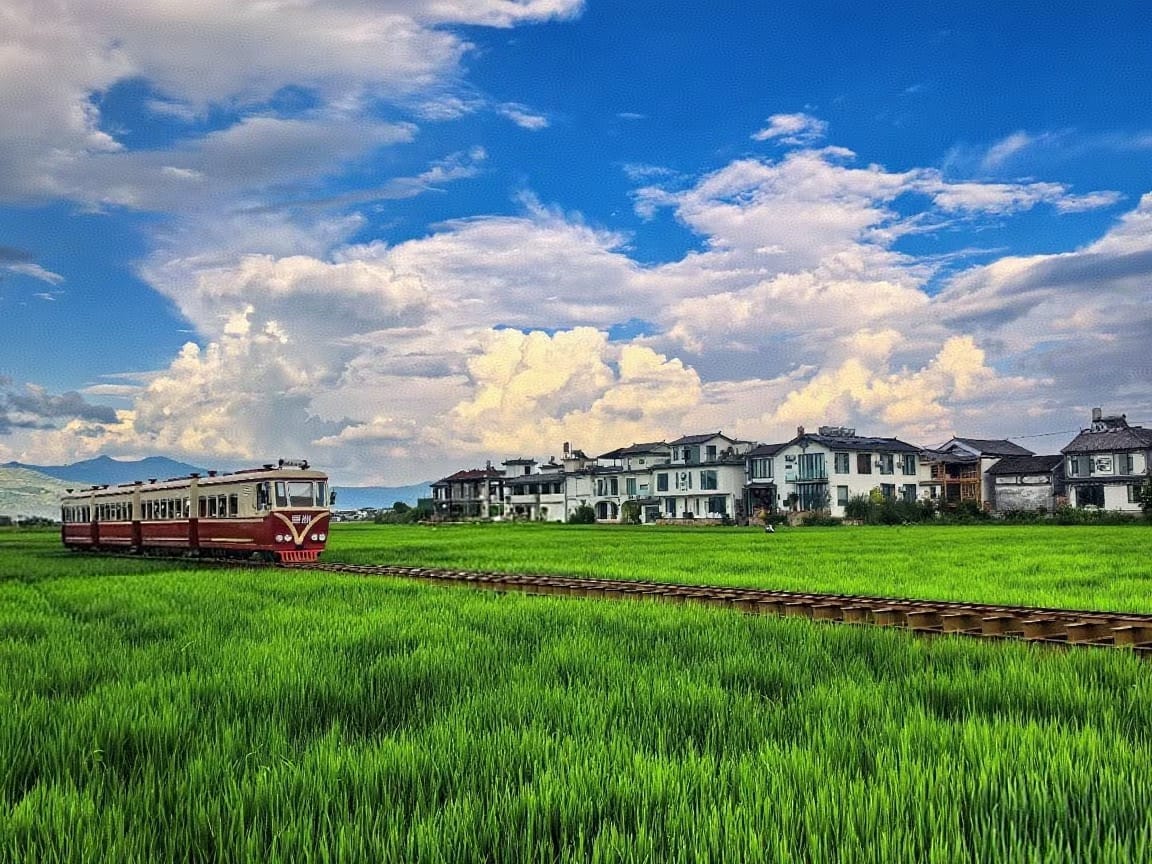
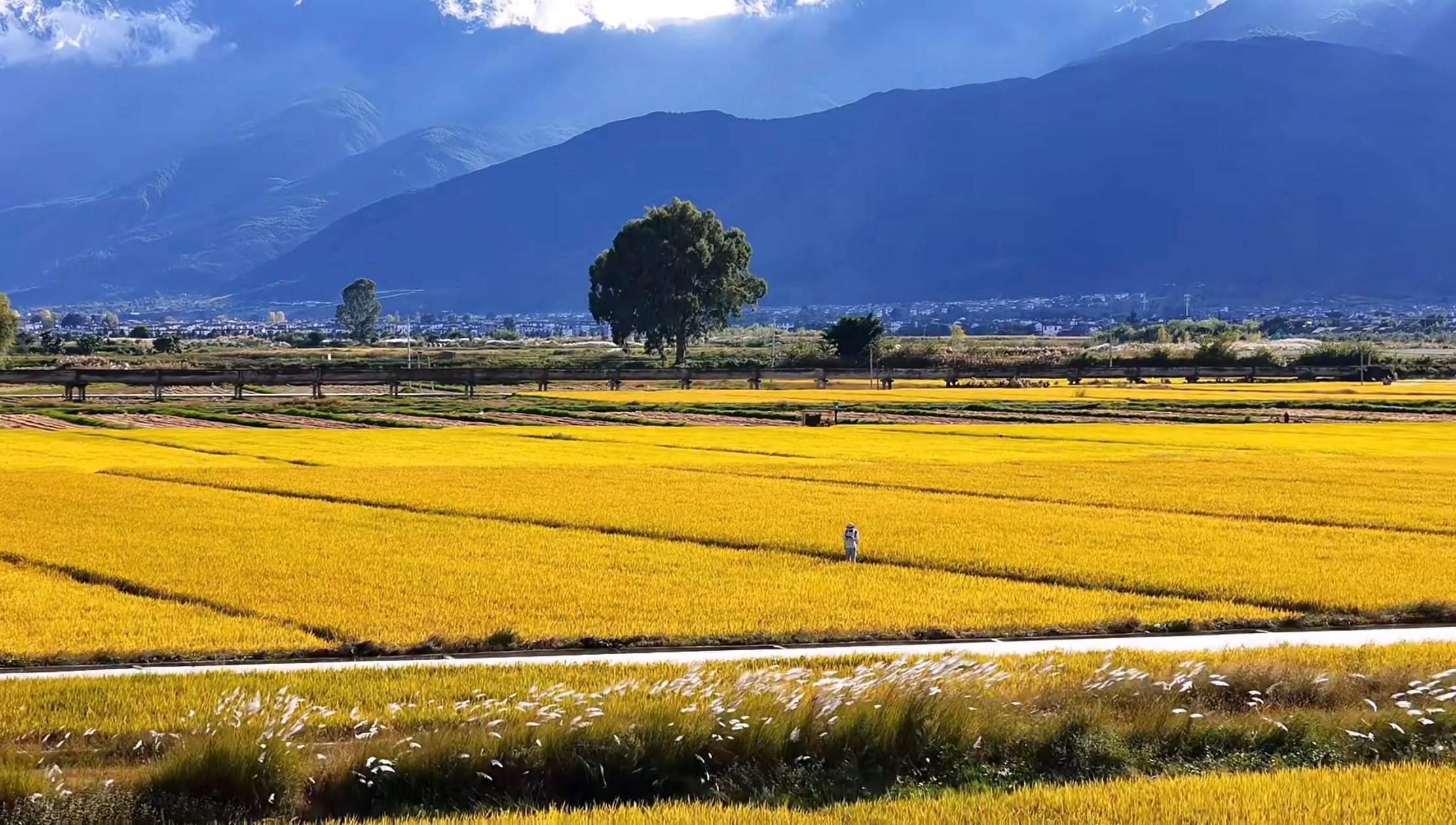
Any month works. The main difference is what’s growing in the fields: green wheat in March and April, green rice through summer, gold rice in late October. Whatever the season, arrive before 9 AM. By 10 AM the main street is usually crowded.
In September, expect green rice, not the gold fields in most photos. Green fields with Cangshan Mountain behind them still make good photos.
Rain affects a visit more than the month does. On a wet day the field paths are muddy and photos come out grey. When the forecast is bad, we move Xizhou to another day of the trip.
Avoid Chinese public holidays if you can. Over National Day (October 1–7) and Chinese New Year, guesthouse prices double and the town is crowded all day.
3. Getting There and Back
From Dali Old Town, take a taxi or ride-hail car: 30–40 minutes, ¥30–40. From Dali Railway Station, the scenic-area direct bus is the easiest option. In a taxi or ride-hail car, set the destination to 喜洲古镇正义门 (Xizhou Ancient Town, Zhengyi Gate).
From Dali Old Town
Option | Cost | Time | Notes |
|---|---|---|---|
Taxi or ride-hail | ¥30–40 | 30–40 min | Enter “喜洲古镇正义门” as the destination |
Minibus | ¥7–10, paid on board | 30–60 min | From Cangshan Gate or the Sanyue Jie stop, along the Dian-Zang Highway |
City bus No. 4 + minibus | ¥13 total | 60+ min | Cheapest option; one change |
Erhai sightseeing bus, west line | ¥88 for a 24-hour pass (¥78 booked a day ahead) | Hop-on, hop-off | Leaves the old town 9:00–18:00; stops at Xizhou on the way to Butterfly Spring and Shuanglang |
Self-drive | Parking fee | 30 min | Park at the tourist center by Zhengyi Gate; cars can’t enter the old town |
Bicycle or e-bike | Rental | Half a morning | The lakeside Erhai Ecological Corridor is closed to motor traffic |
E-bikes are popular, but trucks and buses share the highway. The wind off the lake turns cold after 5 PM, so take a jacket and start with a full battery. If you only want a bike in Xizhou itself, Yunyou Changqi (云游畅骑) rents them in town, opposite Qingzhen Road north of Dali No. 2 Middle School, and lets you return them at another branch.
From Dali Railway Station
High-speed trains stop at Dali Railway Station in Xiaguan, 28 km from Xizhou.
Option | Cost | Time | Notes |
|---|---|---|---|
Scenic-area direct bus | ¥20–25 | 40 min | Service desk to the left of the station exit; drops you at the Xizhou tourist center car park |
Ride-hail or taxi | ¥60–85 by ride-hail; ¥80–100 by taxi | 35–40 min | Door to door |
Bus to Dali Old Town, then minibus | ¥5 station shuttle, or city bus No. 8 or the Three Pagodas line; then ¥7–10 minibus | 1 hr 20 min–1 hr 40 min | Cheapest; one change |
With luggage or older travelers, we’d take the direct bus or a car.
Luggage
If you’re passing through on the way to Shaxi or Lijiang, there’s a luggage storage point 280 m from the old town. You book it on the Toojd (途简单) WeChat mini-program. It’s open 8:00–22:00 and charges ¥10 a day for a suitcase or ¥5 for a backpack.
On the way from Dali to Lijiang
On our trips, Xizhou usually doesn’t get a day of its own. We fit it, with Zhoucheng, into the day clients travel from Dali to Lijiang. Both villages are north of Dali Old Town on the road to Lijiang, and Zhoucheng is the farther one. So we stop at Xizhou first, then drive on to Zhoucheng, and there’s no doubling back. With the luggage in the car, there’s no need for the storage point.
Getting back
Minibuses to Dali Old Town wait near Zhengyi Gate. You pay ¥7–10 on board, and the last one usually leaves at 20:30. Times change, so ask your guesthouse or a shopkeeper that day.
Taxis and ride-hail cars get hard to find after 7–8 PM. A car back takes 30–40 minutes and costs ¥30–40 by day, up to ¥60 in the evening. With a sightseeing bus pass, return buses on the west line leave Shuanglang until 20:30 and come back through Xizhou.
4. Tickets: What’s Free and What You Pay For
Walking into Xizhou costs nothing, and so do most stops on our route. Only two charge: the Yan Family Compound Museum (¥25 at the gate, ¥21 on Trip.com) and the mini-train (¥35). The ¥80 combo ticket sold at the tourist center is optional.
The entrance pitch
The tourist center and its car park are right beside Zhengyi Gate. The pitch starts in the car or in this car park. You’ll hear that the old town and the rice fields are “too far to walk”, that Dong’an Gate is closed to traffic, or that the only way in is by shuttle. In our experience, the drivers and touts who say this usually get a commission.
None of it is true. Walk past the ticket desk and through Zhengyi Gate. The old town core is ten minutes away, and the rice fields are just beyond it.
What we tell clients: set the destination to Zhengyi Gate before the ride starts, and walk straight through. If someone insists you need a ticket, the town’s complaint line, printed on the map board at the gate, is 0872-2670384.
The ¥80 combo ticket
The tourist center desk sells one thing: the ¥80 “Xizhou In-Depth Tour” combo (喜洲古镇深度游套票). Its own sign says so, and says everything else has to be bought at each sight’s own counter. That includes the shuttle: you can’t buy a shuttle ticket on its own at the tourist center, only inside the old town.
In the combo | Face value |
|---|---|
Round-trip shuttle bus | ¥20 |
Yan Family Compound Museum | ¥25 |
Rice-field mini-train | ¥35 |
Guided commentary | Free |
Total | ¥80 |
So the combo isn’t a discount. It’s the three face values added up, sold together from 9:00 to 17:30. Buyers who drive get one free parking ticket per car. The sign quotes two hours for the tour.
The combo only makes sense if you don’t want to walk and you want both the museum and the train. Otherwise we’d skip it. Buy the museum ticket on Trip.com (¥21) and the train separately (¥35), and you pay ¥56 and walk at your own pace. That’s ¥24 less for the same two sights. Visitors who’ve bought the combo often say the commentary is brief.
Concessions on the combo
The tourist center sign lists these:
- Children under 1.2 m: free.
- Children 1.2–1.4 m: half price, ¥40.
- Visitors 70 and over, and serving military with valid ID: free entry to the museum and the train, but they still have to buy the ¥20 shuttle.
Individual prices and opening hours
Online prices are Trip.com’s. You can buy the mini-train on Trip.com or at the train itself.
Sight | Adult | Concessions | Hours |
|---|---|---|---|
Yan Family Compound Museum (严家大院博物馆) | ¥25 at the gate; ¥21 on Trip.com | ¥12 students and children on Trip.com; free for 70 and over | 8:30–18:00 |
Yan Family Residence (严家民居), a separate house by Zhengyi Gate | ¥18 | ¥10 children and seniors | — |
Yan Family Residence + Three-Course Tea (三道茶) and folk performance | ¥59 | ¥30 children and seniors | — |
Rice-field mini-train | ¥35 | Free under 1.2 m; ¥17.50 for 1.2–1.4 m; ¥80 for two adults and a child; ¥99 for three | |
Ziyunshan Temple, Dong Family Compound, Baocheng Mansion, Zhao Mansion, Dacisi Temple | Free | — | — |
Haishe Park | Free with booking, 8:00–12:00; ¥45 otherwise | — | See Section 7 |
Don’t confuse the two Yan houses. The museum near Sifang Street is the big merchant compound. The residence by Zhengyi Gate is where you see Three-Course Tea, the Bai tea ritual.
5. The 12-Stop Walking Route
This is the loop we walk with clients. It starts at the tourist center, crosses town to the rice fields in the northeast, then comes back through the old mansions in the south. It takes 4.5 hours at an easy pace, including an hour in the fields. If you’re short on time, stop after the Yan Family Compound Museum (stop 9) and walk back to Zhengyi Gate. That saves 45 minutes.
How the town is laid out
Xizhou runs west to east. Zhengyi Gate and the tourist center are on the west edge, Sifang Street is in the center, and the rice fields and the Linden Centre are on the northeast edge. The old mansions and Dacisi Temple are in the south. The map board at Zhengyi Gate shows the same layout in Chinese and English.
The route
From Dacisi Temple, walk back west along Zhennan Road (镇南路) to Zhengyi Gate, where the minibuses to Dali leave.
Sifang Street and the morning market
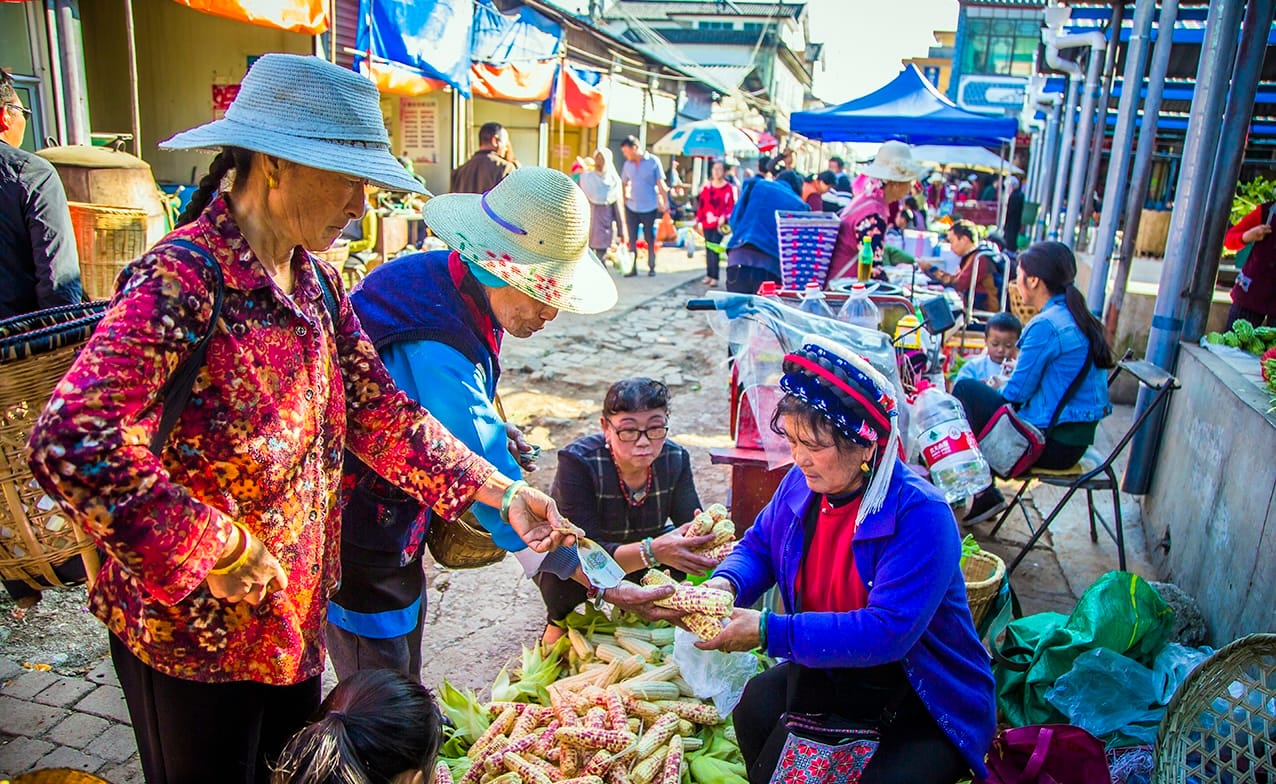
Sifang Street is the square where the town’s four main streets meet. Go early, when locals are buying vegetables, brown sugar and fresh tofu. The baba stalls are here too. Xizhou also has bigger market days set by the lunar calendar, when far more stalls turn up. Ask your guesthouse whether one falls during your visit.
The rice fields and the mini-train
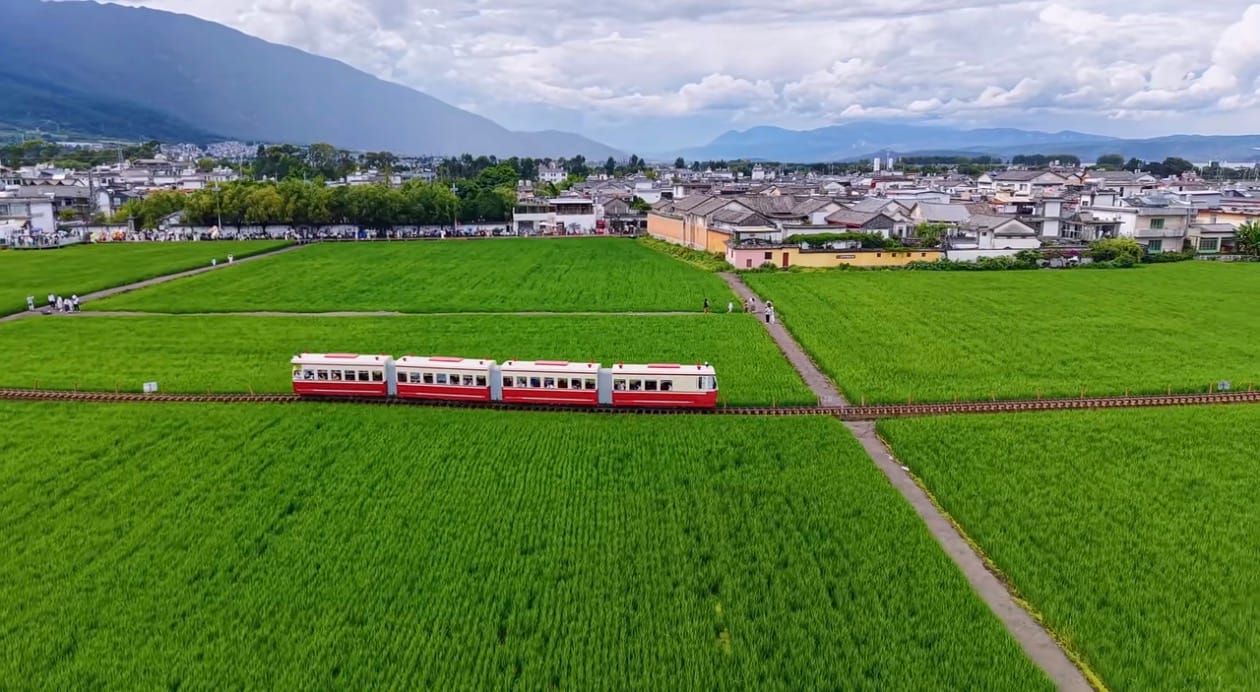
The fields start behind the Linden Centre, where the old town ends. The mini-train loop takes 25 minutes. In our experience, the better photo is the train passing while you stand on the field path. In peak season you can queue longer than the ride lasts.
Stay on the raised paths between plots. Farmers can fine visitors who trample the crop. If the fields by the train are too crowded, the paddies near Gusheng Village (古生村) have the same mountain views and far fewer people.
The Turning Corner Building
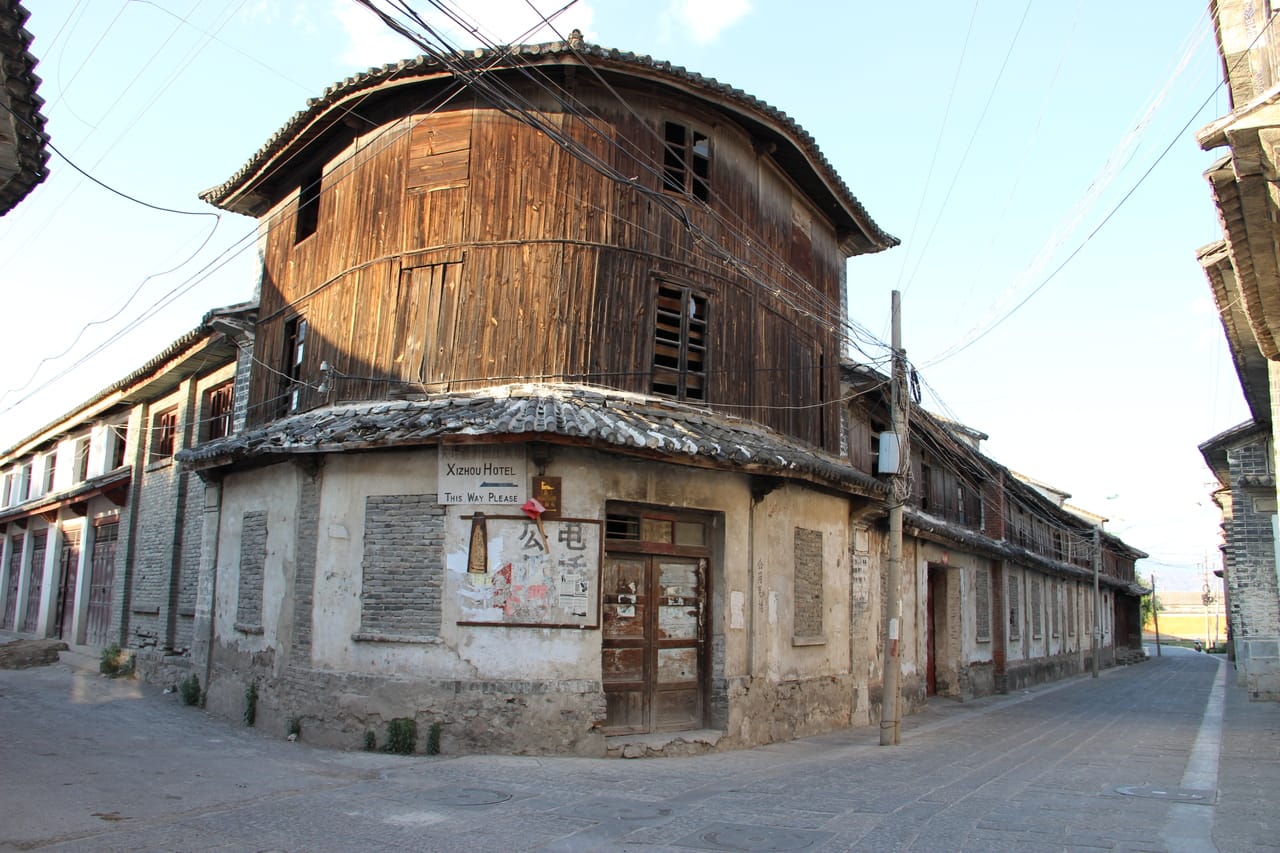
Xizhou’s best-known photo stop is a curved wooden house at a street corner. Shoot it from across the street, at a low angle. Before 11 AM you’ll have it mostly to yourself, so if you want an empty shot, walk over first thing and pick up the loop afterward. In the afternoon, people queue to take their turn.
Yan Family Compound Museum
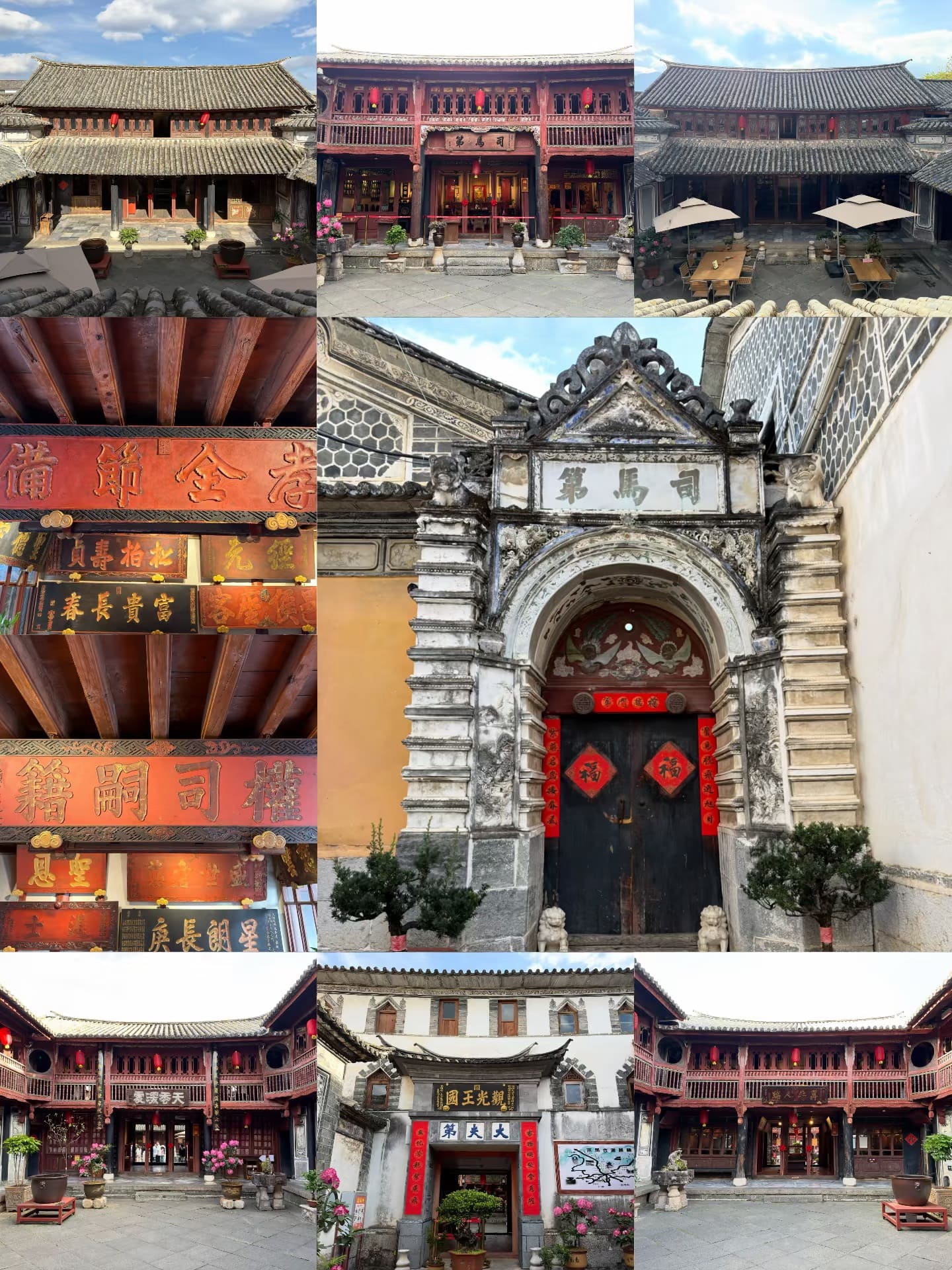
If you pay for one sight in Xizhou, make it this one. The merchant Yan Zizhen built it as his family home, and its courtyards keep the classic Bai layouts described by Xinhua. Look up at the carved brackets and upturned eaves. Allow 45 minutes.
6. Where to Eat and What to Pay
 Xizhou baba
- Grilled rushan
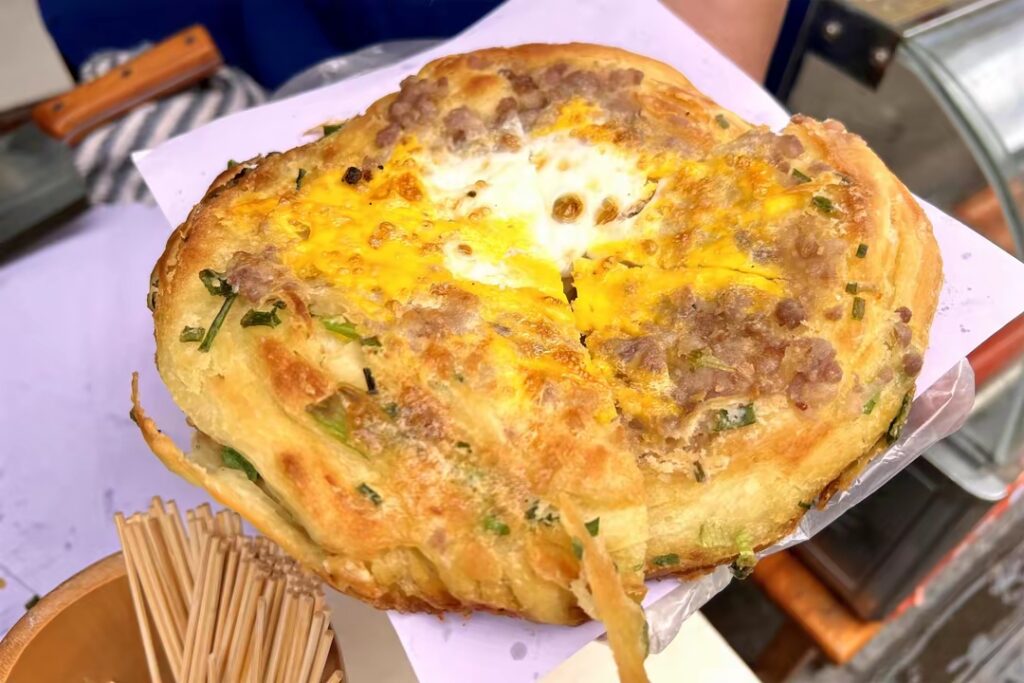
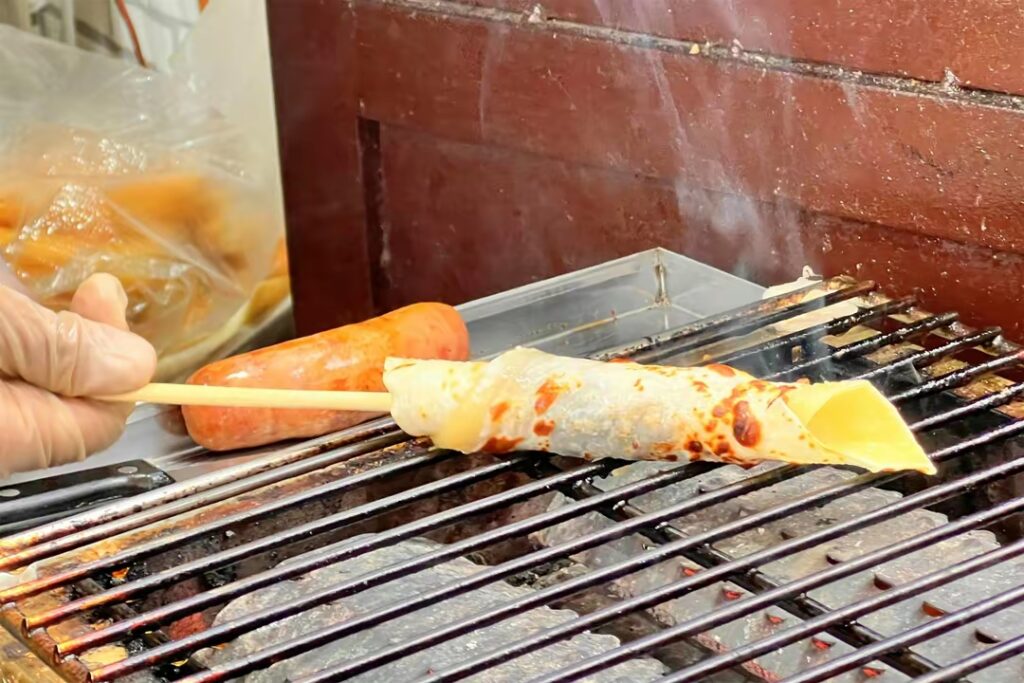
Eat Xizhou baba, the town’s charcoal-baked flatbread, and buy it one street back from the entrance, where it costs half as much. On the side lanes a sit-down meal costs ¥35–45 a head. On the main street it’s ¥80 or more.
Dish | What it is | Fair price | Tourist price |
|---|---|---|---|
Xizhou baba (喜洲粑粑) | Flaky flatbread baked over charcoal; savory pork and scallion, or sweet rose and brown sugar | ¥5–10 | ¥15–20 at entrance stalls |
Grilled rushan (烤乳扇) | Thin sheets of milk curd grilled and brushed with rose jam | ¥10 for three outside the scenic area | ¥10 each inside it |
Pea jelly noodles (豌豆粉) | Cool, sour and spicy pea-starch noodles; a local breakfast | ¥12–15 | — |
Cold chicken rice noodles (凉鸡米线) | Dali staple, served cool with shredded chicken | ¥12–15 | — |
Fresh flower cakes (鲜花饼) | Pastry filled with rose petal jam | Buy them warm, not boxed | — |
Sit-down meal | Per person | ¥35–45 on side lanes | ¥80+ on Sifang Street frontage |
Bottled water | — | ¥2 in town shops | Avoid refilled bottles sold by the mini-train track |
Xizhou baba is listed as intangible cultural heritage at the Dali prefecture level, Xinhua notes. Buy it from a stall that bakes over charcoal, not an electric oven. Yang’s Poxu Baba (杨记破酥粑粑) is one well-known shop. The savory one is the local favorite; try one of each.
A lot of visitors don’t like the taste of rushan, so buy one to try before you buy more.
7. A Full Day: What to Add
A full day is the same loop at a slower pace, with a tie-dye session, a long lunch by the fields and an afternoon at Haishe Park. These are the add-ons we’d choose from.
Tie-dye workshops
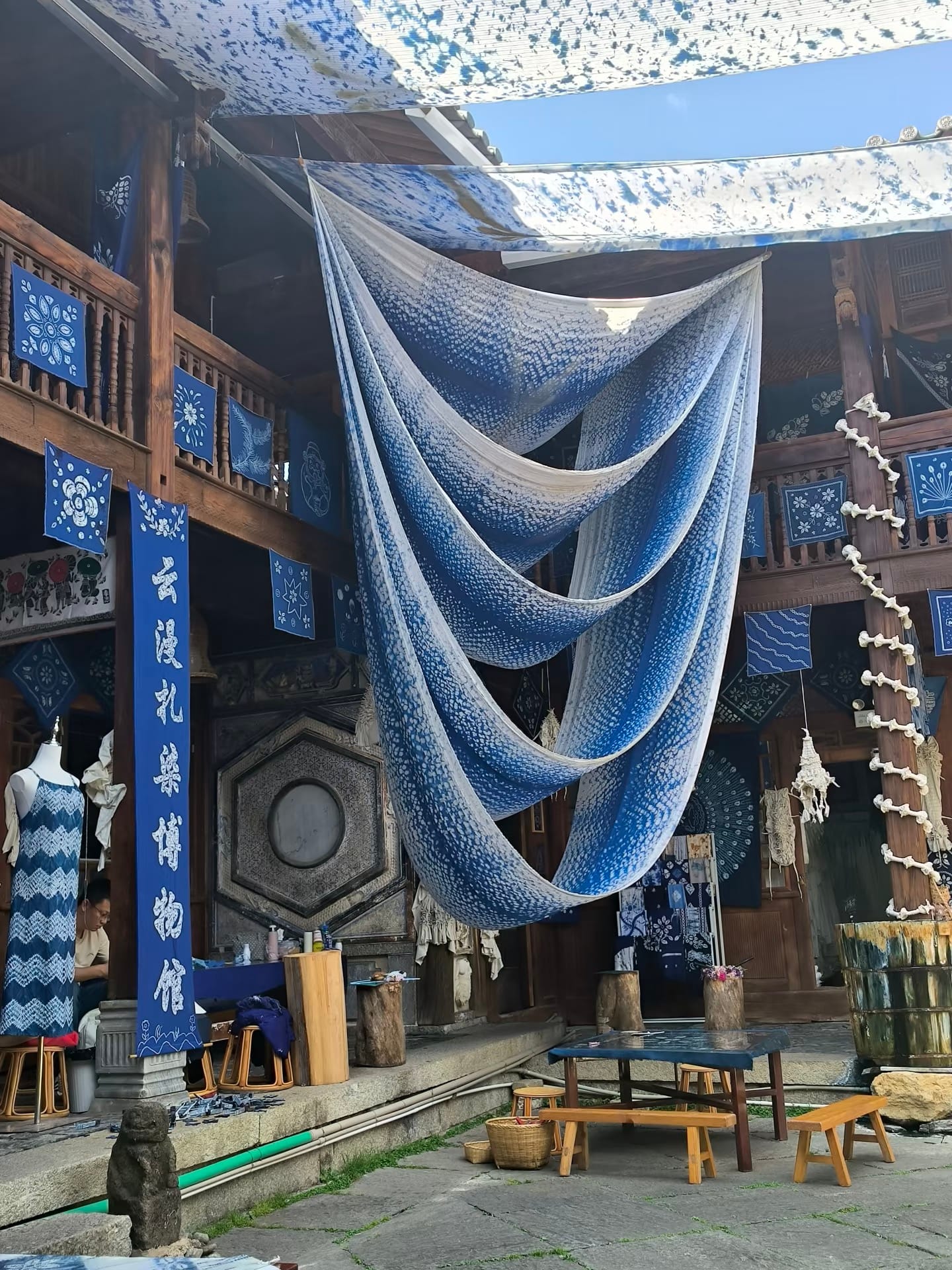
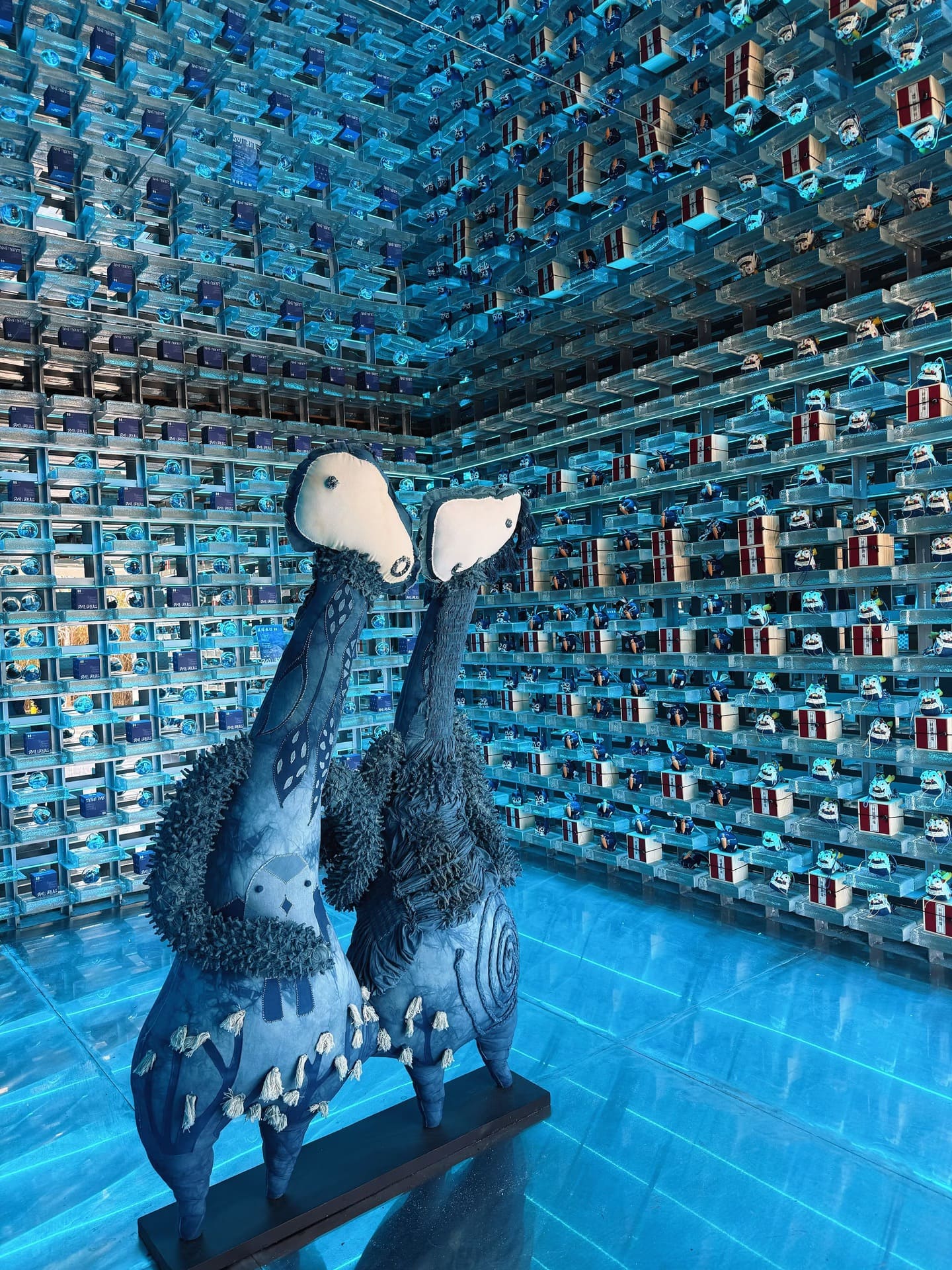
Bai tie-dye was listed as national intangible cultural heritage in 2006, CGTN reports, and the craft centers on Zhoucheng village, next to Xizhou. These are the three places we’d choose between. Prices are from our own visits.
Workshop | Best for | Price | Notes |
|---|---|---|---|
Dali Blue (蓝续) | Best experience | Bags ¥100–150, hats ¥140, skirts ¥120–150, dresses ¥150–220 | Natural indigo; fixed prices; book on the 蓝续预约 WeChat mini-program, or walk in during low season |
Yunman Tie-Dye Museum (云漫扎染博物馆), old town | Widest choice of items; photos | Skirts from ¥99, dresses ¥128 | In a century-old Bai house with indigo cloth hanging in the courtyard; staff do the tricky steps |
Family workshops in Zhoucheng (周城) | Lowest price | ¥60–100 | 15 minutes by bike; more colors than indigo; quality varies, so compare a few |
Prices are from our own visits and recent visitor reports.
Dali Blue is the English name of Lanxu, the best-known tie-dye brand in the area. It has three studios near Xizhou. The field studio is beside the rice fields, at stop 6 on our route. Another is in the Jiangzhiji folk art center, next to the jiama print hall, and the original is in a century-old courtyard in Zhoucheng. Only the Jiangzhiji and Zhoucheng studios also teach hand-weaving. Of the three, Jiangzhiji is the one we recommend, and you can see the jiama prints next door while you’re there.
A simple pattern takes 1–2 hours, and the last arrival at Dali Blue is 16:00. If a class is already running, you may wait up to 20 minutes. Cars can’t reach any of the studio doors, so plan to walk the last stretch. Wear dark clothes, because the dye stains. Dali Blue won’t dye clothes or fabric you bring.
The brand also runs the free Dali Blue Tie-Dye Art Museum in Jishanyi village (积善邑). It’s an exhibition only, with no workshops. It opens 10:00–18:00 in four timed slots, and you need to book at least an hour ahead on the same mini-program.
Haishe Park
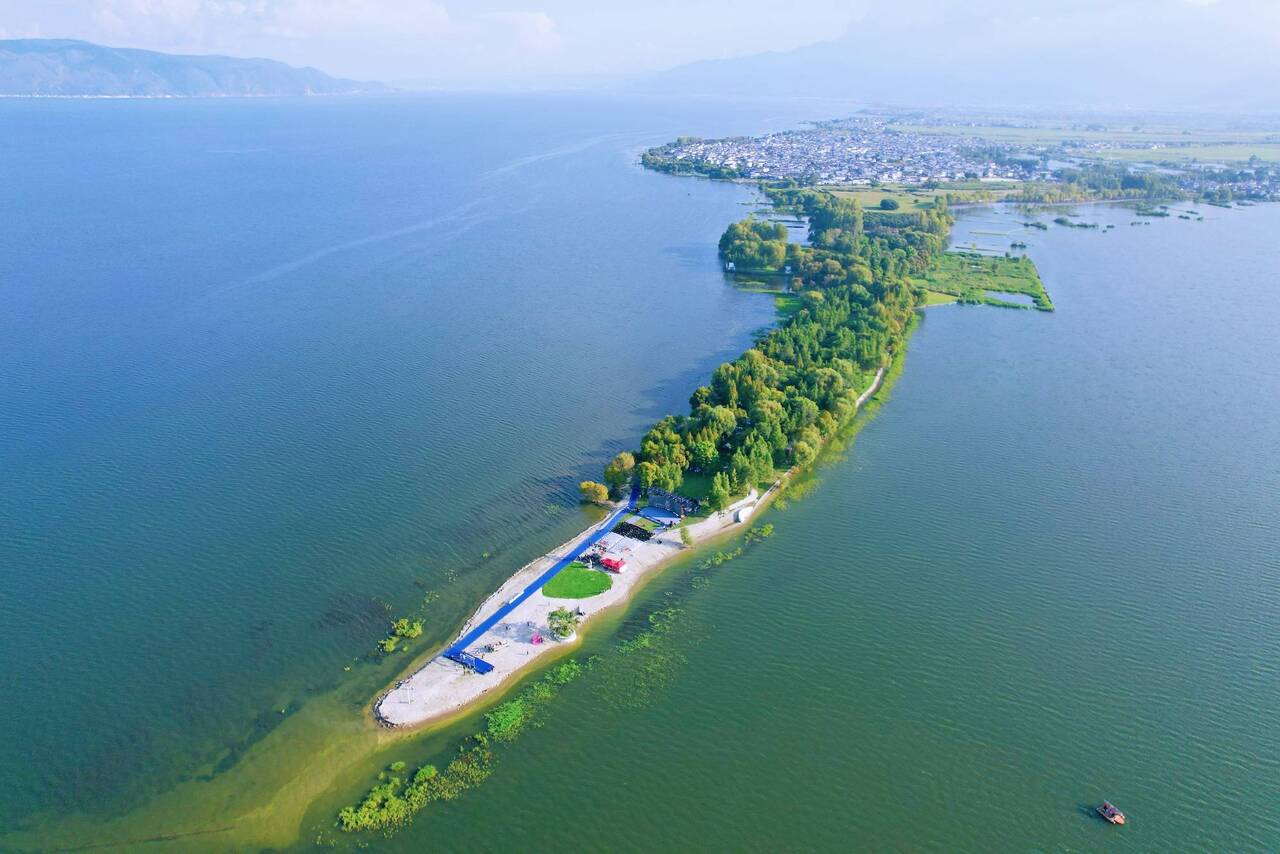
Haishe Park (海舌公园) is a narrow peninsula with Erhai Lake on three sides, 15 minutes from Xizhou by bike or taxi. It’s quieter than the town, and the “couple’s trees” are its best-known photo spot. Allow 1.5–2 hours. There are no shops inside, so bring water.
Free visits run 8:00–12:00 and are capped at 500 people a day. Book the day before: search WeChat for the 海舌蜜月半岛 mini-program and tap 门票预定 (ticket booking). Booking is real-name, so book for yourself. Places bought through touts get cancelled. In the afternoon, or if you miss the free slots, pay ¥45 at the gate. We’d still go in late afternoon, when the light is better for photos.
Horse rides along the fields
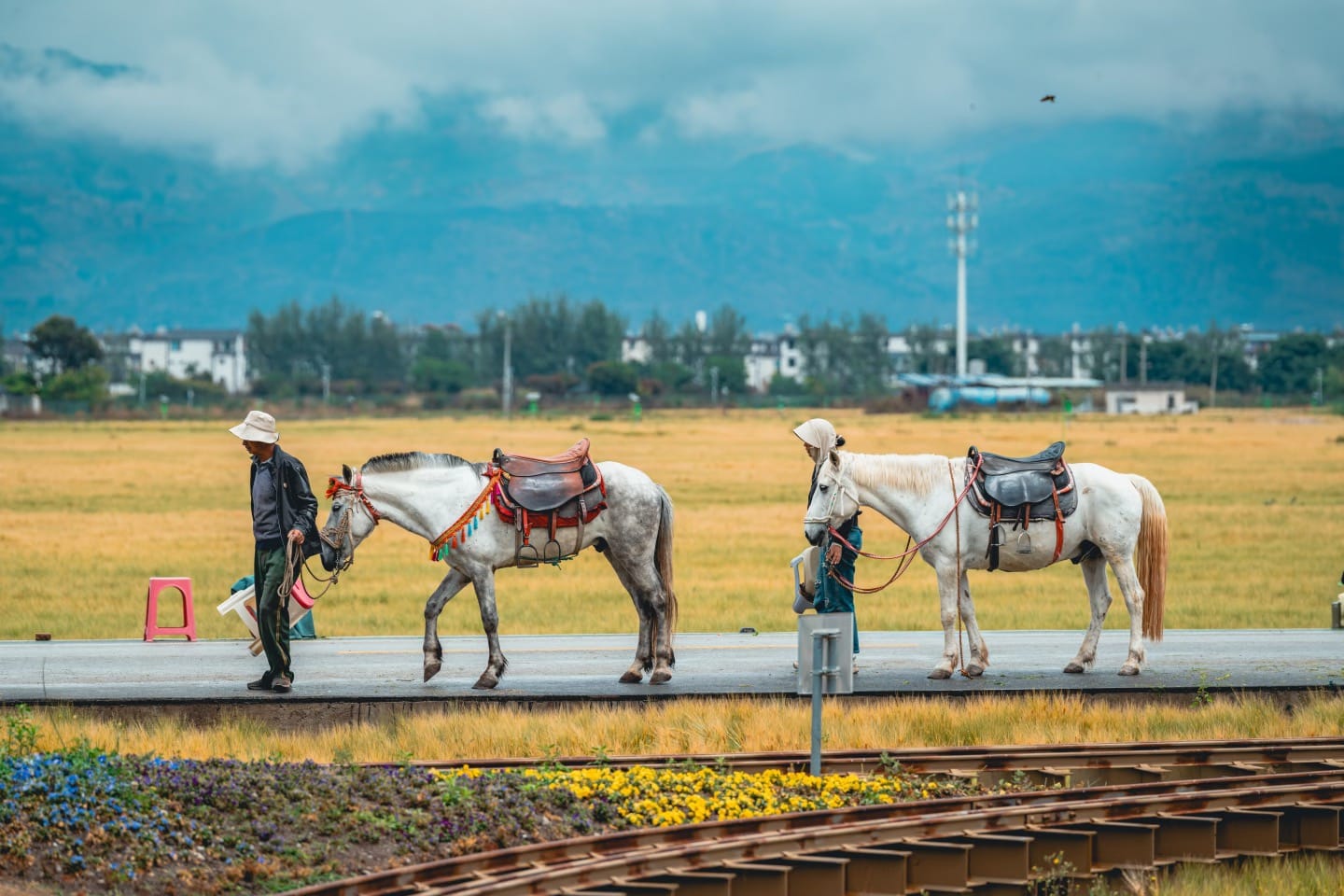
Horse handlers wait at the edge of the rice fields. It’s an informal business, not an official concession. A ride follows the field paths out to the Meet Yourself tree and back, 25–30 minutes, for ¥180–198 in peak season and ¥80–128 off-peak. Prices are negotiable, so ask two or three handlers. Outside holidays there’s rarely a queue.
Quieter sights
- Three-Course Tea at the Yan Family Residence by Zhengyi Gate, at the start or end of the day (prices in Section 4).
- More courtyard houses: Dexin Fang (德馨坊) and the Dong Jinhan house (董金汉院), two Bai houses known for their carved detail.
- Jiaseji farming museum (稼穑集): free, on local farming history.
- Jiangzhiji folk art center (匠志集): has a hall for jiama (甲马), the local woodblock prints, according to Xinhua, and one of Lanxu’s tie-dye studios.
8. Where to Stay in Xizhou
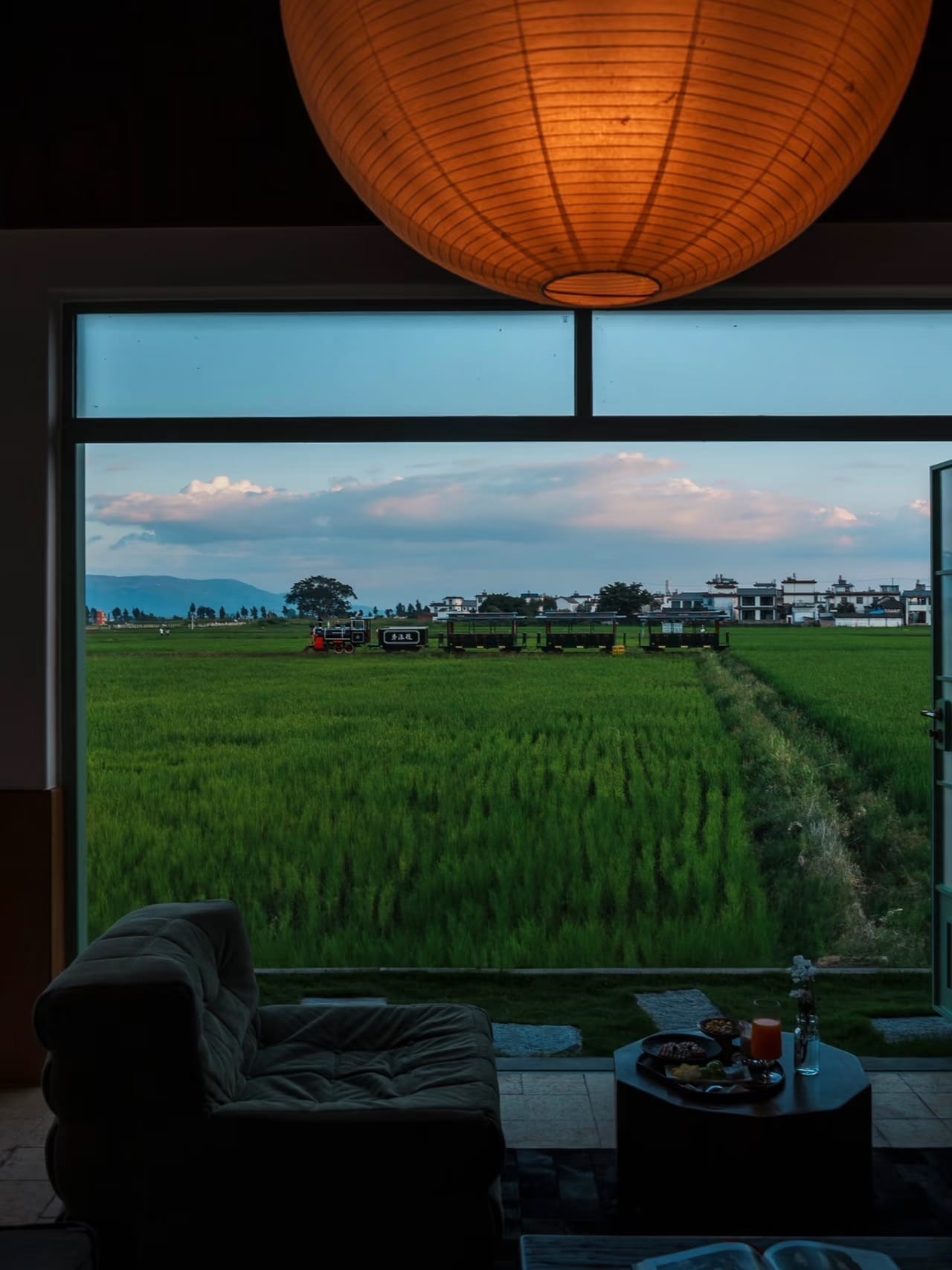
Most travelers see enough in half a day and sleep in Dali Old Town. Stay the night if you want the streets before 9 AM and the fields at sunrise and sunset. If you do, we recommend the rice-field area: rooms there look onto the fields and Cangshan Mountain, and it’s quiet at night.
Shops close by 8 PM and the lanes are dark, so eat at your guesthouse or before 8.
Which area
Area | Best for | Low season | Peak season | Watch out for |
|---|---|---|---|---|
By the rice fields | Fields and Cangshan Mountain from your room | ¥140–400 | ¥500–1,000+ | Some are down narrow lanes; ask if they shuttle luggage by e-bike |
Old town core, near Sifang Street | Walking to food and sights | ¥200–400, often with breakfast | Higher | Noisier; ask for a room away from the street |
By Erhai Lake | Lake sunrise; evening ride on the Ecological Corridor | ¥140–200 | ¥500+ | 20 minutes’ walk to the old town |
In the rice-field area, Daoyin (稻隐) is a well-reviewed guesthouse. In the old town, Yunmei Bieyuan (云玫别院) is a converted courtyard close to the main street. For a heritage stay, the Linden Centre (喜林苑) runs a boutique hotel in the restored Yang Pinxiang house. Prices are from our own records; you can compare current rates on Trip.com.
Prices by tier
Tier | Low season | Peak season |
|---|---|---|
Budget | ¥100–200 | ¥200–400 |
Mid-range | ¥200–500 | ¥500–800 |
High-end | ¥500–1,000+ | ¥1,000–2,000+ |
Low season runs November to March, outside holidays. A good rice-field courtyard can cost just over ¥200 then. Over National Day, Chinese New Year and the summer school holidays, prices double. Book at least a month ahead for those dates.
Before you book
- Luggage: rolling a suitcase over the stone streets is hard work. Ask about a luggage pickup.
- Noise: converted old Bai houses often have thin walls. Newer buildings are quieter.
- Parking: if you’re driving, make sure the guesthouse has parking. Cars left in the old town get towed.
- Hot water and air conditioning: some cheaper places lack reliable versions of both. Check before you pay.
- Bathroom: make sure your room has its own. The public toilets in town are dirty.
- Phone signal: it can be weak deep in the fields. Ask if you need to work.
9. Practical Tips
These are the things we brief clients on before they walk into Xizhou: toilets and cash, local etiquette, getting around with a stroller or wheelchair, and what to pack.
Toilets, cash and help lines
The map board at Zhengyi Gate marks four public toilets. Skip the one near the Turning Corner Building; the free one next to Zhou Coffee (洲咖啡) is cleaner. Most shops take Alipay and WeChat Pay, but carry ¥200–300 in small notes, because some stalls and tie-dye studios only take cash. Bins are hard to find, so keep a bag for rubbish. The same map board lists the tourist information line (0872-2454009) and the complaint line (0872-2670384).
Local etiquette
Many courtyard houses are still family homes. If a gate has no ticket desk or shop sign, don’t walk in. Ask before taking a close-up portrait of anyone, and ask before photographing inside a temple, during a ceremony or in a lived-in courtyard. If someone says no, thank them and move on. In our experience most people say yes to a smile and a nod at the camera.
Strollers and wheelchairs
The streets are uneven stone and brick, and some lanes are narrow. Old compounds like the Yan Family Compound Museum have high door sills, so you’ll need to lift a stroller or wheelchair over them. The wide paths around the rice fields are flat and the easiest part of town. A light folding stroller helps, and so does starting before 8:30, when the lanes are empty.
What to pack
Xizhou sits close to 2,000 m: 1,975–1,990 m near the lakeshore, rising toward Cangshan. Most visitors don’t feel the altitude, but UV is strong even in winter. Bring sunscreen and a hat, plus a light jacket for the cool mornings and evenings. Mosquitoes are bad along the field paths in every month, so pack repellent too. For photos, light or bright colors stand out well against the white walls and green fields.
Frequently Asked Questions
Is Xizhou free to enter?
Yes. Xizhou Ancient Town has no entrance fee if you walk in through Zhengyi Gate. Only individual sights charge: the Yan Family Compound Museum costs ¥25 at the gate (¥21 on Trip.com) and the rice-field mini-train ¥35. The ¥80 combo ticket at the tourist center is optional.
Is the Xizhou combo ticket worth it?
Only if you don’t want to walk and want a guide. The ¥80 combo is a ¥20 shuttle, the ¥25 Yan Family Compound Museum and the ¥35 mini-train added up, with no discount. Everything in Xizhou is within walking distance of Zhengyi Gate, so most visitors skip the shuttle and pay ¥56 for the other two.
How far is Xizhou from Dali Old Town?
Xizhou is 18–20 km north of Dali Old Town. A taxi or ride-hail car takes 30–40 minutes and costs ¥30–40. A minibus along the Dian-Zang Highway costs ¥7–10 and takes 30–60 minutes.
How much time do you need in Xizhou?
Half a day is enough. Our 12-stop walking loop from Zhengyi Gate to the rice fields and back through the old mansions takes 4.5 hours. Skip the three southern mansions and it takes 3 hours 45 minutes.
Should I visit Xizhou or Shaxi?
With one spare day in Dali Old Town, choose Xizhou. It’s 30–40 minutes away and works as a half-day trip. Shaxi is much farther and fits best as an overnight stop on the way to Lijiang.
Can I visit Xizhou on the way from Dali to Lijiang?
Yes. Xizhou and the tie-dye village of Zhoucheng are both north of Dali Old Town on the road to Lijiang. On our trips we usually visit both on the Dali to Lijiang travel day: Xizhou first, then Zhoucheng, which is farther along the same road.
When are the rice fields in Xizhou golden?
The rice turns gold through October and is fullest in late October. From July to September the fields are green. In March and April you’ll see green wheat instead of rice.
Can foreign visitors pay by card or phone in Xizhou?
Most shops and restaurants take Alipay and WeChat Pay, and both apps accept foreign bank cards. Carry ¥200–300 in cash as well. Some market stalls and tie-dye studios only take cash.
Can you cycle from Dali to Xizhou?
Yes. It’s an 18–20 km ride, and the Erhai Ecological Corridor along the lake is closed to motor traffic. Take a jacket for the ride back, because the lake wind turns cold after 5 PM.
Is it worth staying overnight in Xizhou?
Only if you want sunrise over the fields or the streets before 9 AM. Most travelers see enough in half a day. If you do stay, pick a guesthouse by the rice fields and eat dinner before 8 PM, when most places close.
We plan private Dali trips with Xizhou included. Get in touch to plan yours. For the rest of the region, see our Dali travel guide.