Mount Emei Travel Guide: Tickets, Fees & All Routes
Planning Mount Emei right now means dealing with a few things that weren’t true a year ago: the Golden Summit caps entries at 8,000 a day, one of its two cable cars has been down for maintenance since mid-2026, and several of the low-mountain temples dropped their entry fees back in January. None of that shows up in most guides still floating around online, and it changes how you should actually plan the trip — which is what this one is for. Tickets, the bus and cable car system, one-day versus two-day routes, all eight official hiking trails, where to stay depending on what you’re there for, and when to go if you want a shot at the sea of clouds or sunrise.
We’ve been building this trip for clients out of Sichuan since 2006, and it’s one we run more than almost anything else on the itinerary. What’s below is the same thing we’d actually tell someone booking with us — not a rewrite of what everyone else has already published.
Peak elevation | 3,099m (Golden Summit) |
|---|---|
Opening hours | 6:00 AM–6:30 PM (May–early Oct) / 7:00 AM–5:30 PM (mid Oct–Apr) |
Entrance ticket | ¥160 peak (Jan 16–Dec 14) / ¥110 off-peak (Dec 15–Jan 15) |
Golden Summit cable car | ¥120 round-trip peak / ¥50 off-peak |
Sightseeing bus, base to Leidongping | ¥90 round-trip |
Table of Contents
1. Mount Emei Overview & Highlights
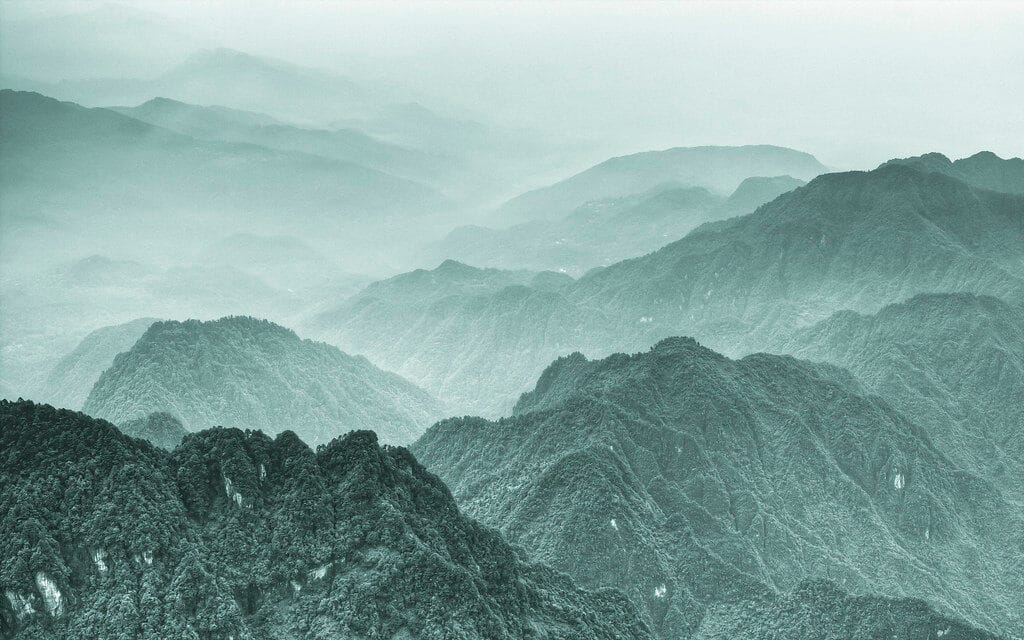
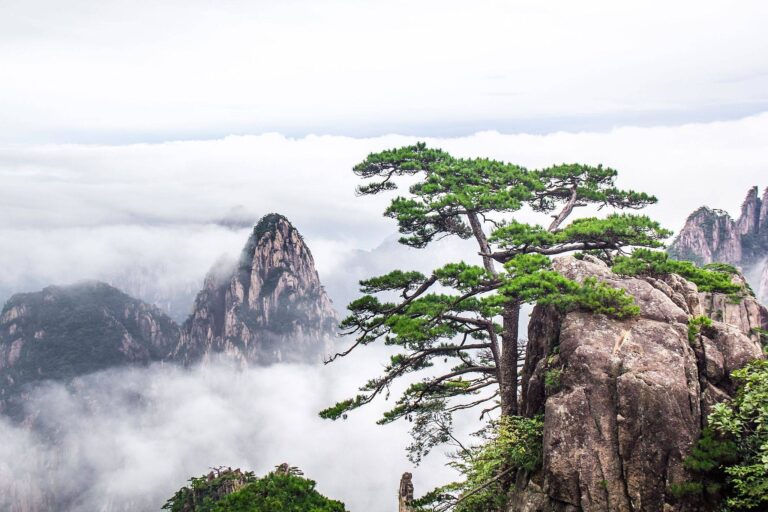
Mount Emei isn’t a single peak — it’s a 154-square-kilometer (15,400-hectare) range, one of China’s Four Sacred Buddhist Mountains alongside Wutai, Putuo, and Jiuhua, and the tallest of the four by a wide margin. It’s traditionally held as the earthly seat of Samantabhadra, the bodhisattva whose statue crowns the summit. Locals sum up what makes it distinctive in one line: yi shan you si ji, shi li bu tong tian — “one mountain, four seasons; ten miles, different skies.” Climb from the 533m base to the 3,099m summit and you pass through subtropical forest, temperate woodland, and alpine cloud, often in the same day, through more than 3,200 recorded plant species — over 100 of them found nowhere else on Earth (UNESCO World Heritage listing).
The scenic area splits into three bands by elevation, and it helps to think of the mountain this way rather than as one long list of stops.
Low mountain (below Qingyin Pavilion) — temples and easy walking
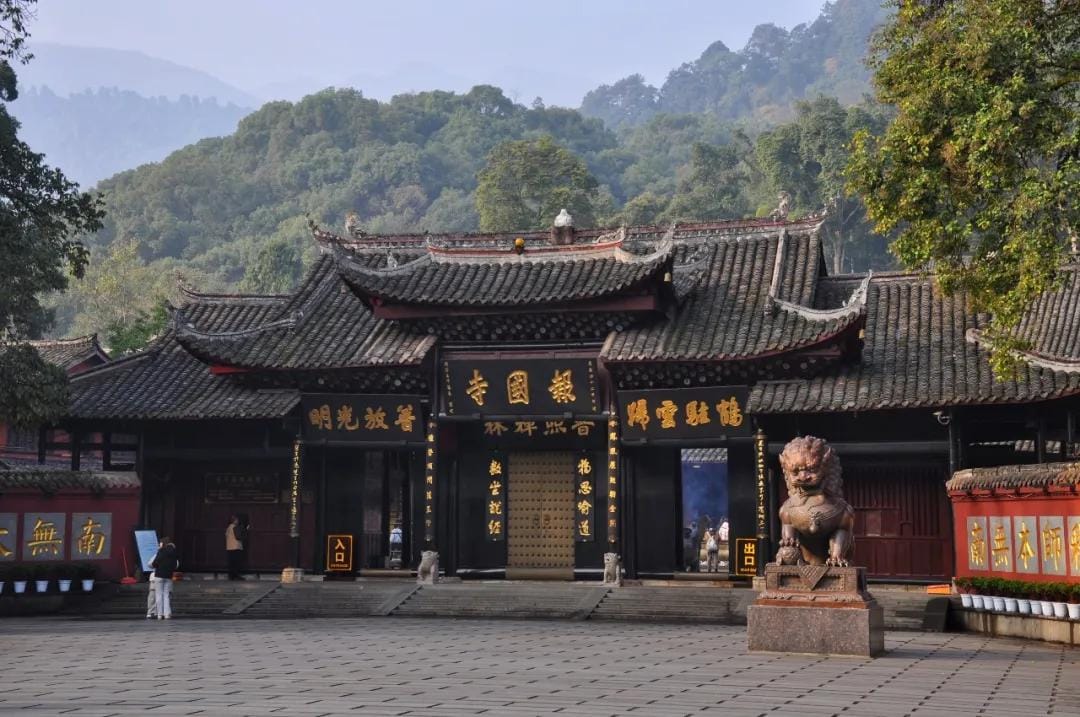
Baoguo Temple — The gateway, at 533m. Built in the Ming dynasty and renamed by the Kangxi Emperor in 1703, with a 14-tier bronze pagoda cast with 4,700 tiny Buddha images. Free to enter since 2026.
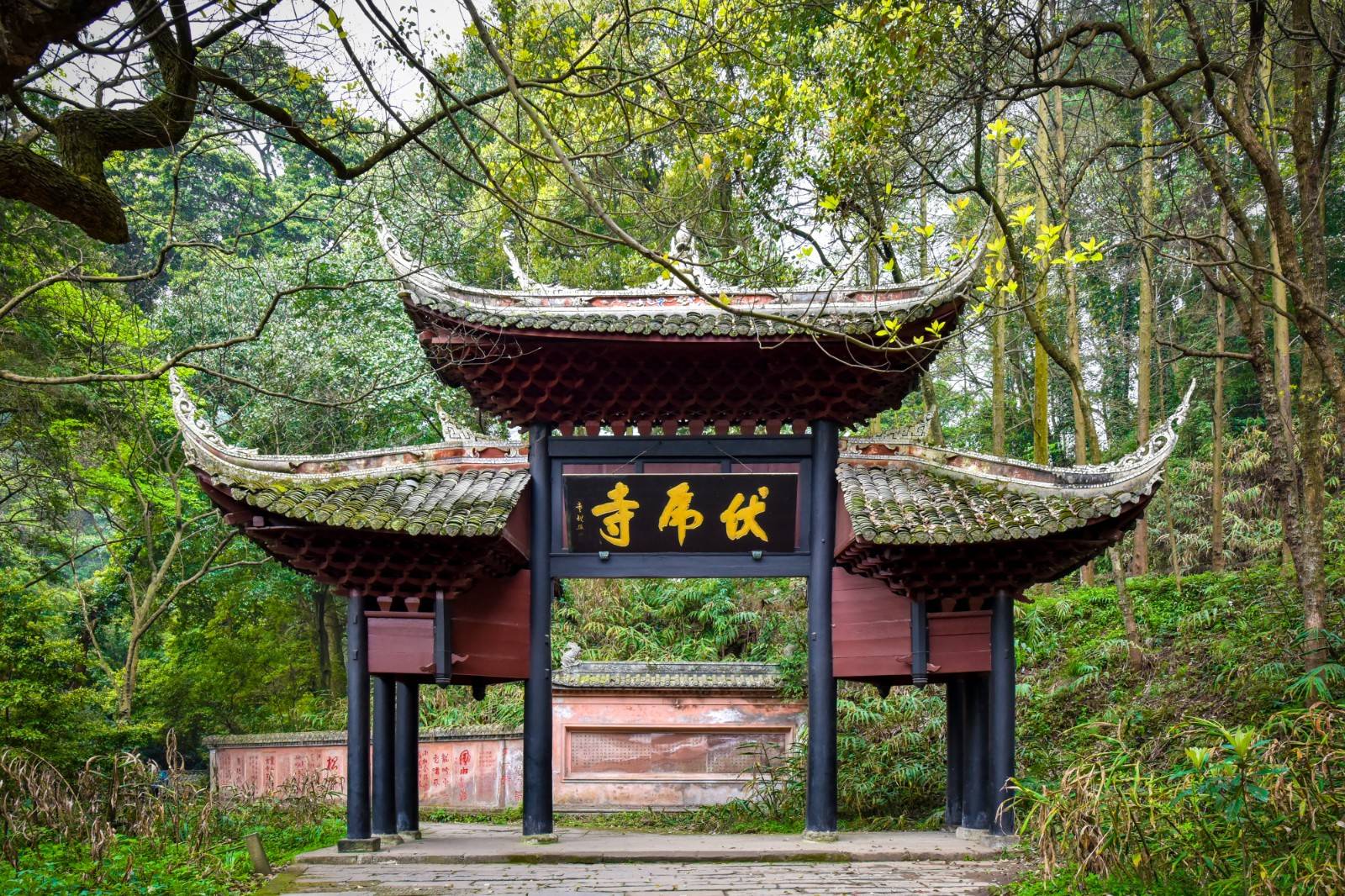
Fuhu Temple — A quieter Tang-dynasty temple just past Baoguo, tucked into forest along a stream — also free, and usually less crowded.
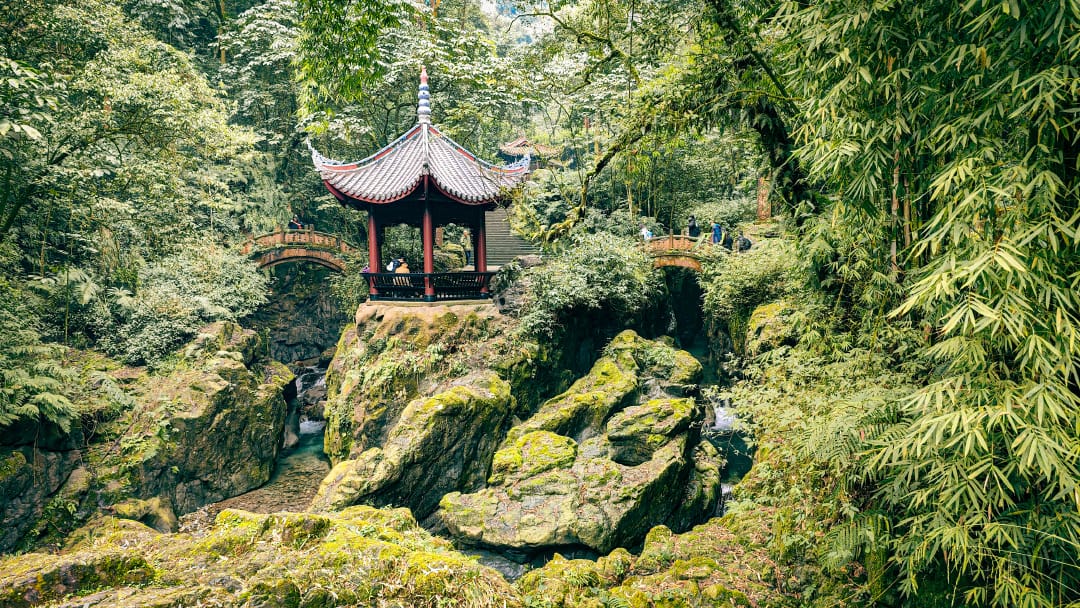
Qingyin Pavilion — The “Twin Bridges, Clear Sound” scenery: two stone bridges over the confluence of the Black and White Dragon streams. A rest stop with real atmosphere, not just a photo stop.
Mid mountain (Qingyin Pavilion to Xixiangchi) — monkeys, gorges, and the mountain’s oldest temple
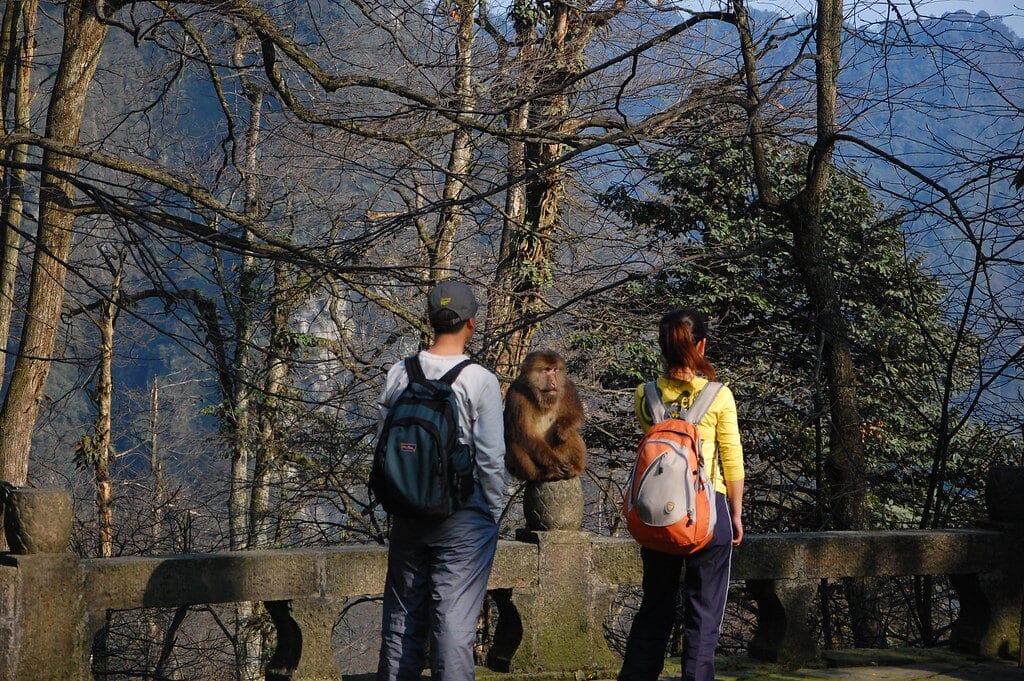
Ecological Monkey Zone — Wild Tibetan macaques near Wuxiangang, the mountain’s most-photographed stretch — see Section 9 for how to handle them.
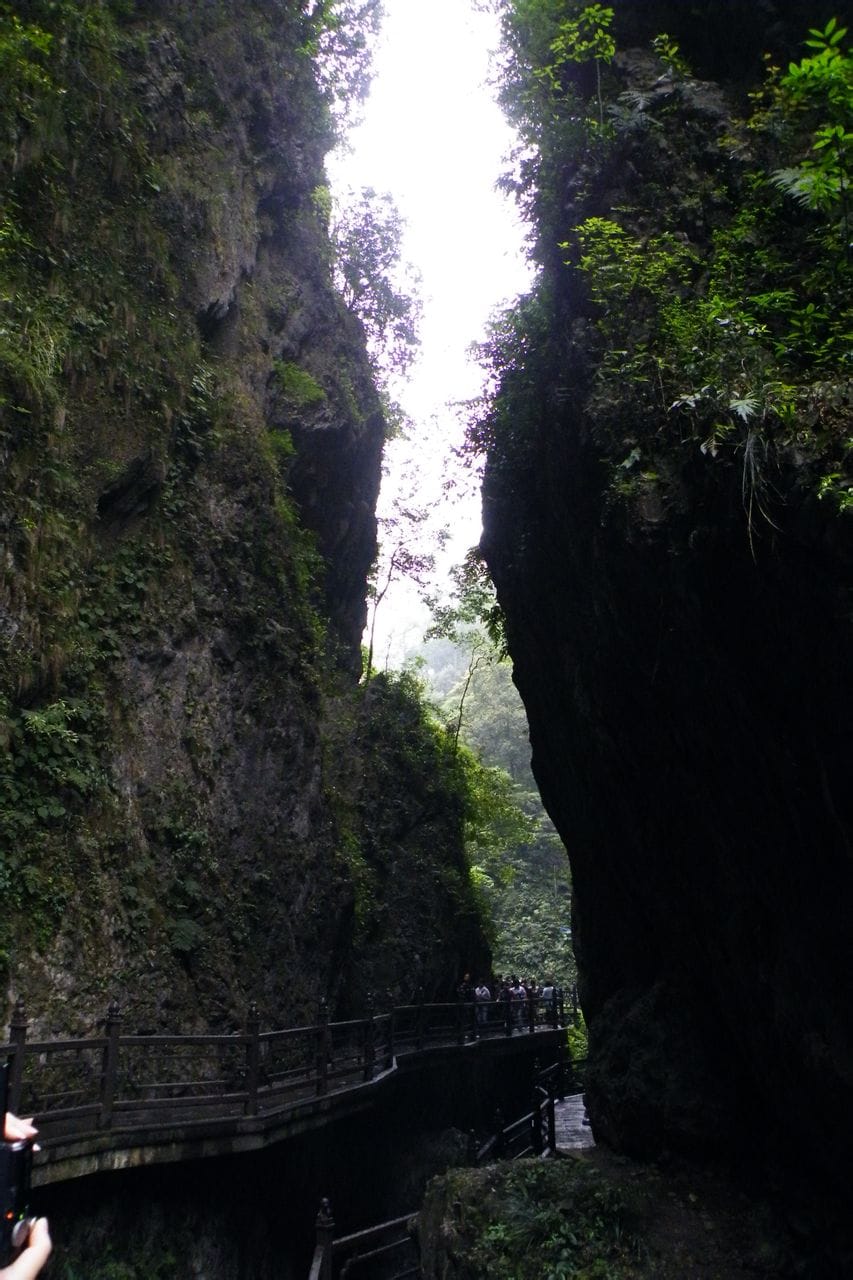
Yixiantian (“A Line of Sky”) — A narrow stream-carved gorge past Qingyin Pavilion, worth a detour if you have an extra hour and want somewhere cool in summer.
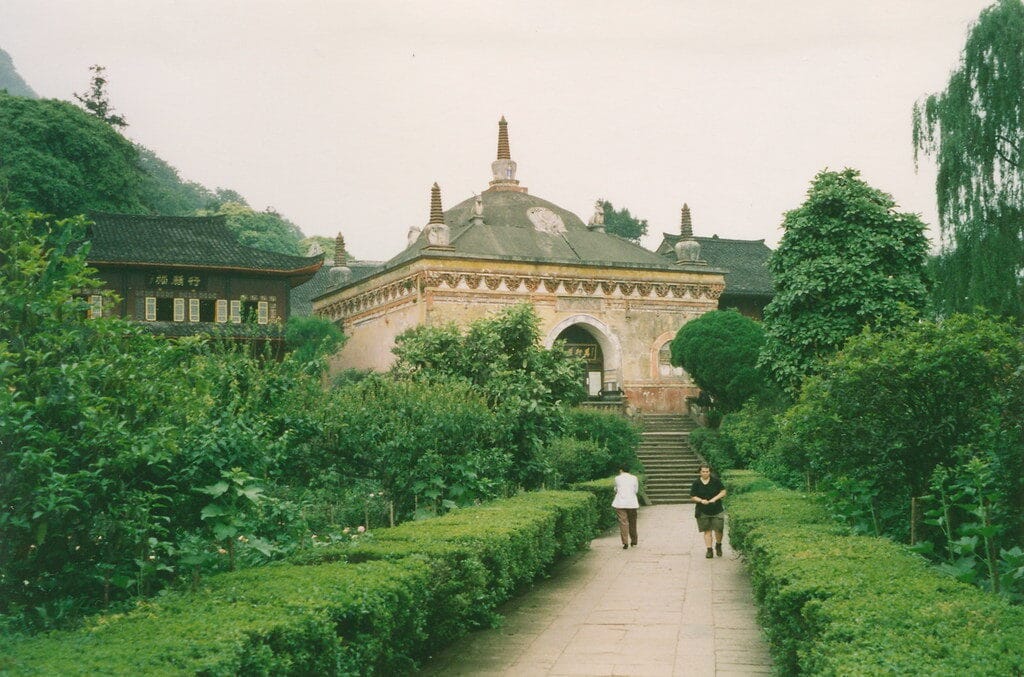
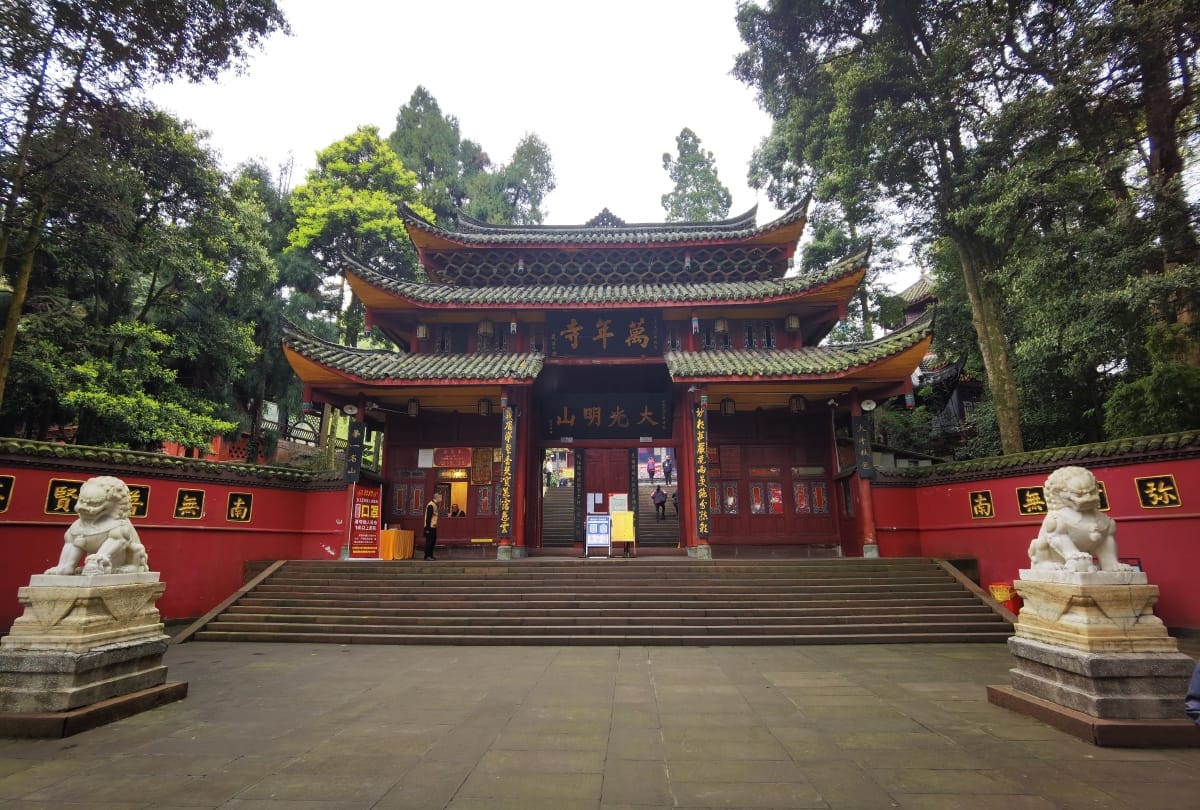
Wannian Temple — The oldest temple on the mountain, dating to the 4th century. Its centerpiece is a Song-dynasty bronze Samantabhadra riding a six-tusked elephant — 7.85m tall, cast in 980, 62 tons — housed in a purpose-built beamless brick hall. If you visit only one temple beyond Baoguo, make it this one — we’ve brought clients here for two decades, and it’s the stop that consistently gets the strongest reaction.
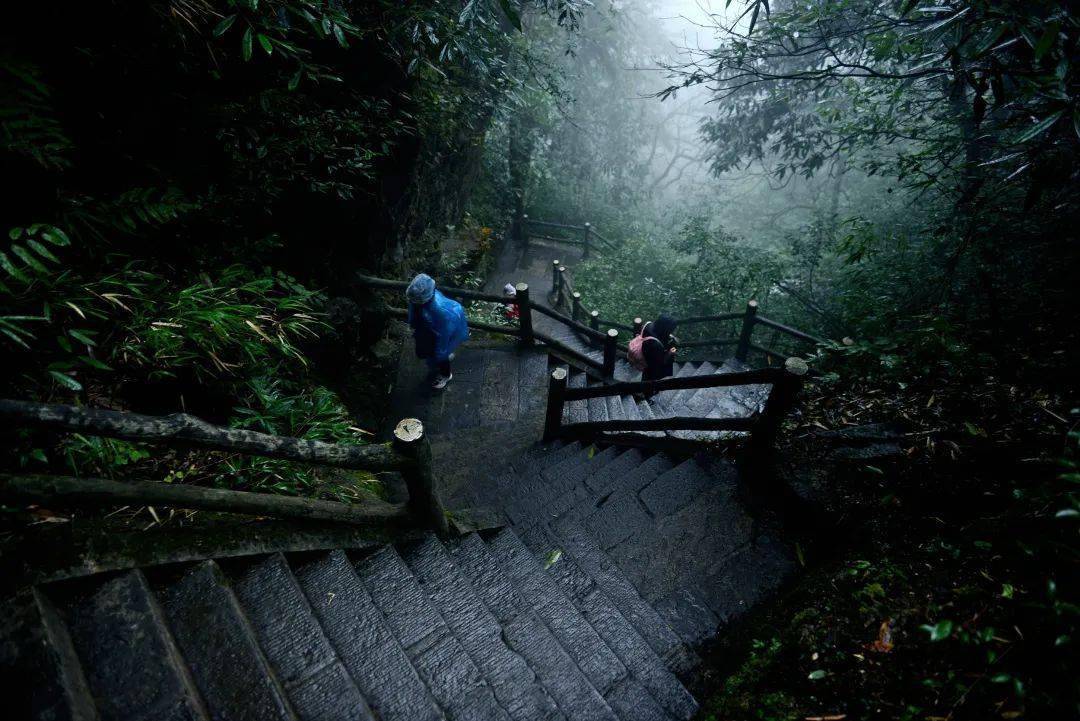
The 99 Bends — The famous switchback climb where the trail turns from walk to hike, covered in detail with the routes in Section 5.
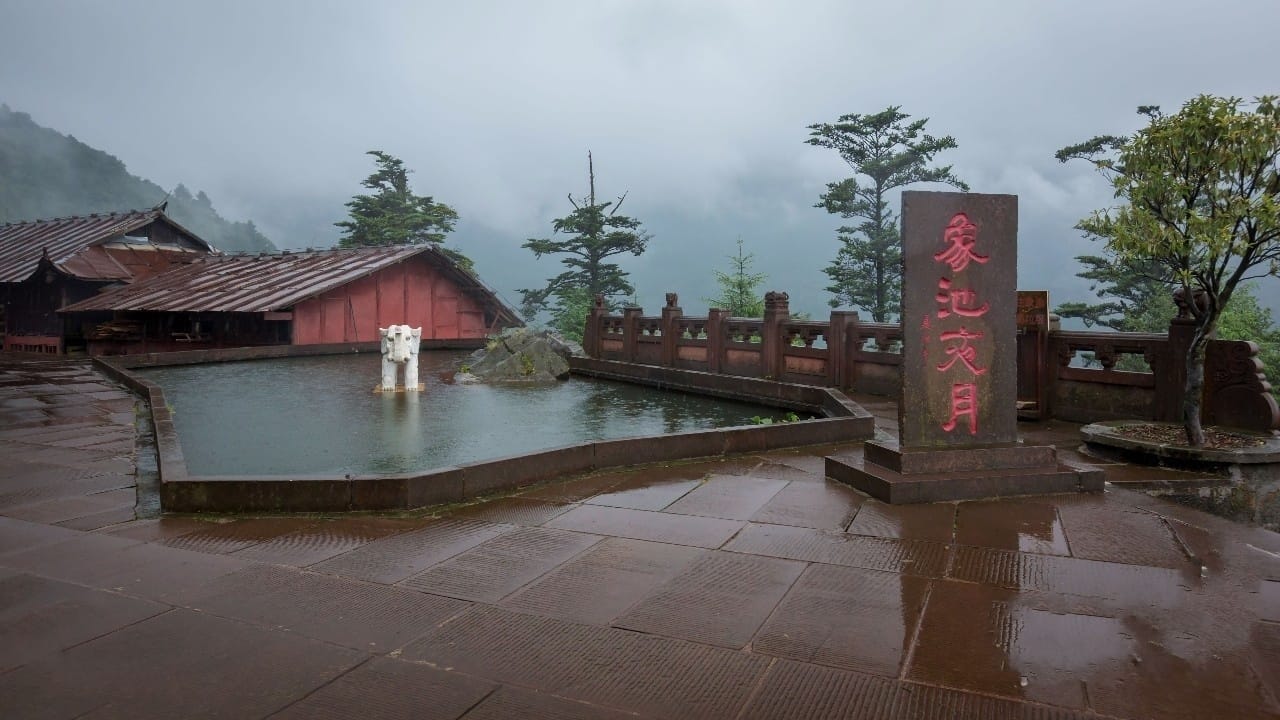
Xixiangchi (Elephant-Bathing Pool) — A mid-mountain rest point on the harder hiking routes, named for the legend that Samantabhadra’s elephant bathed here.
High mountain (above Xixiangchi) — the summit push
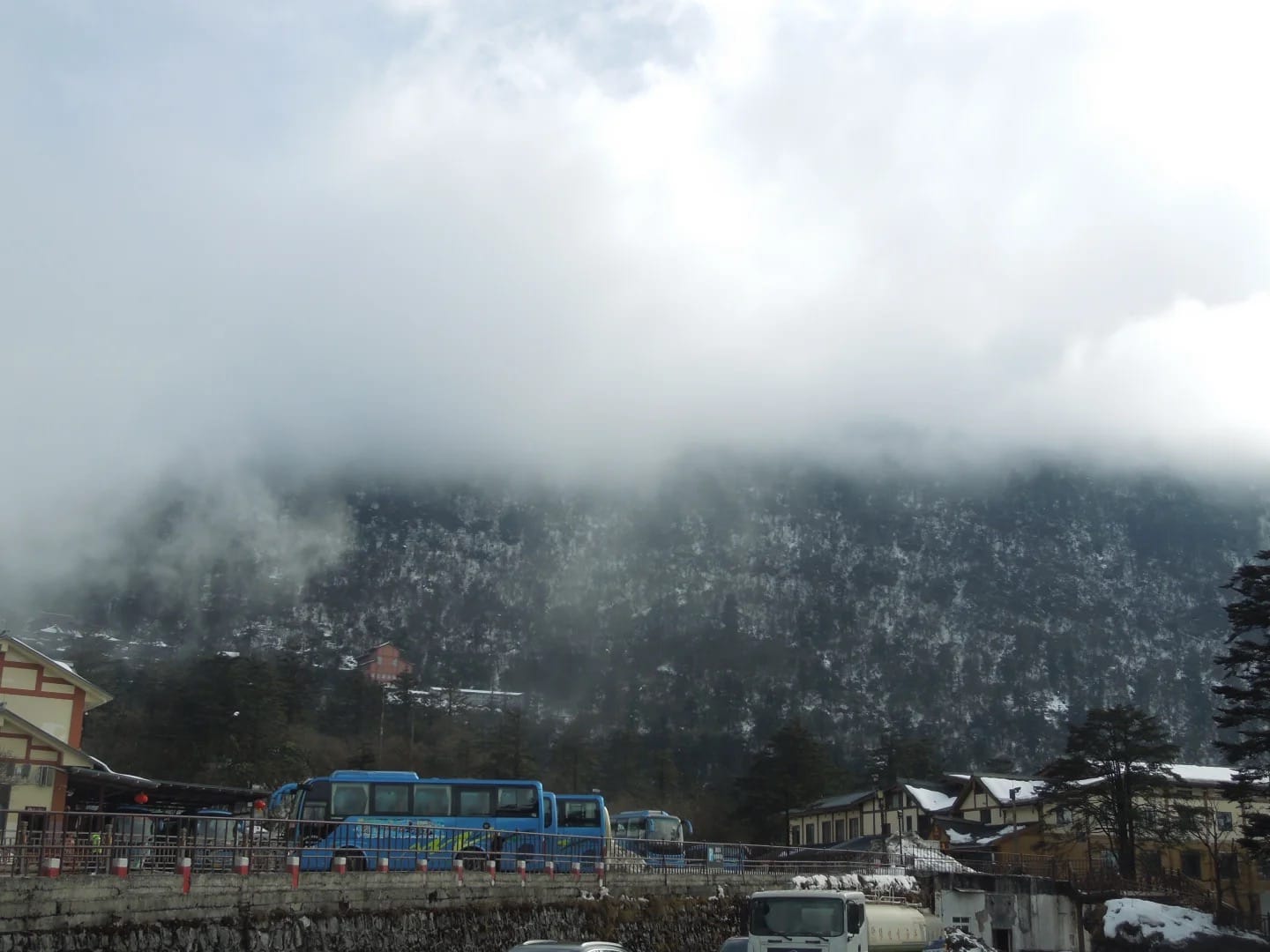
Leidongping and Jieyin Hall — The transport hub where the sightseeing bus ends and the walk to the Golden Summit cable car begins.
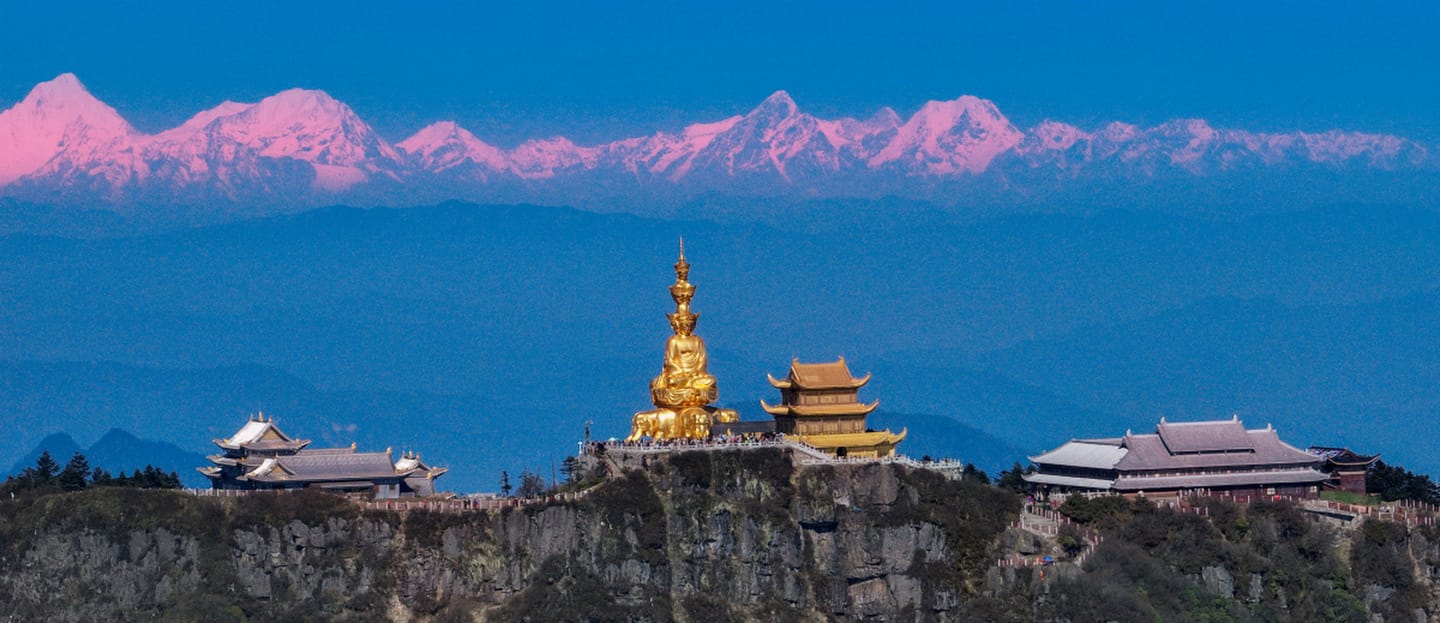
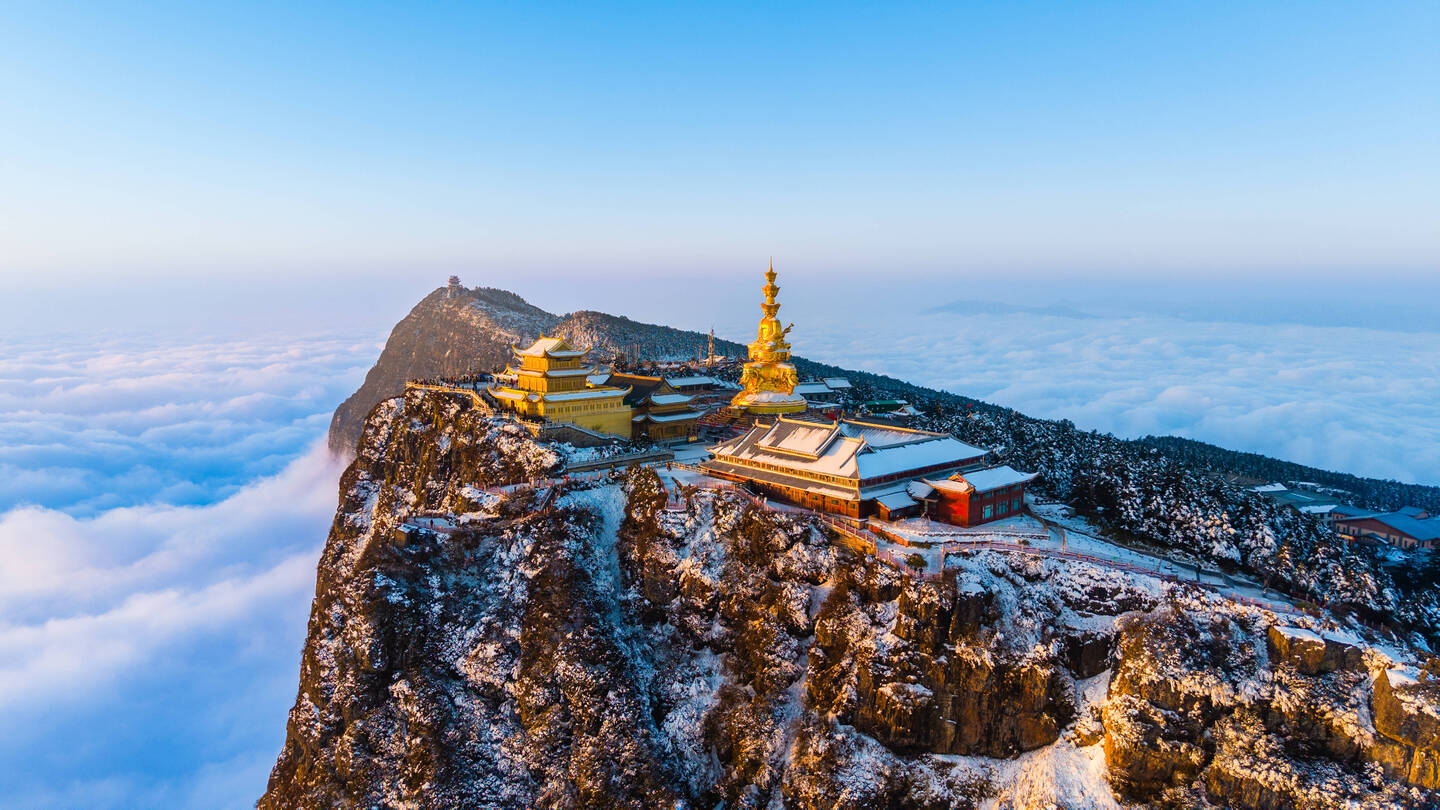
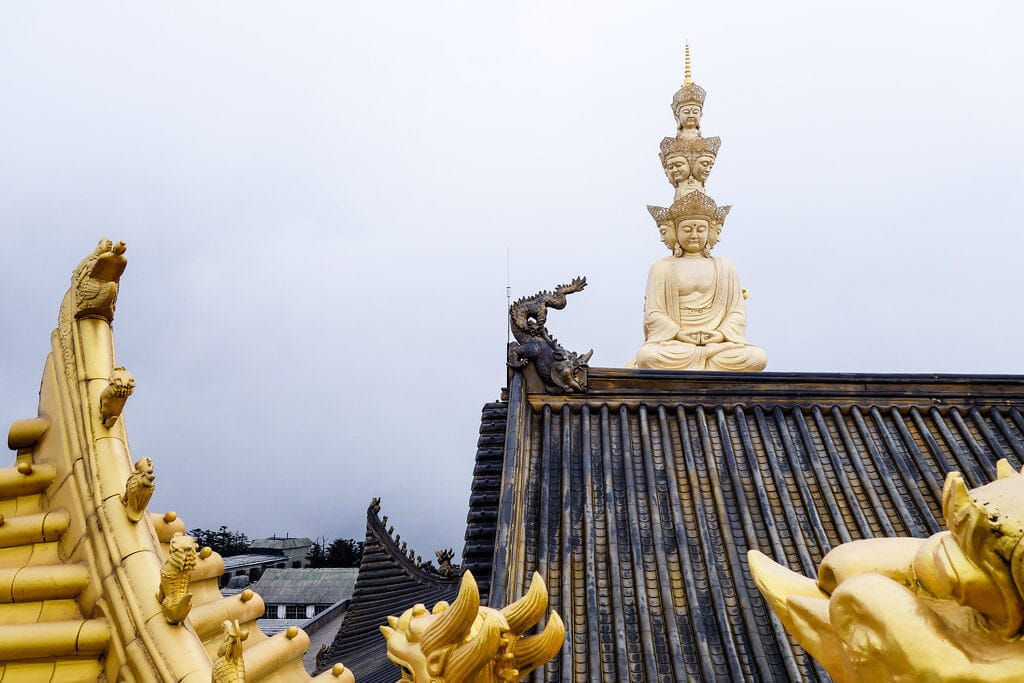
Golden Summit — The top, at 3,099m, home to the 48-meter Ten-Direction Samantabhadra Golden Statue and Huazang Temple. This is where the Four Wonders — sunrise, sea of clouds, Buddha’s halo, and holy lamps — appear, weather permitting, and where almost every itinerary ends. Local custom holds that touching the statue’s base brings good fortune.
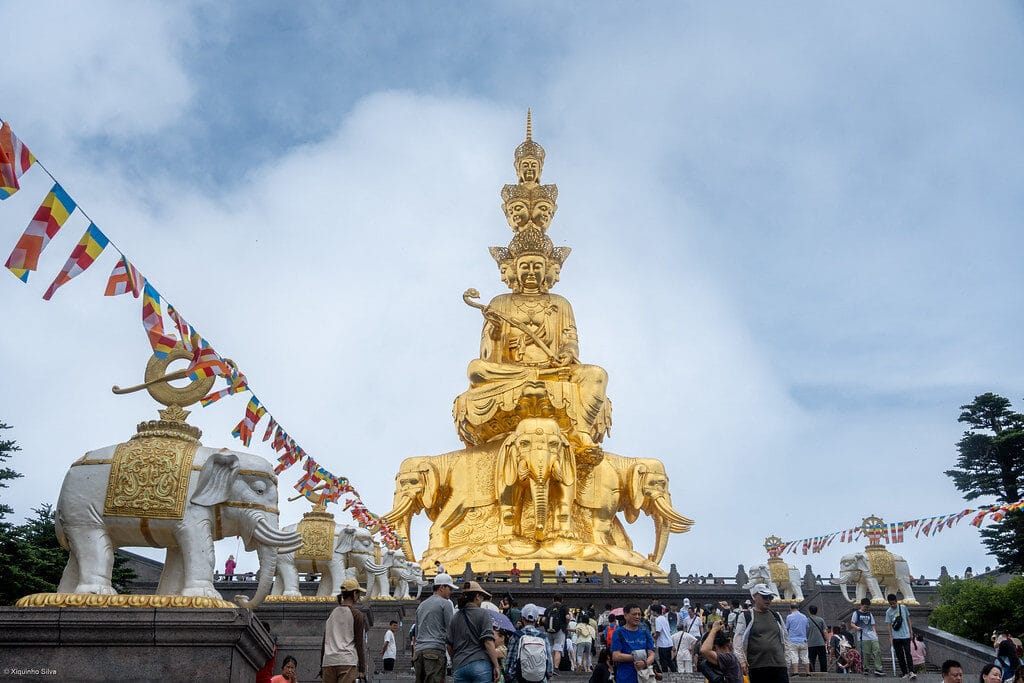
Since January 1, 2026, Baoguo, Wannian, and Fuhu temples no longer charge separate entrance fees — all three are included in your main scenic area ticket. Older guides still listing ¥8–10 per temple are out of date.
2. Mount Emei’s Four Wonders — What You’re Actually Hoping to See
Everyone climbing Emeishan is chasing one or more of its Four Wonders. None are guaranteed — but each follows conditions specific enough to plan around.
Sunrise
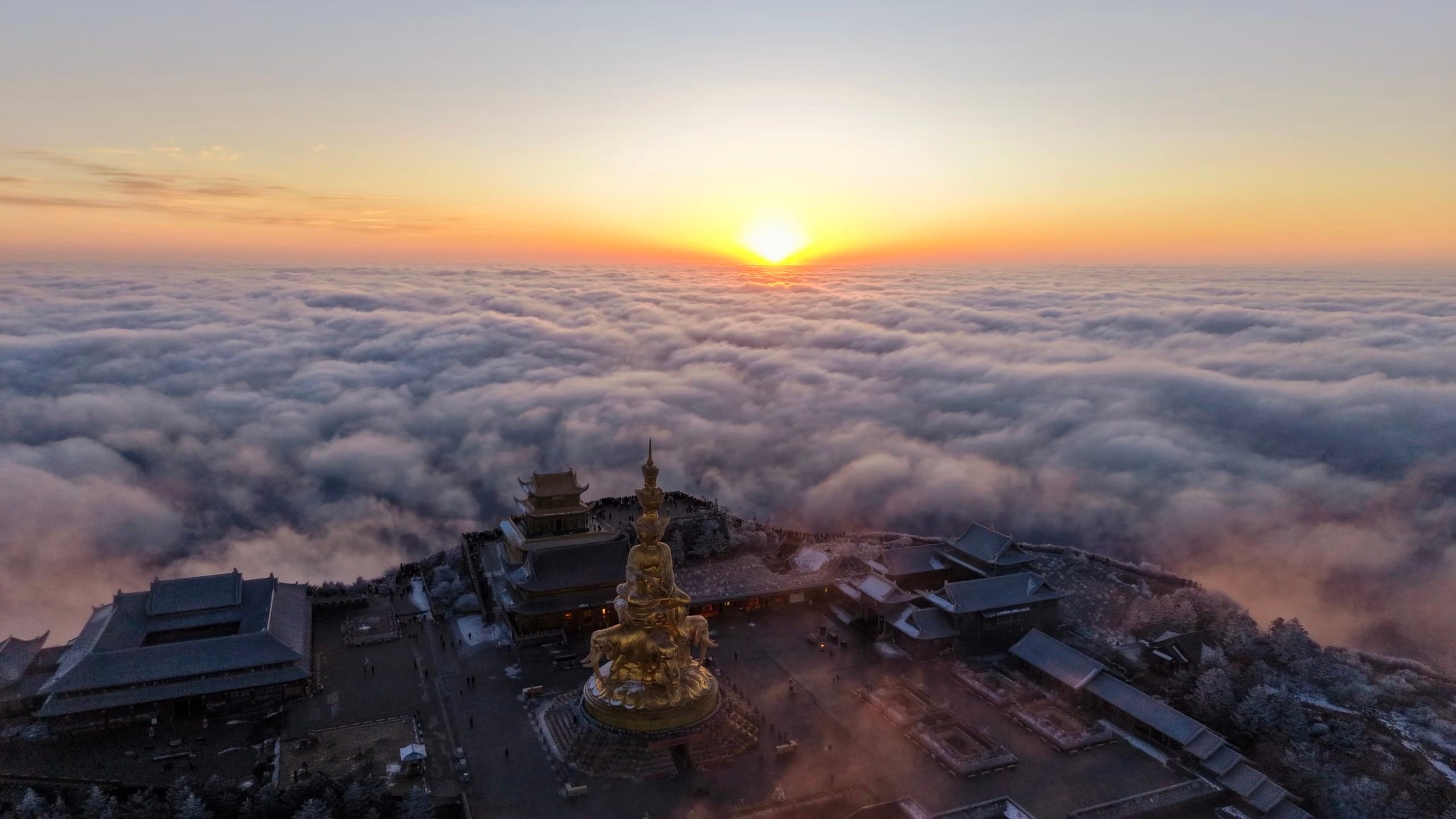
The Golden Summit’s unobstructed 360° view makes it one of China’s best sunrise spots. It breaks around 7:00 in winter, 5:30–6:20 in summer. Seeing it means staying overnight at the summit or Leidongping, then reaching the viewing platform 20–30 minutes early.
Sea of clouds
The wonder you’re most likely to see. It follows a specific pattern: rain the evening before, then clear skies at dawn. The rain loads the valley with moisture; the morning temperature swing condenses it into a cloud layer that sits below the summit while the sky above stays clear.
Condition | What helps |
|---|---|
Weather pattern | Rain the evening before, clear the next morning |
Humidity | 80–95% |
Wind | Low |
Season | October–February (strongest) |
Time of day | 6:00–8:00 AM, before rising heat breaks up the clouds |
If the forecast says “rain tonight, clear tomorrow,” that’s your signal to get up early.
Buddha’s halo
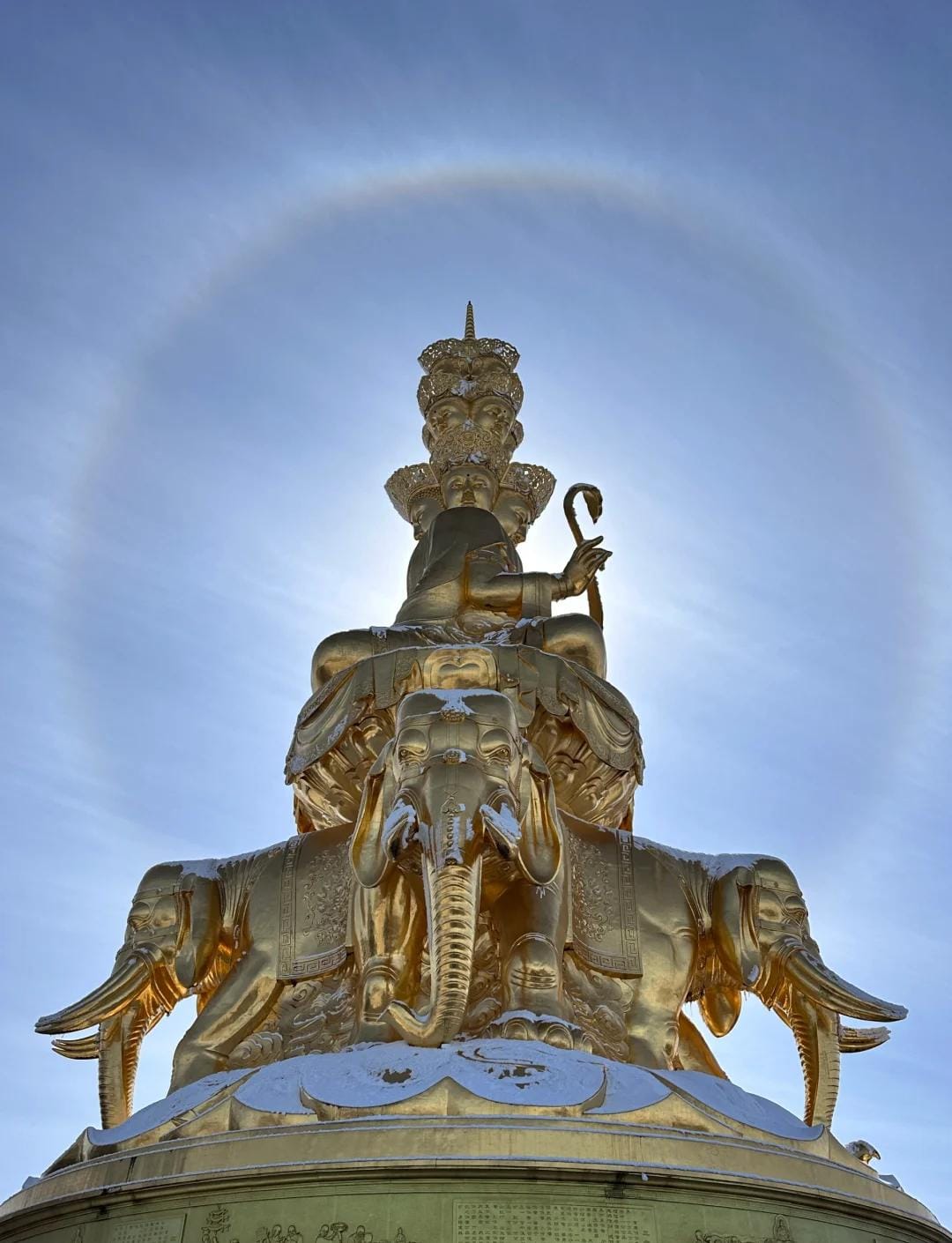
The rarest reliably-seen wonder, and the most misunderstood — it’s not a light in the sky. It’s a rainbow ring that forms around your own shadow when the shadow falls on the cloud layer below you.
How to see it: Stand at Sheshen Cliff with your back to the sun, facing the clouds, and lean forward so your shadow falls on the mist. The halo forms around the shadow’s head. Best windows are winter afternoons (14:00–16:00) and summer mornings (9:00–11:00). It can vanish in seconds, so have your camera ready before you start looking, not after.
For this shot | Do this |
|---|---|
Phone | Flash off (it kills the halo), HDR mode, burst shooting, wide angle for the full ring |
Camera | f/8–f/11, ~1/250s, ISO 100–200, slight underexposure (~-0.7EV) |
Position | Stay a safe distance from the cliff edge — the shot works fine from back a few steps |
Holy lamps
The rarest wonder by far — faint blue or amber lights drifting in the valley at night, traditionally read as offering lamps before the Buddha. They need clear skies after rain, no moonlight, no cloud cover, and no wind — a combination that rarely lines up. Treat it as a bonus, not a plan.
Sunrise and the sea of clouds are the two worth planning around — most guests who see either call the trip worthwhile. Buddha’s halo is luck even in the right season; holy lamps are close to a once-in-many-visits event.
3. Mount Emei Tickets and the Sightseeing Bus System
Emeishan’s transport isn’t one bus route — it’s three zones stacked on top of each other, priced separately. Most guides collapse this into a single “¥90 round-trip” line that only tells part of the story. Here’s the full picture.
Entrance ticket
Peak (Jan 16–Dec 14) | Off-peak (Dec 15–Jan 15) | |
|---|---|---|
Adult | ¥160 | ¥110 |
Child/student (1.2–1.5m tall, or ages 6–17) | ¥80 | ¥55 |
Free entry | Children under 1.2m or age 6; adults 70 and older with ID | Same |
Half-price for seniors 65–69 with ID | ¥80 | ¥55 |
Valid for | 48 hours from first use — you can stay overnight and continue the next day on the same ticket |
The scenic area publishes a daily ticket cap and shows live remaining inventory on the official booking platform. Since May 23, 2026, the Golden Summit area specifically has capped entry at 8,000 tickets a day, tied to the ongoing cable car and station upgrade (company announcement reported by China Fund News). Book a day or more ahead during peak season and holidays rather than counting on same-day availability.
One exception: the low-mountain stretch from Baoguo Temple to Longshenggang — about 7–10km of forest, temples, and streams — requires no ticket at all. Longshenggang is the actual checkpoint; only continuing past it toward Qingyin Pavilion or the summit requires paid admission.
Opening hours change by season
The scenic area gate itself runs 6:00 AM–6:30 PM in summer and 7:00 AM–5:30 PM in winter (see Quick Facts). But the sightseeing bus and cable car — what actually gets you up the mountain — run a tighter window:
Summer (May–Oct) | Winter (Nov–Apr) | |
|---|---|---|
Sightseeing bus | 6:00 AM–5:00 PM | 7:00 AM–4:00 PM |
Cable car | 6:30 AM–5:30 PM | 7:30 AM–4:30 PM |
Plan your last ride down around the bus/cable car window, not the gate hours — winter closes a full hour earlier than summer, and getting caught on the mountain after the last car means an unplanned night up there.
Storing luggage before you climb
Don’t carry a suitcase up the mountain — every itinerary above assumes you’re traveling light. Two convenient storage points:
- Emeishan high-speed rail station: the station’s own counter charges about ¥20 per suitcase or ¥10 per backpack (add ¥10 after 5pm). A China Post counter just outside charges roughly ¥10 per item regardless of size; both allow overnight storage.
- Baoguo Temple bus station: lockers run about ¥1/hour, capped at ¥12/day, for up to three days — but only fits small bags, not full suitcases.
Summer discount ticket for the mid-mountain zone
From July 3 to September 22, 2026, a discounted ticket covers the mid-mountain zone only — Qingyin Pavilion, Wannian Temple, and the Ecological Monkey Zone: ¥80 for adults, ¥40 for standard discount categories.
It does not include Leidongping or the Golden Summit. If the summit is on your itinerary, skip this and buy standard admission — this is a seasonal promotion, not a substitute for the regular ticket.
Sightseeing bus — three zones, priced separately
Think of the mountain as three stacked sections. You only pay for the sections you actually use.
Route | One-way | Round-trip | Covers |
|---|---|---|---|
Low mountain: Base ↔ Zero Kilometer | ¥20 | — | Base (Baoguo, Huangwan, or the rail station) up to Zero Kilometer, a transit hub — not a scenic stop itself |
Mid mountain: Wuxiangang/Wannian ↔ Zero Kilometer | ¥20 | ¥40 | Wuxiangang/Wannian Temple area down to Zero Kilometer |
Mid mountain direct: Wuxiangang/Wannian ↔ Leidongping | ¥40 | ¥70 | Wuxiangang/Wannian Temple straight up to Leidongping, skipping the Zero Kilometer transfer |
Mid mountain short hop: Wuxiangang ↔ Wannian Temple | ¥10 | — | Just the Wuxiangang–Wannian Temple stretch, for the temple-and-monkey-zone loop |
High mountain: Zero Kilometer ↔ Leidongping | ¥30 | ¥50 | Zero Kilometer up to Leidongping, where the Golden Summit cable car starts |
Full mountain: Base ↔ Leidongping | — | ¥90 | Everything above, base to Leidongping, in one ticket |
If you’re going straight to the summit from the base, book the ¥90 full-mountain round-trip — it’s the cheapest way to cover the whole route and it’s what our one-day itinerary in Section 4 assumes.
Booking order — the system enforces this strictly
Purchase in this order: entrance ticket → sightseeing bus → cable car. Refunds go in reverse. Booking or cancelling out of sequence simply fails — this trips up more clients than any pricing detail.
Reserving your bus time slot
Since March 2026, the bus to Leidongping requires booking a specific departure window:
Slot | Notes |
|---|---|
06:00–07:30 | Sells out first — book this if you want morning light at the summit |
07:30–09:30 | Also sells out early during peak season |
09:30–11:30 | Usually available |
11:30–13:30 | Usually available |
You’ll pick a departure point (Huangwan/rail station/Baoguo for the low mountain, or Wuxiangang/Wannian for mid-mountain starts) before choosing a slot. If the Leidongping bus is sold out for the day, you can still buy a mid-mountain ticket to Wannian Temple or Qingyin Pavilion and spend the day there instead.
Cable cars
Both cable cars charge differently for up and down.
Cable car | Up | Down | Round-trip |
|---|---|---|---|
Golden Summit | ¥65 | ¥55 | ¥120 |
Wannian | ¥65 | ¥45 | ¥110 |
The Golden Summit has two cars worth knowing apart: #1 is large (~100 people, standing room) and fast; #2 is small (seated, slower) and normally the better ride for scenery, with its own time-slot reservation for the downhill trip. Many repeat visitors ride #2 up and #1 down for both the view and the shorter queue back.
Note: as of mid-2026, Cable Car #2 is closed for maintenance, so all traffic currently runs through #1 and queues are longer than usual — book your slot online ahead, and check the official platform for current status before you go. Even in normal times this is the mountain's busiest chokepoint. UNESCO's own assessment of the site cites roughly 300,000 visitors a year passing through the Golden Summit cable car (UNESCO World Heritage listing) — the crowding isn't incidental, it's a structural feature of visiting the summit, maintenance or not.
Combined ticket with the Leshan Giant Buddha
Ticket type | Price |
|---|---|
Adult | ¥198 |
Child (1.2–1.5m) | ¥78 |
Youth (above 1.5m) | ¥78 |
This covers entrance to both sites only — Emeishan’s sightseeing bus and cable car, and Leshan’s boat tour, are booked separately. → See our Leshan Giant Buddha guide for those details.
A few operational notes
The scenic area is closed outside the seasonal hours above; walking the Zero Kilometer–Leidongping road on foot is prohibited at any hour. During peak periods the road to Zero Kilometer sometimes closes to private cars — buy the extra low-mountain leg at the visitor center instead. Zero Kilometer can ice over in winter — carry chains or grip aids.
4. Sample Mount Emei Itineraries: One Day or Two
Whether you’re taking the cable car straight up or tackling one of the eight hiking routes in Section 5, it all needs to fit into an actual day (or two). Here’s how we structure both.
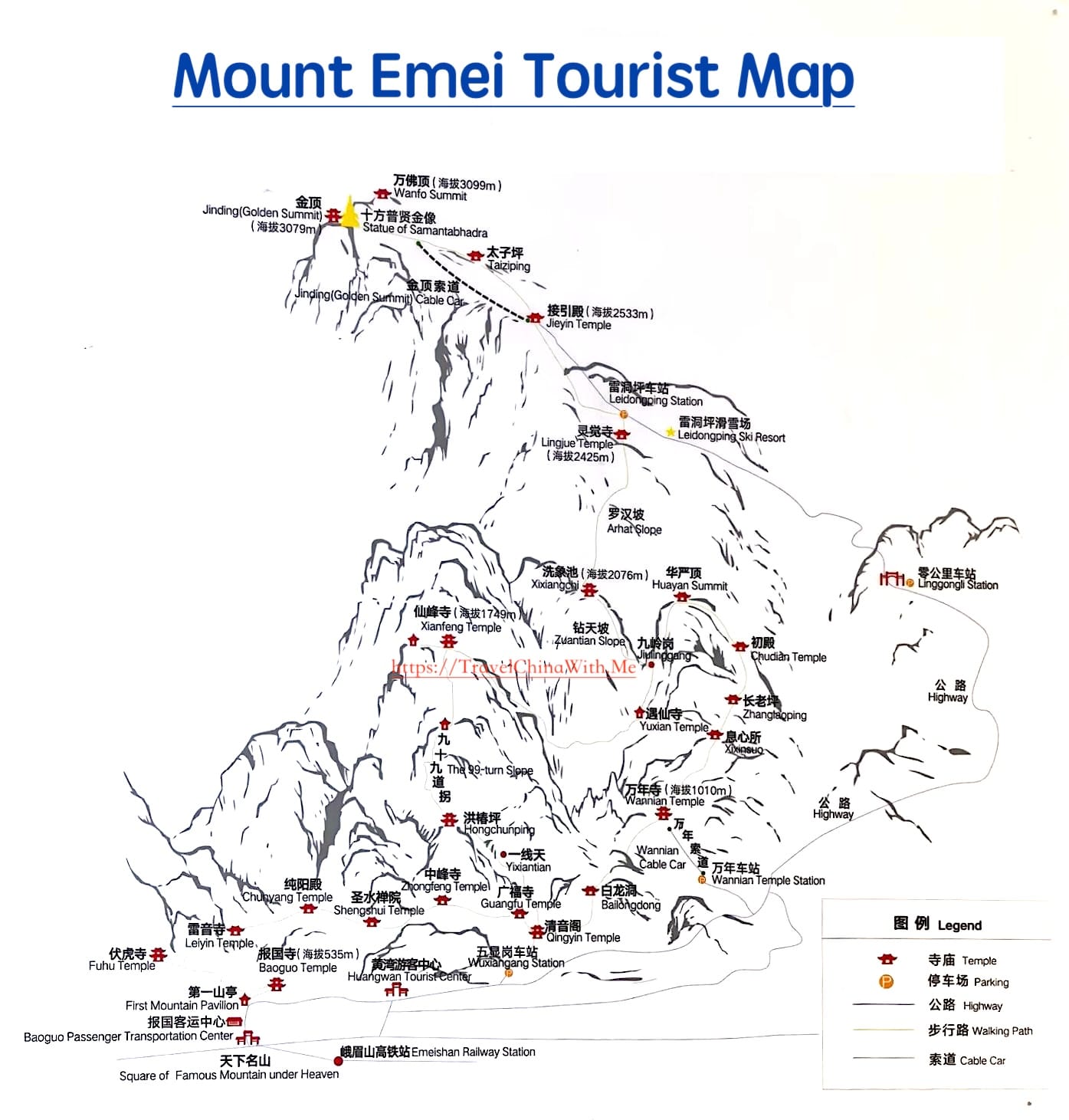
One-Day Itinerary: Golden Summit + Mid-Mountain Highlights
This is the itinerary we default to for clients doing Emeishan as a single day — summit first while the cable car queue is short, then downhill through the mid-mountain temples in the afternoon when traffic is lightest.
Coming from Chengdu: this assumes you’re already in Emeishan the night before — the earliest train from Chengdu arrives around 8:00–9:00, later than the 07:00 departure below. A true same-day round trip is possible but tight; we recommend staying at the base the night before instead (Section 8).
Morning: Straight to the Summit
Time | Step | Notes |
|---|---|---|
07:00 | Depart Huangwan visitor center | Sightseeing bus, about 2 hours — winding mountain road, motion sickness medication is worth packing if you’re prone to it |
09:00 | Arrive Leidongping | Walk 20 minutes to Jieyin Hall |
09:30 | Cable car up | Expect a queue in peak periods — book your slot online ahead of time (Section 3 has both cable cars’ details) |
09:40 | Arrive at the Golden Summit | Begin sightseeing |
09:40–11:30 | Golden Summit core area | Ten-Direction Samantabhadra Golden Statue, the viewing platform for the sea of clouds, Huazang Temple — take your time |
Afternoon: Mid-Mountain Descent on Foot
Time | Step | Notes |
|---|---|---|
11:30 | Cable car down | Midday has the shortest queues of the day — almost no wait |
12:00 | Bus from Leidongping | Toward Wannian Temple |
12:30 | Arrive Wannian Temple | Visit the beamless brick hall, about 30 minutes |
13:00 | Walk from Wannian Temple | Entirely downhill, passing Bailong Cave |
14:00 | Arrive Qingyin Pavilion | “Twin Bridges, Clear Sound” scenery — photos and a rest |
14:30 | Optional extension: Yixiantian | About 1 extra hour, a cool stream-carved gorge worth it if you have the energy |
16:00 | Walk to Wuxiangang bus station | About 15 minutes |
16:30 | Sightseeing bus back | Direct to the Emeishan high-speed rail station |
17:00 | Exit the scenic area | Trip complete |
Key reminders:
- Watch the last bus — departs around 18:00; be at the station by 17:30.
- Book the Golden Summit ahead — the summit caps at 8,000 visitors a day and cable car queues run long in peak periods; reserve 1–3 days out through “峨眉山旅游官方平台,” and avoiding 11:00 AM–3:00 PM helps too (Section 3 has current cable car status).
- Watch for monkeys between Leidongping and Jieyin Hall, and near the monkey zone — keep bags closed.
- Short on energy? Skip the afternoon hike and bus straight back from Leidongping — saves about 2 hours.
If sunrise is your priority, this itinerary won’t get you there. A single round-trip day doesn’t leave time to wait for sunrise at the summit and still complete the mid-mountain leg — stay overnight at Leidongping or the summit itself instead (see Section 8).
Two-Day Itinerary: Golden Summit Worship + Natural Scenery
If you have the extra day, this is what we’d actually recommend over the one-day trip — it removes the time pressure and makes sunrise a real possibility instead of something you skip.
Day 1: Straight to the summit
When | Step | Notes |
|---|---|---|
Morning | Bus from the base to Leidongping | The longest leg of the trip, ~2 hours |
Afternoon | Walk to Jieyin Hall, then cable car to the Golden Summit | Ten-Direction Samantabhadra Statue, the gold/silver/bronze halls, views toward Wanfo Peak |
Evening | Stay overnight near the summit | Book ahead — rooms are limited; pack a real coat regardless of season (Section 8 has hotel options) |
Day 2: Temples and monkeys on the way down
When | Step | Notes |
|---|---|---|
Morning | Sunrise, then cable car down to Leidongping, bus to Wannian Temple | Visit the beamless brick hall |
Afternoon | Walk past Bailong Cave to Qingyin Pavilion, then Yixiantian and the Ecological Monkey Zone | Keep bags closed, nothing visible |
Evening | Descend toward Emeishan town | Close the trip with doufunao, shredded eel, or duck braised with konjac |
Key reminders:
- Book ahead. The scenic area caps daily visitor numbers — don’t count on same-day entry.
- Start early to beat the worst of the bus queues.
- Pack a windproof layer, real hiking shoes, and rain gear — mountain weather changes fast.
- Sunrise depends on the weather. If conditions look poor, shift focus to the summit’s architecture and the sea of clouds rather than banking everything on sunrise. If your fitness is limited, lean on the cable cars over the walking sections.
What comes after Day 2: you’ll typically be back in Emeishan town by early-to-mid evening — too late to add Leshan the same day. Most clients take the evening train back to Chengdu, or stay one more night and take the 15–24 minute train to Leshan the next morning (see Section 7). If you’d rather not work out that connection yourself, this is exactly the kind of stitching we handle when we build a private itinerary — timing the trains, booking the right hotel for the handoff, and making sure neither site feels rushed.
5. Mount Emei Hiking Routes: The Eight Official Trails
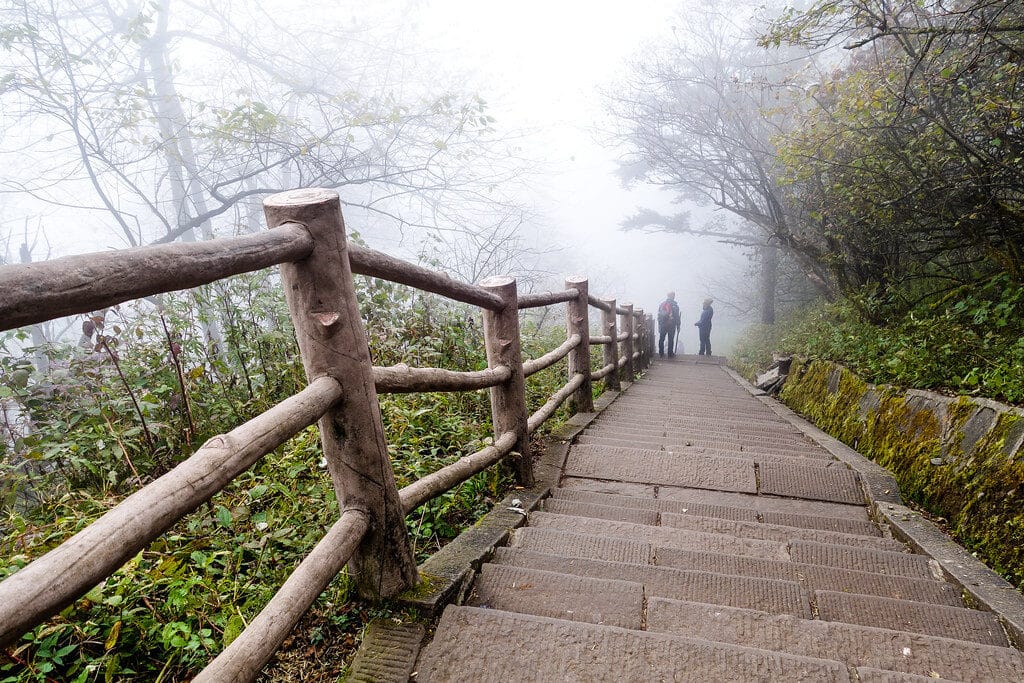
Chasing the Four Wonders doesn’t require walking any of this — most visitors reach the summit by sightseeing bus to Leidongping, then cable car straight up, which is the backbone of both itineraries in Section 4. This section is for the minority who actually want to walk some or all of the mountain on foot.
How the landmarks connect
The scenic area publishes eight set routes, and most are built from the same handful of waypoints, strung together in different combinations and lengths. It helps to know how these connect before reading the routes themselves.
- Base landmarks (Baoguo, Leiyin Temple, Chunyang Hall, Shenshui Pavilion, Zhongfeng Temple, Guangfu Temple) sit in the low mountain and appear only in the longer, temple-focused routes (1, 4, 7, 8) — none of them lead anywhere near the summit on their own.
- Qingyin Pavilion and Wannian Temple are the hinge points: nearly every route either starts here, passes through here, or uses one to connect to the mid-mountain climb.
- Mid-mountain climbing landmarks (the Ecological Monkey Zone, Hongchunping Qianfo Temple, the 99 Bends, Lingxiao Pavilion, Xianfeng Temple, Jiulao Cave, Yuxian Temple) only appear in the hardest routes (6 and 8) — this is the stretch that separates a walk from a real hike.
- Summit-approach landmarks (Jiulinggang, Zuantianpo, Xixiangchi, Lianwangpo, Leidongping) appear in every route that actually reaches summit territory (5, 6, 7, 8) — they’re the final push regardless of which route brought you there.
The eight official hiking routes
1 🛕 Low-Mountain Culture Walk
2 🐒 Streamside Walk to the Monkey Zone
3 🛕 Wannian Temple Loop
4 🛕 Full Low-Mountain Temple Loop
5 🏔️ The Easiest Summit Hike
6 🔥 The 99 Bends Endurance Route
7 ⛰️ Base to Summit, the Direct Way
8 🏆 The Complete Climb
Numbered here from gentlest to hardest. Full waypoints and route notes are in the chart above — the summary below is just for a quick scan.
Route | Distance / Time | In short |
|---|---|---|
1. Low-Mountain Culture Walk | 3.85km / 2.3 hrs | Flat temple corridor, no hiking fitness needed |
2. Streamside Walk to the Monkey Zone | 3.7km / 1.2 hrs | Easy streamside walk, our pick for families |
3. Wannian Temple Loop | 5.85km / 2.3 hrs | Flat route to Wannian’s bronze statue |
4. Full Low-Mountain Temple Loop | 9.15km / 4.75 hrs | A full day of flat walking, no elevation gain |
5. The Easiest Summit Hike | 12.55km / 7.9 hrs | Reaches the summit, skips the hardest sections |
6. The 99 Bends Endurance Route | 16.4km / 11.1 hrs | Real endurance hiking through the 99 Bends |
7. Base to Summit, the Direct Way | 22.95km / 14.3 hrs | Full climb, without the 99 Bends detour |
8. The Complete Climb | 25.55km / 16.5 hrs | The longest and hardest route on the mountain |
Which sections actually slow people down
If you’re taking on Route 5 or higher, the difficulty isn’t spread evenly along the trail:
Difficulty | Sections |
|---|---|
😣 Moderately hard | The Ecological Monkey Zone stretch — nothing technical, but where the climbing starts in earnest |
😩 Hard | Lingxiao Pavilion, Xianfeng Temple, Yuxian Temple, Jiulinggang, the approach to Jieyin Hall |
😭 Very hard | Hongchunping Qianfo Temple, the Rare Plant Corridor through the 99 Bends, Zuantianpo, Xixiangchi, Lianwangpo |
Everything else is normal difficulty. The honest dividing line between Route 5 and Routes 6–8 is whether you’re ready for those five very-hard sections back to back — Route 5 avoids all of them.
We only recommend Routes 6–8 to clients who specifically want a trekking challenge and can split it across two days with an overnight stay partway up. Attempting a full-length route in one day, relying on daylight alone, means finishing in the dark. If you’re set on one of these, we can arrange the overnight stop and a guide who knows the trail — most independent hikers underestimate how much easier route-finding is with someone who’s walked it before.
6. Best Time to Visit Mount Emei
Whichever route or itinerary you’ve settled on, when you go still shapes crowd levels, temperature, and your odds at the Four Wonders from Section 2.
Autumn (Sep–Nov) — our top recommendation
Especially mid-October through early November: stable skies, high visibility, and the best combined odds for sunrise, sea of clouds, and Buddha’s halo. Red leaves stretch from the summit down toward Wanfo Summit in October, and the mountain quiets down fast once Golden Week crowds clear.
Spring (Mar–May) — flower season
Mild weather and fewer crowds. Azaleas and dove trees bloom in sequence from the base up, peaking with high-altitude rhododendrons in April–May. A good choice if flowers matter more to you than the Four Wonders.
Summer (Jun–Aug) — escaping the heat
The summit stays around 20°C while the Sichuan basin bakes, which is why locals treat it as a retreat from the heat — but it’s also the busiest, most expensive season, with daily afternoon rain. The hidden catch: summit nights drop to around 10°C, or 5–6°C with wind or recent rain, even when Chengdu is pushing 37°C. Pack a windproof layer, not cotton — this is the single most common complaint we hear from summer clients who packed for Chengdu weather and nothing else. Mild altitude symptoms (head pressure, a faster heartbeat, trouble sleeping) can also hit at 3,099m regardless of season; staying warm helps with both.
Winter (Dec–Feb) — best cloud odds, cheapest prices
Snow and rime ice at the summit, temperatures down to -10°C, and the single highest sea-of-clouds probability of the year. Some paths close after heavy snow, and crampons are rentable at the gate for about ¥10. December 15–January 15 is also off-peak pricing, so the cheapest window and the best cloud-viewing window happen to overlap.
7. Getting to Mount Emei from Chengdu or Leshan
With tickets, timing, and logistics settled, here’s how to actually reach the mountain.
From Chengdu: High-speed train from Chengdu East Station to Emeishan Station, about 1 hour, then a connecting shuttle to the scenic entrance — the route for most of our Chengdu-based clients.
From Leshan: High-speed train between Leshan Station and Emeishan Station takes just 15–24 minutes, with a direct shuttle from the station to the entrance. This short hop is exactly why we pair the two UNESCO sites over a two-day itinerary instead of two separate day trips from Chengdu.
Self-driving: You can drive as far as the Zero Kilometer checkpoint below Leidongping under normal conditions, where you switch to the mandatory scenic shuttle — see Section 3 for what changes during peak periods and winter ice.
After you’re down the mountain, Emeishan town has its own food worth stopping for: qiaojiao beef, bobo chicken, doufunao (tofu pudding), and tianpi duck are all local specialties worth the detour before you head back.
8. Where to Stay on Mount Emei
Most people asking “where should I stay” mean the summit, for sunrise — that’s the real decision, and it’s below. But the mountain does have accommodation at every elevation, so here’s the full picture first.
Low and mid mountain — comfort, or a base for hiking
If you’re not chasing sunrise, you likely won’t book mountain accommodation at all — most trips start and end from the base (Baoguo/Huangwan), with everything from ¥100 guesthouses to hot-spring resorts. The only reason to stay mid-mountain is splitting a hard hike across two days — simple guesthouses or temple rooms near Qingyin Pavilion, ¥30–50, no advance booking.
High mountain — for sunrise
The one-day itinerary in Section 4 heads back down the same day. If sunrise is the actual priority, staying overnight changes everything.
On the Golden Summit itself is the only way to see sunrise without a pre-dawn walk — all four options below are clustered right at the cable car exit, 3–5 minutes from the viewing platform.
Hotel | Distance from cable car | Price | Notes |
|---|---|---|---|
Jinding Hotel | ~150m | ¥700+ summer, ¥1,000+ on holidays | Most central, underfloor heating. Book 7–15 days ahead |
Jinding Xinxin Hotel | ~50m | Similar to Jinding Hotel | Some windowless rooms are cheaper — check room type |
Jinding Villa | Similar | Noticeably cheaper | Older facilities |
Jinding Yangyi Mountain House | A few minutes’ walk | — | Elevator, vegetarian breakfast, no holiday markup. Not on major booking platforms — we book this one directly for clients, since it doesn’t show up on the usual apps |
At Leidongping, lower down, is the budget alternative — book ahead, then wake around 4:00–5:00am and walk 20 minutes up to catch the first cable car in time for sunrise. Harder morning, real savings — this is where we put clients when the summit hotels are already full, which happens more often than people expect on peak weekends.
Either way, bring your own dinner — food options on the mountain are limited and priced accordingly.
9. Practical Travel Advice
A few last details that don’t need their own section, but that trip people up often enough to mention here.
Emeishan Station, not Emei Station
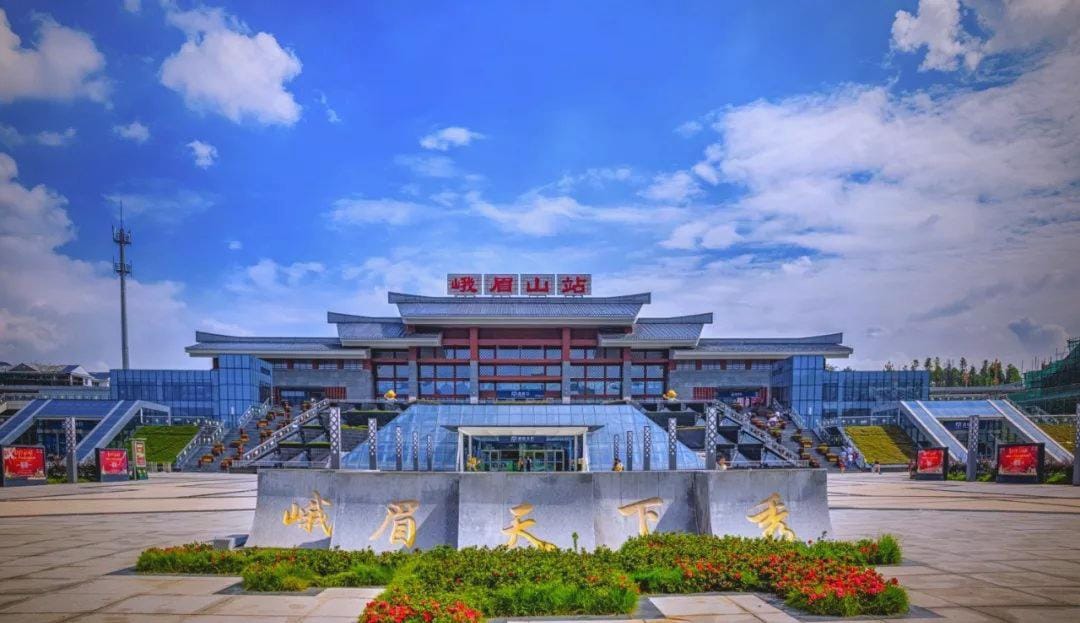
If you’re arriving by train, make sure you booked “Emeishan Station (峨眉山站)” and not “Emei Station (峨眉站)” — a different, more distant stop with a nearly identical name that’s easy to mix up when booking rail tickets. Emeishan Station is the one that connects to the scenic area shuttle. The simplest way is that Emeishan Station has four Chinese characters, whereas Emei Station has only three.
Language and whether you need a guide
English thins out fast off the main path, and most staff speak little of it. A translation app covers daily needs. If that sounds stressful, or you want the temple history and Buddhist context explained rather than just seen, we can arrange an English-speaking guide for the day — it’s one of the more common add-ons clients ask for once they see how much gets lost without one.
Network coverage and paying on the mountain
Signal drops out in patches mid-mountain — download offline maps first. Alipay and WeChat Pay (both accept linked international cards) cover almost everything, including tickets; carry some cash as backup.
Handling the monkeys
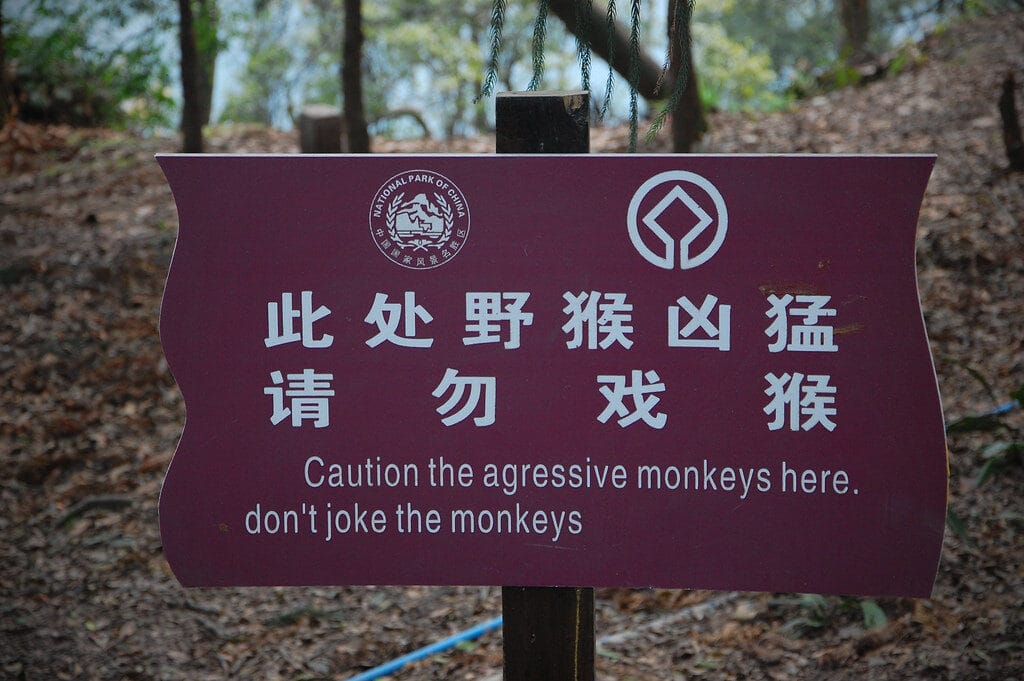
Wild Tibetan macaques live along the mid-mountain path, most reliably between Qingyin Pavilion and the Ecological Monkey Zone. They’re used to tourists and will take food, bags, or phones straight from your hands if you let them — keep food out of sight, don’t hold eye contact, and avoid red clothing. If one blocks the path, wait for scenic area staff rather than pushing past it.
If you’re bitten or scratched: wash with soap and water for 15 minutes, then get a rabies vaccination — don’t skip it even for a minor scratch.
Watch for unofficial drivers and sedan-chair pricing
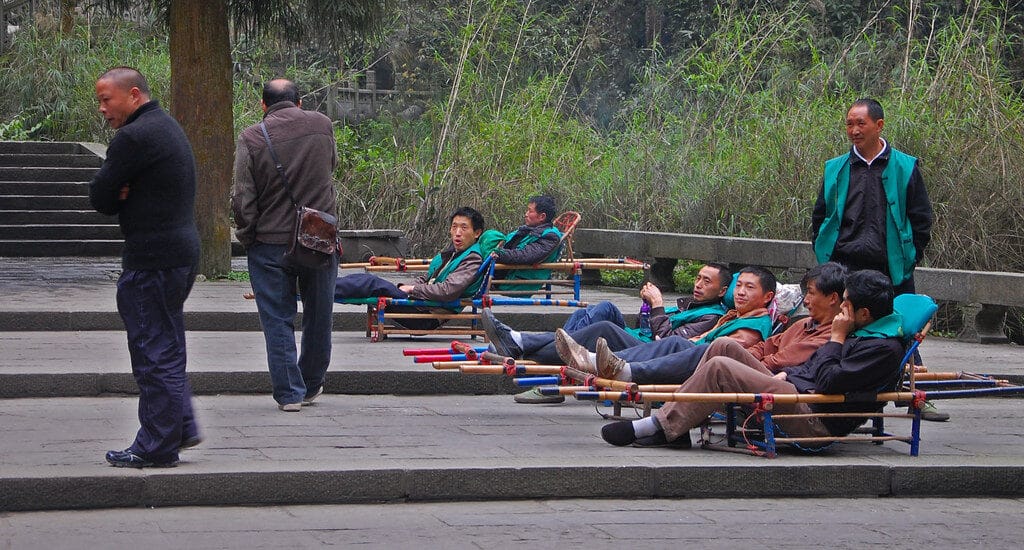
Two scams worth naming directly. Taxi drivers who volunteer a restaurant recommendation on the way down are steering you toward a commission, not a good meal — decide where you’re eating before you get in the car. Sedan chairs are sometimes quoted high, then dropped once you push back — agree on the full price, route, and end point before you sit down.
Mountain food costs more — budget for it
Prices run well above the base — bottled water around ¥10, a basic bowl of noodles ¥30 and up. Carrying your own water and snacks saves real money. Several temples along the way also serve cheap vegetarian meals (Baoguo and Wannian both run ¥10–20 a plate) if you’d rather sit down than snack.
The summit is a different climate — don’t just check the forecast
A weather app showing Chengdu or Emeishan town tells you almost nothing about the Golden Summit. The two sit roughly 2,500m apart in elevation, and the gap between them runs 15–20°C year round (see Section 6 for the exact summer numbers). Whatever the forecast says at the base, pack for something 15–20 degrees colder and windier at the top — in every season, not just winter.
Check the summit’s live visibility, not the weather at the base
The Golden Summit sits above the cloud line often enough that the forecast for the town below tells you very little about what you’ll actually see up there. Check the scenic area’s live visibility feed before a sunrise or Buddha’s halo trip — treat both as a bonus, not the reason you booked (see Section 2 for the specific conditions that make the sea of clouds more or less likely).
If something goes wrong
Save these before you go — mid-mountain signal can be unreliable: emergency rescue 18080664119, general inquiries 0833-5533355, medical emergency 120. Staff booths sit at Baoguo, Wuxiangang, Leidongping, and the summit; stay on the marked trail and head to one.
Frequently Asked Questions
Is Mount Emei worth visiting?
Yes, but go in with the right expectations. On a clear day the sea of clouds and the Golden Summit’s scale are hard to overstate — but it’s also a heavily developed, crowded site with rebuilt temples, not a quiet wilderness hike. If you want untouched nature, this isn’t it. If you want a striking Buddhist mountain experience with real infrastructure to support it, it delivers.
Is Mount Emei crowded?
Yes, especially on weekends, holidays, and through summer. The summit caps at 8,000 visitors a day, and one of its two cable cars is currently closed for maintenance, which lengthens queues on the one still running. Visiting on a weekday, in the shoulder seasons (Section 6), avoiding the 11:00 AM–3:00 PM window, and booking your cable car slot online ahead of time all help.
Are there discounts for children or seniors?
Yes. Children 1.2–1.5m tall or ages 6–17 pay half price (¥80 peak/¥55 off-peak). Children under 1.2m or age 6 enter free, as do adults 70 and older with ID. Seniors 65–69 with ID also get half price.
What time does Mount Emei open and close?
The gate runs 6:00 AM–6:30 PM in summer (May–Oct) and 7:00 AM–5:30 PM in winter (Nov–Apr). The sightseeing bus and cable car close about an hour earlier than the gate, though (see Section 3 for the exact windows) — plan your last ride down around the bus/cable car time, not the gate hours.
Can I store luggage before climbing?
Yes, at two points. The Emeishan high-speed rail station has a storage counter (~¥20/suitcase, ¥10/backpack) and a cheaper China Post option (~¥10/item) right outside. Baoguo Temple’s bus station also has lockers for small bags, at about ¥1/hour capped at ¥12/day.
Is one day enough for Mount Emei?
Yes, if your goal is just the Golden Summit — leave the Chengdu area by 7:00 and you can be back down by early evening. Two days is better if you also want the temples, the monkey zone, or a real shot at sunrise, since that requires overnighting on or near the summit.
Are the temples at the base of Mount Emei free now?
Yes, as of January 1, 2026. Baoguo, Wannian, and Fuhu temples no longer charge separate entrance fees and are included with your main scenic area ticket.
Can I visit part of Mount Emei without buying the ¥160 ticket?
Yes. The entire low-mountain stretch from Baoguo Temple to Longshenggang — roughly 7–10km through forest, temples, and streams — requires no scenic area ticket at all. The ticket checkpoint sits at Longshenggang; only continuing past it toward Qingyin Pavilion or the summit requires paid admission.
Do I need to book tickets in advance?
Yes — real-name booking at least one day ahead through the official WeChat mini-program or an OTA, tied to a specific entry time slot. Book 5–7 days out during summer and national holidays.
Why can’t I book the cable car before the bus ticket?
The booking system enforces a strict order: entrance ticket first, then the sightseeing bus, then the cable car. Refunds go in reverse. Trying to book out of sequence will simply fail, so buy everything for your trip in that order in one sitting.
Can I combine Mount Emei with the Leshan Giant Buddha in one day?
Not comfortably. Emeishan alone takes most of a day once transport and cable car queues are counted, so adding a 2–3 hour Buddha visit makes for a rushed day at both. Two days works far better.
What should I wear at the summit?
Layers regardless of season. Summer nights at the summit can drop to 10°C or lower even when the Sichuan basin is above 35°C, and winter visits need serious cold-weather gear including crampons for icy paths.
Is the hike to the summit difficult?
The transport-only route requires minimal walking and suits most fitness levels. The full hike from Baoguo Temple to the summit is roughly 30km with close to 3,000m of elevation gain — a genuine full-day-plus undertaking best split across two days with an overnight stop.
Planning a Sichuan trip that includes Mount Emei? Contact us and we’ll build a private itinerary around the route, season, and pace that fits what you actually want to see.