Haiyunju Temple at Shibaoshan: The Temple 99% of Visitors Miss
Three weeks ago, I watched a tour bus stop at Shibaoshan’s entrance gate. Forty tourists got out, walked straight past Haiyunju Temple sitting 100 meters to their left, climbed back on the bus, and drove 10 kilometers deeper into the mountains.
They came all the way from Shanghai to see “authentic Buddhism in Yunnan.” They drove right past it.
We’ve been guiding tours through northwestern Yunnan since 2006. This happens every single day at Shibaoshan. And it’s why I’m writing this.
Quick Facts
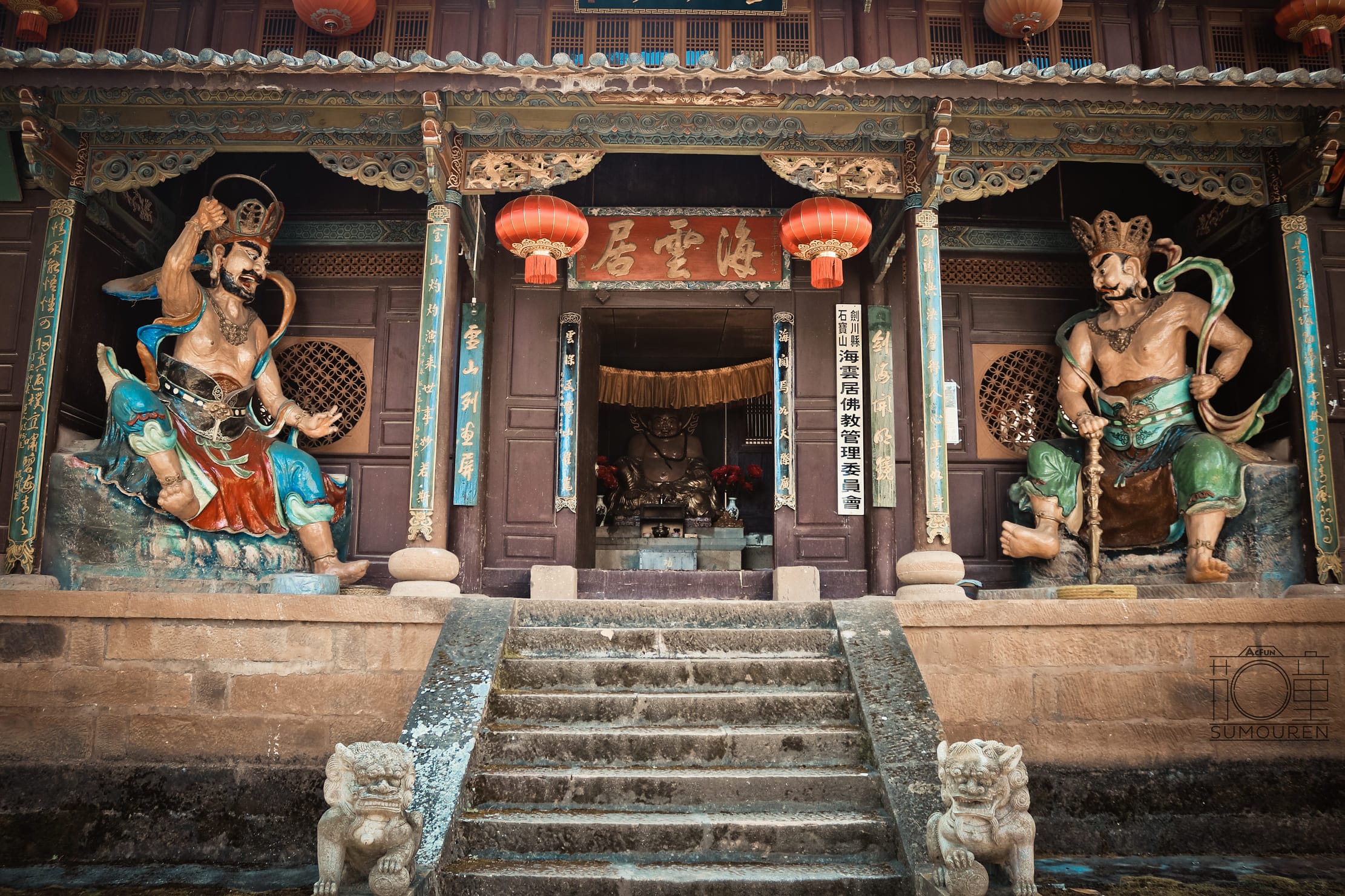
Chinese name: 海云居 (Hǎiyúnjū), also called Camellia Temple (茶花寺)
Founded: 1684 by Master Pu Lian (普联和尚)
Location: Stone Umbrella Mountain foothills, left of main entrance
Entry: 45 RMB (entire Shibaoshan area)
Time: 60-90 minutes minimum
Distance from Shaxi: 10 km by car, 90-minute forest hike
Table of Contents
Why Nobody Stops Here
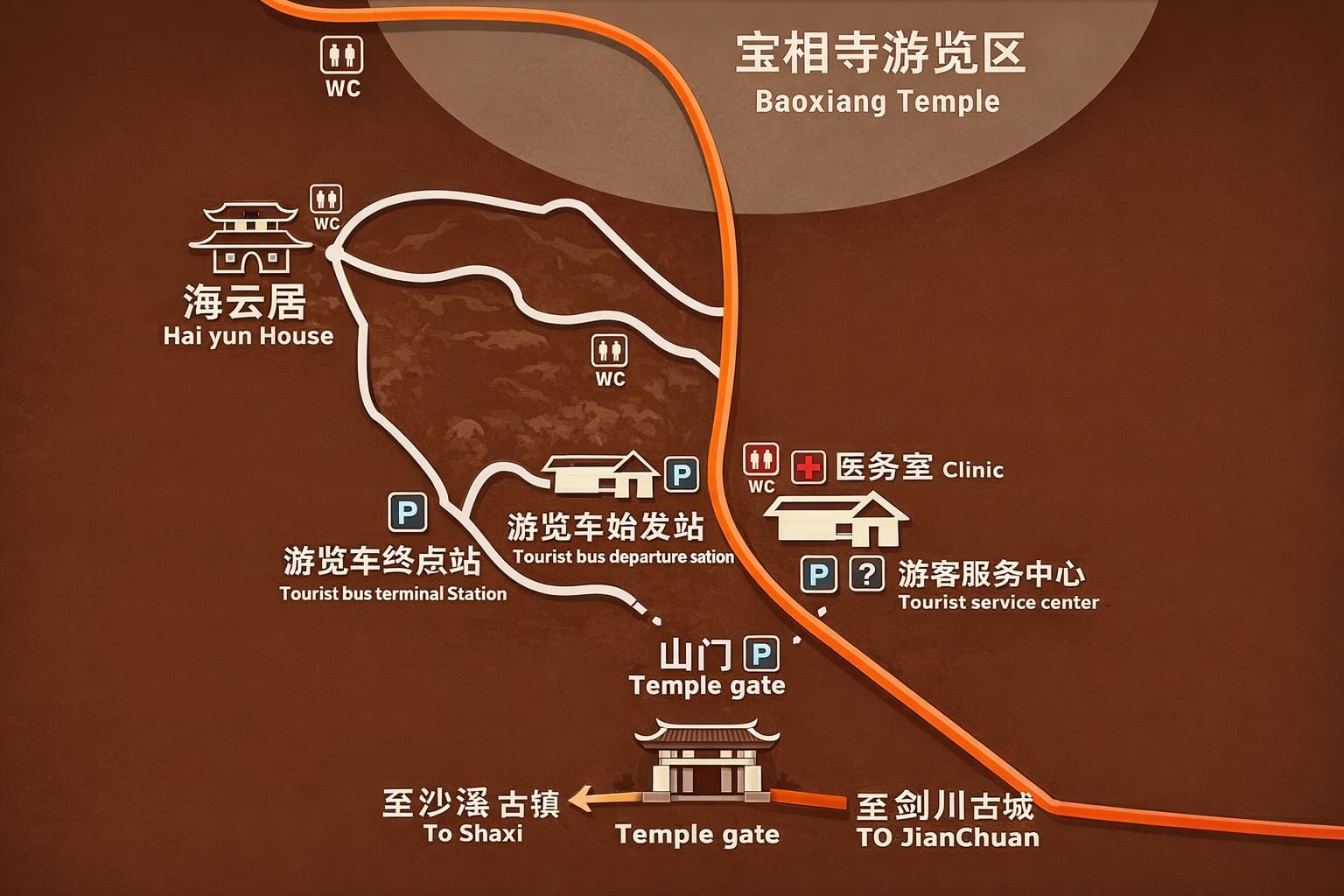
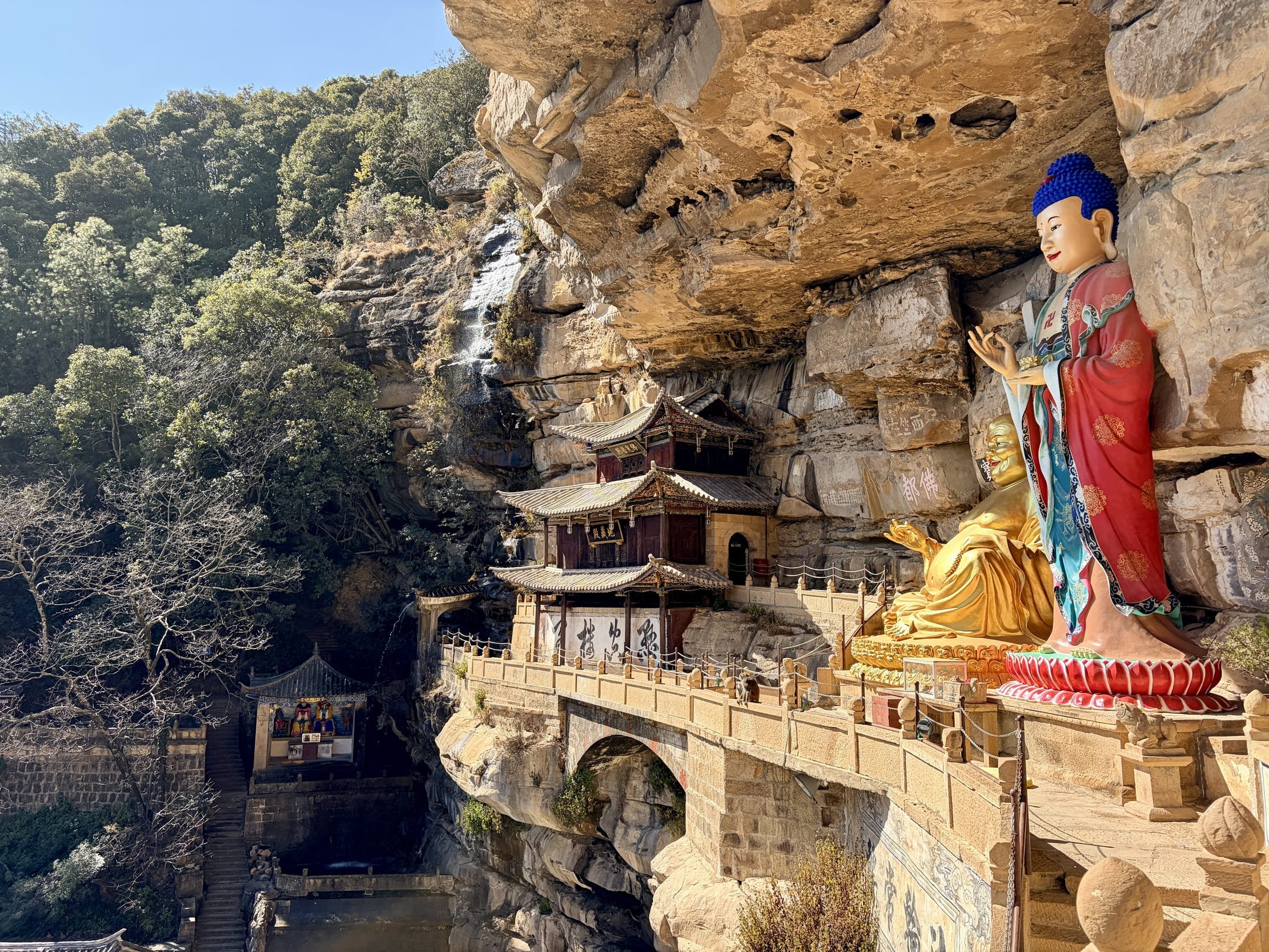
Haiyunju sits too close to the entrance. Tour groups assume anything at the front can’t be important. They’re chasing the “main attractions” — Shizhong Temple’s 1,300-year-old grottoes 10 km away, Baoxiang Temple‘s wild monkeys, the dramatic cliff locations.
The tour companies don’t help. Most itineraries allocate 10 minutes for Haiyunju, two hours for the grottoes. I’ve seen guides literally lie to groups, saying “this temple is closed today” so they can keep on schedule.
Here’s what actually happens: Groups spend three hours fighting crowds at temples that have been turned into tourist sites. They dodge aggressive monkeys at Baoxiang. They stand behind barriers at Shizhong’s grottoes where photography isn’t allowed. Then they leave saying Shibaoshan was “overcrowded” and “disappointing.”
Meanwhile, Haiyunju receives maybe 30 visitors per day. On weekdays in winter, sometimes five.
What Makes This Different
Most Chinese temples stopped being religious institutions decades ago. They’re outdoor museums that charge admission. The “monks” might be government employees. The rituals happen on schedule for tour groups.
Built in 1684 by the monk Pu Lian, Haiyunju Temple is still used much as it was hundreds of years in the past.
Brian Linden from the Old Theatre Inn in Shaxi has worked in this region since 2004. He said in 2015: “It’s such an active temple, with music, worship, incense, candles and very hospitable local village elders running the temple. You rarely see temples like this in China – most are empty museums and charge admission.“
That was eleven years ago. Still true today. Hai Yun Ju is looked after by elder Bai women, mostly from Shilong Village nearby, who keep the candles and incense burning.
Local Bai villagers arrive unpredictably throughout the day to make offerings at ancestral urn tombs in the cemetery. These aren’t performances—they’re genuine religious observances marking death anniversaries or spontaneous memorial visits.
The Morning We Figured This Out
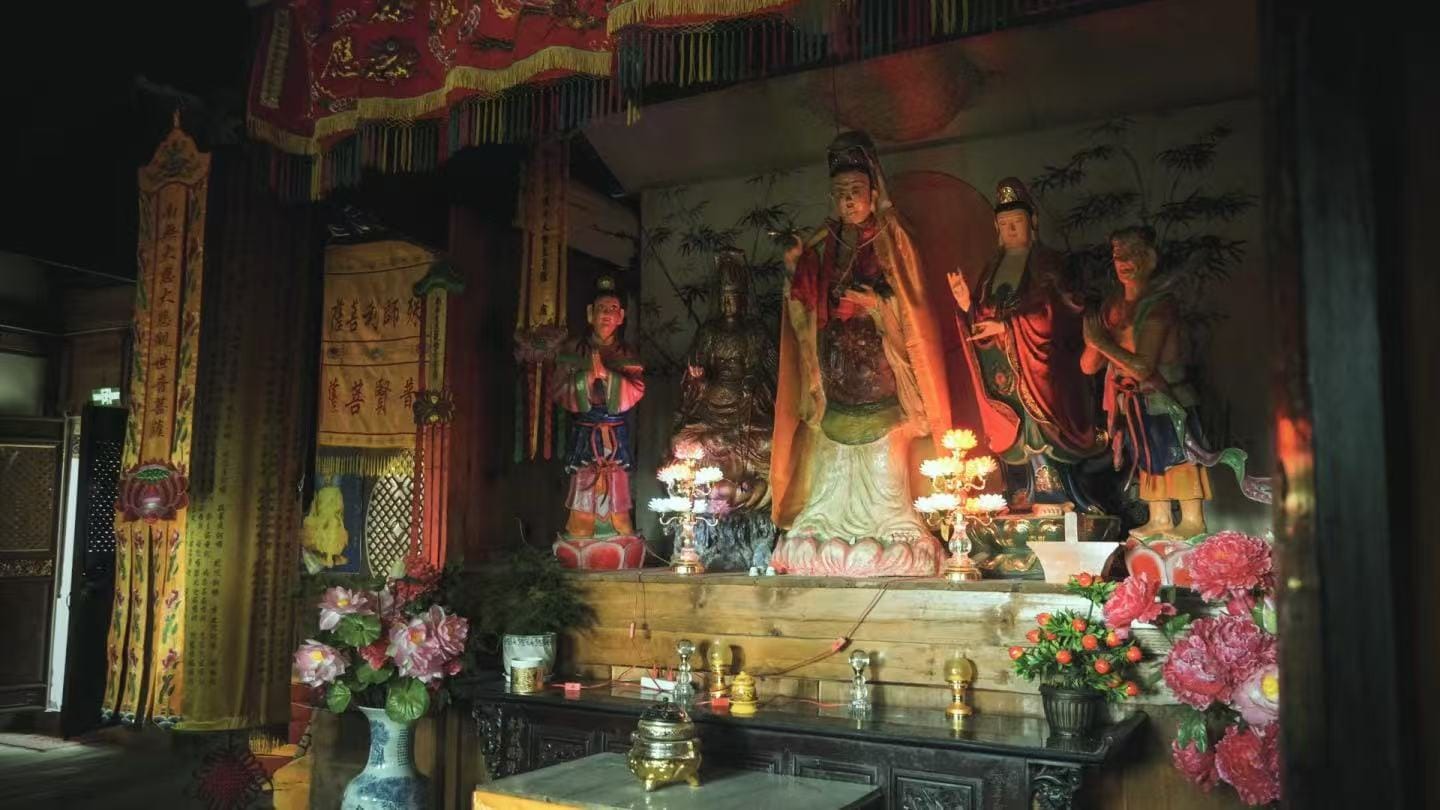
December 2018. We brought a British couple here at 08:00. The husband was a retired Anglican priest, skeptical about Buddhist temples as “tourist traps.”
An elderly Bai woman arrived carrying white chrysanthemums wrapped in newspaper. She walked straight to a specific urn tomb—her grandmother’s—and spent forty minutes arranging flowers while quietly reciting prayers. One of the Bai caretakers came out and joined her for the final prayers, brought her hot tea when they finished.
No English. No explanation to us. Just the continuation of something that’s been happening here since 1701.
The British priest sat on a stone bench for ninety minutes watching pine needles fall, listening to distant prayers. When we left, he said: “That’s the first time I’ve witnessed genuine religious practice in China.“
We’ve brought 200+ groups since. That experience happens every time.
What You’re Actually Seeing
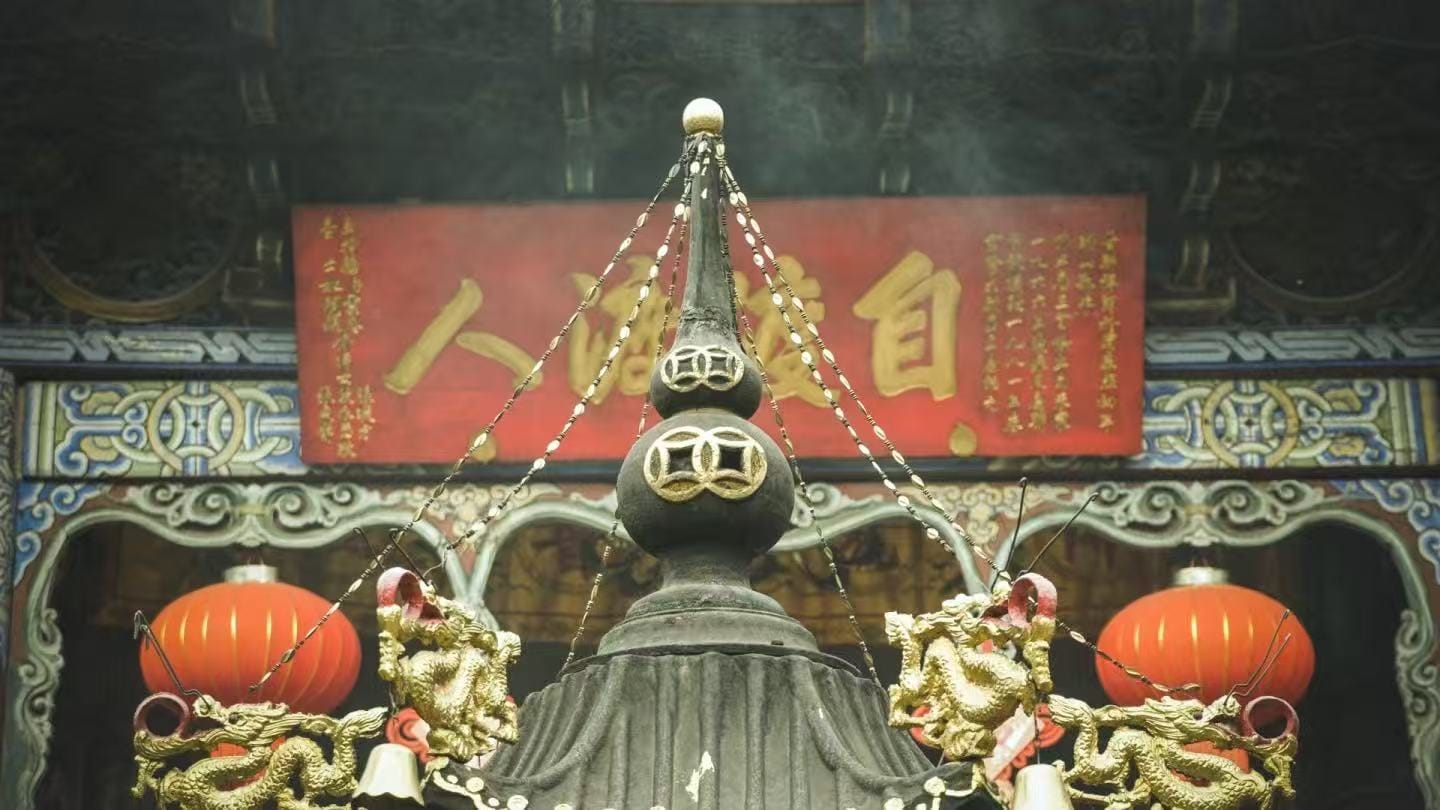
The main hall has Qing Dynasty wood carvings that most visitors walk past without looking up. The eaves feature flying deities (飞天) carved using a technique called 透雕 — openwork carving where the figures appear suspended without visible supports.
This required carving away 70% of the original wood while maintaining structural integrity. The mythical beast panels use three-layer relief carving — each dragon scale individually carved at different depths to create 3D effect. No power tools. Just hand chisels and 18th-century Bai craftsmanship.
Jianchuan Bai wood carving was designated National Intangible Cultural Heritage in 2011. These Haiyunju examples predate 95% of surviving Jianchuan work by 150+ years. They’re not reconstructions. Original 1700s work.
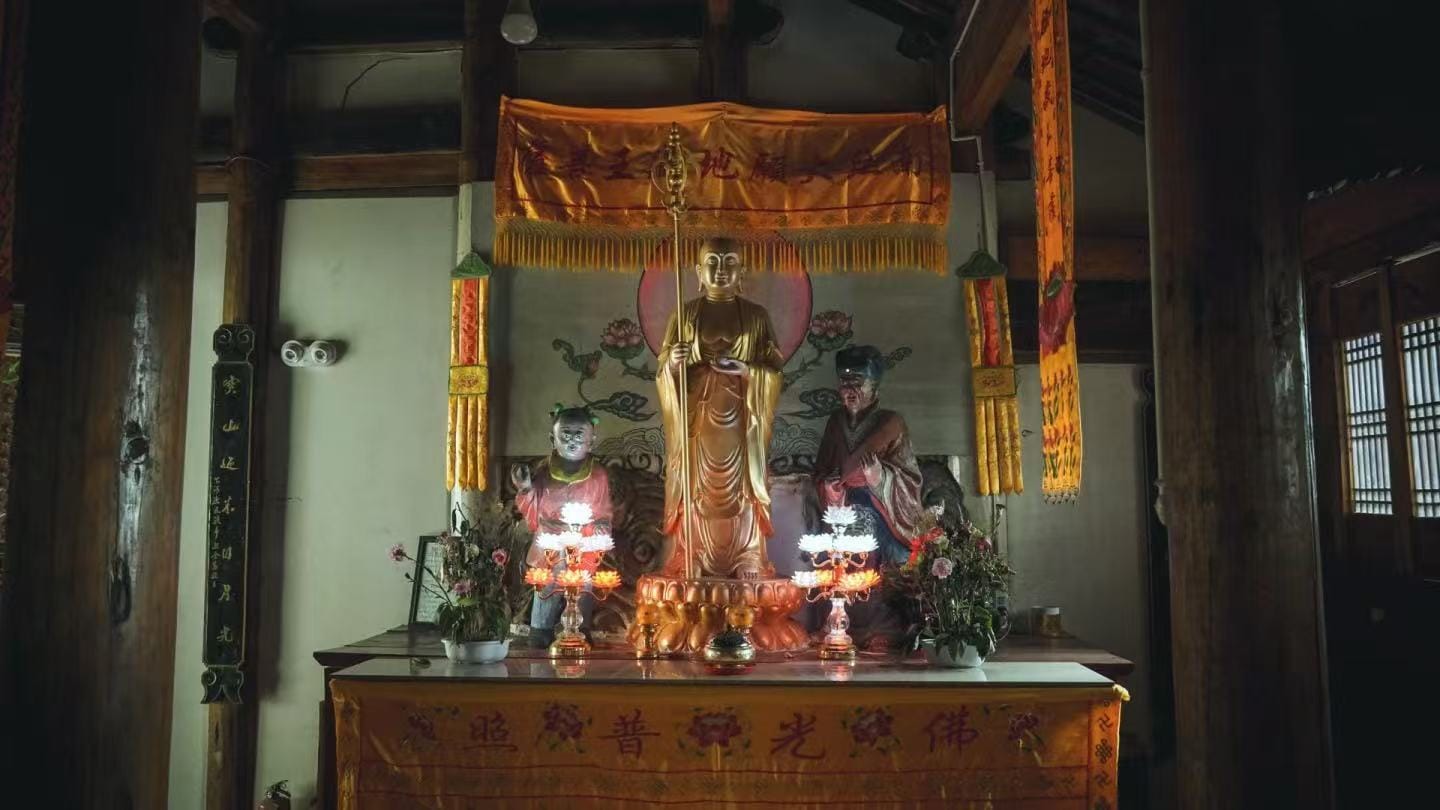
The 1543 copper bell hanging in the main hall predates the temple by 141 years. It survived the Cultural Revolution. Think about what that means for this temple’s relationship with the local community.
The 1543 Copper Bell
In the main hall is a bronze bell inscribed with a date corresponding to 1543. This Ming Dynasty bell predates the temple by 141 years. Master Pu Lian brought it here from elsewhere, linking Haiyun to even older Buddhist traditions.
More importantly: it survived the Cultural Revolution intact. Between 1966-1976, Red Guards destroyed Buddhist sites across Yunnan. That this bell still hangs here tells you everything about this temple’s relationship with the local Bai community. They protected it when the government wanted it destroyed.
Master Pu Lian’s Tomb
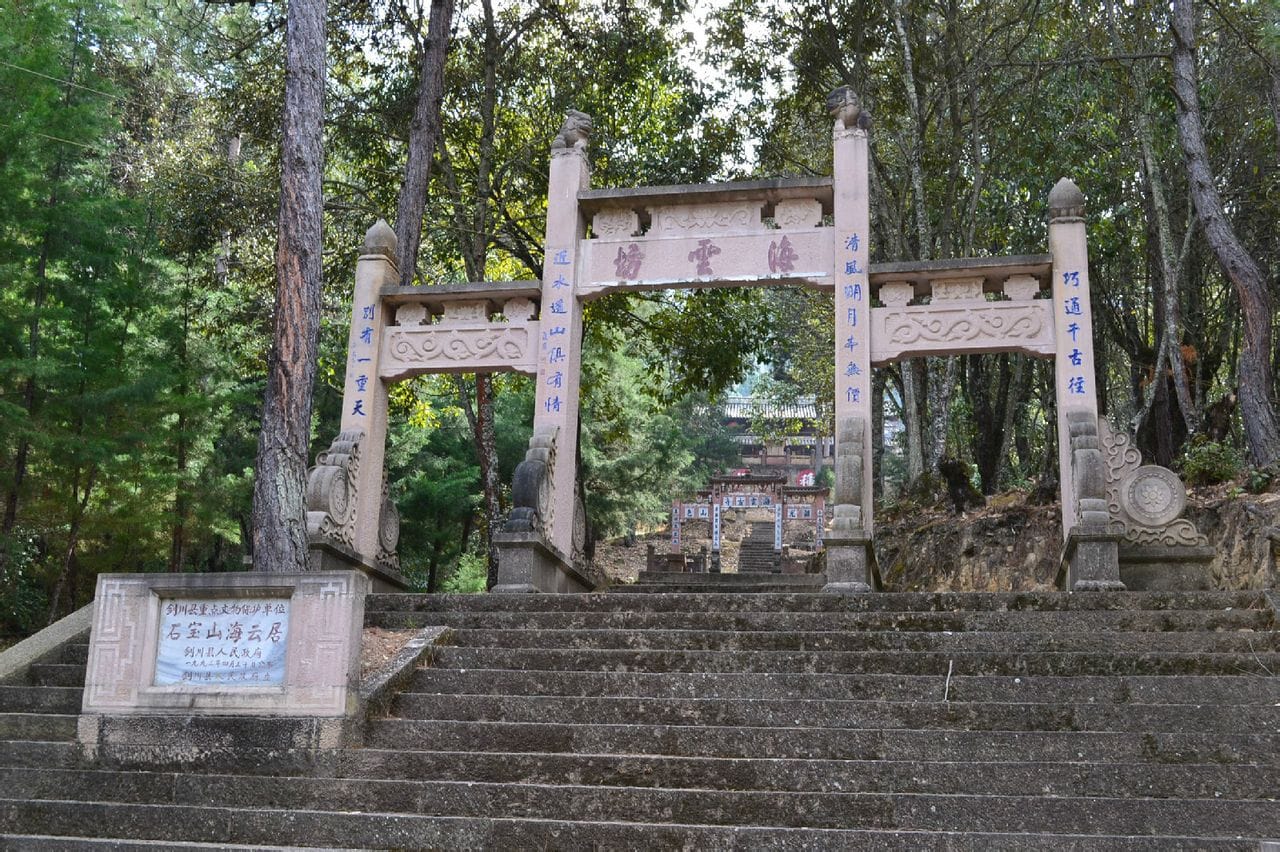
Inside the gate are stupas and two massive stone urns containing the remains of Pu Lian, the monk who founded Haiyun Temple, and his mentor, the abbot Ji Ding (寂定).
These aren’t decorative. They’re actual burial urns where the founding masters rest. Local Bai Buddhists still make offerings here during festivals and anniversaries.
The Stone Umbrellas Behind the Temple
As well as the ancient temple complex hidden among the trees behind the moss-covered walls, there are stupas, stone urn tombs, caves with bats, red rock formations resembling umbrellas and old tall trees.
Walk 200 meters behind the temple. Three massive red sandstone formations rise in descending height—12 meters, 10 meters, 7 meters. These Danxia landforms took 100+ million years of water erosion to create.
Chinese Rufous Horseshoe Bats live in caves among the formations. They emerge about 40 minutes after sunset May through September. We’ve sat on stone benches at dusk watching them pour out—worth staying late for.
Wild Camellia Trees
Wild camellia trees grow around the temple, meaning the temple is also known as the Camellia Temple.
These aren’t cultivated garden plants. They’re old-growth Camellia reticulata forest trees (150-200 years old) that bloom late February through mid-March with red flowers 8-12 cm diameter.
When to Actually Visit
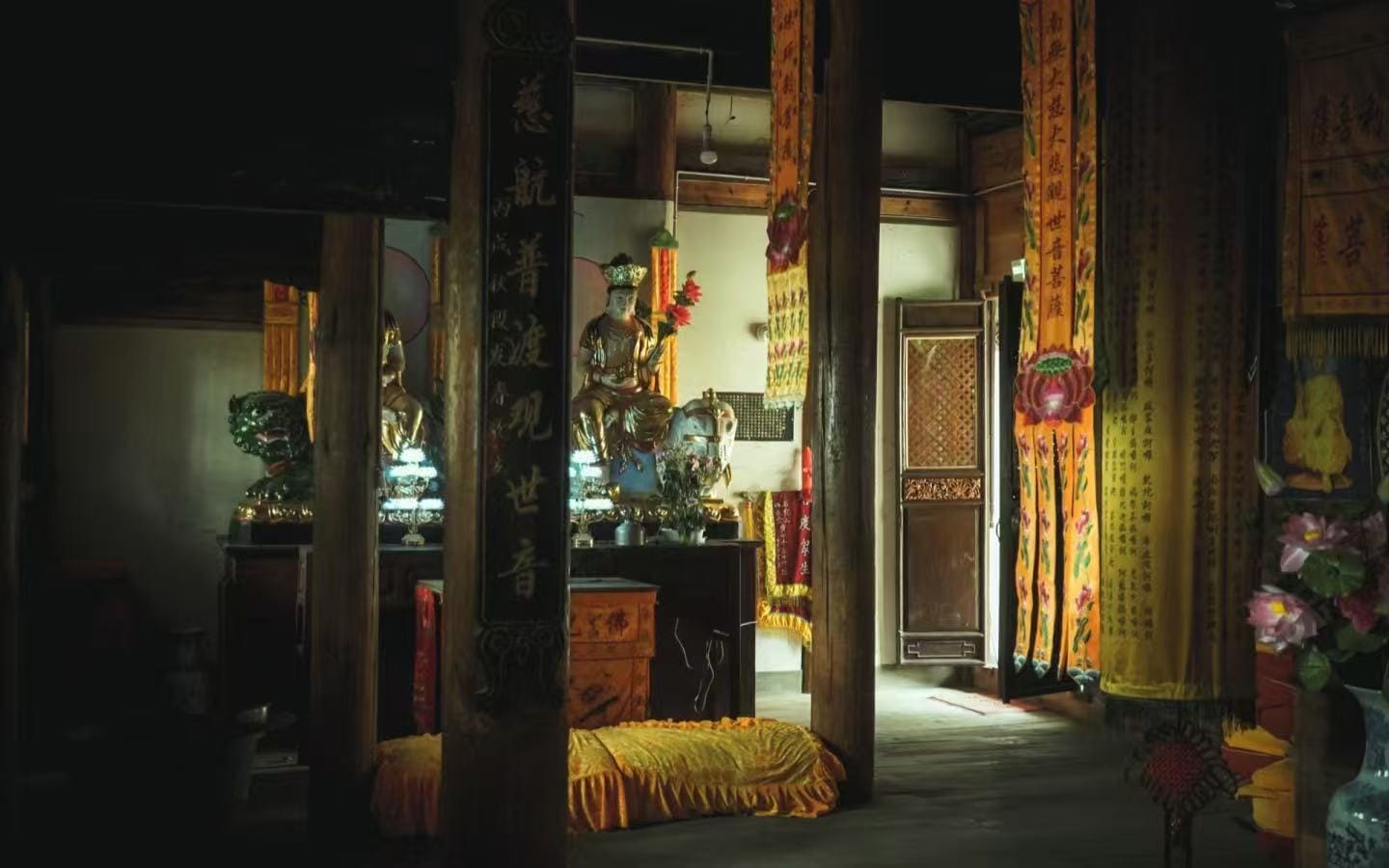
Best for what you actually came here for: December-February, 08:00-09:30. Cold (5-12°C) but nearly empty. The elderly Bai caretakers go about their daily routines without tourist interference. Morning light through the pine canopy creates long shadows across moss-covered walls.
For camellias: Late February to mid-March (peak bloom varies by winter temperatures).
Avoid if you want peaceful atmosphere: Song Festival in late July/early August. During Temple and Gehui festivals the languid monastery teems with people from the villages surrounding Shibao Mountain. Visitor numbers increase 15-20x. The contemplative atmosphere disappears completely.
The festival itself is incredible—Bai singing traditions dating back 1,000+ years. But if you want Haiyun’s serene Buddhist practice, avoid these dates or arrive before 07:30.
Getting There
From Shaxi (20 minutes by car): Your guesthouse arranges drivers for 80-120 RMB round-trip. North on main road toward Jianchuan, kilometer marker 113, left onto dirt road, 2 km to entrance.
From Dali (2.5 hours): Bus to Jianchuan County from North Station (every 15 minutes, 08:00-17:00, 35 RMB), then hire car to Shibaoshan (20 km, 80-100 RMB).
Hiking from Shaxi: The Old Theatre Inn describes it as “a beautiful 90-minute hike.” True if you hike regularly. If not, it’s brutal—450-meter elevation gain, stone steps, forest trails. Bring proper boots, 2L water, trekking poles.
What Actually Happens When You Visit
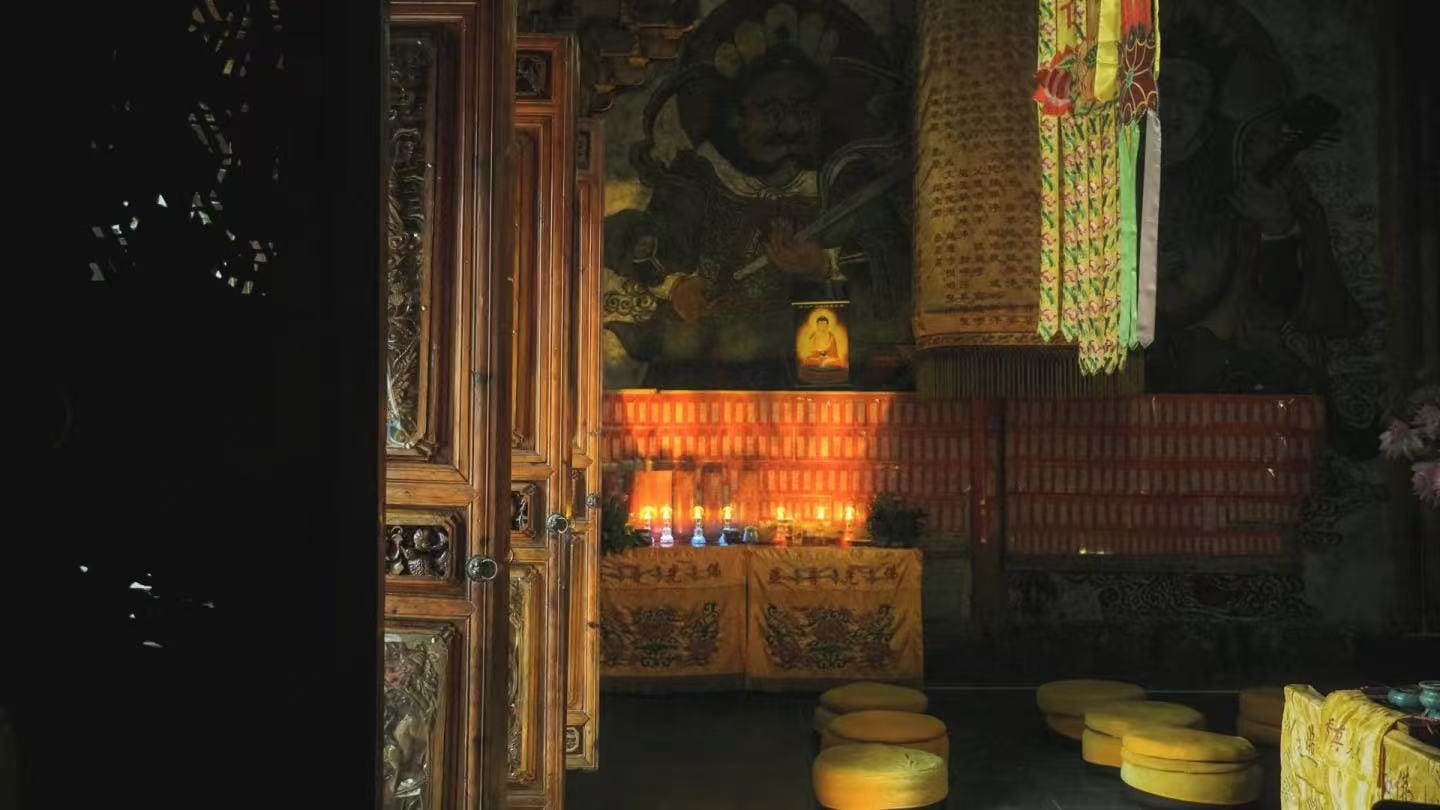
The elderly Bai caretakers don’t speak English. Doesn’t matter. Last October a Brazilian couple spent 70 minutes following one caretaker during her morning routine—all gestures and smiles. She showed them how to light incense properly, where they could photograph, which areas were private.
They said afterward it beat any guided temple tour they’d paid for in Asia.
You can photograph courtyards, architecture, stone umbrellas, cemetery freely. Inside halls with Buddha statues: yes, but no flash. If you want to photograph the caretakers during their work, ask via gestures first. They usually say yes if you’re respectful.
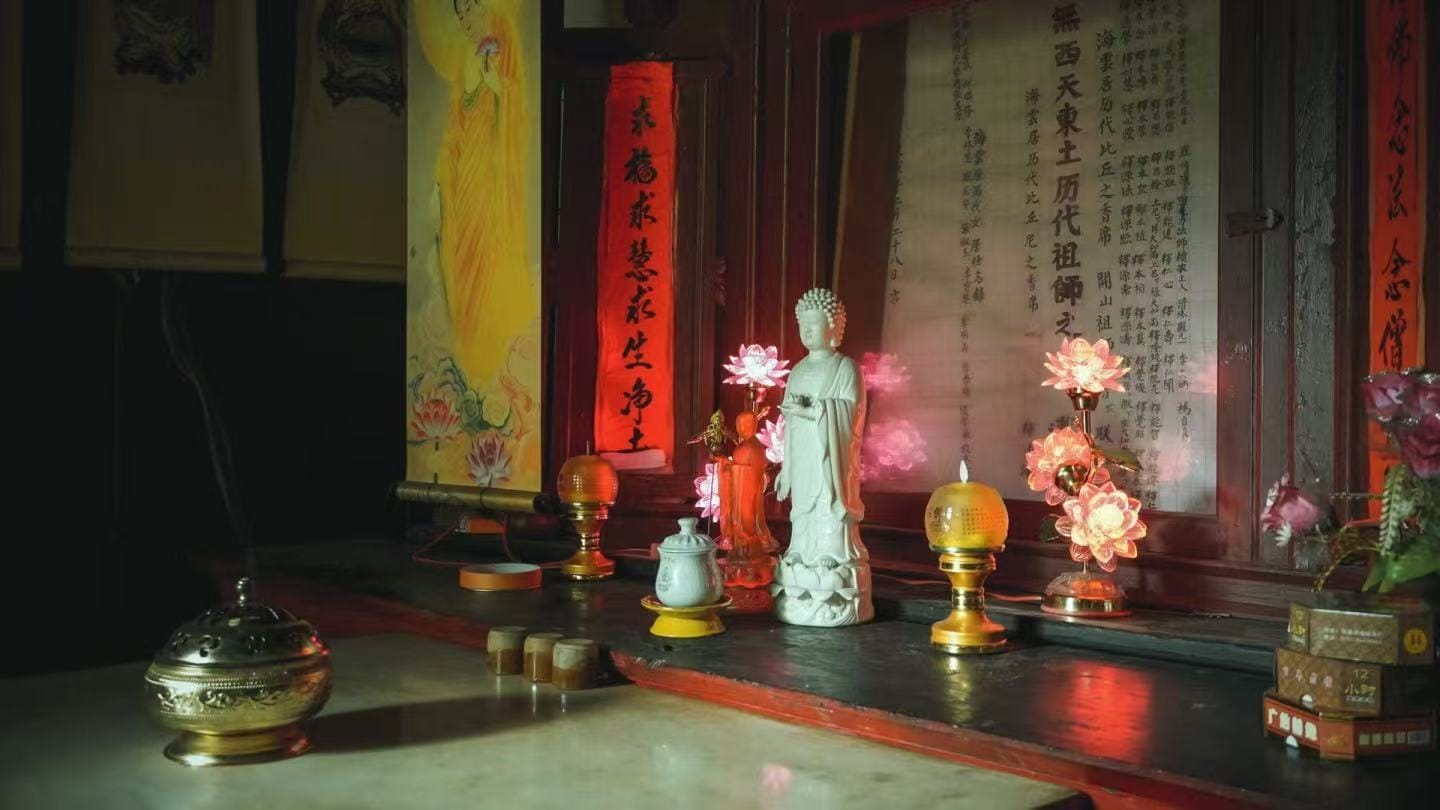
Incense available for 5-10 RMB donation (honor system). Light three sticks, bow three times toward Buddha statue, place in burner. The caretakers demonstrate if needed.
The Details Most People Miss
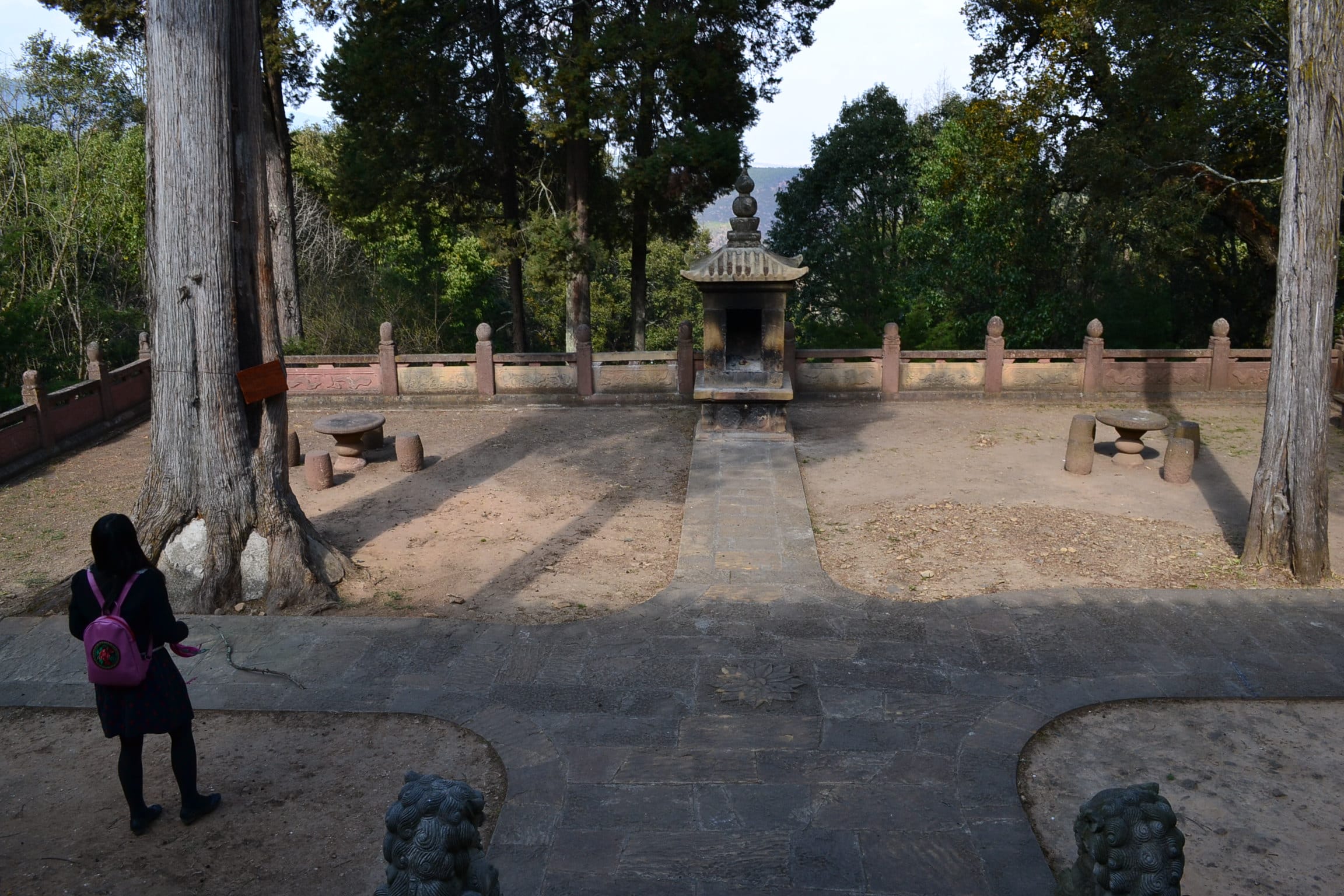
The cemetery behind the temple has eight different urn tomb designs spanning 1700s through 1900s. The oldest use rough-cut local stone. Later ones (1800s+) show Han Chinese funerary architecture influence.
Several pine trees surrounding the main courtyard exceed 150 years old (trunk diameter 80+ cm). They were mature adults when the current buildings were last renovated in the 1910s-1920s.
When wild flowers are available (March-October), local Bai villagers leave fresh arrangements at altars following traditional Bai principles — specific flowers for specific Buddha statues, symbolic colors, asymmetrical natural compositions.
Combining with Other Shibaoshan Sites

Here’s what works after testing 200+ tours:
Morning 08:00-09:30: Haiyunju for morning rituals. One hour minimum.
Mid-morning 10:00-11:30: Shuttle bus to Shizhongshan Grottoes (20 minutes). The 1,300-year-old Buddhist rock carvings are historically important. You’ll see them behind protective barriers, no photography allowed, with other tourists. It’s a museum experience but worth seeing.
Afternoon: Shuttle bus to Baoxiang Temple (15 minutes), return to Shaxi after visit.
If you only have time for one temple at Shibaoshan, choose Haiyunju. The grottoes are historically important documentation of Buddhism’s spread into Yunnan from Tibet. But you’ll experience them as artifacts behind barriers. Haiyunju is a living religious institution where 300 years of continuous Buddhist practice happens in front of you.
Which experience is rarer in 2026 China?
What Travelers Say
The temple website notes: “Haiyun temple is the first temple encountered at the Shibaoshan area. Dating back to the 17th century, the Chan Buddhist temple is important for local Bai minority people, but this secluded templed is often overlooked by visitors seeking monkeys, cliff temples or ancient symbolic stone carvings found further into the Shibaoshan area.“
One long-term resident described it as having “Two elderly matriarch caretakers add to the olde-worlde feel of the historic buildings. Wild camellia trees grow around the temple.“
One visitor on Dec 8, 2024: “Haiyunju is definitely the first stop we visited when we entered Shibaoshan. Many people would miss this place because they took the scenic bus, but I walked there to check it out. So I didn’t miss the relevant scenery. It is a relatively small temple, but it is surprisingly quiet.“
FAQ
Can I stay overnight?
No. Stay in Shaxi Ancient Town (20 minutes away). Old Theatre Inn, Horse Pen 46 Hostel, or several boutique guesthouses work well.
Wheelchair accessible?
Main courtyard yes. Upper courtyards and stone umbrellas require climbing 30-50 stone steps. No ramps or elevators.
English signage?
Minimal. No English-speaking guides (but you can hire one from us). The appeal is experiential, not educational. The atmosphere speaks for itself.
Worth it during Song Festival?
Depends. The festival (late July/early August, 27th-29th lunar 7th month) is culturally incredible — Bai singing traditions dating back 1,000+ years. But Haiyunju’s peaceful atmosphere disappears. Compromise: arrive before 07:30 on festival mornings.
What about the monkeys?
Wild macaques (~300 individuals) live around Baoxiang Temple, not Haiyunju. If avoiding aggressive monkeys, Haiyunju is your choice. If you specifically want wild monkeys, that’s Baoxiang.
Why We Keep Bringing People Here
In 2020 we restructured our entire Shibaoshan tour itinerary. We now start at Haiyunju during morning rituals (08:00-09:30), then visit grottoes mid-morning, and make Baoxiang optional. Guest satisfaction increased measurably.
The consistent feedback: the “brief stop” at Haiyunju became what people remembered most. Not the famous grottoes. Not the wild monkeys. The quietness. The genuine ritual practice. The elderly nuns’ warmth. The sense of discovering something valuable that everyone else missed.
Tourism development is pushing into Shibaoshan. More shuttle buses. Better roads. Improved facilities. It’s necessary and inevitable. But it also means places like Haiyunju won’t stay unchanged forever.
Eventually the elderly nuns will retire or pass away. The next generation might run things differently. Someone will “discover” it properly, word will spread, tour groups will add it to standard circuits, the government might install better infrastructure.
For now — October 2026 — Haiyunju remains what it’s been for 340 years: a working Buddhist nunnery where two Bai women maintain daily rituals that predate modern China by centuries.
Give it an hour minimum. Arrive for morning rituals. Sit quietly in the courtyard. Watch the nuns work. Walk through the cemetery. Climb to the stone umbrellas. Let the cypress shadows and pine forest work their particular quiet magic.
You came to Yunnan to find authentic China. This is it, 100 meters past the main gate, overlooked by 99% of visitors.
Updated October 2026. Information verified through our team’s 50+ on-site visits 2017-2026. All weather data from Jianchuan County meteorological records. Photography conditions based on documented attempts across all seasons.