Chinese Grottoes Explained: History, Art & Where to Go
Every travel guide tells you the Mogao Caves have 45,000 square meters of murals and the Longmen Grottoes contain over 110,000 carvings. Almost none of them explain why any of this exists in a cliff rather than a building — or what the political crisis was that made an emperor decide to carve mountains.
This article covers both: the real history behind Chinese Buddhist grottoes, and what actually matters when you visit. Skip the numbers. Here’s what sticks.
Table of Contents
Why Carve Into a Cliff at All?
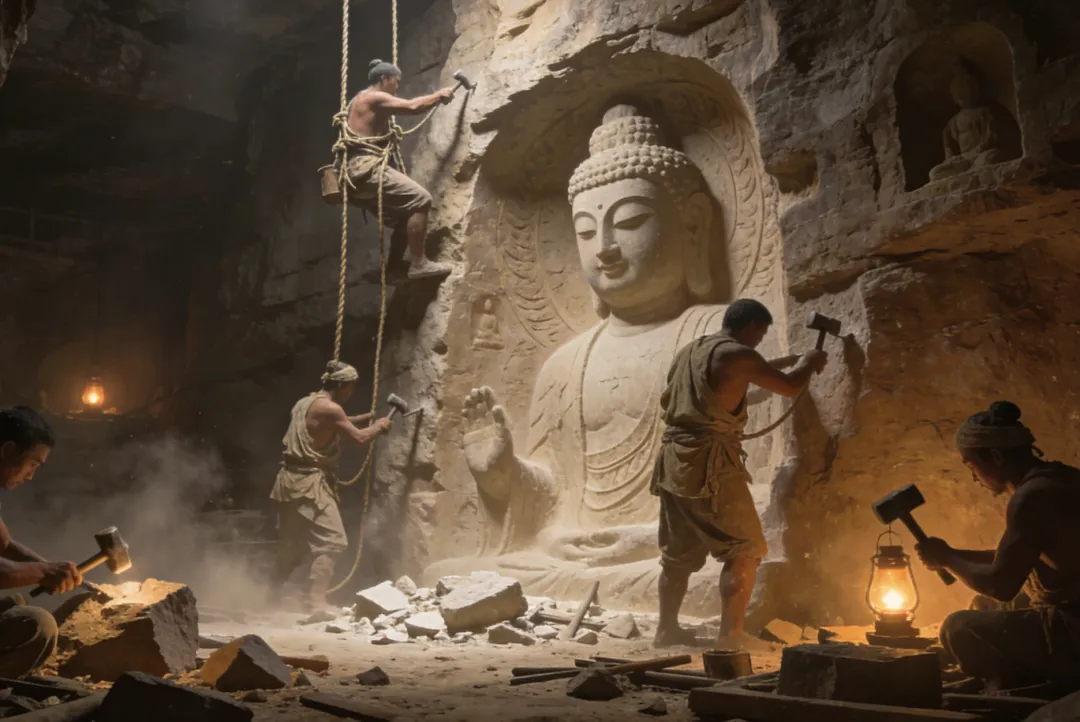
It’s a fair question. Stone carving is brutally slow work. A wooden temple can go up in months. So why did generations of craftsmen spend decades chipping into sandstone?
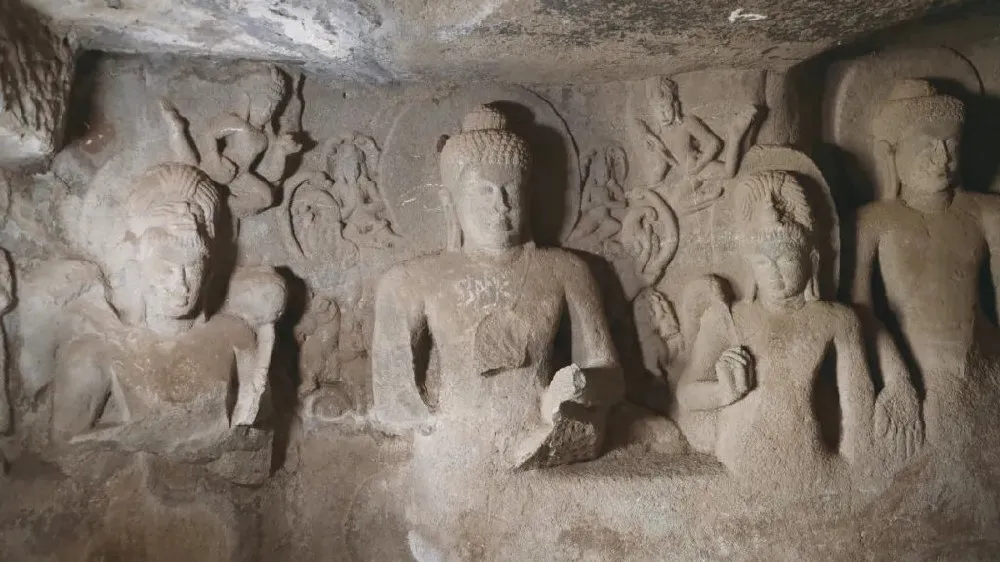
The answer starts in India, not China. When Buddhism emerged in the 6th century BCE, monks needed places to meditate that were cool, quiet, and wouldn’t rot. Tropical heat destroys timber fast. A hillside cave — naturally climate-controlled, structurally self-supporting — solves all of that. The earliest Buddhist cave complexes in India, like the Barabar Caves (Bihar, ~250 BCE) and Ajanta, established a template: carved interior, assembly court outside, surrounding community of monks. That model traveled the Silk Road into Central Asia and eventually into China, arriving around the 1st century CE as a fully formed architectural tradition.
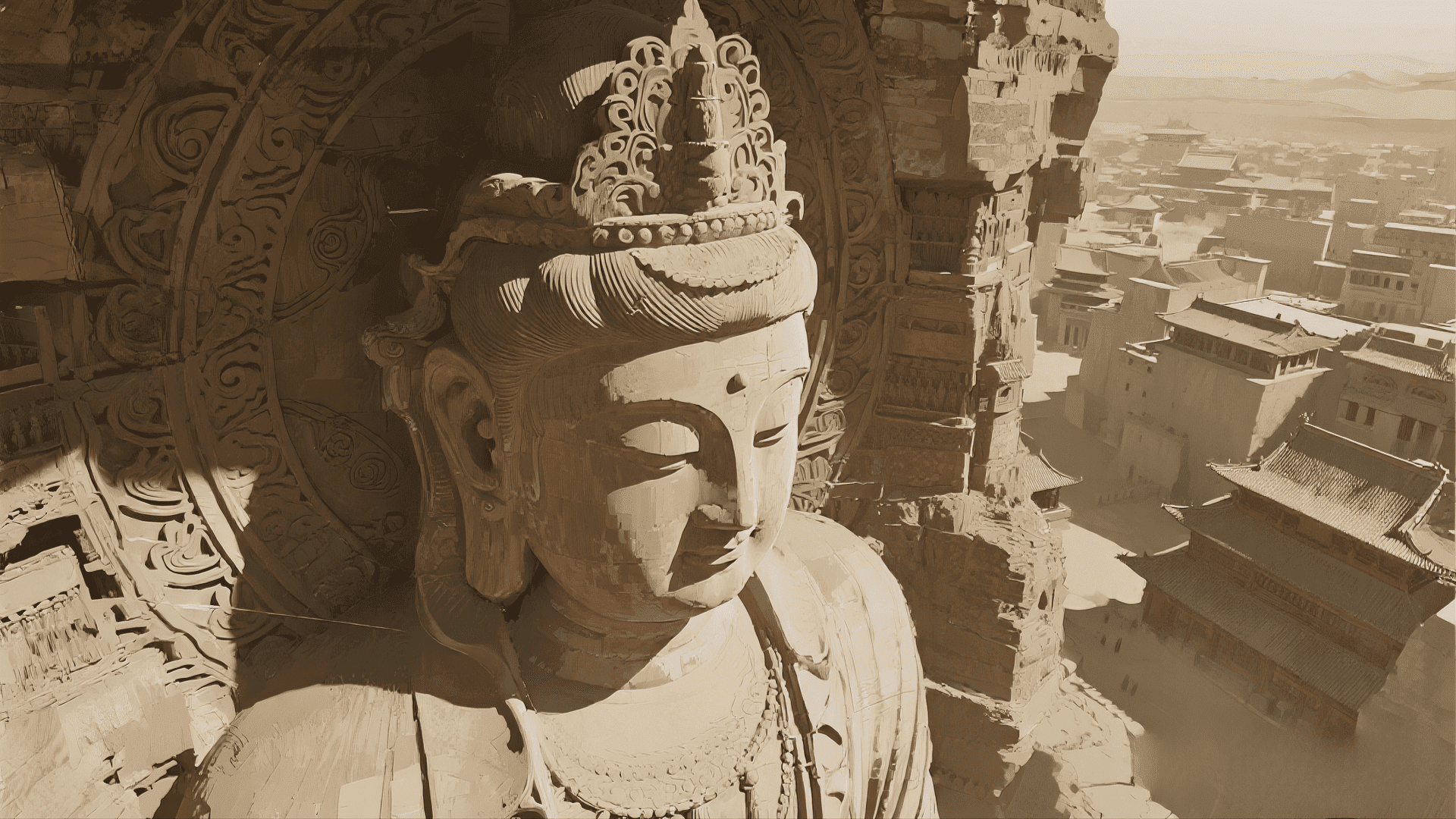
In China, there was an additional factor. The geology cooperated. Northern China’s sandstone cliffs — the kind that dominate Datong and the Gansu corridor — are soft enough to carve with hand tools, hard enough to hold fine detail for a thousand years. You couldn’t have built Yungang in granite. The material shaped the form.
The Real Reason Chinese Grottoes Exploded Under the Northern Wei
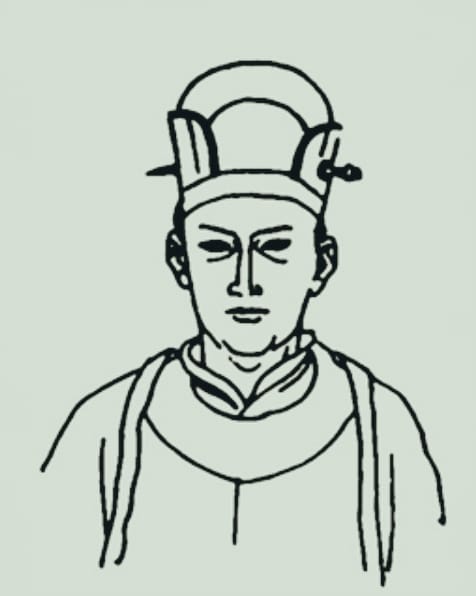
Buddhism reached China roughly 400 years before the great cave-building projects began. So what changed?
In 386 CE, a nomadic Xianbei group called the Tuoba established the Northern Wei dynasty and eventually unified northern China. They were militarily dominant and politically shrewd — and they had a problem every minority ruling class faces: how do you govern a vast Han Chinese majority without either being absorbed by them or constantly fighting them?
Confucianism was Han ideology. Taoism was Han-coded. Buddhism, crucially, was foreign to both sides.
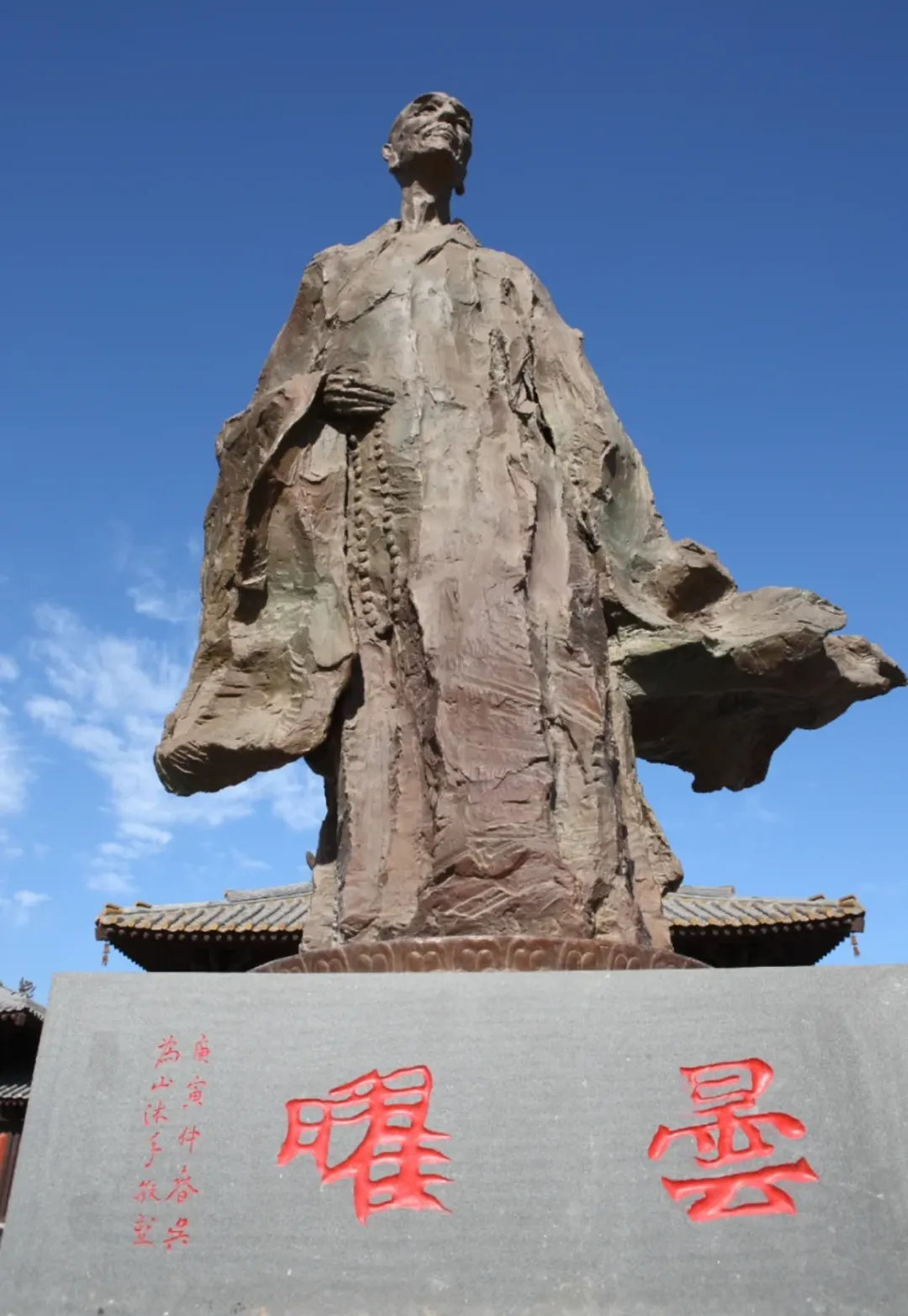
The monk Tanyao understood this dynamic precisely. In 460 CE, he proposed to Emperor Wencheng that they carve five great cave Buddhas — each one representing a Northern Wei emperor as an incarnation of Shakyamuni. The “Tanyao Five Caves” (Caves 16–20 at Yungang) weren’t just religious monuments. They declared in permanent stone that the Xianbei rulers were divine. Not conquerors. Gods.
The logic was airtight:
- Stone outlasts any critic or rival dynasty.
- A foreign religion owes loyalty to neither Han nor Xianbei.
- Both groups could kneel before the same Buddha without surrendering identity to the other.
When northern China was unified and the treasury was full enough to sustain massive labor projects, the carving began: first at Dunhuang (already underway since 366 CE under different patronage), then Yungang at the capital Datong, then Longmen after the court moved to Luoyang in 494 CE.
This is what most guide books miss: the Four Great Grottoes of China are simultaneously religious monuments and political infrastructure. Understanding that changes how you see everything inside them.
The Thing Nobody Tells You: The Caves Were Never Just Caves
This is the detail most visitors leave without knowing.
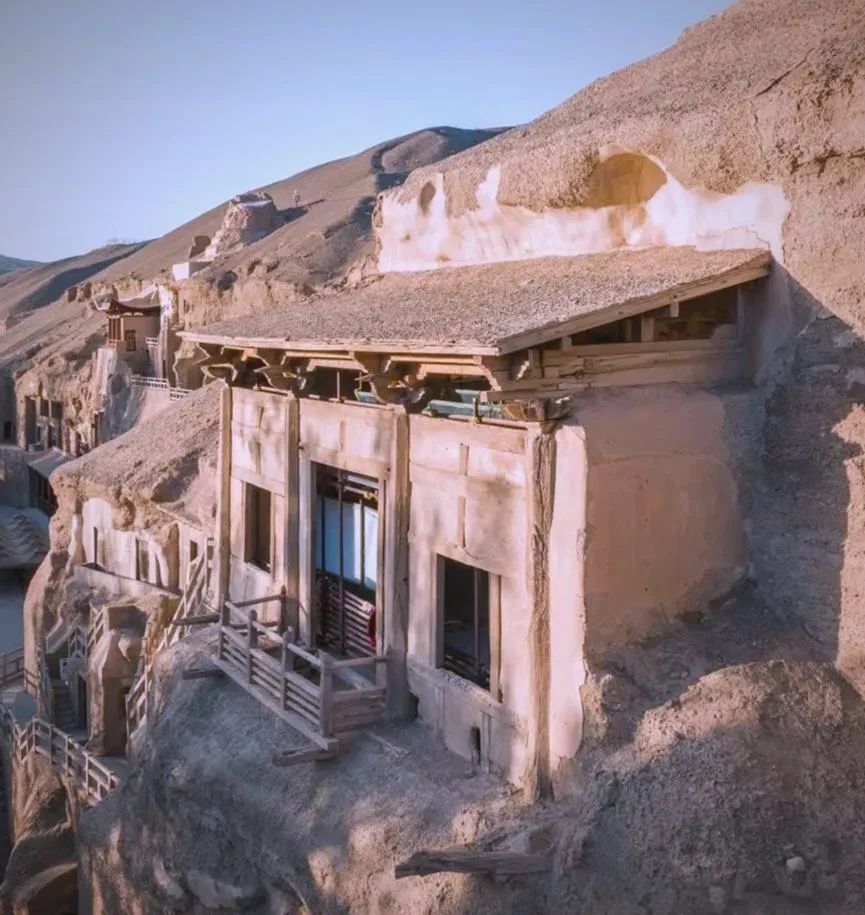
The open cliff face you walk along today was never meant to be exposed to the elements. Every significant grotto originally had a wooden forecourt — columns, bracket sets (dǒugǒng), and covered pavilions extending out from the cliff face. These weren’t decorative. They were assembly halls where hundreds of worshippers gathered for ceremonies, sheltered from rain and wind. The stone cave was the sanctuary. The wooden structure was the nave.
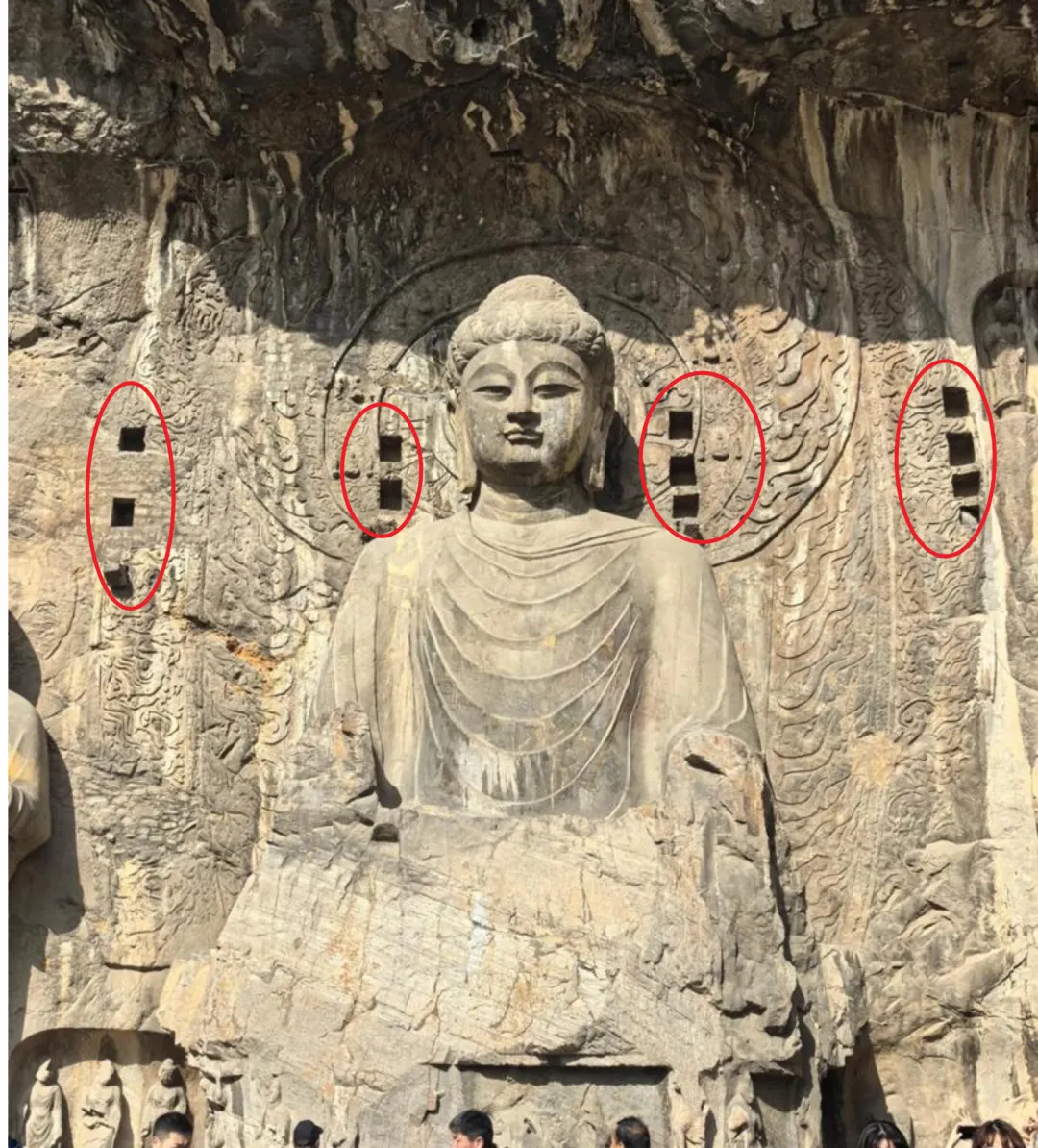
Nearly all of these forecourts were destroyed in wars, particularly the upheavals of the 10th and 11th centuries. What survives is the evidence: rectangular column sockets cut into the cliff, horizontal rows of beam holes, carved traces of bracket arms. Once you know what you’re looking at, you see it everywhere at every grotto site.
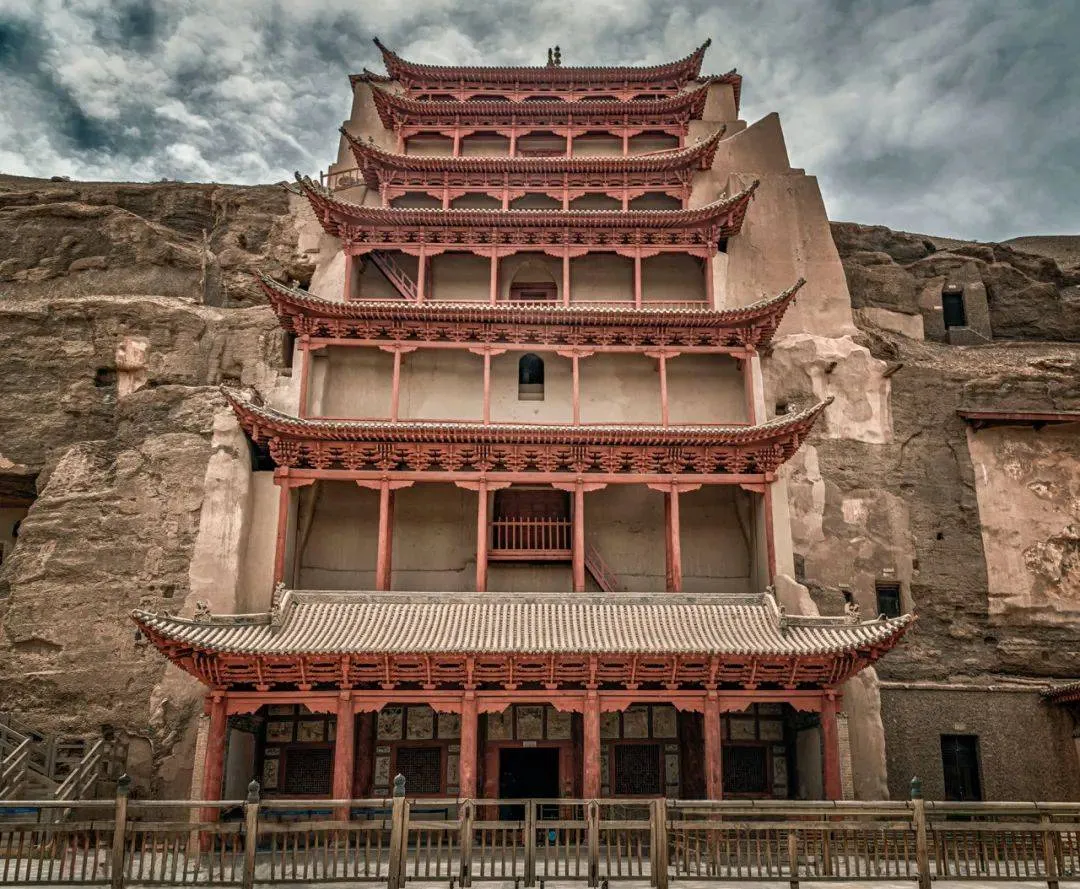
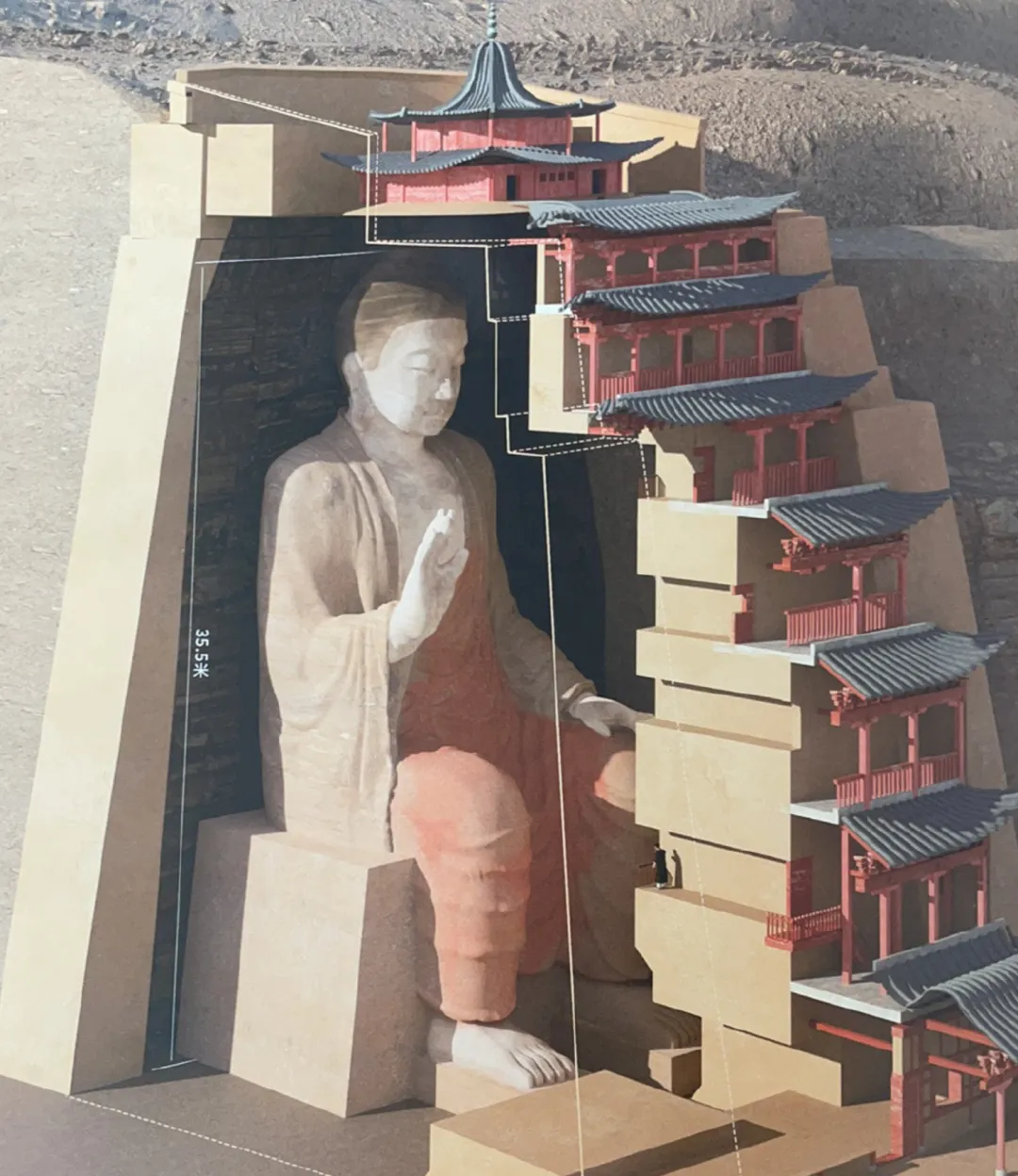
Dunhuang’s Nine-Story Building (Jiucenglou) is the only surviving intact example of what these facades looked like — built to shelter the 35.5-meter Maitreya Buddha in Cave 96. Stand in front of it and you understand what the other grottoes used to look like: not ruins open to sky, but the innermost sanctuary of a complete temple complex whose exterior shell is gone.
What the Buddhist Layout Is Actually Saying

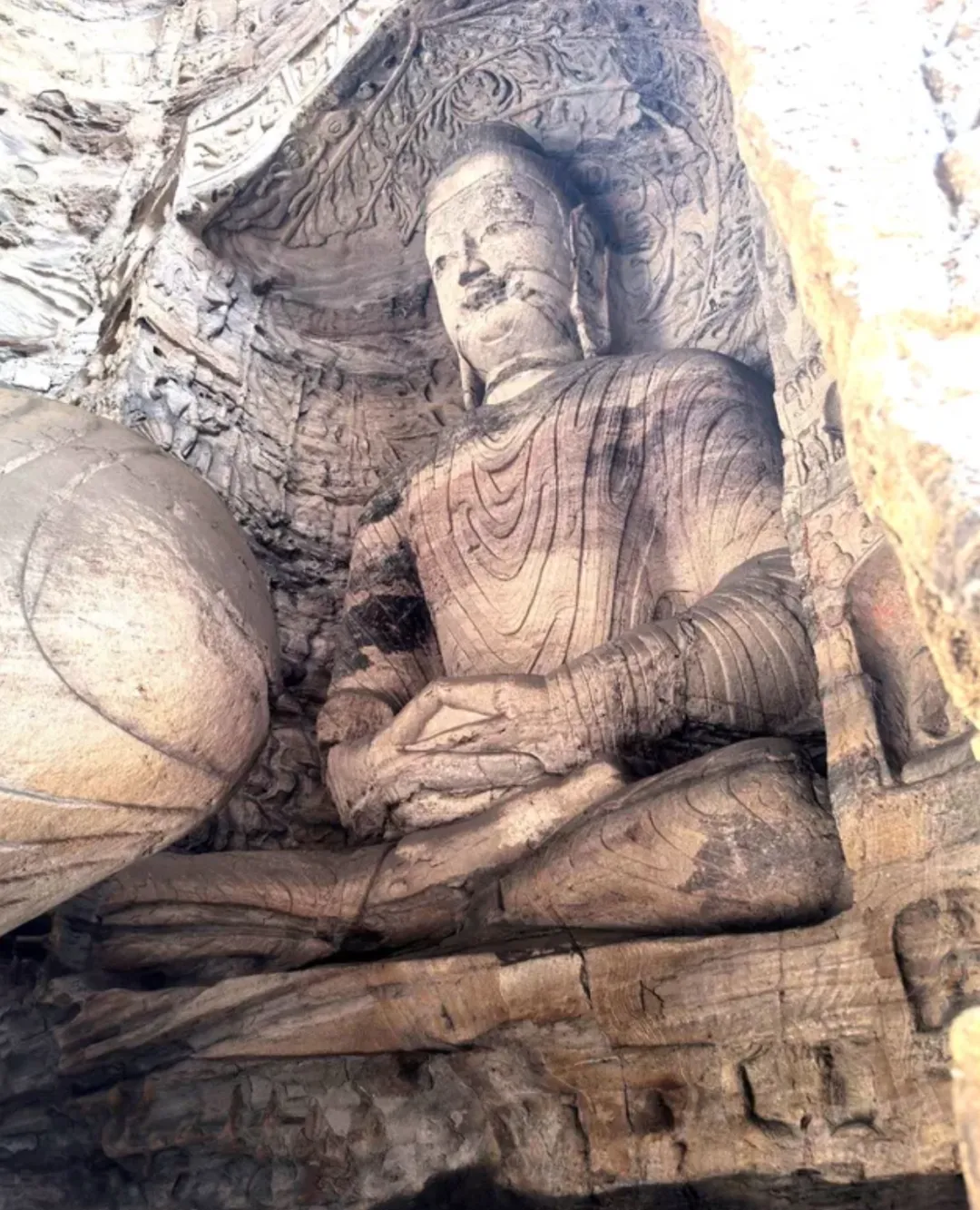
The arrangement repeats at nearly every major cave: large seated central Buddha, flanked by standing guardian figures. It’s not just convention. It’s a specific visual argument.
The central Buddha sits in the full lotus (jiéjiāfūzuò) — the posture Shakyamuni held at the moment of enlightenment under the Bodhi tree. Compact, stable, self-contained. In visual terms, it reads as a form that requires nothing from the outside world. That’s the point.
The flanking vajra guardians are its exact opposite: bare-chested, muscles bunched, faces contorted in snarls, gripping weapons. They look like they’re about to move. Their job is to hold the tension that the Buddha releases.
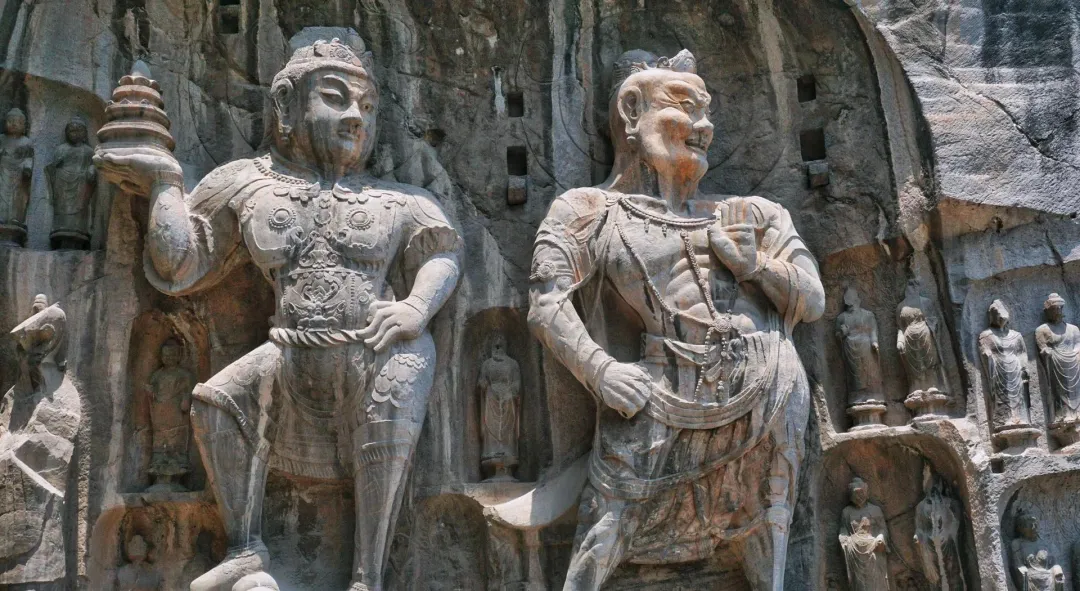
The pairing — stillness and ferocity, compassion and power — is a visual grammar shared across Buddhist, Hindu, and Shinto iconography for the same reason: it works across language barriers. You don’t need to read a sutra to feel it.
China’s Major Buddhist Grottoes — A Complete Overview
China has more than 130 documented grotto sites. Most travelers see only one or two. The ten below cover the full range — from imperial commissions to folk-carved cliff paths, from the Silk Road to the Tea Horse Road, from the 4th century to the 19th. Use the table to find your entry point, then read the full profile below.
Site | Location | Dynasty | UNESCO | Best For |
|---|---|---|---|---|
Mogao Caves | Dunhuang, Gansu | 4th–14th c. | ✓ | Murals, Silk Road history |
Yungang Grottoes | Datong, Shanxi | 460–524 CE | ✓ | Watching Buddhism become Chinese |
Longmen Grottoes | Luoyang, Henan | 493 CE–10th c. | ✓ | Tang sculpture, riverside setting |
Maijishan Grottoes | Tianshui, Gansu | 5th–19th c. | ✓ | Clay sculpture, vertiginous walkways |
Kizil Caves | Baicheng, Xinjiang | 3rd–8th c. | — | Oldest caves in China, Central Asian art |
Dazu Rock Carvings | Chongqing | 9th–13th c. | ✓ | Buddhist-Taoist-Confucian synthesis |
Bingling Temple | Yongjing, Gansu | 4th–18th c. | — | Yellow River canyon, boat access only |
Tianlong Mountain | Taiyuan, Shanxi | 6th–10th c. | — | Sui/Tang sculpture, repatriation story |
Shizhong Mountain | Jianchuan, Dali | 850–1179 CE | — | Royal portraits, Nanzhao kingdom |
Mogao Caves — Dunhuang, Gansu
492 caves | 4th–14th century | UNESCO World Heritage Site
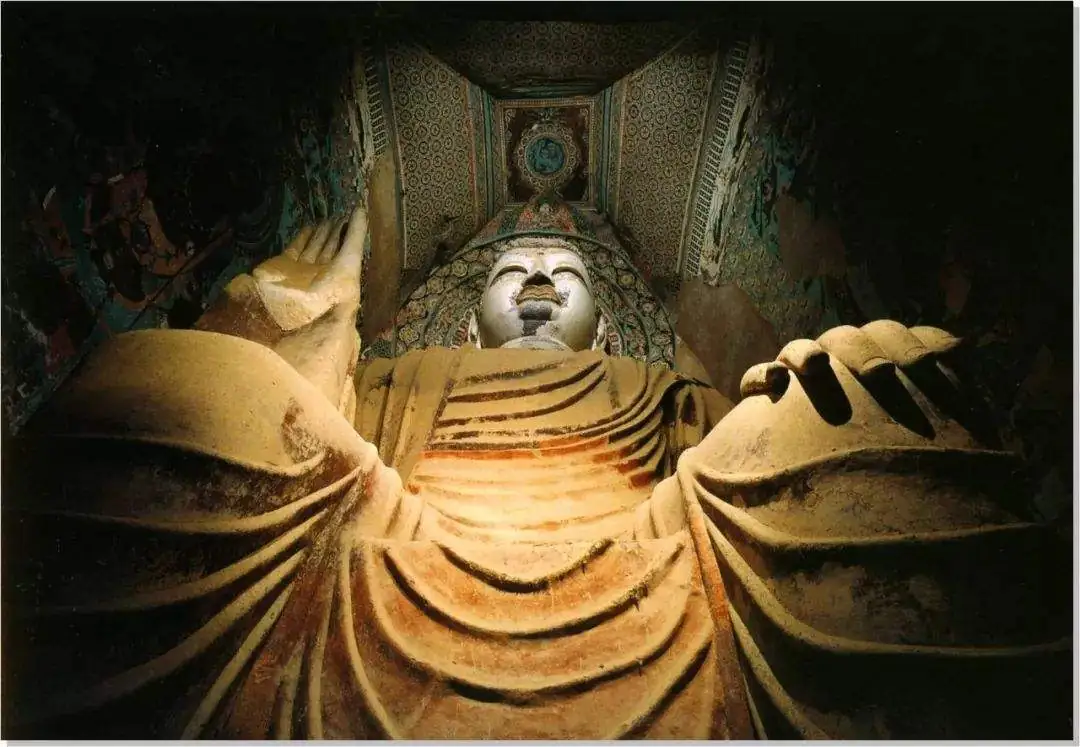
The Silk Road’s greatest archive. Merchants, monks, and diplomats stopped here for a thousand years and left donations; the caves grew accordingly. What sets Mogao apart isn’t scale but content — murals depicting farmers in the rain, Mid-Autumn family gatherings, Central Asian merchants mid-transaction. The sealed Library Cave, rediscovered in 1900, contained 50,000 manuscripts in a dozen languages. It created an entire academic field. Book tickets months ahead. → [Full Mogao Caves Guide]
Yungang Grottoes — Datong, Shanxi
252 caves | 460–524 CE | UNESCO World Heritage Site

The only place in the world where you can watch Buddhism become Chinese in a single afternoon’s walk. The western caves show Central Asian Buddhas with deep-set eyes and thin Indian robes; walk east and the faces soften, the robes widen, the aesthetic shifts — following Emperor Xiaowen’s Sinification reforms in real time. The 13.7-meter Cave 20 Buddha, now open to sky after its facade collapsed, is one of the most photographed figures in Chinese art history. → [Full Yungang Grottoes Guide]
Longmen Grottoes — Luoyang, Henan
2,345 caves | 493 CE–10th century | UNESCO World Heritage Site
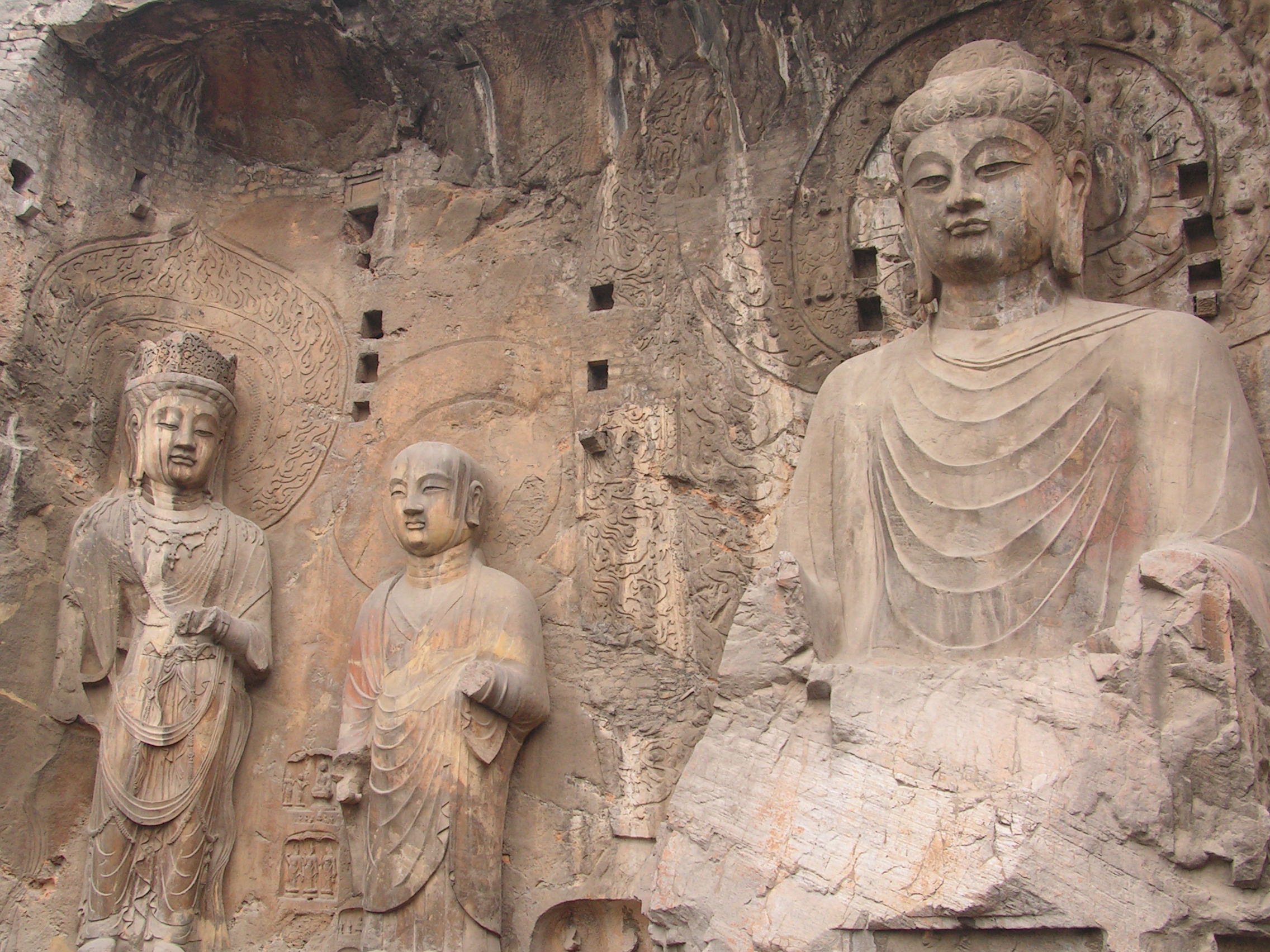
Five centuries of carving in harder limestone than Yungang, which meant slower work and finer detail. The Fengxian Temple’s Vairocana Buddha — 17 meters tall, commissioned by Empress Wu Zetian in 675 CE — is the formal peak of Tang Buddhist sculpture. Cross to the east bank, which most visitors skip: the smaller caves there show private devotional niches from ordinary donors, a completely different register from the imperial monuments opposite. → [Full Longmen Grottoes Guide]
Maijishan Grottoes — Tianshui, Gansu
221 caves | 5th–19th century | UNESCO World Heritage Site
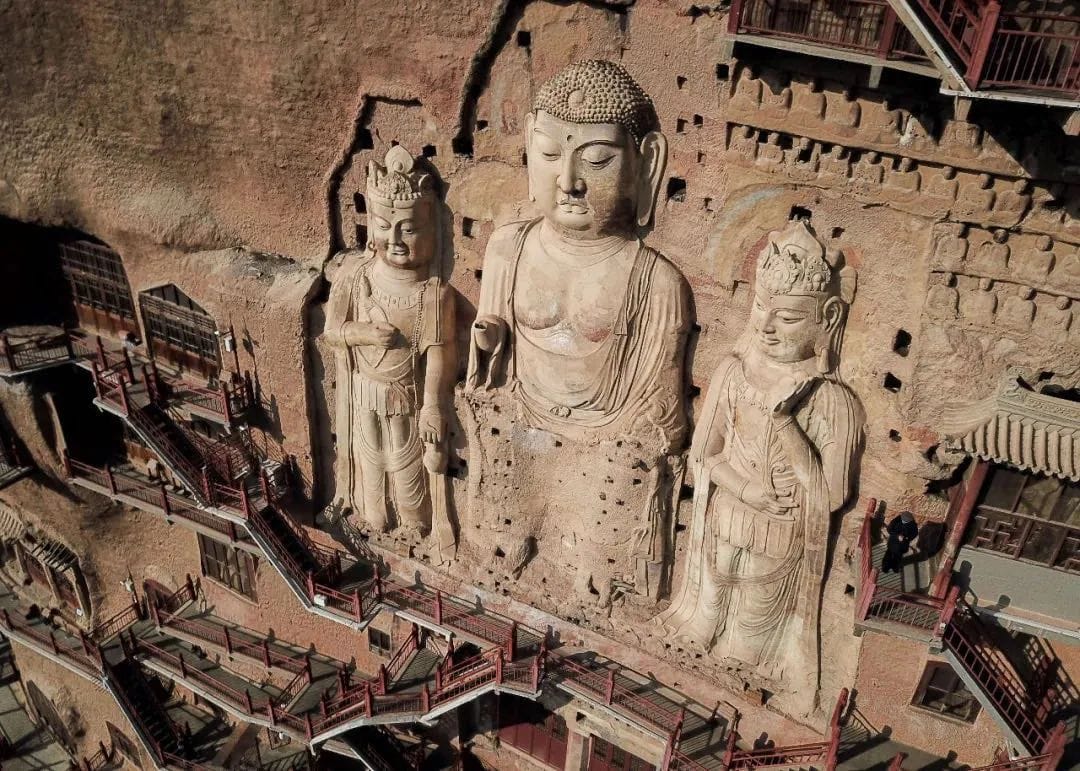
The strangest of the four major sites. Maijishan (“Haystack Mountain”) is a sheer sandstone dome, and the grottoes are cut into near-vertical cliff faces connected by a network of external walkways bolted to the rock. Famous for clay rather than stone sculpture — figures here are more naturalistic and warmer in feeling than their northern sandstone counterparts. The 30-meter standing Buddhas visible from the approach road are carved directly into the cliff face. Not for visitors with vertigo. → [Full Maijishan Grottoes Guide]
Kizil Caves — Baicheng, Xinjiang
236 caves | 3rd–8th century

The oldest Buddhist cave complex in China, predating Dunhuang by at least a century. Kizil sits in the Muzart River valley on the ancient Silk Road and preserves the most significant concentration of pre-Tang Central Asian Buddhist art anywhere — vivid blue lapis lazuli murals, bodhisattvas in Persian-influenced robes, narrative cycles that arrived from Gandhara before they reached China proper. Many of the finest murals were removed by German expeditions in the early 20th century and are now in Berlin. What remains is still extraordinary. → [Full Kizil Caves Guide]
Dazu Rock Carvings — Chongqing
75 sites | 9th–13th century | UNESCO World Heritage Site
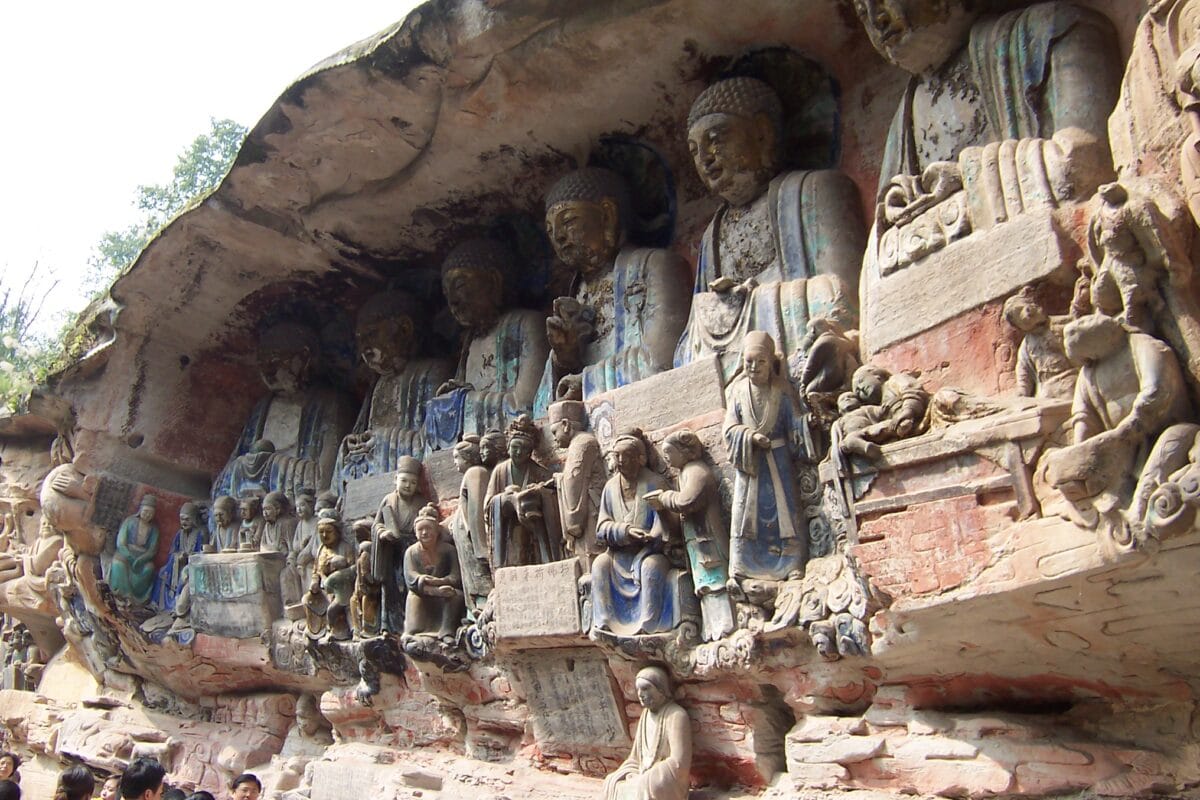
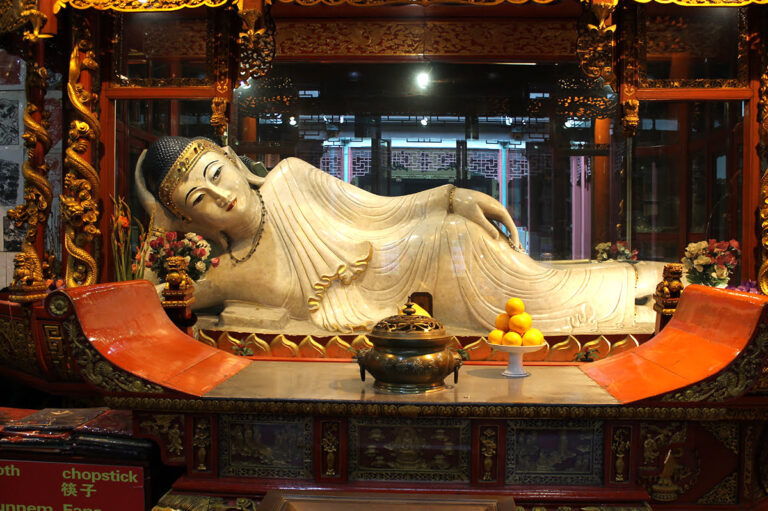
The last great cave-temple project in Chinese history, and the one that most directly challenges the idea that grottoes were purely Buddhist. Dazu’s carvings mix Buddhist, Taoist, and Confucian imagery within the same cliff face — sometimes within the same scene — reflecting Song-dynasty religious syncretism that would have been unthinkable at Yungang. The 31-meter reclining Parinirvana Buddha at Baoding Mountain, with 1,007 smaller attendant figures carved along the same cliff, is one of the most ambitious single sculptural compositions in China.
Bingling Temple Grottoes — Yongjing, Gansu
183 caves | 4th–18th century

Carved into a canyon on the Yellow River that was accessible only by boat until the 1970s, which is why it survived. Bingling contains China’s oldest dated cave inscription (420 CE) and a 27-meter Tang-dynasty Maitreya that rivals anything at Longmen for sheer physical impact. The site is now partially submerged behind Liujiaxia Dam; boat access from the reservoir is still required, which keeps visitor numbers low and the atmosphere genuinely remote. → [Full Bingling Temple Guide]
Tianlong Mountain Grottoes — Taiyuan, Shanxi
25 caves | 6th–10th century
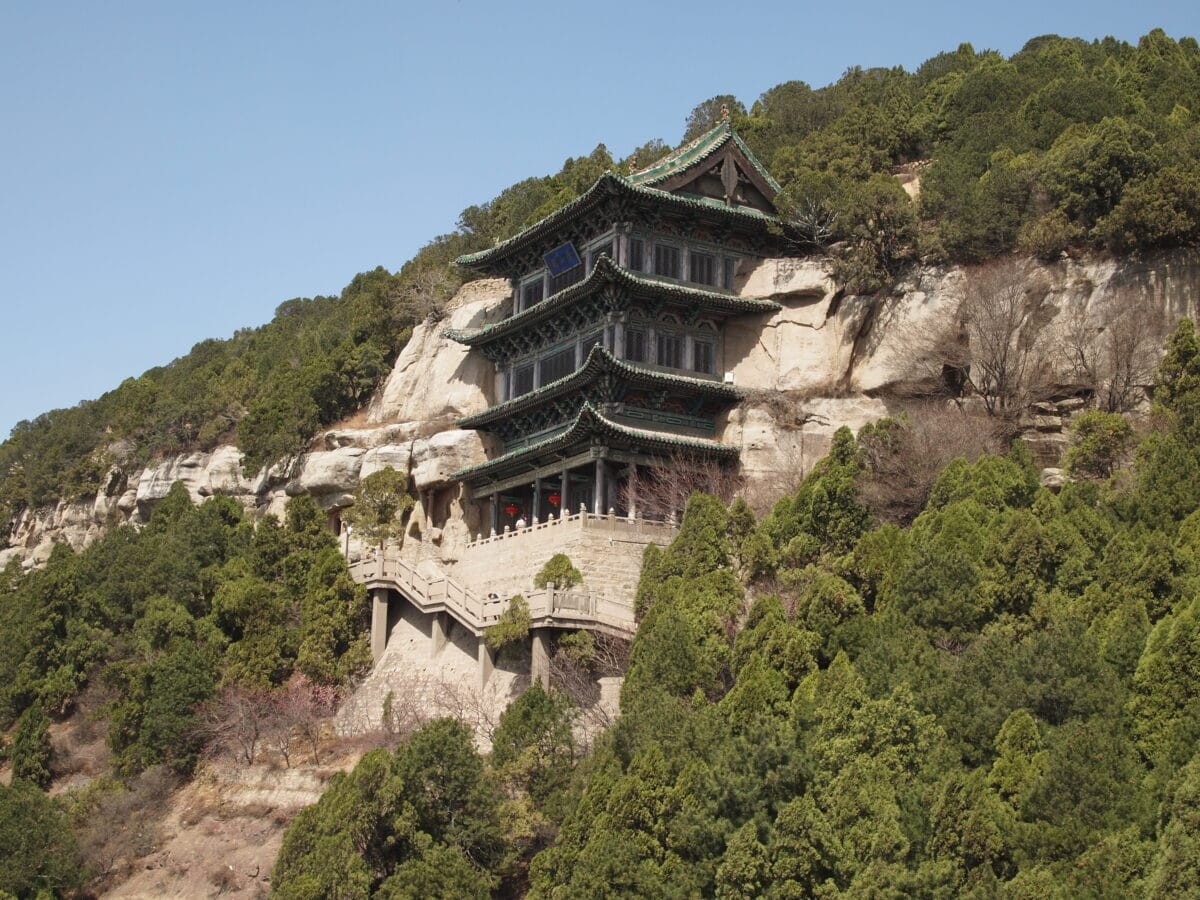
A cautionary tale as much as a cultural site. Tianlong Mountain contains some of the most refined Buddhist sculpture produced during the Sui and early Tang dynasties — and roughly 150 of its finest figures were removed and sold on the international art market between 1918 and 1925. Many ended up in Western museums. Ongoing repatriation efforts have returned a handful of pieces; a digital reconstruction in the on-site museum shows what the caves originally looked like. What remains in situ is fragmentary but still beautiful.
Shizhong Mountain Grottoes (Jianchuan) — Dali, Yunnan
17 caves | 850–1179 CE | National Key Cultural Relic
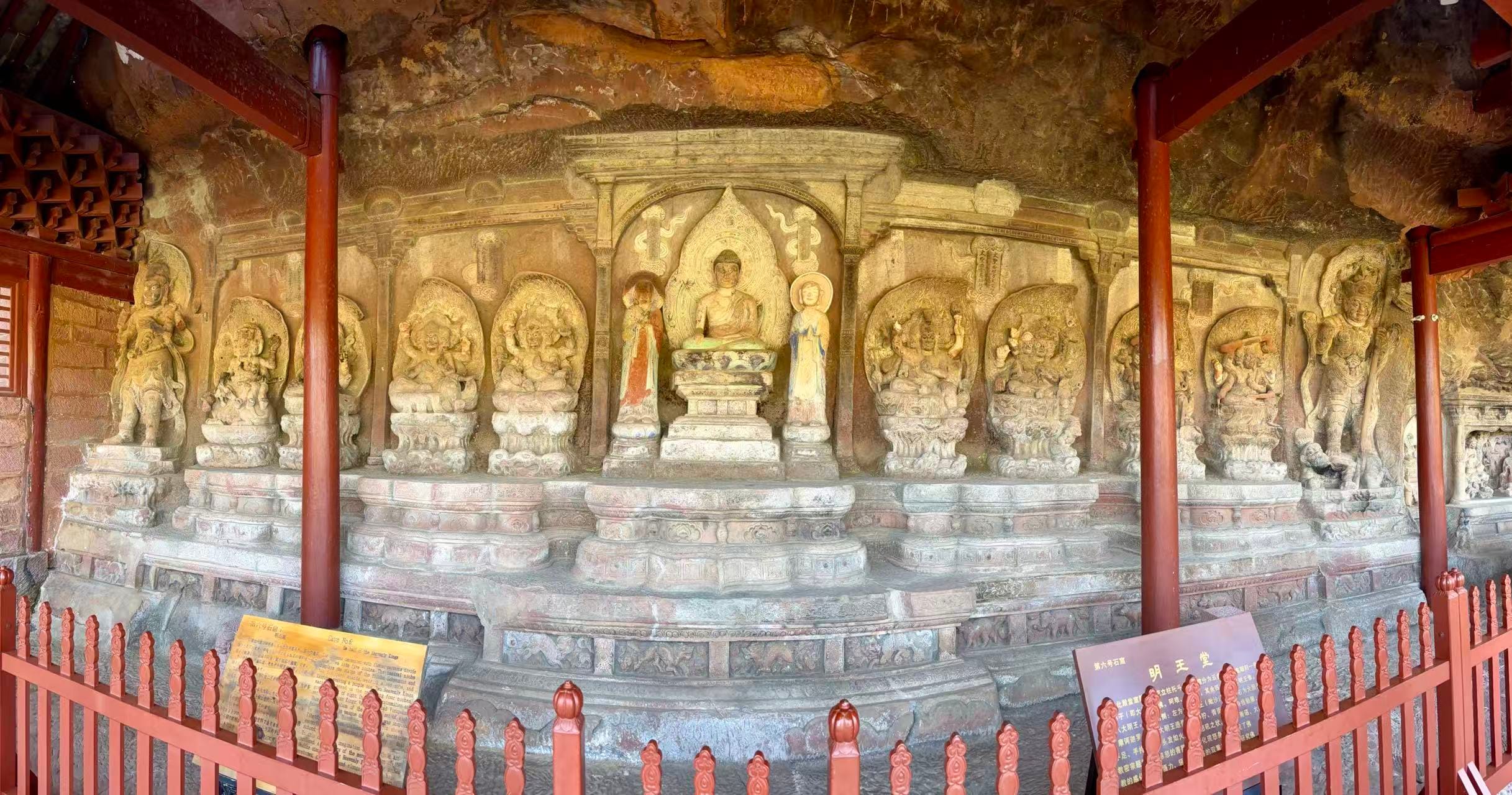
The least-known site on this list, and possibly the most historically surprising. Carved during the Nanzhao and Dali kingdoms — minority-ruled states that controlled Yunnan for five centuries — Shizhong Mountain is the only Chinese grotto complex that portrays actual named rulers in secular court scenes alongside Buddhist icons. Cave 2 shows King Geluofeng of Nanzhao in full court regalia, debating with ministers. Cave 11 depicts King Xinuluo’s family portrait — a genuine dynastic “family photo” in stone from 850 CE. The sociologist Fei Xiaotong visited and wrote: “The north has Dunhuang murals; the south has Jianchuan grottoes.” Louis Cha (Jin Yong), who wrote Demi-Gods and Semi-Devils set partly in this region, visited in 1988 and said he regretted not coming sooner. → [Full Shizhongshan Grottoes Guide]
Why Cave Temple Art Stopped — And What Survived
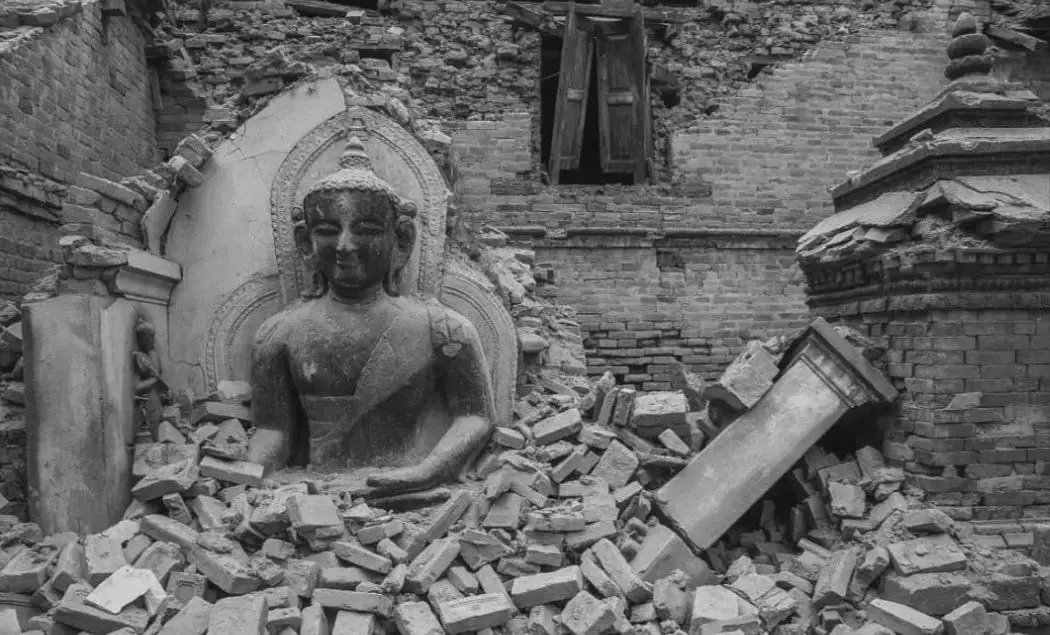
The same logic that created the grottoes ended them.
Cave temples flourished because imperial power had bet on Buddhism as its legitimating ideology. The Tanyao Five Caves were explicitly an argument that the emperor was god. Once that equation stopped being useful, the patronage stopped.
The An Lushan Rebellion (755–763 CE) shattered Tang central authority and the conditions of imperial surplus that funded Longmen. Emperor Wuzong’s Huichang Suppression (845 CE) demolished tens of thousands of Buddhist institutions — a calculated severing of the state-Buddhism relationship that had been building for centuries. By the Song dynasty, Chan (Zen) Buddhism’s core teaching — that enlightenment comes from inner experience, not external monuments — made large carved Buddhas ideologically beside the point.
What survived did so for one of two reasons: too remote to destroy, or too massive to move. Bingling Temple was sealed behind a Yellow River canyon for centuries. Jianchuan’s Shizhong Mountain was simply too far from anywhere that political upheaval reached. Kizil lost its murals not to war but to German expeditions in the early 20th century. Yungang and Longmen outlasted every dynasty that tried to suppress them because stone, as Tanyao understood in 460 CE, outlasts every argument made against it.

Cave temple art flourished in China for roughly 800 years. The cliffs are still there. Most of the figures are still looking out — at the same valley, the same river, the same sky that Tanyao’s craftsmen saw when they put down their chisels. Eight hundred years of carving, and the stone kept every promise the wood never could.
Every grotto on this list rewards the kind of unhurried attention that a group tour simply can’t provide. If you’re putting together a trip — one site or several — tell us what you’re drawn to and we’ll build around it specially for you.