Baoxiang Temple at Shibaoshan: The “Hanging Temple” of Yunnan
The Baoxiang Temple is part of Shibao Mountain Scenic Area, with tickets covering Shizhongshan Grottoes and Haiyunju Temple.
Most travelers rush to Shibaoshan for the famous Shizhongshan Grottoes. They see the ancient carvings. They take a photo. Then they leave.
They’re missing the real adventure.
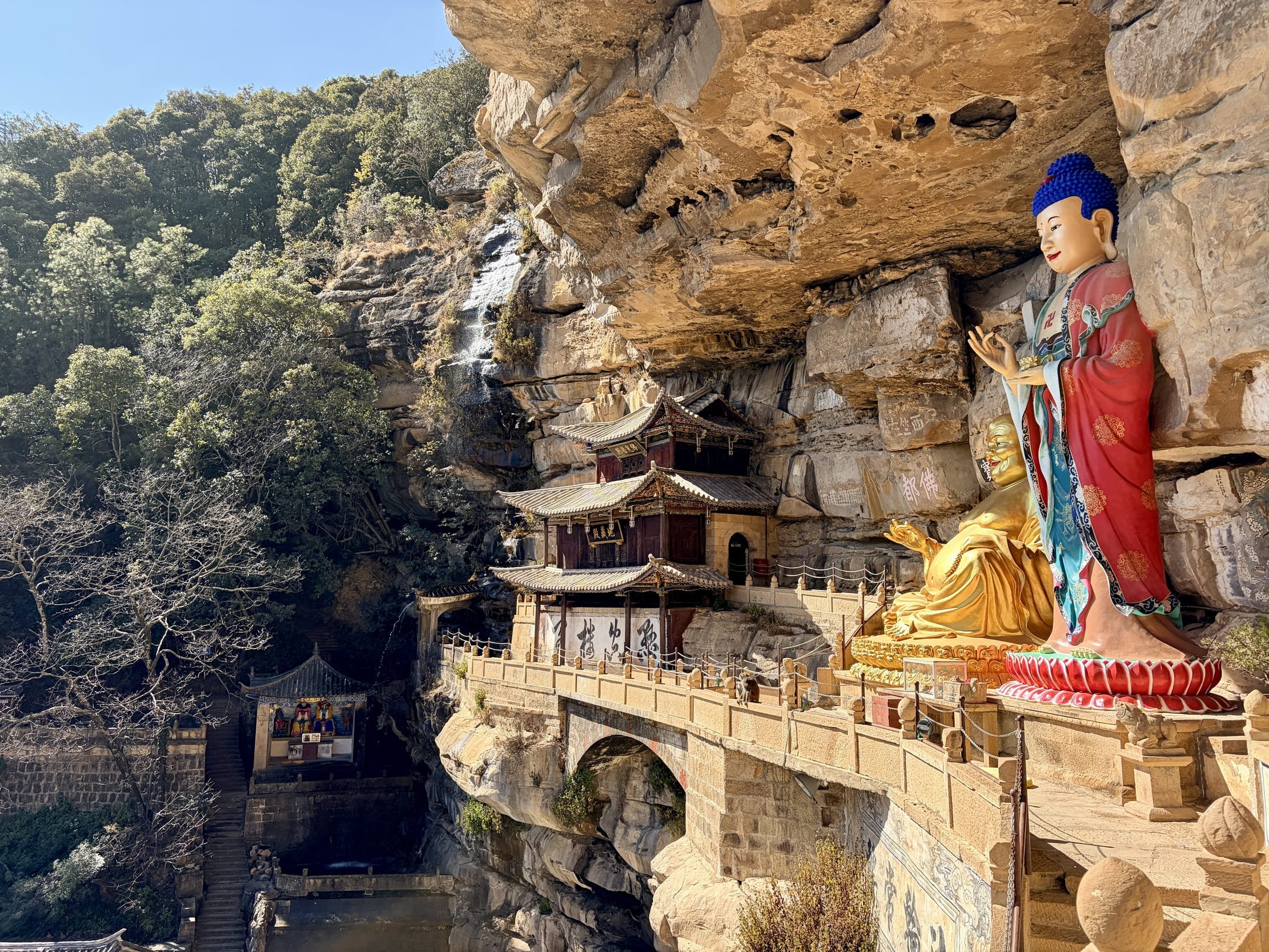
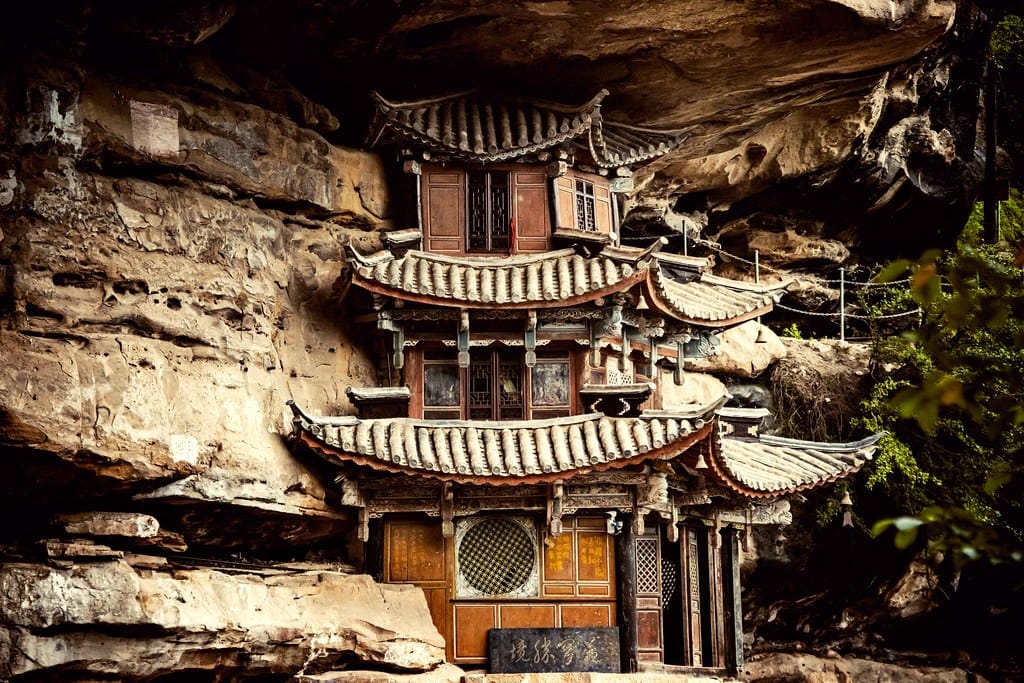
Baoxiang Temple is different. It’s not just a temple – it’s a fortress built into a vertical cliff. Locals call it “Yunnan’s Hanging Temple.” It’s home to a wild kingdom of 300 macaques. It’s where wind howls through ancient pines and 730-year-old wooden structures cling to red sandstone.
We’ve visited Baoxiang Temple dozens of times over the past decade, from the quiet rainy season to the chaotic energy of the Singing Festival. This is our honest, deep-dive guide for 2026.
Table of Contents
Quick Facts
Feature | Details |
|---|---|
Chinese Name | 宝相寺 (Bǎoxiàng Sì) |
Location | Shibaoshan Scenic Area, Jianchuan County, Yunnan |
Altitude | Approx. 2,600m (8,530 ft) |
Key Highlight | Built onto a vertical cliff; “Hanging Temple” architecture |
Wildlife | A large population of wild macaques (monkeys) |
Distance | ~25km from Jianchuan County; ~120km from Dali Old Town |
Ticket Status | Included in Shibaoshan Scenic Area Ticket (45 RMB) |
Suggested Time | 1.5 – 2 Hours |
History and Cultural Significance
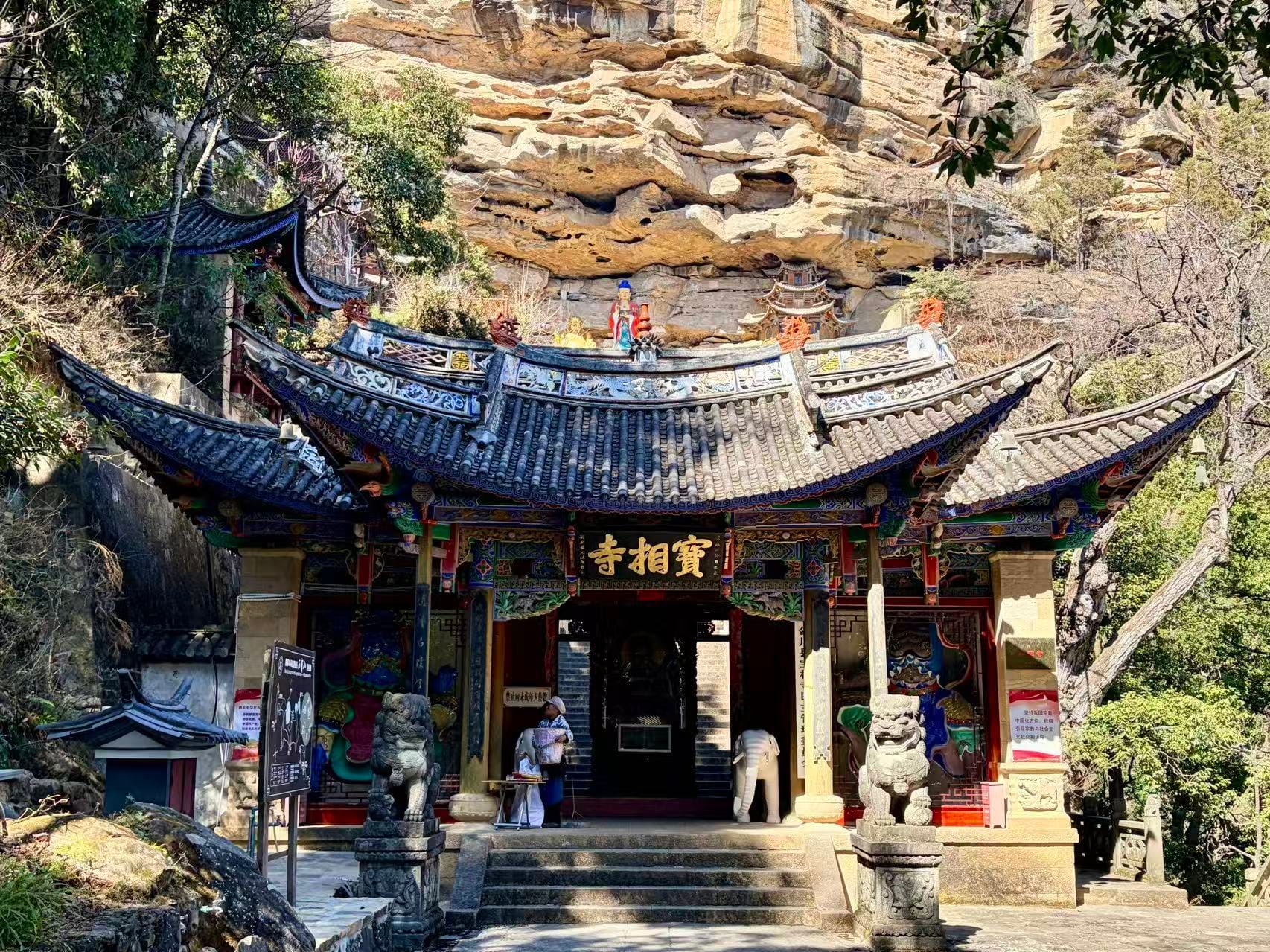
Baoxiang Temple is not merely a scenic spot; it is a spiritual anchor for the Bai people. Originally built during the Song Dynasty (1291 AD), it was known as the “Jinding Temple” (Golden Top).
Unlike many temples that sit on flat ground, Baoxiang Temple represents the harmonious (and precarious) relationship between nature and faith. It was constructed on the Foding Mountain (Buddha Top Mountain) cliffs, utilizing the natural rock overhangs as roofs and caves as shrines.
Historically, this site served as a convergence point for Buddhism and Taoism in the Nanzhao and Dali Kingdoms. The architecture is a testament to the engineering prowess of the Bai ancestors, who drilled beams directly into the rock face to suspend the pavilions in mid-air.
Expert Insight: While the Shizhongshan Grottoes nearby depict the life of Nanzhao kings, Baoxiang Temple is where the living culture thrives. It is the epicenter of the
Shibaoshan Song Festival, a UNESCO-listed intangible cultural heritage event where thousands of Bai people sing traditional folk songs to find love.
Why Worth a Visit?
The Shizhongshan Grottoes get all the fame. They deserve it – Tang Dynasty carvings from the 9th century are spectacular. But Baoxiang Temple offers something the grottoes can’t: authentic cliff architecture and genuine solitude.
In six visits during 2024-2026, we encountered fewer than 15 other tourists each time. Compare that to 200+ people at the grottoes on a typical weekend.
The temple complex hangs from ledges barely 1.5 meters wide. Yuan Dynasty builders in 1291 drove wooden poles deep into rock crevices to create platforms that have lasted over seven centuries. The largest support beam weighs 400 kilograms. Imagine hauling that up a cliff face without modern equipment.
The Danxia landform creates the dramatic red sandstone backdrop. These formations date to the Cretaceous period – 65-145 million years old. Iron oxide in the rock produces that rust-red color. At 7-8 AM, morning light makes the cliffs literally glow orange.
Highlights of Baoxiang Temple
The Main Temple Complex
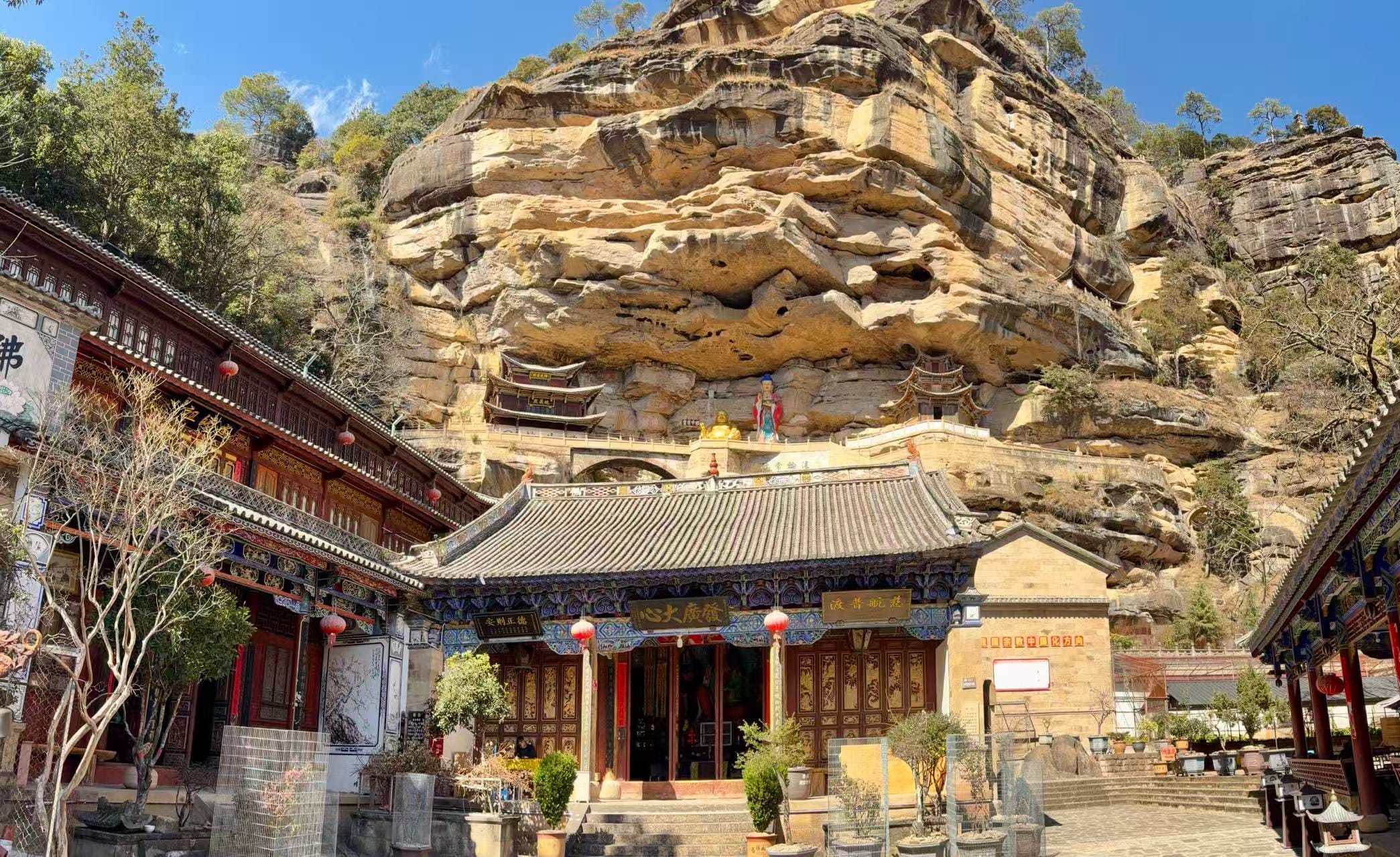
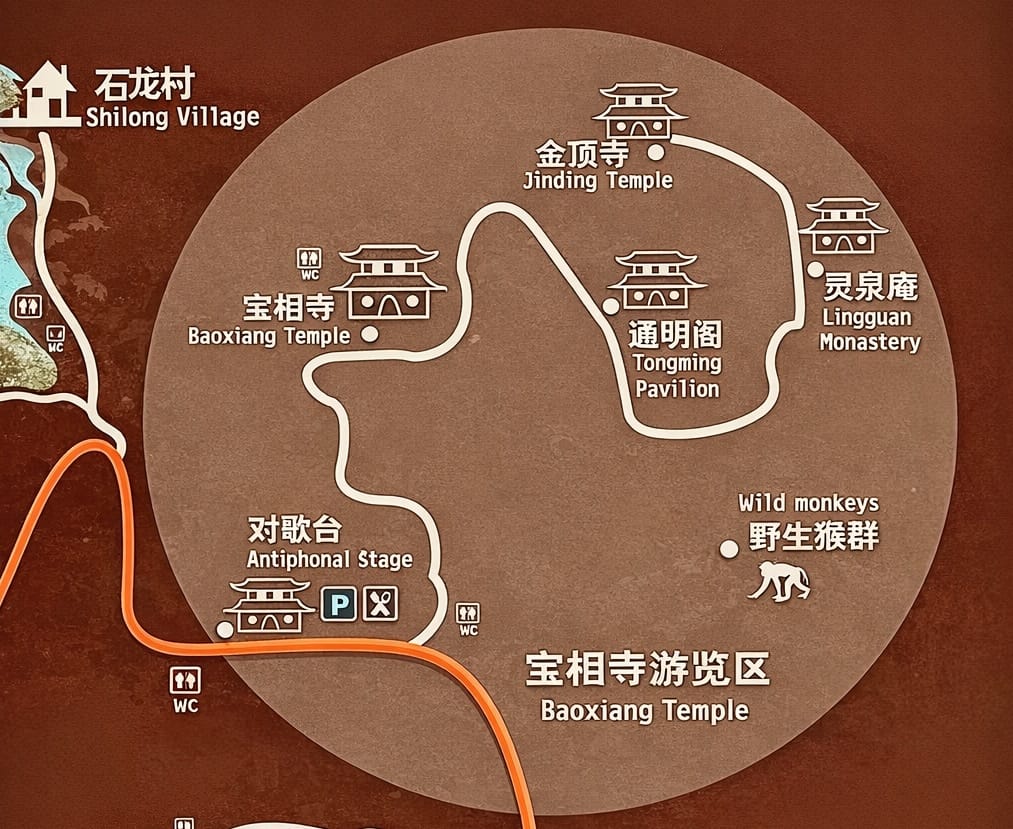
Four interconnected structures cling to the cliff: Baoxiang Temple itself, Tongming Pavilion, Linqun’an, and Jinding Temple. All sit on wooden platforms anchored into the rock face. The joinery uses mortise and tenon joints without a single nail – traditional Chinese carpentry at its finest.
Inside Daxiong Hall, statues of Ten Boys and Ten Girls represent a Bai legend. These heroes supposedly fought a dragon threatening the valley. This story became the spiritual foundation for the Shibaoshan Singing Festival.
The 99 Steps to Jinding
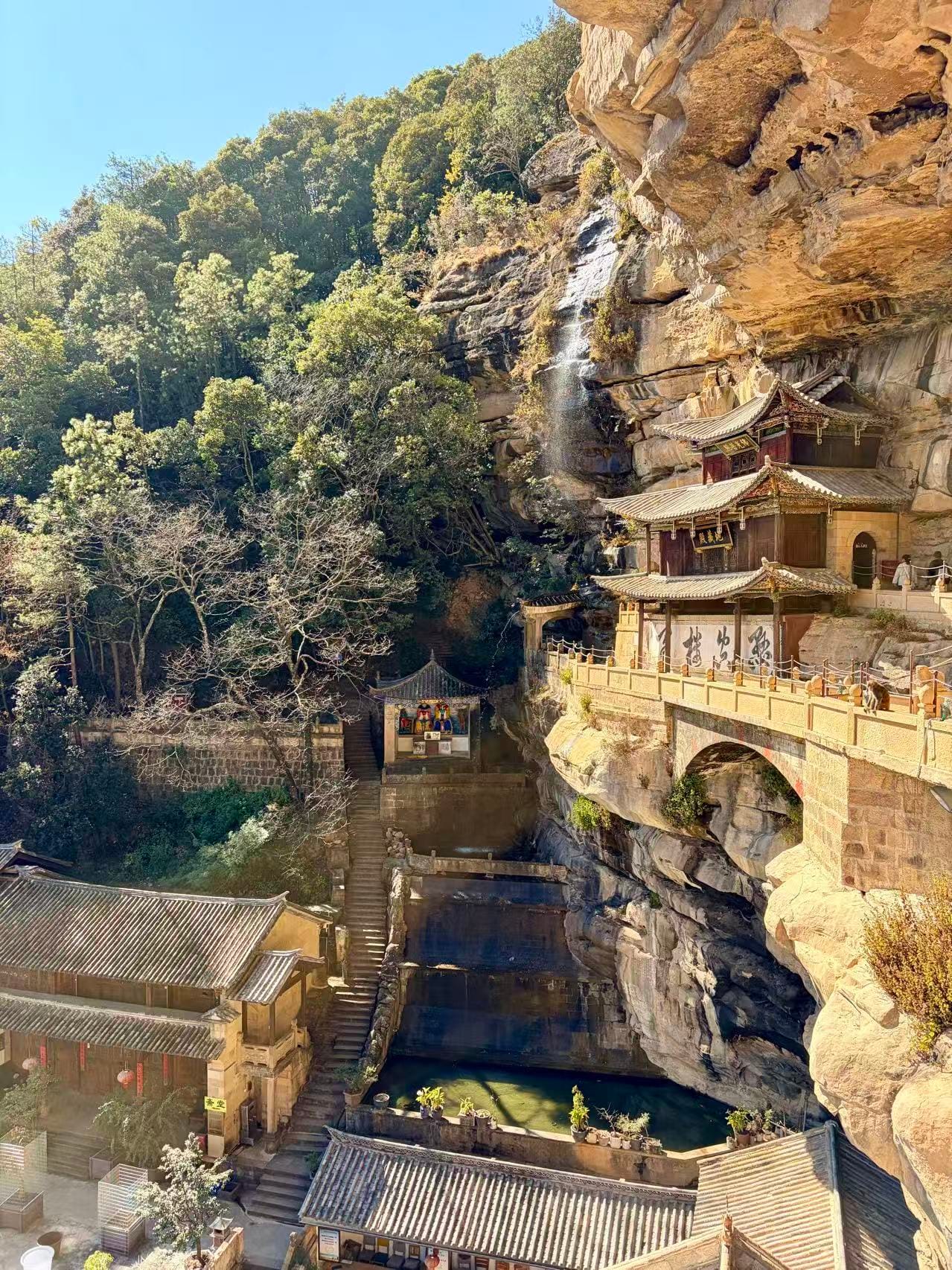
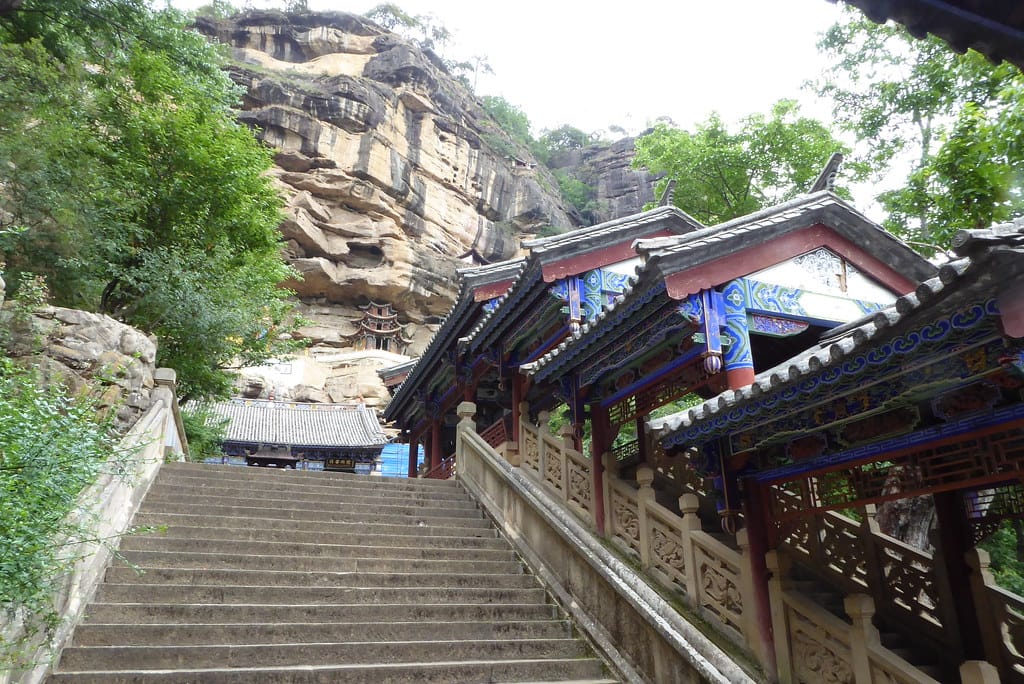
A steep stone stairway climbs to Jinding Temple at the summit. The 99 steps gain 80 meters of elevation. Local tradition says completing all steps without stopping brings good fortune.
The steps are intentionally irregular – heights ranging from 12-25cm. This forces you to watch your footing, creating what Buddhists call “mindful walking.” The lower 30 steps were replaced in 2015; the upper 69 are original stonework.
From Jinding’s platform, you can see across Shaxi Valley to seven mountain ranges layering into the distance. Late afternoon (4:30-5:30 PM) provides the best golden light.
The Cliff Temples
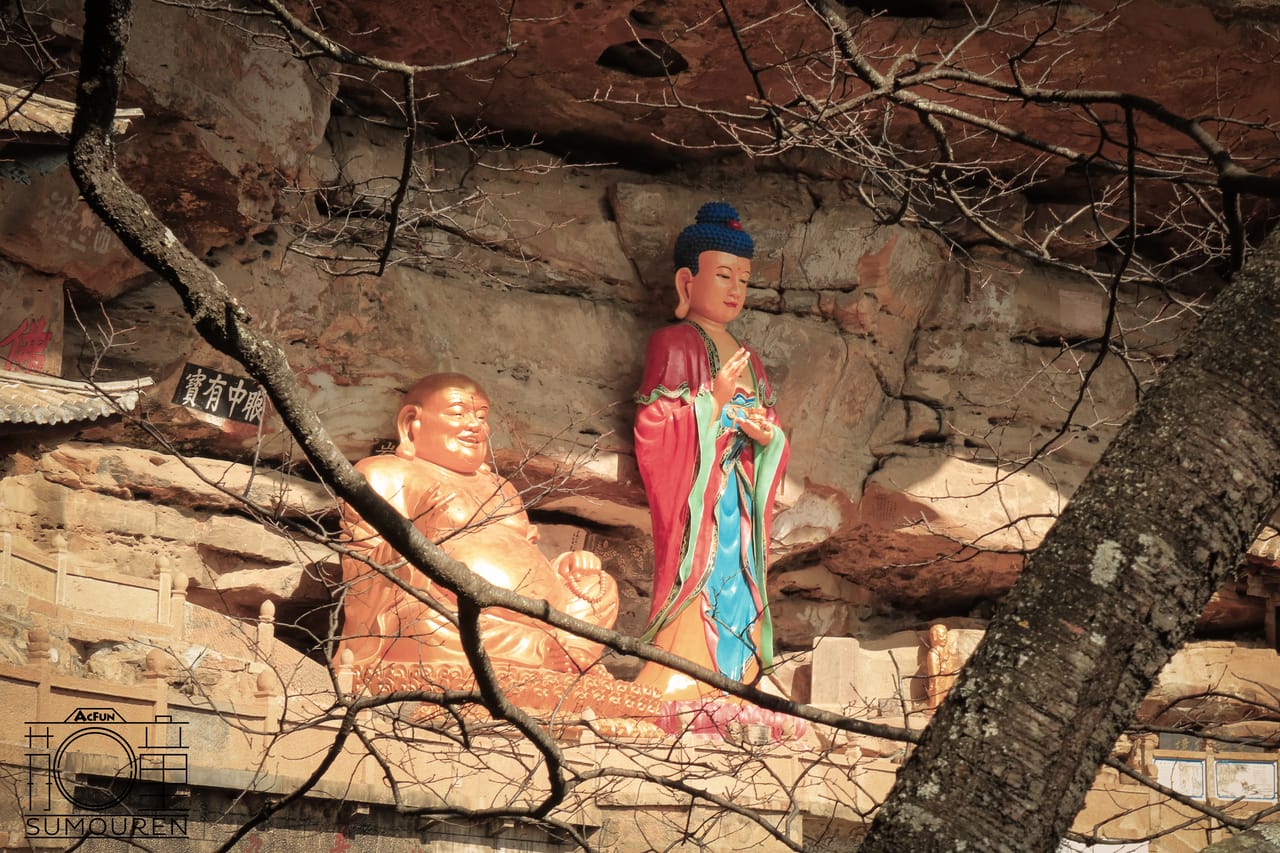
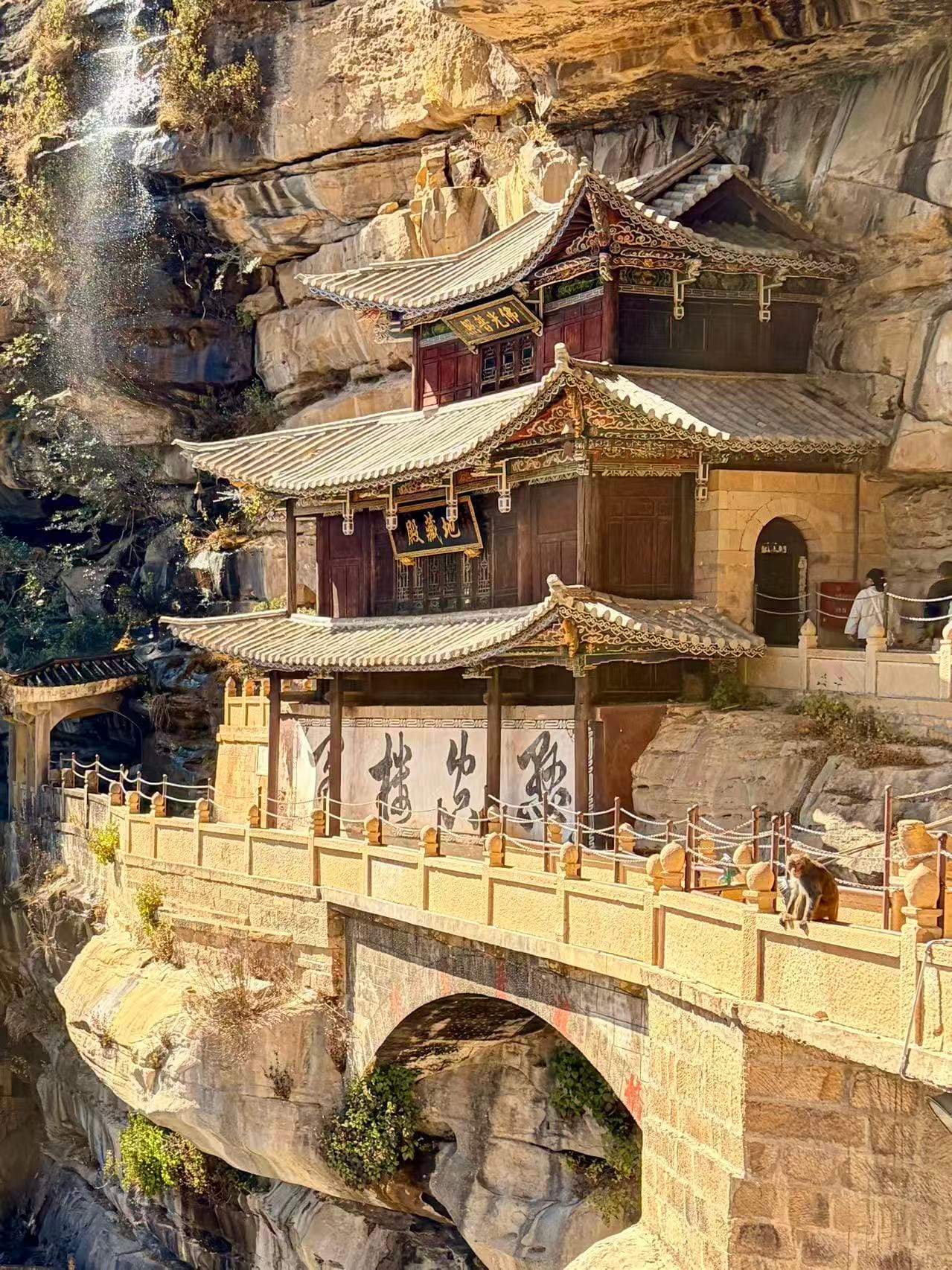
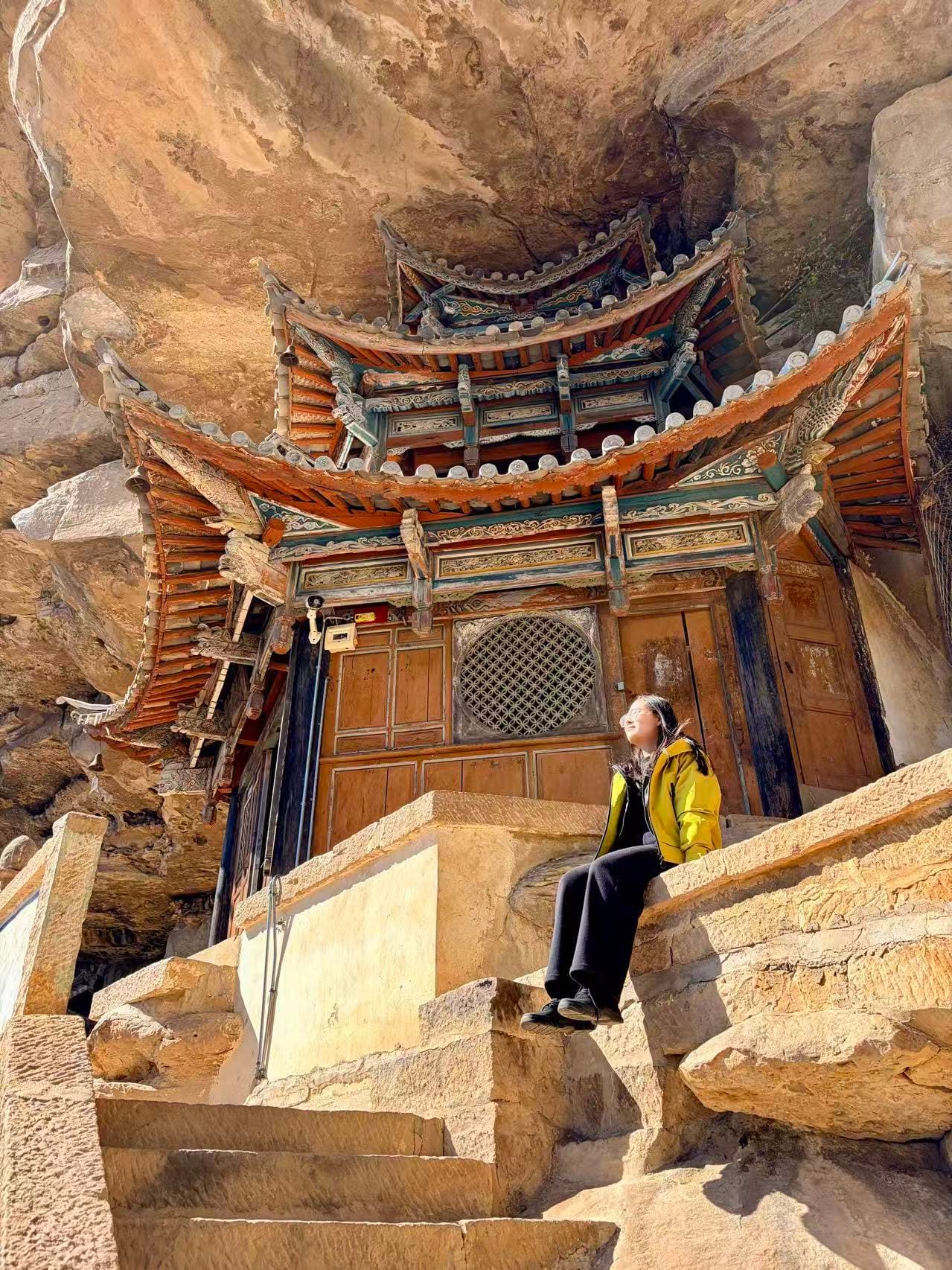
Two smaller temples sit directly in the cliff face, accessible only by vertical wooden ladders. The Maitreya Temple and Jade Emperor Pavilion perch on ledges with a 60-meter drop below. Not for anyone with height fears.
The modern Guanyin and Maitreya Buddha statues (carved 2003-2005) aren’t ancient, but they’re massive – the Guanyin stands 15 meters tall. Fresh incense burns daily in the alcoves, showing the site remains active for worship.
The Macaque Kingdom
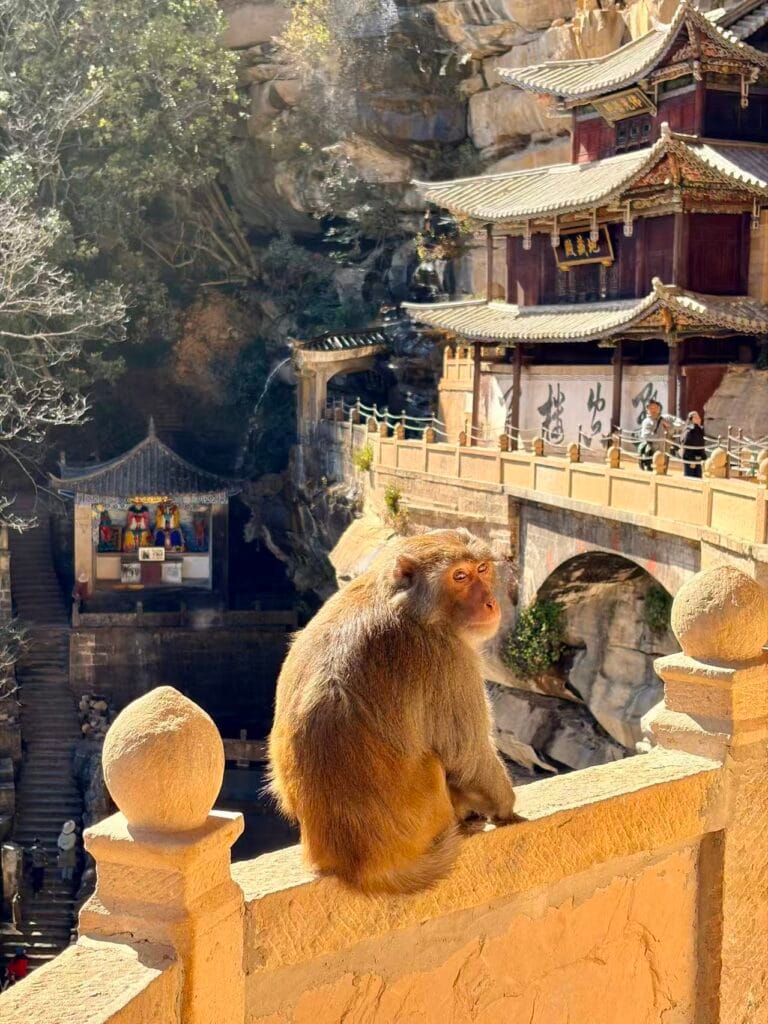
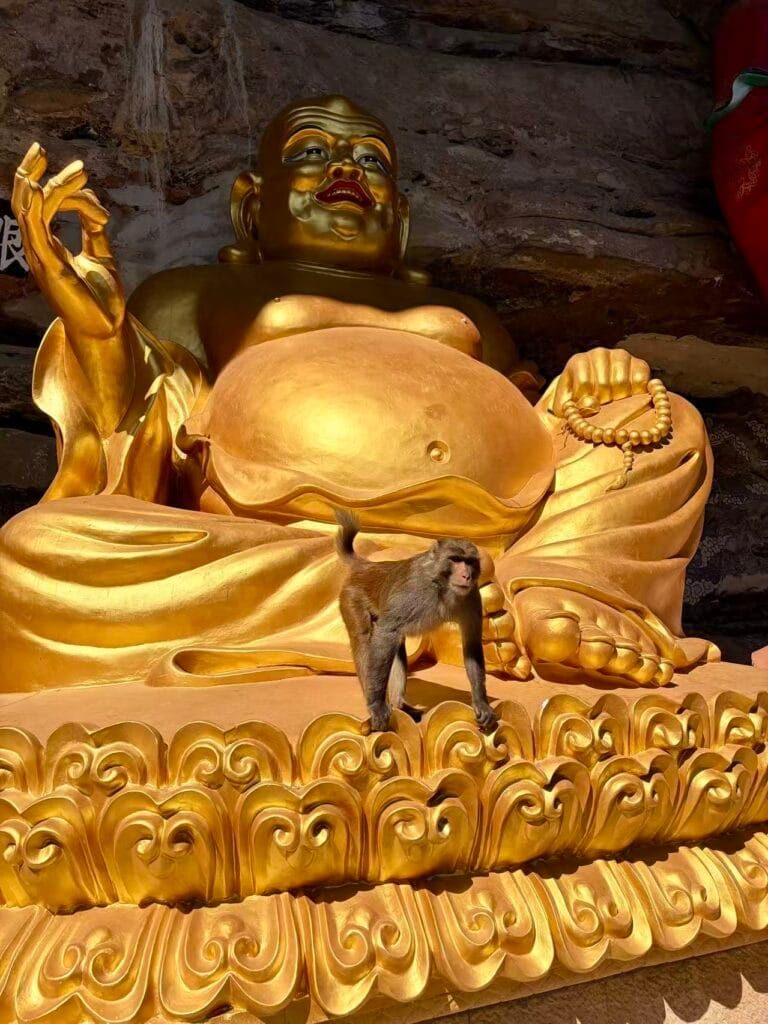
About 300 macaques have made Baoxiang their territory. They’re habituated to humans and associate tourists with food. We’ve watched them unzip backpacks in under 15 seconds.
The monkeys aren’t aggressive if you ignore them. But they will grab anything that looks edible. Peak activity happens 9-11 AM when most visitors arrive. Visit before 8:30 AM or after 2:30 PM for calmer conditions.
Temple staff manage aggressive individuals with slingshots loaded with small pebbles. It’s effective – the monkeys understand warning shots and back off immediately.
The Singing Festival Experience
If you can only visit once, make it during the Shibaoshan Singing Festival: September 8-10, 2026 (27th day of the 7th lunar month).
This UNESCO Intangible Cultural Heritage event brings thousands of Bai people for three days of antiphonal singing called “duì gē” (对歌). Young singles sing back-and-forth, often flirting through clever lyrics. The best singers trade verses for hours.
We attended in September 2025 and watched two groups sing for over 90 minutes. The lyrics blended traditional themes (crop harvests, nature) with modern life (smartphone apps, city work). Elders judged the wit and poetry of each response.
Festival logistics:
- Entrance fee typically drops significantly (historically ¥2-5, confirm current rate)
- Sunrise ceremony at Baoxiang starts 5:30 AM – arrive earlier with a headlamp
- Dragon dances happen Sept 8th around 2 PM
- Bamboo dragon fire ceremony is Sept 9th after sunset (~8 PM)
- Temperature swings are extreme: 25°C daytime, 8°C night – bring layers
- Book Shaxi hotels 2-3 months ahead; they fill completely
How to Get There
From Shaxi (12 km)
Shuttle bus: Buy tickets at Shibaoshan entrance (around ¥30-40, prices may vary). Buses run every 30 minutes, 8 AM-4 PM. Drops you 300 meters below the temple.
Hiking trail: The most rewarding option. Look for the turn at kilometer mark 113 on the Jianchuan road (just past the gas station). Trail gains 400 meters elevation over 8 kilometers through pine forest. Takes 2-2.5 hours up, 1.5 hours down. Start by 7 AM to beat the heat.
Private car: Hire one from Travel China With Me. Driver drops you at temple parking and returns later.
From Dali or Lijiang
Dali to Shaxi: Bus to Jianchuan (3 hours, ¥50-70), then minibus to Shaxi (30 min, ¥10-15). Stay overnight in Shaxi.
Lijiang to Shaxi: Direct bus to Jianchuan (2 hours, ¥40-60). The new expressway makes this faster than from Dali.
Day trips are rushed. You’ll spend more time in transit than exploring. Much better to overnight in Shaxi.
Tickets and Hours
- Entry: ¥45 (includes Baoxiang Temple)
- Shuttle Bus: Main gate → Baoxiang Temple → Shizhong Temple (¥40 round-trip)
- Shuttle Bus: Main gate → Baoxiang Temple (¥10 round-trip)
- Hours: 8 AM – 5 PM daily
- Payment: Cash or mobile (WeChat/Alipay). Foreign cards NOT accepted
Note: Prices and hours current as of Feb 2026 but may change. Confirm before visiting.
Practical Tips
Footwear matters. Hiking boots or trail runners essential. The stone steps get slippery after rain or morning dew. We’ve seen multiple people struggle in sandals.
Bring 1.5L water per person. The climb is thirsty work at 2,400+ meters elevation. One small shop at parking area charges ¥5-8 per bottle (double normal price).
Monkey protocol:
- Keep all bags completely zipped
- Don’t make eye contact or pointing gestures
- If one approaches, stand still and ignore it
- Don’t try to retrieve stolen items yourself – alert temple staff
Photography: Flash prohibited inside all structures. Bring a camera that handles low light (ISO 1600+). Best natural light is 7-9 AM or 4-6 PM. Avoid midday (harsh overhead light).
Weather changes fast. Mountain conditions can shift from sun to rain in an hour. Pack a light rain jacket. Temperature drops 3-5°C between parking area and Jinding due to elevation and wind.
What We’ve Learned Guiding Travelers Here
We’ve guided over 1,000 travelers to Baoxiang Temple over the past decade. Here’s what actually works:
Early Morning Access Changes Everything
Last October, we arranged 7 AM entry for a couple from the UK. They had the entire temple complex to themselves for nearly an hour. The sunrise hitting the red cliffs was spectacular. By 9 AM when they were leaving, tour buses were arriving and the peaceful atmosphere was gone.
The lesson: If you want Baoxiang to yourself, arrive before 8 AM. The difference between 7 AM and 10 AM is night and day.
Elderly Visitors Can Absolutely Do This
In March 2025, we guided an Australian couple in their late 60s who were worried about the climb. We walked at their pace, pointed out the best rest spots, and knew which ladder climbs were safe to attempt and which to skip. They completed the Jinding Temple climb in 25 minutes with photo stops.
The lesson: The main temple areas are accessible to anyone with moderate fitness. The 99 steps require honest self-assessment, but they're doable with proper pacing. Skip the vertical ladder climbs to cliff temples if you have any mobility concerns.
The Festival Requires Local Connections
A traveler from the US joined us in September 2025 because he wanted the authentic festival experience, not the tourist version. We arranged for him to stay with a Bai family in a village near Shaxi. At 5 AM, we joined them for the pre-dawn hike to Baoxiang Temple and participated in the sunrise ceremony alongside 300+ local Bai people. He later told us watching hundreds of locals chant together as the sun rose over the valley was the memory he’ll keep forever from his entire China trip.
The lesson: The Singing Festival is spectacular, but the real magic happens at the temple itself during the sunrise ceremony. You need local guides who know Bai families to access this level of authenticity.
Families Need the Right Approach
We’ve learned that traveling with children (especially ages 6-12) requires turning the temple visit into an adventure. Our guides point out carved details for kids to find, teach them how to respectfully observe the monkeys, and know exactly when to take breaks before kids get tired and cranky. What’s supposed to be a 2-hour visit often stretches to 3 hours because children keep asking questions – which is exactly what we want.
The lesson: Kids genuinely enjoy Baoxiang Temple if it's presented as exploration rather than sightseeing. The monkeys, the ladder climbs, and the mysterious cliff temples capture their imagination.
What Public Reviews Say
From TripAdvisor (November 2024): “The lack of tourists, clear blue November sky, and slight breeze infused with the scent of pine needles and temple incense all made for a truly ethereal experience.”
Independent hiker (February 2025): “Hiked from Shaxi early morning, reached temple by 8:45 AM. Trail well-maintained but steep in sections. Met maybe 5 other hikers total. The caretaker served us tea and told stories about the temple’s history (in Chinese, we used a translation app). Authentic experience completely different from the crowded grottoes.”
FAQ
How long should I budget?
Minimum 2 hours for basic exploration. 3-4 hours if you want to photograph properly and climb to all areas. Add 2 hours up + 1.5 hours down if hiking from Shaxi.
Can elderly visitors access it?
The main courtyard is accessible with about 50 moderate steps from parking. The 99 steps to Jinding are steep – assess honestly. We’ve guided visitors in their 70s successfully, but it required slow pacing and rest stops. Skip the vertical ladder climbs to cliff temples.
Best time to visit?
Early morning (7-9 AM) offers best light, fewest crowds, calmer monkeys. October-April brings clear skies. March-May is ideal: wildflowers blooming, perfect hiking temps, minimal rain. Avoid October 1-7 (National Day) and Lunar New Year.
How does it compare to the grottoes?
The grottoes have more historically significant Tang Dynasty carvings. Baoxiang has superior cliff architecture and far fewer crowds. Visit both if time allows – together they need a full day. Start with grottoes (less demanding), then Baoxiang.
Can I get an English guide?
Not at the temple. Hire one from Travel China With Me before arriving. Our guides have worked this route 10+ years and know details casual visitors miss.
Is it safe alone?
Very safe. Low crime area, helpful locals. Main risks are physical (slippery steps, monkey encounters). Solo hikers should download offline maps, carry extra water, and tell their hotel their plans. Cell service is spotty on the forest trail.
Day trip from Dali/Lijiang?
Technically yes, but rushed. From Dali: 2.5 hours each way + temple time = 7-8 hours minimum. Much better to overnight in Shaxi, visit Baoxiang in morning, explore Shaxi town in afternoon.
A Personal Note from Our Team
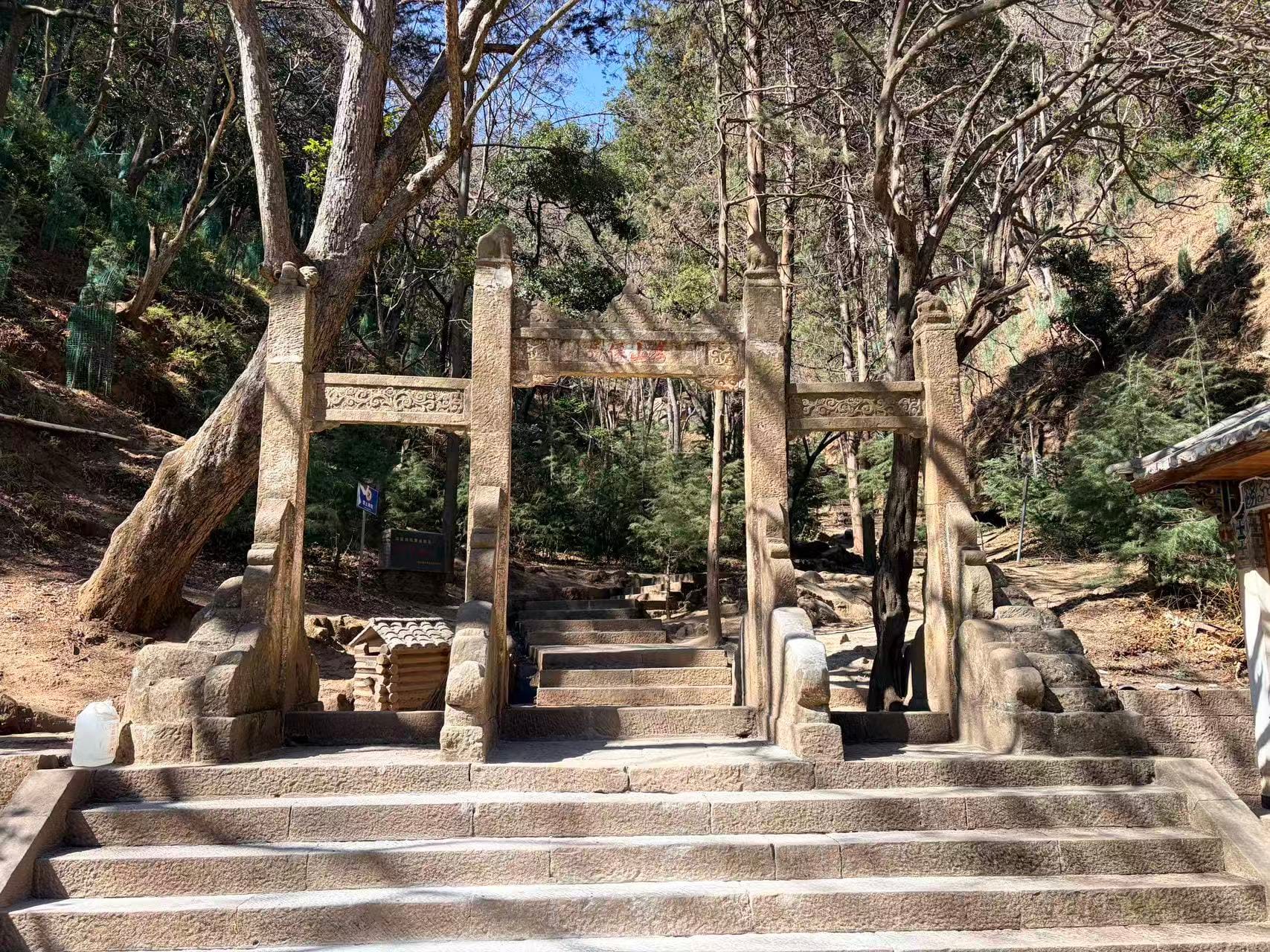
Over the past decade, we’ve brought over 1,000 travelers to Shibaoshan. Most arrive focused on the famous grottoes. Baoxiang consistently becomes the unexpected highlight.
The temple’s real magic emerges when you sit quietly in one of the courtyards. Pine-scented breeze rises from the valley. Chanting echoes from Daxiong Hall. Monkeys chatter overhead. In those moments, you understand why people have climbed this mountain for 730 years.
Baoxiang proves that China’s best destinations often sit just beyond standard tourist routes. The relative obscurity means authentic experiences remain possible. The temple rewards those who come with patience and genuine curiosity.
Don’t rush through to check it off a list. The temple reveals itself slowly.
Travel China With Me specializes in Yunnan experiences beyond the standard routes. Our guides know Shibaoshan’s hidden corners and Bai cultural traditions. Contact us for personalized trips to Baoxiang Temple and beyond.
READ ALSO: There are so many hanging temples, which one have you visited?