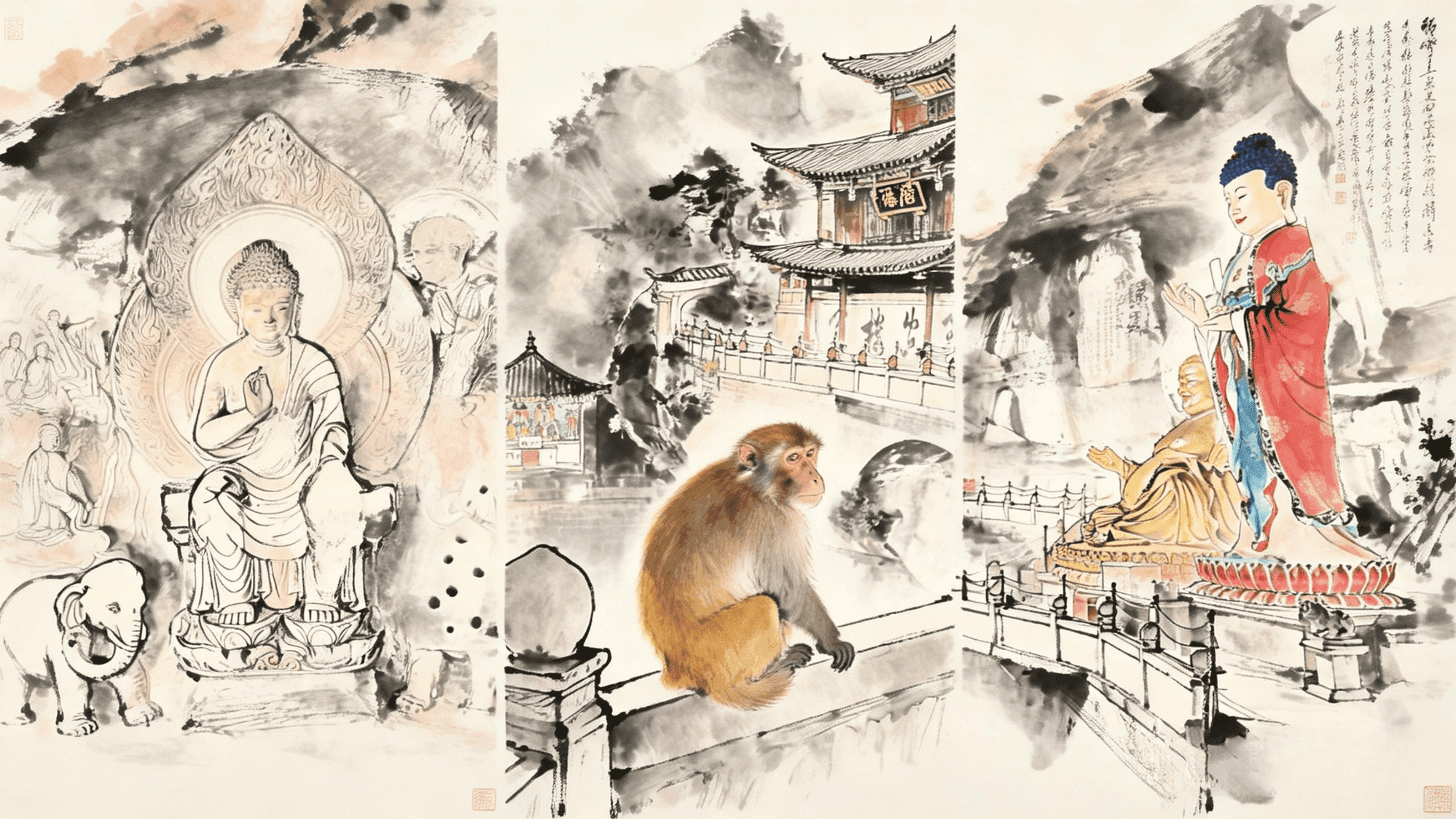
Shibaoshan in Jianchuan: The “Dunhuang of the South”
Tucked into the forested slopes 25 kilometers southwest of Jianchuan County, Shibaoshan (Stone Treasure Mountain) remains one of Yunnan’s most criminally undervisited cultural treasures. We’ve watched travelers spend days hunting for “authentic China” in crowded ancient towns, unaware that some of the country’s most exceptional Buddhist rock art sits waiting in these quiet mountains—where you’re more likely to encounter wild macaque monkeys than tour buses.
Table of Contents
Quick Facts
Location | 25km southwest of Jianchuan County, Dali Prefecture, Yunnan, China |
|---|---|
Altitude Range | 2,200-3,650 meters |
Main Attractions | |
Number of Grottoes | 17 grottoes with 139 statues |
Age | Over 1,300 years old (Tang-Song Dynasty, 738-1253 AD) |
UNESCO Status | First batch of National Key Cultural Relics (1961) |
Entrance Fee | 45 RMB |
Shuttle Bus | 10-40 RMB additional |
Visit Duration | 3-5 hours minimum; full day recommended |
History and Cultural Significance
The Shizhongshan Grottoes earned protection as China’s first officially designated nature reserve and religious site in 1982—unusual recognition that speaks to their importance. Carved between the Nanzhao Kingdom (738-902 AD) and Dali Kingdom periods (937-1253 AD), these sculptures document something rare: the exact moment Mahayana Buddhism crossed the Tibetan plateau into Yunnan.
What makes Shibaoshan extraordinary isn’t just age. The 139 statues blend Tibetan Buddhist iconography, Bai ethnic artistic traditions, and influences from Indian and Persian art—creating a fusion found nowhere else in China. Scholars have dubbed it the “Dunhuang of the Southwest,” but we think that undersells it. Unlike Dunhuang’s famous painted caves, these are full three-dimensional sculptures emerging from red sandstone cliffs.
The grottoes at Shiziguan (Lion’s Gate Pass) preserve detailed court scenes showing early Nanzhao kings alongside foreign emissaries—including Indian monks and Persian dignitaries. One grotto even depicts a six-trunked elephant, still awaiting proper interpretation. These aren’t generic Buddha images. They’re historical documents carved in stone.
Why Shibaoshan Deserves Your Time
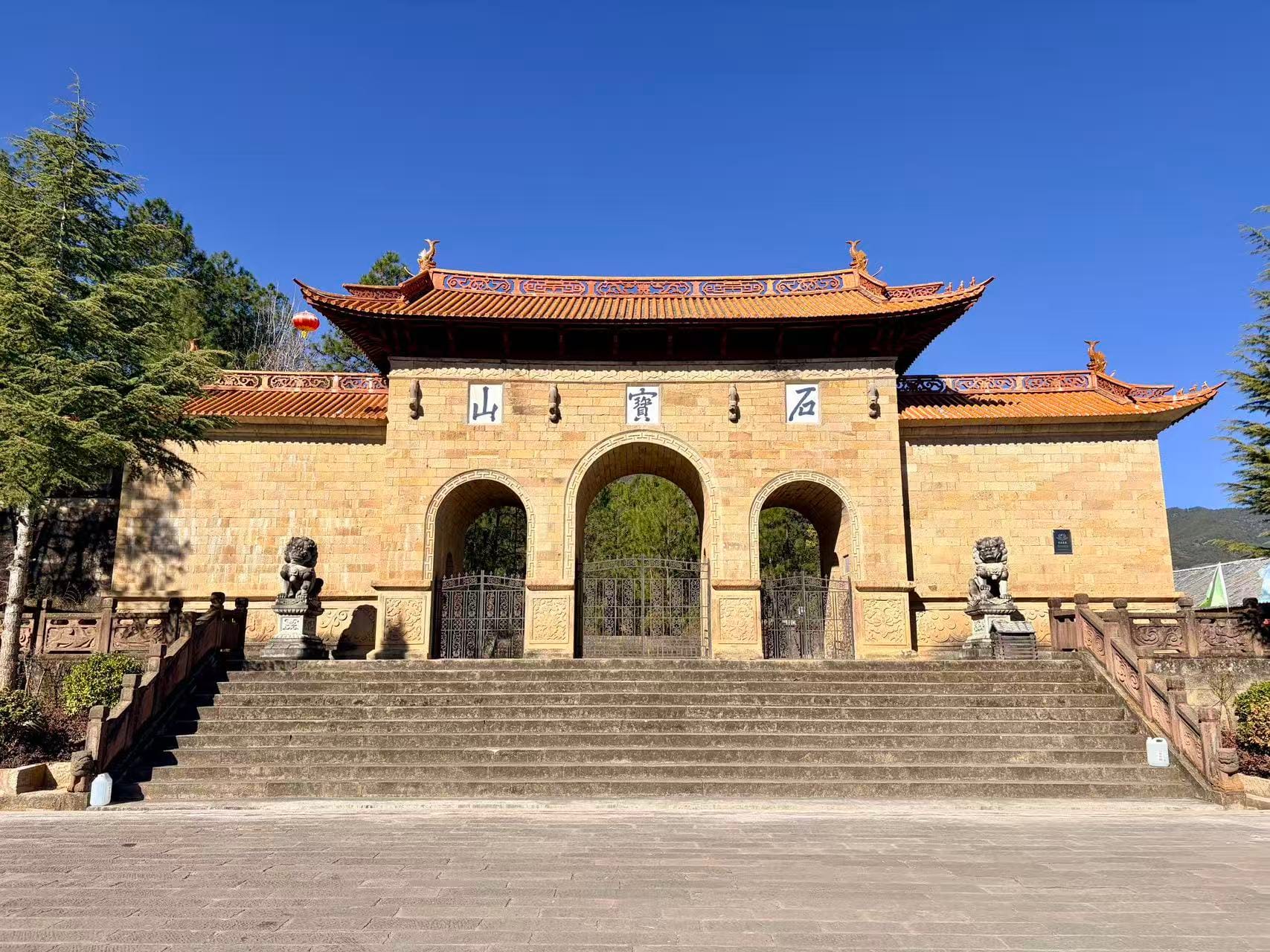
After guiding travelers through Yunnan for years, we’ve noticed a pattern. People rave about Lijiang and Dali, then admit feeling vaguely disappointed by the commercialization. Shibaoshan delivers what those places promised but no longer provide: genuine discovery.
Here’s what sets it apart:
Artistic Merit That Rivals Famous Sites: The fertility shrine featuring yoni carvings is globally unique. The expressive faces on Buddhist sculptures show individual personality rather than idealized perfection. These aren’t factory-carved replicas—they’re masterworks.
Zero Tourist Infrastructure (Mostly a Good Thing): We won’t lie—the lack of English signage and interpretive materials frustrates some visitors. But it also means you’ll explore 1,300-year-old grottoes with maybe a dozen other people instead of thousands. The TripAdvisor review nailing this: temples and statues “surrounded by peaceful sounds—birds, monkeys, a quiet waterfall, chanting monks.“
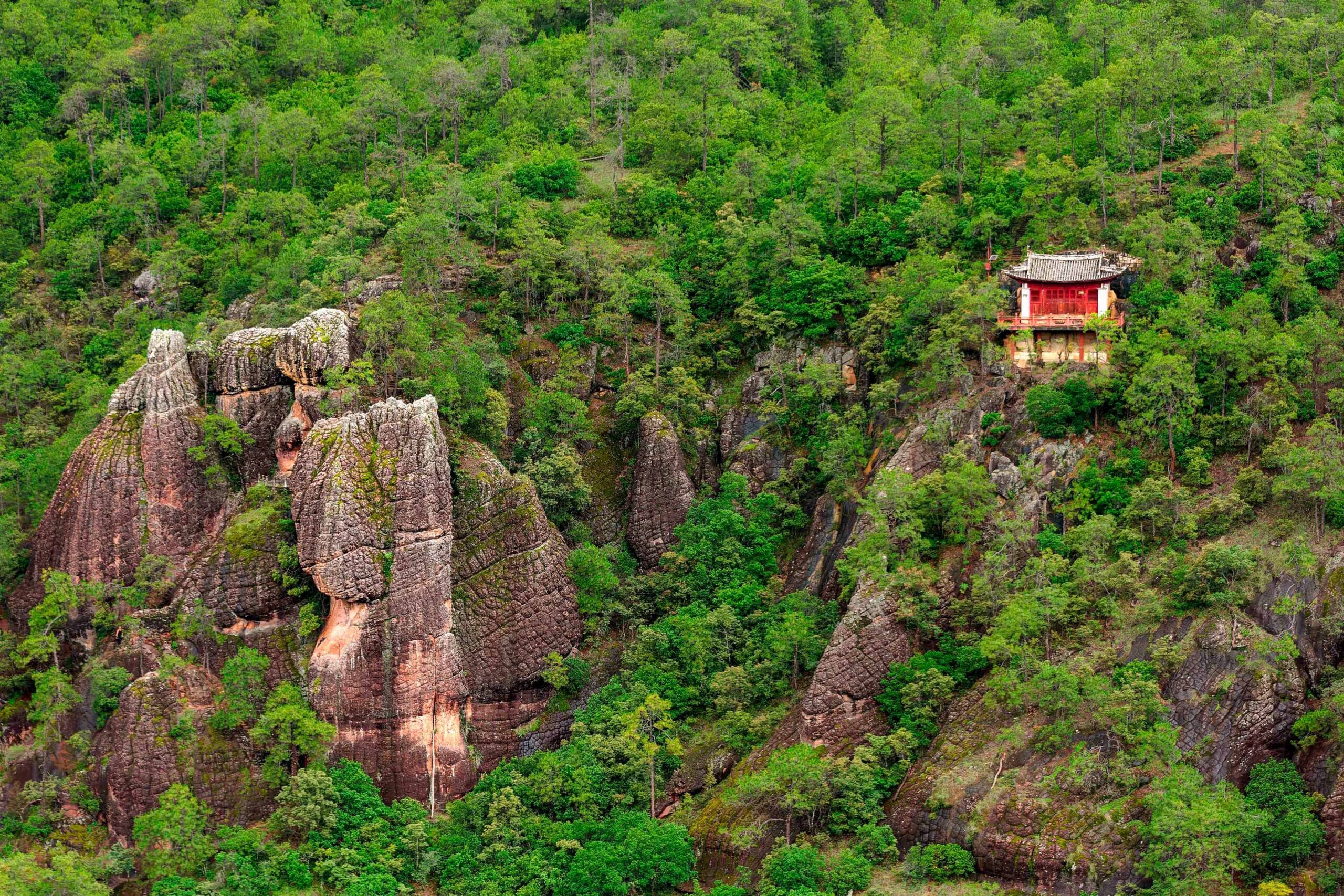
Multi-Layered Experience: Beyond the grottoes, Shibaoshan encompasses Danxia landforms (red sandstone formations shaped like bells, elephants, and umbrellas), pristine pine forests, wild macaques, and three major temple complexes. It’s cultural pilgrimage meets mountain retreat.
Highlights You Cannot Miss
Shizhong Temple Complex
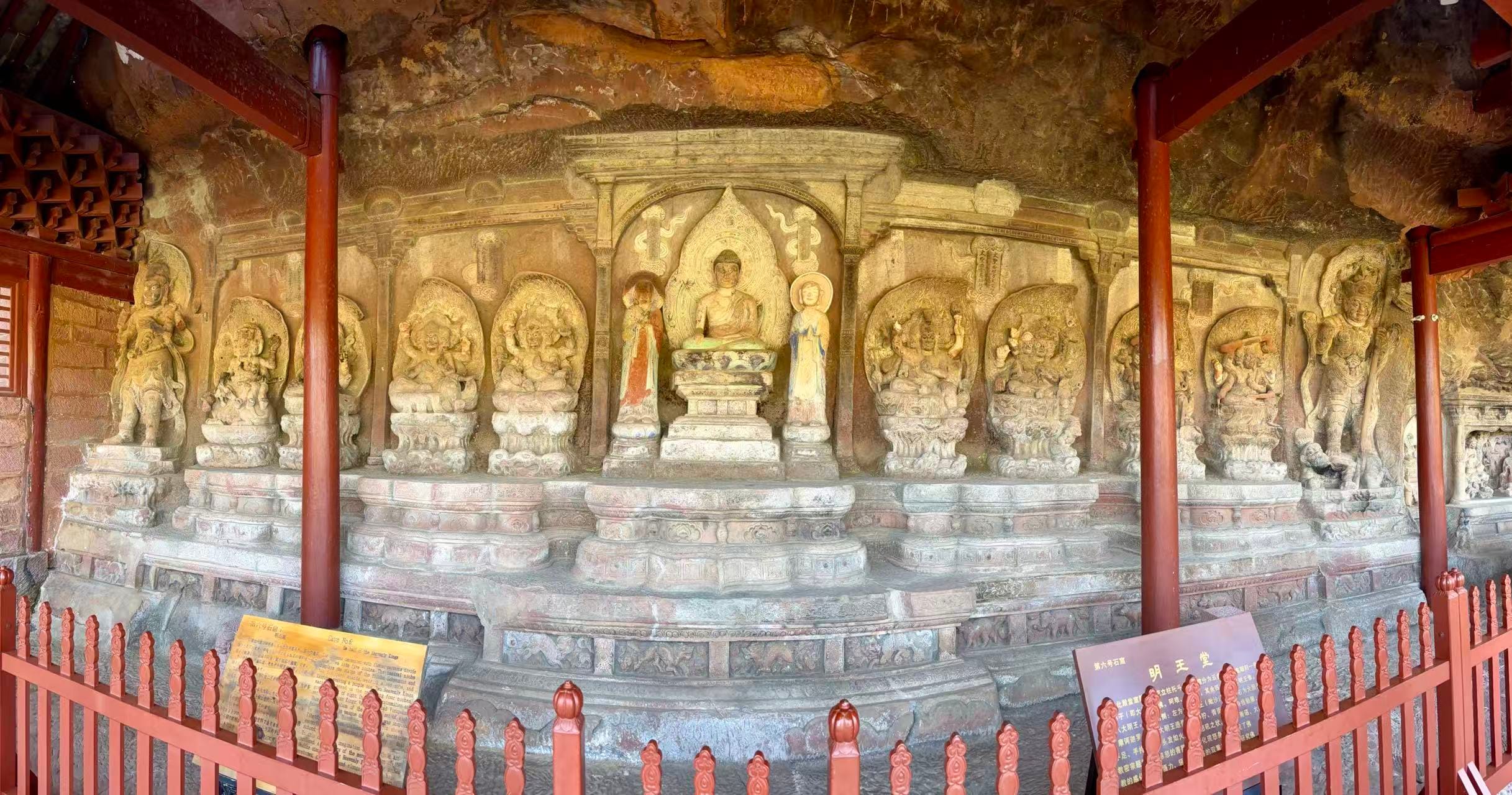
The name means “Stone Bell” after a massive bell-shaped rock formation. Eight primary grottoes showcase the finest carving work here, including the famous Nanzhao royal family portraits and that controversial fertility shrine. Give yourself at least 90 minutes. There’s genuine detail worth examining—facial expressions showing individual personality rather than idealized perfection, clothing details revealing social status, hand positions indicating religious rank.
Photography is prohibited inside the grottoes. Guards enforce this strictly. We initially found this frustrating until realizing how much more we actually noticed when forced to just look.
DIG DEEPER: Shizhongshan Grottoes at Shibaoshan: All in One Guide
Baoxiang Temple
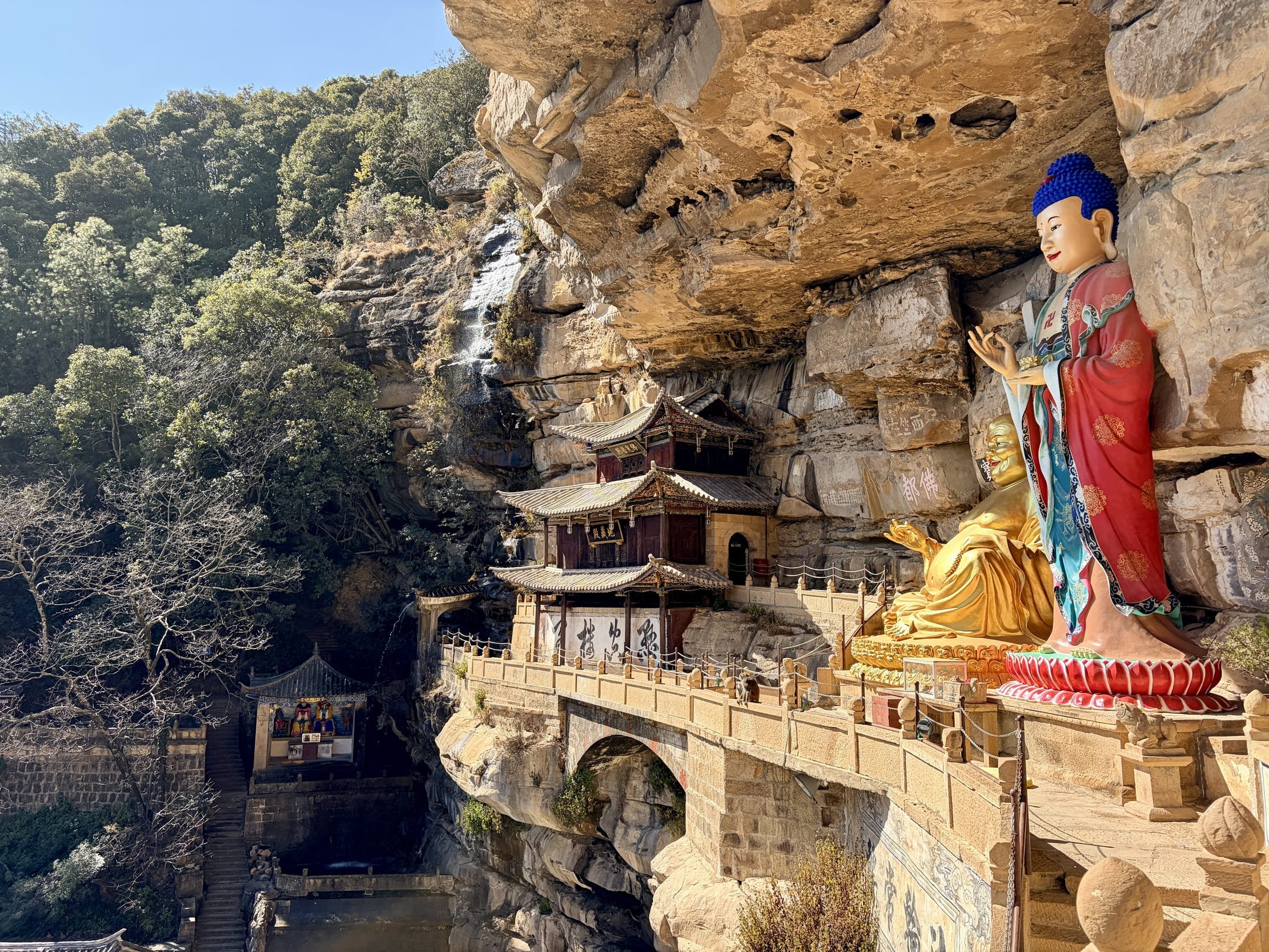
Perched dramatically on cliff faces, Baoxiang lives up to its “Suspended Temple” nickname. The shuttle drops you at a parking area surrounded by pine forest. This is where you’ll encounter the wild macaque families everyone warns about online.
Here’s what we’ve learned taking 200+ groups through: the monkeys are only problematic when tourists act carelessly. Don’t carry visible food. Keep snacks inside closed backpacks, not mesh exterior pockets. Don’t make hand gestures toward monkeys—they interpret raised hands as food signals. Give them space.
Follow these simple rules and they’ll ignore you completely. We’ve never had an incident with our clients. We’ve watched countless day-trippers create chaos by waving snacks around or trying to take selfies with baby monkeys while mothers sat three meters away.
The temple itself features narrow staircases clinging to cliff faces with valley views stretching toward Shaxi. Reaching the upper levels requires a bit of nerve if you’re afraid of heights, but it’s perfectly safe.
DIG DEEPER: Baoxiang Temple at Shibaoshan: The “Hanging Temple” of Yunnan
Haiyunju Temple
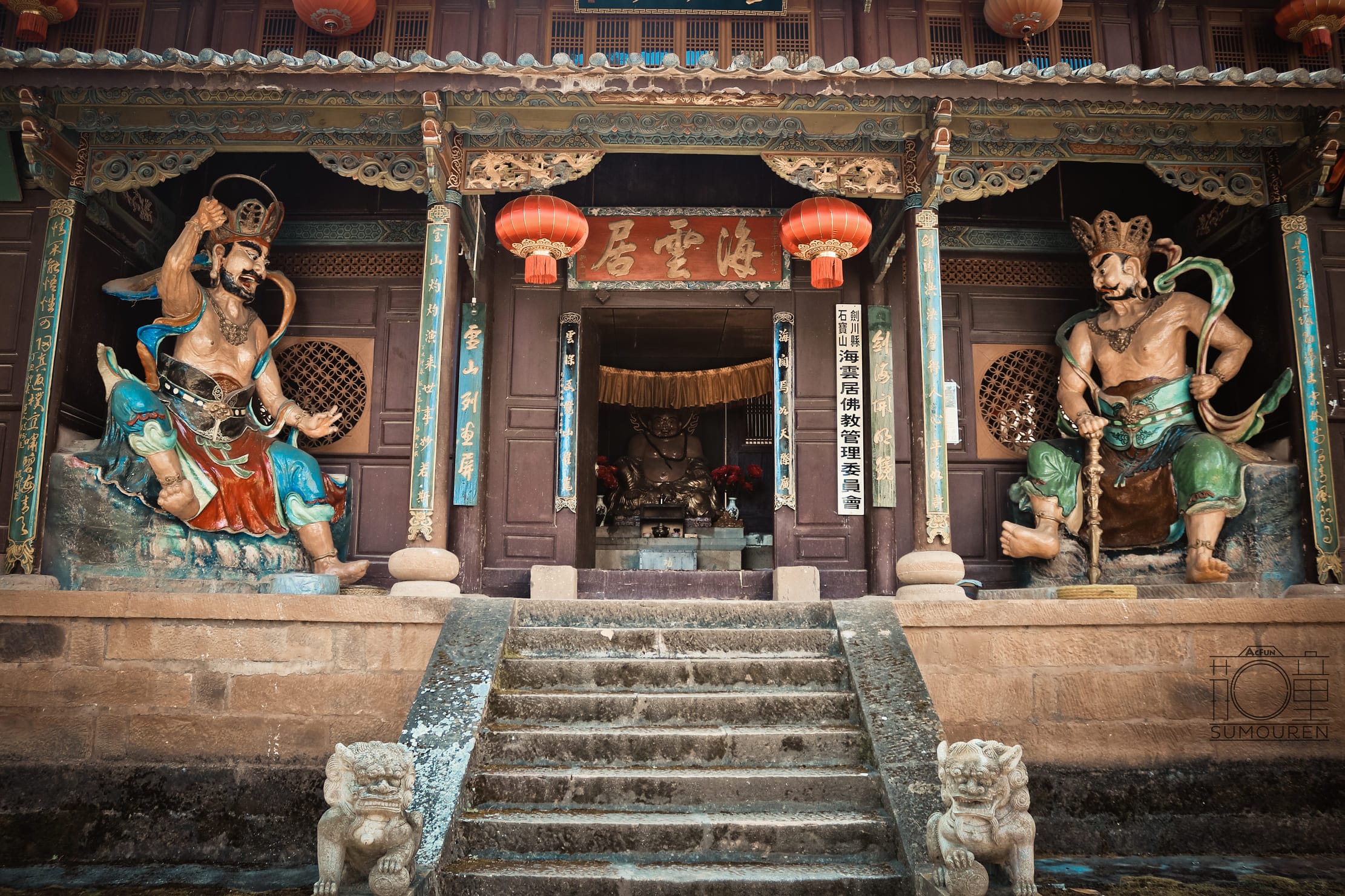
Most visitors skip this 17th-century Chan Buddhist temple hidden in the northwest forest flanks beneath Stone Umbrella Mountain. That’s their loss.
Two elderly caretakers maintain moss-covered walls surrounding stupas, stone urn tombs, bat caves, and wild camellia trees. The atmosphere is wonderfully contemplative—like stumbling onto an abandoned film set, except someone’s still lighting incense at dawn. Give it 30-45 minutes. Sit quietly. Let the forest sounds settle around you.
DIG DEEPER: Haiyunju Temple at Shibaoshan: The Temple 99% of Visitors Miss
The Annual Singing Festival: A Living Tradition
Time your visit for late July to early August (lunar calendar 27th-29th of the 7th month), and you’ll witness the Shibaoshan Folk Song Festival—inscribed on China’s National Intangible Cultural Heritage List in 2008. This thousand-year-old tradition brings Bai people from across Dali, Eryuan, Lijiang, and Lanping to sing antiphonal love songs in their native dialect.
Young people come seeking romance (it’s nicknamed “Bai Valentine’s Day”). Elders reminisce. Thousands sleep overnight in temples, continuing an ancient “group marriage” custom. During festival days, entrance fees drop to just 2 RMB. The 2026 festival runs September 8-10.
Getting There Without Losing Your Mind
No direct public transport exists to Shibaoshan. Here’s what actually works:
From Shaxi Ancient Town (12 km away): Hire a car through your guesthouse for about 100 RMB. Or take a minibus to the entrance. Or—if you’re fit and enjoy hiking—walk up from Pear Orchard Temple in 1.5-2 hours. That ancient pilgrimage path is beautiful but relentlessly steep.
Our recommendation: drive up, hike down. Arrive fresh, explore temples properly, then take the 2.5-hour trail back to Shaxi. Descending through grottoes with valley views gradually revealing themselves beats climbing stairs already exhausted.
From Dali or Lijiang: Bus to Jianchuan County first (3 hours from Dali, 1 hour from Lijiang), then transfer to Shaxi or hire private transport. Direct driving takes 2.5 hours from either city.
Reality check: Unless you’re comfortable navigating Chinese bus systems and negotiating with unlicensed drivers, book this through a tour company like us or your Shaxi guesthouse. The time saved is worth the cost.
How to Visit: Practical Routes
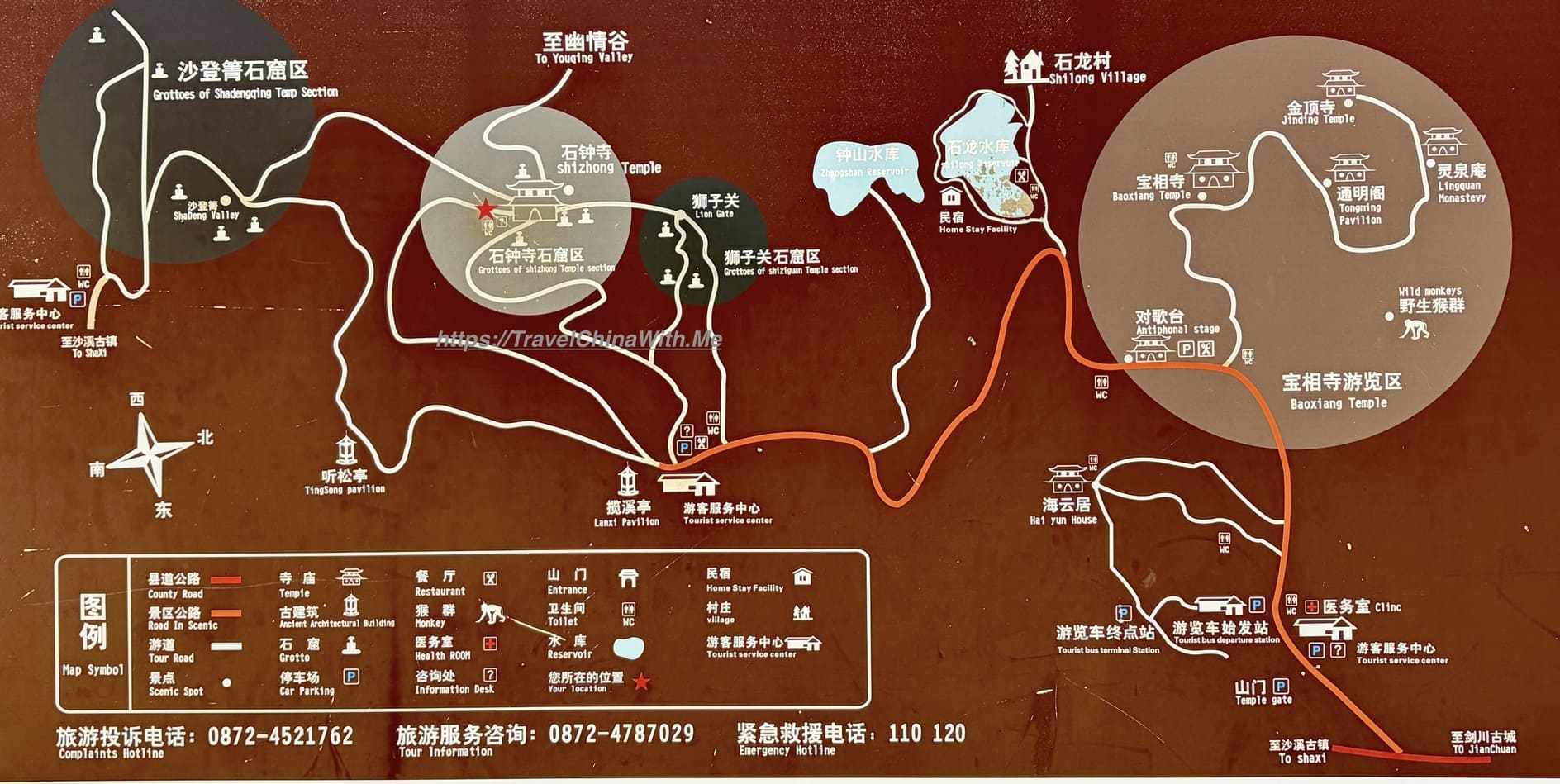
The Standard Route (What Actually Happens)
Most online guides give you three confusing routing options. Here’s the straightforward version we use with our groups:
Visitor Center → (1-minute walk) → Shuttle Bus Stop → (20-minute ride) → Shizhong Temple Grottoes → (15-minute shuttle) → Baoxiang Temple → (10-minute shuttle) → Drop-off Point → (walk) → Haiyunju Temple → (walk back) → Visitor Center
The round-trip shuttle bus costs 40 RMB on top of your entrance ticket. It runs continuously—you can hop on and off throughout the day. You can also reverse this route and visit Haiyunju Temple first for quieter morning light.
The Alternative: Hiking Up from Shaxi
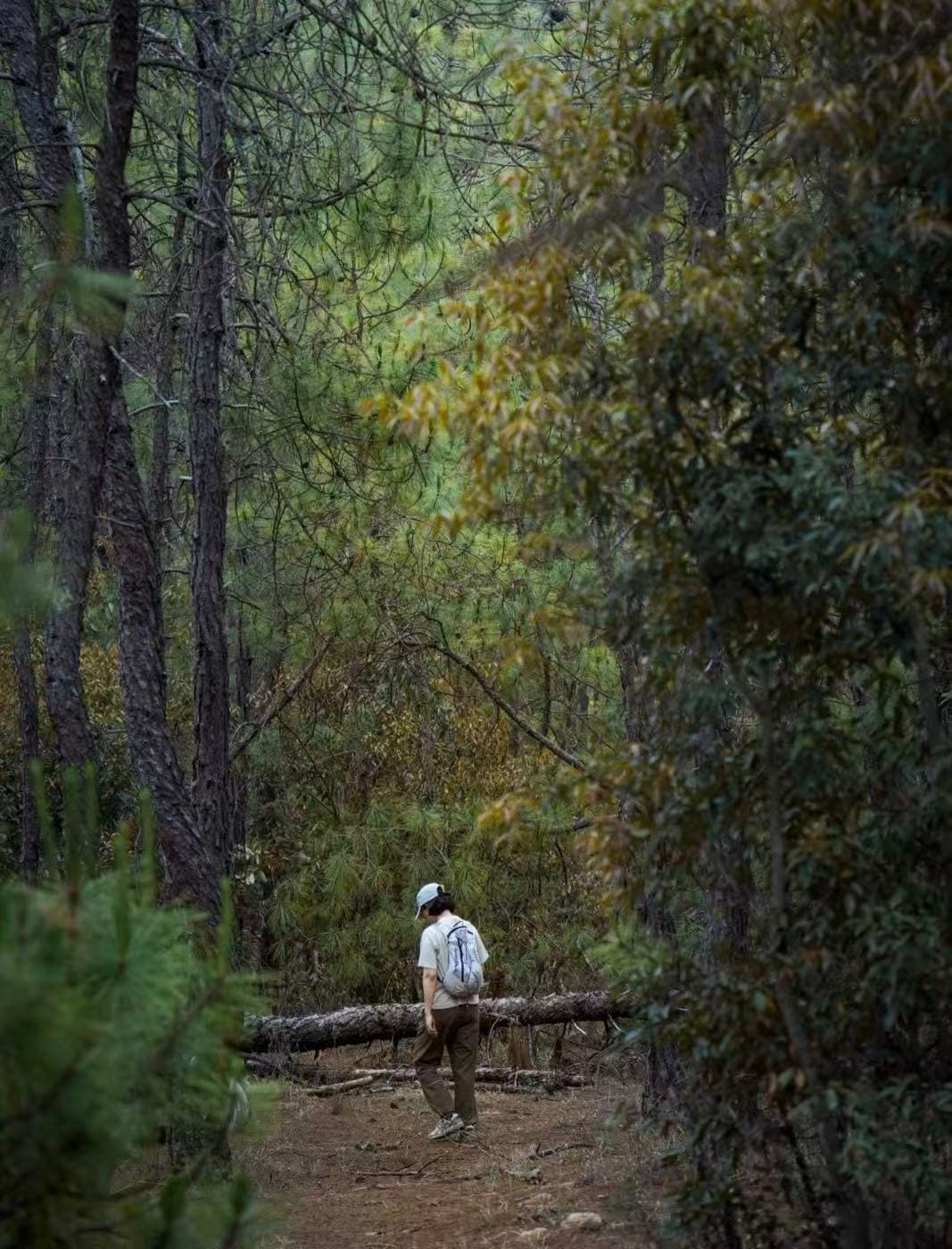
The traditional trail from Pear Orchard Temple in Shaxi takes 1.5-2 hours uphill through pine forest. This ancient pilgrimage path is genuinely beautiful, but it’s also relentlessly steep—stone stairs most of the way.
We’ve found the best approach is driving up and hiking down. Have a driver drop you at the main parking area (around 100 RMB from Shaxi). Explore the temples without arriving exhausted. Then hike the 2.5-hour trail back to Shaxi afterward, descending through grottoes with valley views gradually revealing themselves.
The downhill trail is well-marked and less strenuous. You pass maybe three other hikers. Our clients consistently describe it as a trip highlight—temples and ancient stone paths and pine forests and absolutely no crowds.
Some people hire horses from Shaxi Horse Trekking Centre at Pear Orchard Temple for a one-hour ride up, then walk down. Also works well.
When Timing Actually Matters
April-May and September-November give you clear skies, 15-25°C temperatures, minimal rain. This is when we schedule groups.
September 8-10, 2026 is the Shibaoshan Folk Song Festival—the 27th-29th day of the 7th lunar month. Thousands of Bai people come to sing antiphonal love songs and continue thousand-year-old courtship traditions. It’s on China’s National Intangible Cultural Heritage List. Entrance fees drop to 2 RMB during festival days, but you’re sharing the space with crowds. Extraordinary cultural immersion if you can handle the people.
July-August brings afternoon thunderstorms and slippery trails. Not recommended unless your schedule is inflexible.
December-February gets cold at altitude. Some shuttles reduce frequency.
Start at 8-9 AM. Morning light is better for photography, though afternoon clouds create that “temples floating in mist” effect locals talk about. We prefer morning starts—by the time clouds roll in, you’ve seen the main grottoes in good light.
What You Actually Need
Hiking shoes with good grip. Water and snacks—the only food vendor inside sells instant noodles from a thermos. Layered clothing because temperature drops with altitude and afternoon clouds bring chill. Cash, because there are no ATMs or card readers anywhere near Shibaoshan. The nearest bank is in Jianchuan.
And bring realistic expectations. This isn’t effortless sightseeing. It requires physical effort, patience with minimal English signage, and acceptance that you won’t photograph everything.
The Monkey Situation (Since Everyone Asks)

Wild macaques live around Baoxiang Temple. Online reviews make them sound terrifying. Reality is more nuanced.
We’ve taken 200+ groups through. Never had an incident. Here’s what works: don’t carry visible food, keep snacks in closed backpacks (not mesh side pockets), don’t make hand gestures toward monkeys, give them space. They’ll ignore you.
What doesn’t work: waving food around, trying to take selfies with them, letting kids run at them squealing. We’ve watched tourists create chaos this way, then blame the monkeys in their TripAdvisor reviews.
These are wild animals in their territory. Treat them with basic respect and the “aggressive monkey problem” disappears.
Real Traveler Reviews
We’ve compiled authentic experiences from verified visitors:
From TripAdvisor (source):
“The ideal way to visit: 1) find a ride to the visitors station. 2) take a shuttle bus to Baoxiang Temple (cliff temples + monkeys). 3) grab lunch at the parking lot, then take another shuttle bus to see the Grottoes. 4) hike all the way down to Shaxi valley (~3 hours). The hike down is well paved, offers fantastic views of the Shaxi valley.” – travelworld1170, 2021
“These grottoes exhibit some of the most original, unique, and expressive Buddhist sculpture in China. The surroundings of mountains and forests, and general lack of tourists help to further enhance the ambience.” – Verified reviewer, 2021
“Shibaoshan is one the sacred mountains in China and we saw very few tourists while there. Some of the sites are truly beautiful and it would be worth staying for at least a day to trek in these unspoiled mountains where nothing has changed for centuries.” – Verified reviewer, 2019
From travel blogs:
“Shibaoshan is probably the most beautiful collection of temples we’ve encountered in Asia to date! The beauty of these houses nestled in the cliffs left us with a magnificent memory!” – Novo-Monde, 2025 (source)
The consensus: extraordinary artistic and natural beauty, minimal crowds, but requires physical effort and patience with limited infrastructure.
Frequently Asked Questions
Q: How long should I allocate for visiting Shibaoshan?
A: Minimum 3 hours for main highlights (Shizhong and Baoxiang temples). We recommend 5-6 hours or a full day to hike trails, see all three temple areas, and experience the mountain at a contemplative pace rather than rushing.
Q: Is Shibaoshan suitable for elderly visitors or those with mobility issues?
A: Partially. Shuttle buses reach Baoxiang and Shizhong temples, reducing walking. However, accessing actual grottoes requires climbing steep stairs. One reviewer noted: “I wouldn’t recommend this for the elderly, young children or those with health problems as some of the climbs can be quite strenuous.”
Q: Can I take photos inside the grottoes?
A: No. Photography is strictly prohibited inside the grottoes to preserve the ancient carvings. Guards enforce this. You can photograph temple exteriors, landscapes, and general mountain scenery.
Q: Are there guided tours available?
A: Official English-language tours are rare. You can hire local guides from us. Self-guided exploration works fine—English signage is minimal but the art speaks for itself.
Q: How does Shibaoshan compare to more famous grottos like Dunhuang?
A: Different experiences. Dunhuang offers painted cave murals with extensive tourist infrastructure. Shibaoshan features three-dimensional stone sculptures with minimal commercialization. Artistically, Shibaoshan’s fusion of Tibetan, Bai, Indian, and Persian influences is unique. It receives 1% of Dunhuang’s visitors—choose based on whether you value art or crowds.
Q: Should I stay in Jianchuan or Shaxi?
A: Shaxi. It’s closer to Shibaoshan (12km vs 25km), offers better guesthouses, and is a UNESCO-protected ancient town worth exploring. Jianchuan is the larger county seat with better services (banks, grocery stores) but less charm.
Why We Keep Pushing This Site
We could fill itineraries with Yunnan’s greatest hits. Lijiang old town, Three Pagodas, Tiger Leaping Gorge—places with English menus and thousands of TripAdvisor reviews. Easier to sell, simpler logistics, happier clients who get exactly what they expected.
Shibaoshan requires convincing people to trust us about a place Google barely knows. It means explaining why they should add logistics complexity for somewhere that might not look impressive in photos.
But here’s what happens: clients who visit Shibaoshan stop collecting experiences and start having them. They ask different questions. They want to know what else we’ve found that’s not on standard circuits. They realize “authentic China” isn’t a marketing slogan—it still exists, you just work slightly harder to find it.
That fertility shrine with explicit carvings sparks real conversations about cultural attitudes toward sexuality across history. The Nanzhao royal portraits showing Persian and Indian visitors challenge simplistic narratives about Chinese isolationism. The sculptures themselves are beautiful in ways no photograph captures—the afternoon light hitting three-dimensional stone faces, shadows creating expressions that shift as you move, details only visible when you’re standing there.
We’ve guided tours across China for over two decades. Seen the famous sites, the UNESCO properties, the Instagram favorites. Shibaoshan still stops us. Every single time.
That’s why we keep pushing it, even when the easier recommendation would be one more day in Dali.
Want to visit Shibaoshan without the logistics headache? We design custom Yunnan itineraries that combine this site with Shaxi Ancient Town, Dali, and Lijiang—balancing famous attractions with genuine discoveries. Our guides are locals who grew up in these areas. Contact Travel China With Me to plan your trip.