Dujiangyan Panda Valley: Complete Visitor Guide
We’ve been bringing international guests to Dujiangyan Panda Valley since it opened in April 2015. Most of what English-language sites get wrong here comes from confusing it with the Dujiangyan Panda Base (熊猫乐园) across the city — a different organization, different science, different experience. This guide is about Panda Valley only. Of course, you can also learn more about the Dujiangyan Panda Base vs. Panda Valley.
Official name | Dujiangyan Breeding and Wild Release Research Center of the Chengdu Research Base of Giant Panda Breeding |
Official name (CN) | 都江堰野放繁育研究中心(野放中心) |
Distance from Chengdu | 50 km / 60–80 min by car |
Hours | Summer (16 Mar – 31 Oct): 07:30–18:00 · Winter (1 Nov – 15 Mar): 08:00–17:30 |
Adult ticket | CNY 55, advance booking only |
Booking | Official English page · WeChat mini-program 熊猫谷 |
Best time to arrive | 08:00–08:30 for the morning feed |
Visit time | 2–3 hours |
Table of Contents
1. What Is Panda Valley?
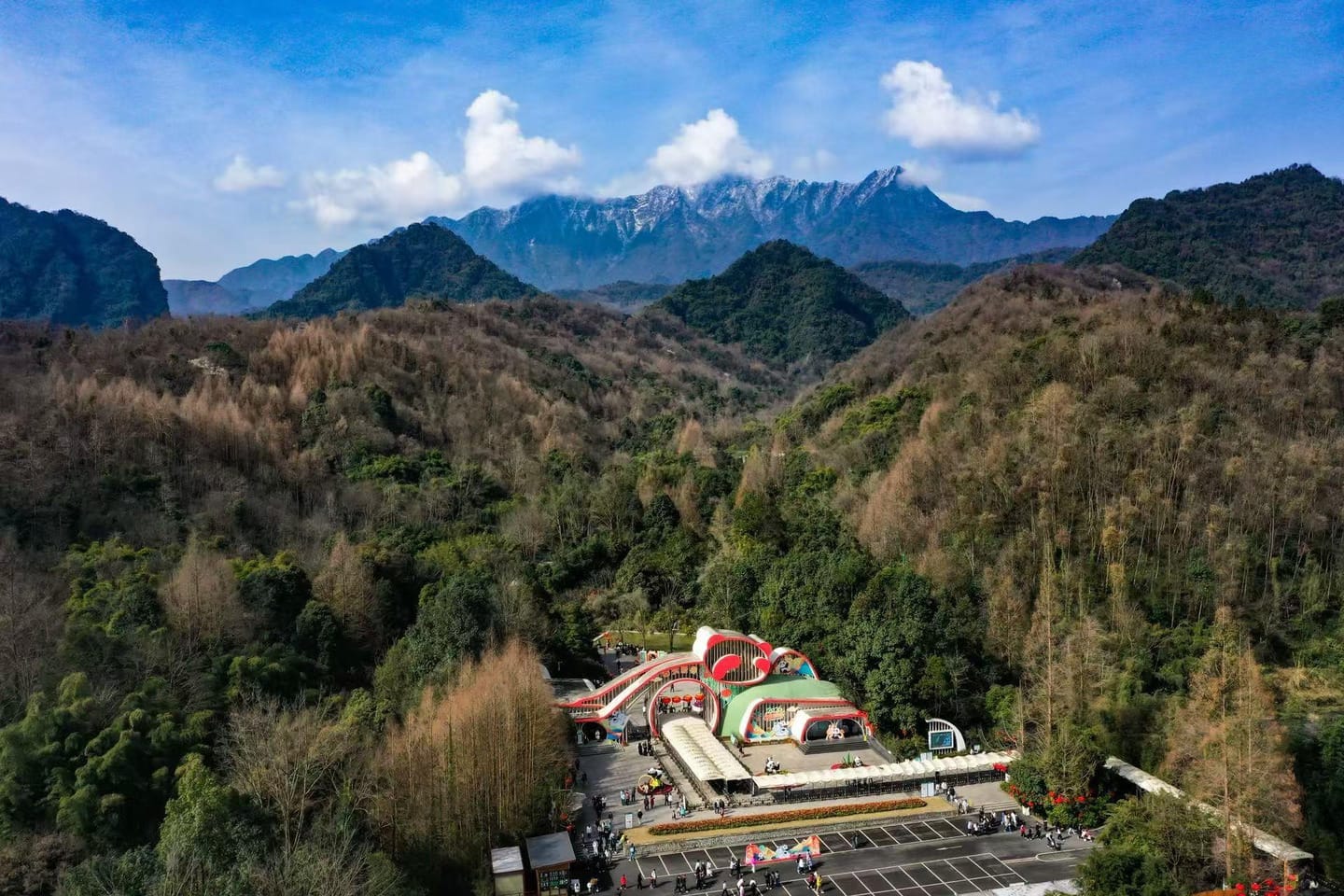
Panda Valley (熊猫谷) is the wild-release training facility of the Chengdu Research Base of Giant Panda Breeding. Its full Chinese name is the Dujiangyan Field Research Center for Giant Pandas (都江堰野放繁育研究中心). The site is at No. 408 Huanshan Tourism Road, Baima Village, Yutang Town, in the forested foothills west of Dujiangyan city.
Selected captive-born pandas come here to learn what they’ll need in the wild — foraging, climbing, reading unfamiliar terrain. It opened to the public on April 20, 2015, on 134 hectares of hillside in Yutang Town, with streams running through the lower sections and over 700 species of plants and animals. Walking the paths in the early morning, you notice the bamboo growing untrimmed alongside the trail and the sound of water somewhere below the path. It doesn’t feel like a park. Current residents: 12 giant pandas and 20 red pandas.
This is not the same place as Dujiangyan Panda Base (熊猫乐园), which is run by a separate national organization and has been closed for renovation since April 23, 2026. → Our Dujiangyan Panda Base vs Panda Valley guide covers the full comparison.
2. Is It Worth Visiting?
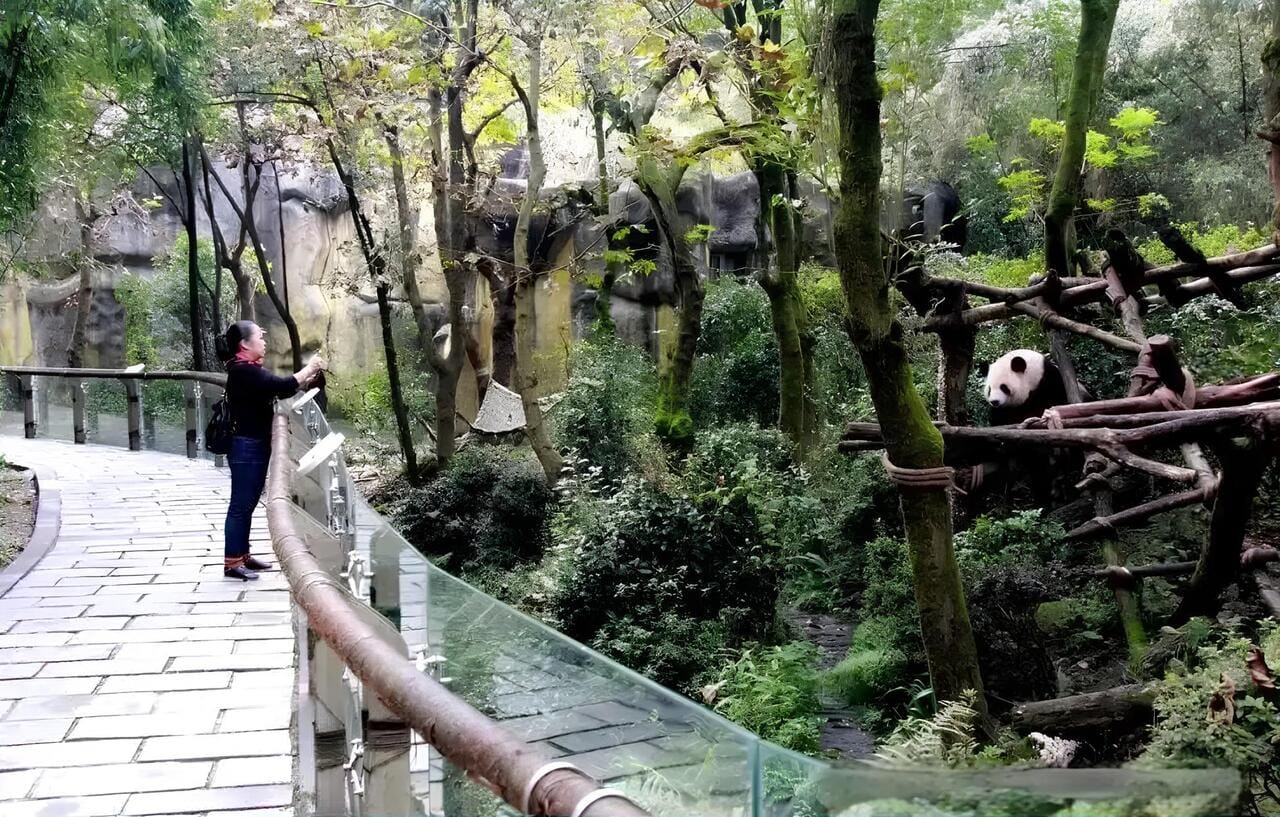
We took a couple here once after a frustrating Saturday morning at the Chengdu city base in July. Two hours of dense crowds, fogged glass, distant glimpses. The next morning we drove them to Panda Valley for an 08:00 entry. By 09:30 they were watching Meilan — a resident with a dedicated Chinese fan following — work through a bamboo stalk in an open-air enclosure fifteen metres away. At 10:45 on the red panda path, one walked past the woman’s foot. She didn’t move for almost a minute. That evening she said it was the best part of her entire China trip.
What this place does well is difficult to explain to someone who hasn’t been: the quiet, the actual forest, the sense that you’re watching pandas going about their day rather than performing for a crowd. On a weekday morning in October we once walked the upper path for twenty minutes without seeing another visitor. That doesn’t happen at any other panda facility in Sichuan.
The honest trade-off: twelve giant pandas instead of a hundred, no cub nursery, and animals that can sit ten to fifteen metres from the path rather than pressed against glass. Bring a phone with 3–5x zoom.
One practical advantage English guides rarely flag: the main route is a one-way circular loop — no backtracking, benches every couple of hundred metres, stroller-friendly on the lower path. The only real climb is up to the red panda section. We’ve walked families with grandparents and a two-year-old through the whole loop in under three hours without anyone needing to be rescued.
3. What You’ll See
Giant pandas
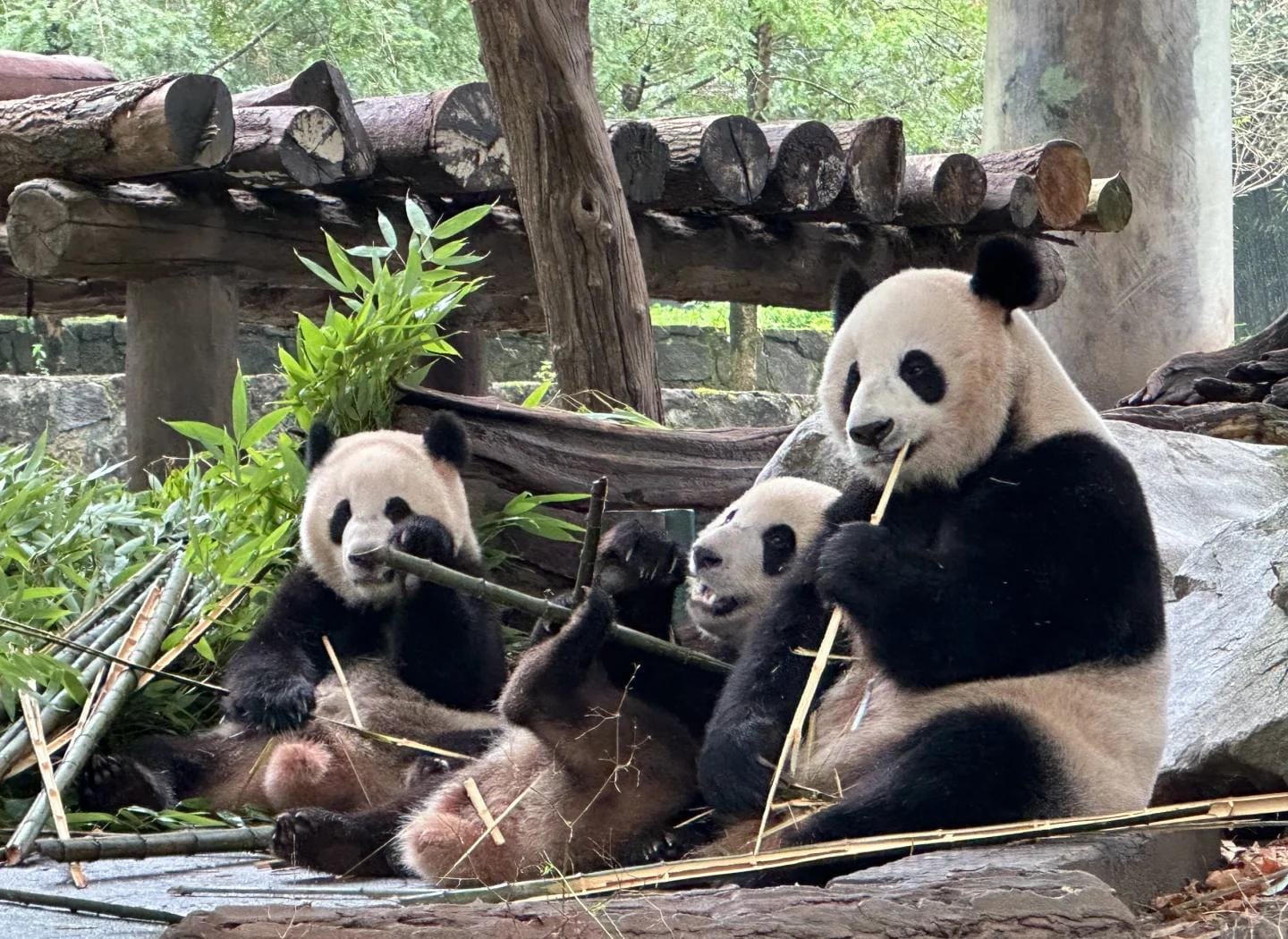
The enclosures here are open-air — no glass barrier between you and the animal. What that means in practice: a panda seven metres up in a real tree, eating at its own pace, occasionally looking down at you, occasionally ignoring you entirely. You can hear the bamboo snap. You can see them move in a way that glass-front enclosures, for all their closeness, don’t quite give you — shifting weight on a branch, reaching sideways for a new stalk, the small adjustments of an animal that isn’t aware it’s being watched. The trade-off is that they are further away and the angle is less controlled.
Some residents have their own followings. Meilan (nicknamed 肉肉 by her fans) draws dedicated visitors who wait at her enclosure. Zhenzhen and Chengfeng rotate in and out as training phases advance. A few of the residents are returned overseas-born pandas. Depending on the current rotation, you may be watching an animal born in Spain or the US, now living in this hillside forest. Two days before you go, check the Panda Valley WeChat account (熊猫谷) for who’s currently on display. Knowing a name going in changes how you watch.
Red pandas and the treetop path
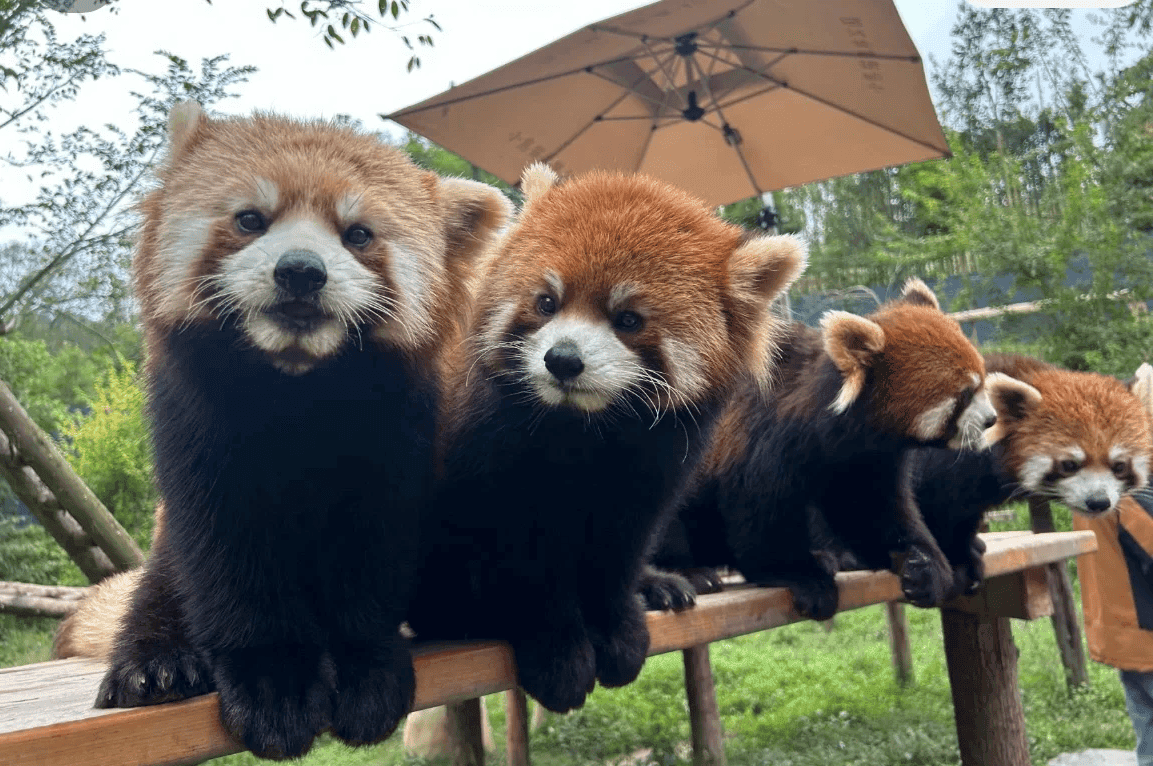
The red panda section is a raised wooden walkway through the forest canopy. The animals wander free — no glass, no enclosure fence between you and them. They are smaller than most people expect, roughly the size of a large house cat, and there’s a faint smell of cedar and musk around the walkway. One might sit at eye level on a branch beside you, nose twitching, hold your gaze for a moment, then move on.
In May 2026 we brought two American clients, Christian and Kevin, out here. They had specifically requested Panda Valley over the Chengdu city base — they wanted to see red pandas in a natural environment, not behind glass and not in a crowd. The treetop path was exactly what they came for. They sent photos afterwards. The kind of feedback that makes the job easy.
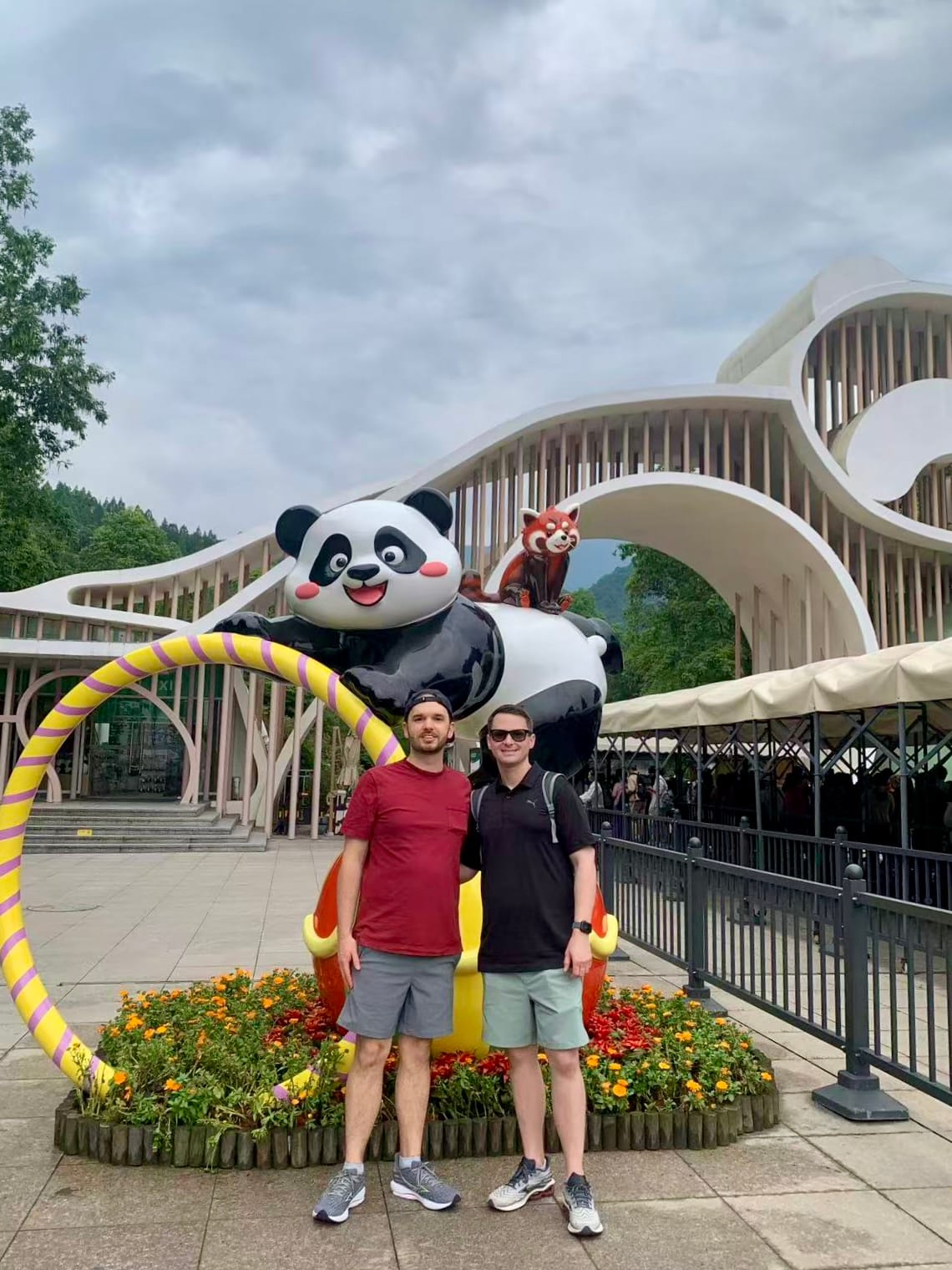
Reserve your timed red panda entry slot at the gate when you first arrive, before going anywhere else. Slots fill by mid-morning. Don’t feed them on the path — they walk right up to you, and the temptation is real, but it disrupts their diet and their training.
On the lower paths near the red panda area, white peacocks roam freely. Not advertised anywhere. Most visitors don’t know until one crosses the path in front of them.
4. Best Time to Visit
Morning is the reliable window. Arrive by 08:00–08:30. Keepers reach the giant panda enclosures around 09:30 with bamboo and panda cakes, and the animals are already moving before the keepers get there. Active window runs until about 10:30.
After eleven, most of the giant pandas have eaten and gone back to sleep — often high in a tree where they’re hard to spot. Red pandas stay active through a longer feed window of 10:00 to 14:00, so the treetop path holds up later into the morning. That’s one more reason to do giant pandas first and red pandas second.
The temperature threshold. Pandas go flat when it’s above 25°C. We’ve watched it happen in fifteen minutes on a June morning — a panda working through bamboo at 09:30, stretched out asleep in the canopy by 10:45, done for the day. In summer, the morning window isn’t a suggestion. It’s the whole visit.
The flip side: overcast days are good days for pandas. When the temperature stays under 23°C, they stay active into the afternoon. A cool cloudy day with a PM ticket can put you inside around 13:30 — second feed underway, crowd minimal, animals moving. We don’t advise planning around this, but if you have flexible dates and the forecast looks grey, a PM slot is worth considering.
Season | When | Summary |
|---|---|---|
Spring | 16 Mar – May | Best overall. Mild temperatures, pandas consistently active in the mornings. Rhododendrons on the upper paths in March. |
Summer | Jun – Aug | Arrive by 07:30. Rainy or overcast days produce more active animals. Bring insect repellent. |
Autumn | Sep – Oct | Rivals spring. Crowds drop sharply after Golden Week. |
Winter | Nov – 15 Mar | Quietest period. Cooler weather often produces livelier pandas. Shorter opening hours. |
🐼 Monthly Visit Quality — Panda Valley (Dujiangyan) 🐼
🌡 Red line = avg monthly high temp · Above 25°C pandas go flat · 🐼 Spring & Autumn: prime season
Ratings: 1 = poor → 5 = excellent · Panda activity assumes 08:00 arrival · Oct reflects post-Golden Week · Temp = Dujiangyan monthly avg highs (°C)
Temperature source: climate-data.org — Dujiangyan
5. Getting There
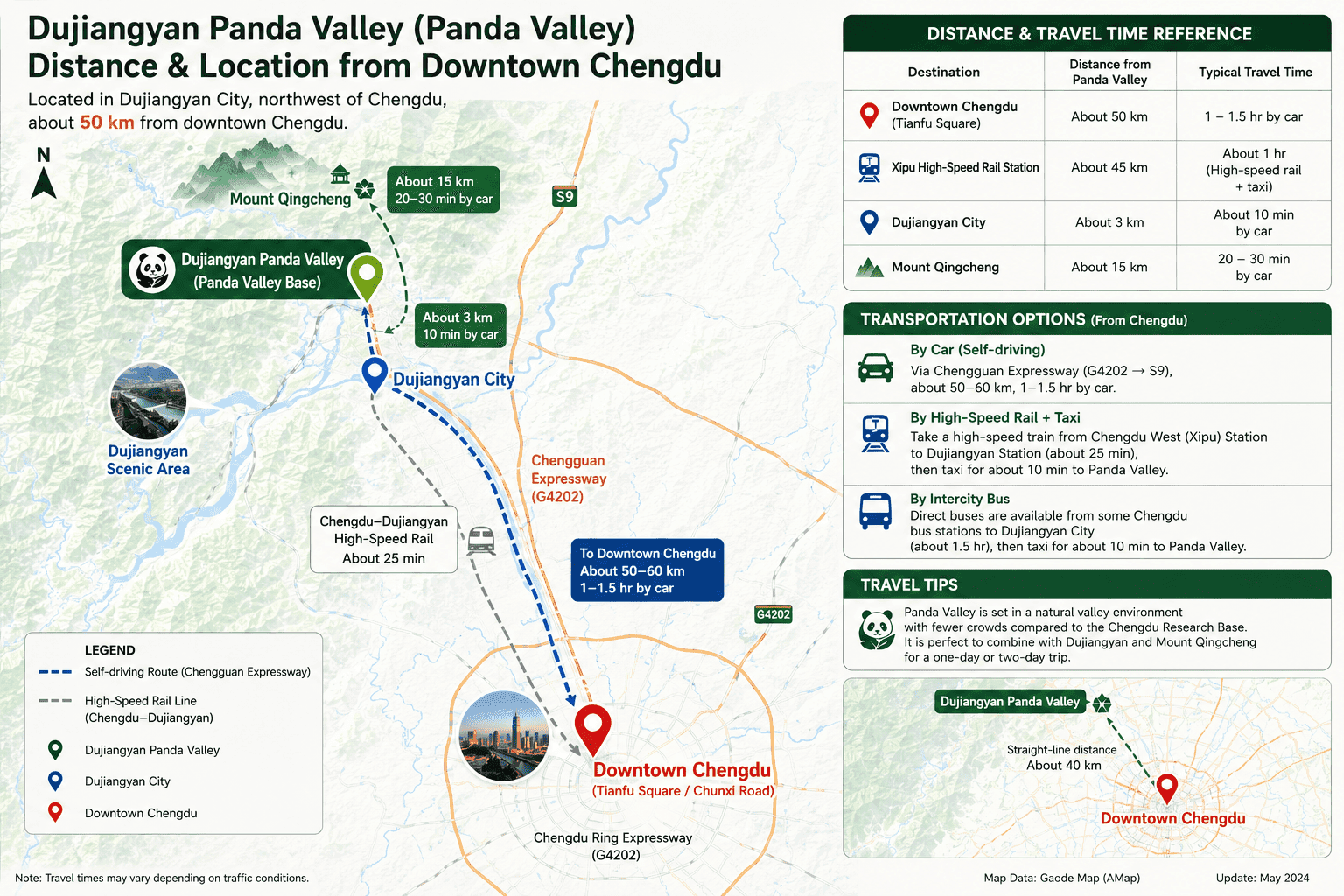
Four options from central Chengdu:
Option | Journey | Cost |
|---|---|---|
C-train + Bus 14 | Metro Line 6 → Xipu Station (transfer without exiting) → C-train to Liduiyuan → Bus 14 (22 stops) | ~CNY 17 total |
HiPanda combo bus | Direct to Panda Valley; combo ticket includes Dujiangyan Irrigation Project | Fixed combo price; no-refund policy |
DiDi / taxi | Door to door, 60–80 min | CNY 120–180 |
Private car / tour | Best when combining multiple sites | Quote on request |
The C-train via Xipu is cheapest. The trick: take Metro Line 6 to Xipu and transfer to the C-train inside the station without exiting — no second security, no second ticket. From Liduiyuan Station, Bus 14 runs 22 stops directly to Panda Valley.
Return from Panda Valley: DiDi from the gate is reliable, typically 5–10 minutes’ wait.
→ Full breakdown of every option with exact timings and return routes: How to Get to Panda Valley from Chengdu
6. Tickets and Booking
Book before you arrive. There is no on-site ticket window — this catches more foreign visitors than any other aspect of the visit. The official English booking page is at panda.org.cn/en/pandavalley/tickets — it accepts foreign passport numbers and doesn’t require a Chinese phone number. The WeChat mini-program (熊猫谷) has an English toggle and is what local visitors use. Both pull from the same allocation. Third-party platforms like Trip.com work fine and add a small service fee.

If you arrive without a booking, the on-site Integrated Service Window sells remaining tickets for cash. Don’t rely on this on weekends or during Chinese national holidays.
Time-slot system
Daily cap is 16,000 visitors, split evenly between morning and afternoon sessions of 8,000 each. Pick AM or PM when booking.
Summer (16 Mar – 31 Oct) | Winter (1 Nov – 15 Mar) | |
|---|---|---|
AM ticket | 07:30–12:00 | 08:00–12:00 |
PM ticket | 12:00–17:00 | 12:00–16:30 |
Each ticket is one person, one ID, one entry. New slots open at 20:00 Beijing time each evening on a rolling 7-day basis. Summer weekends and Golden Week sell out morning slots fast.
The mistake we see most often: booking a PM ticket because it looks flexible, then arriving to find the giant pandas have been asleep since 11:00.
Prices and refund
CNY 55 per adult. Half-price (CNY 27.50) for youths 7–17 with ID. Free for children under 1.3m or under 6, and seniors 60+. Cancel before 17:00 on your visit date for a full refund. From 17:00 that day until seven days after, a 20% fee applies.
7. Planning Your Visit
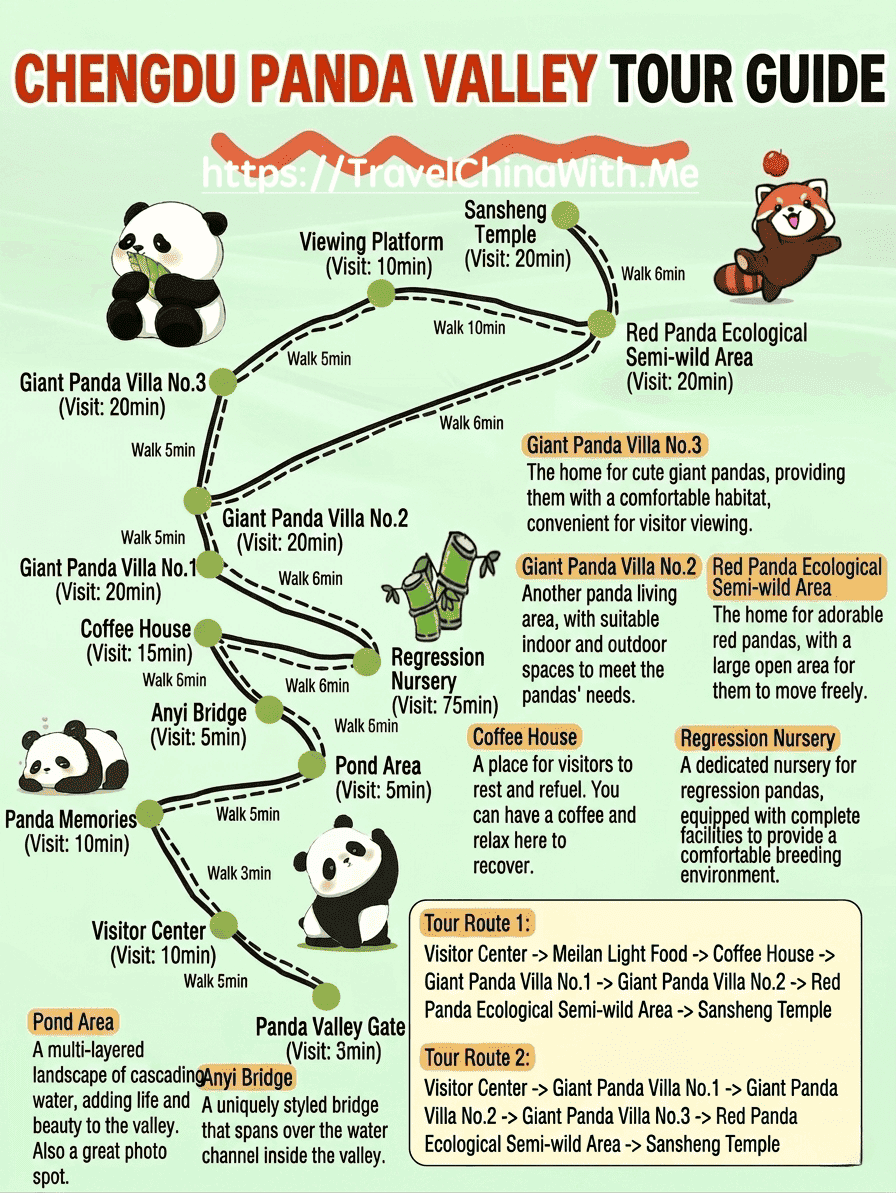
The diagram below shows our recommended route and why the order matters — most visitors get it backwards.
🐼 Recommended Walking Route 🐼
Book your red panda timed slot at the gate before walking in. Slots fill by mid-morning.
Start here. Pandas are already moving before the keepers arrive.
Keepers move enclosure to enclosure — follow their path uphill. Above 25°C this window closes fast.
Continue uphill as giant panda activity tapers.
Red pandas roam free overhead. Smaller than expected; they walk within arm’s reach.
Wild-release research history. Good midday cool-down if the heat is building.
What to bring: closed walking shoes (the path gets damp under the tree cover), a light rain jacket (Dujiangyan is one of the rainiest cities in Sichuan), insect repellent April through October, and the original passport you used to book. There’s a small canteen near the entrance with noodles and coffee. We generally tell clients to save lunch for Dujiangyan city — the restaurants near the Irrigation Project entrance are considerably better.
8. Panda Valley vs Other Panda Bases
We get asked this constantly: which panda base is worth the trip from Chengdu? The answer depends on what you’re actually after, which is why we built this comparison rather than just saying “all of them are great.”
Panda Valley | Chengdu Panda Base | Dujiangyan Panda Base | Wolong | |
|---|---|---|---|---|
Giant pandas | 12 | 120+ | 30+ | 60+ |
Travel from Chengdu | 60–80 min | 30–50 min | 60–80 min | 2.5–3 hr |
Crowds | Light | Heavy | Light | Light |
Setting | Open-air forest | Landscaped park | Forested hillside | Mountain valley |
Volunteer programme | No | No | No (closed 2026) | Yes |
Best for | Forest setting, red pandas, quiet | Max pandas, cubs | Close-up glass shots | Keeper experience |
For most first-time visitors, the Chengdu city base is the easier default — more pandas, easier transport, cubs. Panda Valley makes the most sense if you’ve already done the city base, you want the forest and red panda experience specifically, or you’re combining the day with other Dujiangyan sites.
Panda Valley plus the Chengdu city base on the same day: we don’t recommend it. They overlap enough that the combination isn’t worth the travel time.
→ Chengdu panda bases guide · Where to see giant pandas in China
9. Combining Panda Valley with Other Sites
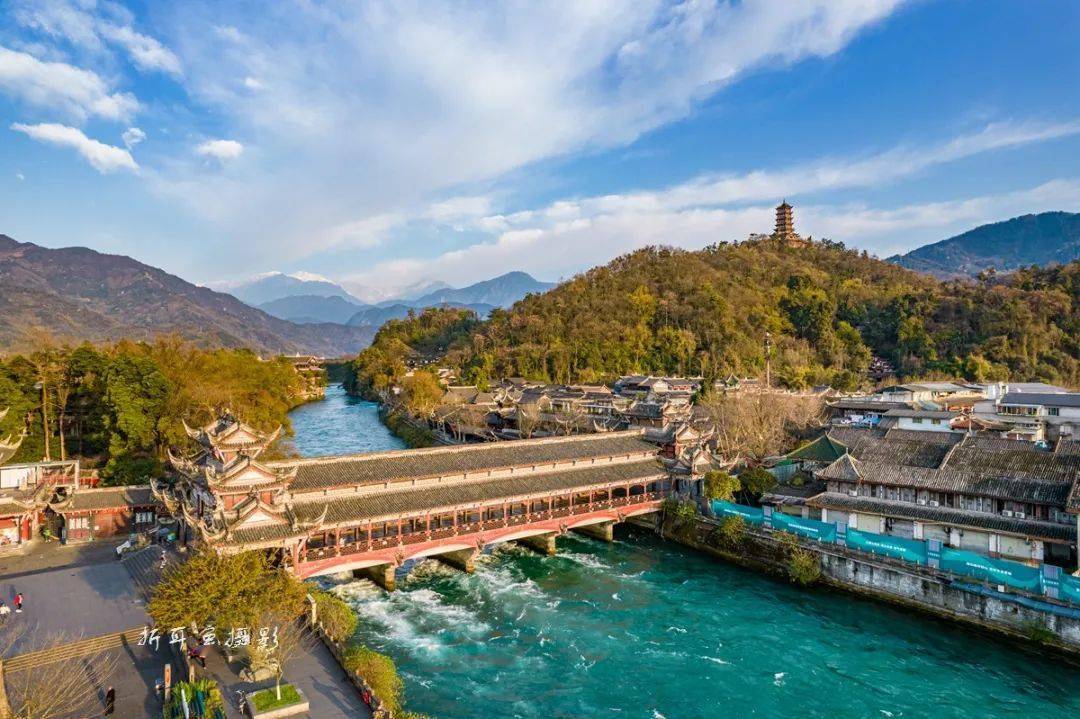
Panda Valley, the Dujiangyan Irrigation System, and Guanxian Ancient City are all within 20 minutes of each other. The combinations that work:
Combination | Order |
|---|---|
Panda Valley + Dujiangyan Irrigation Project | Pandas 08:00–11:30 · Irrigation site from 13:00 |
Panda Valley + Guanxian Ancient City | Pandas morning · Old town for lunch and a wander |
Panda Valley + Qingcheng Mountain (front) | Pandas morning · Mountain afternoon — full day |
Panda Valley + Wolong Shenshuping (overnight) | Pandas day 1 · Wolong volunteer programme day 2 |
The most common day we run is Panda Valley in the morning followed by the Dujiangyan Irrigation System in the afternoon. It’s a 2,200-year-old UNESCO site still doing exactly what it was built to do. Lunch at the restaurants near the Irrigation entrance, where the local river fish is worth ordering. If you’re after a slower pace, Guanxian Ancient City is easier than the mountain and finishes well with the Blue Tear light show at Nanqiao Bridge in the evening.
10. Frequently Asked Questions
Can I buy tickets at the gate?
Not reliably. Book in advance through the official English page at panda.org.cn/en/pandavalley/tickets or the WeChat mini-program 熊猫谷. The on-site Integrated Service Window sells remaining tickets for cash, but it’s not dependable on weekends or holidays. Bring your original passport — a photo or copy won’t scan at the gate.
How long does a visit take?
Two to three hours for most visitors. The route from the lowest giant panda enclosure up to the red panda treetop path and back takes about 2.5 hours at a relaxed pace.
Can I book without a Chinese mobile number?
The official English booking page at panda.org.cn/en/pandavalley/tickets accepts foreign passport numbers and works without a Chinese phone number. Trip.com is also a straightforward English-language option.
Can I see panda cubs?
No. Cubs stay at the main Chengdu Research Base nursery in the city. Panda Valley is a wild-release training centre — it houses sub-adults and adults only.
Can I do a volunteer program or hold a panda?
No to both. Panda Valley doesn’t offer a paid keeper volunteer programme — that experience runs at CCRCGP bases such as Wolong and Bifengxia. Hand-holding photo sessions haven’t been available at any Chengdu Research Base facility for years. Any listing claiming to sell a panda hug at Panda Valley is wrong.
DIG DEEPER: How to Be a Panda Volunteer in Chengdu
Planning a Chengdu panda trip? Contact our team — we arrange tickets, transport, and the right site combinations for your dates.