Dujiangyan Panda Base vs Panda Valley: Complete Guide
⚠️ 2026 Closure Notice: Dujiangyan Panda Base (熊猫乐园) is temporarily CLOSED for renovation from April 23, 2026. No reopening date has been confirmed. Panda Valley (熊猫谷) remains OPEN as normal.
Dujiangyan is home to two giant panda facilities — and they are nothing alike. Most visitors arrive not knowing both exist, or assuming the various names they see online all refer to the same place. They don’t. Different organizations run them, different science happens inside each one, and the pandas living in them are there for entirely different reasons.
We have been guiding guests through both since 2006. This is the guide we wish existed when we first started: a clear, complete account of what each place actually is, what you will see there, and how to make the most of a visit to either or both.
Table of Contents
1. Two Parks, One City: Understanding the Difference
Search “Dujiangyan panda” and you get a pile of overlapping names — Panda Valley, Panda Base, Panda Paradise, Giant Panda Ark, Panda Ark. Travel platforms and booking sites use them interchangeably. They are not interchangeable.
Here is the full picture at a glance:
Panda Valley (熊猫谷) | Dujiangyan Panda Base (熊猫乐园) | |
|---|---|---|
Chinese name | 成都大熊猫野放研究中心 | 中国大熊猫保护研究中心都江堰基地 |
Common English aliases | Panda Valley, Chengdu Field Research Center | Panda Paradise, Panda Ark, Giant Panda Base |
Managed by | Chengdu Research Base of Giant Panda Breeding | China Conservation and Research Center for the Giant Panda (CCRCGP) |
Primary mission | Wild-release training; rewilding research | Disease control, rescue, elderly panda care |
Giant pandas | ~12–15 | 30+ |
Red pandas | Yes — semi-free-roaming treetop path | Yes |
Volunteer program | No | Yes |
Shuttle bus | No | Yes (CNY 15) |
Glass enclosures | Some open-air, some glass | Mostly glass-fronted, close sightlines |
Distance from Dujiangyan city center | ~3 km | ~18 km |
Entrance fee | CNY 55 | CNY 58 |
Terrain | Hilly; no shuttle | Hilly; shuttle available |
These two facilities sit at opposite ends of Dujiangyan city. They are run by different national organizations with different scientific mandates. One trains pandas for eventual release into the wild. The other is the world’s only institution dedicated to panda disease control and rehabilitation. Getting the wrong one wastes an hour of driving and sets the wrong expectations for the entire day.
2. Panda Valley (熊猫谷): The Wild-Training Research Center
2.1 What Is Panda Valley?
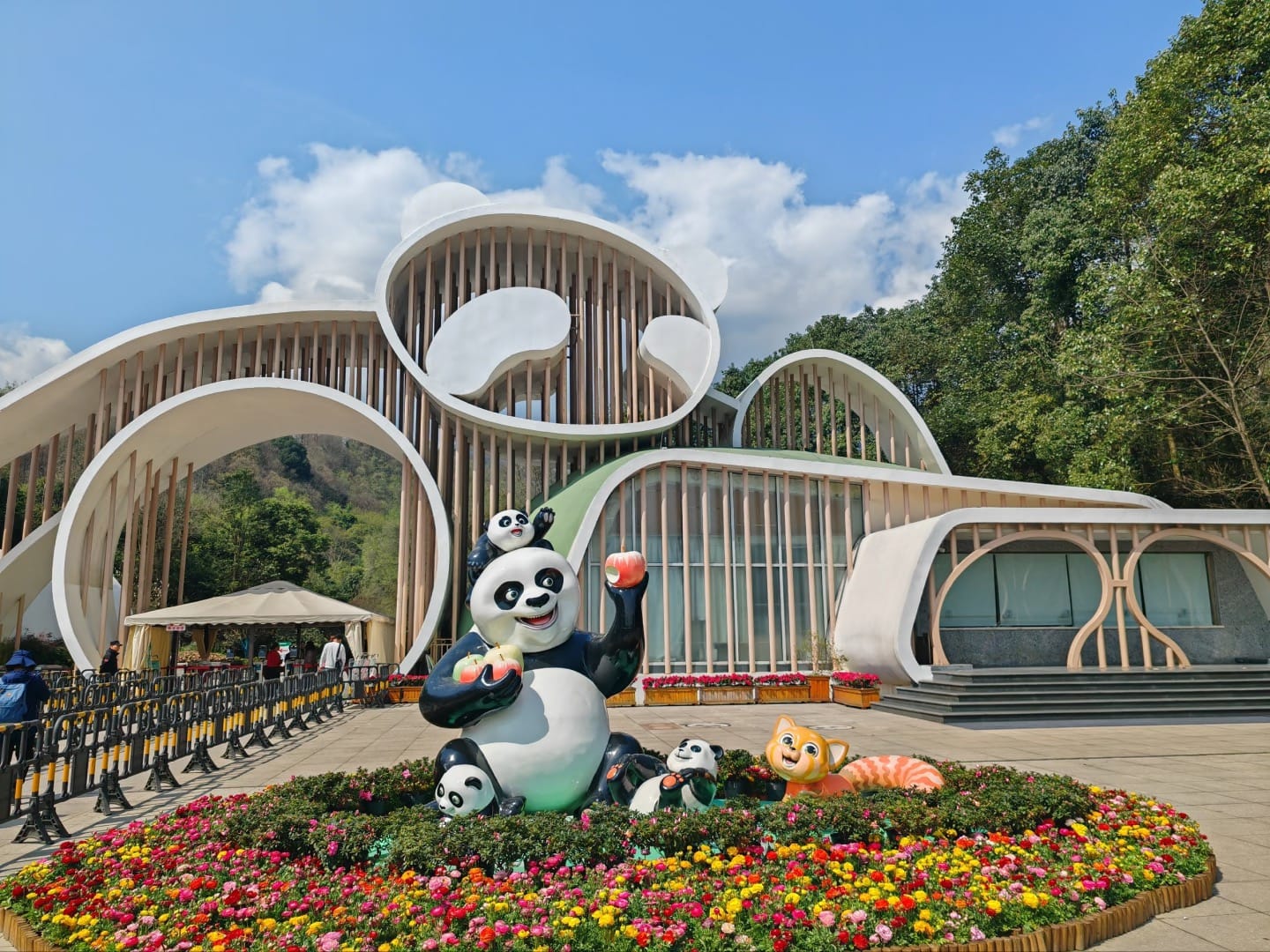
Panda Valley is operated by the Chengdu Research Base of Giant Panda Breeding — the same institution behind the famous city panda base. It opened on April 20, 2015, and covers 2,004 mu (roughly 134 hectares) of forested hillside in Yutang Town, about 3 km from Dujiangyan city center.
Selected captive-born pandas come to Panda Valley to learn wild survival skills — foraging, climbing, navigating real terrain — in preparation for eventual reintroduction into the wild. This is not a zoo or a breeding center. It is an active rewilding research station that happens to be open to visitors.
The site supports over 700 species of plants and animals. Bamboo grows untrimmed throughout. Streams cut through the lower sections. When you walk the paths in the early morning, the air is cool and it is genuinely quiet. The landscape does not feel curated.
At any given time, roughly 12 to 15 giant pandas live here. Some are in active wild-training phases. Others have completed training and remain as permanent residents. A few are returned overseas-born pandas — you may encounter an animal born in Spain or the US that now lives out its days here.
2.2 The Red Panda Treetop Path
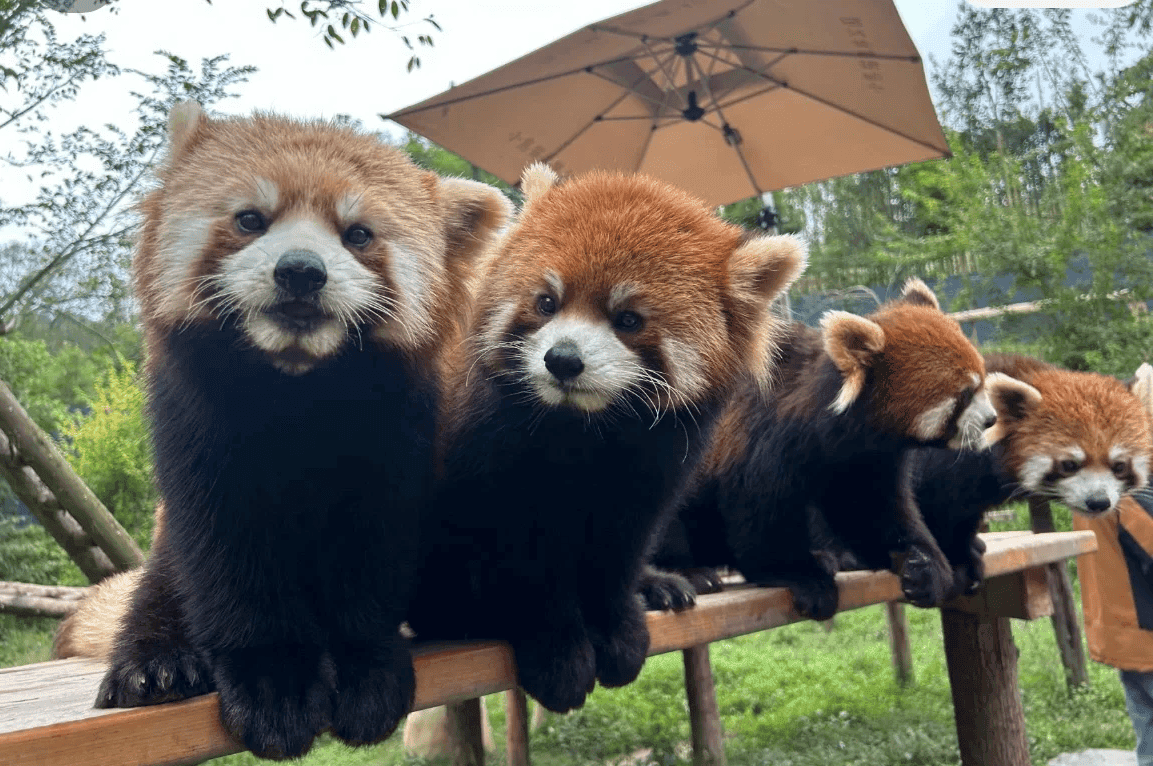
Red pandas here are not behind glass. They wander a dedicated treetop path — a raised wooden walkway through the forest canopy — and will walk within arm’s reach of visitors. They are smaller than most people expect, the size of a large house cat, and they smell faintly of cedar and musk. One might sit at eye level on a branch, nose twitching, regard you for a moment, and move on. Some visitors stand still for several minutes. Most take a hundred photographs and still feel they didn’t capture it.
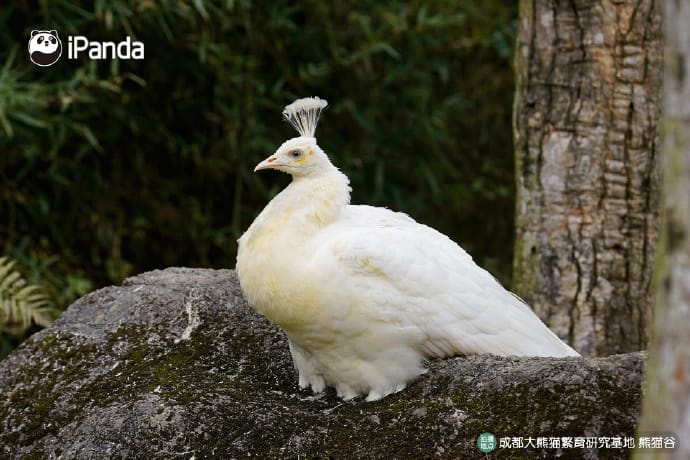
On the lower paths near this area, white peacocks also roam freely. They are not advertised anywhere. Most visitors don’t know they are there until one crosses the path ahead of them. It is the kind of encounter that makes a visit feel genuinely unrepeatable.
The red panda area requires a separate timed reservation, booked at the entrance gate when you arrive. Slots fill by mid-morning. Book before you head to the giant panda enclosures — not after.
2.3 Giant Pandas at Panda Valley: What to Expect
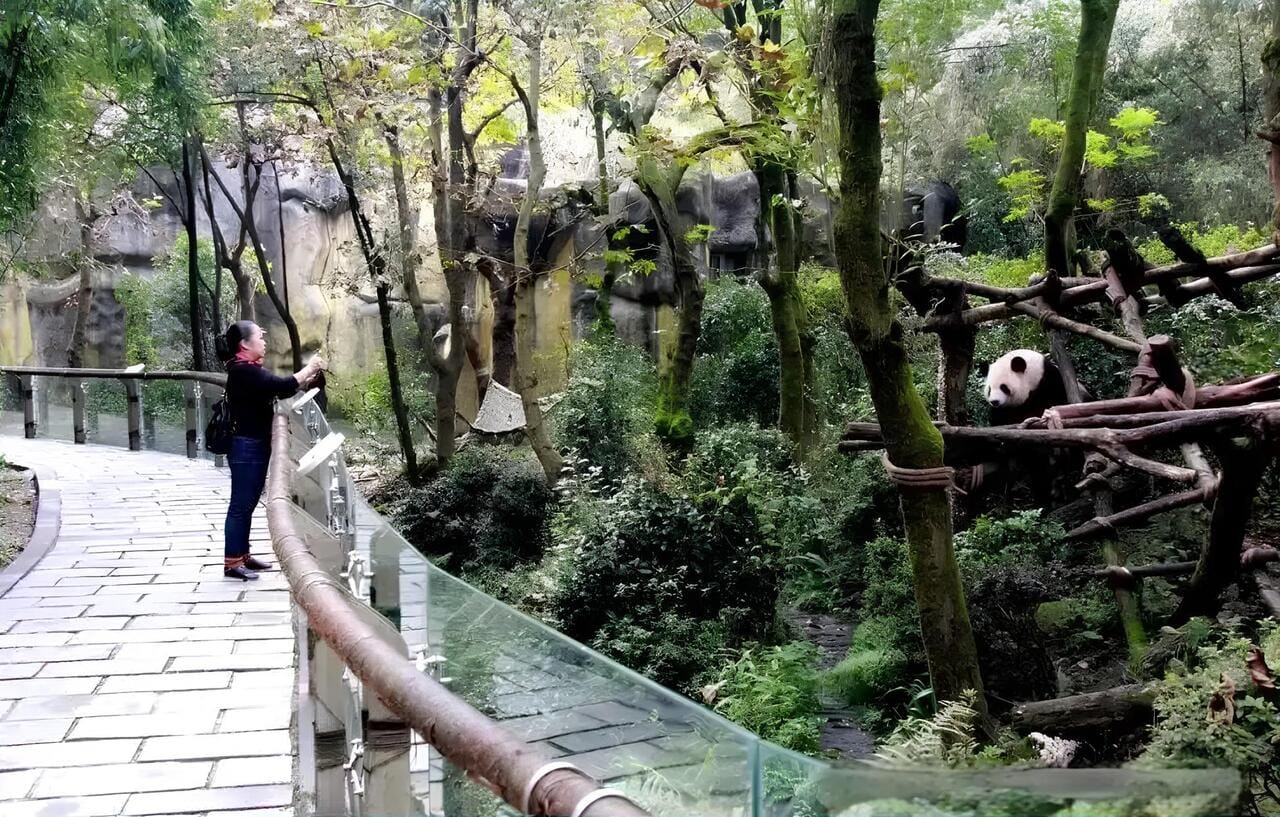
Because Panda Valley prioritizes wild training, the enclosures are larger and less manicured than at the Chengdu city base. Pandas here spend more time in elevated positions — in trees, on raised platforms, on natural branches — and display more purposeful, independent movement.
Some resident pandas have developed their own followings. Meilan (nicknamed 肉肉) draws dedicated fans who wait at her enclosure. Zhenzhen, Chengfeng, and others come and go as training phases advance. The roster shifts regularly, so it is worth checking the current residents on the Panda Valley WeChat account before you travel.
Set expectations honestly: pandas sleep 10 to 16 hours a day, here as everywhere. Keepers bring bamboo at around 9:30 am — the best active window runs from roughly 8:30 to 10:30 am. Arrive by 8:30 to secure a good position before the groups form. After 11 am in summer, many pandas retreat indoors.
2.4 Best Time to Visit Panda Valley
Spring (March–May) is the most comfortable season. Temperatures are mild, the bamboo is vividly green, and pandas are reliably active in the mornings. Crowds are manageable outside of national holidays.
Summer (June–August) brings the largest numbers, including school groups. Pandas become inactive quickly above 28°C, so arrive by 7:30 am if visiting in July or August. One genuine upside: rainy days in summer often produce more active pandas, since cooler temperatures keep them out longer.
Autumn (September–November) rivals spring. The forest changes color, morning temperatures are ideal, and crowds thin after the early-October Golden Week holiday.
Winter (December–February) is the quietest period. Pandas can be livelier in cool weather. Opening hours are shorter, and some visitors find the grey Sichuan winter atmosphere less appealing — but if you want Panda Valley largely to yourself, this is when to go.
One important expectation to set: Panda Valley is not a major breeding center. Do not plan your visit around seeing newborn cubs — that experience is more reliably found at the main Chengdu Research Base.
2.5 How to Walk the Park
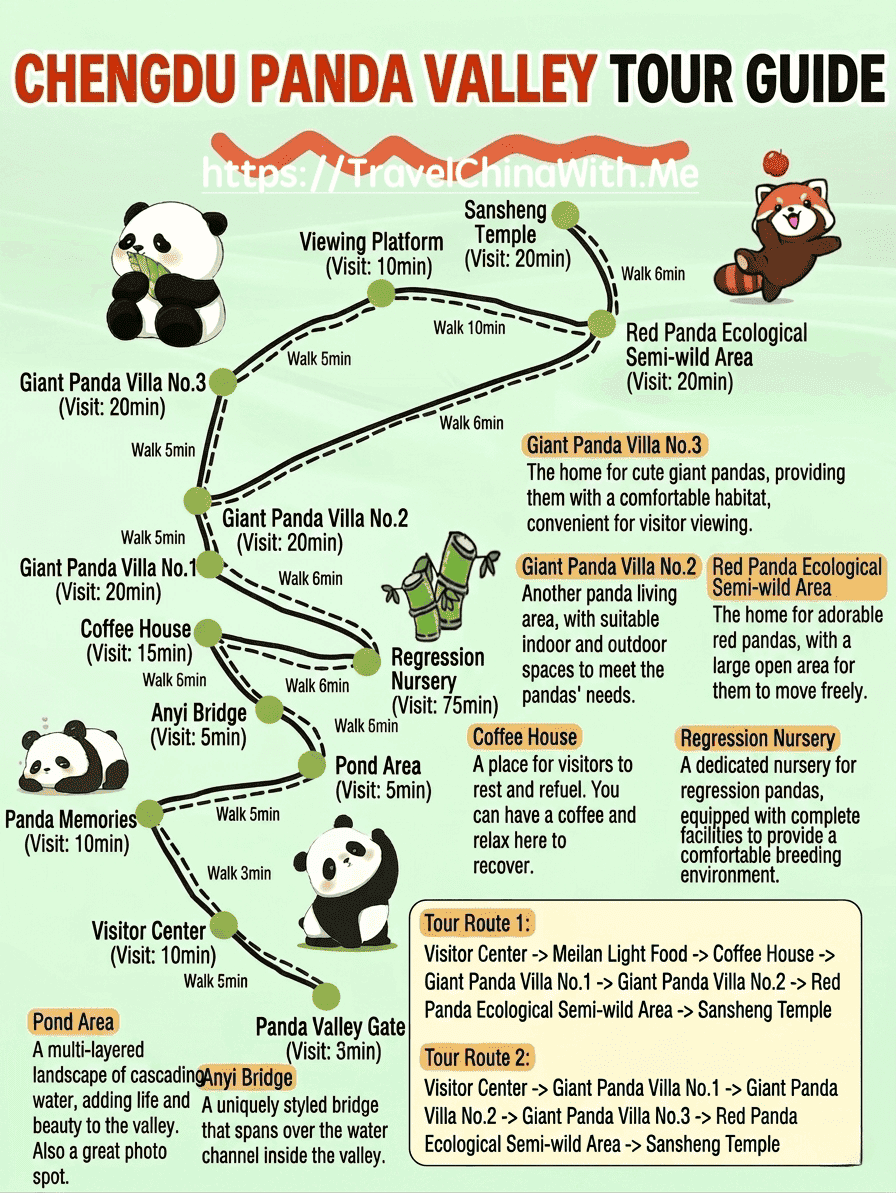
The valley runs along a hillside. The entrance is at the lower end; the path rises as you move through. Visitors who arrive late sometimes head straight uphill toward the red pandas, only to find the giant pandas were most active below during feeding time — and are now asleep.
Our recommended route: Enter → giant panda enclosures (lower section, during feeding time) → work uphill through the mid-section enclosures → red panda treetop path at the top → descend and exit. This follows the natural terrain and puts you at each section at the right moment.
Reserve your timed red panda slot at the gate before you start — not when you arrive at the top of the hill.
2.6 Panda Valley Practical Information
Address: No. 408, Huanshan Tourism Road, Yutang Town, Dujiangyan City, Chengdu, Sichuan
Opening hours:
- Peak season (March 16 – October 31): 7:30 am – 6:00 pm (last entry 5:00 pm)
- Low season (November 1 – March 15): 8:00 am – 5:30 pm (last entry 4:30 pm)
Tickets: CNY 55 per adult. All tickets must be booked online in advance via the official Panda Valley ticket page or the official WeChat public account (search: 熊猫谷). There is no on-site ticket window. Foreign visitors book using their passport number.
Shuttle bus: Not available. The terrain is manageable but hilly. Wear proper walking shoes.
Feeding time: Keepers arrive at enclosures around 9:30 am. Active window runs 8:30–10:30 am. Be inside by 8:30 am.
Visit duration: 2–4 hours for a relaxed visit including the red panda path.
3. Dujiangyan Panda Base (熊猫乐园): The Panda Hospital and Rescue Center
3.1 What Is Dujiangyan Panda Base?
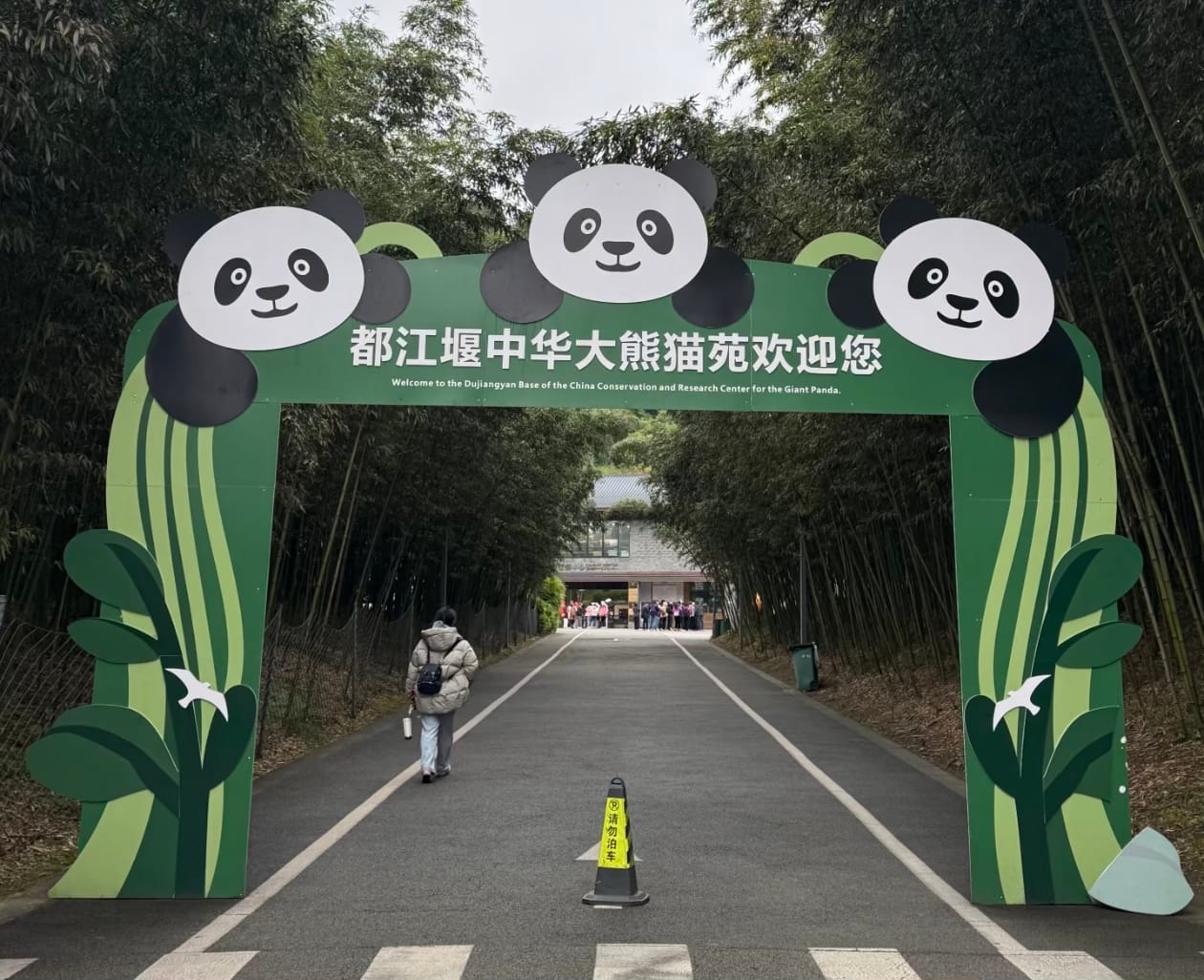
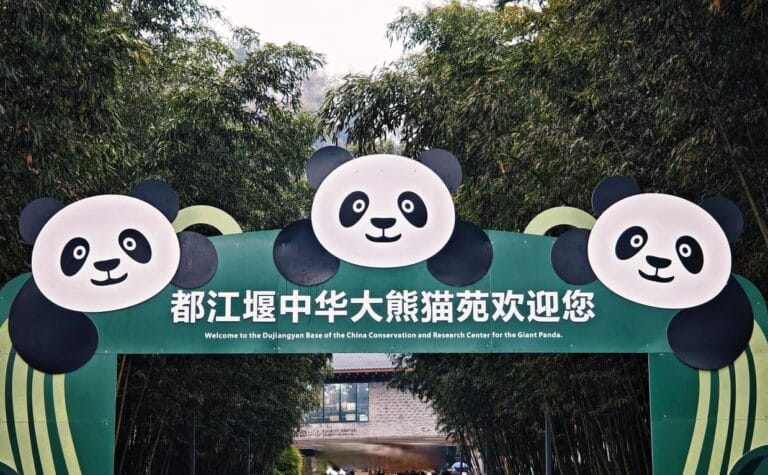
The Dujiangyan Panda Base is formally known as the China Conservation and Research Center for the Giant Panda (CCRCGP) Dujiangyan Base. It was built after the 2008 Sichuan earthquake using funding from the Hong Kong Special Administrative Region government. That origin shaped its purpose: not tourism or breeding, but medical care and research.
No other institution in the world does what this base does: giant panda disease control, prevention, emergency rescue, and rehabilitation under one roof. Think of it as a panda hospital and nursing home combined. Wild pandas found injured or sick are treated here, and giant pandas returning from diplomatic overseas loans pass through its quarantine unit before joining other facilities. The base has a medical laboratory, monitoring enclosures, quarantine wards, and a dedicated panda hospital.
It covers approximately 51 hectares in Qingchengshan Town, about 18 km from Dujiangyan city center — significantly further from town than Panda Valley, but reachable by bus or taxi from the high-speed train station.
3.2 What Makes It Different to Visit
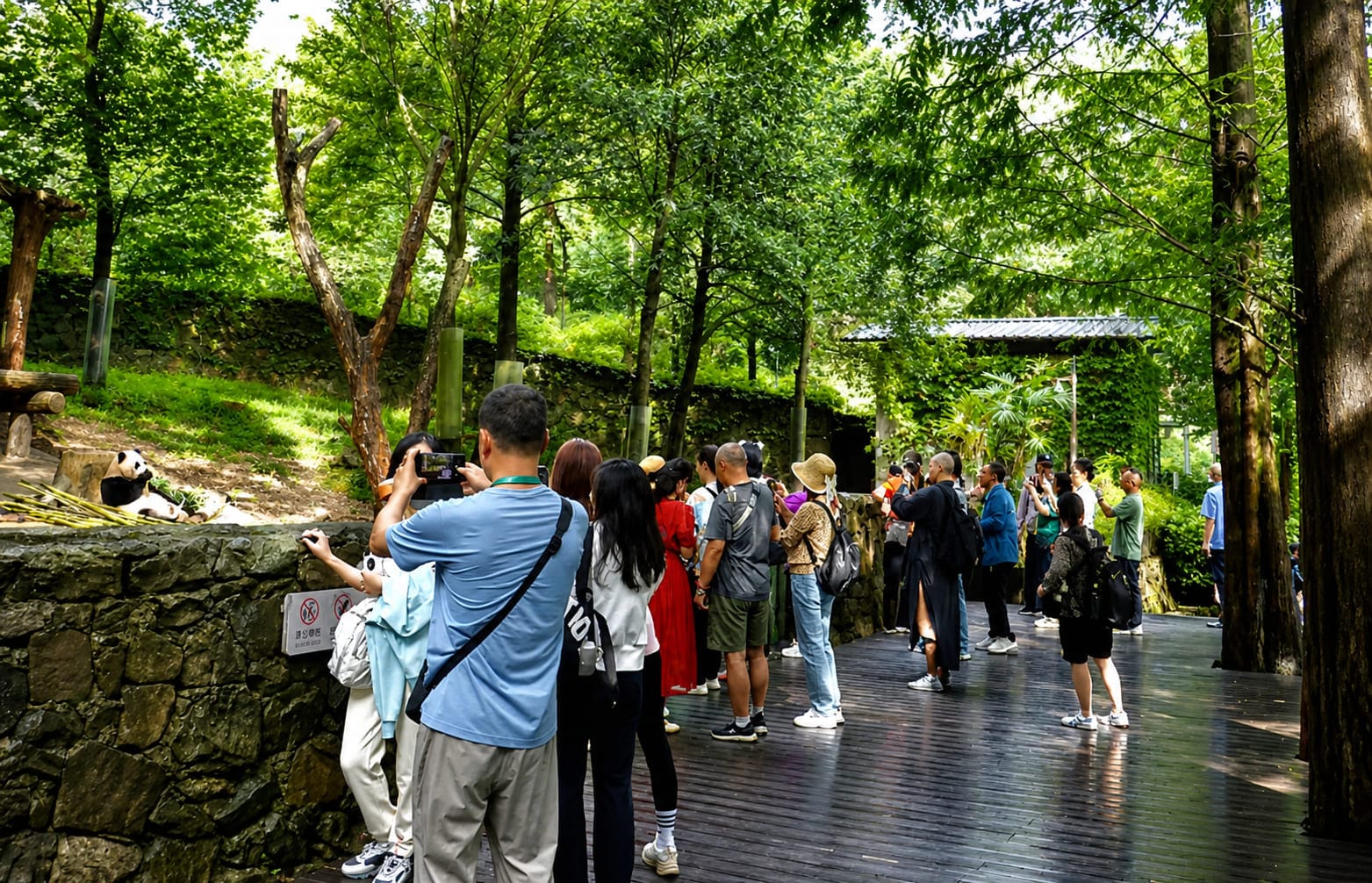
Walking into Dujiangyan Panda Base, the first thing you notice is how close the pandas are. The enclosures here are glass-fronted and positioned right at the edge of visitor pathways. You are not looking through open-air spaces at an animal 15 meters away — you are often standing a meter from glass with a panda eating on the other side. Many photographers prefer this base for that reason.
The base houses more than 30 giant pandas across three main zones: Panpan Garden, Shuangnan Garden, and Diequan Garden, plus a separate red panda area in Linze Garden. This is a larger, more navigable facility than Panda Valley. A shuttle bus (CNY 15) runs between zones for visitors who prefer not to walk.
Some of the most famous pandas in the world have lived here. Bao Bao, born at the Smithsonian National Zoo in Washington D.C., lives here. Mei Xiang and Tian Tian — who spent decades at the Smithsonian — came home to this base. Le Le (乐乐), Singapore’s first panda cub born at River Wonders in 2021, returned to China in January 2024 and now lives here — many visitors come specifically to see him. Pandas returning from diplomatic loans to Japan, Spain, the US, and elsewhere arrive at this base’s quarantine facility first. If you follow panda diplomacy, this is a place you may have a specific reason to visit.
The base runs iPanda, a network of live panda cameras that streams to viewers worldwide. If you have ever watched a panda cam online, the cameras were likely installed in the enclosures right here.
3.3 Best Time to Visit Dujiangyan Panda Base
The seasonal advice here mirrors Panda Valley in most respects — spring and autumn are the most comfortable, summer requires an early start, and winter is quietest. The base opens at 8:30 am; arrive by that time to catch the morning feeding window.
One seasonal advantage the base has over Panda Valley: it sits at the foot of Mount Qingcheng, and autumn visits can be combined with the mountain’s peak foliage. The approach road is lined with trees that turn deep amber and red in October and early November. If you are planning a Qingcheng day anyway, this is a natural pairing.
3.4 The Panda Volunteer Program at Dujiangyan Panda Base
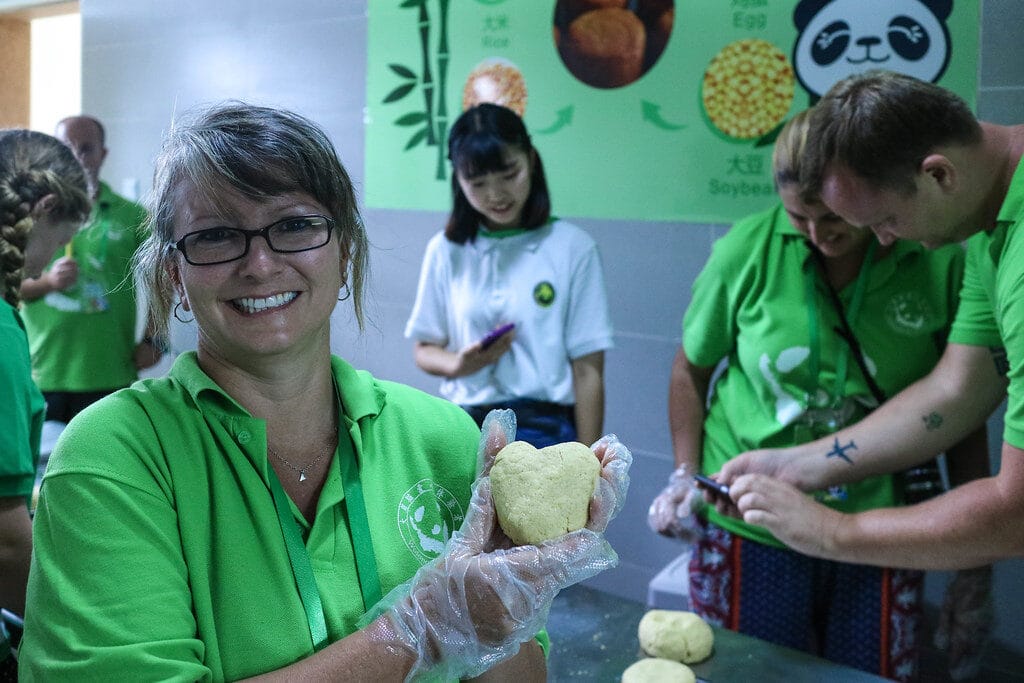
The volunteer program at Dujiangyan Panda Base gives participants a full day alongside the base’s actual care staff. You are not an observer with a ticket — you are doing the work that runs the facility. Participants clean enclosures, prepare bamboo, make panda cakes, and observe individual pandas closely. The full-day program starts at 7:00 am, involves hands-on enclosure work until midday, and includes a canteen lunch, a panda documentary screening, and a keeper certificate.
Age restrictions apply: participants need to be aged 12 to 65. Foreign visitors typically book through a licensed tour operator like us or directly via the CCRCGP official WeChat account, using their passport number for registration.
The program is set up for the base’s care-and-rehabilitation mission — participants work near pandas that include elderly animals, returned overseas residents, and pandas with medical histories. For guests who care about the welfare dimension of conservation, this context often adds a particular depth to the experience.
3.5 The 2026 Renovation Closure
Dujiangyan Panda Base closed for renovation on April 23, 2026. No reopening date has been confirmed at the time of writing.
Visitors planning a trip to Dujiangyan in 2026 should plan around this closure. Panda Valley is the open alternative — it offers a different but excellent experience. For the volunteer program specifically, Wolong Panda Base is currently the strongest alternative for international visitors. See our Where to See Giant Pandas in China guide for current options across all bases.
3.6 Panda Base Practical Information
Address: Shiqiao Village, Qingchengshan Town, Dujiangyan City, Sichuan
Opening hours: Approximately 8:30 am – 5:00 pm. Confirm current hours before visiting.
Tickets: CNY 58 per adult. Advance booking through WeChat or the official CCRCGP website. Foreign visitors book using passport numbers.
Shuttle bus: Available within the park, CNY 15 per person.
Visit duration: 2–4 hours for a general visit; full day for the volunteer program.
Getting there from the train station: Take bus 102 from Qingchengshan Railway Station to the Panda Base stop, or take a taxi (approximately 10–15 minutes, CNY 15–20).
4. Panda Valley or Dujiangyan Panda Base: Which Is Right for You?
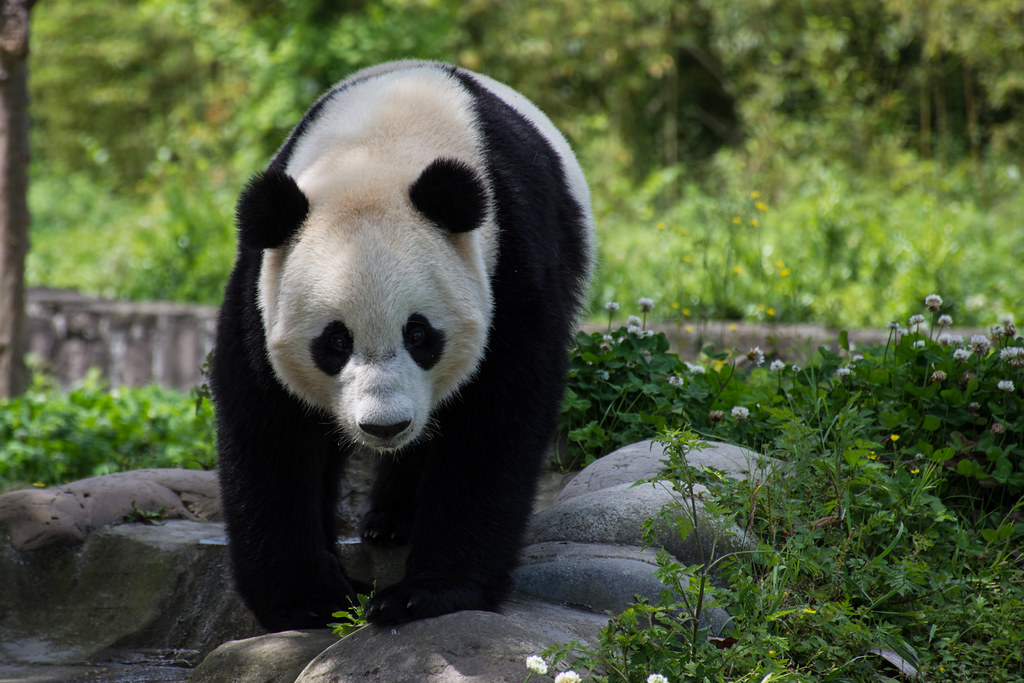
We once took a couple to the Chengdu city panda base on a Saturday morning in July. They spent two hours in dense crowds, caught glimpses of pandas through fogged glass, and left with a handful of distant photos. (That is the Chengdu Research Base in the city — not either of the Dujiangyan facilities.) The next morning we drove them to Panda Valley. They arrived at 8:00 am. By 9:30 they were watching Meilan — a panda with a Chinese fan following — work through a bamboo stalk in an open-air enclosure fifteen meters away. At 10:45, on the red panda path, one walked past the woman’s foot. She did not move for almost a minute. That evening she called it the best part of her entire China trip.
That story captures what Panda Valley does well. But the same guests, had they wanted to see Bao Bao or one of the returned diplomatic pandas, or had they come specifically for the volunteer program in a rescue-center setting, would have been better served by Dujiangyan Panda Base.
Choose Panda Valley if you want a quieter, more naturalistic experience; you are drawn to the red panda free-roaming path; or you are already spending a day in Dujiangyan at the irrigation system.
Choose Dujiangyan Panda Base if you follow individual pandas — particularly the overseas returnees like Le Le or Bao Bao; you want glass-front enclosures for close photography; you need the shuttle bus for accessibility; or you want the specific volunteer and rescue-center context. Note the 2026 closure and check reopening status before planning.
Visit both if you are a dedicated panda enthusiast with two days in Dujiangyan, or if the base has reopened by the time you travel. They are genuinely different enough that the combination is worthwhile.
For a full comparison of all panda facilities across Sichuan, read our Chengdu Panda Bases Guide.
5. Panda Volunteer Program: Dujiangyan Panda Base

Of the two Dujiangyan facilities, only Dujiangyan Panda Base offers a paid panda keeper volunteer program for international visitors. Panda Valley does not offer this experience.
The full-day program starts at 7:00 am and runs until approximately 3:00 pm. You work alongside actual care staff — cleaning enclosures, preparing bamboo, making panda cakes — and spend the day around pandas that include elderly animals and overseas returnees. The mission context here (rescue and rehabilitation, not wild-release training) gives the experience a distinct character. Full details are in Section 3.4 above.
Minimum age is 12. Advance booking is essential — 4 to 6 weeks during peak season, up to 2 months in July and August.
Note on 2026: The base is currently closed for renovation, meaning the volunteer program is also unavailable. Wolong Panda Base is the strongest current alternative for international visitors. See our Where to See Giant Pandas in China guide for current options.
Contact us to arrange the program — we have been handling panda volunteer bookings since 2006.
6. Planning Your Day
Visiting Panda Valley
Panda Valley is 3 km from Dujiangyan city center. The natural pairing is the Dujiangyan Irrigation System — a UNESCO World Heritage Site still in active use after 2,200 years — for a full day that earns the trip from Chengdu. The Anlan Suspension Bridge and Erwang Temple are both worth the time. If your schedule allows, the Blue Tear evening light show at Nanqiao Bridge is a good reason to stay late.
Visiting Dujiangyan Panda Base
The base sits 18 km from city center, close to Qingchengshan Railway Station. A natural pairing is Mount Qingcheng in the afternoon — the two sites share the same station and the same taxi rank, which makes the logistics straightforward. Qingchengshan Town nearby has good farmhouse restaurants for lunch between the two. For those doing the volunteer program, plan the full day at the base (7:00 am to ~3:00 pm) and skip the mountain — there is no time to combine both.
7. Getting to Dujiangyan from Chengdu
Chengdu city center to either base · Costs are approximate one-way estimates
By intercity train (recommended): Take Metro Line 6 to Xipu Station, then board the intercity high-speed train to Dujiangyan. The journey takes around 40 minutes and costs CNY 10. For Panda Valley, get off at 离堆公园 (Liduiyuan) Station and take Bus 14 or a taxi (CNY 12–18, 15–20 minutes). For Dujiangyan Panda Base, get off at 青城山 (Qingchengshan) Station and take bus 102 or a taxi (CNY 12–15, 10–15 minutes).
By DiDi from central Chengdu: A DiDi (ride-share) direct from central Chengdu costs approximately CNY 120–180 to either base and takes 60–80 minutes depending on traffic. This is the most door-to-door independent option and works well for small groups or anyone with early morning timing concerns. DiDi drivers are easy to find outside both bases for the return trip, though you may wait slightly longer at Panda Valley due to its more rural location.
By private car or tour vehicle: The same journey, with a guide and fixed schedule. Best for anyone combining two or more sites in a single day.
By public bus: Buses from Chadianzi Bus Station reach Dujiangyan, but onward transport to either base still requires a local taxi, which adds time and transfers without saving much money.
For independent travelers, the train plus local taxi is the most cost-effective option. DiDi direct suits those who prefer simplicity over savings. A private vehicle makes the most sense for anyone combining two or more sites in a day.
DIG DEEPER: How to Get to Dujiangyan Panda Valley from Chengdu (All in One Guide)
8. Things to Know Before You Go
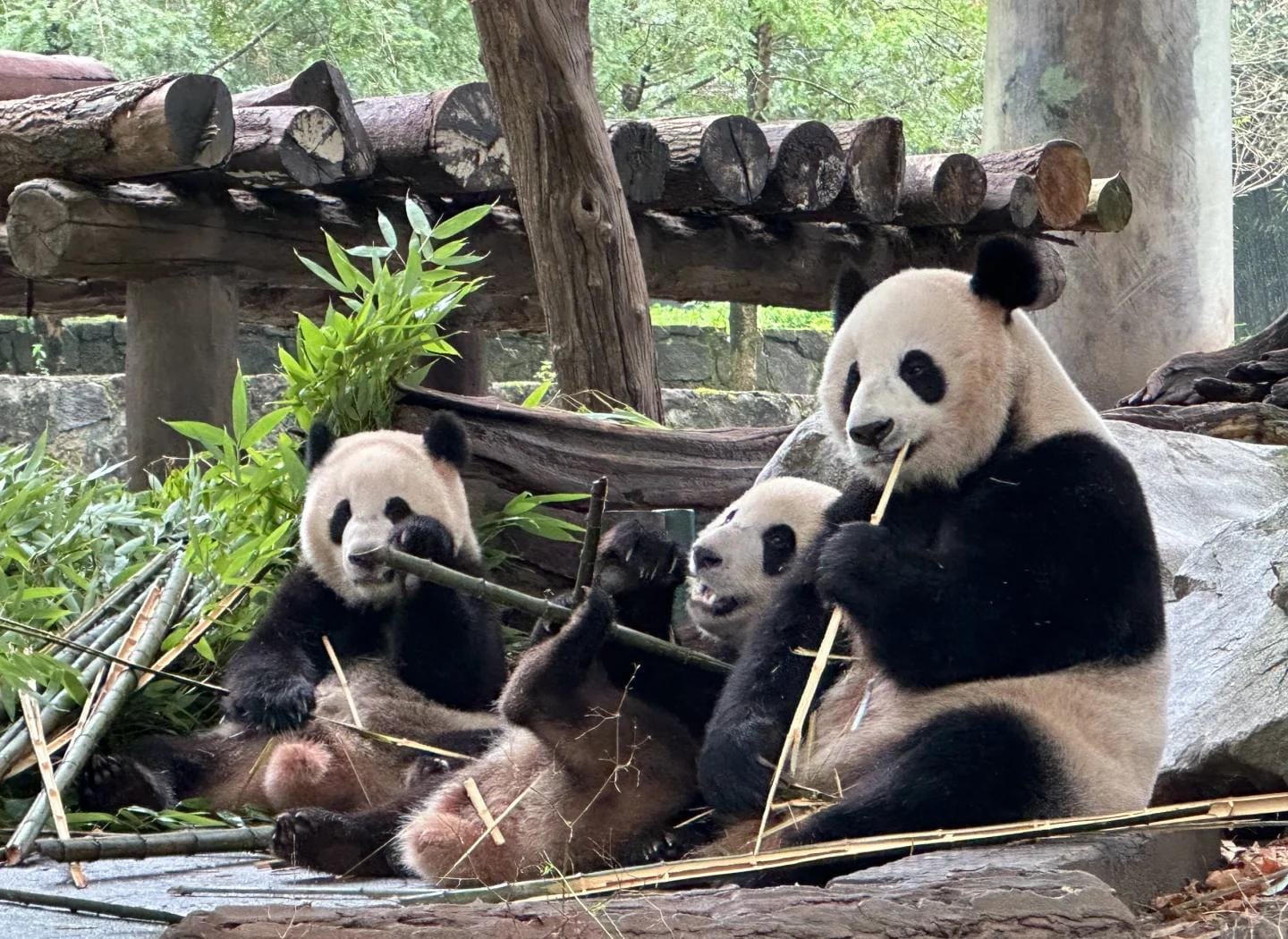
For both bases, the rules are the same: tickets must be booked online in advance with no walk-up window, foreign visitors need a passport number to reserve, weekdays are significantly less crowded than weekends, and flash photography is not allowed at any enclosure. In summer, arrive at 7:30 am for Panda Valley or 8:30 am for Dujiangyan Panda Base — pandas are indoors by 11 am on hot days and there is little to see after that.
At Panda Valley, the most important thing to do at the gate before anything else is reserve your timed red panda entry slot. Slots fill by mid-morning. Do not feed the red pandas — they walk right up to you on the treetop path and the temptation is real, but feeding them disrupts their health and training. There is no shuttle bus anywhere in the park, so wear shoes you can walk uphill in for two to four hours. The canteen inside serves basic meals for those staying through midday.
At Dujiangyan Panda Base, take the shuttle bus (CNY 15) — the three main zones are spread across hilly terrain and the distances add up. Most people find it natural to ride the shuttle to Diequan Garden (the furthest zone) first and walk back down through the park, which follows the terrain comfortably. The base is significantly further from the intercity train station than Panda Valley, so budget extra travel time at each end of the day.
9. Frequently Asked Questions
Are Panda Valley and Dujiangyan Panda Base the same place?
No. They are two separate facilities run by two different national organizations in different parts of Dujiangyan city. Panda Valley (熊猫谷) is managed by the Chengdu Research Base of Giant Panda Breeding. Dujiangyan Panda Base (熊猫乐园) is managed by the China Conservation and Research Center for the Giant Panda.
How many pandas can I see at each base?
Panda Valley houses approximately 12 to 15 giant pandas and around 20 red pandas. Dujiangyan Panda Base houses more than 30 giant pandas. Neither number is guaranteed — pandas move between facilities and training phases, and not all are on display at any given time.
Which base is better for photography?
Each has a clear advantage. Panda Valley’s open-air enclosures suit natural behavior shots — pandas in trees, on platforms, in their actual environment. Dujiangyan Panda Base has glass-fronted enclosures with pandas very close to the viewing pathway, which makes clean close-up shots far easier. For red pandas specifically, Panda Valley’s free-roaming treetop path is unmatched anywhere in Sichuan.
Can I do a panda volunteer program in Dujiangyan?
Only at Dujiangyan Panda Base — not at Panda Valley. Panda Valley does not offer a paid panda keeper volunteer program for tourists. The volunteer program at Dujiangyan Panda Base is currently unavailable due to the 2026 renovation closure. The best alternative for 2026 is Wolong Panda Base, which is approximately 2.5–3 hours from Chengdu. See our Where to See Giant Pandas in China guide for current availability.
Can I hold a panda?
No. Neither base offers holding or direct physical contact with giant pandas as part of regular admission or the volunteer program. Paid close-up photo sessions with giant pandas have been offered at both facilities in the past but are not currently available at either base. Do not book any tour that promises a panda hold or hug — these claims are not legitimate at either Dujiangyan facility.
Is Panda Valley suitable for children? Are there age limits?
Both bases are suitable for children of all ages for general admission — there are no minimum age requirements to visit. The terrain at both sites is hilly, so a carrier or sturdy stroller is useful for very young children. For the volunteer program at Dujiangyan Panda Base, the minimum age is 12. Children generally do well at Panda Valley; the flat sections near the entrance are manageable, and the red panda path tends to hold their attention. Dujiangyan Panda Base has the added advantage of a shuttle bus, which helps with tired legs.
Can I visit both bases in one day?
In theory, but we do not recommend it. They are at opposite ends of the city and the travel time between them eats into morning panda viewing hours. Visit Panda Valley on one day; Dujiangyan Panda Base on another, or combine with nearby Mount Qingcheng.
Can I combine Panda Valley with the Dujiangyan Irrigation System in one day?
Yes, comfortably. Panda Valley in the morning (7:30 am–12:00 pm), then taxi to the irrigation system for the afternoon (1:00–5:00 pm). This is one of our favorite full-day itineraries from Chengdu.
Do I need a guided tour or can I visit independently?
Both bases are manageable independently. A guide adds real value — knowing which pandas are out that morning, the best feeding positions, and how to navigate the timed entry systems smoothly. We have been running guided panda days in Dujiangyan since 2006. Contact us to plan yours.