Chengdu Panda Base Guide: Tickets, Routes & Tips
In 1987, six giant pandas rescued from the wild were brought to a scrubby hillside on the northern outskirts of Chengdu. There was no proper road. Visiting zoologists came by bus and arrived dizzy. That was the beginning of the Chengdu Research Base of Giant Panda Breeding. Nearly 40 years later, those six pandas have become a population of 244 — the largest captive giant panda population on earth — and the hillside has grown into a 3.07 square kilometer reserve that received more visitors in 2024 than any year in its history.
We’ve been taking international clients here since 2006. The honest answer to “is it worth visiting” has never changed: yes, without question. But how good that visit actually is depends almost entirely on when you arrive, which gate you enter, and what you decide to prioritize. This guide is how we brief clients before they go.
Official Name | Chengdu Research Base of Giant Panda Breeding |
Official Name (CN) | 成都大熊猫繁育研究基地 |
Address | No. 1375 Xiongmao (Panda) Ave, Chenghua District, Chengdu |
Founded | 1987, from 6 wild-rescued pandas |
Opening hours | Summer (Mar–Oct): 7:30–18:00, tickets sold until 17:30; Winter (Nov–Feb): 8:00–17:30, tickets sold until 17:00 |
Ticket | Adult CNY 55; Student CNY 27; 60+ and under-6 free |
Giant pandas on site | 244 — the world’s largest captive population |
Best viewing window | 07:30–11:00 (morning feeding; pandas go indoors above 26°C) |
Daily visitor cap | 63,000 — sells out on Golden Week and summer holidays |
Visit duration | South Zone only: 2–3 hrs; Full circuit South + West: 4–6 hrs |
Table of Contents
1. What Is the Chengdu Research Base of Giant Panda Breeding?
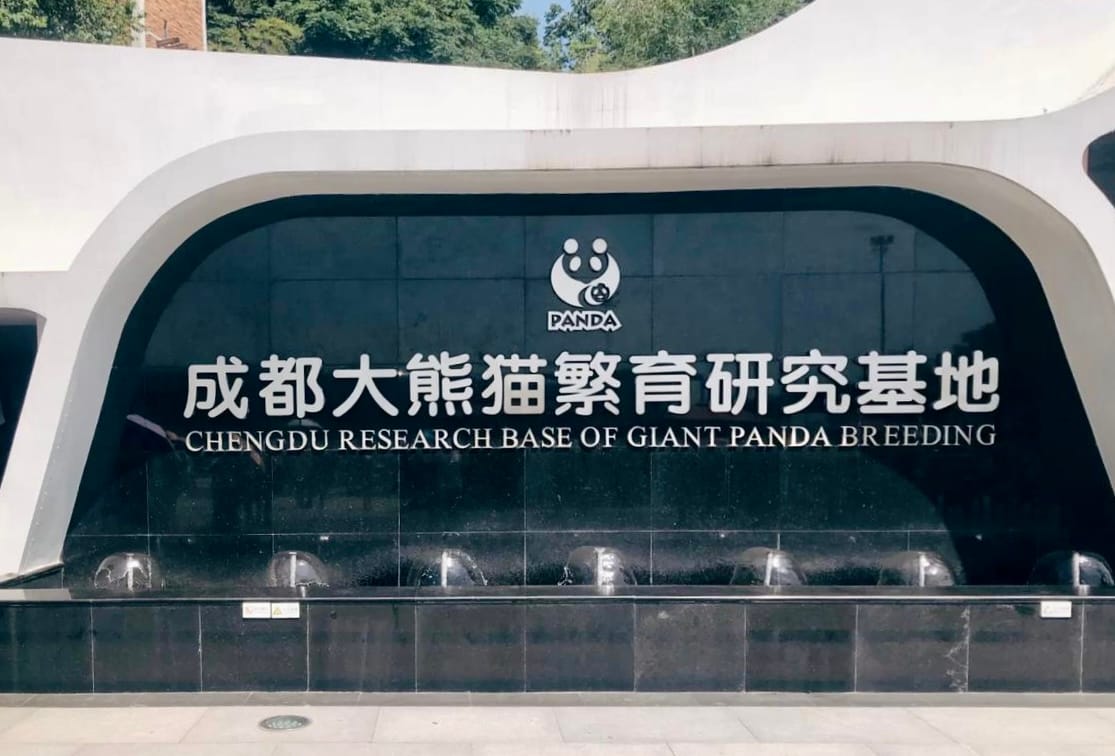
The base is a non-profit research and conservation institution, not a zoo. Its mission is captive conservation of giant pandas: breeding, veterinary care, genetic management, and preparing animals for wild reintroduction. The panda hospital, research laboratories, and breeding facilities are on-site but not open to visitors. What visitors access is the public zone — enclosures, nurseries, and educational facilities — built around the research core. (Official website: panda.org.cn)
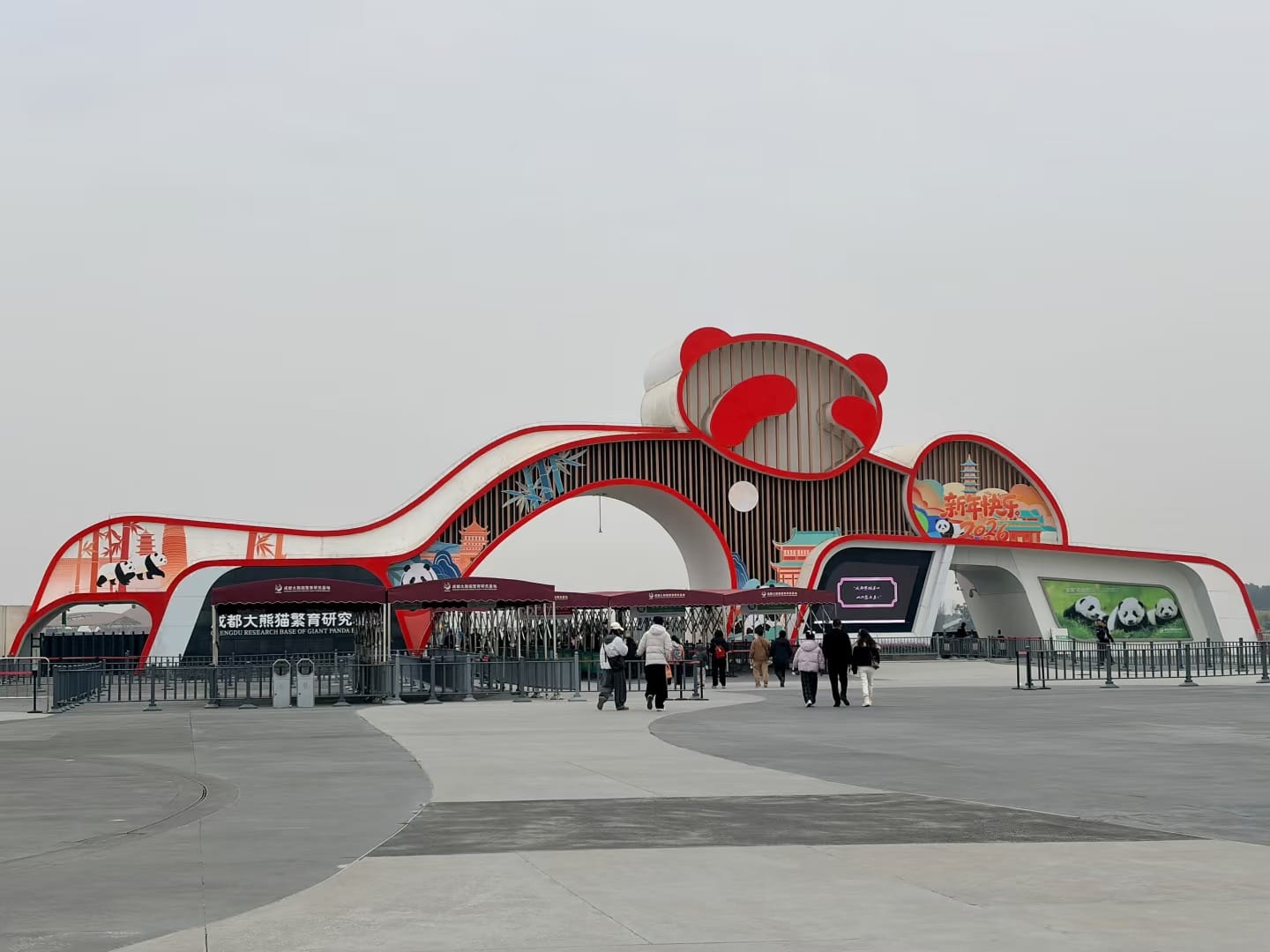
The base sits on a forested hillside in Chenghua District, 10km northeast of Tianfu Square. In January 2022 an expansion zone opened, more than tripling the total area from 1,035 mu to 3,570 mu. The original area is accessed via the South Gate; the expansion via the West Gate, which became fully operational in 2023. Most tour groups and online guides still treat the South Gate as the default entrance, which is why the western expansion zone is consistently less crowded.
Besides giant pandas, the base holds the world’s largest captive red panda population, along with golden snub-nosed monkeys, black-necked cranes, and other rare species. The Giant Panda Museum, opened in 1993, is the only thematic museum in the world dedicated to a single endangered species. Worth noting for context: giant pandas were reclassified from Endangered to Vulnerable by the IUCN in 2016, a direct result of captive breeding programs like this one — though habitat loss still threatens wild populations.
On the crowds question: The base received over 9 million visitors in 2019, and 2024 broke that record. The congestion is real — but it’s concentrated in the Old Area: the tour buses, the Hua Hua queue, the nurseries. Visitors who enter via the West Gate before 09:00 on a non-holiday weekday consistently describe having the enclosures almost to themselves for the first two hours.
2. Key Areas Inside the Chengdu Panda Base
Old Area (South Gate side)
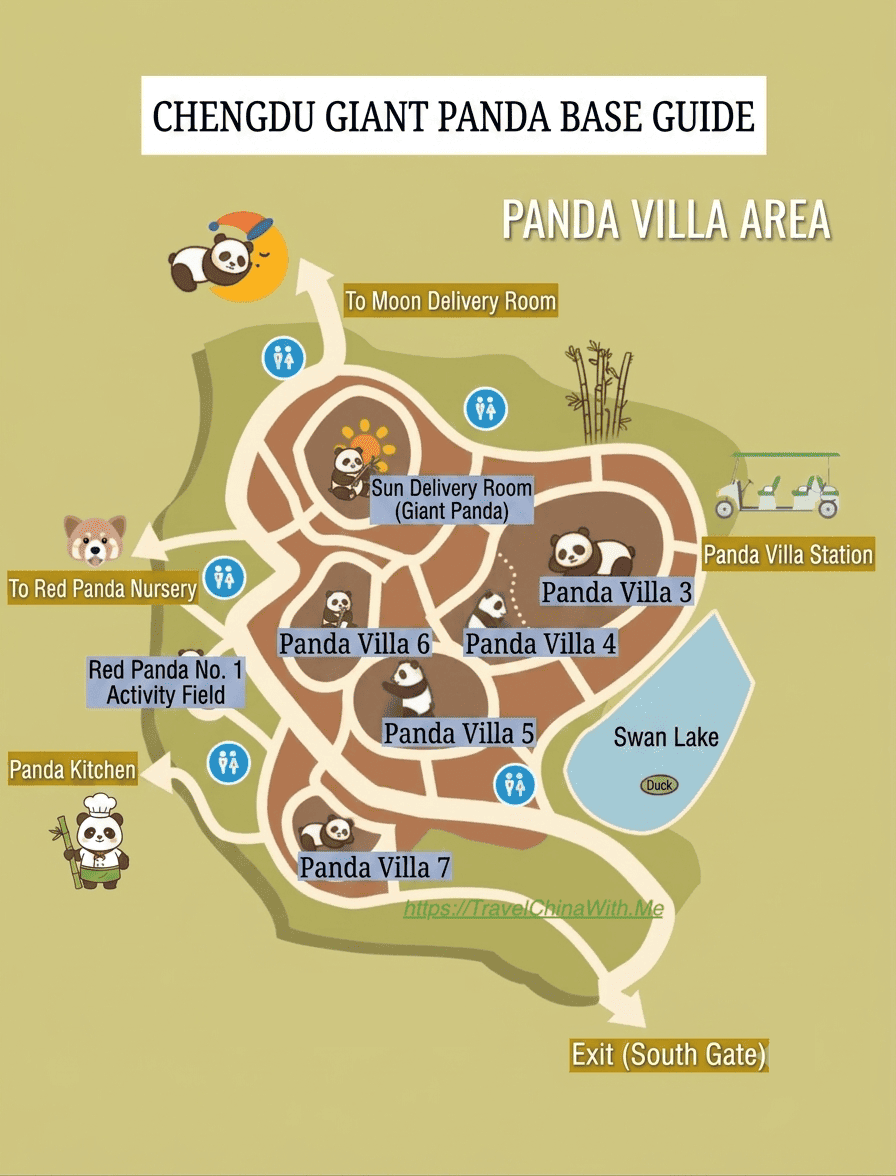
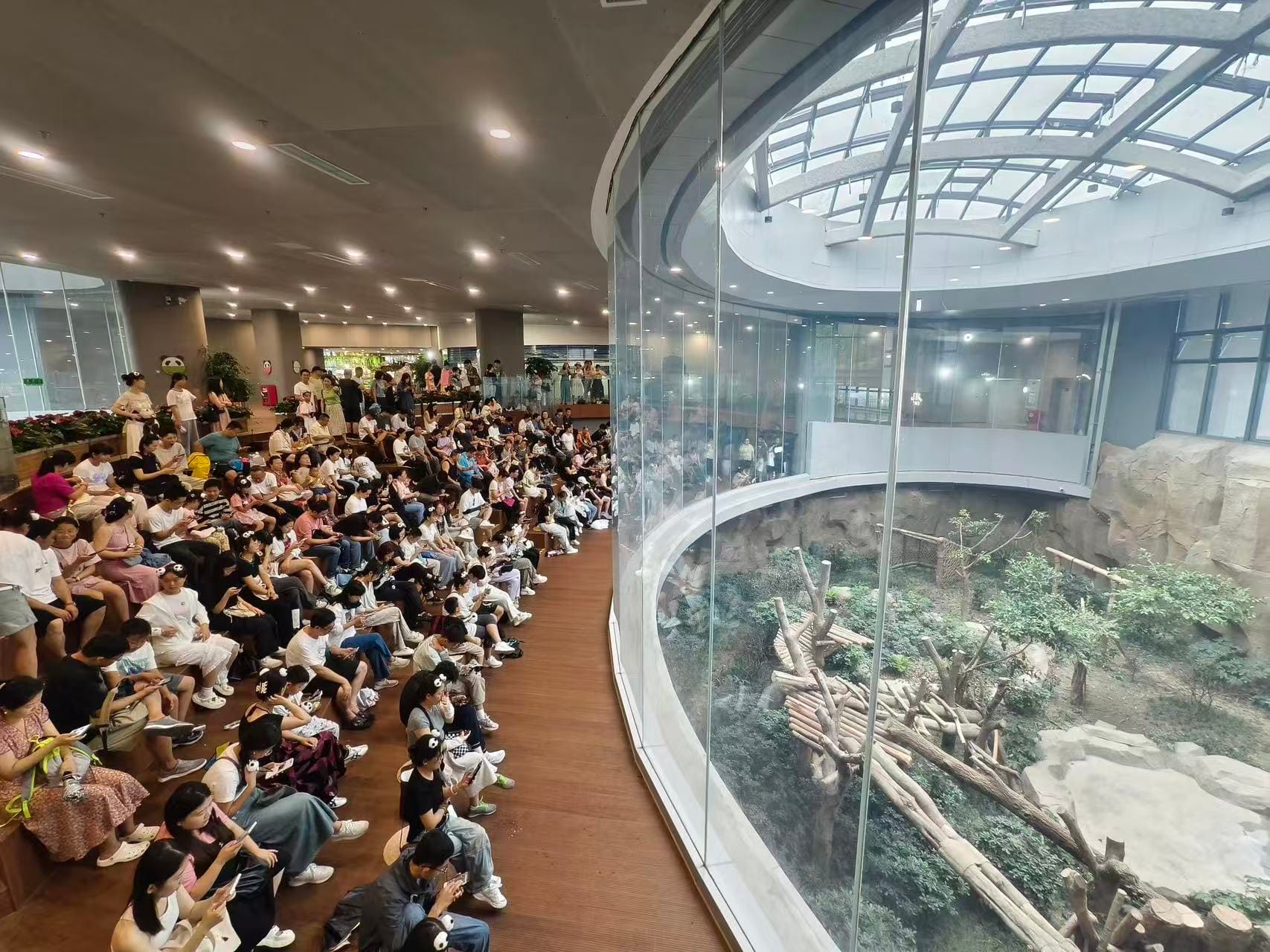
Villa Zone (Villas No. 1–7): The villa enclosures are the heart of the Old Area — individual or small-group enclosures where pandas have dedicated outdoor yards and indoor sleeping quarters. Villa No. 6 is Hua Hua’s home and the base’s most visited single point. The other villas house a mix of adult pandas and sub-adults; No. 1, 2, 3, and 7 typically have multiple animals visible simultaneously and shorter queues than Villa No. 6.
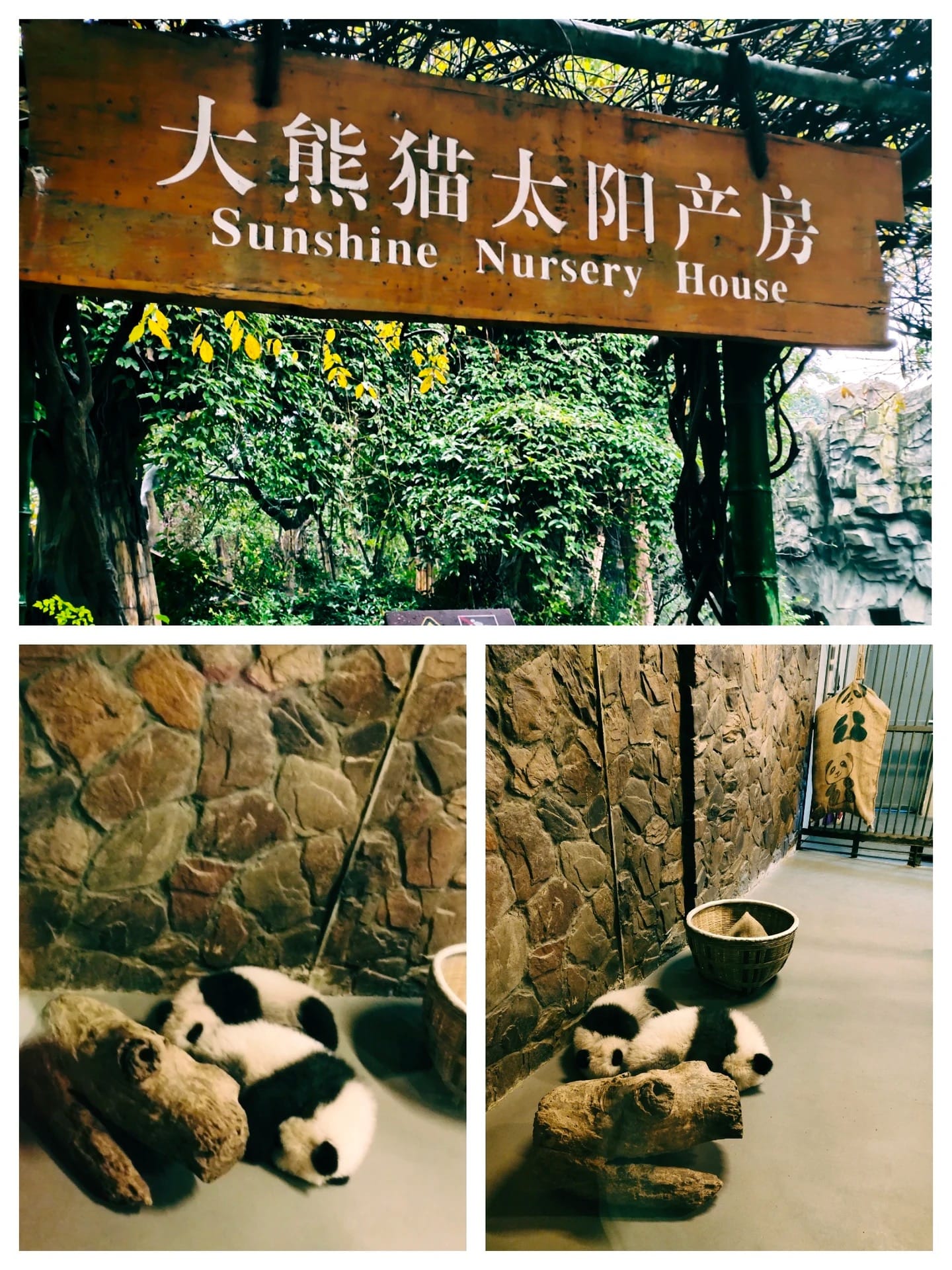
Sunshine Nursery (太阳产房) and Moonlight Nursery (月亮产房): Both in the Old Area, these are the primary cub-viewing facilities from July through September. The Moonlight Nursery is the place to watch the morning weigh-in of newborns. The Sunshine Nursery has slightly older cubs and two bottle-feeding sessions daily at 09:00 and 15:00. Both facilities are older and can get crowded during cub season; arrive early.
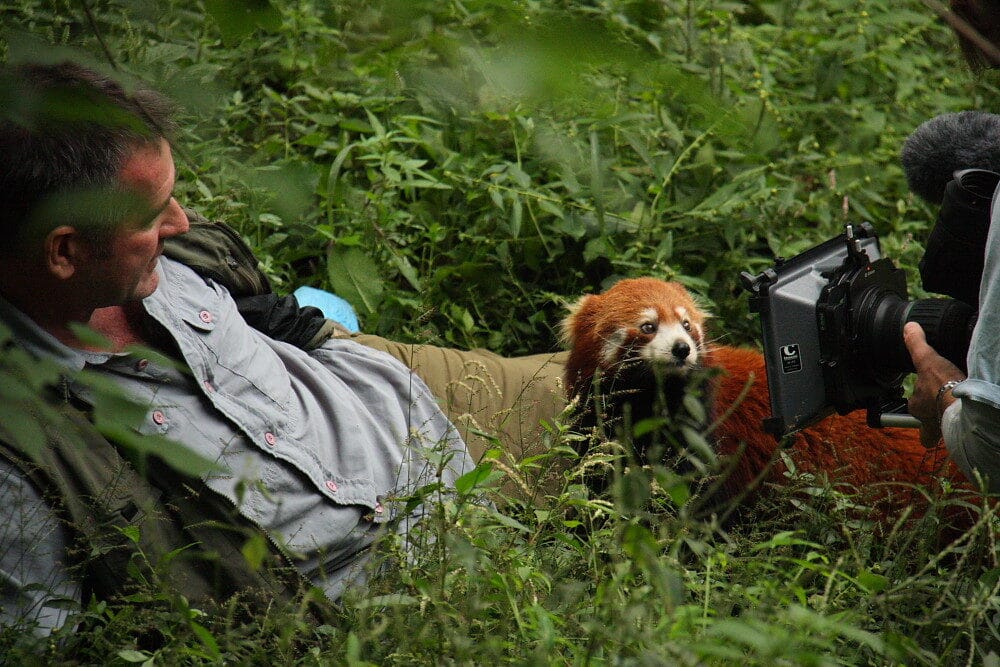
Red Panda Area (小熊猫活动场): Two activity areas for red pandas sit between the villa enclosures. Red pandas are significantly more active than giant pandas — they move constantly, climb, and forage throughout the morning. A reliable crowd-pleaser, especially for children. Note the nursery closes at 16:30.
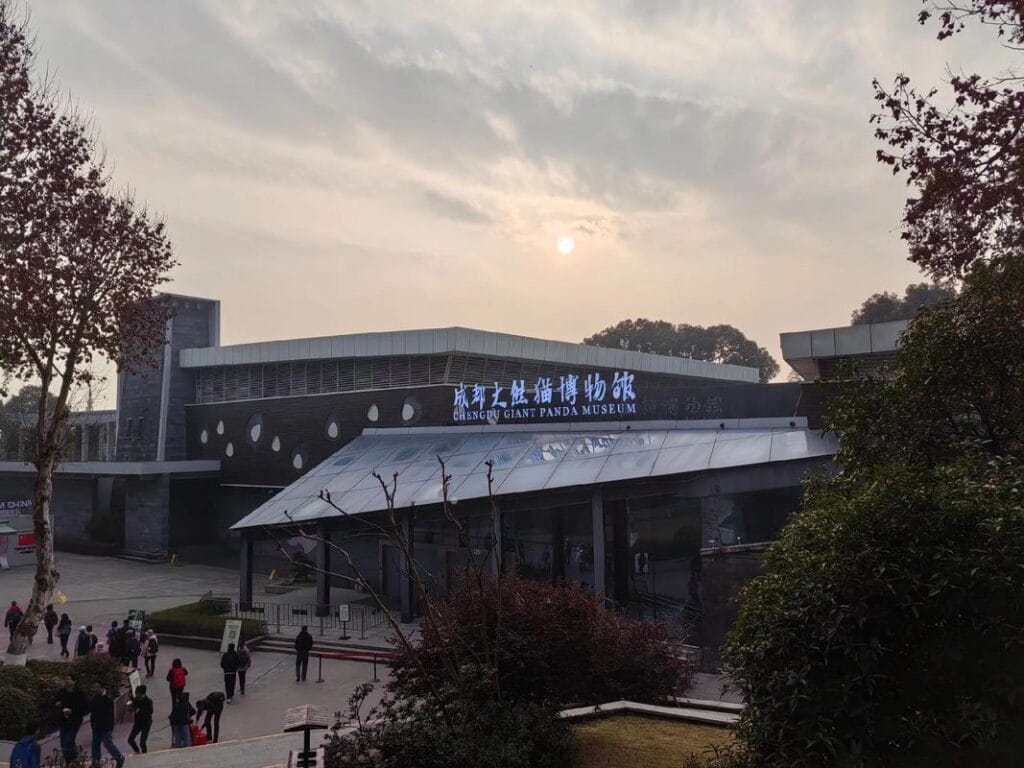
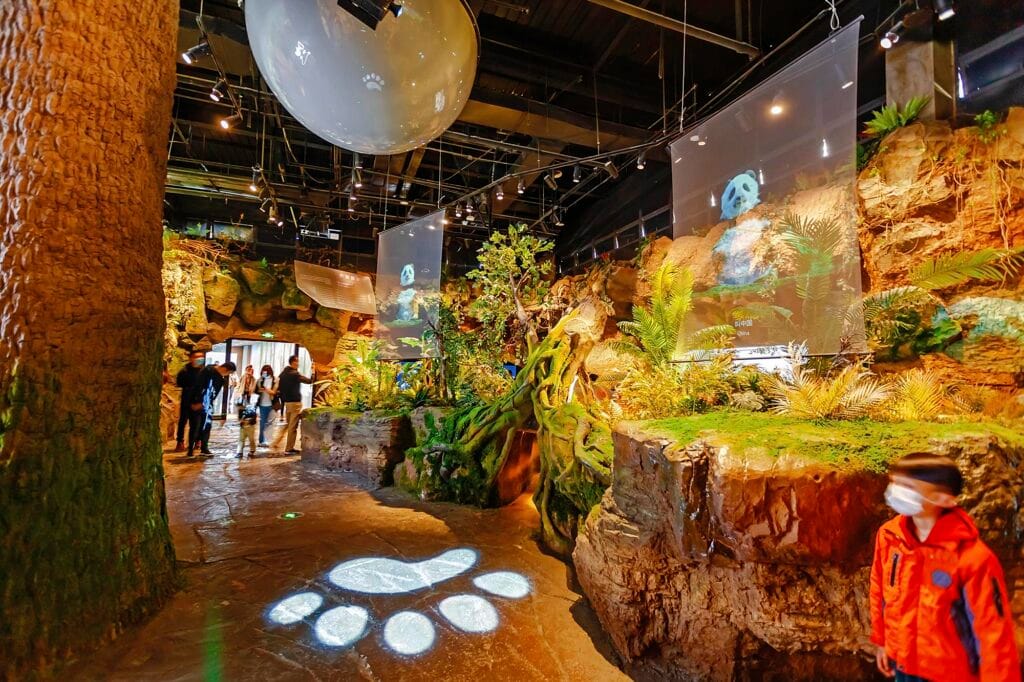
Giant Panda Museum (大熊猫博物馆): The world’s only museum dedicated to a single endangered species. Covers panda evolution, biology, captive breeding science, and conservation history. Worth 45–60 minutes if education is a priority. Closed Mondays.
 Giant Panda Museum – Outside
 Giant Panda Museum – Inside
New Area — Jinfeng Garden (锦凤园, West Gate side)
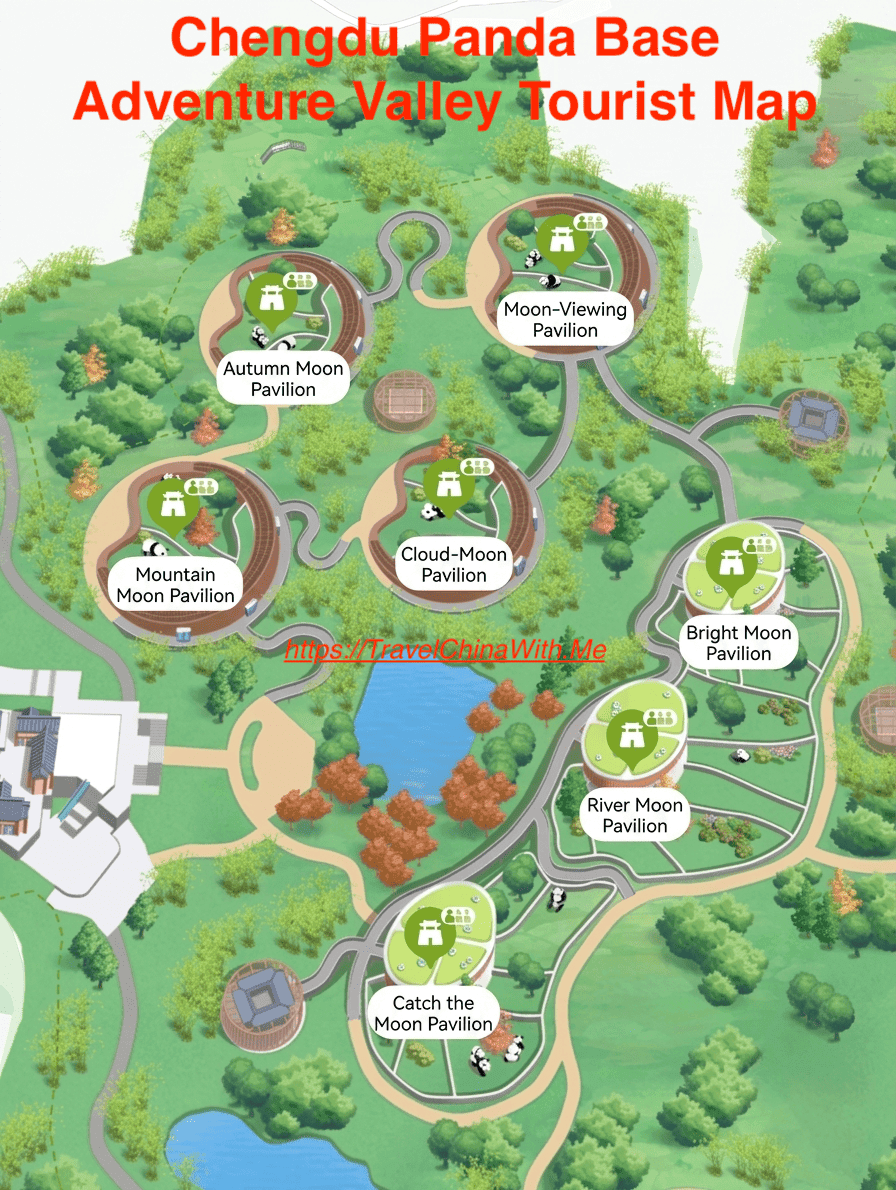
Panda Valley / Adventure Valley (冒险溪谷): The large-enclosure zone in the western section of Jinfeng Garden. Seven interconnected halls — Shanyue (Mountain Moon), Qiuyue (Auntum Moon), Wangyue (Moon-Viewing), Yunyue (Cloud Moon), Mingyue (Bright Moon), Jiangyue (River Moon), Lanyue (Catch the Moon) — each housing adult pandas in spacious semi-naturalistic settings with trees, climbing structures, and outdoor yards significantly larger than the Old Area villas. This is where you’re most likely to see pandas moving freely rather than sleeping on a platform. Crowd levels here are a fraction of the Old Area at the same hour.
Panda Forest (熊猫森林): The indoor-outdoor complex in the centre of Jinfeng Garden, connecting Panda Valley to the Star Nursery zone. Houses adult pandas and sub-adults across multiple halls. The Panda Lounge (熊猫会客厅) sits within this zone — the area most consistently cited by visitors for high panda density and relaxed viewing conditions.
Star Nursery (星星产房): The newest nursery facility at the base, built as part of the 2022 expansion. Shows older cubs and juveniles in multi-level yards with better sightlines than the Old Area nurseries. Consistently less crowded. The best nursery for an unhurried visit.
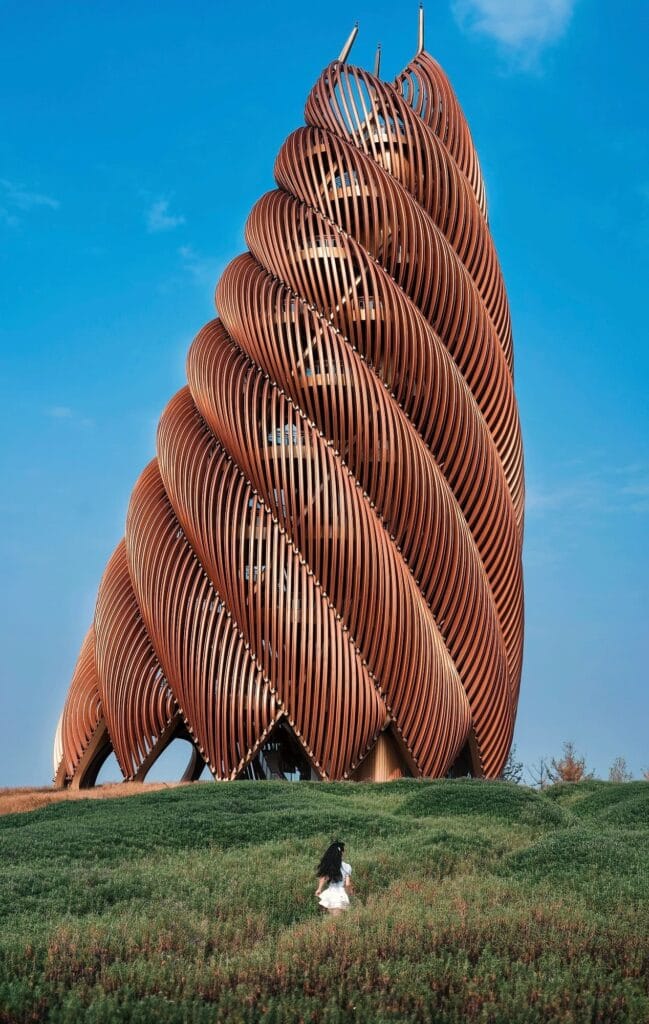
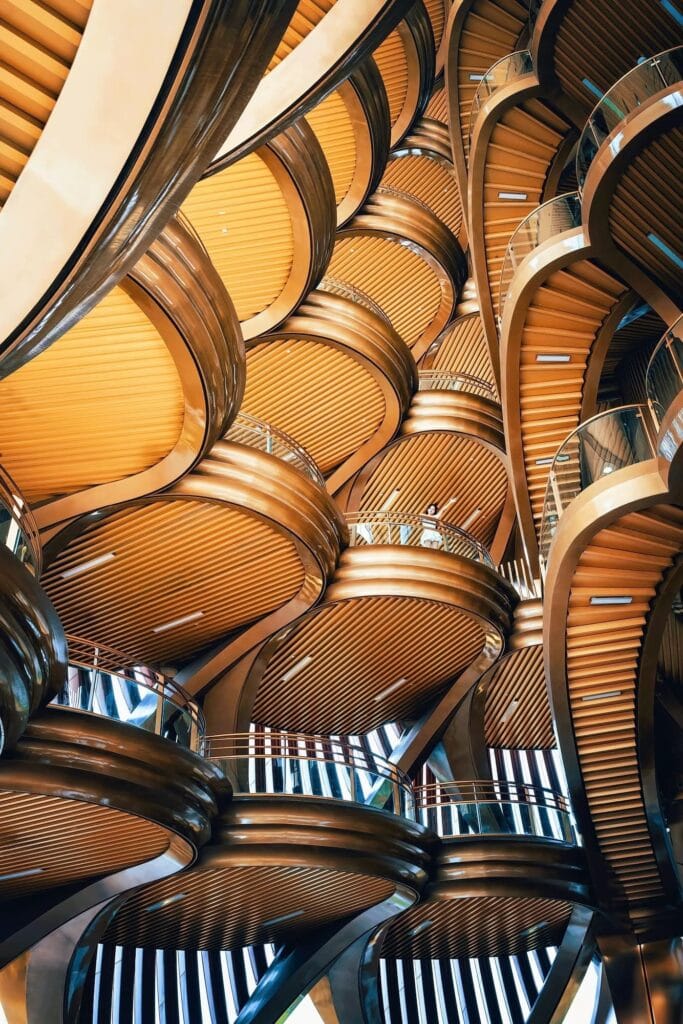
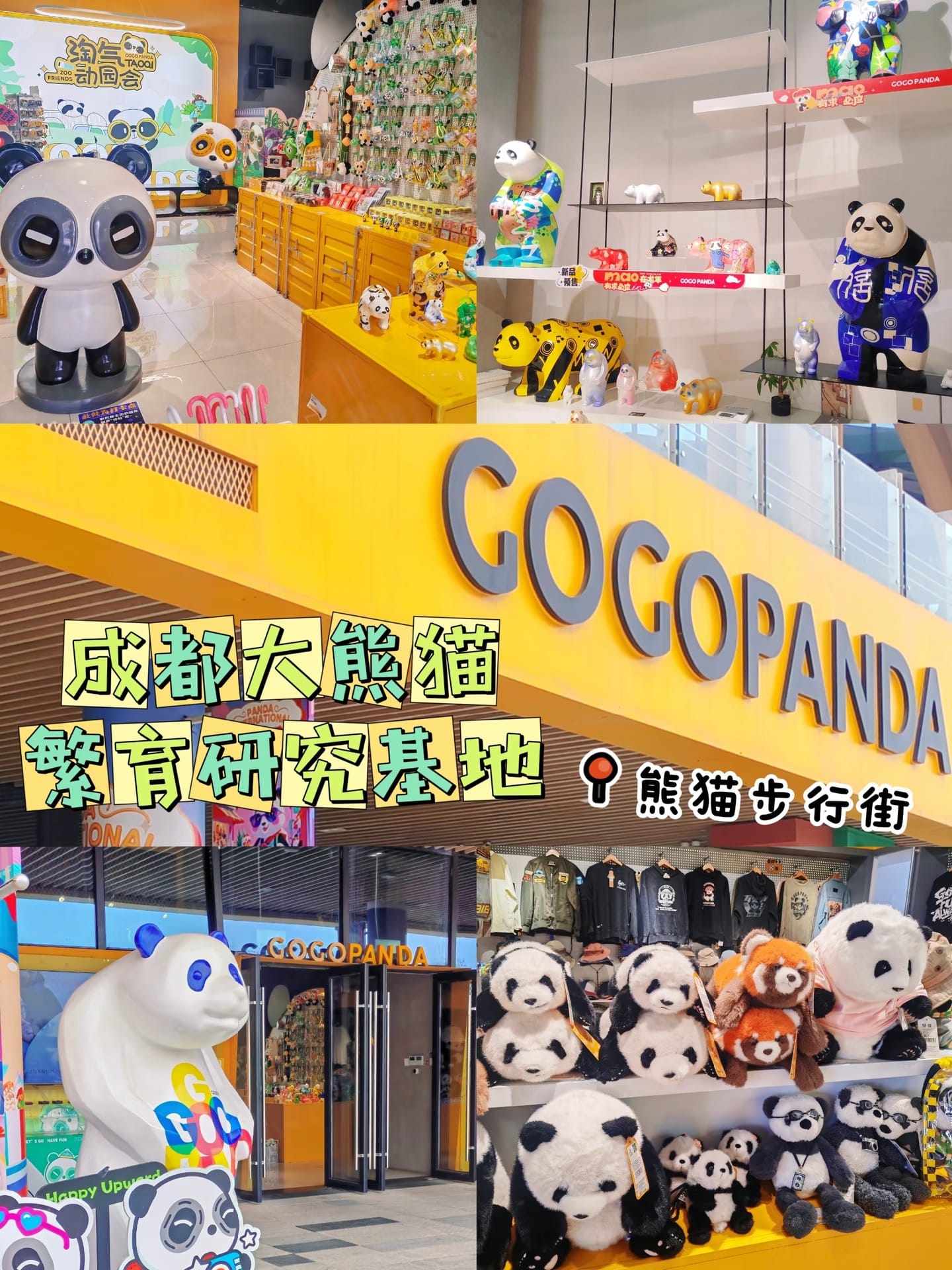
Panda Tower: A 69.8-metre bamboo-shoot-shaped observation tower offering panoramic views over the entire base. Free entry with advance online reservation. Closed Tuesdays. The Panda Bookstore occupies the ground floor — 900sqm of panda-themed items, café, and a natural rest stop midway through the Jinfeng Garden circuit.
 Chengdu Panda Base – Panda Tower – Outside
 Chengdu Panda Base – Panda Tower – Inside
Panda Street (熊猫步行街): The main dining and rest zone in Jinfeng Garden, centrally located between the eastern and western enclosure areas. McDonald’s, local noodle chains, and sit-down restaurants at reasonable prices. The logical midpoint for a lunch break on the full-circuit route.
3. Chengdu Panda Base Routes: South Gate, West Gate, or Both?
Before you set foot inside, you need to answer one question: what do you actually want from this visit?
Most visitors don’t answer it. They walk through the South Gate, follow the crowd toward Hua Hua, spend 90 minutes in a queue for 3 minutes of viewing, then drift toward the nurseries as the morning heats up, and leave around noon having seen fewer pandas than they expected. The base is too large and the trade-offs too real for a vague plan to work. Do you want to see Hua Hua? As many active pandas as possible? Newborn cubs or older juveniles? Close-range photography or watching one animal for a long stretch? Each of these leads to a different gate, a different route, and a different outcome. You cannot optimise for all of them simultaneously.
The base divides into two distinct zones. The Old Area (accessed via South Gate) is the original site — smaller, denser, home to Hua Hua and the Sunshine and Moonlight Nurseries, and where almost all tour groups go. The New Area, officially called Jinfeng Garden, opened in stages from 2022 via the West Gate. It holds the Star Nursery, Panda Tower, Panda Forest, Panda Valley, and the bulk of the newer, larger enclosures. Most international visitors have never heard of Jinfeng Garden because most English-language guides were written before it opened — which is exactly why the West Gate side remains so much quieter.
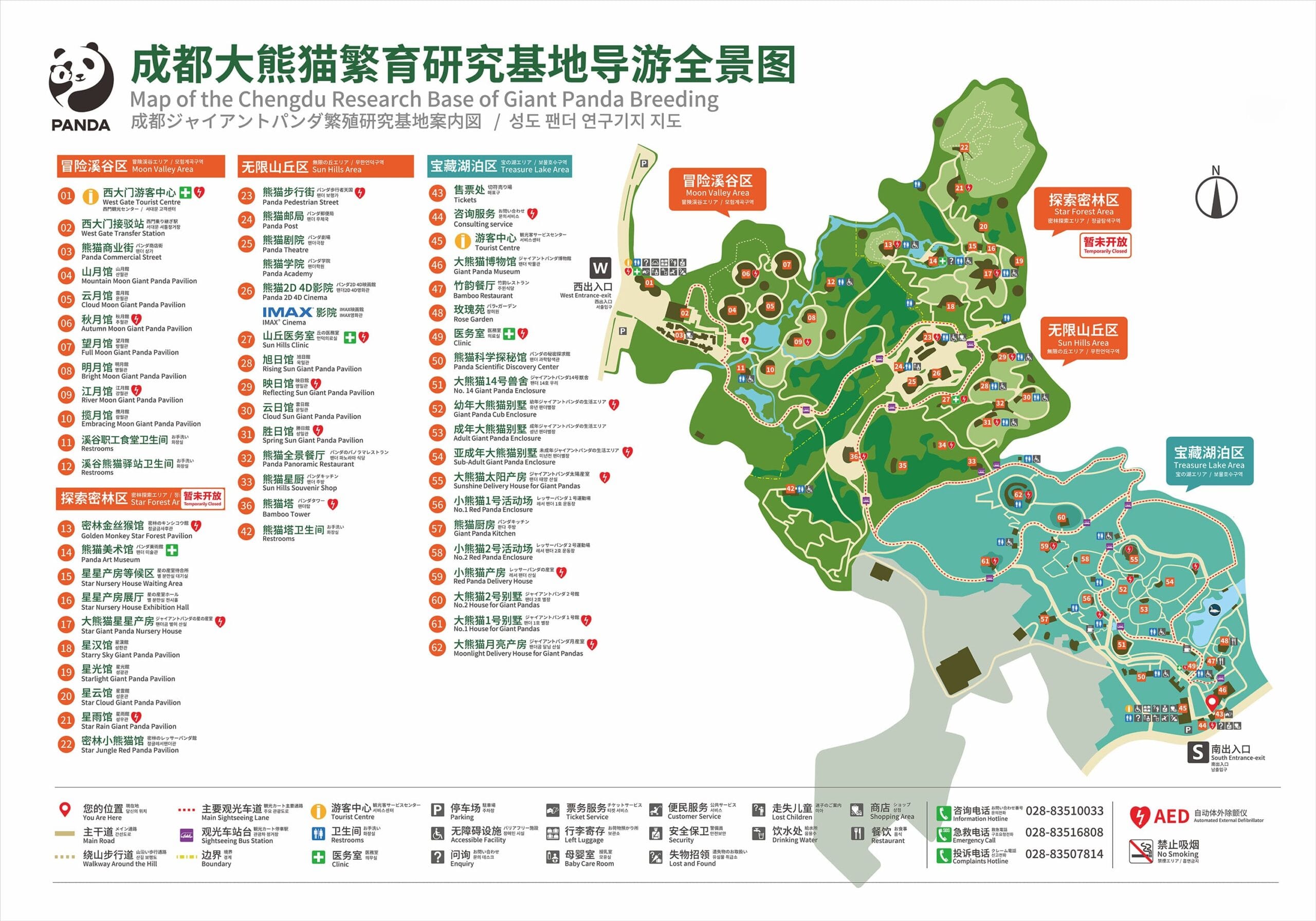
Click to enlarge
Make your choice before you enter:
Your goal | Enter | Key stops |
|---|---|---|
Must see Hua Hua | South Gate | Villa No. 6 — go straight there at opening |
See the most pandas with fewest crowds | West Gate | Panda Valley, Panda Forest, Star Nursery (Xingxing) |
See newborn cubs (July–Sept) | South Gate for youngest cubs; West Gate for better sightlines | Moonlight Nursery (youngest), Star Nursery (best viewing) |
Short visit, limited energy | South Gate | Old Area highlights, out in 2.5 hours |
Elderly visitors or mobility concerns | West Gate | Entire route runs downhill; buy shuttle pass (CNY 30) |
Which nursery should I go to?
This is the question we get asked most often once clients are inside the gate. There are three nurseries; they are not interchangeable.
Sunshine Nursery (太阳产房) | Moonlight Nursery (月亮产房) | Star Nursery (星星产房) | |
|---|---|---|---|
Zone | Old Area — South Gate side | Old Area — South Gate side | New Area — Jinfeng Garden |
Shows | Newborns and nursing mothers | Newborns in incubators; staff weigh cubs each morning | Older cubs, juveniles, some mothers with cubs |
Facility age | Older | Older | Built 2022; newest at the base |
Viewing quality | Moderate — glass barriers, can get crowded | Moderate — smaller space | Best — multiple yard levels, varied terrain, less glass obstruction |
Crowd level | High (peak season) | High (peak season) | Noticeably lower |
Best for | Seeing the youngest, smallest pandas | Watching keeper morning routines with newborns | Best overall cub viewing experience; enter West Gate to reach it first |
If seeing newborns in incubators is the specific goal, Moonlight Nursery is the one — time your arrival around the morning weigh-in. If you want a better viewing experience with less queueing, Star Nursery in Jinfeng Garden is the stronger choice and is often overlooked.
⚠️ Red Panda Nursery closes at 16:30 sharp — plan accordingly if this is on your list.
The shuttle bus stops
The internal shuttle bus (CNY 30, max 5 rides per day) runs a fixed route between the two gates with six stops in order:
South Gate → Panda Villa → Sunshine Nursery → No. 1 Panda Villa → Panda Dining Hall → Star Nursery (Xingxing) → Panda Valley → West Gate
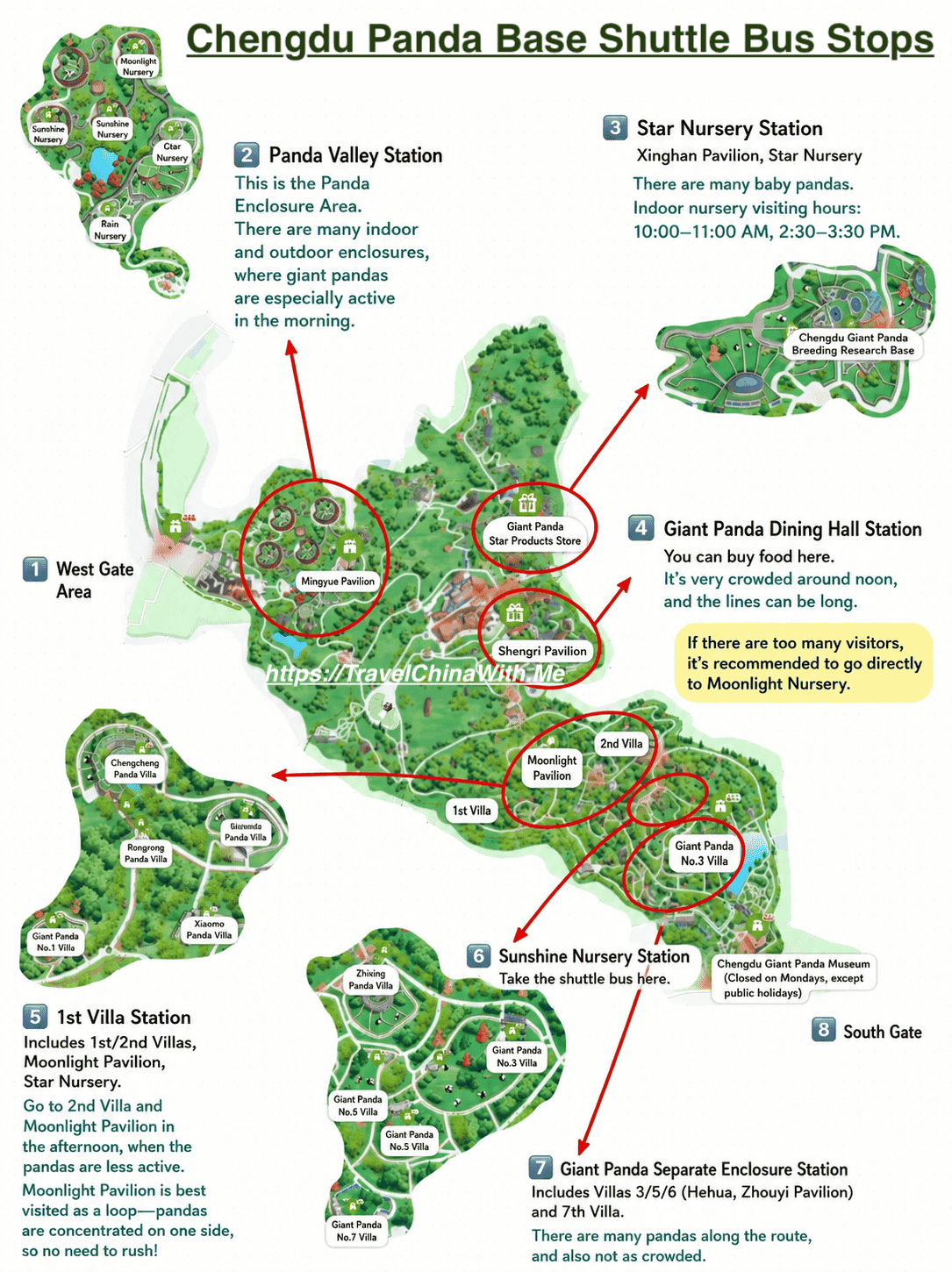
Buy the shuttle pass on-site via the base’s official WeChat account, WeChat Mini Program, Meituan, Trip.com, Douyin, or Tongcheng — all major Chinese platforms sell it, though foreign visitors will find the WeChat Mini Program or Trip.com easiest to navigate.
The reverse direction runs the same stops in reverse. Don’t disembark and re-board at every stop during peak season — the re-boarding queue is long. Ride through to your target zone and walk back if needed.
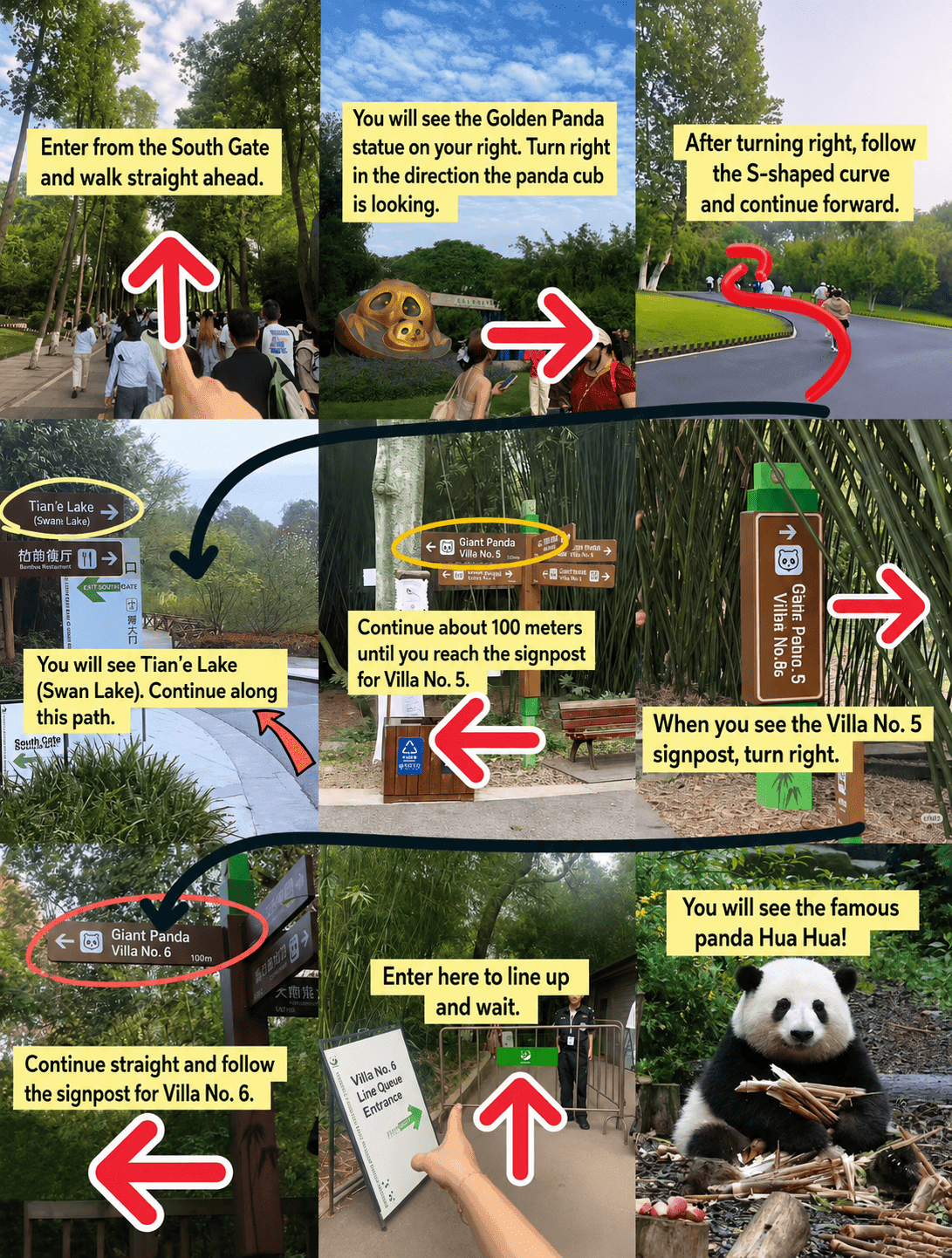
Route A — The Hua Hua Route (South Gate in → South Gate out, 1.5–2.5 hrs)
Best for: tight schedules, Hua Hua as main goal, families with young children.
South Gate → Villa No. 6 (Hua Hua) → Sunshine Nursery (Taiyang) → Red Panda Activity Area No. 1 → Villa No. 7 → Villa No. 5 → Villa No. 4 → Villa No. 3 → Swan Lake → Giant Panda Museum → South Gate exit.
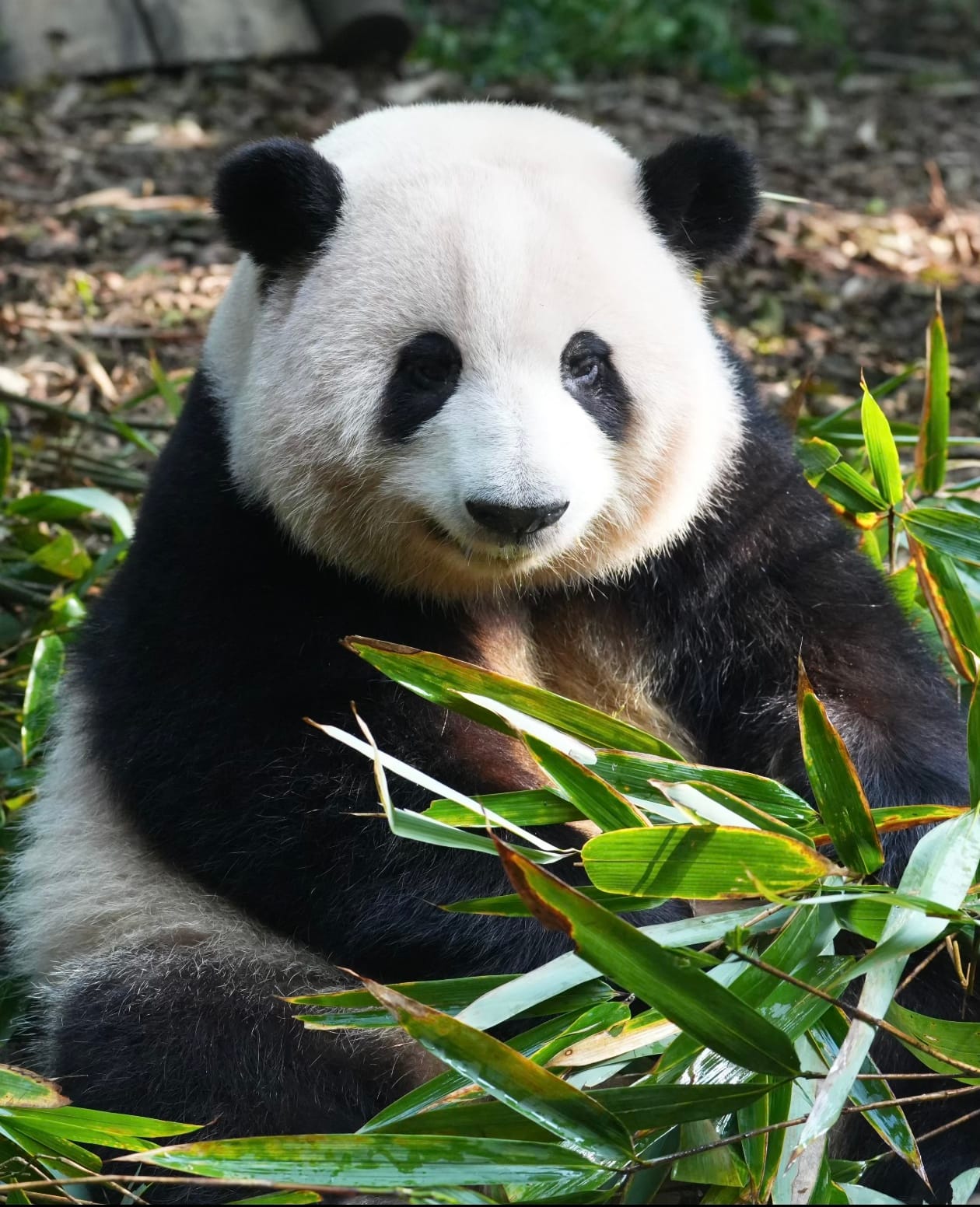
On Hua Hua: Her full name is He Hua (和花), born July 4, 2020. Her right hind leg turns naturally outward — she can’t climb trees, which makes her more visible and more watchable than her peers. Her body is noticeably rounder and shorter than other pandas her age, shaped like a rice ball (onigiri), with snow-white fur. On Chinese social media, her Weibo hashtag has accumulated nearly 1.6 billion engagements. She appeared on the 2024 Spring Festival Gala and holds the honorary title of Director of Chengdu’s Culture and Tourism Bureau. During one May Day holiday, she drew 264,000 visitors to the base in a single week.
Seeing her in person requires timing. She lives in Villa No. 6, under 10 minutes from the South Gate entrance. Each viewing group gets 3 minutes. In peak season, queue time runs 45–90 minutes. Arrive at 07:30 and go straight to Villa No. 6 without stopping — you’ll reach the front by 08:00–08:30 with a manageable wait. Arrive at 10:00 and it’s a two-hour queue. Villa No. 6 is closed every Monday. The Giant Panda Museum and Panda Art Museum are also closed Mondays; the Panda Tower is closed Tuesdays.
Route B — Full Circuit (South Gate in → West Gate out, 4–5 hrs)
Best for: visitors with a full morning free, good walkers, anyone who wants to see as many pandas as possible across both zones.
Old Area: South Gate → Villa No. 6 → Sunshine Nursery (Taiyang) → Red Panda Area No. 2 / Red Panda Nursery → Villa No. 2 → Moonlight Nursery (Yueliang) → take shuttle or walk north into Jinfeng Garden
⚠️ Coming out of the Moonlight Nursery: when you see the sign for “Panda Lounge,” follow it downhill. Don’t go into the indoor corridor — you’ll loop back on yourself.
New Area (Jinfeng Garden): Panda Forest enclosures → Panda Street (lunch — McDonald’s, local chains) → Star Nursery (Xingxing) → Panda Art Museum → Panda Valley enclosures → West Gate exit.
We’ve had clients nearly skip the West Gate section on tired legs — every one who pushed through said it was the better half of the day. More pandas at once, almost no queuing, newer facilities. The Old Area is where you go to see Hua Hua. The New Area is where you go to spend time with pandas.
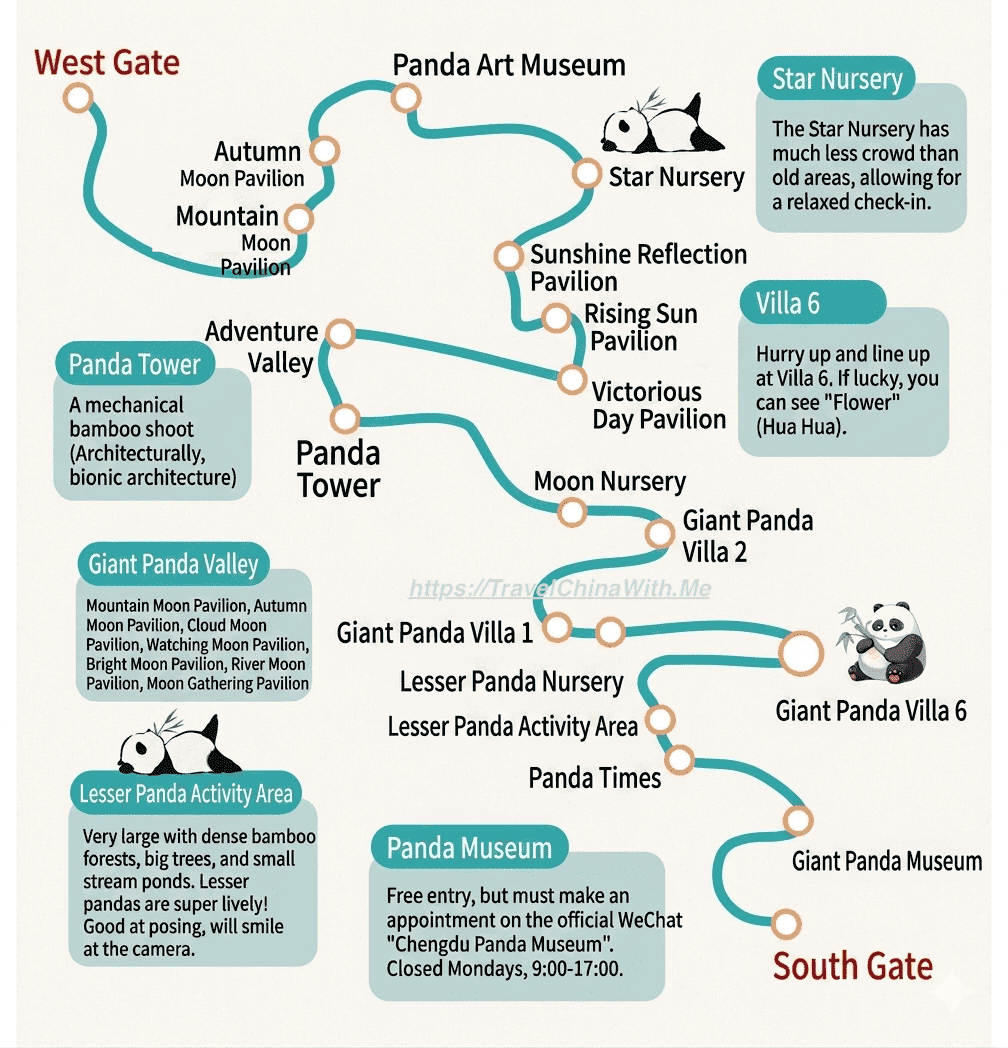
Route C — The Crowd-Dodging Route (West Gate in → South Gate out, ~5 hrs)
Best for: anyone not fixated on Hua Hua, elderly visitors (downhill throughout from West Gate), those with luggage to store at the West Gate visitor center.
New Area (Jinfeng Garden): West Gate → Panda Valley enclosures (7 halls running downhill) → Panda Tower (bamboo-shoot landmark, 69.8m, free with online reservation, panoramic views; closed Tuesdays) → Panda Street → Panda Forest enclosures → Panda Art Museum → Star Nursery (Xingxing)
Old Area: Panda Forest outer halls → Moonlight Nursery (Yueliang) → Villa No. 2 → Red Panda Nursery → Sunshine Nursery (Taiyang) → Villa No. 6 → Villa No. 5 → Giant Panda Museum → South Gate exit.
This route covers Jinfeng Garden at its quietest and reaches the Old Area after the morning tour-group surge has partially dispersed.
4. How to Get to Chengdu Panda Base
The South Gate and West Gate are far apart — confirm your gate before you set off. Taxi drivers, bus routes, and metro exits differ between the two.
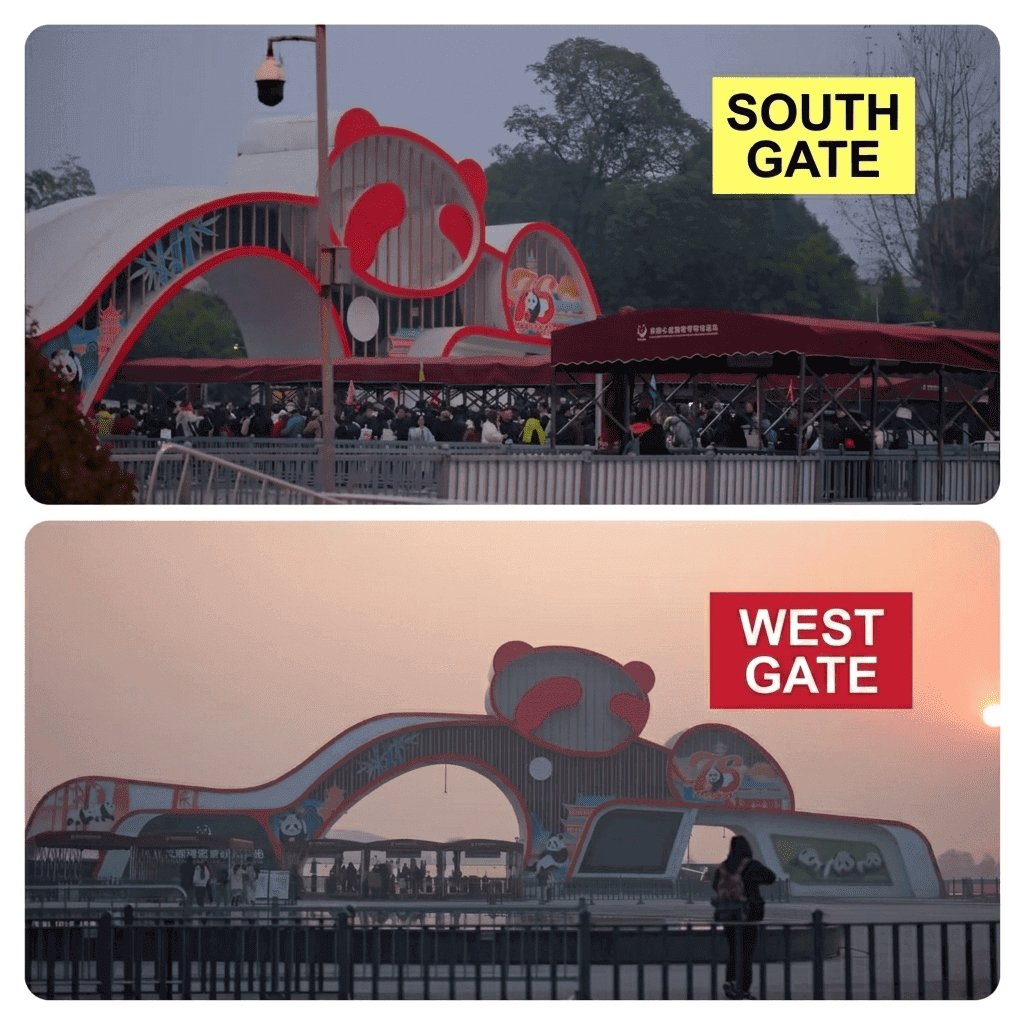
South Gate
Metro: Line 3 → Xiongmao Dadao (Panda Avenue) Station, Exit A or D → transfer to shuttle bus 408 → South Gate. CNY 2 for the shuttle. Total from city center: 35–45 minutes.
Bus: Routes 655, 87, or 408 to the South Gate directly.
Taxi / Didi: Navigate to “成都大熊猫繁育研究基地南门” or “欢欢停车场.”
Scenic shuttle from downtown: A direct bus (CNY 8/person, every 10-15 minutes) runs from the panda sculpture at Chunxi Road to the South Gate. The same route passes Wuhou Shrine and Jinli Street — convenient for combining two stops in a half-day. Board at the panda sculpture underpass at Chunxi Road.
DIG DEEPER: How to Get to Chengdu Panda Base (2026 All in One Guide)
West Gate
Metro: Line 3 → Junqu Zongyiyuan (Military General Hospital) Station, Exit B → walk to the bus transfer point → shuttle bus 409 → West Gate.
Bus: Routes 110, 659, or 409 to the West Gate.
Scenic shuttle from downtown: Direct buses from the West Gate serve Chunxi Road, Dujiangyan, and Sanxingdui — useful for onward connections after your visit.
⚠️ Outside the West Gate, people sometimes stand with handwritten signs offering rides to Chunxi Road for CNY 10. These are not official buses. Find a staff member in uniform — the official direct bus is CNY 8/person.
5. Best Time to Visit Chengdu Panda Base
Time of day
Pandas are most active during 08:00–11:00. A second feeding round runs 14:00–16:00 — worth being near the enclosures during this window, though activity is lower than the morning.
When temperatures exceed 26°C, keepers bring the pandas inside. In July and August this can happen before 10:00. Early arrival is the only reliable counter.
Our standard advice: be inside the gate by 08:00. For Hua Hua specifically, arrive at the South Gate by 07:15 and go straight to Villa No. 6.
Time of year
Season | Panda activity | Crowd level | Notes |
|---|---|---|---|
October–November | High — cool, outdoors all day | Moderate | Best overall; avoid National Day week (Oct 1–7) |
March–May | High — mating season begins | Moderate | Good; avoid Labour Day week (May 1–5) |
December–February | Counterintuitively high — pandas are cold-weather animals | Lowest of the year | Chengdu is grey and damp, but the pandas don’t care |
June–August | Low by mid-morning due to heat | Highest | Only upside: cub season (July–September) |
Best Time to Visit Chengdu Panda Base
Panda activity vs. crowd levels by month (1 = worst, 5 = best)
Winter is the most consistently underrated window we see. In temperatures below 15°C, pandas stay outside longer and move more than at any other time of year — their fur is dense enough that cold is simply not a problem for them. On a January or February morning at the West Gate, we’ve walked the full Jinfeng Garden circuit with fewer than 30 other visitors in sight.
Summer cub season: From July through September, the Sunshine Nursery (Taiyang) and Moonlight Nursery (Yueliang) in the Old Area display newborns from approximately 2–3 months old. The Star Nursery (Xingxing) in the New Area shows slightly older cubs in a newer facility with better sightlines and lower crowds — worth prioritizing if you enter via the West Gate. If seeing cubs is the priority, arrive at 07:30 and complete the nurseries before 10:00 when the heat builds.
One counterintuitive summer tip: an overcast or lightly rainy morning is often better than a sunny one. Cloud cover keeps temperatures below 26°C longer, which means pandas stay outside longer. If your visit falls in July or August and the morning forecast is grey, that’s not bad news.
Avoid these dates entirely if you want a comfortable visit: National Day Golden Week (Oct 1–7), Labour Day (May 1–5), Chinese New Year, and school summer holidays. The 63,000-person daily cap is reached by mid-morning on those dates. We route clients to Wolong during peak periods — with Dujiangyan Panda Base currently closed for 2026 renovation, Wolong is the strongest alternative for a crowd-free panda experience.
6. Chengdu Panda Base Tickets: Prices and How to Book
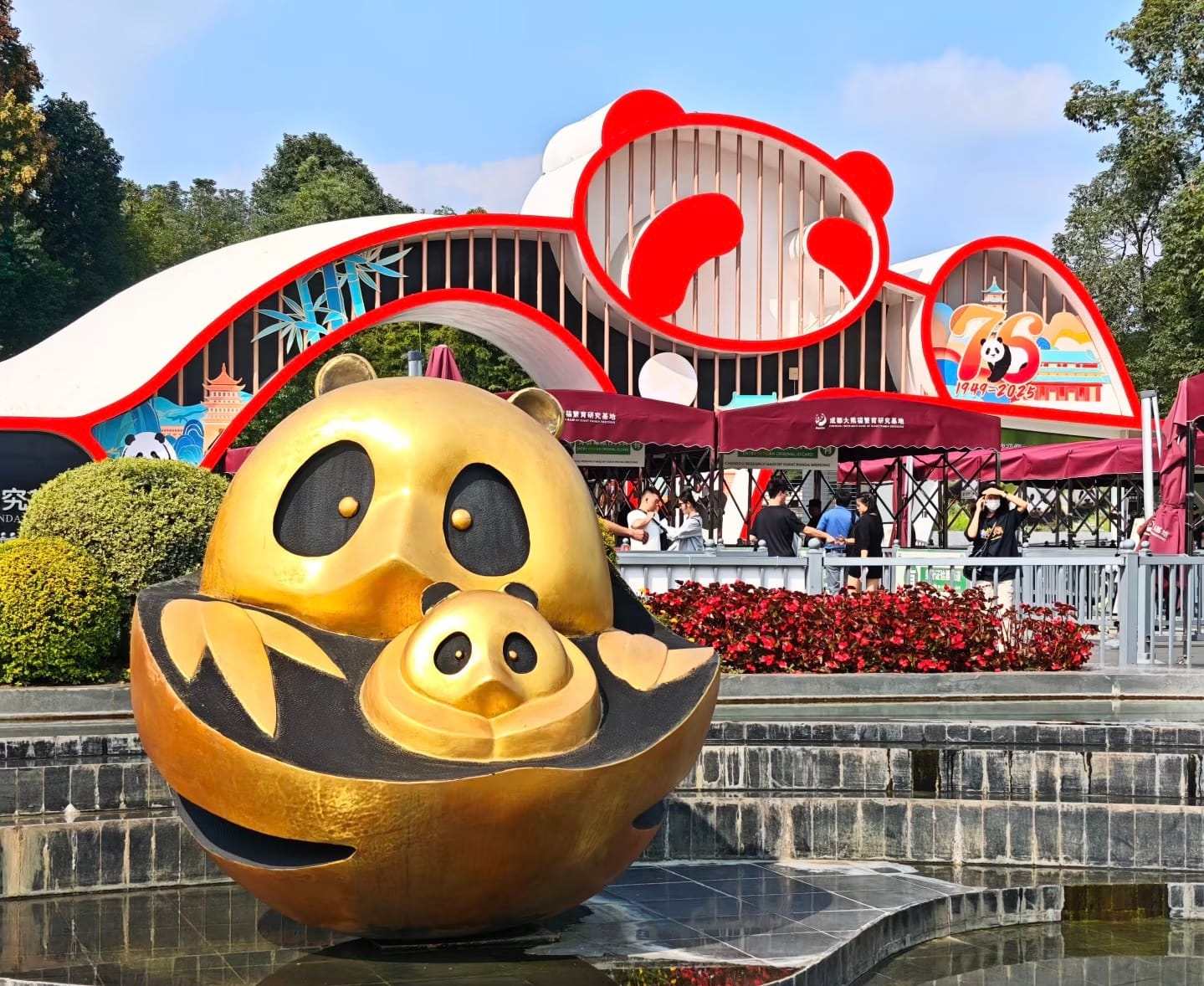
All visitors must book online in advance with real-name registration (passport number for international visitors). There is no walk-up ticket window. The daily quota of 63,000 fills before the visit date on weekends, public holidays, and through July and August. Bring the original passport you used when booking — reservation confirmation alone is not sufficient to enter.
For foreign visitors, the most reliable booking method is Trip.com. The app accepts international credit cards and passport numbers without requiring a Chinese phone number. Select your date and time slot — morning (07:30–12:00) or afternoon (12:00–17:00). Domestic visitors have several other options: the base’s official WeChat account, the official WeChat Mini Program, Meituan, Douyin, or Tongcheng — but all of these require a Chinese mobile number, which is why Trip.com remains the practical choice for most international travelers.
Ticket sales run 7:30–17:30 in summer (March–October) and 8:00–17:00 in winter (November–February) — note this cutoff is 30 minutes before the gate itself closes.
Category | Price |
|---|---|
Adult (18–59) | CNY 55 |
Student (enrolled, undergraduate and below) | CNY 27 |
Minor (6–17) | CNY 27 |
Senior (60 and above) | Free — show passport at gate, no reservation needed |
Child (under 6, or under 1.3m tall) | Free — show ID at gate, no reservation needed |
Shuttle bus inside the park | CNY 30/person, max 5 rides/day |
Refunds: Full refund before 17:00 on your visit date. A 20% fee applies for refunds requested within 7 days after that.
7. What to Know Before You Visit
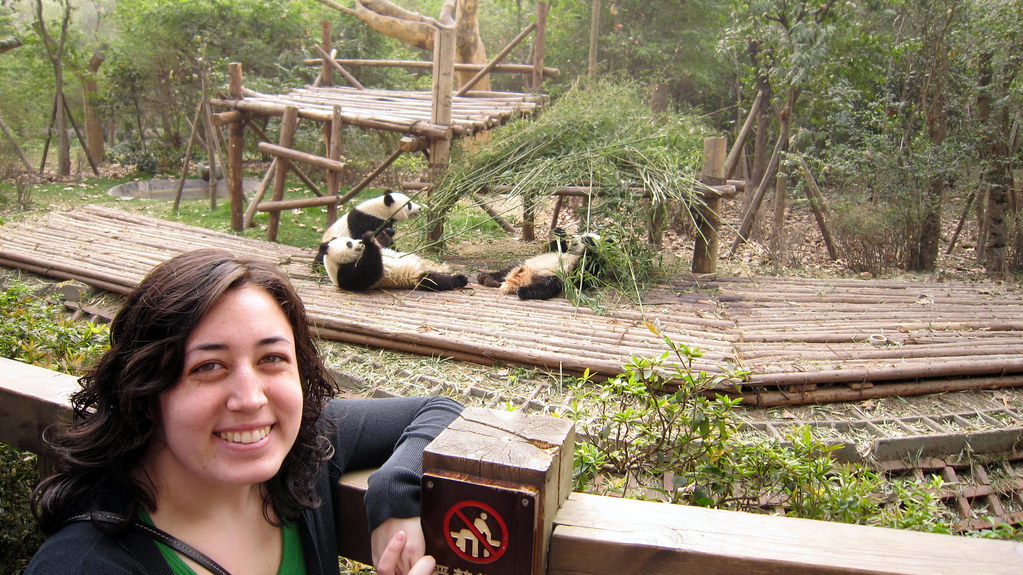
Photography — the details most guides skip: Glass reflection kills more panda photos than anything else. As temperatures rise, pandas move indoors, and shooting through thick glass in bright light produces near-opaque glare. Two fixes: wear a dark top (lighter colours reflect into the lens), and press your lens flat against the glass to eliminate reflection entirely. In Jinfeng Garden’s large outdoor enclosures, pandas often sit 30–50 metres deep in the tree line — a smartphone zoom produces a blurry smudge. A mirrorless with a 70–200mm lens is the minimum; 100–400mm is better. Prioritise short video clips over stills for moving pandas. Flash is strictly prohibited everywhere; in the nurseries it causes permanent eye damage in cubs.
Getting around inside: Buy the shuttle bus pass (CNY 30/person, max 5 rides per day) if you’re covering both zones. The six stops run South Gate → Sun Nursery → Panda Lounge → Panda Tower → Star Nursery → Panda Valley → West Gate. Re-boarding after reaching either terminus (South Gate or West Gate) requires queuing and re-scanning your ticket, so plan your 5 rides around one clear direction rather than shuttling back and forth. The climb from the Old Area into Jinfeng Garden is the section most clients regret walking on foot — long, uphill, minimal shade.
Red Panda Nursery closes at 16:30 sharp. We’ve had clients arrive at 16:28 and be turned away. If red pandas are on your list, build in time well before late afternoon. Keep your voice down near all enclosures — pandas are sensitive to noise and will move indoors if startled. Don’t tap the glass.
Food, water and luggage: Bring a refillable bottle — the walk is long and the base is hilly. Panda Street in Jinfeng Garden has the best food choice (McDonald’s, local noodle chains, sit-down options at reasonable prices). South Zone restaurants are pricier and queue-heavy. Many restaurants provide free hot water. Luggage storage is at both gates; the West Gate visitor center has more space. Stroller rental is CNY 15/hour at both gates.
Combining with other Chengdu stops: The South Gate scenic shuttle (CNY 8) runs directly to Chunxi Road, stopping at Wuhou Shrine and Jinli Street — a natural second half of a morning panda visit. The West Gate has a direct bus to Dujiangyan and Sanxingdui for anyone building a longer day.
Wheelchair access: Fully accessible throughout, with free wheelchairs at both gates. The West Zone has some steep sections requiring a strong helper. Always buy the shuttle pass for wheelchair users — the climb from the Old Area is not manageable without it.
Panda Bookstore (ground floor of Panda Tower, West Zone): 900sqm space opened April 2025 with 2,200+ panda items and a café serving panda-shaped bread and panda lattes. A natural rest stop if you’re exiting via the West Gate.
8. Chengdu Panda Base vs. Other Giant Panda Bases Near Chengdu
- Panda Valley Dujiangyan – Entrance
 Entrance of Wolong Panda Base
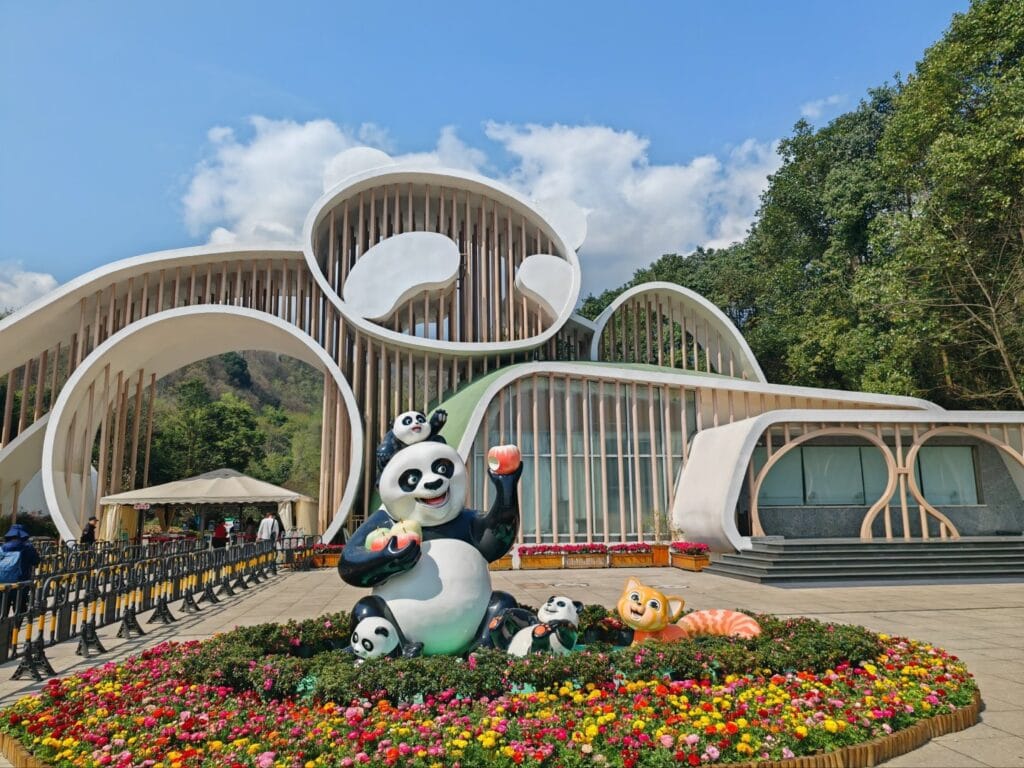
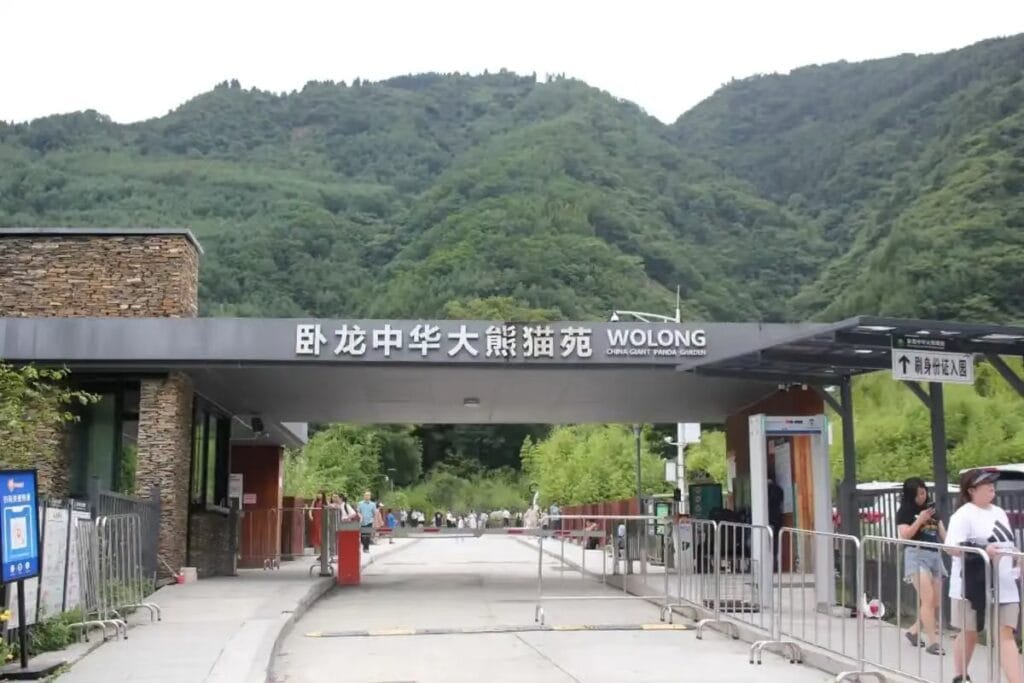
The Chengdu city base is the right choice for most visitors — easiest to reach, the largest panda population on earth, the only facility where you can reliably see newborn cubs. It is not the right choice if you want a quiet wildlife encounter or a hands-on keeper experience.
The Chengdu base does not run a panda volunteer program. Keeper experiences — feeding, enclosure cleaning, working alongside base staff — are only available at Dujiangyan Panda Base and Wolong Shenshuping. The Chengdu base occasionally organises one-off volunteer events, but these are irregular, not bookable in advance, and not open to international visitors on a standard tour schedule.
→ See our Panda Volunteer Guide for how to arrange a keeper experience at Dujiangyan or Wolong
Chengdu Base | Dujiangyan Base | Wolong (Shenshuping) | |
|---|---|---|---|
Pandas visible on a typical cool morning | 60–113 (Old Area 60, New Area 53) | 10–20 | 8–15 |
Crowd level | High to very high | Low–moderate | Very low |
Distance from Chengdu | 30 min | 90 min | 2.5 hours |
Keeper program available | No | Yes (closed 2026) | Yes |
Newborn cub viewing | Yes (July–Sept) | No | No |
Best for | First-timers, families, tight schedules | Wildlife enthusiasts, meaningful encounters | Dedicated panda travelers |
Note: Dujiangyan Panda Base (CCRCGP Dujiangyan) is currently closed for renovation in 2026. Confirm reopening before planning a visit there.
→ See our Chengdu Panda Bases Guide for a full comparison of all four Chengdu-area facilities → See our Wolong Panda Reserve Guide for the Shenshuping Base in depth
9. Frequently Asked Questions
What is the best time to visit Chengdu Panda Base?
Arrive at 07:30 on a weekday between October and May. The morning feeding window (08:00–11:00) is when pandas are most active outdoors. Temperatures above 26°C push them inside, so early arrival is essential in summer. December through February has the fewest tourists and, counterintuitively, some of the most active pandas.
How do I buy Chengdu Panda Base tickets as a foreign visitor?
Use the Trip.com app — it accepts international credit cards and passport numbers without requiring a Chinese phone number. Select your date and preferred time slot (morning 07:30–12:00, or afternoon 12:00–17:00). The official WeChat Mini Program also works but requires a linked Chinese mobile account. Book at least one day ahead for ordinary weekdays; at least a week ahead for public holidays and summer.
South Gate or West Gate — which should I use?
South Gate if Hua Hua is your main goal, or if you only have 2–3 hours. West Gate if you want lower crowds, higher panda density per hour, and a route that runs predominantly downhill. The West Gate only opened fully in 2023 — most tour groups still default to the South, which is exactly why the western enclosures remain noticeably quieter.
How do I see Hua Hua at the Chengdu Panda Base?
Arrive at the South Gate by 07:15 and go straight to Villa No. 6 — under 10 minutes from the entrance. Each group gets 3 minutes. Get there by 08:00–08:30 and the wait is 20–40 minutes; arrive at 10:00 and it’s two hours. Villa No. 6 is closed every Monday. For clients not specifically chasing Hua Hua, we often suggest skipping the queue entirely and spending that time in the western enclosures, where panda density is higher and crowds are a fraction of what you’ll find near Villa No. 6.
When can I see newborn panda cubs at Chengdu Panda Base?
July through September. The Moonlight Nursery (Yueliang) shows newborns in incubators — staff weigh them each morning, worth timing your arrival around. The Sunshine Nursery (Taiyang) has slightly older cubs bottle-fed at 09:00 and 15:00. The Star Nursery (Xingxing) in Jinfeng Garden has the best sightlines and the lowest crowds of the three. No flash in any nursery — strictly enforced.
How long does a visit to the Chengdu Panda Base take?
The South Zone covering Hua Hua, the nurseries, and the red pandas takes 2–2.5 hours at a comfortable pace. The full South-to-West circuit takes 4–6 hours and covers roughly 10 kilometers. Most of our half-day clients do the South Zone and are back in central Chengdu by noon. Those doing the full circuit leave the hotel at 07:00 and finish by 13:00–14:00.
Do I need the shuttle bus inside Chengdu Panda Base?
Yes, if you’re covering both the Old Area and Jinfeng Garden. The uphill stretch from the Old Area into the new zone is the section most people regret walking — minimal shade, significant climb. The CNY 30/person ticket covers all six stops (South Gate → Sun Nursery → Panda Lounge → Panda Tower → Star Nursery → Panda Valley → West Gate) but is capped at 5 rides per day, and re-boarding at either terminus requires re-queuing and re-scanning. Don’t get off and re-board at every stop during peak season — the re-boarding queue adds significant time, and it eats into your 5-ride allowance faster than expected.
How crowded is the Chengdu Panda Base?
The base caps at 63,000 visitors daily. That cap is reached on National Day (Oct 1–7), Labour Day (May 1–5), Chinese New Year, and through school summer holidays. On those dates even a 07:00 arrival means dense crowds from the moment you enter. We don’t bring clients to the Chengdu city base during Golden Week — Wolong gives a dramatically better experience on those dates, and Dujiangyan is an option to check once its 2026 renovation reopening is confirmed.
Can I hold a panda or do a keeper experience at Chengdu Panda Base?
No to both. Panda holding is not offered at this facility, and anyone outside the gate claiming to arrange it for a fee is unauthorized. The Chengdu base does not run a regular volunteer program — any volunteer events it organises are irregular and not bookable by international visitors in advance. Keeper experiences (feeding, enclosure cleaning, working with base staff) are only available at Dujiangyan Panda Base and Wolong Shenshuping. Dujiangyan is currently closed for renovation in 2026; Wolong is the only option operating now. → See our Panda Volunteer Guide
Can I visit Chengdu Panda Base during a layover?
Yes, but the minimum realistic layover is 10 hours. From Shuangliu Airport (CTU), a taxi takes 40–45 minutes each way; from Tianfu Airport (TFU), budget 60–90 minutes. Add 2 hours inside the base and 2 hours to clear the airport before departure. One hard constraint: pandas are active 08:00–11:00. Land in the afternoon and they’ll be sleeping — skip the base and go to the city center instead. If your layover falls on a Monday, Villa No. 6 is closed.
Planning a Chengdu itinerary that includes the panda base? We’ve been arranging private tours since 2006 with multilingual guides and hotel pick-up. Contact us to plan your visit.