Shuzheng Valley, Jiuzhaigou: Route, Lakes, Food & Mistakes
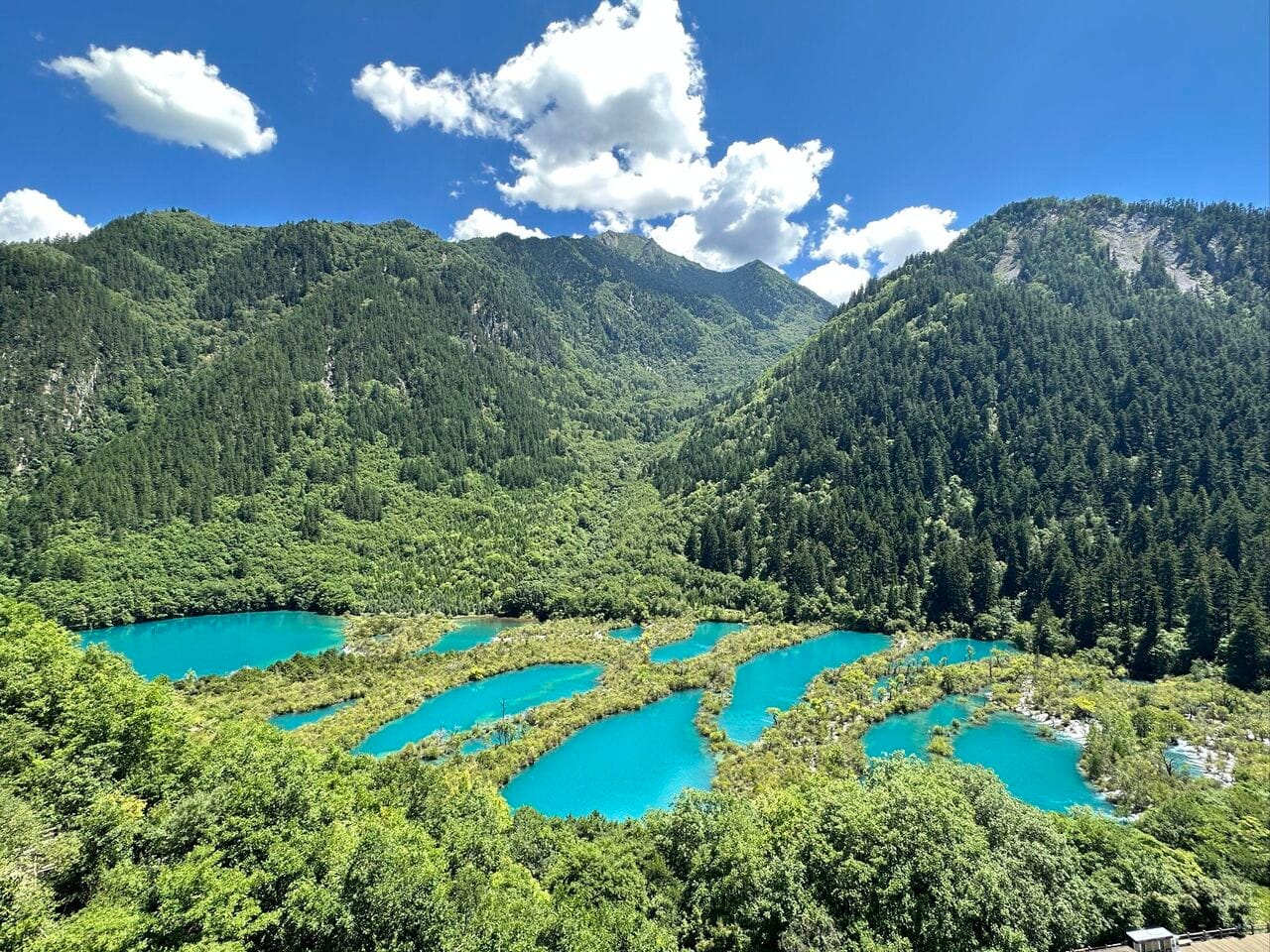
Shuzheng Valley is the 14-km stem of Jiuzhaigou’s Y-shaped park. It runs from the main gate up to Nuorilang Center. Along the way sit nine named lakes and waterfalls, plus the only Tibetan village you can walk directly into. Local guides sometimes call it “Jiuzhaigou in miniature,” since it packs terraced lakes, waterfalls, reed marsh, and a living village into one stretch. It’s also the valley most visitors end their day in, riding back through it after Rize and Zechawa. Our drivers do the same: save Shuzheng for the return leg, ride to Nuorilang first, then walk back down. That way, both the slope and the crowd flow work in your favor.
We’ve been running tours through Jiuzhaigou since 2006. Our Jiuzhaigou Valley overview already covers tickets, transport from Chengdu, altitude sickness, and the three-valley comparison. This guide skips all that. Instead, it covers the route order, what each lake looks like, and where to eat. It also covers the mistakes we watch clients make here every season.
Length | 14 km, park gate to Nuorilang Center |
|---|---|
Elevation range | 2,187–2,301 m |
Named lakes & waterfalls | 9, from Nuorilang Waterfall down to Reed Lake |
UNESCO status | |
Recommended plan | Walk it last, on your way back to the gate |
Time needed | 2–3 hours on foot, or 45–60 min hopping 3–4 stops by bus |
Table of Contents
1. The Nine Stops, In Walking Order From Nuorilang
Coming down from Nuorilang Center, this is the order you’ll reach them. The stops sit close enough together that most visitors walk the whole stretch instead of re-boarding the bus each time.
| Stop | Altitude | Size | Highlight |
|---|---|---|---|
| 1Nuorilang Waterfall | 2,343 m | 320 m wide | Widest waterfall in the park |
| 2Rhinoceros Lake | 2,301 m | 2,000 × 225 m, 17 m deep | Park’s 2nd-largest lake |
| 3Tiger Lake | 2,298 m | 1.1 million m³ | Autumn “tiger-stripe” reflections |
| 4Shuzheng Waterfall | 2,295 m | 62 m wide | First waterfall in the valley |
| 5Shuzheng Lake Cluster | 2,187–2,280 m | 19 terraced lakes | 40%+ of the park’s total lakes |
| 6Lying Dragon Lake | 2,220 m | 24 m deep | Travertine “dragon spine” on the lakebed |
| 7Sparkling Lake | 2,211 m | 294 × 232 m | Viral sunlight-scatter effect |
| 8Double-Dragon Lake | 2,200 m | 290 × 247 m, 9 m deep | Swans and mandarin ducks |
| 9Reed Lake | 2,192 m | 2.2 km long | Golden reed beds, guardian-goddess cliff |
Altitudes and dimensions above follow the figures published by the Jiuzhaigou Scenic Area Administration.
Nuorilang Waterfall
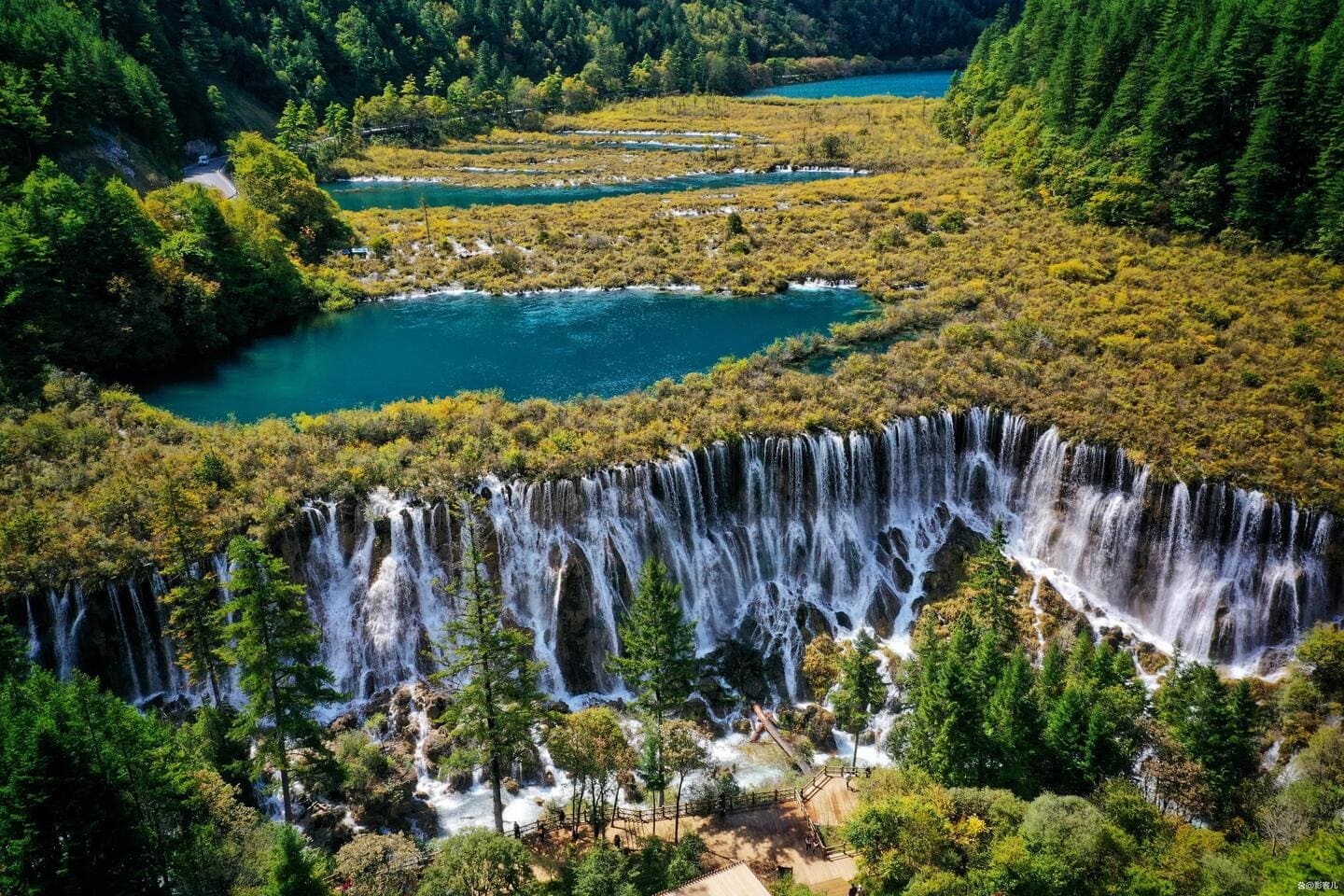
Nuorilang Waterfall marks the top of Shuzheng Valley, where Rize and Zechawa Valleys meet it. It’s the park’s widest waterfall, but easy to underrate from ground level. We route clients up to the viewing platform above it. From there the full sheet of water shows, instead of just one section. A cluster of lakes feeds the waterfall from just above the platform. Start your walk here, and you’ve seen the valley’s biggest feature before your first downhill step.
Rhinoceros Lake
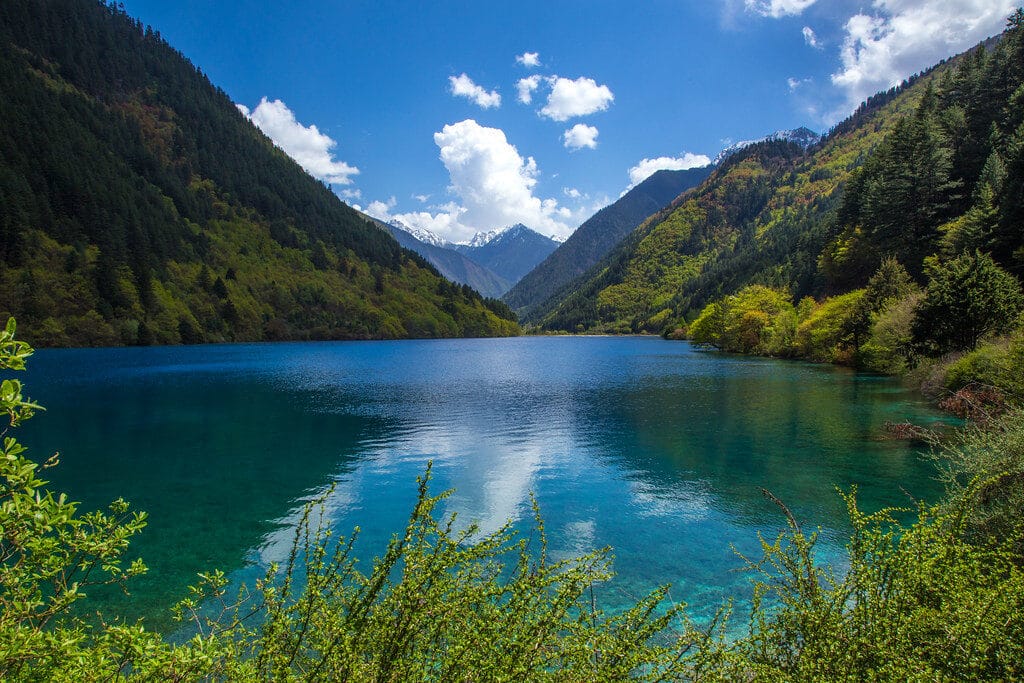
Rhinoceros Lake is Jiuzhaigou’s second-largest lake, with wide-open views rare elsewhere in the valley. Local legend says a sick monk rode a rhinoceros here and drank from the spring. He was cured on the spot and left the rhino behind — that’s how the lake got its name. Reeds line the north bank, while a waterfall and forest edge the south. Morning mist here is thick enough to double the reflections, and our guides rate it above the more famous lakes downstream for photography.
Tiger Lake
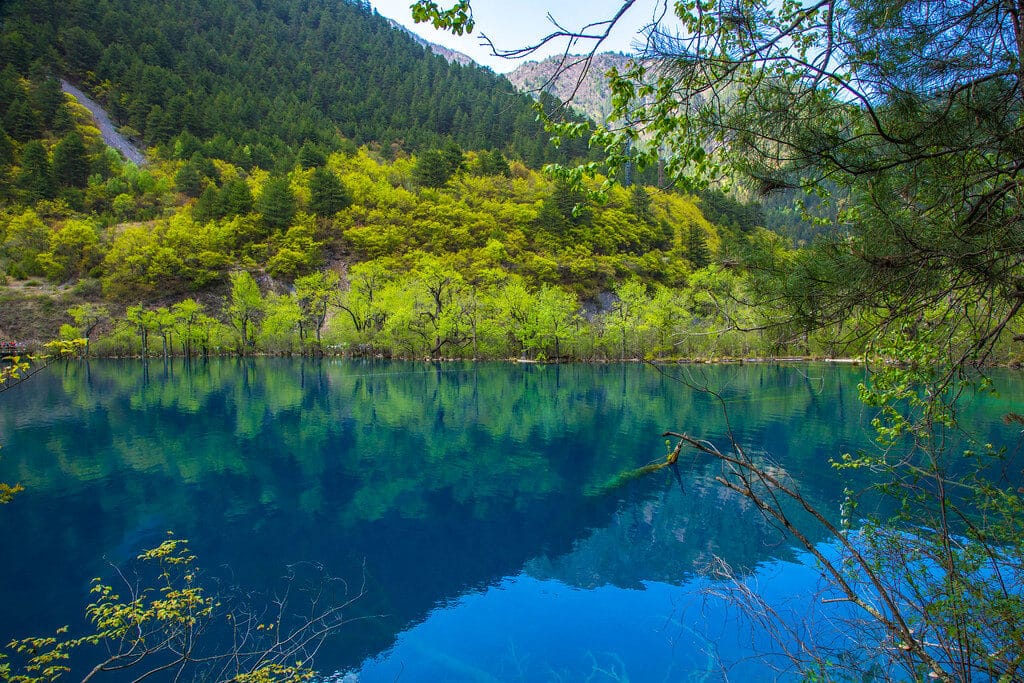
Tiger Lake holds enough water to stay full even in the dry winter months. In late autumn, the reflected fall foliage breaks into a mottled, striped pattern across the blue water. From the boardwalk, it genuinely looks like tiger stripes — hence the name.
Shuzheng Waterfall
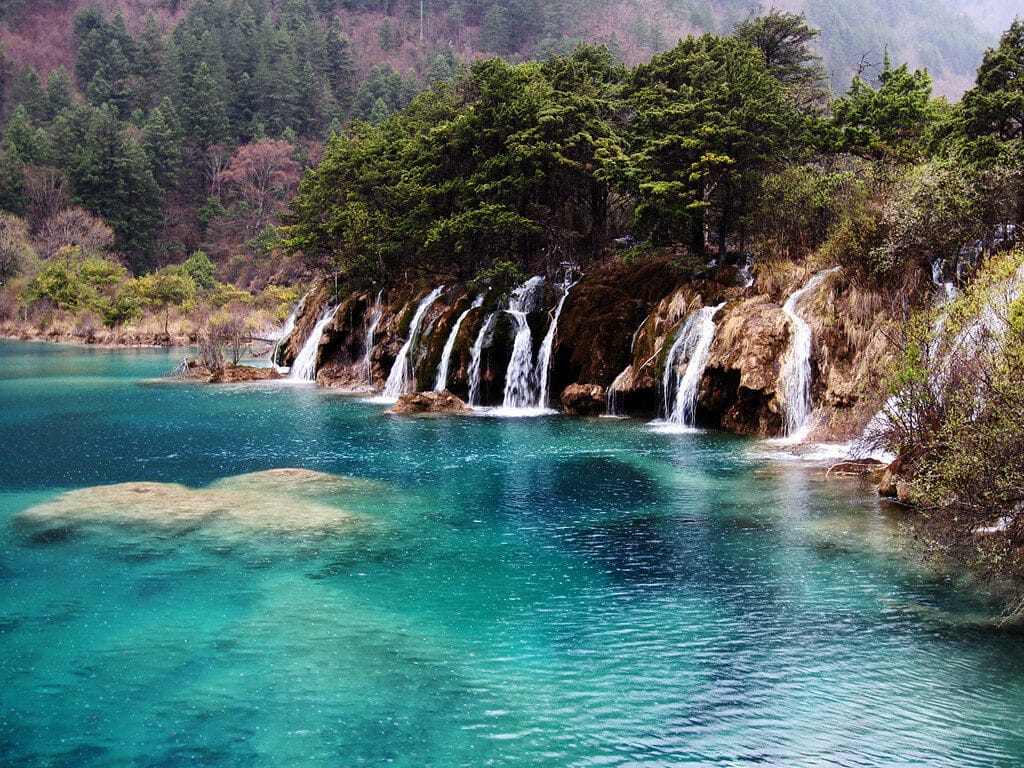
Shuzheng Waterfall is the first waterfall visitors reach after entering the valley. It’s wide and shallow rather than a single sheet, spread across mineral shelving. Shrubs root directly into the flowing water along its crest. It’s the smallest of Jiuzhaigou’s four named waterfalls, but usually the first one people see. We point out those plant roots holding fast in the current, because most visitors walk right past them.
Shuzheng Lake Cluster
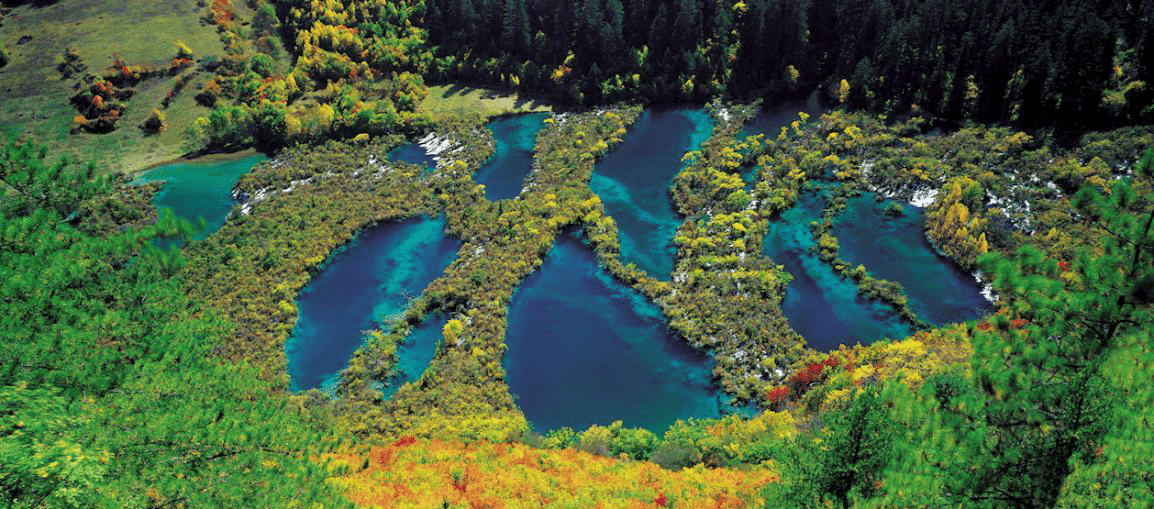
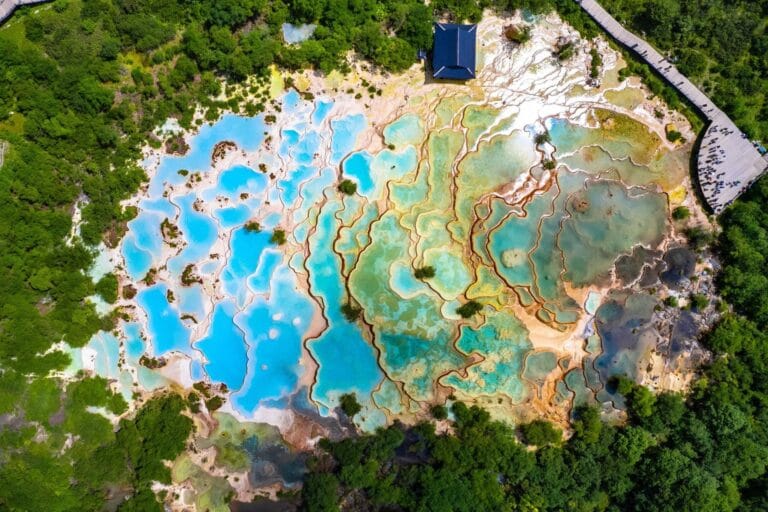
Above and below Shuzheng Waterfall sits Shuzheng Qunhai, the Shuzheng Lake Cluster: 19 terraced lakes making up over 40% of the park’s total. Water spills from one terrace to the next in small cascades. That’s what locals mean by “trees growing in water, water flowing through forest.” The blues and greens come from suspended calcium-carbonate particles scattering the light, the mechanism identified in a 2020 peer-reviewed study. For the full layered view, we send clients to the platform above Shuzheng Village. From ground level, you only ever see one lake at a time.
Lying Dragon Lake
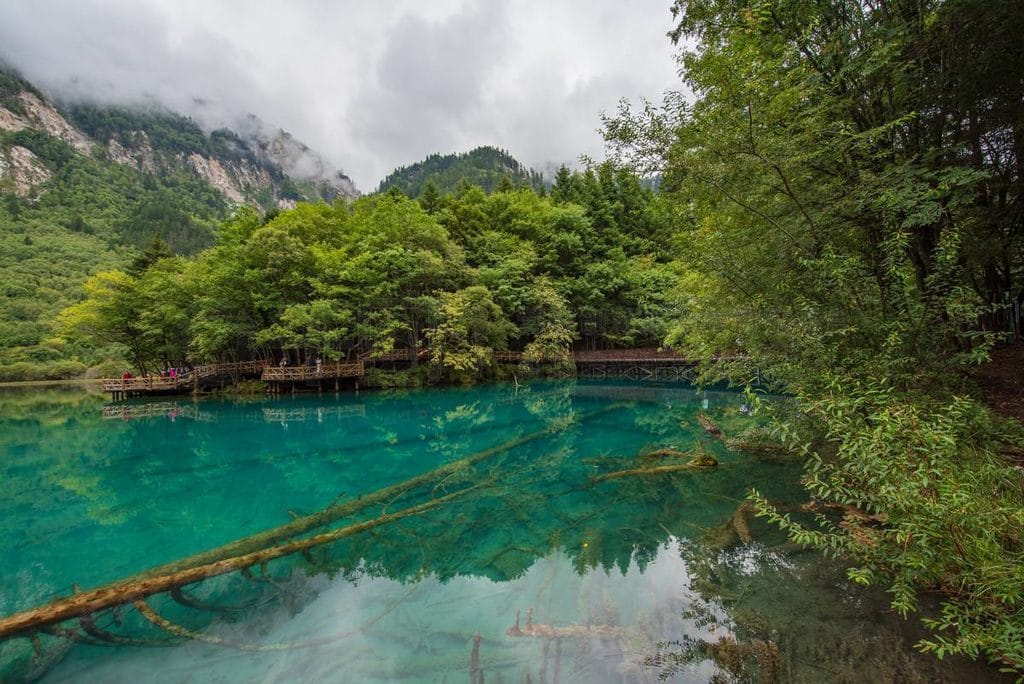
Lying Dragon Lake has a pale travertine ridge running along its bed, shaped like a submerged dragon’s spine. On a still day, it barely moves. The moment wind crosses the surface, the “dragon” appears to writhe, then vanishes again as the water settles. We’ve had clients walk past it twice in one afternoon and swear it looked like two different lakes.
Sparkling Lake
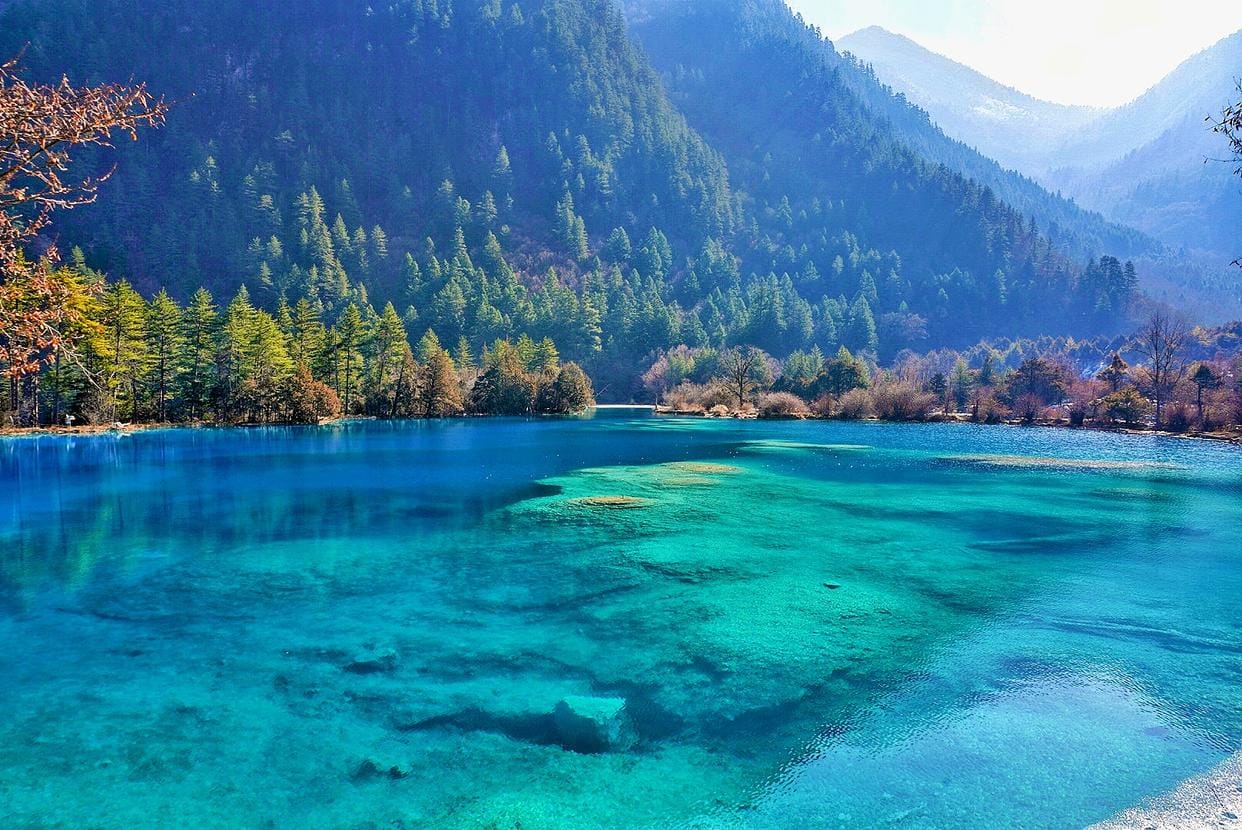
Sparkling Lake is the one your Chinese-speaking friends have probably seen already. It went viral domestically for the way sunlight scatters across its surface. Skip the general mid-morning advice for this one. Our guides time the visit for 4 to 5 p.m., when the sun sits lower and the scatter peaks. In low-water months, golden calcium-carbonate mounds also break the surface, nicknamed “a thousand islands.” This lake’s travertine dam broke outright in the magnitude-7 earthquake of 8 August 2017, draining it within hours. What you see today is the rebuilt lake.
Double-Dragon Lake
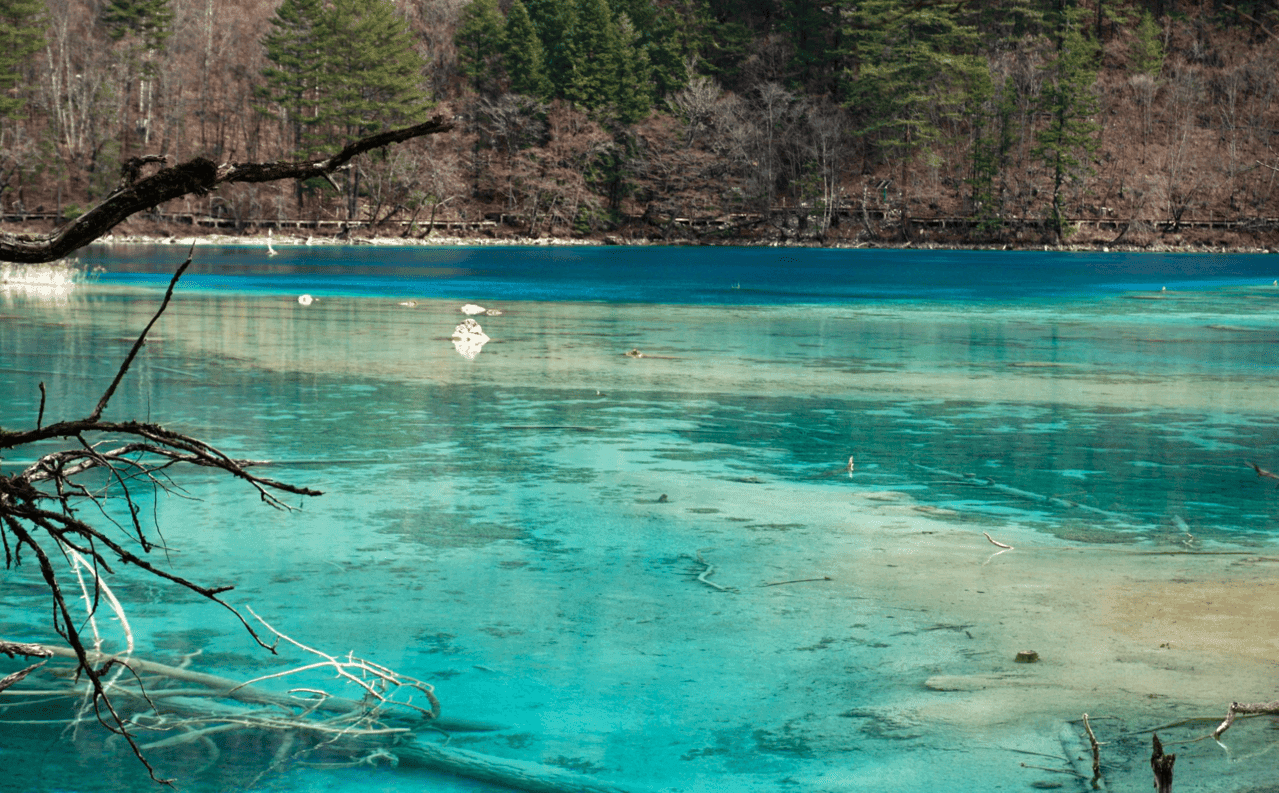
Double-Dragon Lake hides two ribbon-like travertine ridges beneath its surface, the “twin dragons” the name refers to. It’s shallower and more enclosed by forest than its neighbors. Our guides regularly spot swans and mandarin ducks resting here, rather than just passing through.
Reed Lake
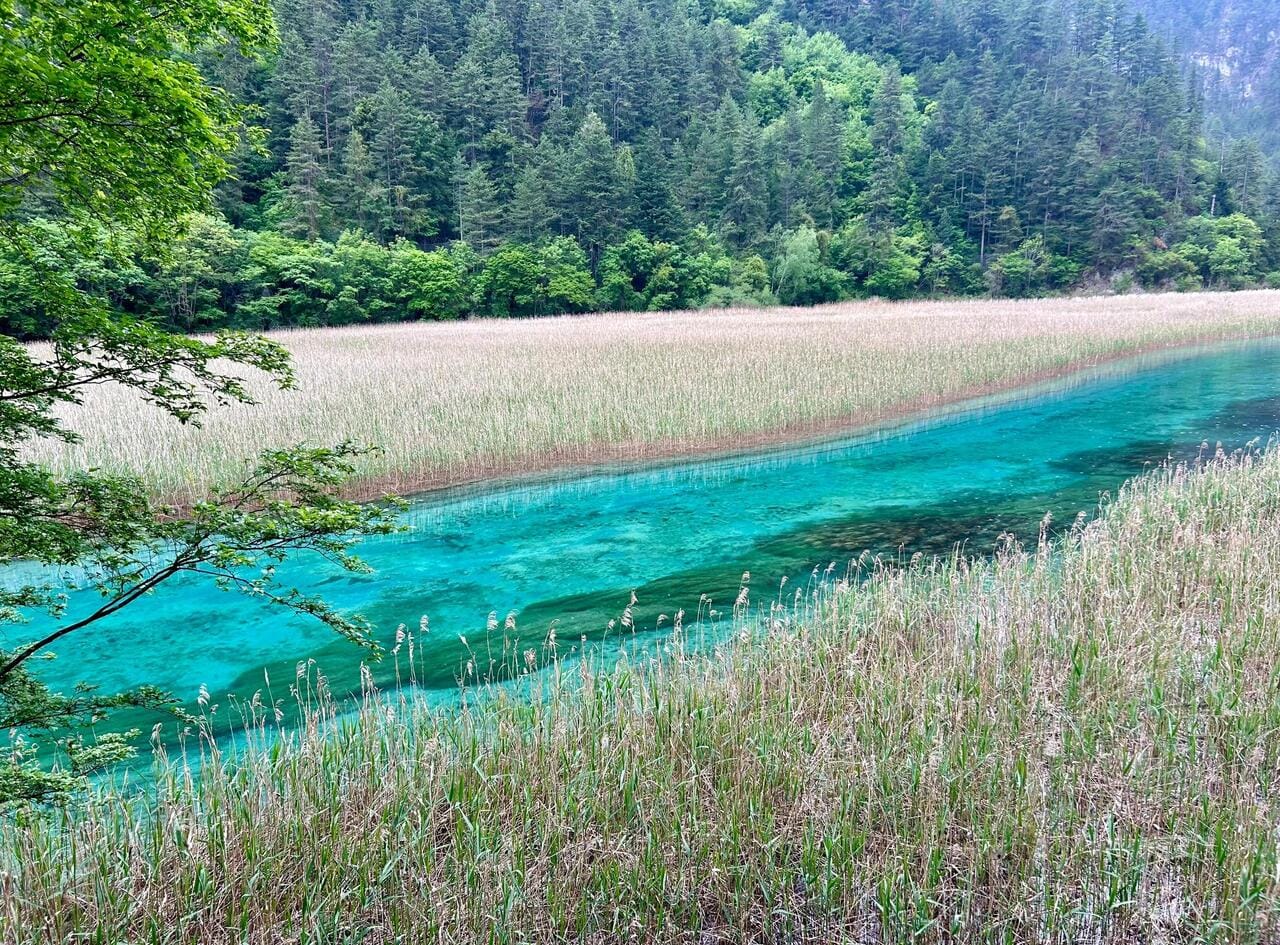
Reed Lake is the last major stop before the gate, and the one most bottom-up walkers rush past, out of energy. A clear channel cuts through the golden reed beds, sheltering herons and wild ducks. On the cliff face opposite, a rock formation is said to resemble the valley’s guardian goddess, Woluoseimo. Get off at the Sparkling Lake stop instead of riding past. The 2-km boardwalk down is one of the best short walks in the valley. Go in the morning or at midday, since the color flattens out after 4 p.m.
2. The Right Way to Fit Shuzheng Valley Into Your Day
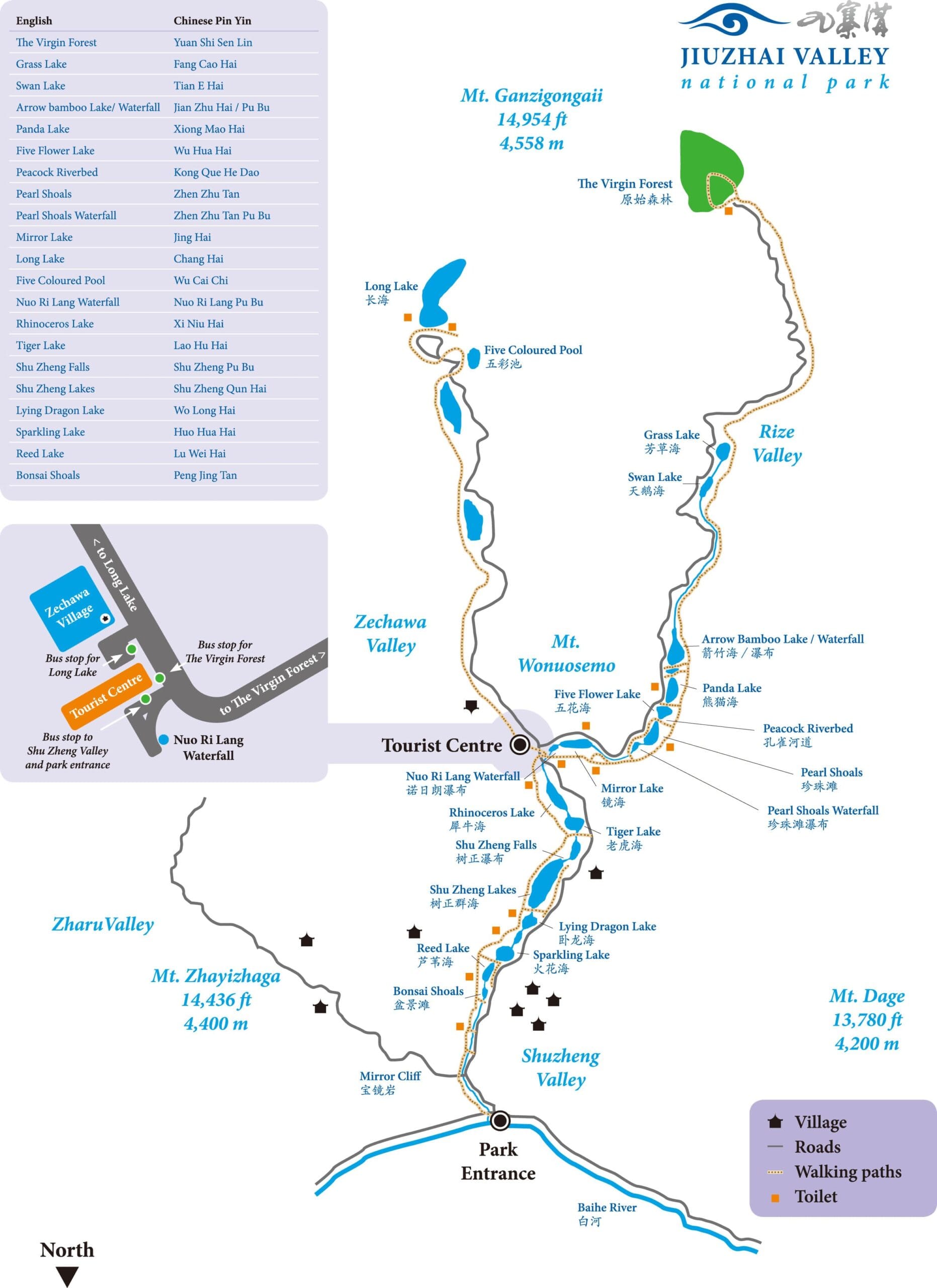
There are two ways our clients build Shuzheng Valley into their day. Pick the one that matches your time and energy.
Plan A: The Efficient Sweep (Recommended)
Spend your morning in Rize Valley, the park’s highlight zone. Move to Zechawa Valley in the early afternoon. In the late afternoon, board the eco-bus at Nuorilang Center heading back toward the gate. Hop off at whichever Shuzheng Valley stops interest you, and finish at the main entrance. This plan does double duty: you avoid the morning crowd surge at the gate, and you walk Shuzheng in its best afternoon light.
Plan B: The Full Hike
If you have time to spare, start at Nuorilang Waterfall or Rhinoceros Lake. Walk the boardwalk all the way down to the gate, rather than riding it. The stretch between Rhinoceros Lake and Reed Lake especially rewards walking. The Shuzheng Lake Cluster’s terracing and Reed Lake’s reed beds sit close to the boardwalk here. A bus window doesn’t do either of them justice.
Why Not Bottom-Up?
Walking the valley bottom-up means starting at the gate and finishing at Nuorilang. That’s climbing steadily uphill over 14 km, while every new busload gets dropped off behind you. We’ve watched clients burn their morning energy on this stretch, with nothing left for Rize or Zechawa later. Save your legs for the lakes, not the climb.
Which Side to Sit On
The eco-bus runs the same road in both directions. Heading from the gate toward Nuorilang, sit on the left — that side faces most of the lakes. Heading back down, which is the direction we recommend, the same lakes will mostly be on your right.
If You Have Two Days
Split your time differently. Dedicate one day entirely to Rize and Zechawa. Give the other day’s boardwalk time to Shuzheng Valley, walking on foot from Rhinoceros Lake down to Reed Lake.
3. Shuzheng Village: The Only Tibetan Village You Walk Into
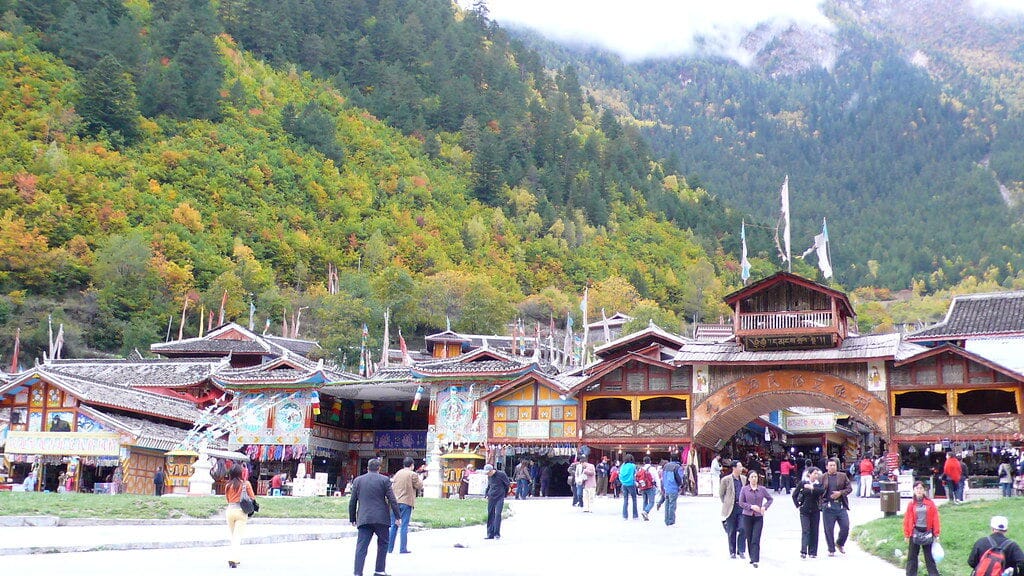
Shuzheng Village sits directly across from the Shuzheng Lake Cluster, backed by 4,200-m Dage Mountain. It’s a working Tibetan-Qiang settlement, not a rebuilt showpiece — people still live and work inside it. At its center stands a nine-tiered lotus stupa. It represents the unity of the valley’s original nine Tibetan villages, which is where the name “Jiuzhaigou” — nine-village gully — comes from.
What It’s Like Today
Set your expectations before you go. The entrance strip is now lined with souvenir stalls and photo-tourism shops. Plenty of visitors come away feeling the commercial front outweighs the cultural one. The parts worth stopping for sit further in, off to the sides. Look for the mills, the stupa itself, and the households still lived in rather than run as shopfronts. Skip the row of stalls closest to the bus stop.
What to Actually Do Here
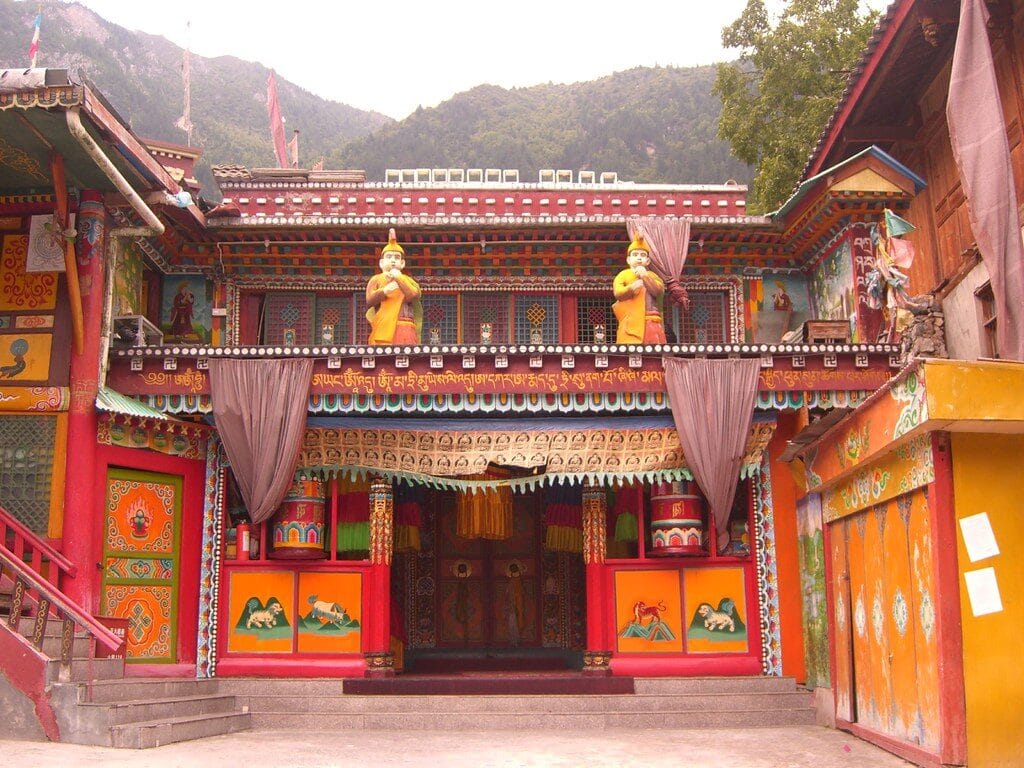
We tell clients to budget 20–30 minutes here, beyond the photo stop at the entrance. Walk past the old water-powered mills, still turning on the stream that feeds the lake cluster below. Look at the high-altitude willows along the bank. Their roots grow long and red, trailing into the water to pull nutrients the thin soil can’t provide. If a household is serving that day, sit down for butter tea and qingke barley wine. Don’t just photograph the doorway and move on. It’s the one stop in Shuzheng Valley that isn’t only a viewpoint.
Practical Logistics
Two things to know before you plan around it. First, Shuzheng Village has a bus drop-off point but no pick-up point. Second, it has no real restaurants or grocery stores. You’ll find only a scattering of stalls selling sausages and instant noodles, plus souvenir shops and photo studios. For a proper Tibetan meal, ride on to Nuorilang Center or eat where you’re staying. The best time to visit is late morning to early afternoon. Mills and craft stalls are active then. The stupa gets good side light, without the flat midday glare that hits the open lake views.
4. Where to Eat Along the Way
Where | What’s There | Price | Our Take |
|---|---|---|---|
Nuorilang Center | Self-service cafeteria, boxed meals | High for what you get | Convenient, forgettable |
Shuzheng Village | Small Tibetan restaurants: butter tea, qingke wine, yak meat | Mid-range | Good if you want to sit down properly |
Bring your own | Snacks and water, eaten at any lake | Whatever you packed | What we usually recommend |
Nuorilang Center is the valley’s only real food hub. Our clients regularly call the food forgettable for the price. We tell most people to carry their own snacks and water instead. You control the timing, and you skip the lunch-hour crowd entirely. Supply points are thin along the Shuzheng boardwalk itself, so stock up before you start walking.
On payment, Nuorilang Center takes cards and mobile pay, including foreign-linked Alipay or WeChat Pay. Shuzheng Village’s stalls are less consistent, so carry cash as backup.
5. Mistakes to Avoid in Shuzheng Valley
Skip the Yak Jerky
This is the complaint we hear most often about Shuzheng Valley, including from vendors right inside Shuzheng Village. Multiple visitors describe the “yak jerky” sold here as tasting like flavored duck, not yak. It’s common enough that local taxi drivers routinely warn tourists not to buy it. Get packaged, brand-name jerky in Chengdu instead.
Think Twice About Sleeping in Shuzheng Village
The village has no restaurants or shops worth the name, and no bus pick-up point. Sleep here, and getting out next morning means walking to another stop. The alternative is asking your guesthouse host to arrange a ride. Heye Village, one stop further, is the better base inside the park. It has proper restaurants, and hosts who’ll flag down the bus for you.
Be Cautious With Photo Studios
Shuzheng Village has several photo-tourism shops offering Tibetan costume portraits. The experience is hit-or-miss: sloppy makeup, worn costumes, an indifferent photographer, and a frosty attitude if you try to negotiate the price afterward. If you want the photos, research a well-reviewed studio first. Agree on pricing online before you arrive.
Enter Early to Skip the Bottleneck
During peak season, the eco-bus dispatch uses Shuzheng Village as a transfer point. Instead of running straight to Rize or Zechawa, buses route visitors back and forth through it. Some people end up shuttled through the same stretch twice. Enter right at opening, at 7 a.m., and you’ll usually be sent straight up to Rize or Zechawa. Enter after 8:30 a.m., and you’ll more often be pushed through the Shuzheng midline instead.
Walk the Inner Boardwalk
On the downhill stretch, a second boardwalk runs closer to the hillside, away from the road. It’s quieter, cooler in summer, and has better sightlines than the path running alongside vehicle traffic.
6. Frequently Asked Questions
Can I skip Shuzheng Valley and go straight to Rize or Zechawa Valley?
You can ride the eco-bus straight through without stopping. But you can’t bypass the road itself, since Shuzheng Valley is the only entrance corridor into the park. We rarely recommend skipping the walking stops, because it also means missing Shuzheng Village. That village has no equivalent elsewhere in Jiuzhaigou.
Is Shuzheng Valley the same place as Shuzheng Village?
No. Shuzheng Valley is the entire 14-km stretch between the park gate and Nuorilang Center, holding nine named lakes and waterfalls. Shuzheng Village is just one stop within that valley — a Tibetan settlement next to the Shuzheng Lake Cluster.
Is the Shuzheng Valley boardwalk wheelchair or stroller accessible?
The boardwalk sections are flat and paved, but the walk is long. Shuzheng Village also has uneven ground around the stupa and mills. Eco-buses stop close to each major lake, so wheelchair and stroller users can ride between stops instead of walking the full 14 km.
Can you swim or wade in the Shuzheng Valley lakes?
No. Swimming, wading, and touching the water are prohibited across all of Jiuzhaigou’s lakes. This protects the calcium-carbonate deposits that give them their color and shape.
What are the restrooms like along the boardwalk?
Facilities have improved in recent years, with clean, modern restrooms at the main rest stops, including Nuorilang Center. Along the boardwalk itself, between stops, facilities are more basic, so carry your own tissue just in case.
How long do you typically wait for the eco-bus?
Ten to twenty minutes at a normal stop during peak season, though wait times climb higher in October, the park’s busiest month. Our guides find boarding orderly, with staff managing the line at most stops.
Which season brings the biggest crowds to Shuzheng Valley?
October draws the heaviest crowds of the year, when the autumn colors peak. Visitors regularly describe the bus queues that month as overwhelming. Of the quieter months, we send clients in August for fuller, greener scenery. November is calmer still, once the foliage has faded.
What time does the last eco-bus leave Nuorilang Center for the gate?
The park does not publish a fixed time, and the last departure moves with the season and daylight hours. Check the schedule posted at Nuorilang Center when you arrive there. We tell clients to be back at the stop well before dusk, since there is no walking route out of the park.
Planning your Jiuzhaigou route? Get in touch and we’ll help you build a walking order that matches how many days you actually have.