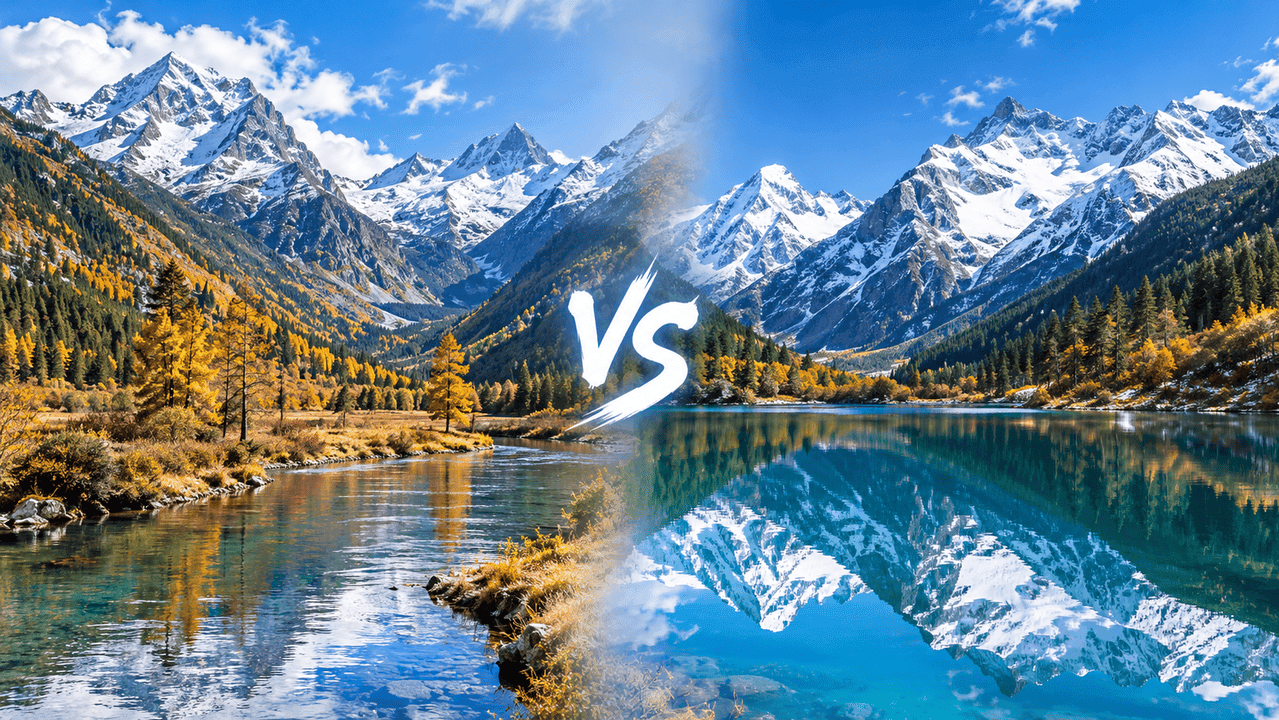
Mount Siguniang vs Bipenggou: Which One Should You Visit?
Mount Siguniang vs Bipenggou comes down to this: Bipenggou is the easier, cheaper, lower-altitude pick. Mount Siguniang is the pick for bigger, wilder scenery, at the cost of tired legs and thinner air. We’ve walked both with clients who assumed they were choosing between two versions of the same view. They aren’t. Bipenggou sits on the back side of Mount Siguniang‘s range: the peaks are the same, but the physical demands of the day are not.
Quick Answer
- Bipenggou — lower effort, lower altitude (2,000–3,837m), CNY 190 full package, best for families, older travelers, first-timers to western Sichuan
- Mount Siguniang — three separate valleys, each ticketed on its own (2,900–3,200m gate elevation, CNY 60–150 depending on the valley); wider open scenery, better for photographers and travelers who want scale over convenience
- Both in one trip: a direct 94km connecting road links them — do Bipenggou first, it’s the gentler acclimatization day
- Neither is “better” — they solve different problems. Match the pick to your fitness, not to which one sounds prettier
Table of Contents
1. Mount Siguniang vs Bipenggou: Same Range, Different Sides
It’s One Range, Seen From Opposite Sides
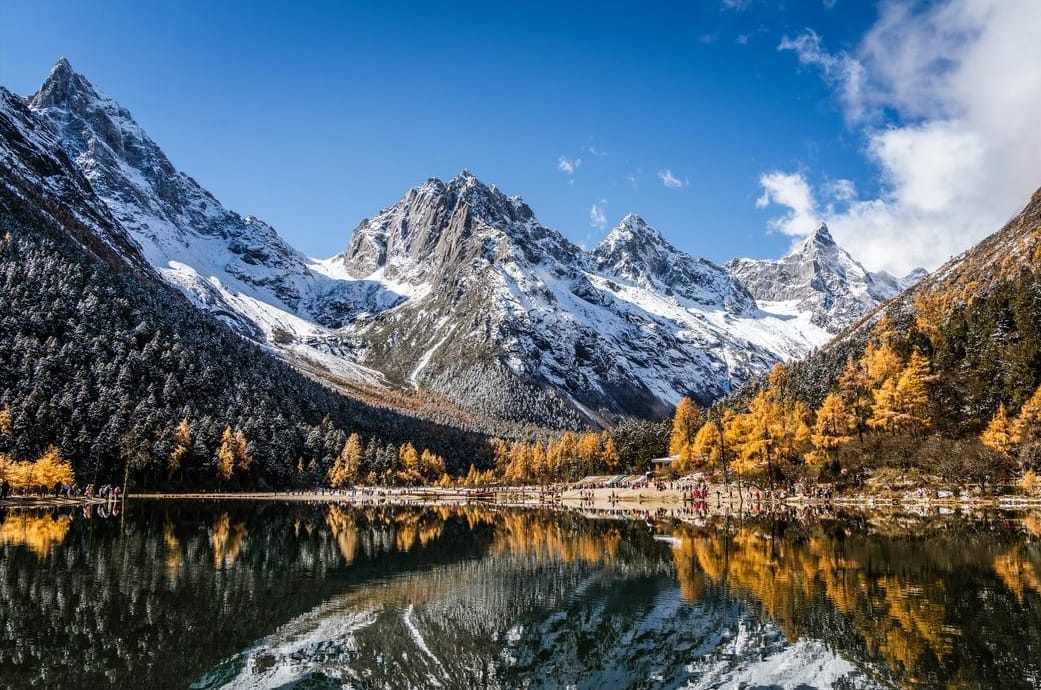
Bipenggou isn’t a competing destination to Mount Siguniang — it’s the back of it. The valley sits directly behind Mount Siguniang’s Changping Valley. It’s on the opposite side of the same Qionglai range that produces the four peaks tourists photograph from Rilong town. Local guides in Li County describe Bipenggou as the mountain’s back side, a view most visitors to the main peaks never see.
That geography is why the two get confused constantly. Yanziyanwo, Bipenggou’s highest accessible point, sits at 3,837m by the scenic area’s own elevation markers. The name translates roughly to “the back view of Siguniang.” From there you’re looking at Mount Siguniang’s north face. It’s the same range, seen from the opposite side. The mountain doesn’t separate the two experiences. The walking and altitude exposure required does.
Both Are “Car-Accessible” — But Not the Same Kind of Easy
Bipenggou covers its full route using buses and two electric cart segments, reaching nearly 3,837m without a single strenuous step. Among Mount Siguniang’s three valleys, only Shuangqiao works the same way — its entire 34.8km route is bus-covered, while Changping and Haizi require walking to reach their best points.
Even between Bipenggou and the bus-accessible Shuangqiao, the elevation profile and the crowd density change the day completely — that’s what the next few sections actually measure.
Mount Siguniang Is Three Valleys, Not One

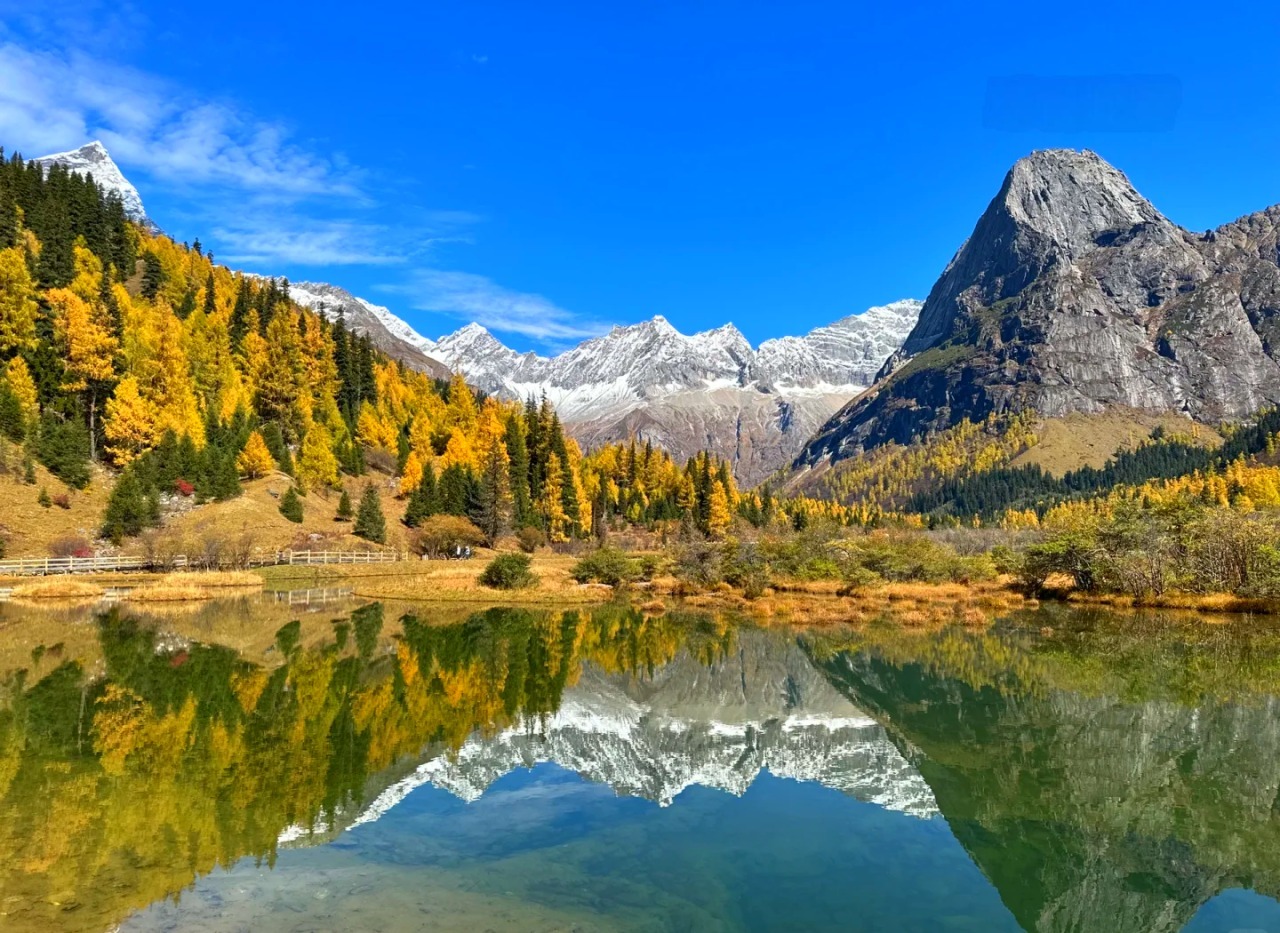
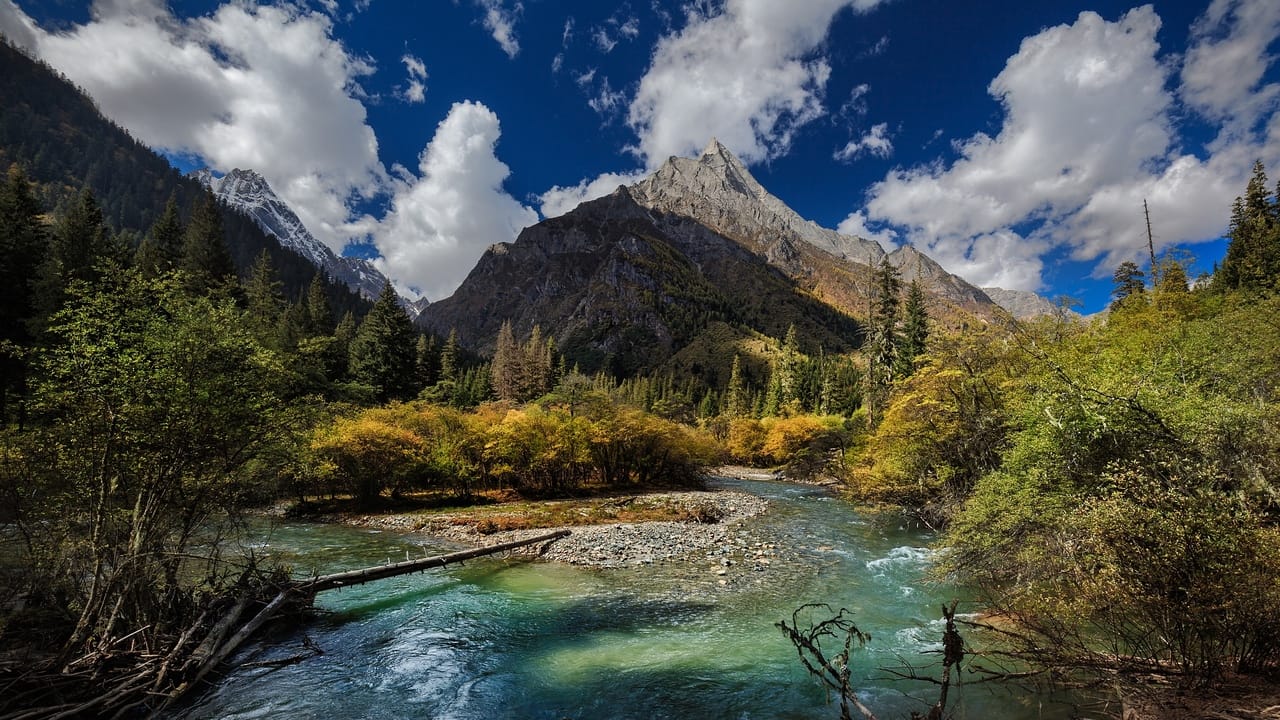
“Mount Siguniang” and “Shuangqiao Valley” get used interchangeably on booking platforms and tour listings, but the scenic area is officially three valleys plus the mountain itself. Here’s what each one actually offers:
- Shuangqiao Valley — fully paved, bus-accessible, built for sightseeing. No walking required.
- Changping Valley — 29km, CNY 70 entry. The bus only reaches Lamasi; beyond that it’s on foot. This is where you actually see Siguniang’s four peaks up close, not just from a distance.
- Haizi Valley — 19.2km, CNY 60 entry, and the highest of the three. No bus at all — walking or horseback only, with alpine lakes as the payoff. Camping is allowed here.
→ See our full Mount Siguniang Travel Guide and Bipenggou Valley Guide for the complete route breakdown of each.
2. Altitude and Physical Effort
This is the single number most travelers underweight when settling Mount Siguniang vs Bipenggou.
The Numbers Side by Side
The elevations below come from each scenic area’s posted route markers, cross-checked against our own visits.
Bipenggou | Mount Siguniang | |
|---|---|---|
Gate elevation | 2,000m | 2,900–3,200m, depending on the valley |
Access | One ticket, one route | Three separately ticketed valleys — you choose one to enter |
Highest point reachable | 3,837m (Yanziyanwo) | 3,800m and above in every valley; over 4,000m on foot in two of the three |
Walking required | Minimal — bus + 2 cart segments | Bus-only in Shuangqiao; walking required in Changping and Haizi |
Comparable reference altitude | Below Lhasa (3,650m) at its peak | At or above Lhasa (3,650m) in all three valleys |
Choosing Siguniang isn’t a single decision — it’s choosing which of its three valleys to enter, since each one is ticketed and accessed separately. That choice matters for the numbers above: walking requirements and upper elevations shift depending on which valley you pick. Our Mount Siguniang 3 Valleys comparison breaks down all three in detail; this guide compares Bipenggou against Siguniang as a whole.
Bipenggou’s gate sits at 2,000m, the smallest jump from Chengdu’s 500m of anything covered here. Mount Siguniang’s valleys all start higher, in the 2,900–3,200m range, before climbing further depending on which one you choose. That gap is why guides tend to treat Bipenggou as the easier acclimatization day, and Siguniang as more likely to trigger symptoms.
The Order Matters: Visit Bipenggou Before Mount Siguniang
Why the Sequence Changes How Tired You Feel
The order changes how each place feels.
Go to Mount Siguniang first, and Bipenggou feels easy the next day — its lower gate means easier breathing, even on similar terrain. We saw this with Mark and Diane, an Australian couple who did it this way in 2019; Bipenggou struck them as the comfortable one by contrast.
Do it the other way round, and Bipenggou tends to feel unremarkable instead. If you're doing both, put Bipenggou first.
Symptoms Can Still Show Up at the Lower Park
At Mount Siguniang, altitude symptoms are common enough that most guides simply expect them on a first visit above 3,600m. At Bipenggou, the lower elevation makes symptoms less likely — but not impossible. A six-person family group we guided in Bipenggou in 2022 reached the upper cart segment together. All of them developed headaches at the same time, with motion sickness added on the way down. Either way, altitude symptoms aren't limited to the higher destination.
Who Should Default to Bipenggou
Bipenggou's lower gate elevation makes it the safer starting point for:
- Anyone under 6 — children in particular struggle more at higher elevation; guides in the region routinely treat drowsiness or fatigue in a child near Siguniang's upper viewpoints as the cue to descend, not push on
- Anyone with a heart or respiratory condition
- Anyone who's never been above 2,500m
If You Plan to Walk Further at Either Park
Two of Siguniang's three valleys, and the upper cart segments at Bipenggou, both climb past 3,600m on foot. That's where headache, breathlessness, and fatigue stop being occasional and start being common. Move slowly. Resist the urge to rush ahead for photos, and carry oxygen if you have it. Real symptoms — dizziness, pale lips, leg weakness — mean descend immediately, not continue walking.
3. The Price Gap: Bipenggou vs Mount Siguniang
The cheaper-looking ticket isn't always the cheaper day, and this is where most people's budgeting goes wrong. We've had more than one client call us mid-trip asking why the "free" electric carts weren't actually free.
The Sticker Price vs the Real Price
What the Numbers Actually Show
Prices below are current 2026 scenic-area rates, cross-checked against current booking platform listings for both parks.
Bipenggou | Mount Siguniang | |
|---|---|---|
Entry ticket | CNY 140 | CNY 60–80, depending on the valley |
Bus or transport included | Bundled into ticket | Bundled in Shuangqiao; partial (to Lamasi) in Changping; none in Haizi |
Electric carts (optional add-on) | CNY 20–30/segment, or CNY 190 full package | Not applicable |
Typical per-person total | CNY 190 (full package) | CNY 60–150, depending on the valley |
Drive from Chengdu | 2.5–3 hrs, mostly expressway | 3.5–4 hrs, more mountain road |
Siguniang's three valleys are ticketed separately, and the total cost swings with which one you pick. Our Mount Siguniang 3 Valleys comparison breaks down the exact pricing for each. Bipenggou's headline ticket (CNY 140) looks cheap by comparison, but once you add the bus and the two cart segments almost everyone ends up paying for, the total shifts. The realistic per-person spend lands at CNY 190. Neither figure includes hotels or a driver.
Discounts Vary by Valley
All prices above are 2026 adult full-price tickets. Students, seniors, and children get reduced or free entry at both destinations, but the tiers differ — Bipenggou runs a two-child-age bracket, and each Siguniang valley sets its own discount structure. Check our full Mount Siguniang Travel Guide and Bipenggou Valley Guide for the complete Price groups.
4. Crowds and the Best Season to Visit
Crowd levels run in opposite directions depending on the month, and that's a better guide to timing than either destination's overall popularity. We plan around this constantly when clients ask for a specific week.
National Day Week Is Where the Gap Is Biggest
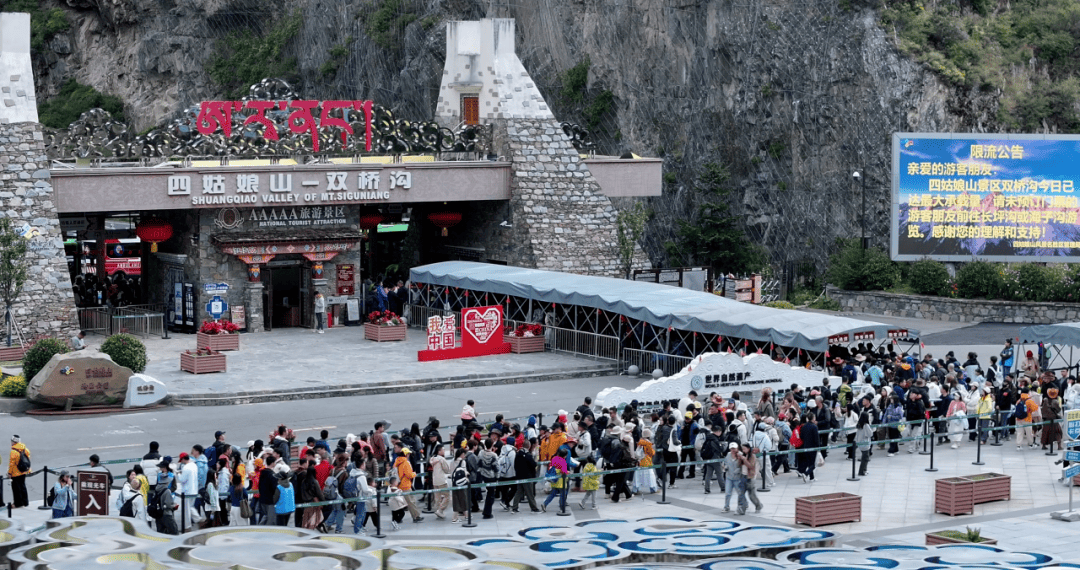
Mount Siguniang draws large crowds during Golden Week — its scenic area logged 155,667 visitors over the 2025 National Day and Mid-Autumn holiday period combined, per the park's official WeChat account. The gap narrows for Mount Siguniang's valleys that require walking, since the effort filters out some of the casual sightseeing crowd, but none of the three approaches Bipenggou's relative calm during peak week.
Bipenggou stays comparatively calmer on the same dates — its 2024 National Day Golden Week (October 1–7) drew about 50,200 visitors in total, per Bipenggou's official WeChat account.
If you're traveling during Golden Week and crowd tolerance is limited, that gap makes Bipenggou the calmer pick. Arriving at 6am helps regardless of which one you choose.
Foliage Season Actually Favors the "Smaller" Park
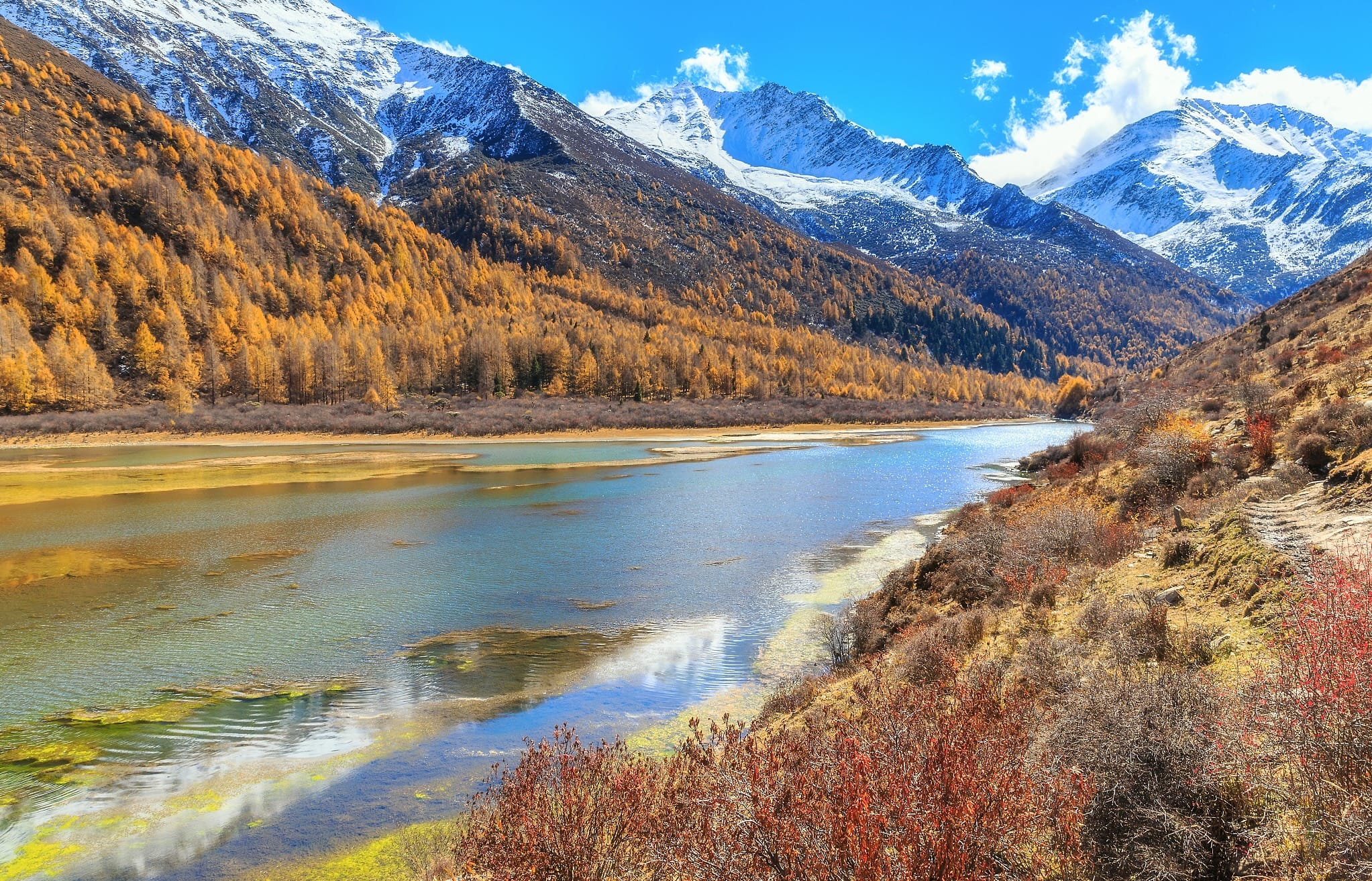
Mount Siguniang's autumn color spreads across open, pastoral terrain in its most-visited valley, so it's visible but thinner across the wider landscape.
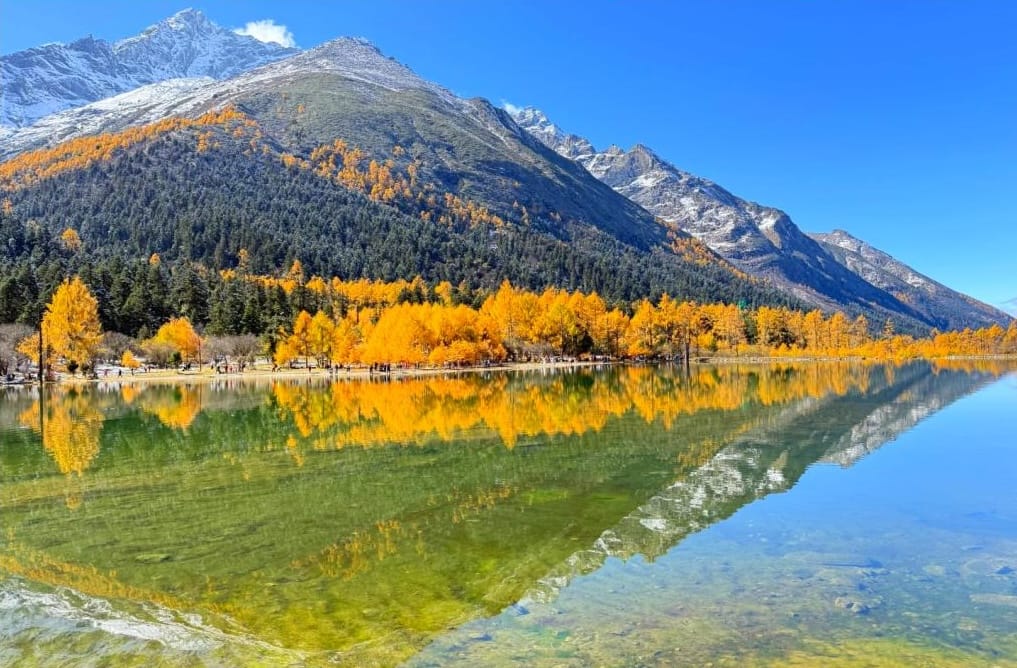
Bipenggou's narrower, forested route packs maple, birch, and larch color against snow peaks more densely over a shorter stretch.
If autumn color is the whole reason for the trip, that density makes Bipenggou the deciding factor. We steer photography-focused clients here almost by default in October.
Clear Summer Nights Flip It Back to Mount Siguniang
Bipenggou's narrower, tree-lined valley blocks more of the sky after dark. Siguniang's higher, more open terrain carries less light pollution across all three valleys, and Haizi allows camping — meaning you can stay for the night sky itself rather than driving back.
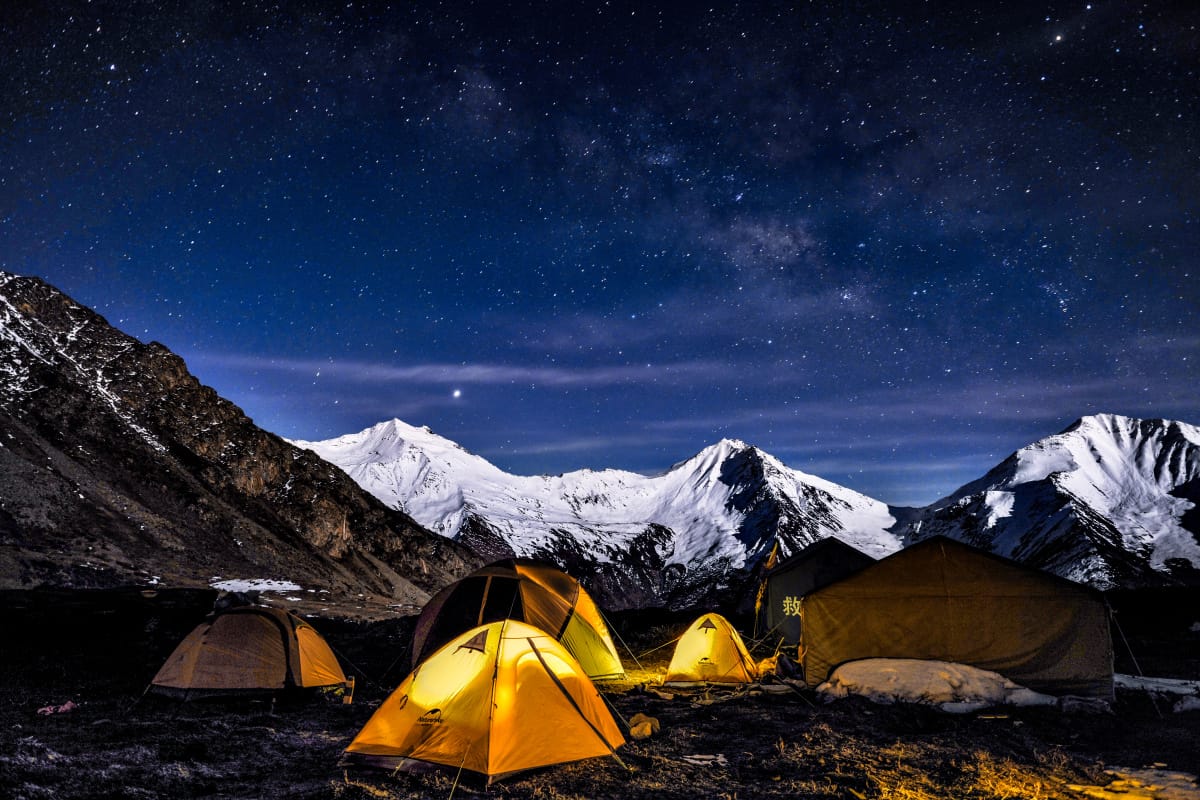
That gap makes Siguniang the better pick if stargazing or astrophotography is part of the plan — the one category where Bipenggou's terrain works against it.
5. Mount Siguniang or Bipenggou: Which to Pick?
Mount Siguniang vs Bipenggou isn't about which one is more famous. It's about which one fits your trip. Sort by what actually describes your trip.
Pick Mount Siguniang If:
You want bigger, wilder alpine scale than Bipenggou offers — then pick the valley that matches your effort level:
- Shuangqiao Valley — bus-accessible, no walking required, similar effort to Bipenggou. The right choice if you want Siguniang's scale without Siguniang's exertion.
- Changping Valley — for close-up views of the four peaks themselves, with walking required past Lamasi.
- Haizi Valley — for alpine lakes and the wildest terrain of the three, on foot or horseback only. Full breakdown of all three in our Mount Siguniang 3 Valleys comparison.
Pick Bipenggou If
- You're traveling with children under 8 or anyone over 65
- You have one day and want the most visual payoff for the least physical cost
- You're chasing autumn foliage specifically
- This is your first western Sichuan alpine park, and you want to test whether the altitude and scenery suit you before committing to something harder
Reconsider Timing, or Skip Both, If
Anyone in your group has a heart or respiratory condition and hasn't cleared high-altitude travel with a doctor. Both destinations' upper sections sit above 3,600m. Neither is the safer option in that case.
Bottom line: travelers who've done both usually sum it up the same two ways — Siguniang felt bigger and wilder, Bipenggou felt easier and more comfortable. Both descriptions are accurate; they're just describing two different experiences.
6. Combined Itinerary: Bipenggou and Mount Siguniang
With three or more days, Mount Siguniang and Bipenggou combine naturally rather than competing for your itinerary slot. This is one of the most common combinations we build for clients doing a western Sichuan loop.
A 3-Day Structure for Bipenggou Plus Shuangqiao
A direct connecting road (94km by the shortest measured route, locally called Lixiao Road) links them without backtracking through Chengdu. The structure below covers Bipenggou and Shuangqiao Valley only. It doesn't fit Changping or Haizi into the same 3 days. Swapping either in means adding at least one more day for the walking involved, and combining all three Siguniang valleys with Bipenggou realistically needs 5 days or more.
Day | Route | Distance / Drive time | Notes |
|---|---|---|---|
Day 1 | Chengdu → Bipenggou | 2.5–3 hrs | Overnight in Gu'ergou or Li County |
Day 2 | Bipenggou → Siguniang Town / Rilong | ~94km (Lixiao Road) | Overnight, acclimatize |
Day 3 | Shuangqiao Valley → Chengdu | 3.5–4 hrs | Return drive |
Bipenggou first is the better sequence physically. Its lower average altitude works as the acclimatization day before Mount Siguniang's higher terrain. Reverse it — arrive at Mount Siguniang's 2,900m gate cold, then drop to Bipenggou's 2,000m — and you've wasted the acclimatization benefit entirely.
The Trek That Connects Them on Foot
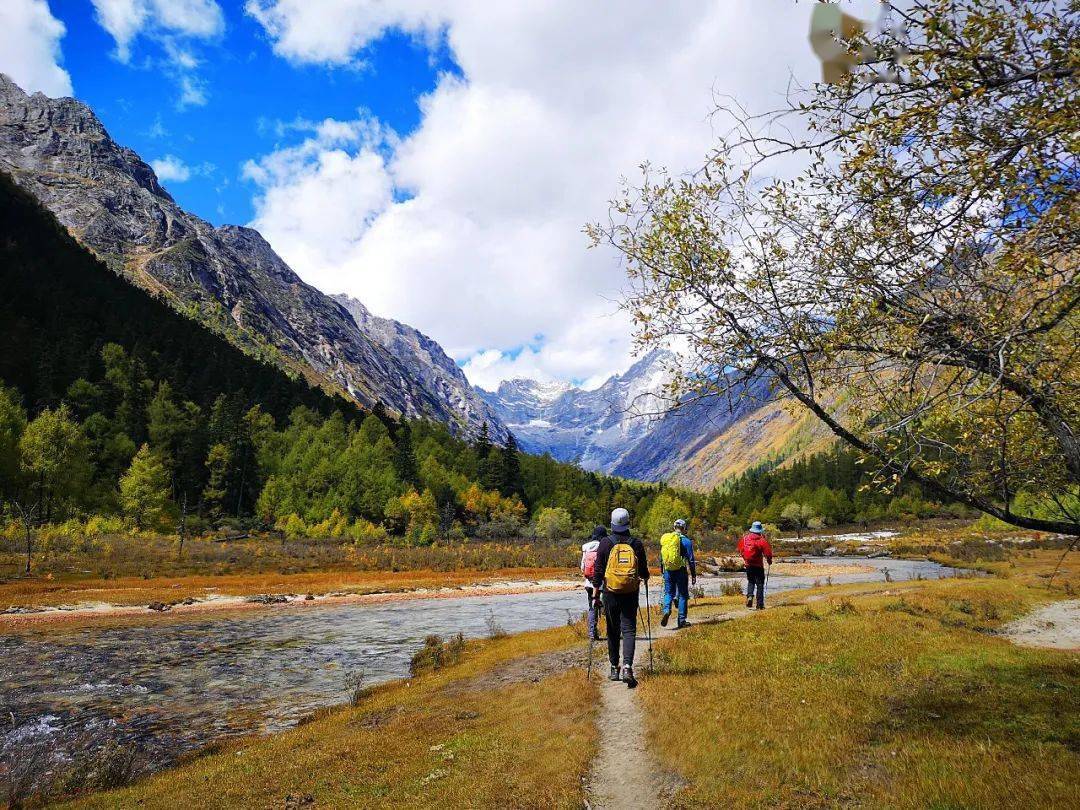
For experienced trekkers only: a genuine multi-day wilderness route — 长穿毕 (Changchuanbi) — connects the two on foot, rather than by road.
- Route: Mount Siguniang's Changping Valley to Bipenggou, through the mountains between them, crossing a pass at 4,668m
- Guide requirement: required since the park's Outdoor Activity Management Rules took effect on June 1, 2024
- Daily cap: overnight trekkers are limited to a fixed number each day — confirm the current figure with a licensed operator, since it hasn't been consistently republished since 2024
- Who it's for: well-equipped hikers only — not a casual add-on to a road-trip itinerary
- Enforcement is tightening: the park keeps reissuing bans on unauthorized routes, and an unguided trekker died attempting this crossing in October 2025
Most travelers visiting both destinations do it by road, not on foot.
Already Have One Leg Booked?
Bipenggou, Wolong, and Siguniang sit on the same loosely connected corridor in Aba Prefecture. Adding the other doesn't require a separate trip from Chengdu. Our customized tour service builds routes like this regularly, and a charter car covers the connecting road without the transfer headaches of public transport.
7. Practical Details That Affect Your Trip
A few last things that matter, outside of altitude, cost, or season.
Both Approaches Have Motion Sickness to Plan For
Mount Siguniang's final stretch is a longer switchback road with sustained mountain curves.
Bipenggou's approach runs mostly on expressway, with only a shorter mountain section at the end.
Travelers prone to motion sickness consistently report an easier ride to Bipenggou as a result. Medication beforehand and a front seat help on either route.
"Which Is Prettier" Isn't the Right Question
It's the question we get most often, and it doesn't have a simple answer. The two aren't on the same scale. Shuangqiao is wide-open pasture and snow-peak views; Bipenggou is a smaller area of lakes and forest. The better question is whether you want a bigger, more effortful day or a smaller, easier one.
Tickets Don't Talk to Each Other
Booking one doesn't connect to booking the other. Each scenic area runs its own real-name registration, so combining them means two separate booking steps, ideally a day ahead for each. International visitors typically go through Trip.com for both — it takes a foreign passport without the domestic phone number Chinese platforms usually require.
Weather Decides More Than the Season Does
An Overcast Day Costs You the Whole Point of Going
At either destination, an overcast day significantly reduces what you see. Tom, a British client who visited Mount Siguniang on a cloudy day in 2021, described the trip as falling well short of what he'd expected. The snow peaks that make both parks worth visiting simply disappeared into cloud. The lake reflections that need still, clear conditions never happened. A grey-day visit to either park delivers noticeably less than a clear one, regardless of which valley you picked.
Check the Forecast Before Locking In a Date
If your schedule has any flexibility, checking a short-range forecast and shifting your date matters more than which destination you chose.
Rafting at Shuangqiao Only Runs in Wet Season
Shuangqiao Valley offers rafting as one of its activities, but it's seasonal. A German family we booked in back in 2016 showed up during dry season expecting it and found the river too low to run. If rafting is part of why you're choosing Shuangqiao over Bipenggou, confirm the season before you build it into the day.
FAQ: Mount Siguniang vs Bipenggou
Do I need a Tibet travel permit for Mount Siguniang or Bipenggou?
No. Both sit within Sichuan province's Aba Prefecture, not the Tibet Autonomous Region. A standard Chinese visa is enough — no special permit application, no advance approval process. This is one of the reasons the two get recommended together. Travelers who want Tibetan-style landscapes get them without the paperwork a Tibet itinerary requires.
Is Shuangqiao Valley or Bipenggou okay for older travelers?
Bipenggou is the safer default for anyone in their 60s or 70s who isn't a regular hiker. The lower gate elevation and cart-based route mean less altitude exposure and no walking requirement.
Mount Siguniang's Shuangqiao Valley works too, but only if the person is otherwise fit and has no heart or lung conditions. We'd still steer first-time high-altitude travelers of any age toward Bipenggou.
Should I bring altitude sickness medication or oxygen?
Worth having on hand for either destination, not just the higher one. Bipenggou's upper sections still sit near 3,800m, and altitude symptoms don't check which park you're in before showing up. Small portable oxygen canisters are sold locally at both scenic areas and in Chengdu pharmacies. You don't need to source them from home. If anyone in your group has a heart or respiratory condition, check with a doctor before either trip, not just the higher one.
How winding are the roads to Bipenggou and Mount Siguniang?
Mount Siguniang's final stretch involves more sustained switchbacks. Bipenggou's approach runs mostly on expressway, with only a shorter mountain section.
Neither road is as winding as some other Sichuan mountain routes. If you're prone to motion sickness, take medication before departure and ask for a front seat. We hear this concern from clients more often than almost anything else on this route.
Can I do the Changping–Bipenggou trek without a guide?
No, based on the Outdoor Activity Management Rules in effect since June 1, 2024. An unguided trekker died attempting this crossing in October 2025, and the park has kept reissuing bans on unauthorized routes since. It's a genuine multi-day wilderness route over a pass near 4,668m, not a casual add-on. If you want to connect the two destinations without the trek, the Lixiao Road does it by car in a few hours instead.
Which works out cheaper if I'm combining both in one trip?
Bipenggou and Mount Siguniang's Shuangqiao Valley together run CNY 340 per person in tickets and buses, before hotels or a driver. Splitting the trip across two or three days usually costs less than rushing both into a single day. A rushed day often means paying for a driver twice: once for the failed attempt, and again to do it properly.
Still weighing Mount Siguniang vs Bipenggou, or want to combine both on a western Sichuan loop? Contact us — we've been building routes through this corridor for international travelers since 2006.