Huanglong vs White Water Terrace (Baishuitai): A Practical Comparison
Huanglong and Baishuitai (White Water Terrace) are China’s two best-known travertine destinations, and both draw comparisons to Turkey’s Pamukkale. They sit in different provinces, on different scales, and suit different itineraries. We bring groups to both every year. This guide covers what each site actually delivers — tradeoffs included — so you can match the right one to your actual itinerary.
Table of Contents
1. What You’re Actually Comparing
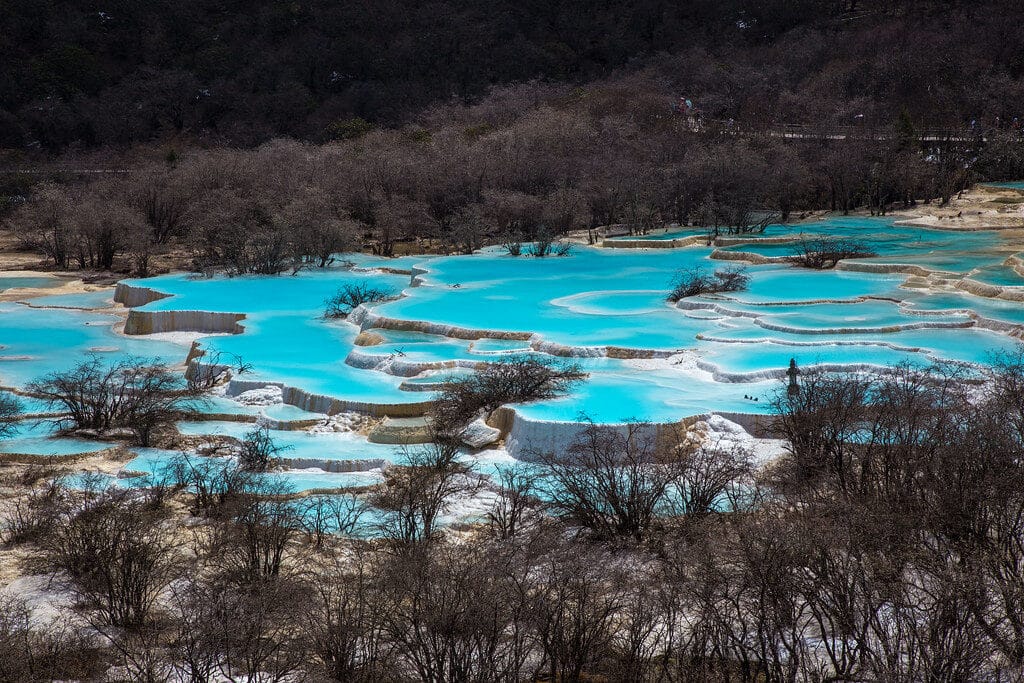
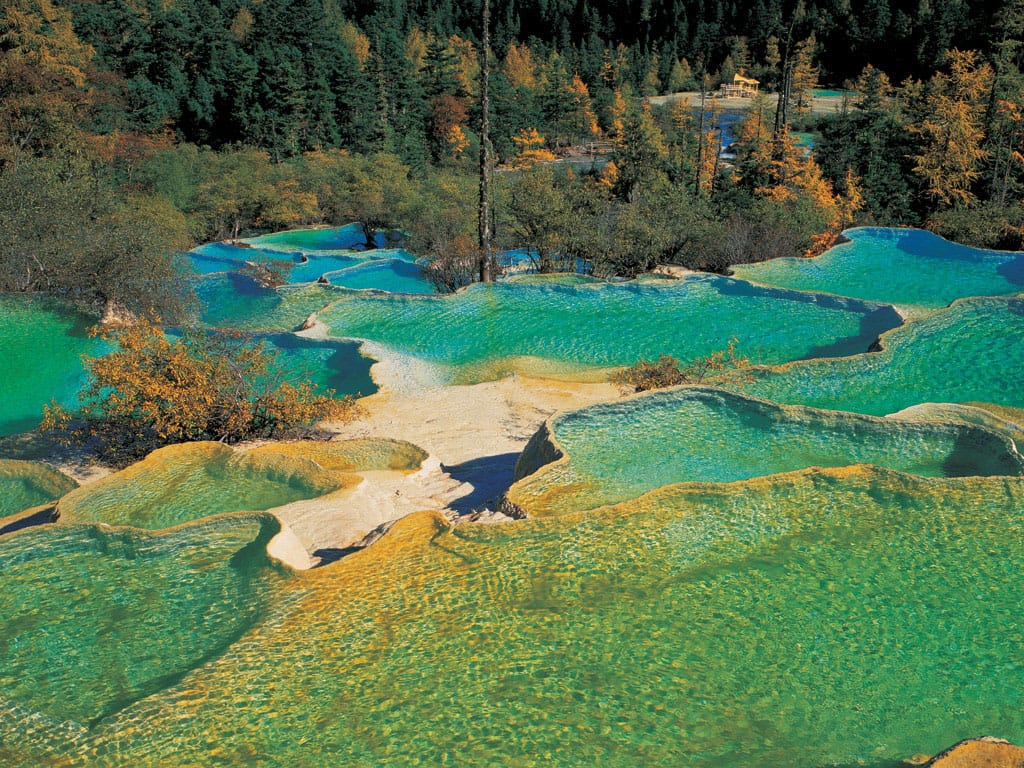
Huanglong sits in Sichuan’s Aba Tibetan and Qiang Autonomous Prefecture, about 100 km from Jiuzhaigou. UNESCO listed it as a World Natural Heritage Site in 1992. The valley runs 3.6 kilometers through alpine forest. More than 3,400 travertine pools cascade down the mountain — gold, turquoise, green, deep blue — with the 5,588-meter Xuebaoding Peak rising behind.
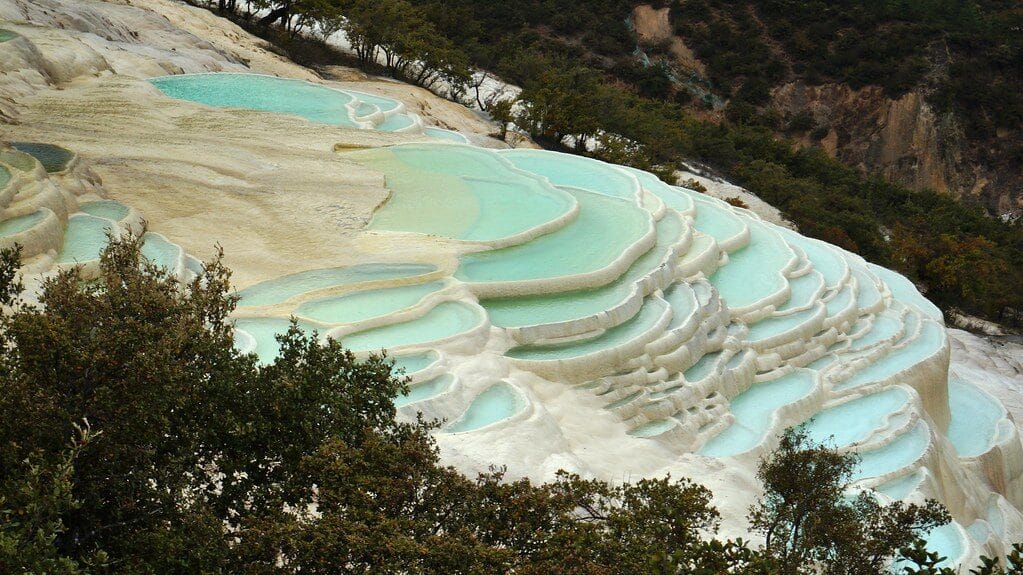
White Water Terrace (Baishuitai) is 101 kilometers southeast of Shangri-La city in northwest Yunnan. Elevation here is 2,380 meters — significantly lower than Huanglong. The terrace covers about 3 square kilometers, small enough to walk through in roughly an hour. The calcium carbonate deposits are a striking white, and the tiered pools run blue-green on clear days. This is the sacred birthplace of the Naxi Dongba religion. The atmosphere reflects that: quiet, mostly free of tour groups, and lacking the full tourist infrastructure that defines most Chinese scenic areas.
2. Key Facts Side by Side
Feature | Huanglong (Sichuan) | White Water Terrace (Yunnan) |
|---|---|---|
Province | Sichuan | Yunnan |
Elevation | 3,150–3,900 m | 2,380 m |
Altitude sickness risk | High | Moderate |
Annual average temp | ~7°C | Milder plateau climate |
Pool count | 3,400+ | Dozens of terraced pools |
Visit time | 4–6 hours | 1–2 hours |
Peak season | June 1 – December 15 | May–October |
Entrance fee (peak) | ¥170 | ¥30 |
Entrance fee (off-peak) | ¥60 (Dec 16–May 31) | ¥30 (year-round) |
Cable car | ¥80 up / ¥40 down | Not available |
Internal shuttle bus | ¥20 (separate ticket) | Not available |
Daily visitor cap (peak) | 25,000 | No cap |
UNESCO status | Yes (1992) | No |
Senior discount (60+) | Free entrance (cable car/bus extra) | — |
Advance booking | Required — Chinese phone needed | Not required |
Crowds in peak season | Heavy | Low to moderate |
Group tour presence | Very common | Rare — most large tour buses skip it |
Cultural ties | Tibetan / Qiang / Han Taoist | Naxi Dongba religion |
Nearest rail access | 30 min from high-speed rail (since 2024) | Shangri-La city |
Natural pairing | Jiuzhaigou Valley | Tiger Leaping Gorge / Pudacuo |
3. Color and Visual Scale: Huanglong vs Baishuitai
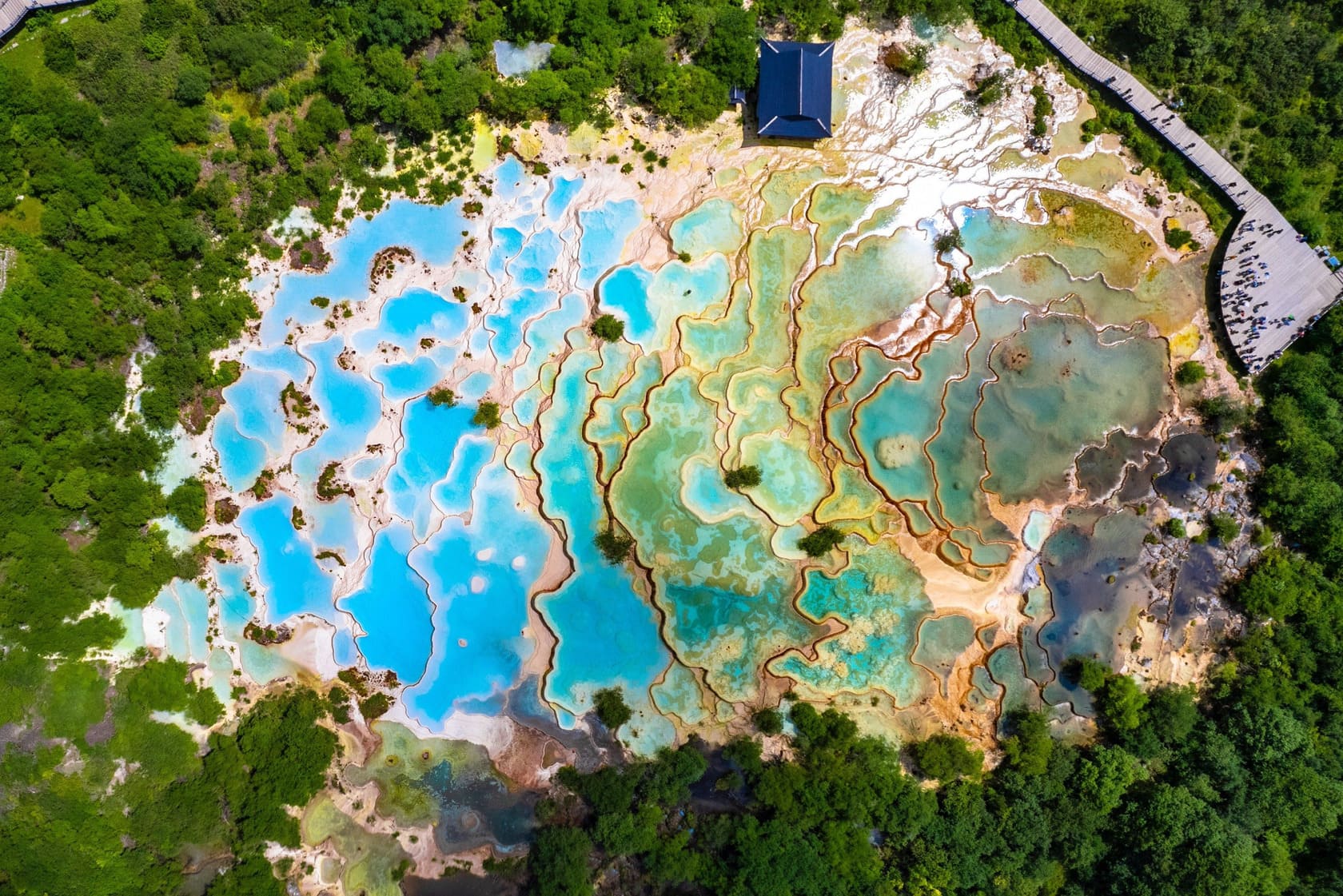
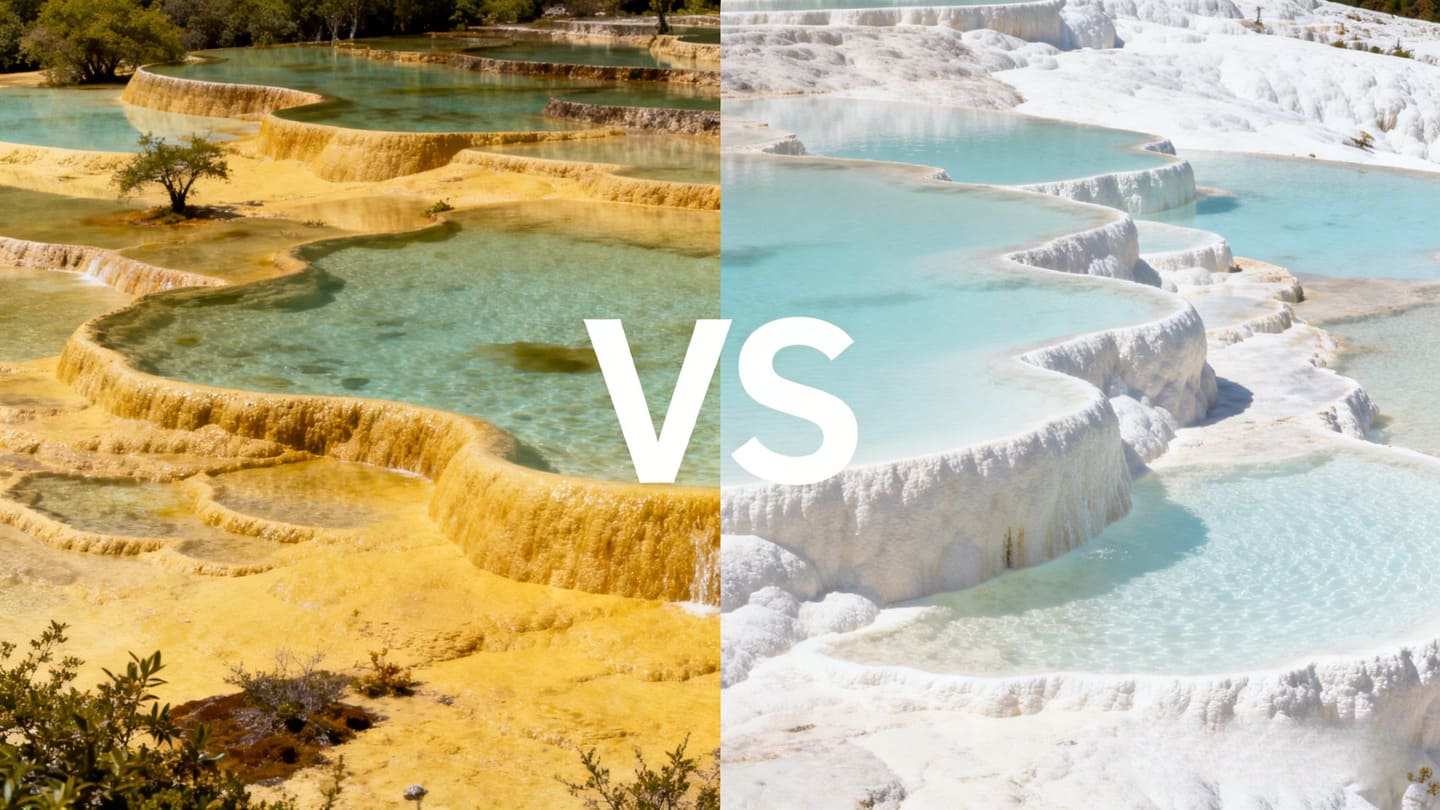
At Huanglong, the pools carry a wider palette than almost anywhere else in China. The Five-Color Ponds at the top hold 693 individual pools — turquoise, emerald, gold, deep blue. The colors shift as you move through the valley and as light changes; mineral content, algae, and the angle of the surrounding forest all play a role. In autumn, the trees framing the pools turn yellow and orange. We’ve brought groups here in June and in October and the valley looks noticeably different between the two seasons.
April and early May look deceptively bare — most lower pools are dry, only bare yellow travertine shows. But the Five-Color Ponds at the summit display their most saturated blue precisely during this dry period, less diluted by snowmelt. Some photographers plan specifically around this. From June onward the full cascade gradually fills.
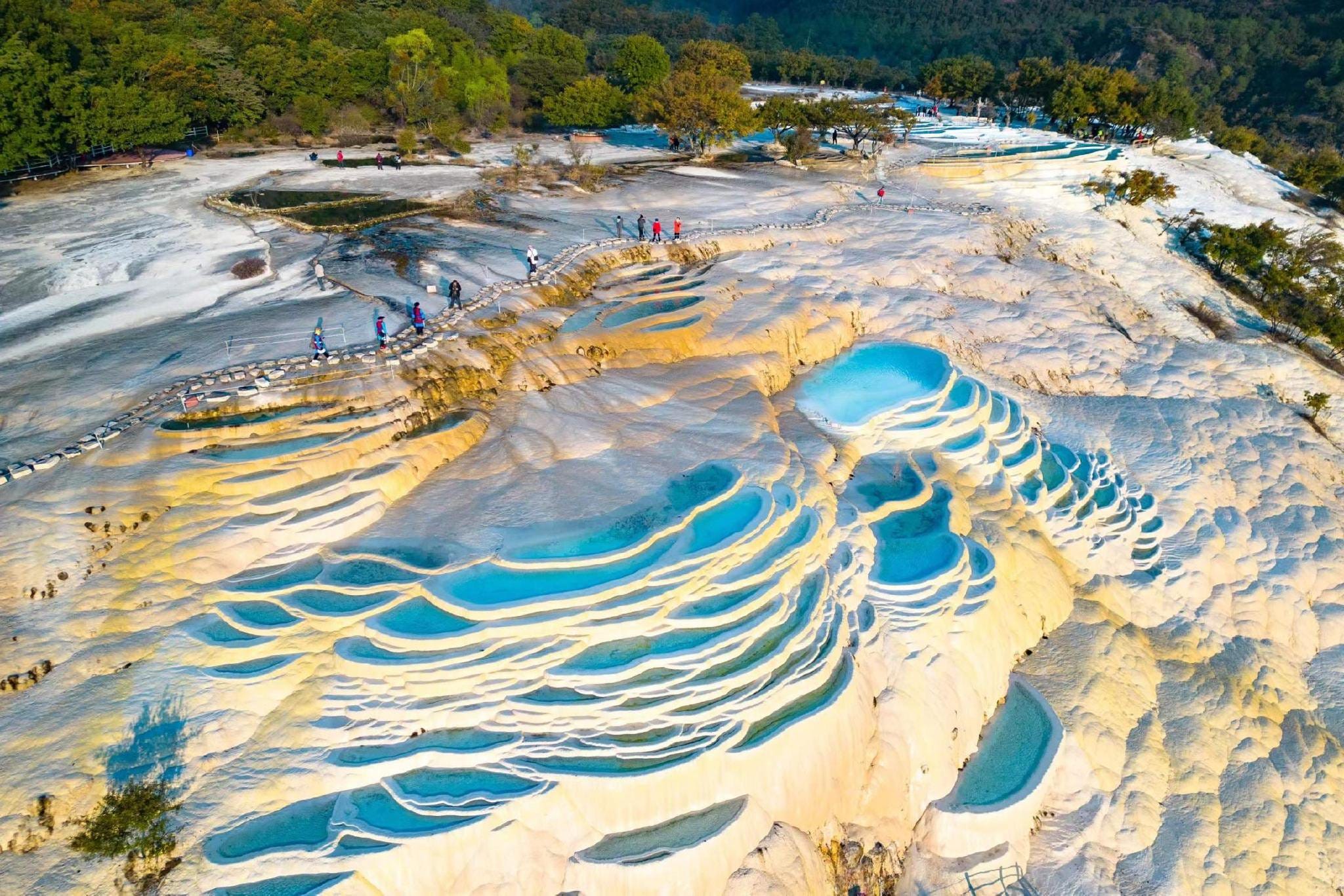
At Baishuitai, the palette is simpler: brilliant white terraces, a green mountain backdrop, pools that run blue-green on clear days. The contrast is striking — but only in sun. On overcast days the pools lose their color entirely and the white terraces blend into grey sky. This is the single most common source of disappointment at Baishuitai, and it shows up consistently across traveler reviews. Check the forecast before making the drive. Cloudy conditions make the site look very different from any photograph you’ll see of it.
4. Altitude: The Practical Difference Between These Two Sites
Huanglong’s entrance sits at around 3,070 meters. The Five-Color Ponds reach 3,576 meters. The main trail is mostly uphill on the way in, and at that elevation even fit adults slow down — rapid heartbeat, shortness of breath, headaches are common. Oxygen canisters are sold throughout the valley (¥15–30 each). Anyone with heart conditions, hypertension, or respiratory issues should get medical advice before visiting. We’ve seen clients sail through Jiuzhaigou (around 2,000–3,000m) and struggle noticeably once the altitude climbs here.
The standard approach — cable car up (¥80), walk down — exists because the uphill section is genuinely hard at this elevation. There’s also an internal electric shuttle bus (¥20, separate ticket) covering the flat stretch between the cable car station and the Five-Color Pond trailhead. Without it, add roughly 40 minutes of walking after the cable car. Shuttle tickets are limited and sell out in peak season — book in advance.
On the descent, two trail options split near the Five-Color Ponds: the left path runs close to the pools for a more intimate view; the right path gives a wider aerial perspective of the cascade. Walk down the left path if you want to be close to the water; the right path if you want the view from above.
Baishuitai at 2,380 meters is more manageable. Mild effects are possible if you’ve flown directly into Shangri-La that same day. One night in the city is sufficient acclimatization for most healthy adults. The terrain is gentler and the visit shorter, which makes a real physical difference at altitude.
5. Getting There: What Changed and What Hasn’t
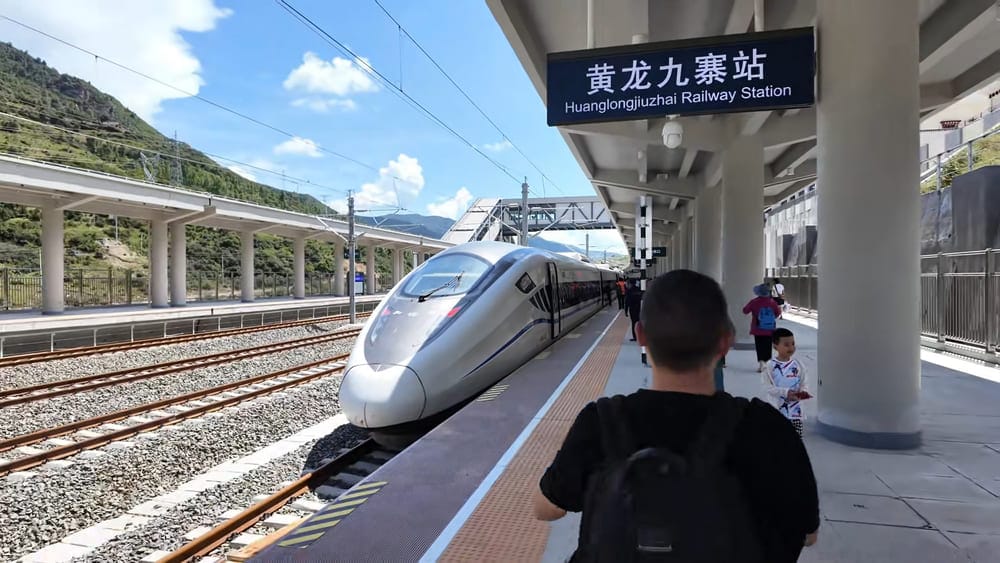
Huanglong became significantly easier to reach in August 2024. The new high-speed rail from Chengdu arrives at Huanglong-Jiuzhai Station in about 2 hours. A direct shuttle from the station reaches the park entrance in roughly 40–50 minutes (¥28). This replaced the old 7–8 hour bus journey for most visitors. From Jiuzhaigou, shared coaches depart at 08:30, 08:50, and 09:20 (¥62, 2.5 hours).
One practical issue for foreign travelers: tickets must be booked online in advance through a Chinese-language platform that requires a Chinese phone number. No physical tickets are sold at the gate. Park staff can sometimes assist with on-site booking, but that’s unreliable during peak weeks. Third-party platforms like Trip.com work but carry service fees. In autumn peak weeks the 25,000-person daily cap fills quickly — booking 5–7 days ahead is sensible.
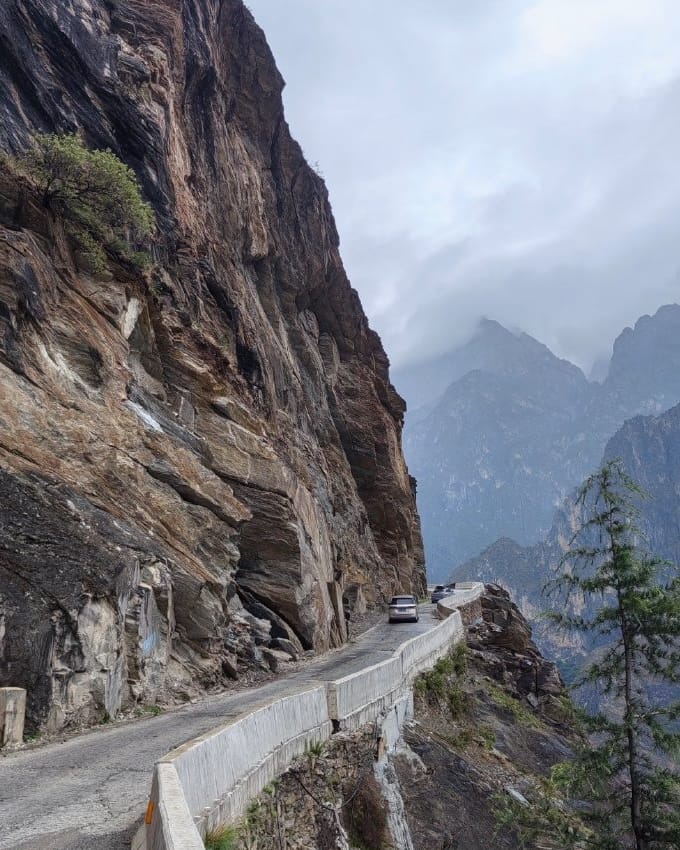
Baishuitai has improved considerably. The road from Shangri-La, which was severely disrupted by construction around 2020 (some visitors reported 11-hour drives that should have taken 4), is now largely paved. Recent travelers report 1.5–2.5 hours by private car. The public bus from Shangri-La bus station departs around 09:00 (¥24–35, about 3 hours). The last return bus passes Baidi Village around 14:00–14:30. Missing it means staying overnight.
Private car hire (¥400–500 round trip) gives you control over timing and is our consistent recommendation. A second option that works well: combine Baishuitai with Tiger Leaping Gorge on a two-day circuit. A road connects the gorge through Haba Snow Mountain to Baishuitai, and gorge hikers completing the upper trail sometimes continue this way.
6. Cost Comparison
Cost item | Huanglong | Baishuitai |
|---|---|---|
Entrance (peak season) | ¥170 | ¥30 |
Entrance (off-peak) | ¥60 | ¥30 |
Cable car up | ¥80 | — |
Cable car down | ¥40 | — |
Internal shuttle bus | ¥20 | — |
Transport from nearest hub | ¥28 (shuttle from train station) | ¥24–35 (bus) or ¥400–500 (private car) |
Typical full-day spend | ¥350–450 per person | ¥80–150 per person |
Huanglong’s costs add up quickly once you include the cable car and shuttle. The entrance fee alone is ¥170 — more than five times Baishuitai — and that’s before transport. Budget travelers will feel the difference. Huanglong does, however, deliver substantially more to see: several hours of valley walking versus an hour at Baishuitai.
7. Cultural Depth at Each Site
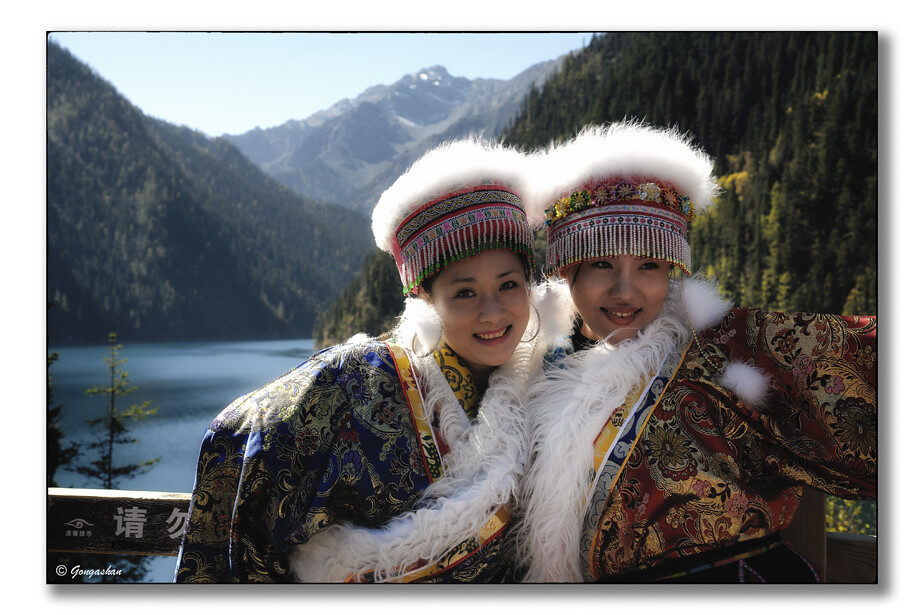
At Huanglong, Tibetan Buddhist, Taoist, and Qiang traditions converge. The Huanglong Temple near the Five-Color Ponds dates to the Ming Dynasty (around 1368). Old stonework sits directly inside the travertine formations — the combination is easy to miss in photographs but hard to ignore in person. Each year on the 15th day of the sixth lunar month, the Huanglong Temple Fair draws pilgrims from multiple ethnic groups for worship and communal dancing. The valley carries the Tibetan name Se’erzuo — the Golden Lake.
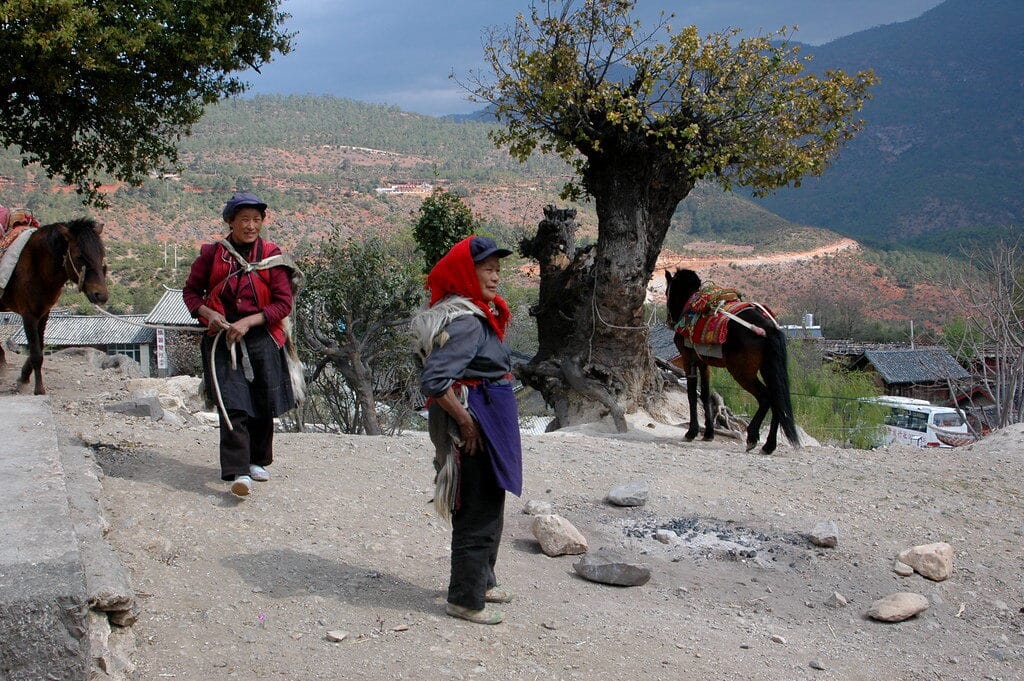
At Baishuitai, the cultural layer is more concentrated. The site is considered the birthplace of the Naxi Dongba religion. The founder, Dingbashiluo, is said to have settled here on his return from Tibet. Local Naxi call the terrace “Shi Bu Zhi” — growing flower. A natural stone formation at the lower left of the terrace resembles a pregnant woman; it’s a fertility shrine still in use. Every year on the eighth day of the second lunar month, the Naxi gather for the Er Yue Ba festival — singing, dancing, and ritual offerings to the mountain god. This one hasn’t been relocated or repackaged for tourism groups, which makes it genuinely different from most minority cultural events in Yunnan.
One detail that shows how distinct the Baishuitai Naxi are from their Lijiang counterparts: the two communities speak dialects different enough to cause real communication difficulty. The women around Baishuitai wear plain rectangular woven capes rather than the embroidered dress most visitors recognize from Lijiang. If you’ve spent time in Lijiang, Baishuitai shows you a different face of the same culture.
8. Is Baishuitai Worth the Trip?
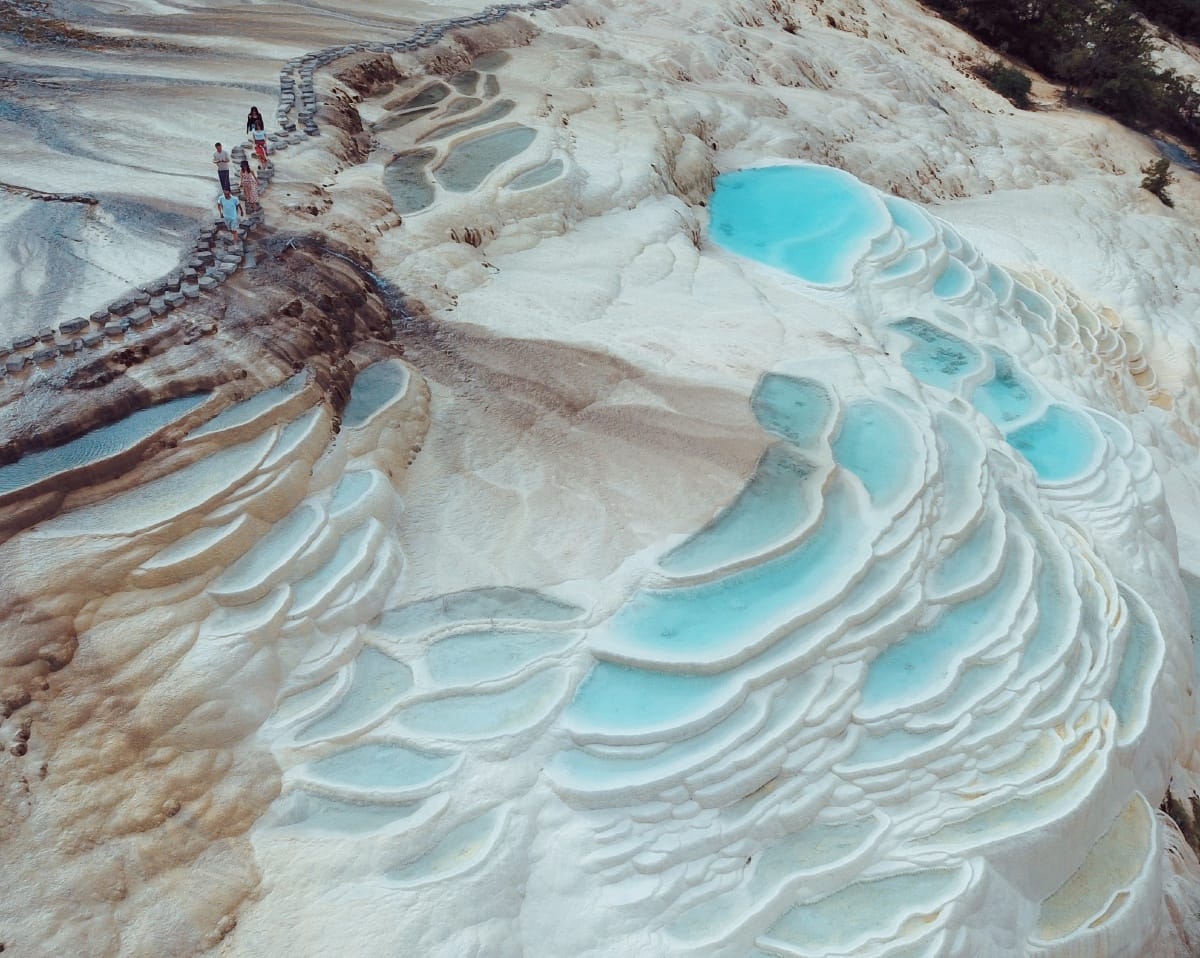
Lonely Planet calls it “a long trip for a small site.” That’s accurate. The site itself takes about an hour. The drive from Shangri-La takes 1.5–3 hours each way. Baishuitai offers around a tenth of Huanglong’s visual complexity. If you arrive expecting a UNESCO-scale spectacle, the site will feel small.
Most large tour buses don’t include Baishuitai in their Shangri-La itineraries — the route is too far and the site too small for group logistics. Even in high season, you’re unlikely to share the terrace with crowds. That’s a genuine rarity in Yunnan.
The drive is also part of the experience. The road from Shangri-La passes through Tibetan farmland, Yi villages, and the foothills of Haba Snow Mountain — landscapes most visitors to the region never see. Whether that matters depends on what kind of traveler you are.
The visitors who feel it wasn’t worth it tend to fall into two groups: those who arrived in bad weather (the site demands sunshine), and those who made a dedicated trip from Lijiang when their time and alternatives were limited. The visitors who rate it highly are usually the ones who folded it into a natural circuit — the Shangri-La base, the Tiger Leaping Gorge route, or the Lijiang–Shangri-La journey — rather than treating it as a standalone destination.
Our assessment after years of bringing groups through both regions: if you’re building a Shangri-La itinerary with 3+ days, Baishuitai is worth including on a clear-weather day. If you have one day in Shangri-La, Pudacuo National Park gives you more for the same time investment.
9. How the Two Sites Fit Different Itineraries
Combining both on a single trip is rarely practical. Huanglong is in Sichuan; Baishuitai is in Yunnan; 700+ km apart with no efficient connecting route. Linking them requires a flight or two days of overland travel that most itineraries can’t absorb.
The pairings that make geographic sense: Huanglong with Jiuzhaigou as the standard Sichuan circuit (minimum 2 days in the area); Baishuitai with Shangri-La and Tiger Leaping Gorge across 4–5 days in northwest Yunnan; or Baishuitai paired with Pudacuo as two contrasting Shangri-La day trips.
If your China itinerary covers both provinces over 10+ days, both sites belong on the list. If it’s one or the other, you’re really choosing based on which province you’re already in.
We run private tours covering both regions with multilingual guides who know the current logistics on the ground.
10. When to Visit Huanglong vs Baishuitai
Huanglong peak season: June 1 – December 15. The optimal window is late September through late October — autumn foliage frames the pools, water levels are full, and afternoon light catches the gold travertine at its best. Avoid Golden Week (first week of October) unless you don’t mind cable car queues of 1–2 hours and large crowds throughout the valley. June through August is the rainy season; flash floods and falling rocks on access roads are uncommon but worth monitoring on heavy rain days. The park operates year-round on reduced winter hours, though cable car and shuttle services may pause briefly for maintenance in November or December. One timing note: Huanglong’s foliage peaks before Jiuzhaigou because the elevation is higher — if visiting both in early October, Huanglong comes first.
Baishuitai is open year-round, but clear weather is non-negotiable. May through October gives the best conditions overall. Morning (before 9am) and late afternoon (after 4pm) are the best times for photography — the sun hits the white terraces at an angle and the pool color is at its most saturated. A flat overcast sky makes the site look very different from what any photograph shows.
11. Who Should Visit Which Site
Frequently Asked Questions
Is Huanglong better than Baishuitai?
They don’t really compete for the same traveler. Huanglong has more — more pools, more color range, more infrastructure, higher cost, higher altitude. Baishuitai has less of all of those, but on a quieter and more personal scale. If you’re in Sichuan, Huanglong. If you’re in Yunnan with several days in Shangri-La, Baishuitai. Neither is objectively better.
Can I visit Huanglong and Baishuitai on the same trip?
The two sites are in different provinces 700+ km apart with no efficient connecting route. Combining them requires a flight between Sichuan and Yunnan. Unless your trip already covers both provinces separately, the travel time isn’t worth it.
Is Huanglong worth visiting without Jiuzhaigou?
Huanglong works as a standalone half-day. The Five-Color Ponds are the most visually striking travertine formation most visitors will ever see. That said, the 2024 high-speed rail connection makes pairing both sites straightforward — most travelers naturally combine them.
How long do you need at Huanglong?
Budget 4–6 hours. Take the cable car up (¥80), the internal shuttle bus (¥20) from the cable car station to the Five-Color Pond trailhead, then walk down. Try the left path in one direction and the right path the other — they give different perspectives on the same pools.
How long do you need at Baishuitai?
1–2 hours inside the site. Add 30 minutes for the upper viewpoint — from above, the full formation makes sense in a way it doesn’t from below. The travel time from Shangri-La (1.5–3 hours each way) is the real time cost.
When are the Huanglong pools most colorful?
Late September through late October for autumn foliage and full water levels together. For the Five-Color Ponds specifically, April also has something to offer — most lower pools are dry, but the upper ponds show their most saturated blue during this period. June through September has the fullest water across the full valley.
Does Baishuitai have altitude sickness risks?
At 2,380 meters, mild effects are possible if you’ve just arrived from a low-altitude city. One night acclimatizing in Shangri-La (3,280m) is enough for most healthy adults. It’s considerably more manageable than Huanglong.
Can foreign travelers book Huanglong tickets independently?
It takes some planning. The official platform is in Chinese and requires a Chinese phone number. Trip.com and similar services work for foreign travelers but add fees. In peak autumn weeks, book 5–7 days ahead — the 25,000-person daily cap fills.
Is Baishuitai open in winter?
No seasonal closure. Winter visits are quiet and cold; the flowing water that gives the site its character is partly frozen. The best experience requires sunshine, which is less reliable in winter. May through October is the recommended window.
What is the Er Yue Ba festival at Baishuitai?
On the eighth day of the second lunar month, local Naxi gather at Baishuitai to mark the founding of the Dongba religion — singing, dancing, and ritual offerings at the sacred spring above the terraces. It takes place at the original site, attended mainly by local communities. It’s one of the few such events in Yunnan that hasn’t been adapted into a tourist performance.
Do I need a guide at either site?
Neither site requires one. Huanglong has clear English signage and well-marked boardwalks — the geology largely explains itself. At Baishuitai, the scenery is self-evident but the cultural context — the Dongba religion, the sacred spring, what you’re actually looking at — is largely invisible without someone who knows it. A knowledgeable guide earns their keep more at Baishuitai than at Huanglong.