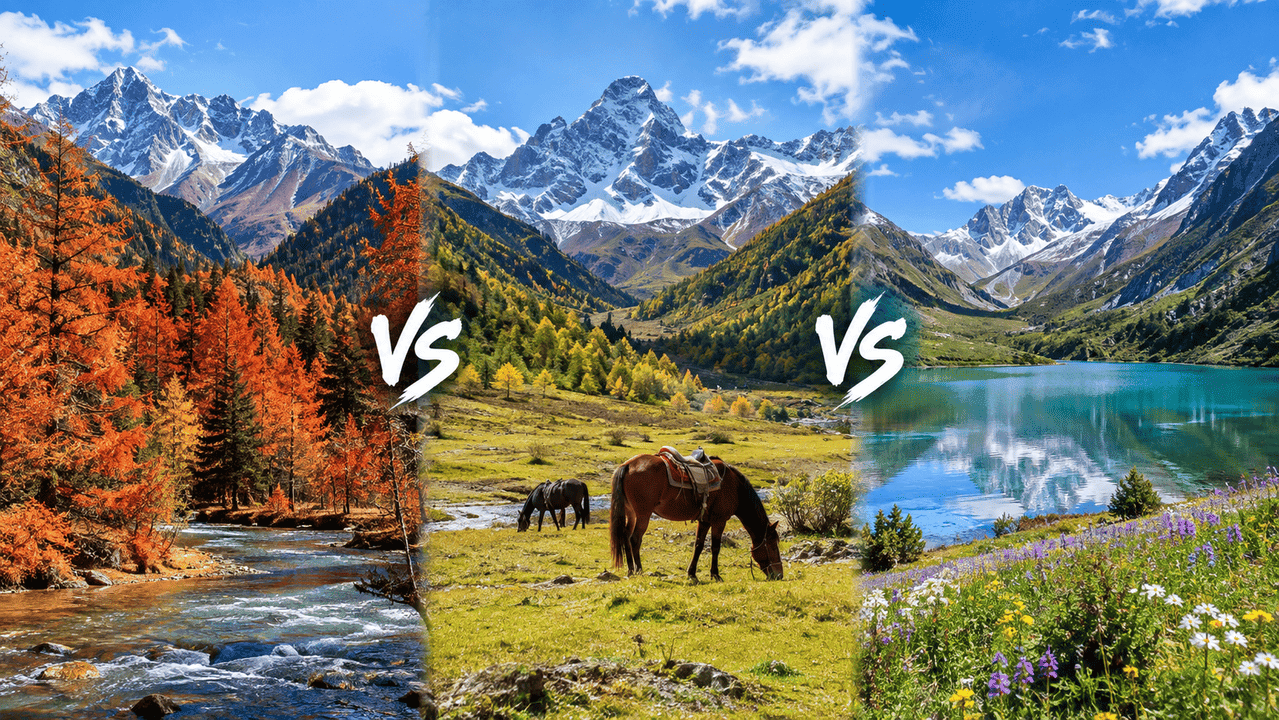
Mount Siguniang 3 Valleys: Shuangqiao vs Changping vs Haizi
Shuangqiao vs Changping vs Haizi comes down to one question: how much walking do you actually want to do? Mount Siguniang 3 valleys look similar on paper — snow peaks, alpine meadow, forest — but the real difference between them is effort, not scenery.
We’ve been routing clients through these 3 valleys since 2006, and this is genuinely the first question we ask anyone planning a trip here. Here’s how we tell the valleys apart, plus which season and which individual stops actually matter.
Quick Answer
- Hate walking, want maximum scenery for minimum effort: Shuangqiao Valley — sightseeing bus does the work.
- Want a real hiking day with a clear payoff: Changping Valley — Muluozi gets you face-to-face with Yaomei Peak.
- Training for Dafeng/Erfeng, or want the widest peak panorama: Haizi Valley — Chaoshan Ping alone is worth the walk.
- Only one day, no hiking experience: Shuangqiao Valley, no contest.
- Two days, decent fitness: Shuangqiao first, then Changping or Haizi — never the harder valley first.
- Visiting in winter (Dec–Feb): Shuangqiao is the only one that doesn’t lose anything to the season.
Table of Contents
1. Mount Siguniang 3 Valleys at a Glance
Shuangqiao Valley | Changping Valley | Haizi Valley | |
|---|---|---|---|
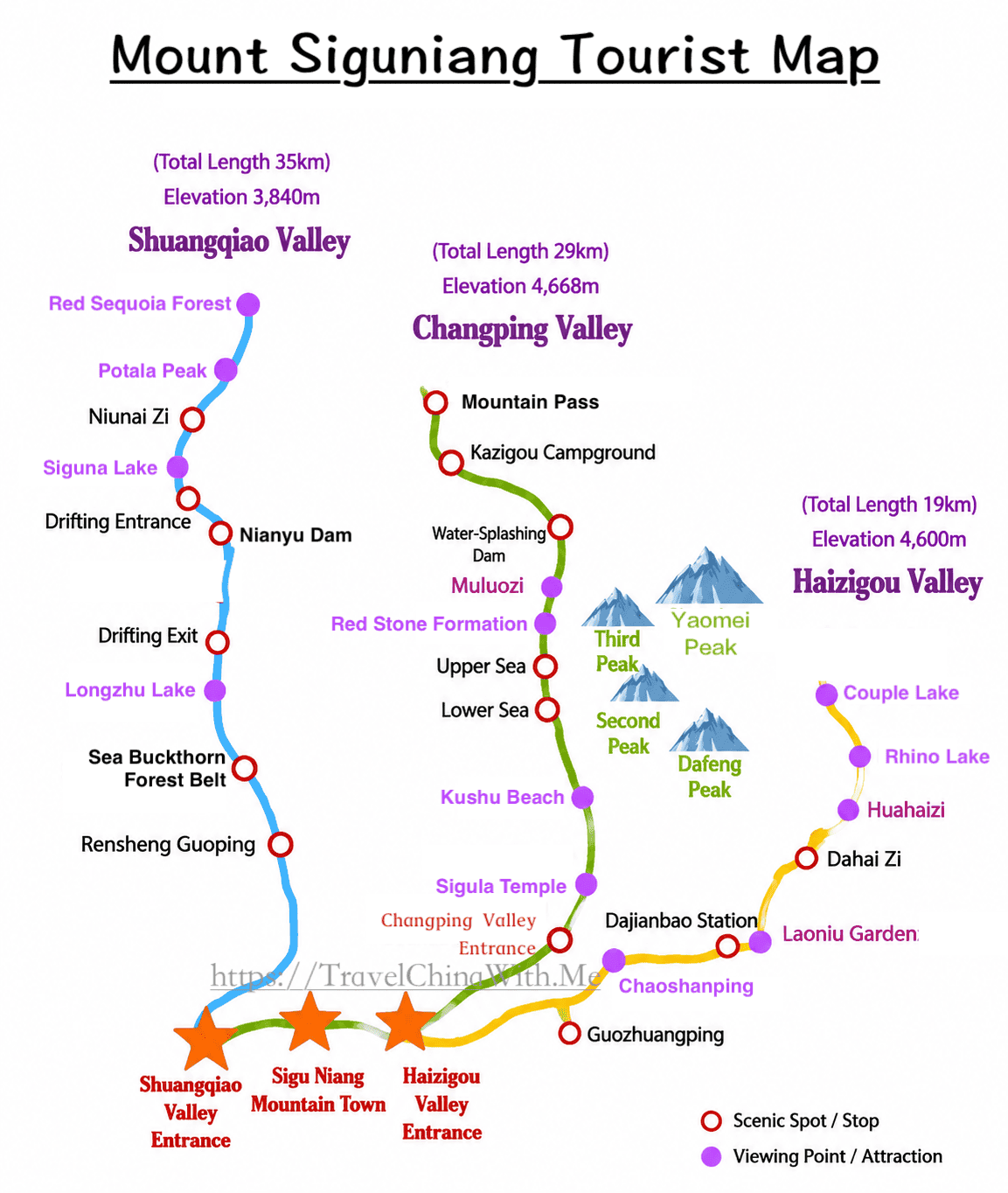
Total length | 35km | 29km | 19km |
Getting around | Sightseeing bus, full route | Bus first 7km, then walk or horse | Walk or horse, no bus at all |
Physical effort | Almost none | Moderate | High |
Time needed | 3–4 hrs | 3–7 hrs, route-dependent | 3–4 hrs (Chaoshan Ping) to 8+ hrs (Da Haizi) |
Peak season ticket | CNY 150 (entry + bus) | CNY 90 (entry + bus) | CNY 60 (entry only) |
See Siguniang’s peaks? | No | Yes, close-up at Muluozi | Yes, all four in one frame at Guozhuang Ping |
Best for | Families, first-timers, anyone who’d rather ride than hike | Fit travelers wanting one real hiking day | Serious hikers, summit-attempt training |
Full route breakdowns, stop-by-stop maps, and booking mechanics for each valley are in our Mount Siguniang guide. This page focuses purely on helping you decide between them.
2. The Real Divide: Effort, Not Scenery
Here’s what trips people up. All Mount Siguniang 3 valleys promise “snow peaks, alpine meadow, forest” in their marketing copy. On paper they sound similar. In our experience they aren’t — Mount Siguniang 3 valleys differ mainly by how much walking it takes to see them, not by what you see.
Shuangqiao: Zero Effort
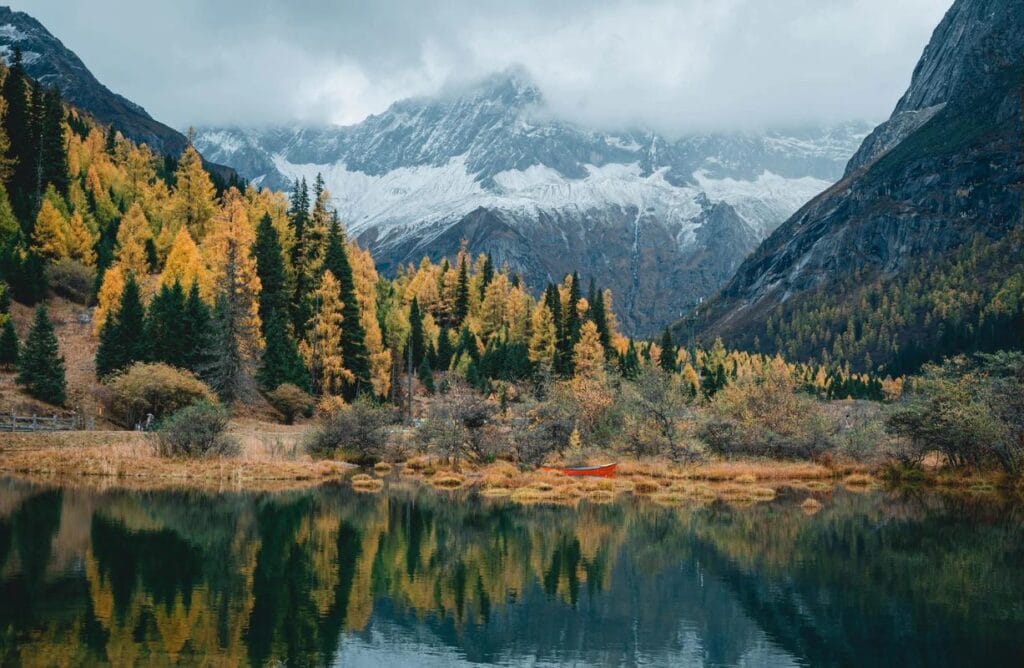
The bus goes to the top of the road at Red Sequoia Forest, and from there you’re riding downhill, hopping off wherever you like. Shuangqiao asks nothing of you physically.
Changping: Half and Half

The first 7km to Lama Temple is bus-served. Everything past that is on foot or horseback, including the one section that actually shows you a Siguniang peak.
Haizi: All On Foot (or Horseback)
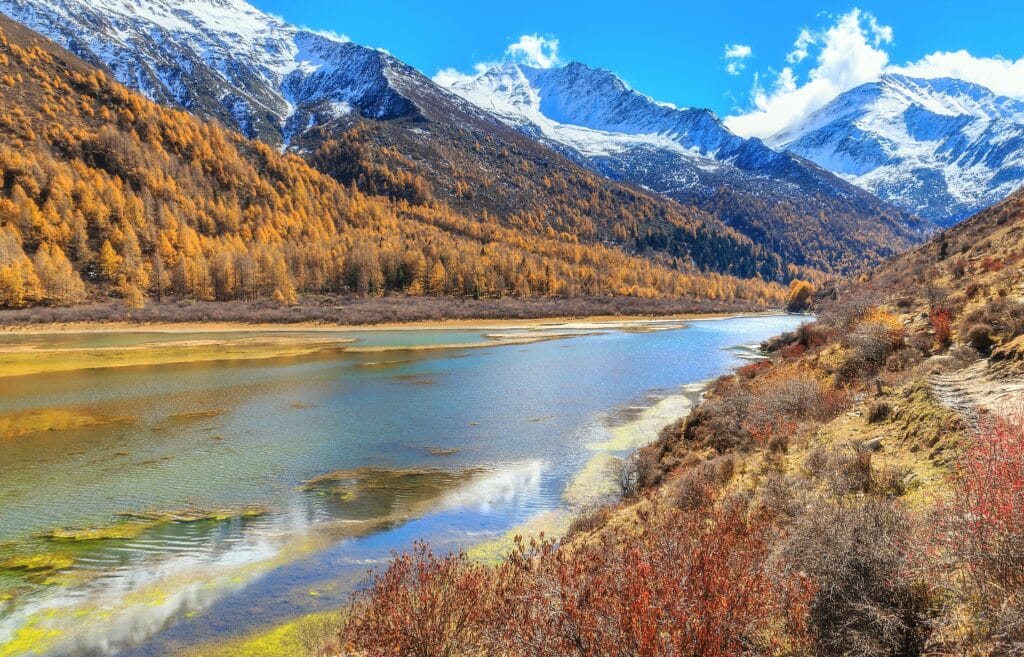
There’s no bus at any point. The valley’s signature payoff sits far enough in that reaching it is a genuine hiking commitment.
Weigh how much walking you’re actually signing up for before you weigh scenery. We’ve heard “I want to see the mountain” from clients heading into all Mount Siguniang 3 valleys, and it means something different in each one.
Not Up for the Walk? Horses Cover Most of It
Changping and Haizi both let you rent a horse for the sections without a bus. This changes the calculation for anyone whose limit is fitness rather than time or money.
Valley | Route | Approx. price | Covers |
|---|---|---|---|
Changping | Lama Temple to Muluozi | CNY 400–660 round trip | The full walking section, including the Yaomei Peak view |
Haizi | Entrance to Guozhuang Ping / Chaoshan Ping | CNY 260 round trip | The must-see stretch, including the four-peaks view |
Haizi | Entrance to Da Haizi | CNY 600 round trip | The full route, for anyone who wants to go all the way |
A horse doesn’t remove the altitude entirely. You’re still climbing to 3,700m+. But it removes the physical strain that stops most casual visitors from reaching Muluozi or Chaoshan Ping on foot. Agree the price with the handler before setting off, and expect rougher sections where you’ll dismount and walk regardless.
3. What’s Actually Worth Seeing — and What You Can Skip
Valley-level choice only gets you halfway. Once you’re inside a Mount Siguniang valley, some stops are worth every minute and others are fine to pass by. This is the breakdown we give clients trimming a route rather than skipping a valley outright.
Shuangqiao Valley
Status | Stop | Why |
|---|---|---|
Don’t skip | Potala Peak | The single best photo stop — snow peaks, a white stupa, open meadow, all in one frame |
Don’t skip | Siguna Lake | The valley’s most photogenic lake; on a calm day the peak reflection alone is worth a full stop |
Don’t skip | Red Sequoia Forest | The high point of the road at 3,800m, where the bus turns around and autumn turns the whole hillside gold |
Don’t skip | Zhugana Lake | Not an official bus stop — just a 5-minute boardwalk walk across from Potala Peak. Usually empty, arguably the best photo in the valley |
Can skip | Renshenguo Ping’s crooked-tree spot | A minor photo op near the meadow (3,360m) with a small café attached. Pleasant, but skip it first if you’re pressed for time |
Can skip | Nianyu Dam if you’re not rafting | Worth a stop only if you’re doing the bamboo rafting. Otherwise it looks much like the meadow stretches around it |
Changping Valley
Status | Stop | Why |
|---|---|---|
Don’t skip | Kushu Beach | Calcified driftwood in shallow water with a snow-peak reflection — the signature photo for anyone not going further |
Don’t skip | Muluozi | The reason to hike Changping at all. A 360° meadow with Yaomei Peak close enough that this is where Siguniang finally feels real, not just a backdrop |
Can skip | Insect Foot Waterfall | Adds distance early in the walk for a fairly ordinary view — not worth the detour if you’re aiming for Muluozi |
Can skip | Upper and lower Gan Haizi (dry lakes) | Both lakebeds dried out years ago. Unless you’re already walking through on the way to Muluozi, they’re not worth a special stop |
Haizi Valley
Status | Stop | Why |
|---|---|---|
Don’t skip | Zhaijie Ping | The first real payoff, only ~2km from the entrance — meadow and early snow-peak views reachable by almost anyone |
Don’t skip | Guozhuang Ping | All four Siguniang peaks line up in a row here — the valley’s actual four-peaks-in-one-frame viewpoint, about 3km/1hr from the entrance |
Don’t skip | Chaoshan Ping | White stupas, prayer flags, open meadow, and Yaomei Peak’s full face — the valley’s best single photo spot, a further 40 minutes past Guozhuang Ping |
Can skip | Da Haizi / Hua Haizi, unless you’re committed | 16km one-way, 8+ hours, at 3,800m+. Genuinely tough, and most casual visitors already get everything they came for at Guozhuang Ping and Chaoshan Ping |
4. Does the Season Change Which Valley to Pick?
Sichuan’s western valleys generally follow “spring for snowmelt, summer for wildflowers, autumn for foliage, winter for the peaks themselves.” But Mount Siguniang 3 valleys don’t hit their best moments on the same calendar. One of them barely changes at all.
Season | Shuangqiao | Changping | Haizi |
|---|---|---|---|
Spring (Mar–May) | Normal operation | Normal operation | Normal operation |
Summer (Jun–Aug) | Bamboo rafting runs at Nianyu Dam | Lush but rainiest — slick boardwalks | Best season — wildflowers peak near Chaoshan Ping |
Autumn (Sep–Oct) | Red Sequoia Forest turns gold — best window | Muluozi meadow layers red, gold, evergreen | Clearest visibility — best odds of all four peaks |
Winter (Dec–Feb) | Runs close to normal, snow-capped peaks | Boardwalks can ice over, partial closures | Not recommended for casual visitors |
Autumn (September–October): Strongest for All Three
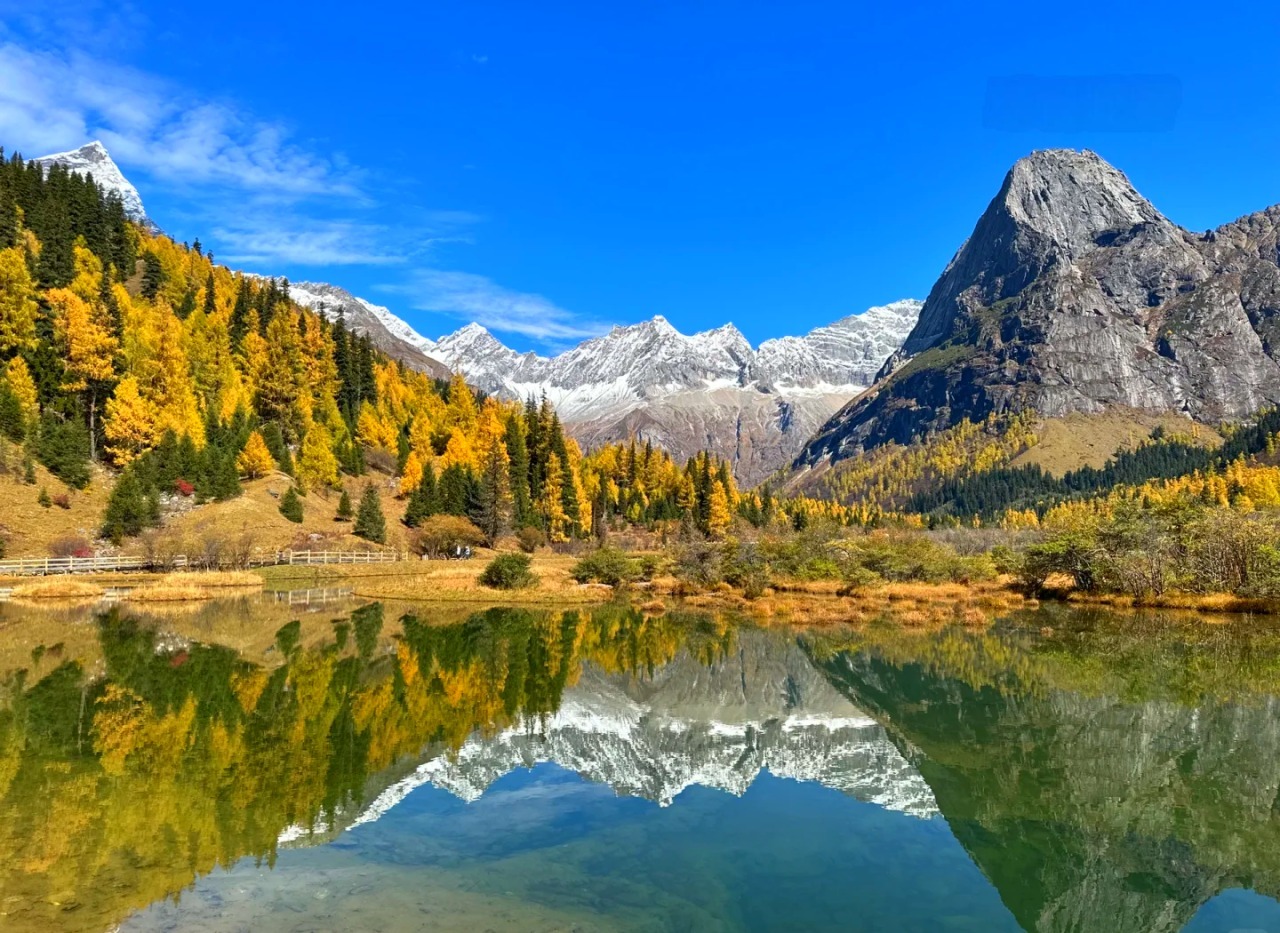
This is the strongest window for all three, but for different reasons. Shuangqiao’s Red Sequoia Forest turns a deep gold at the valley’s high point — the single most photographed moment in any of the 3 valleys. Changping’s Muluozi meadow layers red, gold, and evergreen against the peaks. Haizi’s meadows clear out and visibility improves — this matters most here, since Guozhuang Ping’s whole appeal is seeing all four peaks lined up at once. National Day week (October 1–7) draws several times the normal crowd to all 3 valleys; we steer clients toward the week right after instead, when the foliage usually holds and the shuttle queues don’t.
Summer (June–August): Haizi’s Best Season
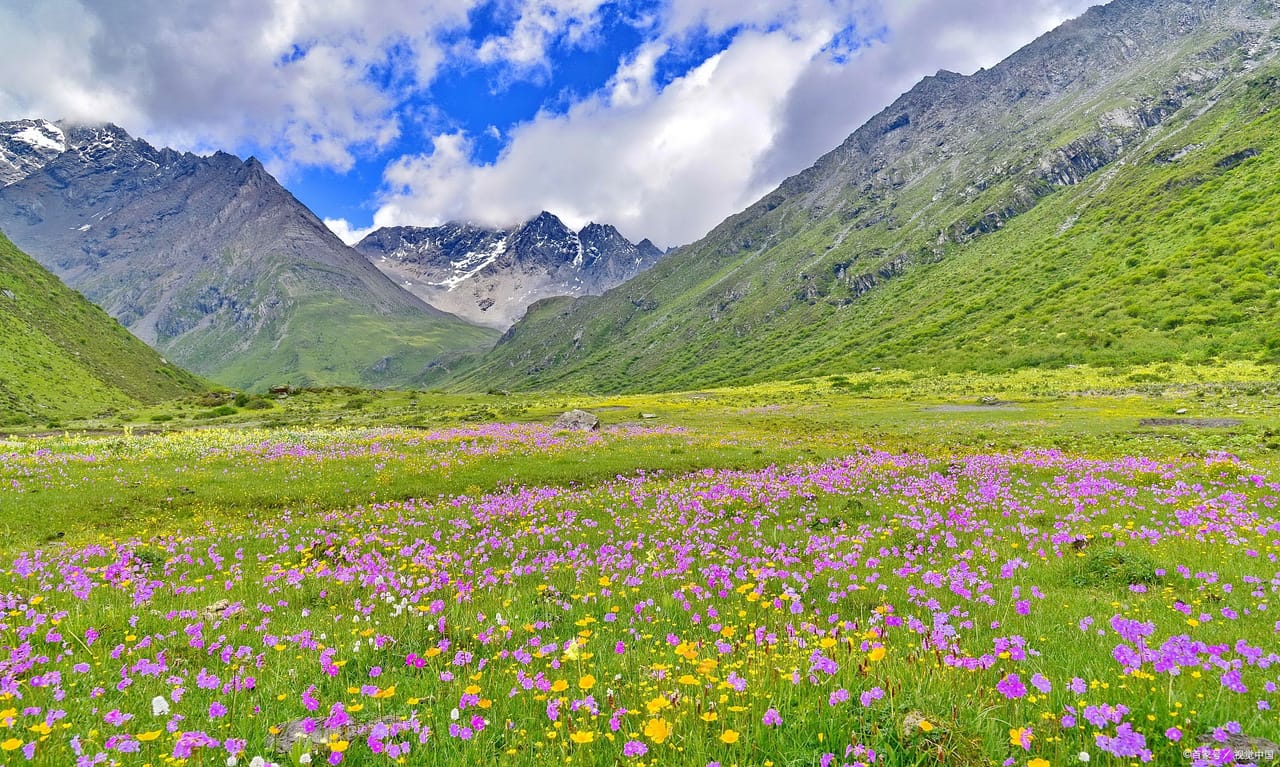
Haizi’s wildflower meadows near Zhaijie Ping and Chaoshan Ping are at their fullest in summer — a real point of difference from the other two valleys’ summer look. It’s also when Shuangqiao’s Nianyu Dam bamboo rafting runs, weather permitting. Changping’s forest is at its most lush, but this is also the rainiest window of the year. The boardwalk sections get slick — we tell clients heading to Muluozi in July or August to be on the trail by 9am, since afternoon storms here build fast and with little warning.
Winter (December–February): Shuangqiao Only, for Most Visitors
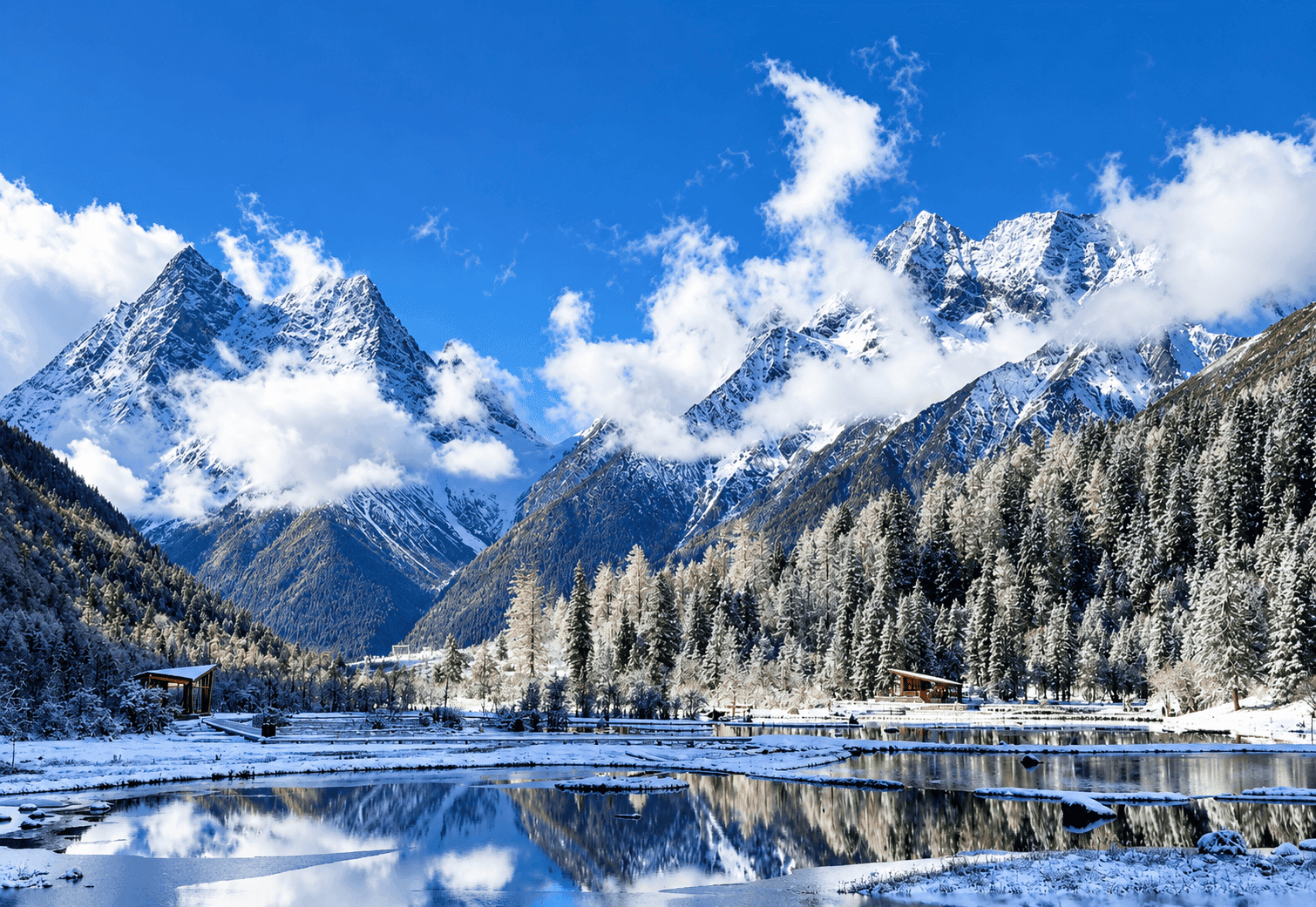
Shuangqiao: Runs Close to Normal
The sightseeing bus still operates, and snow on the peaks is arguably an upgrade rather than a compromise.
Changping: Partial Closures Possible
Boardwalk sections can ice over, and parts of the trail may close depending on conditions — worth confirming before you commit a whole day to it.
Haizi: Not Recommended for General Visitors
The horse track past Zhaijie Ping turns to ice and hardened snow. The walk to Chaoshan Ping — manageable in October — becomes a different, higher-risk undertaking. When clients ask for Haizi in December or January, our standard advice is to swap it for Shuangqiao and save Haizi for a warmer trip. Winter in Haizi is really for ice-climbing groups with proper gear, not a casual day visit.
The takeaway: if you can only pick one season, Shuangqiao is the valley that performs consistently in all four. Changping and Haizi both concentrate their best version of themselves into the May–October window.
5. Only Have One Day? Here’s Why You Can Only Do One Valley
A full day does not cover two valleys, and assuming otherwise is the single most common reason we see clients end a trip exhausted and behind schedule. Shuangqiao needs a minimum of 3–4 hours done properly. Changping needs 3 hours for the short Kushu Beach route alone, and 6–7 hours round trip to Muluozi. Haizi needs 3–4 hours just to reach Chaoshan Ping and back. Add the 15–20 minutes of transit between the Shuangqiao entrance and the Changping/Haizi entrance area. Afternoon weather in these valleys also turns unpredictable. Stacking two valleys into one day means rushing both — and we’d rather see a client enjoy one valley properly than remember two half-done ones.
What “Half a Day” Actually Means
If you’re arriving from Chengdu in the afternoon rather than starting fresh from Rilong Town, entry cutoffs matter more than they first appear.
Valley | Last entry | Last shuttle down | Realistic afternoon start |
|---|---|---|---|
Shuangqiao | 3:00pm | 5:30pm | Enter by 1pm for a proper visit, not a rushed one |
Changping | 2:30pm | 5:30pm | Enter by noon if you’re aiming for Muluozi |
Haizi | 2:30pm | No bus — walk out | Enter by 11am if you want to reach Chaoshan Ping and back before dark |
A 2pm arrival at any of the Mount Siguniang 3 valleys is not a “half day” in the way this guide means it. It’s closer to a rushed hour or two — enough for Shuangqiao’s lower stops, not enough for Changping’s Muluozi or Haizi’s Chaoshan Ping.
If your one day is about ease: Shuangqiao
No hiking experience needed, no altitude-driven pacing decisions. You’ll also see more distinct landscapes in 3–4 hours — meadow, lake, forest belt, glacier view. A rushed half-day in the other two valleys shows you less.
If your one day is about hiking: Changping to Kushu Beach, or Muluozi if you’re fit
Kushu Beach is the sensible one-day target for most hikers we send this way. Flat boardwalk, no real fitness demands, 2.5–3 hours round trip. Muluozi is the better payoff if you’re reasonably fit and have the full day free. It’s the only place any of the 3 valleys puts you face-to-face with a Siguniang peak on a day trip.
If your one day is about the mountain itself: Haizi to Chaoshan Ping
Zhaijie Ping, Guozhuang Ping, and Chaoshan Ping together make a complete half-day-to-full-day outing. Guozhuang Ping’s four-peaks-in-one-frame view isn’t matched anywhere in the other two valleys. Don’t push toward Da Haizi on a single day trip. It isn’t built for that pace.
6. Doing More Than One Valley: Order Matters
If you’re adding a second or third valley, the question shifts from “which one” to “which order.”
Shuangqiao Always Goes First
We tell every client the same thing: Shuangqiao goes first, no matter what else you’re adding. The reason is physiological, not just about scenery sequencing. Shuangqiao is a bus tour that costs almost no physical effort. That makes it a gentle first exposure to the 3,200–3,850m altitude range before you ask your body to do real work. We’ve had clients do it the other way round — Changping first, sore-legged and unimpressed by Shuangqiao the next day — and we’ve watched clients skip straight to Changping on arrival afternoon and turn back partway with pounding headaches. The jump from Chengdu’s 500m to Rilong Town’s 3,200m in a single afternoon catches people off guard, even when they’ve read about altitude sickness in the abstract.
Doing All Three? Haizi Goes Last
By the time you get to it, you’re fully acclimatized, and Chaoshan Ping alone only takes half a day — it slots in easily before the drive back to Chengdu. Never trek into Changping or Haizi on your arrival day. Altitude and travel fatigue together make for a genuinely miserable hike, and we’ve seen it end more than one trip early.
Changping or Haizi for Your Second Valley?
If you want… | Choose |
|---|---|
An actual Siguniang peak, up close | Changping — Muluozi puts Yaomei Peak right in front of you |
The widest panorama, all four peaks at once | Haizi — Guozhuang Ping shows them together, from further away |
Wilder, more layered scenery | Haizi |
A stepping stone toward a Dafeng/Erfeng summit later | Haizi |
Working out how many days you need, and what a day-by-day plan looks like once you’ve picked your valleys? That’s in our Mount Siguniang guide, which covers one-valley, two-valley, and three-valley itineraries in full.
7. Which Valley Fits You, By Traveler Type
Traveling with Older Parents or Young Children: Shuangqiao
The bus does the walking, so it’s the only one of the Mount Siguniang 3 valleys that doesn’t ask anything of anyone’s fitness. We generally advise against bringing children under 6 even here, given the altitude. For everyone else, this is the valley built for mixed-ability groups.
Second-Time Visitors: Changping or Haizi
If Shuangqiao was your first-day introduction on a previous trip, it rarely needs a repeat visit. Most of what it offers, you’ll have already seen. Changping and Haizi both reward a longer, slower second visit that a first-timer’s itinerary usually doesn’t have room for.
Photographers: All Three, for Different Shots
Shuangqiao gives you Potala Peak’s classic stupa-and-snow-peak composition and Zhugana Lake’s quiet reflection. Changping’s red-toned rock formations along the trail to Muluozi are a shot none of the other valleys offer. Haizi’s Guozhuang Ping is the only spot across all three where all four Siguniang peaks line up in a single frame. Worth the walk for that alone if photography is the priority.
Hikers Training for a Dafeng or Erfeng Summit Attempt: Haizi
Haizi is the access route for both peaks. Walking to Chaoshan Ping or beyond is a reasonable acclimatization outing before a summit push. Neither Shuangqiao nor Changping serves this purpose the same way.
Anyone With Zero Hiking Experience: Shuangqiao, No Contest
If the idea of “a bit of hiking” makes you nervous, Shuangqiao removes the question entirely. Changping’s short Kushu Beach route is genuinely manageable for most fitness levels, but it still involves real walking on uneven ground. Shuangqiao is the only one of the three that doesn’t.
This is the most common second-guess we hear from clients who’ve already decided on Shuangqiao: won’t they miss “the real mountain”? You won’t see Siguniang’s four named peaks from inside the valley — that part is true. Shuangqiao’s own scenery is 25-odd surrounding peaks, snow-capped ridgelines, and alpine lakes — a different view, not a weaker one. Clients who’ve done all Mount Siguniang 3 valleys consistently rank Shuangqiao’s Potala Peak stop among their favorite photos of the trip, even without the four named peaks in it.
FAQ: Mount Siguniang 3 Valleys
What age is Shuangqiao suitable for?
There’s no minimum age enforced at the gate, and children under 6 or under 1.2m ride the bus free. We generally advise against bringing kids under 6 given the 3,200–3,850m altitude range, even though Shuangqiao itself requires no walking. For children older than that, Shuangqiao is genuinely the easiest of the 3 valleys to bring a child to.
Which is more scenic, Changping or Haizi?
There’s no single “more scenic” answer — this is a matter of taste, not fact. Changping’s appeal is intimacy — forest, a close-up peak view at Muluozi, red rock formations along the way. Haizi’s appeal is scale — open meadow leading to all four peaks lined up at once at Guozhuang Ping. Photographers chasing a single dramatic shot tend to prefer Haizi; hikers who want a varied walk through changing terrain tend to prefer Changping.
Are the entrances to Shuangqiao and Changping / Haizi close together?
Changping and Haizi share roughly the same entrance area, a 5–10 minute walk from most Rilong Town guesthouses. Shuangqiao’s entrance sits 6–8km away, reachable by taxi or shared car in a few minutes. If you’re planning a multi-valley day by mistake, this is one more reason it doesn’t work — Shuangqiao requires a separate trip out from town.
Is Haizi Valley worth doing if I’m not attempting a summit?
Yes, as far as Guozhuang Ping and Chaoshan Ping. You don’t need to be training for Dafeng or Erfeng to justify the walk. The four-peaks-in-one-frame view at Guozhuang Ping doesn’t exist anywhere else across Mount Siguniang 3 valleys, and Zhaijie Ping along the way is manageable for most reasonably fit visitors.
Which valley holds up best on a rainy or overcast day?
Shuangqiao. You’re on a bus rather than exposed on an open trail, and its meadow and forest scenery depends less on direct light than a clear peak view does. We’d avoid pushing toward Muluozi or Chaoshan Ping in genuinely bad weather. Both trails lose their payoff view entirely under cloud cover, and Changping’s boardwalks get slick when wet.
Can I buy one ticket that covers all of Mount Siguniang 3 valleys?
No — each valley sells its own entrance ticket and, where applicable, its own shuttle bus ticket. They aren’t bundled into a single park-wide pass. Full current pricing, including combo-ticket options across valleys, is in our Mount Siguniang guide.
Trying to work out how to split your Mount Siguniang days across these 3 valleys? Get in touch — we’ve been routing clients through this exact decision since 2006.