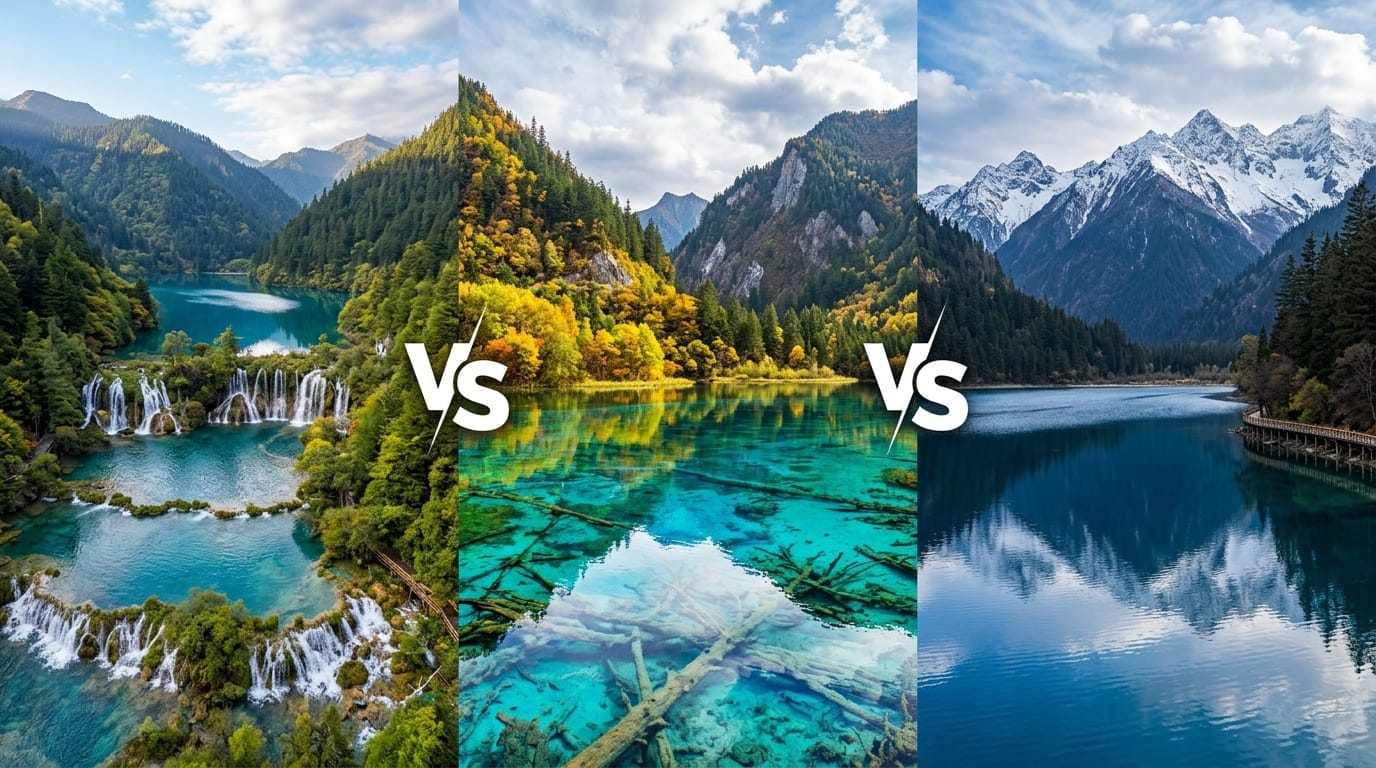
Jiuzhaigou 3 Valleys Compared: Rize vs Zechawa vs Shuzheng
If you only have half a day, go to Rize Valley — it holds Five Flower Lake, Pearl Shoal Waterfall, and Panda Lake, the images most people picture when they hear the word Jiuzhaigou. If you have a full day, add Shuzheng Valley for the terraced lake cluster and the one Tibetan village you can walk directly into. Add Zechawa Valley — Long Lake and Five-Colour Pond — on a second day, or whenever you want the park’s quietest, highest scenery.
We’ve been running tours through Jiuzhaigou since 2006, and we get some version of “which valley should I actually prioritize” from nearly every client planning their day. This guide answers it directly, valley by valley and scenario by scenario, instead of just describing what’s in each one.
TL; DR
- Half a day: Rize Valley only.
- One full day: all three fit — Rize gets the most time, Zechawa the least.
- Two days: no selection needed — pair Rize with Zechawa on Day 1, Shuzheng on Day 2.
- Older parents or young children: Shuzheng and Rize; shorten Zechawa.
- Second or third visit: Zechawa — most repeat visitors haven’t done it properly.
Table of Contents
1. Jiuzhaigou 3 valleys at a Glance
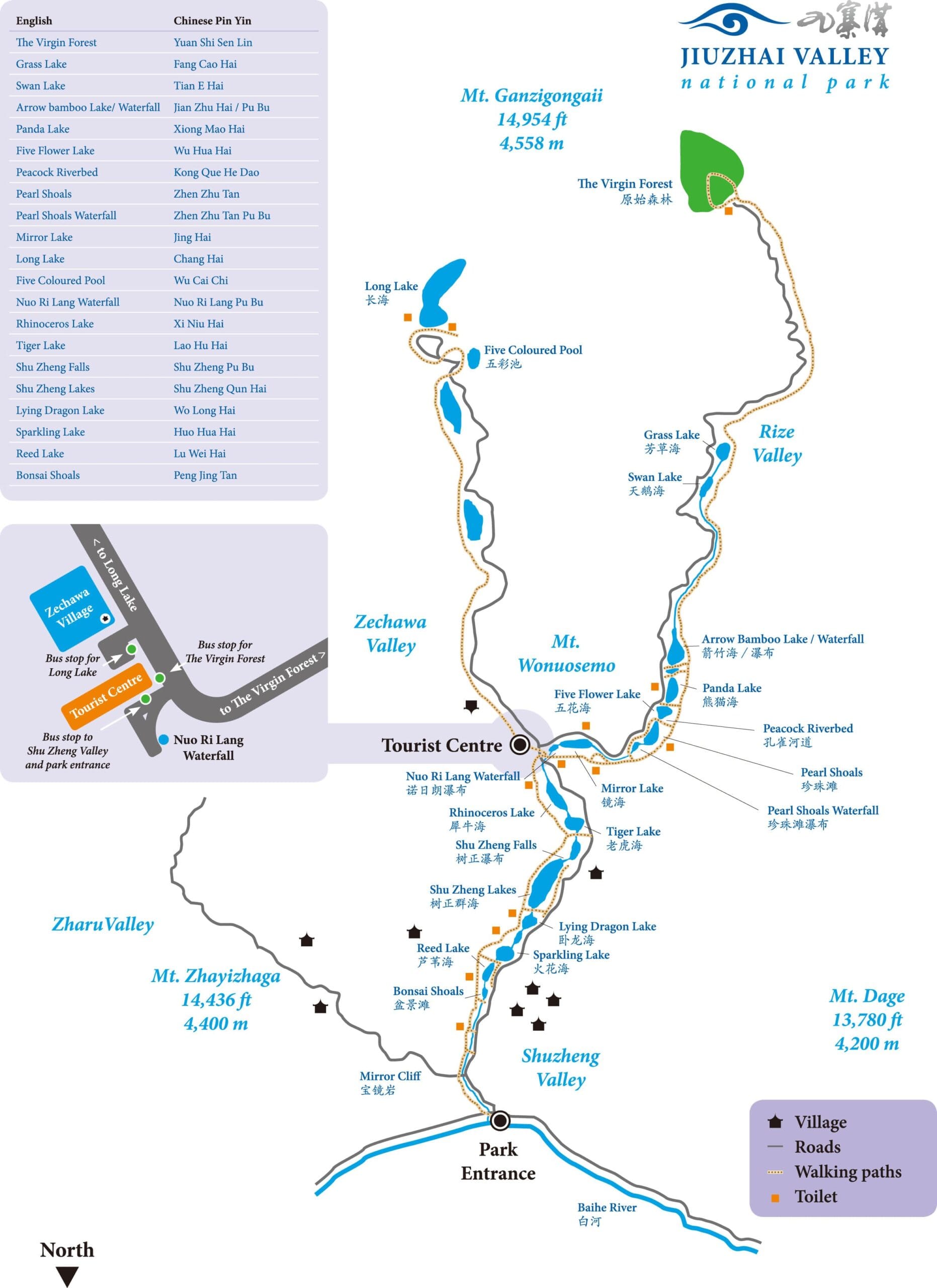
Jiuzhaigou 3 valleys — Shuzheng, Rize, and Zechawa — form a Y shape. Shuzheng Valley is the stem, running from the park gate up to Nuorilang Centre, where the Y splits into Rize (the right branch) and Zechawa (the left branch). Every visitor walks through at least part of Shuzheng, because it’s the only way in or out.
Position on the Y | Stem | Right branch | Left branch |
|---|---|---|---|
Length | 14 km | 18 km | 18 km |
Named stops | 9 | 10 | 2 |
Elevation range | 2,187–2,343 m | 2,343–2,930 m | 3,010–3,101 m |
Signature stop | Shuzheng Lake Cluster | Five Flower Lake | Long Lake |
Pace | Level, no single dominant stop | Most demanding — one stop can take an hour alone | Short, two stops connected by one walk |
Time needed | 2–3 hrs | 4–8 hrs, depending on pace | 1.5–2 hrs |
Shuzheng holds nine named lakes and waterfalls, plus Shuzheng Village — the one Tibetan settlement you walk directly into rather than view from a bus window. It’s also the most level of the three, both in elevation and in pacing. Rize is the one most people mean when they picture Jiuzhaigou: it holds four of the park’s five most-photographed attractions — Five Flower Lake, Pearl Shoal Waterfall, Panda Lake, and Panda Lake Waterfall. Zechawa is the shortest visit and the highest. It has only two stops, Long Lake (3,101 m, the park’s highest point) and Five-Colour Pond, joined by a short walk with no shuttle stop in between.
None of the three is a weak choice — each one has something the other two don’t. But when time is tight, you still have to cut one or two, and that’s what the rest of this guide helps you decide.
2. Which Individual Stops to Prioritize — and Which to Skip
Valley-level decisions only get you so far. Within each valley, some stops are essential and others you can simply pass by without stopping. This is the breakdown we give clients who want to shorten a valley rather than skip it entirely.
Rize Valley
Status | Stop | Why |
|---|---|---|
Don’t skip | Arrow Bamboo Lake | Where most one-day routes start walking — a proper stop, not a ride-past |
Don’t skip | Panda Lake | Sit with it for five minutes; the schools of highland carp reward stillness |
Don’t skip | Panda Lake Waterfall | Walk down for the full three-tier drop |
Don’t skip | Five Flower Lake | Worth an hour alone — the park’s single most-photographed spot |
Don’t skip | Pearl Shoal | Photographs better in direct midday sun than almost anywhere else in the valley |
Don’t skip | Pearl Shoal Waterfall | Shoot from the base walkway, not the top platform |
Can skip | Virgin Forest, Swan Lake, Grass Lake | The upper stretch — adds an hour of shuttle and walking for scenery most one-day visitors rate as ordinary |
Can skip | Mirror Lake, if you’re short on morning time | Its reflection disappears by 9 am no matter when you arrive |
Zechawa Valley
Status | Stop | Why |
|---|---|---|
Don’t skip | Long Lake | One of only two stops in the valley — effectively mandatory if you go at all |
Don’t skip | Five-Colour Pond | The other of the two — same logic |
Can skip | The valley itself | If your time budget is genuinely half a day or less; there’s no partial version of Zechawa worth doing |
Shuzheng Valley
Status | Stop | Why |
|---|---|---|
Don’t skip | Nuorilang Waterfall | The park’s widest waterfall — start your walk here |
Don’t skip | Rhinoceros Lake | Wide-open views, and morning mist here doubles the reflections |
Don’t skip | Tiger Lake | The autumn “tiger-stripe” reflections are one of the valley’s recognised highlights, not just a passing curiosity |
Don’t skip | Shuzheng Waterfall | First waterfall on the route, and a fixture on nearly every Shuzheng itinerary — small, but not skippable |
Don’t skip | Shuzheng Lake Cluster | Best seen from the platform above the village |
Can skip | Lying Dragon Lake | A quick look at the travertine “dragon spine” is enough |
Can skip | Sparkling Lake, Double-Dragon Lake | Nice if you stop, but fine to see from the bus if you don’t |
Can skip | Reed Lake, if pressed for time | Worth the detour if you have time, but most people walking from the gate toward Nuorilang skip it because they’re tired by then |
3. Does the Season Change Which Valley You Should Prioritize?

Mostly no across Jiuzhaigou 3 valleys — autumn foliage colours all three at roughly the same time, just staggered a week or two by elevation, so the half-day and full-day advice later in this guide holds in September and October regardless. Winter is the exception, and it changes the calculation for Zechawa specifically.
Winter (December–February): Zechawa Loses Its Edge
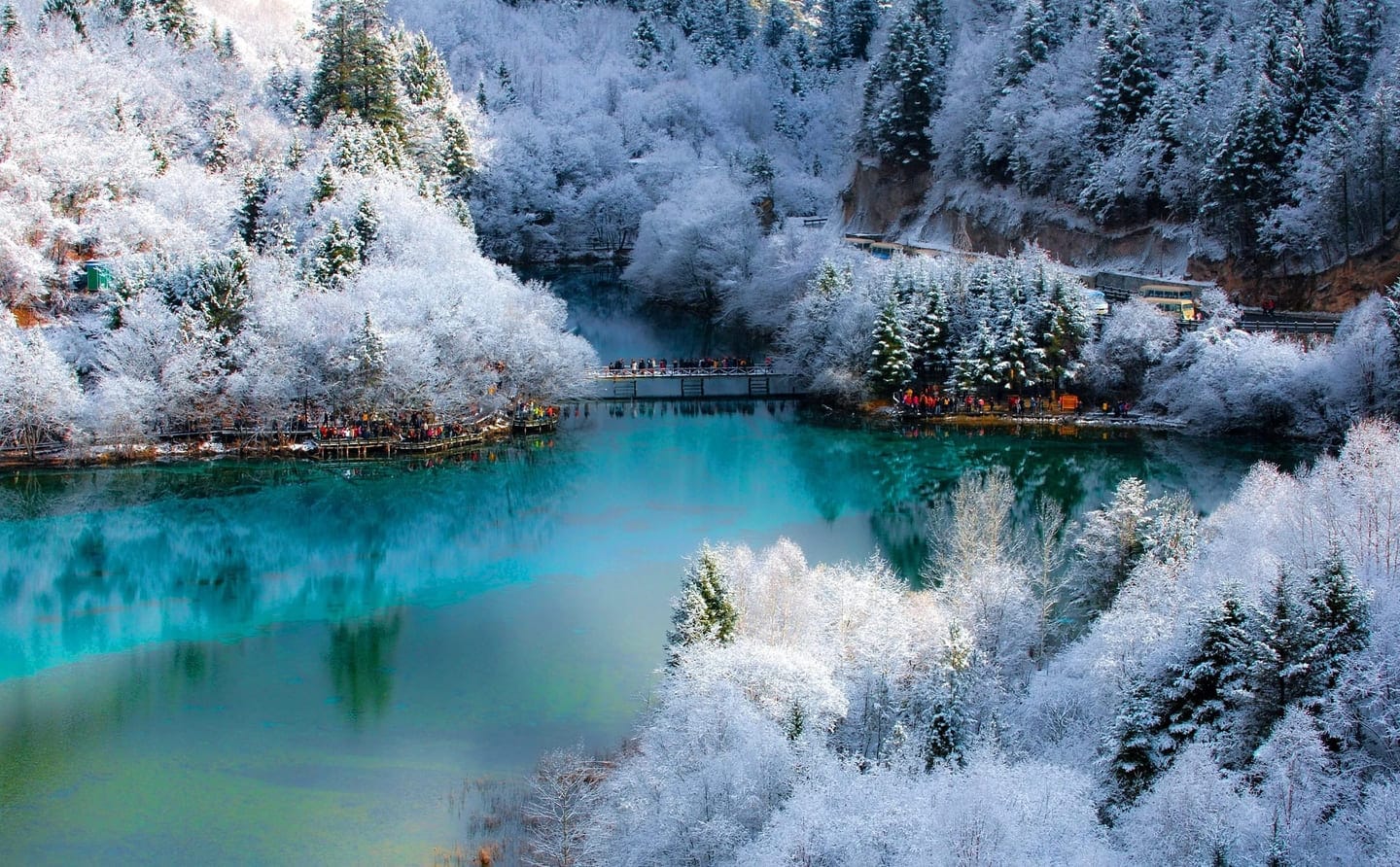
Long Lake freezes solid, and Zechawa’s other seasonal lakes largely dry up, leaving a mostly bare-forest walk between two stops that are worth seeing but not worth much extra time. Five-Colour Pond doesn’t freeze and keeps its colour, but its water level drops well below half by February. Rize fares better. Five Flower Lake never freezes — its mineral composition keeps it that way — so it stays a reliable, full-colour stop all winter. Panda Lake nearby does freeze, and it becomes one of the park’s better cold-season photo spots in its own right. If you’re visiting between December and February, we’d shift time away from Zechawa and toward Rize and Shuzheng. The frozen waterfalls there — Pearl Shoal, Nuorilang — are a genuine winter highlight, not a compromise.
Spring (March–May) and Summer (June–August): No Real Change
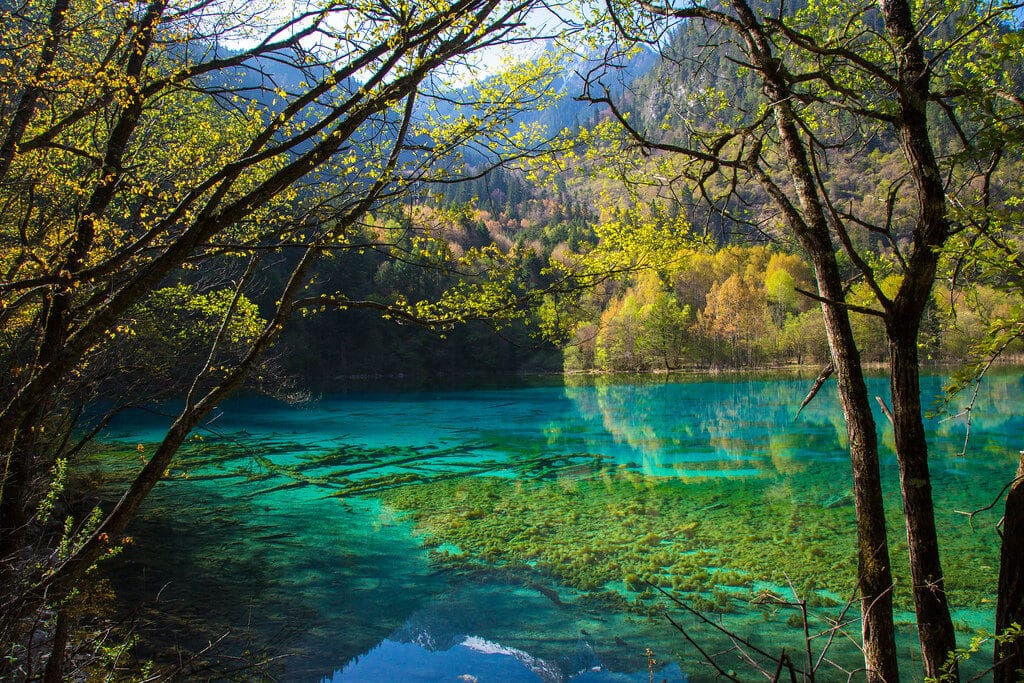
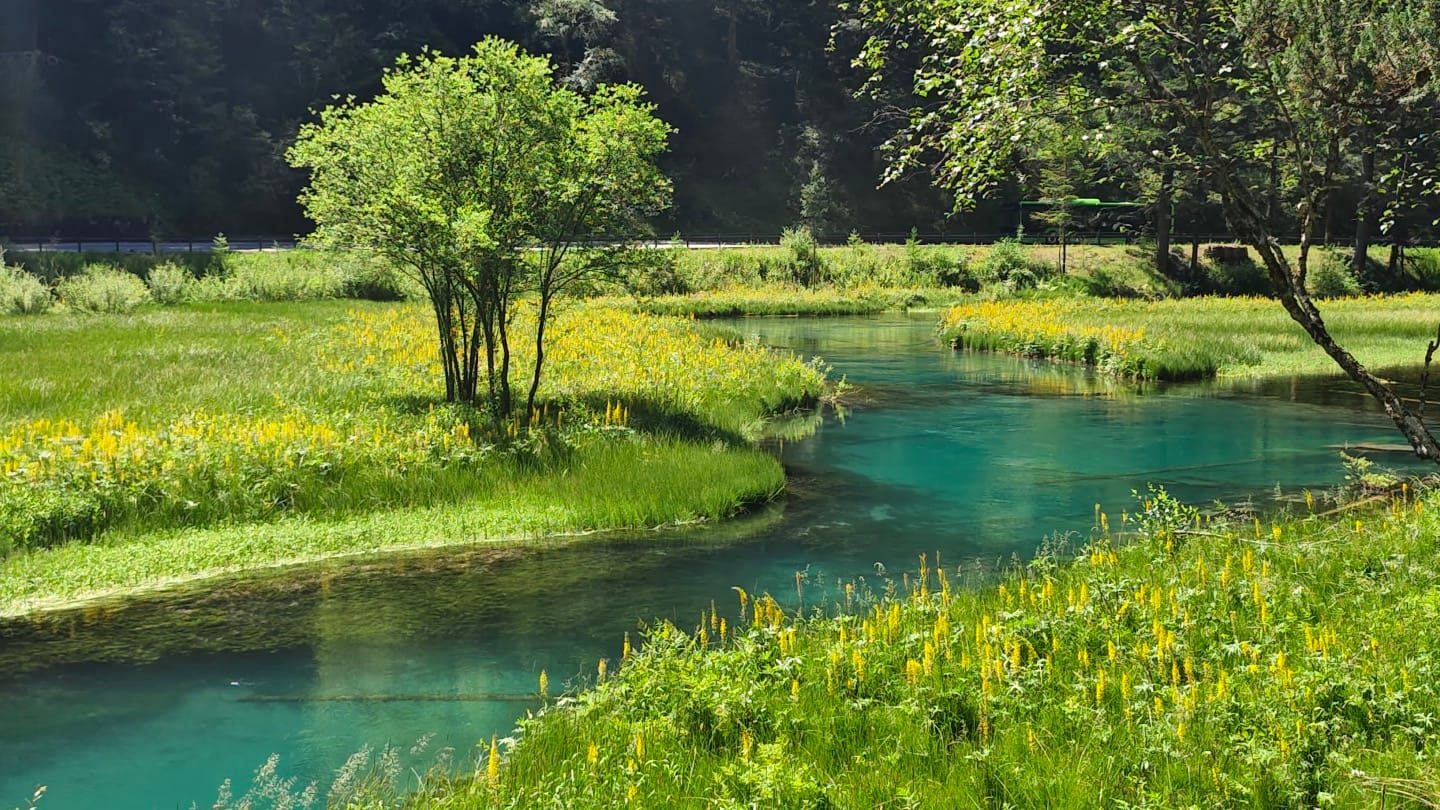
Lower water levels in spring affect the whole park evenly, not one valley more than another, so the standard half-day and full-day guidance later in this guide still applies. Summer’s heavier rain mostly affects timing within a day (arrive before early-afternoon showers) rather than which valley to prioritize.
4. If You Only Have Half a Day: Go to Rize Valley
Why Rize Over the Other Two
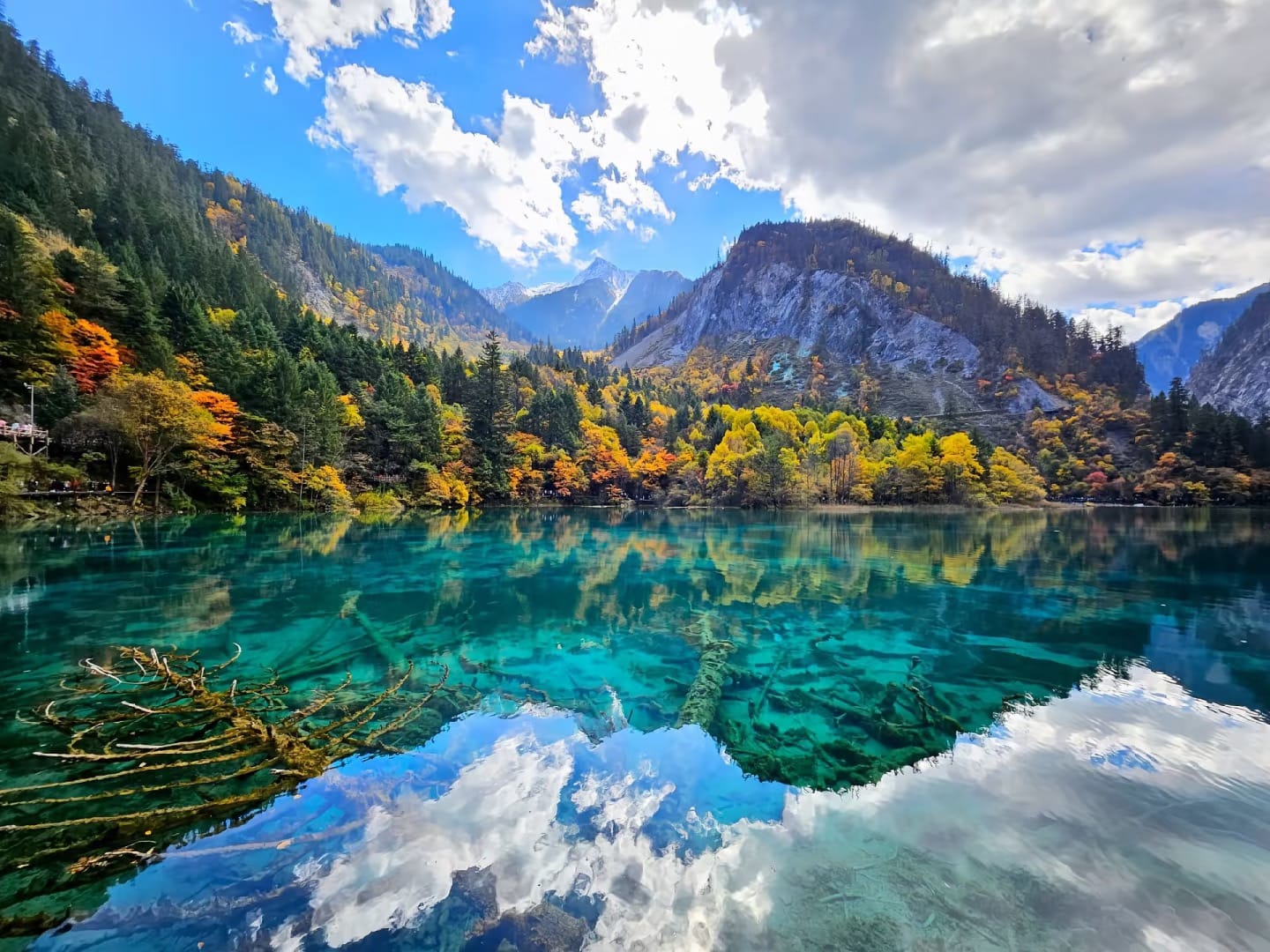
Rize packs the most attractions into the shortest distance — four of the park’s five most-photographed attractions sit inside one continuous downhill walk, no backtracking needed. Shuzheng’s stops are mostly worth seeing too, but they’re spread across 14 km, so a half-day visit only reaches a handful of them. Zechawa has the opposite problem: only two stops, so a short visit means seeing half of what little the valley has. Half a day in Rize gets you close to the complete experience; half a day in Shuzheng or Zechawa gets you a partial pass through a longer or thinner list. Our Rize Valley guide has the exact stop-by-stop route.
The Trade-Off
You’ll skip Zechawa entirely and see only the lower stretch of Shuzheng on your way out. We think that’s the right trade for a half-day visit. Shuzheng’s terraced lakes and the village are worth seeing, but they don’t carry the same must-see weight as Five Flower Lake and Pearl Shoal Waterfall — and Zechawa is the kind of place we tell clients to come back for, not the kind you rush.
Best Timing
If your half-day happens to fall on a clear morning, this plan also puts you at Five Flower Lake inside its best light window — 9:30–10:30 am, before wind breaks the water’s surface and blurs the colour bands.
5. If You Have a Full Day or More: All Three, but Not Equally
One Day: Yes, All Three Fit
A full day, entered at 7:30 am, covers Jiuzhaigou 3 valleys without rushing any of them. The real decision isn’t whether you can fit them in; it’s how much time you give each one. Rize needs by far the most time (Five Flower Lake and Pearl Shoal Waterfall alone justify two hours), Zechawa needs the least (two stops, roughly two hours total), and Shuzheng is flexible — it’s the corridor you ride through no matter what, so it can take up whatever time is left. Our Jiuzhaigou Valley guide has the exact hour-by-hour route we use with one-day clients.
One Day: The Order That Works
Rize goes first because its best light only happens in the morning. Zechawa goes in the middle because it’s the most affected by altitude, and you have the most energy then. Shuzheng goes last because nothing there depends on the time of day. This is about the order you visit them in, not about choosing between them — every valley still gets its time.
One Day: If You’re Running Out of Time
Zechawa is the one to shorten first. Skip Five-Colour Pond and keep Long Lake, or skip the valley outright and add the time to Rize instead.
Two Days: No More Shortening, Just Pairing
With a second day, the time pressure above disappears entirely — there’s enough time to walk all three valleys properly, so the only decision left is which two go together on Day 1. Pairing Rize and Zechawa works best, since they only connect through Nuorilang Centre; Shuzheng, the lower-elevation corridor valley, makes an easier, unhurried Day 2.
6. Which Valley Fits You, by Traveler Type
Time budget is the first filter for choosing between Jiuzhaigou 3 valleys. Who you’re traveling with, and what you’re actually there for, is the second.
Photographers: Rize First
For Five Flower Lake’s 9:30–10:30 am window and Pearl Shoal Waterfall’s texture in direct light — shoot it from below, not the top platform. Mirror Lake’s reflection, also in Rize, disappears by 9 am, so it needs to come before Five Flower Lake if you want both. Zechawa’s Five-Colour Pond rewards a second morning if you have one; its concentrated colour in a small frame is a different kind of shot than Rize’s wide lake views. Shuzheng’s Sparkling Lake is the exception to the “shoot in the morning” rule — its light-scatter effect peaks at 4–5 pm, the one Jiuzhaigou photo op that wants late-afternoon sun instead of morning.
Traveling with Older Parents or Young Children: Shuzheng and Rize
Both have shuttle stops close to the main viewpoints and mostly flat, wide boardwalks, so you can ride between stops rather than walking the full distance. Zechawa’s Long Lake and Five-Colour Pond involve a steeper approach from the bus stop, and the altitude (up to 3,101 m) is more likely to affect people who aren’t used to it. If everyone in your group is managing well, add Zechawa for an hour; if anyone is already tired, it’s the easiest valley to leave for next time. One couple we guided in October — her parents were visiting from Florida, neither with high-altitude experience — skipped Zechawa entirely and still called Rize and Shuzheng “the best day of the whole China trip.”
Second-Time or Third-Time Visitors: Zechawa
If you’ve already done Rize and Shuzheng on a previous trip, this is where the park still has something new to show you — the quietest crowds, the highest scenery, and Long Lake’s alpine scale, which doesn’t resemble anything in the other two valleys. That holds even in winter, when Zechawa’s colour fades — see the seasonal note above — because what you’re chasing on a repeat visit is a different experience, not another round of the same lakes.
Wheelchair Users or Anyone with Limited Mobility: Shuzheng and Rize
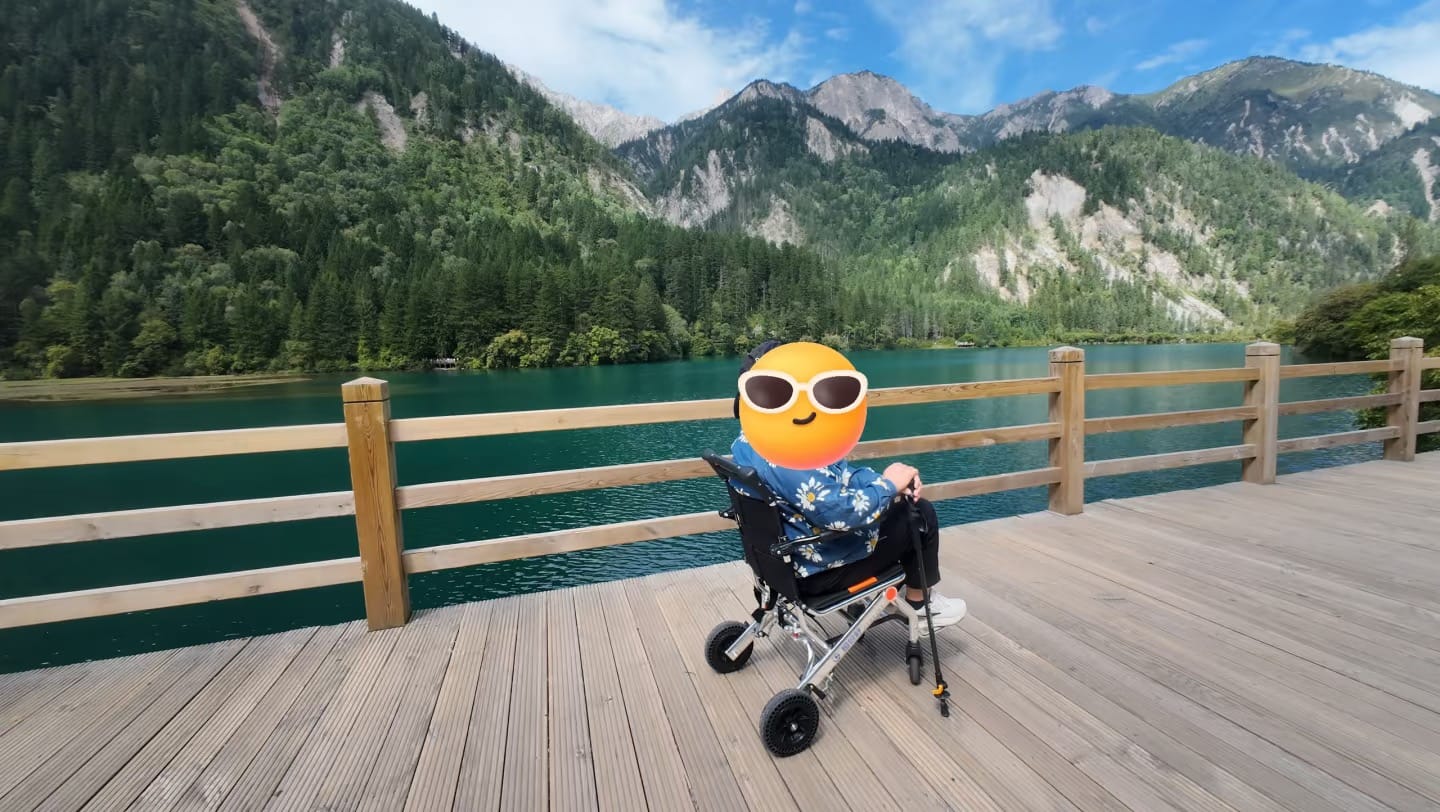
Main boardwalks are flat and paved, and eco-buses stop close to the major viewpoints, so you can cover the highlights without long walks. Zechawa’s two stops are the harder ones to manage in a wheelchair; the approach from the bus is steeper at both.
Backpackers and Budget Travelers on a Tight Schedule: Rize Alone
If you truly only have a few hours, Rize is the valley that makes the trip worthwhile on its own. Skipping Zechawa and most of Shuzheng costs you less than skipping Rize would.
7. Head-to-Head: The Three Signature Moments
If you could only keep one photo from each valley, this is what you’d walk away with.
Rize: Five Flower Lake
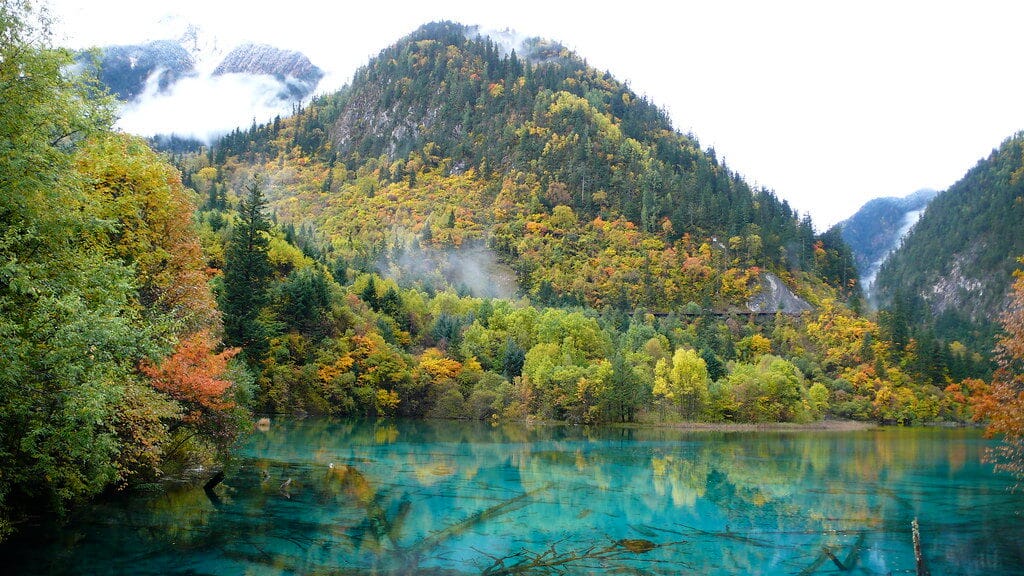
Five distinct colour zones visible at once in a single 90,000 m² lake — sapphire, turquoise, jade, amber, pale yellow. Nothing else in the park shows this much colour variation in one frame.
Zechawa: Long Lake
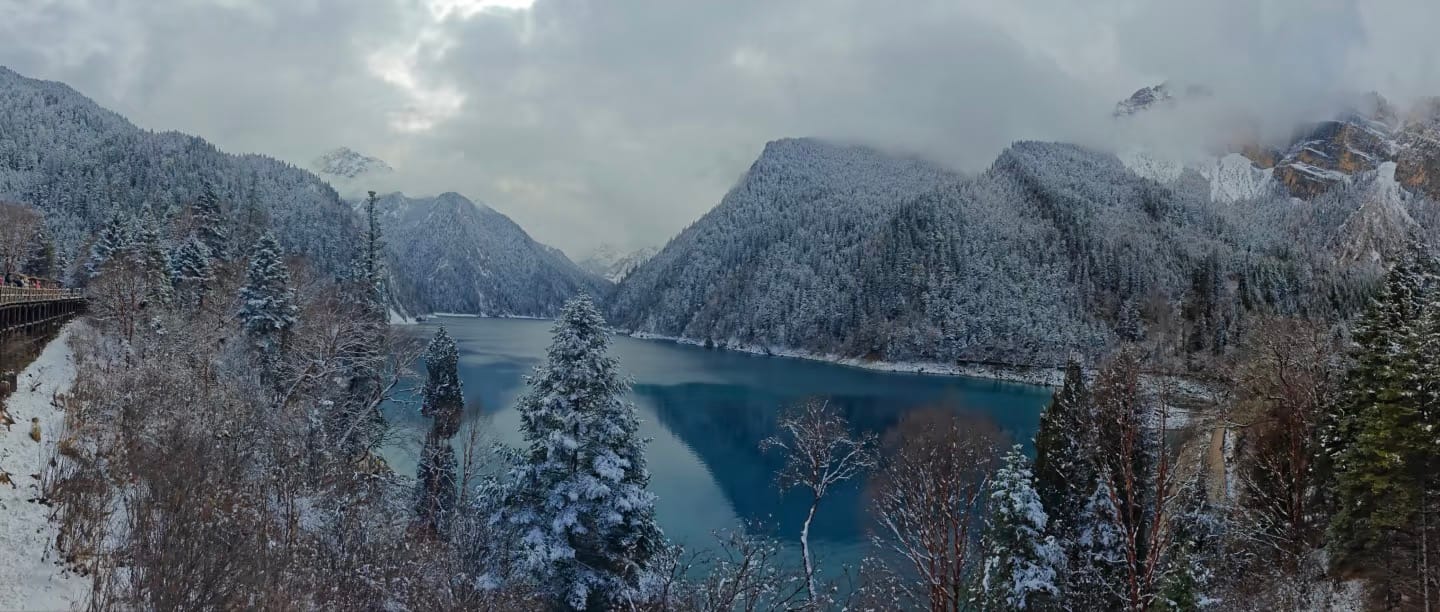
Scale, not colour, is the point here. At over 7 km long and 3,101 m up, it’s the park’s largest lake, framed by snow peaks in a wide alpine bowl. Where Five Flower Lake is about detail, Long Lake is about vastness.
Shuzheng: The Lake Cluster from the Platform Above the Village
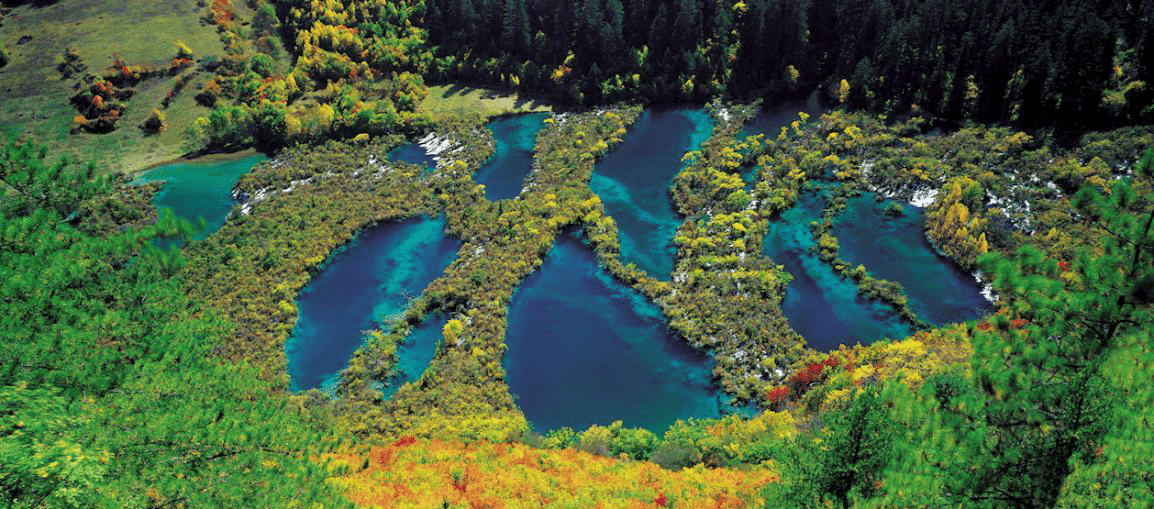
Nineteen terraced lakes cascade into each other, all visible at once from height. No single ground-level stop in Rize or Zechawa gives you that — neither valley has a comparable terrace formation.
None of these three is objectively “better” than the others. They’re different enough in kind that ranking them against each other misses the point — which is part of why doing all three, even briefly, gives you a fuller picture than maximizing time in just one.
8. Altitude and Accessibility: Where They Differ
Elevation explains most of the practical differences across Jiuzhaigou 3 valleys.
Shuzheng | Rize | Zechawa | |
|---|---|---|---|
Elevation range | 2,187–2,343 m | 2,343–2,930 m | 3,010–3,101 m |
Height above park entrance | Lowest | Mid-range | Highest — 750+ m above entrance |
Boardwalk terrain | Flat, wide | Mostly flat; steeper near Virgin Forest | Steepest approach to both stops |
Wheelchair / stroller ease | Easiest | Easy | Hardest — steep approach at Long Lake and Five-Colour Pond |
Altitude-sickness risk | Low | Low to moderate | Moderate, especially on the Long Lake climb |
Why the Gap Matters
Altitude effects are most likely to show up in Zechawa, especially on the climb to Long Lake — mild headaches, shortness of breath on stairs, general fatigue. We tell clients not to take the first bus of the day there. Spend the morning at lower elevation in Shuzheng or Rize first, and let your body acclimatise before Zechawa’s climb. The boardwalk terrain also gets steeper as elevation increases. That’s why Zechawa is the hardest of the three valleys for wheelchair users, strollers, or anyone with limited mobility — see the traveler-type breakdown above for the specifics.
Visitors with heart conditions, high blood pressure, or respiratory issues should be more cautious about Zechawa specifically than about the park as a whole.
9. FAQ: Jiuzhaigou 3 valleys
Can I visit just one valley and skip the other two?
Yes, though we’d only recommend it under real time pressure. If you can only manage one, make it Rize — it holds four of the park’s five most-photographed attractions. Shuzheng is unavoidable as a corridor either way, since it’s the only route in and out of the park.
How many days do I need to see all three valleys properly?
One full day covers all three without rushing. Two days lets you walk each valley at a relaxed pace and revisit Rize in better light. We’d only recommend seeing a single valley — and skipping the rest — if your schedule truly allows nothing more.
Which valley should I visit on a cloudy or rainy day?
Shuzheng holds up best in flat light — its terraced lakes and forest scenery depend less on direct sun than Rize’s colour-zone lakes do. Five Flower Lake and Five-Colour Pond both lose intensity when the sky is overcast, since their effect comes partly from sunlight hitting the lakebed at an angle.
Is Zechawa Valley worth visiting if I only have one day?
If your one day is genuinely tight, no — put that time into Rize and Shuzheng instead. If you have even an extra two hours, yes: Long Lake and the pond don’t resemble anything else in the park, and most one-day visitors regret skipping them once they’ve seen photos of what they missed.
Do all three valleys cost the same to enter?
Yes. There’s a single park-wide ticket and shuttle pass — no separate admission for any individual valley. Full pricing and booking details are in our Jiuzhaigou Valley guide.
Which valley has the least foot traffic?
Zechawa, by a wide margin. It has the fewest named stops, which means fewer buses stopping and fewer people getting off at any one point, even during October’s peak crowds.
Planning your route through Jiuzhaigou 3 valleys? Get in touch and we’ll help you build a walking order that matches how many days you actually have.