Tibet Travel Permit: The Complete Guide
If you’re planning a trip to Tibet, sorting out the permit is the first real task — and the one that catches most people off guard.
We’ve been running China tours for 20+ years. We’ve helped thousands of travelers get through the paperwork without a hitch, and we’ve seen just as many people miss their flights because they started too late or didn’t understand what was required. This guide is based on that experience, not research. No fluff — just what you need to know.
Table of Contents
1. What Is the Tibet Travel Permit?
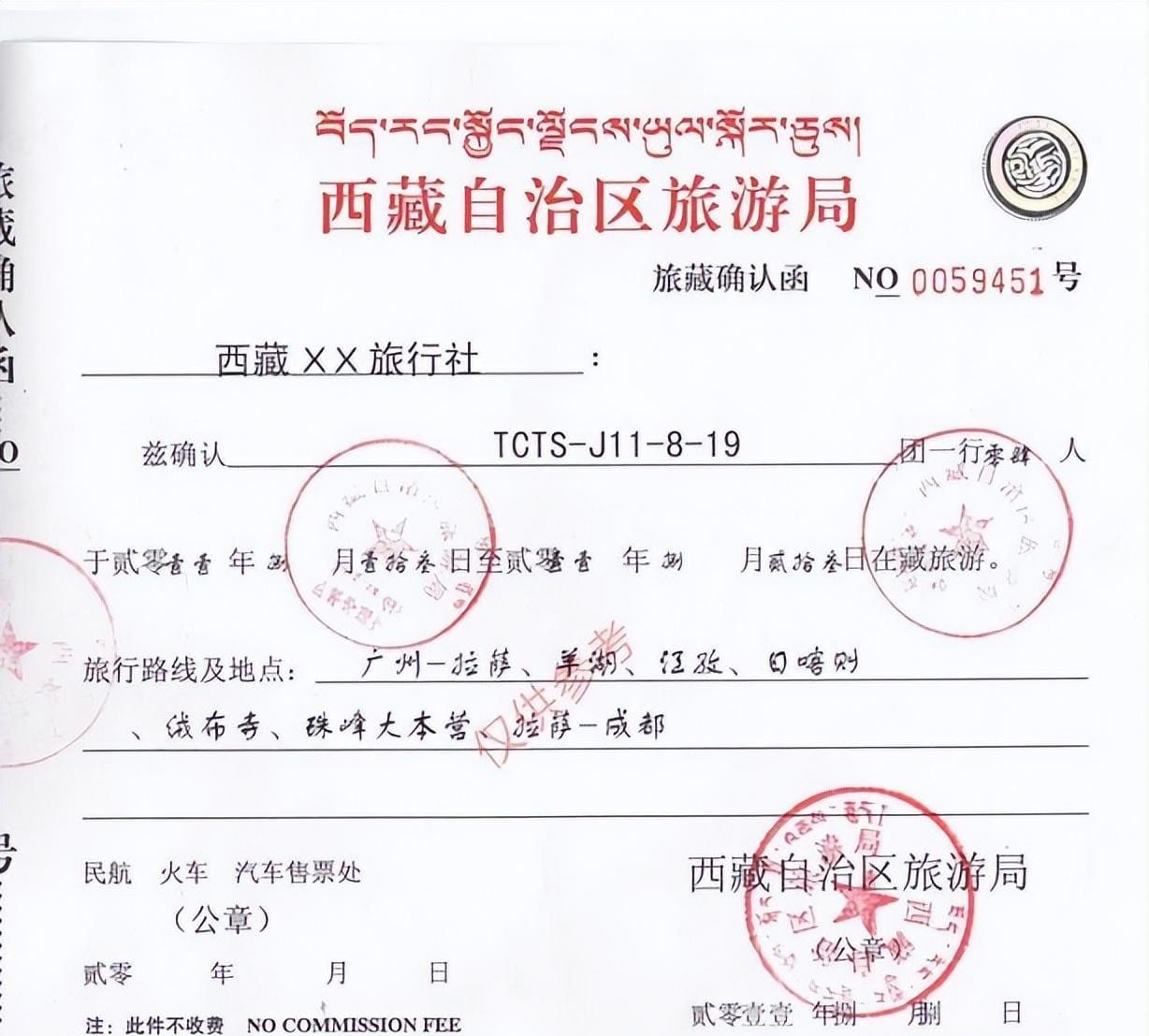
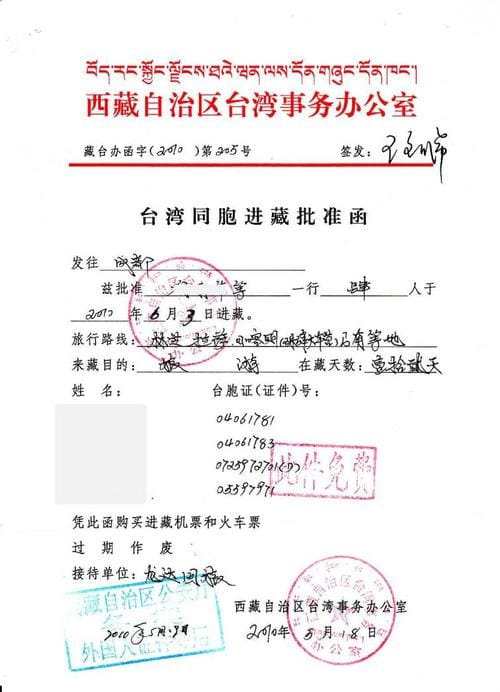
The Tibet Travel Permit (TTP) — officially issued by the Tibet Tourism Bureau, so it’s sometimes called the TTB Permit — is a government document that all foreign passport holders must have to enter the Tibet Autonomous Region (TAR).
It’s not a visa. Your Chinese visa gets you into China. The Tibet Travel Permit gets you into Tibet. You need both, and they’re completely separate processes.
Physically, it’s an A4 sheet listing your name, passport number, nationality, travel dates, and your approved itinerary. Everyone in your group is named on it. The permit has existed since the 1980s, when Tibet first opened to international visitors.
One thing worth knowing upfront: the permit is collected by the Tourism Bureau when you leave. It can’t be kept as a souvenir or reused for a future trip.
2. Who Needs One?
If you hold a foreign passport, you need one. Here’s the full picture:
Traveler Type | Permit Required? |
|---|---|
Foreign passport holders (all nationalities) | Yes |
Taiwan residents (with MTP) | Yes |
Overseas Chinese (with foreign passport) | Yes |
Expats living/working in China | Yes |
Visa-free country nationals (French, German, Singaporean, etc.) | Yes — passport copy only, no China visa needed |
Hong Kong SAR passport holders | No |
Macau SAR passport holders | No |
Mainland Chinese citizens (ID card) | No |
Diplomats / Journalists | Apply via Tibet Foreign Affairs Office, not agencies |
Something that trips people up regularly: China’s visa-free policy does not remove the Tibet permit requirement. As of 2026, citizens from 78+ countries can enter China without a visa for up to 30 days — France, Germany, Singapore, Malaysia, Brazil, Australia, Argentina, and many others. You still need the Tibet permit. The practical difference is that we only need your passport scan to start the application, not a visa copy.
3. The 4 Permits — Which Ones You Actually Need
Most articles talk about “the Tibet Travel Permit” as if it’s one document. It’s not — there are up to four, depending on where you’re going.
3.1. Tibet Travel Permit (TTB Permit)
Covers Lhasa city and the immediate Lhasa Prefecture. Required for every foreign traveler entering Tibet. Processing takes 8–10 working days. Officially free — the cost is wrapped into your tour.
3.2. Alien’s Travel Permit (ATP)
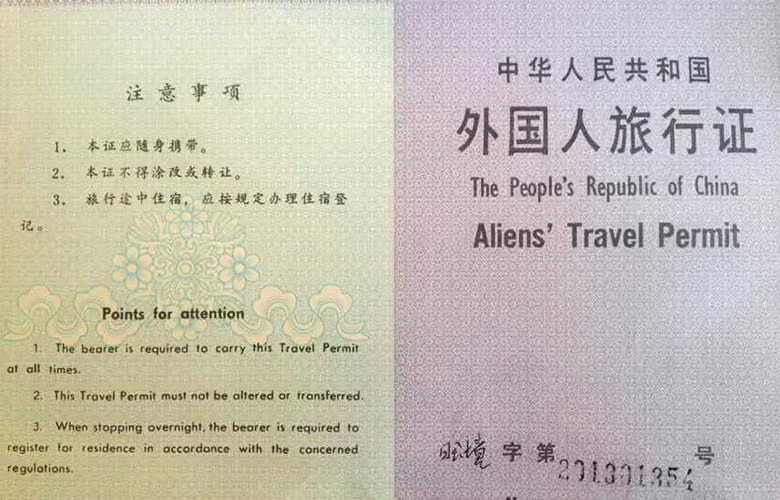
Needed for anywhere beyond Lhasa: Shigatse, Gyantse, Everest Base Camp, Namtso Lake, Shannan, and most other prefectures. Your guide arranges this at the local PSB office in Lhasa after you arrive — takes a few hours, costs around 50 CNY (~$7 USD) per person.
This is the permit that surprises most EBC travelers. They thought one permit covered everything. It doesn’t.
3.3. Military Permit
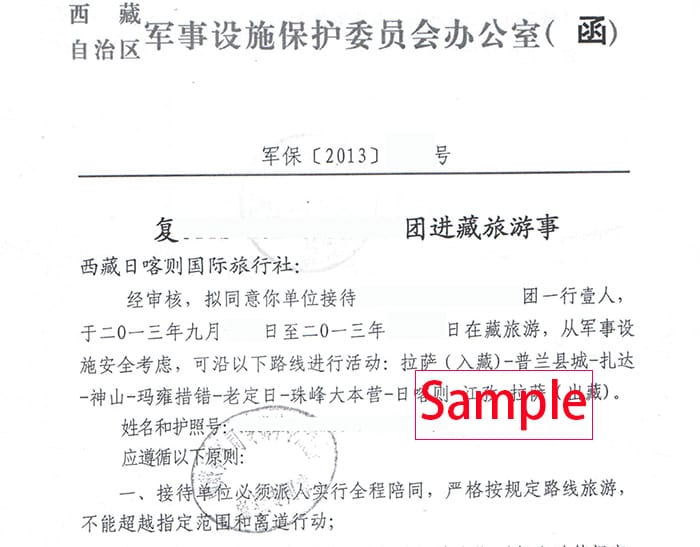
Required for Ngari Prefecture (Mount Kailash, Lake Manasarovar) and parts of Nyingchi and Chamdo. Takes up to 30 days to process. This is why Kailash trips demand early planning — not just the distance, but the paperwork timeline. Cost is included in your tour.
3.4. Border Pass
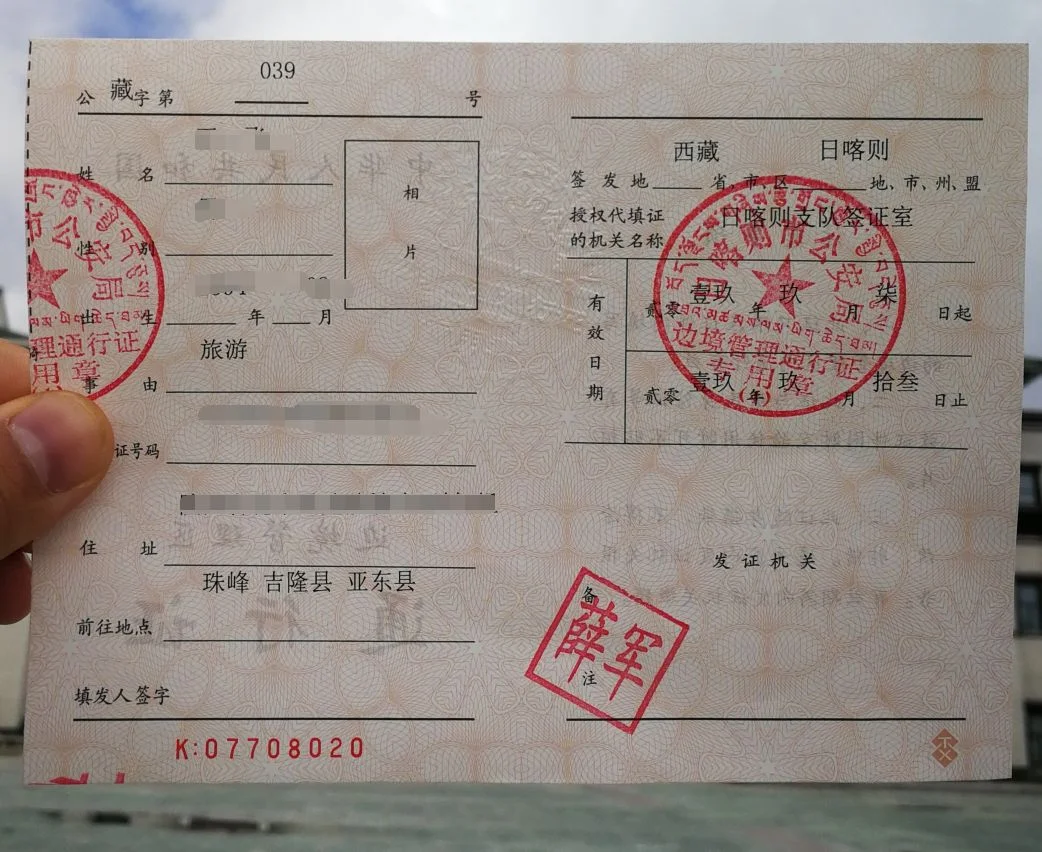
Required for areas near the Nepal, India, and Bhutan borders — parts of Shigatse, Ngari, and Nyingchi. Applied for alongside the Military Permit, included in tour cost.
Going to Lhasa only: you need #1.
Adding EBC: #1 and #2.
Kailash: all four, with a 35–40 day lead time minimum.
4. Plan Early — Tibet Has Real Deadlines
Unlike most China travel, Tibet requires physical paperwork in your hands before you board. There’s no sorting it out at the gate. There’s no digital version you can pull up on your phone. The permit is a physical document that gets couriered to you in mainland China — and it has to arrive before your departure date.
Work backward from your entry date:
Destination | Submit documents by… |
|---|---|
Lhasa only | 20–25 days before entry |
EBC, Namtso, areas beyond Lhasa | 25 days before entry |
Mount Kailash / Ngari | 35–40 days before entry |
Peak season (July–August) | Add 5–7 extra days — processing slows |
Two hard limits beyond timing:
Tibet closes to foreign tourists every year around Losar (Tibetan New Year), typically mid-February through late March. No permits are issued during this window, no entry is possible. For 2026, the usual March closure is not expected — Tibet is likely to stay open through winter and spring. We’ll update clients directly the moment we have confirmed information.
Mount Kailash is off-limits to foreign tourists in June and July, regardless of permits. If Kailash is your destination, plan for May, or August through October.
If your trip is 3–4 weeks out and you haven’t started: contact us now. We can often still make it work, but not if you wait another week.
5. How to Get the Permit: Step by Step
Step 1: Book a tour with a licensed agency
Individual applications don’t exist. The Chinese government processes Tibet permit applications only through licensed travel agencies. You cannot apply yourself, online or otherwise.
You also can’t travel independently once inside. Foreign tourists must be accompanied by a licensed guide and travel in a registered vehicle throughout their time in Tibet.
One thing to understand about how the system works: Tibet Travel Permits can only be processed by agencies licensed inside Tibet. No operator based outside Tibet — including us — bypasses this step. What we do is coordinate through our long-term Tibet-based partners, the same team we’ve worked with for close to 20 years. Every Tibet tour we arrange includes the permit at no extra charge. You send us your documents; we handle everything from there. In nearly two decades, we’ve never had a permit fail for a confirmed booking.
Step 2: Send us your documents
We need scanned copies of:
- Your valid passport (minimum 6 months remaining validity)
- Your Chinese visa — only if applicable (skip this if your country has visa-free access to China)
- Expats in China: additional paperwork is sometimes needed, typically a non-departure record from your employer or residential committee
We’ll tell you if your specific situation requires anything extra.
Step 3: We apply, you wait
We submit to the Tibet Tourism Bureau on your behalf. Standard processing is 8–10 working days. Add 3–5 days for courier delivery to your mainland hotel — 15–20 days total from submission to receipt. During national holidays or peak summer season, budget a few extra days.
We start your permit application the day you confirm your booking. In 20 years, we’ve never had a client miss Tibet because of permit timing.
Step 4: Receive the physical permit
We send the original by express courier (SF Express) to your hotel in mainland China.
For flights: All airports require the original at check-in. No copies, no photos on your phone.
For the Qinghai-Tibet train: A color printout works in most cities — Beijing, Chengdu, Shanghai, Xining, Guangzhou. If you’re boarding from Xi’an, Lanzhou, or Chongqing, bring the original.
Booking train tickets online: You may be asked to enter your permit number during the booking process. Have the permit details ready before you try to buy tickets.
Make at least 3 color copies before entering Tibet. Road checkpoints sometimes keep a copy, hotels take one at check-in, and you want a backup. Your guide holds the original; you carry one copy yourself.
If you’re transiting a mainland city for just a few hours before flying to Lhasa, we can arrange a hand-delivery at the airport. Just mention your itinerary when you book.
Step 5: Enter Tibet
Staff check the permit at boarding — airport or train station. Keep it with you for the entire trip. It’s verified again at road checkpoints throughout Tibet and at hotel check-ins. Your guide manages most of this, but keep the permit accessible.
6. What Does It Cost?
The permit itself is free. The Tibet Tourism Bureau issues it at no charge — the document even says “No Commission Fee” in English. The cost sits in the tour, because a tour is the only way to obtain one.
Item | Cost |
|---|---|
Tibet Travel Permit (TTB) | Free — included with all tours we arrange |
Alien’s Travel Permit | ~50 CNY (~$7 USD) |
Military Permit | Included in tour |
Border Pass | Included in tour |
Chinese Tourist Visa (L visa) | $60–$140 depending on nationality; waived for visa-free countries |
Private tour | From ~$1,300 USD depending on group size and duration |
If any agency quotes you a separate “permit fee” on top of your tour, ask what it covers. Permit processing is part of the service, not an add-on.
7. Entering Tibet from Nepal

The rules changed in late 2025 and most articles haven’t updated.
Previously, travelers entering Tibet from Nepal needed a Chinese Group Visa issued by the Chinese Embassy in Kathmandu — requiring a group of at least 4 people, which blocked solo travelers and couples entirely.
That requirement is gone. You can now enter Tibet from Nepal on a standard individual Chinese tourist visa issued in your home country. If your country has visa-free access to China, you need only your passport and the Tibet Travel Permit.
The Kyirong overland border crossing is open as of late December 2025. Lhasa–Kathmandu flights run three times a week (Monday, Wednesday, Friday) during the season.
Indian passport holders planning the Kailash Mansarovar Yatra: the process is different for you — applications go through the Foreign Affairs Office of the TAR or the Tibet-India Pilgrim Reception Center, not through a standard agency.
8. What Happens Without the Permit
Airlines check at boarding. No permit means no boarding. Not for any reason, regardless of what else you’re carrying. Hotels verify it at check-in. Road checkpoints verify it throughout the journey.
We’ve had people call us from departure gates, permit-less, asking if something could be done. It couldn’t. There’s no counter to negotiate at and no exception to appeal to.
The permit process is genuinely manageable. It just needs time.
9. Common Misconceptions
“I can apply online myself.” There’s no individual application process, online or offline. Any website suggesting otherwise is outdated or wrong.
“I can extend my permit inside Tibet.” Generally no. The permit covers a fixed itinerary and dates. If your plans might change, tell your agency before you leave — mid-trip changes are very difficult to accommodate.
“I have a business or student visa — does that affect anything?” You can still visit Tibet. Your agency may need extra documentation from your employer or institution. Build in a few additional days of lead time.
“I just want the permit, not a guided tour.” Independent travel in Tibet is not permitted for foreign passport holders. The guide and vehicle requirement is separate from the permit, but equally mandatory.
“The permit covers all of Tibet.” The basic TTB Permit covers Lhasa only. Everest Base Camp, Namtso, Shigatse — these all require the additional Alien’s Travel Permit on top.
10. FAQ
How long does the permit take?
8–10 working days for processing, plus courier delivery. Budget 20 days from submission to receipt, 25–30 during holidays or peak season.
Is there a “Tibet visa”?
No. Tibet is part of China — there’s no separate visa. The Tibet Travel Permit is an additional internal document on top of your Chinese visa (or in lieu of a visa if your country has visa-free access).
How much does it cost?
The permit is free. When you book a Tibet tour through us, it’s included — no separate charge.
Can I visit without a guide?
No. Independent travel is not permitted for foreign tourists regardless of permit status.
Do I need the permit for Shangri-La, Ganzi, or Yushu?
No. The permit applies only to the Tibet Autonomous Region (TAR). Ethnically Tibetan areas in Sichuan (Ganzi), Qinghai (Yushu), and Yunnan (Diqing/Shangri-La) are outside the TAR and have no permit requirement.
What if Tibet closes after I’ve booked?
We track this year-round. If something changes that affects your trip, we contact you before you’ve even heard about it elsewhere. Over 20 years we’ve worked through several unexpected closures — we handle the rebooking or refund.
Is Tibet accessible in winter?
Yes. Lhasa and central Tibet are fine in winter — fewer crowds, lower prices, often clear blue skies. High passes to Kailash and Namtso can be snow-blocked in deep winter, so those routes need timing consideration.
Is Mount Kailash open year-round?
No. Foreign tourists are not permitted in June or July. Plan for May or August through October.
What about last-minute bookings?
For Lhasa-only trips, rush processing (2–3 working days) is sometimes possible. It depends on the bureau’s workload at the time and isn’t guaranteed. Contact us and we’ll tell you what’s genuinely feasible. For Kailash, there’s no shortcut — the Military Permit has a fixed timeline.
Can US, UK, and Australian passport holders visit?
Yes. All nationalities with normal diplomatic ties to China are eligible for the permit. US and UK holders currently have 6-day visa-free transit in China; for a full Tibet trip you’ll want a standard tourist visa unless your whole stay falls within that window.
11. A Last Word
After nearly 20 years of running Tibet tours, the permit situation hasn’t fundamentally changed: start early, work with people who know the process, and don’t assume the basic permit covers everywhere.
The two things that still catch travelers: leaving it too late, and not knowing that EBC and Kailash require additional permits beyond the basic TTB.
When you book with us, the permit is handled from day one. We’ve done this for travelers from over 50 countries. If something changes on the ground — a closure, a new restriction — you’ll hear from us before you find it on any website.
Tibet is worth every step of the preparation.