Yangshuo Silver Cave: Complete Visitor Guide
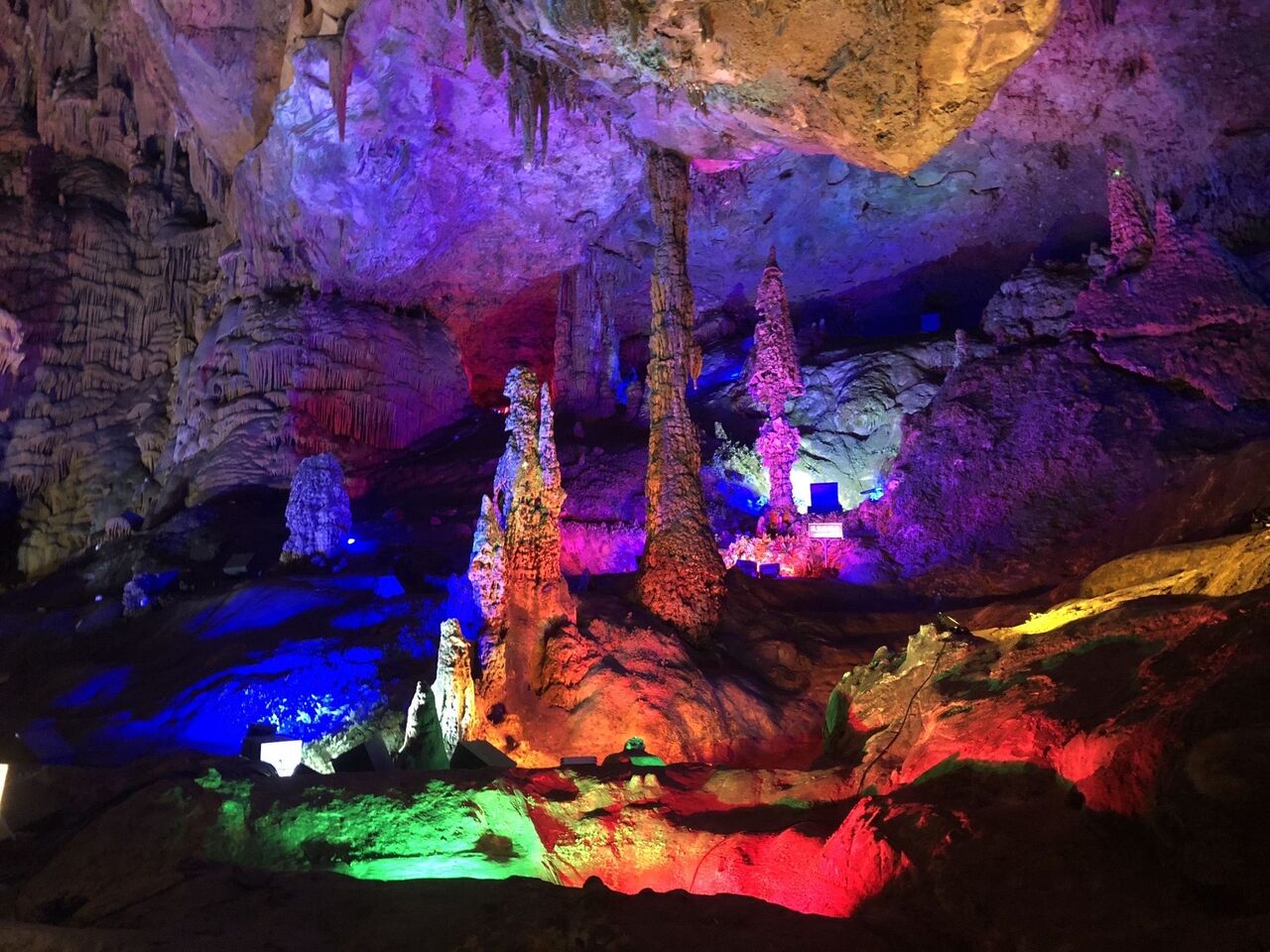
Yangshuo Silver Cave is the largest karst cave in the Guilin region — 2 kilometresbaidu.com of passages threading through twelve limestone peaks across three progressively larger sections. Development began in 1996; the cave opened to visitors in 1999 and was rated 4A National Scenic Area in 2005. Interior temperature holds at 20–26°C year-round.
Chinese name | 银子岩 (Yínzǐ Yán) |
Location | Maling Town, Lipu County — 27km from Yangshuo, 85km from Guilin city |
Adult ticket | ¥65 at gate; ¥55–58 pre-booked online or through hotel |
Combined ticket | ¥99 (cave + geology museum) |
Concessions | Under 1.2m: free · 1.2–1.4m: half price · Students with ID: ¥33 · Over-65s: free |
Hours | 08:30–17:00 daily; last entry 16:30 |
Route | 2km one-way, no backtracking |
Time needed | 1.5–2 hours |
Interior temperature | 20–26°C year-round |
Phone | +86-773-2387668 |
Table of Contents
1. What Is Yangshuo Silver Cave?
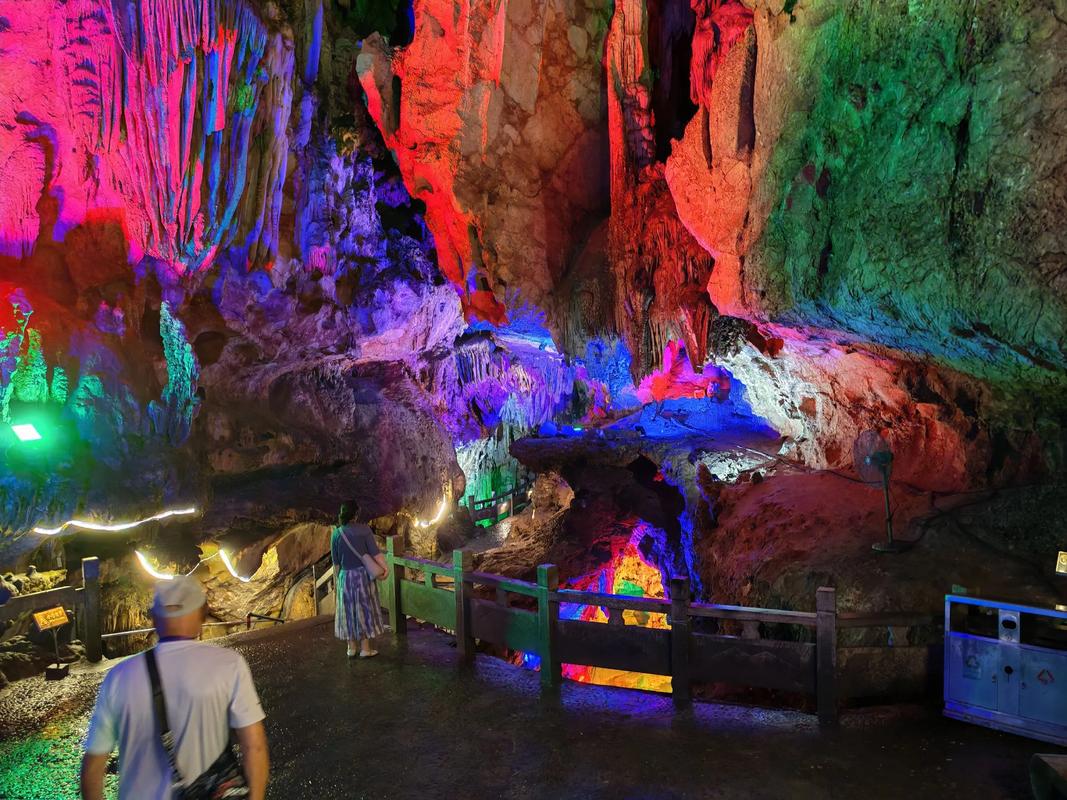
Silver Cave passes through twelve separate limestone peaks in Lipu County (part of Guilin Prefecture), with three progressively larger sections — lower cave, grand hall, upper cave — that open up as you move deeper. The total system extends over 10km; the tourist route covers 2km. We’ve been routing clients through this cave since shortly after it opened, and the thing that consistently surprises people — even those who’ve visited Reed Flute Cave — is the scale. The grand hall alone stops most groups in their tracks.
The name comes from the cave’s most distinctive effect: stalactite surfaces coated in microscopic quartz crystals that refract light and appear to glow silver. The old saying attached to the cave — “visit Silver Cave and you’ll never lack money” — draws a significant proportion of Chinese domestic visitors on its own terms, which explains the crowds.
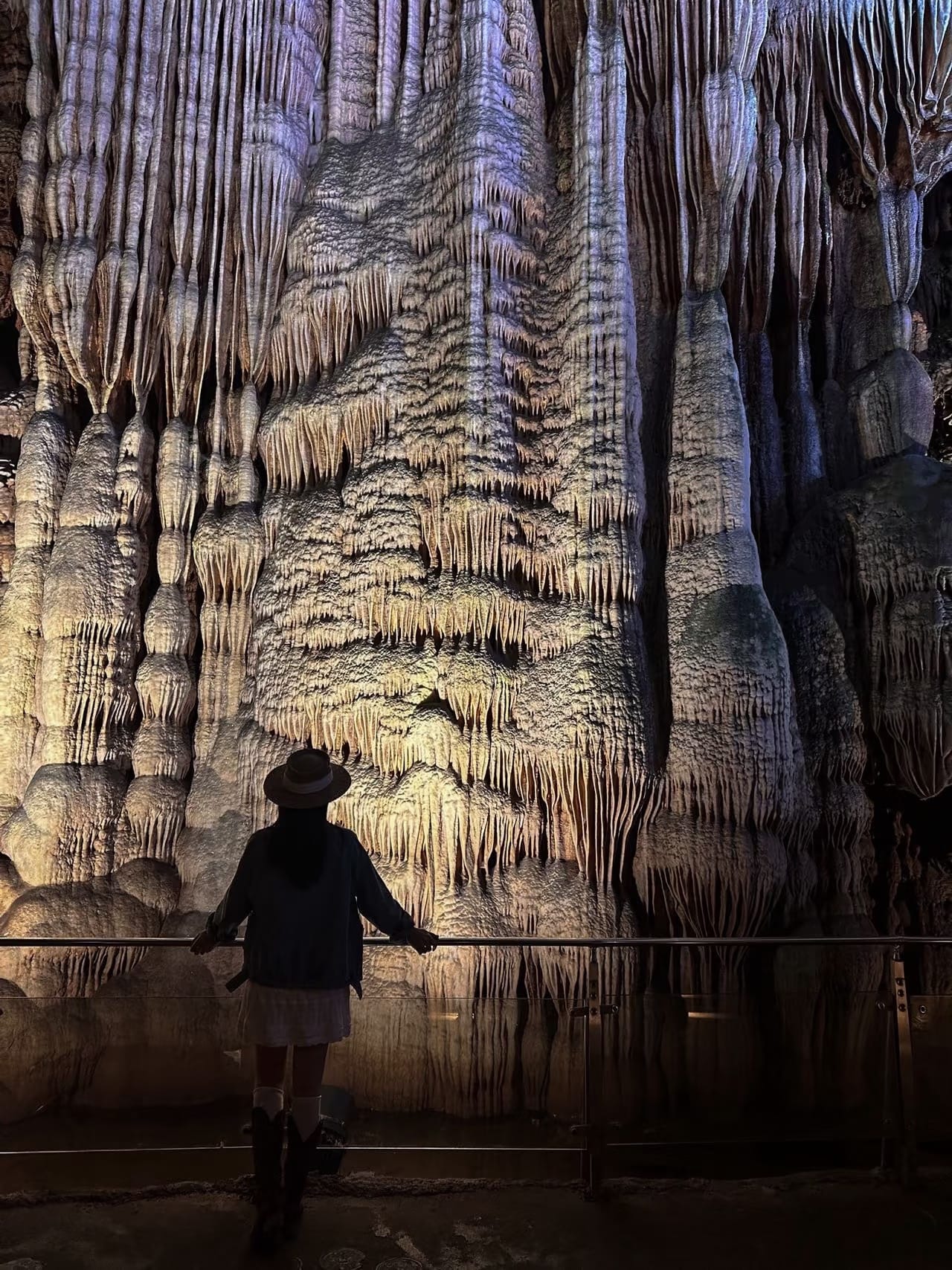
The cave formed over hundreds of millions of years as slightly acidic rainwater dissolved the local limestone bedrock, leaving behind the hollowed passages and mineral deposits visible today. That process is why stalactites from multiple geological periods coexist in the same system — stone waterfalls, curtains, pillars, flowers, and an underground river all in a single route. The 28 named scenic spots inside are anchored by the Three Wonders and Three Treasures.
French karst geologists have described it as a “world cave wonder” — the official designation used in cave management records. We’ve brought enough geology-minded clients through to understand why the description sticks: the formation variety here is unusual even by Guangxi standards. The cave can accommodate up to 3,000 visitors simultaneously, with an official optimal daily capacity of 8,000 and a maximum of 18,000.
2. The Three Wonders and Three Treasures
Wonder 1: Flying Waterfall of Snow Mountain (雪山飞瀑)
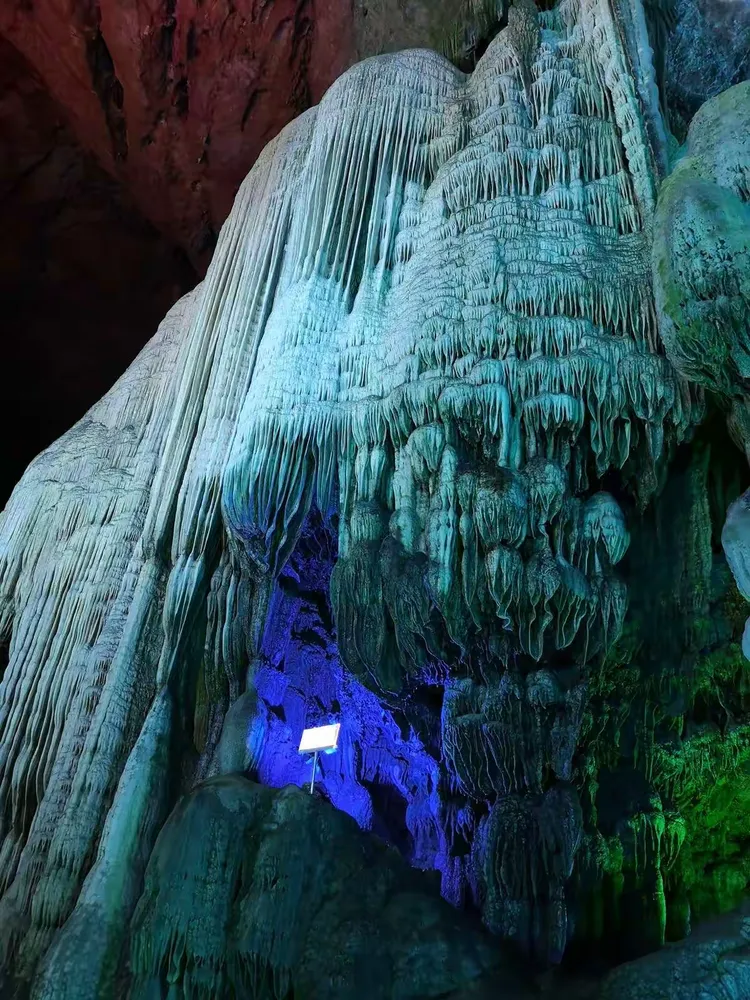
A 20-metre cascade of white calcite encrusted with quartz crystals — under any directed light it pours down the cave wall like a sheet of liquid silver. This is the formation that named the cave, and the one most clients want to photograph first.
Photo tip: Stand at the far left of the viewing platform and shoot upward with wide-angle to catch the full drop without heads in frame.
Wonder 2: Music Stone Screen (音乐石屏)
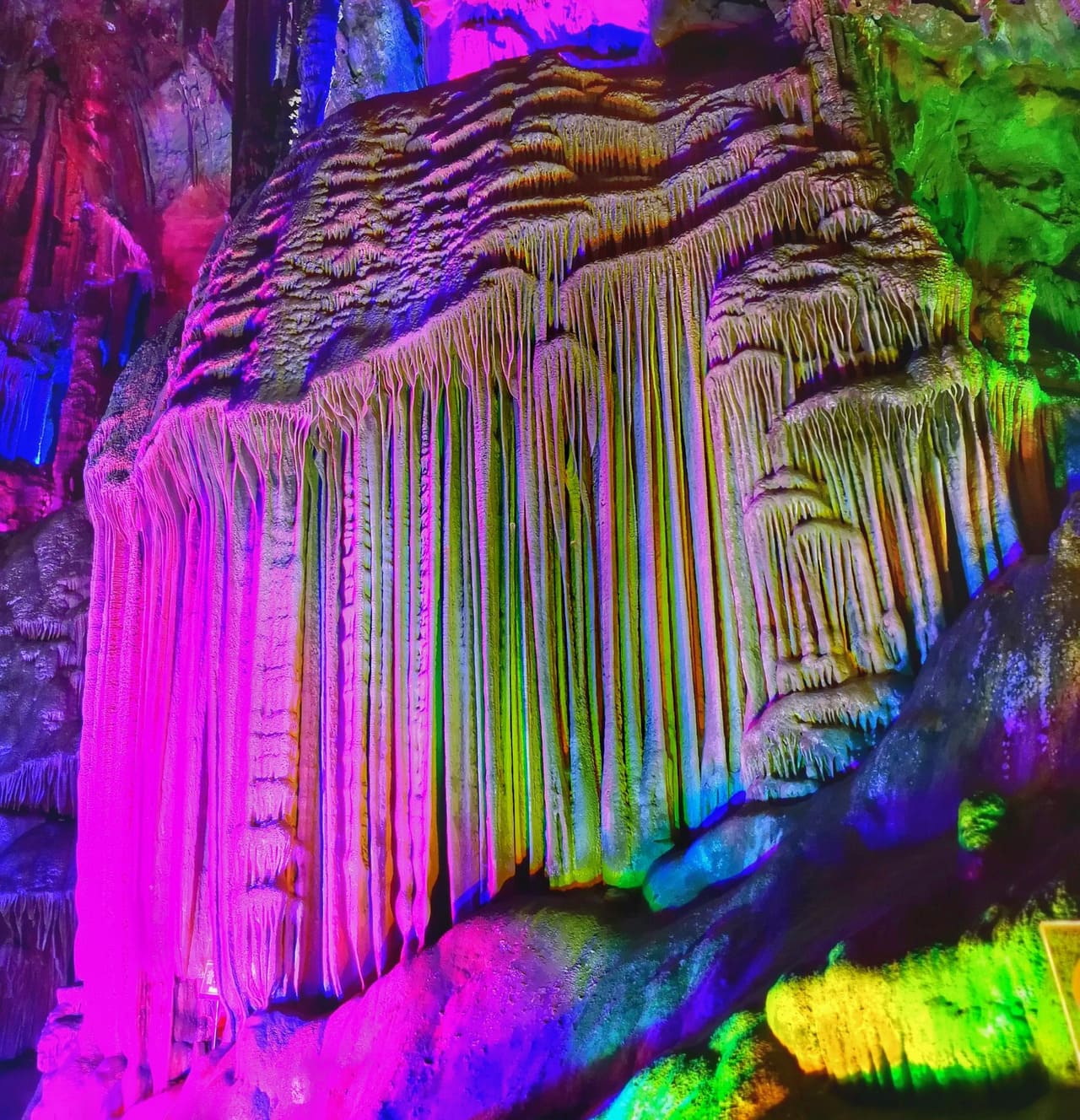
Over fifty stone slabs of different thickness and depth, roughly 3.5m tall and 5m wide, each producing a distinct tone when struck. Striking is now prohibited to protect the formation; the audio guide plays recordings instead. It’s the most complete example of this formation type in Guangxi. Clients with a musical ear consistently flag it as the most surprising thing in the cave — and in our view, rightly so. Nothing else in the Guilin cave system behaves like a musical instrument.
Photo tip: Step to one side of the crowd and shoot the texture with your phone’s native camera — the layered silver-grey surface photographs like the Milky Way spilling sideways. The formation’s own reflective surface does the work; no flash needed.
Wonder 3: Jade Pool Fairyland (瑶池仙境)
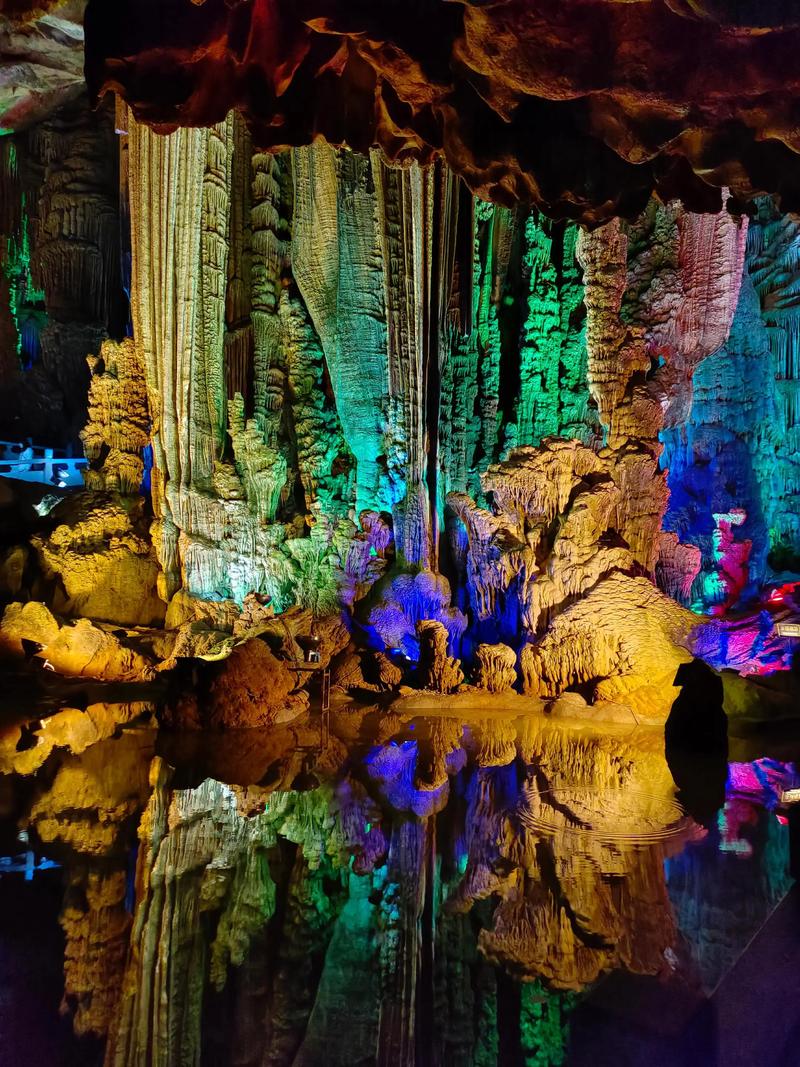
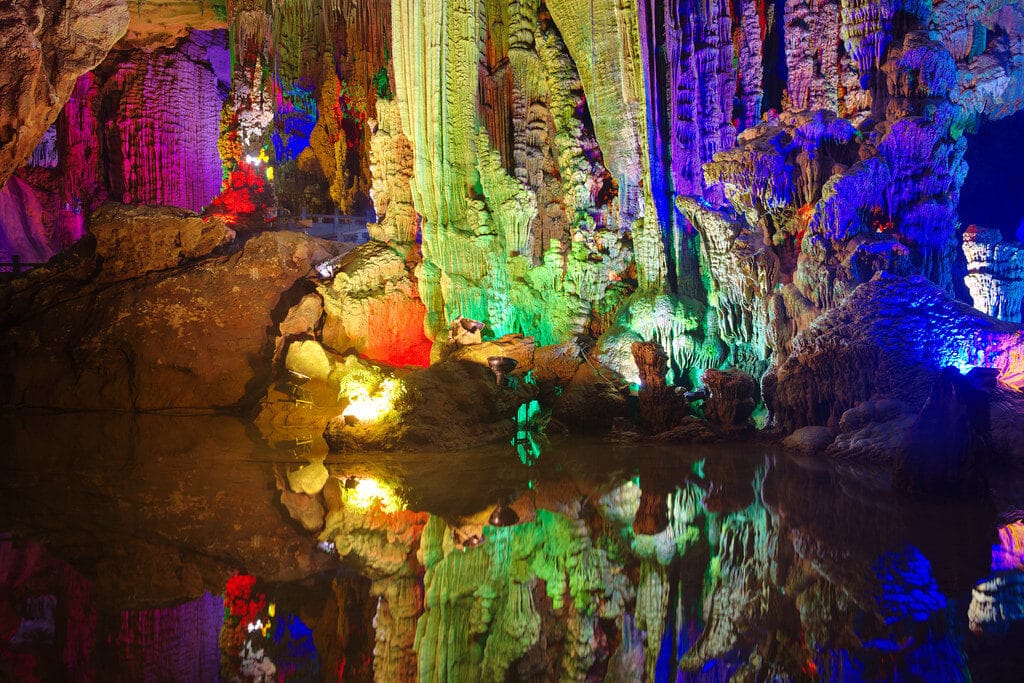
A few centimetres of perfectly still underground water mirror the stalactites above. The lighting shifts slowly, so the reflection colours change as you stand watching. Wave your hand near the surface and the interactive system triggers animated projections — doves, clouds — in the reflection. This is the cave’s most-shared image, and the one spot where we’ve seen visitors spontaneously stop moving and just stand there.
Photo tip: Crouch and hold your phone flat against the water for a symmetrical shot.
Treasure 1: Preaching Buddha (佛祖论经)
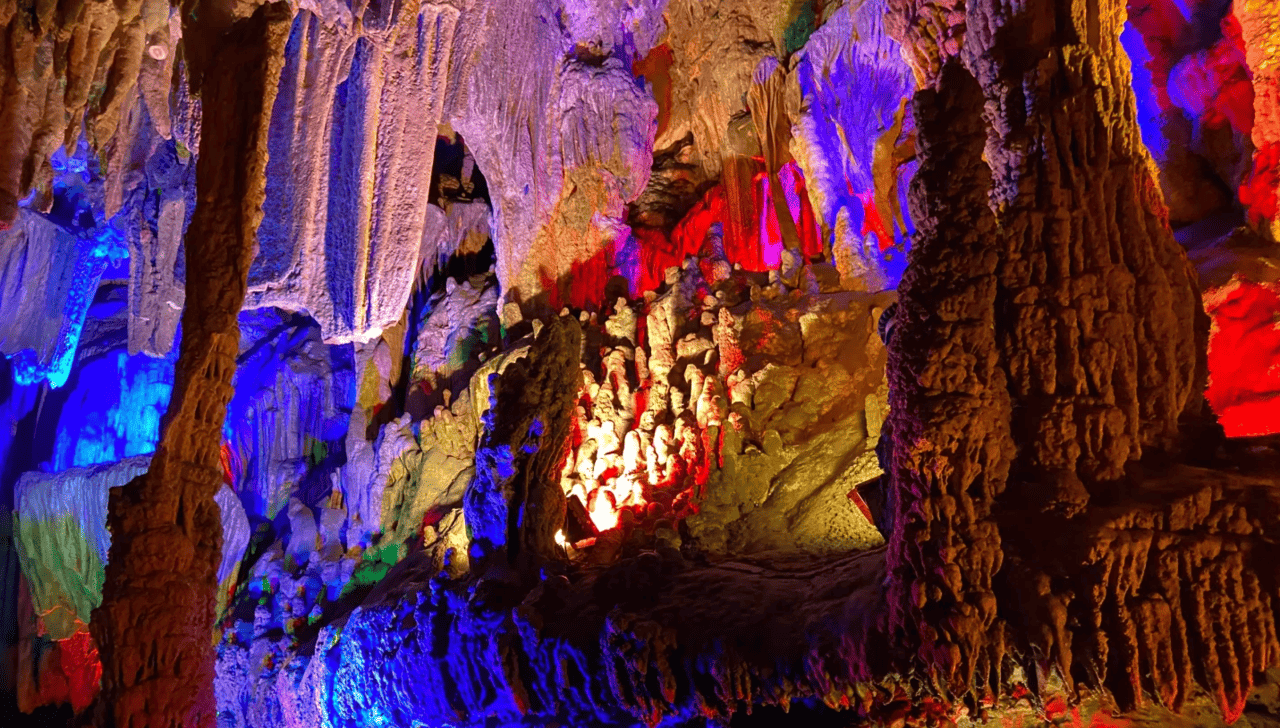
A stalactite that looks convincingly like a seated figure in lotus position, with smaller formations around it that tradition calls the listening disciples. The resemblance has had people naming this formation for centuries — and it still reliably makes visitors do a double-take.
Treasure 2: Hunyuan Pearl Umbrella (混元珍珠伞)
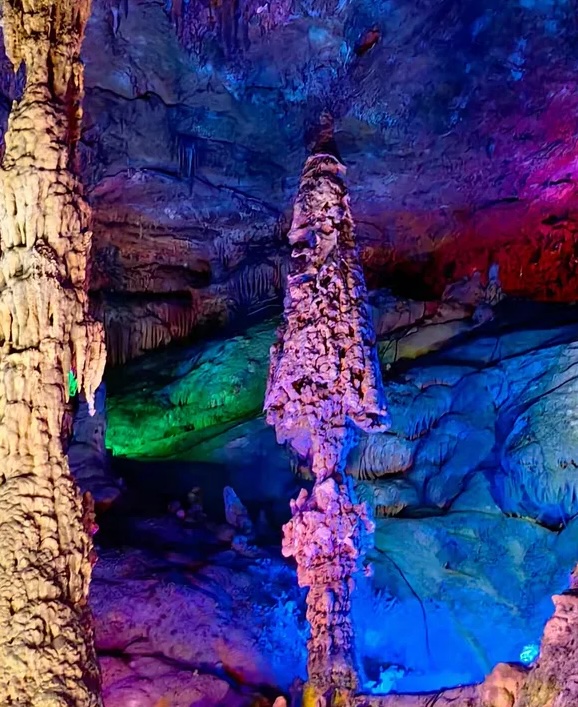
Thick in the middle, tapered at both ends — the opposite of how stalactites normally grow. The mechanism isn’t explained in the scientific literature, which is why cave management calls it the “most mysterious formation in the cave.” It appears in educational materials on karst anomalies.
Treasure 3: Single Pillar Supporting Heaven (独柱擎天)
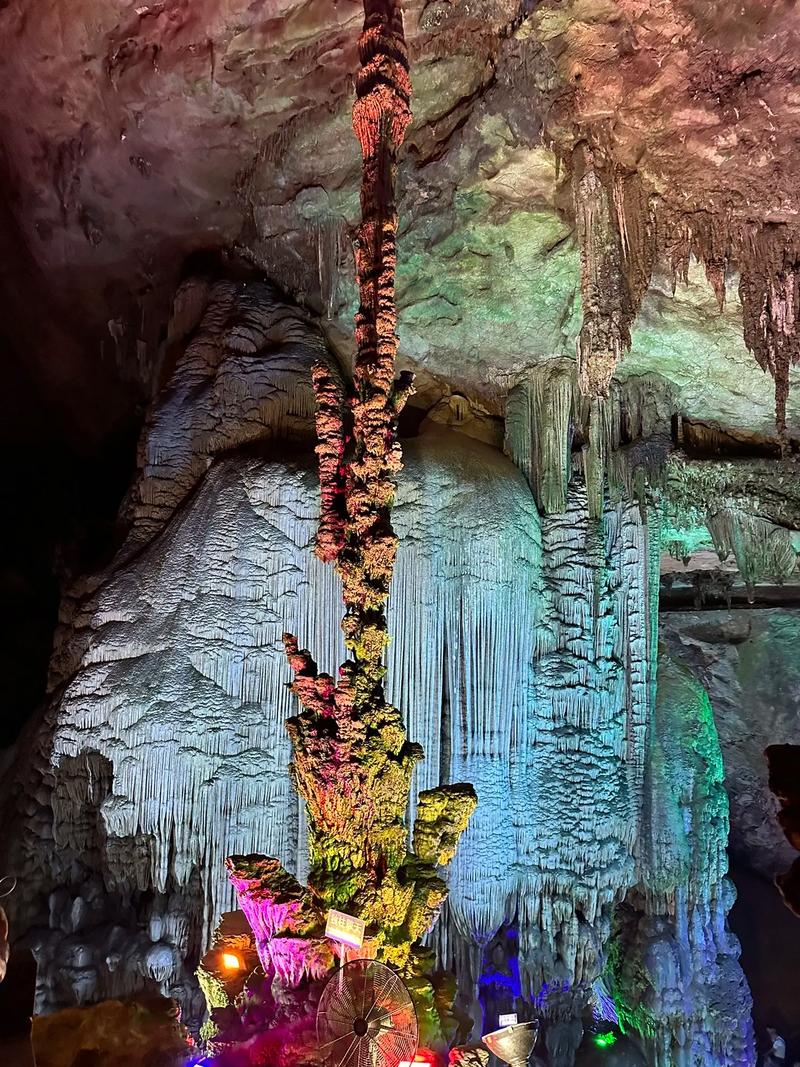
A 12-metre floor-to-ceiling column with lateral branches midway up, one of the largest in the Guilin cave system.
Photo tip: Shoot straight up.
Hidden Gem: The Star Stalactite
Just inside the entrance, to the right of the cave wine storage area — shine a phone torch directly onto one particular stalactite surface and the quartz crystals produce a dense glittering effect that looks like a sky full of stars. Not on any official map, but circulating on Chinese social media. Hard to photograph, but worth 30 seconds.
3. Is Silver Cave Worth Visiting?
The honest answer splits cleanly by visitor type:
Visitor type | Verdict |
|---|---|
First karst cave in China | Go. The 2km route, the Music Stone Screen, and the Jade Pool have no equivalent in the region. |
Already visited several Chinese caves | Geology is excellent; format is identical to every other major Chinese cave — coloured LED lights, tour groups, souvenir photographers, exit shopping corridor. Calibrate expectations accordingly. |
Cave purist | The formations are extraordinary. The presentation isn’t for you. |
One Italian visitor summed it up as: you’ll regret not going, and regret going. That’s a fair description of the tension. The cave itself is genuinely spectacular; the commercial packaging around it is not. Our view: the geology wins on its own terms, and most clients leave glad they went — but walk in knowing what you’re getting.
Combining Silver Cave with the Li River Cruise
🚢 LI RIVER CRUISE + SILVER CAVE — FULL DAY
The structure we use most often · cruise + cave in a single day · back in Yangshuo for dinner
→ See our Li River cruise guide for the full Guilin-to-Yangshuo day structure.
4. When to Visit
📅 BEST TIME TO VISIT SILVER CAVE
Cave is open year-round · ratings reflect overall visit experience
Best months: April–November
The cave is weather-independent, but the surrounding countryside — peach blossoms in spring, vivid green in summer, harvest colours in autumn — and the outdoor lake at the exit are more enjoyable in warm months. March is technically fine but often grey and drizzly; Guilin’s peak rainfall runs May–June, which doesn’t affect the cave itself but makes the drive less pleasant and outdoor add-ons less appealing.
Best time of day: 08:30 or after 16:00
First entry at 08:30, before the tour groups arrive, or after 16:00 when most have cleared out. Midday on weekends is the worst window.
Avoid
Chinese national holidays, especially Golden Week (first week of October) and Spring Festival. Crowd density on these dates is genuinely different from a normal weekend — it’s worth building your itinerary around this.
Visiting in the rainy season
When Xianggong Mountain or Yulong River activities are closed due to rain or high water, Silver Cave operates normally. We regularly redirect clients here when outdoor plans fall through — it’s one of the few Yangshuo-area attractions genuinely unaffected by weather.
→ See our Guilin-Yangshuo rainy season guide for month-by-month detail.
5. Getting There
Option | From Yangshuo | Cost | Notes |
|---|---|---|---|
E-bike rental | ~1 hour | ¥30/vehicle | Best for independent travellers; hotel can often arrange ¥55 cave tickets; return via Yulong River is scenic |
Public bus | 40–50 min | ¥10–20/person | Lipu or Guilin-bound from Yangshuo bus station; tell driver “Yinziyan”; not all services stop there |
Taxi / private car | 40–50 min | Varies | Most hassle-free for international visitors. Contact us to arrange a private transfer. Self-drivers: 36,000 sqm lot at the gate (200 coaches, 300 cars); ¥4.5 first hour, ¥3/hr after, ¥37.5 daily cap. |
All-inclusive shuttle | 40–50 min | ~¥85/person | Includes entrance and return transfer; confirm ticket is included, not extra |
From Guilin city | 1–1.5 hours | Varies | Buses from Guilin South Bus Station toward Lipu, hourly 06:30–18:00 |
One note on the Jundastar app (骏达出行): at time of writing it runs a minibus from the cave directly to Guilin North Station for ¥19 — handy if you’re moving on to Guilin rather than returning to Yangshuo. Confirm the service is still running before you count on it.
For international visitors, Trip.com is the most straightforward way to pre-book tickets online — English interface, instant confirmation, and typically ¥7–10 cheaper than the gate price. Search “Silver Cave Yangshuo” on Trip.com.
6. Practical Conditions Inside
Temperature and what to wear
The cave maintains 20–26°C year-round. In summer, that makes it a genuine relief from the heat outside — but relief is relative. The route involves continuous walking and stair climbing over 2km, and the enclosed space with poor air circulation means you’ll likely sweat regardless. Fans are positioned at intervals but don’t fully compensate. In winter, the cave is warmer than outside, which sounds pleasant until you’ve been walking for 40 minutes and realise the enclosed humidity is making you just as warm as summer visitors. In January we’ve watched clients arrive in down jackets and peel off layers halfway through. Our advice either season: dress as if you’re going for a brisk indoor walk, not a cool retreat. Bring a small water bottle — there are almost no water points inside.
Non-slip trainers or hiking shoes only. The path is paved but wet throughout from constant dripping. Every visit, without fail, we see someone slip in leather soles or sandals.
The route
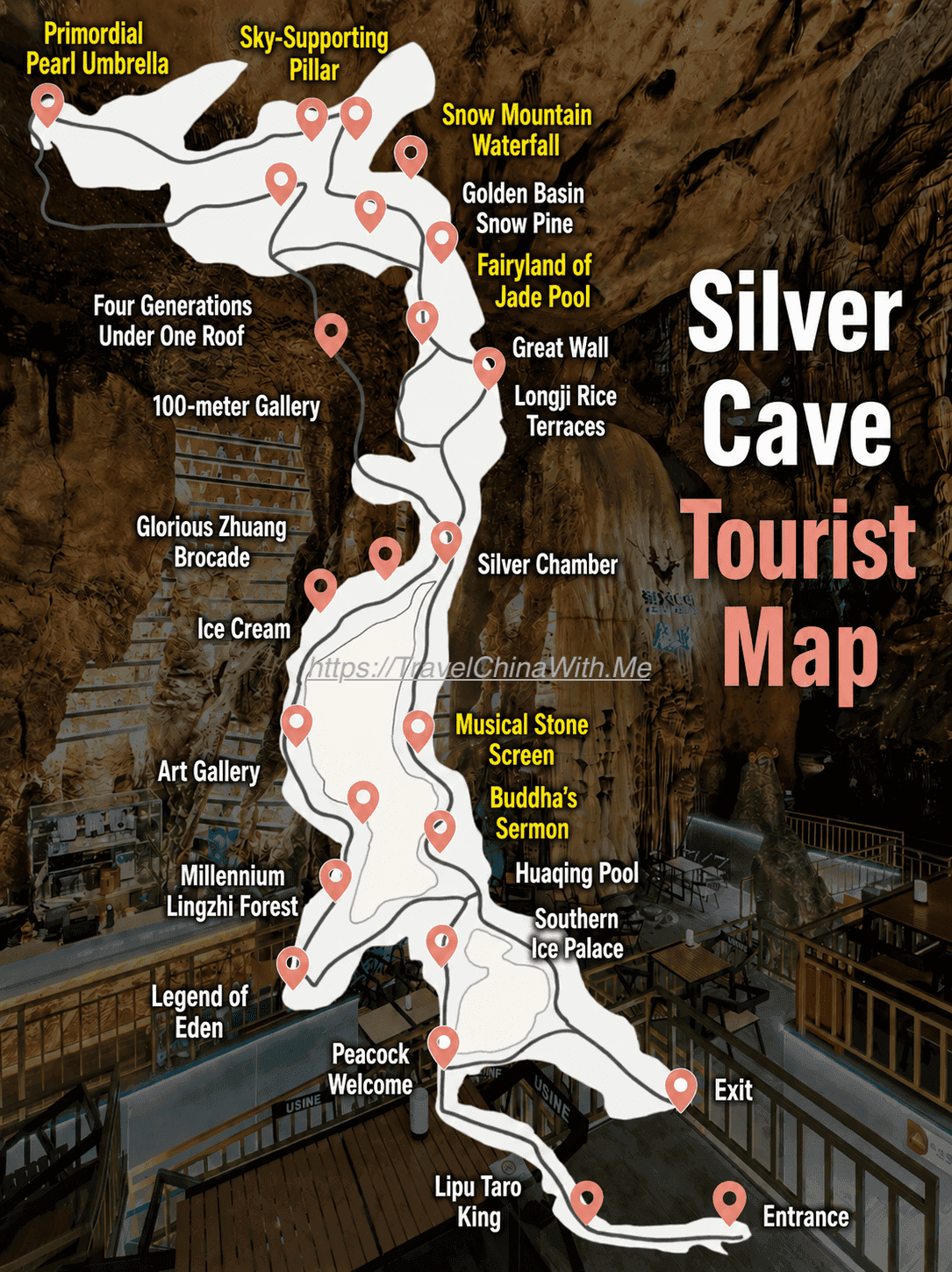
🗺️ SILVER CAVE — ROUTE & PACING GUIDE
2km · one-way · no backtracking · ~1.5–2 hours
Pace the first third quickly. The lower cave entry section has the least impressive formations and the worst air circulation — it’s mostly uphill stairwork. Move through it steadily and save your attention for the middle and upper sections where the Three Wonders and Three Treasures are concentrated. Plan to spend at least 60% of your time from the Music Stone Screen onward.
There are no formal rest areas inside — no benches, no rest halls. The grand hall sections are wider and you can step to one side, but the flow of tour groups makes lingering difficult. All seating, cold drinks, and facilities are at the exit, after the souvenir corridor. Use the toilet at the entrance before you start; there are none inside. The audio guide headset is free at the entrance and activates automatically at each numbered formation — collect one before entering.
Photography
Phone cameras struggle with the coloured lighting. Wear light or bright clothing — dark outfits disappear against the cave background. Shoot silhouettes and side profiles rather than face-on portraits. Three official photographer stations are positioned inside; small prints are free, framed large prints cost ¥30, no obligation. Don’t use flash at the formations — staff will intervene and you’ll irritate everyone around you.
Elderly visitors and children
A sedan chair (¥260) is available for visitors who can’t manage the stairs. One visitor brought an 80-year-old father through on the sedan chair and described it as the right call — but wished they’d known in advance that the route bypasses the Snow Mountain Waterfall. That’s the key trade-off: the sedan chair makes the cave accessible, but it misses the cave’s headline formation. Book it at the entrance if needed, and factor that in before you do. Wheelchairs can’t navigate the main route. Children tend to love the auto-activating audio guide and the Jade Pool interactive light feature.
7. Silver Cave vs Reed Flute Cave
Silver Cave | ||
|---|---|---|
Distance from Yangshuo | 27km (40 min) | 90km (needs Guilin trip) |
Distance from Guilin city | 85km | 5km |
Route length | 2km | 240m |
Time needed | 1.5–2 hours | 45–60 min |
Underground river | Present but not open for tours | No |
Reflection pool | Yes — dedicated underground lake | Yes — shallow floor pools throughout |
Ticket | ¥65 | ¥90 |
Best for | Visitors based in Yangshuo | Visitors based in Guilin |
We get this question from almost every client doing both Guilin and Yangshuo. Silver Cave wins on geological content and scale — the route is eight times longer and the formations more varied. Reed Flute Cave wins on convenience if you’re staying in Guilin city. For visitors with a Yangshuo base and half a day free, Silver Cave is the clear choice.
8. Optional Add-Ons at the Scenic Area
The ¥65 ticket covers the cave route only. Three optional extras are available:
Activity | Price | Worth it? |
|---|---|---|
Zipline | ¥30 | Short run, modest views — skip unless you have kids who want the thrill |
Earth Memory geology exhibition | Separate ticket | Yes if visiting with children — adds context to what they’ve just seen underground |
Sedan chair | ¥260 | Genuine option for mobility needs; misses the Snow Mountain Waterfall section |
One thing to flag: the path between the cave exit and the outdoor lake passes through a long souvenir corridor. Prices are consistently higher than in Yangshuo town. Budget 5–10 minutes to walk through; no pressure to buy anything.
9. Frequently Asked Questions
Can I take a boat inside Silver Cave?
No. The cave does have a clear underground river running through the lower level, but boat tours are not currently open to visitors. The river is visible from the walkway at several points along the route.
Can I visit Silver Cave without a guide?
Yes. Silver Cave was the first scenic area in Guangxi to deploy multilingual smart audio guides — over 2,000 units distributed free at the entrance, activating automatically at each formation. No mandatory guide or tour group required.
Does Silver Cave stay open in the rain?
Yes. The cave is entirely underground and unaffected by weather. Heavy rain can make the path between the parking lot and entrance slippery, so non-slip shoes matter even more on wet days.
Is Silver Cave suitable for children?
Generally yes — the route is paved and well-lit, and the Jade Pool interactive light feature holds children’s attention well. The main caveat is the stairs, particularly the final flight near the exit. The ¥99 combined ticket with the geology museum is worth considering for families.
Is Silver Cave accessible for elderly visitors?
With caveats. The path is paved but involves multiple staircases, with the steepest near the exit. A sedan chair (¥260) covers most of the route but bypasses the Snow Mountain Waterfall — factor that in before booking it at the entrance.
How crowded does Silver Cave get?
Weekday mornings in shoulder season are manageable. The cave’s official optimal daily capacity is 8,000 visitors; Golden Week regularly hits the 18,000 maximum. Arrive at 08:30 to get ahead of the tour groups, or visit after 16:00 when most have cleared out.
What food is available near Silver Cave?
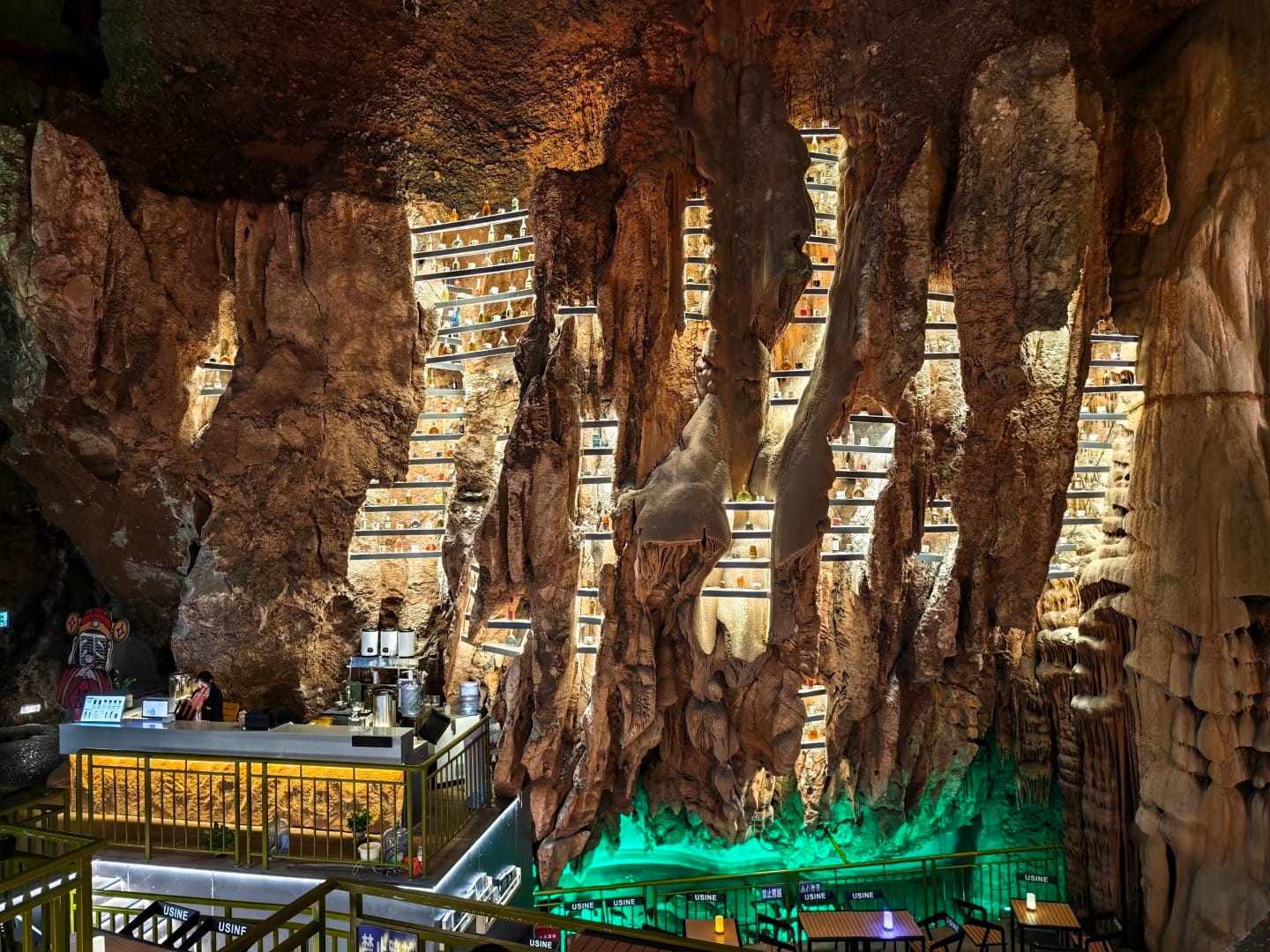
A café operates roughly halfway through the route. Near the parking lot, small family restaurants serve Lipu taro braised pork, beer fish, and local rice noodles — much better and cheaper than anything inside the scenic area.
Planning a Yangshuo trip that includes Silver Cave? Contact our team — we handle the transfers, combine it with the Li River cruise when the timing works, and make sure the day doesn’t become a logistical headache.