Xianggong Mountain Guide: Tickets, Transport & Sunrise Tips
Xianggong Mountain is a 350-metre karst hill on the west bank of the Li River, between Yellow Cloth Shoal and Nine Horse Fresco Hill, and it’s the single best spot in the Guilin-Yangshuo area to photograph sunrise over the river’s famous first bend. Entry costs ¥60 for adults, the climb is about 500 stone steps and takes 15–20 minutes, and the scenic area opens at 5:00 AM from May to October and 5:30 AM from November to April. There’s no public transport directly to the base, so getting there before dawn is the real planning problem, and where you’re staying decides which option actually works.
Location | West bank of the Li River, Xingping Town, Yangshuo County |
Entrance fee | ¥60 adult / ¥30 concession / free for some groups |
Opening hours | 5:00 AM (May–Oct) / 5:30 AM (Nov–Apr), closes 6:00 PM |
Climb time | About 500 stone steps, 15–20 minutes |
Best for sunrise | September–November (clearest skies) |
Best for “sea of clouds” | May–August, morning after rain |
Table of Contents
1. About Xianggong Mountain
Xianggong Mountain, also called Xianggong Hill in some English listings, is a karst hill on the Li River, named for its silhouette — local legend says it resembles the tall hat once worn by an ancient government official, “Xianggong” (相公). It sits between two of the river’s other famous sights, Yellow Cloth Shoal and Nine Horse Fresco Hill, on a stretch of water known as the Li River’s “first bend.”
What It’s Known For
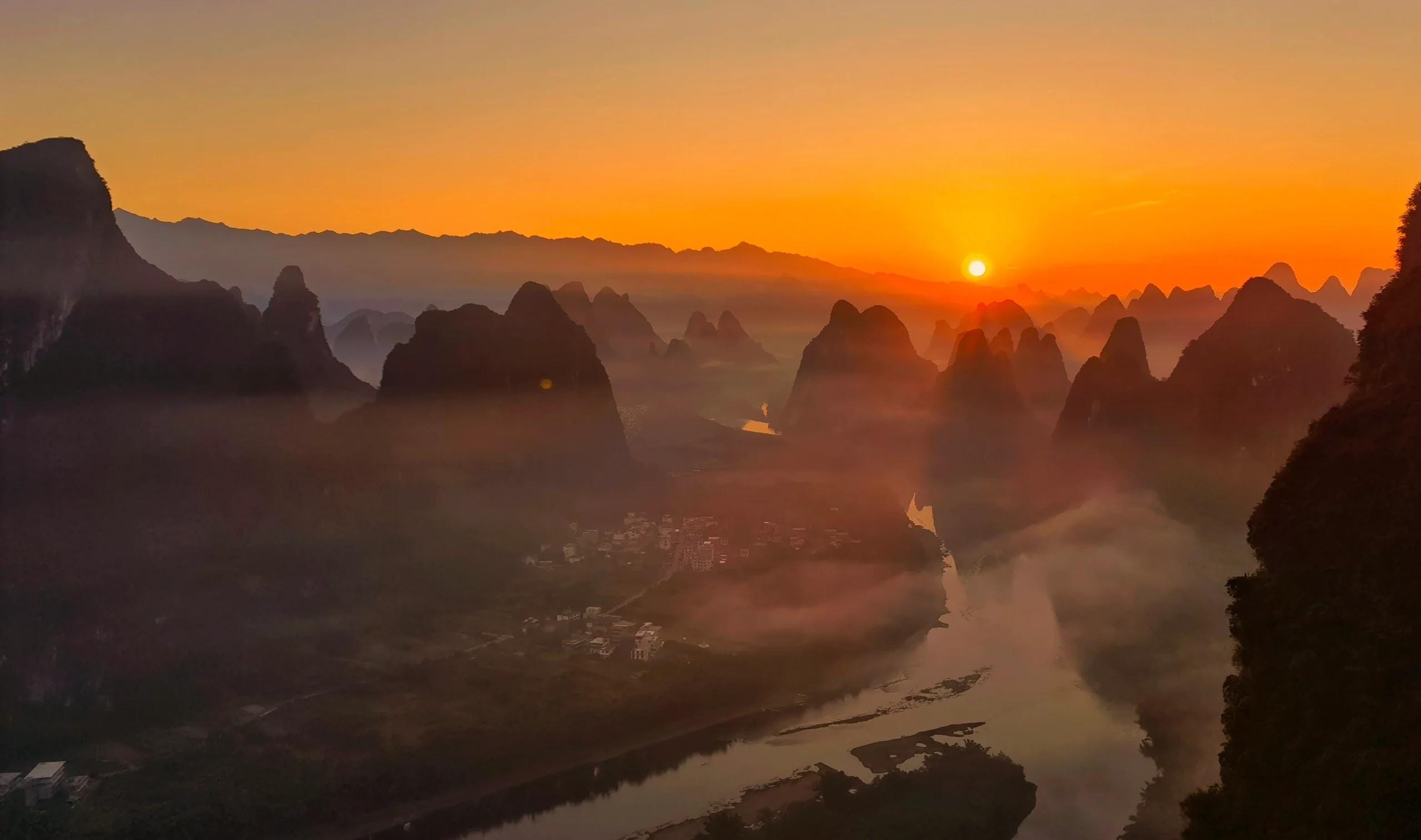
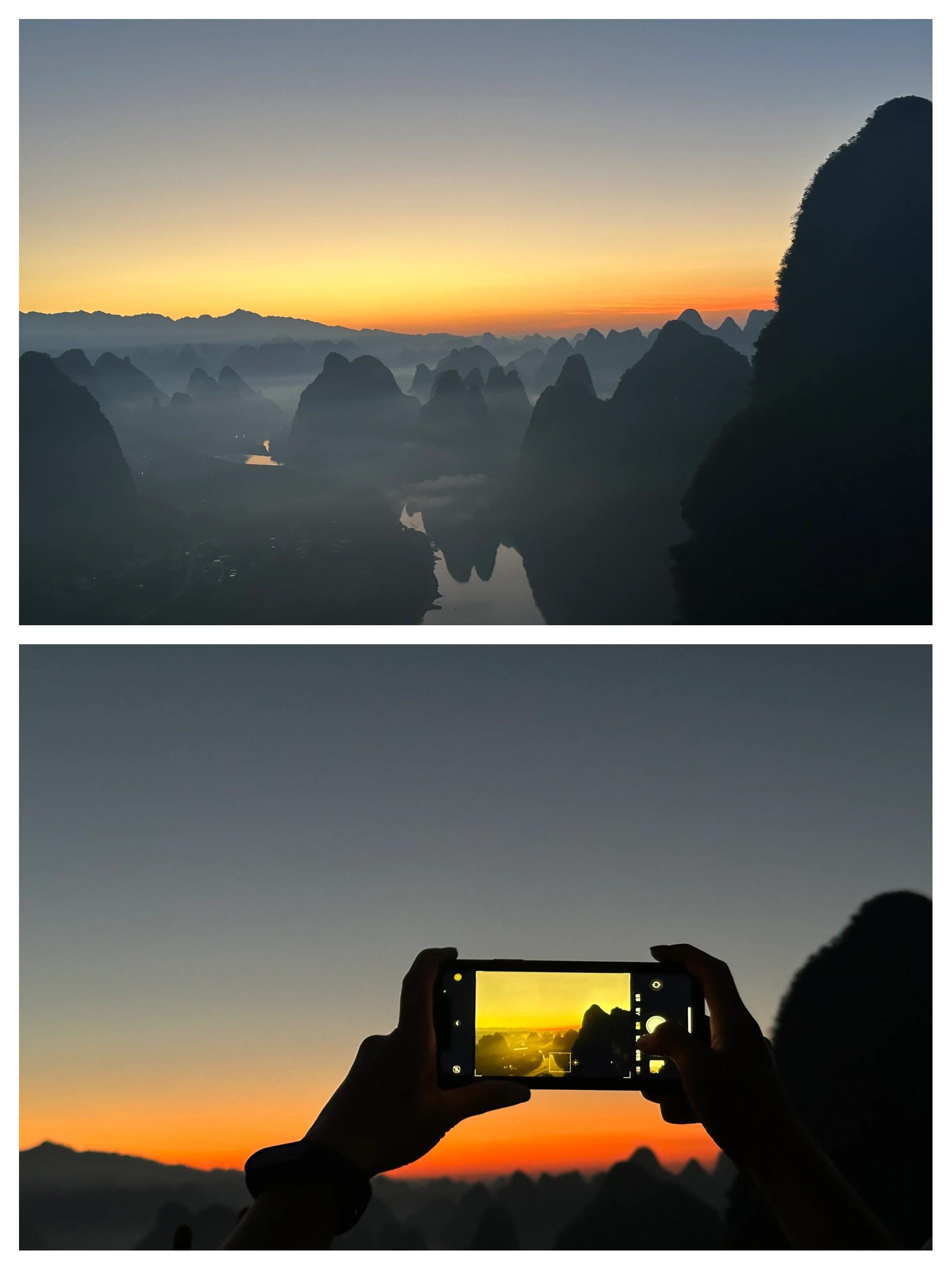
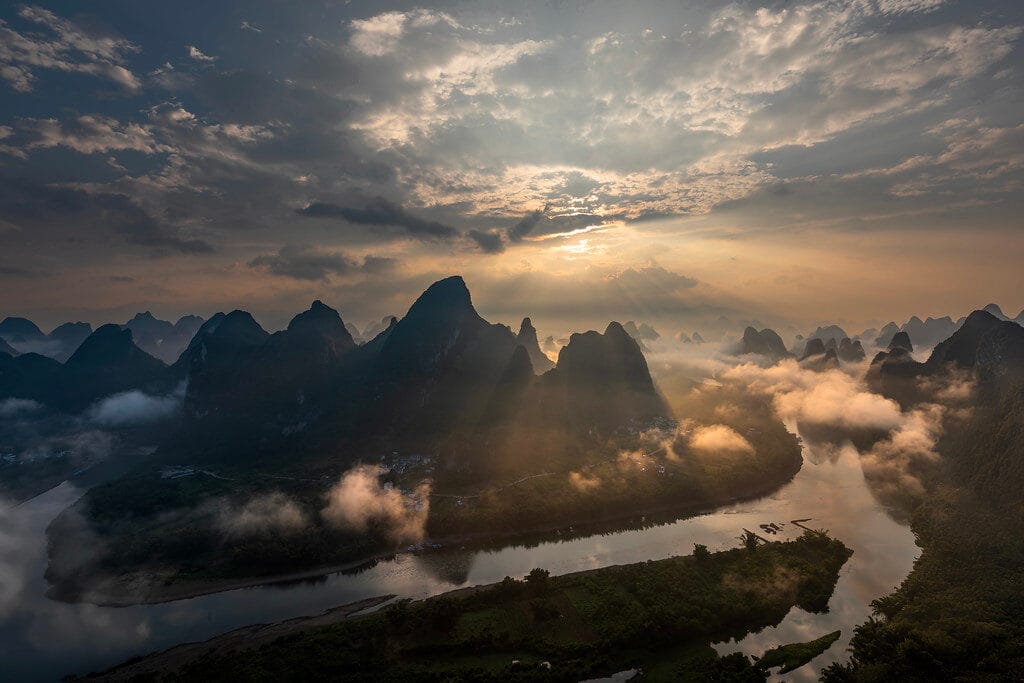
Xianggong Mountain is, above almost anything else, a sunrise photography spot. From the summit, the Li River curves through a wide bend below, framed by dozens of karst peaks on both banks. When the morning light catches that bend and mist sits low in the valley, the result is one of the most photographed views in the Guilin-Yangshuo region — the kind of shot that ends up on travel posters and photography competition shortlists.
Is It Worth It?
On a clear morning, yes, without much hesitation. The combination of the river’s shape, the surrounding peaks, and the early light is genuinely distinctive, and we haven’t had a client regret the trip after a good sunrise here.
The honest caveat is cost and weather risk together. Going the cheapest way, via the Xingping ferry route, a visit runs ¥100–110 per person between the entrance fee and transport, and the view depends entirely on clear or partly misty conditions; a hazy or rainy morning gets you a flat grey valley and not much else. Check the forecast first, then commit to the wake-up call.
2. Entrance Fees and Ticket Categories
We visit often, and the current price board at the entrance lists a tiered structure:
Category | Price | Who qualifies |
|---|---|---|
Adult fare | ¥60 | Ages 18 and up |
Concession fare | ¥30 | Ages 6–18; full-time undergraduates and below, including students from Hong Kong, Macau, and Taiwan; seniors aged 60–65 |
Free | ¥0 | Children under 6 or under 1.2m tall; active military; veterans, martyrs’ families, and people with disabilities; seniors 65 and older |
Bring your passport to claim the concession or free rate — foreign visitors won’t have a Chinese ID card, but staff accept a passport (plus a student card, if that’s the category that applies) at the gate.
The same price board lists three rules worth knowing before you go: anyone with mobility issues, a disability, or a minor must climb with a companion; visibly intoxicated visitors aren’t allowed up; and during thunderstorms, staff have to approve the climb before you’re let through the gate.
3. Best Time to Visit Xianggong Mountain
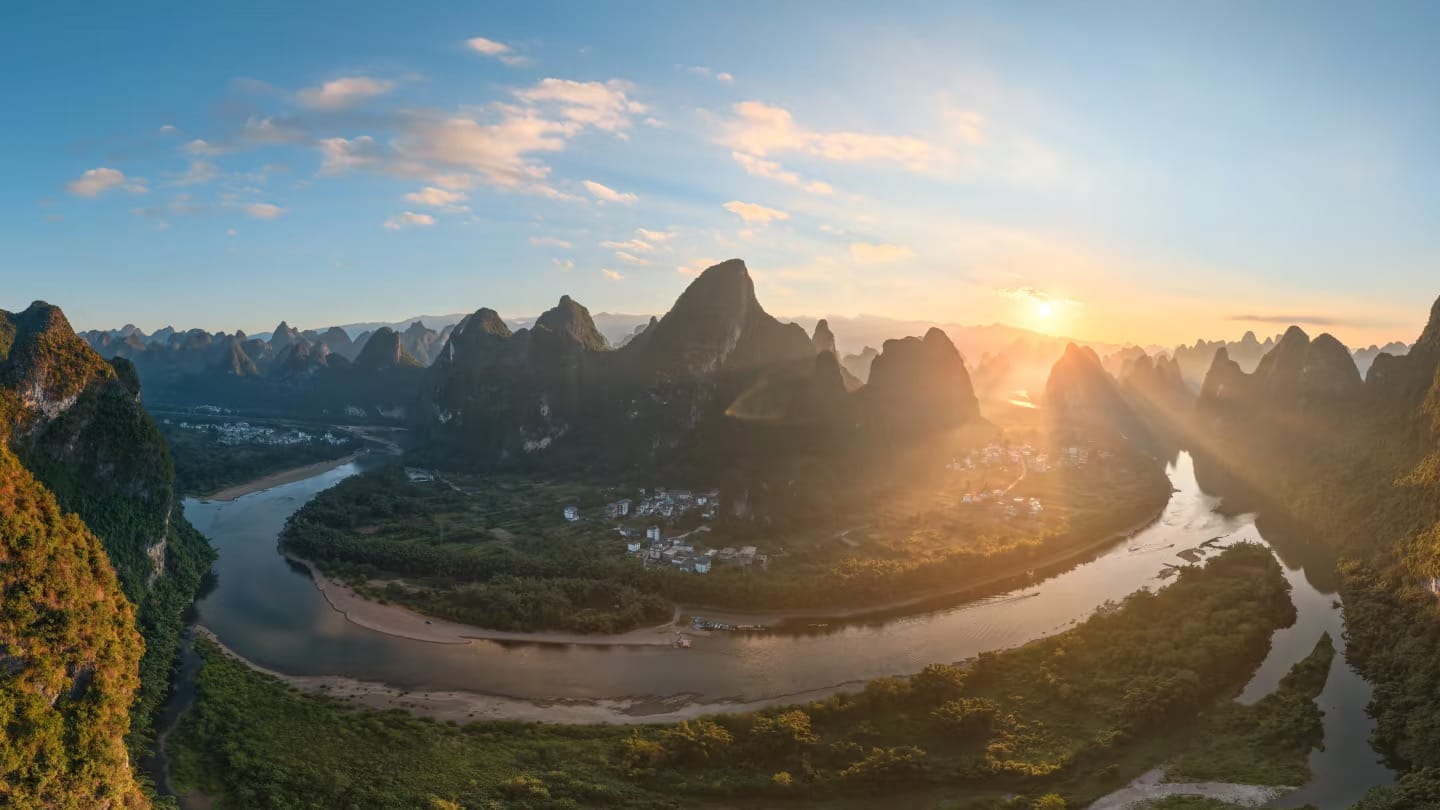
Go for sunrise in September, October, or November. The skies are clearest then, and the river bend photographs without haze, which is the single biggest variable that ruins a Xianggong Mountain trip.
If you specifically want the “sea of clouds” effect — mist pooling in the valleys below the peaks — aim for May through August, and only on the morning after rainfall. We check the evening forecast before committing every client to the wake-up call, because without rain the night before, you get a clean sunrise but no clouds. Both are good. They are not the same photo.
One trick that goes beyond “did it rain last night”: pull up a wind and weather app like Windy the evening before and check the cloud-base height and the gap between air temperature and dew point. A small gap, paired with calm wind and a clear morning forecast, is the real signal for cloud sitting low in the valley rather than burning off before you reach the top. It’s not foolproof, but it beats guessing from the rain alone.
Avoid going when it’s raining or heavily overcast at dawn. The platforms have no shelter, the stone steps get slick, and the view — the entire reason to climb — disappears into grey.
4. How Do You Actually Get to Xianggong Mountain?
There’s no bus route to the base, and that single fact determines your whole plan. Your starting point decides the best option.
Starting point | Best option | Distance (one-way) | Cost | Time |
|---|---|---|---|---|
Yangshuo town | Private car, round trip | 28 km | Contact us for current rates | About 1 hour each way |
Xingping town | Ferry + green tour car | Across the river | ¥5 ferry + ¥40/person tour car (round trip) | 1-minute ferry + 30-minute tour car |
Guilin city | Private car, round trip | 57 km | Contact us for current rates | 90 minutes each way |
From Yangshuo
A private car is worth arranging, and most people leave town between 4:00 and 4:30 AM. Rates shift with the season and the exact pickup/return itinerary, so we don’t quote a flat number here — get in touch with us and we’ll confirm the current rate and handle the booking. We keep drivers on call around the clock, so a 4 AM pickup gets arranged just as smoothly as a daytime one.
A Didi (China’s main ride-hailing app) is the cheaper alternative, and independent travelers use it often — round trips run closer to ¥200 when booked the night before. The catch is reliability: not every Didi driver wants a pre-dawn pickup at a remote mountain car park, and cancellations happen. If the sunrise is the whole point of the trip, we’d still rather book a private driver we’ve confirmed will actually show up and wait, even though it costs more than a Didi.
From Xingping

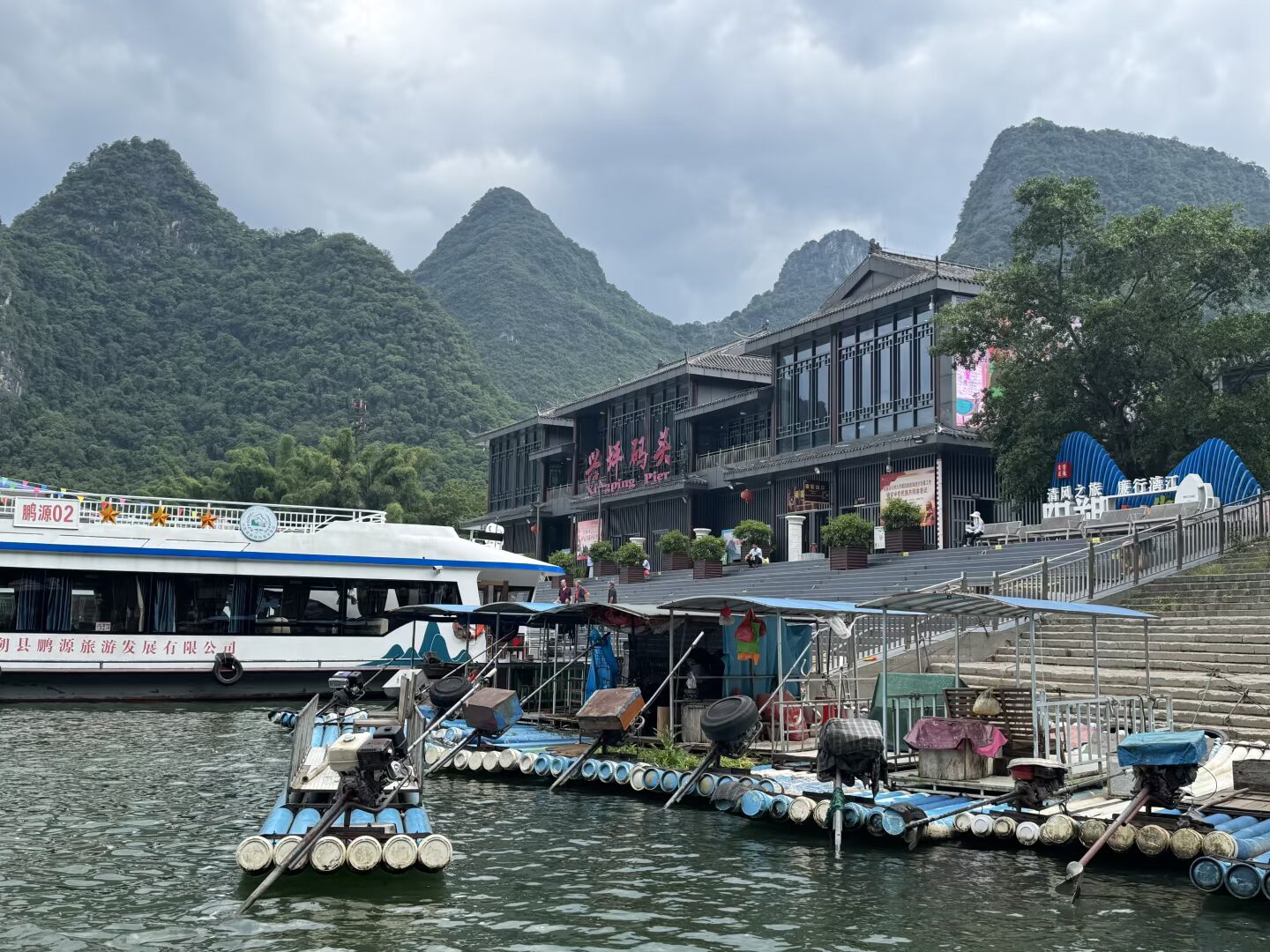
Cross the river at Xingping Pier on the public ferry (¥5, about a minute), then look for the green sightseeing cars waiting on the other side at Dahebei village — they run a fixed ¥40 per person round trip up to the ticket office, about 30 minutes each way. This is the route we point most independent travelers to, since it’s cheaper and quicker than arranging a car from Yangshuo.
From Guilin
Budget the full 90 minutes and leave by 3:00 AM for an autumn sunrise. We don’t recommend public transport for this leg under any circumstances — there isn’t a direct route, and piecing together buses costs you the one thing you can’t get back: time before sunrise. We arrange private cars from Guilin too, but rates shift with the season and the exact itinerary, so contact us for a current quote rather than a flat number.
Watch for This at the Xingping Ferry Landing
The private vehicles waiting there aren’t a single organized service, and different drivers head to different destinations. Confirm the destination, the price, and the return pickup time with your driver before you get in, and note the plate number. We’ve had clients end up waiting far longer than planned simply because nothing was confirmed upfront.
Also be wary of anyone hanging around the landing offering to “guide you up for free” — they tend to tack on a fee once you’re already committed and have no easy way to back out.
We've documented an alternative, longer route — hiking the riverside path through Yangdi and Lengshui village — in our Li River hiking guide, if you'd rather combine Xianggong Mountain with a multi-hour walk instead of a direct sunrise trip.
5. The Climb to the Summit
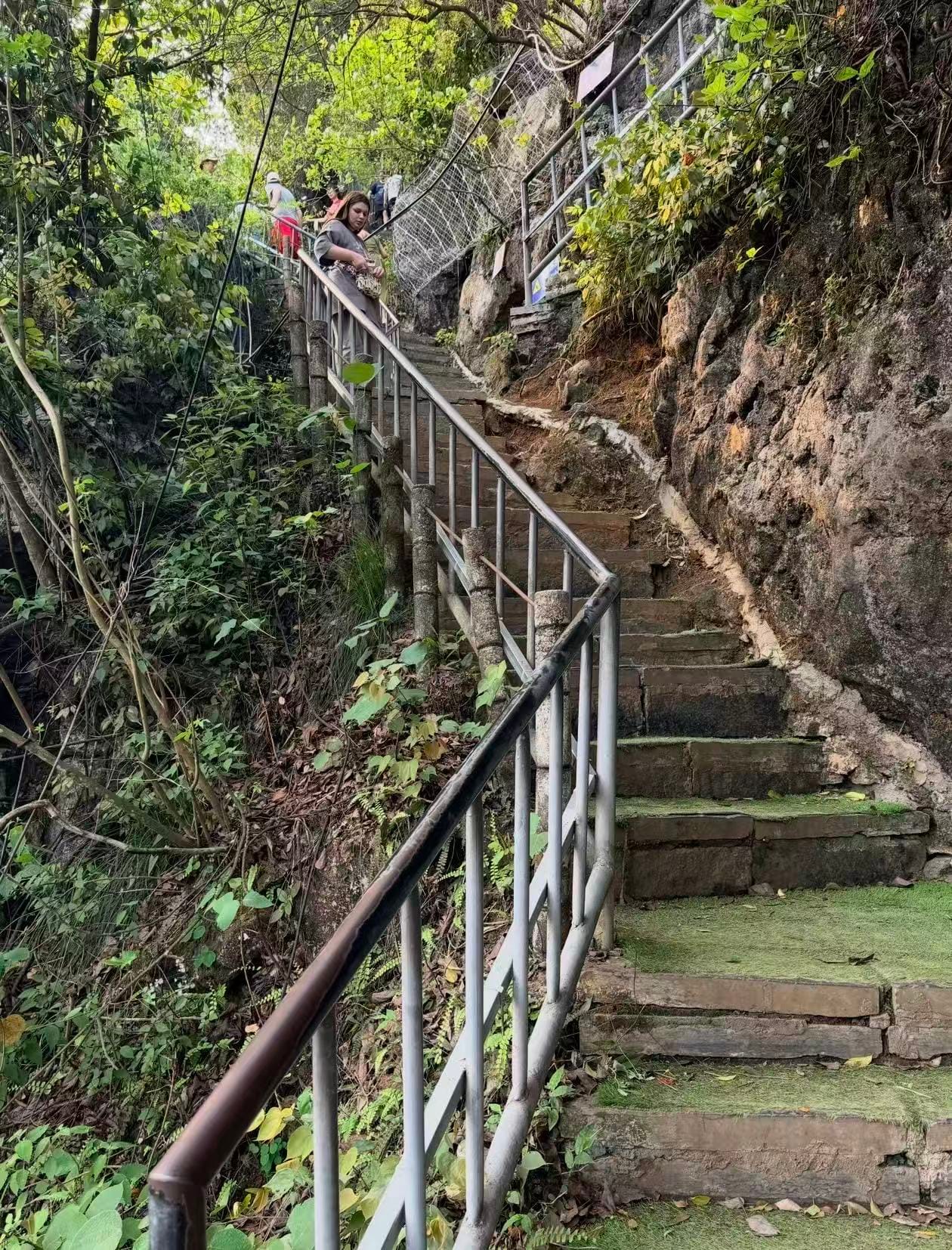
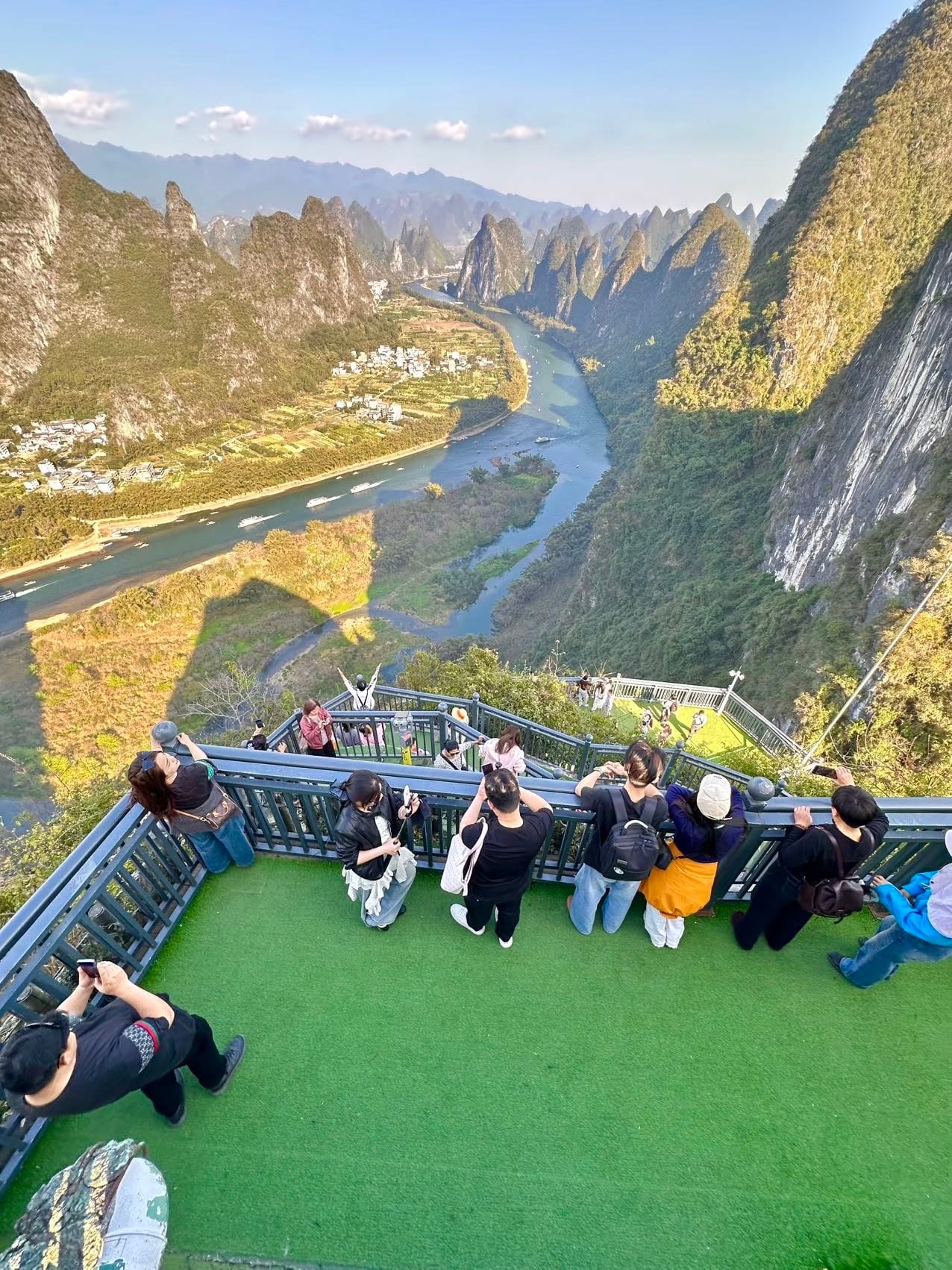
You’ll buy your ticket at the entrance, then start climbing immediately. The full climb is about 500 stone steps, paved the entire way with handrails on the steeper sections, and it’s well-lit enough near the entrance for the first few minutes before dawn fully kicks in.
Wear closed shoes with grip, not sandals. The steps are uneven in a few places near the top, and stumbling in the dark with a tripod bag over your shoulder is the most common minor mishap we see here.
Budget 15–20 minutes for the climb at a normal pace — it’s manageable for most fitness levels despite the steepness. We took the Shalom family, visiting from the US, up in March this year with their 10-month-old; they left before dawn like everyone else and made it to the top without any trouble. There are no shops anywhere on the mountain, so carry your own water and apply sunscreen before you start climbing, not after.
6. Which Viewing Platform Should You Choose?
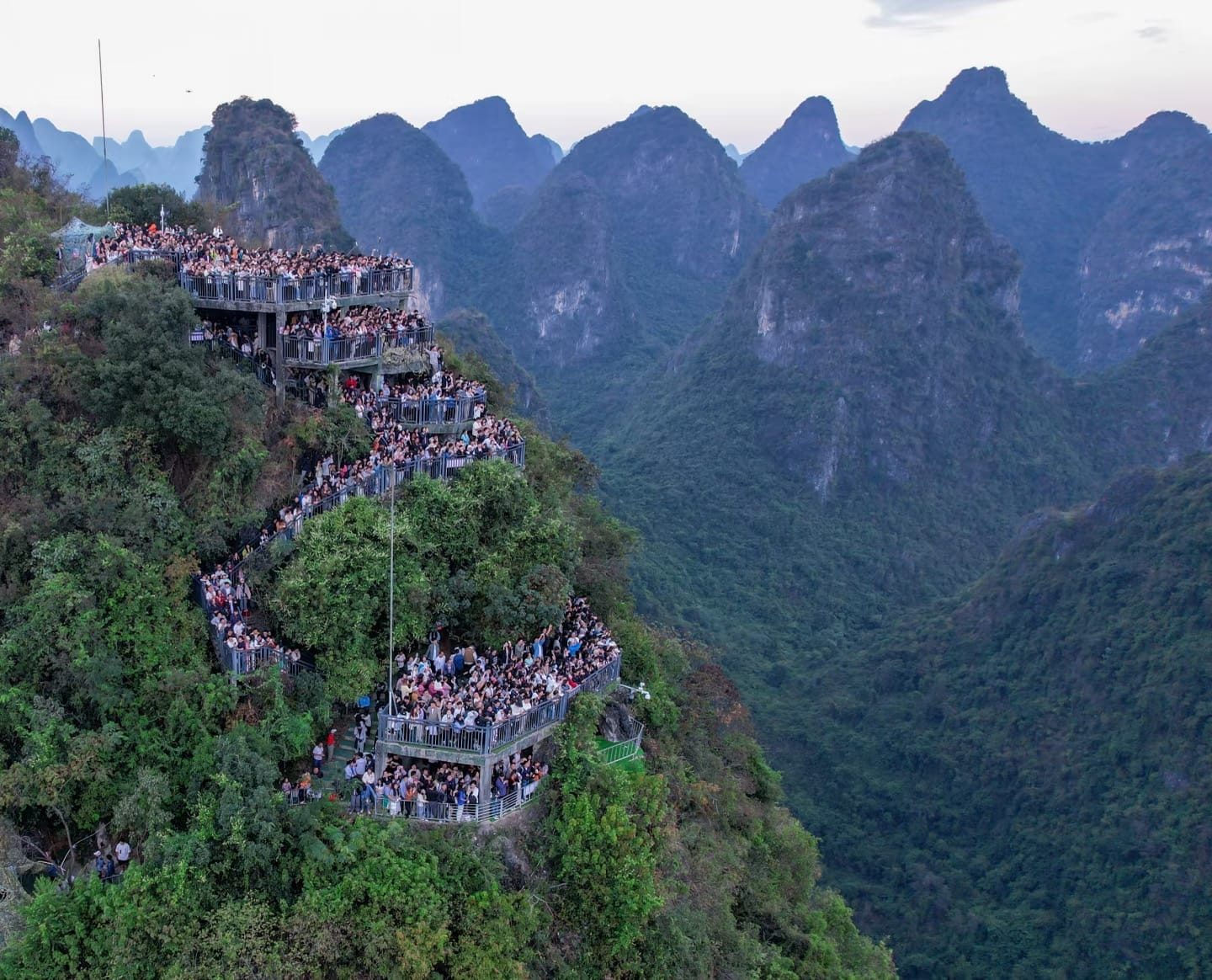
Xianggong Mountain has five numbered viewing platforms stacked up the slope, numbered 5 at the bottom up to 1 at the very top — and they’re all close together, no more than five minutes’ walk apart, so working your way up costs you very little time.
Platform 1, at the summit, has the widest, most open view of the river’s S-bend and is the spot behind most of the published sunrise photos — it’s also the most crowded. Platform 2 and the platforms near the edges see fewer people and work well if you want a portrait shot, a silhouette against the peaks, or just breathing room. On the way back down, the stairs themselves make a good backdrop too — shooting upward from a few steps below someone frames both the person and a clean line of peaks behind them.
If you’re dressing for photos, light, simple colors — a white dress, linen separates, that kind of thing — read much better against the blue-green hills than anything patterned or dark.
We tell our photography-focused clients to head straight for Platform 1 and arrive early enough to claim a spot — 5:30 AM in summer, 6:00 AM in winter. Everyone else, including families with kids, tends to be just as happy one level down, with far less jostling for space.
7. Want Sunset Instead of Sunrise? Go Somewhere Else
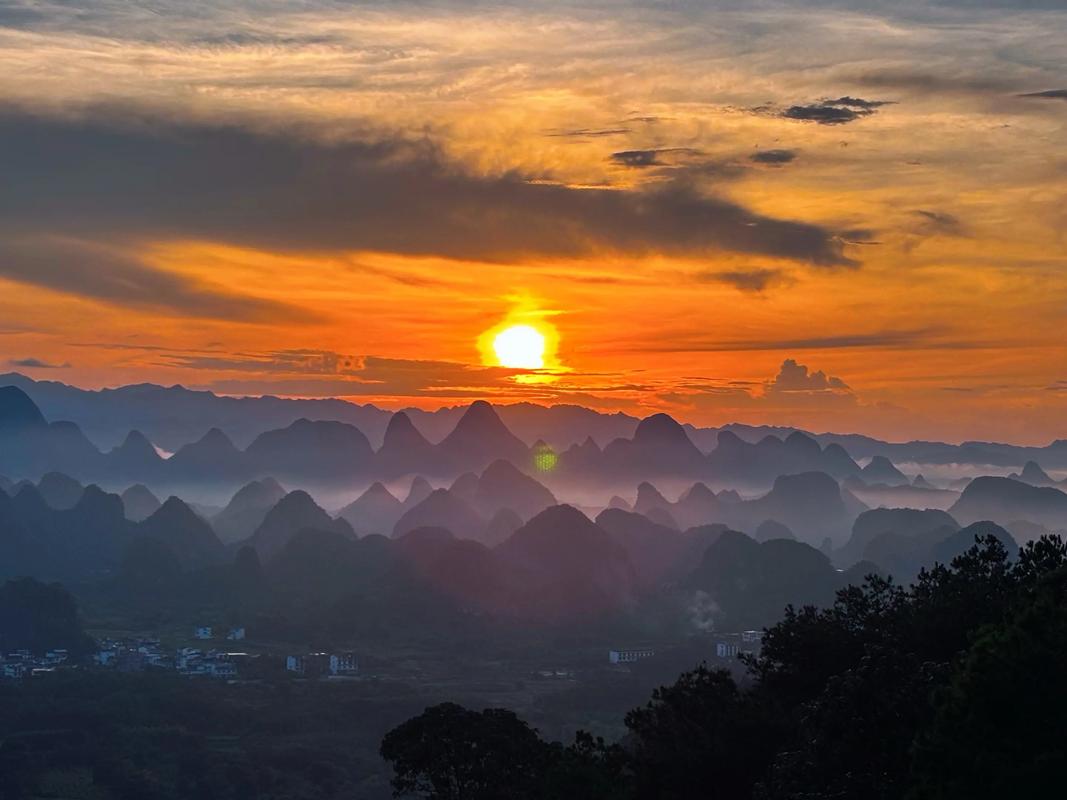
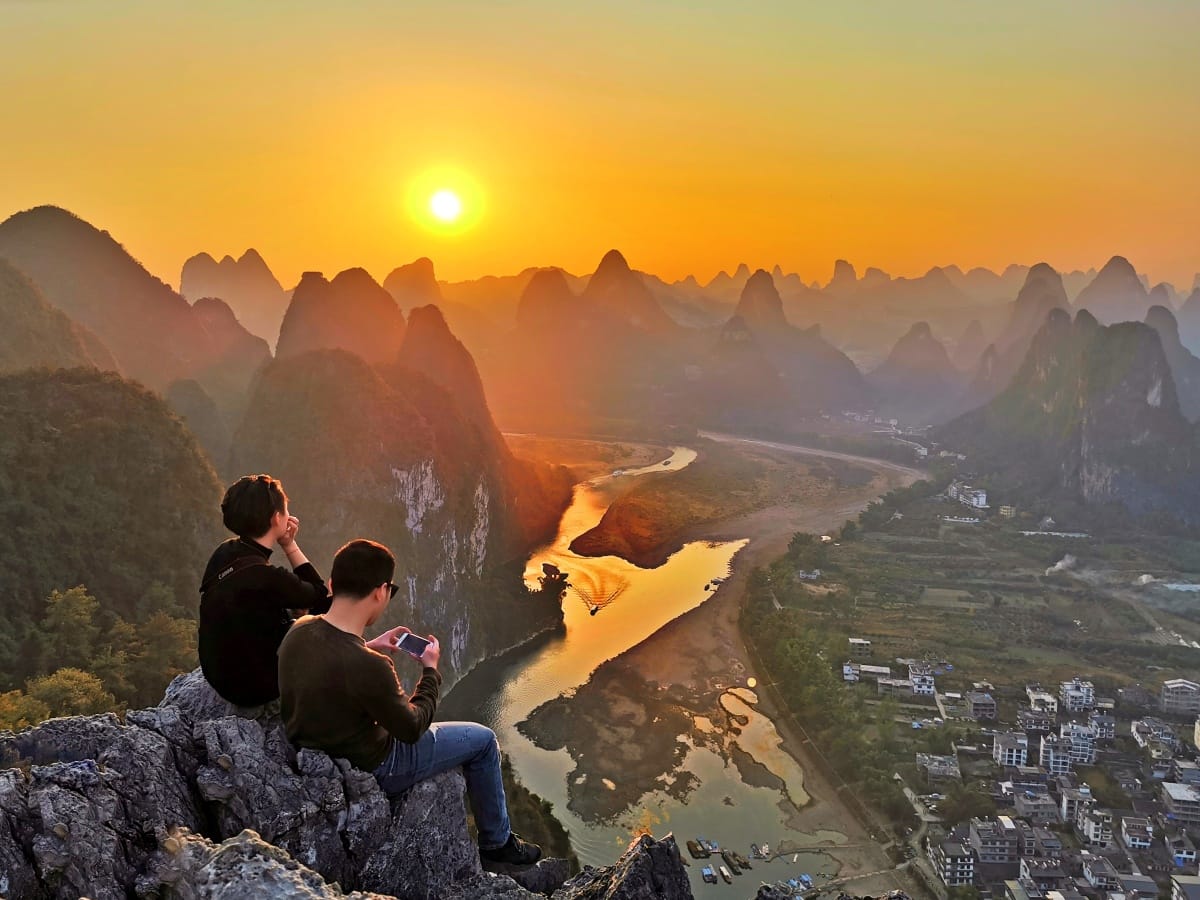
Skip Xianggong Mountain if sunset is what you’re after. The viewing platforms face east, toward the sunrise side of the valley, and travelers who’ve climbed up for sunset describe the result as flat and unremarkable compared to dawn.
We send people to one of two places instead: Laozhai Hill, a short distance away, free to enter but with a steeper, unpaved path that’s no fun in the dark; or Qianli Jiangshan Tu (“Thousand Li of Rivers and Mountains”), a separate hill on Xiyang Mountain in Putao town, free to enter and purpose-built for sunset, with about a 15-minute climb. It’s a different hill from Xianggong Mountain, not an extra platform on the same site — but since we plan custom itineraries, we can build both stops into the same outing without a second early-morning wake-up.
If your schedule only allows one outing and you have to pick, take the sunrise at Xianggong Mountain. It’s the more famous shot for a reason.
8. Should You Stay Overnight Near the Mountain?
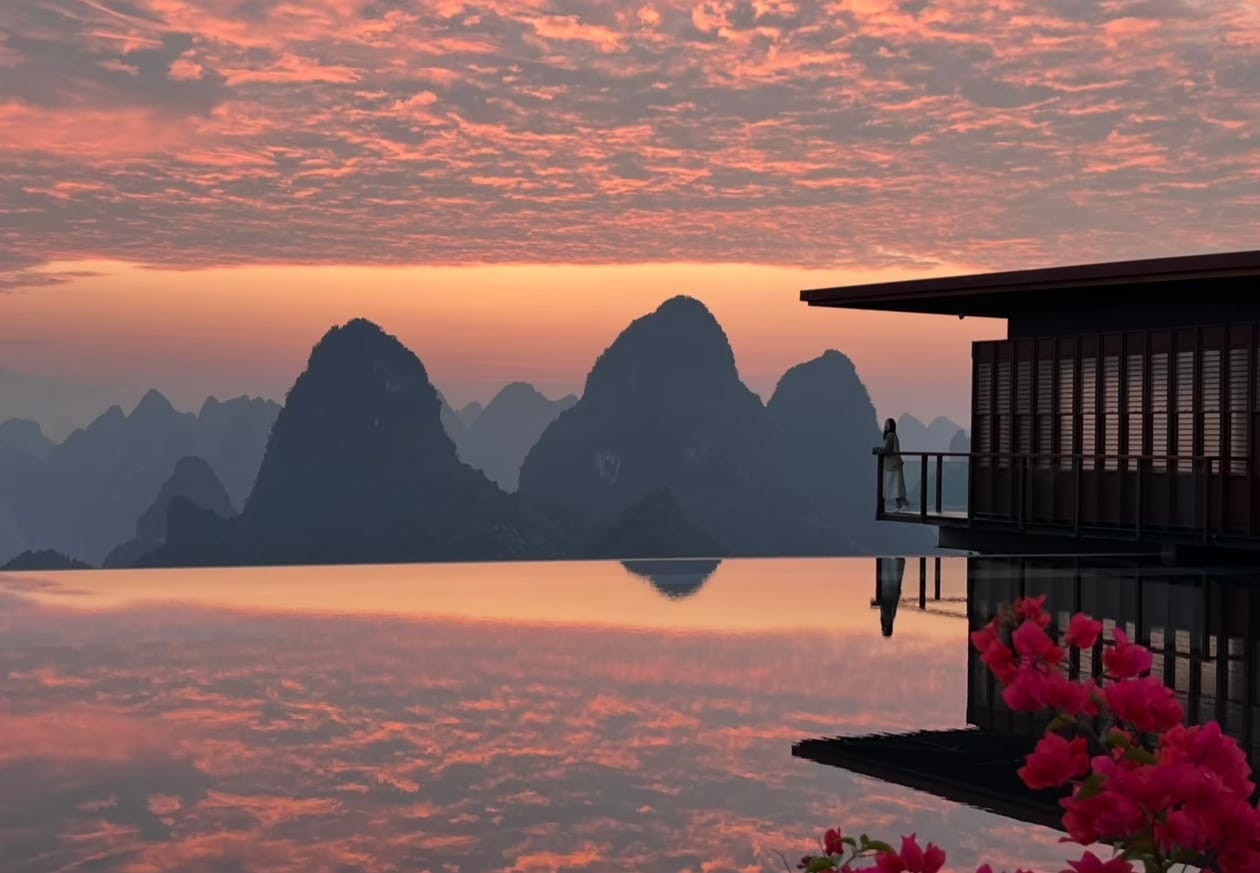
If sunrise is your priority, yes — it turns a pre-dawn departure into a short walk from your room. For a scenic splurge, Yangshuo Misty Wonderland has courtyard-style rooms near the summit with private balconies facing the Yellow Cloth Shoal reflection and an infinity pool; it sells out, so book a month ahead. Buzhi Chunguai is the quieter alternative, with oversized windows that let you watch the sunrise from bed.
For something simpler and closer to the gate, several guesthouses sit within a 5–15 minute walk of the entrance:
- DS Zuimei Xianggong Mountain Hotel — breakfast and ticket bundled in, free train-station pickup
- Yangshuo Yunshan Yasu Hotel — sells tickets on-site, a few minutes from the gate
- Wangjinglou Guesthouse — show your room key for a ¥30 discounted ticket
- Xiyue Guesthouse — cheapest, but the road in is rough and food nearby is limited
You can book any of these through Trip.com or other online platforms.
Basing yourself in Xingping Ancient Town instead gives you more restaurants and shops, at the cost of a ferry crossing and a car up to the scenic area each morning. If sunrise isn’t the goal, skip the overnight stay and visit mid-morning as part of a broader Yangshuo day — see our Yangshuo attractions guide for how to fit it in.
9. What Should You Pack for the Climb?

Bring a headlamp or phone flashlight — the path is lit near the entrance but not all the way up, and you’ll be climbing in darkness for a sunrise visit. The summit gets windy and noticeably colder than Yangshuo town, even in summer, so bring a windproof outer layer rather than just a sweater.
If you’re shooting photos, a tripod is genuinely useful here given the low light at the start, and a mid-range telephoto lens captures the layered peaks better than a wide angle alone. Cash matters too — the entrance fee and the ¥40 tour car fare are easiest to handle with small bills rather than mobile payment, since connectivity at the base can be patchy before dawn.
Frequently Asked Questions
Is Xianggong Mountain worth visiting for sunrise?
Yes, on a clear morning between September and November. The view over the Li River’s first bend is genuinely one of the best in the Guilin-Yangshuo area, and the climb is short enough to be manageable for most fitness levels.
How much does it cost to enter Xianggong Mountain?
The standard adult fare is ¥60. Concession tickets (¥30) cover ages 6–18, full-time students, and seniors 60–65, and entry is free for young children, seniors 65+, active military, and people with disabilities. Transport adds ¥40–50 per person round trip from Xingping; private car rates from Yangshuo or Guilin shift with the season and your exact itinerary, so contact us for a current quote.
Can I see sunset instead of sunrise at Xianggong Mountain?
Not really. The viewing platforms face east toward the sunrise, and sunset views from here are noticeably flatter and less impressive. For sunset, go to Laozhai Hill or Qianli Jiangshan Tu (Sunset Mountain) instead — both are nearby alternatives oriented for the evening light.
Is the climb up Xianggong Mountain difficult?
No. The path is about 500 paved stone steps with handrails on steeper sections, and the climb takes 15–20 minutes at a normal pace. It’s manageable for most travelers, including children and older adults, though it should be taken carefully in the dark before dawn.
Do I need to book tickets in advance?
Booking isn’t required, but buying your ticket the day before through a local agent avoids queuing at the entrance in the dark, which matters when every minute before sunrise counts.
Is Xianggong Mountain the same place as Xianggong Hill?
Yes, these are the same location — “mountain” and “hill” are used interchangeably in English translations of the Chinese name, 相公山.
Planning a Guilin or Yangshuo trip and want help arranging transport for a Xianggong Mountain sunrise? Get in touch with us and we’ll sort the logistics for you.