
Guilin Yangshuo Rainy Season: When to Worry, When to Go
We’ve watched Guilin and Yangshuo’s rainy season unfold every year since 2006, and the calendar pattern is consistent: the window runs from April through July. According to 1991–2021 climate normals, June is the wettest month on record, averaging 372mm of rain, followed by May at 356mm — both well ahead of April (296mm) and July (231mm). By August, monthly totals fall to 145mm, and from September through March the region is reliably dry.
That’s the calendar answer. The operational answer is more useful: not every rainy week is a problem week, and not every dry-season week is a safe bet either. Some of our best client photographs come from rainy mornings on the Li River. Some of our worst logistical headaches have come from a single heavy afternoon in May.
Rainy season window | April–July |
Peak rainy months | May–June (356mm / 372mm avg) |
Rain type | Fast, heavy tropical showers — not persistent drizzle |
Typhoon overlap | Low direct risk (inland), indirect moisture surges possible Aug–Sep |
Table of Contents
1. When Is Guilin and Yangshuo’s Rainy Season?
Guilin and Yangshuo sit in a humid subtropical monsoon zone with average annual rainfall of 1,890.8mm, per the Guilin Meteorological Bureau, a branch of the China Meteorological Administration — more than three times London’s annual average. Most of that falls between April and July, when the summer monsoon pushes in from the south.
Here’s the full 1991–2021 climate-normal breakdown for Guilin, via Climate-Data.org:
Month | Rainfall | Rainy Days | Month | Rainfall | Rainy Days |
|---|---|---|---|---|---|
January | 102mm | 10 | February | 121mm | 12 |
March | 229mm | 16 | April | 296mm | 16 |
May | 356mm | 16 | June | 372mm | 17 |
July | 231mm | 16 | August | 145mm | 12 |
September | 73mm | 7 | October | 76mm | 6 |
November | 98mm | 7 | December | 75mm | 8 |
Guilin Monthly Rainfall — 1991–2021 Climate Normals
Average rainfall (mm) by month · Source: Climate-Data.org
May–June (highlighted) form the wettest stretch of the year
June comes out ahead, but only by a 16mm margin over May — close enough that in any given year, either month can end up the wetter one. What the table makes unambiguous is the shape of the season: a sharp climb from March through June, then a drop-off starting in July. By September, the region has crossed into its dry stretch, when monthly totals run 70–120mm against a 230mm+ baseline in the wet months.
This timing catches a lot of first-time visitors off guard, and it’s the detail we end up explaining to almost every client booking a spring trip. Guilin’s spring is not the dry, comfortable season it is further north. It’s the leading edge of the rain.
2. How Bad Has Flooding Gotten? The Historical Record
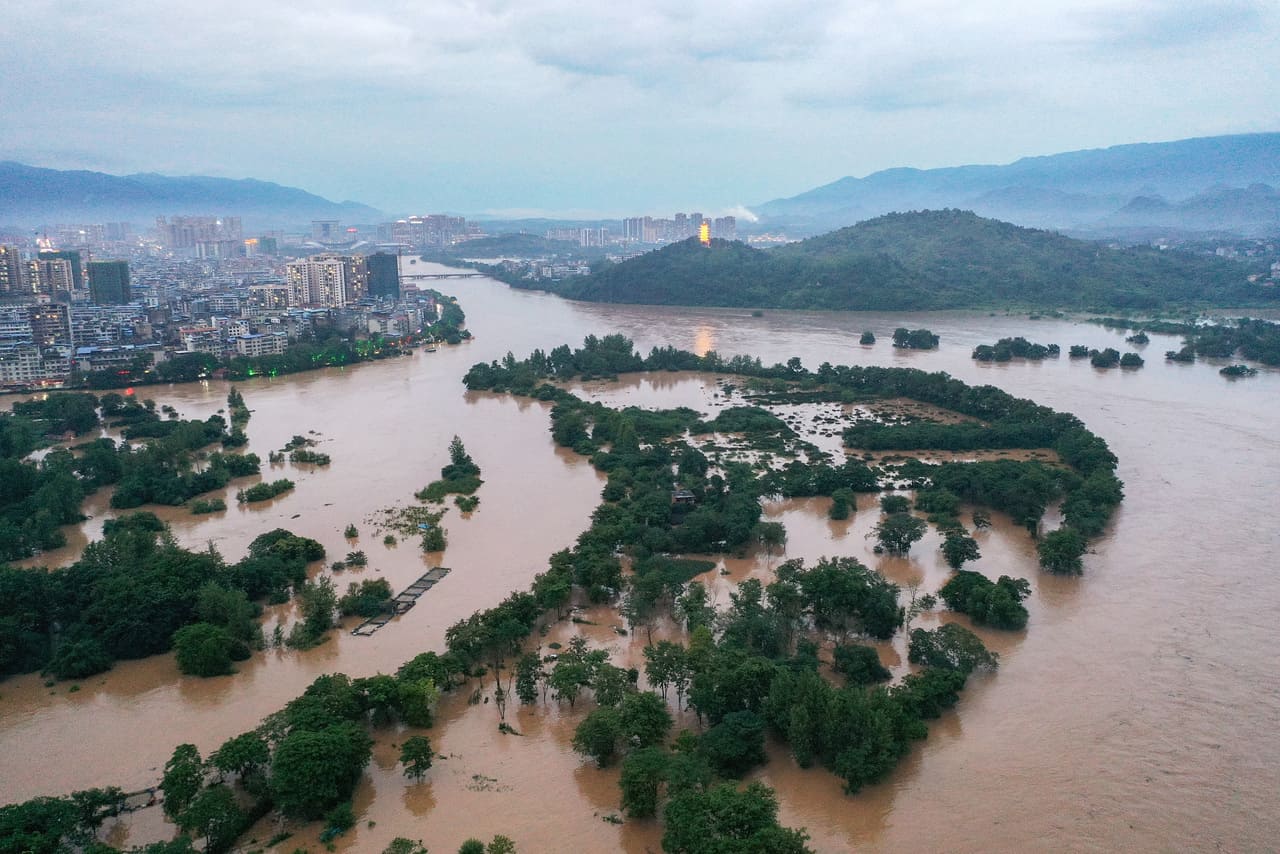
The table above is the normal range. We’ve run trips through this season every year since 2006, and two floods in recent memory reset what “bad” actually means here.
1998 was the old benchmark, with the Li River hitting 148.40m at the Guilin gauge, per Ministry of Water Resources data. June 2024 broke it: the river hit 148.88m, the highest since records began in 1958. The train station flooded, the city declared its top emergency response, and the cruise stayed suspended for several days before reopening in phases.
Li River Water Level — Guilin Hydrological Station
Peak water levels (m) · Sources: China Daily, Xinhua
June 2024 is the highest level on record since measurement began in 1958
Most rainy-season trips never get anywhere near this. But it’s why we build buffer days and flexible cancellation terms into anything booked for May–July, rather than treating rain as ordinary background weather. For flood risk elsewhere in China, see our China Rainy Season by City guide.
3. Month-by-Month: What Actually Happens on the Ground
Month | Avg. Temp | Avg. Rainfall | Rainy Days | Character |
|---|---|---|---|---|
April | 19.4°C | 296mm | 16 | Short, heavy showers begin |
May | 22.8°C | 356mm | 16 | Near-peak, river levels rising |
June | 25.3°C | 372mm | 17 | Wettest month, flood risk highest |
July | 26.8°C | 231mm | 16 | Afternoon thunderstorms, hot |
August | 26.9°C | 145mm | 12 | Easing, peak domestic crowds |
September | 25.1°C | 73mm | 7 | Sharp drop, best photography begins |
Temperature and rainfall: 1991–2021 climate normals via Climate-Data.org.
April
Rain becomes a daily possibility rather than an occasional one. Showers tend to be short and heavy rather than all-day drizzle. This is also when we start fielding the most client questions about Longji access. The single-lane road network has less buffer than city infrastructure, so a heavy overnight downpour can mean a closed road the next morning, even this early in the season.
May
Rainfall climbs close to the yearly peak. This is also when the Li River starts running high enough that some cruise operators reduce or reroute sections, once water rises past safe navigation levels. It’s also prime time for misty river photography, with karst peaks emerging from low cloud.
June
The wettest month on the climate-normal record, though May runs close enough behind it that the gap can flip either way in a given year. Expect rain on more days than not, with a few heavy, sudden downpours mixed in. This is also when the Longji terraces are filling with water for transplanting — best mirror-reflection photography is late May to mid-June. The rain and the area’s most photogenic moment overlap directly. It’s also the month behind both record floods (Section 2) and most of the cruise disruptions (Section 4).
July
Still wet, but the character shifts toward afternoon thunderstorms rather than all-day systems, even though the rainy-day count barely drops from June. Mornings are increasingly workable for cruises and cycling. Heat and humidity climb alongside the rain, which is its own discomfort separate from precipitation.
August
Rainfall drops by more than a third from July. This is also peak domestic tourism season (Chinese school summer holiday), so crowds are higher even as rain risk falls.
September
The single biggest drop on the calendar, and the window we recommend most often to clients with flexible dates. By mid-month, Guilin and Yangshuo are reliably into their best photography window — clear skies, the Li River still carrying enough water from summer rain to look full, and Longji’s terraces turning gold toward harvest.
4. Does Rain Cancel the Li River Cruise?
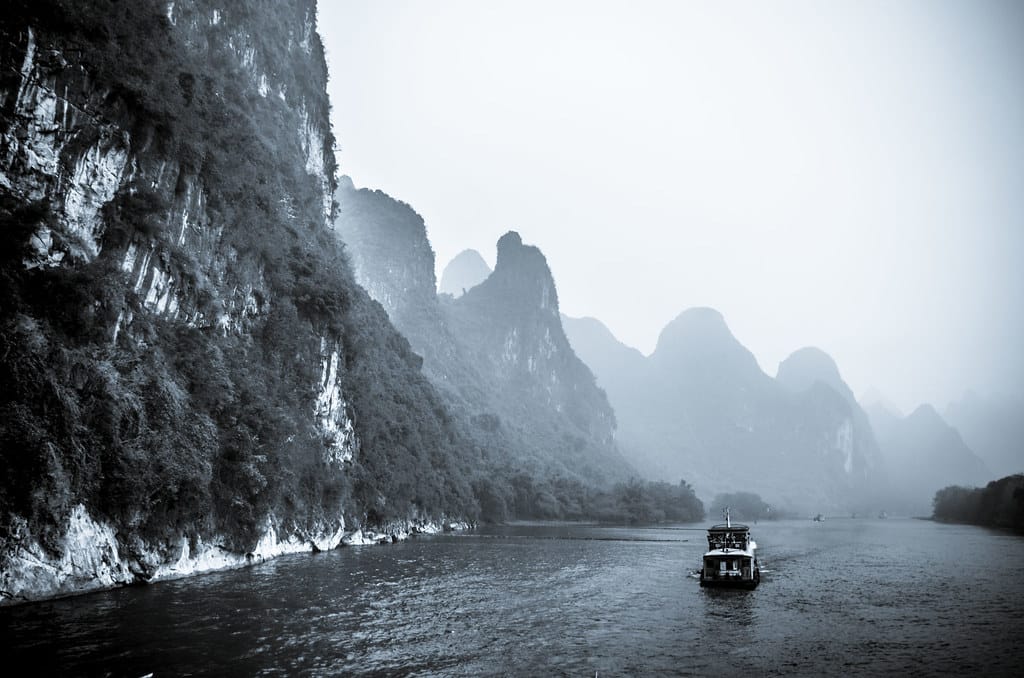
Not usually, but it can reroute or shorten it. We tell clients the real risk is river level, not the rain itself. A clear day after heavy upstream rain can still mean a fast, muddy river, while a light-rain day on a normal water level runs without any trouble.
When levels rise past the safe threshold, operators usually shorten the route — departing closer to Yangshuo rather than running the full course — instead of cancelling outright. Only the heaviest floods stop the cruise entirely, and even then it’s usually just a day or two.
We watched this exact pattern play out in 2026: Guilin Maritime closed one cruise route on June 19 as the river rose, then closed the flagship route too three days later as levels kept climbing. The same authority issued another suspension order on July 6 at 16:10, again halting the flagship route as water levels rose. The notice was issued via the official WeChat account of the Li River ticket office (漓江售票处). Suspensions like these typically lift within a few days — Guilin’s rain comes in bursts, not sustained downpours, and river levels usually drop fast enough to reopen routes quickly.
Worth knowing: the cruise and the smaller bamboo rafts near Yangdi and Xingping run on two different thresholds. The rafts close far more often — five times in a single 2013 season, and again this April — while the cruise runs fine through all of it. If a raft segment is part of your plan, build in more flexibility than you would for the cruise.
5. Is Yulong River Bamboo Rafting Affected?
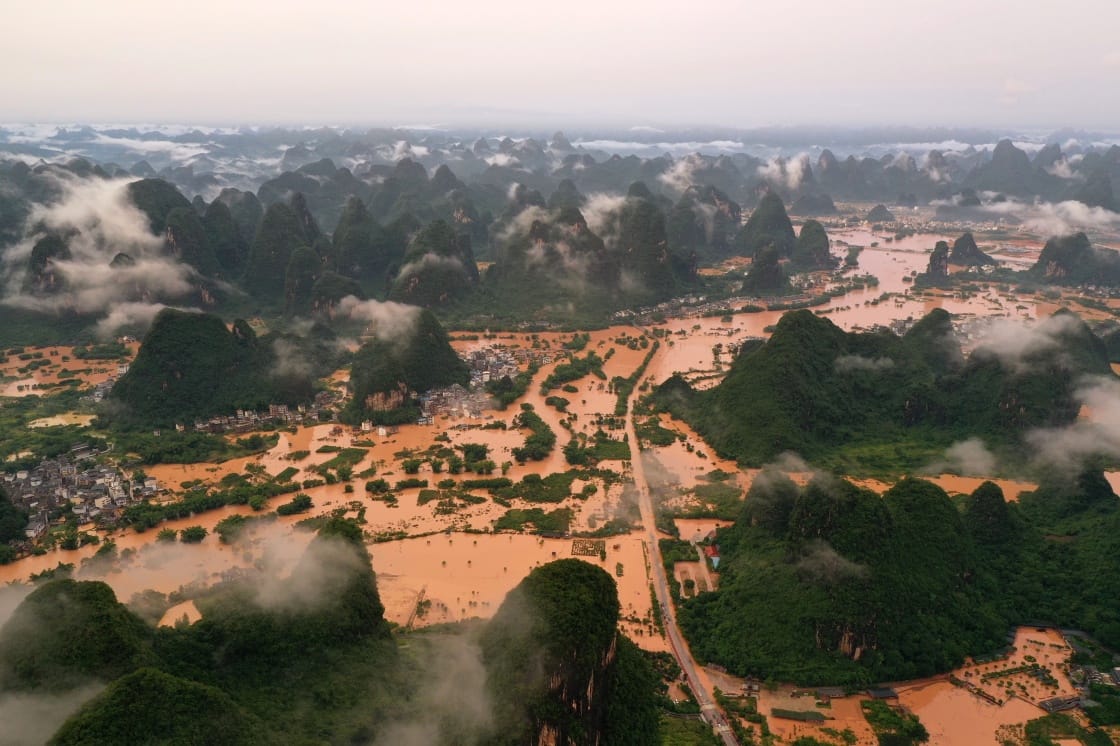
Differently than the Li River, and often in your favor — the Yulong actually needs rain to stay raftable. In the driest months we’ve seen rafts dragging on the riverbed from low water; May through August, with rain keeping the river topped up, is usually the smoother window, not the riskier one.
The one exception is the day right after very heavy rain, when fast current pauses departures for a day — nothing like the Li River’s multi-day swelling.
We’d be doing you a disservice not flagging the upper limit, though. In June 2020, Yangshuo logged its heaviest rain on record, and the Yulong rose past its worst flood in fifty years, by the county water bureau’s own account. The town flooded badly, and two guests at a riverside guesthouse died. That’s the rare exception “rain helps the rafting” doesn’t cover.
6. Rain and the Longji Rice Terraces: The Real Risk
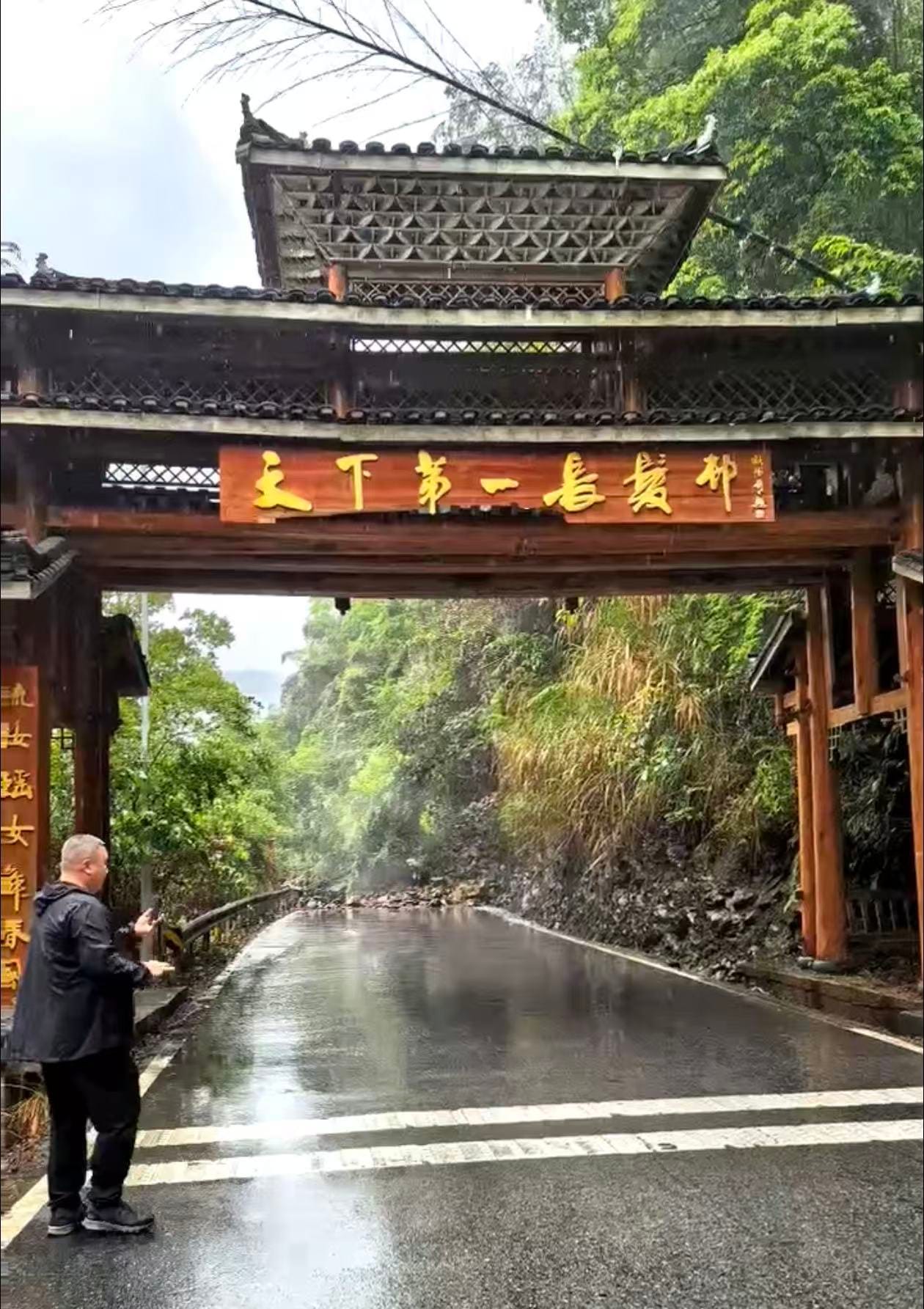
Longji is the single highest-risk piece of a Guilin–Yangshuo itinerary, and it’s a road problem more than a weather problem. The terraces sit 80–100km north of Guilin, reached by a limited number of mountain access roads through Longsheng County. A heavy overnight rain event can trigger landslides or road damage with no alternative way in or out.
This matters most for anyone booking a hotel inside the scenic area (Ping’an or Dazhai), or planning Longji as a tight day trip. If the access road closes for even half a day, that itinerary simply doesn’t happen, with no way to substitute it back in.
We’ve had this happen to our own clients. In April 2026, a group from Canada planned to visit Longji on their arrival day in Guilin. Overnight rain damaged the access road, and they lost a full day waiting for it to reopen. They could no longer use the hotel booking inside the scenic area, and getting a refund became its own fight. Not because anyone was unreachable, but because it was booked as a non-refundable rate through Trip.com. We tell that story in full, including how the refund got resolved, in our China Rainy Season by City guide.
Our advice: build a buffer day around Longji if you’re visiting April–July, and check cancellation terms before booking anything non-refundable inside the scenic area.
For Longji’s seasonal water-and-color cycle alongside other Chinese terraces, see our rice terraces guide.
7. What to Do in Guilin and Yangshuo on a Rainy Day
We tell clients rain doesn’t have to mean a lost day — it means switching to attractions where rain doesn’t undercut the experience, and avoiding the handful where it actively makes things worse or unsafe. The breakdown below covers nine safe bets and eight to skip, attraction by attraction, based on what we’ve seen work and not work for our own groups.
Rainy Day in Guilin & Yangshuo — Where to Go, What to Skip
Underlined names (↗) link to our full attraction guide
✅ Safe bets in light-to-moderate rain
⚠ Skip these if it’s actively raining
What we’ve noticed across both lists: dry, covered, or low-visibility-tolerant attractions hold up fine. River-dependent, cliff-dependent, or open-air-only experiences are where rain stops being atmospheric and starts being a genuine problem.
8. Is Rainy Season Worth Visiting? The Honest Case
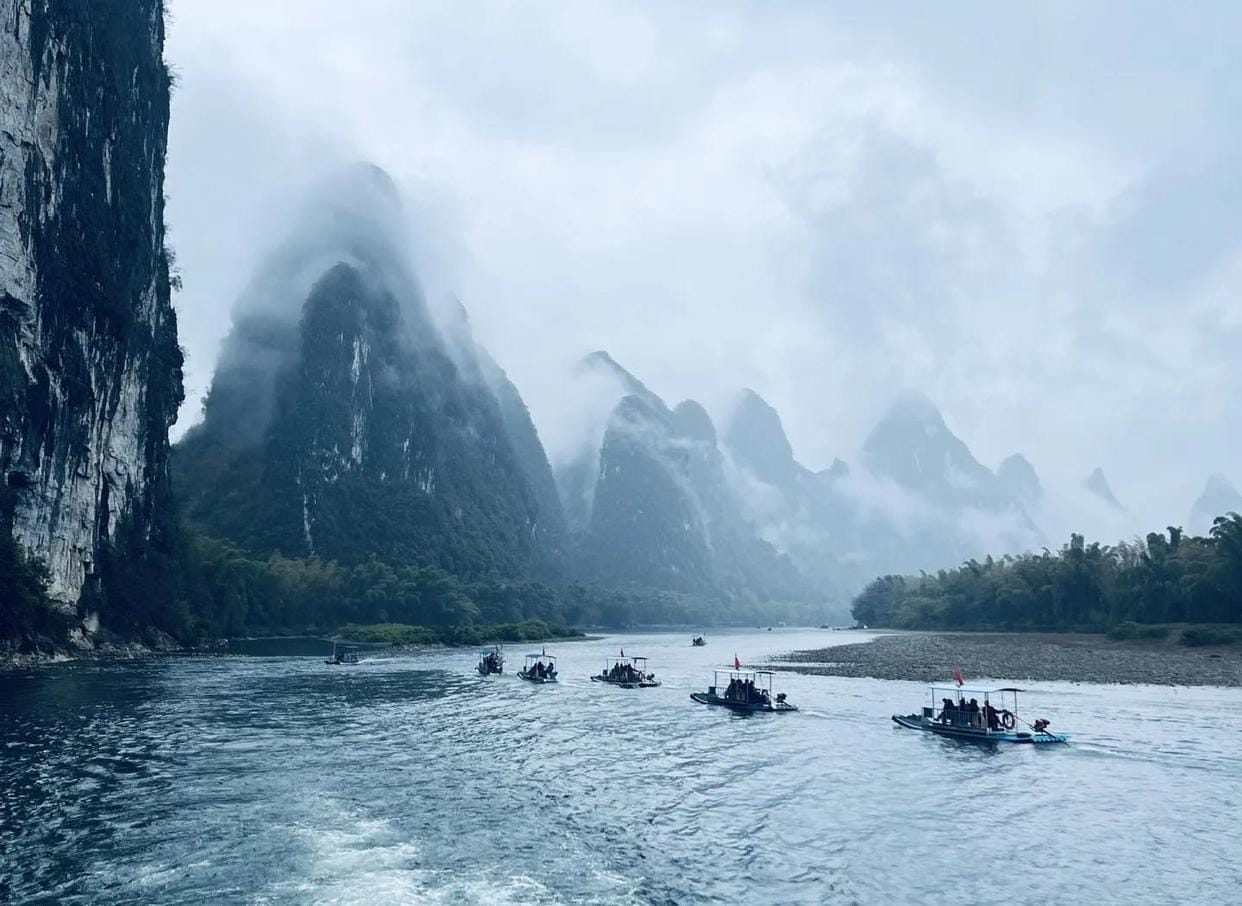
We push back on blanket advice to avoid Guilin and Yangshuo’s rainy months entirely. The low cloud that settles over the karst peaks along the Li River is the exact image that’s been painted for centuries. It requires the moisture to exist at all — a clear, flat-sunlight day simply doesn’t produce it.
There’s also a cost argument we make to clients with flexible budgets. Hotel rates in Yangshuo during the May–June peak typically run well below Golden Week and August peak-season pricing, and crowds are thinner at major attractions. If your travel dates are flexible, late May or June offers a real trade-off. You take on meaningfully more rain risk in exchange for noticeably lower costs and fewer people at Moon Hill, West Street, and the cruise dock.
In our experience, the case against rainy season is narrower than it looks. It’s really a case against May–July for anyone with rigid time constraints: a tight day-trip schedule to Longji, a single non-negotiable cruise date, or non-refundable mountain accommodation. Remove those constraints, or build a buffer day around them the way we do for our own clients, and the rainy season case weakens considerably.
9. What to Pack for Guilin and Yangshuo’s Rainy Season
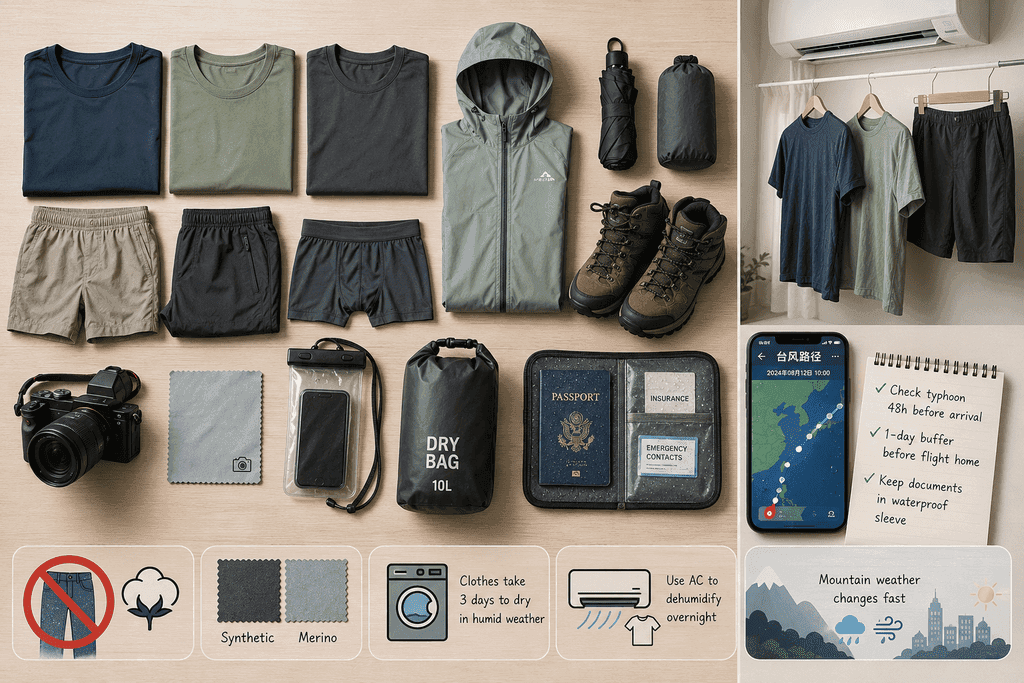
We always tell clients quick-dry clothing matters more than rain gear here. Guilin’s rain is fast and heavy rather than persistent. You’re more likely to get soaked in a 20-minute downpour than to deal with constant drizzle, so what dries fast matters more than what blocks water perfectly.
A compact folding umbrella covers city walking in Guilin and West Street in Yangshuo. For Longji and any countryside cycling around Yangshuo, we recommend a packable rain jacket instead — it handles wind and the uneven, possibly muddy terrace paths better than an umbrella does.
Waterproof or quick-dry footwear is worth the extra weight in your bag. The stone paths around Longji and the rural tracks around Yangshuo’s countryside get genuinely slippery and muddy after heavy rain, and standard sneakers stay wet for the rest of the day. For itinerary planning beyond the weather, our Guilin and Yangshuo tour guide covers the full trip picture.
FAQ: Guilin Yangshuo Rainy Season
What is the rainiest month in Guilin and Yangshuo?
June, by the 1991–2021 climate-normal record — averaging 372mm against May’s 356mm. The margin is narrow enough that individual years can go either way, but June holds the long-term edge.
Will rain cancel my Li River cruise?
Rarely outright. High water levels more commonly shorten or reroute the cruise — departing from a point closer to Yangshuo rather than the full route — than cancel it. Full suspensions happen during the heaviest flood conditions, route by route. In June 2026, for example, Guilin Maritime closed the Yangshuo–Yangdi route, then closed the cruise’s flagship route three days later as water levels kept rising.
Has Guilin had serious flooding before?
Yes. June 2024 brought the worst flood on record at the Guilin hydrological station — a peak water level of 148.88m, surpassing the previous 1998 benchmark and the highest since measurements began in 1958. It closed the Li River cruise for several days and flooded parts of Guilin’s main train station. It’s the exception rather than the rule, but it’s a documented one.
Is it safe to visit Longji Rice Terraces during rainy season?
Generally yes, but build in a buffer day. The terraces themselves aren’t the risk — the single-lane mountain access road is, since heavy rain can trigger localized road damage with no alternative route in or out.
Is Yulong River bamboo rafting better or worse in rainy season?
Often better. The river needs rainfall to stay deep enough for smooth rafting; the driest months can mean low water and rafts dragging on the riverbed. The only pause point is the day immediately following very heavy rain, when current speed briefly halts departures.
When does the rainy season end?
Rainfall drops noticeably by August. It clears substantially by mid-September, when Guilin and Yangshuo move into their clearest, most reliable photography window through November.
Is rainy season cheaper to visit?
Yes. Yangshuo hotel rates during the May–June peak typically run well below August and Golden Week pricing, and major attractions see lower crowds.
Weighing specific travel dates against this rain pattern, or want an itinerary built with buffer days around it? Contact us.