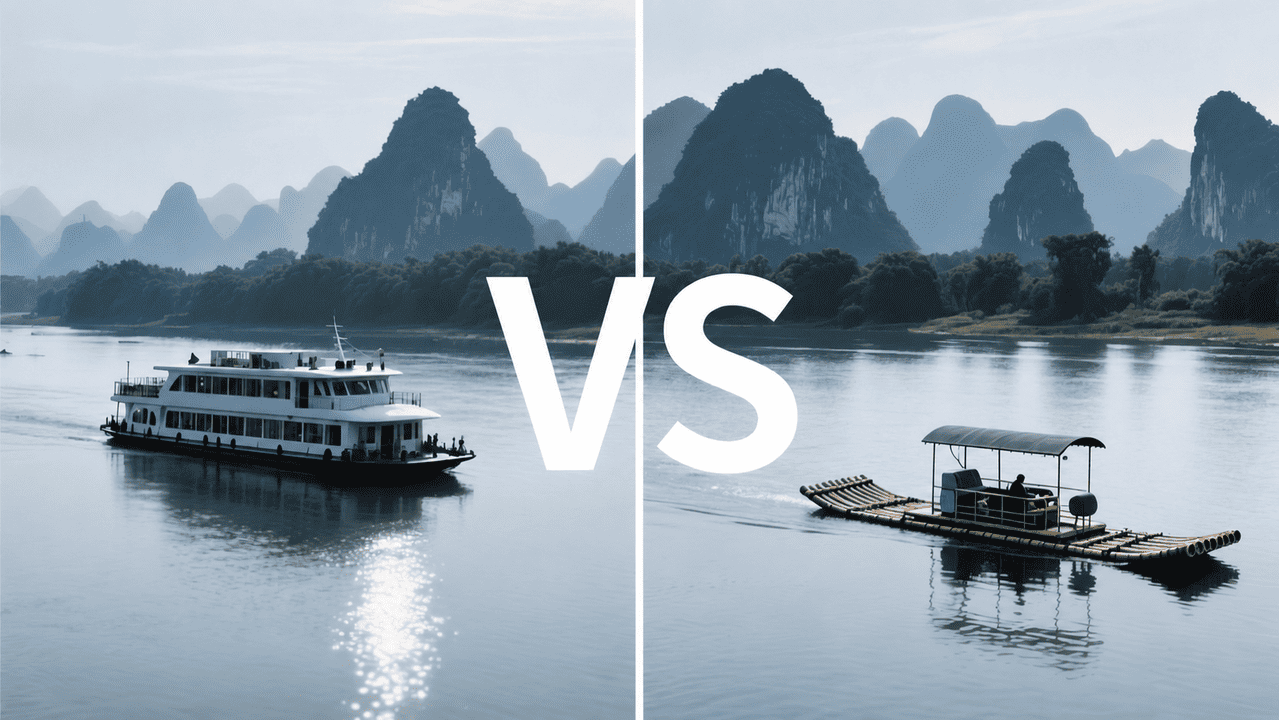
Li River Cruise vs Bamboo Rafting: An Operator’s Honest Take
The Li River cruise and Li River bamboo rafting cover overlapping water, but they solve two different problems. The cruise is the full experience. It runs 4 to 5 hours on a stable multi-deck boat, includes a buffet lunch on the 4-star, and doubles as your transport from Guilin to Yangshuo. The raft is the condensed version — 50 to 100 minutes on the same “essence” stretch, sitting low enough to feel close to the water. It’s electric, not hand-poled, and often crowded. We’ve put clients from around the world on both since 2006, and this is how we tell them apart.
TL;DR — Li River Cruise vs Bamboo Rafting
- First visit, or need transport to Yangshuo anyway? Book the cruise — full scenery, and it doubles as your ride.
- Short on time, or already near Yangdi or Xingping? The raft covers the same core stretch in under two hours.
- Already done the cruise? Skip the Li River raft — it’s electric, crowded, and repeats the same water. Book Yulong River rafting instead.
- Both in one day rarely pays off. The raft echoes the cruise’s best stretch, not a different one.
Table of Contents
1. Li River Cruise vs Bamboo Rafting: What’s the Difference?
Same river, same general stretch of karst scenery, two completely different ways to see it.
Comparison | Li River cruise | Li River bamboo raft |
|---|---|---|
Distance | ~60km, Guilin to Yangshuo | 5–15km depending on route |
Duration | 3.5–5 hours | 50–100 minutes |
Vessel | 3-star or 4-star boat, multiple decks | 4-person electric raft, open-air, low to the water |
Price (per adult) | ¥215 (3-star) to ¥360 (4-star), one-way | ¥90–255 depending on route |
Route direction | One-way, Guilin to Yangshuo | Mostly one-way or round-trip on a short local stretch |
What you see | The full scenic corridor, including the Yangdi–Xingping “essence” section | A slice of that same essence section, up close |
The raft operates on short sections of that same river, mostly around Yangdi and Xingping — the stretch every “20-yuan-note” photo comes from. It isn’t a separate destination; it’s a closer, shorter look at part of what the cruise already sails past.
Where the “essence section” actually sits
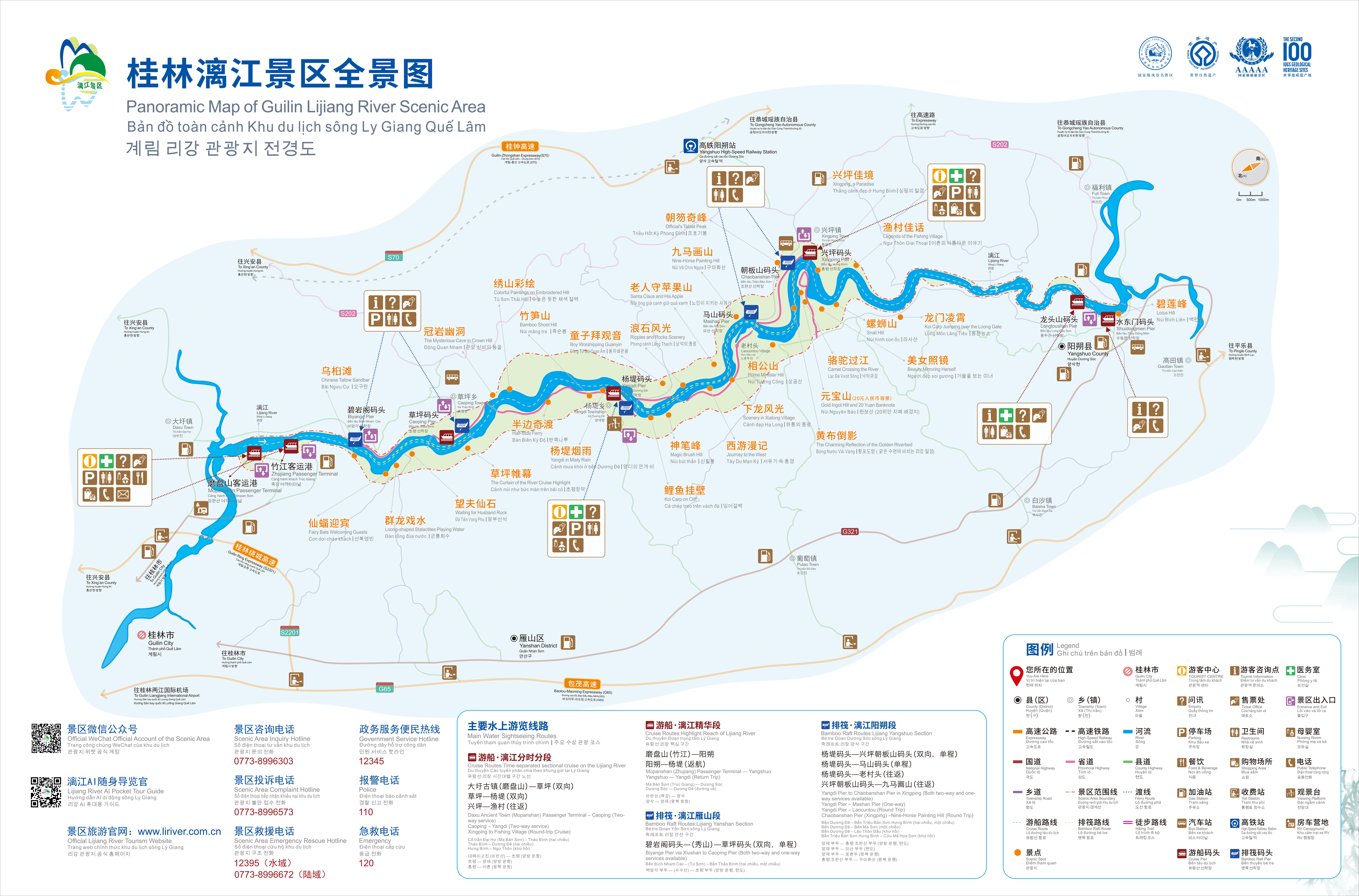
The “essence section” is the roughly 20-kilometer Yangdi-to-Xingping stretch — the part of the river with the highest concentration of named landmarks, including Nine Horse Fresco Hill and Yellow Cloth Shoal. It sits inside the cruise’s full 60-kilometer route, not alongside it: the cruise sails through this stretch as one segment of its longer journey, and the raft operates almost entirely inside it. That containment is the reason the raft rarely shows a client anything the cruise hasn’t already passed.
2. Why Most First-Time Visitors Should Book the Cruise
It covers nearly all the scenery the raft does, plus more
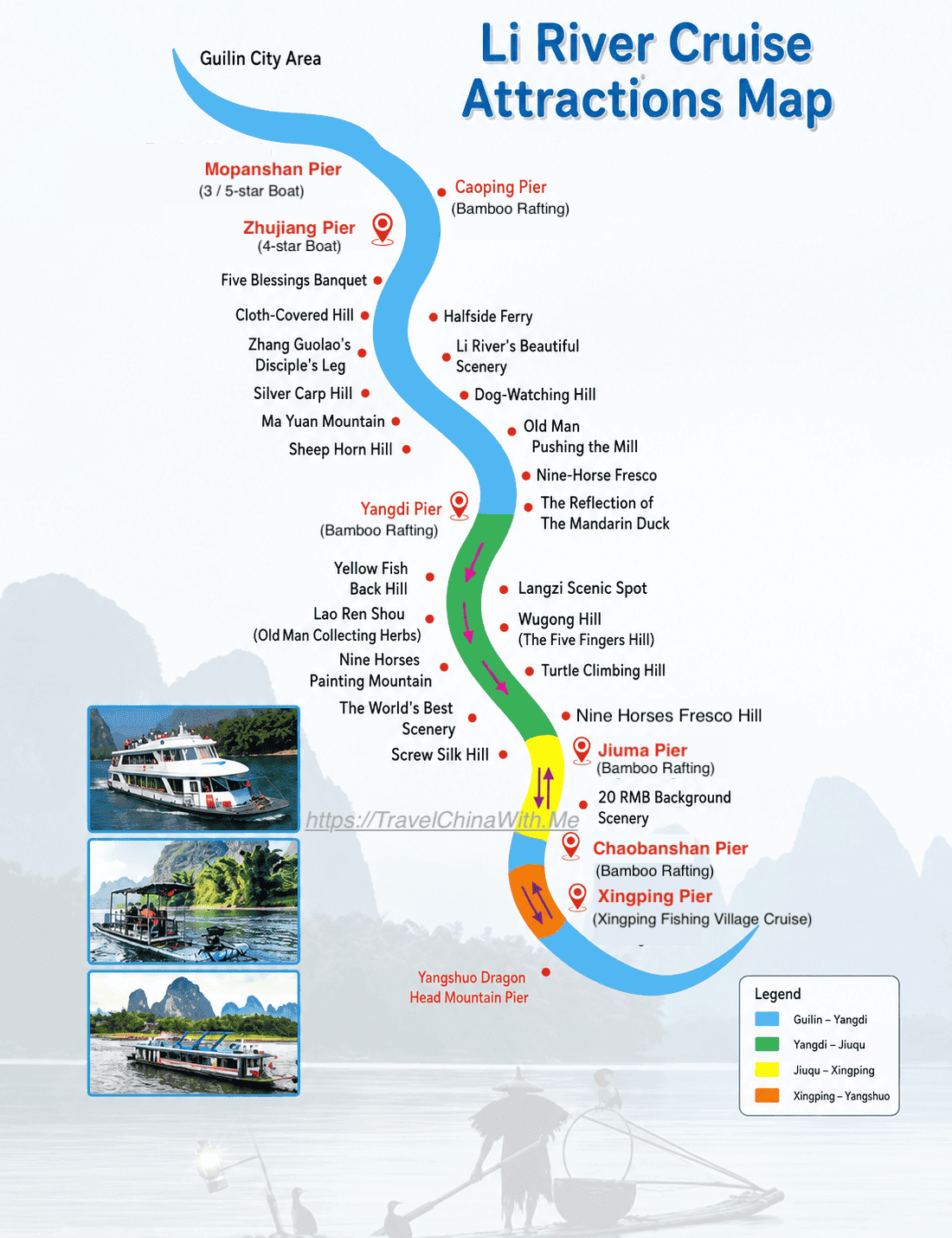
The Yangdi-to-Xingping “essence” section sits inside the cruise route, not the other way around. Nine Horse Fresco Hill, Yellow Cloth Shoal, the karst core everyone comes to see — it’s all on the cruise route already. Clients who take the cruise have already sailed past everything the raft shows them, with the wider Guilin-side scenery added on top.
The 4-star buffet, and the 3-star’s lighter option
 Li river cruise 4-star – food
 Li river cruise 3-star – food

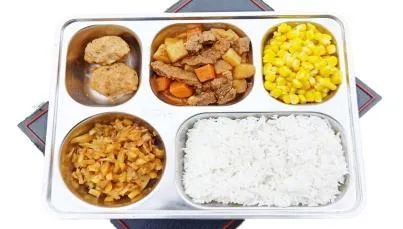
4-star tickets include a proper buffet lunch in the ticket price — nothing extra to arrange. The 3-star boat sells a basic onboard meal too. We usually tell clients to skip it and bring their own snacks instead; free hot water and monk fruit tea are available either way. → See our 3-star vs 4-star comparison if you’re still deciding between the two boat classes.
A steadier, more comfortable ride
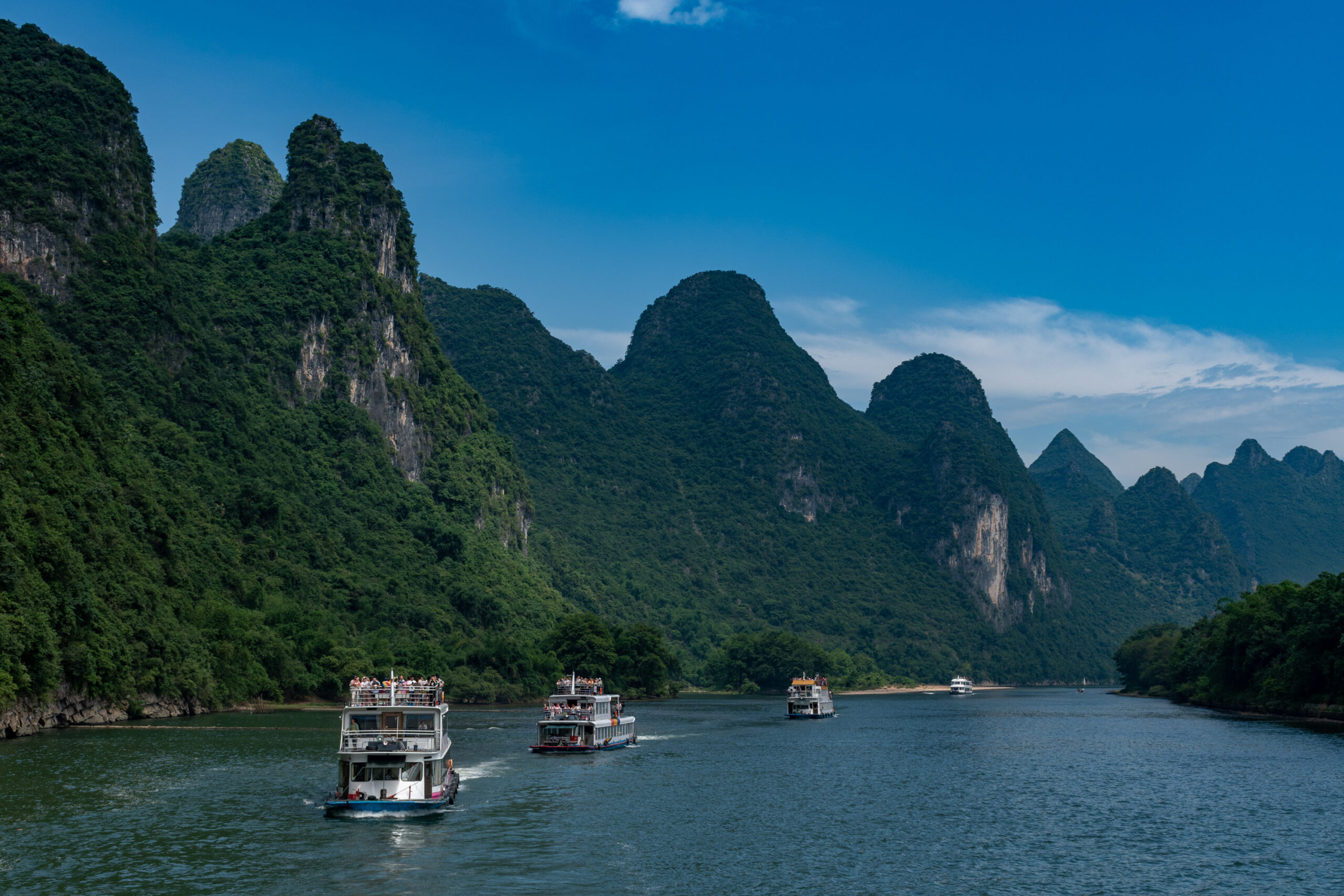
Both boat classes run multiple decks with proper seating, an upper deck for photos, and shelter from sun and rain. Compared to an open 4-person raft with nowhere to move, it’s simply a more relaxed way to spend half a day.
It’s your transport, not just your scenery
This is the detail most comparisons skip. The cruise sails one-way from Guilin to Yangshuo. By the time you disembark, you’ve already made the trip between the two cities you needed to make anyway. The raft doesn’t do this. It’s a round-trip or short one-way hop on a single stretch. However you get to the dock, you still need to arrange onward transport to wherever you’re actually staying. For a first visit to this region, the cruise quietly solves two problems — sightseeing and transfer — in a single booking. → See our full Li River cruise guide for piers, timing, and booking steps.
3. What the Raft Gets Right, and Where It Falls Short
The raft’s real advantage isn’t comfort — it’s density. The cruise spends 3.5 to 5 hours covering 60 kilometers, much of it comparatively plain scenery on the Guilin side; the raft spends under two hours entirely inside the good part. That density comes with real trade-offs — crowds, noise, and a route that mostly repeats the cruise’s best stretch.
Closer to the water, closer to the peaks
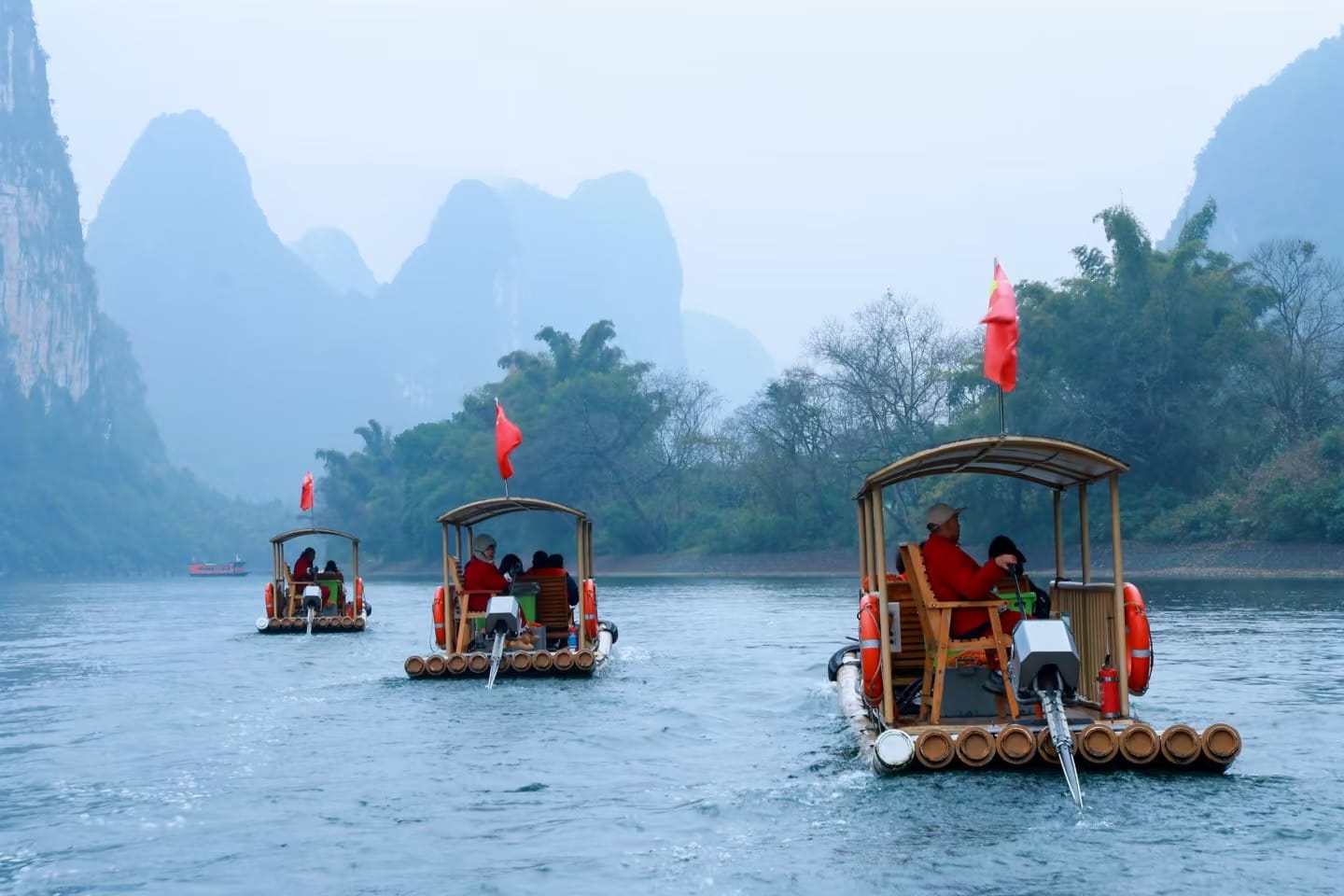
The raft sits low, moving slowly enough that the karst peaks on either bank feel like they’re leaning over you rather than framing a distant view. It’s the one thing nearly every guest mentions afterward — a genuinely different angle on the same landscape, not just a shorter version of it.
Far more routes to choose from
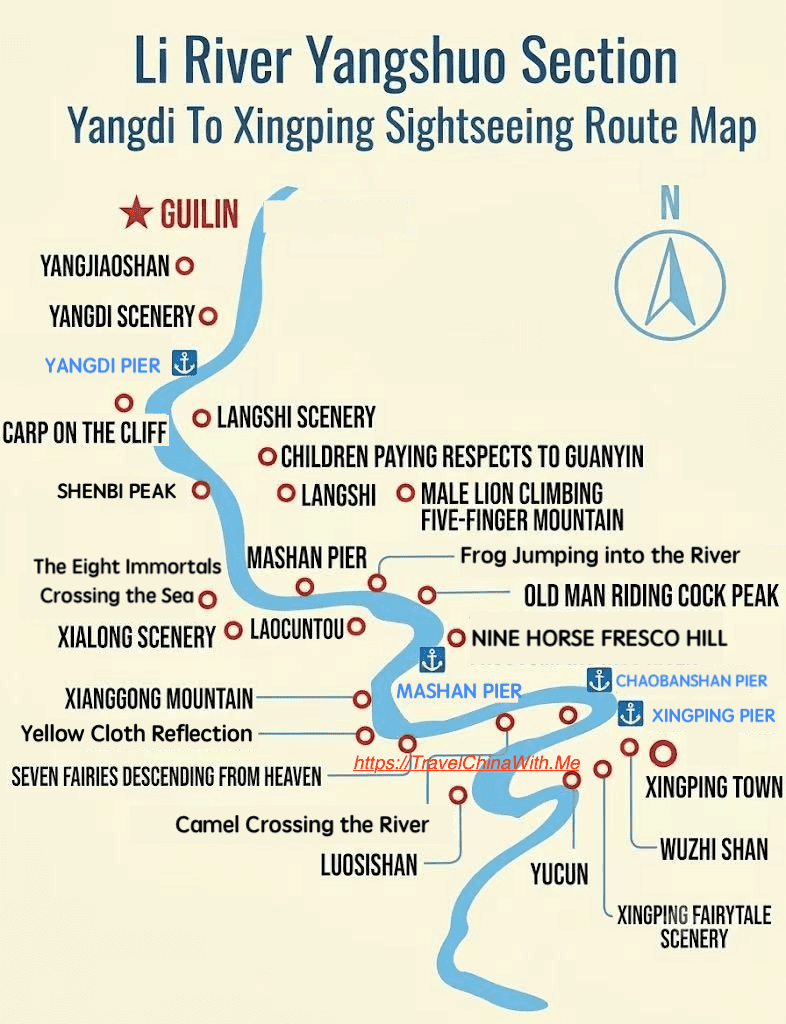
The cruise runs one route — the Guilin-to-Yangshuo corridor — with a choice of boat class for comfort, not a choice of where you go. The raft runs 8 official routes across three sections of the river, ranging from a 50-minute round-trip near Yangshuo town to the full 100-minute Yangdi-to-Xingping run. That range means the raft can match a much narrower time window or budget than the cruise can — useful if you’re not choosing between “the whole day” and “nothing.”
Price and distance bars show the midpoint of each range — actual figures vary by boat class or route.
The better option if you’re already in Yangdi or Xingping
If a client is based in Yangshuo, joining the cruise means backtracking toward Guilin first. We usually point them to the raft instead — the docks sit inside the scenic core already, no wasted travel, done in under two hours.
The safer bet in the winter dry season
From November to early April, low water often shortens the cruise to a partial Yangdi–Hua Mountain route instead of the full Guilin-to-Yangshuo run. The raft is less sensitive to this — it operates on a shorter stretch to begin with, so it keeps running through conditions that force the cruise to cut its route.
It’s electric, not hand-poled
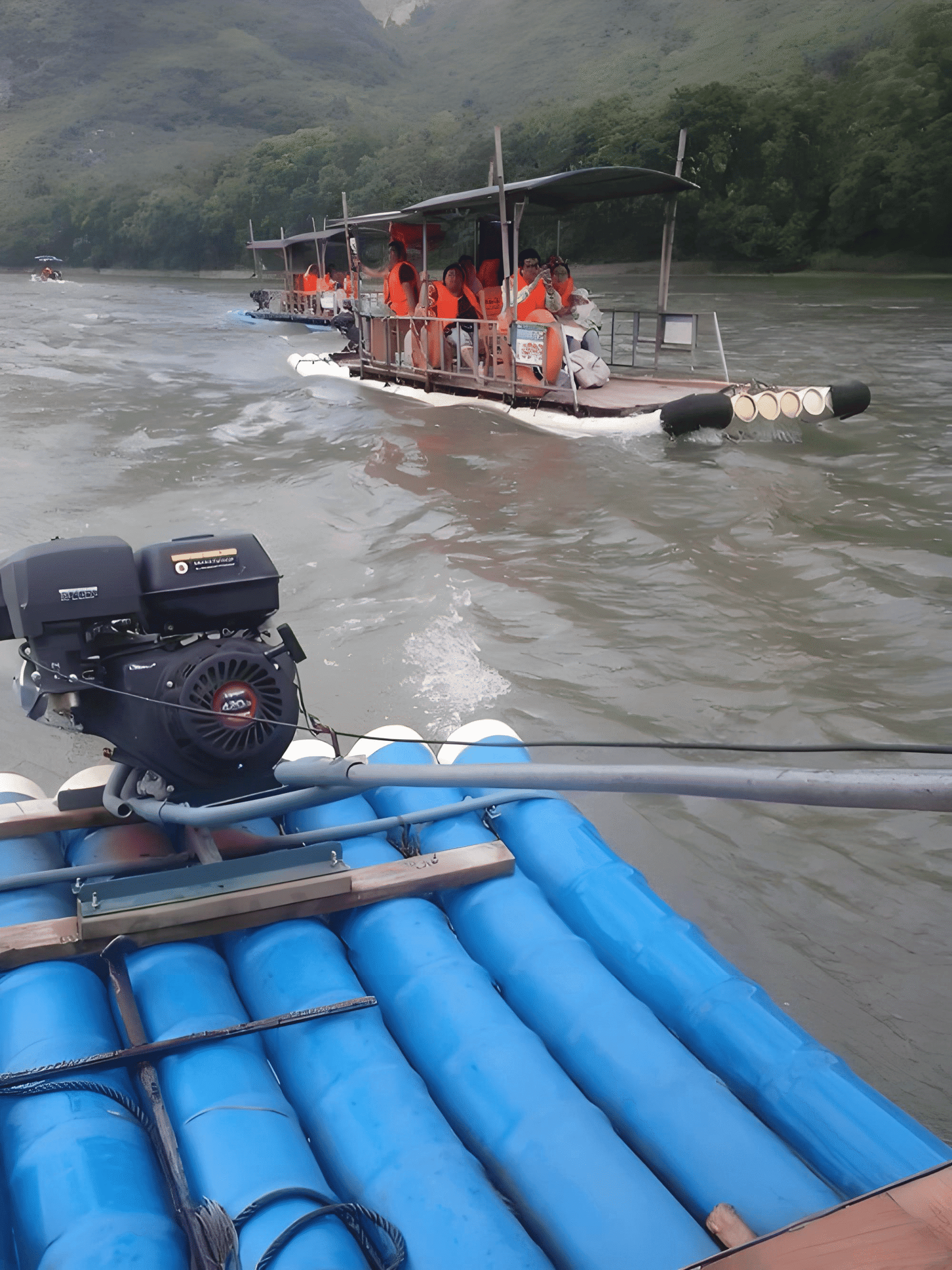
Nothing on the water today is real bamboo — the rafts are welded PVC pontoons. The whole fleet went fully electric in 2025: Guilin Daily confirmed all 1,210 tourist rafts converted, with noise dropping from roughly 120 decibels to about 60. That’s a real improvement over the old fuel-powered fleet, but it’s still a motor, not a person poling the raft by hand.
Multiple rafts on the water at once, especially by mid-morning
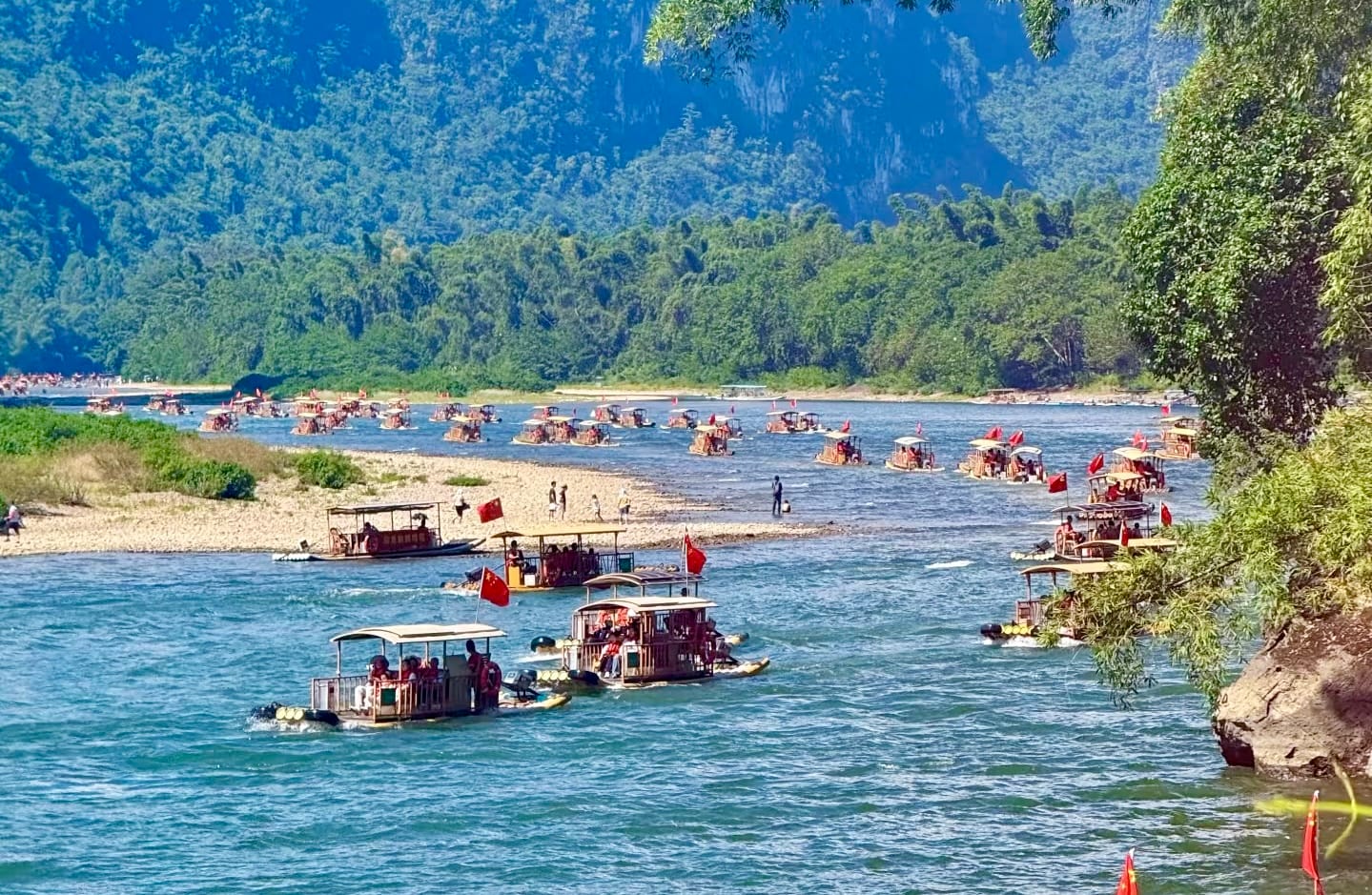
By late morning, both main docks fill with domestic tour groups, and several electric rafts running the same short stretch adds up to more motor hum than the marketing photos suggest. We tell clients to go before 9:00 if the quiet is what they’re after — after that, expect company.
It overlaps the cruise, not complements it
If you’ve already sailed the Yangdi–Xingping stretch on the cruise, the raft shows you the same landmarks again, just from a lower seat and in less time. That’s a legitimate reason to ride it once for the different angle — but as a “second river experience” stacked on top of the cruise, the marginal value is thin. → See our full Li River bamboo rafting guide for all 8 routes and current prices.
4. Already Done the Cruise and Still Want a Raft Ride? Go to Yulong River Instead
This is the question we get asked most by clients who’ve already booked the cruise: is it worth adding the Li River raft too? Our honest answer, after years of routing guests through both, is usually no — not because the raft is bad, but because Yulong River rafting gives you something the Li River raft can’t.
Genuine hand-poled bamboo, not a motor
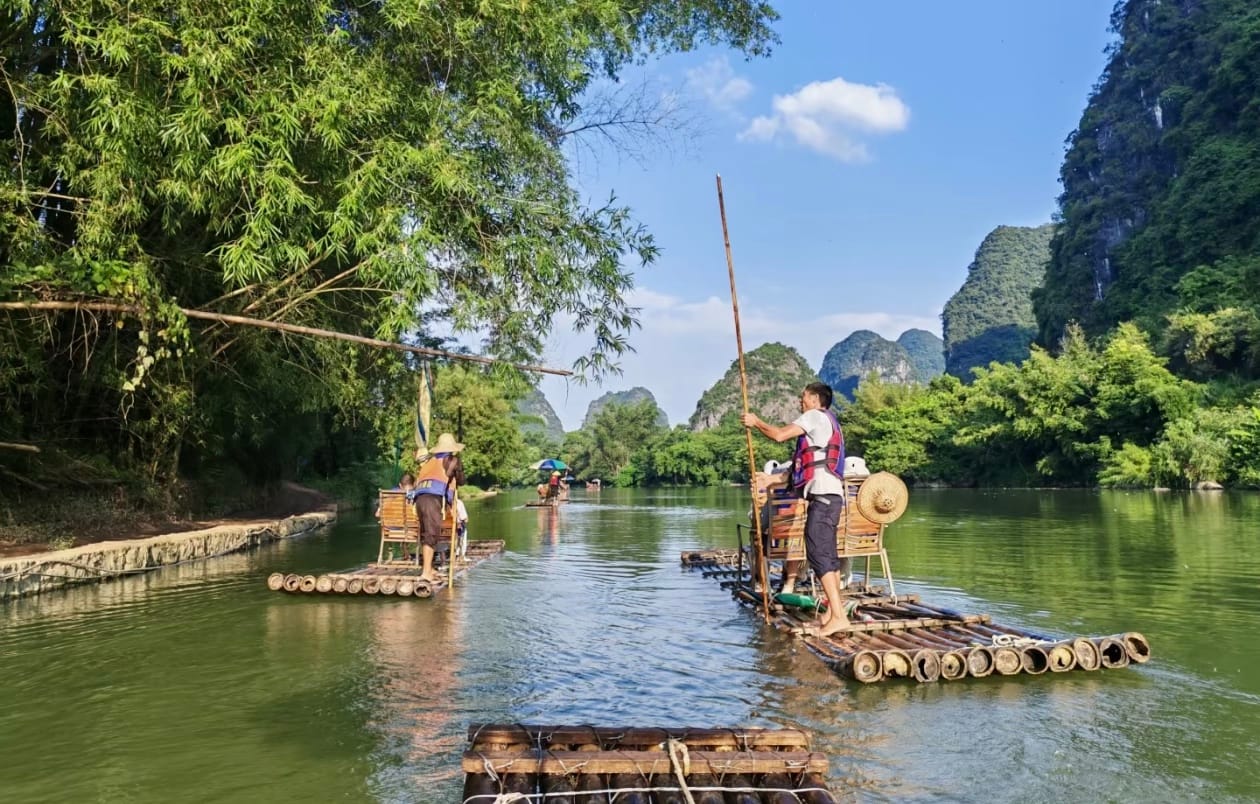
The Yulong River, a separate tributary south of Yangshuo, still runs real bundled-bamboo rafts poled by hand — no engine, no PVC pontoon. It’s the actual “bamboo rafting” experience the Li River version is named after but no longer is.
Quieter water, and scenery that doesn’t repeat what you’ve seen
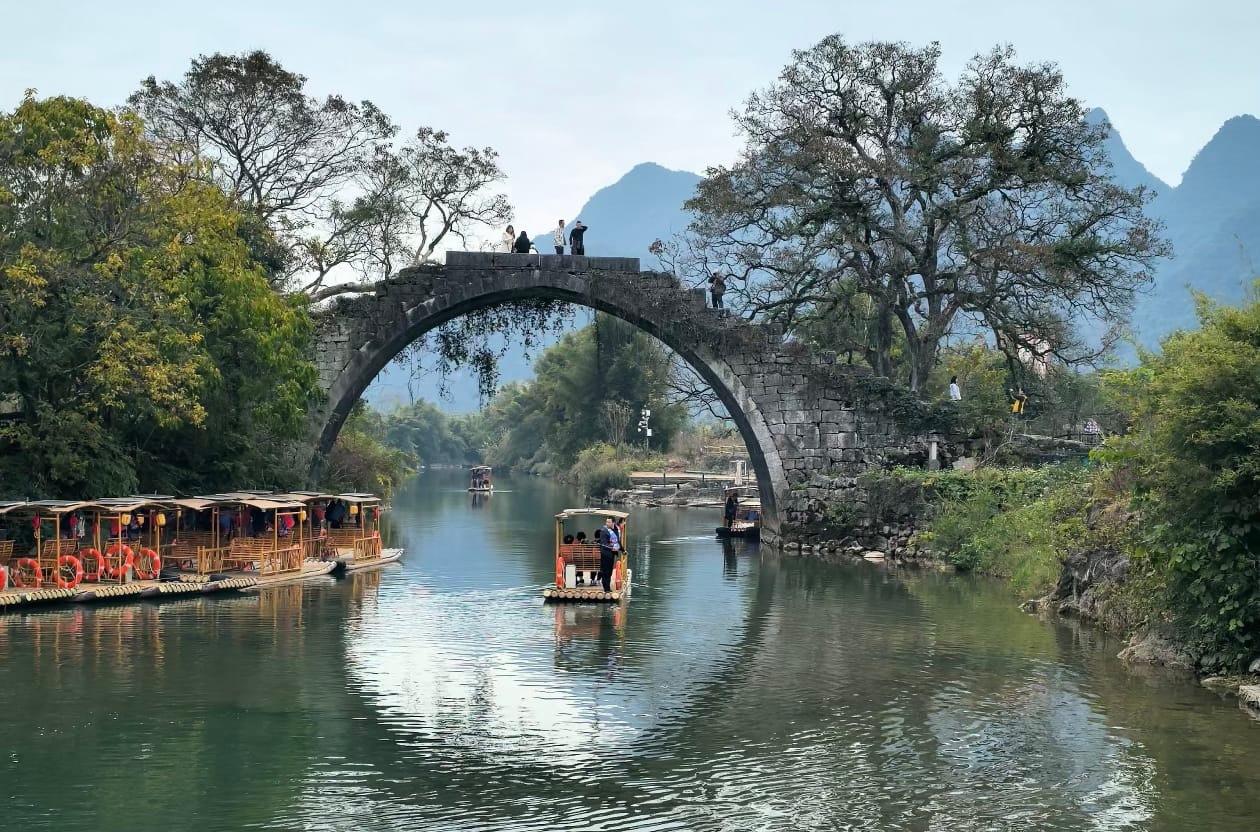
Yulong River scenery is smaller and more rural — rice paddies, old stone bridges, water buffalo. It’s a genuinely different register from the grand karst peaks of the Li River cruise, not a repeat of it. The river also crosses small weirs that give the raft a quick tip and splash, a bit of playful thrill neither Li River product has.
It’s the pairing we actually recommend
Nearly every client we book with time for both ends up on the same combination: the Li River cruise for the big landscape, then Yulong River rafting for something that doesn’t overlap. It’s become our default recommendation because it consistently works — we rarely hear otherwise from guests who’ve done it.

In practice, this splits into two versions depending on how much time you have. With two days, we run the cruise into Yangshuo on day one, then Yulong River rafting that same afternoon — done before dinner, no wasted time. With three days, we push the raft to day two and use the free afternoon on day one for a countryside bike ride around Yangshuo instead, so the pace doesn’t feel rushed on either day. → See our full Li River rafting vs Yulong River rafting comparison, or go straight to the Yulong River bamboo rafting guide for routes and prices.
5. Want to Do Both Li River Products in One Day?
It’s logistically easy, but we’d steer you elsewhere
The raft docks at Yangdi and Xingping sit directly on the cruise’s route, so there’s no detour if you’re already passing through. That doesn’t make it worth adding, though — it’s electric, often crowded, and covers ground the cruise already showed you. We’d put that second slot toward Yulong River rafting instead — it pairs just as easily with either Li River option on the same day.
If you still want both, do the cruise first
For the lower-angle photos, or for clients short on time who want maximum coverage in one day, we always sequence the cruise first. Seeing the wide view before the close-up makes more sense than the reverse.
Frequently Asked Questions
Are the Li River cruise and Li River bamboo raft on the same route?
They overlap. The cruise covers the full 60-kilometer stretch from Guilin to Yangshuo. The raft operates on shorter sections within that same river, mostly around Yangdi and Xingping — the same “essence” area the cruise passes through partway along its route.
Is the bamboo raft cheaper than the cruise?
Usually, yes. Raft tickets run ¥90 to ¥255 per adult depending on the route, against ¥215 to ¥360 per adult for the cruise. The raft also takes far less time, so per hour the difference is smaller than the ticket price alone suggests.
Is Li River bamboo rafting actually done by hand?
No. The entire commercial fleet went fully electric in 2025. The rafts are PVC pontoons styled to look like bamboo, not hand-poled bundled bamboo. For a genuine hand-poled experience, Yulong River rafting near Yangshuo is the real version.
Which one is more reliable in the dry season?
The raft. From November to early April, low water often shortens the cruise to a partial route from Yangdi instead of the full Guilin-to-Yangshuo run. The raft operates on a shorter stretch already, so it’s less likely to be cut short by the same conditions.
I only have half a day. Which should I book?
The raft. At 50 to 100 minutes, it fits into a half-day plan alongside other Yangshuo-area activities, while the full cruise needs most of a day on its own.
Is the raft suitable for older travelers or young children?
Not always. Riders under 1.2m and adults 70 and over aren’t permitted on the raft. The cruise has no such restriction, and its multi-deck boats with proper seating are the more comfortable option for families with young kids or older travelers.
Trying to fit the Li River cruise, the bamboo raft, or Yulong River rafting into your Guilin-Yangshuo itinerary? Get in touch with our team — we’ve been routing guests through this stretch since 2006.