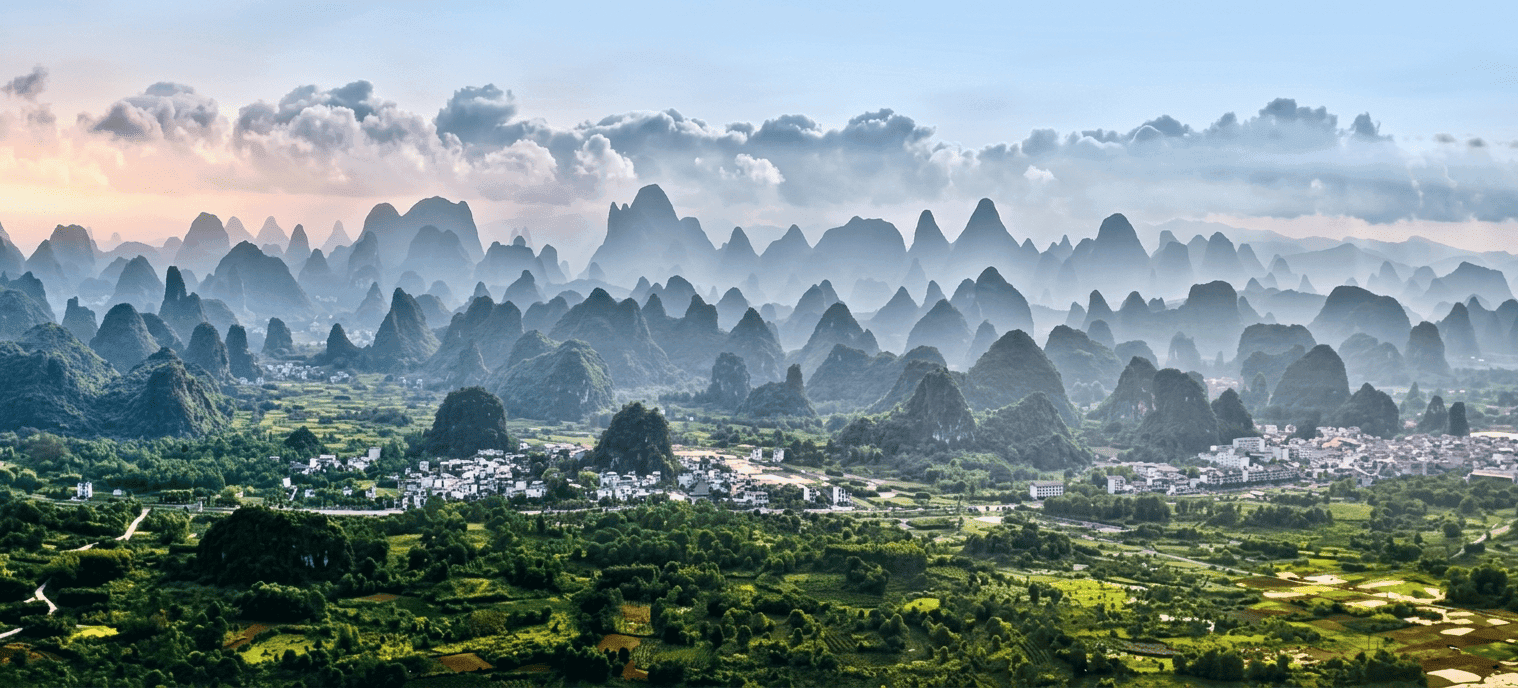
Qianli Jiangshan Tu: Yangshuo’s Free Sunset Viewpoint
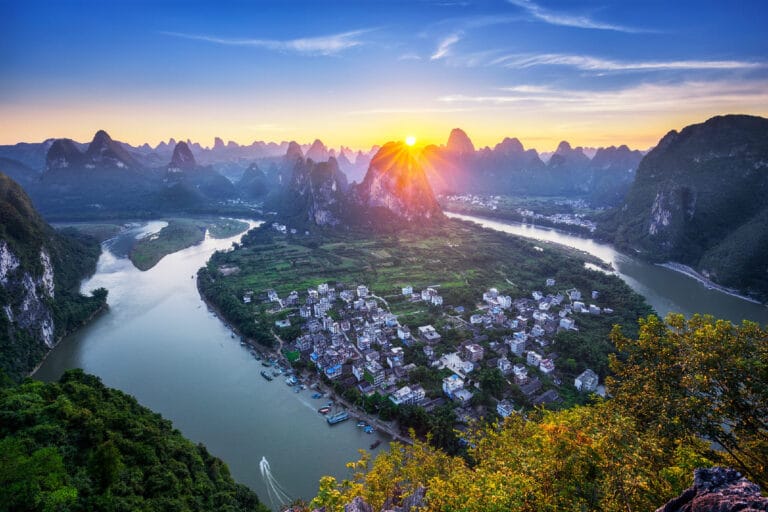
Qianli Jiangshan Tu — “A Thousand Li of Rivers and Mountains” — is a free viewpoint on a karst hill in Putao Town, about 40 minutes from downtown Yangshuo. There’s no ticket gate and no enclosed scenic area. Park near the base and climb a short flight of stone steps to a 360-degree platform, and at sunset the layered peaks below genuinely echo the Song-dynasty ink painting the spot is named after. We send clients here for an evening that doesn’t need a ticket, a tour group, or a 4 AM alarm. IMO, if you haven’t seen this breathtaking, spectacular landscape, you haven’t truly experienced Guilin and Yangshuo.
Navigate to | “千里江山图大型水墨画打卡地” (Qianli Jiangshan Tu) |
Entrance fee | Free for independent visitors |
Drive time | ~40 min from Yangshuo town; ~1.5 hrs from Guilin city |
Hike to summit | ~5 min from the closest lot; longer if dropped at a lower one |
Best time | Sunset, 17:00–19:00 (shifts by season) |
Table of Contents
1. What Is Qianli Jiangshan Tu, and Why Does It Look Like a Painting?
The Painting Behind the Name
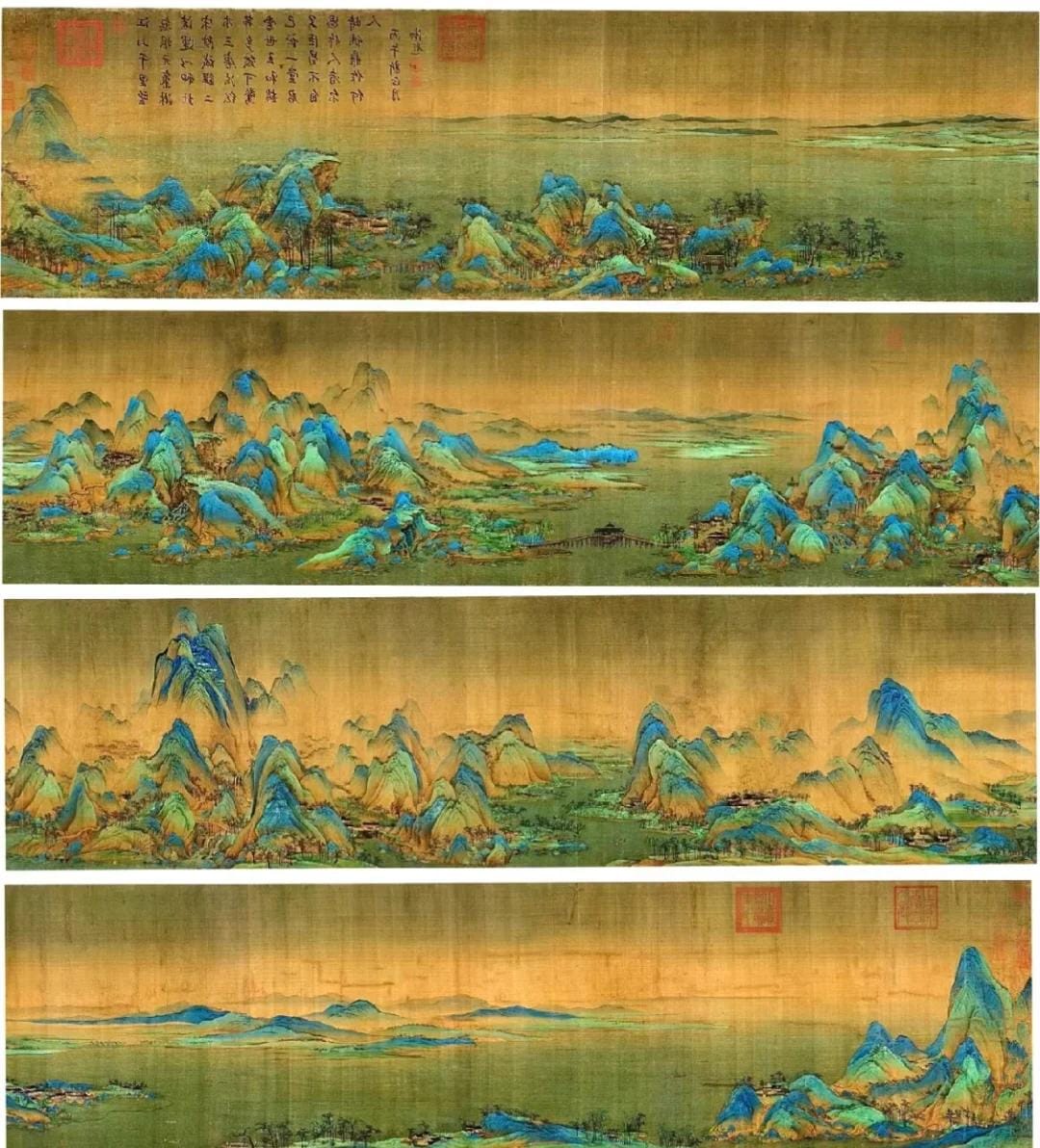
A Thousand Li of Rivers and Mountains (Qianli Jiangshan Tu, or “千里江山图”) is an 11.9-meter ink-and-mineral-pigment scroll painted in 1113 AD by Wang Ximeng, an 18-year-old court painter under Emperor Huizong of the Northern Song dynasty. It’s one of China’s ten most celebrated traditional paintings, now held in the Palace Museum in Beijing, and the mountains and water it actually depicts are Mount Lu and Poyang Lake, in Jiangxi province, nowhere near Guangxi. The scroll depicts layered blue-green mountains fading into mist using techniques from the same Chinese painting tradition that shaped centuries of landscape art — which is exactly what the karst peaks below this viewpoint do when the evening light hits them at the right angle.
A Grassroots Discovery, Not an Official Scenic Park
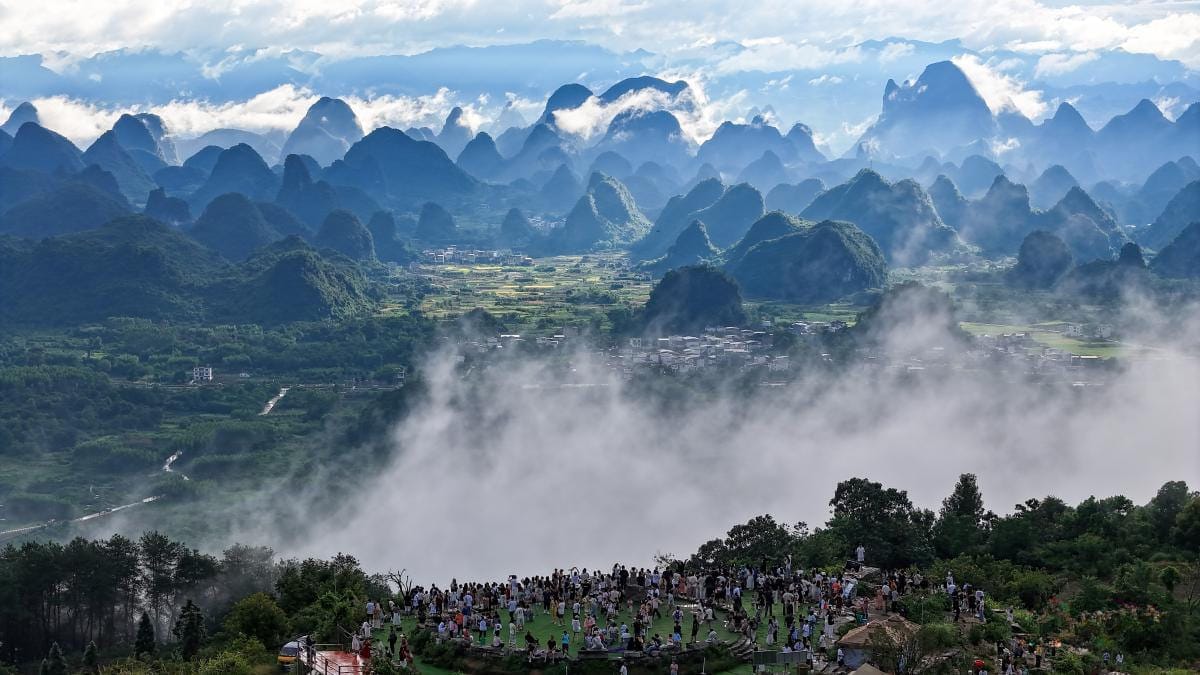
This isn’t a managed attraction with a ticket office and a brand. Local residents noticed the resemblance, started posting drone shots of the sunset, and the name stuck. Of roughly eight climbable peaks in this stretch of hills, three have been developed with stone steps and platforms for visitors. The main one is what most map apps will route you to under the search term above. You’ll also see this area labeled Xiyang Mountain or Shizhaidi on older maps and write-ups. It’s the same place — “Qianli Jiangshan Tu” is simply what almost everyone actually searches and navigates by, so that’s the name to use.
That popularity has outpaced what the site was ever built to handle. There’s no official management body collecting fees or directing traffic — any charge you encounter on-site, whether for parking, a shuttle, or “climbing access,” is set unilaterally by local villagers rather than an authorized operator. That’s part of why the experience can feel a little chaotic: the same fee might be quoted differently by different people, and there’s no central authority to appeal to if something feels off.
2. Best Time to Visit
Sunset (the Main Draw)
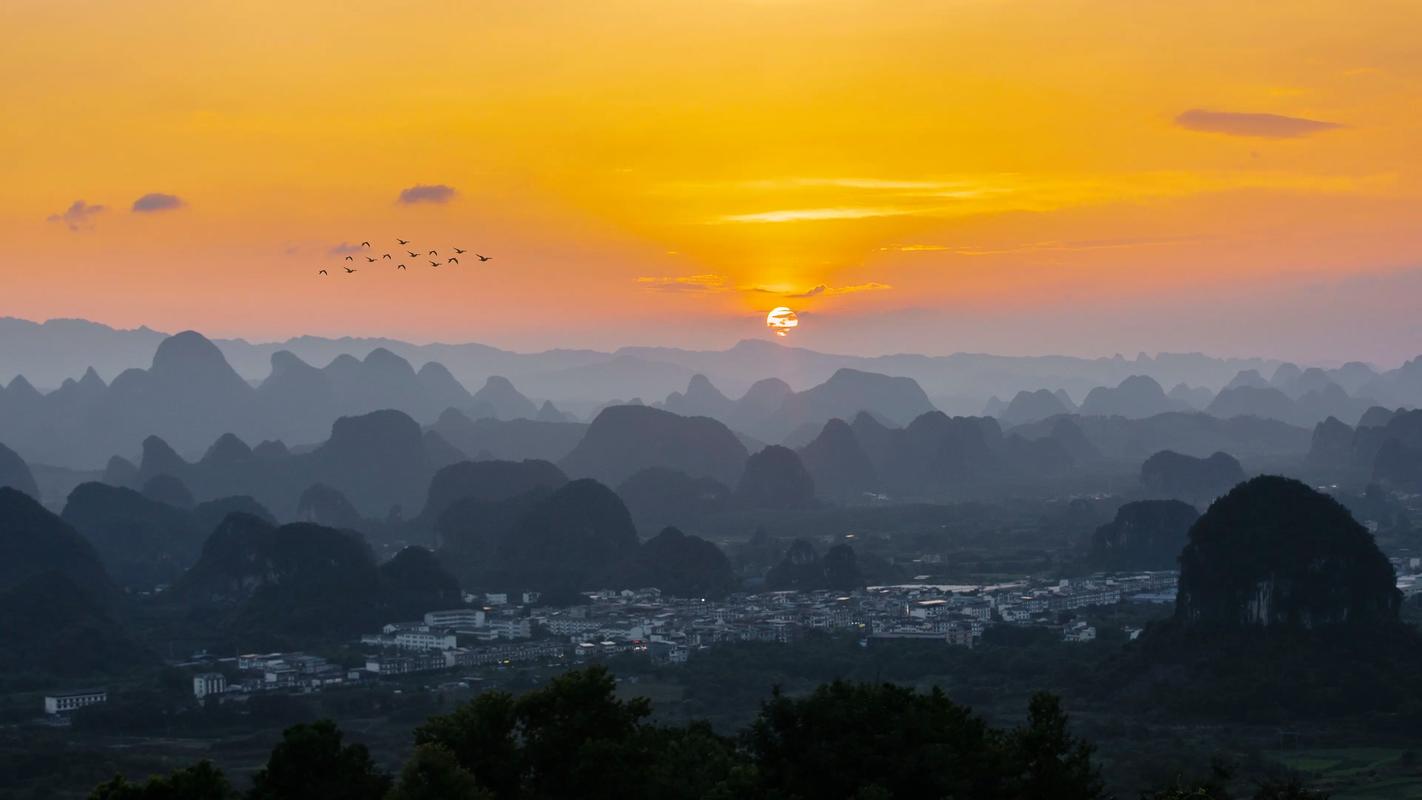
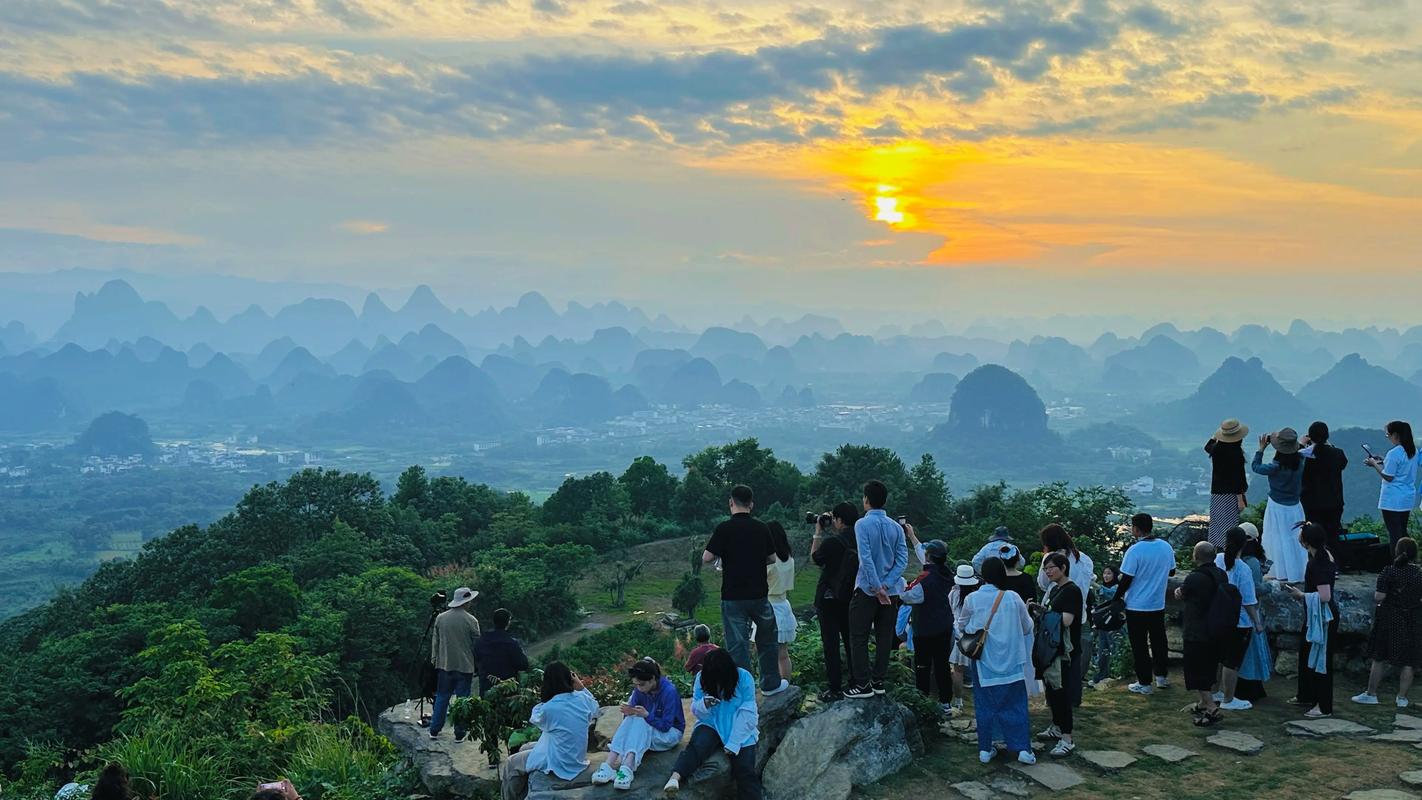
Arrive 1–2 hours before sunset. The light between 17:00 and 18:00 is consistently the softest, and that’s the window where the orange-red afterglow settles over the peak forest. Sunset timing shifts with the season:
Season | Sunset Window | What to Expect |
|---|---|---|
Spring & autumn | 18:00–18:30 | Clearest skies of the year, strongest color contrast |
Summer (Jul–Aug) | 19:00–19:30 | More haze, but diffused light still photographs well; light shafts through the haze peak 17:30–18:30 |
Winter | 17:30–18:00 | Calmer, less saturated skies; a more solid, still read on the mountains |
Check the forecast the morning of your visit. Overcast skies remove the entire payoff, since the whole experience depends on the sun coloring the peaks.
Sunrise and the Cloud Sea
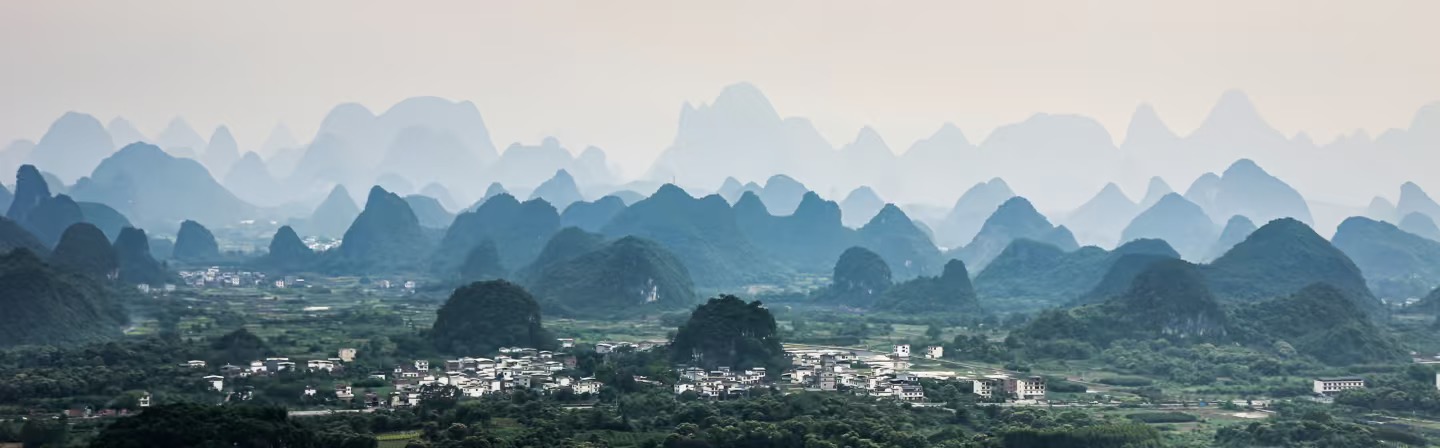
Far fewer visitors come for sunrise, which is its own advantage. Between 6:00 and 8:00, especially after a clear night following rain, the valleys below the summit fill with a cloud sea — the misty, ink-wash effect that matches the actual painting best. Check the forecast three days out: a wet evening followed by a clear morning is the combination to watch for.
Peak Season and Holiday Crowds
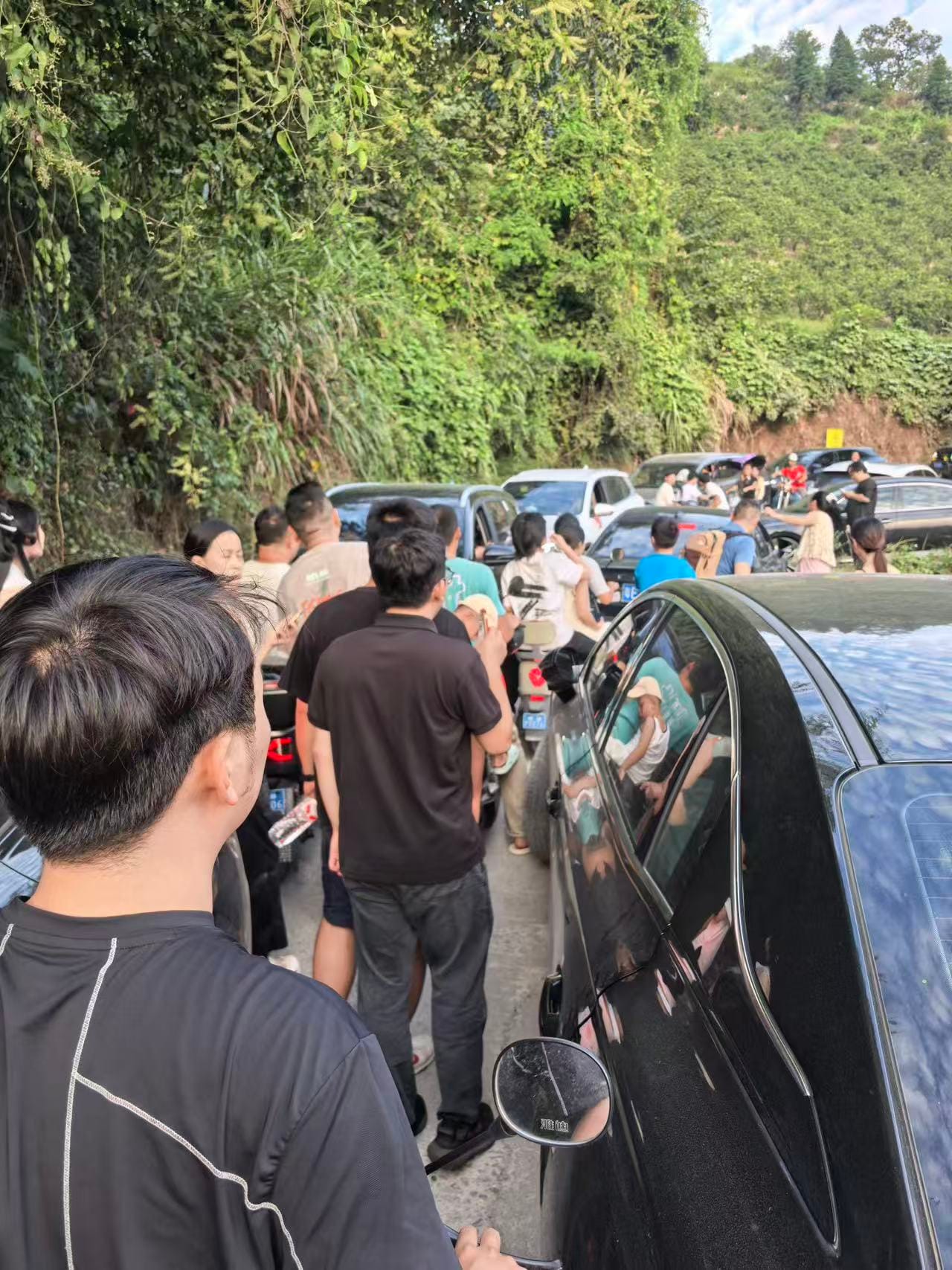
This spot wasn’t built to handle holiday-level traffic, and it shows. Our client Delphine climbed up on September 30, the day before National Day Golden Week officially began, and found the road already jammed both ways, with the descent stretching well past dark. At the summit, every flat rock was occupied, the outer ring of the platform had a queue for photos, and finding anywhere to sit was close to impossible. That evening, thick cloud cover meant no sunset showed up at all, despite the wait.
Her takeaway, and ours: if you can visit on a weekday outside a national holiday, do it. The free entry that makes this spot appealing also means there’s no cap on how many people show up.
3. How to Get There — and the Mistake Almost Every Visitor Makes
Getting There at a Glance
Method | Cost | Time | Notes |
|---|---|---|---|
Self-drive | Free parking at the base | ~40 min from Yangshuo | Final stretch is a narrow mountain road — go slowly |
Shared carpool | ¥45–60/person round trip | ~40 min | Arranged via your hotel or a local carpool group |
Private charter | Contact us for a quote | Flexible | Can add Xianggong Hill or Xingping to the same trip. Recommended for this drive. |
Public bus | ~¥10 one-way + 15-min walk | ~40 min + walk | Budget option; too slow for a tight sunset window |
E-bike from West Street | — | Not recommended | Too far and too demanding a road for most riders; risky returning after dark |
Taxi | — | — | Most drivers decline once they hear the destination |
Given the narrow mountain road, the parking-lot mix-up that trips up most visitors, and a fee system with no central authority behind it, we usually recommend a private charter for this one. Book through us and your driver goes straight to the summit lot, skips the shuttle and motorbike haggling entirely, and can build in stops at Xianggong Hill or Xingping on the same trip. Contact us for a current quote — it depends on the season, vehicle type, and the rest of your itinerary.
Self-Driving Directions
Navigate to “千里江山图大型水墨画打卡地.” From Guilin, take the Baomao Expressway and exit at Putao; from Yangshuo town, the route runs directly through Putao Town. At the main traffic light intersection in Putao, turn right (toward Wulong) and follow the village road to the parking area at the base.
The final stretch is a narrow, winding mountain road with limited visibility on the bends. Go slowly, use your horn on blind curves, and don’t pull over to pass on the tightest sections. We don’t recommend this drive for a first-time visitor unfamiliar with rural Chinese mountain roads. It’s one of the few stretches where we’d rather put a client in a charter car than hand them the wheel.
Confirm Your Driver Goes All the Way to the Top
This is the detail that trips up more visitors than anything else on this list. There are multiple parking areas on the approach road, commonly referred to by number — Lot 1 is closest to Yangshuo and the busiest, Lot 3 sits further around and runs far less traffic. Drivers and carpool groups will sometimes drop passengers at a lower lot instead of the summit lot. From there, you’ll need to pay separately for a shuttle (about ¥10 per person one-way) or a local motorbike taxi that often only covers part of the remaining distance. Even from the closest lot, budget another five minutes of stairs before you reach the platform itself.
Tell your driver explicitly, before you set off, that you need the summit viewing platform parking lot — not just “the parking lot near Qianli Jiangshan Tu.” We’ve also seen reports of informal local operators blocking the entrance to the main lot and claiming it’s full to funnel arrivals into a paid shuttle, even when space is available. If you hit that situation, it’s worth checking with a second source — another driver, a local shop — before assuming the lot is genuinely full. Any parking or shuttle fee charged on-site is typically modest, around ¥10–20, and isn’t officially mandated — since there’s no authorized operator running the site, what you’re quoted can depend on who happens to be collecting that day.
4. What to Expect at the Summit
Where to Stand for the Best Shot
The main platform at the summit gives the widest, most unobstructed panorama, and it’s where almost everyone gathers for sunset. For a quieter angle with fewer people in frame, look for the spot under the third tree to the left of the main platform. It’s a known workaround among local photographers, with a similar view and more breathing room.
Facilities, Signal, and What to Bring
Mobile signal at the summit is weak, so download offline maps before you set out. There’s a basic restroom at the top but no shops, so bring your own water and snacks. On a crowded evening, every flat spot gets taken fast, so a folding stool or a picnic mat is worth packing if you plan to wait out the full sunset rather than shoot and leave. A small handheld fan helps too — the platform gets hot once it’s full. There’s no shade anywhere on the summit, so sunscreen matters even for an evening visit, and mosquitoes are common in the surrounding brush. Pack a face mask for the ride down as well; after an hour of waiting in the heat, a shared car back can get close. Pets aren’t permitted.
Drone Rules
Drone photography is common here and the open summit makes for clean flight conditions, but flights need to be pre-registered. Because mobile signal is weak, we’d cap altitude around 100 meters to keep a reliable connection to your controller.
What to Wear
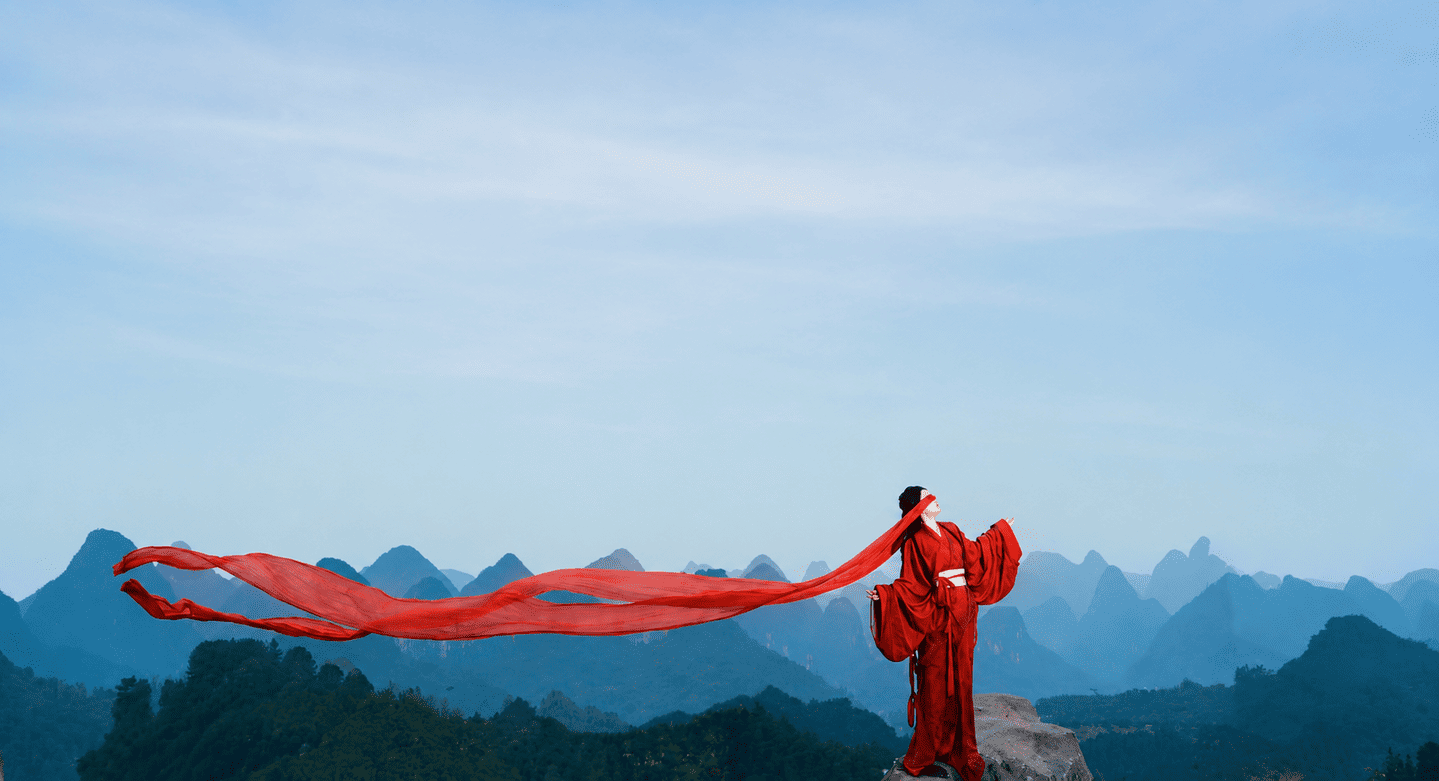
This is one of the few spots in the region where the local aesthetic actually pays off in photos. New-Chinese-style clothing or hanfu, paired with an oil-paper umbrella or a round fan, reads well against the mountain backdrop. Light-colored cotton or linen long dresses photograph more cleanly than patterned or dark clothing against the green-blue peaks.
5. Pairing It With Nearby Attractions
With Xianggong Hill
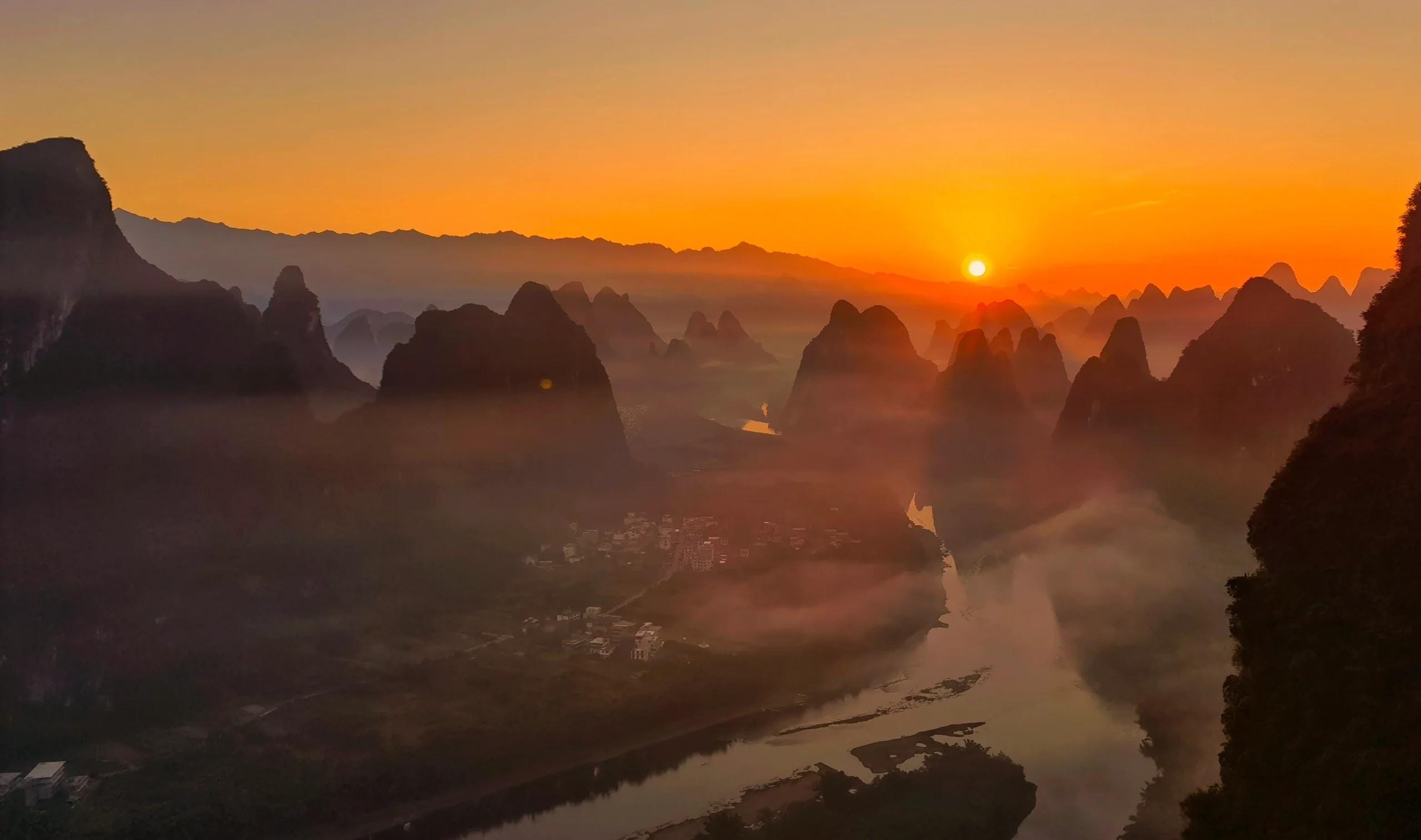
We’ve timed the drive between the two at 36 minutes, which makes a sunrise-at-Xianggong, sunset-at-Qianli-Jiangshan-Tu day genuinely workable without rushing either window. Xianggong Hill is ticketed at ¥60 and draws a heavier crowd given its decades-long photographic reputation. This spot is free and considerably quieter, which is part of why we like pairing the two — one to open the day, one to close it. Spend the gap between them exploring Yangshuo town or resting at your hotel. For the full Xianggong Hill breakdown, see our Xianggong Mountain guide.
With Xingping Ancient Town
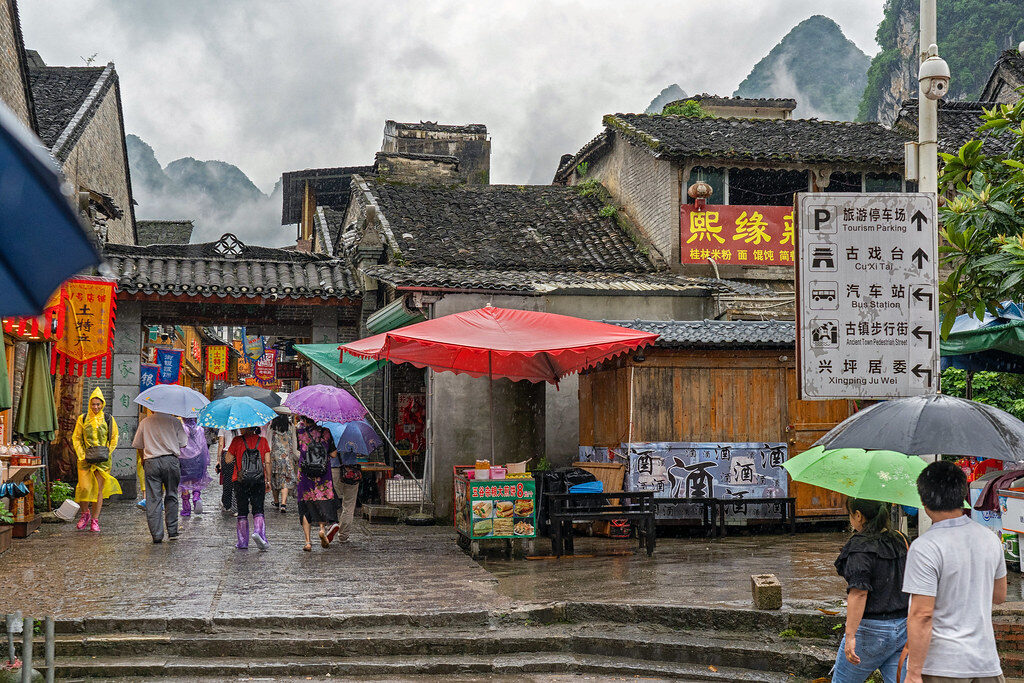
Xingping pairs naturally with Xianggong Hill on the way out, since the ferry crossing to Xianggong Hill departs from Xingping’s pier. If you’re already routing through Xingping for the ferry, the 20-yuan-banknote photo spot and the old town’s main street are worth an hour before or after.
A Full Day at Qianli Jiangshan Tu Alone
If you’d rather not pack two viewpoints into one trip, the spot supports its own full day. Go up for sunrise around 5:30 and come back down before 8:00, while the morning is still cool and quiet. Spend the middle of the day in Putao Town’s farmland and villages. Make a second ascent around 16:30 for sunset and the blue hour that follows, and aim to be back down before crowds peak around 19:10.
6. Is It Worth Adding to Your Itinerary?
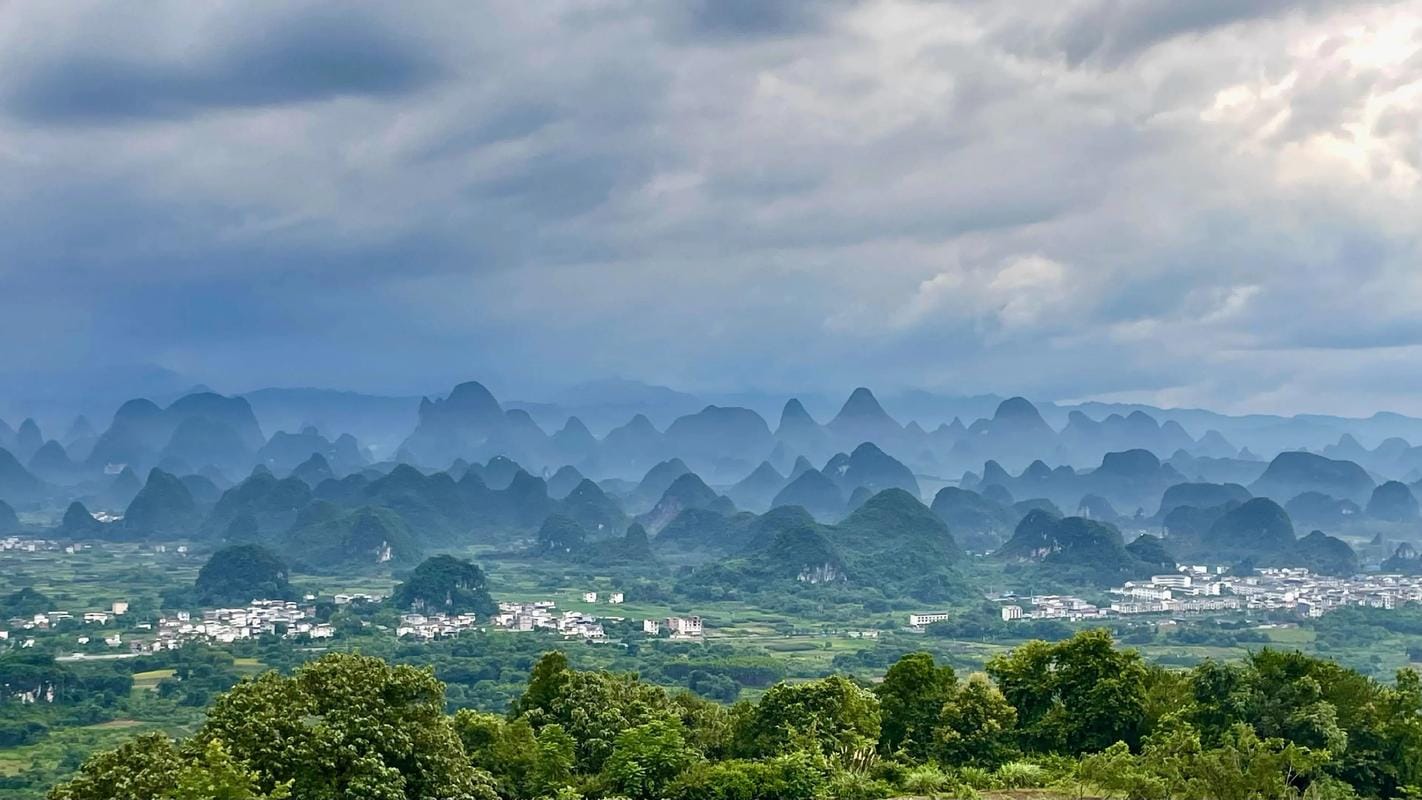
One of our recent clients, Shalom — an American enthusiastic amateur photographer traveling with his ten-month-old — climbed up for sunset and sent us a set of his own shots afterward. They were wide panoramas of the peak forest catching the late light, taken while he carried a baby up stone steps that aren’t built with strollers in mind. He told us it was the single best moment of his entire China trip, ahead of everything else on a fairly packed itinerary.
Not every visit goes that well, as Delphine’s trip on the eve of National Day Golden Week shows. Other visitors who hit a clear evening tell a different story — once the light actually comes through, most say it was worth every minute of the wait. The deciding factor isn’t really the climb or the crowd; it’s timing. Go on a weekday outside a national holiday, and the odds tip back in your favor.
That’s the case for going: it’s free, it’s a manageable climb even with a young child if you go slowly, and on a clear evening outside peak holiday weeks, the payoff is genuinely distinctive. The case against is narrower — if you only have one clear evening in the region and you’re set on a specific shot elsewhere, like the Yulong River at golden hour, that should probably win. For most multi-day stays in Yangshuo, this earns its place on the schedule — just don’t schedule it for a national holiday if you can help it.
7. FAQ
Is there an entrance fee for Qianli Jiangshan Tu?
It’s free for independent visitors. Policies at grassroots-developed spots like this can shift without much notice, so it’s worth confirming with us or checking on-site signage before you go.
Can I take a taxi there?
Generally no. Most metered taxi drivers decline once they hear the destination, since it’s considered too remote for a one-off fare. Plan on a shared carpool, a private charter, or self-driving instead.
Is sunrise or sunset better here?
Sunset is the main draw and what the spot is known for. Sunrise is quieter and can deliver a cloud sea after rain, but the crowds and the photographic reputation both center on the evening.
How does this compare to Xianggong Hill?
They’re complementary rather than competing. Qianli Jiangshan Tu is free, sunset-focused, and less crowded; Xianggong Hill is ticketed at ¥60, sunrise-focused, and considerably busier given its decades-long photographic reputation.
What’s the biggest mistake visitors make here?
Not confirming with their driver that they’ll be dropped at the summit parking lot. Many groups end up at a lower lot and have to pay separately for a shuttle or a partial motorbike ride to finish the climb.
Is the hike suitable for kids or older travelers?
From the closest lot, it’s about 5 minutes of stairs with a moderate but steady grade — manageable for most fit children and adults, though not stroller-friendly. If your driver drops you at a lower lot instead, budget closer to 30 minutes. We’ve had clients bring infants up in a carrier without issue on a dry day.
Is it busy during Chinese national holidays?
Yes, significantly. Expect jammed traffic in both directions, long queues for photo spots at the summit, and no guarantee of a clear sunset given the crowd and weather risk together. Visit on a regular weekday if your schedule allows it.
Do I need to register a drone in advance?
Yes. Drone flights at this site need pre-registration, and given the weak mobile signal at the summit, we’d recommend keeping altitude around 100 meters for a stable connection.
Want this built into a Yangshuo evening itinerary, paired with Xianggong Hill, or arranged with a charter car so you skip the mountain-road driving entirely? Get in touch with our team and we’ll set it up.
→ See our Xianggong Mountain guide for the sunrise half of this pairing. → Planning a wider Guilin–Yangshuo trip? Start with our Guilin & Yangshuo travel guide.