China Scenic Area Rating System Explained: What the A-Level Rankings Really Mean for Travelers
In 1999, China had over 30,000 tourist sites and no reliable way for a first-time visitor to tell the extraordinary from the mediocre. That’s exactly why the government built a national rating system — and understanding it will save you from wasted days and wrong turns on your trip.
We’ve been guiding international tourists through China for over 20 years at Travel China With Me. Our team has walked nearly every major 4A and 5A site in China, and we’ve personally seen how the ratings play out on the ground — where they deliver, and where they mislead. This guide tells you both.
Table of Contents
Quick Facts: China’s National Scenic Area Rating System
Item | Details |
|---|---|
Official name | 旅游景区质量等级 (Tourist Attraction Quality Grade) |
Governing body | Ministry of Culture and Tourism (文化和旅游部) |
Rating scale | 1A (lowest) to 5A (highest) |
Total 5A sites (2025) | 359 |
First 5A batch | 2007 — 66 sites, including the Forbidden City and Great Wall |
Standard first issued | 1999 (GB/T 17775–1999), revised 2003, new version effective March 1, 2025 |
Downgrade possible? | Yes — Shanhai Pass in Hebei was the first 5A site ever stripped of its rating, in 2015 |
A Brief History: How the System Was Born
By the late 1990s, China’s tourism industry was growing fast — but quality was all over the place. Some sites were extraordinary. Others were little more than a parking lot and a souvenir stall. Visitors had no way to tell them apart in advance.
In 1999, the government introduced a formal quality grading framework for scenic areas, jointly overseen by the National Tourism Administration and the State Administration of Market Regulation. The original criteria covered transportation access, safety, hygiene, and environmental protection.
The first version only went up to 4A. The 5A tier was added later as the highest category, and the first batch of 66 5A attractions was certified in 2007. That inaugural list included the Forbidden City, the Great Wall at Badaling, and the Terracotta Army — the sites that had defined China tourism for the outside world for decades.
A new set of standards developed by the Ministry of Culture and Tourism came into effect on March 1, 2025, replacing those that had been in place since 2003. The update reflects how dramatically China’s tourism market has shifted. It matters to travelers planning a trip right now.
Understanding Each Level: What 1A Through 5A Actually Means
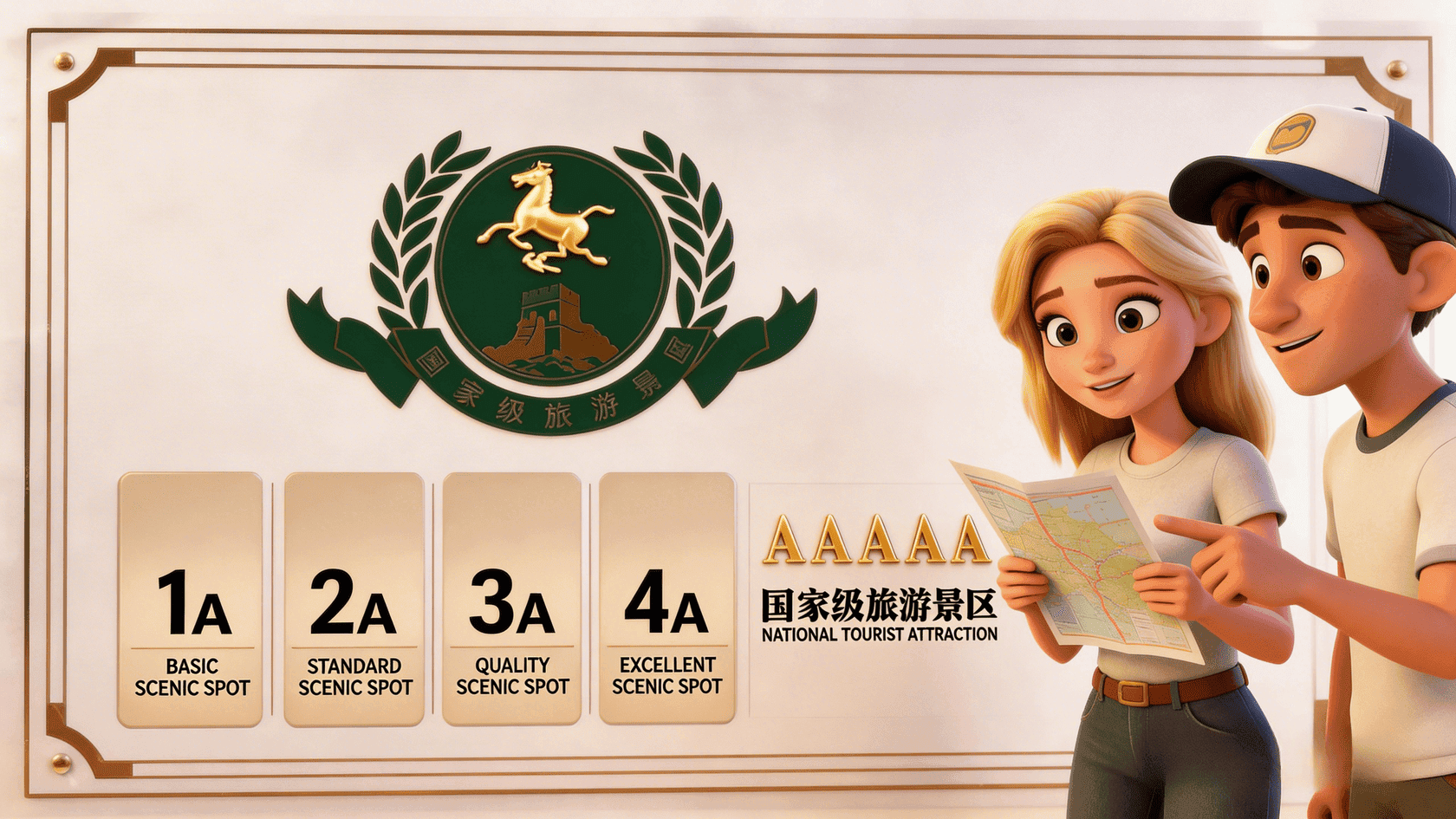
Most travel articles just say “5A is the best.” That’s true but unhelpful. Here’s what each tier actually emphasizes, based on the official new standards.
The rating criteria focus on nine aspects: tourism resource value, transportation, facilities, visitor services, safety, cultural-tourism integration, smart tourism, environmental protection, and comprehensive management. But each level has a different priority:
Rating | What the Standard Primarily Demands |
|---|---|
1A | Basic safety and environmental hygiene |
2A | Improved facilities for traveler convenience |
3A | Good visitor services and comfortable experiences |
4A | National-level quality — strong infrastructure, accessible, well-managed |
5A | World-class — cultural uniqueness, smart tourism, people-centered service, global appeal |
If 4A-grade spots symbolize scenic areas that meet national-level standards, then 5A-grade spots indicate exceptional quality on a global scale. The fundamental difference is rooted in cultural requirements — the 5A criteria places significant emphasis on the “people-oriented” service concept.
One detail that surprises most of our foreign guests: a site must be officially open for more than one year before applying for any quality level, and it must hold 4A status for more than three years before becoming eligible to apply for 5A.
The 5A Tier: China’s Tourism “National Brand”
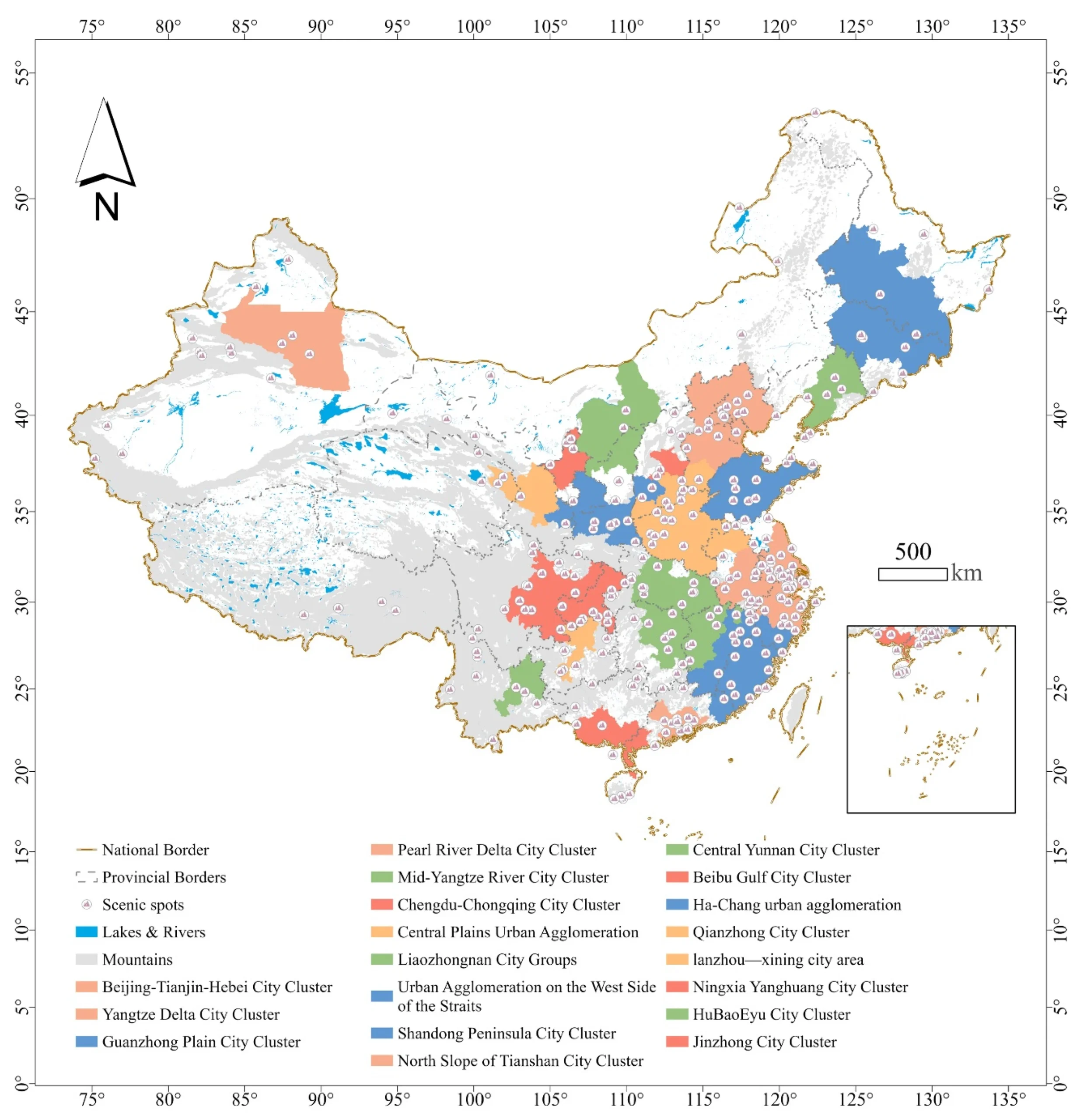
While 5A scenic spots accounted for less than 1% of China’s 30,000+ scenic sites by 2018, they contributed 50% of tourist volume and 70% of tourism income from national attractions. That concentration of visitors at a small number of sites has real consequences for how you plan a trip.
As of 2025, there are 359 tourist attractions listed as 5A. The list covers everything from ancient imperial sites — the Forbidden City, the Great Wall, the Terracotta Army — to dramatic natural landscapes like Jiuzhaigou, Zhangjiajie, and the Li River in Guilin, to culturally layered places like West Lake in Hangzhou and the Old Town of Lijiang.
What Earning 5A Status Takes
The evaluation is multi-layered and notoriously demanding. It covers three key components: service and environmental quality, landscape quality, and tourist opinion scoring. On-site inspections, visitor surveys, and documentation reviews are all involved — it’s not simply a matter of submitting paperwork.
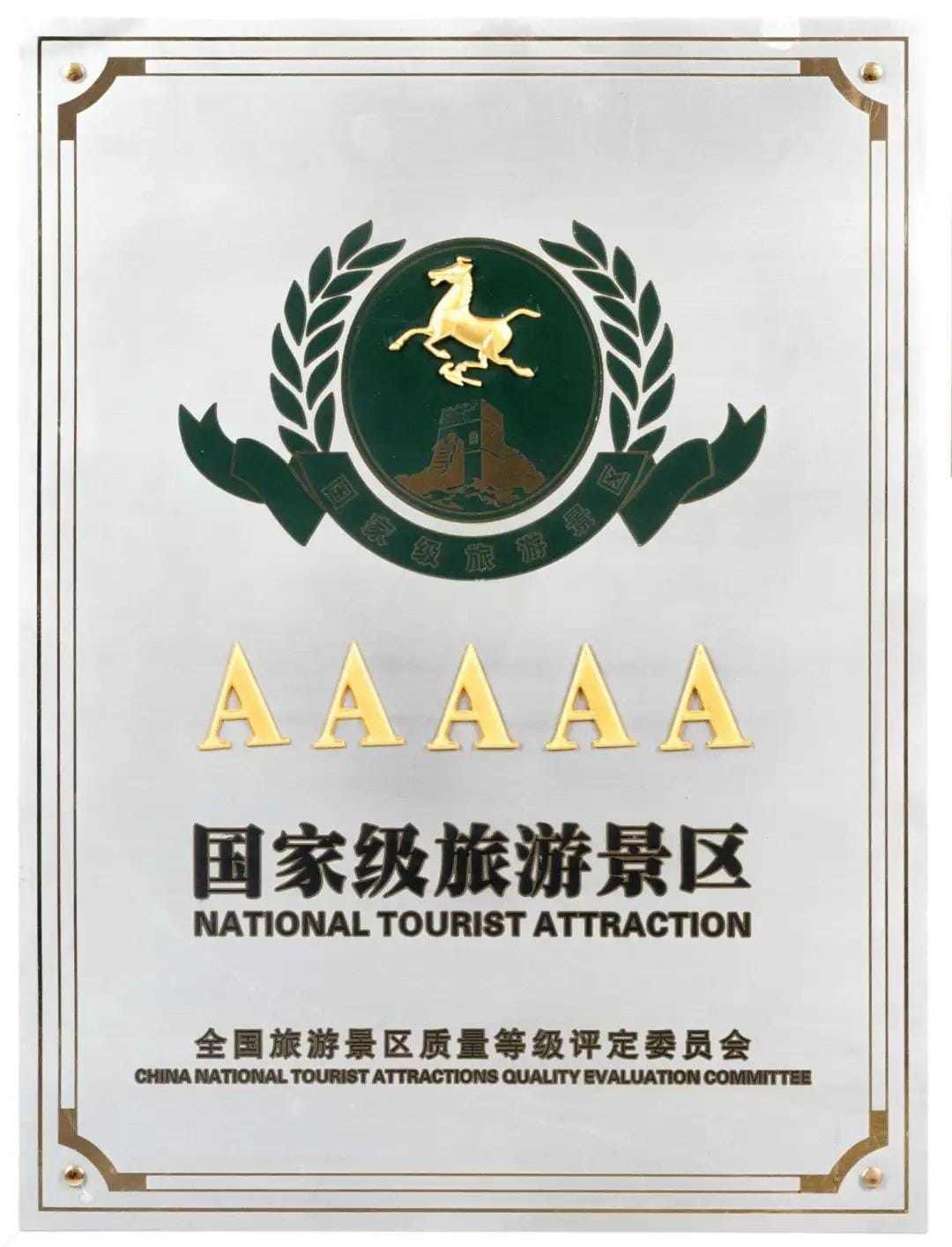
5A nominations are recommended by the Provincial Tourist Attractions Quality Rating Committee, and the National Tourist Attractions Quality Rating Committee organizes the final assessment.
The incentive for local governments is enormous. In December 2019, Nanning City, Guangxi proposed a one-time reward of 10 million yuan for any attraction that successfully achieved 5A status.
The New 2025 Standards: What’s Actually Different
The revised standards shift the focus from infrastructure (“hardware”) to service (“software”). The new framework requires 5A sites to specifically address the needs of elderly visitors, children, and people with physical challenges. It also mandates volunteer stations, clearer cultural integration, and smart tourism technology — not just scenic quality.
Zhang Gongzan, an expert with the World Research Travel Organization, described it this way: today’s visitors are more focused on the experiences and services they receive at a site than on the physical hardware. The 2025 standards formalize what good operators already knew.
From our years on the ground, this is exactly right. We’ve seen 4A sites outperform nearby 5A sites purely because their staff spoke better English and their signage was clearer. Once you’re actually inside, hardware matters less than you’d expect.
When the System Gets It Wrong: Downgrades and Controversies
The rating system has real teeth. In 2015, Shanhai Pass in Hebei became the first 5A site ever stripped of its designation — a landmark moment that signaled the government was serious about enforcement. Further revocations and warnings followed in 2016 and 2019, targeting sites where commercialization, arbitrary pricing, or deteriorating visitor experience had crept in.
To keep the 5A designation, it is not done once and for all. Annual inspections and ongoing visitor feedback are part of maintaining the rating. This is reassuring — but it doesn’t eliminate problems. Crowding, commercial clutter, and inconsistent English support remain genuine issues at many 5A sites, particularly during Golden Week (early October) and Spring Festival.
A Traveler’s Honest Guide: How to Use the Ratings
Here is how we actually advise our guests to use these ratings.
5A sites justify their reputation. They’ve earned rigorous certification and are well-maintained. But precisely because they’re known worldwide, they draw millions of domestic visitors. Build in extra time for queues during peak periods, and if your schedule allows any flexibility, weekday visits make a real difference.
The gap between a 4A and 5A site is frequently smaller than people expect. What 5A adds is usually administrative prestige and bigger visitor infrastructure — not necessarily a better experience inside. Many 4A sites are equally beautiful, less crowded, and easier to navigate for foreign visitors. We’ve taken guests to 4A attractions who came away more impressed than they were at the local 5A landmark. If you’re short on time and forced to choose, the 5A site almost always wins. But if you have a few extra days, the 4A alternatives often surprise you.
3A sites and below are worth visiting with local knowledge or a specific reason. As standalone choices for a short trip to China, they generally don’t warrant prioritising over the higher-rated options. But a 3A site in an area you’re already visiting can turn out to be the thing you remember most.
The biggest blind spot in the whole system, for foreign travelers specifically, is English-language accessibility. A site can be flawlessly managed, spectacularly beautiful, and rated 5A — and still have almost no English signage, no English-speaking staff, and maps that confuse even experienced guides. The rating measures infrastructure and scenic quality, not the experience of navigating it alone in a language you don’t speak. That gap is exactly where a knowledgeable guide earns their value.
Zhangjiajie: A First-Hand Look at What 5A Means in Practice
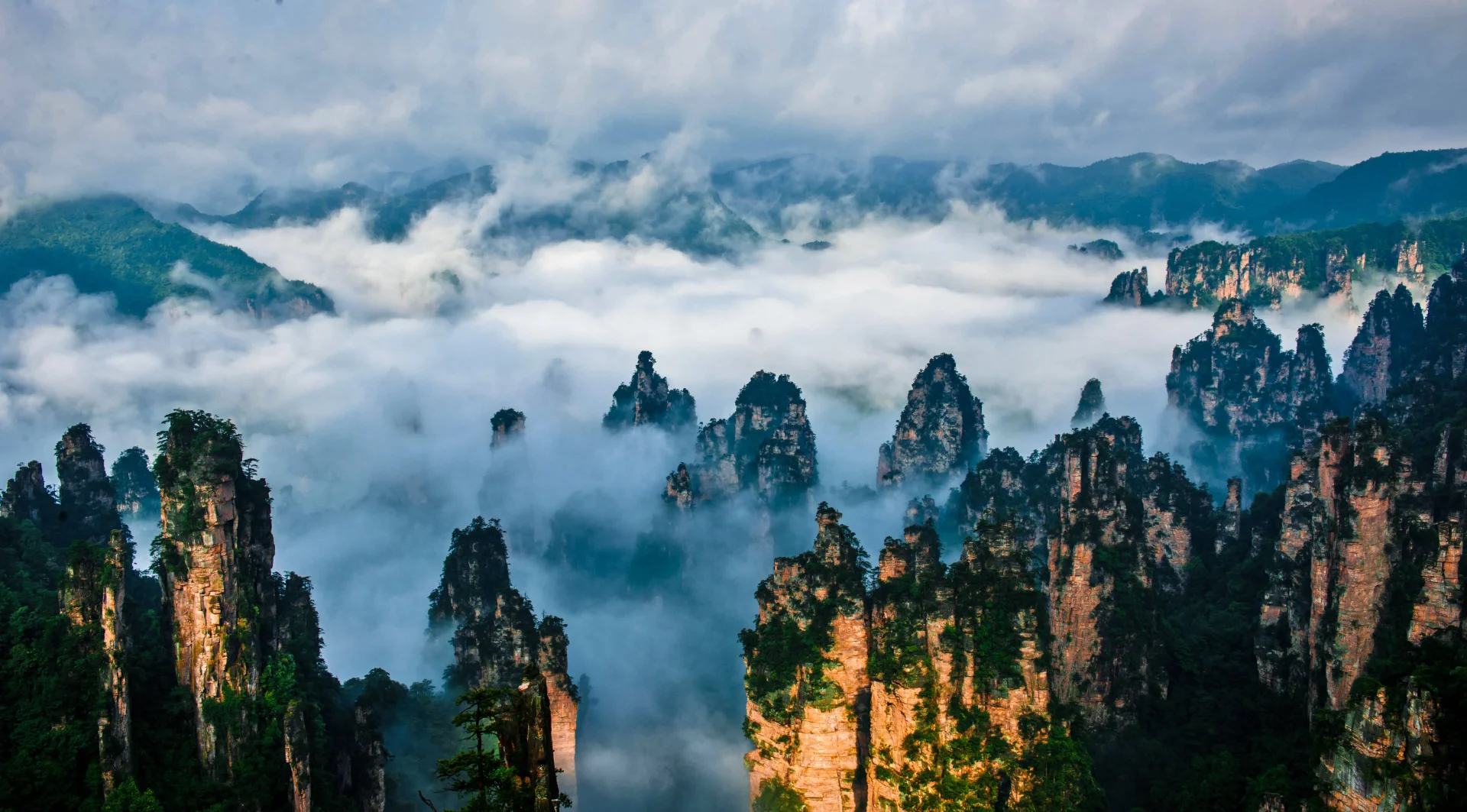
Taking Zhangjiajie as an inctance. The Wulingyuan Scenic Area — which encompasses Zhangjiajie National Forest Park, Tianzi Mountain, and Suoxiyu Nature Reserve — attained 5A status in 2007 and has held UNESCO World Heritage designation since 1992.
What does 5A certification look like in practice here? The eco-bus system runs on clean energy and covers the entire park interior. The Bailong Elevator — the world’s tallest outdoor elevator, running inside the park — is maintained to strict safety standards. Trail maintenance, rest facilities, and emergency response infrastructure are all significantly better than you’d find at lower-rated sites.
But does 5A mean no frustrations? The park covers over 26,000 hectares. Even in off-season it can feel like half the country decided to go hiking with you. English signage is improving but still inconsistent in certain zones. And the ticketing system — fingerprint scanning at entry, multi-day validation, separate fees for cableways and elevators — confuses first-time visitors even when everything works perfectly. Our Zhangjiajie tickets guide breaks down every ticket and fee in full.
The Avatar Mountains at Yuanjiajie are the visual heart of the park — the floating sandstone pillars that inspired Pandora. Tianzi Mountain offers the best sunrise viewpoints. The Golden Whip Stream trail is where you experience the same formations from the valley floor. Baofeng Lake and the Grand Canyon & Glass Bridge are separate 5A-level experiences, each needing its own half-day.
Our honest assessment: the 5A designation here is fully deserved. The landscape is genuinely unlike anything else on Earth. But navigating it independently as a foreign visitor is genuinely hard. We’ve guided thousands of international tourists through this park, and even experienced independent travelers frequently tell us they wish they’d had a guide for at least the first day.
“Zhangjiajie was INSANE. Like… photos don’t do it justice at all. Definitely the highlight of the whole trip.” – American guest Miller
See our Zhangjiajie itinerary guide for a practical day-by-day plan, and our outdoor activities guide if you want to go beyond the scenery.
5A Sites Worth Visiting Across China
The 359 sites on the current 5A list range from ancient imperial capitals to remote wilderness. Below are the ones we consistently recommend to our international guests — and where to go deeper on our site.

For history and culture, the three sites that justify almost any itinerary are the Forbidden City in Beijing, the Terracotta Army outside Xi’an, and West Lake in Hangzhou. Each has held 5A status since the system’s first batch in 2007. The Forbidden City alone receives over 17 million visitors a year. West Lake is rare among top attractions in feeling genuinely unhurried — particularly at dawn, before tour groups arrive. The Old Town of Lijiang in Yunnan adds a third dimension: a living Naxi minority town that has never felt like a theme park to us, despite its UNESCO status and 5A rating.
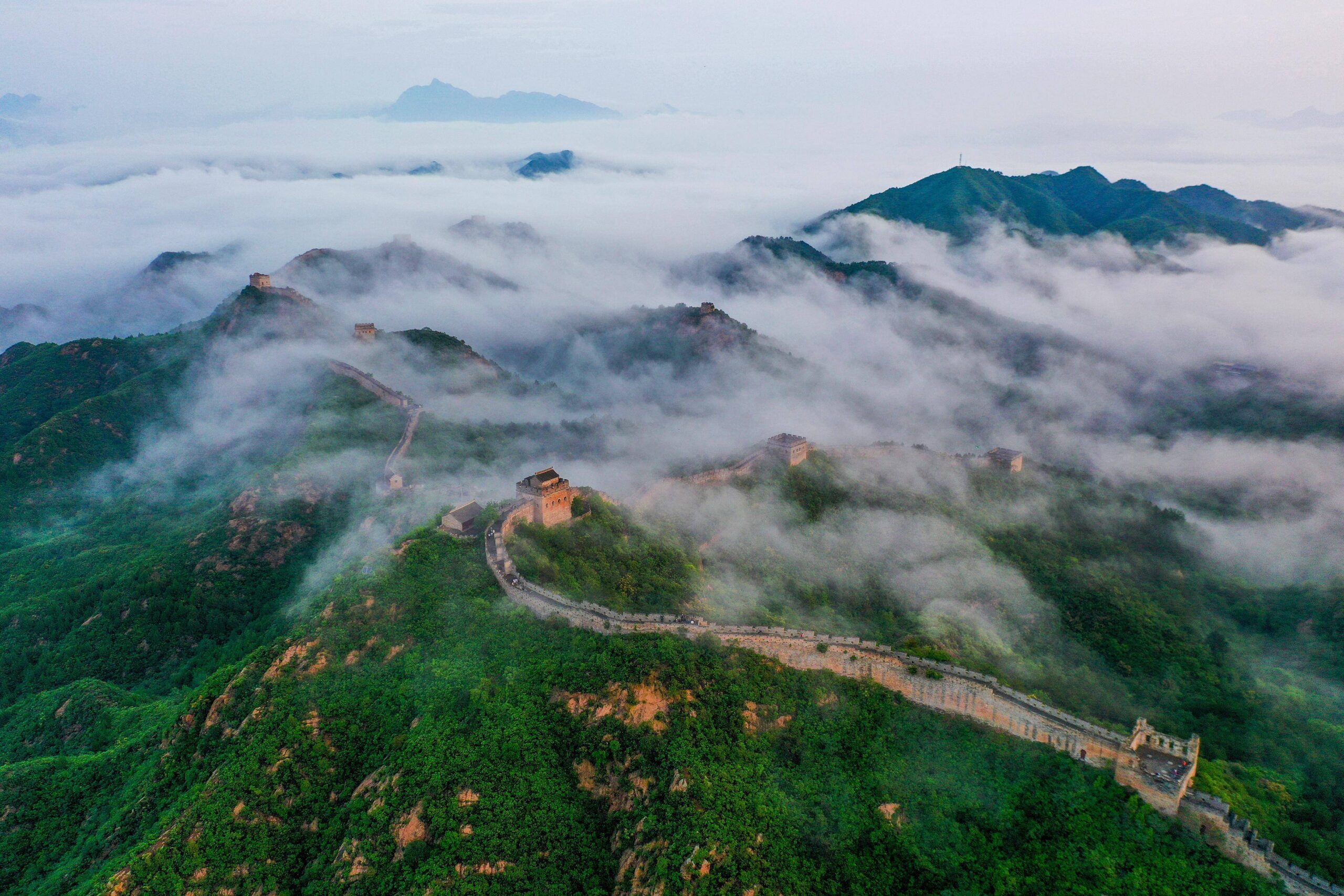
For the Great Wall, the rating picture is complicated. Badaling holds 5A status and has the best infrastructure, but Mutianyu is what we recommend to almost all first-time visitors — better views, far fewer crowds, and a toboggan ride down that nobody forgets. Jinshanling is the choice for photographers and serious hikers who want a wilder experience. Our complete Great Wall guide compares every major section.

For natural landscapes, Jiuzhaigou Valley in Sichuan is the counterpart to Zhangjiajie — where Zhangjiajie gives you vertical drama and stone, Jiuzhaigou gives you color and water: turquoise lakes, layered waterfalls, autumn foliage reflected in pools so clear they look painted. Mount Huangshan in Anhui is the mountain that has defined Chinese landscape painting for a thousand years — granite peaks, twisted pines, and sea of clouds at dawn. The Li River from Guilin to Yangshuo is the closest thing China has to a scene everyone already recognizes from the back of the 20-yuan note; seeing it by boat in real life still stops conversations mid-sentence.

The 2024 batch of newly elevated 5A sites includes the Beijing Grand Canal Cultural Scenic Area and Qingdao Olympic Sailing and Marine Culture Tourist Area — reflecting China’s push to diversify its top-rated attractions beyond the traditional mountain-and-temple circuit.
FAQ – China Scenic Area Rating System
What does it mean when a Chinese attraction is rated 5A?
A 5A (AAAAA) rating is the highest tier in China’s national scenic area grading system, administered by the Ministry of Culture and Tourism. It indicates world-class quality across safety, infrastructure, environmental management, visitor services, and cultural significance. As of 2025, 359 attractions hold this designation out of more than 30,000 scenic sites nationwide.
How many 5A scenic areas are there in China in 2025?
359, as of the most recent batch announced by the Ministry of Culture and Tourism. New sites are added in batches, typically once or twice per year. 19 new 5A sites were designated in December 2024 alone.
Is a 5A rating the same as a UNESCO World Heritage Site?
No — these are entirely separate designations from separate organizations. A site can hold both (Jiuzhaigou, Zhangjiajie, West Lake), or one but not the other. UNESCO status requires international nomination and evaluation by a UN body; the 5A system is entirely domestic.
Can a 5A site lose its rating?
Yes. Shanhai Pass in Hebei was the first, downgraded in 2015. Further revocations followed in 2016 and 2019. The threat is real and taken seriously by site management — ongoing inspections are part of maintaining the designation.
Does a higher rating mean better value for money?
Not automatically. Some 5A sites charge significantly higher entrance fees. The Zhangjiajie Wulingyuan ticket, for example, is ¥224 for the scenic area plus eco-buses, with separate fees for cableways and elevators on top. A nearby 4A site might deliver 80% of the experience at a fraction of the cost. We always discuss this trade-off with our guests during planning.
Are 5A sites suitable for travelers with limited mobility?
The 2025 updated standards specifically require all rated sites to address the needs of elderly visitors and those with physical challenges. In practice, implementation varies widely. Tianmen Mountain has an excellent cable car and escalator system that makes the summit accessible without stairs. Mount Huangshan involves significant stair-climbing that is genuinely demanding. Always check the specific site before planning.
Should I only visit 5A attractions in China?
No — and we say this having guided guests through both. The 5A designation is a reliable signal of quality, but it’s not the only filter worth using. Some of the most memorable experiences our guests have had were at 4A or unrated sites: Baofeng Lake inside Wulingyuan, the Zhangjiajie Ground Rift in Cili County, the backstreets of Fenghuang at dawn. Use 5A as your baseline for planning, not your ceiling.
Do the ratings apply to hotels and restaurants within scenic areas?
No. The A-level system applies specifically to scenic attractions, not accommodation or dining. Hotels in China use a separate star-rating system; restaurants have no formal national rating.
Where can I find the official list of all 5A scenic areas?
The Ministry of Culture and Tourism publishes updates at mct.gov.cn. The Hunan Provincial Department of Culture and Tourism maintains its provincial 5A list at whhlyt.hunan.gov.cn.
A Personal Note from Our Team
After guiding guests through this system for two decades, the thing that surprises us most is how reliable the 5A designation actually is — and how consistently foreign visitors misread what it’s measuring. The 5A stamp genuinely predicts infrastructure, safety, and scenic quality. What it doesn’t predict is your experience as someone who doesn’t read Chinese, has two days, and is standing at the wrong entrance.
But the rating has blind spots that matter specifically for foreign visitors. It doesn’t measure English accessibility. It doesn’t capture how crowded a site gets in high season. It can’t tell you whether the viewing platforms are physically accessible, or account for the difference between visiting a spectacular landscape alone versus with a guide who knows exactly where to stand at 6am.
And we are delighted to connect you with these incredible destinations.
If you’re planning a trip to China and want help building an itinerary around the best 5A sites — or finding the places that don’t make the rating lists but stay with you longer, like Baofeng Lake or the Zhangjiajie Ground Rift — get in touch with our team. We’ve been doing this since 2006.