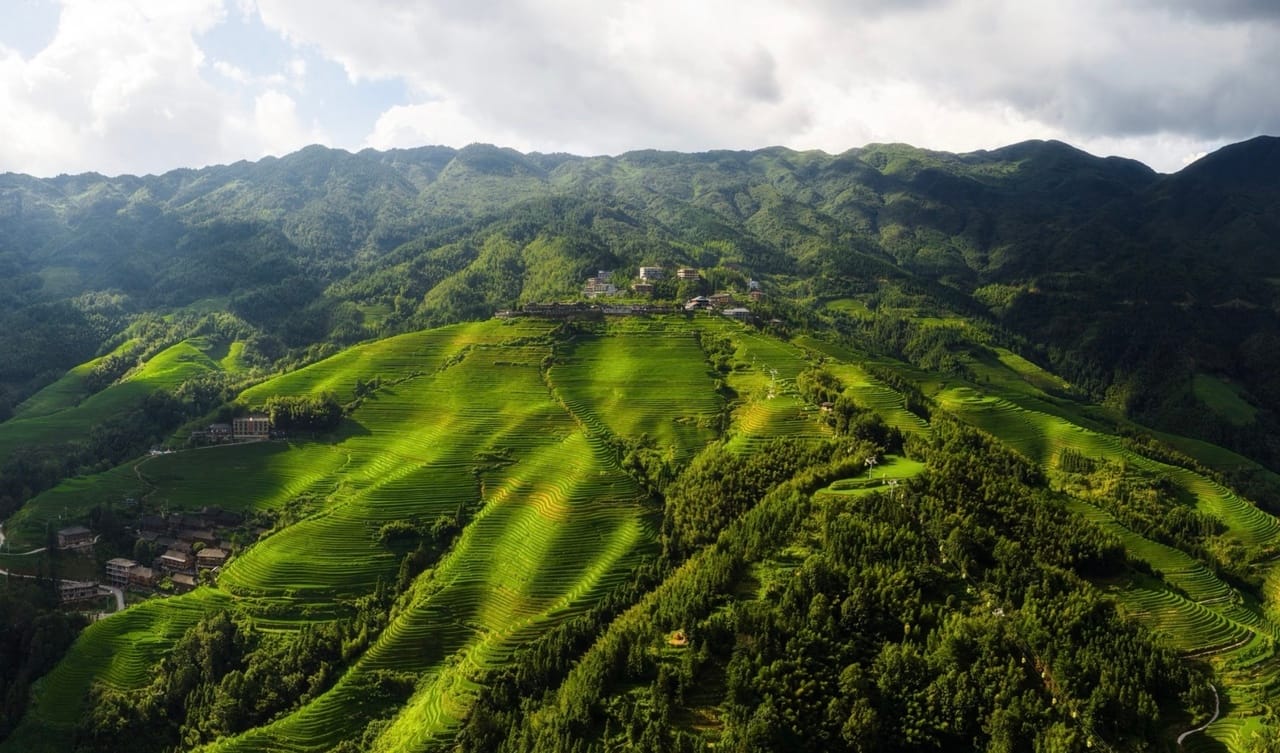
Longji Rice Terraces: The Complete Guide to Ping’an, Dazhai, and Longji Ancient Zhuang Village
Longji Rice Terraces is a mountain scenic area in Longsheng County, Guangxi, 85 km north of Guilin. It’s made up of three separate ticketed villages: Ping’an, Dazhai, and Longji Ancient Zhuang Village. Most first-time visitors don’t realize there are three areas until they’re standing at the gate trying to decide where to go.
This guide settles that decision first, based on which villages we’ve actually put clients in over the years. Then it covers what to see in each area, when to go, how to get there, where to sleep, and how the three compare to China’s other major terrace destinations.
Chinese name | 龙脊梯田 (Lóngjǐ Tītián) |
|---|---|
Address | Longji Town, Longsheng County, Guilin, Guangxi (广西桂林市龙胜各族自治县龙脊镇) |
Areas | 3 — Ping’an, Dazhai (Jinkeng), and Longji Ancient Zhuang Village, one ticket covers all |
Entry ticket | 80 RMB, valid 3 days |
Distance from Guilin | 85 km, 2–2.5 hours by road |
Best months | Mid-April–late May (mirror terraces) or late September–October 20 (golden harvest) |
Recommended stay | Day trip (Ping’an) or 2–3 nights (Ping’an + Dazhai) |
Table of Contents
1. Longji Rice Terraces: Overview and Tickets

Longji isn’t one rice terrace — it’s a scenic zone covering 66 square kilometers, terraced by the Zhuang and Yao peoples starting in the Yuan Dynasty. The name means “Dragon’s Backbone,” describing the stacked terraces along the mountainsides. One ticket, purchased at the main gate, covers all three of the ticketed areas inside the zone.
In 2018, the UN Food and Agriculture Organization listed Longji as part of the Globally Important Agricultural Heritage Systems (GIAHS), alongside three other rice terrace regions in southern China. This is a designation for the terrace-and-irrigation system itself, NOT the UNESCO World Heritage listing you’ll see it mislabeled as on other sites. Dazhai village separately picked up a “Best Tourism Village” recognition from the UN World Tourism Organization in 2022.
Tickets
Book online through Ctrip, Meituan, or Tongcheng, or buy in person at the main gate — walk-up works fine outside the golden-harvest weeks in October. Bring your passport either way, since entry requires ID verification against the ticket buyer.
Ticket type | Price | Who qualifies |
|---|---|---|
Full price | 80 RMB | Everyone else, including most foreign visitors |
Half price | 40 RMB | Full-time students and travelers 60–64, both with a Chinese national ID |
Free | 0 RMB | Travelers 65 and over with a Chinese national ID; children under 1.2 m with a guardian |
The student and 60-and-over discounts are verified against a Chinese national ID at the counter, so they’re not available to foreign passport holders even when the age or student status matches. The child height discount has no nationality restriction — it applies to any child under 1.2 m with a guardian, foreign or Chinese. Budget for full price unless you’re traveling with a Chinese ID holder who qualifies.
Beyond the entry ticket itself, a few things inside the scenic area cost extra:
Extra cost | Price |
|---|---|
Scenic-area shuttle bus (main gate to village) | 40 RMB per person |
Dazhai cable car, one-way | 55 RMB |
Dazhai cable car, round-trip | 100 RMB |
Huangluo Yao Village hair-combing performance | 80 RMB |
Parking (official rate) | 10 RMB |
2. The Three Areas Compared: Ping’an, Dazhai, and Longji Ancient Zhuang Village
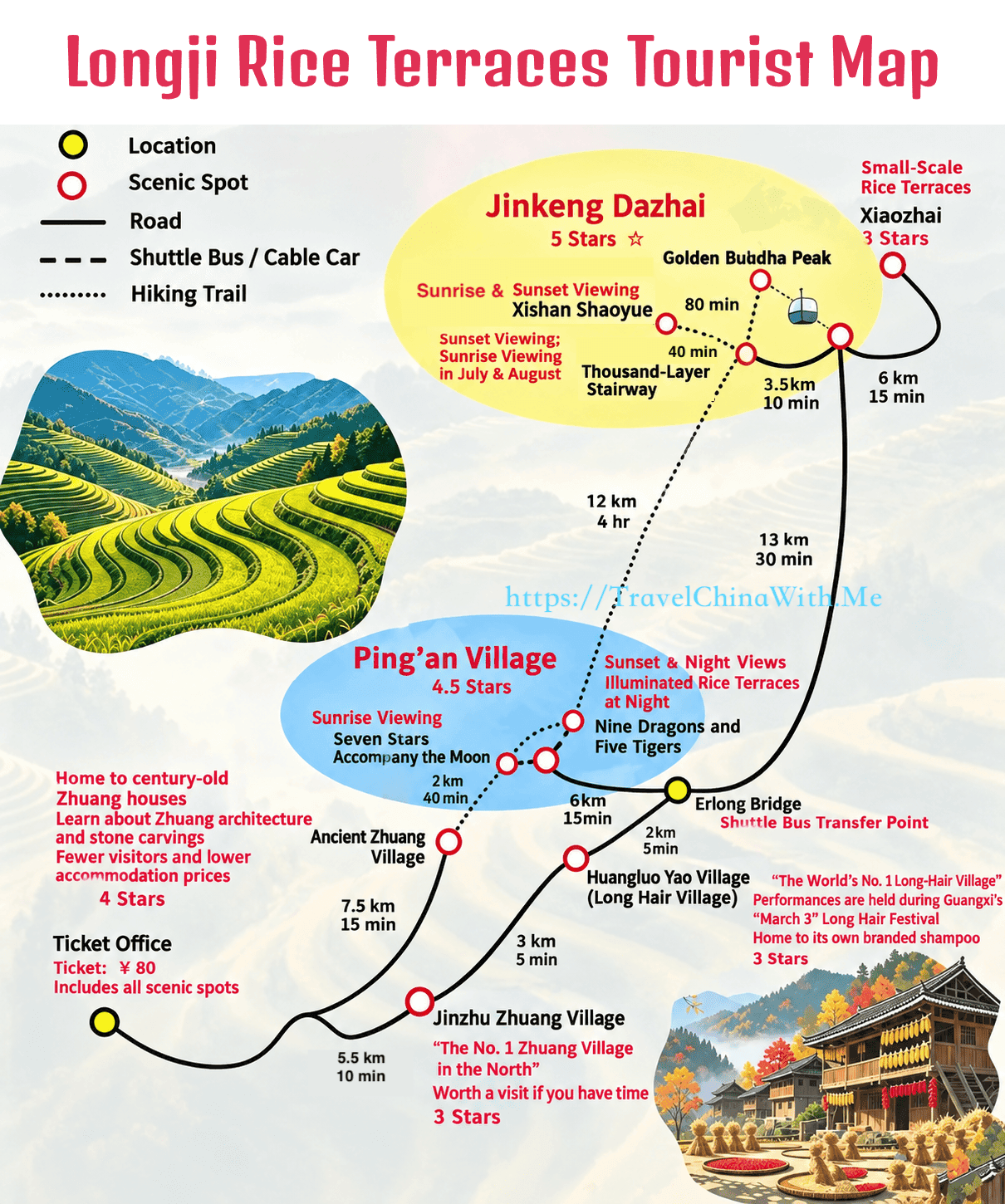
The three ticketed areas sit far enough apart that you can’t casually wander between all of them in an afternoon. Understanding how they relate to each other is the first decision that shapes everything else about your trip.
Ping’an | Dazhai / Jinkeng | Longji Ancient Zhuang Village | |
|---|---|---|---|
Ethnic group | Zhuang | Red Yao | Zhuang |
Scale | Smaller, more compact — two viewpoints | Largest and most dramatic — three high viewing platforms | Smallest of the three, no named viewpoint |
Terrain | Gentle slopes, easy walking | Steeper, more spread out | Flat boardwalk from Ping’an |
Crowds | Fewer domestic tour groups; noticeably calmer | Larger domestic tour groups; cable car queues can run 1–2 hours in peak season | Quietest of the three |
Cable car | No | Yes — to Platform No. 3, Golden Buddha Peak, ~20 min | No |
Typical visit | 2–3 hours covers both viewpoints | Half a day minimum to cover all three platforms | About an hour, paired with Ping’an |
Guesthouse price (per night) | 150–300 RMB | 200–400 RMB | Similar to Ping’an, fewer rooms |
We usually route clients to Ping’an rather than Dazhai. Dazhai’s scale is larger, but it also draws the bulk of domestic tour groups. The cable car queue alone can eat an hour or more of a one-day visit during peak season. That’s a bad trade for most travelers who want to actually enjoy their one day at Longji, not stand in line.

Ping’an’s shorter route between Nine Dragons and Five Tigers and Seven Stars with the Moon also lets you walk directly along the terrace paths themselves, rather than shuttling between Dazhai’s spread-out platforms.
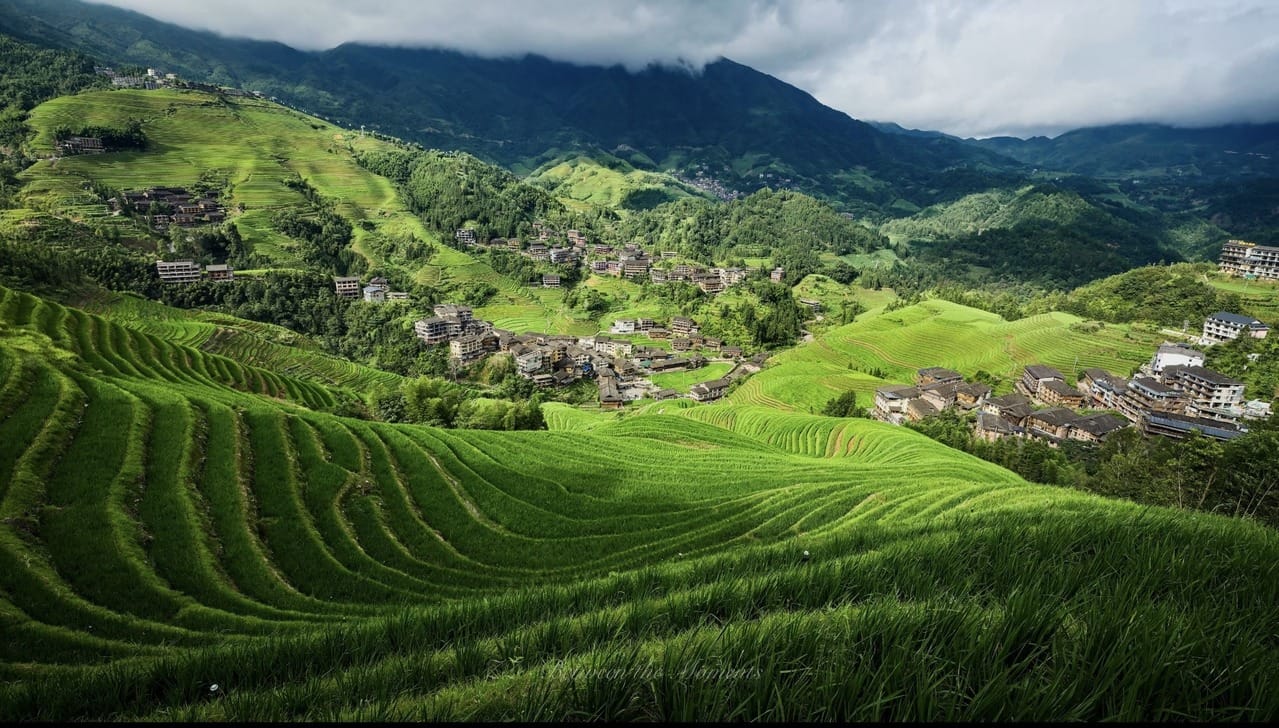
Dazhai’s scale still beats anything Ping’an offers on a quiet weekday morning, ahead of the tour buses.
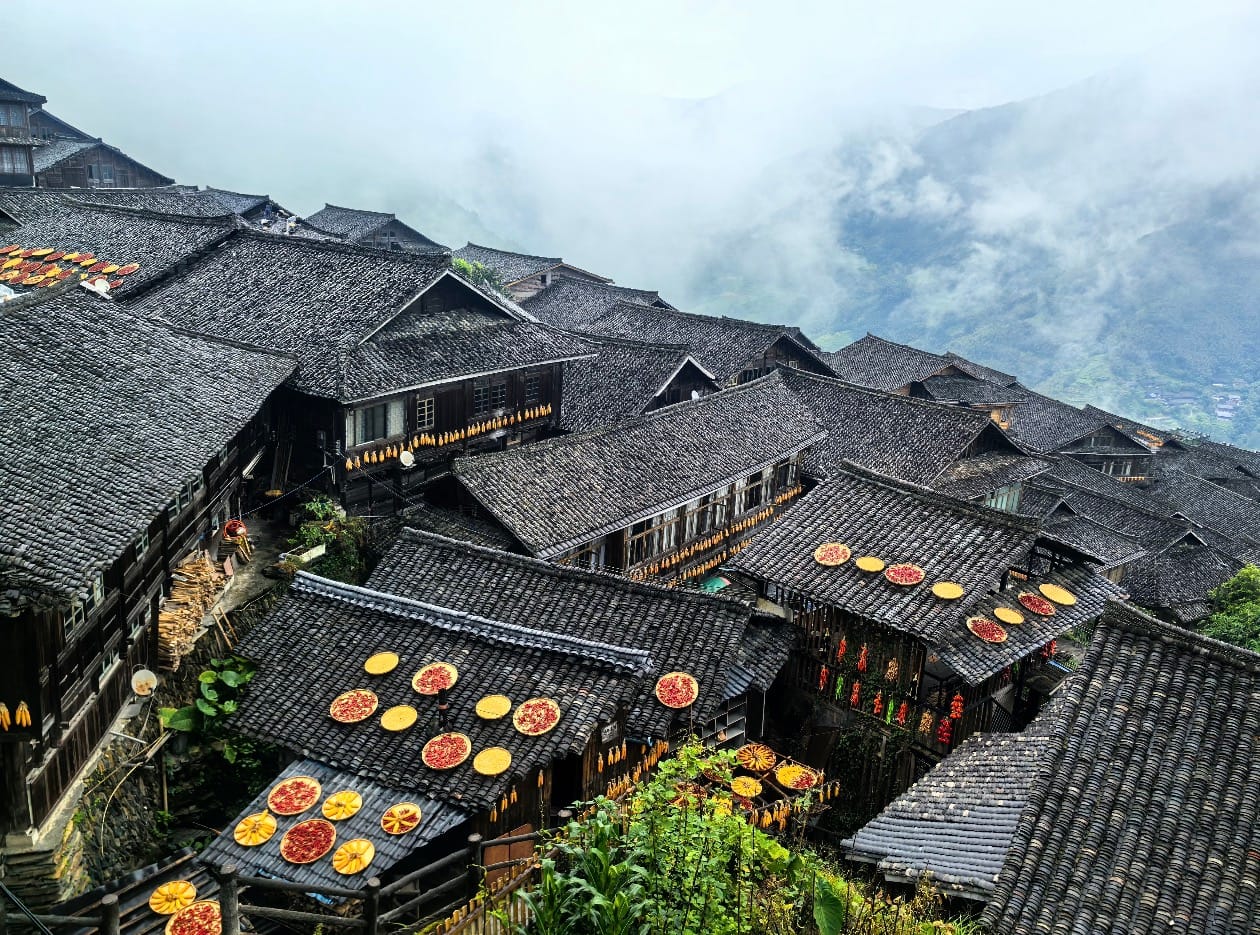
Longji Ancient Zhuang Village, the oldest settlement of the three historically, is covered by almost no English-language guide. It’s worth an hour on foot from Ping’an if you’re staying two nights or more.
Which combination makes sense?
Trip length | Where to base | Why |
|---|---|---|
Day trip | Ping’an, with a private driver | Our most common booking — a solid few hours at the viewpoints without an overnight stay; see below for why combining Ping’an and Dazhai in one day is harder than it looks |
1 night, first visit | Ping’an only | Classic view, easy hike, no transfer time lost between areas |
2 nights | Ping’an, with a walk to Longji Ancient Zhuang Village | Same ticket, same base — the walk between them is flat and manageable |
3 nights, photography or a second Guilin trip | Ping’an first, then relocate to Dazhai | No direct road between them — the transfer via the main gate eats roughly half a day, so plan for it |
There’s no vehicle road connecting Ping’an and Dazhai directly, but there is a hiking trail between them for anyone up for it — see Hiking Routes below for the details.
We’ve tested it ourselves: covering both Ping’an and Dazhai in a single day is possible, but only with a private driver controlling the schedule. Public transport makes it nearly impossible, since there’s no direct connection between the two areas and transferring between them eats an hour or more on top of an already long day. Here’s roughly what that day looks like with a driver:
Even with good timing, that’s only 1 to 1.5 hours at each village — enough to reach the viewpoints and take the photos, not enough to actually experience the place. If seeing both matters to you, staying one night works better: your ticket is already valid for 3 days, so spend an afternoon and evening at one village, then the following morning at the other.
3. What to See in Each Area
In Ping’an
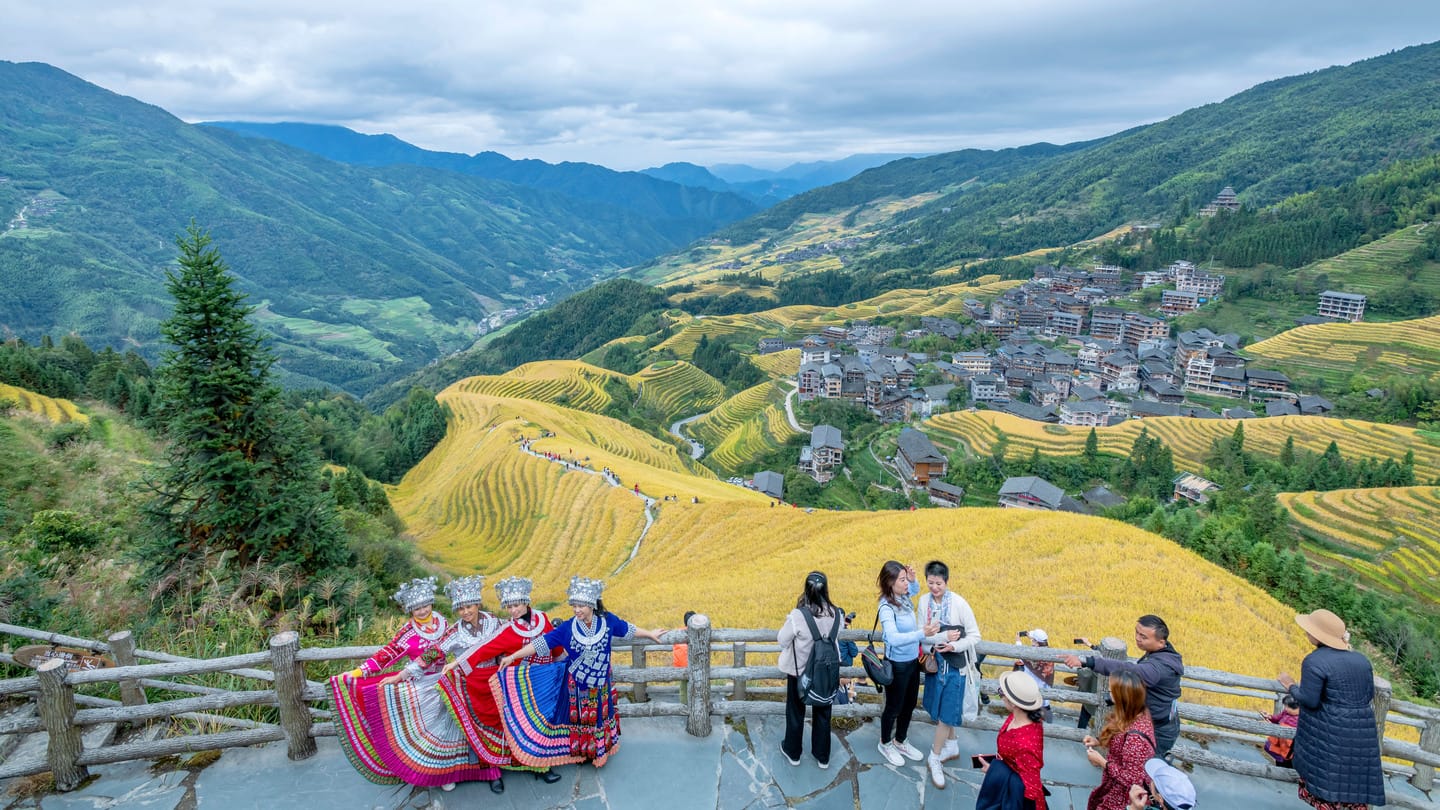
Nine Dragons and Five Tigers is the postcard shot — nine ridgelines fanning out from the terrace slopes, said to resemble dragons, with five smaller rises reading as tigers. It’s a 20–30 minute uphill walk from the village center, or a shuttle bus for 40 RMB per person if you’d rather save the legs for later.
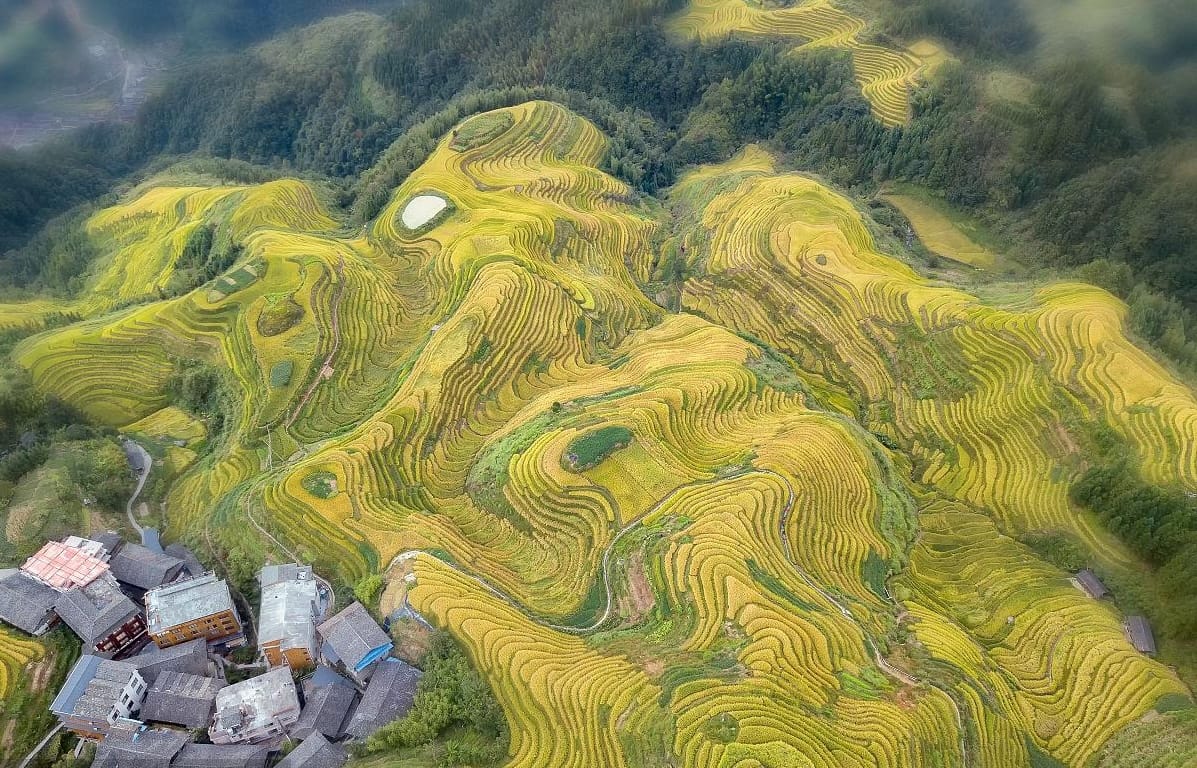
Seven Stars with the Moon sits closer to the village and is the better sunrise spot — you’re looking east across the terraces rather than into the sun. Most Ping’an guesthouses with terrace-facing balconies are built around this viewpoint, so check before you book.
In Dazhai (Jinkeng)
Dazhai has three numbered viewing platforms, and they’re not interchangeable:
Platform | Best light | Access | Crowd level |
|---|---|---|---|
No. 1 — Xishan Shaoyue | Sunrise | On foot only, ~3 hours steady uphill on stone steps | Low — most visitors skip the climb |
No. 2 — Thousand-Layer Terraces | Sunrise and sunset | On foot, shorter climb than Platform 1 | Moderate |
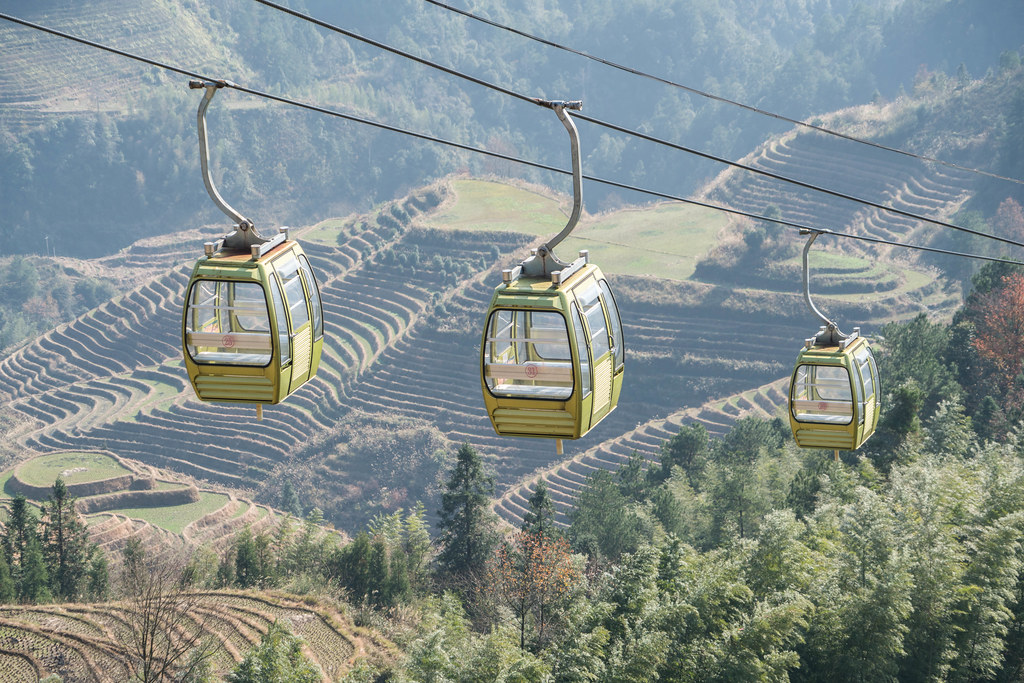
No. 3 — Golden Buddha Peak | All day | Cable car, 55 RMB one-way / 100 RMB round-trip, runs until ~18:30 | High — the only platform reachable without hiking |
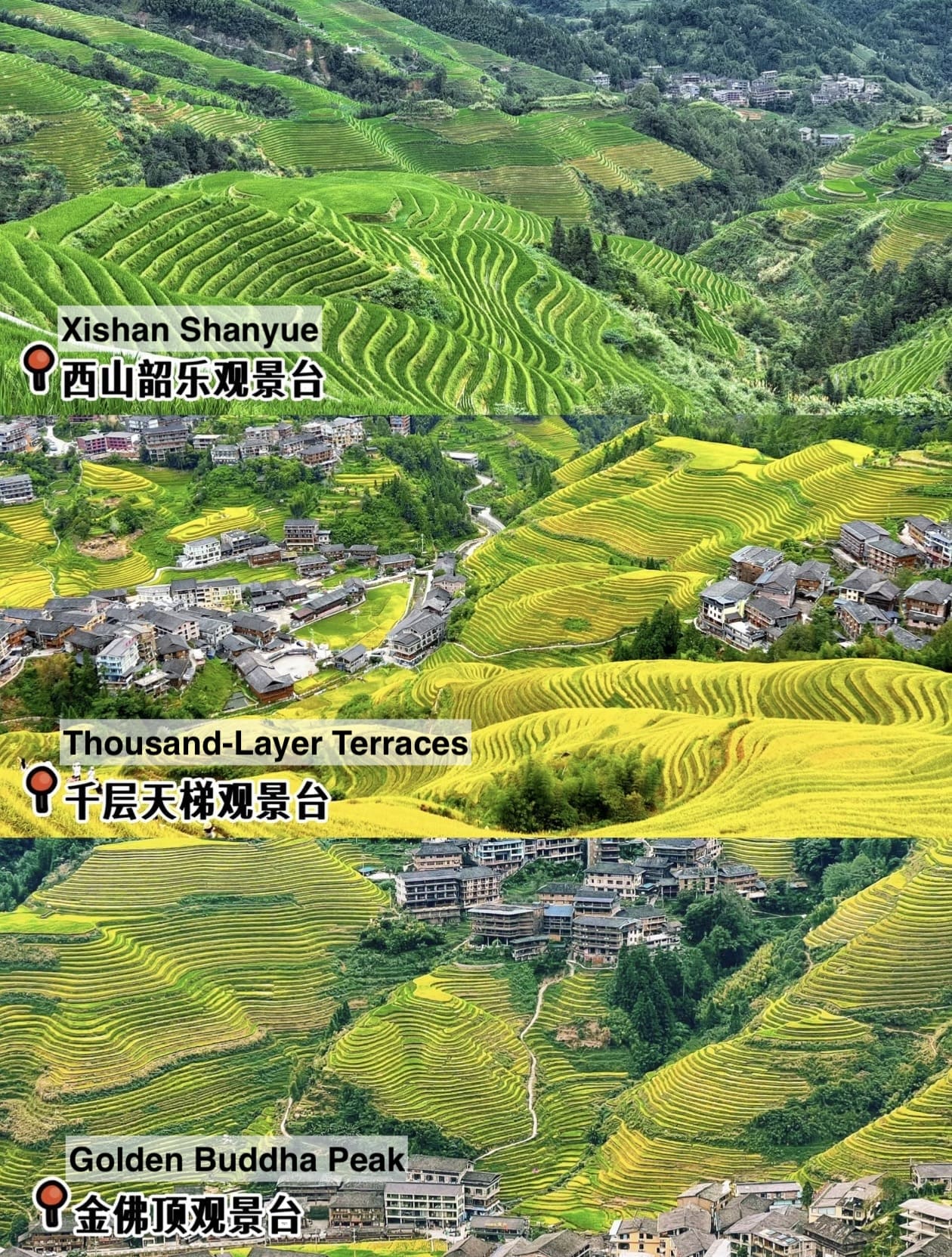
Our take, after years of putting clients on all three: the cable car buys convenience, not the best view — Platform 1 or 2 gives you a quieter angle without the gondola crowd.
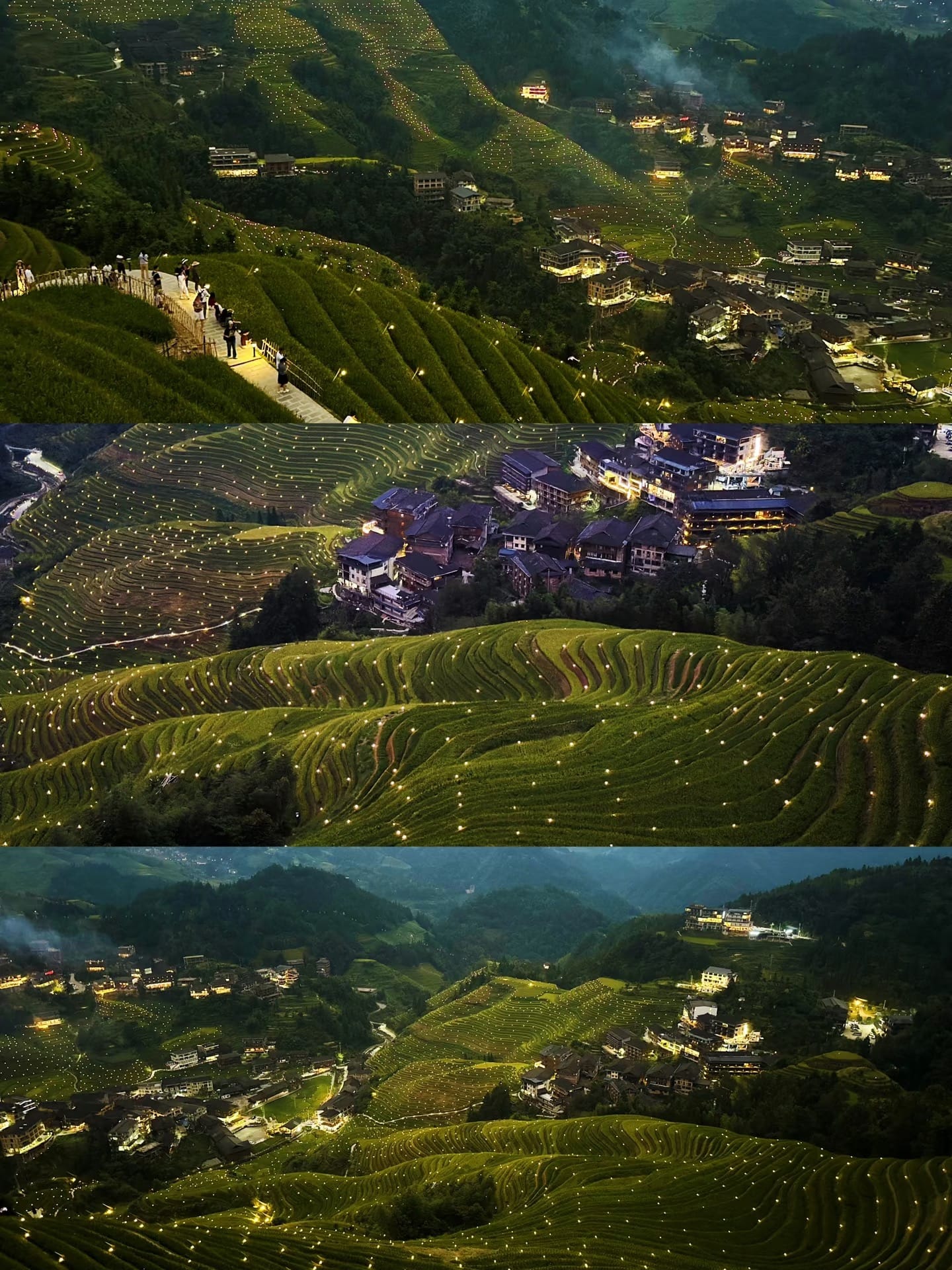
Stay through sunset and you’ll catch another sight most day-trippers miss: solar lights along Dazhai’s terrace paths switch on around 19:40 during the golden season, tracing the field edges in points of light after dark.
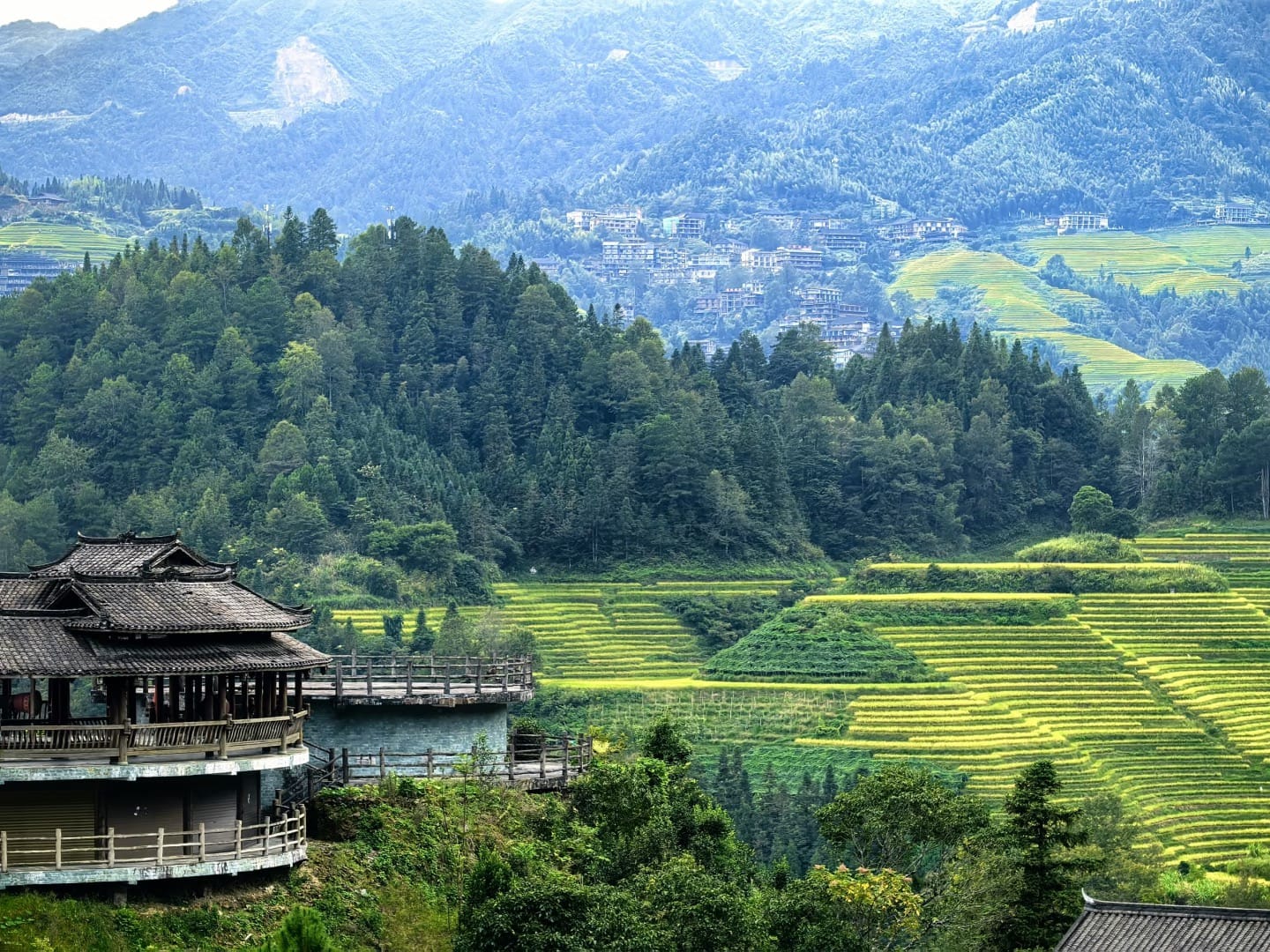
Xiaozhai, a smaller Red Yao village beside Dazhai, is visible from Golden Buddha Peak and sees far fewer visitors than Dazhai’s main platform.
In Longji Ancient Zhuang Village
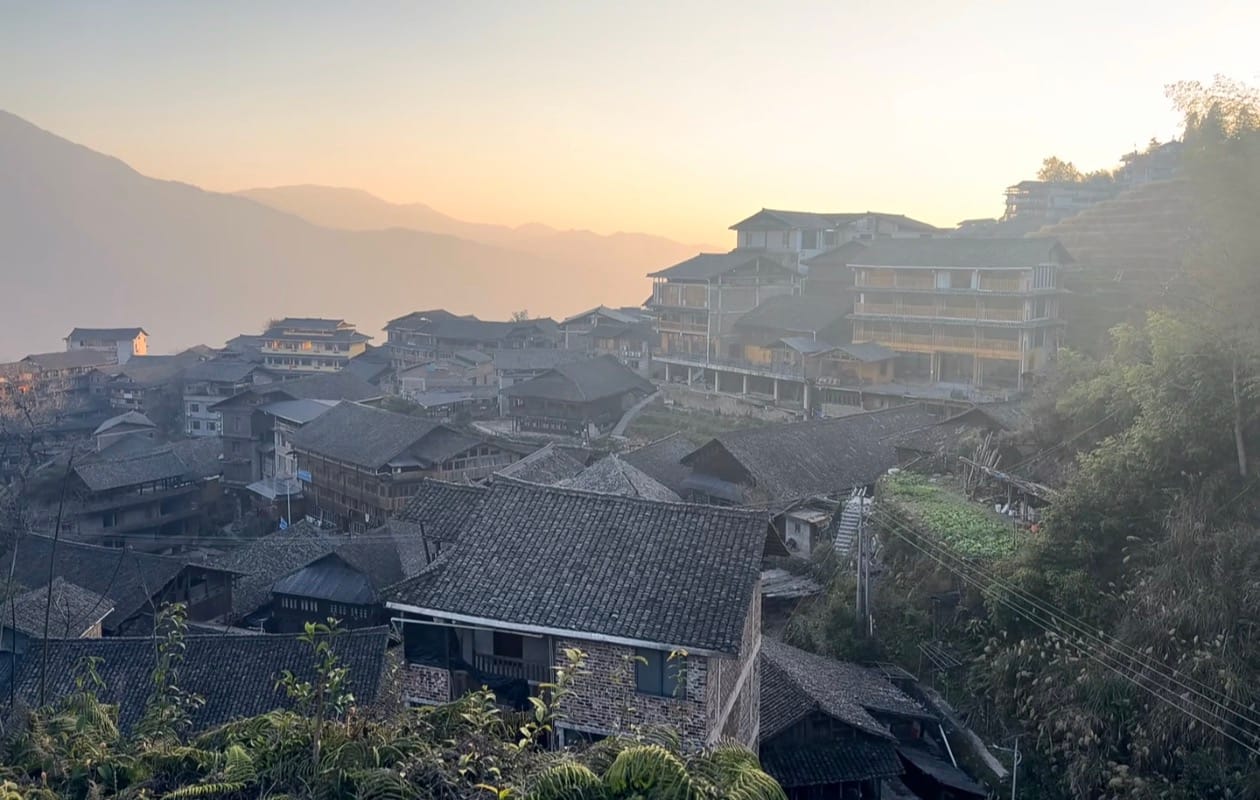
There’s no single named viewpoint here the way Ping’an and Dazhai have — the appeal is the boardwalk walk itself, threading between smaller terraces and past the village’s older wooden stilt houses. Come for an hour between other activities rather than treating it as a destination with its own checklist.
4. Hiking Routes
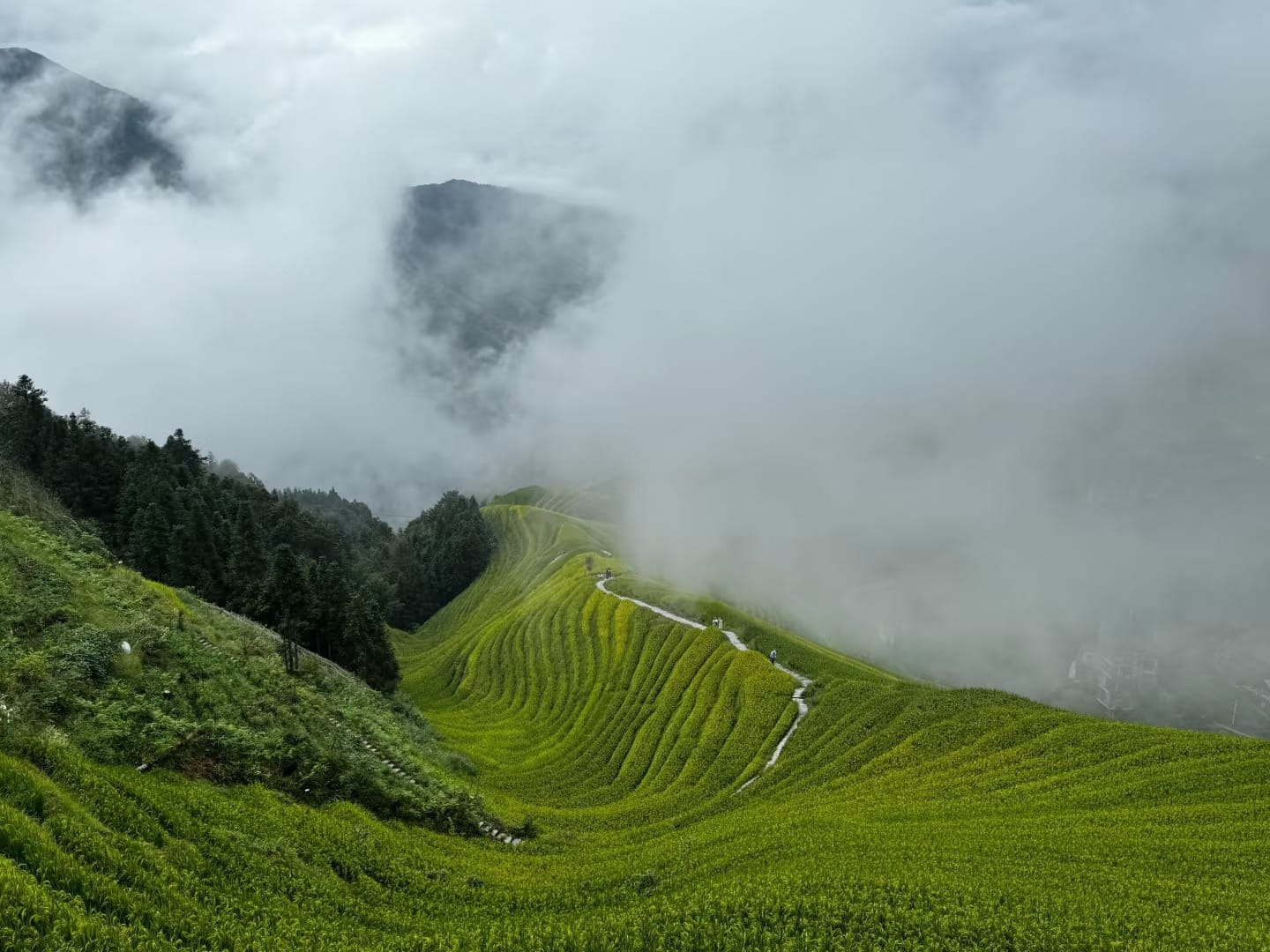
Longji’s best scenery is on the paths between viewpoints, not just at the platforms themselves, and there are four established routes worth knowing about if you want to walk rather than shuttle:
Route breakdown
Route | Distance | Elevation gain | Difficulty | Time |
|---|---|---|---|---|
Ping’an ↔ Ancient Zhuang Village | ~7 km | 300 m | Easy | 2–3 hrs |
Dazhai Platform 2 ↔ Platform 3 loop | ~6 km | 450 m | Moderate | 2–3 hrs |
Ping’an ↔ Dazhai crossing | 10–13 km | 450 m | Moderate | 3–4 hrs |
Ancient Zhuang Village → Ping’an → Dazhai (full traverse) | ~18 km | 900 m | Hard | 6–8 hrs |
Ping’an ↔ Ancient Zhuang Village
The easiest of the four and works for most fitness levels — flat stone paths through terraces, bamboo groves, and past a century-old wind-and-rain bridge, with very little foot traffic along the way. It’s the one we’d point beginners, older travelers, or anyone short on time toward.
Ping’an ↔ Dazhai crossing
The classic — most hikers who come specifically to walk Longji end up on this one. Expect uphill sections mixed in with the downhill, more effort than the distance alone suggests, and a stop at Tiantou village roughly partway through if you want a coffee break.
Trails aren’t always obvious where they cut through the villages themselves, so download an offline hiking track before you start rather than relying on trail signage alone. In the rainy season especially, check the sky before you set out — the path is fully exposed in places, and a storm on open terrace terrain is dangerous.
Dazhai Platform 2 ↔ Platform 3 loop
Pairs well with the cable car if you’re short on time — hike up, ride down, or the reverse. The stretch between Platform 2 (Thousand-Layer Terraces) and Platform 1 (Xishan Shaoyue) specifically is often cited as the single best hiking segment at Dazhai: 3 km, gentle grade, about an hour.
Full traverse
The full 18 km route from the Ancient Zhuang Village through Ping’an to Dazhai is a serious day, or two. Most people who attempt it stay overnight partway rather than pushing straight through, which your ticket’s 3-day validity makes easy to arrange.
What to bring
Carry more water than feels necessary — there’s no shop once you’re between villages — and pack out anything you bring in, since there’s no rubbish collection on the trails. Sun protection matters on the terrace sections, which have zero shade, and mosquito repellent is worth having in the wooded stretches.
5. Zhuang and Red Yao Culture
The three areas split along ethnic lines, and that split shapes what you’ll actually see. Ping’an and Longji Ancient Zhuang Village are both Zhuang communities; Dazhai is Red Yao.
Red Yao hair-combing traditions
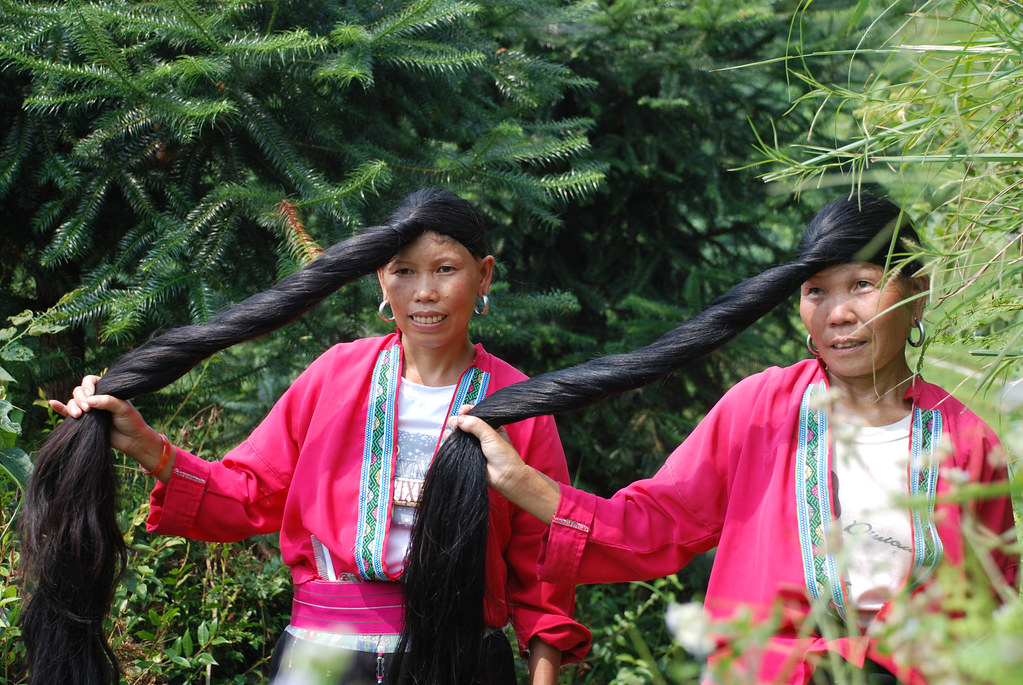
Red Yao women in Dazhai are known for hair grown to well over a meter in length, traditionally never cut. The villages stage hair-combing demonstrations for visitors — most visibly at Huangluo Yao Village near the main ticket gate, a stop most tour buses include on the way in.
The performance is a separate 80 RMB ticket, not something bundled into your Longji entry — skip it if it’s not your thing.
We’re direct with clients about this: some of what you’ll see is a cultural practice still followed by older women in the community. Some of it is staged for the tourist schedule. Treat the performers with the same respect you’d want offered to your own family traditions.
If you photograph someone directly, ask first and expect to pay a small fee — 10 to 20 RMB is standard.
Zhuang village life
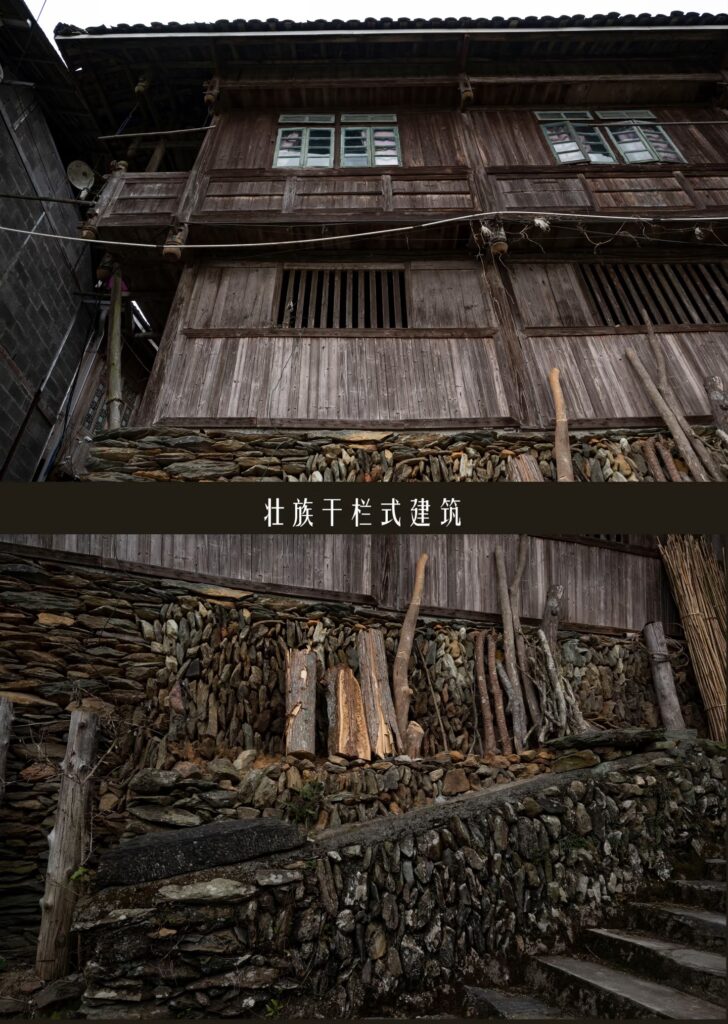
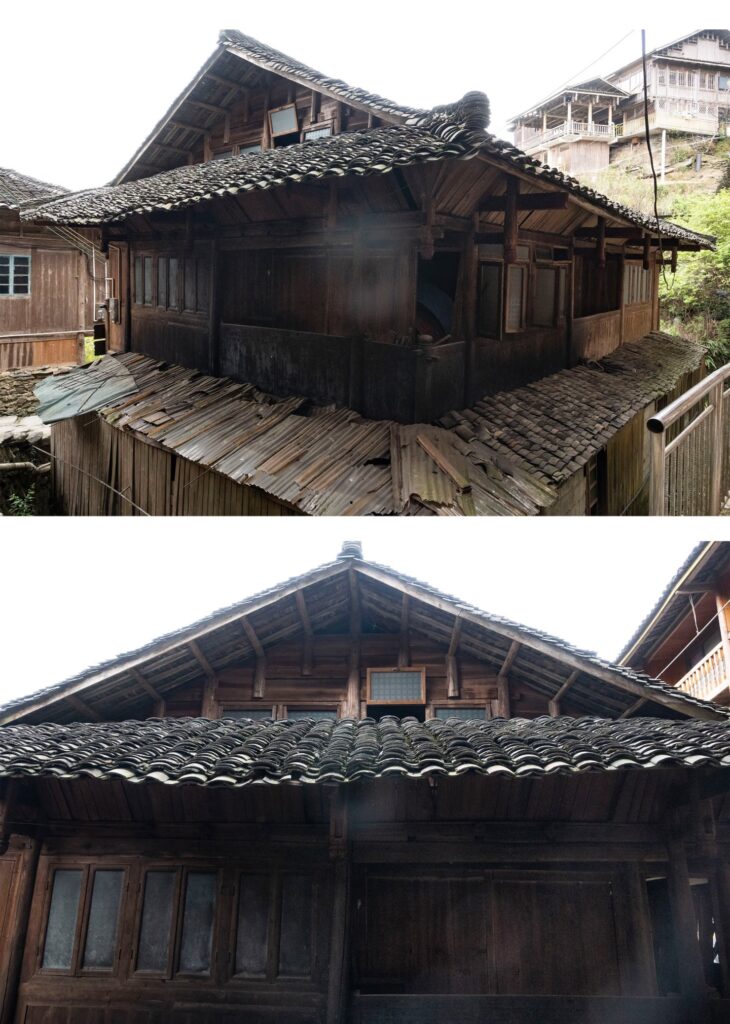
In Ping’an and the Ancient Zhuang Village, the cultural layer is quieter — wooden stilt houses built without a single nail, terraced farming methods largely unchanged for generations. Time it right and you’ll see actual planting or harvest work happening in the fields.
6. Best Time to Visit Longji Rice Terraces


The four seasons
Season | Window | What you’ll see | Trade-off |
|---|---|---|---|
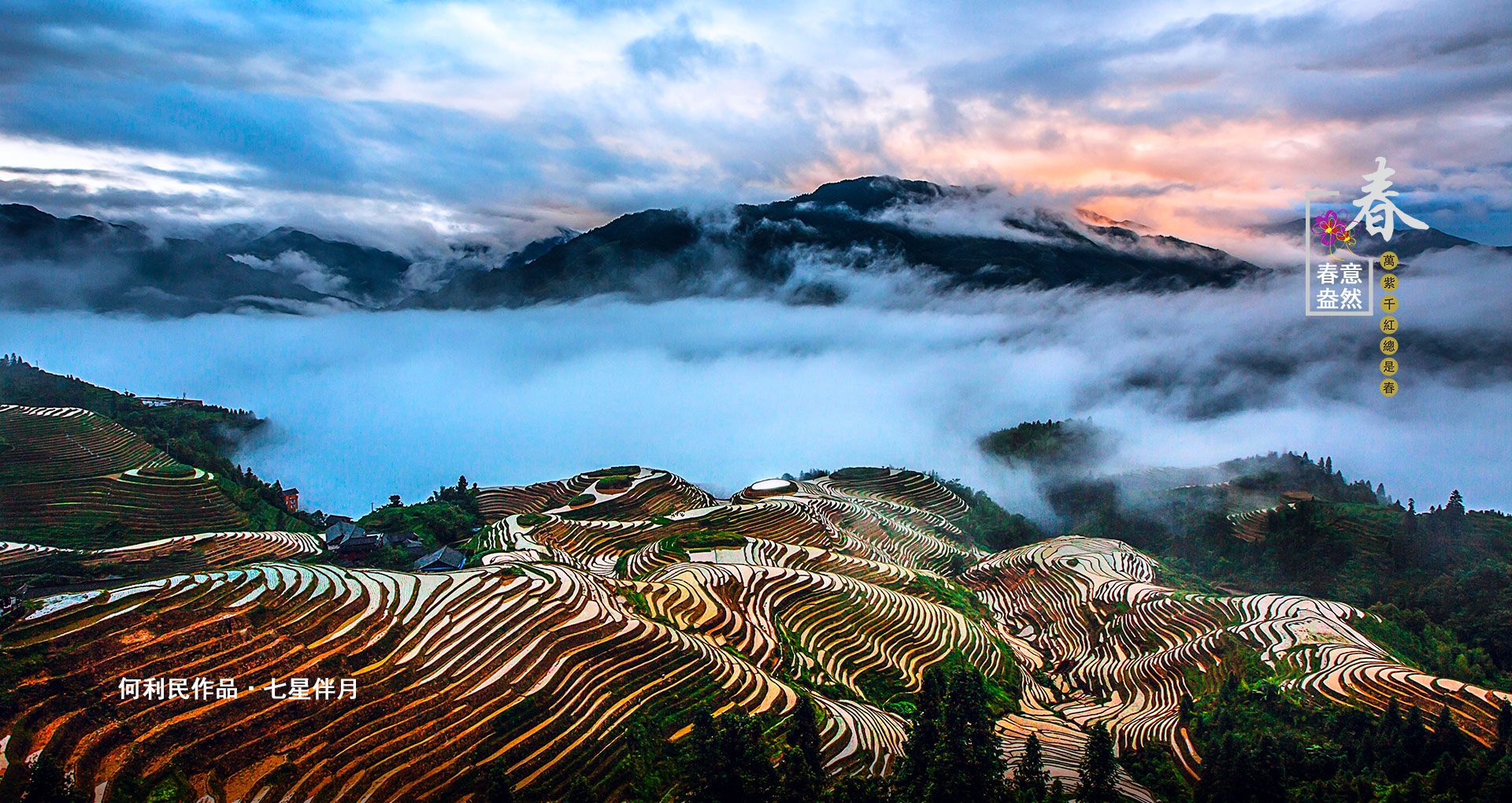
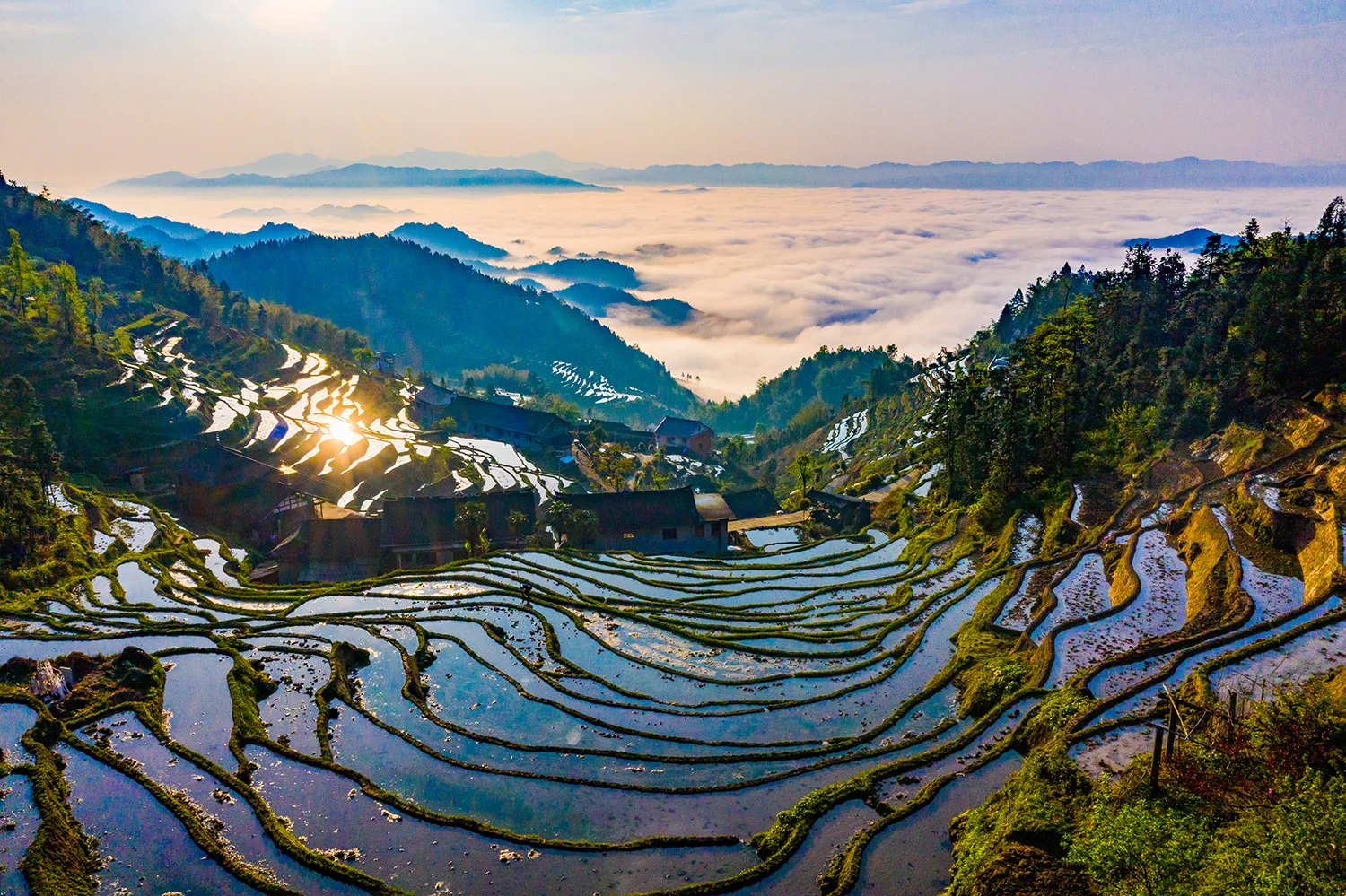
Mirror terraces | Mid-April–late May | Fields flooded, reflecting the sky — most dramatic at sunrise | Rain is frequent; bring waterproof layers |
Green terraces | Late June–mid-September | Deep green seedlings, layered like folds of matcha | Rainy season; afternoons often fog in, mornings are clearer |
Golden terraces | Late September–October 20 | Peak color — full golden harvest fields | The most popular window; book accommodation 1–2 weeks ahead, 4–6 weeks for the first half of October |
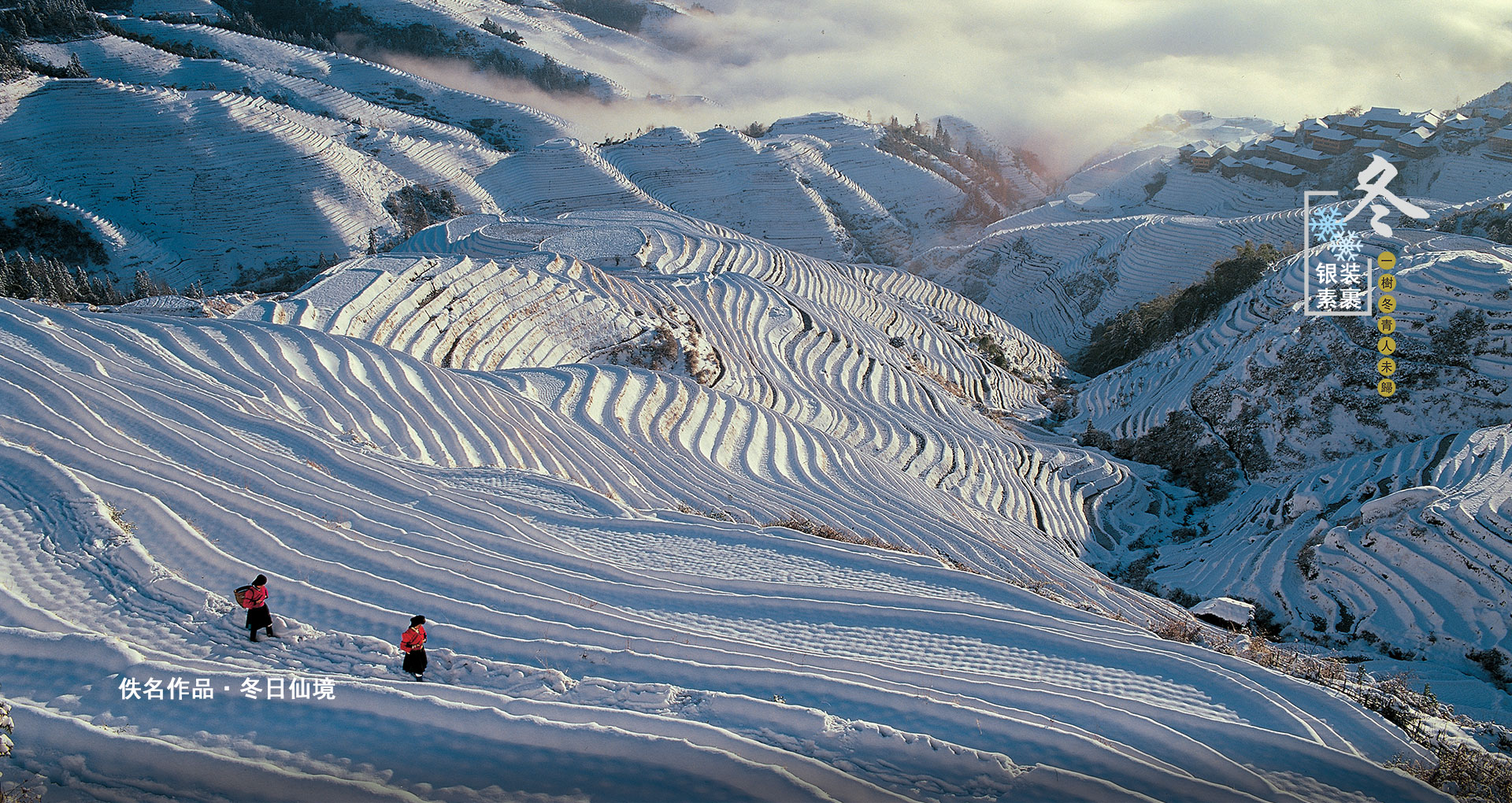
Snow (rare) | December–February | Black-and-white terrace lines under snow, when it happens | Not guaranteed most years — without snow, fields are bare and visually flat |
(rare)
(rare)
fields
(rare)
Two windows are worth flagging specifically because guides tend to gloss over them. Early spring — March through early April — is the worst time to visit: the previous year’s rice has already been harvested and the new flooding hasn’t started. The terraces sit empty, with none of the water or color that makes the photographs.
The golden window closes fast, too: fields typically go from green to fully gold by late September and are harvested November 1st. If you’re specifically chasing the golden look, don’t plan for late October.
Timing across the three areas
Ping’an and Dazhai don’t flood or harvest on identical schedules. Elevation and micro-climate differences between the two areas mean Dazhai’s fields typically hold water and color for slightly longer into the season than Ping’an’s.
Check the weather before you commit to dates, not just the season. Heavy fog is common in the mountains here and can flatten the entire view regardless of the month.
The real rainy-season risk: road access
24 April 2026
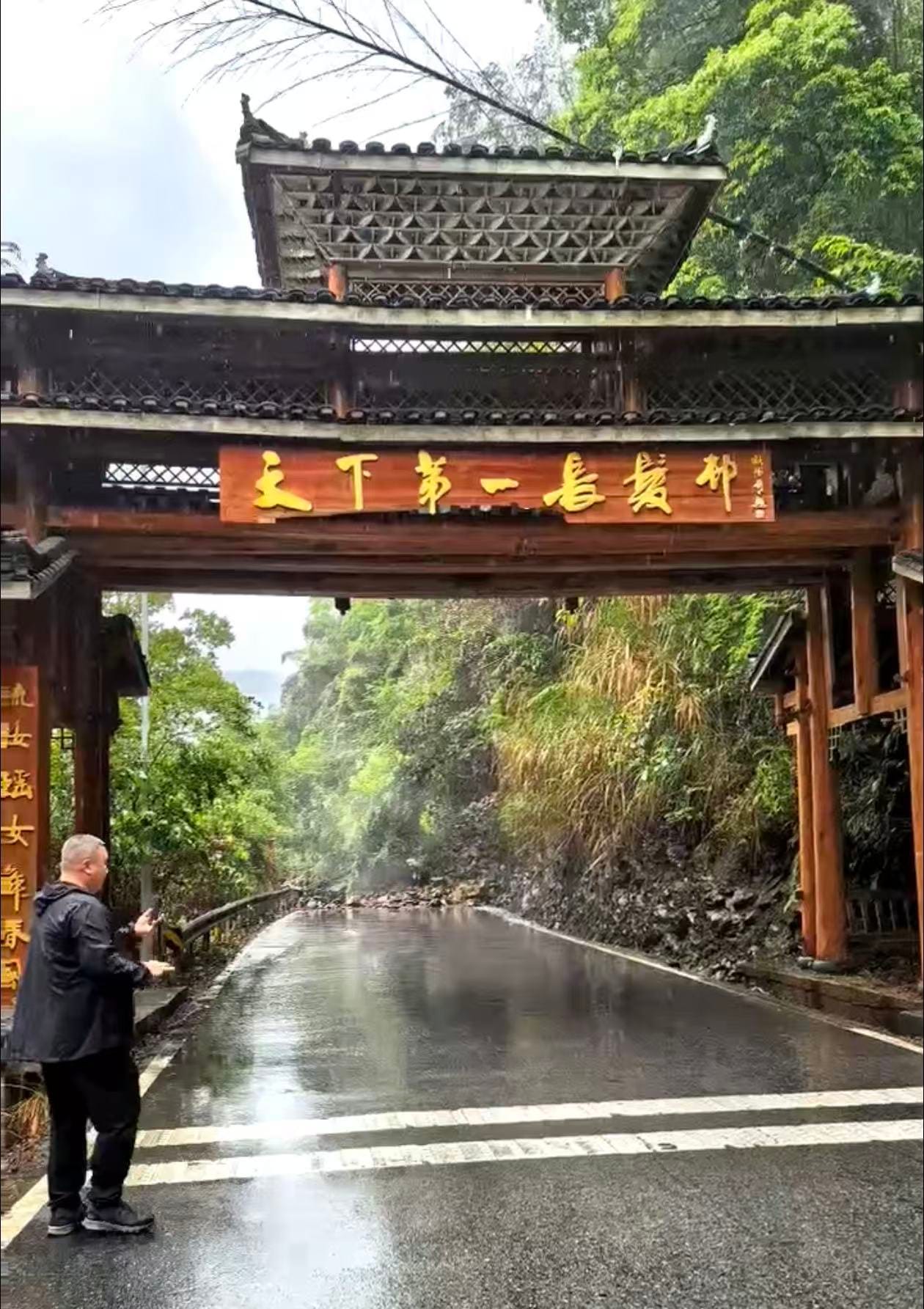
The bigger risk during rainy season isn’t the view — it’s getting there at all. Longji sits in mountainous terrain reached by a limited number of access roads, and heavy overnight rain can trigger landslides or road damage on these routes. Unlike a city road, there’s often no alternative way in or out, so a closure can knock out an entire day.
This matters most if you’ve booked a hotel inside the scenic area itself, or if you’re planning Longji as a tight day trip with no spare day to fall back on. We cover a real case of this, including the accommodation dispute that followed, in our Guilin-Yangshuo rainy season guide. If your visit falls between April and July, build in a buffer day and check cancellation terms before booking non-refundable accommodation inside the scenic area.
7. Getting There from Guilin
From downtown Guilin, it’s 85 km and 2–2.5 hours by road to the Longji ticket office.
By private car or charter driver
A private driver is the most practical option for most of our clients — door to door, dropped directly at your chosen base. Confirm which villages are included before you commit, especially with a driver you haven’t used before.
By public bus
Buses run from Guilin’s Qintan Bus Station to Longsheng County (90 minutes), then a second local bus or shared taxi on to your village. Departures aren’t on a fixed timetable, so budget extra waiting time.
Within the scenic area
A shuttle bus (40 RMB per person) takes you from the main gate to your village’s parking area. From there, it’s 15 to 45 minutes on foot over stone steps to your guesthouse. Confirm this distance before you book if you’re traveling with children, older family members, or heavy luggage.
Avoid national holidays — the mountain road narrows to barely one and a half lanes in places, and jams of three to four hours are common.
8. Where to Stay and What to Eat
Where to stay
Staying overnight — rather than driving back to Guilin the same day — adds sunrise and sunset, and your ticket’s 3-day validity makes it easy to build in even on a short trip. A well-run day trip covers the main viewpoints well; an overnight stay is the upgrade if you have the time for it, not a requirement for a good visit.
Area | Guesthouse style | Price per night | Best for |
|---|---|---|---|
Ping’an | Widest range — wooden stilt buildings with terrace-facing balconies, from simple family rooms to a handful of boutique options | 150–300 RMB | Most visitors; easiest booking, most choice |
Dazhai | Best concentrated around Tiantou village, close to Platforms 1 and 2, many with terrace-facing balconies | 200–400 RMB | Travelers prioritizing proximity to the viewing platforms over room comfort |
Longji Ancient Zhuang Village | Fewest beds of the three, newer but limited | Similar to Ping’an | Photography-focused stays; book early — it sells out fastest in harvest season |
Whichever village you choose, book the room with the terrace view — it’s usually a modest price difference and the main reason to sleep up there instead of in town.
Before you book, ask the guesthouse directly whether they offer free parking, help with luggage, or pickup from the village entrance. Many do, and it can save you the shuttle bus or cable car fare entirely. Prices roughly double during National Day and the peak golden-harvest weeks, so book at least 1–2 weeks ahead in general and 4–6 weeks ahead if your dates fall in early October.
What to eat
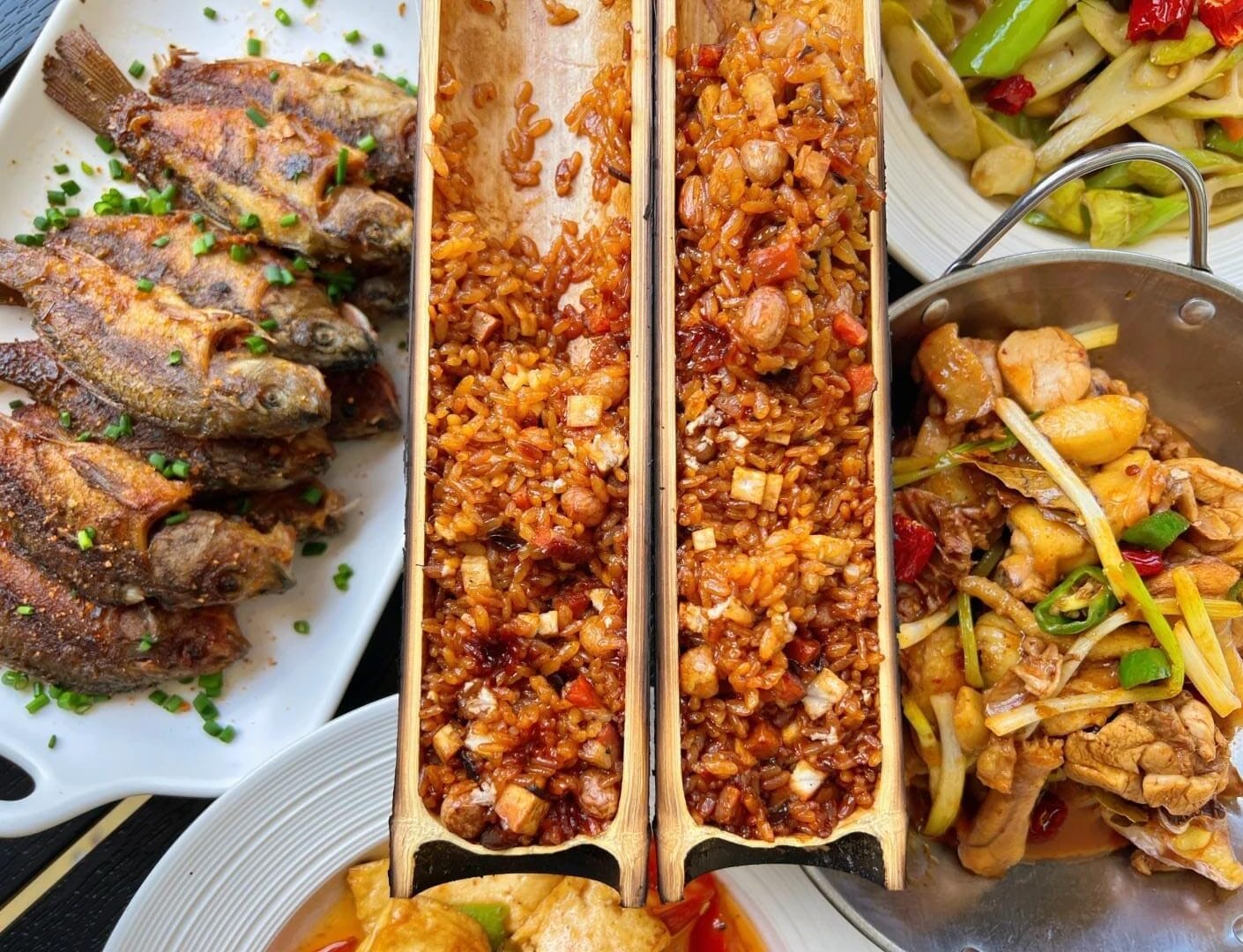
Bamboo rice is Longji’s signature dish — rice, and usually pork or vegetables, packed into a length of fresh bamboo, sealed, and roasted over an open fire. The bamboo itself lightly flavors the grain. It takes 30–45 minutes to prepare, so order it as soon as you sit down.
Bamboo chicken, cooked the same way, is the other standard order. Quality is fairly consistent from one guesthouse kitchen to the next, so there’s little reason to hunt for a specific restaurant over another.
Beyond those two, expect mountain vegetables, free-range chicken, and Longji rice wine — a home-brewed liquor that tastes mild and sweet. It carries real alcohol content, though, so pace yourself if you’re not used to homemade spirits.
Budget 40–50 RMB per person for a meal. In Ping’an, several restaurants take Meituan orders, which keeps pricing more transparent. Dinner runs 18:00–19:00 and most kitchens close by 20:00.
If a driver or guide who isn’t with your own tour steers you toward a specific restaurant, be skeptical. Commission arrangements between drivers and restaurants are common in the area, and the food is rarely worth the referral.
9. Practical Tips
Footing, fitness, and gear
The stone steps get slippery when wet, and Longji sees rain often enough — especially in the flooding season — that this isn’t a rare edge case. Waterproof hiking shoes with real tread matter more here than anywhere else on a typical Guilin-Yangshuo itinerary.
Physical demands vary sharply by route — see Hiking Routes above for the full breakdown by distance and difficulty.
The road up from Guilin is winding enough that motion sickness is common — bring medication if you’re prone to it. Check the weather forecast before you finalize dates, too; heavy fog is common in these mountains and flattens the view regardless of season.
Luggage
Guesthouses inside the scenic area are only reachable on foot from the shuttle drop-off point, sometimes up flights of stone steps. We tell clients to pack a soft bag or backpack for the Longji leg specifically and leave rolling suitcases at a Guilin hotel or in luggage storage.
On the ground
Mobile signal is unreliable once you’re up in the terraces — download offline maps. A weak signal can also make ticket QR codes fail to load right when you need them, so take a screenshot of your ticket confirmation before you head up.
Parking at the official rate is 10 RMB, but at Dazhai in particular, guesthouse operators sometimes control nearby lots and charge considerably more — Ping’an’s parking tends to be more consistently regulated.
In both villages, expect locals approaching you to offer photos, charter rides, or meals; a polite, firm decline usually works, but persistence is common.
Card acceptance thins out fast once you’re off the main road, so carry some cash as backup. WeChat Pay or Alipay linked to a foreign card covers most guesthouses and restaurants, but don’t count on it everywhere.
Photography
The best light is early morning, 7–9 AM, and again after 17:30 — midday sun flattens the terraces and washes out color. Light-colored clothing (cream, pale khaki, soft yellow) photographs better against the green and gold fields than dark colors do.
Golden Buddha Peak fills with tour groups after about 2 PM, so shoot there in the morning if you want the platform to yourself.
10. Longji vs. China’s Other Rice Terraces
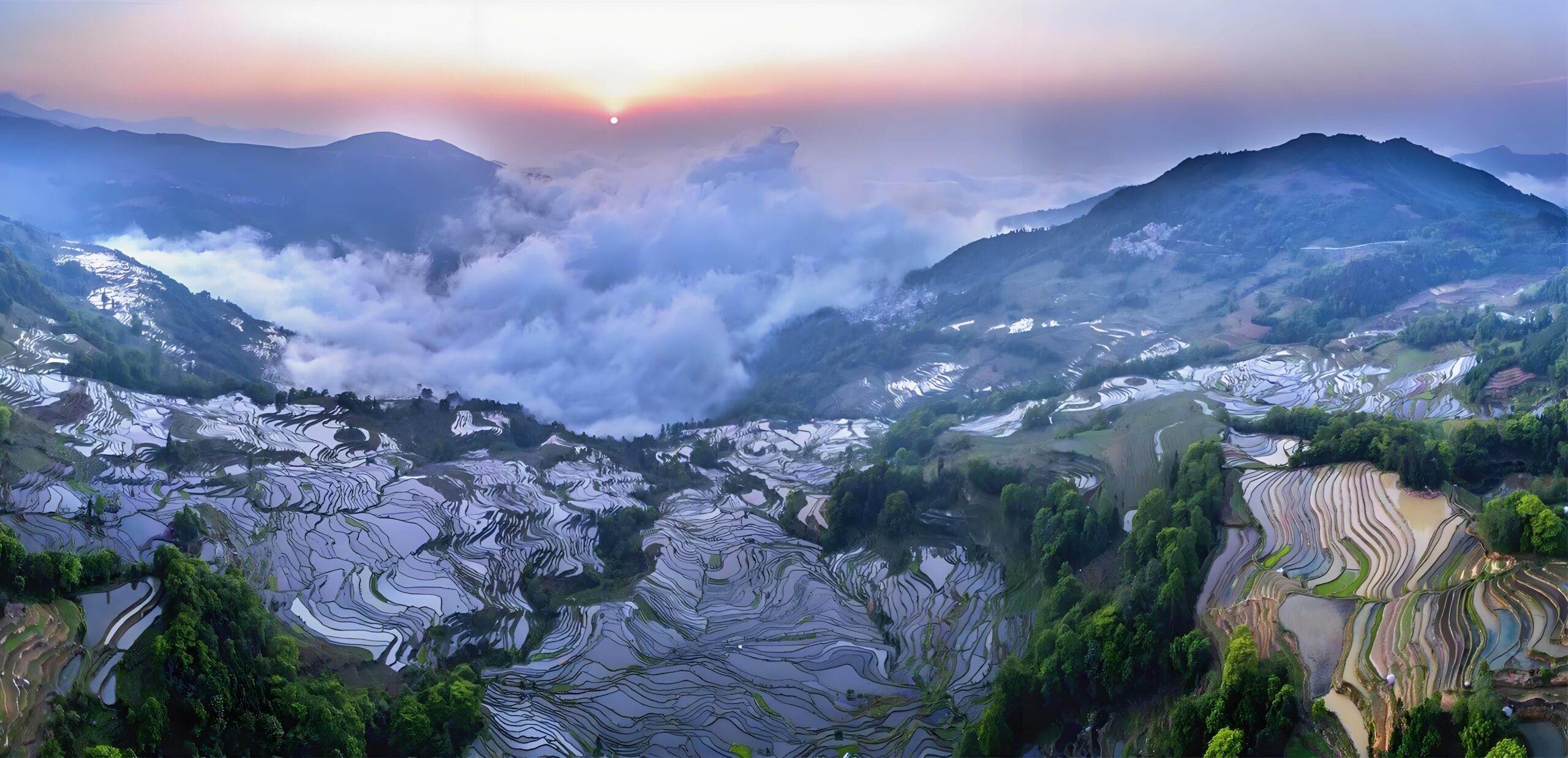
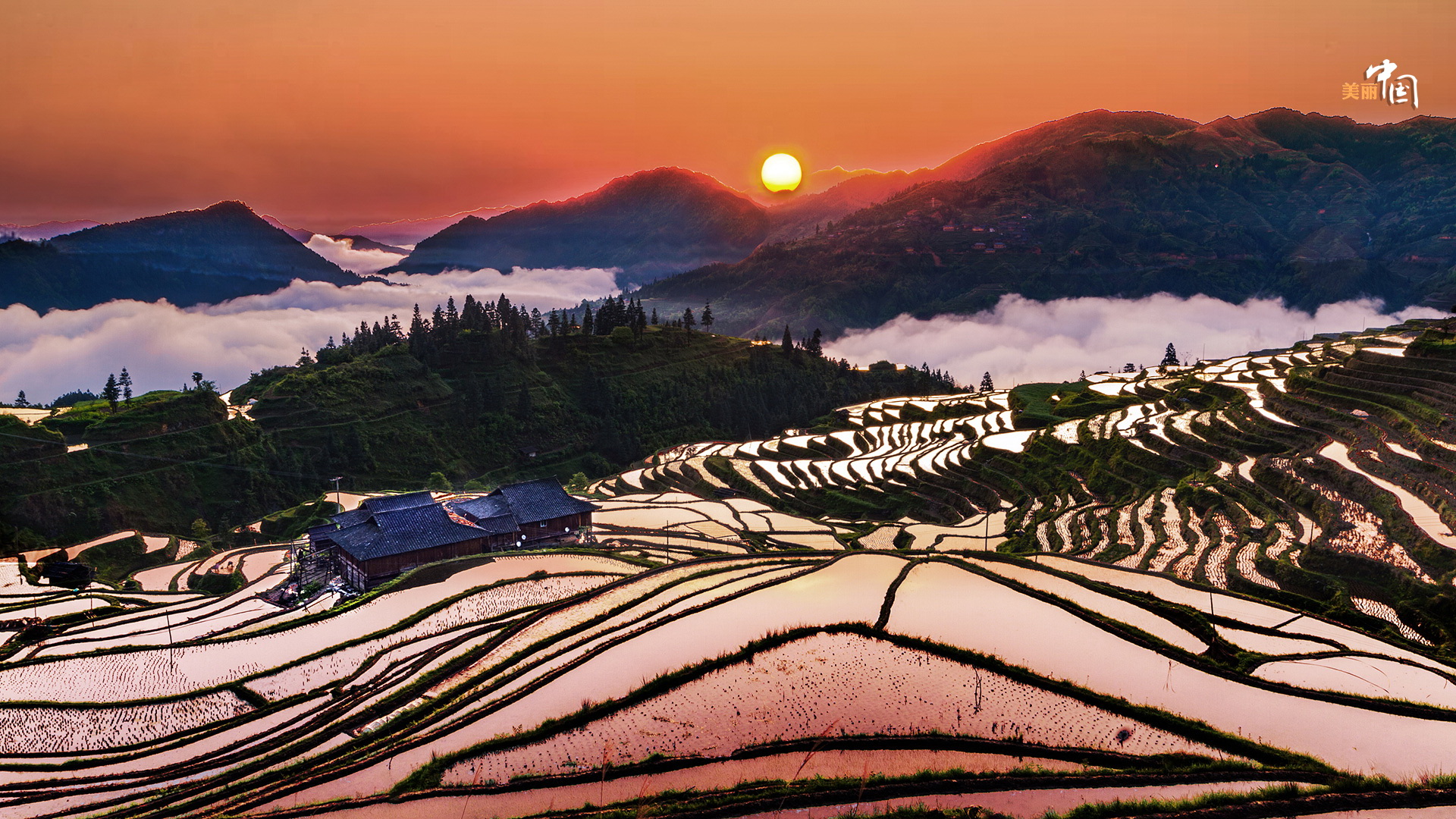
Longji isn’t the only terraced landscape worth considering, and it isn’t automatically the right one for every trip.
Destination | Distance from a major hub | Best for | Trade-off |
|---|---|---|---|
Longji (Guangxi) | 2–2.5 hrs from Guilin | First-time visitors, anyone already touring Guilin-Yangshuo, limited-mobility travelers (cable car option) | Most visited of the four — expect company at peak viewpoints in season |
6–7 hrs from Kunming | Scale and drama over convenience | A dedicated multi-day trip, not a short detour | |
Jiabang (Guizhou) | 8–9 hrs from Guiyang | Near-total absence of crowds | Rough transport, minimal English-language infrastructure |
Ziquejie (Hunan) | 4–5 hrs from Changsha | Adventurous travelers with some Mandarin | Even local drivers sometimes struggle to find it |
If Guilin and Yangshuo are already on your itinerary, Longji is the easy addition. If scale matters more than convenience, Yuanyang delivers more of it, at the cost of a remote trip rather than a short detour.
We cover the full comparison, including realistic travel times between each site, in our guide to rice terraces across China.
For a first China trip, or anyone building Longji into an existing Guilin-Yangshuo itinerary, it’s the terrace destination that requires the least travel time and planning.
FAQ: Longji Rice Terraces
Is Longji Rice Terraces worth visiting?
Yes, especially if Guilin or Yangshuo are already on your itinerary — Longji is a 2–2.5 hour drive away and delivers terraced mountain scenery you won’t see in Guilin’s karst landscape. It’s most worth it in the mirror season (mid-April–late May) or the golden harvest window (late September–mid-October); outside those windows, the terraces themselves are far less dramatic.
Is Ping’an or Dazhai better at Longji?
We route most clients to Ping’an. Dazhai’s terraces are larger in scale, but it also draws the bulk of domestic tour groups. Cable car queues can run 1–2 hours in peak season — a costly trade-off on a one-day visit. Ping’an’s shorter, gentler route between its two viewpoints suits most travelers better. If you can visit Dazhai on a weekday morning ahead of the tour buses, though, its Thousand-Layer Terraces platform offers a scale Ping’an doesn’t match.
Is the Longji cable car worth it?
It’s worth it if your priority is convenience or you have mobility limitations. It delivers you directly to Golden Buddha Peak, Dazhai’s most accessible platform. It’s the most crowded of Dazhai’s three platforms precisely because it’s the only one reachable without hiking. If a quieter, arguably better view matters more than saving your legs, the stone-step route to Platform 1 or 2 is the better choice.
How many days do you need at Longji?
Two nights covers Ping’an plus a walk to Longji Ancient Zhuang Village comfortably. Three nights lets you add Dazhai without rushing, accounting for the half-day transfer between the two areas since there’s no direct road connecting them.
Can I visit Longji as a day trip from Guilin?
Yes — this is one of our most common bookings, and Ping’an is our usual recommendation for it. With a private driver, you’re looking at 2–2.5 hours each way, leaving a solid few hours at Ping’an’s viewpoints in between. Go with a private driver rather than a public bus tour; it’s the difference between a relaxed day and one eaten up by transfer logistics.
Can I visit both Ping’an and Dazhai in one day?
Only with a private driver. Public transport doesn’t connect the two areas directly, and the transfer alone can eat over an hour. Even with a driver keeping tight timing, you’re looking at 1 to 1.5 hours at each village — enough for the main viewpoints and photos, not enough to actually experience either place. If seeing both matters to you, staying one night and splitting the visit across two half-days works far better than compressing it into one.
Can you hike between Ping’an and Dazhai?
Yes — this is the classic Longji hike, running 10–13 km depending on the exact route and taking 3–4 hours. It’s not flat: expect uphill sections mixed with the downhill, more effort than the distance suggests, and no shops along the way, so carry water. Download an offline trail track before you start, since signage inside the villages themselves isn’t always clear. It suits fit, adventurous travelers rather than families or first-time visitors.
Do I need a guide at Longji?
Not strictly, if you’re comfortable with a translation app and don’t mind figuring out the transfer buses yourself. What a guide adds is local knowledge — which platforms are quiet on a given day. They also bring the language skills for small courtesies, like properly greeting a Red Yao family before a hair-combing demonstration. Hire one from us.
Is Longji suitable for children or older travelers?
Ping’an works well for both, thanks to its shorter, gentler paths. Dazhai’s cable car offers an alternative to the steep stone stairs for anyone who can’t manage extended hiking. Avoid the multi-hour climbs to Dazhai’s Platform 1 with young children or anyone with mobility concerns.
Planning a trip to Longji as part of a wider Guilin-Yangshuo itinerary? Get in touch and we’ll plan the route around what you want to see.