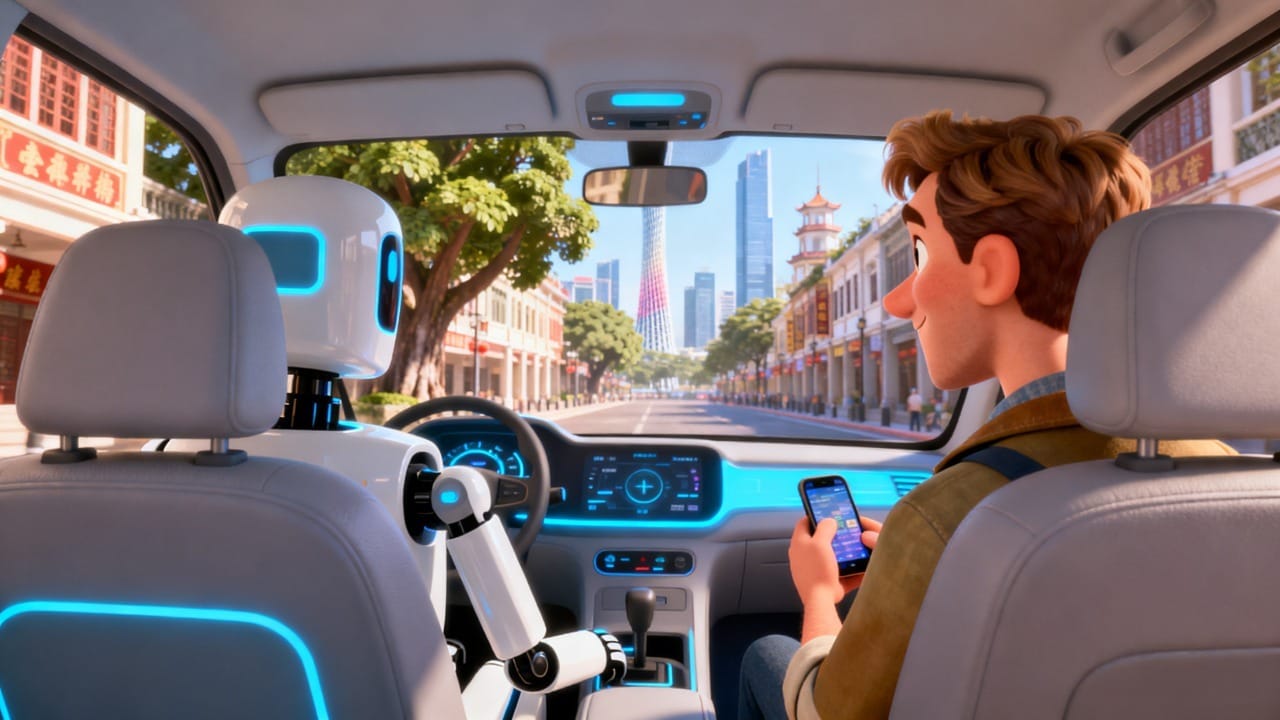
The Complete Guide to Robotaxi in China: Brands, Cities, and How Tourists Actually Ride One
Foreign tourists can ride a robotaxi in China, but almost never by signing up themselves — the registration wants a Chinese ID number, and no passport fits the field. One of our guests, Ariel, hit exactly this wall in Guangzhou; our team ended up booking his ride through WeChat instead, on our own verified account.
Baidu’s Apollo Go alone has completed over 20 million driverless rides across 26 cities as of February 2026, second globally only to Waymo. This isn’t a small pilot project — it’s something you’ll likely run into if your trip touches the right city. Robotaxi, driverless taxi, self-driving taxi — whatever you call it, this guide covers the same ground. Which city to try it in, how to actually get one booked without a Chinese ID of your own, and what to expect once you’re inside.
Table of Contents
1. Who’s Running China’s Robotaxis
Three companies run robotaxi in China right now, and we point clients toward different ones depending on their city.
Apollo Go — the biggest by far

Official Website: https://www.apollogo.com
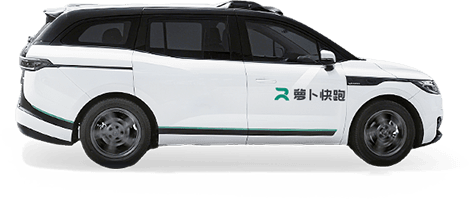
Baidu’s brand, 萝卜快跑, completed 3.4 million fully driverless rides in Q4 2025 alone — Baidu reported in its Q1 2026 earnings, year-on-year growth of over 200%. Wuhan is where it’s invested deepest — the only city where coverage feels close to citywide, and the one we point most first-time riders toward.
Pony.ai — smaller, with a Beijing airport route

Offcial Website: https://pony.ai
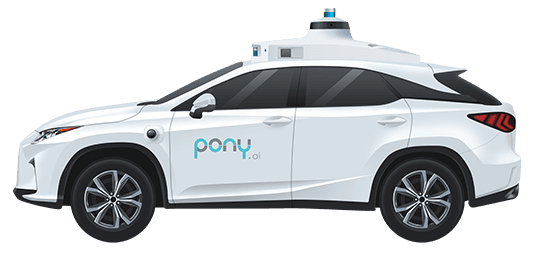
小马智行’s robotaxi fleet passed 1,975 vehicles as of mid-2026, the company reported — still smaller than Apollo Go. It built one thing nobody else has, though: a driverless transfer between Beijing Daxing Airport and Yizhuang, running about 40km on real expressways. It’s bookable a day ahead through the PonyPilot+ app; pickup is Terminal 1F Gate 17A, drop-off is Terminal 4F Gate 5.
WeRide — the one that skipped registration entirely

Official Website: https://www.weride.ai
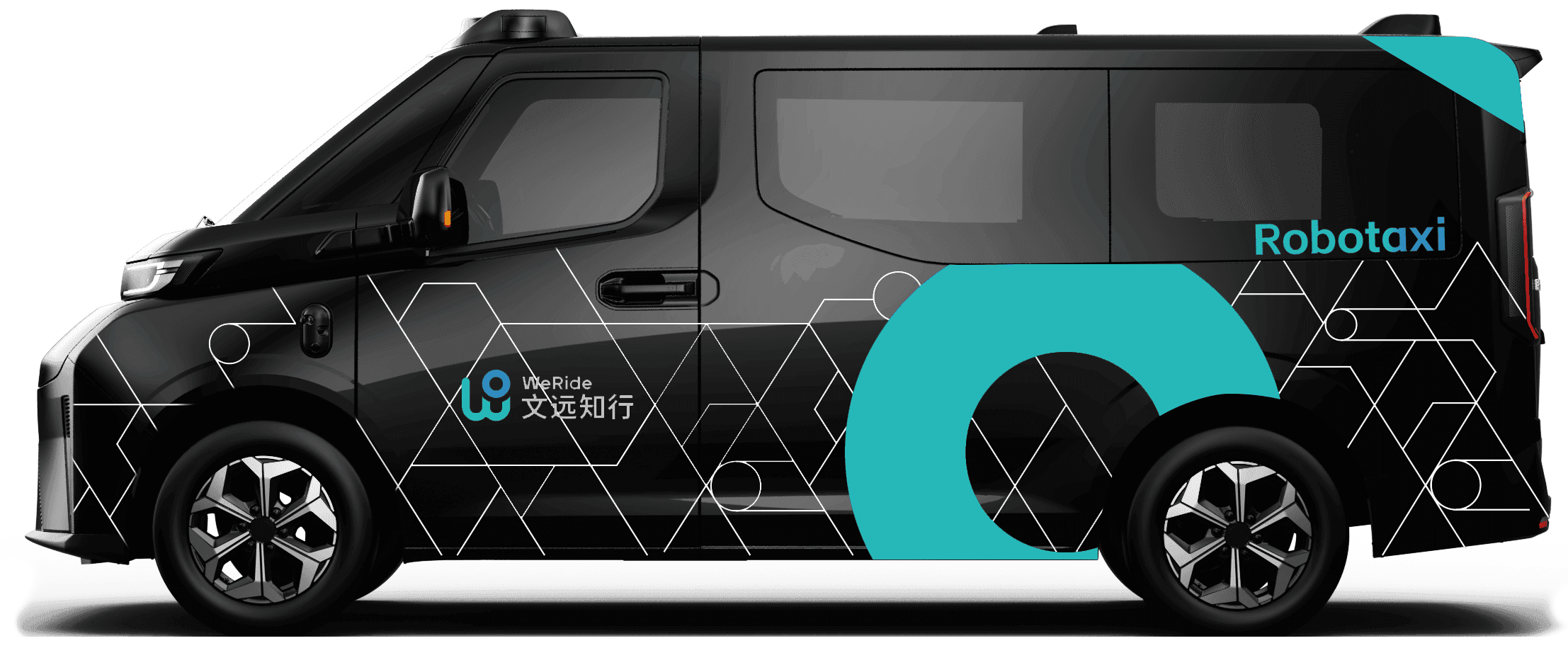
文远知行 solved a different problem entirely: a driverless RoboBus in Guangzhou’s Nansha district that needs no account at all, boarded like a city bus. It also runs actual point-to-point robotaxis in Guangzhou’s Huangpu district and Beijing’s Yizhuang. These are bookable through its own “文远出行” WeChat mini-program — a real alternative if you want to go somewhere specific rather than ride a fixed loop.
Apollo Go | Pony.ai | WeRide | |
|---|---|---|---|
Fleet size | Largest | ~2,000 vehicles | Smaller than Pony.ai |
Cities | Wuhan, Beijing, Shanghai, Shenzhen, Chongqing | Guangzhou, Beijing, Shanghai, Shenzhen | Guangzhou, Beijing |
Standout | Broadest coverage | Beijing airport transfer | No-registration RoboBus |
Tourist difficulty | Hard without help | Hard without help | RoboBus needs nothing |
2. Where to Actually Find a Robotaxi in China

For robotaxi in China, we only recommend two cities without hesitation.
Wuhan — the deepest coverage
Apollo Go’s Wuhan service area covers roughly 3,000 square kilometers across all 12 of the city’s districts, including the airport and river crossings — the largest robotaxi coverage area anywhere in the world. Typical waits run five to ten minutes. If your trip already passes through Wuhan, this is the easiest place to try one.
Guangzhou — the most reliable place to actually ride one
All three companies operate here, and WeRide’s RoboBus needs no registration at all — the main problem this guide covers. Its routes run past Guangzhou’s Biology Island and the Canton Tower, so it doubles as sightseeing.
Beijing — worth it for one specific thing
Skip it unless you’re routing through Daxing Airport for Pony.ai’s transfer line.
Chengdu — a demo, not real transport
Fixed pickup points, a safety operator still aboard, queues over an hour — we’ve had clients wait over an hour at a Chengdu pickup point. Fine if you’re already there with time to spare; not worth planning around.
Shanghai, Shenzhen, Chongqing — skip
Pilots exist but stick to commuter routes, not tourist areas.
3. Why Foreign Passports Get Blocked
ID verification
Every operator running robotaxi in China requires real-name verification before anyone rides. It’s required under Article 24 of China’s Cybersecurity Law, the same rule that applies to internet and phone services generally — not a robotaxi-specific decision by the platforms. The ID field is built for the 18-digit Chinese resident ID; a passport doesn’t fit it, and manual review can take a day or more. Some apps do show a passport option in the ID-type dropdown, but it’s inconsistent — present on one screen, missing on the next, and not guaranteed to work even when it’s there.
Phone number verification
Sign-up also needs a Chinese mobile number, which most foreign numbers can’t receive. A prepaid Chinese SIM fixes this part in about ten minutes — our guide to virtual and prepaid phone numbers in China covers the options. It doesn’t solve the ID-number problem — that still requires someone else’s account.
4. How to Actually Book and Ride One
Here’s exactly how it goes.
Step 1: Find someone with a verified account
You need a guide, a hotel front desk, or a local friend — anyone who already has a Chinese ID registered on Apollo Go, Pony.ai, or WeRide’s app. There’s no reliable way around this on your own passport.
Step 2: They place the order — mini-program, app, or Baidu Maps
In Ariel’s case, our guide opened WeChat and searched “萝卜快跑,” the platform’s official account, then logged into their own verified account (see our WeChat Pay vs Alipay guide if you’re setting either up yourself). The standalone Apollo Go app and the Baidu Maps app (通行 → 打车 → 自动驾驶) work the same way. Whichever they use, the map shows green dots marking valid stops nearby — you pick the two closest to where you actually want to start and end. Tap to confirm, and the order goes out. Only airport routes can be booked ahead of time — everything else is on-demand, with no scheduling a pickup for later.
Step 3: Wait for the match, then find the car
The app shows a live queue position and estimated wait — usually a few minutes in Wuhan, sometimes much longer in smaller pilot cities like Chengdu. When a car is assigned, the app shows the vehicle’s plate number so you can confirm you’re getting into the right one.
Step 4: Board using the door touchscreen
At the door, there’s a small screen: enter the last four digits of the phone number tied to the account (your guide’s, in this case) to unlock it. If Bluetooth is enabled on that phone, the door can unlock automatically as you approach instead. Get in within about three minutes, or the order cancels itself.
Step 5: Buckle up — a voice prompt will remind you
Once inside, a voice prompt reminds you to fasten your seatbelt before the car will move. This isn’t optional; the ride won’t start otherwise.
Step 6: End the ride and pay through the app
When you arrive, pull the door handle to exit — it unlocks automatically at the destination. Confirm the trip has ended on the rear-seat screen, and payment goes through the account holder’s app afterward. Nothing is charged automatically as you step out.
The Guangzhou shortcut: skip all of this
If you’re in Guangzhou, WeRide’s RoboBus needs none of the above. Tap a Yangcheng Tong transit card, scan a mobile QR ride code, or use NFC payment, and board like a city bus. No account, no app, nothing to fail at.
What we’d skip
Don’t waste time trying to force your own passport through Apollo Go’s or Pony.ai’s sign-up screen. A manual passport-review path does exist in a few pilot zones, but it’s inconsistent and can take a day to clear. On Apollo Go’s main apps, the ID field usually won’t accept a passport format at all — which is exactly what happened to Ariel.
5. What the Ride Is Actually Like
Riding a robotaxi in China, our clients’ biggest surprise isn’t the driving — it’s the quiet. No small talk, no smell, nobody to be polite to.
The in-car tech
Entertainment and comfort
A touchscreen controls AC, music, and navigation — the music runs through NetEase Cloud Music. Most of it works by voice: say “你好萝卜” to wake the assistant, which can switch to English (some riders use it to practice listening comprehension). Apollo Go’s right rear seat has a massage function, and newer cars have a nap mode with white noise.
Access and safety
Bluetooth in the app unlocks the door automatically as you approach, skipping the touchscreen step. An SOS button on the screen connects to remote customer service if anything goes wrong. Wuhan now runs 24 hours (it used to stop at 11pm); other cities still cut off around 11pm or midnight, so check before planning a late-night ride outside Wuhan.
The driving
Cautious to a fault
Smooth, but often too cautious — riders have taken to calling it “萝卜慢跑” (“slow-poke Apollo”) instead of “萝卜快跑.” It yields at every crosswalk, even empty ones, and hangs back behind slow traffic instead of overtaking. It can also brake hard for no reason you can identify. One widely shared account had a 10-minute Wuhan trip stretch to 25. Not every account is this mild, though. A San Francisco engineer who documents robotaxi rides on YouTube reported a rough, nausea-inducing ride in Shenzhen, where the safety driver had to take over mid-merge after a near-miss. She also said hailing the car itself took nearly four hours of failed attempts.
A few mechanical quirks
It can’t reverse, so cancelling and rebooking sometimes just summons the same car back around a longer loop instead of a quick fix. It handles rain fine — the wipers work and the car keeps moving normally.
How Pony.ai compares
Pony.ai’s cars drive a bit more decisively and seat four instead of three, with a “reposition” feature that lets you pick your preferred pickup and drop-off point from the in-car screen.
Why everyone films it
Whatever the ride is actually like, people can’t stop posting about it. A Polish travel blogger’s robotaxi ride in Shenzhen and an Italian influencer’s driverless taxi video in Guangzhou both went viral within weeks. A British family’s robotaxi and drone-delivery video from Shenzhen pulled in 7.8 million views, according to Global Times reporting.
Before you book
- Pickup and drop-off points are often fixed, not door-to-door — one rider was dropped a kilometer from a train station entrance
- The trunk can be hard to find or open, and it’s typically limited to bags around 20 inches — real luggage doesn’t fit comfortably
- Cabin cleanliness isn’t guaranteed — with no driver watching the back seat, some riders have found the previous passenger’s mess, or a seatbelt buckled but not actually worn
- On March 31, 2026, a system failure stalled over 100 Apollo Go vehicles across Wuhan at once — including on the Third Ring Road’s fast lane — some for nearly two hours, and the stopped cars caused several rear-end collisions in traffic, CNBC reported. The in-car SOS buttons reportedly stopped responding during the failure, and customer service wait times stretched up to 1.5 hours — no serious injuries, but a reminder that the backup systems can fail along with the main one.
6. Cost, Restrictions, and the Alternative
What it costs
A robotaxi in China can run as little as 4 yuan for a trip that costs 18 yuan in a regular taxi. We’ve clocked this in Wuhan at 30 to 50% of a normal fare in most cities. Guangzhou’s RoboBus is cheaper still, priced like a city bus.
Who shouldn’t book one
Riders under 14 or over 70 generally can’t book — minors need a guardian present. Pregnant passengers should be cautious given how hard the cars can brake. Wuhan’s fleet does run on the city’s elevated expressways (that’s where the March 2026 outage happened); most other cities’ pilots stay off them for now.
If you’d rather skip the hassle
Trying a robotaxi in China once is worth it for the story. But if any of the above is you — or your day is already full of sights, a train to catch, and real luggage — a private driver avoids all of the same problems. We run car service across Sichuan, Hunan, Yunnan, Guilin-Yangshuo, and Beijing. Our Beijing transportation guide covers other ways to get around the capital, and get in touch if you’d like a driver sorted before you land.
FAQ: Robotaxi in China
Is Apollo Go’s app in English?
No — search “Apollo Go” (萝卜快跑) in your app store, but expect a Chinese-only interface. One more reason having a local place the order beats muddling through it yourself.
Do I need a Chinese phone number?
Yes — signing up for a robotaxi in China needs SMS verification, and a prepaid Chinese SIM clears that part in about ten minutes. It doesn’t solve the ID-number requirement, which is the part you actually need someone else’s account for. (Our guide to virtual and prepaid phone numbers in China covers the SIM options.)
What if I can’t find the right pickup point?
The app’s map shows every valid stop as a marker, and it won’t let you select two that aren’t actually served. If you can’t find one nearby, the service genuinely doesn’t reach that spot yet — walking a block or two toward the nearest marked point is usually faster than troubleshooting.
Is riding a robotaxi in China safe?
Baidu says its fleet hasn’t had a major accident causing serious injury or death, and CleanTechnica’s analysis of Baidu’s published mileage and incident data puts its airbag-deployment rate at roughly once per 12 million kilometers. The March 31, 2026 Wuhan outage (see Section 5) is the one confirmed serious incident so far. Our China safety guide for tourists covers transportation more broadly.
Can I book one to or from the airport?
Only Pony.ai’s Beijing Daxing↔Yizhuang transfer, bookable a day ahead, 10am–5pm. Every other airport transfer in China still means a regular taxi, ride-hailing, or the shuttle.
Can a local friend book one for me to ride alone?
Yes — they book on their verified account and share the trip details, and you board without them needing to be in the car.
Is a robotaxi the same as a driverless taxi?
Yes — “robotaxi,” “driverless taxi,” and “self-driving taxi” all describe the same thing: a car that drives itself with no one behind the wheel. In Chinese, the companies themselves use 无人驾驶出租车 (literally “unmanned driving taxi”) or just 无人车 (“unmanned car”) for the same concept, alongside brand names like 萝卜快跑.