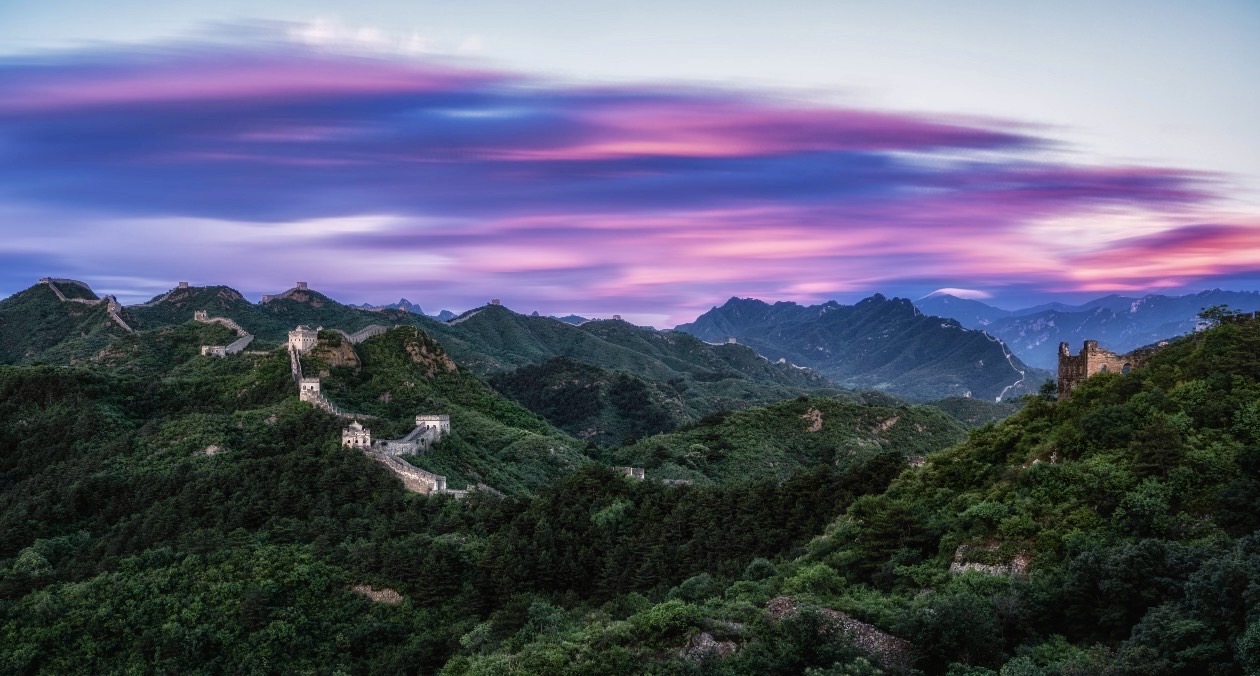
Great Wall Sunrise and Sunset: All 8 Sections Compared
Great Wall sunrise and sunset both look spectacular in photos — but only one is easy to actually catch. A genuine Great Wall sunrise is reliably possible at just one ticketed section: Jinshanling, whose gate opens at 4:00 AM year-round. Sunset is far more achievable across the board — most sections get you there with the right ticket or timing. We’ve built client itineraries around most of the sections below; Jiankou is the one exception, covered here for completeness, not as something we’d recommend booking.
This guide exists because sunrise photos rarely mention gate hours. Here’s the real answer, section by section.
🏔️ GREAT WALL SUNRISE & SUNSET AT A GLANCE
Eight sections, ranked by how they actually deliver
on one ticket
no gate to beat
night ticket
sunrise needs a package
via paid add-ons
session; no sunrise
not for beginners
programs only
Table of Contents
1. Sunrise or Sunset: Which Sections Actually Deliver
Great Wall sunrise and sunset don’t follow the same rules — one is far harder to catch than the other, and which sections work depends entirely on which you’re chasing.
Sunrise
Two sections deliver it reliably. Jinshanling‘s gate opens at 4:00 AM, ahead of sunrise every day of the year. Gubeikou has no gate at all — stay in the village, walk up before dawn.
Everywhere else takes work. Mutianyu offers one day a year. Badaling sells a capped ticket for it. Simatai and Juyongguan don’t really offer it. Jiankou delivers a spectacular one, but only by taking on risk we don’t think is worth it for most travelers.
Sunset
This is easier than most guides suggest. Mutianyu‘s regular hours already reach sunset for half the year — no special ticket needed in autumn or winter. Simatai‘s night ticket is the cleanest sunset on this list. Jinshanling and Gubeikou both work without a separate product. Badaling and Juyongguan need a booked night session. Huanghuacheng needs an organized program. Jiankou delivers too, if you’re willing to take on the risk.
The full picture
Section | Sunrise? | Sunset? | Drive from Beijing |
|---|---|---|---|
Jinshanling | Yes, year-round | Yes | 2.5 hrs |
Gubeikou | Yes | Yes | 2 hrs |
Simatai | No (day ticket only) | Yes, best May–Oct | 2 hrs |
Mutianyu | Only via New Year’s event or an overnight package | Yes, most of the year | 1.5 hrs |
Badaling | Only via “Morning Great Wall” package | Only via summer night session | 1 hr |
Juyongguan | Essentially no | Yes, weekend night tours | 50 min |
Jiankou | Yes, with real risk | Yes, with real risk | 2 hrs |
Huanghuacheng | Only via organized programs | Only via organized programs | 1.5 hrs |
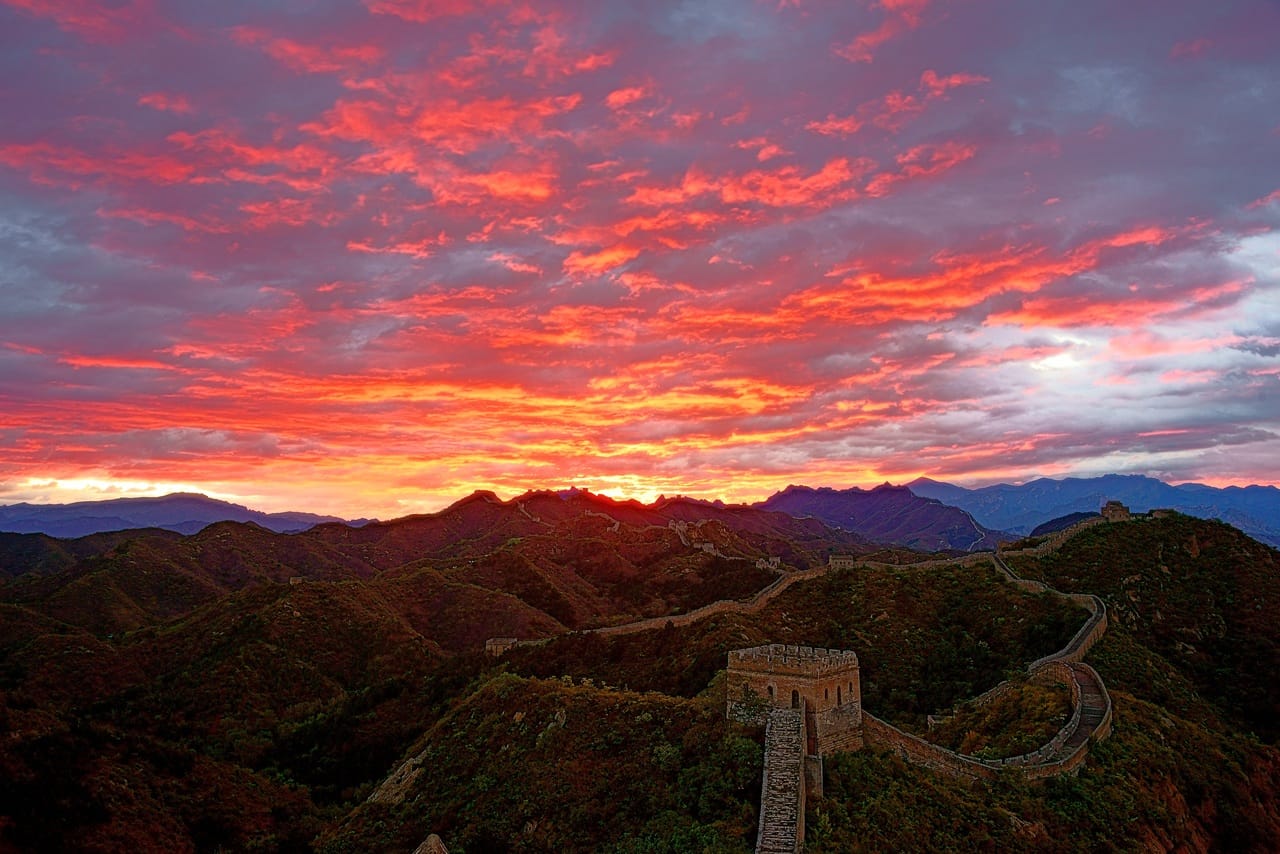
2. Jinshanling: Built for Sunrise
Gate | Peak season (Apr–Oct) | Off-season (Nov–Mar) |
|---|---|---|
Main gate | 4:00 AM–18:30 | 4:00 AM–17:00 |
East/west gates | 8:30 AM–17:00 | 9:00 AM–16:00 |
The main gate’s 4 AM opening doesn’t change with the season — that part of the schedule is fixed year-round. Only the closing time and the east/west gates shift.
The re-entry trick
This is what makes Jinshanling different from every other section on this list. Register at the gate on your first entry — staff will ask for your ID — and you can come back within 24 hours on the same ticket. Sunset today, sunrise tomorrow, one ticket. The cable car and shuttle are still separate each time, but the wall entry itself is covered.
Where to stand
Time | Tower | Why |
|---|---|---|
Sunrise | Xiaojinshan Tower (小金山楼) | Highest point in the scenic area; best odds at the sea-of-clouds effect |
Sunset | General Tower (将军楼) | Wide open, faces the ridgelines the sun drops behind |
Sunset (backup) | West Five/Six-Window Tower | More weathered wall, more atmospheric in photos |
Booking and routing
Head out by 3:00–4:00 PM for sunset. Walk to Xiaojinshan Tower first, then double back to General Tower to wait out the light. The shuttle bus saves about 20 minutes over walking from the gate. Next morning, use your re-entry and go straight to Xiaojinshan Tower with buffer time built in.
Book your wall ticket through the official “Jinshanling Great Wall” WeChat mini-program — weekends sell out. Book your farmhouse room (农家院) or a spot at the Jinshanling Great Wall Hotel a day ahead too; there’s also a paid campsite at the foot of the mountain if you’d rather not spring for a room. From central Beijing, it’s about 2.5 hours by car with no direct public transit, so a private driver or an organized tour is the practical way in.
April through October gives the clearest skies and the best odds at that sea-of-clouds shot. We’ve sent clients up in November who hit three straight days of flat gray sky — winter is a gamble even though the gate hours never change.
→ Jinshanling Great Wall Guide
3. Gubeikou: No Gate to Beat, No Camping Allowed
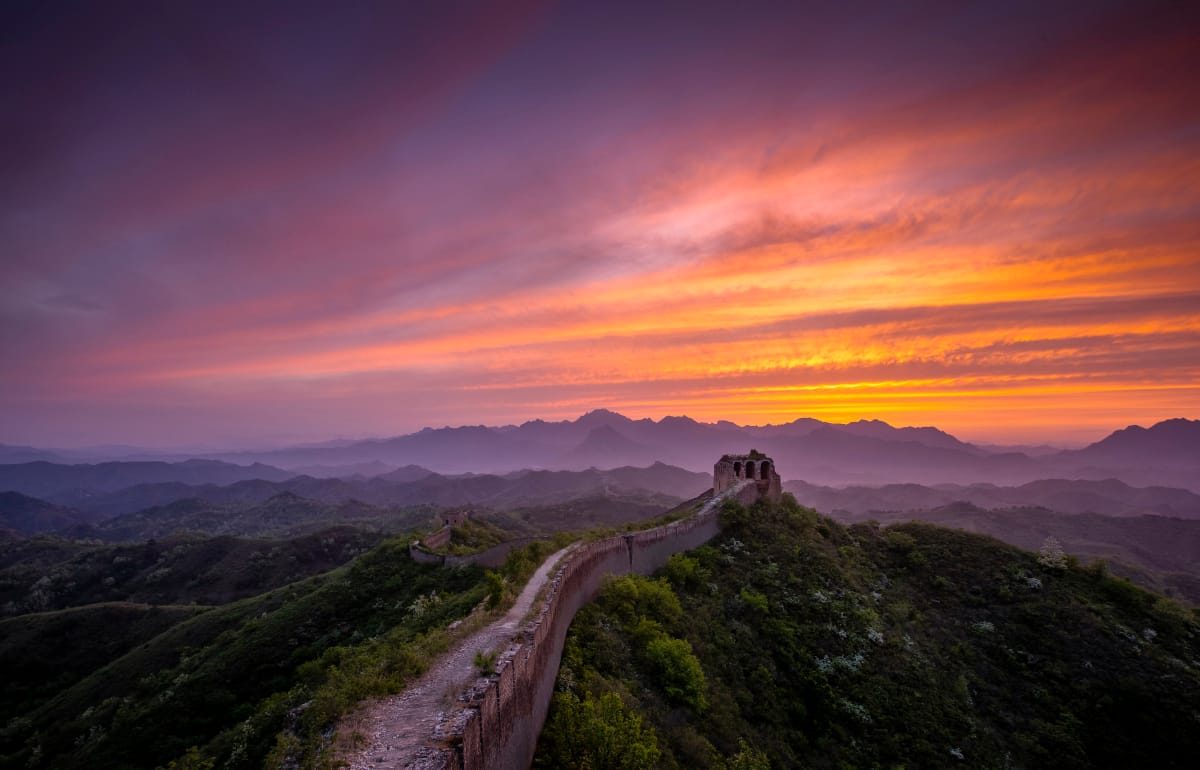
Gubeikou is unrestored, mostly free to enter — Panlongshan charges CNY 35, Wohushan is free — and it runs on no fixed hours at all. No schedule means no gate to beat, which is exactly why it works for both ends of the day.
Sunset at Panlongshan
This is the standout spot. The crumbling, unrestored brick catches the evening light in a way the polished sections can’t fake. It looks old because it is old.
The camping question, answered honestly
Some tour listings advertise sleeping in the watchtowers here. Don’t. Camping directly on the wall structure is prohibited under China’s Regulations on the Protection of the Great Wall, issued by the State Council in 2006 — the same rule applies at Jinshanling. Nearby Qinhuangdao goes further, fining campers up to CNY 1,000 for refusing to leave when caught.
We know hikers who’ve done it anyway. We don’t recommend it. Beyond the legal risk, the towers aren’t always structurally sound in the dark, and the temperature drop after sunset is sharper than people expect, even in summer.
Where to actually stay
Book a farmhouse guesthouse in Gubeikou Village ahead of time — options are limited and basic, so don’t count on same-day availability. Walk up before dawn, leaving by around 4:00 AM, or walk down after sunset (30–40 minutes each way). Gubeikou is about 2 hours from central Beijing by car; there’s no easy public transit route, so plan on a private car or driver. Want more comfort? Gubei Water Town nearby has real hotels, and pairs naturally with a Simatai night visit the same evening — though it’s not right at the Gubeikou trailhead.
Bring your own light. There’s no lighting on this trail once you’re off the road, in either direction.
4. Simatai: Sunset, Not Sunrise
Session | Hours |
|---|---|
Day | 09:00–17:00 |
Night (May–Oct) | 17:30–21:40 Fri/Sat, 17:30–21:10 other days |
Night (Nov–Apr) | 17:30–20:40 Fri/Sat, 17:30–20:10 other days |
Buy the night ticket specifically — a day ticket won’t let you stay past its own closing time. The night combo ticket runs around CNY 160 and includes the round-trip cable car, which is mandatory for the night session — there’s no walking up.
Getting the timing right
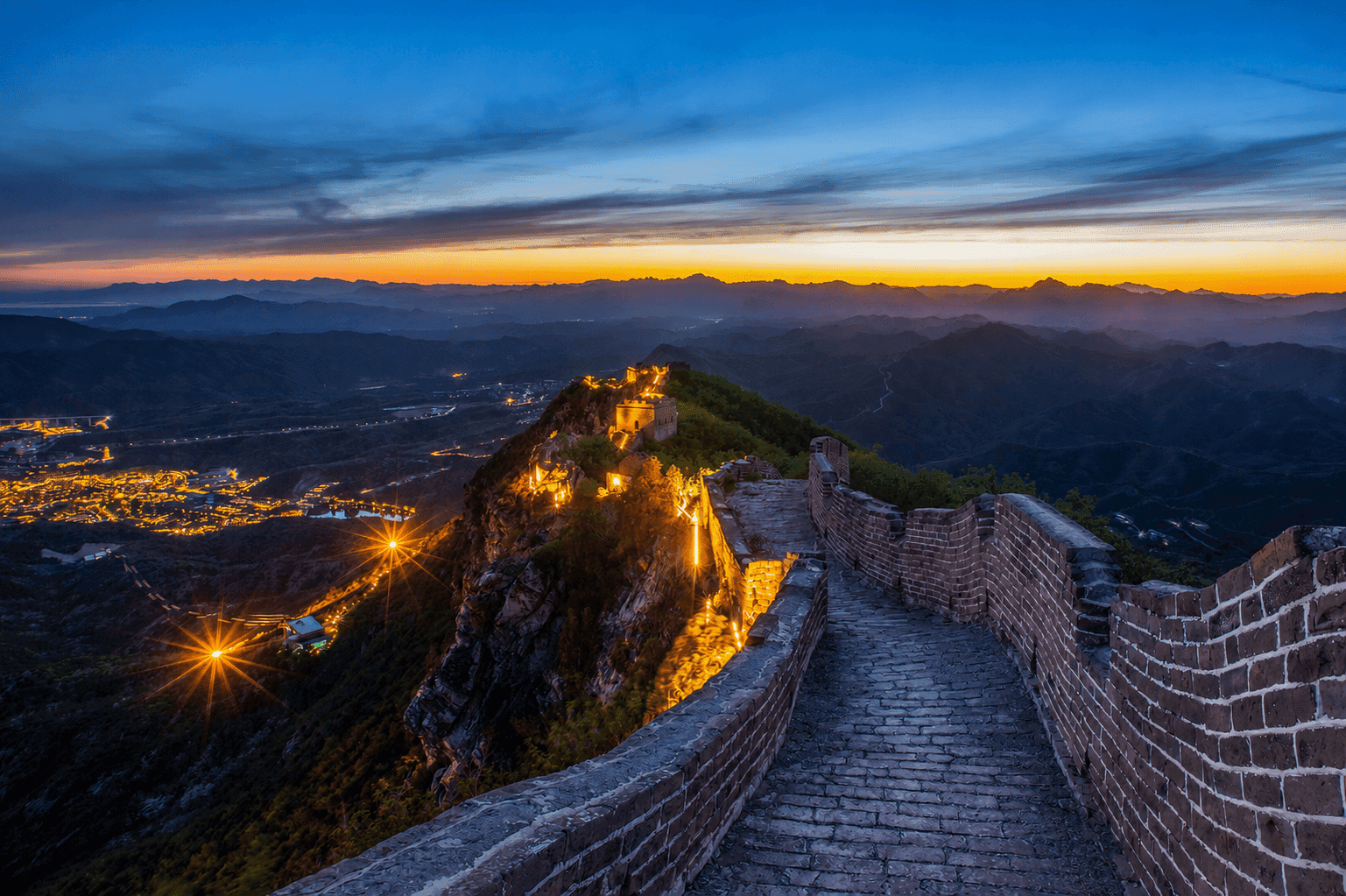
Be on the cable car 30–60 minutes before sunset. You’ll catch the sun going down, then watch the wall light up as full dark falls, with Gubei Water Town glowing below. Only Watchtowers 5 through 10 are open at night. Watchtower 8 has the widest view and gets used most for silhouette shots. Everyone rides the cable car both ways after dark — there’s no walking descent. Confirm that day’s closing time before you go; it shifts by weekday.
Getting there and staying over
Simatai sits inside the Gubei Water Town scenic area, about 2 hours from central Beijing by car. Stay the night in Gubei Water Town itself — it has proper hotels, and means no late drive back after the night session ends. Buy your Great Wall night ticket alongside your water town ticket rather than separately; it’s simpler at the gate. Book through the official “古北水镇” WeChat account or website for real-name registration, and call the scenic area’s hotline (010-81009999) ahead of a winter visit to confirm the session hasn’t been cancelled for wind or snow.
Winter breaks the pairing
From November to January, the sun sets before the night session even opens. No sunset overlap at all in deep winter. May through early October is the reliable window.
Sunrise doesn’t work here
The day session doesn’t open until 09:00 — well past sunrise — and there’s a closed gap between day and night tickets. For sunrise, go to Jinshanling instead. It’s close enough to pair with Simatai on a two-day trip.
→ Great Wall Night Tour Guide & Simatai Great Wall Guide
5. Mutianyu: Sunset Is Easy, Sunrise Is Not
Gate | Peak season (mid-Mar–mid-Nov) | Off-season (mid-Nov–mid-Mar) |
|---|---|---|
Regular gate | 7:30 AM–18:00 | 8:00 AM–17:30 |
Summer night tour (Jun–Aug) | Runs to ~21:00 | Not offered |
New Year’s sunrise event (Jan 1) | — | Entry from ~06:00 |
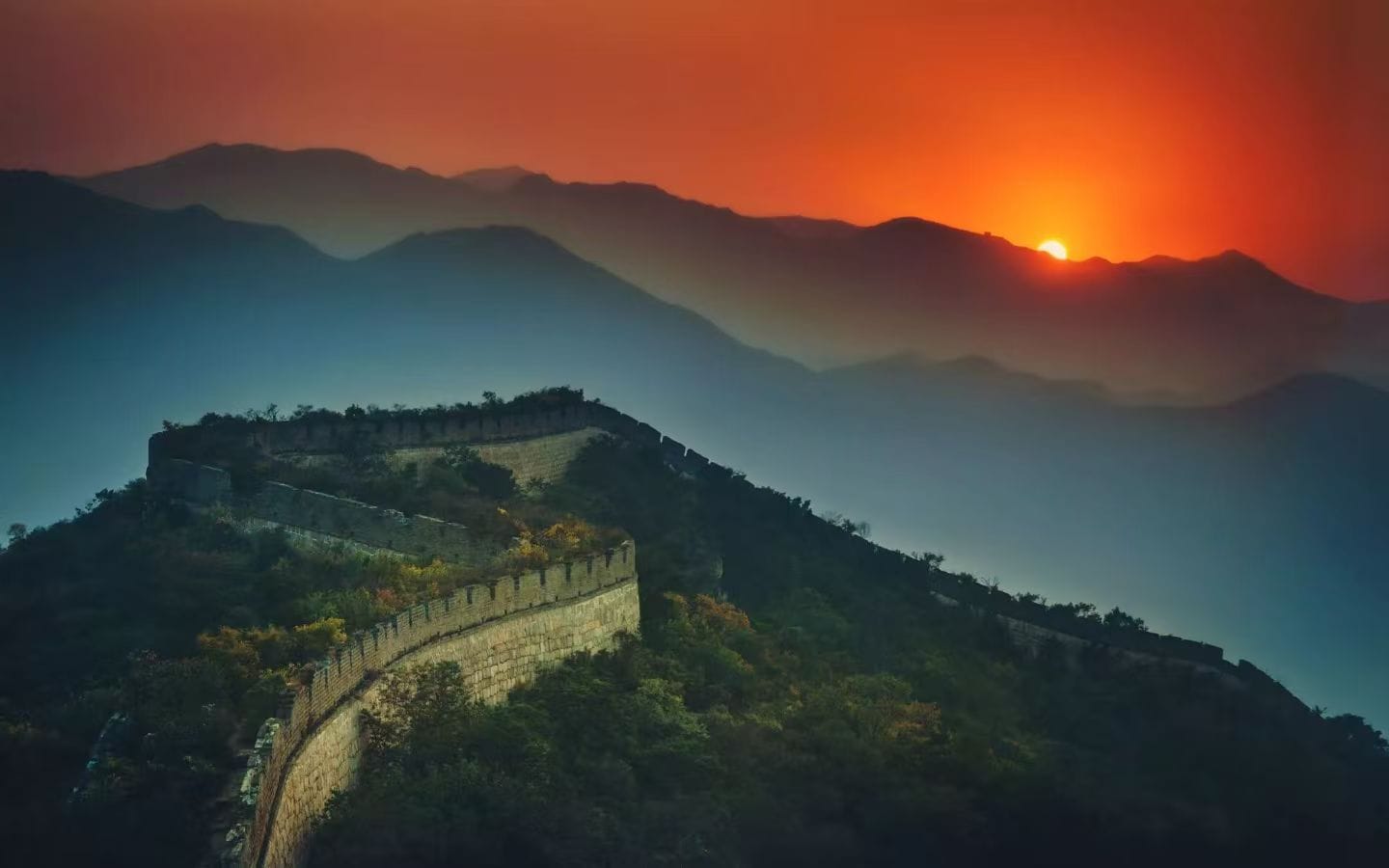
Sunset, most of the year
In autumn and winter, the sun sets before the regular closing time — no special ticket needed, no extra booking. Watchtower 14’s platform, or the area near Watchtower 15, gives an open view close to the cable car station. Summer adds the real prize: the night session typically lights the wall from around 19:30 to 21:00. Ride up during that window, watch the sunset, then stay to see the wall lit gold after dark. Guests staying overnight skip the crowd that clears out once day visitors head back to Beijing.
Mutianyu is about 1.5 hours from central Beijing by car. For an autumn or winter sunset, leave Beijing by early afternoon — traffic on the way out gets worse the later you go, and you don’t want to be rushing the last stretch as the light starts to drop.
Sunrise takes real effort
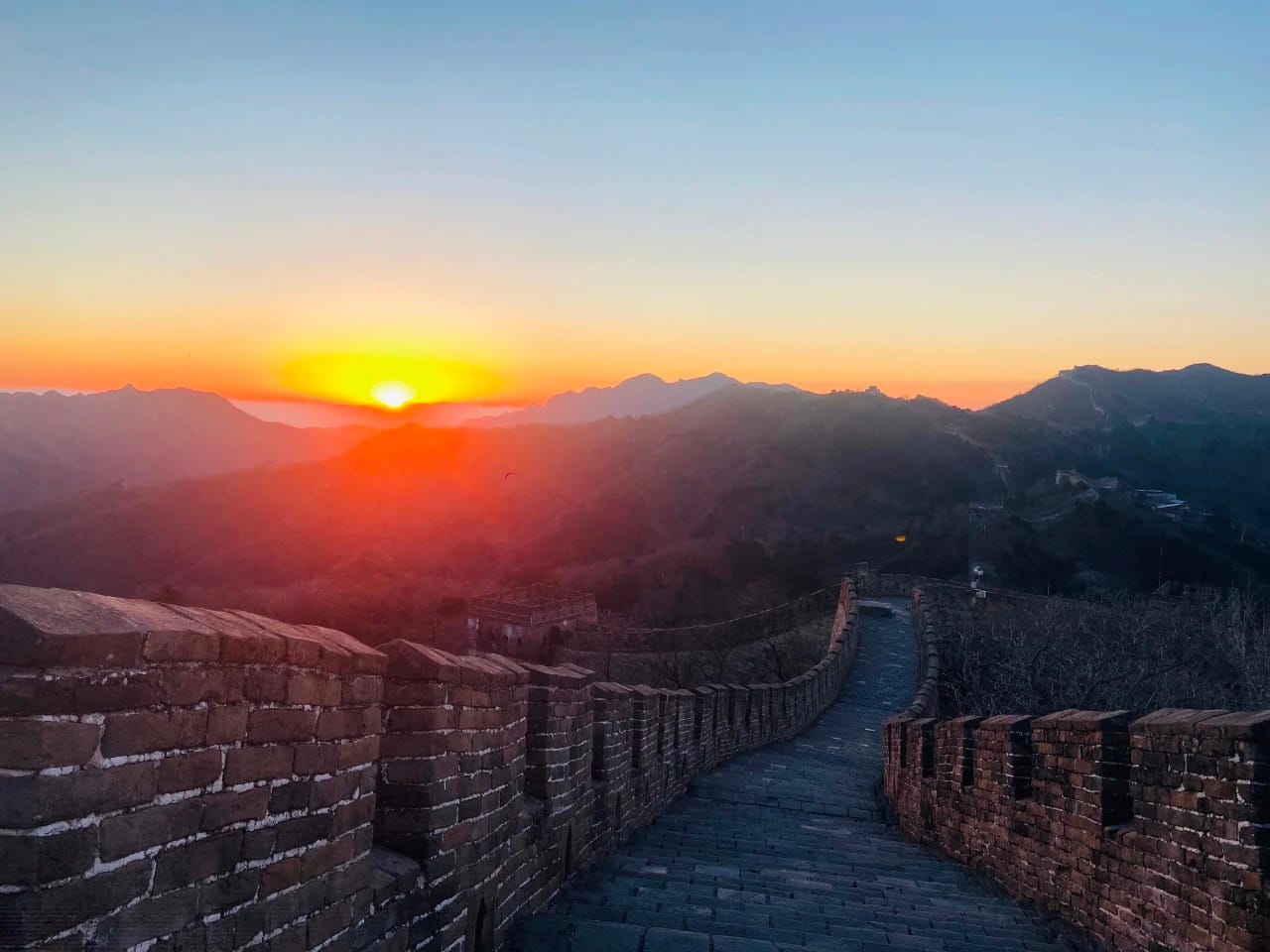
Beijing sunrise falls between 05:00 and 07:30 depending on the month, so a standard ticket almost never gets you there in time. Two workarounds exist:
- Once a year: the New Year’s Sunrise Viewing Event, held every January 1st. 2026 is the 32nd year running. Early-bird tickets go on sale December 1st, starting at CNY 200.
- Any other date: book Mutianyu’s official two-day, one-night package. Stay at the Mutianyu Great Wall Hotel — right inside the scenic area, or nearly so — or at a quality option nearby like Brickyard Retreat (瓦厂) or Sanzhou (三卅). Packages typically bundle the wall ticket, unlimited cable car rides, and breakfast, with some including a meal at the on-site Yisonglou restaurant. The point of staying over: guests already inside the scenic area can go up for sunrise the next morning, before day visitors are let in through the regular gate.
Book through the official “Mutianyu Great Wall” WeChat service account or the official website — look for the hotel package or night-ticket booking section. Confirm the day’s weather and any sunrise/sunset restrictions before you go, since extreme weather can cancel the night session on short notice.
Check the cable car’s last run before you commit either direction. Miss it, and you’re hiking down in fading light or waiting for the next one.
6. Badaling: Two Paid Add-Ons, Nothing on the Standard Ticket
Session | Hours |
|---|---|
Standard ticket (Apr–Oct) | 06:30–16:30 |
Standard ticket (Nov–Mar) | 07:30–16:00 |
“Morning Great Wall” package | 4:30–7:30 AM |
Night session (late Apr–early Oct) | Wall lit ~19:20–22:00 |
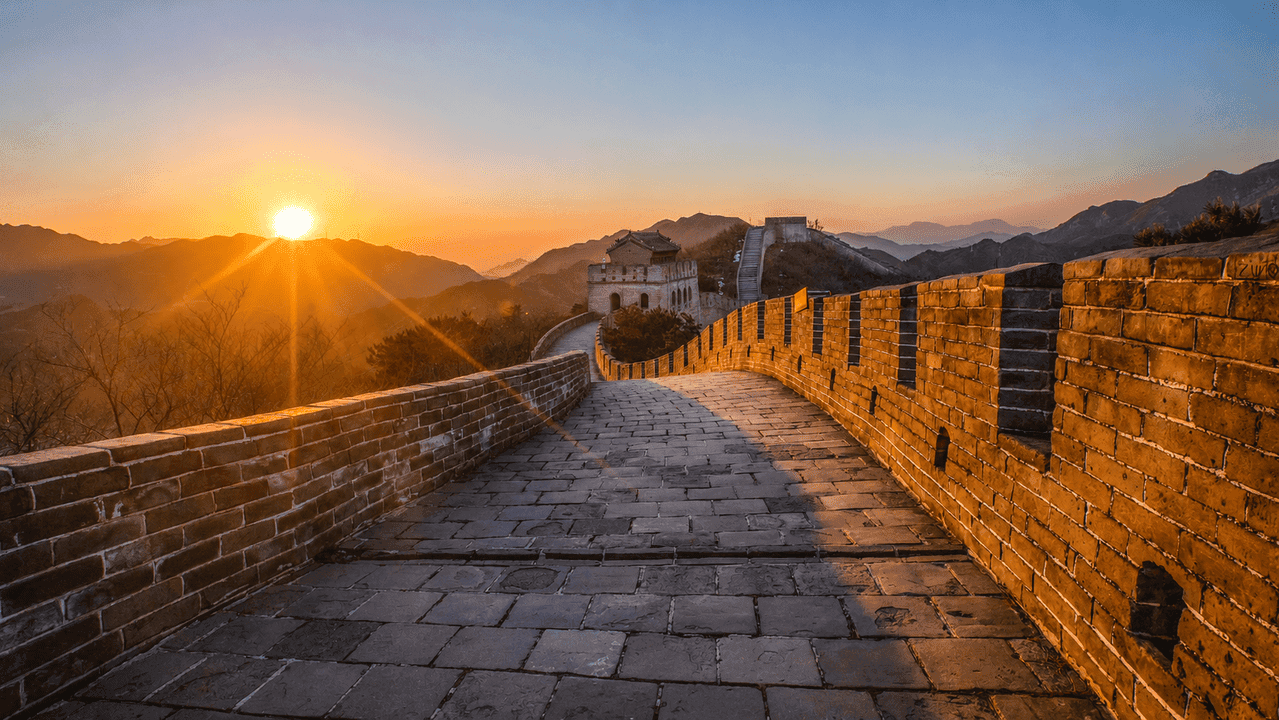
Beijing sunset ranges from 16:50 in early December to 19:48 in late June — the regular ticket misses sunset every month, and sunrise too. Badaling’s answer is two separate paid products, both booked in advance.
Badaling is the closest section to central Beijing — about an hour by car, or a direct high-speed train from Beijing North to Badaling station. That convenience is exactly why it never developed the flexible hours Jinshanling has: it’s built for volume day-trippers, not overnight photographers. Changping district authorities cap the site at 65,000 visitors a day, the officially certified maximum capacity. At that scale, flexible early-morning or late-evening access is a much harder operational problem than at a quieter section like Jinshanling.
Sunrise: the “Morning Great Wall” package
Centered on South Fifth Tower — the best spot for first light. This is a capped experience, roughly 50 guests a day, usually bundled with a hotel stay (Hilton Garden Inn Badaling is common), shuttle, cable car, and guide. Book through official channels like “长城内外旅游” well in advance — it sells out.
Sunset: the seasonal night session
Covers North Fourth Tower to South Fourth Tower. Enter early evening and you’ll catch the sunset glow before the lights come on.
Skip Badaling if you want sunrise or sunset without booking something extra — Jinshanling gets you there on one ticket. If Badaling’s convenience matters more than the extra cost, both packages genuinely work.
7. Three More Sections Worth Knowing
Section | Best for | Distance from Beijing | Risk level |
|---|---|---|---|
Juyongguan | Sunset, weekend night tours | 50 min by car | Low |
Jiankou | Sunrise or sunset, if you accept the risk | ~2 hours by car | High — we don’t guide clients here |
Huanghuacheng | Sunset lake reflections, families | ~1.5 hours by car | Low |
Juyongguan: sunset works, sunrise doesn’t
Gate | Peak season (mid-Mar–early Oct) | Off-season (early Oct–mid-Mar) |
|---|---|---|
Regular gate | 8:00 AM–17:00 | 8:30 AM–16:00 |
Night session (Fri/Sat/holiday, May–Oct) | 18:30–22:00 | Not offered |
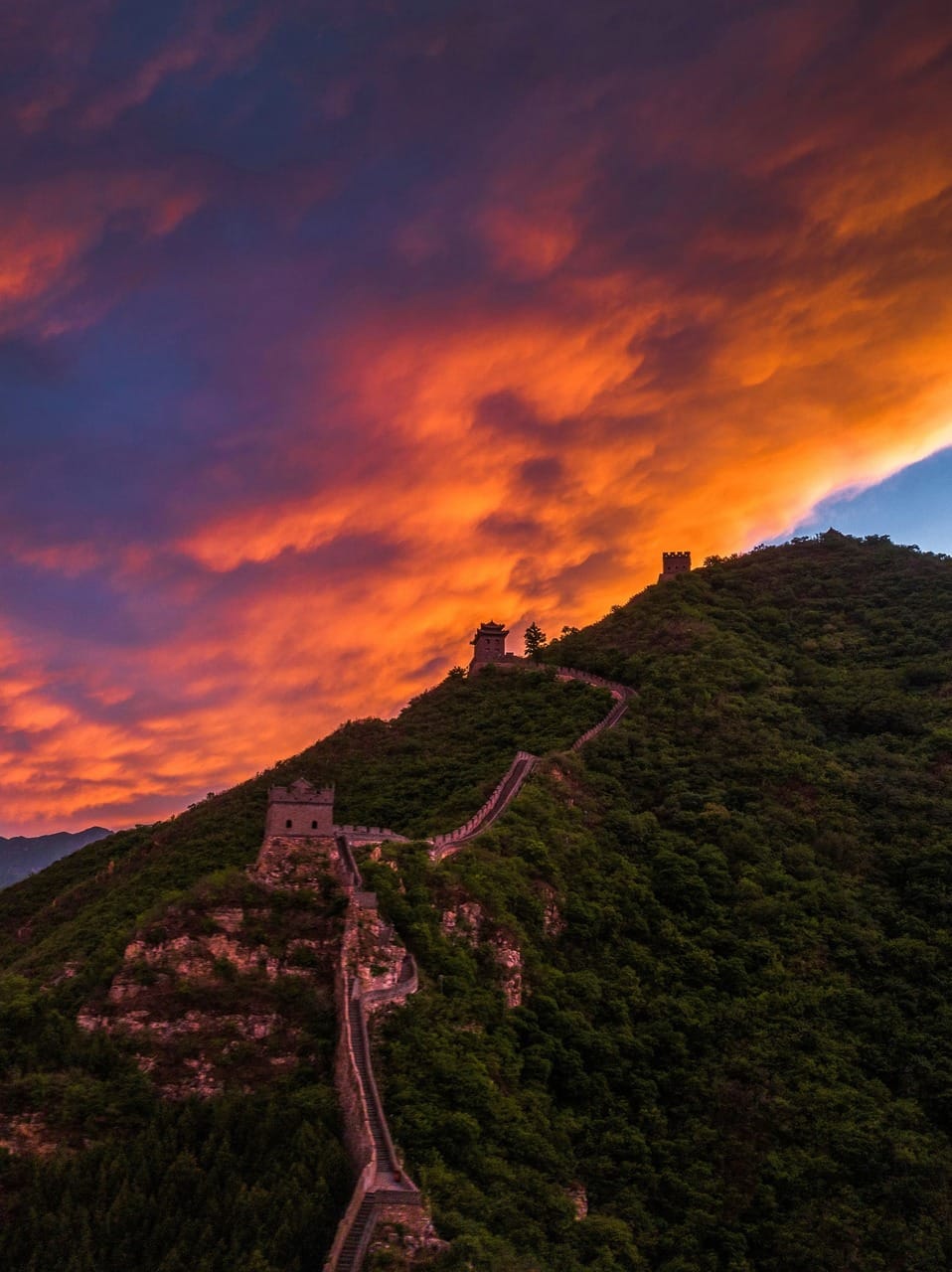
Target a night session if sunset is the goal — sunset glow straight through to the wall lit gold. The west hill loop sits higher and gives the better view over the fortress town below. It’s the closest section to Beijing, easy to add to an evening plan without an overnight stay.
Sunrise doesn’t work. Even the earliest peak-season opening comes after Beijing’s summer sunrise, and there’s no early-entry program here the way there is at Badaling or Mutianyu. Steps run steep in places — some risers hit 40 cm — so take the descent slowly once the light fades.
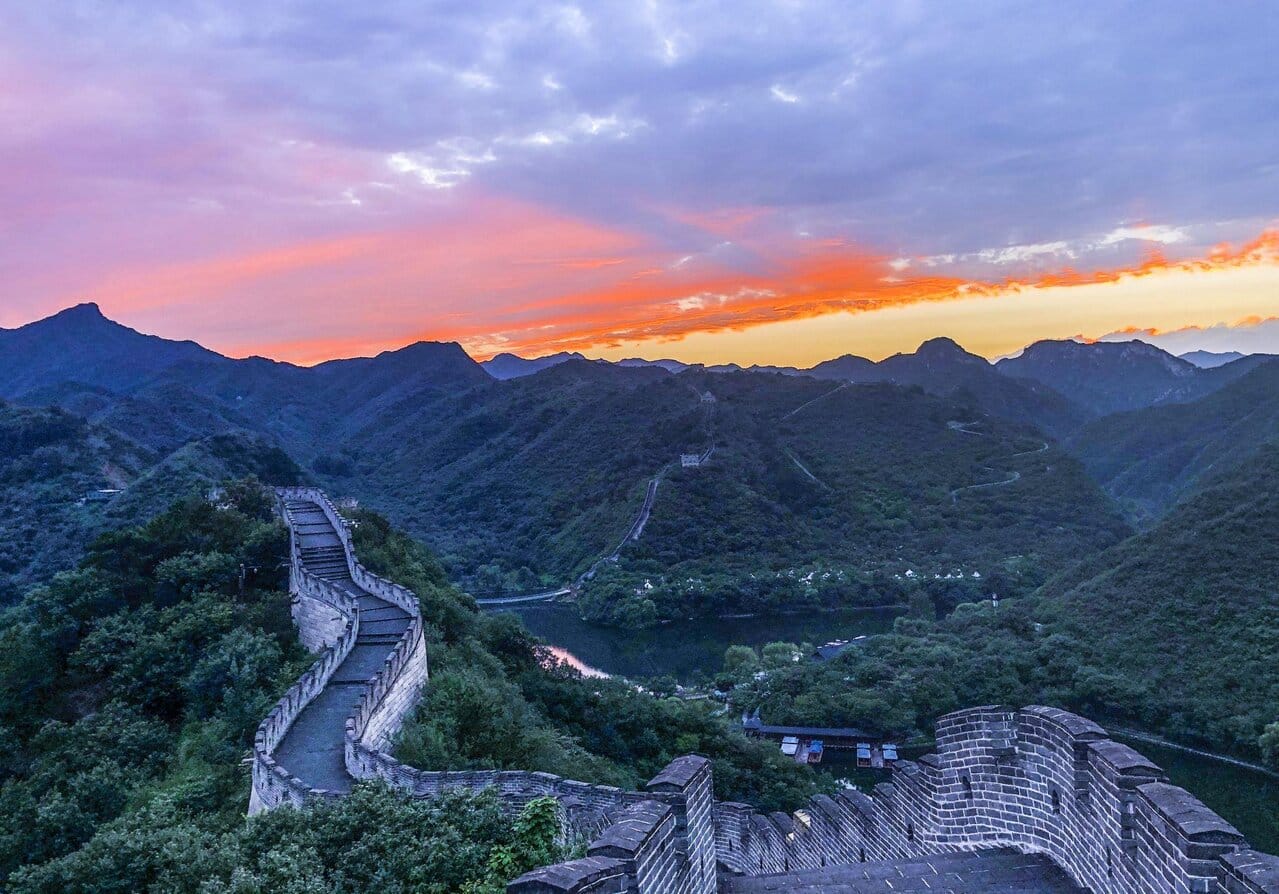
Huanghuacheng: easier sunset, harder sunrise
Gate | Peak season (late Mar–late Oct) | Off-season (late Oct–late Mar) |
|---|---|---|
Weekdays | 8:30 AM–17:00 | 8:30 AM–16:30 |
Weekends/holidays (summer) | 8:00 AM–18:00 | Same as weekdays |
A developed, ticketed scenic area — the safest of these three, with maintained paths that work for families and older travelers. Its signature shot is different from anywhere else on this list: the wall meeting the reservoir, golden light breaking across the water. A Huanghuacheng sunrise is possible too, though it takes more effort than the sunset — most visitors come for the lake reflections at golden hour, not the early start.
Standard hours don’t reach golden hour from the higher points. Some independent hikers do head up before the gate opens from outside the official entrance — this isn’t sanctioned by the scenic area, so we’re not recommending it, just noting it happens. The safer route is joining one of the scenic area’s occasional sunset or camping programs, or staying at a nearby guesthouse. A relaxed 4:00 PM visit, when the light softens, gives a very different picture from Jiankou’s drama or Jinshanling’s sea of clouds — and a far easier one.
Jiankou: why we don’t send clients here
No gate, no fixed hours, no official development — just unrestored wild wall along a dramatic W-shaped ridge. Zhengbei Tower and Beijing Knot are the two names photographers cite for sunrise, cloud sea included on the right morning. The same exposed ridge works for sunset, long shadows across genuinely old brick.
We’re including it because it comes up constantly when people research Great Wall sunrise photography, not because we’d book it for a client. Steep grades, loose stone, no facilities anywhere on the route. If you go anyway: proper headlamp, trekking poles, and a guide with real wild-wall experience, non-negotiable.
8. Best Months for Clear Skies
🌤️ SUNRISE & SUNSET TIMES BY MONTH — BEIJING
Background shading = relative haze risk by month
Sun data: timeanddate.com
Counterintuitively, summer tends to have Beijing’s cleanest air, not its haziest. According to Beijing’s Municipal Ecology and Environment Bureau, the city’s August 2025 average PM2.5 reading was 16.7 micrograms per cubic meter — well below the January–August average of 25.6 for that same year.
Autumn and winter, particularly December through February, are when haze risk climbs again, driven largely by heating-season coal use. That doesn’t rule out winter entirely — a clear winter morning can be spectacular, with the sharpest light of the year — but the odds of a hazy sky are higher than in summer.
April, May, and October are good middle-ground choices: milder temperatures than summer, without winter’s elevated haze risk. Check the local air quality forecast a day or two out rather than assuming the season alone tells you what the sky will look like. Pack for real cold either way if you’re heading up before a winter sunrise: Jinshanling and Gubeikou both run noticeably colder at dawn than central Beijing.
Summer also gives you the longest daylight window — earliest sunrise, latest sunset — at the cost of a hotter, more humid wait before dawn.
Whatever section you pick, check that specific date’s sunrise or sunset time before you go. A 20–30 minute swing either way is the difference between catching the gate open and missing it — planning around the actual clock, not a rough season guess, is what separates a real Great Wall sunrise and sunset from a missed one.
Frequently Asked Questions
My flight lands in the afternoon — is it worth going to the Great Wall for sunset the same day?
Depends on the section and the season. Juyongguan is the only realistic option on short notice — it’s 50 minutes from central Beijing, and in autumn or winter, sunset falls early enough that a same-day trip works. Jinshanling, Simatai, and Gubeikou are all 2+ hours away, which usually rules out a same-day arrival-to-sunset plan unless your flight lands by early afternoon.
Do I need to book Great Wall tickets in advance for sunrise or sunset?
For Jinshanling, yes — book through the official WeChat mini-program, especially on weekends. For Badaling’s “Morning Great Wall” package, Mutianyu’s New Year’s event, and Mutianyu’s overnight hotel packages, advance booking is mandatory since rooms and capped slots sell out. For Simatai and Mutianyu’s regular sunset visits, same-day tickets are usually fine outside major holidays, but booking ahead removes the risk.
What happens if it’s cloudy or rainy on the day I planned for sunrise?
The gate hours don’t change, but the view will. Jinshanling’s sea-of-clouds effect specifically needs the right humidity and temperature combination — a flat overcast sky won’t produce it. If your dates are flexible, check the forecast the night before and shift by a day if you can; if not, treat the trip as worthwhile for the hike and the empty wall even without dramatic light.
Which Great Wall section is best for sunrise?
Jinshanling. Its gate opens at 4:00 AM, ahead of sunrise every month, and its 24-hour re-entry policy means one ticket covers both sunset and the next morning’s sunrise.
Can you camp overnight on the Great Wall itself?
No, not legally, at any of the sections in this guide — despite what some camping tours advertise. Camping directly on the wall structure is prohibited under China’s Regulations on the Protection of the Great Wall. Book a guesthouse at the foot of the mountain instead and walk up.
Jiankou or Huanghuacheng for photography?
Jiankou has the drama — wild ridgelines, genuine cloud-sea sunrises — but it’s unofficial wild wall with real, serious risk, and not something we arrange for clients. Huanghuacheng is the option we’d actually point people toward: a safer, developed scenic area known for the wall’s reflection in the lake at sunset, and a much better fit for families.
Planning a Great Wall trip built around sunrise or sunset timing? Get in touch and we’ll work the logistics around the light, not the other way around.