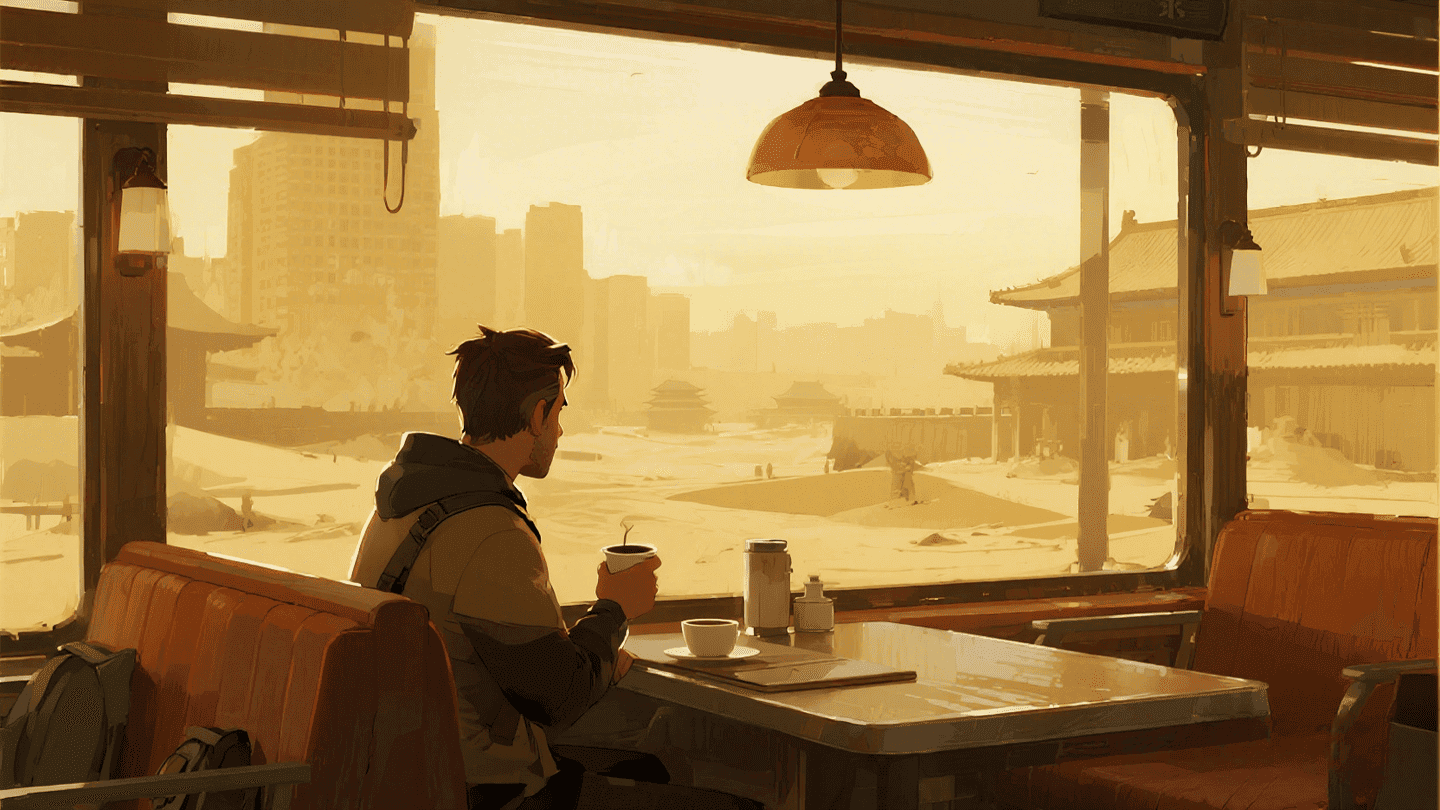
Sandstorms in Beijing: A Traveler’s Honest Guide
If you’re planning a Beijing trip in spring and you’ve started reading about sandstorms, you’re right to look into it. We’ve guided travelers through Beijing for over 20 years. We’ve been caught in the yellow skies ourselves. This guide tells you the honest truth — not a scare story, not a dismissal.
Table of Contents
1. What Actually Causes Beijing’s Sandstorms?
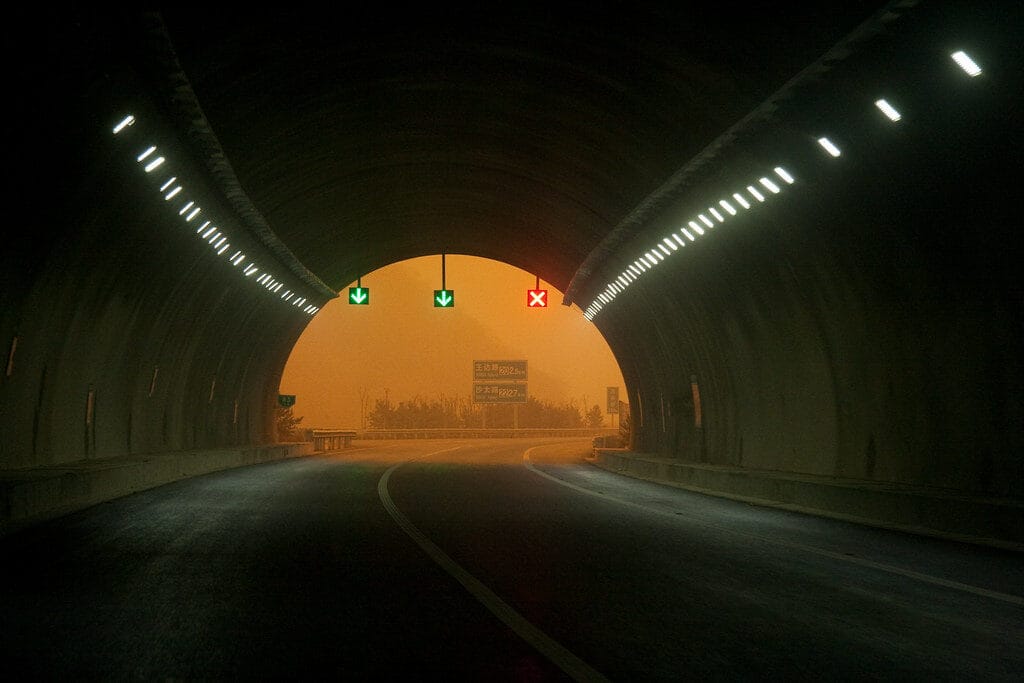
Beijing doesn’t have a sand problem of its own making. The city sits on the edge of an arid zone, and the dust travels hundreds of kilometres from somewhere else entirely.
The source is Mongolia. The Gobi Desert and increasingly degraded Mongolian grasslands are the culprit. When a Mongolian cyclone forms and cold air pushes southward, it picks up loose dust from bare, dry soil and drives it directly toward North China.
Researchers at the Chinese Academy of Sciences have found that around 70% of Mongolian grassland has degraded in recent decades, driven by overgrazing and rising temperatures. That bare soil gives the wind far more material to carry. The same study found that Beijing saw sandy and dusty conditions on 11 days in just the first four months of 2023 — well above the 4-day average recorded between 2018 and 2022.
What people call a “sandstorm” in Beijing is technically a dust storm. The particles are fine dust, not coarse sand grains. That distinction matters for health. Fine dust (PM2.5 and PM10) penetrates far deeper into the lungs than coarser particles — which is why understanding Beijing’s air quality during spring visits matters more than most people expect.
2. When Do Sandstorms Happen in Beijing?
The peak window is March to May, with March and April the most active months. This is spring in Beijing — the season most travellers choose precisely because temperatures are mild and crowds are manageable.
Month | Sandstorm Risk | Notes |
|---|---|---|
January–February | Very Low | Cold, mostly calm |
March | High | Most frequent month historically |
April | High | Mongolian cyclone activity peaks |
May | Moderate | Tailing off but still possible |
June–September | Very Low | Summer rain suppresses dust |
October–December | Low | Autumn and early winter are generally clear |
Sandstorms are not a daily feature of spring life in Beijing. According to research from the Chinese Academy of Sciences published in PMC, Beijing averaged just 3–5 sandy days per year between 2010 and 2016. That number jumped sharply in 2021 and 2023, which is why the topic is back on travellers’ radar.
A single event typically lasts one to two days. Research on hourly Beijing station data shows that dust activity picks up around 9am and peaks at 5pm before dropping off through the night. In severe cases — the 2021 mega-storm and April 2025 — conditions persisted longer and spread across multiple provinces.
Data visualisation
Sandy & Dusty Days in Beijing — A 70-Year View
Average annual days with sandy or dusty conditions. Source: Chinese Academy of Sciences / PMC 2023
* 2023 figure covers Jan–Apr only (11 days recorded). Full-year 2025 data not yet available.
3. The Worst Recent Events: What Actually Happened
March 2021 — The Decade’s Biggest
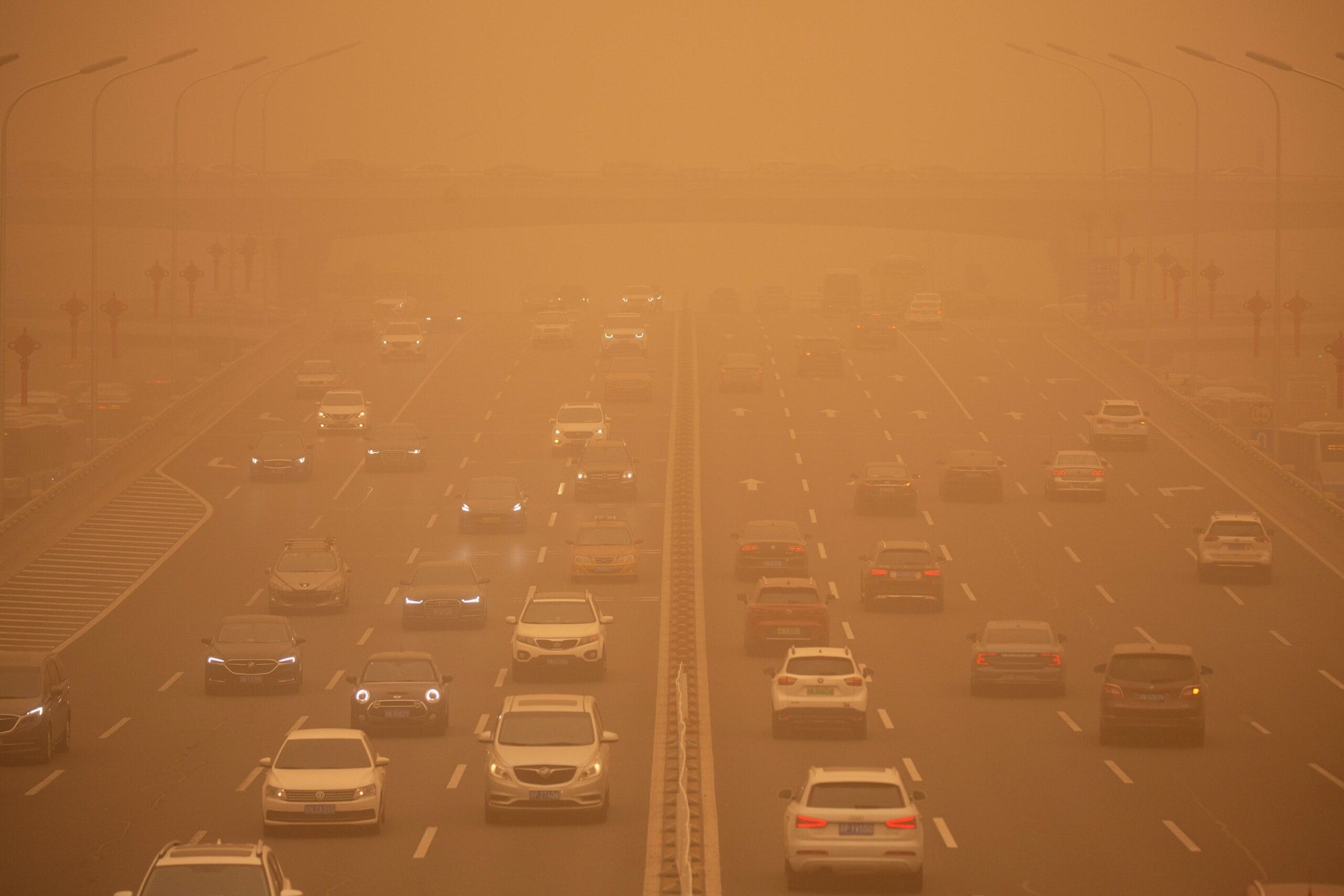
In March 2021, Beijing experienced its worst sandstorm in a decade. PM10 readings in some central districts exceeded 8,100 micrograms per cubic metre — against the WHO annual guideline of 15 µg/m³. The sky turned a deep yellow-orange. Visibility dropped below 300 metres. Over 400 flights were cancelled at Capital and Daxing airports. The storm hit 12 provinces simultaneously.
April 2023 — Eight Storms in One Season
The 2023 spring was the most sandstorm-active in a decade. Beijing recorded its eighth storm of the season by early April, with PM10 levels sending air quality indices to 500 — the maximum “severe pollution” reading. Ma Jun, director of the Institute for Public and Environmental Affairs, called it unprecedented for the decade.
April 12, 2025 — Gale Force and Mass Closures
On 12 April 2025, Beijing issued its second-highest gale alert for the first time in a decade. Winds hit 148 kph in parts of China. The Forbidden City, Summer Palace, Temple of Heaven, and Universal Studios Beijing all closed. Both Capital and Daxing airports cancelled 693 flights by early afternoon. Trees came down across the city. Some regions recorded their most powerful winds in over 75 years.
These events happen, they can seriously disrupt a day’s itinerary, and they are worth building contingency for.
Data visualisation
Beijing’s Major Sandstorm Events — Flights Cancelled & Peak PM10
Sources: Wikipedia/AP (2021); SCMP (2023); CBS News (2025)
March 2021
April 2023
April 2025
PM10 bar shown at ÷10 scale to fit alongside flight data. Hover for actual values.
WHO annual PM10 guideline: 15 µg/m³.
4. What Does a Sandstorm Actually Feel Like?
On a moderate dust day, Beijing looks hazy and brownish. The air smells faintly earthy. Your eyes feel dry. If you’re outdoors for more than an hour without protection, you’ll notice grit on your skin and a film on your teeth. Uncomfortable, but manageable with the right gear.
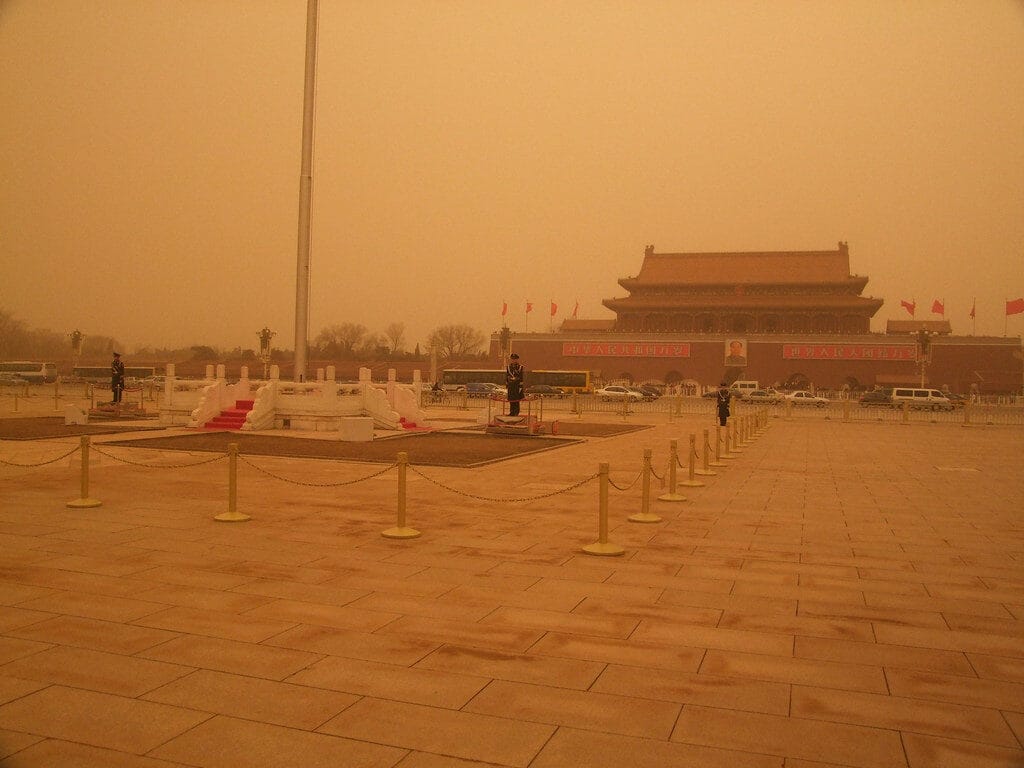
During a severe event, the city looks dramatically different. The sky turns yellow or orange-brown. Natural light flattens into a dim, surreal glow. Visibility can drop to under 500 metres — distant buildings simply disappear. Even short walks feel gritty.
The photographs circulating online after major storms, the ones showing Beijing landmarks bathed in amber light, are real. They’re not edited for drama.
After a bad sandstorm, once the winds clear and rain eventually washes the air, Beijing can have strikingly clear blue skies. The contrast is startling in the best way.
5. What Closes During a Sandstorm?
Based on events from 2021, 2023, and 2025:
Typically closed during severe events:
- Major open-air heritage sites (Forbidden City, Summer Palace, Temple of Heaven)
- Public parks
- Outdoor theme parks (Universal Studios Beijing closed in April 2025)
- Exposed Great Wall sections
- Outdoor markets and street food areas
In our experience, closures are announced the same morning — sometimes only hours before. Don’t assume a site is open until you’ve checked.
Typically remain open:
- Indoor museums (National Museum of China, Palace Museum interior galleries)
- Shopping malls and covered markets
- Hutong restaurants and courtyard interiors
- The subway system
- Most indoor cultural experiences
On flights and trains: Major storms frequently cause cancellations at both Beijing Capital (PEK) and Daxing (PKX). Travel insurance covering weather disruptions is worth the cost for any spring trip. Our Beijing airport guide covers the practical differences between the two airports, which matters if you need to rebook.
6. Should a Sandstorm Change Your Beijing Plans?
Probably not — but plan around the risk rather than ignore it.
You cannot reliably forecast a sandstorm more than 48 hours out, so redesigning your itinerary around forecasts doesn’t work. What does work is keeping your schedule flexible enough that outdoor and indoor days can swap without drama. Even in an active spring season, sandstorm days are a minority. Most trips pass without a significant event. When one does hit, save the Forbidden City or Summer Palace for the next clear morning. Use the storm day for the National Museum, a hutong lunch, or an afternoon at the Lama Temple — none of which suffer for the weather.
If you have flexibility in when you travel, March and early April carry the highest risk. Late May and September–October are Beijing’s most reliably clear months. October in particular combines sharp autumn air with beautiful light — it’s when our team most enjoys working in the city.
7. How to Protect Yourself: What to Pack

N95 or KN95 mask. The most important item on this list. Surgical masks don’t filter fine particles effectively. Buy certified N95 or KN95 before leaving home — quality is more consistent abroad, and you don’t want to spend a travel day sourcing them. One mask lasts a full day outdoors; pack three or four.
Wraparound sunglasses. Fine dust reaches your eyes within minutes outdoors. Goggles are ideal for severe conditions; close-fitting sunglasses handle most situations.
A lightweight scarf or buff. Silk or synthetic, it packs flat and covers your nose and mouth when you’re caught outside without a mask.
Saline nasal spray. Dust irritates nasal passages quickly. A small bottle gives real relief after any outdoor exposure.
Lubricating eye drops. Preservative-free drops help when eyes feel gritty and dry after time outside.
Item | Why You Need It | Buy Before Travel? |
|---|---|---|
N95/KN95 mask | Filters PM2.5 and PM10 particles | Yes |
Wraparound sunglasses | Protects eyes from grit | Yes |
Saline nasal spray | Clears and soothes nasal passages | Yes |
Lubricating eye drops | Relieves dry, gritty eyes | Yes |
Lightweight scarf | Backup face cover | Either |
8. How to Monitor Air Quality in Real Time
Two tools are most useful:
IQAir — real-time Beijing AQI showing PM2.5 and PM10 readings. The mobile app sends push alerts when readings spike.
AQICN — live air quality mapped across all of China. Useful when you’re planning a route across multiple cities and want to compare conditions.
China uses a four-tier colour-coded warning system for sandstorms: blue (least severe), yellow, orange, and red (most severe). Blue and yellow mean dusty conditions but most sites stay open. Orange and red typically trigger closures of outdoor heritage sites and parks.
If you wake up in Beijing to an orange or red alert, that’s your sign to flip to an indoor day. There’s no shortage of options.
The chart below shows why spring and winter require the most attention — and why summer and early autumn are Beijing’s most reliably breathable months.
Data visualisation
Beijing PM2.5 — Typical Monthly Pattern
Indicative monthly averages based on multi-year research (µg/m³). Sources: PMC / BTH 2013–2018; Royal Society 2015; Beijing Municipal Bureau 2024
Values reflect recent-year (2020–2023) typical range after decade-long improvements. Individual years vary.
WHO annual PM2.5 guideline: 5 µg/m³. China national standard: 35 µg/m³.
9. China’s Long Fight Against the Sandstorms
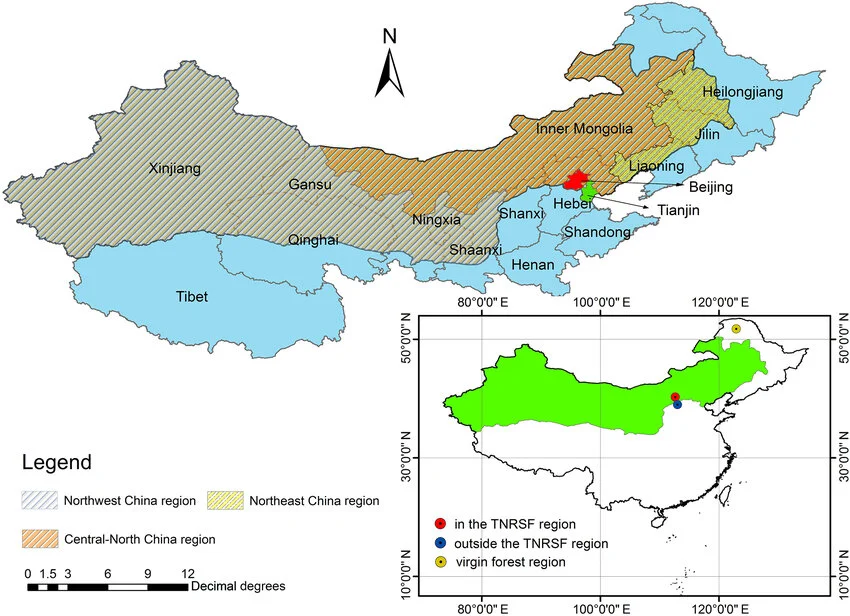
Beijing’s sandstorm problem goes back decades. In 1978, the government launched the Three-North Shelter Forest Program — planting trees across 35 million hectares of northern China to trap incoming dust. It worked better than most environmental programs of that era. The average number of sandy days in Beijing fell from 26 in the 1950s to just 3 by 2010.
The resurgence since 2020 is largely attributed to conditions in Mongolia, where China’s reforestation has limited reach. Whether this represents a new long-term cycle or a temporary spike is, as researchers writing for The Conversation note, still scientifically contested.
Beijing’s spring air quality is meaningfully better than it was 30 years ago. But the last few springs have reversed some of that progress, and it’s worth knowing that before you go.
10. Indoor Beijing: What to Do on a Dusty Day
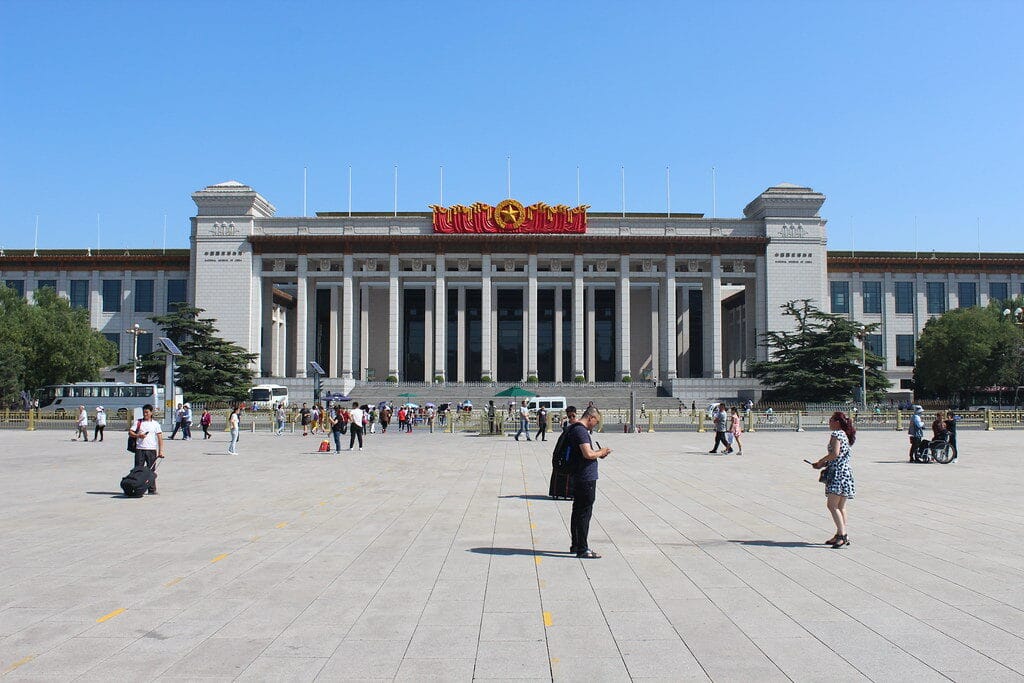
Clear days pack Beijing’s big sites. A sandstorm empties them. There are worse times to visit the National Museum.
National Museum of China — free entry with registration, directly on Tiananmen Square. One of the largest history museums in the world. Crowds are thinner on bad-weather days.
The Forbidden City’s indoor galleries — even when the main courtyards close, the Palace Museum’s treasure halls and interior exhibition spaces sometimes stay accessible during moderate conditions. Check their official WeChat account the morning of your visit.
Hutong restaurants and tea houses — a dusty afternoon tucked into a courtyard restaurant in the Nanluoguxiang or Dongsi area is, in our guides’ view, one of the most authentic Beijing experiences available. Less photogenic, more real. Our guide to exploring Beijing’s hutongs covers the best areas.
798 Art District — large, indoor industrial gallery spaces. Worth half a day regardless of weather.
Panjiayuan Antique Market (covered sections) and the Silk Market — both have substantial indoor areas that stay accessible.
11. FAQ – Sandstorms in Beijing
Q: Are Beijing sandstorms dangerous to tourists?
For healthy adults, a moderate dust event is uncomfortable but not dangerous during short-term exposure. People with asthma, chronic respiratory conditions, or heart disease should take extra precautions — stay indoors, and wear a certified N95 mask if you need to go out. Children and elderly travellers are more vulnerable to fine-particle inhalation and should limit outdoor exposure during elevated AQI days.
Q: How long does a sandstorm last in Beijing?
Most events last one to two days. Dust activity typically peaks around 5pm and drops off overnight. In rare severe cases — 2021 and April 2025 both qualify — disruption can last longer. Monitor IQAir or the Beijing Meteorological Bureau for current alerts.
Q: Will my flight be cancelled because of a sandstorm?
During severe events, yes. The April 2025 storm cancelled 693 flights at Beijing’s two airports in a single afternoon. Travel insurance covering weather disruptions is worth the cost for any spring trip. Build at least one buffer day into your schedule if your connections are tight.
Q: Is the Forbidden City always closed during sandstorms?
Not for every dusty day — minor events don’t trigger closures. But severe wind and sandstorm alerts do result in full closures. The Forbidden City, Summer Palace, and Temple of Heaven all closed on April 12, 2025. Check the Palace Museum’s official channels the morning of any visit if conditions look uncertain.
Q: Is spring still worth visiting Beijing despite sandstorms?
Yes. Most spring days in Beijing are clear and pleasant. The risk of hitting a severe sandstorm is real but not the default outcome. Build flexibility into your schedule, carry the right gear, and a sandstorm day becomes a minor detour rather than a ruined trip. Late April and May carry lower risk than early March.
Q: What’s the difference between PM2.5 and PM10?
PM10 refers to particles 10 micrometres or smaller — these dominate during sandstorms and irritate the eyes and upper airways. PM2.5 refers to finer particles 2.5 micrometres or smaller, which penetrate deeper into the lungs and pose higher long-term health risk. During sandstorms, both spike sharply. An N95 mask filters both. Our China air pollution guide explains the health implications in more depth.
Q: Should I visit Beijing before or after Zhangjiajie if I’m combining both?
If spring is your travel window and sandstorms concern you, start with Zhangjiajie. Southern China has no sandstorm exposure. You can monitor Beijing’s conditions from there and time your arrival accordingly.
12. Our Final Take
Spring in Beijing is good. The light is soft, the crowds haven’t peaked, and most days the sky is clear. The sandstorm risk is real — we’ve watched the sky turn yellow over the Forbidden City — but it isn’t the defining feature of a spring trip. It’s one variable among many.
Sandstorms don’t cancel a trip. They change a day.
Pack your masks. Download IQAir before you leave home. Build one flex day into your Beijing schedule. Then go.
Planning a private Beijing tour around spring weather? Talk to our team — we’ve been doing this since 2006.