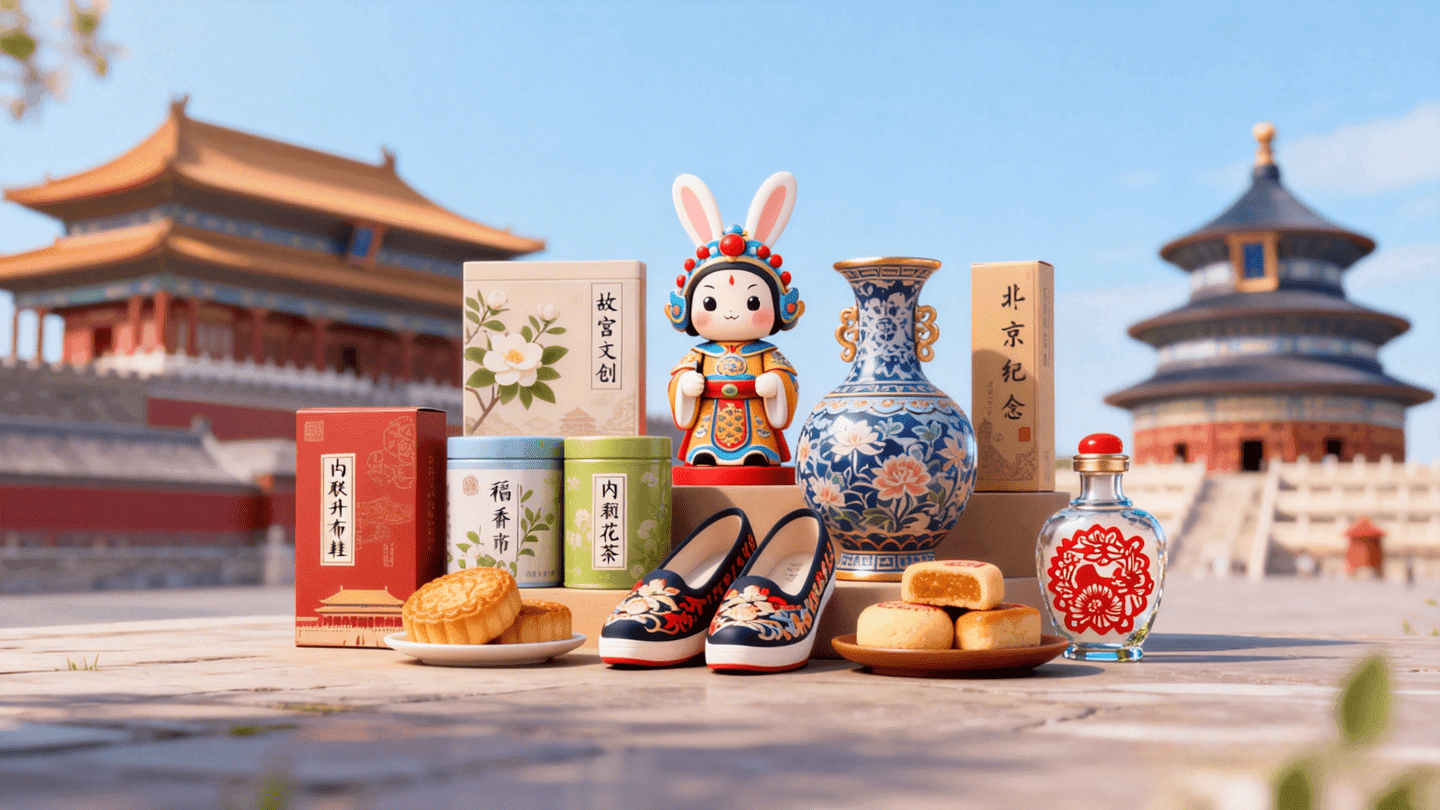
Beijing Souvenirs: Best Things to Buy & Where to Shop
This guide answers one question: what’s actually worth buying in Beijing?
Not a recycled list. We’ve been guiding international visitors through this city since 2006. We’ve watched what thousands of travelers bring home, what they regret, and what they’re still talking about years later. Everything here comes from that experience, with current prices and shops we’ve personally used.
If you want Palace Museum fridge magnets, 170-year-old cloth shoes, and jasmine tea that tastes like old Beijing — read on. If you want generic silk scarves and airport trinkets, you’ll find plenty elsewhere. This guide is for the other kind of traveler.
Table of Contents
Quick Price Reference
Before diving in, here’s a fast overview by budget:
Budget | What you can buy |
|---|---|
Under ¥100 | Palace Museum fridge magnets, paper cutting, Tuer Ye figure, small opera mask |
¥100–¥300 | Decent cloisonné jewelry, Neilian Sheng cloth shoes, jasmine tea gift box, Tuer Ye polymer version |
¥300–¥800 | Quality snuff bottle, better cloisonné bracelet, Daoxiangcun pastry set + tea combo |
¥800+ | Collector snuff bottles, handmade leather shoes, high-grade aged pu-erh tea |
The Best Beijing Souvenirs
1. Palace Museum Cultural Creative Products
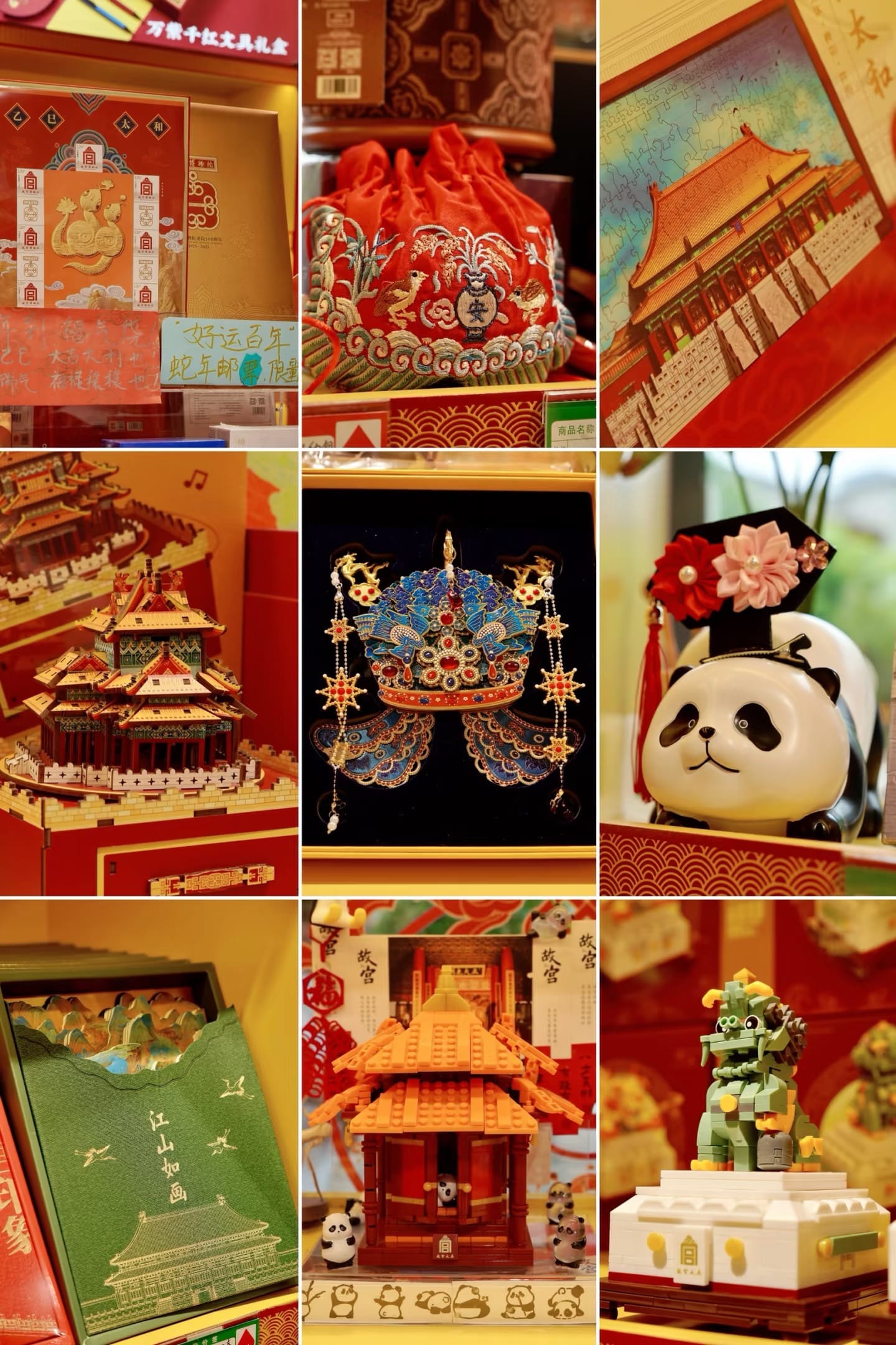
Walk out of the Forbidden City through the Shenwu Gate and turn left. Most visitors miss the shop entirely. That’s where you’ll find the best souvenirs in Beijing.
The Palace Museum’s cultural creative department generates over CNY 1.5 billion in annual sales. That figure comes from repeat buyers and word of mouth — not people who bought something because they had no other choice. Since 2013, the museum began redesigning its products around its collection of 1.86 million artifacts — linking every item to a specific piece of history. A folding-screen fridge magnet replicates a real Qing Dynasty lacquer screen. A bookmark features the Twelve Flower Fairies paintings from the imperial collection. The space station trajectory magnet — tracking the path of China’s space station over the Forbidden City — sold out repeatedly in 2024.
What to look for:
- Fridge magnets (¥38–¥68): lightweight, well-designed, universally liked
- The Forbidden City cat series: phone holders, keychains, ornaments based on the actual palace cats that still live on the grounds
- Washi tape and stationery with imperial motifs: popular with younger travelers and excellent for gifting
- Seal-carving kits for those who want something participatory
Where to buy: Multiple shops inside the palace compound. The shop near the Shenwu Gate (north exit) is the most browsable — you’re not rushing past it on the way out. The Forbidden City Qianmen store, just south of Tiananmen Square, carries an equally good range and is less crowded.
Luggage note: Most items are flat, boxed, and carry-on friendly. If you have one last shopping stop before heading to the airport, make it here.
2. Tuer Ye — Beijing’s Moon Rabbit
Most English-language souvenir guides skip this entirely — which is why so many visitors leave Beijing without ever seeing one.
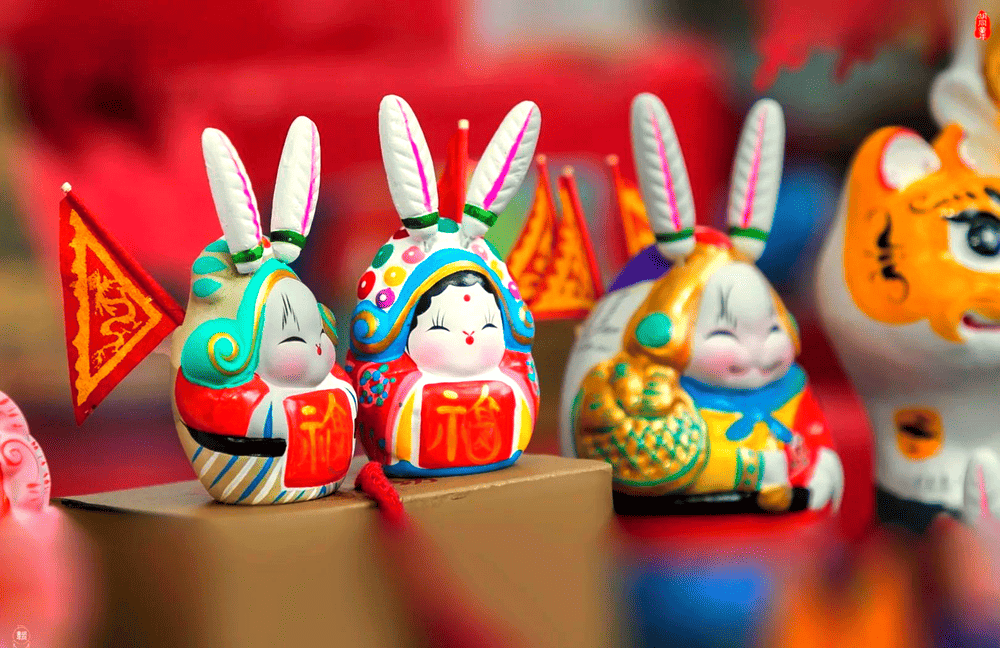
Tuer Ye is Beijing’s own folk deity — a rabbit figure dressed in warrior’s armor, often riding a tiger or mythical beast. The legend traces back to a Ming Dynasty plague: the Moon Goddess sent her white rabbit to heal the sick, who disguised himself in a general’s robes to gain people’s trust. Wherever he went, the sick recovered. That’s why Beijingers traditionally don’t say they “buy” a Tuer Ye — they say they “invite” (请) one home.
The figure is listed as Beijing intangible cultural heritage. It’s also one of the most visually striking objects you’ll find anywhere in the city — nothing like it exists outside Beijing.
Traditional clay versions run ¥65–¥200. Polymer clay versions (which don’t chip during travel) cost slightly more but are far more practical for international visitors. Some hutong workshops also offer unpainted “DIY” versions (about ¥80) where you paint the figure yourself — a genuine hands-on experience that takes about an hour.
Where to buy: Nanluoguxiang hutong has dedicated Tuer Ye shops, including long-established artisan stores with handmade pieces. Liulichang Antique Street and the gift shops near the Forbidden City’s north gate also carry them. Avoid the uniform mass-produced versions sold at major tourist gates — the handmade ones have visible personality in each face.
Luggage note: Clay versions need careful packing. Ask the shop for a padded box. Polymer versions travel fine in a carry-on.
3. Cloisonné
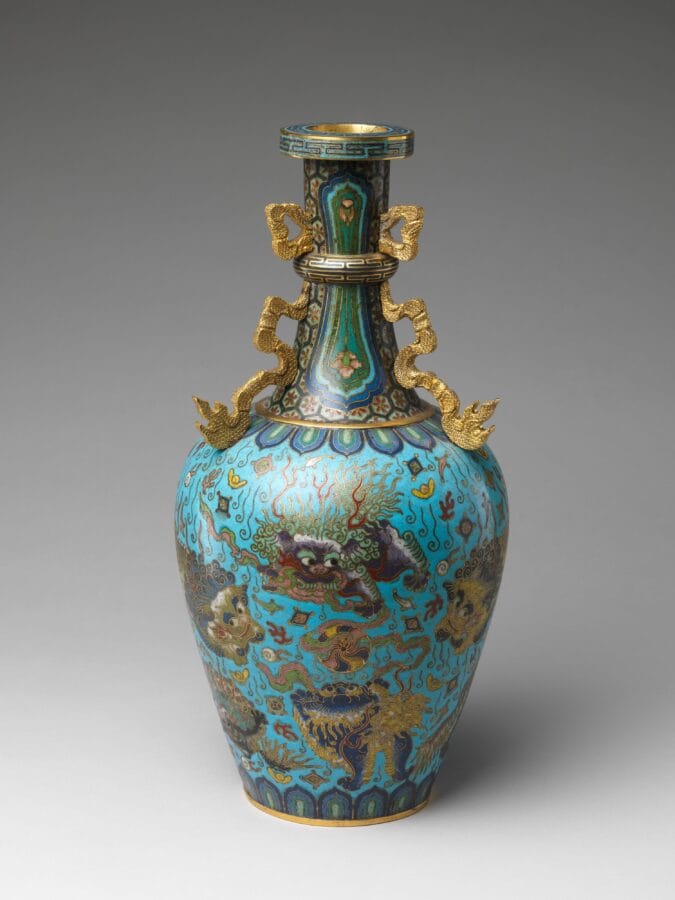
Cloisonné is Beijing’s most recognized traditional craft — and one of the few genuinely specific to this city.
The process: copper wire is soldered onto a metal base to trace a design, each cell filled by hand with colored enamel paste, then fired, and polished. The name comes from the Ming Dynasty reign title Jingtai (景泰, 1449–1457), when the craft reached its peak refinement at the imperial workshop.
Buy jewelry, not vases. A quality cloisonné bracelet (¥100–¥300) is wearable, packable, and tells the whole story of the craft. Vases are beautiful but cost thousands of yuan, fill your checked luggage, and break. We’ve watched guests agonize over the vases and almost always recommend they redirect that budget toward something they’ll actually use.
How to spot fakes: Mass-produced cloisonné sold near tourist sites often uses printed stickers to simulate the enamel pattern — the designs are too perfect and uniform. Genuine cloisonné wire feels slightly raised under your fingertip. The enamel has subtle depth and minor variation between cells.
Where to buy: The Beijing Cloisonné Art Factory (北京景泰蓝艺术厂) near Tiantan (Temple of Heaven) is the most reliable source. Craftspeople work on-site, and you can watch the process — which makes the purchase feel like something worth keeping. Panjiayuan has good options too, but quality varies by vendor.
Luggage note: Jewelry pieces are carry-on safe. Wrap in clothing or bubble wrap regardless.
4. Jasmine Tea from Wuyutai
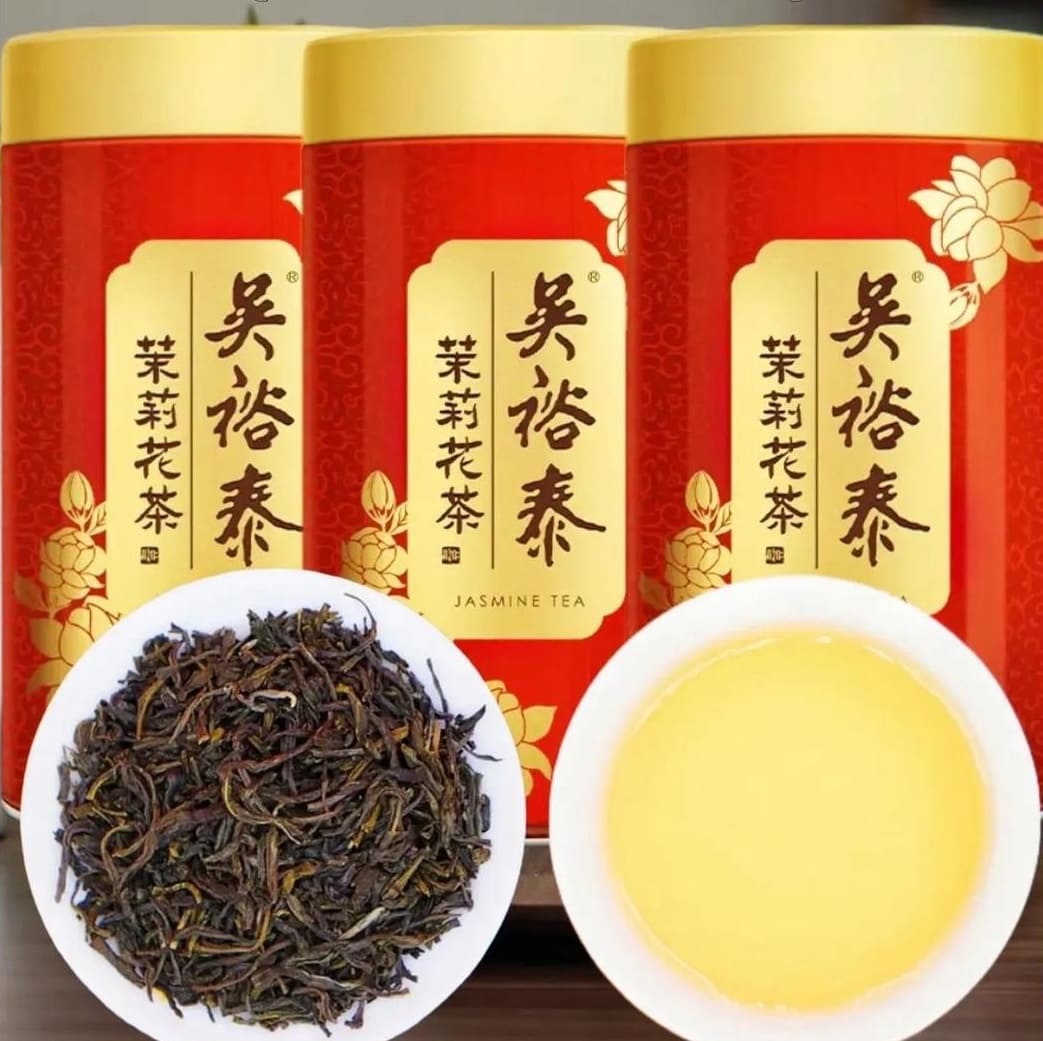
Jasmine tea is Beijing’s tea. Not China’s — Beijing’s.
Old Beijingers explain it this way: the city’s water is hard and slightly alkaline, with a mineral edge that clashes with pure green tea. For centuries, teahouses solved this by blending jasmine-scented tea that softened the taste. The jasmine fragrance masked that mineral edge. That’s still what Wuyutai’s tea does today. Wuyutai (吴裕泰), founded in 1887, is the most trusted name for this tradition. Their jasmine tea-making technique is recognized as China Intangible Cultural Heritage.
The Wangfujing flagship store lets you sample most teas before buying — take that offer. Jasmine teas range from everyday grades (¥50–¥100 per 100g packaged) to premium spring-harvest versions (¥200+). For gifting, the mid-range packaged boxes are the most practical.
One underrated bonus: Wuyutai’s jasmine soft-serve ice cream cone (¥9–¥10). There’s always a queue. Worth it.
Where to buy: Wangfujing flagship store is the easiest stop. Over 190 branches across Beijing means you’ll pass one regardless of your route. For serious tea buyers wanting more variety and negotiable pricing, Maliandao Tea Street (马连道茶叶街) in Xuanwu District is Beijing’s wholesale tea market — bring time and a clear idea of what you want.
Luggage note: Packaged tea is carry-on friendly everywhere. Declare at customs if required by your destination country.
5. Neilian Sheng Hand-Stitched Cloth Shoes
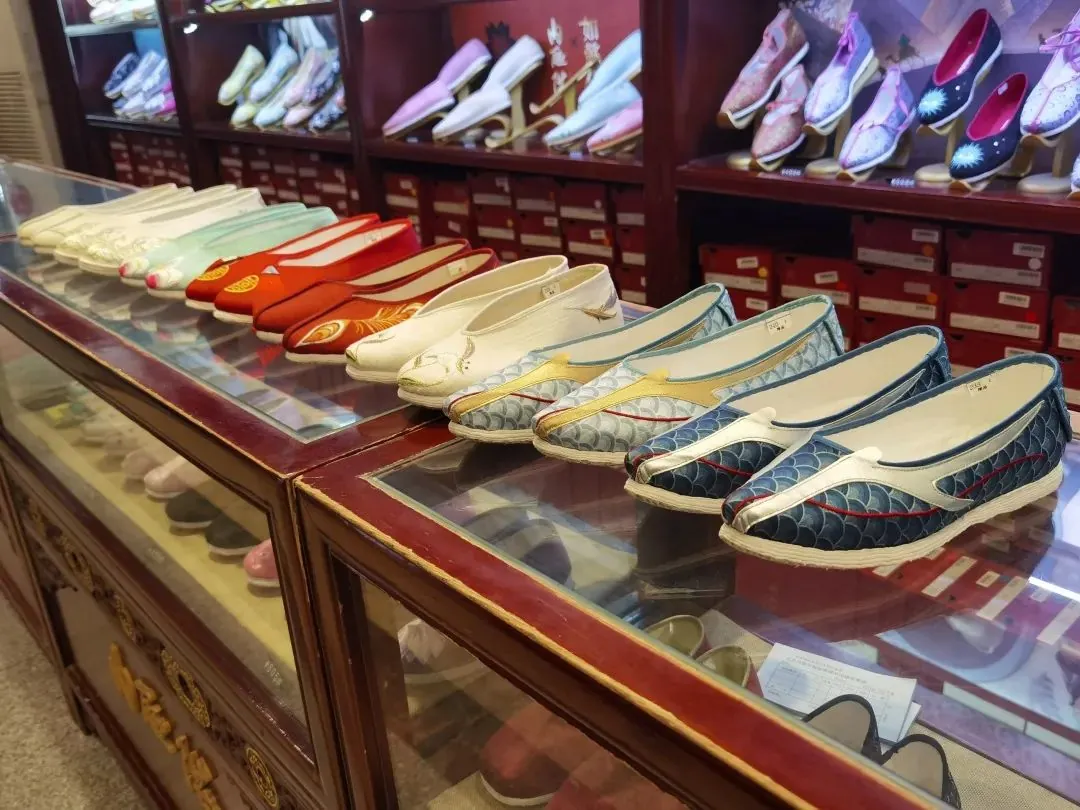
Founded in 1853, Neilian Sheng (内联升) is one of Beijing’s oldest surviving brands. The name translates roughly as “step up through the imperial ranks” — the shop originally made shoes for Qing Dynasty officials. Mao Zedong, Zhou Enlai, and Deng Xiaoping all wore them. Today’s flagship store at 34 Dashilan Street still has a display case of shoes worn by famous historical figures.
The thousand-layer sole (qiancengdi 千层底) uses dozens of layers of cotton fabric stitched together by hand across 90 steps using more than 40 tools. A single pair takes four to five days to make. The result is surprisingly comfortable — wide-fitting, flat-soled, near-silent on hard floors, and gentle on older joints. One guest from the Netherlands, a retired teacher in her early 60s, bought a pair on day two of her Beijing trip and wore nothing else for the rest of the week.
In 2023, Neilian Sheng opened a “Beijing Cloth Shoe Culture Museum” on the third floor of the flagship — worth a quick look even if you don’t buy.
Pricing: ¥148–¥325 for cloth shoes. Handmade leather shoes ¥898.
Where to buy: Flagship at 34 Dashilan West Street (大栅栏西街34号), Xicheng District. Walking distance from Qianmen subway station.
Luggage note: Pack flat in your suitcase. No fragility issues.
6. Daoxiangcun Pastries
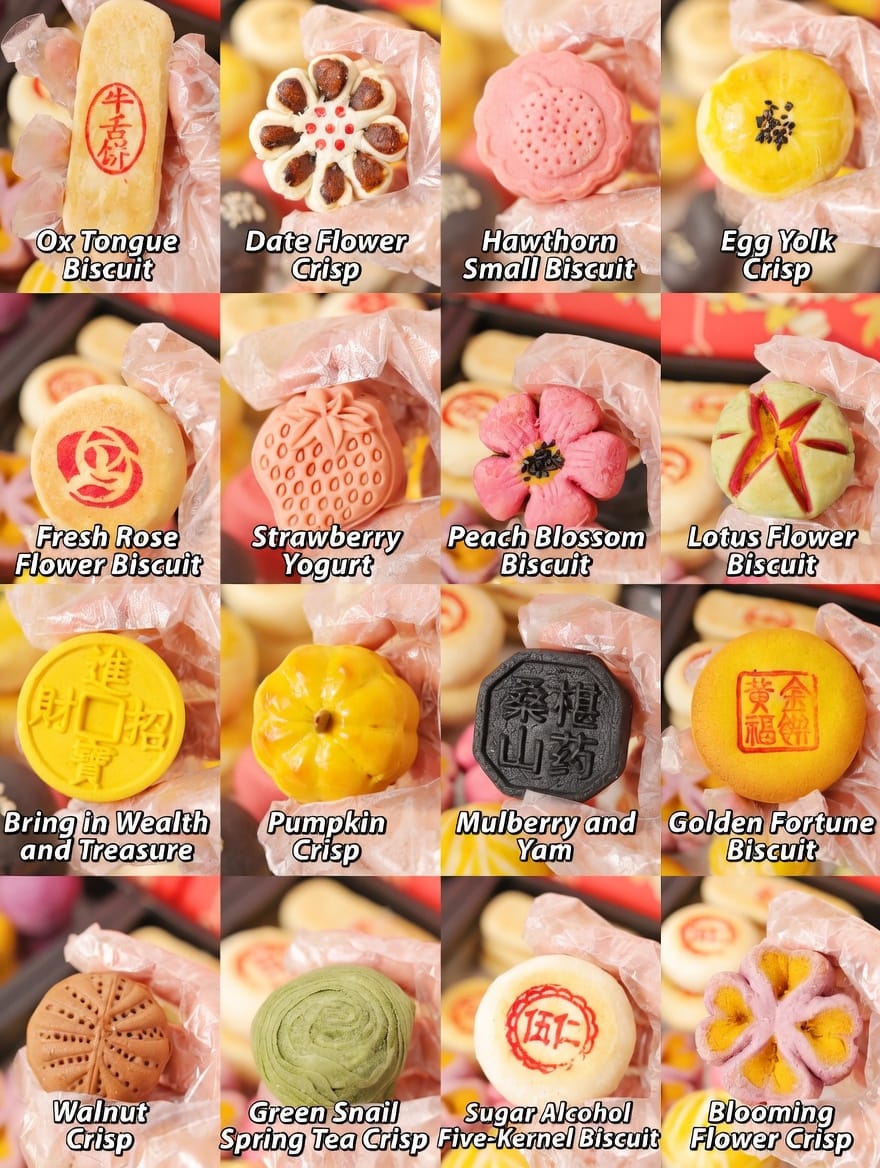
Daoxiangcun was founded in 1895 and is recognized as China Intangible Cultural Heritage for its traditional Beijing pastry techniques. With over 200 stores across the capital, it’s the city’s most accessible food souvenir.
The Beijing-style pastries are small, lightly sweet, and made with traditional fillings: lotus seed paste, rose, sesame, red bean, jujube. They travel reasonably well in sealed packaging. The gift boxes are clean-looking and easy to carry through airports.
Practical buying advice: Skip the Jing Bajian (京八件) preset gift box if you’re picky about flavors — it’s fixed, and includes several varieties with strong fermented or herbal notes that divide opinion. The loose-fill box (散装) lets you pick whichever 12–20 varieties you want, so you can stick to the sweeter, more universally liked pieces. Small box ¥130–¥140, large box around ¥170. Individual pieces about ¥3 each.
Timing note: In the week before Mid-Autumn Festival and Chinese New Year, Daoxiangcun queues stretch out the door. Buy earlier in your trip if visiting during those windows.
Where to buy: Everywhere. Wangfujing, Xidan, Qianmen — every major commercial area has at least one branch. Look for the red-and-white storefront.
Luggage note: Sealed pastry boxes are carry-on safe. Check your destination’s food import rules — most countries allow commercially sealed, non-meat products.
7. Inside-Painted Snuff Bottles

Inside-painted snuff bottles are one of the most technically astonishing objects sold anywhere in China — and most visitors walk past them without understanding what they’re looking at.
The craft involves painting miniature scenes on the interior surface of a glass bottle, using brushes bent at right angles, working entirely in reverse. Landscapes, portraits, birds, calligraphy — all painted from inside, through the mouth of a bottle no bigger than your thumb. Original snuff bottles stored tobacco during the Qing Dynasty. Today the object itself is the art. We have a full guide to souvenirs from China if you want to compare snuff bottles against other collectibles from across the country.
Genuine inside-painted bottles by a named artist: ¥300–¥2,000+. The painting quality is immediately obvious when you compare a real piece against a mass reproduction — depth, line control, the fineness of the detail.
Where to buy: The shop near the Shenwu Gate of the Forbidden City sometimes has an artist working on-site — watch the process, then buy. Panjiayuan Antique Market on weekends. Liulichang has specialist dealers with more consistent quality.
Honest warning: This is a high-fraud category. Never buy from street stalls. Anything priced under ¥100 is not hand-painted. Ask dealers directly whether the bottle is factory-produced or artist-made — most will tell you honestly.
Luggage note: Wrap in thick clothing or buy a padded case in-shop. Do not put in checked luggage without hard-case protection.
8. Paper Cutting

Chinese paper cutting is UNESCO-listed intangible cultural heritage, and Beijing’s hutong tradition — particularly around Nanluoguxiang — has some of the oldest surviving independent paper-cutting artisans in the country.
Hand-cut pieces have slight irregularities that machine-cut versions don’t. If you look closely at the cut edges under light, handwork shows fine tool marks; machine work is perfectly uniform. Hand-cut pieces cost ¥10–¥100. You’re paying for hours of someone’s attention, and it shows.
Large hutong street-scene panels (about ¥100) make genuinely impressive wall pieces at home. The small ¥1–¥5 pieces are perfect for postcards or stocking stuffers.
Where to buy: The paper-cutting workshop at Nanluoguxiang 110 is the most well-known. Liulichang has several shops with higher-end pieces.
Practical tip: Before leaving the shop, ask for a tube or cardboard backing. Folded paper cuttings crack within days.
Luggage note: Store flat or in a tube. Carry-on only.
Beijing-Specific Souvenirs vs Generic China Gifts
The best souvenir isn’t the most expensive — it’s the one that couldn’t have come from anywhere else. If you could buy it in Shanghai, Xi’an, or the airport gift shop, it’s a generic China souvenir. If you couldn’t, it’s a Beijing souvenir.
Item | Genuinely Beijing? | Our Call |
|---|---|---|
Palace Museum cultural creative products | Yes — only at Palace Museum shops | ✅ Buy |
Tuer Ye (Moon Rabbit figure) | Yes — Beijing folk heritage | ✅ Buy |
Cloisonné jewelry | Yes — craft centered in Beijing | ✅ Buy |
Wuyutai jasmine tea | Yes — Beijing’s signature tea brand since 1887 | ✅ Buy |
Neilian Sheng cloth shoes | Yes — 170-year Beijing brand | ✅ Buy |
Daoxiangcun pastries | Yes — Beijing pastry institution since 1895 | ✅ Buy |
Inside-painted snuff bottles | Strongly associated with Beijing | ✅ Buy (reputable shops only) |
Paper cutting | Practice exists nationwide; Beijing hutong artisans are among the best | ✅ Buy here |
Available across all of China, not Beijing-specific | ⚠️ Fine souvenir, not unique to Beijing | |
Silk scarves (generic) | Available everywhere in China | ⚠️ Only if exceptional quality |
Generic tea sets | Available everywhere | ⚠️ Only at Maliandao with intent |
“Jade” from street stalls | High fraud risk, no provenance | ❌ Skip |
Mass fridge magnets near tourist gates | Generic, poor quality | ❌ Skip |
Where to Buy in Beijing: The Honest Map
Wangfujing Street

Best for old brands (laozihao 老字号): Wuyutai tea flagship, Neilian Sheng shoes, Daoxiangcun pastries. The tourist trinket stalls here are mediocre. Go there for the name brands. For handmade crafts, look elsewhere.
Forbidden City / Palace Museum shops
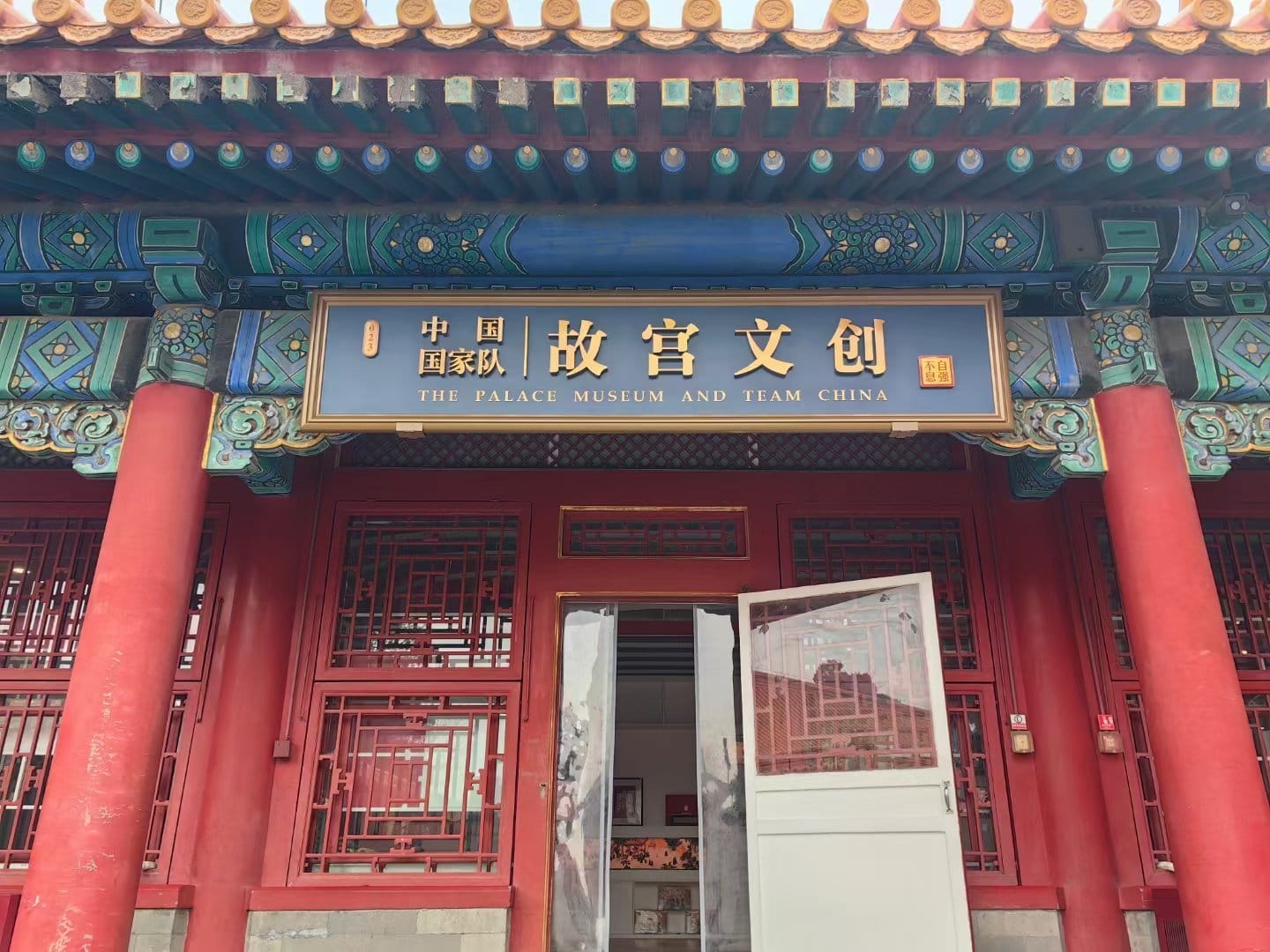
Don’t skip these. Most visitors walk past them in a rush. The shops near the Shenwu Gate (north exit) are the most relaxed and browsable. The Qianmen store outside Tiananmen is equally good and often less crowded.
Nanluoguxiang Hutong

Best for: Tuer Ye figures, hand-painted opera masks, paper cutting, independent artisan shops. Avoid the chain snack stalls that now dominate the middle stretch. Go on a weekday morning. Our Beijing hutong guide covers this in depth.
Panjiayuan Antique Market

Open daily. Saturday from 4:30 AM (for dealers); regular visitors from 8:30 AM. Best for: snuff bottles, calligraphy, vintage propaganda posters, folk crafts, and handmade Tuer Ye. Prices start high — negotiate. Never buy jade here without expert knowledge.
Liulichang Antique Street
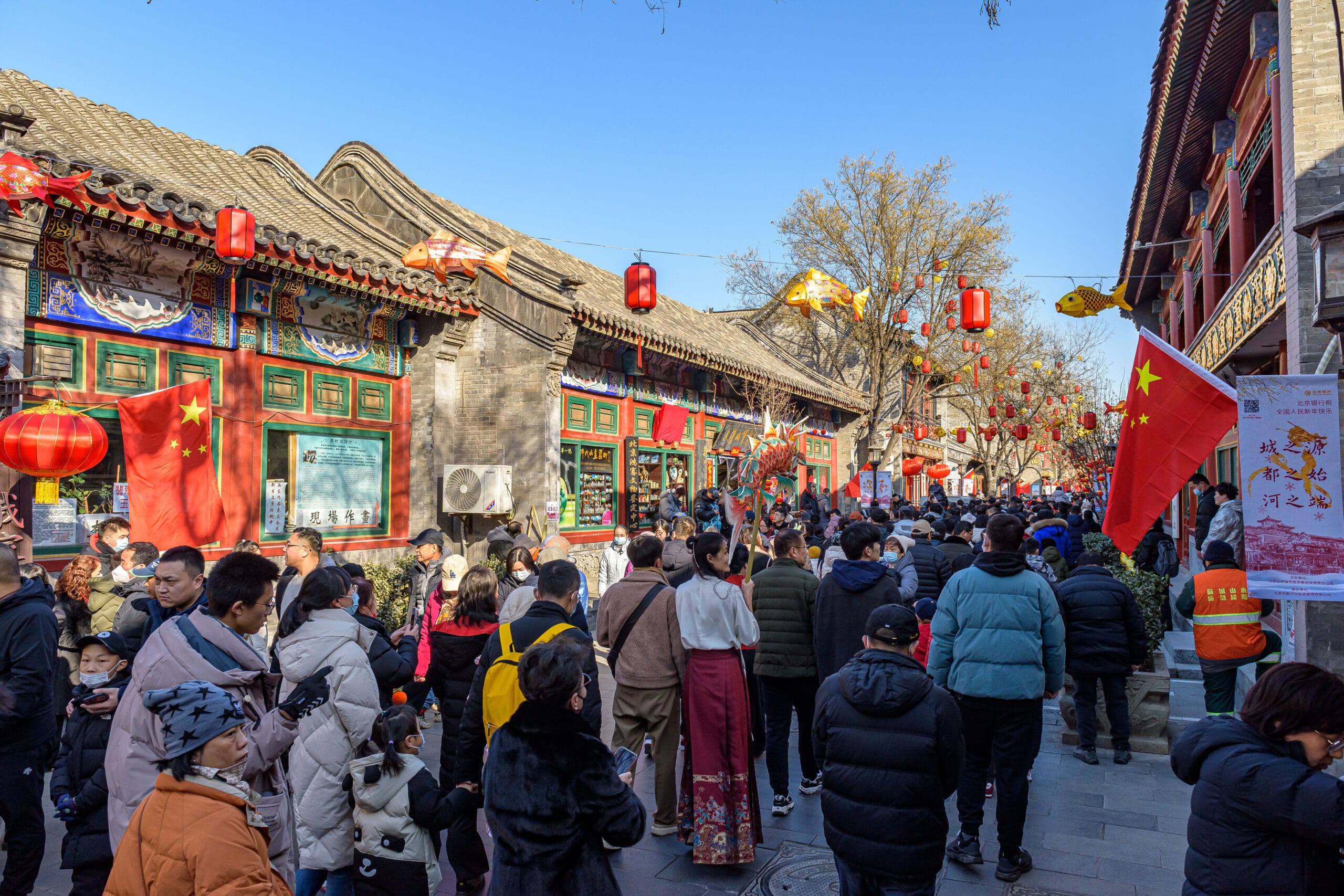
Liulichang is Beijing’s traditional cultural street, with roots going back to the Qing Dynasty when antique dealers and booksellers replaced the old glazed-tile factory it was named after. Best for: calligraphy supplies, quality snuff bottles, paintings, antique reproductions, seal carving. Pricing is mostly fixed — less room to bargain than Panjiayuan, but the baseline quality is reliably higher.
Dashilan Street
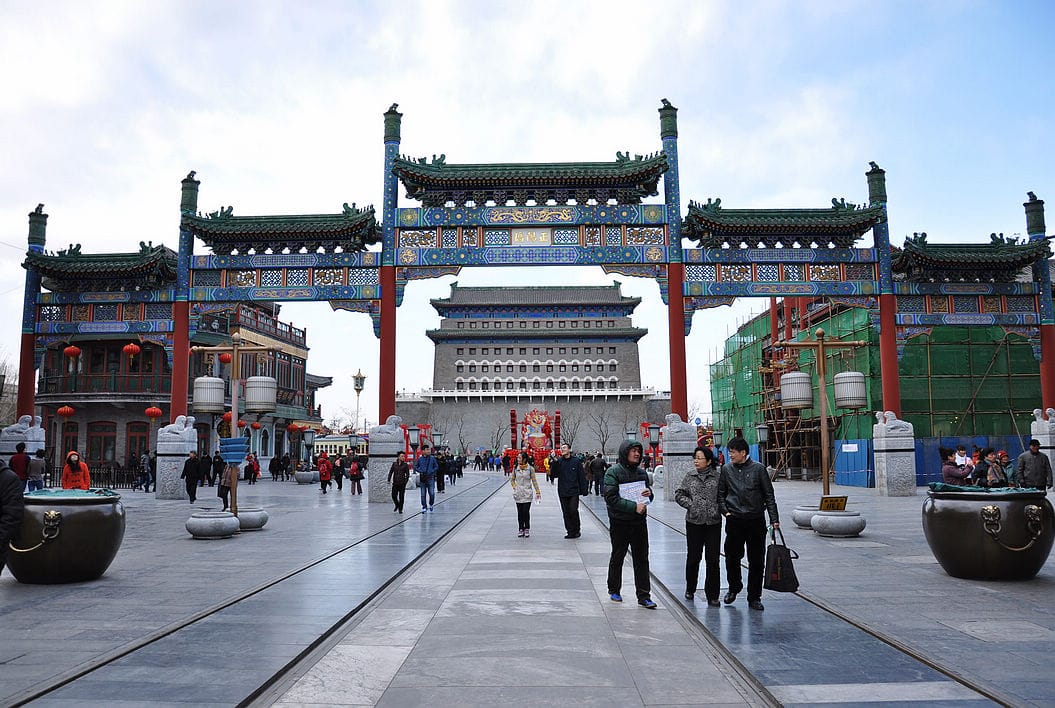
Historic commercial street near Qianmen. Neilian Sheng flagship is here. Ruifuxiang silk (founded 1893) is also on this street if silk is your interest. Tongrentang traditional medicine pharmacy is nearby.
Only have time for one stop? The Palace Museum shops (Shenwu Gate exit) give you the widest range of distinctly Beijing items in one place — cultural creative products, snuff bottles, and a good selection of folk crafts. Everything else on this list requires a separate trip.
Beijing Souvenir Scams: What to Skip
This is the section most guides skip.
“Jade” from markets and street stalls. Jade fraud is rampant in Beijing’s tourist markets. What’s sold as jade is frequently dyed quartzite, glass, or low-grade serpentine. Without gemological expertise, you cannot tell on the spot. We’ve had guests come back to the van holding a “jade” bracelet they paid ¥800 for at a market stall. The look on their faces when we explained it was dyed quartzite is one we’ve seen too many times. If you genuinely want jade, go to a certified government-approved jewelry store (look for the official gold certification plaque), pay the higher price, and get a written certificate. Otherwise, skip it entirely.
Mass-produced cloisonné near tourist gates. The stalls immediately outside the Forbidden City, Summer Palace, and Temple of Heaven sell cloisonné-patterned items using printed stickers over plain metal. The price seems reasonable until you realize you’re buying a sticker, not enamelwork. The real thing, even at entry level, costs more and looks completely different.
“Antique” items at street stalls. Genuine pre-1911 antiques cannot be legally exported without a red wax seal from the National Cultural Heritage Administration. Everything sold as an antique at a stall is a reproduction — sellers legally cannot sell the real thing. Reproductions are fine as decorative pieces but should be priced and discussed honestly as reproductions.
Generic silk at the Silk Market. The Silk Market (秀水市场) near Yonganli is popular with tourists and carries some legitimate silk products — but also a large quantity of synthetic “silk” marketed as the real thing. Real silk burns cleanly with a protein smell; synthetic silk melts. If you can’t test it, buy from Ruifuxiang on Dashilan instead, where the product is genuine and labeled honestly.
Bargaining: A Practical Note
Fixed-price shops (Palace Museum, Neilian Sheng, Wuyutai, Daoxiangcun) don’t negotiate. This is a sign of a trustworthy shop, not a missed opportunity.
At Panjiayuan and similar markets, bargaining is expected. Opening prices are typically two to four times the real selling price. Starting your counter-offer at 25–30% of the asking price and working upward is reasonable. Walking away is normal and not offensive — sellers will often call you back.
One firm rule: if a price feels suspiciously cheap, it means the product is low quality, not that you found a bargain.
Customs Rules: What You Can and Can’t Take Home
For a full breakdown of China’s import and export rules, see our China customs guide. The key points for souvenir shoppers:
- Pre-1911 antiques cannot be legally exported without a red wax seal from the National Cultural Heritage Administration. Most market “antiques” are reproductions — ask directly.
- Ivory and animal products are completely banned. No exceptions regardless of claimed provenance.
- Tea and packaged food are generally fine internationally. Check your destination country’s rules on sealed food imports.
- Liquids over 100ml cannot go in carry-on luggage. Pack bottled beverages and liquid medicines in checked bags.
- High-value items (jewelry, art) should be declared at customs. Keep receipts.
FAQ
What is the most popular souvenir from Beijing?
From our experience with thousands of visitors, Palace Museum cultural creative products top the list — specifically fridge magnets, the cat series, and washi tape. They’re affordable, genuinely well-designed, and directly connected to the world’s most visited museum. Wuyutai jasmine tea runs a close second — particularly for travelers who want a gift that means something to the person receiving it.
Where is the best place to buy souvenirs in Beijing?
It depends what you want. For authentic old-brand products (tea, shoes, pastries): Wangfujing Street. For the best cultural souvenirs: the Palace Museum shops at the Forbidden City. For handmade folk crafts: Nanluoguxiang hutong and Panjiayuan Antique Market. Avoid the stalls immediately outside major tourist gates — they carry the least distinctive and lowest-quality items in the city.
Is Beijing good for souvenir shopping compared to other Chinese cities?
Yes — specifically because Beijing has a concentration of genuine old-brand shops (laozihao) and the Palace Museum’s cultural creative products that no other city can match. Shanghai is better for modern design and fashion. Xi’an is better for terracotta reproductions and northwestern crafts. Beijing is the right city for imperial-era craft traditions.
How much should I budget for Beijing souvenirs?
¥300–¥800 per person is comfortable for a selection of meaningful pieces — a box of pastries, a Palace Museum item, one craft piece. Serious collectors shopping for snuff bottles or high-grade tea should budget significantly more. It’s easy to spend ¥100 on pure impulse purchases near tourist gates; harder to spend that wisely.
What should I buy in Beijing as gifts?
It depends on who you’re buying for. For colleagues or groups where you need multiple affordable pieces: Palace Museum fridge magnets or washi tape (¥38–¥68 each) work well and require no explanation. For a meaningful individual gift: a box of Daoxiangcun pastries plus a small Wuyutai jasmine tea set is a combination that travels well and tells a story. For someone who appreciates craftsmanship: a genuine inside-painted snuff bottle or a piece of cloisonné jewelry will outlast most other gifts from China.
What are good souvenirs from Beijing for children?
The Palace Museum cat series is consistently popular with kids. Tuer Ye figures — especially the DIY painting version — make excellent participatory gifts. Small Peking Opera masks, hand-painted or as fridge magnets, work well — and if you want the full context for those masks, our guide to Beijing Opera theaters explains the color-coding and character types. Neilian Sheng also makes traditional tiger-patterned cloth shoes for children, a genuine Beijing childhood tradition.
Can I buy genuine antiques in Beijing?
Genuine pre-1911 antiques exist in specialist shops and auction houses, but not at market stalls. Legally exportable antiques require an official red wax seal. Most items described as antiques at Panjiayuan and similar markets are quality reproductions — which is fine, as long as you know what you’re buying and pay accordingly.
Is it safe to buy jade in Beijing?
Not at markets or street stalls. Jade fraud is one of the most common tourist scams in China. Buy only from government-certified jewelry stores with a written certificate of authenticity. Expect to pay significantly more — but know what you’re actually getting.
Planning your Beijing visit? Our Beijing travel guide covers everything from the Forbidden City to Jingshan Park to the best hutong neighborhoods. Not sure where to base yourself for shopping? Our where to stay in Beijing guide breaks it down by district. If you’d like help building a Beijing itinerary that fits your schedule and travel style, get in touch.