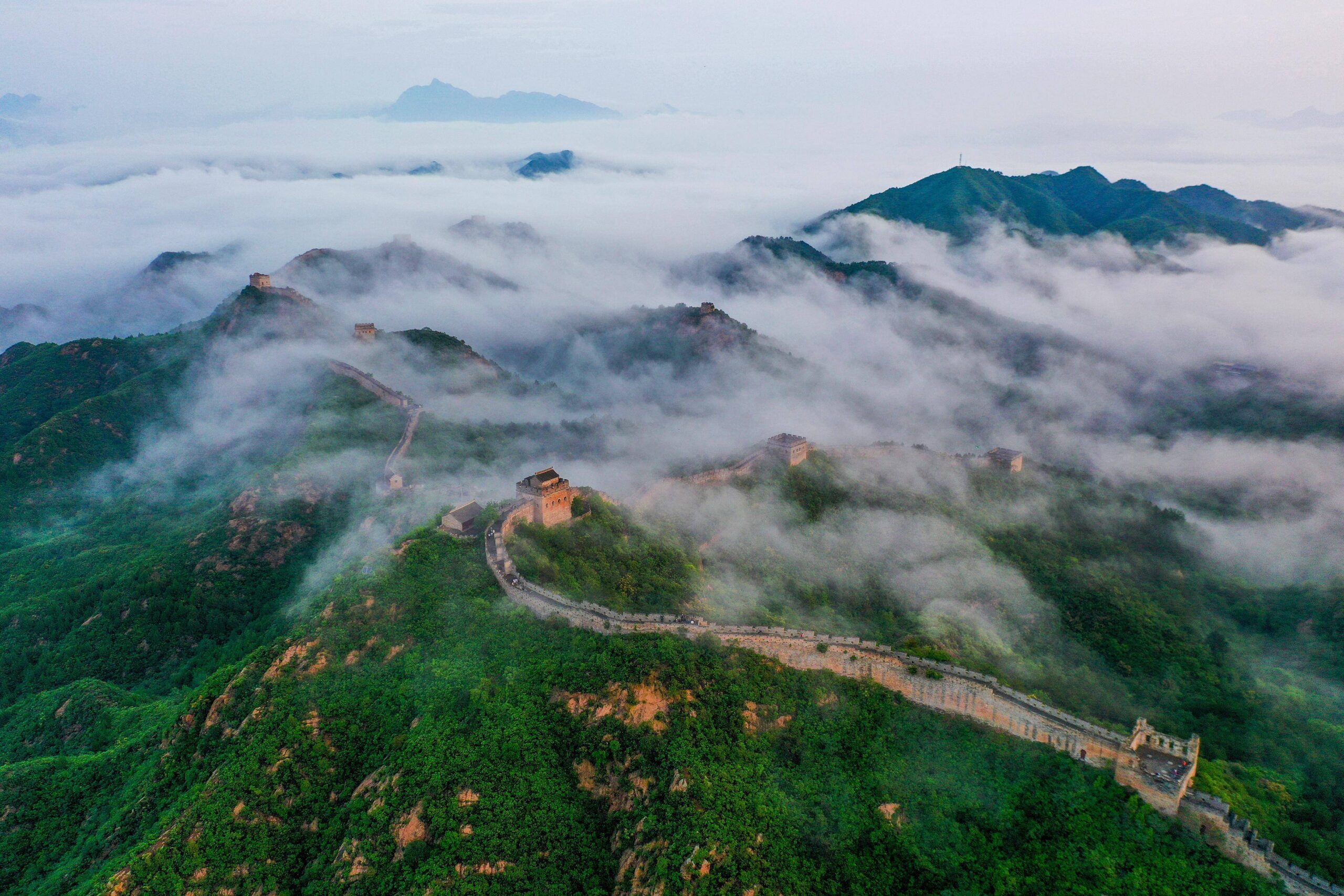
Great Wall Sea of Clouds: When and Where to See It
Jinshanling is your best bet for Great Wall sea of clouds. Its gate opens at 4:00 AM year-round, ahead of sunrise every day. Go between May and October, ideally the morning after rain. Even then, the honest odds are one morning in three. Simatai can produce it too, but rarely at sunrise.
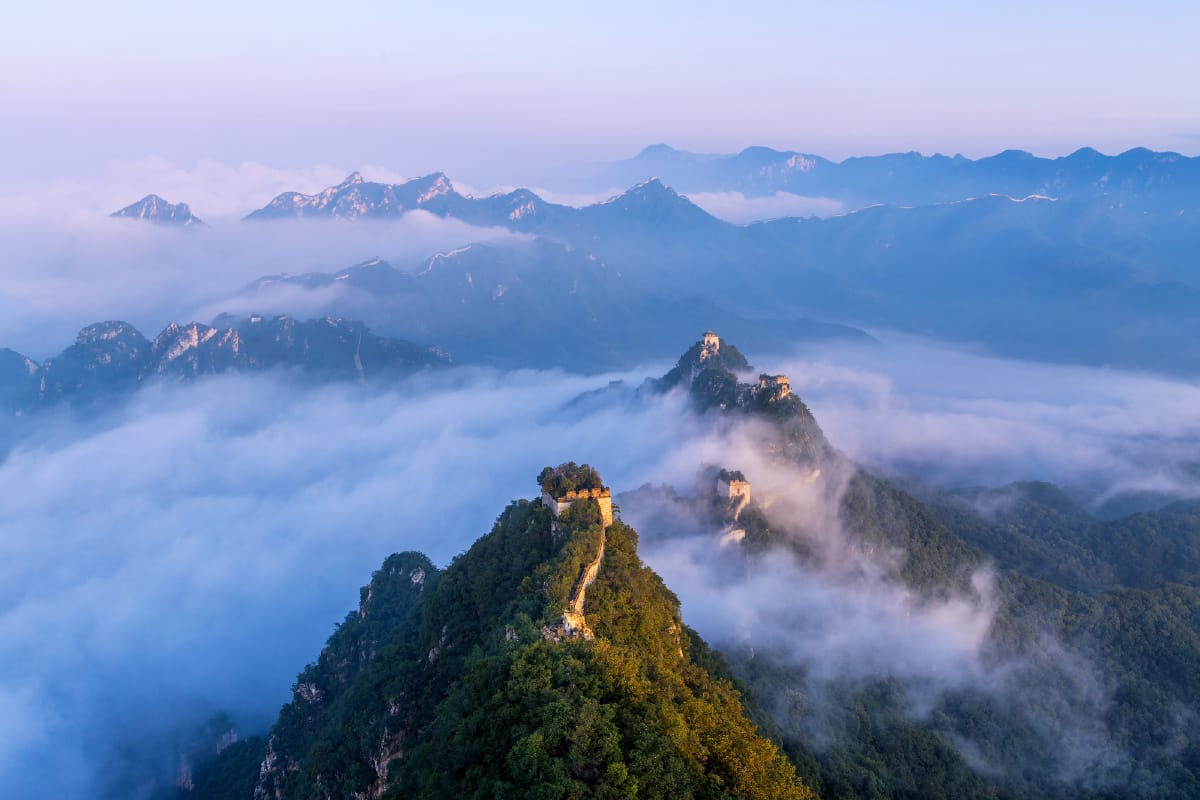
Watchtowers rising out of a rolling white sea, only the highest towers breaking the surface. Great Wall sea of clouds is one of the most photographed sights near Beijing. We’ve sent clients up to Jinshanling for this more than 40 times. This guide covers where to stand, how to read the forecast the night before, and what a realistic morning actually looks like.
Best sections | Jinshanling (most reliable), Simatai (rarer, more dramatic) |
|---|---|
Best months | May–October, peak in September–October |
Trigger | Rain the evening before, clear skies overnight, day–night temperature swing over 10°C |
Best viewing window | 30–90 minutes after sunrise |
Cloud height | 800–1,200 m — just below Jinshanling’s towers (700–986 m) |
You must be inside by | 4:00 AM (Jinshanling’s gate opens then, year-round) |
Table of Contents
1. Why the Great Wall Gets a Sea of Clouds
The two-step trigger
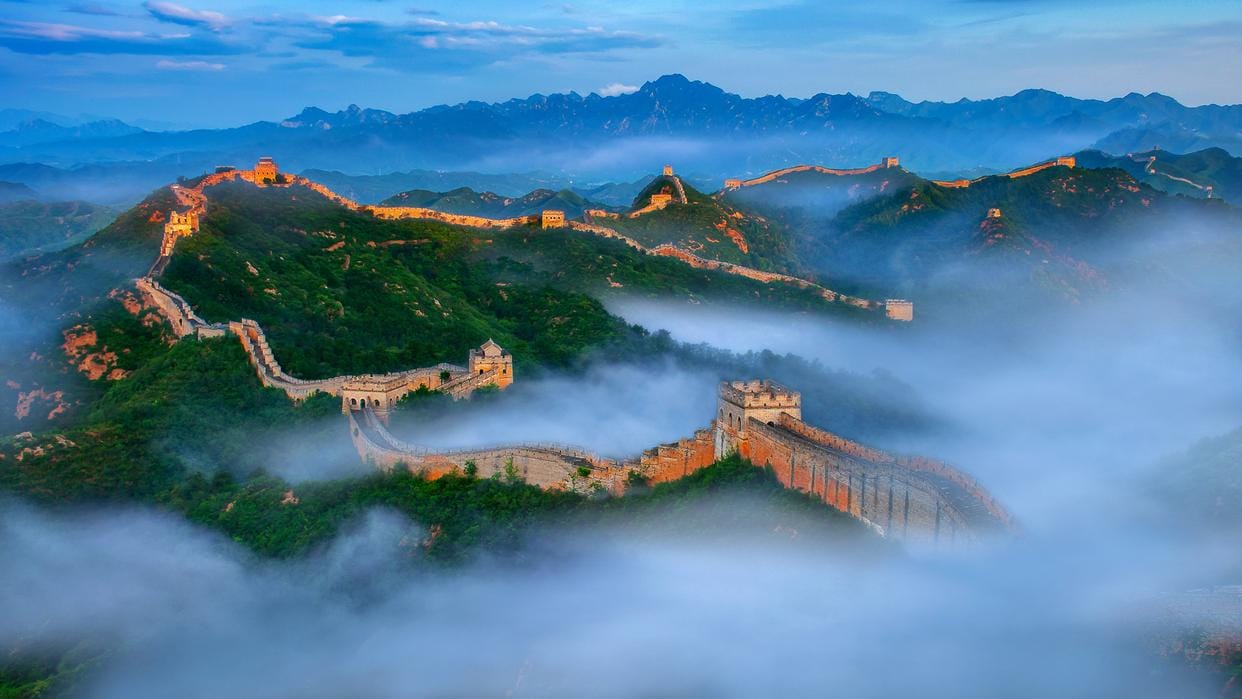
It comes down to two things: rain, then a clear night. Rain the evening before fills the valley air with moisture. If the sky then clears and the temperature drops fast overnight, that moisture settles into a low cloud layer sitting below the ridge. Stand on a watchtower above it, and you’re looking down onto the top of the clouds instead of up at the sky. This is what Great Wall sea of clouds actually is. Meteorologists call the underlying mechanism a temperature inversion — it’s the same effect behind valley fog anywhere in the world. The Great Wall just happens to give you a ridge to stand above it from.
Why height decides what you see
The cloud layer here usually sits between 800 and 1,200 meters. Jinshanling’s towers sit at 700–986 meters, right at the edge of that band. That’s why some mornings you’re above a sea of clouds, and other mornings you’re standing inside plain fog with barely any visibility.
Why the season is different from other cloud sea spots in China
If you’ve read about Huangshan or Wugong Shan, don’t assume the same calendar applies here — those mountains peak in winter. Around Beijing it’s the opposite: spring through autumn works, winter mostly doesn’t, because the air is usually too dry even after snow. Summer thunderstorms are one of the strongest triggers we see, simply because that’s when Beijing actually gets its rain — June through September alone accounts for roughly 80% of the annual total.
🌧️ Beijing Rainfall by Month
Why summer beats every other season for cloud sea
Source: long-term climate normals (1991–2020) from the China Meteorological Administration
| Month | Avg. rainfall | Cloud sea odds |
|---|---|---|
| Jan | 3 mm | Almost never — too dry, even after snow |
| Feb | 6 mm | Almost never — too dry, even after snow |
| Mar | 9 mm | Rare — still too dry most mornings |
| Apr | 26 mm | Improving — first real rain triggers appear |
| May | 29 mm | Working window opens — first solid month |
| Jun | 71 mm | Good — regular storms start the summer run |
| Jul | 176 mm | Best — peak moisture supply |
| Aug | 182 mm | Best — peak moisture supply |
| Sep | 49 mm | Very good — rain plus clearer air |
| Oct | 19 mm | Good — lower rain, but the clearest light |
| Nov | 6 mm | Rare — too dry for a real layer |
| Dec | 2 mm | Almost never — driest month of the year |
Source: long-term climate normals from the China Meteorological Administration. Autumn gives you clearer air and better light once the cloud shows up. Summer just gives you more chances at it in the first place.
2. Jinshanling: Your Best Bet
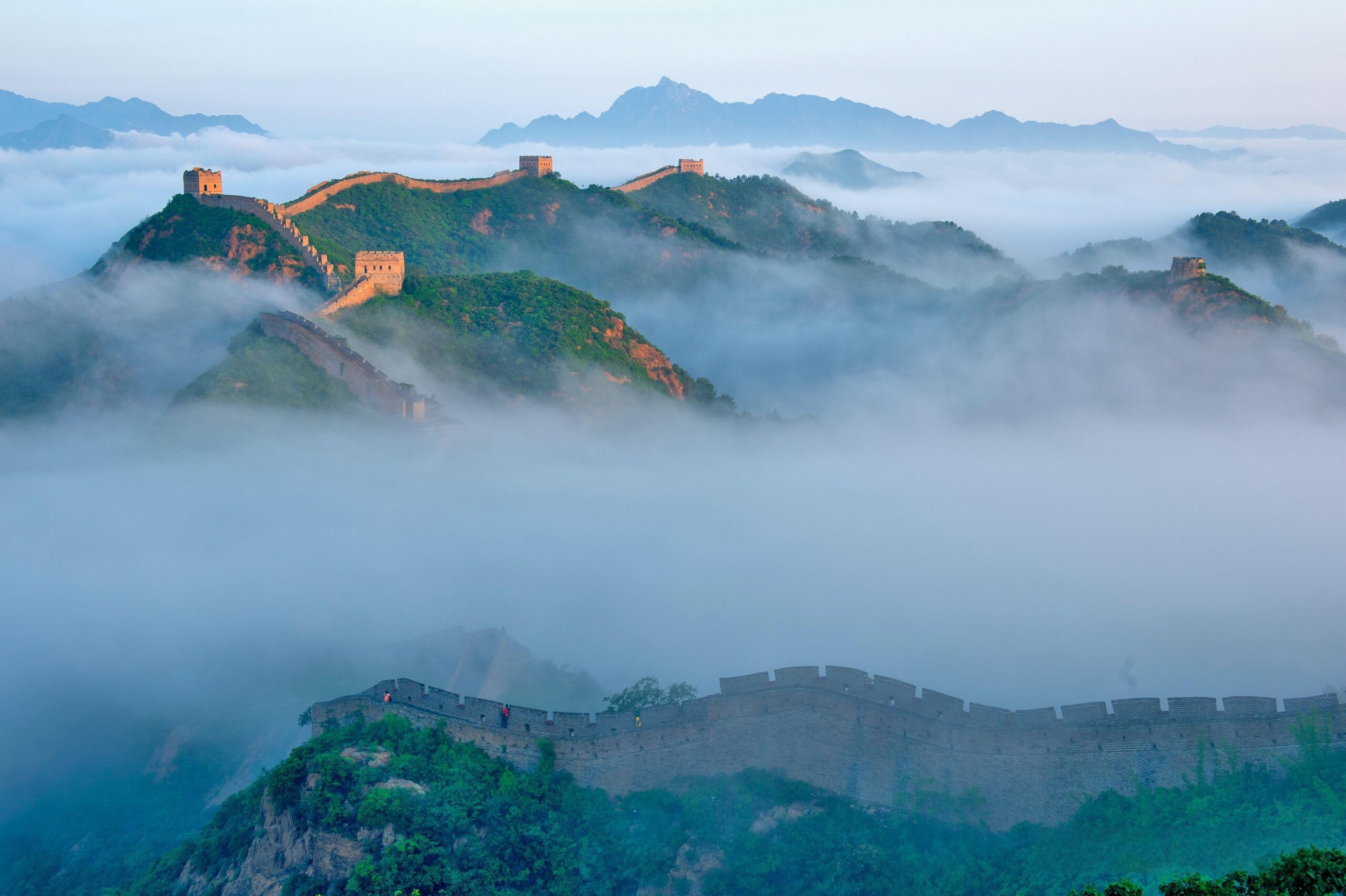
Jinshanling is the one we plan around for clients. Its main gate opens at 4:00 AM every day of the year, so you can be on the wall before sunrise regardless of season. That single fact is why almost every Great Wall sea of clouds photo you’ll find online was shot here.
It also draws far fewer visitors than the wall’s headline sections — 500,000 a year, against the 10 million-plus who pass through Badaling. On a good cloud sea morning, that difference is the whole experience: you’re sharing a watchtower with a handful of other photographers, not a tour group.
Where to stand
Which tower we send a client to depends on the morning. It comes down to how crowded the popular spot already is, how far they want to walk, and which direction the cloud is sitting that day.
| Tower | Distance from gate | Best for |
|---|---|---|
| ⭐ Xiaojinshan Tower | ~40 min walk from gate | Sunrise and cloud sea in one shot — the default pick |
| 🌄 General Tower | Slightly further east | Wide shots of the wall cutting through the cloud |
| 🚶 Zhengbei Tower | Furthest, via official trail | Fewer crowds, open platform |
| 🔁 West Five-Window Tower | West side, similar distance | Quiet option for a second visit |
Zhengbei Tower is also reachable by an unofficial trail from Xizhazi Village, outside the ticketed entrance. Local hikers put it at about 4 km round trip, with a gentler climb than the official route. We don’t route clients through it — it’s not part of the official scenic area — and reach Zhengbei Tower through the main gate and marked paths instead.
Booking and getting there
Book your wall ticket through the official “Jinshanling Great Wall” WeChat mini-program — weekends sell out even outside peak season, since local photographers are watching the same forecast. For a room, book once the forecast looks promising rather than in advance; same-day bookings are risky if a clear night draws a crowd. Farmhouse (农家院) rooms near the gate are inexpensive and plentiful, though quality varies — ask your host to confirm what’s included before booking.
Full ticket prices, gate hours, and transport options are in our Jinshanling Great Wall Guide. Most of our clients use a private driver for the pre-dawn departure, since public transit doesn’t run early enough to make the 4:00 AM gate.
The morning itself
| Time | What’s happening |
|---|---|
| 3:00–3:30 AM | 🚗 Leave your farmhouse or hotel — buffer before the 4:00 AM gate |
| 4:00 AM | 🚪 Gate opens. Cable cars don’t reliably run this early — plan to walk |
| 4:00–4:40 AM | 🥾 On foot to Xiaojinshan Tower — bring a headlamp, no trail lighting |
| ~5:00–5:30 AM | 🌅 Sunrise window — light shifts fastest, cloud layer looks its best |
| After 5:30 AM | ☁️ If it showed up, the cloud sea usually holds 30–60 more minutes |
We register clients at the gate on their first entry and use Jinshanling’s 24-hour re-entry rule: sunset one evening, sunrise the next morning, one ticket. That free second try often makes the difference on a short trip, since cloud sea mornings are unpredictable. If nothing shows up, the trip still isn’t wasted — you can catch the regular sunrise light and come back for sunset on the same ticket.
→ Jinshanling Great Wall Guide · Great Wall Sunrise and Sunset: All 8 Sections Compared
3. Simatai: Rarer, More Dramatic When It Happens
Why the day ticket doesn’t work for this
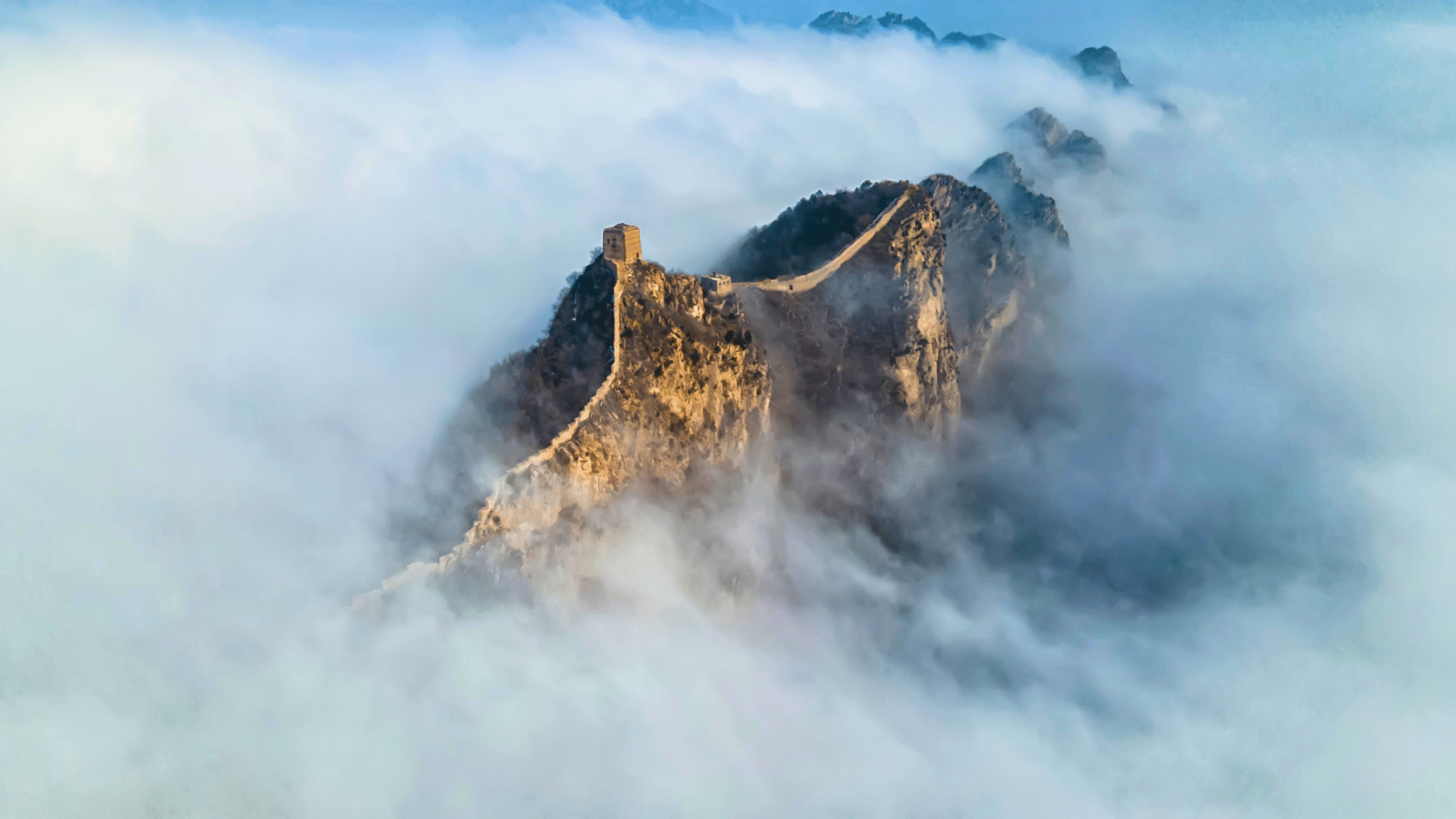
Simatai can produce Great Wall sea of clouds too, but not on a normal day ticket. Its day session doesn’t open until 09:00 — well past the point the layer usually burns off. Most of what circulates online from Simatai is filmed by the wall’s own overnight staff or very early hikers, not day visitors. A Great Wall preservation worker once filmed cloud sea rolling across Simatai at 6:00 AM after overnight rain.
What you can actually plan instead
For a normal trip, Simatai’s cloud sea is a lucky bonus from the evening before, not something you plan a sunrise around. What you can plan is the night session itself. The night ticket plus round-trip cable car runs CNY 160 per person, and the cable car is mandatory after dark — there’s no walking up or down.
Ride up before sunset and watch the wall light up as dark falls over Gubei Water Town below. If the air is humid and a clear night follows, there’s a real chance the valley fills with mist by the time you’re heading down.
If cloud sea specifically is what you’re chasing, Jinshanling remains the better bet by a wide margin.
4. Why the Other Sections Rarely Deliver
Section | Gate time (peak season) | Annual visitors | Why it falls short |
|---|---|---|---|
Jiankou | No fixed hours | Untracked (unofficial) | Real cloud sea, but no official infrastructure — we don’t guide clients here |
Mutianyu | 7:30 AM | Several million | Opens after the cloud layer usually burns off |
Badaling | 6:30 AM | Same timing issue, plus a flatter valley that holds less moisture |
Jiankou’s ridge is capable of producing Great Wall sea of clouds. Steep drops and loose stone in the dark are what keep us from guiding clients there, not the scenery. If cloud sea is the draw and safety matters to you, Jinshanling gets a comparable result without the exposure.
What about paid early-entry packages?
Both sections sell products that get you past the regular gate time.
Badaling’s “Morning Great Wall” (晨长城) package runs 4:30–7:30 AM, capped at 50 guests a day, bundled with a hotel stay and cable car, available through the working season. It does put you on the wall early enough. But Badaling’s valley is flatter and holds less moisture than Jinshanling’s, so what you’ll typically catch is thin, patchy mist rather than a real layer.
Mutianyu’s equivalent is its New Year’s Sunrise Viewing Event, held every January 1st — the one day a year you can be on the wall there for sunrise. But January sits deep in the dry season, exactly when cloud sea is least likely to form anywhere near Beijing. It’s worth the trip for the sunrise itself and the atmosphere. Just don’t go expecting cloud sea on top of it.
→ Great Wall Sunrise and Sunset: All 8 Sections Compared covers both packages in full, along with booking channels and pricing.
5. Best Time to Go and Reading the Forecast
Best months
May through October is the working window for Great Wall sea of clouds. Based on our own client trips, September and October give the best mix. Cloud sea shows up one morning in three, and the air is clear enough afterward for a real shot.
July and August actually produce cloud sea about as often, sometimes more, since the humidity after a summer storm is exactly what this needs. But haze cuts visibility once it clears, so the photos are softer.
May and June sit in between: fewer rainy triggers than summer, less reliably clear than autumn.
What we actually check the night before
Check | What you’re looking for |
|---|---|
Rain timing | Ending in the evening or overnight — not still falling at 3 AM |
Sky condition after rain | Clearing, not just “not raining” |
Overnight temperature swing | Over 10°C between day and night |
Wind forecast | Light, under about 10 km/h, for early morning |
Forecast detail | Hourly, not the daily icon — it hides the actual timing |
A full day of steady drizzle with no real break usually means skip it. Chinese weather apps often compress “rain ending 8 PM, clear by 2 AM” into a single “rainy day” symbol, so the hourly view matters more than the summary.
Farmhouse and hotel owners near the gate watch this every night and are sometimes more reliable than a generic app. We tell clients to commit to an attempt the evening before, once the overnight forecast is in — not to book it days ahead.
6. What a Realistic Morning Looks Like
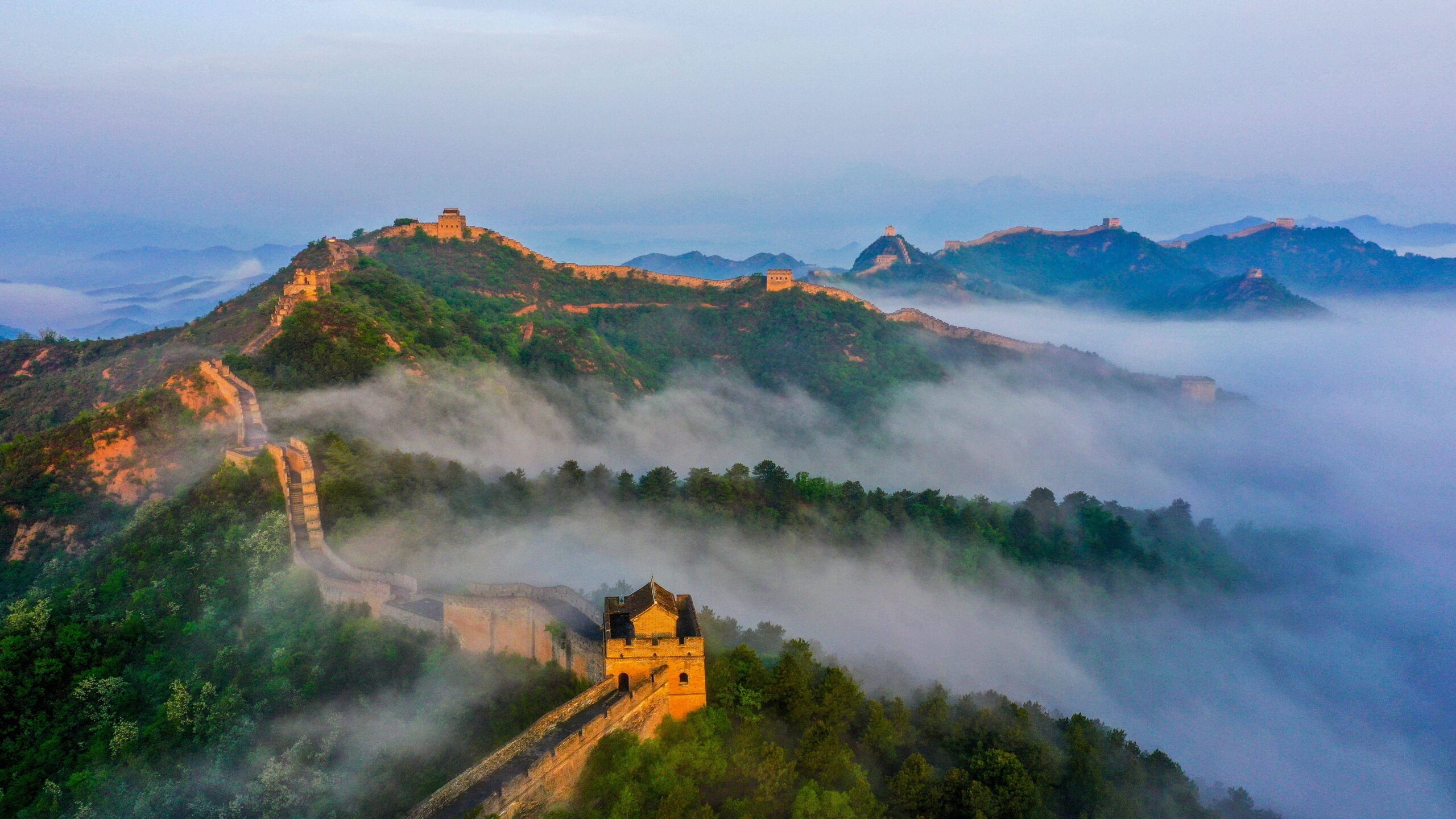
Great Wall sea of clouds isn’t all-or-nothing. Most mornings land somewhere in between the postcard shot and total fog, and knowing what each stage looks like helps you judge whether to keep waiting or move on.
What you see | What’s happening |
|---|---|
Full layer, towers floating above it | Conditions lined up — this is the shot you came for |
Partial layer in the low valleys, ridge clear | Inversion formed but didn’t fill the whole basin |
Thin mist that clears fast | Not enough moisture, or too much wind overnight |
Plain fog, under 50m visibility | You’re inside the cloud layer, not above it |
A full layer usually holds 30–60 minutes before thinning, so there’s no rush once it shows up.
A partial layer is often more dramatic to shoot than a full one, since the wall’s shape stays visible against the cloud.
Thin mist sometimes reforms in patches as the sun warms unevenly, so it’s worth waiting 15–20 minutes before giving up.
Plain fog has no fix that morning — the sun usually breaks through within an hour of sunrise, but not into anything resembling cloud sea.
A no-show morning still isn’t wasted time. Once the light’s up, the classic route east from the main gate covers close to two dozen towers most day visitors never reach. It runs 砖垛口 to General Tower, then Xiaojinshan and Big Jinshan Tower, then down through East Five-Window Tower — about three hours. An empty Jinshanling at sunrise, cloud sea or not, is still one of the best things we send clients to see in Beijing.
Frequently Asked Questions
How often does the Great Wall actually have a sea of clouds?
One morning in three at Jinshanling during peak season (May–October), based on our own client trips chasing Great Wall sea of clouds. It’s higher after a rainy stretch and close to zero during a dry week, so a single day’s forecast matters more than the season alone.
Is it worth going to Jinshanling just for the cloud sea, or should I go anyway?
Go for the sunrise regardless — an empty Great Wall at dawn is worth the trip on its own. Treat the cloud sea as a bonus. Booking a trip around cloud sea alone, with no flexibility on the date, is a bad bet no matter how good the season looks.
Can I predict the cloud sea more than a day out?
Not reliably. Weather forecasts this specific — clearing skies right after evening rain, in one mountain valley — are only trustworthy 12 to 24 hours ahead. We tell clients to decide the evening before, not weeks in advance.
What if it’s cloudy or foggy but not the “sea of clouds” look?
That means you’re either below the layer (plain fog, low visibility) or the layer never separated from the ridge cleanly. Gate hours don’t change, but there’s nothing you can do about the shot that morning. Check the forecast again for the next clear night and try again if your schedule allows.
Does the sea of clouds happen at other Great Wall sections near Beijing, like Mutianyu or Badaling?
Rarely, even with their paid early-entry products. Badaling’s “Morning Great Wall” package gets you on the wall before 7:30 AM, but the valley there is flatter and holds less moisture, so you’re more likely to see thin mist than a real layer. Mutianyu’s only sunrise access is its New Year’s Day event, which falls in the driest part of the year — wrong season for cloud sea regardless of timing.
Chasing a specific weather window on a short Beijing stay takes flexible planning, not a fixed date months out. Get in touch and we’ll build the timing around the forecast, not the other way around.