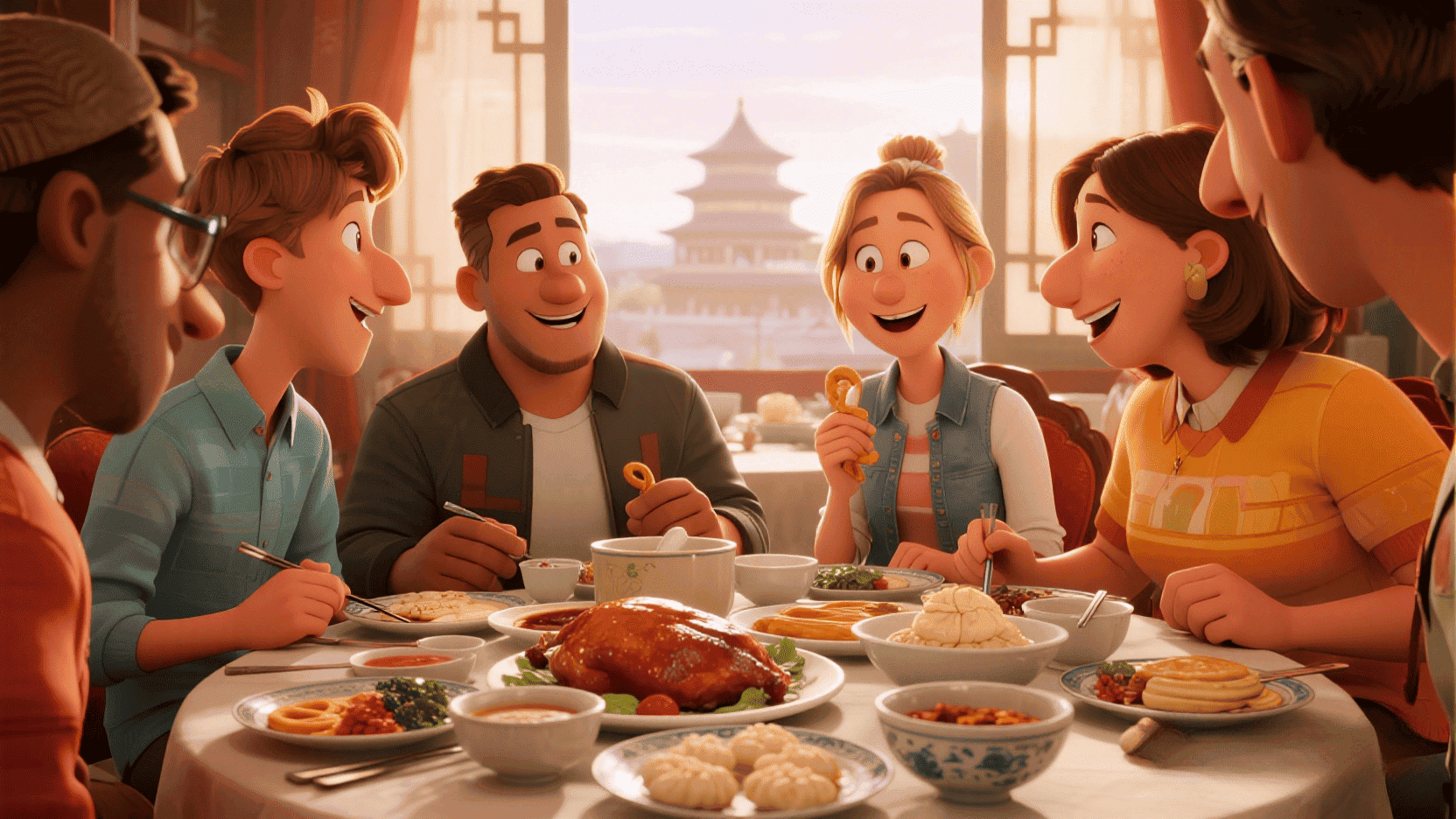
What & Where to Eat in Beijing: 12 Must-Try Dishes
Ask any traveler who has been to Beijing what they remember most. More often than not, it isn’t the Great Wall. It’s the duck. Or a bowl of noodles eaten standing in a hutong at 8 AM. Or the moment they bit into a tanghulu and understood why people have been making it the same way for 700 years.
We’ve been organizing tours in Beijing since 2006. This guide is what we tell our own guests before their first meal. What to order, where to go, what each dish actually tastes like. And — occasionally — what to skip.
Table of Contents
Beijing Cuisine: What Makes It Different From the Rest of China
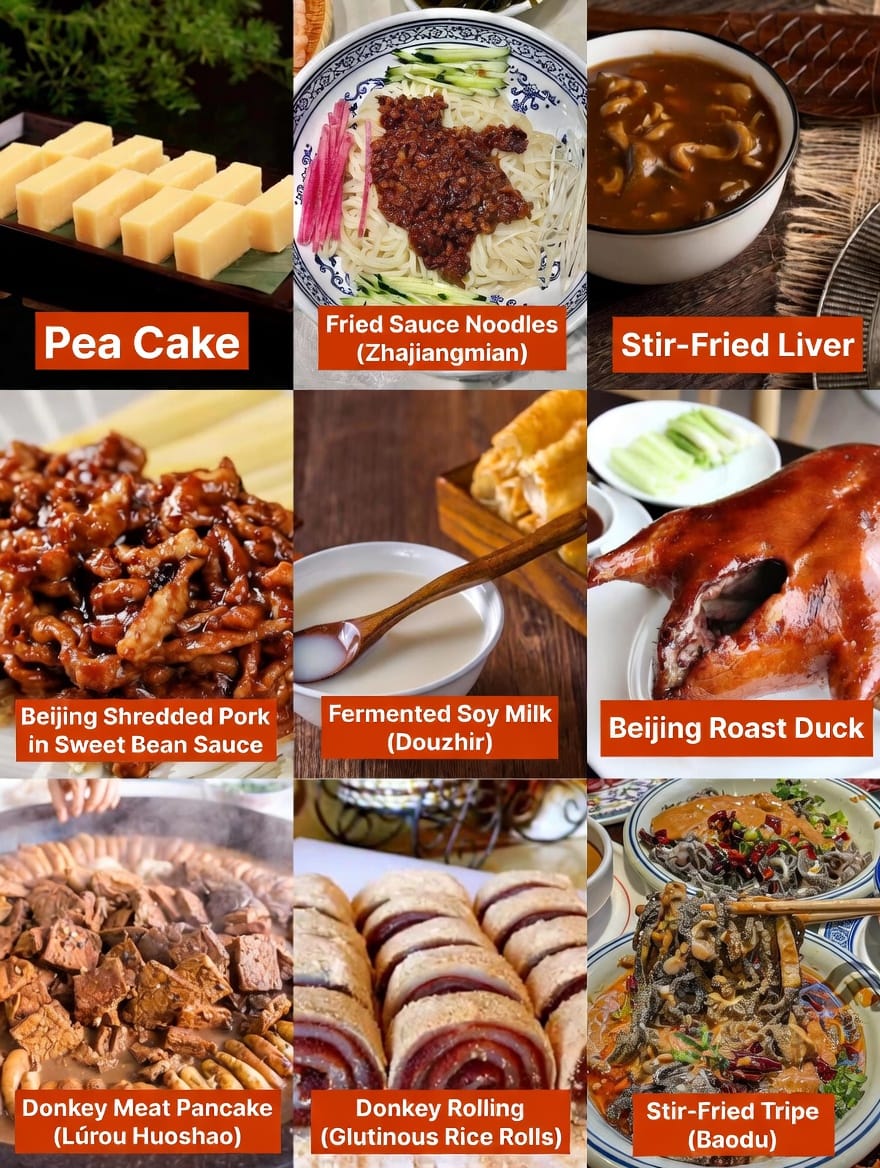
The Chinese food most international visitors know — stir-fries, fried rice, sweet-and-sour dishes — is almost entirely absent from traditional Beijing cooking.
Northern China runs on wheat, not rice. Winters here are long and dry, and the food reflects that history: thick hand-pulled noodles, fermented bean paste sauces, roasted meats, dumplings built for a cold morning. The dominant flavors are savory, slightly salty, and rounded out with sesame.
Beijing was also the capital of an empire that stretched from Central Asia to Manchuria. Mongolian copper-pot cooking, Manchu court recipes, and Hui Muslim traditions all left their mark on the city’s food. You can see this on a single street: a halal lamb hotpot restaurant next to a thousand-year-old dumpling shop. Next to that, a place serving the fermented drink the imperial court ate for breakfast.
It is not spicy food. Chili oil and garlic appear, but they’re accents, not the point. If you want Sichuan-level heat, you can find it in Beijing — but that’s not what this city is known for.
One pattern we notice consistently: visitors from southern China — Guangdong, Shanghai, Fujian — find Beijing food saltier and heavier than expected. That’s accurate. Northern cooking uses fermented pastes, salt-cured vegetables, and sesame in ways that southern palates read as intense. Give it a day to recalibrate. By day two, the zhajiangmian tastes like exactly what it is: deeply satisfying, not overwhelming.
For a broader picture of how Beijing’s cuisine sits within China’s regional food traditions, see our Beijing restaurant guide.
1. Peking Duck
Start here. Every time.
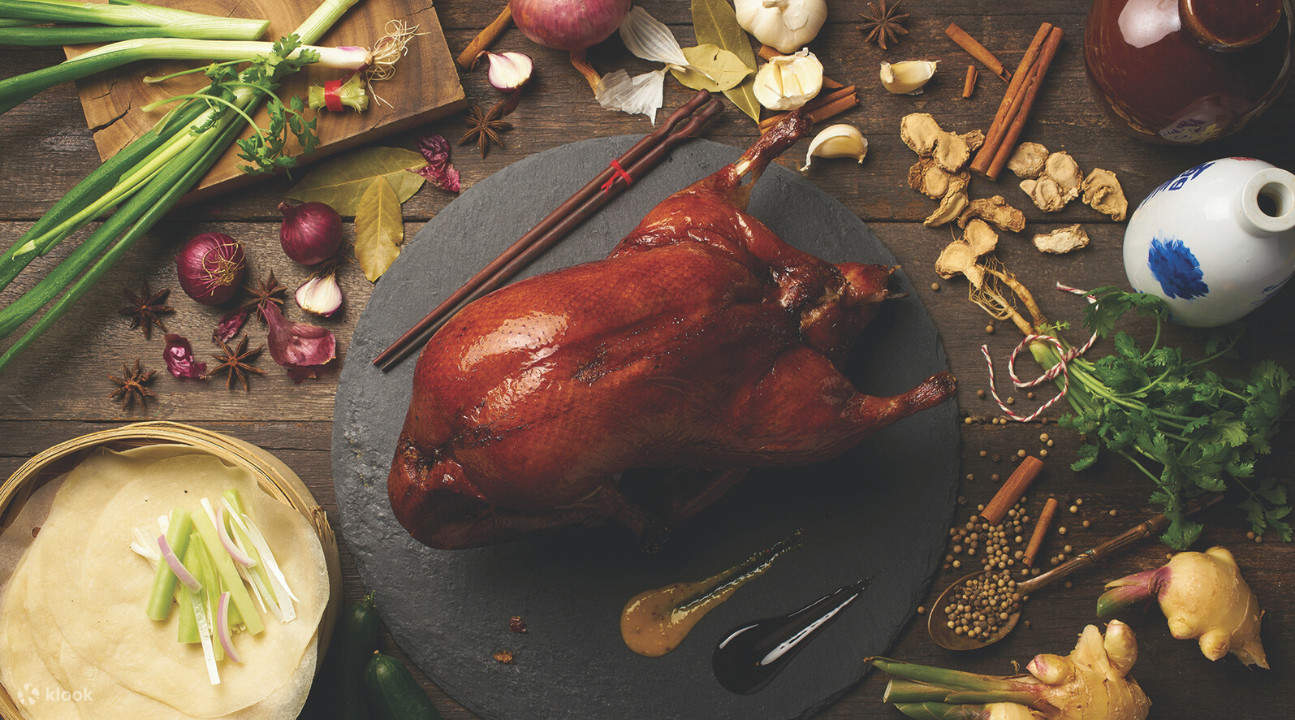
The duck is air-dried, lacquered with a maltose glaze, then hung in an open wood-burning oven and roasted until the skin goes amber and brittle. What comes to the table is carved tableside. A good carver gets more than 100 slices — mostly crispy skin with just a sliver of fat and meat attached. You wrap each piece in a thin flour pancake with cucumber, scallion, and sweet bean paste.
This is not a dish you eat quickly. The ritual is part of it.
Two things most guides don’t mention: First, dip the skin in white sugar, not hoisin. That’s the old Beijing way. It sounds odd until you try it. Second, the side dishes matter. A good duck restaurant will have stir-fried pea shoots, sautéed lily bulbs, or seasonal vegetables that balance the richness of the duck. Don’t ignore the menu past page one.
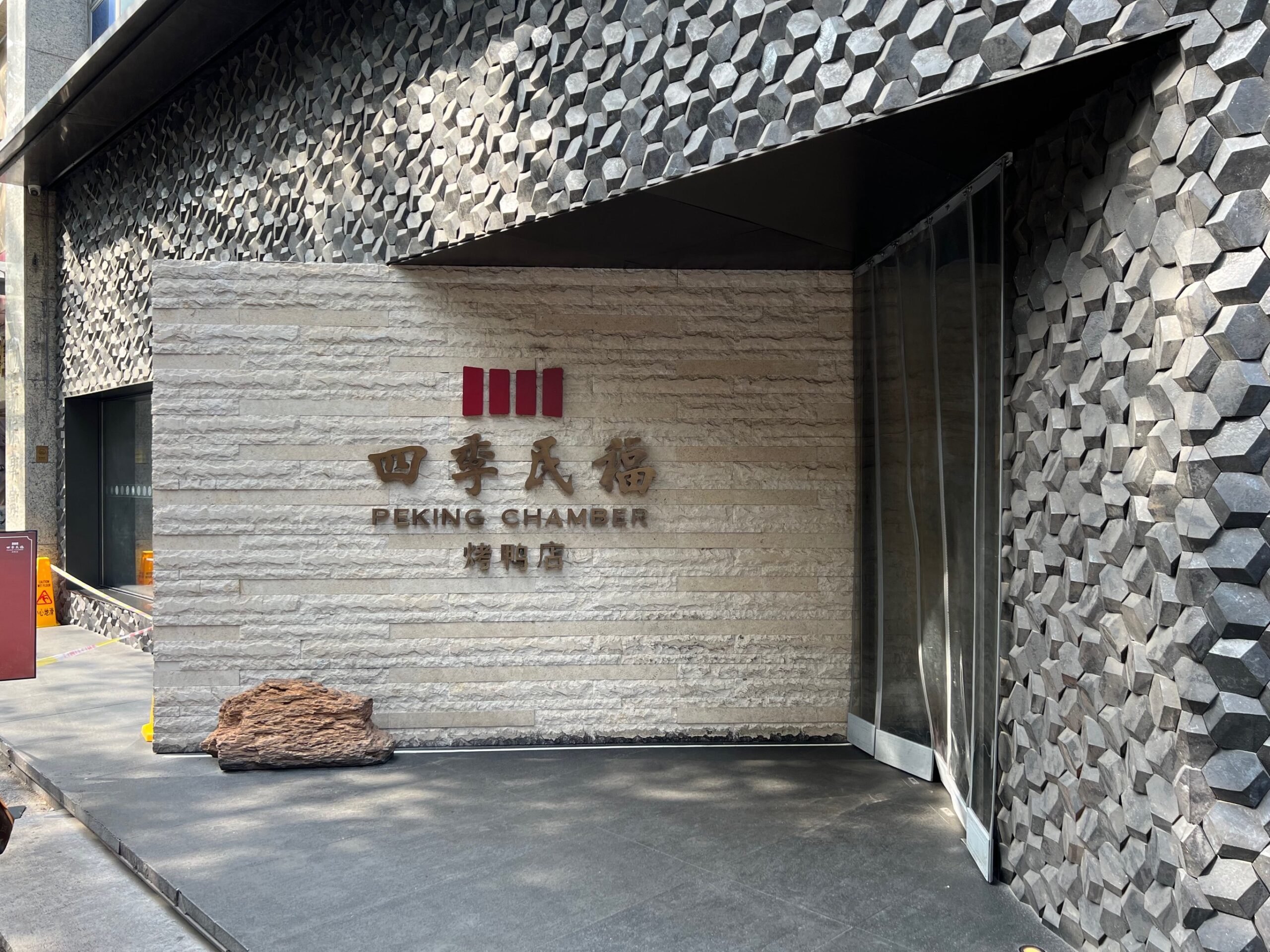
On which restaurant to choose: Quanjude is iconic and fine, but it runs on tourist volume. Dadong produces technically superior duck — leaner, crispier skin — and the setting is modern. Siji Minfu (四季民福) is where Beijing residents eat on special occasions, with queues that tell you everything. The Dashilan branch near Qianmen often has waits of 90 minutes on weekends. Get there before it opens.
One honest note from a recent visitor who grew up in southern China: at Siji Minfu, the skin was thick and the pancakes paper-thin. She confirmed that dipping in white sugar is the correct move. Her one flag: the baodu side dish “felt like eating rubber.” It’s a common reaction from first-timers. Order the stir-fried pea shoots (巧拌豆苗) instead — light, clean, and genuinely good at cutting through the duck fat.
Restaurant | Style | Approx. Price/Person | Best For |
|---|---|---|---|
Quanjude (全聚德) | Classic hanging-oven roast | ¥200–280 | First-timers wanting the iconic name |
Dadong (大董) | Leaner, refined, modern setting | ¥250–350 | Food lovers who want the best skin |
Siji Minfu (四季民福) | Local crowd, lively atmosphere | ¥200–259 (half duck ¥259) | Authentic Beijing dining feel |
Bianyifang (便宜坊) | Closed-oven method, 600+ years old | ¥180–250 | History buffs |
The Forbidden City and Siji Minfu’s Wangfujing branch are a 10-minute walk apart. That pairing is a reliable afternoon.
For current prices, booking tips, and our full restaurant breakdown, see our Peking Duck restaurants in Beijing guide.
2. Zhajiangmian — Fried Sauce Noodles
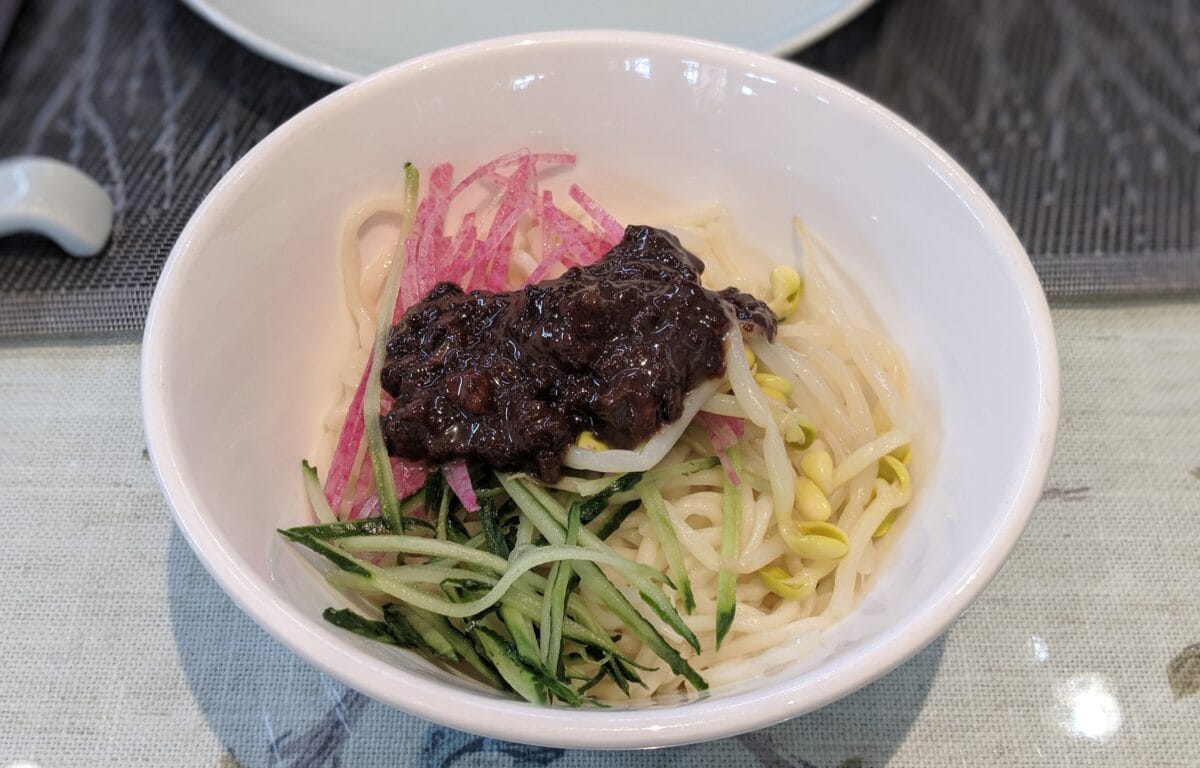
If Peking duck is Beijing’s formal face, zhajiangmian is what it looks like at home.
Thick hand-pulled wheat noodles, cooked just past al dente, topped with a slow-fried sauce of minced pork and fermented yellow soybean paste. On the side: julienned cucumber, bean sprouts, shredded radish, fresh scallion. You mix it all together at the table. The sauce is salty, a little sweet, and deeper than it looks — the fermentation gives it a complexity that takes a few bites to notice.
The sauce is where this dish lives or dies. It needs to fry slowly until the oil separates out and the paste darkens. There’s no shortcut. A rushed sauce tastes flat and starchy; a proper one coats every strand. This is why inconsistency is the main complaint about even well-regarded spots — if the kitchen is busy or the cook changed, you’ll taste it.
Fangzhuanchang 69 (方砖厂69号) is probably the most-searched zhajiangmian restaurant in Beijing. One visitor who ate at both the original and a branch noticed the main store runs saltier. She also flagged something nobody mentions in reviews: at the main store, they don’t take your order. A bowl of noodles simply appears in front of you. Old Beijing custom. It startled her. Both visits were good. The 糖蒜 (sweet garlic) and 腊八蒜 (green pickled garlic) on the table are not decorative. Eat them with every mouthful.
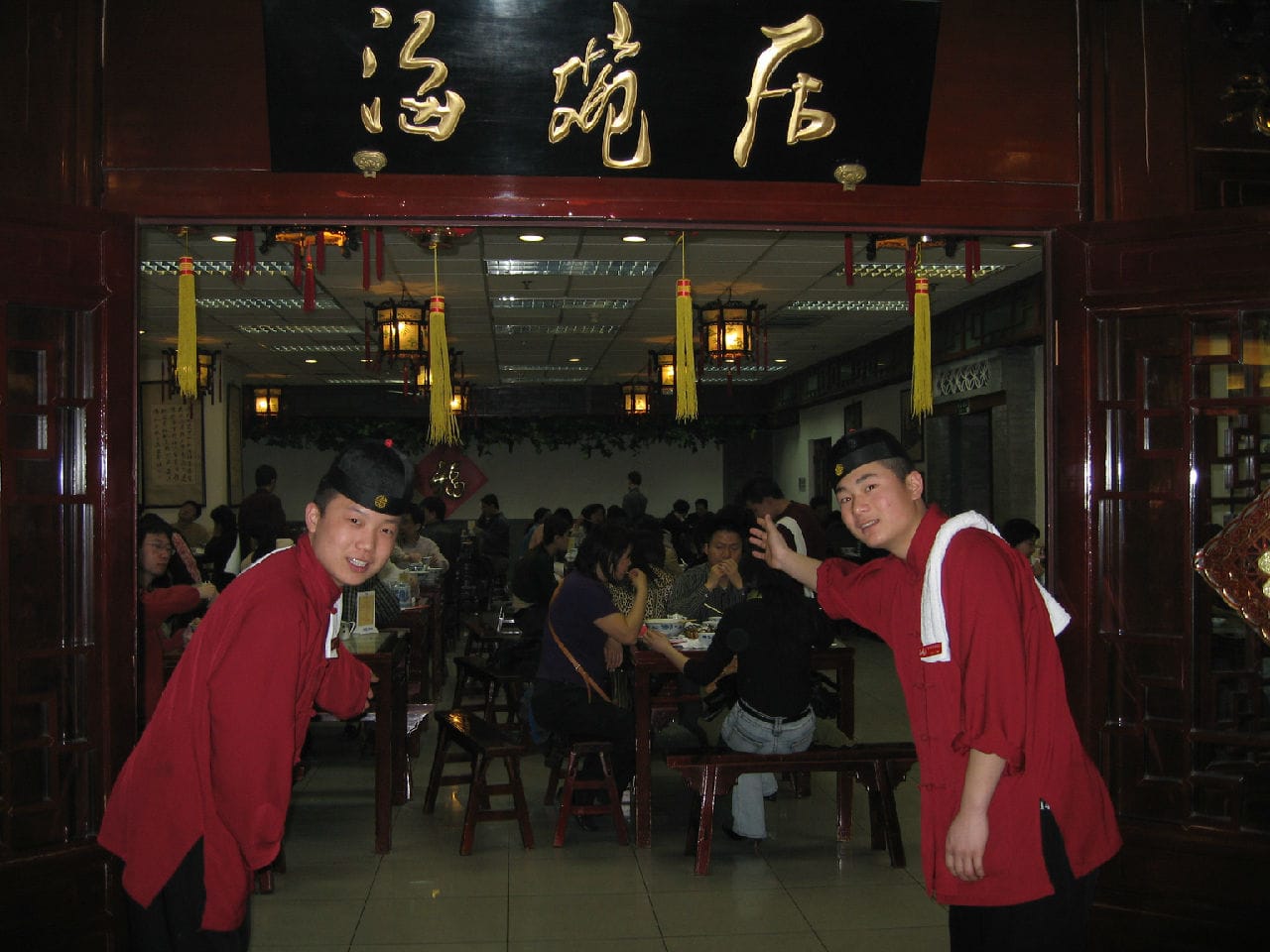
Haiwanju (海碗居) is reliable. They serve it in enormous bowls — 海碗 means “sea bowl” — with a loudly welcoming atmosphere and portions that are hard to finish alone. For something quieter and more neighborhood, look for a small noodle shop in any residential hutong. The ones without English menus are usually the ones worth eating at.
Mix thoroughly before eating. The sauce pools at the bottom until you dig in. Add chili paste gradually. Eat it while hot — the sauce stiffens quickly as it cools. Price: ¥20–40 per bowl.
3. Jianbing — Beijing Breakfast Crepe
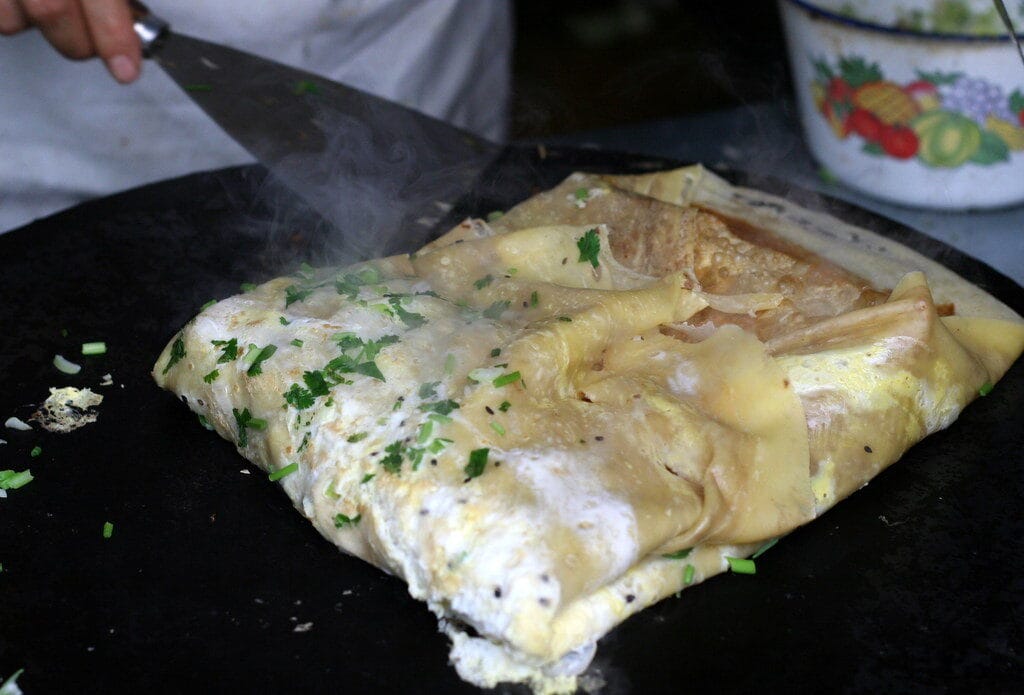
Most travelers walk past this without realizing they’ve just passed the best breakfast in Beijing.
A jianbing starts as a thin batter of mung bean and wheat flour spread across a flat iron griddle. The vendor cracks an egg over the wet batter, scatters scallion and cilantro, then flips it. Sweet bean paste and chili paste go on next. A cracker (薄脆 bàocuì) adds crunch. The whole thing folds into a compact, crispy package.
Total cooking time: about 90 seconds. Cost: ¥8–15. It’s fast, hot, filling, and tastes exactly like a Beijing morning.
The best jianbing comes from busy street carts in the hutongs between 6:30 and 9:30 AM. Look for a cart with a line of office workers — they know exactly where to go. The vendor near the Yonghegong Lama Temple area (Dahua Jianbing 大华煎饼) is consistently well-regarded by locals.
Don’t eat it at Wangfujing. The tourist-facing versions at snack streets are overpriced and usually inferior. The hutong cart version costs half as much and tastes twice as good.
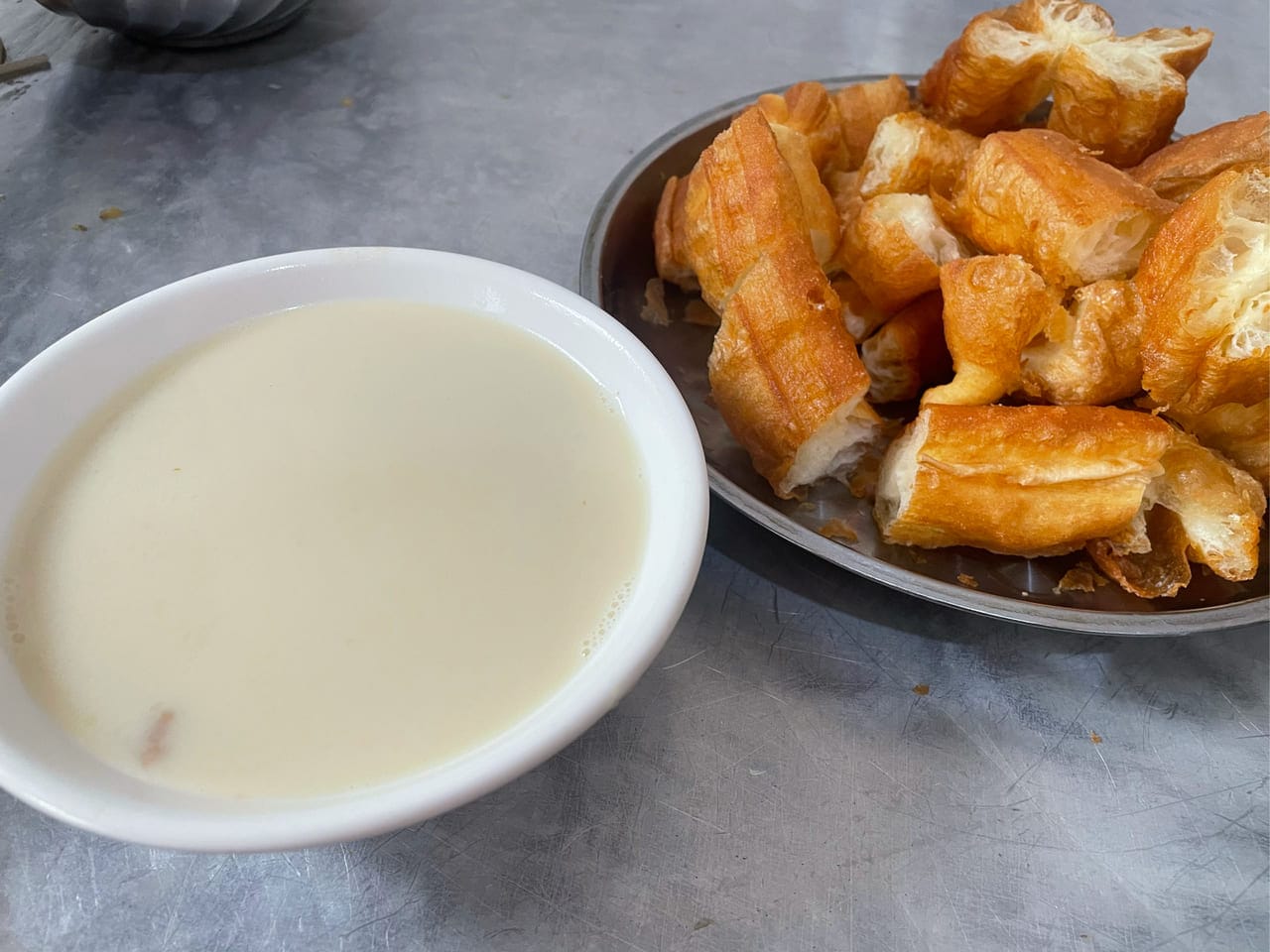
If you want a more traditional Beijing breakfast, the combination of 油条 (yóutiáo — deep-fried dough sticks) with hot 豆浆 (dòujiāng — soy milk) has been the default morning meal for generations. Find it at any neighborhood breakfast stall. Cost: under ¥10 for both.
4. Beijing-Style Copper-Pot Hotpot

This is not Sichuan hotpot. No red oil, no numbing spice, no theatrical broth options. Beijing hotpot is quieter than that — and the food is better for it.
A traditional copper pot, heated by charcoal fed through a central chimney, holds a clear broth of just water, ginger, and scallion. Paper-thin slices of Inner Mongolian lamb go in for 10 to 15 seconds. Then straight into a dipping sauce you build yourself: sesame paste thinned with water, fermented tofu, garlic, chili oil, and soy sauce. The sesame paste is the soul of this meal.
The lamb is the point. Because the broth is completely neutral, there’s nowhere for inferior meat to hide. Good Beijing hotpot lamb is sweet, clean, and barely gamey. You taste the animal, not the sauce.
Nanmen Hotpot (南门涮肉), Temple of Heaven branch: the lamb arrives in thick, generously-cut slices. One visitor arrived at 6:30 PM, took a number, and sat down at 8:22. Her verdict — lamb that held its shape when the plate was turned upside down, meat thick and visibly fresh. Nearly two hours waiting, and she called it absolutely worth it. The sesame paste runs slightly saltier than at Niujie competitors; worth knowing if you’re salt-sensitive.
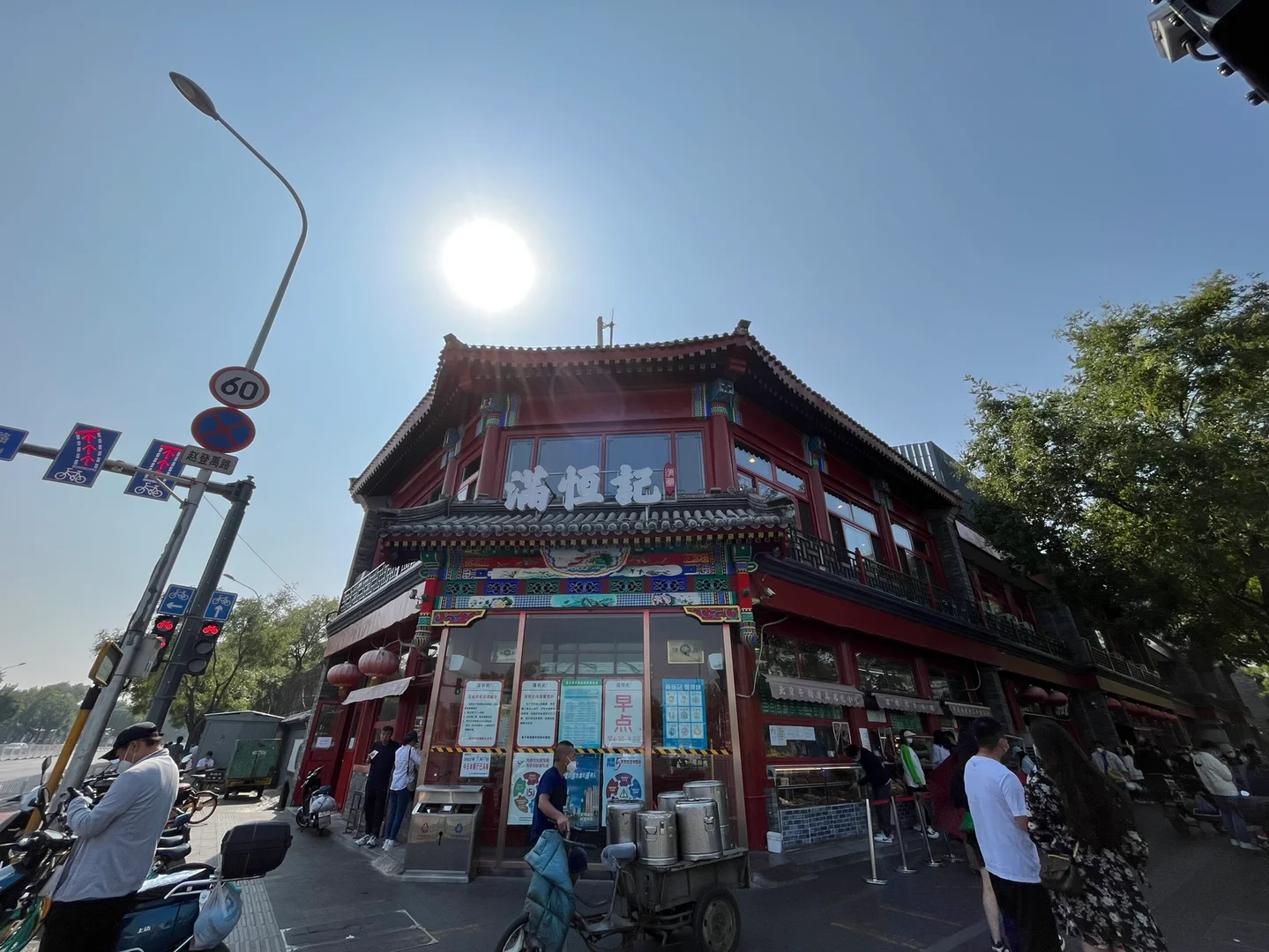
Mǎn Héng Jì (满恒记), Niujie: the only location in Beijing, no franchises, halal. Lamb is fresh but cut thinner than Nanmen — less visual drama, same quality. The sesame flatbread with less sugar (少糖) is genuinely good. The baodu here is what veteran Beijing eaters point to, though first-timers frequently find it unremarkable.
Jubaoyuan (聚宝源), also on Niujie: the most famous hotpot address on the street, with weekend queues stretching the full length of the block.
Go with four or more people. Order extra sesame buns (芝麻烧饼) to soak up the broth at the end. Best from October through March, but available year-round. Budget ¥80–150 per person.
5. Dumplings

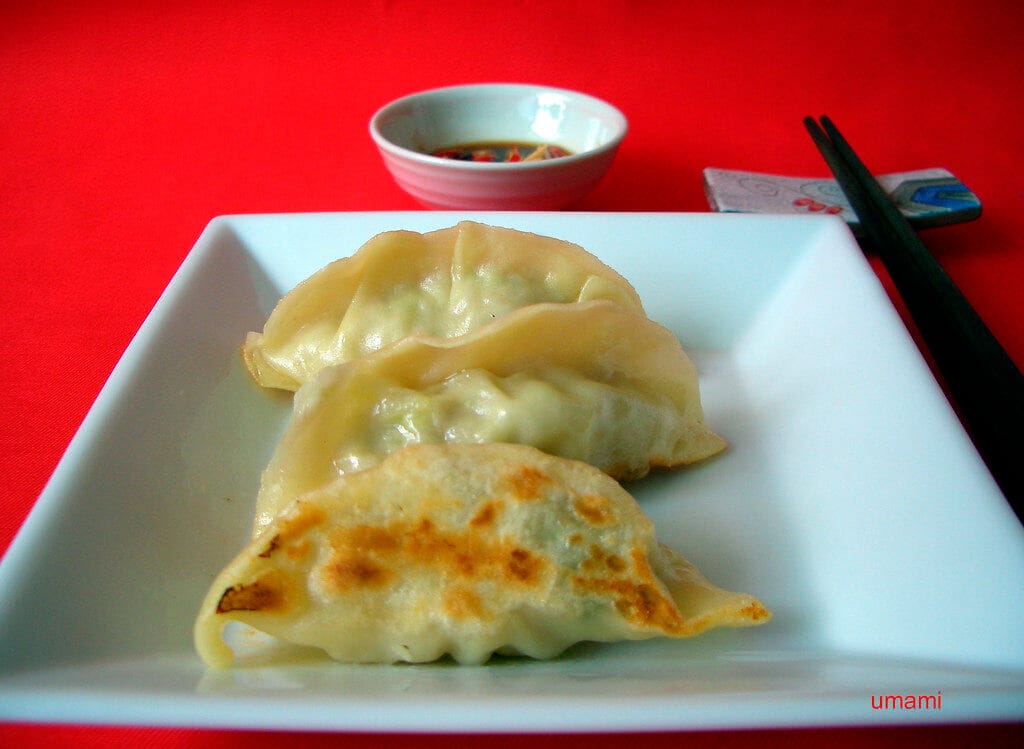
Beijing dumplings are not delicate. They’re not the thin-skinned Cantonese variety. The wrappers are thick and slightly chewy, built to hold a substantial filling — pork and cabbage, pork and chive, lamb and scallion — without tearing when you pick them up.
Boiled dumplings (水饺) are the standard. Pan-fried (锅贴, potstickers) are better. The bottom of a good potsticker goes into an oiled pan until it forms a deep-brown crust that’s almost chewy from the caramelization. When you bite through, the contrast between the crust and the soft top wrapper and the hot juicy filling is its own thing entirely.
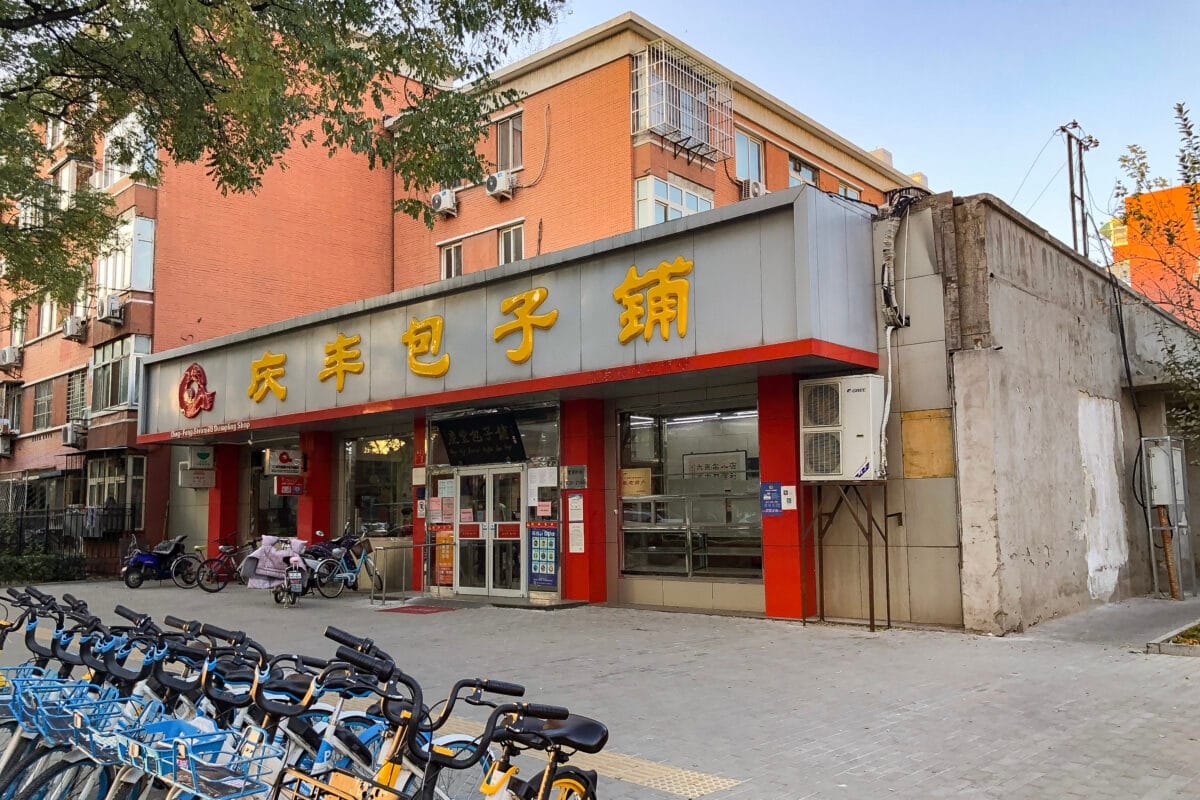
Qingfeng Steamed Bun Shop (庆丰包子铺) has been in Beijing since 1948. Their pork-and-fennel steamed dumplings cost about ¥21 for a set. It is one of the best-value meals in the city. A small piece of trivia: President Xi Jinping ate here without ceremony years ago, queuing alongside regular Beijingers. The story became famous. The food was already good before the story.
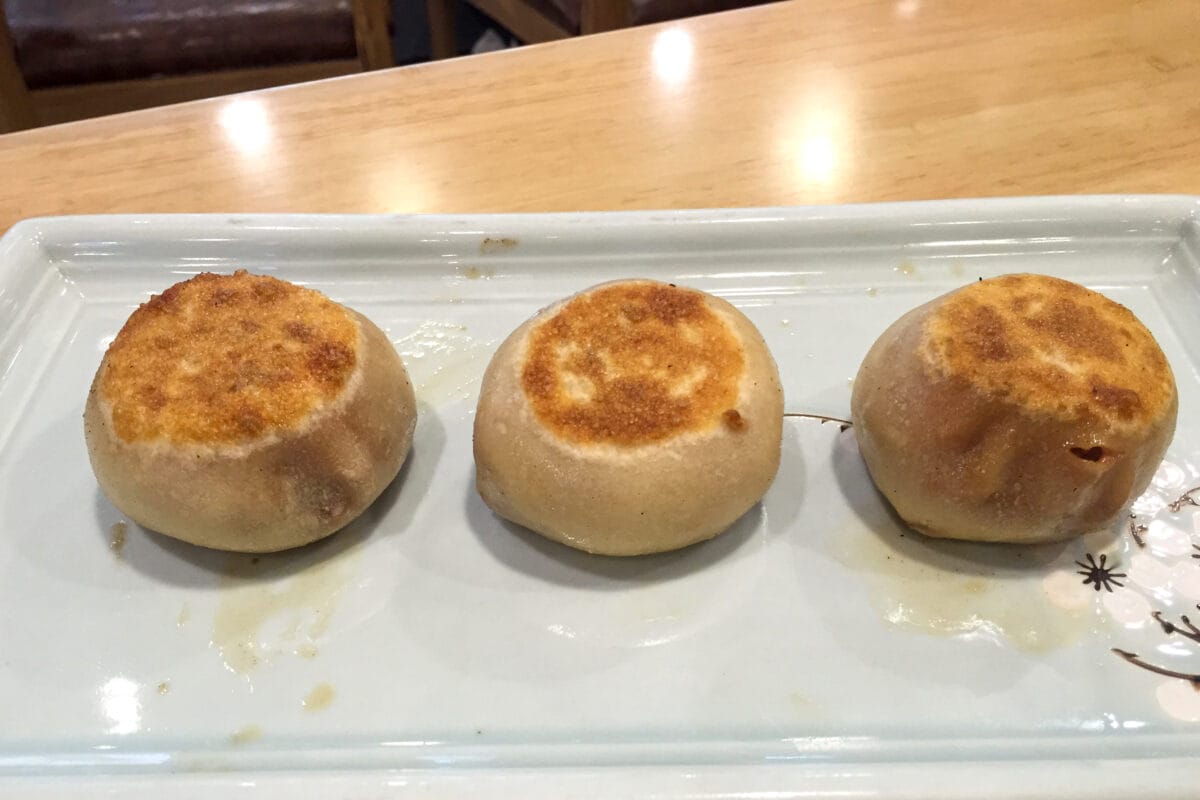
While you’re in the neighbourhood: 门钉肉饼 (méndīng ròubǐng), a thick pan-fried beef patty named after the decorative studs on imperial palace doors. The filling is loose and juicy — use chopsticks to poke a hole first, let the steam out, then bite. Don’t skip this step; the inside is extremely hot. Héyán Meat Pie (河沿肉饼), near Wangfujing, is well-regarded: one beef patty runs ¥30, and a single order is enough for one person. The accompanying sour-and-spicy soup (酸辣汤, ¥22) is ordinary — skip it and spend the money on a second patty.
6. Tanghulu — Candied Hawthorn Skewers
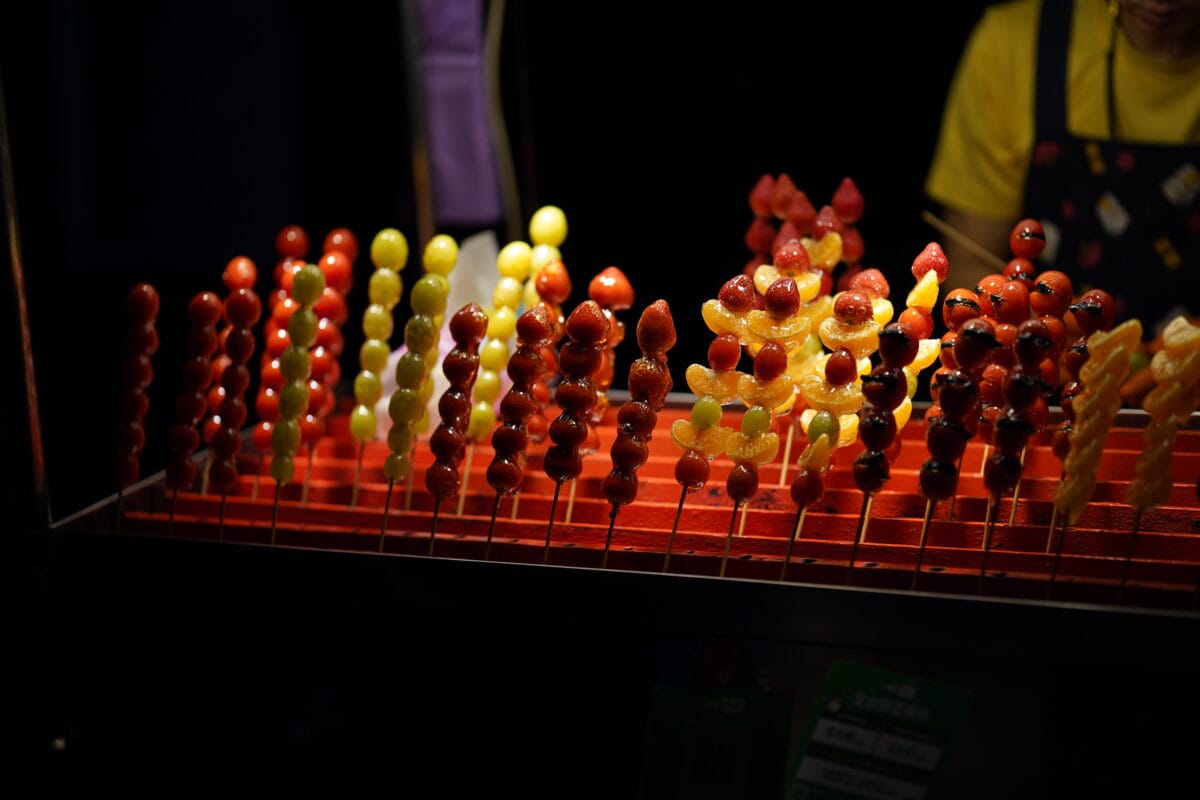
Walk through any hutong and you’ll spot them: bright red beads on a bamboo skewer, sealed in a glassy hard sugar shell.
The classic version uses hawthorn berries (山楂 shānzhā) — small, tart fruit with a faint astringency that the sugar shell transforms completely. You bite through the shell and it shatters. The fruit inside is chewy and sour-sweet in a way that cuts straight through a heavy meal. Modern versions come with strawberries, grapes, cherry tomatoes. The hawthorn original is the right one.
Buy it the same day you plan to eat it. In humid weather the sugar shell absorbs moisture and goes tacky within a few hours. A fresh one should snap cleanly when you bite it. Buy from street carts in the hutongs or along Nanluoguxiang, not from tourist shops. Price: ¥5–15 per skewer.
Buy one and take a slow walk through the Beijing hutongs near the Drum Tower around 4 PM. That combination is one of those things Beijing gets right without trying.
7. Zhizirou — Beijing Charcoal Grilled Meat
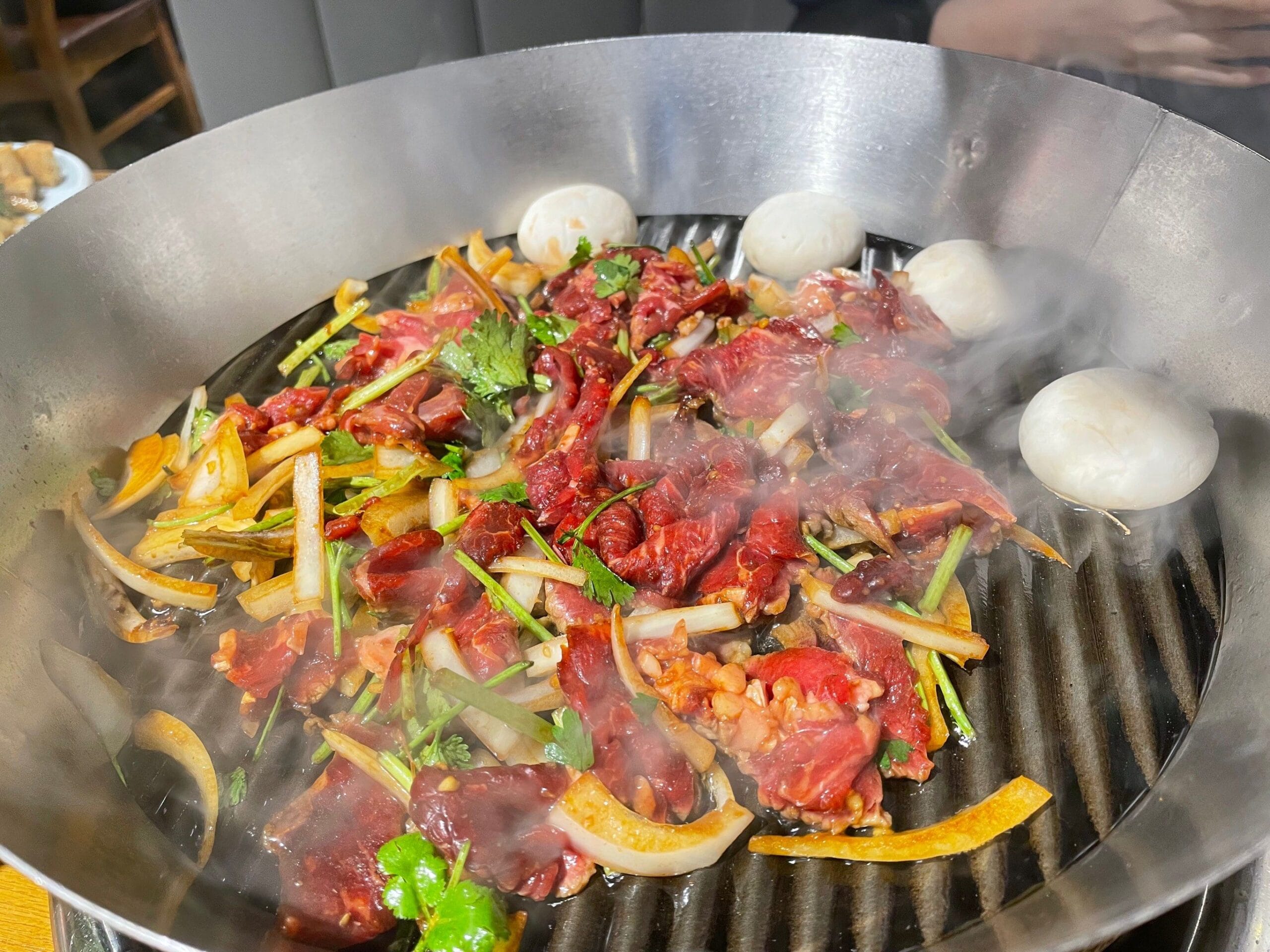
Most visitors to Beijing know about Peking duck and copper-pot hotpot. Far fewer know about Beijing’s third great meat tradition: zhizi kaorou, charcoal grilled meat eaten over an iron griddle.
At restaurants like Liuji Zhizi Kaorou (刘记炙子烤肉), tucked into a hutong in the Hufangqiao area, fresh lamb and pork go onto a ribbed iron grill over charcoal. The meat sizzles loudly — that’s the sound Beijing locals associate with a proper summer or autumn night out. The lamb with wild chive (沙葱羊肉) is the dish to order. The fat renders into the grill grates and the smoke seasons everything.
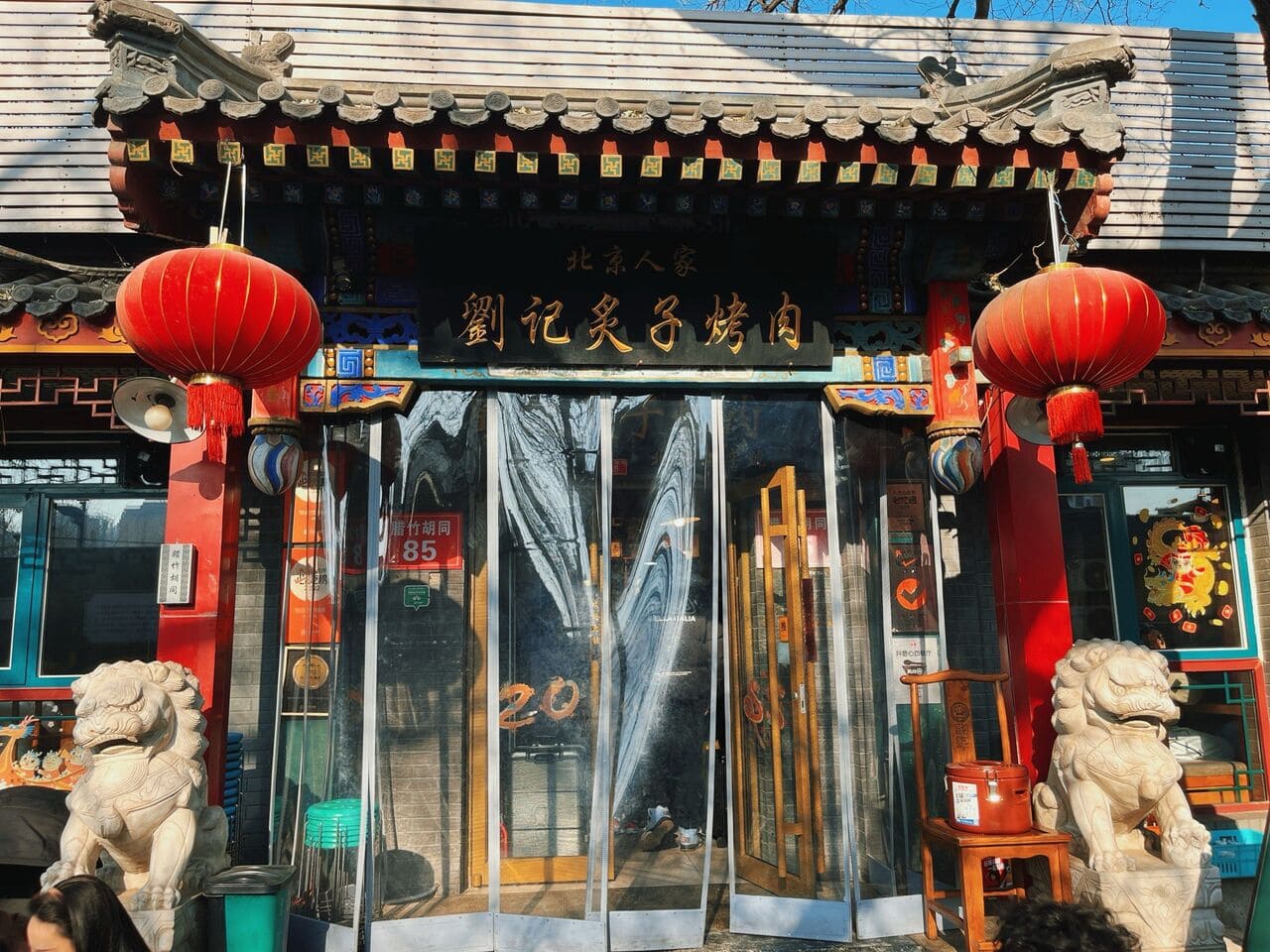
One visitor described following a sign to the hutong entrance, hearing the sizzle before seeing the restaurant, and immediately knowing they’d found the right place. The restaurant has a devoted local following among Beijing residents who consider it one of the last proper zhizi kaorou spots left in the city.
This is not a tourist-facing restaurant. The menu may be Chinese-only. Show the characters 炙子烤肉 on your phone if needed. Price: ¥60–100 per person.
8. Douzhi — Fermented Mung Bean Drink
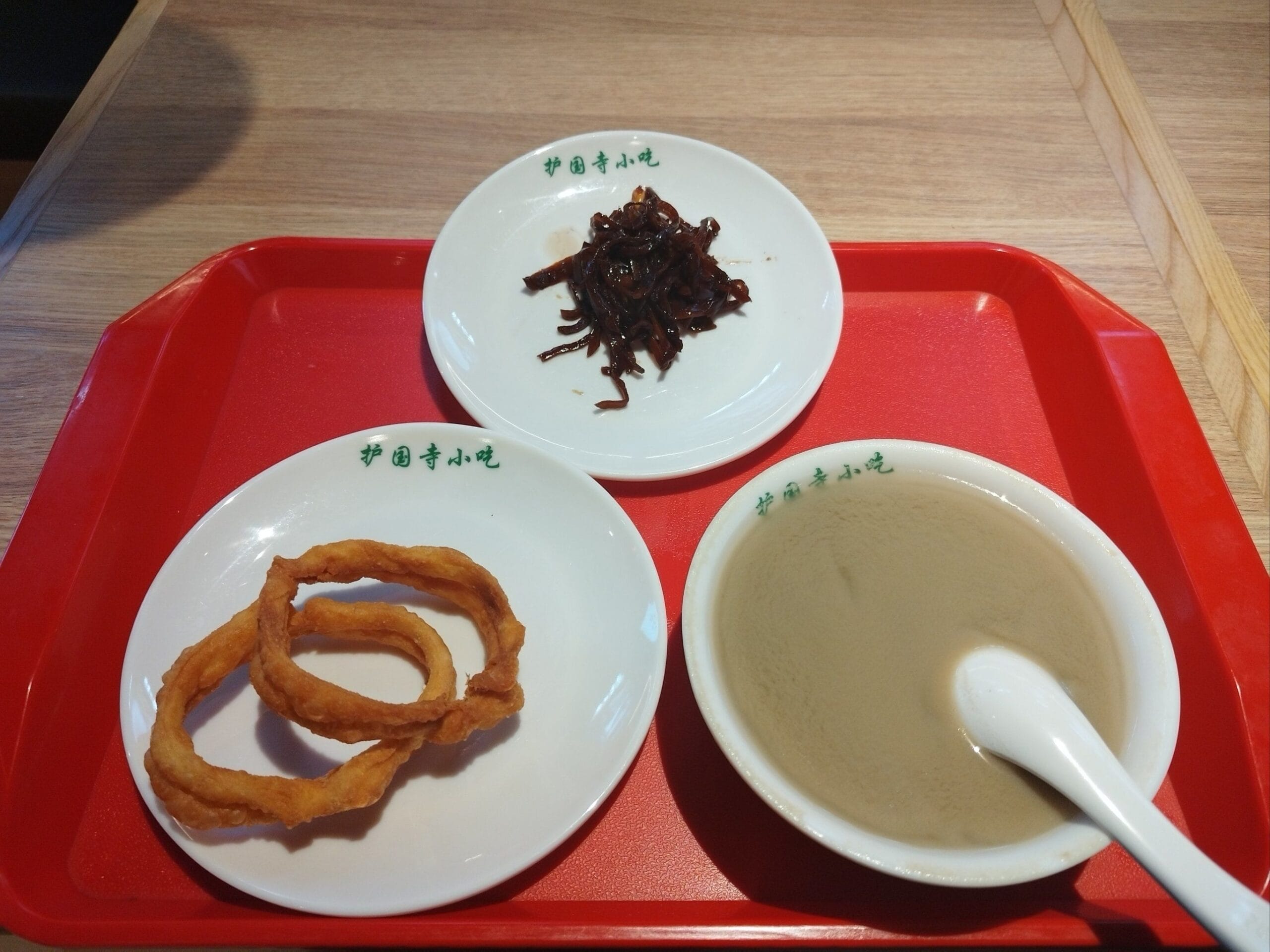
We include this not because we expect you to love it — but because trying it is genuinely part of understanding Beijing.
Douzhi is a thin, grey-green drink made from the fermented liquid left over from making mung bean starch. It’s sour, earthy, slightly funky, and served warm. Beijingers drink it for breakfast with deep-fried rings (焦圈 jiāoquān) and spicy pickled vegetables.
Here’s the honest assessment: most visitors can’t finish a bowl. One southerner tried both: the Qianmen flagship of Yinsān Dòuzhī (尹三豆汁, ¥10) and the Huguosi version (¥4). The Yinsān bowl is thicker, the fermentation more concentrated — harder to get through. The Huguosi bowl is thinner and closer to what Beijingers grew up drinking. Her verdict on both: “tastes like something went off.” That reaction, incidentally, is shared by a significant portion of Beijing residents under 40. The point of trying it is not to enjoy it. It’s to understand why the generation before them does.
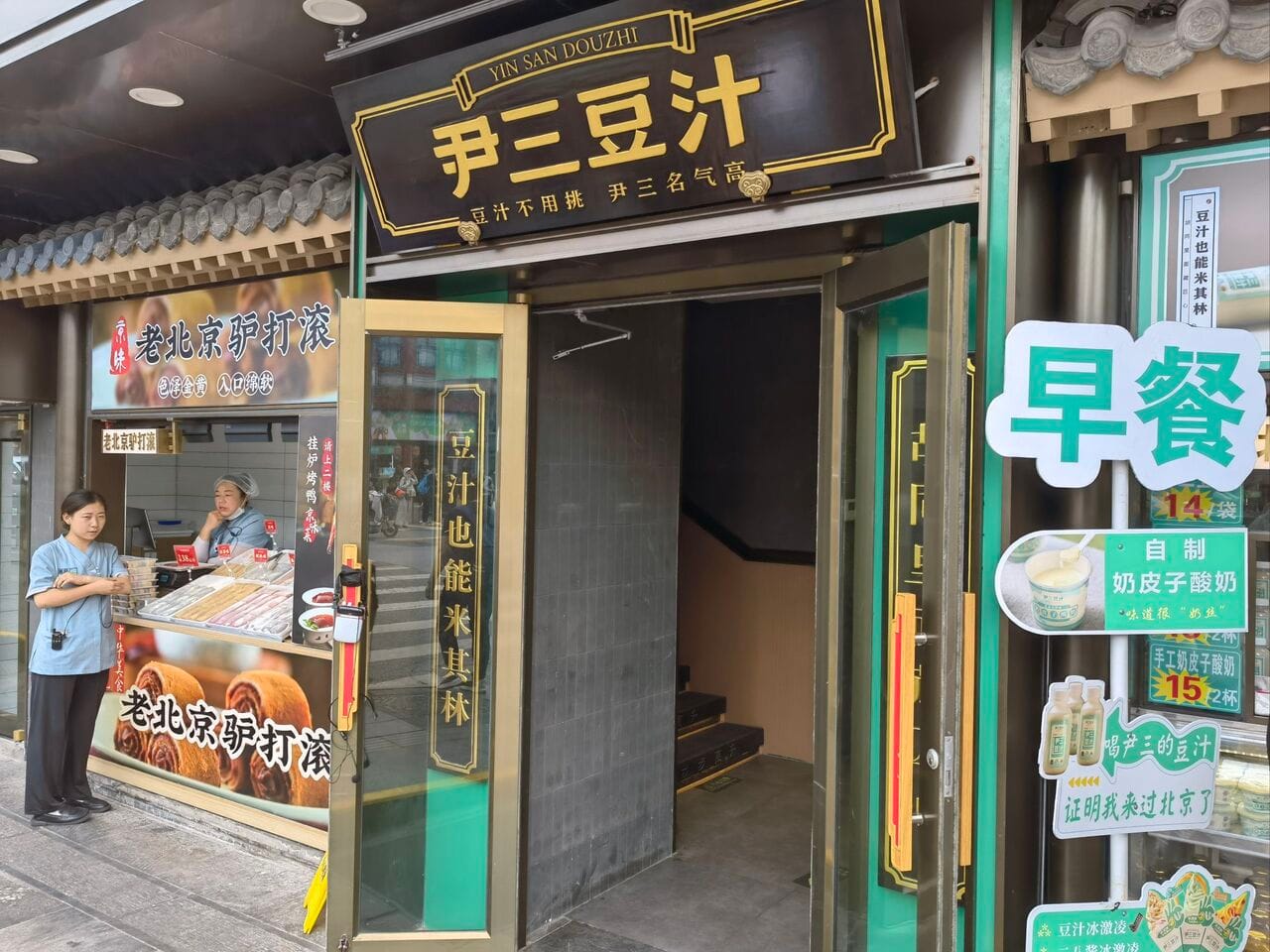
Yinsan Douzhi (尹三豆汁) near Yonghegong is the most consistently recommended traditional shop. It’s been open for decades. One small bowl is enough.
9. Lüdagun — Donkey Rolling
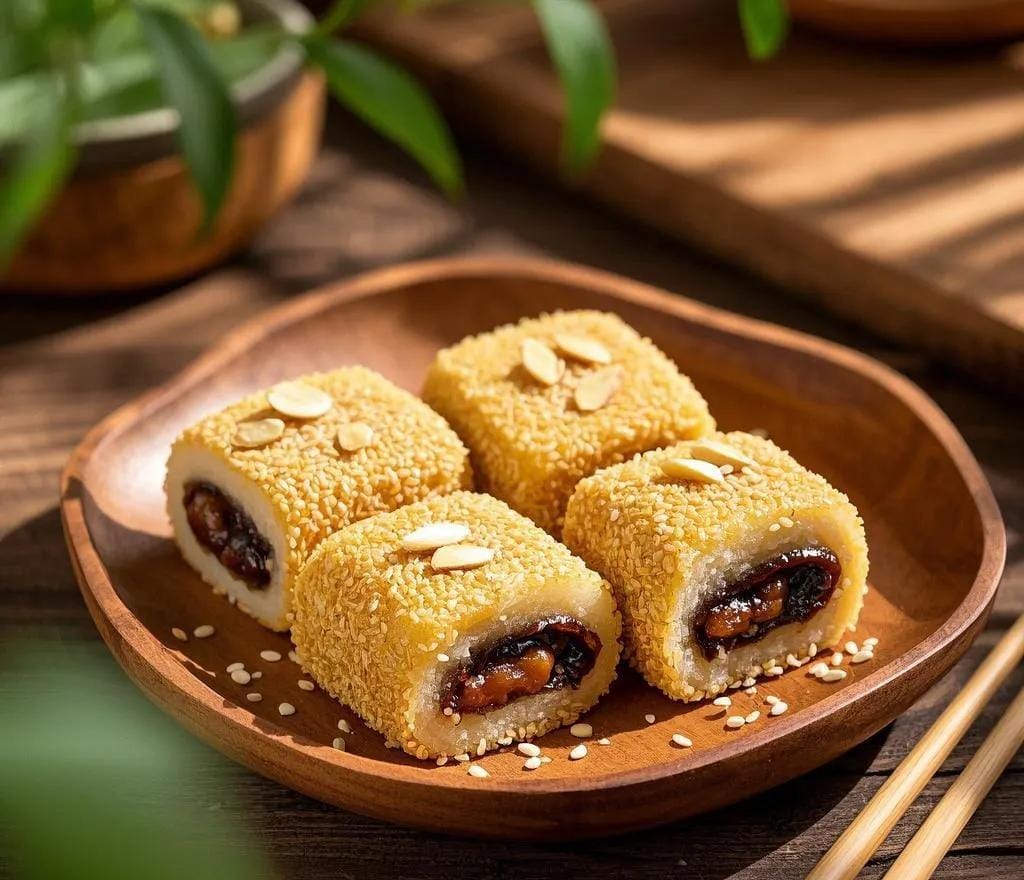
The name means “donkey rolling in the dust.” It refers to the yellow soybean flour coating the outside — like a donkey stirring up a cloud. The nickname has stuck for over a century.
Lüdagun is a sticky rice roll filled with sweet red bean paste, then rolled in toasted soybean powder. The texture is soft and slightly chewy. The flavor is nutty, sweet, gentle. Most international visitors take to it immediately.
This snack traces back to the Qing Dynasty court — reportedly a favorite of Empress Dowager Cixi. Find it at Huguosi Snack Street (护国寺小吃街) and in most traditional Beijing snack shops. Price: ¥5–10 per piece.
10. Luzhu — Stewed Pork Offal
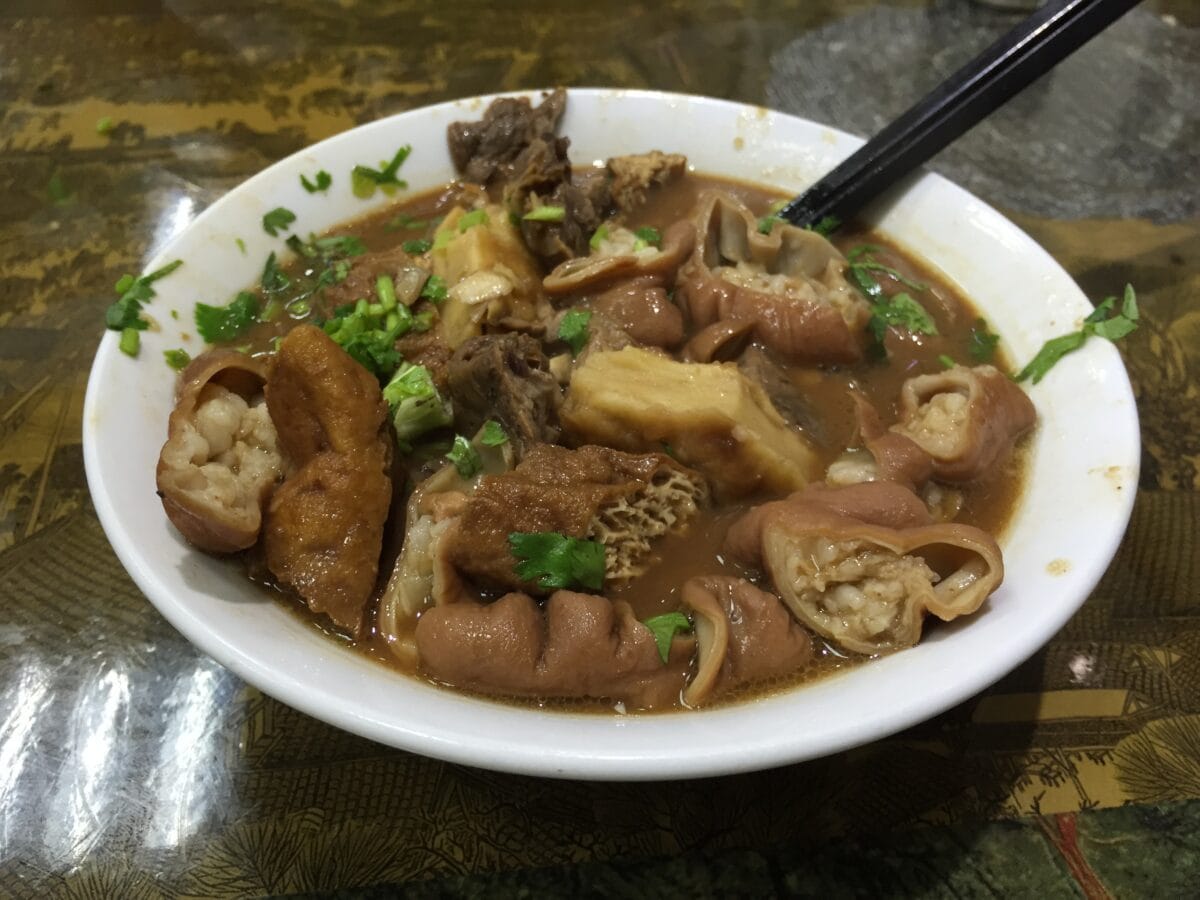
This is a dish that Beijing residents eat for comfort and outsiders regard with suspicion. We recommend it to anyone with an open mind.
Luzhu is a slow-simmered stew of pork intestines, lungs, tofu puffs, and flatbread (火烧 huǒshāo), all soaked in a rich, spiced broth that’s been reduced for hours. The bread absorbs the broth and turns almost gelatinous. The intestines are tender. The whole thing is deeply savory and a little funky in the best possible way.
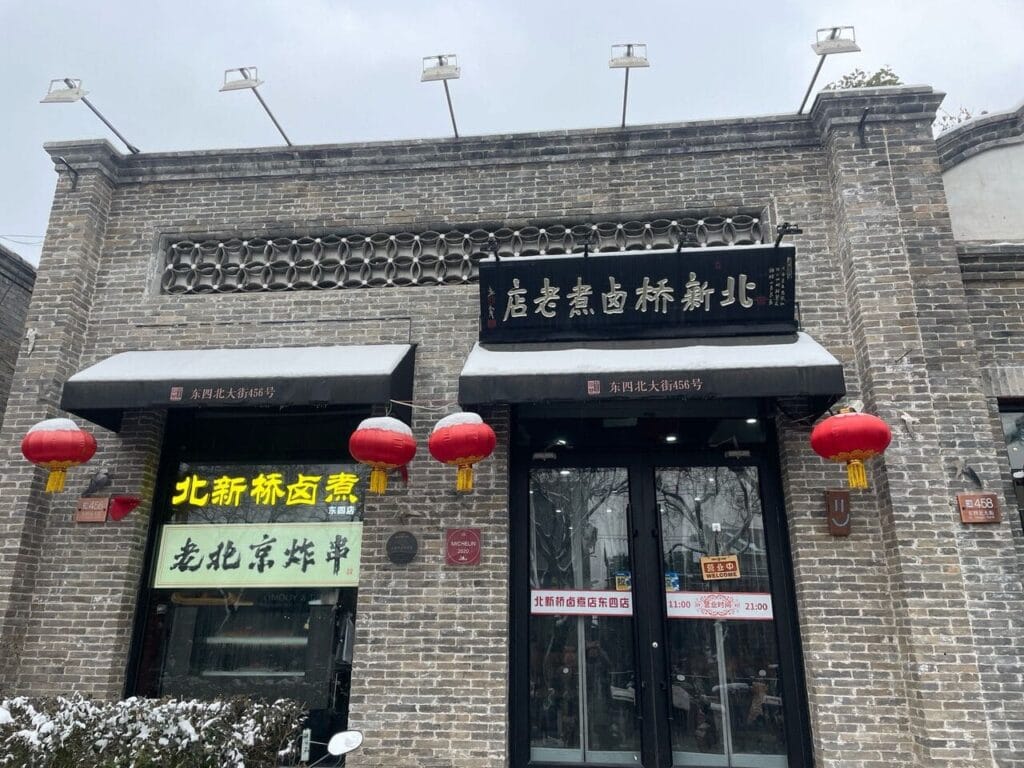
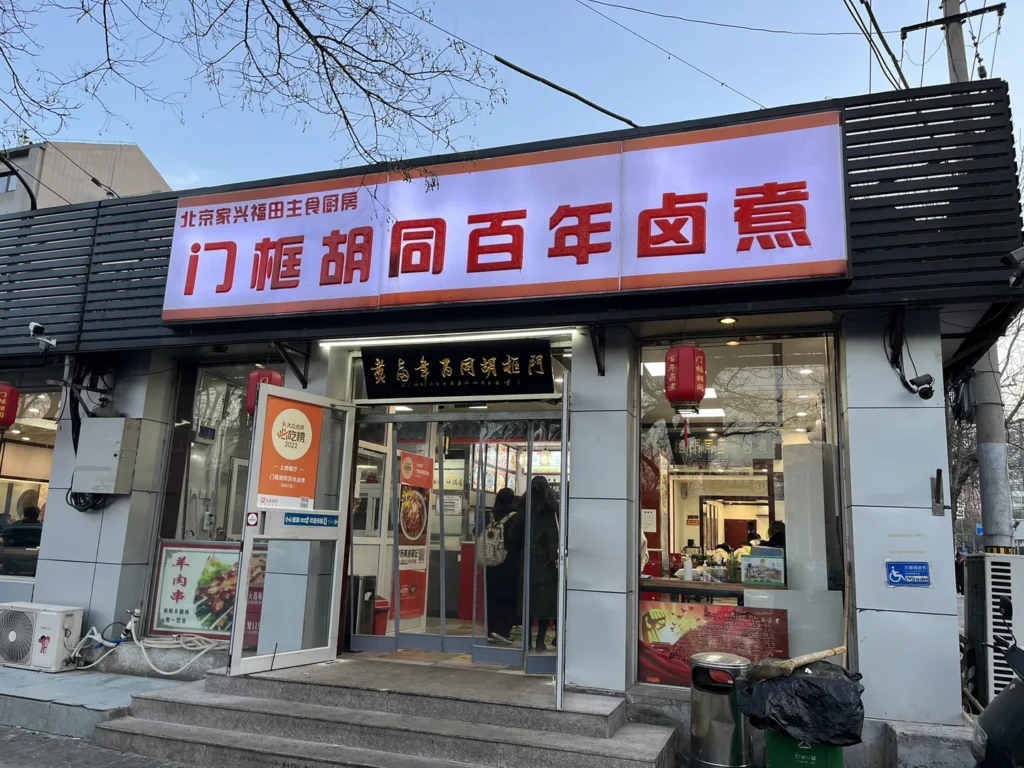
Beixinqiao Luzhu (北新桥卤煮) is the most famous shop. 门框胡同百年卤煮 (Menkuang Hutong Century-Old Luzhu), with a branch near Yonghegong, is another well-regarded option at around ¥52 for a bowl of special luzhu.
A direct warning: luzhu broth is intensely salty by most non-Beijing standards. A visitor from Guangdong described it as 齁咸 — the kind of salt that catches in the back of the throat. She wasn’t wrong.
Eat the flatbread in the bowl first; it absorbs the liquid and softens the hit. Don’t attempt it dehydrated. This dish makes considerably more sense on a cold day after several hours of walking. The shop also serves 炸灌肠 (fried starch sausage) and 炸咯吱 (fried mung bean crepe crackers) — both worth ordering alongside.
Price: around ¥30–53 per person.
11. Baodu — Quick-Fried Tripe
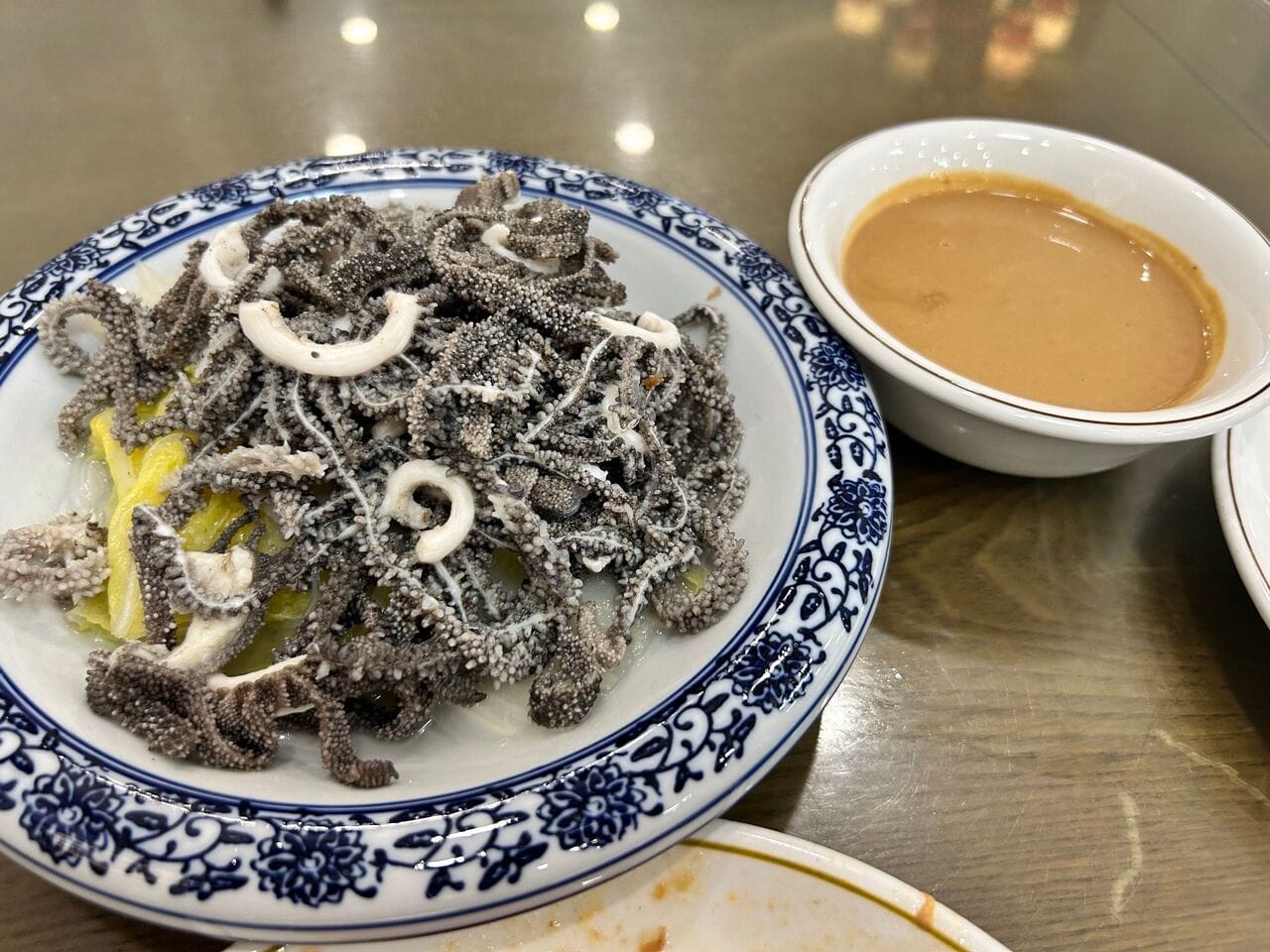
Most first-time visitors walk past baodu without registering it. We actively point it out on every Beijing food stop we do.
The stomach lining of a sheep or ox is cleaned, then blanched in boiling water for literally 3–5 seconds. It’s served immediately with a dipping sauce of sesame paste, soy sauce, and chili oil. The texture is firm and springy, not soft. The flavor is mild and clean — far less intimidating than the description suggests.
A skilled baodu vendor watches the timer constantly. Over by even 10 seconds and the texture turns tough. Under and it’s raw. The brief cook time is the entire technique.
This is also where expectation management matters. One visitor who tried the baodu at Siji Minfu — a generalist restaurant, not a specialist stall — described it as “like eating rubber.” She wasn’t wrong. Restaurant baodu and specialist baodu are different products. Go to a dedicated baodu vendor at Niujie, not a generalist restaurant, and the texture will be what it’s supposed to be: firm and springy, not chewy.
Niujie Muslim District (牛街) is the best neighborhood for baodu — served by Hui Muslim vendors who’ve been making it for generations. Niujie has none of Wangfujing’s tourist staging — it’s a working neighborhood street that happens to have exceptional food. Price: ¥25–40 per portion.
12. Beijing Dairy — Yogurt and Milk Skin
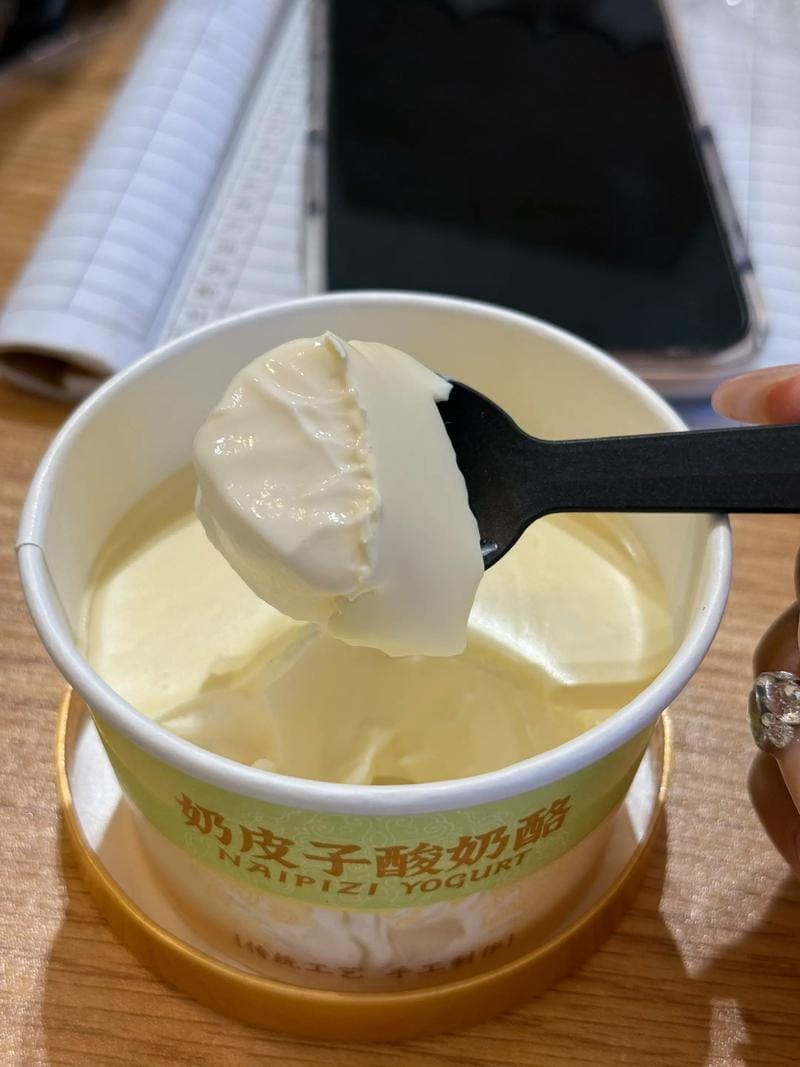
This is the one food category that surprises international visitors most.
Beijing has a centuries-old dairy culture rooted in Mongolian and Manchu traditions. The city still has working milk stations (便民奶站) that sell fresh yogurt and奶皮子 (nǎipízi — milk skin, the thick layer skimmed from heated whole milk). Neither of these travels well, which is why nobody talks about them abroad.
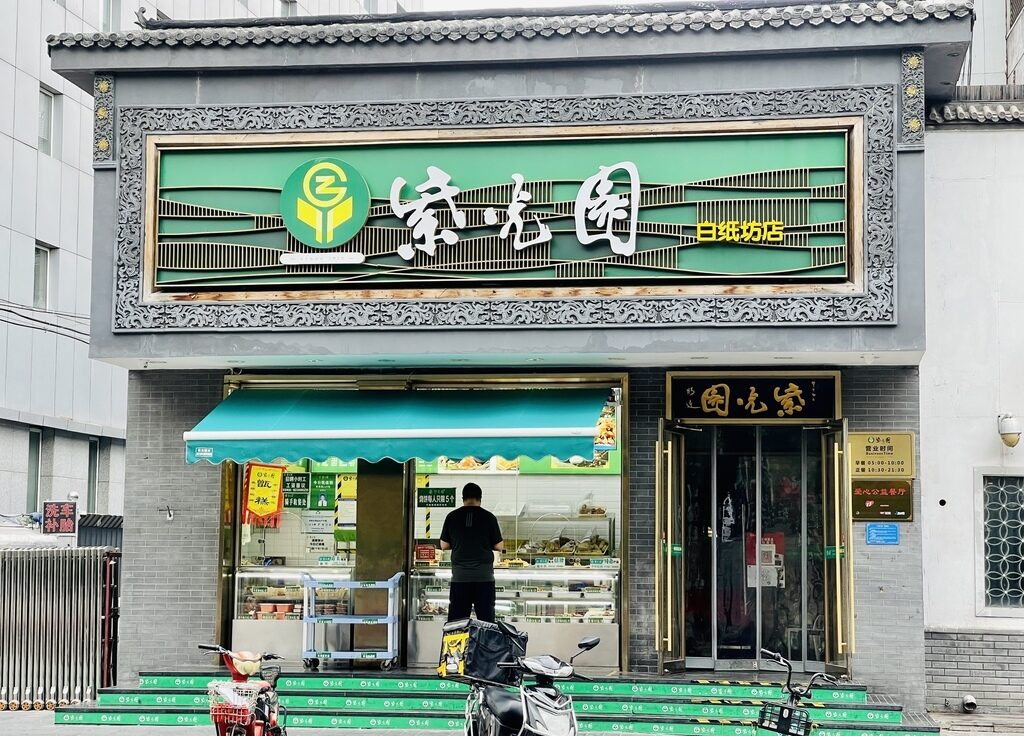
Ziguang Yuan (紫光园) is the most accessible starting point. Their house yogurt (酸奶) is thick, smooth, not sweet, with a pure dairy flavor that tastes nothing like supermarket yogurt. Multiple visitors reported eating two or three small jars in a single sitting. One described it as “genuinely silky — not the kind you drink.” A Beijing resident writing about her regular spots singled out Ziguang Yuan’s yogurt above everything else.
For the real dairy deep dive, seek out one of the traditional milk stations (便民奶站 biànmín nǎizhàn) in residential neighborhoods. The酸奶疙瘩 (sour dried yogurt chunks) are dense, tangy, and unlike anything sold in tourist areas.
Wuyutai (吴裕泰) tea soft-serve — jasmine or matcha, around ¥10 — is the accessible street-corner version of this dairy tradition. The jasmine flavor is distinctly Beijing. Find it near Nanluoguxiang, the Drum Tower, or the Lama Temple area. Skip the Wangfujing branch; the queues are longer and the experience is identical.
Where to Eat: The Best Food Areas in Beijing
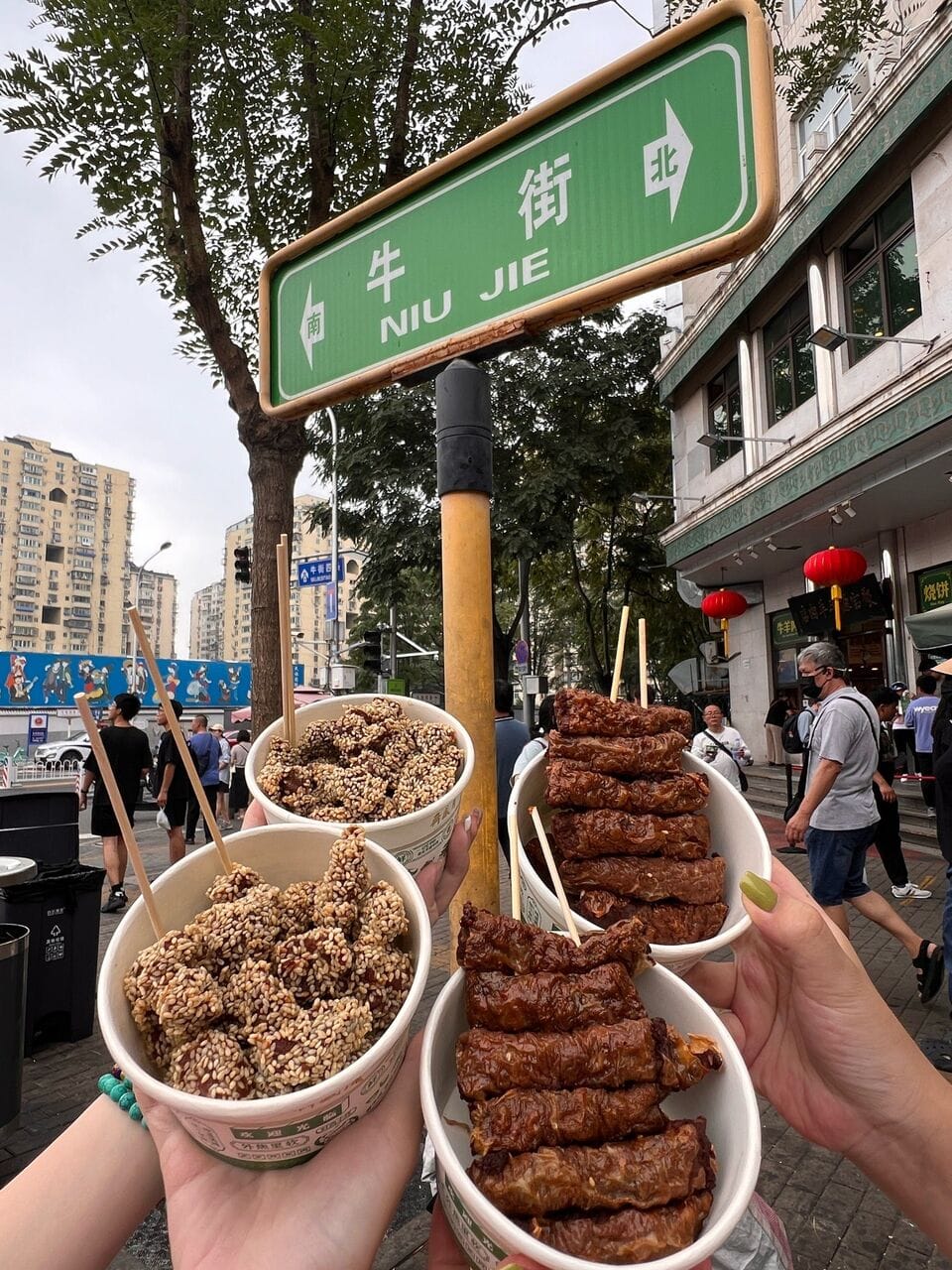
Niujie (牛街 — Ox Street), Xuanwu District Home to Beijing’s Hui Muslim community. Halal, ancient, very good: baodu, hand-pulled noodles, copper-pot hotpot, sesame flatbreads. Go on a weekend morning when the street is at full pace. Jubaoyuan hotpot is here.
Getting there: Line 4, Caishikou Station (菜市口), Exit C. About 10 minutes’ walk south. 4 km from Tiananmen, roughly 20 minutes by subway.
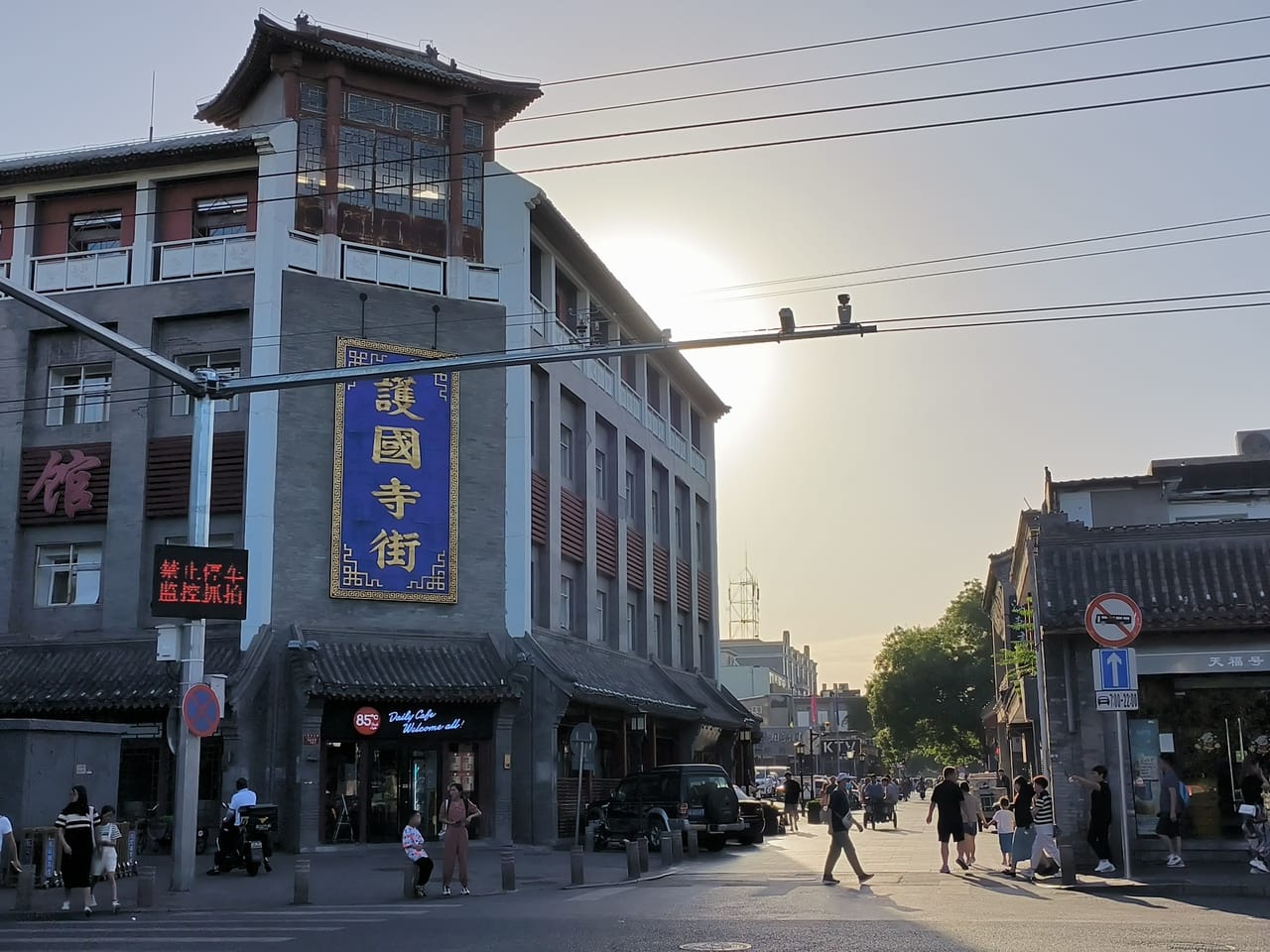
Huguosi Snack Street (护国寺小吃街), Xicheng District The traditional snack street. Douzhi, lüdagun, mung bean cakes, pea cakes. Affordable, old-Beijing atmosphere. Two things to know: 面茶 (miànchá, ¥6) — a millet porridge blanketed in sesame paste — is an acquired taste that divides visitors cleanly. Some find the sesame-over-starch combination deeply comforting; others find it texturally difficult. Try a small portion before committing. Douzhi here at ¥4 is thinner than the tourist-focused Yinsān version — closer to the original, and arguably the more authentic starting point for the experience.
Getting there: Line 4, Xinjiekou Station (新街口), Exit A. 3-minute walk. About 2.5 km northwest of the Drum Tower.

Nanluoguxiang (南锣鼓巷), Dongcheng District A restored hutong alley mixing traditional snacks with modern cafes. Good for tanghulu, baozi, Wuyutai ice cream. Crowded on weekends — come on a weekday morning for the best version of this street.
Getting there: Line 6, Beixinqiao Station (北新桥), Exit A, then 5 minutes on foot. Or Line 8, Shichahai Station. Centrally located — about 1.5 km from the Drum Tower.
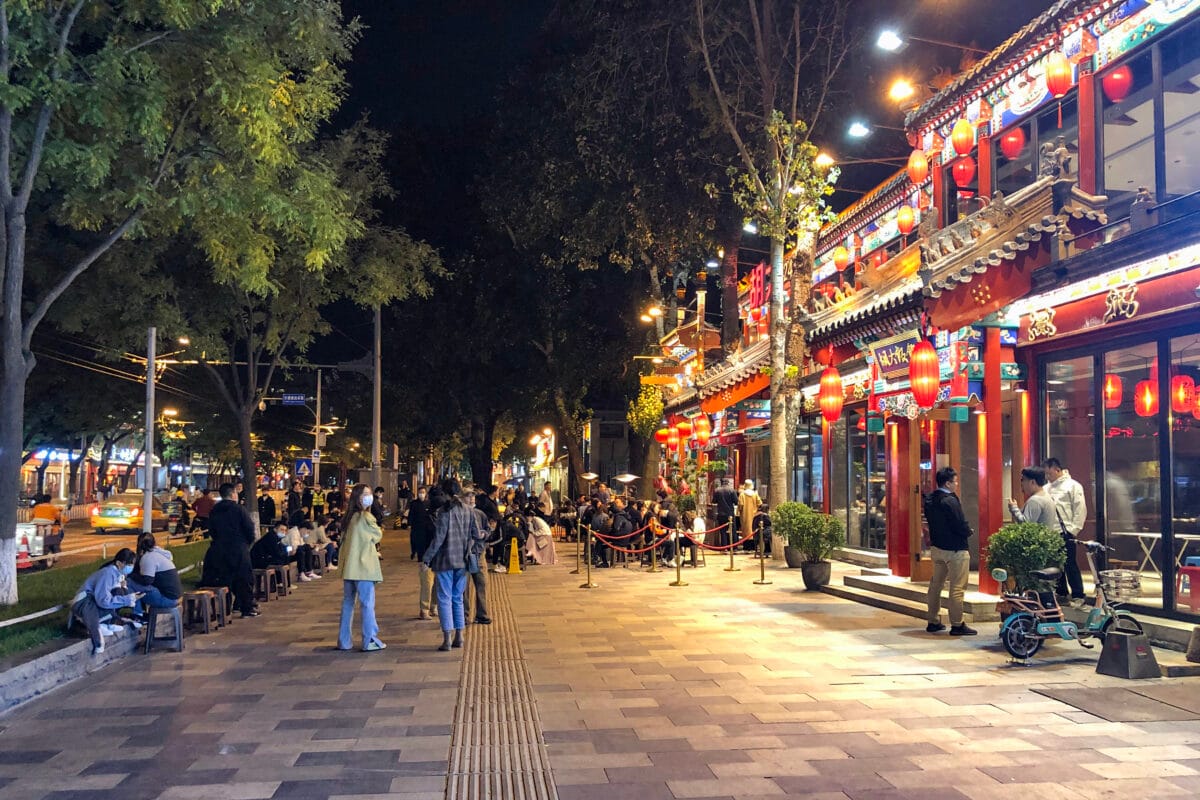
Guijie — Ghost Street (簋街), Dongcheng District Beijing’s late-night dining strip, open until 3 or 4 AM. Famous for crayfish in summer, hotpot, and Sichuan dishes. Not traditional Beijing food, but this is what residents actually eat on a Friday night.
Getting there: Line 2 or 5, Beixinqiao Station (北新桥), Exit C. The street runs east from the subway exit. 2 km from Nanluoguxiang — combine the two in one evening.
Staying in Dongcheng puts you closest to all of these. Our where to stay in Beijing guide breaks down the neighborhoods in detail.
What a Good Eating Day in Beijing Looks Like
If you’re spending three to four days in Beijing — which we recommend — here’s how to eat well without overthinking it.
Morning (7–9 AM): Hutong breakfast cart for jianbing, with hot soy milk (豆浆) alongside. Total cost: under ¥20.
Mid-morning: Tanghulu from a street cart while walking. One skewer is enough.
Lunch: Zhajiangmian at Fangzhuanchang 69 or Haiwanju (¥25–40), or a beef meat pie (门钉肉饼) near Wangfujing if you want something faster and cheaper. Add 腊八蒜 (pickled garlic) on the side at noodle shops.
Afternoon: The Forbidden City or Jingshan Park, followed by a walk through Nanluoguxiang for tanghulu or Wuyutai ice cream.
Dinner: Peking duck at Siji Minfu or Dadong. Book ahead — Dadong especially. At Siji Minfu, arriving 30 minutes before opening is better than queueing after.
One evening (October–March): Copper-pot hotpot with a group. Allow two hours. Nanmen Hotpot for a manageable queue; Jubaoyuan for the full Niujie experience.
One lunch: Luzhu or baodu in the Niujie area, followed by a walk through the Muslim district.
Practical Notes Before You Eat
Payment: Almost everywhere uses Alipay or WeChat Pay. Many hutong stalls don’t accept foreign cards. Keep ¥100–200 in cash for street food. Set up one of the mobile payment apps before arriving — it makes a significant difference.
Ordering: Local restaurants away from tourist areas have Chinese-only menus. Use Google Translate’s camera feature (download Chinese language pack offline first) or show the vendor the Chinese characters written in this guide. Most people are patient with visitors who make an effort.
Dietary restrictions: Beijing food is heavily meat-based. Vegetarians can eat well — zhajiangmian has a vegetarian version, lüdagun and sweet snacks are plant-based — but it requires more navigation. Niujie is excellent for halal eating.
If you’re from southern China or Southeast Asia: Northern food runs significantly saltier than what most southern palates are calibrated to. Luzhu, some zhajiangmian versions, and the sesame paste at certain hotpot restaurants can all catch you off-guard. Ask for lighter seasoning (少盐 shǎo yán) where possible, and treat the pickled garlic (糖蒜/腊八蒜) at noodle shops as a palate reset — it works.
Timing: Food streets get crowded on weekends and during national holidays (Golden Week in October, May Day in May). Hutong breakfast carts typically close by 10 AM. Popular hotpot restaurants are busiest 6–8 PM — arrive early or late.
Budget: ¥100–150 per person per day covers excellent eating if you mix restaurant meals with street food. Peking duck dinner: budget ¥200–300 per person. Street snacks: ¥5–20 each. Luzhu: ¥30–53. Zhajiangmian: ¥20–40.
FAQ – What & Where to Eat in Beijing
What is the most famous food in Beijing?
Peking duck is Beijing’s most internationally recognized dish. Among locals, zhajiangmian is the true taste of home. If you only have time for two dishes, those are the two.
Is Beijing food spicy?
No. Beijing cuisine is not known for spice. Garlic, ginger, and mild chili oil appear often, but they’re not the focus. If you want heat, there are good Sichuan and Hunan restaurants throughout the city.
What should southerners (or anyone used to Cantonese food) know before eating in Beijing?
Salt levels are noticeably higher. Luzhu and some hotpot sesame dipping sauces will read as intense to palates trained on Cantonese or Shanghainese cooking. Douzhi (fermented mung bean drink) and miancha (millet porridge topped with sesame paste) are acquired tastes — both divided the visitors in our recent group cleanly. 炒肝 (chāo gān — thickened stew of liver and intestines) is another one worth trying and worth abandoning if you don’t like it after two bites. The爆肚 (baodu, quick-fried tripe) at even respected restaurants can feel rubbery to first-timers who expect the texture of slow-cooked offal. It should be firm and springy — that’s correct — but it takes a few tries to appreciate. None of this is a reason to avoid anything. Try everything once. Skip what doesn’t work.
Where do locals eat Peking duck?
Siji Minfu (四季民福) near the Forbidden City and Dashilan is where Beijing residents consistently queue. Dadong (大董) is the choice for visitors who want the best possible product regardless of price. See our full Peking Duck restaurants guide for detailed comparisons.
What about 炒肝 (chǎogān — stir-fried liver)?
It appears on many “must-try Beijing” lists. Honestly, it divides opinion sharply. The dish is pork liver and intestines in a thick, gelatinous starch sauce, heavily seasoned with garlic. One recent visitor at Yao Ji (姚记) near the Drum Tower found it dominated by garlic flavor and left largely unimpressed. The baozi there were decent but not exceptional. Our take: try it if Beijing offal is a goal, but don’t plan your day around it.
Is street food in Beijing safe to eat?
Yes, in our experience. Busy stalls with fast turnover and high local traffic are reliably safe. Stick to freshly cooked food and avoid anything sitting out in open air. We’ve eaten Beijing street food for two decades without incident.
How do I find authentic food away from tourist areas?
Stay in Dongcheng or Xicheng and walk. Most good food is in the hutongs, not on the main commercial boulevards. Our Beijing hutong guide covers the best areas to explore on foot.
Can I eat well in Beijing on a budget?
Absolutely. Jianbing (¥10), zhajiangmian (¥25), dumplings (¥20–30), luzhu (¥35), and street snacks (¥5–15 each) make for a very satisfying and very cheap day. Save the splurge for one Peking duck dinner.
What’s the best food street in Beijing?
For traditional old-Beijing snacks: Huguosi Snack Street. For halal food and the most authentic local atmosphere: Niujie. For a walkable hutong mix: Nanluoguxiang. For late-night eating: Guijie (Ghost Street).
What should I eat first in Beijing?
If you’re arriving in the evening, go straight to a copper-pot hotpot restaurant — warm, social, and unmistakably Beijing. If you’re arriving at lunchtime, find a zhajiangmian shop. Either one sets the tone for the whole trip.
A Final Note
The best meals in Beijing are rarely in the restaurants that appear first on tourist maps. They’re in the noodle shop where the owner has been making the same sauce for thirty years. The milk station you have to ask a local to point you toward. The grilled meat place in a hutong you smell before you see.
What Beijing’s food does well is be itself. There’s no anxiety about fusion or trend-chasing at a zhajiangmian counter or a copper-pot hotpot table. The food here has survived dynasties and centuries of change. It knows exactly what it is.
Follow the queue of office workers at lunchtime. Point at what the next table ordered if the menu defeats you. Arrive hungry. That’s the whole strategy.
If you want the food built properly into your Beijing itinerary, our 10-day China tour includes a Peking duck dinner as standard, and our guides know every noodle shop worth knowing. Get in touch and we’ll plan it properly.