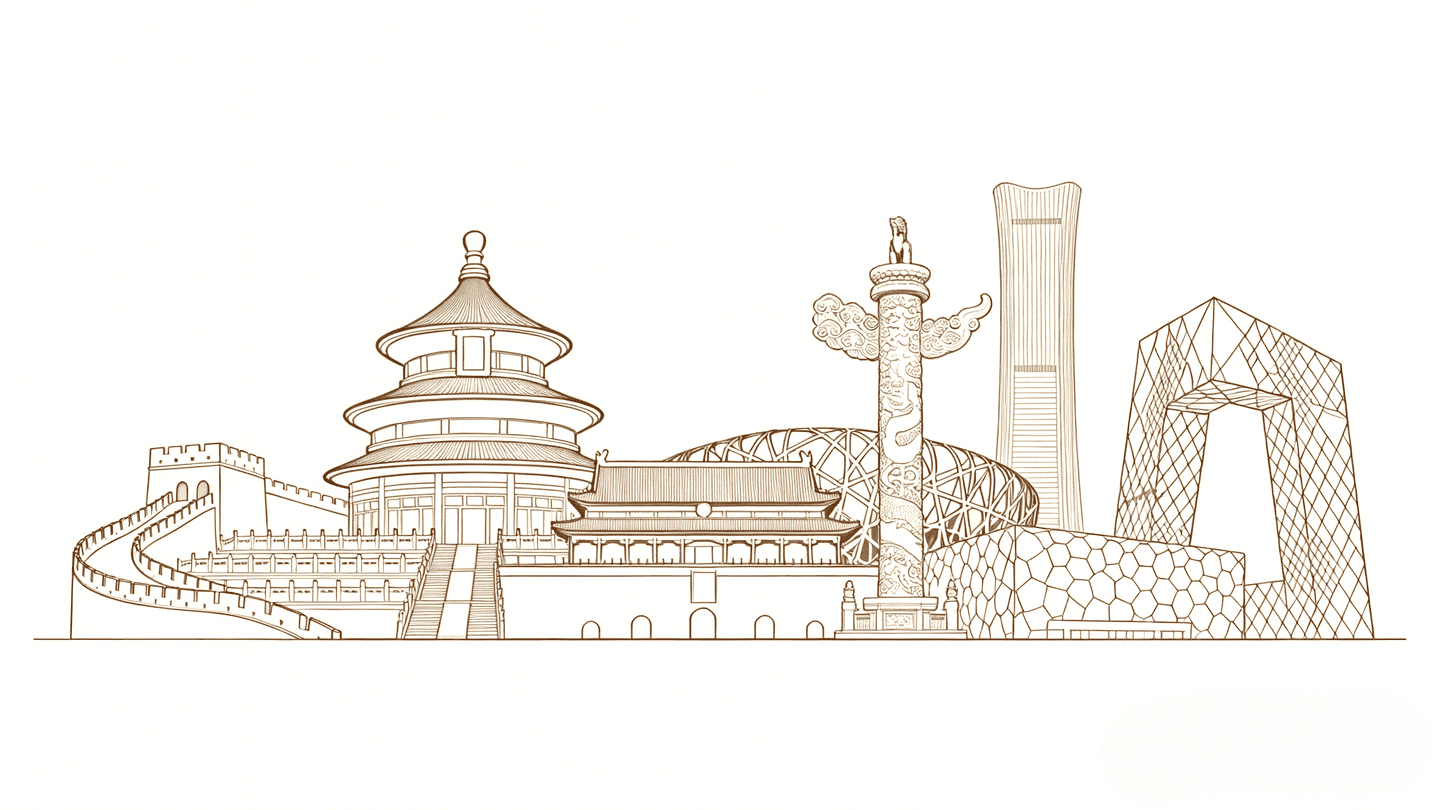
Beijing Travel Guide
We have been bringing international visitors to Beijing since 2006. The city has changed enormously in that time — digitized ticketing, visa-free entry for most Western passport holders, a subway network that now reaches everywhere. What has not changed is this: Beijing is the place to understand China. Not explain it — understand it. The Forbidden City, the hutong alleys still lived in since the Yuan Dynasty, the morning tai chi in the park, the lamb hotpot in November — none of it is performance. It is how the city actually runs.
If Rome is where you go to understand the West’s imperial past, Beijing is where you go to understand China’s. That is the most useful single sentence we can offer a first-time visitor.
Table of Contents
1. Why Beijing

We have brought thousands of international visitors into Beijing since 2006. The moment that repeats itself most often — the one we still notice after all these years — happens on the second day, usually somewhere between the Forbidden City’s inner courts and the walk to Jingshan Park. Something shifts. The city stops being a list of things to see and starts being a place that makes sense. The scale of what was built here, the deliberateness of the planning, the way a 600-year-old ceremonial axis still organizes the entire city center — it lands differently in person than in any photograph or description.
That is what Beijing does that other Chinese cities do not. Xi’an has the Terracotta Army. Shanghai has the Bund and the skyline. But Beijing is where the entire weight of Chinese imperial civilization is compressed into one walkable city. Seven UNESCO World Heritage Sites within the municipal boundaries — more than any other city on earth. The Forbidden City alone held 24 emperors across five centuries. The Great Wall sections to the north are among the most dramatic built structures in the world. The Temple of Heaven has been in continuous ceremonial use since 1420.
None of this is frozen. The hutong alleys that date to 1267 are still lived in. Every morning, the parks fill with retirees doing tai chi, playing chess, singing opera in small groups under the trees. The food — Peking duck, lamb hotpot, street jianbing — has its own distinct northern identity entirely separate from the Cantonese or Sichuan cuisines most visitors know. The 798 Art District in a cluster of Soviet-era factories has become one of Asia’s most interesting contemporary art scenes.
In 2024, Beijing’s Central Axis — the five-mile north-south spine running from the Bell Tower through the Forbidden City to the Temple of Heaven — was inscribed as a UNESCO World Heritage Site, the city’s record 50th listing. The axis has organized Beijing’s geography since the Yuan Dynasty. When you stand on top of Jingshan Park and look south across the Forbidden City’s golden rooftiles stretching all the way to Tiananmen, you are looking at it.
2. Top Attractions in Beijing
The Forbidden City

Five centuries of imperial China compressed into 72 hectares of red walls, golden rooftiles, and 980 buildings — the physical center of Beijing and the seat of 24 emperors across the Ming and Qing dynasties. Nothing else in China has this density of history in one walkable space. Every first-time visitor should come here; there is no substitute.
Tickets sell out days in advance. The museum no longer sells at the gate — book online the moment you confirm your travel dates. Full guide: booking steps, ticket prices, and what to prioritize inside →
Tiananmen Square

The world’s largest public square sits immediately south of the Forbidden City — crossed by most visitors in five minutes, understood by far fewer. The flag-raising ceremony at sunrise, where the honor guard marches at a pace precisely calculated to reach the flagpole at the exact moment the sun appears, is one of the most deliberately staged civic rituals anywhere. It gives the Forbidden City its political context in a way that nothing else does. Tiananmen Square Guide · Flag Raising Ceremony →
The Great Wall
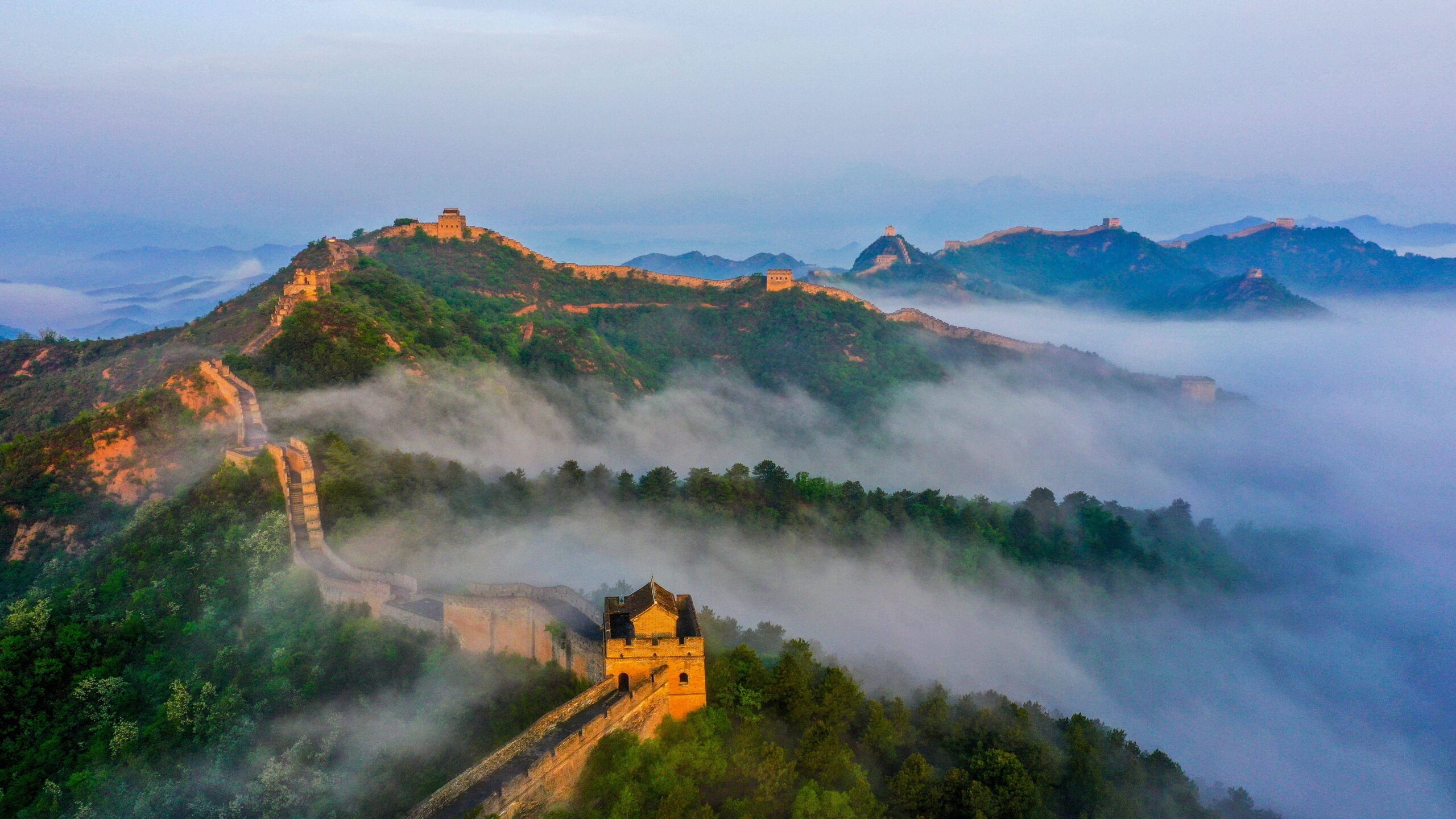
The sections near Beijing range from fully restored and crowded (Badaling) to partially wild and nearly empty (Jinshanling). Choosing correctly matters more than simply going — Badaling on a weekend between April and October is not the Great Wall as an experience.
Section | Distance | Crowds | Best for |
|---|---|---|---|
70 km | Very high | Families, limited mobility | |
75 km | Moderate | Most first-time visitors | |
125 km | Low | Hikers, serious photographers | |
120 km | Low | Evening visits |
DIG DEEPER:
Jingshan Park
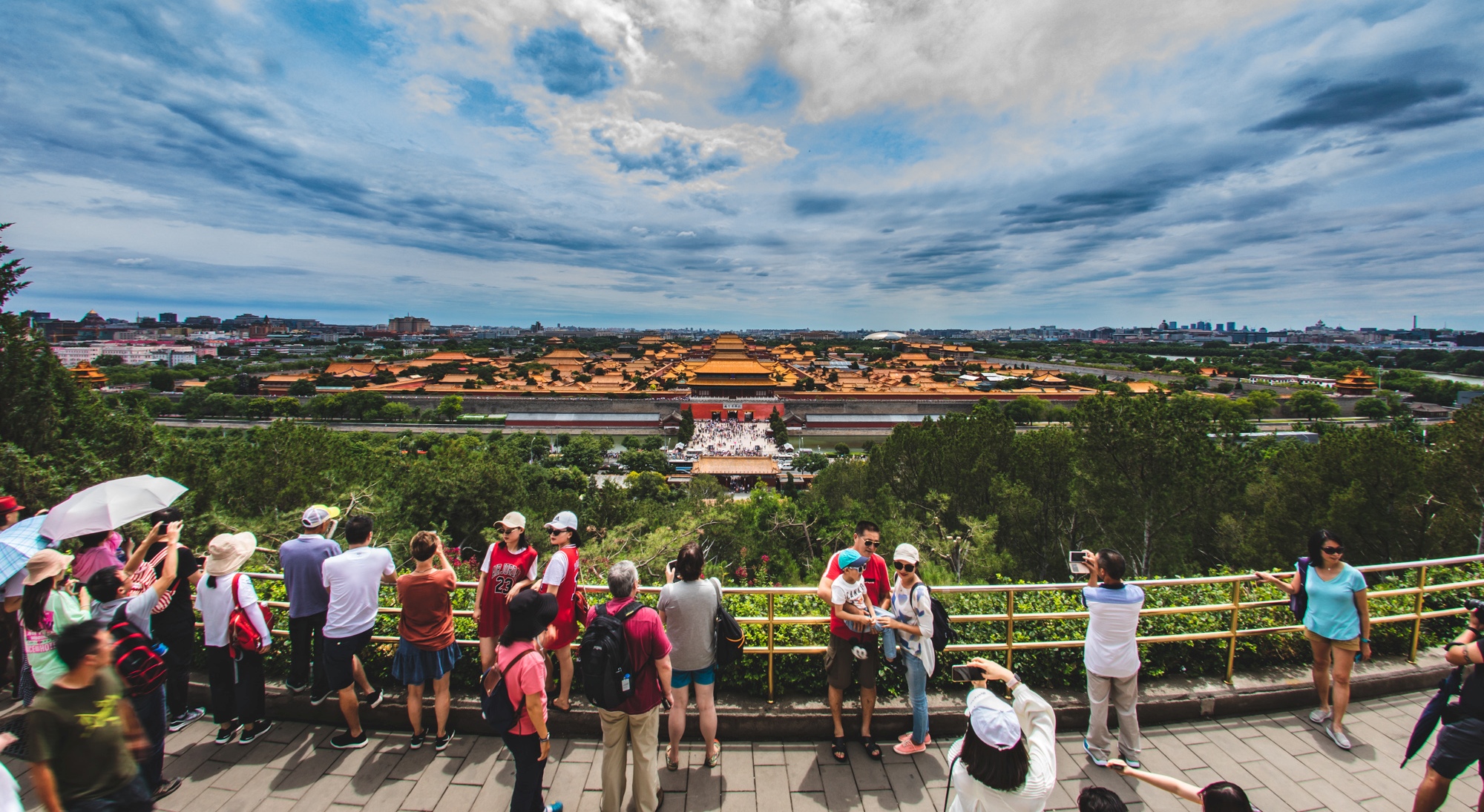
For ¥2 and a 15-minute climb directly behind the Forbidden City’s north gate, Jingshan offers the panoramic view of the entire palace complex that makes its scale comprehensible for the first time. It is also where the last Ming emperor hanged himself in 1644 as rebel forces entered the city. Every visitor should come here — ideally immediately after exiting the Forbidden City through its north gate. Jingshan Park Guide →
The Summer Palace

Seven hundred acres of imperial garden built around a man-made lake, with a 728-meter lakeside corridor painted with over 10,000 historical and mythological scenes. The Qing emperors’ escape from the Forbidden City’s formality — and that lightness is still palpable. Best in autumn when the willows reflect on the water; atmospheric in winter when the frozen lake becomes a public skating rink. Summer Palace Guide →
Temple of Heaven

Built in 1420, used by emperors to pray for good harvests until 1912 — 492 years of the same ritual on the same ground. The Hall of Prayer for Good Harvests is one of China’s most architecturally refined buildings, a triple-roofed circular structure built without a single nail. Arrive before 8:00 AM on a weekday and the enormous surrounding park is alive with retirees doing tai chi, dancing with fans, flying kites, and playing erhu — one of Beijing’s most authentic daily scenes. Both the architecture and the park life disappear into tour-group noise by 10:00 AM. Temple of Heaven Guide →
Beijing’s Hutongs

Around 1,000 of the original 3,000 hutong alleyways survive. They range from the tourist-friendly (Nanluoguxiang) to the genuinely lived-in (around Shichahai and the Drum Tower). Narrow lanes, courtyard houses, laundry lines, the smell of breakfast noodles at 7:00 AM — the part of Beijing that no imperial site can replicate, and the part that is disappearing fastest. Hutong walking guide with specific alleys and timings →
798 Art District and Shougang Park
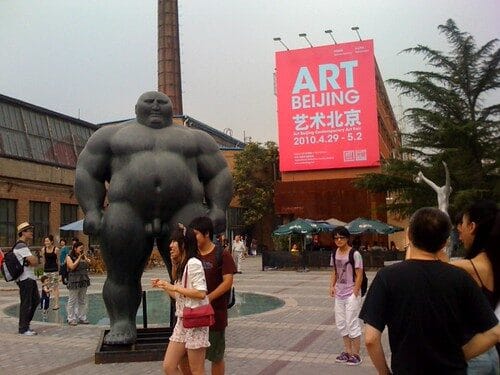
For visitors who have seen the imperial circuit or want a different Beijing entirely: 798 is former Soviet-era factory buildings now housing contemporary galleries and UCCA Center for Contemporary Art — best on a weekday morning when the industrial halls are nearly empty. Shougang Park is a decommissioned steel mill turned 2022 Winter Olympics complex, visited by almost no foreign tourists and unlike anything else in the city. Full attraction list with hours and current ticket prices →
3. What to Eat in Beijing
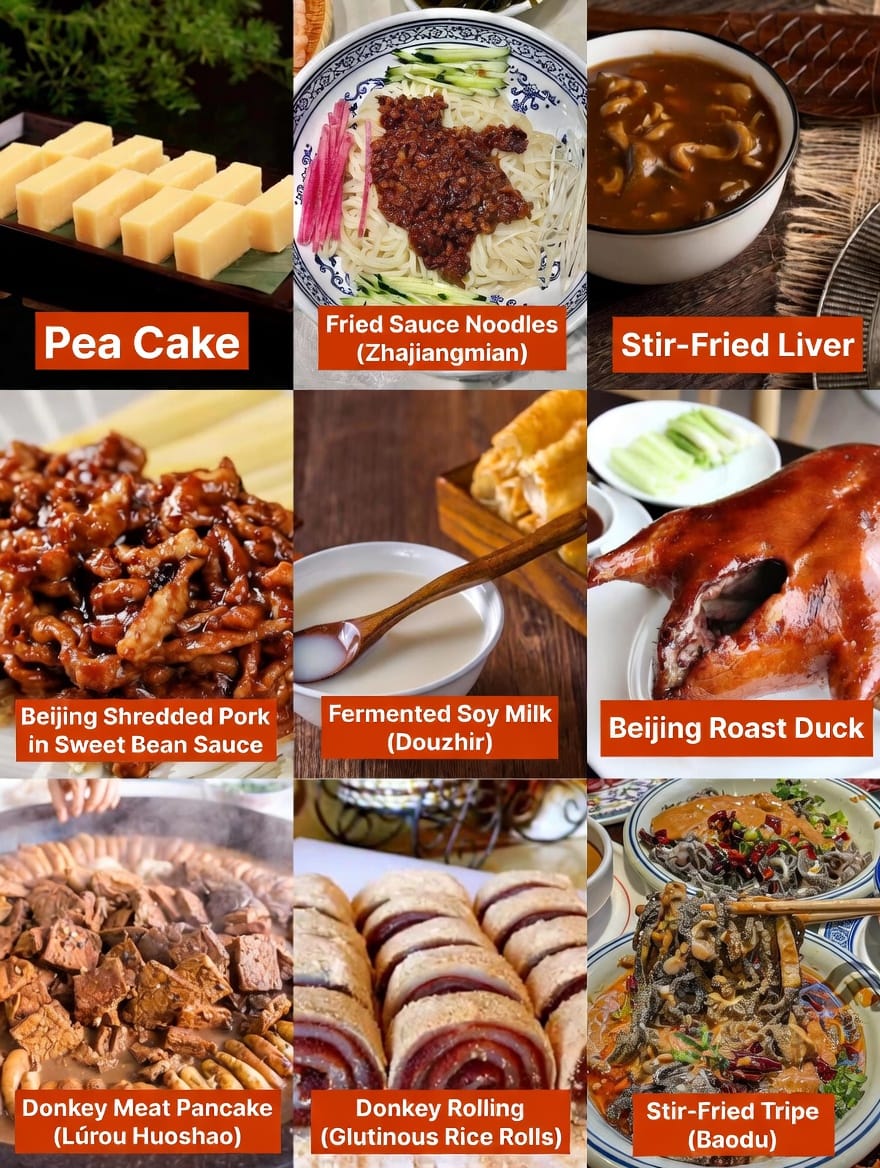
Northern Chinese food is its own thing — distinct from Cantonese, Sichuan, and Shanghai cooking in ways that go beyond spice levels. The flavor base here is fermented paste, roasted meat, and wheat. Winters are cold and the food was built for them.
Peking Duck is the dish this city is known for, and the real version — skin lacquered and brittle, roasted over fruit wood, carved tableside — bears almost no resemblance to what appears in Chinese restaurants abroad. The serious restaurants require advance reservations. Order the carcass soup; locals never skip it. For verified 2026 restaurant rankings and booking hacks: Peking Duck Restaurants in Beijing →
Beyond duck: jianbing (street crepe, 6:30–9:00 AM, ¥8–15 — find a vendor and eat standing up, this is how Beijing starts its day); zhajiangmian (thick noodles with slow-cooked fermented pork-and-soybean paste, ¥20–30, what the city actually eats for lunch); copper pot lamb hotpot — the Inner Mongolian tradition adopted centuries ago, Donglaishun near Wangfujing is the institution; douzhi (fermented mung bean milk, grey-green, served hot, polarizing, impossible to find elsewhere, worth trying once to understand what Beijing street food used to be built around).
DIG DEEPER: What & Where to Eat in Beijing: 12 Must-Try Dishes
4. Shopping and Evenings
Shopping

Panjiayuan Antique Market is where we take guests who want to see Beijing when it is not performing for visitors: antiques, folk art, Cultural Revolution memorabilia, jade, old coins, minority crafts. Go Saturday morning from 5:30 AM before tourist pricing takes effect. Metro Line 10 to Panjiayuan Station.

Wangfujing is Beijing’s historic commercial street — worth visiting for the century-old specialist shops (silk merchants, hat makers, tea houses, traditional pastry shops) rather than the international brand malls that now surround them.
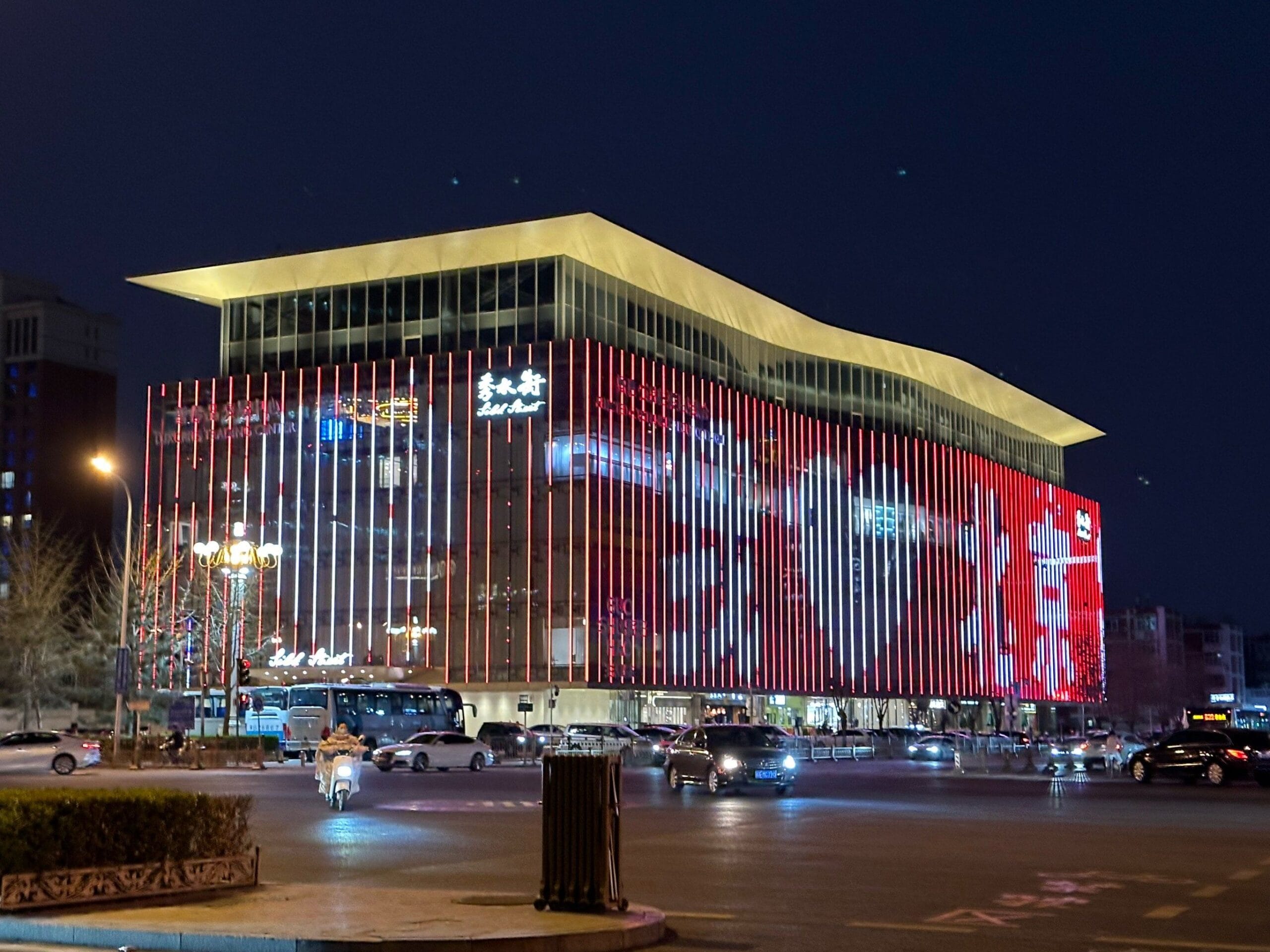
Silk Street handles negotiated-price clothing and silk near Jianguomen. Hongqiao Market near the Temple of Heaven has an excellent top-floor tea market rebuilt in 2024.
Peking Opera

Most foreign visitors who book Peking Opera end up either moved by it or confused for 90 minutes. The difference is almost entirely venue. Liyuan Theatre (梨园剧场) is designed for foreign visitors with English surtitles and runs daily 90-minute programs. Huguang Guild Hall (湖广会馆, built 1807) is a 200-year-old wooden theater with Sunday afternoon performances — the building itself is the experience.
Current schedules, ticket prices, and what distinguishes each venue: Best Beijing Opera Theaters 2026
Nightlife

Sanlitun and Taikoo Li in Chaoyang is the documented answer: international bars, English-speaking staff, rooftop cocktails. It works. The more interesting answer is the Gulou (Drum Tower) area — hutong bars that have accumulated over the past decade in lanes so narrow you can touch both walls, jazz in 100-year-old courtyard spaces, no reservations, no cover. Go after 9:00 PM, walk east from the Drum Tower, and follow the sound.
5. When to Visit Beijing
Avg high/low °C · Rainfall mm · Avg AQI (US standard) — historical Beijing data
September and October are the best months. The Chinese expression is 天高气爽 — the sky is high and the air is crisp. Temperatures 15–25°C, clear skies, autumn color starting in late October: ginkgo avenues near Diaoyutai, red maples at Fragrant Hills.
April and May are the second-best window — cherry blossoms, fresh green on the Wall — with the caveat that spring winds from Mongolia carry sand and dust. Check the AQI before outdoor days.
Winter is underrated: half-price hotels, minimal crowds, and on the rare day it snows, the Forbidden City's red walls against white are genuinely extraordinary.
Avoid: October 1–7 (National Day) and May 1–5 (Labour Day). These are China's peak travel periods. Badaling Great Wall on October 3rd is a crowd management event with a wall behind it.
Best time for budget travelers: January and February offer the lowest hotel rates and flight prices of the year — typically 40–50% below peak season. The trade-off is cold weather (-5°C to -10°C at night) and the Spring Festival period, when the city empties as Beijingers return to their hometowns. March is similarly affordable with improving weather. If your priority is cost over perfect conditions, winter is when Beijing becomes a genuinely cheap destination.
Month-by-month temperature, rainfall, and air quality data: Beijing Weather Guide
6. Where to Stay in Beijing

Location matters more in Beijing than in most cities — the wrong neighborhood adds 90 minutes of daily commute. Here is how the main districts compare:
District | Best for | Price range/night | Key drawback |
|---|---|---|---|
Dongcheng | First-time visitors, central access | ¥500–1,800 | Higher prices |
Xicheng | Culture, quieter atmosphere | ¥400–1,500 | Fewer metro lines |
Chaoyang | Nightlife, business, airport access | ¥400–2,000 | Far from historical sites |
Haidian | Budget, university area | ¥200–600 | Inconvenient for tourists |
Dongcheng is the default recommendation for first-time visitors. The Forbidden City, Tiananmen, Wangfujing, and Temple of Heaven are all within 30–40 minutes. Metro Lines 1, 2, 5, 6, and 8 converge here. Within Dongcheng, the Wangfujing corridor has international chain hotels (¥500–1,800); the hutong neighborhoods around Nanluoguxiang offer courtyard hotel conversions (siheyuan, ¥500–1,500) with a completely different atmosphere — breakfast in a covered courtyard, rooftop access, walking distance to hutong life at 6:00 AM before tourists arrive.
Xicheng sits just west of Dongcheng and covers Beihai Park, the Drum and Bell Towers, and the Shichahai lakefront. Slightly quieter, with good boutique options and some of Beijing's best hutong neighborhoods. Fewer metro lines is the main trade-off.
Chaoyang is where most of Beijing's international hotels cluster, along with Sanlitun nightlife and the CBD. Practical for business travelers and those whose priority is nightlife or the 798 Art District. Factor in 30–45 minutes of extra transit per day to the main historical sites.
Haidian has cheap options but is too far from the city center for most tourist itineraries.
The rule that overrides all others: verify subway access before booking. A hotel saving ¥200/night that adds 75 minutes of daily transit is not a bargain.
Full neighborhood breakdown with specific hotel recommendations: Where to Stay in Beijing 2026
7. Getting To and Around Beijing
Flying In

Beijing Capital Airport (PEK) is one of Asia's main international hubs with direct connections to most major cities in Europe, North America, Southeast Asia, and Australia. The flight from London is approximately 9–10 hours; from New York, around 14 hours; from Sydney, roughly 12 hours. PEK is 25 km from the city center — the Airport Express train runs to Dongzhimen and Sanyuanqiao subway stations in approximately 25 minutes for ¥25, the right option for almost every visitor. Taxis cost ¥100–130.

Beijing Daxing Airport (PKX), opened in 2019, sits 46 km south of the city center and handles a growing share of domestic routes plus selected international carriers including China Southern, China Eastern, and a handful of Gulf and European airlines. Check your booking carefully — it is easy to assume you are flying into PEK. From PKX, the Daxing Airport Express connects to Caoqiao (Line 10) and Langfanghoudiao in about 20 minutes; from Caoqiao into central Beijing adds another 15–20 minutes on the metro. Total journey to the city center: around 45–60 minutes. Taxis cost ¥180–250.
Which terminal your airline uses and full transport comparison: Beijing Airport Guide
When to book for the best airfare: January and February are consistently the cheapest months to fly — round-trip fares from the US average $1,000–$1,200, against $1,400–$2,000 in peak summer. March and September also offer good value. June through August sees the highest demand, with fares running 30–40% above the annual mean. Book at least 6–8 weeks in advance; Tuesdays and Wednesdays are marginally cheaper departure days across most routes.
From Southeast Asia, Beijing is well-served by budget carriers (AirAsia, Scoot, Jeju Air) from Singapore, Bangkok, Kuala Lumpur, and Seoul — often under $200 round-trip when booked early.
Getting Around the City

Beijing's subway covers all major attractions: 29 lines, fares ¥4–9. Since June 2025, all five major international card networks (Visa, Mastercard, Amex, JCB, UnionPay) work for contactless tap-entry at every turnstile — no app or setup required.
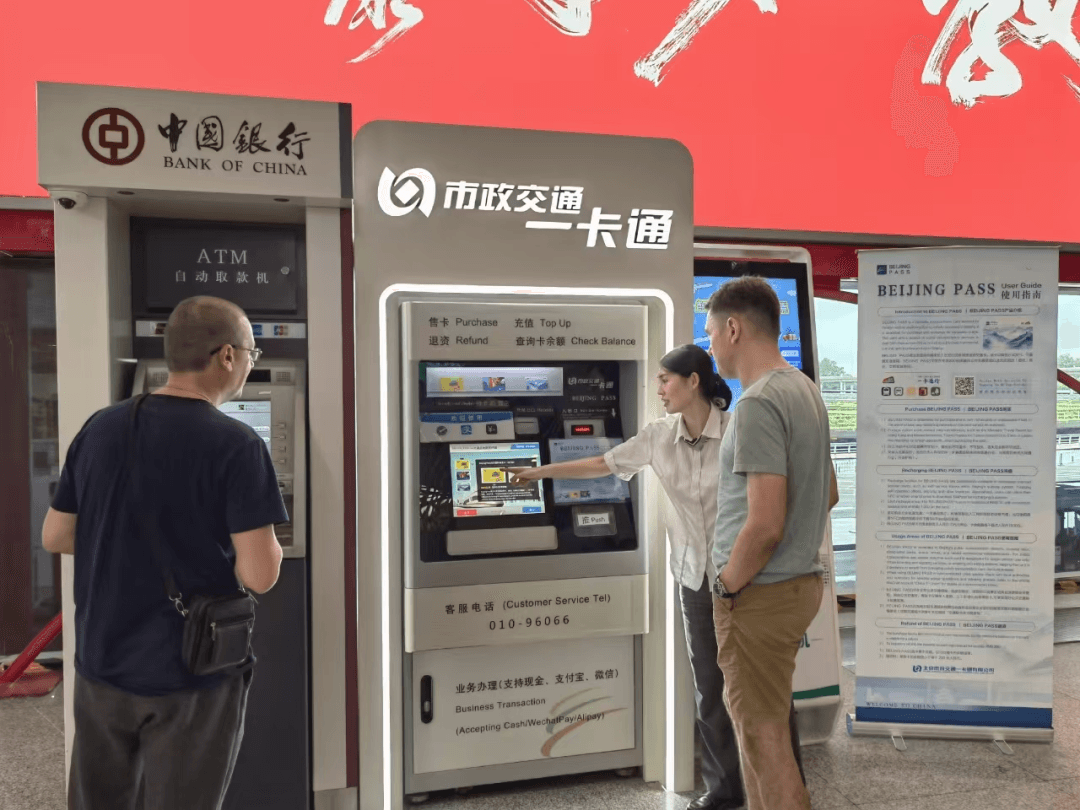
For visitors who prefer a physical card, Beijing Pass is a rechargeable travel card issued by the Beijing government specifically for overseas visitors. It covers the subway, buses, and selected commercial and cultural tourism venues. Buy it at the self-service machines at the "Beijing Service" counter in PEK arrivals — no Chinese bank account or phone number needed. Top it up at any subway station during your trip.
Didi (English interface, international cards) is right for Great Wall sections the metro doesn't reach — Mutianyu, Jinshanling, Simatai. Shared bikes (Meituan, Hello Bike) are ideal for hutong neighborhoods.
Trains to Other Cities

Beijing has seven railway stations. The four that matter for tourist itineraries:
Beijing South (北京南站) → Shanghai, Tianjin, Nanjing. Metro Lines 4 and 14. Beijing West (北京西站) → Xi'an, Guangzhou, Wuhan, Chengdu. Metro Lines 7 and 9. Beijing Station (北京站) → Harbin, Shenyang, international trains to Moscow and Ulaanbaatar. Metro Line 2. Beijing North (北京北站) → Badaling Great Wall express. Metro Line 4.
Foreign visitors scan their passport at the platform gate — no ticket collection needed. Tickets open 15 days in advance via Trip.com, Klook, or 12306.cn.
Full guide with maps and luggage storage: Beijing Railway Stations Guide
8. How Many Days in Beijing?
Three days covers the core highlights under pressure. Four to five is the right target. Six allows day trips.
A framework we use with our own guests:
- Day 1 — The Imperial Axis: Tiananmen Square (flag raising optional) → Forbidden City → Jingshan Park (¥2, the view of what you just walked through)
- Day 2 — The Great Wall: Full day. Depart by 7:30 AM.
- Day 3 — Parks and Local Life: Temple of Heaven early (7:00–9:00 AM) → hutong walk → Summer Palace afternoon
- Day 4 — Food, Art, Evenings: Panjiayuan morning → 798 Art District → Peking Duck dinner → Liyuan Theatre
- Day 5 (optional): Fragrant Hills in October–November, or Ming Tombs (UNESCO-listed, far less crowded than the Forbidden City)
If Beijing is the start of a longer China trip, our most requested circuit continues to Xi'an, Zhangjiajie, Guilin, and Shanghai.
9. Cost and Budget
Beijing is significantly cheaper than most Western cities and comparable international destinations like Tokyo or Singapore. The cost of food, local transport, and most attractions is low; accommodation is the main variable.
Traveler type | Daily budget (per person) | What it covers |
|---|---|---|
Budget | ¥250–400 ($35–55) | Hostel dorm, street food, subway, free parks |
Mid-range | ¥650–1,000 ($90–140) | 3-star hotel, restaurant meals, paid attractions |
Comfortable | ¥1,500–2,500 ($200–340) | 4-star hotel, Peking Duck dinner, private car |
Key reference prices: Jianbing breakfast ¥10–15. Zhajiangmian lunch ¥20–30. Peking Duck dinner ¥200–500 per person depending on restaurant. Metro ride ¥4–9. Taxi base fare ¥13. Forbidden City ¥60. Mutianyu cable car + entry ¥180–220. Summer Palace ¥30. Jingshan Park ¥2. National Museum of China: free (timed reservation required).
Cheapest time to visit: Hotel and flight prices drop significantly in winter, particularly January–February outside of the Spring Festival week. Hotels that cost ¥700/night in October can fall to ¥350–450 in January. For travelers who can handle -5°C weather and bring warm enough clothing, a winter trip to Beijing offers the same city at roughly half the price and a fraction of the crowds.
VAT refunds: China offers tax refunds for foreign tourists on qualifying purchases above ¥500 at participating stores. Both Beijing Capital and Daxing airports have refund counters — keep receipts and claim before departure.
10. What to Bring to Beijing
The key principle: Beijing's seasons are extreme. The same city that hits 35°C in July drops to -10°C in January. Packing for the wrong season is one of the most common prep mistakes.
Season-specific essentials:
- Spring (March–May): Layers are critical — morning temperatures can be 8°C while afternoons reach 25°C. Add a dust mask or N95 for the occasional sandstorm days; the Mongolian steppe sends fine particles southward in April.
- Summer (June–August): Lightweight, breathable clothes. Sunscreen, sunglasses, hat — Beijing's UV index is high. A small collapsible umbrella handles the heavy afternoon rain showers.
- Autumn (September–November): The easiest packing season. A light jacket for evenings, comfortable walking layers. October evenings cool quickly.
- Winter (December–February): Thermal underlayers, a down jacket rated to -15°C, hat covering the ears, gloves, and wool socks. This is non-negotiable — the wind coming off the North China Plain makes -5°C feel colder.
Two Beijing-specific additions regardless of season:
- Comfortable shoes with ankle support — the Forbidden City is 900 meters end-to-end; a Jinshanling Great Wall day involves several kilometers of uneven stone at altitude. This is not negotiable.
- Power bank with CCC certification — since July 2025, China's domestic flight rules require a 3C safety mark on power banks under 100Wh. Check yours before packing. If it lacks the mark, buy one in Beijing on arrival (¥80–120 for a reliable branded model).
11. Common Mistakes Foreign Visitors Make in Beijing
Not booking the Forbidden City in time. We have said this elsewhere in this guide. We say it again here because we have watched it happen: guests who researched flights for months, arranged accommodation weeks in advance, and attempted to buy Forbidden City tickets three days before arrival. They failed. Their trip was hollowed out. Book the day your flights are confirmed.
Overpacking the itinerary. We regularly see guests who have scheduled the Forbidden City in the morning, the Summer Palace in the afternoon, and the Great Wall the following morning — then wonder why they feel nothing at any of them. The Forbidden City alone takes three to four hours to walk properly. The Summer Palace needs two. They are 18 kilometers apart. Putting both in a single day while also fitting in Tiananmen and lunch produces a trip that is physically punishing and emotionally blank. Two or three experiences per day, in the same geographic area, with real time between them — that is the rhythm that makes Beijing stay with you.
Choosing the wrong Great Wall section. Badaling on a weekend is not the Great Wall of China as an experience. It is a queue management system with ancient brickwork visible in the distance. Mutianyu takes the same amount of effort to reach and delivers an entirely different day.
Staying in the wrong neighborhood. Choosing a hotel based on price alone, without verifying subway access, is how you end up spending 90 minutes a day in transit. The cost saving disappears.
Assuming Google Maps works. It does not, reliably, in China. Download Baidu Maps (百度地图) or Amap (高德地图) before arrival with offline data for Beijing. Both have English-language modes and work accurately for transit and walking navigation.
Not setting up mobile payment before landing. Beijing is largely cashless. Alipay and WeChat Pay linked to an international card — set up at home, not at the airport — solve most payment situations cleanly.
Booking a Peking Duck restaurant on the day. The serious duck restaurants — Da Dong, Siji Minfu, Quanjude Hepingmen — fill up on weekends. Turn up without a reservation on a Saturday evening and you will eat somewhere else. Book in advance, the same way you would book the Forbidden City.
12. Practical Information
Money and Payments
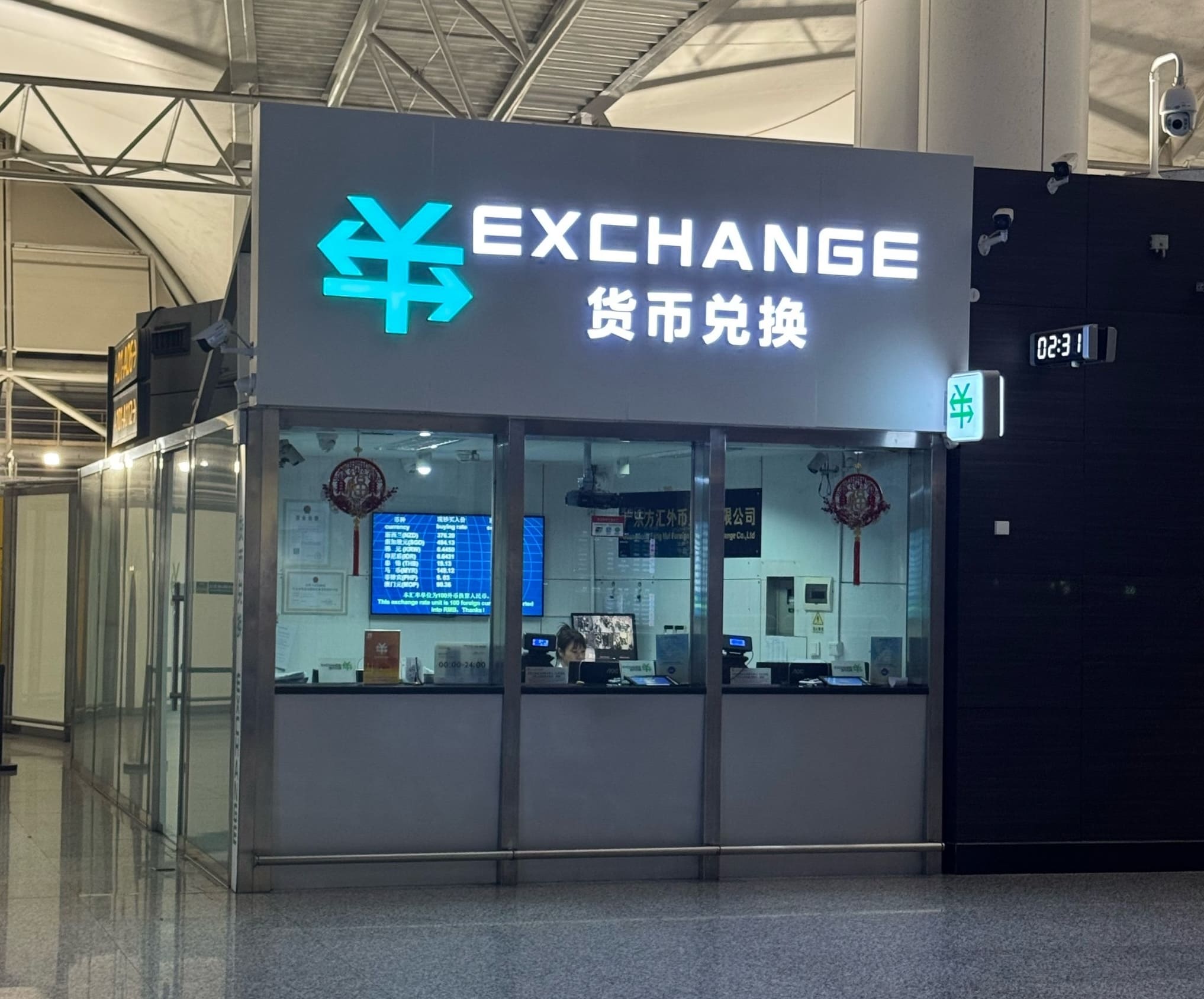
China's currency is the Renminbi (人民币), abbreviated RMB or CNY. The basic unit is the yuan (元), symbol ¥. Notes come in denominations of 100, 50, 20, 10, 5, and 1 yuan.
At Beijing Capital Airport, the Bank of China branch is in the international arrivals hall on your left as you exit customs — before you pass through the sliding doors into the public area. Once you go through those doors, you cannot re-enter. This branch operates 24 hours, charges no transaction fee, and gives the official rate. Exchange the equivalent of $50–80 USD here. That covers your Airport Express ticket, taxi, and first day's expenses.
For the rest of your trip, ATMs are the best option. Bank of China, ICBC, and China Construction Bank machines reliably accept foreign Visa and Mastercard. Withdraw the maximum per transaction (usually ¥2,000–3,000) to minimize per-withdrawal fees. When the ATM asks whether to charge in local currency or your home currency, always choose local currency (RMB).
Most restaurants, shops, metro stations, and street food vendors now accept Alipay or WeChat Pay via QR code. Cash is mainly needed for older hutong restaurants, small market vendors (especially Panjiayuan), and backup. ¥500–1,000 on hand at any time is generally sufficient. Both Alipay and WeChat Pay allow foreign credit cards to be linked directly — set this up before you travel.
Medical Emergencies
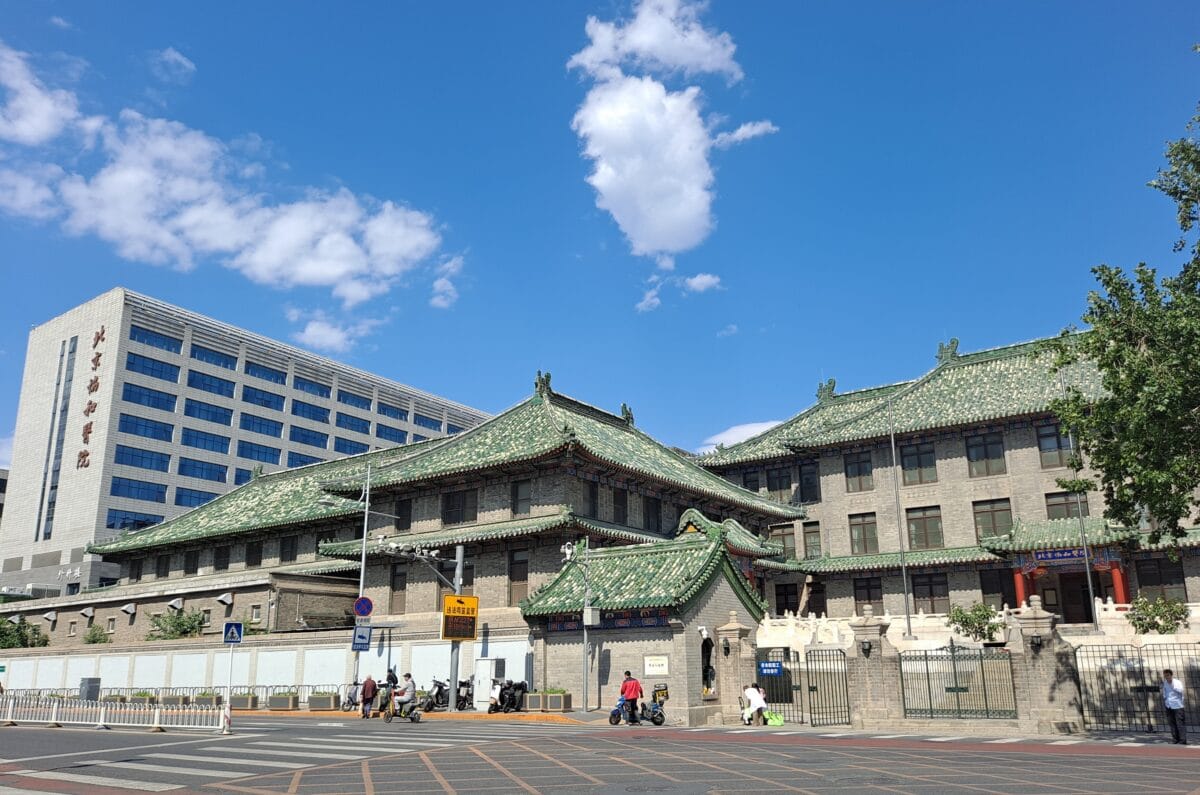
Beijing has good English-language medical options by Asian standards. Over 20 years of operating tours here, we have sent guests to both hospitals listed below. Beijing United Family Hospital is where we direct people for anything from a sprained ankle to a serious emergency — staff are used to foreign patients and the billing process is straightforward with international insurance. Peking Union is where you go for complex conditions.
Emergency numbers: Ambulance 120 or 999 (Red Cross, GPS-traceable) · Police 110 · Fire 119. If you cannot describe your location in Chinese, call 999 — their GPS can locate a mobile phone.
Beijing United Family Hospital 24-hour emergency: +86 10 5927 7120 | Address: 2 Jiangtai Road, Chaoyang District
Peking Union Medical College Hospital — International Department (协和医院) Tel: +86 10 6529 5284 | Address: 1 Shuaifuyuan, Wangfujing, Dongcheng District
Travel insurance with direct billing is strongly recommended — Cigna, Allianz, and AXA have arrangements with both hospitals above.
Quick Reference
Air quality: Check IQAir or AirVisual before any Great Wall day. AQI under 100 is fine outdoors; over 150, go to a museum instead. Variable days cluster in November–February heating season.
DIG DEEPER: Air Pollution in China: A Traveler’s Guide
Metro tap payment: Since June 2025, Visa, Mastercard, Amex, JCB, and UnionPay tap directly at turnstiles. No app needed.
Tipping: Not customary. No tip at restaurants, hotels, or taxis.
The tea ceremony scam: Near Tiananmen and Wangfujing, someone will invite you to a "traditional tea tasting." The bill arrives for ¥300–800. Decline any unsolicited invitation to enter a building you did not plan to enter.
DIG DEEPER: 6 Common Tourist Scams in China and How to Avoid Them
13. Beijing in the Context of a China Trip
Where Beijing sits in your itinerary affects your flights, your visa strategy, and how the trip feels as a whole.
For most travelers from Europe, North America, and the Middle East, Beijing makes the strongest entry point. It has the most direct long-haul connections of any Chinese city, and starting here means you begin with the historical foundations before moving toward China's more modern or dramatically scenic destinations. The logic of the trip then builds rather than backtracks.
For travelers entering from Southeast Asia or flying into Shanghai first, ending in Beijing works equally well — the Forbidden City and Great Wall land differently as a culminating statement than as an opening one.
For a first visit of one to two weeks, the circuit that works best for most people is Beijing → Xi'an → Shanghai. Three cities, each representing a different layer of China: the imperial capital, the ancient army, the modern waterfront. High-speed rail covers both legs — Beijing to Xi'an in 4.5 hours, Xi'an to Shanghai in about 6 — so no domestic flights are needed.
With two weeks and an interest in landscape alongside history, we extend that to Beijing → Xi'an → Zhangjiajie → Guilin → Shanghai. Zhangjiajie's sandstone pillar mountains and Guilin's karst river scenery add a natural dimension that the cities alone cannot provide. This is our most requested circuit, and the one we think gives first-time visitors the most complete sense of what China actually contains. See the full itinerary →
With three weeks, adding Datong, Pingyao, and Chengdu between Beijing and Xi'an fills in the historical depth of northern China and gives you pandas in Sichuan before moving south.
One routing decision worth making early: flying into Beijing and out of Shanghai — or the reverse — costs roughly the same as a round-trip ticket to either city and eliminates all backtracking. Book as two one-way international tickets or look for open-jaw fares. On a two-week trip, this single decision can recover a full day of travel time.
14. FAQ
How many days do I need in Beijing?
Three days covers the main highlights under pressure. Four to five is the right target for a first visit — enough time for the Forbidden City, a full Great Wall day, the Temple of Heaven, Summer Palace, and a proper hutong walk without feeling rushed. Six days allows day trips to Fragrant Hills or the Ming Tombs.
Do I need a visa to visit Beijing in 2026?
Approximately 50 countries now qualify for China's 30-day visa-free entry, valid through December 31, 2026. This includes most EU nations, the UK and Canada (from February 17, 2026), Australia, New Zealand, Japan, South Korea, and Singapore. US citizens currently need a visa, or can use the 240-hour (10-day) transit exemption if genuinely transiting to a third country. Always verify current eligibility before booking — the list is still expanding.
How do I get Forbidden City tickets?
Book at bookingticket.dpm.org.cn with your passport number. Tickets release at 8:00 PM Beijing time, exactly 7 days in advance. Peak periods sell out in minutes — set an alarm. Trip.com and Klook offer English-language booking with international card payment. Bring the original physical passport to entry; no digital copy is accepted.
How much does a day in Beijing cost?
Budget (hostel, street food, subway): ¥250–400/day. Mid-range (3-star hotel, restaurant meals, one attraction): ¥650–1,000/day. Comfortable (4-star hotel, Peking Duck dinner, private car): ¥1,500–2,500/day. Attraction reference: Forbidden City ¥60, Mutianyu ¥180–220, Summer Palace ¥30, Jingshan Park ¥2, National Museum free.
Is Beijing safe for foreign tourists?
Yes — very low violent crime, visible police presence. The main thing to watch for is the tea ceremony scam near Tiananmen and Wangfujing (described in Practical Notes above). Normal urban precautions apply.
What are the emergency numbers in Beijing?
Ambulance: 120 or 999. Police: 110. Fire: 119. For English-language hospital care, see the Medical Emergencies section above.
Planning a Beijing trip? Contact us for a customized itinerary — we've been organizing inbound China tours since 2006 and know what works best for you.